
| REPORT ATTRIBUTE | DETAILS |
|---|---|
| Historical Period | 2019-2022 |
| Base Year | 2023 |
| Forecast Period | 2024-2032 |
| Silica Sand for Glass Making Market Size 2023 | USD 5725 Million |
| Silica Sand for Glass Making Market, CAGR | 4.5% |
| Silica Sand for Glass Making Market Size 2032 | USD 8141.52 Million |
Market Overview:
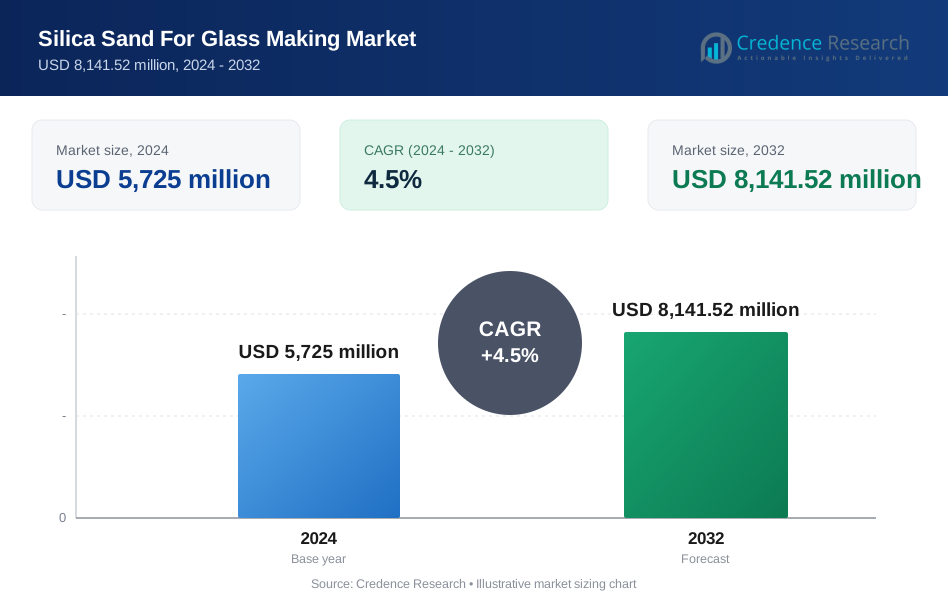
The Silica Sand Market for Glass Making Market is projected to grow from USD 5725 million in 2024 to an estimated USD 8141.52 million by 2032, with a compound annual growth rate (CAGR) of 4.5% from 2024 to 2032.
The growth of this market is driven by several key factors that highlight the essential role of silica sand in diverse industrial applications. The rapid global development of infrastructure has significantly boosted construction activities, leading to a heightened demand for flat and architectural glass, which is indispensable in modern building designs. Furthermore, the automotive industry, undergoing a shift toward lightweight and energy-efficient vehicles, is driving the need for specialized glass solutions such as solar-reflective and heads-up display glass. The electronics sector, heavily reliant on high-purity silica for advanced glass used in touchscreen displays and optical technologies, adds another critical dimension to the market’s expansion. Innovations in glass recycling and production processes, emphasizing sustainability, coupled with surging investments in renewable energy projects like solar panels requiring high-purity silica glass, are amplifying market growth. These advancements align with the increasing global emphasis on reducing environmental impact and enhancing resource efficiency.
Regionally, Asia-Pacific remains the frontrunner in the silica sand market for glass making, accounting for a significant share owing to its thriving construction and automotive sectors. Countries like China and India are witnessing robust growth driven by accelerated urbanization, large-scale infrastructure projects, and expanding manufacturing capacities. In North America, steady growth is observed due to rising demand for energy-efficient glass products, advancements in automotive technologies, and a strong focus on eco-friendly initiatives. Europe maintains a considerable market presence, propelled by its leadership in sustainability, renewable energy development, and stringent environmental regulations that foster innovation in glass manufacturing. Meanwhile, emerging economies in the Middle East and Africa are evolving as key growth hubs, spurred by increasing investments in construction activities and solar energy infrastructure development. These regional dynamics underscore the global importance of silica sand as a critical resource supporting diverse industrial and environmental objectives.
Market Insights:
- The market is projected to grow from USD 5,725 million in 2024 to USD 8,141.52 million by 2032, with a CAGR of 4.5%, driven by demand across construction, automotive, and renewable energy sectors.
- Rapid urbanization and global infrastructure development are fueling the demand for flat and architectural glass, boosting the consumption of high-quality silica sand.
- The automotive industry's shift toward lightweight and energy-efficient vehicles is increasing the need for specialized glass, further driving silica sand demand.
- High-purity silica sand is essential in the solar energy sector for manufacturing photovoltaic panels, aligning with global clean energy initiatives.
- Innovations in glass recycling and production processes, emphasizing sustainability, are strengthening demand for silica sand as a key component in eco-friendly practices.
- Asia-Pacific leads the market with a significant share, supported by thriving construction and automotive industries in countries like China and India.
- Challenges such as environmental concerns, depleting high-purity reserves, and geopolitical risks highlight the need for sustainable mining practices and localized supply chains.
Market Drivers:
Expanding Construction and Infrastructure Projects
The surge in global construction and infrastructure projects is a significant driver of the silica sand market for glass making. For instance, the U.S. General Services Administration (GSA) allocated $2 billion for over 150 construction projects nationwide in 2023, promoting low-embodied carbon materials. Urbanization and population growth are fueling demand for residential and commercial buildings, which, in turn, require high-quality flat and architectural glass. The increasing adoption of glass in modern architecture for its energy efficiency, aesthetic appeal, and natural lighting properties is further augmenting demand. As governments and private entities invest in large-scale infrastructure projects, the need for silica sand as a crucial raw material in glass manufacturing continues to rise, supporting market growth.
Growing Automotive Industry Requirements
The automotive industry's demand for advanced glass products is another critical factor driving the silica sand market. For example, high-quality silica sand is essential for producing solar-control glass and laminated safety glass, which are increasingly used in modern vehicles. With an increasing focus on lightweight and energy-efficient vehicles, manufacturers are turning to specialized automotive glass solutions such as solar-control glass, laminated safety glass, and heads-up display glass. High-purity silica sand is an essential ingredient in producing these advanced glass types, which meet stringent quality and safety standards. The rising popularity of electric vehicles, which often incorporate innovative glass technologies, is further bolstering demand for premium silica sand in the automotive sector.
Rising Demand from Renewable Energy and Electronics Sectors
The renewable energy and electronics industries are playing pivotal roles in driving the growth of the silica sand market. The solar energy sector, in particular, requires high-purity silica sand for manufacturing photovoltaic (PV) panels. As governments and businesses worldwide focus on transitioning to clean energy, the demand for solar panels and, consequently, silica sand is witnessing a sharp increase. Additionally, the electronics sector relies on advanced glass made with silica sand for touchscreen devices, optical components, and display panels. These applications are increasingly critical in consumer electronics, healthcare technologies, and industrial equipment, further fueling market growth. For instance, Sony Corporation leverages high-purity silica sand to produce optical components used in medical imaging devices and industrial sensors.
Technological Advancements and Sustainability Initiatives
Technological advancements in glass production and a growing emphasis on sustainability are significantly impacting the silica sand market. For instance, companies like CDE have developed innovative processing techniques that enhance the quality of silica sand while minimizing environmental impact. Innovations in glass manufacturing techniques have enabled producers to create more durable, energy-efficient, and eco-friendly glass products. Simultaneously, the trend toward recycling glass to reduce environmental impact is gaining traction. Recycled glass often requires high-quality silica sand as a blending material to maintain the necessary product standards, ensuring steady demand. These technological and sustainable practices align with global environmental goals, strengthening the market's long-term growth prospects and solidifying silica sand’s importance as a vital resource in glass making.
Market Trends:
Increasing Adoption of Specialty Glass in Emerging Applications
The market is witnessing a growing demand for specialty glass across various industries, driving the need for high-quality silica sand. For instance, Guardian Glass has developed Solar Management Glass, which enhances energy efficiency in buildings by controlling solar heat gain and light transmission. Specialty glass, used in products such as solar control glass, tempered glass, and smart glass, has gained traction due to its advanced properties like enhanced durability, thermal insulation, and light modulation. These innovations are finding applications in automotive, construction, and renewable energy sectors. The rise of smart homes and buildings equipped with dynamic glass technology has further accelerated demand for silica sand, especially in developed economies. The increased use of silica-based specialty glass in energy-efficient windows and doors underscores this trend.
Shifting Focus Towards High-Purity Silica Sand
The demand for high-purity silica sand is on the rise, driven by its critical role in producing ultra-clear and defect-free glass. For instance, Shree Ram Kaolin, a supplier of high-purity silica sand, emphasizes that their product consistently meets purity levels above 99%, essential for applications in electronics and renewable energy sectors, particularly photovoltaic panels. Industries such as electronics and renewable energy are increasingly relying on silica sand with high purity levels to meet the stringent quality standards for applications like photovoltaic panels and optical glass. Advanced production techniques for purifying silica sand have enabled manufacturers to meet the growing quality requirements, fostering steady growth. This shift is also supported by expanding industrial policies in regions like Asia-Pacific, where countries are focusing on enhancing the quality and exportability of silica sand.
Regional Diversification of Production and Supply Chains
A key trend in the silica sand market for glass making is the diversification of production and supply chains to meet rising global demand. For example, Metso has been involved in developing localized processing solutions to enhance silica sand production efficiency while adhering to environmental regulations. While Asia-Pacific remains a dominant supplier due to abundant silica reserves and cost-effective labor, other regions such as North America and Europe are exploring domestic mining opportunities to reduce reliance on imports. This shift toward localized production is further bolstered by environmental regulations and geopolitical tensions, which have highlighted the need for stable and sustainable supply chains. Additionally, the emergence of silica sand exporters in the Middle East and Africa is reshaping global trade dynamics, offering new avenues for market growth.
Integration of Digital Technologies in Mining and Processing
The integration of digital technologies in silica sand mining and processing is transforming the industry. Automation, artificial intelligence, and Internet of Things (IoT) technologies are being employed to optimize resource extraction, minimize waste, and ensure consistent quality in silica sand production. These advancements are improving operational efficiency and reducing costs, making high-quality silica sand more accessible. For instance, Covia Holdings Corporation utilizes IoT-enabled sensors in their processing plants to monitor and control various parameters, ensuring high-quality silica sand production. Moreover, the use of real-time monitoring systems is helping manufacturers meet the stringent requirements of the glass industry, positioning technology as a cornerstone of market advancement. As these trends gain momentum, they are expected to drive sustained growth and innovation in the silica sand market for glass making.
Market Challenges Analysis:
Environmental Concerns and Regulatory Constraints
One of the primary challenges facing the silica sand market for glass making is the growing concern over environmental impacts associated with silica mining and processing. Mining activities can lead to deforestation, habitat destruction, and soil erosion, which have triggered stricter regulations in many regions. Governments and environmental agencies are imposing stringent guidelines to mitigate the ecological footprint of mining operations. Compliance with these regulations often increases operational costs for manufacturers, potentially limiting market growth. Additionally, the risk of airborne silica dust, which poses health hazards to workers and nearby communities, has further intensified the scrutiny on mining practices, leading to delays in project approvals and restricted production capacities.
Depleting High-Purity Silica Reserves
The availability of high-purity silica sand, a critical component for producing defect-free and high-performance glass, is becoming a significant restraint. Many regions are facing challenges in maintaining consistent quality and supply due to the depletion of natural reserves. As demand for ultra-clear glass in applications like solar panels and electronics grows, the pressure on limited high-purity silica sources intensifies. This scarcity often leads to increased competition among manufacturers, driving up raw material costs and affecting the profitability of small and medium-sized enterprises in the market.
Supply Chain Disruptions and Geopolitical Risks
Global supply chain disruptions and geopolitical tensions pose another significant challenge to the silica sand market. Many countries rely on imports to meet their silica sand requirements, making them vulnerable to trade restrictions, export bans, and transportation bottlenecks. The COVID-19 pandemic highlighted these vulnerabilities, as lockdowns and restricted trade routes severely impacted the flow of raw materials. These challenges have emphasized the need for diversified and localized supply chains to reduce dependency on a few key suppliers and ensure market stability.
Market Opportunities:
The silica sand market for glass making presents significant opportunities, driven by the rising demand for advanced glass products across diverse industries. The rapid expansion of the renewable energy sector, particularly the solar energy industry, is a key growth avenue. High-purity silica sand is indispensable for manufacturing photovoltaic (PV) panels used in solar power generation. As global initiatives to reduce carbon emissions intensify, investments in solar infrastructure are surging, creating a substantial opportunity for silica sand suppliers. Furthermore, the increasing use of specialty glass in emerging applications, such as smart buildings and energy-efficient windows, amplifies the market potential. This trend is especially pronounced in regions with ambitious sustainability goals, such as Europe and North America, where demand for ultra-clear and defect-free glass is escalating.
Another promising opportunity lies in the development of localized supply chains to mitigate the challenges of global trade disruptions and resource depletion. Regions like the Middle East and Africa, rich in untapped silica sand reserves, are becoming focal points for investments in mining and processing facilities. Additionally, advancements in silica sand purification technologies are enabling manufacturers to meet stringent quality standards required by the electronics and automotive industries. The growing emphasis on glass recycling and the role of silica sand in enhancing recycled glass quality also present avenues for growth. These factors, combined with the increasing global focus on sustainable development and innovation, position the silica sand market for glass making as a lucrative and evolving industry.
Market Segmentation Analysis:
The silica sand market for glass making is segmented by application, purity, end use, and region, each playing a critical role in shaping the market dynamics.
By Application, flat glass dominates the segment due to its extensive use in construction and automotive industries, driven by the demand for architectural glass and windshields. Glass containers, including colored and colorless types, hold a substantial share, fueled by the beverage and pharmaceutical packaging industries. Fiber glass, essential in insulation and composites, contributes significantly, alongside special and technical glass used in electronics and scientific applications. Tableware glass and others add further diversity to the segment.
By Purity, high-purity silica sand leads due to its broad applications in flat glass, containers, and tableware. Ultra-high-purity sand, critical for photovoltaic panels and electronics, is witnessing growing demand, especially in renewable energy and advanced technological sectors.
By End Use, the food and beverage packaging industry represents a major share, followed by the construction sector, where silica-based glass is integral to energy-efficient building designs. The automotive industry drives demand for specialized glass solutions, while scientific instruments and analytical research, along with cookware and utensils, contribute to niche applications.
Segmentation:
By Application:
- Flat Glass
- Fiber Glass
- Glass Container (Colored, Colorless)
- Special & Technical
- Tableware Glass
- Others
By Purity:
- High Purity
- Ultra-high Purity
By End Use:
- Food & Beverage Packaging
- Industrial
- Pharmaceutical
- Scientific Instrument & Analytical Research
- Construction
- Automotive
- Cookware & Utensils
By Region:
- North America
- U.S.
- Canada
- Mexico
- Europe
- UK
- France
- Germany
- Italy
- Spain
- Russia
- Belgium
- Netherlands
- Austria
- Sweden
- Poland
- Denmark
- Switzerland
- Rest of Europe
- Asia Pacific
- China
- Japan
- South Korea
- India
- Australia
- Thailand
- Indonesia
- Vietnam
- Malaysia
- Philippines
- Taiwan
- Rest of Asia Pacific
- Latin America
- Brazil
- Argentina
- Peru
- Chile
- Colombia
- Rest of Latin America
- Middle East
- UAE
- KSA
- Israel
- Turkey
- Iran
- Rest of Middle East
- Africa
- Egypt
- Nigeria
- Algeria
- Morocco
- Rest of Africa
Regional Analysis:
Asia-Pacific
Asia-Pacific dominates the silica sand market for glass making, holding a significant market share of approximately 40% in 2024. The region’s dominance is attributed to its robust construction and automotive industries, particularly in countries like China, India, and Japan. China's substantial industrial base, coupled with its vast silica sand reserves, supports the production of high-quality glass products for domestic use and export. India is experiencing accelerated growth due to rapid urbanization and infrastructure development, boosting demand for flat glass and architectural glass. Japan, known for its technological advancements, continues to drive demand for specialty glass used in automotive and electronics industries. The region benefits from low production costs and abundant raw material availability, making it a key player in the global silica sand market.
North America
North America accounts for approximately 25% of the global silica sand market share, with the United States leading the region. The demand for silica sand in the U.S. is driven by the growing use of advanced glass products in construction, automotive, and renewable energy sectors. The country’s focus on energy-efficient buildings and the adoption of solar panels have significantly boosted the demand for high-purity silica sand. Additionally, the presence of well-established glass manufacturers and innovations in glass recycling further strengthen the market. Canada also contributes to the region’s growth, supported by its renewable energy projects and increasing adoption of environmentally friendly glass products.
Europe
Europe holds around 20% of the global market share, fueled by its commitment to sustainability and renewable energy. Countries like Germany, France, and Italy are major contributors, driven by strong demand for energy-efficient glass in residential and commercial buildings. The European Union’s focus on reducing carbon emissions has spurred investments in solar energy, increasing the need for high-purity silica sand used in photovoltaic panels. Additionally, Europe’s automotive industry remains a key consumer of advanced glass products, further supporting market growth.
Middle East and Africa
The Middle East and Africa region represents approximately 10% of the global market share, with growing investments in construction and solar energy infrastructure. Countries like Saudi Arabia and the United Arab Emirates are spearheading the demand for silica sand, driven by their ambitious infrastructure projects and renewable energy initiatives. The region’s abundant silica reserves also position it as an emerging exporter in the global market, offering opportunities for future growth.
Latin America
Latin America accounts for about 5% of the global market share, with Brazil and Mexico being the key contributors. The region’s expanding construction and automotive sectors, along with its focus on developing renewable energy sources, are driving demand for silica sand. Despite challenges in infrastructure and logistics, Latin America shows potential for growth as investments in industrial and energy projects increase.
Key Player Analysis:
- Aggregate Industries
- Badger Mining Corp
- Bathgate Silica Sand
- Duchang Xinshiji
- Fulchiron
- Fuyao Group
- Hainan Yawei
- Kibing
- Lianxin Group
- Minerali Industriali
- Mitsubishi
- Pattison Sand
- Preferred Sands
- Quarzwerke Group
- Shandong Shanyuan
- Sibelco
- Sifucel
- Sisecam
- Strobel Quarzsand
- Tokai Sand
- Tongliao Dalin
- Tongliao Silica
- Toyota Tsusho
- S. Silica
- Wolff & Müller
Competitive Analysis:
The silica sand market for glass making is characterized by intense competition among established players and regional manufacturers. Leading companies such as U.S. Silica Holdings, Inc., Sibelco, Covia Holdings Corporation, and Mitsubishi Corporation hold significant market shares, driven by their extensive production capabilities, access to high-quality silica reserves, and robust distribution networks. For instance, U.S. Silica Holdings, Inc. has multiple mining and processing facilities across the United States, ensuring a steady supply of high-purity silica sand for the glass industry. These companies focus on maintaining product consistency, expanding production capacities, and exploring high-purity silica deposits to meet growing demand. Regional manufacturers, particularly in Asia-Pacific and the Middle East, are leveraging cost-effective production methods and abundant natural reserves to strengthen their market presence. Meanwhile, players in developed regions like North America and Europe are focusing on sustainability initiatives and advanced processing technologies to cater to evolving industry requirements. The market also witnesses competition from smaller firms offering niche products for specialty glass applications, creating a dynamic and fragmented competitive landscape.
Recent Developments:
- In October 2024, U.S. Silica announced that it has agreed to be acquired by Apollo Global Management in an all-cash deal valued at approximately $1.85 billion. The acquisition, which values U.S. Silica shares at $15.50 each, is expected to close in the third quarter of 2025, subject to regulatory approvals and customary conditions. CEO Bryan Shinn expressed excitement about the partnership, stating it would provide U.S. Silica with substantial resources and increased flexibility as a private company.
- In April 2024, Badger Mining Corporation completed the acquisition of Athabasca Minerals Inc. for approximately CAD 29.2 million. This acquisition allows Badger Mining to expand its silica sand operations and enhance its market position in North America, particularly in the glass manufacturing sector.
- In December 2024, Quarzwerke Group showcased its latest innovations in silica sand processing at the SAP for Process Industries and Natural Resources Conference held in Vienna. The company emphasized its commitment to sustainability and efficiency in producing high-quality silica sand for various applications, including glass making.
- In November 2024, Kibing Group announced plans to invest approximately USD 1.5 billion in a new solar glass manufacturing plant in Kimanis, Sabah, Malaysia. The facility aims to have an installed capacity of 25 gigawatts and will significantly enhance Kibing's production capabilities in the solar glass sector, supporting its growth strategy in renewable energy.
Market Concentration & Characteristics:
The silica sand market for glass making presents significant opportunities, driven by the rising demand for advanced glass products across diverse industries. The rapid expansion of the renewable energy sector, particularly the solar energy industry, is a key growth avenue. High-purity silica sand is indispensable for manufacturing photovoltaic (PV) panels used in solar power generation. As global initiatives to reduce carbon emissions intensify, investments in solar infrastructure are surging, creating a substantial opportunity for silica sand suppliers. Furthermore, the increasing use of specialty glass in emerging applications, such as smart buildings and energy-efficient windows, amplifies the market potential. This trend is especially pronounced in regions with ambitious sustainability goals, such as Europe and North America, where demand for ultra-clear and defect-free glass is escalating. Another promising opportunity lies in the development of localized supply chains to mitigate the challenges of global trade disruptions and resource depletion. Regions like the Middle East and Africa, rich in untapped silica sand reserves, are becoming focal points for investments in mining and processing facilities. Additionally, advancements in silica sand purification technologies are enabling manufacturers to meet stringent quality standards required by the electronics and automotive industries. The growing emphasis on glass recycling and the role of silica sand in enhancing recycled glass quality also present avenues for growth. These factors, combined with the increasing global focus on sustainable development and innovation, position the silica sand market for glass making as a lucrative and evolving industry.
Report Coverage:
The research report offers an in-depth analysis based on By Application, By Purity and By End Use. It details leading market players, providing an overview of their business, product offerings, investments, revenue streams, and key applications. Additionally, the report includes insights into the competitive environment, SWOT analysis, current market trends, as well as the primary drivers and constraints. Furthermore, it discusses various factors that have driven market expansion in recent years. The report also explores market dynamics, regulatory scenarios, and technological advancements that are shaping the industry. It assesses the impact of external factors and global economic changes on market growth. Lastly, it provides strategic recommendations for new entrants and established companies to navigate the complexities of the market.
Future Outlook:
- Increasing investments in renewable energy projects will drive demand for high-purity silica sand used in photovoltaic panels.
- The rise of smart cities and green building initiatives will boost the use of energy-efficient architectural glass.
- Advancements in glass manufacturing technologies will expand applications for specialty glass, requiring premium-grade silica sand.
- Growing electric vehicle production will amplify the need for lightweight, durable automotive glass, fueling market growth.
- Expanding glass recycling practices will sustain demand for high-quality silica sand as a blending material.
- Emerging economies in Asia-Pacific and the Middle East will see heightened investments in silica sand mining and processing.
- The electronics industry’s reliance on advanced display technologies will create opportunities for ultra-clear glass production.
- Geopolitical shifts and supply chain diversification will increase local silica sand sourcing and reduce import dependencies.
- Environmental regulations will drive innovation in sustainable mining practices and eco-friendly glass manufacturing.
- Rising consumer demand for aesthetically appealing and multifunctional glass products will strengthen market growth globally.
Request a Free Sample
Fill in your details and we'll send you a free sample report.
- Sample data tables & charts
- Research methodology
Need a Custom Version of This Report?
Tailor the scope, geography, or segments to your exact requirements.
- Custom geography or segment scope
- Direct access to our analyst team
Frequently Asked Questions
What is the projected growth of the silica sand market for glass making?
What factors are driving the growth of this market?
Which region holds the largest market share?
What challenges does the silica sand market face?
Which segment is expected to post the highest CAGR during the forecast period?
Who are the major players in the global Silica sand for glass making market?
What are the major market restraints of Silica sand for glass making industry?
What are the major market opportunities of the Silica sand for glass making industry?
Table of Content
Chapter 1. Report Introduction
- 1.1 Report Description & Purpose
- 1.1.1 Report Title & Market Definition
- 1.1.2 Unique Selling Propositions (USP) & Key Differentiators
- 1.1.3 Value Proposition for Stakeholders
- 1.2 Research Objectives
- 1.2.1 Market Sizing Objectives (Volume & Revenue) (Volume Where Applicable)
- 1.2.2 Segmentation Objectives
- 1.2.3 Competitive Intelligence Objectives
- 1.2.4 Forecast & Scenario Objectives
- 1.3 Report Scope
- 1.3.1 Silica Sand For Glass Making Scope – Segments & Subsegments Covered
- 1.3.2 Geographic Scope – Regions & Countries Covered
- 1.3.3 Historical Period, Base Year & Forecast Period (2024; forecast to 2032)
- 1.3.4 Inclusions & Exclusions
- 1.4 Industry Classification & Applicable Codes
- 1.5 Currency, Measurement Units & Valuation Basis
- 1.6 Target Stakeholders
- 1.7 Limitations & Assumptions
Chapter 2. Executive Summary
- 2.1 Global Silica Sand For Glass Making Market Snapshot
- 2.1.1 Market Size – Historical (2024) & Forecast (2024-2032) (2024: USD 5,725 million → 2032: USD 8,141.52 million)
- 2.1.2 Volume & Revenue – Global Totals (Volume Where Applicable)
- 2.1.3 Key Market Highlights – Top Five Facts
- 2.2 Silica Sand For Glass Making Market Segmentation Snapshot
- 2.2.1 Market Split by Region – 2024 vs. 2032
- 2.3 Competitive Snapshot
- 2.3.1 Top 10 Players by Revenue Share – 2024
- 2.3.2 Top 10 Players by Volume Share – 2024 (Volume Where Applicable)
- 2.3.3 Recent Strategic Developments (18-Month Summary)
- 2.4 Key Investment Highlights & Strategic Conclusions
Chapter 3. Silica Sand For Glass Making Market Dynamics & Industry Analysis
- 3.1 Market Overview & Context
- 3.1.1 Silica Sand For Glass Making Market Position in the Broader Industry Value Chain
- 3.1.2 Demand Structure & Purchasing Dynamics
- 3.1.3 Market Maturity & Development Stage by Region
- 3.2 Silica Sand For Glass Making Market Drivers
- 3.3 Silica Sand For Glass Making Market Restraints & Challenges
- 3.4 Silica Sand For Glass Making Market Opportunities
- 3.5 Porter's Five Forces Analysis
- 3.5.1 Threat of New Entrants
- 3.5.2 Bargaining Power of Suppliers
- 3.5.3 Bargaining Power of Buyers
- 3.5.4 Threat of Substitutes
- 3.5.5 Competitive Rivalry – Intensity Assessment
- 3.6 Silica Sand For Glass Making Value Chain Analysis
- 3.6.1 Upstream – Key Inputs, Resources & Suppliers
- 3.6.1.1 Key Input/Resource 1
- 3.6.1.2 Key Input/Resource 2
- 3.6.1.3 Key Input/Resource 3
- 3.6.2 Midstream – Core Operations & Value Creation
- 3.6.2.1 Operating Model & Process Overview
- 3.6.2.2 Key Operating Locations & Capabilities by Company
- 3.6.3 Downstream – Market Channels & End Users
- 3.6.3.1 Direct Sales & Customer Engagement Channels
- 3.6.3.2 Indirect Sales, Intermediaries & Partner Channels
- 3.6.4 Value Chain Profitability Analysis
- 3.6.1 Upstream – Key Inputs, Resources & Suppliers
- 3.7 PESTEL Analysis
- 3.7.1 Political Factors
- 3.7.2 Economic Factors
- 3.7.3 Social Factors
- 3.7.4 Technological Factors
- 3.7.5 Environmental Factors
- 3.7.6 Legal Factors
- 3.8 Silica Sand For Glass Making Supply Chain Analysis
- 3.8.1 Critical Input & Resource Availability Risk Assessment
- 3.8.2 Supplier & Operational Concentration Risk (Geographic Exposure)
- 3.8.3 Supply & Service Disruption Impact Analysis
- 3.9 Regulatory & Policy Landscape
Note: The regulatory and policy landscape section covers regulations based on their applicability to the market, Silica Sand For Glass Making category, geography, and scope of the study. Only regulatory frameworks with a material impact on operations, compliance, trade, sustainability, or market access are analyzed in detail.
Chapter 4. Key Investment Pockets & Opportunity Analysis
- 4.1 Silica Sand For Glass Making Market Attractiveness Analysis
- 4.1.1 By Region – Investment Attractiveness Matrix (Market Size × CAGR)
- 4.2 Absolute Revenue Growth Opportunity
- 4.2.1 By Region – Absolute Revenue Growth Through 2032
- 4.3 Incremental Demand Opportunity
- 4.3.1 By Region – Incremental Demand Through 2032
- 4.3.2 Segment – Incremental Demand
- 4.4 Emerging Submarket Opportunity Deep Dive (Subject to Applicability)
- 4.5 Priority Market Opportunity Scorecards
- 4.5.1 United States
- 4.5.2 Europe
- 4.5.3 Asia
- 4.5.4 Middle East & Africa
Note: Priority market opportunity scorecards reflect the geographic scope and strategic relevance of the study. Listed markets are indicative and may be adapted to the industry.
Chapter 5. Silica Sand For Glass Making Cross-Border Trade & Market Access Analysis
- 5.1 International Trade & Cross-Border Activity Overview
- 5.1.1 Global Export Value by Country (2024)
- 5.1.2 Global Export Volume by Country (2024) (Volume Where Applicable)
- 5.1.3 Global Import Value by Country (2024)
- 5.1.4 Global Import Volume by Country (2024) (Volume Where Applicable)
- 5.1.5 Net Trade Balance by Country (2024)
- 5.2 Export Analysis – Segment
- 5.2.1 Category 1 (Applicable Classification Code)
- 5.2.2 Category 2 (Applicable Classification Code)
- 5.2.3 Category 3 (Applicable Classification Code)
- 5.2.4 Category 4 (Applicable Classification Code)
- 5.2.5 Category 5 (Applicable Classification Code)
- 5.3 Import Analysis – Segment
- 5.3.1 Category 1 (Applicable Classification Code)
- 5.3.2 Category 2 (Applicable Classification Code)
- 5.3.3 Category 3 (Applicable Classification Code)
- 5.3.4 Category 4 (Applicable Classification Code)
- 5.3.5 Category 5 (Applicable Classification Code)
- 5.4 Cross-Border Pricing & Transaction Benchmarks
- 5.4.1 Export Pricing – Segment & Country
- 5.4.2 Import Pricing – Segment & Source Country
- 5.4.3 Price Trends (2024)
- 5.5 Key Cross-Border Trade & Delivery Routes
- 5.5.1 Cross-Border Trade/Delivery Route 1
- 5.5.2 Cross-Border Trade/Delivery Route 2
- 5.5.3 Cross-Border Trade/Delivery Route 3
- 5.5.4 Cross-Border Trade/Delivery Route 4
- 5.5.5 Cross-Border Trade/Delivery Route 5
- 5.6 Trade Policy & Market Access Impact Assessment
- 5.6.1 Tariff & Non-Tariff Barriers
- 5.6.2 Regional Trade & Economic Integration Frameworks
- 5.6.3 Bilateral & Multilateral Trade Agreements
- 5.6.4 Cross-Border Operating, Licensing & Localization Requirements
Note: This chapter applies where cross-border trade or delivery is relevant to Silica Sand For Glass Making. Goods, services, and digital offerings are assessed using applicable classifications and transaction measures. Import-export volumes, trade balances, and route analyses are included only where meaningful to the market.
Chapter 6. Competitive Landscape & Company Benchmarking
- 6.1 Silica Sand For Glass Making Market Concentration & Structure
- 6.1.1 Herfindahl-Hirschman Index (HHI) – vs. 2024
- 6.1.2 Leading, Mid-Sized & Emerging Player Structure
- 6.1.3 Global, Regional & Local Player Dynamics
- 6.2 Silica Sand For Glass Making Market Share Analysis – 2024
- 6.2.1 Global Revenue Share by Company
- 6.2.2 Global Volume Share by Company (Volume Where Applicable)
- 6.2.3 Regional Revenue Share
- 6.2.4 Market Share Evolution ( vs. 2024)
- 6.2.5 Company Market Share by Key Segment
- 6.2.6 Company Market Share by Customer Group
- 6.3 Operating Scale, Capacity & Infrastructure Analysis
- 6.3.1 Global Operating Scale & Supply Capacity
- 6.3.2 Resource Utilization & Operating Efficiency
- 6.3.3 Output, Service Delivery & Activity Metrics
- 6.3.4 Operating Footprint & Infrastructure Map
- 6.3.5 Planned Operational & Capacity Expansion
- 6.4 Silica Sand For Glass Making Competitive Benchmarking Matrix
- 6.4.1 Revenue, Growth, Profitability & Operating Metric Comparison
- 6.4.2 Channel Revenue Mix
- 6.4.3 Geographic Revenue Exposure
- 6.4.4 R&D Intensity
- 6.4.5 Sustainability Maturity
- 6.5 Strategic Developments in Silica Sand For Glass Making (Last 24 Months)
- 6.5.1 Mergers, Acquisitions & Divestments
- 6.5.2 New Products, Services & Solutions in Silica Sand For Glass Making
- 6.5.3 Operational & Infrastructure Expansions
- 6.5.4 Strategic Alliances, Joint Ventures & Partnerships
- 6.5.5 Distribution Expansion & Market Entry
- 6.5.6 Sustainability & ESG Initiatives
- 6.6 Competitive Strategy Mapping
- 6.6.1 Leader, Challenger, Follower & Niche Classification
- 6.6.2 Pricing Strategy Comparison
- 6.6.3 Channel Strategy Matrix
Note: Strategic developments are included based on their materiality and the availability of reliable information.
Chapter 7. Global Silica Sand For Glass Making Market – By Sales & Delivery Channel
- 7.1 Segment Overview
- 7.1.1 Volume & Revenue Split by Channel (2024 & 2032) (Volume Where Applicable)
- 7.1.2 Channel Mix Evolution (2024-2032)
Chapter 8. Regional Market Analysis – Global Overview
- 8.1 Global Regional Overview
- 8.1.1 Regional Volume Share (Volume Where Applicable)
- 8.1.2 Regional Revenue Share
- 8.1.3 Regional Volume by Region (Volume Where Applicable)
- 8.1.4 Regional Revenue by Region
- 8.1.5 Regional Forecast Through 2032
- 8.2 Cross-Regional Segment Analysis
- 8.2.1 By Sales & Delivery Channel
- 8.2.2 By Competitive Positioning & Price Tier
Chapter 9. North America Silica Sand For Glass Making Market
- 9.1 United States
- 9.2 Canada
- 9.3 Mexico
Chapter 10. Europe Silica Sand For Glass Making Market
- 10.1 Germany
- 10.2 France
- 10.3 Italy
- 10.4 United Kingdom
- 10.5 Spain
- 10.6 Poland
- 10.7 Russia
- 10.8 Netherlands
- 10.9 Belgium
- 10.10 Sweden
- 10.11 Denmark
- 10.12 Norway
- 10.13 Rest of Europe
Chapter 11. Asia Pacific Silica Sand For Glass Making Market
- 11.1 China
- 11.2 India
- 11.3 Japan
- 11.4 South Korea
- 11.5 Thailand
- 11.6 Indonesia
- 11.7 Vietnam
- 11.8 Malaysia
- 11.9 Australia
- 11.10 Rest of Asia Pacific
Chapter 12. Latin America Silica Sand For Glass Making Market
- 12.1 Brazil
- 12.2 Argentina
- 12.3 Colombia
- 12.4 Chile
- 12.5 Rest of Latin America
Chapter 13. Middle East Silica Sand For Glass Making Market
- 13.1 Saudi Arabia
- 13.2 United Arab Emirates
- 13.3 Turkey
- 13.4 Israel
- 13.5 Iran
- 13.6 Rest of the Middle East
Chapter 14. Africa Silica Sand For Glass Making Market
- 14.1 South Africa
- 14.2 Egypt
- 14.3 Nigeria
- 14.4 Morocco
- 14.5 Rest of Africa
Chapter 15. Silica Sand For Glass Making Company Profiles
- 15.1 [Company 01]
- 15.1.1 Company Overview
- 15.1.2 Key Management Personnel
- 15.1.3 Products & Services Portfolio
- 15.1.4 Financial Performance
- 15.1.5 Key Market Focus & Geographic Presence
- 15.1.6 Recent Developments & Strategic Initiatives
Note: The company profile list is preliminary and may change based on research findings, market developments, data availability, and client requirements.
Chapter 16. Appendices
- Appendix A – List of Abbreviations & Acronyms
- Appendix B – Industry Classification Code Reference – Full Series
- Appendix C – Supply, Output & Operating Capacity Data Tables
- Appendix D – End-Use & Demand Base Tables
- Appendix E – Demand, Adoption & Usage Assumptions
- Appendix F – Pricing & Revenue Metric Reference Tables
- Appendix G – Company Operations & Infrastructure Database
- Appendix H – Cross-Border Trade & Activity Data Tables (Where Applicable)
- Appendix I – Regulatory Summary Tables
- Appendix J – Primary Research Participant List (Anonymized)
- Appendix K – Primary Research Questionnaire Framework
- Appendix L – Data Sources & Bibliography
- Appendix M – Market Size Divergence & Source Comparison
Chapter 17. Research Methodology
- 17.1 Research Framework & Philosophy
- 17.2 Secondary Research – Sources, Hierarchy & Data Extraction
- 17.3 Data Modeling – Bottom-Up & Top-Down Market Sizing
- 17.4 Primary Research – Stakeholder Framework, LOI & Sample Sizes
- 17.5 Forecast Methodology – Regression, Scenario & Sensitivity Analysis
- 17.6 Quality Control – Four-Layer Validation Framework
- 17.7 Limitations & Standard Assumptions
- 17.8 Disclaimer
