
Market Overview
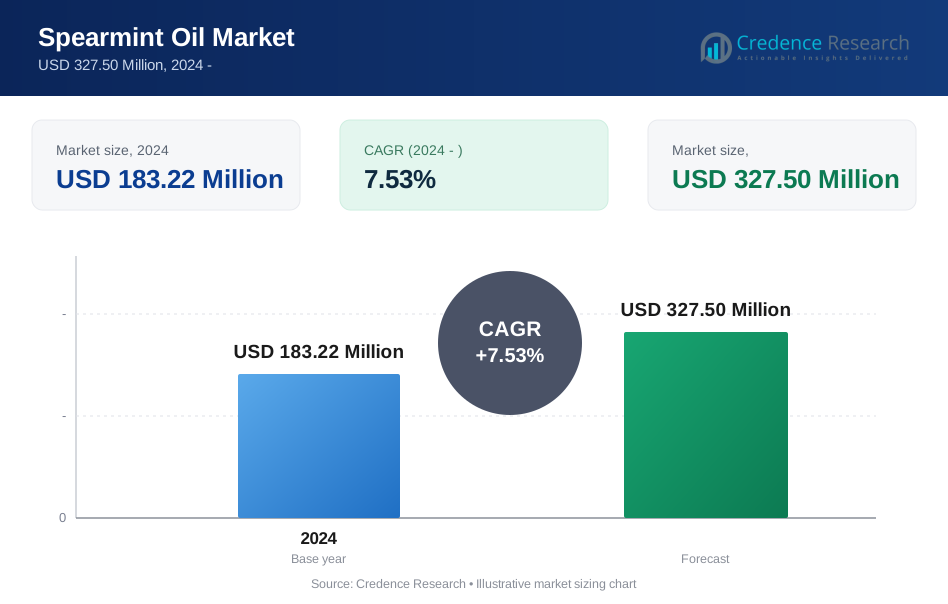
Spearmint Oil Market size was valued at USD 183.22 Million in 2024 and is anticipated to reach USD 327.50 Million by 2032, at a CAGR of 7.53% during the forecast period.
| REPORT ATTRIBUTE | DETAILS |
|---|---|
| Historical Period | 2020-2023 |
| Base Year | 2024 |
| Forecast Period | 2025-2032 |
| Spearmint Oil Market Size 2024 | USD 183.22 Million |
| Spearmint Oil Market , CAGR | 7.53% |
| Spearmint Oil Market Size 2032 | USD 327.50 Million |
Spearmint Oil Market features major players such as AOS Products Pvt. Ltd., Avi Naturals, Berje Inc., Biolandes, doTERRA International, Green Fields Oil Factory, IL Health & Beauty, Lionel Hitchen (Essential Oils) Ltd., Mountain Rose Herbs, NOW Foods, and Natural Oils Co., Inc., all contributing to strong global supply capabilities across food, aromatherapy, cosmetics, and wellness applications. These companies focus on high-quality extraction, sustainable sourcing, and broader distribution to meet rising demand for natural mint-based ingredients. Regionally, North America led the market with 34.2% share in 2024, driven by strong consumption in food and beverages, aromatherapy products, and personal care formulations, followed by Europe with significant demand supported by clean-label and organic product adoption.
Market Insights
- The Spearmint Oil Market reached USD 183.22 million in 2024 and is projected to grow at a CAGR of 7.53% through 2032.
- Growing demand from food and beverages, especially confectionery and flavored drinks, drives market expansion, supported by rising use of natural and plant-derived flavoring agents.
- Increasing preference for organic, sustainably sourced oils and rising adoption of aromatherapy strengthen market trends, with blends and value-added formulations gaining strong traction.
- Key players focus on product purity, advanced extraction, and global distribution, with the natural segment leading at 71.4% share and concentrates holding 52.8% share in 2024.
- North America led with 34.2% share, followed by Europe at 28.6% and Asia-Pacific at 22.7%, supported by strong demand across food, wellness, cosmetics, and therapeutic applications.
Market Segmentation Analysis:
By Source:
The Spearmint Oil Market by source is led by the natural segment, capturing 71.4% share in 2024, driven by its widespread use in food, beverages, and therapeutic formulations where clean-label and plant-derived ingredients are preferred. Natural spearmint oil benefits from strong consumer demand for chemical-free extracts, higher aromatic purity, and broader acceptance in regulated industries such as F&B and personal care. The organic segment, though smaller, is growing steadily as premium wellness brands expand portfolios featuring certified organic essential oils aligned with sustainability and residue-free production standards.
- For instance, Albert Vieille SAS supplying natural spearmint essential oil as a flavoring agent specifically for food and beverage applications, emphasizing 100% pure plant-derived extracts.
By Form:
Within the form segment, concentrates dominated the market with 52.8% share in 2024, owing to their high potency, cost-effectiveness in large-scale blending, and extended shelf life, making them the primary choice for industrial users in aromatherapy, cosmetics, and flavor manufacturing. Concentrates also offer consistent quality and easier formulation compatibility, supporting their strong adoption. Absolute and blends follow, with blends gaining momentum as companies develop ready-to-use formulations for wellness, personal care, and home fragrance applications targeting convenience-focused consumers.
- For instance, DBR Exports India produces floral absolute oils such as carnation absolute, valued for their potent extracts in perfume and cosmetic formulations.
By Application:
By application, the food and beverages segment held 39.6% share in 2024, emerging as the dominant category due to extensive use of spearmint oil in confectionery, bakery, chewing gums, beverages, and flavoring agents. Its refreshing profile, natural origin, and regulatory approval across major markets support sustained demand. Therapeutics and aromatherapy applications are expanding rapidly as spearmint oil gains recognition for anti-inflammatory, digestive, and stress-relief benefits. Cosmetics also represent a significant share, with increasing incorporation in skincare and oral-care formulations emphasizing natural antimicrobial and cooling properties.

Key Growth Drivers
Rising Demand from Food & Beverage Applications
Growing consumption of natural flavoring agents in confectionery, beverages, bakery items, and chewing gums significantly drives the Spearmint Oil Market. Manufacturers are shifting from synthetic additives to plant-based flavors due to cleaner labeling norms and rising health-conscious consumer behavior. Spearmint oil’s refreshing taste profile, regulatory acceptance, and compatibility with multiple formulations further strengthen adoption. Large FMCG companies increasingly reformulate products to incorporate natural mint oils, enhancing market penetration. This trend is particularly strong in North America and Europe, where demand for natural ingredients continues to accelerate.
- For instance, VedaOils supplies natural spearmint flavoring oil for use in candies, chewing gum, and herbal teas, with their product certified as 100% natural and free from synthetic additives, supporting clean label trends in North America and Europe.
Expansion of Aromatherapy and Wellness Industries
The rapid uptake of aromatherapy practices and holistic wellness solutions acts as a major growth catalyst for the spearmint oil market. Consumers prioritize stress-relief, improved sleep quality, and natural therapeutic alternatives, boosting demand for essential oils with calming and anti-inflammatory properties. Spearmint oil is widely incorporated into diffusers, massage blends, and personal wellness products due to its soothing aroma and documented therapeutic benefits. The rise of spa therapies, home aromatherapy devices, and wellness tourism further reinforces long-term growth prospects across developed and emerging markets.
- For instance, Young Living offers Spearmint Essential Oil specifically for diffusers, recommending up to 30 minutes of diffusion three times daily to provide aromatic comfort during occasional uneasiness with its cool, minty aroma.
Increasing Use in Cosmetics and Personal Care
The expanding cosmetic and personal care industries contribute significantly to market growth as brands adopt spearmint oil for its antimicrobial, cleansing, and cooling attributes. It is increasingly used in formulations such as toothpaste, mouthwash, skincare, haircare, and deodorants targeting consumers seeking natural, chemical-free ingredients. Regulatory pressure to reduce synthetic additives and parabens promotes greater reliance on essential oils, including spearmint. Growing investments in herbal beauty products and premium personal care lines also support demand, making spearmint oil a favored component in clean beauty innovations.
Key Trends & Opportunities
Shift Toward Organic and Sustainably Sourced Oils
A prominent trend shaping the market is the strong shift toward organic and sustainably sourced spearmint oil. Consumers increasingly value traceability, eco-friendly production, and pesticide-free cultivation, which boosts demand for certified organic spearmint oil. This creates significant opportunities for producers investing in sustainable farming practices, regenerative agriculture, and carbon-efficient extraction methods. Brands promoting transparent supply chains and ethically harvested mint varieties gain competitive advantage. Growing regulatory focus on sustainability further strengthens the transition toward premium, responsibly sourced essential oils.
- For instance, Sharp Mint Limited partners with CIMAP to introduce higher-yielding mint varieties for spearmint cultivation, while providing full traceability from farm to final product to ensure premium quality and sustainability.
Innovation in Blended Oil Formulations and Value-Added Products
The development of high-performance blended oils and value-added spearmint-based formulations represents a major opportunity for manufacturers. Companies are innovating multi-functional blends for aromatherapy, skincare, nutraceuticals, and home-care products, tapping into rising consumer demand for convenience-oriented, ready-to-use essential oil solutions. Technological advancements in extraction and purification allow enhanced aroma profiles and higher-quality concentrates. Expansion into novel formats such as roll-ons, sprays, mint-infused supplements, and therapeutic balms further diversifies revenue streams while reinforcing spearmint oil’s role in wellness and lifestyle products.
- For instance, Young Living offers Spearmint Essential Oil designed for blending into lotions and body oils, providing a fresh, cool aroma for personal care while supporting digestive wellness when taken internally after dilution.
Key Challenges
Price Volatility and Supply Chain Vulnerabilities
Fluctuating raw material prices and supply chain inconsistencies present a significant challenge for the spearmint oil market. Spearmint cultivation is highly sensitive to climatic variations, water availability, and soil conditions, leading to unpredictable yields and unstable pricing. Limited production clusters increase dependence on specific regions, heightening vulnerability to seasonal disruptions. Additionally, rising labor costs and transportation constraints impact overall supply stability. Manufacturers often face difficulties in securing consistent quality and volume, making long-term procurement planning complex.
Regulatory Compliance and Quality Standardization Issues
Strict regulatory frameworks governing essential oils, especially for food, therapeutic, and cosmetic applications, create hurdles for market participants. Producers must comply with varying global standards related to purity, chemical composition, and permissible residues. Lack of universal quality benchmarks leads to inconsistencies across suppliers, affecting product reliability and brand trust. Adulteration risks and the presence of synthetic substitutes further complicate quality assurance. Companies investing in rigorous testing, certification, and traceable sourcing processes face higher operational costs but remain essential for maintaining market credibility.
Regional Analysis
North America
North America held 34.2% share in 2024, making it a major revenue contributor to the Spearmint Oil Market. Strong demand from the food and beverage industry, especially in confectionery, chewing gum, and flavored beverages, drives market growth. The region’s established aromatherapy and wellness sectors further support consumption, with spearmint oil widely used in diffusers, therapeutic blends, and personal care formulations. High consumer preference for natural and organic ingredients boosts adoption across cosmetic brands. The presence of leading essential oil manufacturers and robust retail distribution channels reinforces the region’s dominant position.
Europe
Europe accounted for 28.6% share in 2024, driven by stringent clean-label regulations and strong uptake of natural flavoring agents in food and beverage applications. The region’s mature cosmetic and personal care industries incorporate spearmint oil for its antimicrobial and refreshing properties, supporting sustained demand. Growth in aromatherapy practices, wellness tourism, and spa treatments enhances market penetration. European consumers favor sustainably sourced and organically certified oils, encouraging manufacturers to adopt eco-friendly cultivation and extraction practices. The region’s well-organized supply chains and strong export networks further strengthen market expansion.
Asia-Pacific
Asia-Pacific captured 22.7% share in 2024, emerging as one of the fastest-growing regions due to expanding food processing industries, rising urbanization, and growing consumer preference for herbal and natural products. Countries such as India and China play a critical role as major producers and exporters of spearmint oil. Increasing use in traditional medicine, aromatherapy, and cosmetics accelerates demand. The region’s growing middle-class population fuels interest in premium essential oils for wellness and personal care. Investments in advanced extraction technologies and agricultural improvements support long-term production scalability.
Latin America
Latin America held 8.3% share in 2024, supported by rising demand for natural ingredients in cosmetics, home-care products, and aromatherapy solutions. Countries like Brazil and Mexico are key contributors, driven by expanding consumer awareness of herbal wellness and essential oil benefits. The region also benefits from increasing use of spearmint oil in flavored beverages and confectionery. However, limited large-scale production capacities result in a reliance on imports for high-quality spearmint oil. Growing investments from global cosmetic and wellness brands into Latin American markets are expected to enhance future growth potential.
Middle East & Africa
The Middle East & Africa region accounted for 6.2% share in 2024, with market growth primarily driven by rising adoption of aromatherapy, spa culture, and premium personal care products. Spearmint oil is increasingly used in fragrances, cosmetics, and traditional herbal therapies, supporting steady demand. GCC countries exhibit strong consumption due to expanding hospitality and wellness sectors. However, the region depends heavily on imports owing to limited domestic cultivation. Improving retail infrastructure and increasing consumer preference for natural and organic beauty products are expected to strengthen market penetration over the forecast period.
Market Segmentations:
By Source
- Natural
- Organic
By Form
- Absolute
- Concentrates
- Blends
By Application
- Food and beverages
- Therapeutics
- Aromatherapy
- Cosmetics
- Others
By Geography
- North America
- U.S.
- Canada
- Mexico
- Europe
- Germany
- France
- U.K.
- Italy
- Spain
- Rest of Europe
- Asia Pacific
- China
- Japan
- India
- South Korea
- South-east Asia
- Rest of Asia Pacific
- Latin America
- Brazil
- Argentina
- Rest of Latin America
- Middle East & Africa
- GCC Countries
- South Africa
- Rest of the Middle East and Africa
Competitive Landscape
Competitive landscape in the Spearmint Oil Market features leading players such as AOS Products Pvt. Ltd., Avi Naturals, Berje Inc., Biolandes, doTERRA International, Green Fields Oil Factory, IL Health & Beauty, Natural Oils Co., Inc., Lionel Hitchen (Essential Oils) Ltd., Mountain Rose Herbs, and NOW Foods. These companies focus on expanding production capabilities, enhancing extraction efficiency, and strengthening global distribution networks to meet rising demand from food, aromatherapy, cosmetics, and wellness sectors. Manufacturers emphasize sustainable sourcing, organic certification, and transparent supply chains to appeal to clean-label and eco-conscious consumers. Product innovation remains a core strategy, with players developing high-quality concentrates, blends, and value-added spearmint-infused formulations. Strategic partnerships with F&B brands, cosmetic manufacturers, and aromatherapy distributors further support market penetration. Additionally, companies invest in quality testing, purity standards, and advanced distillation technologies to differentiate offerings in a highly fragmented and competitive essential oils market.
Key Player Analysis
- Biolandes
- Mountain Rose Herbs
- IL Health & Beauty
- AOS Products Pvt. Ltd.
- Lionel Hitchen (Essential Oils) Ltd.
- Berje Inc.
- NOW Foods
- Avi Naturals
- Green Fields Oil Factory
- doTERRA International
Recent Developments
- In August 2025, Saje Natural Wellness partnered with Ulta Beauty for national retail distribution of peppermint oil products, signaling broader essential oil market partnerships applicable to spearmint variants.
- In September 2024, Salt Oral Care launched Souk Fennel Mint Mouthspritz and Amalfi Spearmint Mouthspritz, sustainable oral hygiene products incorporating spearmint oil for daily care in India.
- In October 2024, Tholi introduced the world's first Essential Oils Sandals, integrating spearmint oil and other essentials into footwear for health and wellness benefits.
Report Coverage
The research report offers an in-depth analysis based on Source, Form, Application and Geography. It details leading market players, providing an overview of their business, product offerings, investments, revenue streams, and key applications. Additionally, the report includes insights into the competitive environment, SWOT analysis, current market trends, as well as the primary drivers and constraints. Furthermore, it discusses various factors that have driven market expansion in recent years. The report also explores market dynamics, regulatory scenarios, and technological advancements that are shaping the industry. It assesses the impact of external factors and global economic changes on market growth. Lastly, it provides strategic recommendations for new entrants and established companies to navigate the complexities of the market.
Future Outlook
- Demand for natural flavoring agents will continue to strengthen across food and beverage applications.
- Adoption of spearmint oil in aromatherapy and wellness products will expand rapidly.
- Organic and sustainably sourced spearmint oil will gain higher market penetration.
- Cosmetic and personal care brands will increase use of spearmint oil in clean-label formulations.
- Technological advancements in extraction will improve product purity and yield efficiency.
- Blended oil formulations and value-added spearmint products will create new revenue streams.
- Global supply chains will become more structured with improved traceability and certification.
- Rising consumer preference for herbal therapies will boost therapeutic applications.
- Manufacturers will invest more in sustainability-driven farming and processing practices.
- Emerging markets will offer strong growth opportunities due to expanding wellness and natural products adoption.
Request a Free Sample
Fill in your details and we'll send you a free sample report.
- Sample data tables & charts
- Research methodology
Need a Custom Version of This Report?
Tailor the scope, geography, or segments to your exact requirements.
- Custom geography or segment scope
- Direct access to our analyst team
Frequently Asked Questions
What is the current market size for Spearmint Oil Market, and what is its projected size in 2032?
At what Compound Annual Growth Rate is the Spearmint Oil Market projected to grow between 2024 and 2032?
Which Spearmint Oil Market segment held the largest share in 2024?
What are the primary factors fueling the growth of the Spearmint Oil Market?
Who are the leading companies in the Spearmint Oil Market?
Which region commanded the largest share of the Spearmint Oil Market in 2024?
Table of Content
Chapter 1. Report Introduction
- 1.1 Report Description & Purpose
- 1.1.1 Report Title & Market Definition
- 1.1.2 Unique Selling Propositions (USP) & Key Differentiators
- 1.1.3 Value Proposition for Stakeholders
- 1.2 Research Objectives
- 1.2.1 Market Sizing Objectives (Volume & Revenue)
- 1.2.2 Segmentation Objectives
- 1.2.3 Competitive Intelligence Objectives
- 1.2.4 Forecast & Scenario Objectives
- 1.3 Report Scope
- 1.3.1 Spearmint Oil Scope – Types & Subtypes Covered
- 1.3.2 Geographic Scope – Regions & Countries Covered
- 1.3.3 Historical Period, Base Year & Forecast Period (2024; forecast to the forecast period)
- 1.3.4 Inclusions & Exclusions
- 1.4 HS Code & Classification Framework
- 1.5 Currency, Units & Pricing Basis
- 1.6 Target Stakeholders
- 1.7 Limitations & Assumptions
Chapter 2. Executive Summary
- 2.1 Global Spearmint Oil Market Snapshot
- 2.1.1 Market Size – Historical (2024) & Forecast (the forecast period) (2024: USD 183.22 Million → forecast year: USD 327.50 Million)
- 2.1.2 Volume & Revenue – Global Totals
- 2.1.3 Key Market Highlights – Top Five Facts
- 2.2 Spearmint Oil Market Segmentation Snapshot
- 2.2.1 Market Split by Region – 2024 vs.
- 2.3 Competitive Snapshot
- 2.3.1 Top 10 Players by Revenue Share – 2024
- 2.3.2 Top 10 Players by Volume Share – 2024
- 2.3.3 Recent Strategic Developments (18-Month Summary)
- 2.4 Key Investment Highlights & Strategic Conclusions
Chapter 3. Spearmint Oil Market Dynamics & Industry Analysis
- 3.1 Market Overview & Context
- 3.1.1 Spearmint Oil Market Position in the Broader Automotive Value Chain
- 3.1.2 OEM vs. Replacement Market Dynamics
- 3.1.3 Market Maturity & Development Stage by Region
- 3.2 Spearmint Oil Market Drivers
- 3.3 Spearmint Oil Market Restraints & Challenges
- 3.4 Spearmint Oil Market Opportunities
- 3.5 Porter's Five Forces Analysis
- 3.5.1 Threat of New Entrants
- 3.5.2 Bargaining Power of Suppliers
- 3.5.3 Bargaining Power of Buyers
- 3.5.4 Threat of Substitutes
- 3.5.5 Competitive Rivalry – Intensity Assessment
- 3.6 Spearmint Oil Value Chain Analysis
- 3.6.1 Upstream – Raw Material/Input Suppliers
- 3.6.1.1 Raw Material/Input 1
- 3.6.1.2 Raw Material/Input 2
- 3.6.1.3 Raw Material/Input 3
- 3.6.2 Midstream – Production/Manufacturing/Service Delivery
- 3.6.2.1 Production/Process Overview
- 3.6.2.2 Key Facility Locations & Capacity by Manufacturer
- 3.6.3 Downstream – Distribution & End Consumer
- 3.6.3.1 Primary Channel – B2B/OEM
- 3.6.3.2 Secondary Channels – Dealer, Retail, Online, Direct
- 3.6.4 Value Chain Profitability Analysis
- 3.6.1 Upstream – Raw Material/Input Suppliers
- 3.7 PESTEL Analysis
- 3.7.1 Political Factors
- 3.7.2 Economic Factors
- 3.7.3 Social Factors
- 3.7.4 Technological Factors
- 3.7.5 Environmental Factors
- 3.7.6 Legal Factors
- 3.8 Spearmint Oil Supply Chain Analysis
- 3.8.1 Raw Material/Input Supply Risk Assessment
- 3.8.2 Manufacturing Concentration Risk (Geographic Exposure)
- 3.8.3 Trade Disruption Impact Analysis
- 3.9 Regulatory & Policy Landscape
Note: The regulatory and policy landscape section covers regulations based on their applicability to the market, Spearmint Oil category, geography, and scope of the study. Only regulatory frameworks with a material impact on operations, compliance, trade, sustainability, or market access are analyzed in detail.
Chapter 4. Key Investment Pockets & Opportunity Analysis
- 4.1 Spearmint Oil Market Attractiveness Analysis
- 4.1.1 By Region – Investment Attractiveness Matrix (Volume × CAGR)
- 4.2 Absolute Revenue Growth Opportunity
- 4.2.1 By Region – Absolute USD Growth Through the forecast period
- 4.3 Incremental Volume Opportunity
- 4.3.1 By Region – Incremental Volume Through the forecast period
- 4.3.2 Segment – Incremental Volume
- 4.4 Emerging Submarket Opportunity Deep Dive (Subject to Applicability)
- 4.5 Emerging Market Opportunity Scorecards
- 4.5.1 United States
- 4.5.2 Europe
- 4.5.3 Asia
- 4.5.4 Middle East & Africa
Note: Emerging Market Opportunity Scorecards will be included based on relevance and strategic importance. Regions listed are indicative and may vary depending on data availability and market dynamics.
Chapter 5. Spearmint Oil Import-Export Analysis & Trade Flows
- 5.1 Global Trade Overview
- 5.1.1 Global Export Value by Country (2024)
- 5.1.2 Global Export Volume by Country (2024)
- 5.1.3 Global Import Value by Country (2024)
- 5.1.4 Global Import Volume by Country (2024)
- 5.1.5 Net Trade Balance by Country (2024)
- 5.2 Export Analysis – Segment
- 5.2.1 Type 1 (HS Code)
- 5.2.2 Type 2 (HS Code)
- 5.2.3 Type 3 (HS Code)
- 5.2.4 Type 4 (HS Code)
- 5.2.5 Type 5 (HS Code)
- 5.3 Import Analysis – Segment
- 5.3.1 Type 1 (HS Code)
- 5.3.2 Type 2 (HS Code)
- 5.3.3 Type 3 (HS Code)
- 5.3.4 Type 4 (HS Code)
- 5.3.5 Type 5 (HS Code)
- 5.4 Average Unit Trade Prices
- 5.4.1 Average Export Price – Segment & Country
- 5.4.2 Average Import Price – Segment & Source Country
- 5.4.3 Price Trends (2024)
- 5.5 Key Trade Route Analysis
- 5.5.1 Trade Route 1
- 5.5.2 Trade Route 2
- 5.5.3 Trade Route 3
- 5.5.4 Trade Route 4
- 5.5.5 Trade Route 5
- 5.6 Trade Policy Impact Assessment
- 5.6.1 US Anti-Dumping & Section 301 Tariffs
- 5.6.2 EU Customs Union Impact
- 5.6.3 Major Free Trade Agreements
- 5.6.4 USMCA Rules of Origin
Note: Trade policy analysis will be included only where relevant to the Spearmint Oil market.
Chapter 6. Competitive Landscape & Company Benchmarking
- 6.1 Spearmint Oil Market Concentration & Structure
- 6.1.1 Herfindahl-Hirschman Index (HHI) – vs. 2024
- 6.1.2 Tier 1, Tier 2 & Tier 3 Market Structure
- 6.1.3 Global, Regional & Local Player Dynamics
- 6.2 Spearmint Oil Market Share Analysis – 2024
- 6.2.1 Global Revenue Share by Company
- 6.2.2 Global Volume Share by Company
- 6.2.3 Regional Revenue Share
- 6.2.4 Market Share Evolution ( vs. 2024)
- 6.2.5 OEM Segment Share by Company
- 6.2.6 Replacement Segment Share by Company
- 6.3 Production/Delivery Capacity & Facility Analysis
- 6.3.1 Global Installed Capacity
- 6.3.2 Capacity Utilization Rates
- 6.3.3 Production/Output Volume
- 6.3.4 Facility Locations & Capacity Map
- 6.3.5 Planned Capacity Additions
- 6.4 Spearmint Oil Competitive Benchmarking Matrix
- 6.4.1 Revenue, Volume, CAGR & Profitability Comparison
- 6.4.2 Channel Revenue Mix
- 6.4.3 Geographic Revenue Exposure
- 6.4.4 R&D Intensity
- 6.4.5 Sustainability Maturity
- 6.5 Strategic Developments in Spearmint Oil (Last 24 Months)
- 6.5.1 Mergers, Acquisitions & Divestments
- 6.5.2 New Spearmint Oil Launches
- 6.5.3 Facility Expansions
- 6.5.4 Strategic Alliances, Joint Ventures & Partnerships
- 6.5.5 Distribution Expansion & Market Entry
- 6.5.6 Sustainability & ESG Initiatives
- 6.6 Competitive Strategy Mapping
- 6.6.1 Leader, Challenger, Follower & Niche Classification
- 6.6.2 Pricing Strategy Comparison
- 6.6.3 Channel Strategy Matrix
Note: Strategic developments are included based on their materiality and the availability of reliable information.
Chapter 7. Global Spearmint Oil Market – By Distribution Channel
- 7.1 Segment Overview
- 7.1.1 Volume & Revenue Split by Channel (2024 & )
- 7.1.2 Channel Mix Evolution (the forecast period)
Chapter 8. Regional Market Analysis – Global Overview
- 8.1 Global Regional Overview
- 8.1.1 Regional Volume Share
- 8.1.2 Regional Revenue Share
- 8.1.3 Regional Volume by Region
- 8.1.4 Regional Revenue by Region
- 8.1.5 Regional Forecast Through the forecast period
- 8.2 Cross-Regional Segment Analysis
- 8.2.1 By Distribution Channel
- 8.2.2 By Brand/Price Tier
Chapter 9. North America Spearmint Oil Market
- 9.1 United States
- 9.2 Canada
- 9.3 Mexico
Chapter 10. Europe Spearmint Oil Market
- 10.1 Germany
- 10.2 France
- 10.3 Italy
- 10.4 United Kingdom
- 10.5 Spain
- 10.6 Poland
- 10.7 Russia
- 10.8 Netherlands
- 10.9 Belgium
- 10.10 Sweden
- 10.11 Denmark
- 10.12 Norway
- 10.13 Rest of Europe
Chapter 11. Asia Pacific Spearmint Oil Market
- 11.1 China
- 11.2 India
- 11.3 Japan
- 11.4 South Korea
- 11.5 Thailand
- 11.6 Indonesia
- 11.7 Vietnam
- 11.8 Malaysia
- 11.9 Australia
- 11.10 Rest of Asia Pacific
Chapter 12. Latin America Spearmint Oil Market
- 12.1 Brazil
- 12.2 Argentina
- 12.3 Colombia
- 12.4 Chile
- 12.5 Rest of Latin America
Chapter 13. Middle East Spearmint Oil Market
- 13.1 Saudi Arabia
- 13.2 United Arab Emirates
- 13.3 Turkey
- 13.4 Israel
- 13.5 Iran
- 13.6 Rest of the Middle East
Chapter 14. Africa Spearmint Oil Market
- 14.1 South Africa
- 14.2 Egypt
- 14.3 Nigeria
- 14.4 Morocco
- 14.5 Rest of Africa
Chapter 15. Spearmint Oil Company Profiles
- 15.1 [Company 01]
- 15.1.1 Company Overview
- 15.1.2 Key Management Personnel
- 15.1.3 Products & Services Portfolio
- 15.1.4 Financial Performance
- 15.1.5 Key Market Focus & Geographic Presence
- 15.1.6 Recent Developments & Strategic Initiatives
Note: The company profile list is preliminary and may change based on research findings, market developments, data availability, and client requirements.
Chapter 16. Appendices
- Appendix A – List of Abbreviations & Acronyms
- Appendix B – Industry Classification Code Reference – Full Series
- Appendix C – Production & Capacity Data Tables
- Appendix D – End-Use & Demand Base Tables
- Appendix E – Consumption & Replacement Rate Assumptions
- Appendix F – ASP Reference Tables
- Appendix G – Manufacturing & Facility Database
- Appendix H – Import-Export Data Tables
- Appendix I – Regulatory Summary Tables
- Appendix J – Primary Research Participant List (Anonymized)
- Appendix K – Primary Research Questionnaire Framework
- Appendix L – Data Sources & Bibliography
- Appendix M – Market Size Divergence & Source Comparison
Chapter 17. Research Methodology
- 17.1 Research Framework & Philosophy
- 17.2 Secondary Research – Sources, Hierarchy & Data Extraction
- 17.3 Data Modeling – Bottom-Up & Top-Down Market Sizing
- 17.4 Primary Research – Stakeholder Framework, LOI & Sample Sizes
- 17.5 Forecast Methodology – Regression, Scenario & Sensitivity Analysis
- 17.6 Quality Control – Four-Layer Validation Framework
- 17.7 Limitations & Standard Assumptions
- 17.8 Disclaimer
