| REPORT ATTRIBUTE | DETAILS |
|---|---|
| Historical Period | 2020-2023 |
| Base Year | 2024 |
| Forecast Period | 2025-2032 |
| UAE Fat Free Yogurt Market Size 2024 | USD 75.09 million |
| UAE Fat Free Yogurt Market, CAGR | 8.70% |
| UAE Fat Free Yogurt Market Size 2032 | USD 146.37 million |
Market Overview
UAE Fat Free Yogurt market size was valued at USD 75.09 million in 2024 and is anticipated to reach USD 146.37 million by 2032, at a CAGR of 8.70% during the forecast period (2024-2032).
The UAE fat-free yogurt market is driven by a growing health-conscious population seeking low-calorie, nutritious food options. Increasing awareness about the benefits of fat-free and probiotic-rich foods has led to higher demand for such products. The rise in lifestyle-related health issues, such as obesity and heart disease, has also contributed to a shift toward healthier eating habits. Additionally, the expanding retail and food service sectors are making fat-free yogurt more accessible, further fueling market growth. Product innovation, with diverse flavors and functional ingredients, is enhancing consumer appeal. The increasing popularity of plant-based and organic options is also influencing market trends, as consumers seek alternatives that align with dietary preferences. This shift toward healthier, functional foods, coupled with the growing availability of fat-free yogurt across various channels, positions the market for continued growth during the forecast period.
The UAE fat-free yogurt market is primarily driven by demand in key urban centers such as Dubai, Abu Dhabi, and Sharjah, where health-conscious consumers are increasingly seeking low-calorie, nutritious alternatives. These regions offer substantial growth opportunities due to their large, diverse populations and high disposable incomes. Key players in the market include international and local brands such as Nestle, Almarai, and Danone, which are known for their wide product offerings and strong distribution networks. Companies like Chobani, Arla Foods, and FAGE also play a significant role, catering to various consumer preferences with a range of fat-free yogurt options, including organic and plant-based variants. Additionally, regional players such as Al Ain Dairy and Al Rawabi Dairy contribute to the market’s expansion by offering products tailored to local tastes and dietary preferences. The competitive landscape is further supported by continuous innovation and expansion across retail and online platforms.
Market Insights
- The UAE fat-free yogurt market was valued at USD 75.09 million in 2024 and is expected to reach USD 146.37 million by 2032, growing at a CAGR of 8.70% from 2024 to 2032.
- Increasing health awareness and a shift toward low-calorie, nutritious foods are key drivers of market growth.
- Rising demand for plant-based, organic, and lactose-free alternatives is shaping the market trends.
- Innovation in flavors and functional ingredients is driving consumer interest in fat-free yogurt products.
- The market faces competition from both traditional dairy and non-dairy alternatives, leading to intense rivalry among established players.
- Economic factors and price sensitivity remain challenges, especially in terms of premium product affordability.
- Major players like Nestle, Almarai, Danone, and Chobani dominate the market, with strong distribution and innovative product offerings across the UAE regions.
Report scope
This reports segments are UAE Fat Free Yogurt Market as Follows;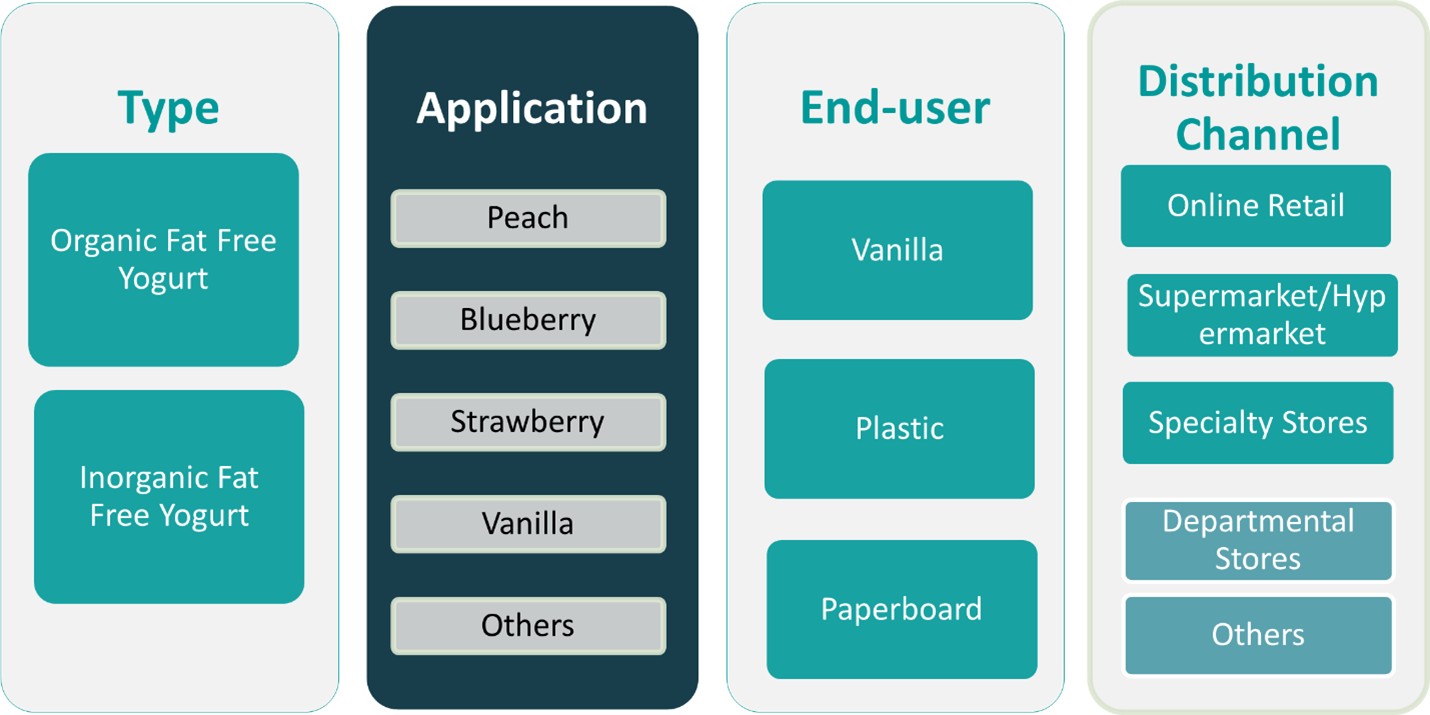
Market Drivers
Growing Health Consciousness
The growing health consciousness among UAE consumers is a primary driver of the fat-free yogurt market. With increasing awareness about the health risks associated with high-fat diets, particularly obesity, heart disease, and diabetes, consumers are actively seeking healthier food alternatives. For instance, the UAE Ministry of Health and Prevention has reported that over 39% of the adult population is obese, highlighting the need for low-calorie options like fat-free yogurt. Fat-free yogurt, known for its low-calorie content and high nutritional value, has become a popular choice among health-conscious individuals. As more consumers prioritize their well-being, the demand for fat-free yogurt continues to rise. This shift towards healthier dietary choices is propelling the growth of the fat-free yogurt market in the UAE.
Shift in Consumer Preferences Towards Low-Calorie Foods
The UAE market is witnessing a significant shift in consumer preferences towards low-calorie and low-fat foods. With the rising focus on weight management and maintaining a healthy lifestyle, fat-free yogurt has gained popularity as a convenient and nutritious option. As consumers become more cautious about their calorie intake, they are increasingly replacing higher-calorie snacks and desserts with fat-free yogurt. This trend is particularly prominent among millennials and young professionals, who are more likely to adopt health-conscious eating habits. As this demographic grows, the demand for fat-free yogurt continues to gain momentum.
Expanding Product Range and Accessibility
The expansion of the product range and the increased availability of fat-free yogurt in both retail and food service sectors are contributing to the market’s growth. Manufacturers are continuously innovating to offer a variety of fat-free yogurt options, including flavored, organic, and plant-based varieties. For instance, the UAE dairy market is seeing a rise in demand for lactose-free and plant-based dairy alternatives, catering to diverse consumer preferences. This variety caters to different consumer preferences, making fat-free yogurt a versatile option for a wide range of diets and lifestyles. Additionally, the increasing presence of fat-free yogurt in supermarkets, grocery stores, and cafes, along with online retail channels, has made it more accessible to consumers across the UAE. As the convenience and availability of fat-free yogurt improve, consumer adoption is expected to rise, further driving market growth.
Increasing Awareness of Probiotics and Digestive Health
The growing awareness of the benefits of probiotics and digestive health has significantly contributed to the demand for fat-free yogurt in the UAE. Probiotics, known for their positive impact on gut health, immunity, and digestion, are a key feature in yogurt products. Fat-free yogurt, which is rich in probiotics, has become a go-to option for consumers looking to enhance their digestive health without compromising on taste or nutrition. As people become more informed about the importance of gut health, particularly in the prevention of chronic diseases, the popularity of probiotic-rich foods like fat-free yogurt continues to rise. This growing emphasis on digestive wellness is fueling the market’s growth.
Market Trends
Rise in Demand for Plant-Based Alternatives
A significant trend in the UAE fat-free yogurt market is the growing demand for plant-based alternatives. As more consumers adopt vegan, lactose-free, and dairy-free diets, plant-based fat-free yogurt options are gaining traction. These alternatives, typically made from almond, soy, coconut, or oat milk, offer a non-dairy solution for health-conscious individuals who seek the benefits of yogurt without the lactose or animal products. For instance, the UAE dairy alternatives market has seen substantial growth due to the increasing adoption of plant-based diets, driven by health concerns and environmental awareness, which has led to a rise in demand for non-dairy yogurt alternatives. The increasing popularity of plant-based diets, driven by environmental concerns and ethical considerations, is pushing manufacturers to expand their product offerings to include plant-based fat-free yogurt. This trend is expected to continue as more consumers opt for sustainable and health-conscious food choices.
Innovation in Flavors and Functional Ingredients
Innovation in flavors and functional ingredients is another prominent trend in the UAE fat-free yogurt market. As consumers increasingly seek variety and added nutritional benefits, manufacturers are introducing a wide range of unique flavors and incorporating functional ingredients such as vitamins, minerals, and superfoods into their yogurt products. Examples include fat-free yogurts enriched with probiotics, omega-3 fatty acids, and antioxidants, which cater to consumers looking for both health benefits and taste. This focus on innovation helps meet the evolving preferences of health-conscious and adventurous consumers, making fat-free yogurt an appealing choice across diverse market segments.
Growth of Online and Convenient Retail Channels
The shift towards online shopping and the growing demand for convenience are influencing the fat-free yogurt market in the UAE. With consumers leading busy lifestyles, the ability to purchase products online or access them through convenient delivery services is becoming a key factor in their purchasing decisions. Supermarkets, grocery stores, and health food outlets are increasingly offering fat-free yogurt through e-commerce platforms and home delivery services. Additionally, the presence of fat-free yogurt in convenience stores and cafes has made it easier for consumers to incorporate these products into their daily routines. This trend toward accessible and hassle-free shopping experiences is expected to expand the reach of fat-free yogurt to a broader audience.
Focus on Clean Label and Organic Products
Another significant trend in the UAE fat-free yogurt market is the growing demand for clean label and organic products. Consumers are becoming more discerning about the ingredients in the food they consume, preferring products that are natural, free from artificial additives, and made with organic ingredients. For example, the UAE organic yogurt market has gained traction due to consumer preferences for healthier and more sustainable food options, reflecting a broader desire for transparency and purity in food production. Clean label products that highlight transparency in sourcing and production methods are gaining popularity, with many consumers opting for organic fat-free yogurt that aligns with their desire for purity and sustainability. This trend reflects a broader shift towards healthier, more natural food options, and manufacturers are responding by offering products that meet these consumer demands. Organic and clean label fat-free yogurts are expected to continue to be in high demand as the market evolves.
Market Challenges Analysis
High Competition in the Dairy Segment
One of the key challenges faced by the UAE fat-free yogurt market is the intense competition within the broader dairy sector. The market is crowded with numerous local and international brands offering various dairy and yogurt products, making it difficult for fat-free yogurt brands to stand out. For instance, the UAE dairy market is characterized by a diverse range of products, including milk, cheese, and yogurt, which are often preferred for their nutritional benefits and convenience, as noted by the UAE Ministry of Health and Prevention. Established brands with a strong presence and consumer loyalty can dominate the market, often overshadowing smaller, emerging players. Additionally, the competition from alternative dairy products, such as plant-based yogurts and other healthy snacks, poses a challenge for fat-free yogurt manufacturers. To overcome this, brands must focus on differentiating their products through innovation, quality, and effective marketing strategies to capture a larger share of the market.
Price Sensitivity and Consumer Affordability
Price sensitivity remains another challenge for the UAE fat-free yogurt market, as consumers are becoming more cautious about their spending habits, especially in times of economic uncertainty. While fat-free yogurt is positioned as a healthier option, its price is often higher than that of regular yogurt, which can deter price-conscious consumers. Additionally, organic and premium fat-free yogurt variants, which are becoming increasingly popular, tend to be more expensive, further limiting their appeal to a broader audience. To address this challenge, manufacturers need to offer competitive pricing or value-added benefits to entice consumers. They must balance the need for affordability while maintaining product quality and health benefits to meet the diverse needs of the market.
Market Opportunities
The UAE fat-free yogurt market presents significant opportunities driven by the increasing health-conscious consumer base. As more people prioritize wellness, there is growing demand for low-calorie, nutritious food options, making fat-free yogurt a key player in the health food segment. Additionally, the rising awareness of the importance of probiotics and digestive health offers a substantial opportunity for brands to position fat-free yogurt as a functional food that promotes gut health, immunity, and overall well-being. With consumers increasingly seeking alternatives to traditional dairy products, the market for fat-free yogurt, especially plant-based versions, is set to expand. Manufacturers who innovate with flavors, functional ingredients, and fortified products can tap into the health-focused demographic looking for both taste and nutritional benefits.
Moreover, the growing trend of online shopping and the convenience-driven retail landscape offers an excellent opportunity for fat-free yogurt brands to expand their reach. The UAE’s strong e-commerce infrastructure and the popularity of home delivery services allow manufacturers to cater to busy, urban consumers who seek quick and easy access to healthy food options. As more consumers prefer shopping from the comfort of their homes, especially post-pandemic, leveraging online platforms for distribution can significantly boost sales. Additionally, targeting the increasing demand for organic and clean-label products further enhances market prospects. By aligning with consumer preferences for transparency and sustainability, fat-free yogurt brands can capture a larger share of the market and build stronger customer loyalty.
Market Segmentation Analysis:
By Type:
The UAE fat-free yogurt market can be divided into two main segments based on type: organic and inorganic fat-free yogurt. Organic fat-free yogurt is gaining significant traction due to the increasing consumer preference for natural and clean-label products. Organic yogurt is produced without synthetic pesticides, antibiotics, or hormones, appealing to health-conscious consumers seeking environmentally friendly and sustainable options. As awareness about the benefits of organic foods continues to rise, organic fat-free yogurt is expected to capture a larger market share. In contrast, inorganic fat-free yogurt, which is produced using conventional methods, remains a popular choice due to its wider availability and relatively lower price point. While inorganic fat-free yogurt holds a significant portion of the market, the growing trend towards organic and clean-label products provides an opportunity for brands to differentiate themselves by offering organic variants to meet the rising consumer demand for healthier, more natural food options.
By Application:
The UAE fat-free yogurt market is further segmented based on application, with the most popular flavors being peach, blueberry, strawberry, and vanilla, along with others. Peach-flavored fat-free yogurt has seen increased demand, particularly among consumers looking for sweet yet healthy snacks. Blueberry and strawberry-flavored fat-free yogurts are also growing in popularity due to their appealing taste profiles and the added health benefits of antioxidants, making them attractive to health-conscious consumers. Vanilla remains a classic and widely loved flavor, often preferred for its versatility and smooth taste. Additionally, other flavor options, such as mango, coconut, and mixed fruit, are gaining momentum as manufacturers innovate to meet diverse consumer preferences. This diverse range of flavors allows brands to cater to a broader audience and target specific demographic groups, including those seeking unique, premium, or exotic flavors. As the demand for variety increases, manufacturers are focusing on expanding their flavor offerings to remain competitive in the market.
Segments:
Based on Type:
- Organic Fat-Free Yogurt
- Inorganic Fat-Free Yogurt
Based on Application:
- Peach
- Blueberry
- Strawberry
- Vanilla
- Others
Based on End- User:
- Glass
- Plastic
- Paperboard
Based on Distribution Channel:
- Online Retail
- Supermarket/Hypermarket
- Specialty Stores
- Departmental Stores
- Others
Based on the Geography:
- Abu Dhabi
- Dubai
- Sharjah
- Ajman
- Fujairah
- Ras Al Khaimah
- Umm Al Quwain
Regional Analysis
Dubai
Dubai holds the largest market share in the UAE, accounting for approximately 40% of the fat-free yogurt market. Dubai’s position as the commercial hub of the UAE, along with its diverse population, drives high demand for health-conscious products. The city’s residents are increasingly inclined toward nutritious and low-calorie food options, which has spurred the growth of fat-free yogurt, especially in supermarkets, cafes, and online platforms. Dubai's robust retail infrastructure and high disposable income levels further bolster the demand for premium fat-free yogurt products.
Abu Dhabi
Abu Dhabi follows closely behind with a market share of around 30%. As the capital of the UAE, Abu Dhabi has a large population that places a strong emphasis on health and wellness, which drives the demand for fat-free yogurt. The emirate’s affluent consumer base is keen on adopting healthier lifestyles, making fat-free yogurt a preferred choice. Moreover, the growing number of health food stores and an increasing presence of international brands contribute to the growth of the market in Abu Dhabi. The region’s focus on promoting health and fitness aligns well with the demand for fat-free and functional foods.
Sharjah
In Sharjah, the market share is estimated to be around 15%. The growing awareness of healthy eating habits, combined with a rising number of health-conscious consumers, has contributed to the increasing demand for fat-free yogurt. Sharjah's proximity to Dubai also allows for easier distribution and access to fat-free yogurt, further driving its growth. As consumer preferences evolve, Sharjah is expected to see a steady rise in demand, particularly for organic and plant-based fat-free yogurt options, catering to both traditional and modern dietary needs.
Ajman, Fujairah, Ras Al Khaimah, and Umm Al Quwain
Ajman, Fujairah, Ras Al Khaimah, and Umm Al Quwain collectively account for the remaining 15% of the UAE fat-free yogurt market. While these regions have smaller market shares compared to the major cities, they are experiencing gradual growth due to increasing consumer awareness of healthy food options. The rise in urbanization, along with the expansion of retail outlets in these regions, has contributed to the steady increase in demand for fat-free yogurt. As the UAE continues to focus on promoting health and wellness, these regions will see continued growth in the consumption of fat-free yogurt.
Key Player Analysis
- Nestle
- Almarai
- Arla Foods amba
- ASDA
- Brummel & Brown
- Chobani, LLC
- Danone S.A.
- FAGE International S.A.
- Graham's Dairies Limited
- Lactalis
- Nature’s Fynd
- Nestle, S.A.
- Riverford Organic Farmers Ltd
- Sainsbury's
- Stonyfield
- Target Corporation
- Yoplait by General Mills Inc.
Competitive Analysis
The UAE fat-free yogurt market is highly competitive, with leading players such as Nestle, Almarai, Danone, Chobani, Arla Foods, FAGE, Al Ain Dairy, and Al Rawabi Dairy driving growth. Leading companies leverage their strong brand recognition, diverse product portfolios, and wide distribution networks to maintain a competitive edge. Innovation plays a pivotal role, as brands introduce new variants with added functional ingredients, such as probiotics, to meet the growing consumer demand for health-conscious products. Additionally, the market is witnessing increased competition from non-dairy alternatives, including plant-based yogurt, catering to the rising number of consumers seeking lactose-free or vegan options.
To maintain competitiveness, brands also focus on affordability and convenience, offering products through various retail channels, including supermarkets, online platforms, and health food stores. Marketing and promotional strategies, such as influencer partnerships and health-focused campaigns, are increasingly being used to attract health-conscious consumers. Furthermore, the emphasis on product differentiation through unique flavors, organic ingredients, and clean-label certifications has become a key strategy for brands aiming to secure a larger share of the market. As consumer preferences evolve, the companies that can balance innovation, quality, and consumer trust will likely lead the market.
Recent Developments
- In October 2024, Nestlé Lindahls expanded its high-protein range with new flavors, including fat-free protein yogurt pouches. However, these are not specifically labeled as fat-free yogurt but are part of a broader health-focused product line.
- In July 2024, Nestlé developed a technology to reduce fat in dairy ingredients by up to 60% without compromising taste or texture, though this is not specifically for fat-free yogurt.
Market Concentration & Characteristics
The UAE fat-free yogurt market exhibits moderate concentration, with a few key players dominating the market. These companies control a significant share, thanks to their established brand presence, extensive distribution channels, and diverse product offerings. However, the market is also witnessing the entry of new players, including local and international brands, increasing competition and driving innovation. The market is characterized by a growing demand for health-conscious and functional foods, leading to the introduction of new fat-free yogurt variants, including organic and plant-based options. Consumer preferences are evolving toward natural, clean-label products with added health benefits such as probiotics and high protein content. As a result, brands are focusing on product differentiation and expanding their portfolios to cater to the rising health awareness among consumers. Additionally, the increasing availability of fat-free yogurt through retail stores, supermarkets, and e-commerce platforms is contributing to the market's dynamic nature.
Report Coverage
The research report offers an in-depth analysis based on Type, Application, End-User, Distribution Channel and Geography. It details leading market players, providing an overview of their business, product offerings, investments, revenue streams, and key applications. Additionally, the report includes insights into the competitive environment, SWOT analysis, current market trends, as well as the primary drivers and constraints. Furthermore, it discusses various factors that have driven market expansion in recent years. The report also explores market dynamics, regulatory scenarios, and technological advancements that are shaping the industry. It assesses the impact of external factors and global economic changes on market growth. Lastly, it provides strategic recommendations for new entrants and established companies to navigate the complexities of the market.
Future Outlook
- The UAE fat-free yogurt market is expected to continue growing at a robust pace, driven by increasing health-conscious consumer behavior.
- Demand for plant-based fat-free yogurt alternatives will rise as more consumers shift to vegan and lactose-free diets.
- The market will see an increase in product innovation, with new flavors and functional ingredients like probiotics being introduced.
- Organic fat-free yogurt options will become more popular as consumers seek cleaner, natural food choices.
- Retail expansion, especially through e-commerce and online platforms, will enhance product accessibility and drive market growth.
- Manufacturers will focus on reducing sugar content and fortifying products with added nutrients to appeal to health-focused consumers.
- There will be a stronger emphasis on sustainability, with brands adopting eco-friendly packaging and sourcing practices.
- Local brands are expected to increase their market share by offering regionally tailored products that cater to local tastes.
- The increasing trend of fitness and wellness in the UAE will continue to support the demand for fat-free yogurt as a nutritious snack.
- Strategic partnerships between global and regional brands will boost the distribution and availability of fat-free yogurt across the UAE.

Request a Free Sample
Fill in your details and we'll send you a free sample report.
- Sample data tables & charts
- Research methodology
Market Dynamics
Growing Health Consciousness
A rising awareness of obesity, heart disease, and diabetes in the UAE is prompting consumers to seek healthier, low-calorie food options, making fat-free yogurt an attractive choice for those prioritizing wellness.
Shift Toward Low-Calorie and Functional Foods
Consumers, especially millennials and young professionals, are increasingly replacing high-calorie snacks with fat-free yogurt due to its convenience, nutritional value, and alignment with weight management goals.
Product Innovation and Variety
Manufacturers are expanding their fat-free yogurt offerings with new flavors, organic and plant-based options, and functional ingredients like probiotics, appealing to diverse dietary preferences and boosting market growth.
Expansion of Retail and Online Channels
The growing presence of fat-free yogurt in supermarkets, specialty stores, and e-commerce platforms across the UAE is making these products more accessible, supporting higher adoption rates among urban and health-focused consumers.
Rising Demand for Plant-Based and Clean Label Products
Increasing interest in vegan, lactose-free, and organic diets is driving demand for plant-based and clean label fat-free yogurts, encouraging brands to innovate and cater to evolving consumer expectations for transparency and sustainability.
Need a Custom Version of This Report?
Tailor the scope, geography, or segments to your exact requirements.
- Custom geography or segment scope
- Direct access to our analyst team
Frequently Asked Questions
What is the current size of the UAE Fat-Free Yogurt Market?
What factors are driving the growth of the UAE Fat-Free Yogurt Market?
What are some challenges faced by the UAE Fat-Free Yogurt Market?
Who are the major players in the UAE Fat-Free Yogurt Market?
Table of Content
Chapter 1 Market Segmentation
- 1.1 Segmentation Framework
- 1.1.1 Product and Service Classification
- 1.1.2 Application and End-Use Classification
- 1.1.3 Technology and Solution Classification
- 1.1.4 Customer and Distribution Channel Classification
- 1.1.5 Geographic Segmentation
- 1.1.6 Market Segment Definitions and Boundaries
- 1.2 By Type
- 1.2.1 Organic Fat-Free Yogurt
- 1.2.2 Inorganic Fat-Free Yogurt
- 1.3 By Application
- 1.3.1 Peach
- 1.3.2 Blueberry
- 1.3.3 Strawberry
- 1.3.4 Vanilla
- 1.3.5 Others
Chapter 2 Introduction
- 2.1 Report Objectives and Scope
- 2.2 Product Definition and Industry Terminology
- 2.3 Market Inclusions and Exclusions
- 2.4 Research Process
- 2.4.1 Primary Research and Expert Interviews
- 2.4.2 Secondary Research and Source Review
- 2.4.3 Top-Down and Bottom-Up Estimation
- 2.4.4 Data Triangulation and Verification
- 2.5 Market Size Measurement Basis
- 2.5.1 2024: USD 75.09 million → 2032: USD 146.37 million
- 2.6 Historical and Forecast Reference Periods
- 2.6.1 Base Year: 2024
- 2.6.2 Forecast Period: 2024-2032
- 2.7 Research Assumptions and Limitations
Chapter 3 Executive Summary
- 3.1 Market Snapshot and Key Findings
- 3.2 Base-Year Market Size, 2024
- 3.3 Forecast Market Size, 2032
- 3.4 Revenue and Volume Growth Outlook
- 3.5 Key Demand and Supply Indicators
- 3.6 Leading Market Segments
- 3.7 Fastest-Growing Market Opportunities
- 3.8 Regional Performance Highlights
- 3.9 Technology and Industry Transformation
- 3.10 Competitive Landscape Summary
- 3.11 Analyst View and Strategic Implications
Chapter 4 UAE Fat Free Yogurt Market Trends and Developments
- 4.1 Historical Industry Development
- 4.2 Recent Market Trends and Developments
- 4.3 Demand and Customer Behavior Trends
- 4.4 Technology and Product Innovation
- 4.5 Artificial Intelligence, Automation and Digitalization
- 4.6 Local Manufacturing and Supply Chain Realignment
- 4.7 Industry Partnerships, Mergers and Acquisitions
- 4.8 Sustainability and Circular Economy Developments
- 4.9 Government and Private Sector Investment Trends
- 4.10 Emerging Business Models and Commercialization
- 4.11 Industry Developments and Announcements
Chapter 5 UAE Fat Free Yogurt Market Production, Supply and Demand Analysis
- 5.1 Demand Trend and Consumption Analysis
- 5.2 Demand Forecast, 2024-2032
- 5.3 Production and Output Trend
- 5.4 Production and Output Forecast, 2024-2032
- 5.5 Installed Capacity and Capacity Utilization
- 5.6 Company-Wise Production Plants and Statistics
- 5.6.1 Installed Production Capacity
- 5.6.2 Actual Production
- 5.6.3 Planned Capacity and Expansion Targets
- 5.7 Supply Chain Structure and Procurement Trends
- 5.8 Supply-Demand Gap and Bottlenecks
- 5.9 Import Dependence and Sourcing Structure
- 5.10 Contract Manufacturing and Outsourcing
- 5.11 Regional Supply and Demand Concentration
Chapter 6 UAE Fat Free Yogurt Market Pricing Analysis
- 6.1 Pricing Structure and Measurement
- 6.2 Historical Pricing Trends
- 6.3 Pricing Outlook, 2024-2032
- 6.4 Average Selling Price and Unit Economics
- 6.5 Pricing by Product and Market Segment
- 6.6 Geographic Pricing Differences
- 6.7 Key Input, Energy, Labor and Logistics Costs
- 6.8 Contract Pricing and Purchasing Models
- 6.9 Pricing Sensitivity and Competitive Positioning
- 6.10 Price, Margin and Profitability Implications
Chapter 7 UAE Fat Free Yogurt Market Dynamics
- 7.1 Market Growth Drivers
- 7.1.1 Demand-Side Drivers
- 7.1.2 Technology and Innovation Drivers
- 7.1.3 Infrastructure and Investment Drivers
- 7.1.4 Regulatory and Policy Drivers
- 7.2 Market Restraints
- 7.2.1 Cost and Affordability Constraints
- 7.2.2 Technology and Adoption Barriers
- 7.2.3 Supply Chain and Operational Constraints
- 7.3 Market Challenges
- 7.3.1 Competitive Pressure and Margin Erosion
- 7.3.2 Skills, Infrastructure and Implementation Gaps
- 7.4 Emerging Market Opportunities
- 7.5 Market Dynamics Impact and Time-Horizon Assessment
Chapter 8 UAE Fat Free Yogurt Value Chain Analysis
- 8.1 Industry Value Chain Overview
- 8.2 Upstream Suppliers and Critical Inputs
- 8.3 Technology and Component Providers
- 8.4 Manufacturing or Service Delivery
- 8.5 Distribution, Channel Partners and Integrators
- 8.6 Downstream Applications and End Users
- 8.7 Value Addition and Profit Pools
- 8.8 Vertical Integration and Outsourcing
- 8.9 Supplier Concentration and Risk
- 8.10 Supply Chain Localization and Resilience
Chapter 9 UAE Fat Free Yogurt Market Regulations and Policies
- 9.1 Relevant Laws, Standards and Compliance Frameworks
- 9.2 Product, Service, Safety and Quality Requirements
- 9.3 Government Policies, Incentives and Subsidies
- 9.4 Imports, Exports and Trade Barriers
- 9.5 Public Procurement and Local Content Requirements
- 9.6 Environmental and Sustainability Compliance
- 9.7 Upcoming Policy Changes and Market Implications
Chapter 10 UAE Fat Free Yogurt Market Hotspots and Opportunities
- 10.1 Market Opportunity Mapping and Growth Hotspots
- 10.2 High-Growth Applications and Customer Groups
- 10.3 Underserved Markets and White-Space Opportunities
- 10.4 Emerging Technology and Product Opportunities
- 10.5 New Capacity and Investment Hotspots
- 10.6 Market Entry and Expansion Opportunities
- 10.7 Distribution and Partnership Opportunities
- 10.8 Near-Term and Long-Term Commercial Potential
- 10.9 Opportunity Attractiveness and Execution Risks
Chapter 11 UAE Fat Free Yogurt Market Outlook, 2024-2032
- 11.1 Market Size and Analysis
- 11.1.1 Revenue (Market Measurement: 2024: USD 75.09 million → 2032: USD 146.37 million)
- 11.1.2 Market Volume and Quantity Sold
- 11.1.3 Historical Market Size
- 11.1.4 Base-Year Market Size, 2024
- 11.2 Market Forecast, 2024-2032
- 11.2.1 Revenue Forecast to 2032
- 11.2.2 Volume Forecast to 2032
- 11.2.3 CAGR and Year-on-Year Growth
- 11.2.4 Incremental Revenue Opportunity
- 11.3 Forecast Assumptions and Scenario Analysis
- 11.3.1 Base-Case Forecast
- 11.3.2 Optimistic and Conservative Scenarios
- 11.3.3 Technology, Pricing and Policy Sensitivities
- 11.4 Market Attractiveness and Growth Outlook
Chapter 12 UAE Fat Free Yogurt Market Segmentation and Outlook
- 12.1 Segmentation Summary and Market Shares, 2024
- 12.2 Largest and Fastest-Growing Segments
- 12.3 By Type - Market Size and Forecast, 2024-2032
- 12.3.1 Segment Definition and Scope
- 12.3.2 Historical Market Size
- 12.3.3 Revenue Forecast, 2024-2032
- 12.3.4 Volume Forecast, 2024-2032
- 12.3.5 Base-Year Market Share, 2024
- 12.3.6 Segment CAGR and Growth Drivers
- 12.3.7 Subsegment Market Size and Forecast
- 12.3.7.1 Organic Fat-Free Yogurt
- 12.3.7.2 Inorganic Fat-Free Yogurt
- 12.3.8 Subsegment Pricing and Adoption Trends
- 12.3.9 Leading Suppliers and Competition
- 12.3.10 Regional Demand and Opportunities
- 12.4 By Application - Market Size and Forecast, 2024-2032
- 12.4.1 Segment Definition and Scope
- 12.4.2 Historical Market Size
- 12.4.3 Revenue Forecast, 2024-2032
- 12.4.4 Volume Forecast, 2024-2032
- 12.4.5 Base-Year Market Share, 2024
- 12.4.6 Segment CAGR and Growth Drivers
- 12.4.7 Subsegment Market Size and Forecast
- 12.4.7.1 Peach
- 12.4.7.2 Blueberry
- 12.4.7.3 Strawberry
- 12.4.7.4 Vanilla
- 12.4.7.5 Others
- 12.4.8 Subsegment Pricing and Adoption Trends
- 12.4.9 Leading Suppliers and Competition
- 12.4.10 Regional Demand and Opportunities
- 12.5 Segment Growth Comparison
- 12.6 Segment Attractiveness and Priority Matrix
Chapter 13 UAE Fat Free Yogurt End-Use and Application Market Outlook
- 13.1 End-Use Industry and Customer Demand Structure
- 13.2 Leading Applications and Customer Groups
- 13.3 End-Use Market Size, Share and Forecast
- 13.4 Major End-Use Industry Deep Dives
- 13.4.1 Customer Requirements and Use Cases
- 13.4.2 Demand and Replacement Cycles
- 13.4.3 Technical and Regulatory Considerations
- 13.4.4 Purchasing and Procurement Models
- 13.4.5 Leading Vendors and Distribution Channels
- 13.4.6 Forecast and Commercial Opportunities
- 13.5 Emerging Applications and Cross-Segment Demand
- 13.6 End-Use Industry Investment Priorities
Chapter 14 UAE Fat Free Yogurt Geographic Market Outlook, 2024-2032
- 14.1 Domestic Market Distribution and Demand Clusters
- 14.2 State- or Province-Wise Market Size and Forecast, 2024-2032
- 14.3 City and Metropolitan Market Outlook
- 14.4 Industrial, Manufacturing and Commercial Clusters
- 14.5 Geographic Concentration of Key End Users
- 14.6 Local Pricing and Purchasing Differences
- 14.7 Domestic Production Facilities and Capacity Map
- 14.8 Local Infrastructure and Project Pipeline
- 14.9 State-Level Policy and Incentive Differences
- 14.10 Subnational Investment Hotspots and Opportunities
- 14.11 Distribution and Logistics Networks
- 14.12 Domestic Competitive Footprint
Chapter 15 UAE Fat Free Yogurt Technology, Innovation and Sustainability Outlook
- 15.1 Technology Landscape and Maturity
- 15.2 Product, Process and Service Innovation
- 15.3 AI, Automation and Digital Tools in the Industry
- 15.4 Technology Adoption and Performance Benchmarking
- 15.5 Innovation Pipeline and R&D Investment
- 15.6 Patent and Intellectual Property Trends
- 15.7 Energy Efficiency and Resource Management
- 15.8 Sustainability, Recycling and Circularity
- 15.9 Technology Roadmap, 2024-2032
- 15.10 Risks of Obsolescence and Technology Substitution
Chapter 16 UAE Fat Free Yogurt Market Key Strategic Imperatives
- 16.1 Growth and Market Entry Priorities
- 16.2 High-Return Products and Segments
- 16.3 Pricing, Profitability and Cost Optimization
- 16.4 Technology Investment and Product Differentiation
- 16.5 Supply Chain Localization and Resilience
- 16.6 Distribution and Customer Acquisition
- 16.7 Partnership, Acquisition and Capacity Strategy
- 16.8 Regional Expansion Priorities
- 16.9 Short-, Medium- and Long-Term Actions
Chapter 17 Competition Outlook
- 17.1 Industry Competition Characteristics
- 17.2 Market Structure and Concentration
- 17.3 Market Share and Competitive Positioning, 2024
- 17.4 Company-Wise Revenue and Product Benchmarking
- 17.5 Production and Service Capacity Benchmarking
- 17.6 Technology, Pricing and Differentiation
- 17.7 Regional Footprint and Distribution Strength
- 17.8 Mergers, Acquisitions and Strategic Alliances
- 17.9 New Entrants and Competitive Threats
- 17.10 Porter's Five Forces and Industry Attractiveness
- 17.11 Competitive Outlook, 2024-2032
Chapter 18 Company Profiles
- 18.1 Company Coverage and Selection Criteria
- 18.2 Nestle
- 18.2.1 Business Description
- 18.2.2 Company Ownership and Geographic Presence
- 18.2.3 Product and Service Portfolio
- 18.2.4 Manufacturing and Operating Footprint
- 18.2.5 Production Capacity and Expansion Plans
- 18.2.6 Financial Performance and Investment
- 18.2.7 Market Share and Competitive Position
- 18.2.8 Technology and Innovation Capabilities
- 18.2.9 Strategic Alliances or Partnerships
- 18.2.10 Recent Developments
- 18.2.11 Growth Strategy and Outlook
- 18.3 Almarai
- 18.4 Danone S.A.
- 18.5 Chobani, LLC
- 18.6 Arla Foods amba
- 18.7 FAGE International S.A.
- 18.8 Al Ain Dairy
- 18.9 Al Rawabi Dairy
- 18.10 Yoplait by General Mills Inc.
- 18.11 Lactalis
- 18.12 Other Relevant Market Participants
Note: Every listed company is profiled on the structure shown under the first company. The company list is preliminary and may change based on research findings, market developments, data availability and client requirements.
Chapter 19 Disclaimer
- 19.1 Research and Forecast Disclaimer
- 19.2 Data Source and Estimation Limitations
Note: The depth of individual sections depends on data availability for this market. Volume, capacity, trade and other unit-based metrics are included where applicable.