
| REPORT ATTRIBUTE | DETAILS |
|---|---|
| Historical Period | 2019-2022 |
| Base Year | 2023 |
| Forecast Period | 2024-2032 |
| U.S. Custom Apparel Market Size 2024 | USD 678.40 million |
| U.S. Custom Apparel Market, CAGR | 8% |
| U.S. Custom Apparel Market Size 2032 | USD 1,255.41 million |
Market Overview:
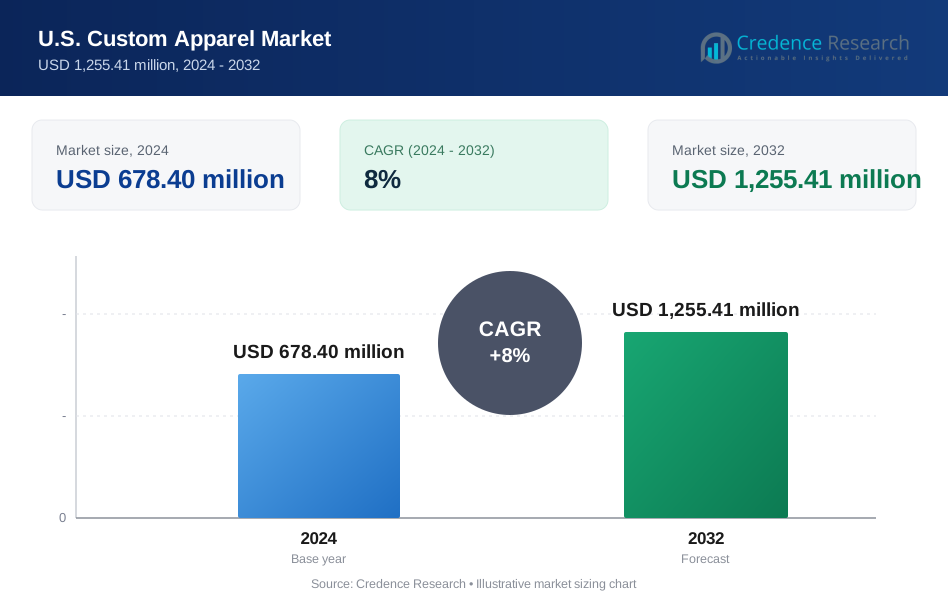
The U.S. Custom Apparel Market is projected to grow from USD 678.40 million in 2024 to an estimated USD 1,255.41 million by 2032, with a compound annual growth rate (CAGR) of 8% from 2024 to 2032.
Several key drivers are fueling the growth of the U.S. custom apparel market. Rising consumer preference for individuality and exclusivity in fashion is a significant factor. Millennials and Gen Z, in particular, seek apparel that reflects their unique identities, prompting brands and manufacturers to innovate and offer customized solutions. The increasing influence of social media and fashion influencers has further bolstered this demand, as personalized fashion gains visibility and popularity. Additionally, technological advancements in apparel customization, such as direct-to-garment printing, 3D printing, and embroidery, have made high-quality customization more accessible and affordable. The shift towards sustainability in fashion, with a focus on reducing overproduction, has also driven demand for custom, made-to-order apparel, as it minimizes waste and aligns with eco-conscious values.
Regionally, the U.S. custom apparel market is concentrated in urban areas, with cities like New York, Los Angeles, and Chicago serving as major hubs for personalized fashion. The West Coast leads in adoption due to its strong culture of innovation and creativity, followed by the East Coast, which benefits from a blend of traditional and modern fashion influences. The Midwest and Southern regions are witnessing steady growth as awareness of custom apparel spreads and local designers and retailers adopt customization technologies. Key players such as Vistaprint, Custom Ink, and Printful are capitalizing on these regional trends, leveraging their digital platforms and advanced printing capabilities to cater to diverse consumer needs across the U.S.
Market Insights:
- The U.S. custom apparel market is projected to grow from USD 678.40 million in 2024 to USD 1,255.41 million by 2032, with a CAGR of 8% during the forecast period.
- Rising consumer demand for individuality and exclusivity is a major driver, with Millennials and Gen Z leading the trend for personalized clothing.
- Advancements in technologies such as direct-to-garment printing, 3D printing, and AI-driven design tools are making high-quality customization more accessible and affordable.
- E-commerce platforms and on-demand production models are revolutionizing the market, offering convenience and reducing inventory waste.
- The West Coast leads the market with 35% share due to innovation and sustainability focus, followed by the East Coast and Midwest.
- Sustainability is a key focus, with eco-friendly materials and made-to-order production aligning with consumer preferences.
- Challenges include high production costs, supply chain complexities, and limited awareness in non-urban areas, requiring strategic innovation to overcome barriers.
Market Drivers:
Rising Demand for Individuality and Personal Expression
The increasing consumer desire for individuality and self-expression is one of the primary drivers of the U.S. custom apparel market. Consumers, particularly Millennials and Gen Z, prioritize unique clothing that reflects their personal styles and preferences. For instance, Printful has seen a significant rise in demand for personalized clothing, with customers frequently opting for unique designs that reflect their personal styles and preferences. This cultural shift has pushed brands to offer tailored solutions, allowing individuals to design their clothing or add custom elements such as logos, text, or specific patterns. The growing prevalence of social media platforms has amplified this trend, as users seek distinctive apparel to stand out in online and offline spaces. This heightened focus on personalization continues to fuel demand for custom apparel across various demographics.
Advancements in Digital Printing and Customization Technologies
Technological innovations in apparel customization are transforming the U.S. custom apparel market. For instance, Printful has adopted advanced direct-to-garment printing techniques, which have streamlined production processes and enabled faster customization. Advanced techniques such as direct-to-garment printing, heat transfer technology, and 3D printing have streamlined production processes, enabling faster and more cost-effective customization. These advancements have made high-quality, customizable clothing more accessible to consumers and businesses. Additionally, AI-driven design tools and user-friendly online platforms allow customers to visualize their creations before placing orders, enhancing the customization experience. The integration of these technologies is not only driving growth but also encouraging small businesses and startups to enter the market.
Growth of E-Commerce Platforms and On-Demand Services
The rise of e-commerce has significantly contributed to the expansion of the U.S. custom apparel market. Online platforms like Custom Ink, Printful, and Zazzle provide consumers with a seamless and interactive shopping experience, offering a wide range of customization options at their fingertips. On-demand production models, which enable items to be manufactured only after an order is placed, have also gained traction. This approach reduces inventory waste and aligns with the growing consumer preference for sustainable practices. The convenience of online shopping, coupled with rapid delivery options, has made custom apparel more appealing to a broad audience.
Shift Towards Sustainability and Eco-Friendly Practices
Sustainability has emerged as a crucial driver in the custom apparel market. For instance, Threadless has integrated eco-friendly practices by using organic and recycled materials in their customizable clothing options, resonating with environmentally conscious buyers. Consumers are increasingly conscious of the environmental impact of their purchases, favoring brands that prioritize eco-friendly practices. Custom apparel aligns well with this trend, as made-to-order production minimizes waste and overproduction. Furthermore, the use of organic and recycled materials in customizable clothing options resonates with environmentally conscious buyers. This shift towards sustainable fashion is encouraging more brands to adopt ethical sourcing and production practices, further driving market growth.
Market Trends:
Integration of Artificial Intelligence in Customization Processes
The integration of artificial intelligence (AI) in the customization process is revolutionizing the U.S. custom apparel market. For instance, The ODD Factory, a custom clothing manufacturer in Sydney, has started incorporating AI into its production processes to improve efficiency, reduce costs, and enhance the overall quality of its products. AI-powered tools allow consumers to visualize their designs in real-time, offering personalized recommendations based on preferences, body types, and trending styles. These technologies enhance the user experience by simplifying design creation and ensuring accurate fitting. AI is also being used in predictive analytics to anticipate consumer demand and preferences, enabling brands to refine their offerings and streamline production. This trend reflects a broader shift towards the use of advanced technologies to cater to increasingly tech-savvy consumers.
Expansion of Direct-to-Consumer (DTC) Models
Direct-to-consumer models are gaining prominence in the custom apparel market as brands seek to establish a more direct connection with their customers. By bypassing traditional retail channels, companies can offer personalized apparel at competitive prices while maintaining greater control over their branding and customer relationships. DTC platforms enable a seamless customization experience through dedicated websites and mobile applications. This trend has also encouraged established retailers to invest in their digital infrastructure and offer tailored apparel options directly to consumers. The success of DTC models highlights a shift in consumer purchasing behavior, with a preference for convenience and unique products. For instance, Cuts is a DTC brand that focuses on creating high-quality, comfortable clothing for men, emphasizing a direct relationship with its customers through its online platform.
Adoption of Sustainable and Localized Production
Localized production is emerging as a significant trend in the U.S. custom apparel market. Many companies are investing in domestic manufacturing facilities to reduce lead times, improve quality control, and support local economies. This approach also aligns with the growing emphasis on sustainability, as it minimizes the environmental impact associated with long supply chains. Consumers increasingly value transparency in production practices, prompting brands to adopt eco-friendly materials and processes. For example, American Giant manufactures its clothing entirely in the United States, reducing its carbon footprint by cutting down on transportation emissions. Localized, sustainable production not only enhances brand reputation but also appeals to a growing segment of socially and environmentally conscious buyers.
Growing Popularity of Collaborative Customization
Collaborative customization is becoming a notable trend, especially among younger demographics. This approach involves active participation from customers, who work with brands or designers to co-create apparel that aligns with their vision. Collaborative customization fosters a sense of ownership and strengthens customer loyalty. Social media platforms play a pivotal role in this trend, enabling customers to share their designs and collaborate with influencers or communities. By emphasizing creativity and co-creation, brands are creating unique opportunities for engagement and differentiation in a competitive market. For instance, brands like Nike have embraced this model through initiatives like NIKEiD, allowing consumers to design their own footwear, thereby tapping into consumer demand for unique products and gathering valuable data on customer preferences
Market Challenges Analysis:
High Production Costs and Pricing Challenges
One of the primary restraints in the U.S. custom apparel market is the high production cost associated with personalized clothing. Customization often requires specialized equipment, skilled labor, and advanced design software, which can increase operational expenses. For businesses, maintaining competitive pricing while managing production costs becomes a significant challenge. Smaller businesses and startups, in particular, struggle to achieve economies of scale, which limits their ability to offer affordable custom apparel to a broader consumer base.
Supply Chain Complexities and Lead Time Issues
The complexity of managing a supply chain for custom apparel poses another challenge for market players. The made-to-order nature of custom clothing requires seamless coordination between designers, manufacturers, and suppliers. Any disruption in the supply chain, such as delays in sourcing raw materials or shipping finished products, can lead to extended lead times and dissatisfied customers. These challenges are further exacerbated by the need for rapid turnaround times to meet consumer expectations in the digital age.
Limited Consumer Awareness and Market Penetration
Despite growing demand, limited consumer awareness about the availability and benefits of custom apparel remains a challenge, particularly in non-urban and less tech-savvy demographics. Many potential customers are unfamiliar with the customization process or perceive it as expensive and time-consuming. Overcoming this barrier requires significant investment in marketing and consumer education, which may not be feasible for all market players.
Sustainability and Ethical Concerns
While sustainability is a key trend driving the market, it also presents challenges. The adoption of eco-friendly materials and practices often incurs higher costs, making it difficult for brands to strike a balance between affordability and sustainability. Additionally, ensuring ethical labor practices and transparent sourcing is essential but adds another layer of complexity for businesses operating in this competitive market.
Market Opportunities:
The U.S. custom apparel market presents significant growth opportunities driven by advancements in technology and evolving consumer preferences. The increasing adoption of digital tools, such as AI-driven design platforms and 3D printing, has made customization more accessible and cost-effective, opening avenues for businesses to attract a broader customer base. The integration of on-demand production models further enhances market potential by reducing waste and aligning with sustainable practices, which resonate strongly with eco-conscious consumers. Additionally, the proliferation of e-commerce platforms provides a seamless shopping experience, enabling brands to reach diverse demographics across the U.S.
Another major opportunity lies in the untapped potential of niche markets and collaborations. Custom apparel tailored for specific communities, events, or organizations offers a lucrative avenue for growth. The rising popularity of personalized corporate wear, sports team merchandise, and wedding or event attire highlights the scope for innovation and diversification. Moreover, partnerships with influencers and local designers can amplify brand reach, particularly among younger consumers who value individuality and authenticity. By leveraging technology, fostering collaborations, and catering to niche segments, businesses in the custom apparel market can capitalize on emerging trends and secure a competitive edge in this dynamic industry.
Market Segmentation Analysis:
The U.S. custom apparel market is segmented by type, end-user, and distribution channel, each contributing significantly to the market's growth and diversity. These segments highlight the dynamic preferences of consumers and the evolving distribution strategies employed by brands.
By Type
Among apparel types, shirts dominate the market due to their versatile appeal across all demographics. Shirts are popular for both casual and formal customization, accounting for a significant share of the segment. Suits and coats, often associated with formal and corporate wear, have seen steady growth, particularly for events and professional use. Skirts and pants also contribute notably, catering to individual preferences and unique styles, while custom skirts find higher demand among women.
By End-User
Women represent the largest segment in the U.S. custom apparel market, driven by a strong inclination toward unique fashion statements and personalized designs. The men’s segment follows closely, with increasing interest in custom suits, shirts, and athleisure wear. The children’s segment, although smaller, is witnessing growth as parents seek unique and high-quality custom clothing for special occasions and daily wear.
By Distribution Channel
The online distribution channel leads the market, driven by the convenience of digital platforms offering seamless customization experiences. Consumers benefit from easy design tools, visualization features, and rapid delivery. Offline channels, including retail stores and boutique outlets, maintain a substantial share by providing personalized consultations and exclusive tailoring services. The balance between online and offline channels continues to evolve, ensuring broad market accessibility and consumer satisfaction.
Segmentation:
By Type
- Coat
- Skirt
- Pants
- Shirt
- Suit
By End-user
- Women
- Men
- Children
By Distribution Channel
- Offline
- Online
Regional Analysis:
The U.S. custom apparel market exhibits notable regional dynamics, with significant contributions from various parts of the country. Each region's market growth and characteristics are shaped by factors such as consumer demographics, technological adoption, and economic activity.
West Coast: A Hub of Innovation and Creativity
The West Coast leads the U.S. custom apparel market, accounting for approximately 35% of the total market share. This region's strong emphasis on innovation, creativity, and technology has made it a hub for personalized fashion. Cities like Los Angeles and San Francisco are known for their vibrant fashion scenes, where consumers value individuality and self-expression. The presence of numerous startups and tech-savvy businesses has further fueled the adoption of advanced customization tools and e-commerce platforms. Additionally, the region’s sustainability-focused mindset has driven demand for eco-friendly custom apparel options.
East Coast: Blend of Tradition and Modernity
The East Coast holds a significant share of around 30% in the U.S. custom apparel market, driven by a mix of traditional fashion influences and modern trends. Cities such as New York and Boston are key markets, with a diverse consumer base seeking personalized clothing for both fashion and professional needs. The region’s strong retail presence, coupled with a growing digital infrastructure, supports the customization industry. Moreover, the East Coast's focus on high-quality craftsmanship aligns with the premium segment of the custom apparel market.
Midwest: Emerging Growth Opportunities
The Midwest contributes roughly 20% to the U.S. custom apparel market and is witnessing steady growth. This region is characterized by a strong sense of community and cultural identity, driving demand for custom apparel designed for events, local organizations, and sports teams. As awareness of customization options increases, businesses in cities like Chicago and Minneapolis are leveraging digital tools to cater to growing consumer interest. The affordability of living in the Midwest also encourages small businesses and startups to explore opportunities in this market.
Southern Region: Expanding Consumer Base
The Southern region accounts for about 15% of the U.S. custom apparel market and represents a growing consumer base. The demand for personalized clothing is driven by the region’s focus on social events, hospitality, and outdoor lifestyles. Cities such as Atlanta, Dallas, and Miami are emerging as key markets, with a rising interest in custom clothing for weddings, sports, and leisure activities. The increasing adoption of e-commerce platforms is expected to further boost growth in this region.
Key Player Analysis:
- Adidas AG
- Allied Shirts
- Amazon.com Inc.
- CafePress Inc.
- Carhartt Inc.
- Cimpress Plc
- CustomInk LLC
- Designhill Inc.
- DOWNTOWN CUSTOM PRINTWEAR
- Jakprints
- Lynka Sp. z.o.o.
- Nike Inc.
- Printful Inc.
- Redbubble Ltd.
- Society6 LLC
- Spreadshirt Inc.
- TeeTalkies
- THREADBIRD
- UberPrints Inc.
- Vantage Custom Classics Inc.
- Zazzle Inc.
Competitive Analysis:
The U.S. custom apparel market is characterized by intense competition, driven by a mix of established players and emerging startups. Key companies such as Custom Ink, Vistaprint, Printful, and Zazzle dominate the market with their advanced digital platforms, extensive customization options, and efficient production capabilities. These players leverage cutting-edge technologies, such as AI-driven design tools and 3D printing, to enhance user experience and streamline operations. Smaller and regional brands are also gaining traction by offering niche products and personalized services tailored to specific consumer segments. Sustainability- For instance, Zazzle offers a vast array of customizable products and has built a strong presence in the market by providing a platform for independent designers and creators to sell their unique designs. The company utilizes advanced digital tools to facilitate the customization process . focused companies are differentiating themselves by using eco-friendly materials and ethical production practices, aligning with the growing demand for sustainable fashion. Competition is further intensified by the rising adoption of direct-to-consumer (DTC) models and the proliferation of e-commerce platforms, enabling companies to reach a broader audience. To stay competitive, players are increasingly investing in innovation, branding, and strategic collaborations.
Recent Developments:
- In Feb 2024, Carhartt recently launched its "Reworked" collection, featuring sustainably made workwear designed to reduce environmental impact while maintaining durability and style.
- Printful Inc. and Printify have merged to form a new entity focused on enhancing ecommerce solutions for sellers worldwide. This merger, announced in late 2024, aims to combine technologies, resources, and fulfillment solutions to offer more products, broader geographic reach, and innovative solutions for their customers. The combined company will maintain both brands for the foreseeable future while planning new offering
Market Concentration & Characteristics:
The U.S. custom apparel market is moderately fragmented, with a combination of established players and emerging brands driving competition. While major companies like Custom Ink, Vistaprint, and Printful command significant market share through extensive digital platforms and large-scale operations, smaller firms and local designers are carving out niches by catering to specific customer preferences and offering personalized services. The market is characterized by rapid technological advancements, including AI-driven design tools, 3D printing, and on-demand production models, which have lowered barriers to entry for new players. Consumers’ growing demand for individuality, sustainability, and convenience shapes the market’s competitive dynamics. Additionally, the rise of direct-to-consumer (DTC) models and e-commerce has enabled both large and small players to expand their reach and engage directly with consumers. This competitive landscape fosters innovation, drives product diversification, and ensures a dynamic market that continues to evolve with changing consumer preferences.
Report Coverage:
The research report offers an in-depth analysis based on By Type, By End-user and By Distribution Channel.It details leading market players, providing an overview of their business, product offerings, investments, revenue streams, and key applications. Additionally, the report includes insights into the competitive environment, SWOT analysis, current market trends, as well as the primary drivers and constraints. Furthermore, it discusses various factors that have driven market expansion in recent years. The report also explores market dynamics, regulatory scenarios, and technological advancements that are shaping the industry. It assesses the impact of external factors and global economic changes on market growth. Lastly, it provides strategic recommendations for new entrants and established companies to navigate the complexities of the market.
Future Outlook:
- Increasing adoption of AI and machine learning will enhance customization precision and user experience.
- Growth in direct-to-consumer models will drive personalized customer interactions and brand loyalty.
- Sustainability will remain a key focus, with more brands adopting eco-friendly materials and processes.
- Expansion of e-commerce platforms will make customization more accessible to diverse demographics.
- Advanced technologies like 3D printing and automated manufacturing will reduce production costs and lead times.
- Demand for niche products, such as corporate wear and event-specific apparel, will create new growth opportunities.
- Regional customization trends will diversify offerings based on cultural and local preferences.
- Integration of virtual reality tools will allow consumers to visualize apparel designs in real-time.
- Collaborations with influencers and designers will enhance market visibility and appeal to younger audiences.
- Steady growth in custom children’s apparel will cater to rising parental demand for unique and quality-focused options.
Request a Free Sample
Fill in your details and we'll send you a free sample report.
- Sample data tables & charts
- Research methodology
Need a Custom Version of This Report?
Tailor the scope, geography, or segments to your exact requirements.
- Custom geography or segment scope
- Direct access to our analyst team
Frequently Asked Questions
What is the current growth projection for the U.S. custom apparel market?
What factors are driving the growth of the custom apparel market?
Which regions in the U.S. are leading the custom apparel market?
What challenges does the U.S. custom apparel market face?
Table of Content
Chapter 1. Report Introduction
- 1.1 Report Description & Purpose
- 1.1.1 Report Title & Market Definition
- 1.1.2 Unique Selling Propositions (USP) & Key Differentiators
- 1.1.3 Value Proposition for Stakeholders
- 1.2 Research Objectives
- 1.2.1 Market Sizing Objectives (Volume & Revenue) (Volume Where Applicable)
- 1.2.2 Segmentation Objectives
- 1.2.3 Competitive Intelligence Objectives
- 1.2.4 Forecast & Scenario Objectives
- 1.3 Report Scope
- 1.3.1 U.S. Custom Apparel Scope – Segments & Subsegments Covered
- 1.3.2 Geographic Scope – Selected Country & Subnational Markets Covered
- 1.3.3 Historical Period, Base Year & Forecast Period (2024; forecast to 2032)
- 1.3.4 Inclusions & Exclusions
- 1.4 Industry Classification & Applicable Codes
- 1.5 Currency, Measurement Units & Valuation Basis
- 1.6 Target Stakeholders
- 1.7 Limitations & Assumptions
Chapter 2. Executive Summary
- 2.1 U.S. Custom Apparel Snapshot
- 2.1.1 Market Size – Historical (2024) & Forecast (2024-2032) (2024: USD 678.40 million → 2032: USD 1,255.41 million)
- 2.1.2 Volume & Revenue – National Totals (Volume Where Applicable)
- 2.1.3 Key Market Highlights – Top Five Facts
- 2.2 U.S. Custom Apparel Segmentation Snapshot
- 2.2.1 Market Split by Subnational Area – 2024 vs. 2032
- 2.3 Competitive Snapshot
- 2.3.1 Top 10 Players by Revenue Share – 2024
- 2.3.2 Top 10 Players by Volume Share – 2024 (Volume Where Applicable)
- 2.3.3 Recent Strategic Developments (18-Month Summary)
- 2.4 Key Investment Highlights & Strategic Conclusions
Chapter 3. U.S. Custom Apparel Dynamics & Industry Analysis
- 3.1 Market Overview & Context
- 3.1.1 U.S. Custom Apparel Position in the Broader Industry Value Chain
- 3.1.2 Demand Structure & Purchasing Dynamics
- 3.1.3 Market Maturity & Development Stage Across Domestic Markets
- 3.2 U.S. Custom Apparel Drivers
- 3.3 U.S. Custom Apparel Restraints & Challenges
- 3.4 U.S. Custom Apparel Opportunities
- 3.5 Porter's Five Forces Analysis
- 3.5.1 Threat of New Entrants
- 3.5.2 Bargaining Power of Suppliers
- 3.5.3 Bargaining Power of Buyers
- 3.5.4 Threat of Substitutes
- 3.5.5 Competitive Rivalry – Intensity Assessment
- 3.6 U.S. Custom Apparel Value Chain Analysis
- 3.6.1 Upstream – Key Inputs, Resources & Suppliers
- 3.6.1.1 Key Input/Resource 1
- 3.6.1.2 Key Input/Resource 2
- 3.6.1.3 Key Input/Resource 3
- 3.6.2 Midstream – Core Operations & Value Creation
- 3.6.2.1 Operating Model & Process Overview
- 3.6.2.2 Key Operating Locations & Capabilities by Company
- 3.6.3 Downstream – Market Channels & End Users
- 3.6.3.1 Direct Sales & Customer Engagement Channels
- 3.6.3.2 Indirect Sales, Intermediaries & Partner Channels
- 3.6.4 Value Chain Profitability Analysis
- 3.6.1 Upstream – Key Inputs, Resources & Suppliers
- 3.7 PESTEL Analysis
- 3.7.1 Political Factors
- 3.7.2 Economic Factors
- 3.7.3 Social Factors
- 3.7.4 Technological Factors
- 3.7.5 Environmental Factors
- 3.7.6 Legal Factors
- 3.8 U.S. Custom Apparel Supply Chain Analysis
- 3.8.1 Critical Input & Resource Availability Risk Assessment
- 3.8.2 Supplier & Operational Concentration Risk (Geographic Exposure)
- 3.8.3 Supply & Service Disruption Impact Analysis
- 3.9 National & Subnational Regulatory Landscape
Note: The regulatory and policy landscape section covers regulations based on their applicability to the market, U.S. Custom Apparel category, geography, and scope of the study. Only regulatory frameworks with a material impact on operations, compliance, trade, sustainability, or market access are analyzed in detail.
Chapter 4. Key Investment Pockets & Opportunity Analysis
- 4.1 U.S. Custom Apparel Attractiveness Analysis
- 4.1.1 By Subnational Area – Investment Attractiveness Matrix (Market Size × CAGR)
- 4.2 Absolute Revenue Growth Opportunity
- 4.2.1 By Subnational Area – Absolute Revenue Growth Through 2032
- 4.3 Incremental Demand Opportunity
- 4.3.1 By Subnational Area – Incremental Demand Through 2032
- 4.3.2 Segment – Incremental Demand
- 4.4 Emerging Submarket Opportunity Deep Dive (Subject to Applicability)
- 4.5 Priority Domestic Market Opportunity Scorecards
- 4.5.1 Priority Domestic Market 1
- 4.5.2 Priority Domestic Market 2
- 4.5.3 Priority Domestic Market 3
- 4.5.4 Priority Domestic Market 4
Note: Domestic market scorecards cover relevant states, provinces, territories, cities, or economic zones within the selected country. Numbered entries are populated with market names suited to the national administrative structure and research scope. Geographic share tables use one consistent, nonoverlapping set of areas.
Chapter 5. U.S. Custom Apparel Cross-Border Trade & Market Access Analysis
- 5.1 National Trade & International Partner Overview
- 5.1.1 Export Value by Destination Country (2024)
- 5.1.2 Export Volume by Destination Country (2024) (Where Applicable)
- 5.1.3 Import Value by Source Country (2024)
- 5.1.4 Import Volume by Source Country (2024) (Where Applicable)
- 5.1.5 National & Partner-Country Trade Balances (2024)
- 5.2 Export Analysis – Segment
- 5.2.1 Category 1 (Applicable Classification Code)
- 5.2.2 Category 2 (Applicable Classification Code)
- 5.2.3 Category 3 (Applicable Classification Code)
- 5.2.4 Category 4 (Applicable Classification Code)
- 5.2.5 Category 5 (Applicable Classification Code)
- 5.3 Import Analysis – Segment
- 5.3.1 Category 1 (Applicable Classification Code)
- 5.3.2 Category 2 (Applicable Classification Code)
- 5.3.3 Category 3 (Applicable Classification Code)
- 5.3.4 Category 4 (Applicable Classification Code)
- 5.3.5 Category 5 (Applicable Classification Code)
- 5.4 Cross-Border Pricing & Transaction Benchmarks
- 5.4.1 Export Pricing – Segment & Destination Country
- 5.4.2 Import Pricing – Segment & Source Country
- 5.4.3 Price Trends (2024)
- 5.5 Key Cross-Border Trade & Delivery Routes
- 5.5.1 Cross-Border Trade/Delivery Route 1
- 5.5.2 Cross-Border Trade/Delivery Route 2
- 5.5.3 Cross-Border Trade/Delivery Route 3
- 5.5.4 Cross-Border Trade/Delivery Route 4
- 5.5.5 Cross-Border Trade/Delivery Route 5
- 5.6 Trade Policy & Market Access Impact Assessment
- 5.6.1 Tariff & Non-Tariff Barriers
- 5.6.2 National Participation in Regional Trade & Economic Frameworks
- 5.6.3 Bilateral & Multilateral Trade Agreements
- 5.6.4 Cross-Border Operating, Licensing & Localization Requirements
Note: This chapter covers international trade relevant to U.S. Custom Apparel in the selected country. Exports are analyzed by destination and imports by source. Domestic interregional flows are excluded from international trade totals. Goods, services, and digital offerings use applicable classifications; volume and route analyses apply only where meaningful.
Chapter 6. Competitive Landscape & Company Benchmarking
- 6.1 U.S. Custom Apparel Concentration & Structure
- 6.1.1 Herfindahl-Hirschman Index (HHI) – vs. 2024
- 6.1.2 Leading, Mid-Sized & Emerging Player Structure
- 6.1.3 Multinational, National & Local Player Dynamics
- 6.2 U.S. Custom Apparel Share Analysis – 2024
- 6.2.1 National Revenue Share by Company
- 6.2.2 National Volume Share by Company (Volume Where Applicable)
- 6.2.3 Company Revenue Share by Subnational Area
- 6.2.4 Market Share Evolution ( vs. 2024)
- 6.2.5 Company Market Share by Key Segment
- 6.2.6 Company Market Share by Customer Group
- 6.3 Operating Scale, Capacity & Infrastructure Analysis
- 6.3.1 National Operating Scale & Supply Capacity
- 6.3.2 Resource Utilization & Operating Efficiency
- 6.3.3 Output, Service Delivery & Activity Metrics
- 6.3.4 Operating Footprint & Infrastructure Map
- 6.3.5 Planned Operational & Capacity Expansion
- 6.4 U.S. Custom Apparel Competitive Benchmarking Matrix
- 6.4.1 Revenue, Growth, Profitability & Operating Metric Comparison
- 6.4.2 Channel Revenue Mix
- 6.4.3 Revenue Exposure Across Domestic Markets
- 6.4.4 R&D Intensity
- 6.4.5 Sustainability Maturity
- 6.5 Strategic Developments in U.S. Custom Apparel (Last 24 Months)
- 6.5.1 Mergers, Acquisitions & Divestments
- 6.5.2 New Products, Services & Solutions in U.S. Custom Apparel
- 6.5.3 Operational & Infrastructure Expansions
- 6.5.4 Strategic Alliances, Joint Ventures & Partnerships
- 6.5.5 Distribution Expansion & Market Entry
- 6.5.6 Sustainability & ESG Initiatives
- 6.6 Competitive Strategy Mapping
- 6.6.1 Leader, Challenger, Follower & Niche Classification
- 6.6.2 Pricing Strategy Comparison
- 6.6.3 Channel Strategy Matrix
Note: Strategic developments are included based on their materiality and the availability of reliable information.
Chapter 7. U.S. Custom Apparel – By Sales & Delivery Channel
- 7.1 Segment Overview
- 7.1.1 Volume & Revenue Split by Channel (2024 & 2032) (Volume Where Applicable)
- 7.1.2 Channel Mix Evolution (2024-2032)
Chapter 8. Subnational Market Analysis – Country Overview
- 8.1 Domestic Geographic Market Overview
- 8.1.1 Subnational Volume Share (Where Applicable)
- 8.1.2 Subnational Revenue Share
- 8.1.3 Market Volume by Subnational Area (Where Applicable)
- 8.1.4 Market Revenue by Subnational Area
- 8.1.5 Subnational Forecasts Through 2032
- 8.2 Cross-Area Segment Analysis Within the Country
- 8.2.1 By Sales & Delivery Channel
- 8.2.2 By Competitive Positioning & Price Tier
Chapter 9. U.S. Custom Apparel – Priority Domestic Market 1
Chapter 10. U.S. Custom Apparel – Priority Domestic Market 2
Chapter 11. U.S. Custom Apparel – Priority Domestic Market 3
Chapter 12. U.S. Custom Apparel – Priority Domestic Market 4
Chapter 13. U.S. Custom Apparel Company Profiles
- 13.1 [Company 01]
- 13.1.1 Company Overview
- 13.1.2 Key Management Personnel
- 13.1.3 Products & Services Portfolio
- 13.1.4 Financial Performance
- 13.1.5 Domestic Market Focus & Local Operating Presence
- 13.1.6 Recent Developments & Strategic Initiatives
Note: The company profile list is preliminary and may change based on research findings, market developments, data availability, and client requirements.
Chapter 14. Appendices
- Appendix A – List of Abbreviations & Acronyms
- Appendix B – Industry Classification Code Reference – Full Series
- Appendix C – Supply, Output & Operating Capacity Data Tables
- Appendix D – End-Use & Demand Base Tables
- Appendix E – Demand, Adoption & Usage Assumptions
- Appendix F – Pricing & Revenue Metric Reference Tables
- Appendix G – Company Operations & Infrastructure Database
- Appendix H – Cross-Border Trade & Activity Data Tables (Where Applicable)
- Appendix I – Regulatory Summary Tables
- Appendix J – Primary Research Participant List (Anonymized)
- Appendix K – Primary Research Questionnaire Framework
- Appendix L – Data Sources & Bibliography
- Appendix M – Market Size Divergence & Source Comparison
Chapter 15. Research Methodology
- 15.1 Research Framework & Philosophy
- 15.2 Secondary Research – Sources, Hierarchy & Data Extraction
- 15.3 Data Modeling – National Market Sizing & Subnational Allocation
- 15.4 Primary Research – Stakeholder Framework, LOI & Sample Sizes
- 15.5 Forecast Methodology – Regression, Scenario & Sensitivity Analysis
- 15.6 Quality Control – Four-Layer Validation Framework
- 15.7 Limitations & Standard Assumptions
- 15.8 Disclaimer
