
| REPORT ATTRIBUTE | DETAILS |
|---|---|
| Historical Period | 2019-2022 |
| Base Year | 2023 |
| Forecast Period | 2024-2032 |
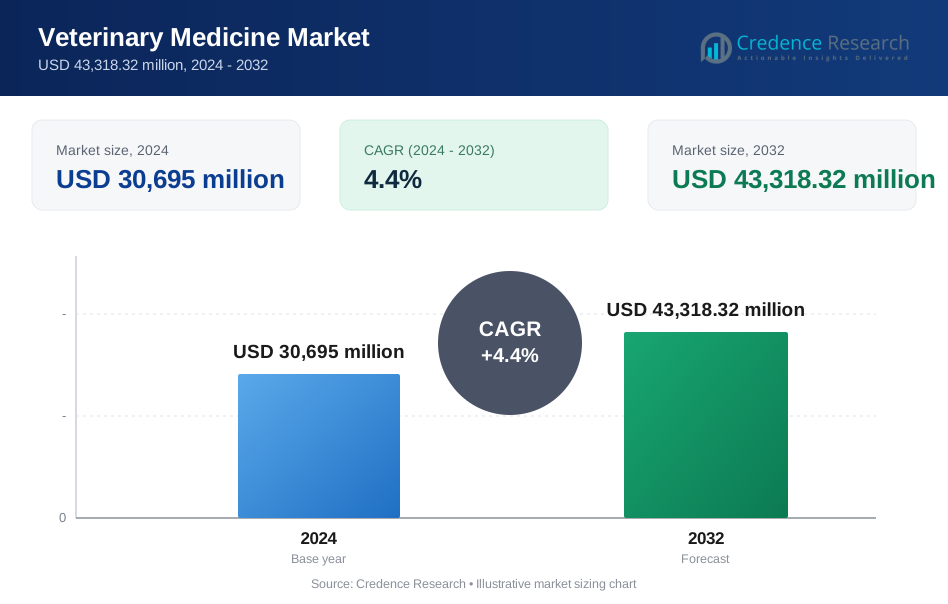
| Veterinary Medicine Market Size 2024 | USD 30695 Million |
| Veterinary Medicine Market, CAGR | 4.4% |
| Veterinary Medicine Market Size 2032 | USD 43318.32 Million |
Market Overview:
The Veterinary Medicine Market is projected to grow from USD 30695 million in 2024 to an estimated USD 43318.32 million by 2032, with a compound annual growth rate (CAGR) of 4.4% from 2024 to 2032.
Several key drivers are propelling the growth of the veterinary medicine market. The increasing trend of pet humanization has significantly boosted the demand for veterinary healthcare products, as pet owners are more willing to invest in their pets' health and well-being. Additionally, the livestock sector's expansion, driven by the rising demand for animal-based products, has spurred the need for effective veterinary solutions to ensure animal health and productivity. Furthermore, technological advancements in veterinary diagnostics and treatment methodologies, such as precision medicine and telemedicine, are enhancing the effectiveness of veterinary care, contributing to market growth. The increasing awareness about animal welfare and the implementation of stringent regulations to ensure animal health also play a crucial role in driving the market.
Regionally, North America dominates the veterinary medicine market, accounting for the largest market share, driven by the high adoption of pets, advanced healthcare infrastructure, and robust research and development activities. Europe follows closely, with a well-established veterinary healthcare system and growing awareness of animal health. The Asia-Pacific region is expected to witness the highest growth during the forecast period, fueled by the increasing livestock population, rising disposable income, and expanding veterinary service providers. Latin America and the Middle East & Africa also present significant growth opportunities due to improving veterinary care infrastructure and increasing focus on animal health.
Market Drivers:
Rising Pet Ownership and Humanization of Pets
The increasing trend of pet ownership globally has emerged as a significant driver for the veterinary medicine market. More individuals and families are adopting pets, viewing them as integral members of their households. This trend, often referred to as the humanization of pets, has led to a surge in demand for veterinary care services and products. For instance, data from the 2021 American Housing Survey by the U.S. Census Bureau shows that 66% of U.S. households own a pet. Pet owners are now more willing to invest in their pets’ health, seeking advanced treatments, regular health check-ups, and preventive care. This shift in consumer behavior is fueling the growth of the veterinary medicine market as it drives demand for pharmaceuticals, vaccines, and specialized veterinary services.
Growth in Livestock Industry and Demand for Animal-Based Products
The livestock industry is another critical driver of the veterinary medicine market. The global demand for animal-based products, such as meat, milk, and eggs, is on the rise, driven by population growth and increasing disposable incomes, particularly in emerging economies. To meet this demand, livestock farmers are increasingly focusing on the health and productivity of their animals. This has led to a growing need for veterinary medicines that can prevent and treat diseases, improve animal welfare, and enhance productivity. Veterinary pharmaceuticals and vaccines are essential in maintaining the health of livestock, ensuring food safety, and supporting the sustainability of the livestock industry, thereby propelling market growth.
Technological Advancements in Veterinary Care
Technological advancements in the field of veterinary medicine are playing a pivotal role in driving market growth. Innovations such as precision medicine, which allows for tailored treatments based on individual animal health profiles, and telemedicine, which provides remote consultation services, are revolutionizing the way veterinary care is delivered. For instance, a survey conducted by Digitail and the American Animal Hospital Association (AAHA) found that 39.2% of veterinary professionals use AI tools in their practice. Additionally, advancements in diagnostic tools, such as imaging and laboratory technologies, have significantly improved the accuracy and efficiency of diagnosing animal health issues. These technological developments not only enhance the effectiveness of veterinary care but also increase the demand for advanced veterinary medicines and treatments, further boosting the market.
Increasing Awareness and Regulatory Support for Animal Health
There is a growing awareness among pet owners, livestock farmers, and governments regarding the importance of animal health and welfare. This awareness has led to the implementation of stringent regulations aimed at ensuring the health and safety of animals. Governments and international organizations are actively promoting the use of veterinary medicines to prevent and control animal diseases, particularly zoonotic diseases that can be transmitted to humans. Additionally, the rising focus on animal welfare has encouraged the development and adoption of new veterinary drugs and vaccines. Regulatory support, combined with increased awareness, is driving the demand for veterinary medicines, contributing significantly to the market's expansion.
Market Trends:
Increasing Adoption of Advanced Diagnostic Tools
One of the prominent trends in the veterinary medicine market is the growing adoption of advanced diagnostic tools. Veterinary professionals are increasingly utilizing sophisticated diagnostic technologies such as imaging systems, molecular diagnostics, and point-of-care testing to accurately diagnose and monitor animal health conditions. These tools enable veterinarians to detect diseases at an early stage, improving treatment outcomes and reducing the risk of complications. The integration of advanced diagnostics into veterinary practice not only enhances the quality of care but also drives the demand for precise and targeted veterinary medicines, as treatments can be more accurately tailored to the specific needs of each animal.
Expansion of Veterinary Telemedicine Services
The rise of telemedicine is transforming the veterinary medicine market by making veterinary care more accessible and convenient for pet owners and livestock farmers. Veterinary telemedicine allows for remote consultations, enabling veterinarians to provide advice, diagnose minor ailments, and prescribe medications without the need for an in-person visit. For instance, a survey by the ASPCA revealed that 69% of pet owners with unmet veterinary care needs in the past two years expressed interest in using telemedicine services. This trend has gained significant traction, particularly in response to the COVID-19 pandemic, which highlighted the need for remote healthcare solutions. As telemedicine becomes more widely adopted, it is expected to drive demand for veterinary pharmaceuticals and products that can be prescribed and delivered through these digital platforms, thus expanding the reach of veterinary care services.
Growth in Companion Animal Insurance
The growing popularity of companion animal insurance is another key trend shaping the veterinary medicine market. As pet ownership increases and the cost of veterinary care rises, more pet owners are opting for insurance coverage to manage the expenses associated with their pets’ health. For instance, the 2023-2024 National Pet Owners Survey by the American Pet Products Association (APPA) reports that 66% of U.S. households own a pet, with a significant portion opting for pet insurance. This trend is driving higher utilization of veterinary services, as insured pet owners are more likely to seek regular veterinary care and opt for advanced treatments. The availability of pet insurance also encourages the adoption of preventive care measures, such as vaccinations and routine check-ups, further boosting the demand for veterinary medicines. The increasing penetration of companion animal insurance is expected to sustain the growth of the veterinary medicine market in the coming years.
Rising Focus on Preventive Veterinary Care
Preventive care is gaining prominence in the veterinary medicine market as a proactive approach to animal health. Veterinarians and pet owners alike are placing greater emphasis on disease prevention through regular health screenings, vaccinations, and nutritional management. This shift towards preventive care is driven by the recognition that early intervention can significantly reduce the incidence of chronic diseases and improve the overall well-being of animals. As a result, there is a growing demand for preventive veterinary medicines, including vaccines, supplements, and wellness products. The rising focus on preventive care is not only enhancing the quality of life for animals but also contributing to the long-term sustainability of the veterinary medicine market.
Market Restraints and Challenges:
High Cost of Veterinary Care
One of the significant restraints in the veterinary medicine market is the high cost associated with veterinary care, which can limit access to necessary treatments for many pet owners and livestock farmers. The cost of veterinary services, including diagnostics, surgeries, and specialized treatments, has been steadily rising, driven by advancements in technology and the increasing complexity of care. For pet owners, especially those without insurance, these costs can be prohibitive, leading to delayed or foregone treatments. In the livestock sector, the expense of maintaining herd health can impact the profitability of farms, particularly in developing regions. This financial barrier poses a challenge to the widespread adoption of advanced veterinary medicines and services, potentially limiting market growth.
Regulatory Hurdles and Compliance Issues
The veterinary medicine market is subject to stringent regulatory requirements, which can pose challenges for companies in the industry. The development and approval of new veterinary drugs and vaccines require significant investment in research and adherence to rigorous testing protocols. These regulatory processes are time-consuming and costly, often leading to delays in bringing new products to market. Additionally, compliance with varying regulations across different regions can be complex and burdensome for companies operating on a global scale. These regulatory hurdles can inhibit innovation and slow down the introduction of new veterinary products, thus restraining market growth.
Shortage of Skilled Veterinary Professionals
The shortage of skilled veterinary professionals is another challenge facing the veterinary medicine market. The demand for veterinary services is outpacing the supply of qualified veterinarians, particularly in rural and underserved areas. This shortage can lead to longer wait times for appointments, reduced access to care, and increased workload for existing veterinary professionals. The gap between demand and supply of skilled veterinarians can hinder the effective delivery of veterinary services, ultimately impacting the growth potential of the market. Addressing this challenge requires investment in veterinary education and training programs to ensure a steady pipeline of qualified professionals.
Market Segmentation Analysis:
By Product, the market is divided into pharmaceuticals, vaccines, and medicated feed additives. Pharmaceuticals, including antibiotics and anti-inflammatory drugs, hold the largest market share due to their widespread use in treating various animal diseases. Vaccines are also growing rapidly, driven by the increasing emphasis on preventive care.
By Animal Type, the market is segmented into companion animals and livestock. The companion animals segment, which includes dogs, cats, and horses, is witnessing significant growth due to the rising trend of pet ownership and humanization of pets. The livestock segment remains substantial, driven by the demand for animal-based products and the need to maintain herd health.
By Route of Administration, the market is categorized into oral, parenteral, and topical. Oral administration is the most common route due to its ease of use, while parenteral administration, which includes injections, is preferred for vaccines and critical treatments.
By Distribution Channel, the market is segmented into veterinary hospitals and clinics, retail pharmacies, and online channels. Veterinary hospitals and clinics dominate this segment, providing comprehensive healthcare services. However, online channels are growing rapidly due to the convenience of purchasing veterinary medicines and the increasing adoption of e-commerce platforms.
Segmentation:
By Product,
- Pharmaceuticals,
- Vaccines,
- Medicated feed additives.
By Animal Type,
- Companion animals
- Livestock
By Route of Administration,
- Oral,
- Parenteral,
- Topical
By Distribution Channel,
- Veterinary hospitals and clinics,
- Retail pharmacies,
- Online channels.
- North America
- US
- Canada
- Mexico
- Europe
- Germany
- France
- UK
- Italy
- Spain
- Rest of Europe
- Asia Pacific
- China
- Japan
- India
- South Korea
- South-east Asia
- Rest of Asia Pacific
- Latin America
- Brazil
- Argentina
- Rest of Latin America
- Middle East & Africa
- GCC Countries
- South Africa
- Rest of the Middle East and Africa
Regional Analysis:
North America
North America holds the largest share of the global veterinary medicine market, accounting for approximately 38% of the total market. This dominance is largely attributed to the high prevalence of pet ownership, advanced veterinary healthcare infrastructure, and substantial investment in research and development. The United States is the key contributor within this region, with a robust market for companion animal healthcare and a well-established livestock sector. The demand for veterinary pharmaceuticals and vaccines is particularly strong, driven by the growing trend of pet humanization and the need for effective livestock management.
Europe
Europe is the second-largest market for veterinary medicine, capturing around 30% of the global market share. The region benefits from a strong regulatory framework and a high level of awareness regarding animal health and welfare, which collectively support market growth. Countries such as Germany, the United Kingdom, and France are at the forefront of the European veterinary medicine market. These countries boast well-developed veterinary healthcare systems and a high adoption rate of advanced veterinary treatments. The increasing focus on preventive care and animal welfare in Europe further drives the demand for veterinary pharmaceuticals and vaccines.
Asia-Pacific
The Asia-Pacific region is emerging as the fastest-growing market for veterinary medicine, accounting for approximately 20% of the global market share. This rapid growth is driven by the expanding livestock population, rising disposable incomes, and increasing pet ownership in countries like China, India, and Japan. The region is witnessing significant investments in veterinary healthcare infrastructure, and there is a growing awareness of animal health and welfare. The demand for veterinary medicines is expected to surge in the coming years as more pet owners and livestock farmers in Asia-Pacific seek advanced treatments and preventive care solutions.
Latin America and the Middle East & Africa
Latin America and the Middle East & Africa collectively account for around 12% of the global veterinary medicine market. These regions are experiencing gradual growth, driven by improving veterinary care infrastructure and increasing focus on animal health. In Latin America, countries like Brazil and Argentina are key markets, with a strong livestock industry that drives demand for veterinary pharmaceuticals. In the Middle East & Africa, the market is primarily supported by government initiatives to improve animal health and the growing adoption of veterinary services. Despite the challenges of limited healthcare infrastructure in some areas, these regions present significant growth opportunities for the veterinary medicine market in the coming years.
Key Player Analysis:
- Bimeda Corporate
- Biogénesis Bagó
- Boehringer Ingelheim International Gmbh
- Ceva Santé Animale
- Dechra Pharmaceuticals PLC
- Elanco
- Merck & Co., Inc.
- Phibro Animal Health Corporation
- Virbac
- Zoetis Inc.
Competitive Analysis:
The veterinary medicine market is highly competitive, with several key players dominating the industry through innovation, extensive product portfolios, and strategic partnerships. Leading companies such as Zoetis Inc., Boehringer Ingelheim, Merck Animal Health, and Elanco Animal Health hold significant market shares due to their strong research and development capabilities, which enable the continuous introduction of new and effective veterinary products. These companies are also actively expanding their global footprints through mergers, acquisitions, and collaborations, enhancing their market presence. Additionally, emerging players are increasingly focusing on niche segments, such as companion animal care and specialized treatments, to carve out market share. The competitive landscape is further shaped by regulatory compliance, with companies investing in meeting stringent standards across different regions. The ability to innovate, maintain a broad product range, and adhere to regulatory requirements are key factors driving competitiveness in the veterinary medicine market.
Recent Developments:
- In November 2023, Virbac acquired a majority stake in Globion, a leading Indian poultry vaccines company, significantly strengthening its position in the Indian poultry vaccines market by expanding Virbac India's poultry portfolio.
- In October 2023, Merck Animal Health introduced gilvetmab, a caninized monoclonal antibody, to board-certified veterinary oncologists in the U.S. The product, which has received conditional licensing from the USDA’s Center for Veterinary Biologics (CVB), is designed to treat canine melanoma and mast cell cancers.
- In May 2023, Merck Animal Health received approval in Australia for BRAVECTO QUANTUM (fluralaner), making it the only injectable parasiticide that offers dogs up to a full year of protection against fleas and ticks.
Market Concentration & Characteristics:
The veterinary medicine market is moderately concentrated, with a few dominant players holding a significant share of the market. Companies such as Zoetis Inc., Boehringer Ingelheim, Merck Animal Health, and Elanco Animal Health lead the market due to their extensive product portfolios, strong research and development capabilities, and global distribution networks. These key players continuously invest in innovation, bringing new and effective veterinary medicines to market, which enhances their competitive edge. The market also features a mix of emerging companies and regional players who focus on niche segments, such as companion animal care and specialized treatments. Despite the dominance of major companies, the market remains dynamic, with continuous product advancements and strategic partnerships shaping its landscape. The veterinary medicine market is characterized by a high level of regulatory oversight, innovation-driven competition, and a growing emphasis on preventive care and advanced treatments for both companion animals and livestock.
Report Coverage:
The research report offers an in-depth analysis based on By Product, By Animal type, By route of administration and By distribution channel. It details leading market players, providing an overview of their business, product offerings, investments, revenue streams, and key applications. Additionally, the report includes insights into the competitive environment, SWOT analysis, current market trends, as well as the primary drivers and constraints. Furthermore, it discusses various factors that have driven market expansion in recent years. The report also explores market dynamics, regulatory scenarios, and technological advancements that are shaping the industry. It assesses the impact of external factors and global economic changes on market growth. Lastly, it provides strategic recommendations for new entrants and established companies to navigate the complexities of the market.
Future Outlook:
- The veterinary medicine market is expected to continue growing, driven by increasing pet ownership and the humanization of pets.
- Technological advancements in diagnostics and treatments will lead to more precise and effective veterinary care.
- Expansion of telemedicine services in veterinary care will enhance accessibility and convenience for pet owners and livestock farmers.
- Rising awareness of animal health and welfare will fuel demand for preventive care products, such as vaccines and supplements.
- The growing popularity of pet insurance will encourage higher spending on veterinary services and advanced treatments.
- Emerging markets in Asia-Pacific and Latin America will experience rapid growth due to rising disposable incomes and expanding livestock populations.
- Continued investment in research and development by leading companies will result in the introduction of innovative veterinary products.
- Regulatory support for animal health, particularly in addressing zoonotic diseases, will drive market expansion.
- Increasing focus on sustainability and ethical practices in animal health will influence the development of eco-friendly veterinary products.
- Strategic mergers and acquisitions among key players will shape the competitive landscape and drive market consolidation.
Request a Free Sample
Fill in your details and we'll send you a free sample report.
- Sample data tables & charts
- Research methodology
Need a Custom Version of This Report?
Tailor the scope, geography, or segments to your exact requirements.
- Custom geography or segment scope
- Direct access to our analyst team
Frequently Asked Questions
What is the projected growth of the Veterinary Medicine Market?
What are the key drivers of market growth?
Which region dominates the Veterinary Medicine Market?
Which region is expected to experience the fastest growth?
What challenges does the Veterinary Medicine Market face?
Table of Content
Chapter 1. Report Introduction
- 1.1 Report Description & Purpose
- 1.1.1 Report Title & Market Definition
- 1.1.2 Unique Selling Propositions (USP) & Key Differentiators
- 1.1.3 Value Proposition for Stakeholders
- 1.2 Research Objectives
- 1.2.1 Market Sizing Objectives (Volume & Revenue)
- 1.2.2 Segmentation Objectives
- 1.2.3 Competitive Intelligence Objectives
- 1.2.4 Forecast & Scenario Objectives
- 1.3 Report Scope
- 1.3.1 Veterinary Medicine Scope – Types & Subtypes Covered
- 1.3.2 Geographic Scope – Regions & Countries Covered
- 1.3.3 Historical Period, Base Year & Forecast Period (2024; forecast to 2032)
- 1.3.4 Inclusions & Exclusions
- 1.4 HS Code & Classification Framework
- 1.5 Currency, Units & Pricing Basis
- 1.6 Target Stakeholders
- 1.7 Limitations & Assumptions
Chapter 2. Executive Summary
- 2.1 Global Veterinary Medicine Market Snapshot
- 2.1.1 Market Size – Historical (2024) & Forecast (2024-2032) (2024: USD 30,695 million → 2032: USD 43,318.32 million)
- 2.1.2 Volume & Revenue – Global Totals
- 2.1.3 Key Market Highlights – Top Five Facts
- 2.2 Veterinary Medicine Market Segmentation Snapshot
- 2.2.1 Market Split by Region – 2024 vs. 2032
- 2.3 Competitive Snapshot
- 2.3.1 Top 10 Players by Revenue Share – 2024
- 2.3.2 Top 10 Players by Volume Share – 2024
- 2.3.3 Recent Strategic Developments (18-Month Summary)
- 2.4 Key Investment Highlights & Strategic Conclusions
Chapter 3. Veterinary Medicine Market Dynamics & Industry Analysis
- 3.1 Market Overview & Context
- 3.1.1 Veterinary Medicine Market Position in the Broader Automotive Value Chain
- 3.1.2 OEM vs. Replacement Market Dynamics
- 3.1.3 Market Maturity & Development Stage by Region
- 3.2 Veterinary Medicine Market Drivers
- 3.3 Veterinary Medicine Market Restraints & Challenges
- 3.4 Veterinary Medicine Market Opportunities
- 3.5 Porter's Five Forces Analysis
- 3.5.1 Threat of New Entrants
- 3.5.2 Bargaining Power of Suppliers
- 3.5.3 Bargaining Power of Buyers
- 3.5.4 Threat of Substitutes
- 3.5.5 Competitive Rivalry – Intensity Assessment
- 3.6 Veterinary Medicine Value Chain Analysis
- 3.6.1 Upstream – Raw Material/Input Suppliers
- 3.6.1.1 Raw Material/Input 1
- 3.6.1.2 Raw Material/Input 2
- 3.6.1.3 Raw Material/Input 3
- 3.6.2 Midstream – Production/Manufacturing/Service Delivery
- 3.6.2.1 Production/Process Overview
- 3.6.2.2 Key Facility Locations & Capacity by Manufacturer
- 3.6.3 Downstream – Distribution & End Consumer
- 3.6.3.1 Primary Channel – B2B/OEM
- 3.6.3.2 Secondary Channels – Dealer, Retail, Online, Direct
- 3.6.4 Value Chain Profitability Analysis
- 3.6.1 Upstream – Raw Material/Input Suppliers
- 3.7 PESTEL Analysis
- 3.7.1 Political Factors
- 3.7.2 Economic Factors
- 3.7.3 Social Factors
- 3.7.4 Technological Factors
- 3.7.5 Environmental Factors
- 3.7.6 Legal Factors
- 3.8 Veterinary Medicine Supply Chain Analysis
- 3.8.1 Raw Material/Input Supply Risk Assessment
- 3.8.2 Manufacturing Concentration Risk (Geographic Exposure)
- 3.8.3 Trade Disruption Impact Analysis
- 3.9 Regulatory & Policy Landscape
Note: The regulatory and policy landscape section covers regulations based on their applicability to the market, Veterinary Medicine category, geography, and scope of the study. Only regulatory frameworks with a material impact on operations, compliance, trade, sustainability, or market access are analyzed in detail.
Chapter 4. Key Investment Pockets & Opportunity Analysis
- 4.1 Veterinary Medicine Market Attractiveness Analysis
- 4.1.1 By Region – Investment Attractiveness Matrix (Volume × CAGR)
- 4.2 Absolute Revenue Growth Opportunity
- 4.2.1 By Region – Absolute USD Growth Through 2032
- 4.3 Incremental Volume Opportunity
- 4.3.1 By Region – Incremental Volume Through 2032
- 4.3.2 Segment – Incremental Volume
- 4.4 Emerging Submarket Opportunity Deep Dive (Subject to Applicability)
- 4.5 Emerging Market Opportunity Scorecards
- 4.5.1 United States
- 4.5.2 Europe
- 4.5.3 Asia
- 4.5.4 Middle East & Africa
Note: Emerging Market Opportunity Scorecards will be included based on relevance and strategic importance. Regions listed are indicative and may vary depending on data availability and market dynamics.
Chapter 5. Veterinary Medicine Import-Export Analysis & Trade Flows
- 5.1 Global Trade Overview
- 5.1.1 Global Export Value by Country (2024)
- 5.1.2 Global Export Volume by Country (2024)
- 5.1.3 Global Import Value by Country (2024)
- 5.1.4 Global Import Volume by Country (2024)
- 5.1.5 Net Trade Balance by Country (2024)
- 5.2 Export Analysis – Segment
- 5.2.1 Type 1 (HS Code)
- 5.2.2 Type 2 (HS Code)
- 5.2.3 Type 3 (HS Code)
- 5.2.4 Type 4 (HS Code)
- 5.2.5 Type 5 (HS Code)
- 5.3 Import Analysis – Segment
- 5.3.1 Type 1 (HS Code)
- 5.3.2 Type 2 (HS Code)
- 5.3.3 Type 3 (HS Code)
- 5.3.4 Type 4 (HS Code)
- 5.3.5 Type 5 (HS Code)
- 5.4 Average Unit Trade Prices
- 5.4.1 Average Export Price – Segment & Country
- 5.4.2 Average Import Price – Segment & Source Country
- 5.4.3 Price Trends (2024)
- 5.5 Key Trade Route Analysis
- 5.5.1 Trade Route 1
- 5.5.2 Trade Route 2
- 5.5.3 Trade Route 3
- 5.5.4 Trade Route 4
- 5.5.5 Trade Route 5
- 5.6 Trade Policy Impact Assessment
- 5.6.1 US Anti-Dumping & Section 301 Tariffs
- 5.6.2 EU Customs Union Impact
- 5.6.3 Major Free Trade Agreements
- 5.6.4 USMCA Rules of Origin
Note: Trade policy analysis will be included only where relevant to the Veterinary Medicine market.
Chapter 6. Competitive Landscape & Company Benchmarking
- 6.1 Veterinary Medicine Market Concentration & Structure
- 6.1.1 Herfindahl-Hirschman Index (HHI) – vs. 2024
- 6.1.2 Tier 1, Tier 2 & Tier 3 Market Structure
- 6.1.3 Global, Regional & Local Player Dynamics
- 6.2 Veterinary Medicine Market Share Analysis – 2024
- 6.2.1 Global Revenue Share by Company
- 6.2.2 Global Volume Share by Company
- 6.2.3 Regional Revenue Share
- 6.2.4 Market Share Evolution ( vs. 2024)
- 6.2.5 OEM Segment Share by Company
- 6.2.6 Replacement Segment Share by Company
- 6.3 Production/Delivery Capacity & Facility Analysis
- 6.3.1 Global Installed Capacity
- 6.3.2 Capacity Utilization Rates
- 6.3.3 Production/Output Volume
- 6.3.4 Facility Locations & Capacity Map
- 6.3.5 Planned Capacity Additions
- 6.4 Veterinary Medicine Competitive Benchmarking Matrix
- 6.4.1 Revenue, Volume, CAGR & Profitability Comparison
- 6.4.2 Channel Revenue Mix
- 6.4.3 Geographic Revenue Exposure
- 6.4.4 R&D Intensity
- 6.4.5 Sustainability Maturity
- 6.5 Strategic Developments in Veterinary Medicine (Last 24 Months)
- 6.5.1 Mergers, Acquisitions & Divestments
- 6.5.2 New Veterinary Medicine Launches
- 6.5.3 Facility Expansions
- 6.5.4 Strategic Alliances, Joint Ventures & Partnerships
- 6.5.5 Distribution Expansion & Market Entry
- 6.5.6 Sustainability & ESG Initiatives
- 6.6 Competitive Strategy Mapping
- 6.6.1 Leader, Challenger, Follower & Niche Classification
- 6.6.2 Pricing Strategy Comparison
- 6.6.3 Channel Strategy Matrix
Note: Strategic developments are included based on their materiality and the availability of reliable information.
Chapter 7. Global Veterinary Medicine Market – By Distribution Channel
- 7.1 Segment Overview
- 7.1.1 Volume & Revenue Split by Channel (2024 & 2032)
- 7.1.2 Channel Mix Evolution (2024-2032)
Chapter 8. Regional Market Analysis – Global Overview
- 8.1 Global Regional Overview
- 8.1.1 Regional Volume Share
- 8.1.2 Regional Revenue Share
- 8.1.3 Regional Volume by Region
- 8.1.4 Regional Revenue by Region
- 8.1.5 Regional Forecast Through 2032
- 8.2 Cross-Regional Segment Analysis
- 8.2.1 By Distribution Channel
- 8.2.2 By Brand/Price Tier
Chapter 9. North America Veterinary Medicine Market
- 9.1 United States
- 9.2 Canada
- 9.3 Mexico
Chapter 10. Europe Veterinary Medicine Market
- 10.1 Germany
- 10.2 France
- 10.3 Italy
- 10.4 United Kingdom
- 10.5 Spain
- 10.6 Poland
- 10.7 Russia
- 10.8 Netherlands
- 10.9 Belgium
- 10.10 Sweden
- 10.11 Denmark
- 10.12 Norway
- 10.13 Rest of Europe
Chapter 11. Asia Pacific Veterinary Medicine Market
- 11.1 China
- 11.2 India
- 11.3 Japan
- 11.4 South Korea
- 11.5 Thailand
- 11.6 Indonesia
- 11.7 Vietnam
- 11.8 Malaysia
- 11.9 Australia
- 11.10 Rest of Asia Pacific
Chapter 12. Latin America Veterinary Medicine Market
- 12.1 Brazil
- 12.2 Argentina
- 12.3 Colombia
- 12.4 Chile
- 12.5 Rest of Latin America
Chapter 13. Middle East Veterinary Medicine Market
- 13.1 Saudi Arabia
- 13.2 United Arab Emirates
- 13.3 Turkey
- 13.4 Israel
- 13.5 Iran
- 13.6 Rest of the Middle East
Chapter 14. Africa Veterinary Medicine Market
- 14.1 South Africa
- 14.2 Egypt
- 14.3 Nigeria
- 14.4 Morocco
- 14.5 Rest of Africa
Chapter 15. Veterinary Medicine Company Profiles
- 15.1 [Company 01]
- 15.1.1 Company Overview
- 15.1.2 Key Management Personnel
- 15.1.3 Products & Services Portfolio
- 15.1.4 Financial Performance
- 15.1.5 Key Market Focus & Geographic Presence
- 15.1.6 Recent Developments & Strategic Initiatives
Note: The company profile list is preliminary and may change based on research findings, market developments, data availability, and client requirements.
Chapter 16. Appendices
- Appendix A – List of Abbreviations & Acronyms
- Appendix B – Industry Classification Code Reference – Full Series
- Appendix C – Production & Capacity Data Tables
- Appendix D – End-Use & Demand Base Tables
- Appendix E – Consumption & Replacement Rate Assumptions
- Appendix F – ASP Reference Tables
- Appendix G – Manufacturing & Facility Database
- Appendix H – Import-Export Data Tables
- Appendix I – Regulatory Summary Tables
- Appendix J – Primary Research Participant List (Anonymized)
- Appendix K – Primary Research Questionnaire Framework
- Appendix L – Data Sources & Bibliography
- Appendix M – Market Size Divergence & Source Comparison
Chapter 17. Research Methodology
- 17.1 Research Framework & Philosophy
- 17.2 Secondary Research – Sources, Hierarchy & Data Extraction
- 17.3 Data Modeling – Bottom-Up & Top-Down Market Sizing
- 17.4 Primary Research – Stakeholder Framework, LOI & Sample Sizes
- 17.5 Forecast Methodology – Regression, Scenario & Sensitivity Analysis
- 17.6 Quality Control – Four-Layer Validation Framework
- 17.7 Limitations & Standard Assumptions
- 17.8 Disclaimer
