| REPORT ATTRIBUTE | DETAILS |
|---|---|
| Historical Period | 2020-2023 |
| Base Year | 2024 |
| Forecast Period | 2025-2032 |
| Vitreous Tamponades Market Size 2024 | USD 86,002.08 million |
| Vitreous Tamponades Market, CAGR | 3.38% |
| Vitreous Tamponades Market Size 2032 | USD 111,941.14 million |
Market Overview
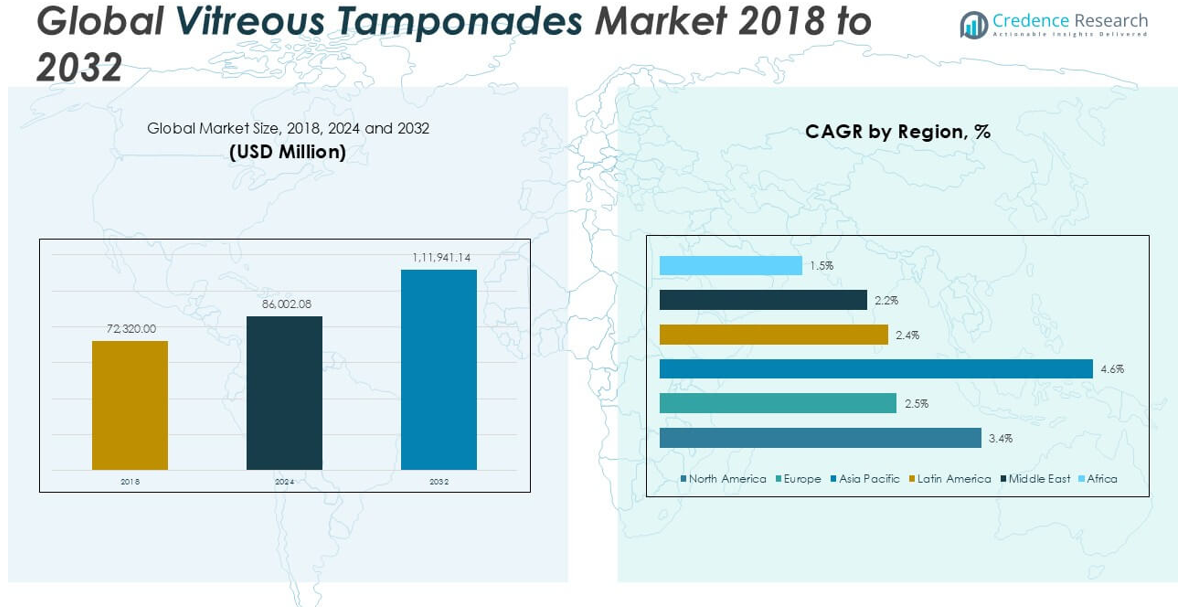
The Vitreous Tamponades Market size was valued at USD 72,320.00 million in 2018, increased to USD 86,002.08 million in 2024, and is anticipated to reach USD 111,941.14 million by 2032, growing at a CAGR of 3.38% during the forecast period.
The Vitreous Tamponades market is led by prominent players such as Alcon Inc., Carl Zeiss Meditec AG, Bausch + Lomb, Dutch Ophthalmic Research Center, and Fluoron GmbH, who collectively shape the competitive landscape through product innovation and global distribution networks. These companies focus on developing advanced tamponade materials with improved safety profiles and surgical compatibility to strengthen their market positions. North America dominates the global market, holding a 38.27% share in 2024, driven by a high volume of ophthalmic procedures, strong healthcare infrastructure, and rapid adoption of advanced surgical technologies.
Market Insights
- The Vitreous Tamponades market was valued at USD 86,002.08 million in 2024 and is projected to reach USD 111,941.14 million by 2032, growing at a CAGR of 3.38% during the forecast period.
- The market is driven by the rising prevalence of retinal disorders, especially retinal detachment, which holds the largest segment share due to the increasing need for effective surgical interventions.
- A key trend shaping the market is the growing preference for minimally invasive vitrectomy procedures and the increasing use of advanced tamponade materials with improved safety profiles.
- The competitive landscape is dominated by Alcon Inc., Carl Zeiss Meditec AG, Bausch + Lomb, and Dutch Ophthalmic Research Center, with companies focusing on product innovation and global expansion.
- North America holds the largest regional share at 38.27%, followed by Asia Pacific with 27.52%, while market growth is restrained by high surgical costs and limited access in developing regions.
Market Segmentation Analysis:
By Product Type:
In the Vitreous Tamponades market, Silicone Oil dominates the product type segment, accounting for the largest market share in 2024. Its superior biocompatibility, long-term stability, and effectiveness in complex retinal surgeries drive its widespread adoption. Silicone oil's ability to remain in the eye for extended periods makes it a preferred choice for treating recurrent or complicated retinal detachments. Additionally, advancements in silicone oil formulations and the growing number of ophthalmic procedures further support its market dominance. The gaseous tamponades segment also shows steady growth due to its minimally invasive application and faster patient recovery.
- For instance, Alcon's Siluron 5000, a high-viscosity silicone oil, has been successfully used in over 1 million retinal detachment procedures worldwide, demonstrating its wide clinical adoption and trusted performance in complex cases.
By Application:
Retinal Detachment holds the dominant position in the application segment of the Vitreous Tamponades market, contributing the highest revenue share in 2024. The rising prevalence of retinal detachment cases, driven by aging populations, increasing incidences of eye injuries, and diabetic retinopathy, fuels the demand for vitreous tamponades in this application. The improved success rates of tamponade-based treatments for retinal detachment further strengthen this sub-segment's growth. Additionally, growing awareness, advancements in diagnostic techniques, and the availability of skilled ophthalmic surgeons contribute to the increasing adoption of vitreous tamponades in retinal detachment management.
- For instance, Bausch + Lomb reported that its Perfluoron Perfluorocarbon Liquid, utilized during retinal detachment surgeries, has been applied in more than 750,000 cases globally, reinforcing its significant role in this surgical field.
By End-User:
Hospitals dominate the end-user segment of the Vitreous Tamponades market, holding the largest market share in 2024. Hospitals typically handle a higher volume of complex ophthalmic surgeries, supported by advanced surgical infrastructure and highly trained medical staff. The increasing number of hospital-based retinal procedures and the growing preference for specialized care in these settings drive this segment's growth. Additionally, the presence of comprehensive post-operative care and improved patient accessibility further supports the dominance of hospitals over ophthalmology clinics and other healthcare facilities in the vitreous tamponades market.
Market Overview
Rising Prevalence of Retinal Disorders
The increasing incidence of retinal disorders, including retinal detachment, macular holes, and diabetic retinopathy, significantly drives the growth of the vitreous tamponades market. An aging global population and a surge in diabetes cases contribute to higher risks of these vision-threatening conditions. As the demand for effective surgical interventions rises, the need for vitreous tamponades becomes more prominent. This growth is further supported by increasing patient awareness, timely diagnosis, and expanding access to advanced ophthalmic care in both developed and emerging markets.
- For instance, according to a clinical report by Roche, more than 420 million people are living with diabetes worldwide as of 2023, contributing to the increasing incidence of diabetic retinopathy, one of the primary conditions necessitating vitreous tamponade use during surgical interventions.
Technological Advancements in Ophthalmic Surgery
Rapid advancements in vitreoretinal surgical techniques and tamponade materials are propelling the vitreous tamponades market. The development of minimally invasive vitrectomy procedures and improvements in silicone oil and gas tamponade formulations enhance surgical precision, safety, and recovery outcomes. These innovations not only reduce the risk of complications but also expand the potential applications of tamponades in complex eye surgeries. Continued R&D in ophthalmology is expected to support the growing adoption of advanced tamponade products and drive further market expansion.
- For instance, Alcon’s CONSTELLATION Vision System supports 23-, 25-, and 27-gauge vitrectomy surgeries and has been installed in over 4,000 surgical centers globally, enabling more precise and minimally invasive vitreoretinal procedures.
Growing Number of Ophthalmic Surgeries Globally
The increasing volume of ophthalmic surgeries worldwide significantly contributes to the growth of the vitreous tamponades market. Rising awareness about vision care, availability of skilled ophthalmic surgeons, and improving healthcare infrastructure in emerging economies have boosted surgical rates. Additionally, the expansion of specialized eye care centers and advancements in diagnostic imaging encourage early surgical intervention, leading to higher tamponade utilization. This trend is particularly evident in countries with rapidly aging populations and increasing healthcare investments.
Key Trends & Opportunities
Shift Towards Minimally Invasive Surgical Techniques
Minimally invasive vitrectomy procedures are gaining considerable traction in the vitreous tamponades market. Smaller gauge instruments, improved surgical visualization, and faster patient recovery are making these procedures the preferred choice among surgeons and patients. This trend opens opportunities for manufacturers to develop tamponades compatible with these advanced techniques. Additionally, minimally invasive surgeries reduce hospitalization time and improve patient outcomes, which is driving healthcare providers to increasingly adopt these methods, creating sustained demand for innovative vitreous tamponade products.
- For instance, Dutch Ophthalmic Research Center’s EVA Phaco-Vitrectomy system, capable of supporting 27-gauge vitrectomy instruments, has been utilized in more than 2,500 ophthalmic clinics worldwide, significantly facilitating the shift towards minimally invasive eye surgeries.
Expansion in Emerging Markets
Emerging markets present significant growth opportunities for the vitreous tamponades industry. Rapid urbanization, improving healthcare infrastructure, and increasing government investments in ophthalmic care are key factors supporting this expansion. Additionally, growing awareness about eye health and a rising middle-class population with better healthcare access in countries like India, China, and Brazil are driving the demand for vitreous tamponades. Manufacturers are focusing on strategic partnerships, local manufacturing, and targeted marketing in these regions to tap into their high-growth potential.
- For instance, Carl Zeiss Meditec reported establishing over 250 ophthalmic diagnostic and surgical centers across India and China by 2023, strengthening its presence and accessibility in these high-demand emerging markets.
Key Challenges
Post-Surgical Complications and Side Effects
One of the major challenges in the vitreous tamponades market is the risk of post-surgical complications, such as cataract formation, increased intraocular pressure, and emulsification of tamponade materials. These complications may lead to additional surgical interventions and prolonged patient recovery. Concerns regarding the long-term safety and side effects of some tamponade substances may also impact patient and surgeon preferences. Addressing these challenges requires continued research, improved material biocompatibility, and enhanced surgical protocols to minimize associated risks.
High Cost of Advanced Ophthalmic Surgeries
The high cost associated with advanced vitreoretinal surgeries and premium tamponade products presents a significant barrier to market growth, especially in developing regions. Limited reimbursement coverage for these procedures further restricts accessibility for a large portion of the patient population. Cost-sensitive markets often delay or avoid surgical treatment due to financial constraints, which can hinder the widespread adoption of vitreous tamponades. Affordable solutions and cost-effective surgical options are essential to overcoming this challenge.
Limited Availability of Skilled Ophthalmic Surgeons
The shortage of highly skilled ophthalmic surgeons, particularly in rural and underdeveloped regions, poses a challenge to the growth of the vitreous tamponades market. Vitreoretinal surgeries require specialized training and precision, which are not always accessible in all healthcare settings. This skill gap limits the number of procedures that can be performed, restricting market penetration. Expanding training programs, telemedicine support, and technology-assisted surgical systems are crucial to addressing this issue and supporting broader market growth.
Regional Analysis
North America:
North America held the largest share of the Vitreous Tamponades market in 2024, accounting for approximately 38.27% of the global market. The market in this region was valued at USD 27,987.84 million in 2018, increasing to USD 32,903.88 million in 2024, and is projected to reach USD 42,772.91 million by 2032, growing at a CAGR of 3.4%. The region’s market growth is driven by the high prevalence of retinal disorders, advanced healthcare infrastructure, and a growing number of ophthalmic surgeries. Additionally, strong reimbursement frameworks and access to innovative surgical technologies further support North America’s market dominance.
Europe:
Europe accounted for a significant share of 20.74% in the Vitreous Tamponades market in 2024. The market was valued at USD 15,751.30 million in 2018, rose to USD 17,851.68 million in 2024, and is expected to reach USD 21,666.51 million by 2032, at a CAGR of 2.5%. Europe’s growth is supported by increasing awareness of vision-related disorders, improved diagnostic capabilities, and the presence of highly specialized ophthalmic centers. However, the market’s moderate growth rate is influenced by stringent healthcare regulations and comparatively slower adoption of innovative vitreous tamponade products compared to North America and Asia Pacific.
Asia Pacific:
Asia Pacific is emerging as the fastest-growing region in the Vitreous Tamponades market, holding approximately 27.52% of the global share in 2024. The market expanded from USD 19,164.80 million in 2018 to USD 23,723.31 million in 2024, and is projected to reach USD 33,839.90 million by 2032, registering the highest regional CAGR of 4.6%. Factors such as a rapidly aging population, increasing prevalence of diabetes-related eye conditions, and improving healthcare infrastructure are driving the market. Additionally, expanding access to ophthalmic care and rising surgical volumes in China, India, and Southeast Asia contribute significantly to regional growth.
Latin America:
Latin America contributed 6.06% to the Vitreous Tamponades market share in 2024. The market size increased from USD 4,425.98 million in 2018 to USD 5,210.87 million in 2024, and is expected to reach USD 6,276.54 million by 2032, growing at a CAGR of 2.4%. Growth in this region is supported by improving healthcare access, increasing government investment in eye care services, and rising awareness about retinal diseases. However, the relatively slow adoption of advanced surgical techniques and the high cost of premium vitreous tamponade products may limit faster market expansion in this region.
Middle East:
The Middle East held approximately 3.85% of the Vitreous Tamponades market in 2024. The regional market grew from USD 2,965.12 million in 2018 to USD 3,319.12 million in 2024, and is projected to reach USD 3,929.75 million by 2032, expanding at a CAGR of 2.2%. Increasing investments in healthcare infrastructure, rising medical tourism, and the growing availability of specialized ophthalmic services are key drivers in the region. Despite these positive trends, limited availability of highly skilled ophthalmic surgeons and restricted access to advanced surgical products in rural areas may restrain more robust market growth.
Africa:
Africa represented the smallest share of 3.48% in the Vitreous Tamponades market in 2024. The market size grew from USD 2,024.96 million in 2018 to USD 2,993.22 million in 2024, and is forecasted to reach USD 3,455.54 million by 2032, with a CAGR of 1.5%. The market in Africa is primarily driven by increasing healthcare awareness, gradual improvements in eye care services, and growing government initiatives to combat preventable blindness. However, market growth remains limited by inadequate healthcare infrastructure, low surgical volumes, and financial constraints that restrict access to advanced ophthalmic procedures in several parts of the region.
Market Segmentations:
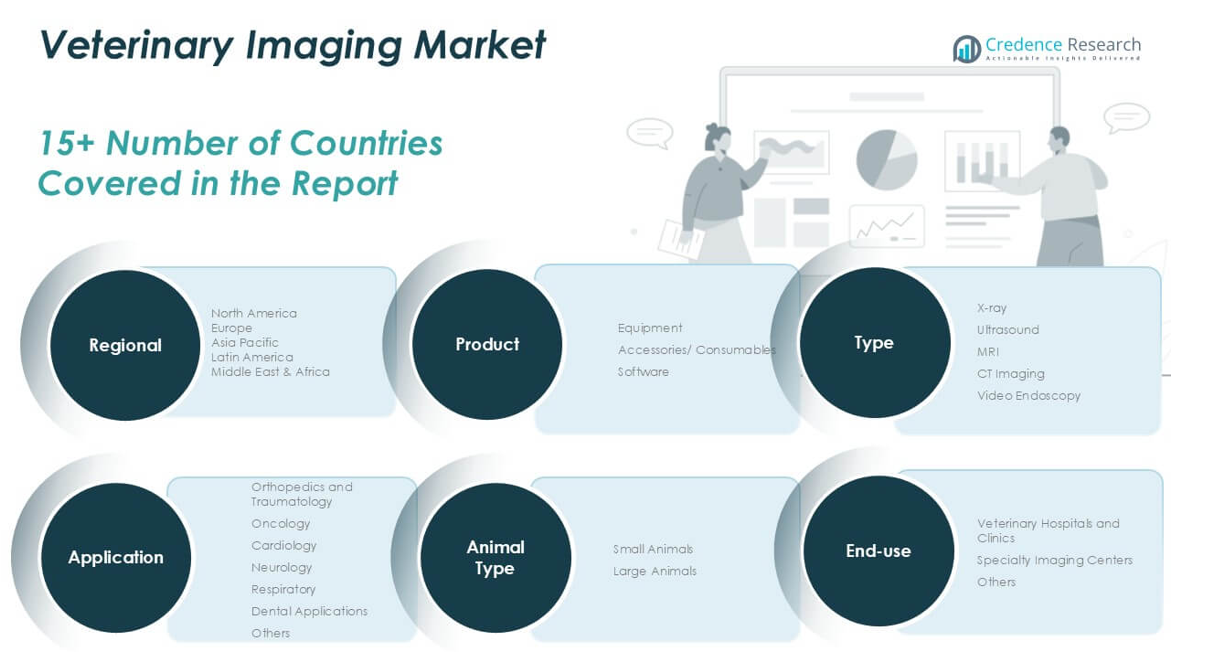
By Product Type
- Gaseous Tamponades
- Liquid Tamponades
- Silicone Oil
- Perchloroethane
- Others
By Application
- Retinal Detachment
- Macular Hole
- Endophthalmitis
- Intraocular Tumors
- Vitreous Hemorrhage
- Others
By End-User
- Hospitals
- Ophthalmology Clinics
- Others
By Geography:
- North America
- U.S.
- Canada
- Mexico
- Europe
- Germany
- France
- U.K.
- Italy
- Spain
- Rest of Europe
- Asia Pacific
- China
- Japan
- India
- South Korea
- South-east Asia
- Rest of Asia Pacific
- Latin America
- Brazil
- Argentina
- Rest of Latin America
- Middle East & Africa
- GCC Countries
- South Africa
- Rest of the Middle East and Africa
Competitive Landscape
The Vitreous Tamponades market is characterized by the presence of several established players competing on the basis of product innovation, surgical compatibility, and global reach. Key companies such as Alcon Inc., Carl Zeiss Meditec AG, Bausch + Lomb, and Dutch Ophthalmic Research Center lead the market through continuous advancements in tamponade materials and minimally invasive surgical solutions. These players focus on expanding their product portfolios with enhanced silicone oils, gas tamponades, and perfluorocarbon liquids that offer improved patient outcomes. Strategic collaborations, mergers, and acquisitions are common strategies to strengthen market positioning and enter new geographic regions. Companies like Fluoron GmbH, SILMEd S.p.A., and Vitreq B.V. emphasize research and development to address safety concerns and reduce post-surgical complications. Additionally, increasing investment in emerging markets by leading players further intensifies competition. The market dynamics are driven by the race to offer technologically advanced, cost-effective, and patient-friendly vitreous tamponade solutions.
Key Player Analysis
- Alcon Inc.
- Carl Zeiss Meditec AG
- Bausch + Lomb
- Dutch Ophthalmic Research Center
- Fluoron GmbH
- OCULUS Optikgeräte GmbH
- SILMEd S.p.A.
- Novartis AG
- MedOne Surgical Inc.
- Insight Instruments Inc.
- CROMA Pharma GmbH
- Katalyst Surgical LLC
- Vitreq B.V.
- MediOne Healthcare
- Biotech Healthcare Group
Recent Developments
- In 2024, Alcon announced new cataract surgery outcomes data and digital innovations, including SMARTCataract DX and NGENUITY 1.5. Through this new contract the company is aiming to enhance its product portfolio and business operations across the globe.
- In February 2023, Alcon announced a large scientific presence at the ASCRS conference. Through this new presence the company is strengthening its product portfolio and increasing its market presence in the North American region.
- In August 2023, German and US researchers collaborated on a study investigating early vitrectomy for treating endophthalmitis. The findings indicated that performing a vitrectomy with a silicone oil tamponade significantly improved visual acuity (VA) and had a low complication rate.
- In September 2022, the university-affiliated teaching hospital in Montemorelos conducted a randomized controlled trial on patients undergoing diabetic pars plana vitrectomy (PPV). The trial found that substituting vitreous with sulfur hexafluoride (SF6) gas tamponade was more effective than using a balanced saline solution (BSS) in reducing postoperative vitreous hemorrhage (VH).
- In April 2022, Carl Zeiss Meditec completed the acquisition of Katalyst Surgical, LLC and Kogent Surgical, LLC with the objective to strengthen its position in the market.
Market Concentration & Characteristics
The Vitreous Tamponades Market shows moderate concentration with several key players holding significant shares and competing through product innovation and global outreach. It features a mix of multinational companies and specialized regional manufacturers focused on expanding their ophthalmic portfolios. The market emphasizes quality, safety, and surgical compatibility, creating opportunities for product differentiation. Companies actively develop advanced tamponade materials to address safety concerns and improve surgical outcomes. Strategic collaborations, acquisitions, and geographical expansion drive competition. The market favors suppliers with strong distribution networks and technical support capabilities. Demand remains steady, supported by rising ophthalmic procedures and growing awareness of retinal disorders.
Report Coverage
The research report offers an in-depth analysis based on Product Type, Application, End-User and Geography. It details leading market players, providing an overview of their business, product offerings, investments, revenue streams, and key applications. Additionally, the report includes insights into the competitive environment, SWOT analysis, current market trends, as well as the primary drivers and constraints. Furthermore, it discusses various factors that have driven market expansion in recent years. The report also explores market dynamics, regulatory scenarios, and technological advancements that are shaping the industry. It assesses the impact of external factors and global economic changes on market growth. Lastly, it provides strategic recommendations for new entrants and established companies to navigate the complexities of the market.
Future Outlook
- The vitreous tamponades market is expected to witness steady growth driven by the increasing prevalence of retinal disorders worldwide.
- The demand for silicone oil-based tamponades will continue to dominate due to their long-term effectiveness in complex retinal surgeries.
- Minimally invasive surgical techniques will gain significant traction, increasing the adoption of compatible vitreous tamponade products.
- Technological advancements in tamponade materials will focus on improving biocompatibility and reducing post-surgical complications.
- The growing geriatric population will lead to a higher number of retinal surgeries, boosting market demand.
- Asia Pacific is anticipated to emerge as the fastest-growing regional market due to improving healthcare access and rising surgical volumes.
- Key market players will focus on expanding their presence in emerging economies through strategic partnerships and local distribution.
- Increasing awareness of ophthalmic diseases and early diagnosis will contribute to higher surgical intervention rates.
- Cost challenges in developing regions may restrict premium product adoption, creating demand for affordable solutions.
- Continuous investments in research and development will support the introduction of innovative, patient-friendly vitreous tamponade products.

Request a Free Sample
Fill in your details and we'll send you a free sample report.
- Sample data tables & charts
- Research methodology
Market Dynamics
Rising Prevalence of Retinal Disorders
The increasing incidence of retinal detachment, macular holes, and diabetic retinopathy - driven by aging populations and a global rise in diabetes - significantly boosts demand for vitreous tamponades as essential surgical interventions.
Technological Advancements in Ophthalmic Surgery
Innovations in minimally invasive vitrectomy techniques and improved tamponade materials enhance surgical outcomes and safety, encouraging broader adoption of advanced vitreous tamponade products.
Growing Number of Ophthalmic Surgeries Globally
Expanding access to skilled ophthalmic surgeons, improved healthcare infrastructure, and greater awareness of vision care are leading to higher surgical volumes, directly increasing the utilization of vitreous tamponades.
Shift Towards Minimally Invasive Procedures
Surgeons and patients increasingly prefer minimally invasive vitrectomy due to faster recovery and reduced complications, driving demand for tamponades compatible with these advanced techniques.
Expansion in Emerging Markets
Rapid urbanization, rising middle-class populations, and increased government investment in healthcare in regions like Asia Pacific and Latin America are creating new opportunities and accelerating market growth for vitreous tamponades.
Need a Custom Version of This Report?
Tailor the scope, geography, or segments to your exact requirements.
- Custom geography or segment scope
- Direct access to our analyst team
Frequently Asked Questions
What is the current size of the Vitreous Tamponades Market?
What factors are driving the growth of the Vitreous Tamponades Market?
What are some challenges faced by the Vitreous Tamponades Market?
Who are the major players in the Vitreous Tamponades Market?
Table of Content
Chapter 1 Market Segmentation
- 1.1 Segmentation Framework
- 1.1.1 Product and Service Classification
- 1.1.2 Application and End-Use Classification
- 1.1.3 Technology and Solution Classification
- 1.1.4 Customer and Distribution Channel Classification
- 1.1.5 Geographic Segmentation
- 1.1.6 Market Segment Definitions and Boundaries
- 1.2 By End-User
- 1.2.1 Hospitals
- 1.2.2 Ophthalmology Clinics
- 1.2.3 Others
- 1.3 By Application
- 1.3.1 Retinal Detachment
- 1.3.2 Macular Hole
- 1.3.3 Endophthalmitis
- 1.3.4 Intraocular Tumors
- 1.3.5 Vitreous Hemorrhage
- 1.3.6 Others
- 1.4 By Product Type
- 1.4.1 Gaseous Tamponades
- 1.4.2 Liquid Tamponades
- 1.4.3 Silicone Oil
- 1.4.4 Perchloroethane
- 1.4.5 Others
Chapter 2 Introduction
- 2.1 Report Objectives and Scope
- 2.2 Product Definition and Industry Terminology
- 2.3 Market Inclusions and Exclusions
- 2.4 Research Process
- 2.4.1 Primary Research and Expert Interviews
- 2.4.2 Secondary Research and Source Review
- 2.4.3 Top-Down and Bottom-Up Estimation
- 2.4.4 Data Triangulation and Verification
- 2.5 Market Size Measurement Basis
- 2.5.1 2024: USD 86,002.08 million → 2032: USD 111,941.14 million
- 2.6 Historical and Forecast Reference Periods
- 2.6.1 Base Year: 2024
- 2.6.2 Forecast Period: 2024-2032
- 2.7 Research Assumptions and Limitations
Chapter 3 Executive Summary
- 3.1 Market Snapshot and Key Findings
- 3.2 Base-Year Market Size, 2024
- 3.3 Forecast Market Size, 2032
- 3.4 Revenue and Volume Growth Outlook
- 3.5 Key Demand and Supply Indicators
- 3.6 Leading Market Segments
- 3.7 Fastest-Growing Market Opportunities
- 3.8 Regional Performance Highlights
- 3.9 Technology and Industry Transformation
- 3.10 Competitive Landscape Summary
- 3.11 Analyst View and Strategic Implications
Chapter 4 Global Vitreous Tamponades Market Trends and Developments
- 4.1 Historical Industry Development
- 4.2 Recent Market Trends and Developments
- 4.3 Demand and Customer Behavior Trends
- 4.4 Technology and Product Innovation
- 4.5 Artificial Intelligence, Automation and Digitalization
- 4.6 Local Manufacturing and Supply Chain Realignment
- 4.7 Industry Partnerships, Mergers and Acquisitions
- 4.8 Sustainability and Circular Economy Developments
- 4.9 Government and Private Sector Investment Trends
- 4.10 Emerging Business Models and Commercialization
- 4.11 Industry Developments and Announcements
Chapter 5 Global Vitreous Tamponades Market Production, Supply and Demand Analysis
- 5.1 Demand Trend and Consumption Analysis
- 5.2 Demand Forecast, 2024-2032
- 5.3 Production and Output Trend
- 5.4 Production and Output Forecast, 2024-2032
- 5.5 Installed Capacity and Capacity Utilization
- 5.6 Company-Wise Production Plants and Statistics
- 5.6.1 Installed Production Capacity
- 5.6.2 Actual Production
- 5.6.3 Planned Capacity and Expansion Targets
- 5.7 Supply Chain Structure and Procurement Trends
- 5.8 Supply-Demand Gap and Bottlenecks
- 5.9 Import Dependence and Sourcing Structure
- 5.10 Contract Manufacturing and Outsourcing
- 5.11 Regional Supply and Demand Concentration
Chapter 6 Global Vitreous Tamponades Market Pricing Analysis
- 6.1 Pricing Structure and Measurement
- 6.2 Historical Pricing Trends
- 6.3 Pricing Outlook, 2024-2032
- 6.4 Average Selling Price and Unit Economics
- 6.5 Pricing by Product and Market Segment
- 6.6 Geographic Pricing Differences
- 6.7 Key Input, Energy, Labor and Logistics Costs
- 6.8 Contract Pricing and Purchasing Models
- 6.9 Pricing Sensitivity and Competitive Positioning
- 6.10 Price, Margin and Profitability Implications
Chapter 7 Global Vitreous Tamponades Market Dynamics
- 7.1 Market Growth Drivers
- 7.1.1 Demand-Side Drivers
- 7.1.2 Technology and Innovation Drivers
- 7.1.3 Infrastructure and Investment Drivers
- 7.1.4 Regulatory and Policy Drivers
- 7.2 Market Restraints
- 7.2.1 Cost and Affordability Constraints
- 7.2.2 Technology and Adoption Barriers
- 7.2.3 Supply Chain and Operational Constraints
- 7.3 Market Challenges
- 7.3.1 Competitive Pressure and Margin Erosion
- 7.3.2 Skills, Infrastructure and Implementation Gaps
- 7.4 Emerging Market Opportunities
- 7.5 Market Dynamics Impact and Time-Horizon Assessment
Chapter 8 Global Vitreous Tamponades Value Chain Analysis
- 8.1 Industry Value Chain Overview
- 8.2 Upstream Suppliers and Critical Inputs
- 8.3 Technology and Component Providers
- 8.4 Manufacturing or Service Delivery
- 8.5 Distribution, Channel Partners and Integrators
- 8.6 Downstream Applications and End Users
- 8.7 Value Addition and Profit Pools
- 8.8 Vertical Integration and Outsourcing
- 8.9 Supplier Concentration and Risk
- 8.10 Supply Chain Localization and Resilience
Chapter 9 Global Vitreous Tamponades Market Regulations and Policies
- 9.1 Relevant Laws, Standards and Compliance Frameworks
- 9.2 Product, Service, Safety and Quality Requirements
- 9.3 Government Policies, Incentives and Subsidies
- 9.4 Imports, Exports and Trade Barriers
- 9.5 Public Procurement and Local Content Requirements
- 9.6 Environmental and Sustainability Compliance
- 9.7 Upcoming Policy Changes and Market Implications
Chapter 10 Global Vitreous Tamponades Market Hotspots and Opportunities
- 10.1 Market Opportunity Mapping and Growth Hotspots
- 10.2 High-Growth Applications and Customer Groups
- 10.3 Underserved Markets and White-Space Opportunities
- 10.4 Emerging Technology and Product Opportunities
- 10.5 New Capacity and Investment Hotspots
- 10.6 Market Entry and Expansion Opportunities
- 10.7 Distribution and Partnership Opportunities
- 10.8 Near-Term and Long-Term Commercial Potential
- 10.9 Opportunity Attractiveness and Execution Risks
Chapter 11 Global Vitreous Tamponades Market Outlook, 2024-2032
- 11.1 Market Size and Analysis
- 11.1.1 Revenue (Market Measurement: 2024: USD 86,002.08 million → 2032: USD 111,941.14 million)
- 11.1.2 Market Volume and Quantity Sold
- 11.1.3 Historical Market Size
- 11.1.4 Base-Year Market Size, 2024
- 11.2 Market Forecast, 2024-2032
- 11.2.1 Revenue Forecast to 2032
- 11.2.2 Volume Forecast to 2032
- 11.2.3 CAGR and Year-on-Year Growth
- 11.2.4 Incremental Revenue Opportunity
- 11.3 Forecast Assumptions and Scenario Analysis
- 11.3.1 Base-Case Forecast
- 11.3.2 Optimistic and Conservative Scenarios
- 11.3.3 Technology, Pricing and Policy Sensitivities
- 11.4 Market Attractiveness and Growth Outlook
Chapter 12 Global Vitreous Tamponades Market Segmentation and Outlook
- 12.1 Segmentation Summary and Market Shares, 2024
- 12.2 Largest and Fastest-Growing Segments
- 12.3 By End-User - Market Size and Forecast, 2024-2032
- 12.3.1 Segment Definition and Scope
- 12.3.2 Historical Market Size
- 12.3.3 Revenue Forecast, 2024-2032
- 12.3.4 Volume Forecast, 2024-2032
- 12.3.5 Base-Year Market Share, 2024
- 12.3.6 Segment CAGR and Growth Drivers
- 12.3.7 Subsegment Market Size and Forecast
- 12.3.7.1 Hospitals
- 12.3.7.2 Ophthalmology Clinics
- 12.3.7.3 Others
- 12.3.8 Subsegment Pricing and Adoption Trends
- 12.3.9 Leading Suppliers and Competition
- 12.3.10 Regional Demand and Opportunities
- 12.4 By Application - Market Size and Forecast, 2024-2032
- 12.4.1 Segment Definition and Scope
- 12.4.2 Historical Market Size
- 12.4.3 Revenue Forecast, 2024-2032
- 12.4.4 Volume Forecast, 2024-2032
- 12.4.5 Base-Year Market Share, 2024
- 12.4.6 Segment CAGR and Growth Drivers
- 12.4.7 Subsegment Market Size and Forecast
- 12.4.7.1 Retinal Detachment
- 12.4.7.2 Macular Hole
- 12.4.7.3 Endophthalmitis
- 12.4.7.4 Intraocular Tumors
- 12.4.7.5 Vitreous Hemorrhage
- 12.4.7.6 Others
- 12.4.8 Subsegment Pricing and Adoption Trends
- 12.4.9 Leading Suppliers and Competition
- 12.4.10 Regional Demand and Opportunities
- 12.5 By Product Type - Market Size and Forecast, 2024-2032
- 12.5.1 Segment Definition and Scope
- 12.5.2 Historical Market Size
- 12.5.3 Revenue Forecast, 2024-2032
- 12.5.4 Volume Forecast, 2024-2032
- 12.5.5 Base-Year Market Share, 2024
- 12.5.6 Segment CAGR and Growth Drivers
- 12.5.7 Subsegment Market Size and Forecast
- 12.5.7.1 Gaseous Tamponades
- 12.5.7.2 Liquid Tamponades
- 12.5.7.3 Silicone Oil
- 12.5.7.4 Perchloroethane
- 12.5.7.5 Others
- 12.5.8 Subsegment Pricing and Adoption Trends
- 12.5.9 Leading Suppliers and Competition
- 12.5.10 Regional Demand and Opportunities
- 12.6 Segment Growth Comparison
- 12.7 Segment Attractiveness and Priority Matrix
Chapter 13 Global Vitreous Tamponades End-Use and Application Market Outlook
- 13.1 End-Use Industry and Customer Demand Structure
- 13.2 Leading Applications and Customer Groups
- 13.3 End-Use Market Size, Share and Forecast
- 13.4 Major End-Use Industry Deep Dives
- 13.4.1 Customer Requirements and Use Cases
- 13.4.2 Demand and Replacement Cycles
- 13.4.3 Technical and Regulatory Considerations
- 13.4.4 Purchasing and Procurement Models
- 13.4.5 Leading Vendors and Distribution Channels
- 13.4.6 Forecast and Commercial Opportunities
- 13.5 Emerging Applications and Cross-Segment Demand
- 13.6 End-Use Industry Investment Priorities
Chapter 14 Global Vitreous Tamponades Geographic Market Outlook, 2024-2032
- 14.1 Regional Market Size and Share, 2024
- 14.2 Regional Market Forecast, 2024-2032
- 14.3 Regional Pricing, Production and Demand Differences
- 14.4 North America
- 14.4.1 United States
- 14.4.2 Canada
- 14.4.3 Mexico
- 14.5 Europe
- 14.5.1 Germany
- 14.5.2 France
- 14.5.3 Italy
- 14.5.4 United Kingdom
- 14.5.5 Spain
- 14.5.6 Poland
- 14.5.7 Russia
- 14.5.8 Netherlands
- 14.5.9 Belgium
- 14.5.10 Sweden
- 14.5.11 Denmark
- 14.5.12 Norway
- 14.5.13 Rest of Europe
- 14.6 Asia Pacific
- 14.6.1 China
- 14.6.2 India
- 14.6.3 Japan
- 14.6.4 South Korea
- 14.6.5 Thailand
- 14.6.6 Indonesia
- 14.6.7 Vietnam
- 14.6.8 Malaysia
- 14.6.9 Australia
- 14.6.10 Rest of Asia Pacific
- 14.7 Latin America
- 14.7.1 Brazil
- 14.7.2 Argentina
- 14.7.3 Colombia
- 14.7.4 Chile
- 14.7.5 Rest of Latin America
- 14.8 Middle East
- 14.8.1 Saudi Arabia
- 14.8.2 United Arab Emirates
- 14.8.3 Turkey
- 14.8.4 Israel
- 14.8.5 Iran
- 14.8.6 Rest of the Middle East
- 14.9 Africa
- 14.9.1 South Africa
- 14.9.2 Egypt
- 14.9.3 Nigeria
- 14.9.4 Morocco
- 14.9.5 Rest of Africa
- 14.10 Regional Investment, Policy and Supply Chain Differences
- 14.11 Regional Competitive Landscape
- 14.12 Geographic Growth Hotspots
Chapter 15 Global Vitreous Tamponades Technology, Innovation and Sustainability Outlook
- 15.1 Technology Landscape and Maturity
- 15.2 Product, Process and Service Innovation
- 15.3 AI, Automation and Digital Tools in the Industry
- 15.4 Technology Adoption and Performance Benchmarking
- 15.5 Innovation Pipeline and R&D Investment
- 15.6 Patent and Intellectual Property Trends
- 15.7 Energy Efficiency and Resource Management
- 15.8 Sustainability, Recycling and Circularity
- 15.9 Technology Roadmap, 2024-2032
- 15.10 Risks of Obsolescence and Technology Substitution
Chapter 16 Global Vitreous Tamponades Market Key Strategic Imperatives
- 16.1 Growth and Market Entry Priorities
- 16.2 High-Return Products and Segments
- 16.3 Pricing, Profitability and Cost Optimization
- 16.4 Technology Investment and Product Differentiation
- 16.5 Supply Chain Localization and Resilience
- 16.6 Distribution and Customer Acquisition
- 16.7 Partnership, Acquisition and Capacity Strategy
- 16.8 Regional Expansion Priorities
- 16.9 Short-, Medium- and Long-Term Actions
Chapter 17 Competition Outlook
- 17.1 Industry Competition Characteristics
- 17.2 Market Structure and Concentration
- 17.3 Market Share and Competitive Positioning, 2024
- 17.4 Company-Wise Revenue and Product Benchmarking
- 17.5 Production and Service Capacity Benchmarking
- 17.6 Technology, Pricing and Differentiation
- 17.7 Regional Footprint and Distribution Strength
- 17.8 Mergers, Acquisitions and Strategic Alliances
- 17.9 New Entrants and Competitive Threats
- 17.10 Porter's Five Forces and Industry Attractiveness
- 17.11 Competitive Outlook, 2024-2032
Chapter 18 Company Profiles
- 18.1 Company Coverage and Selection Criteria
- 18.2 Alcon Inc.
- 18.2.1 Business Description
- 18.2.2 Company Ownership and Geographic Presence
- 18.2.3 Product and Service Portfolio
- 18.2.4 Manufacturing and Operating Footprint
- 18.2.5 Production Capacity and Expansion Plans
- 18.2.6 Financial Performance and Investment
- 18.2.7 Market Share and Competitive Position
- 18.2.8 Technology and Innovation Capabilities
- 18.2.9 Strategic Alliances or Partnerships
- 18.2.10 Recent Developments
- 18.2.11 Growth Strategy and Outlook
- 18.3 Carl Zeiss Meditec AG
- 18.4 Bausch + Lomb
- 18.5 Dutch Ophthalmic Research Center
- 18.6 Fluoron GmbH
- 18.7 OCULUS Optikgeräte GmbH
- 18.8 SILMEd S.p.A.
- 18.9 Novartis AG
- 18.10 Vitreq B.V.
- 18.11 MedOne Surgical Inc.
- 18.12 Other Relevant Market Participants
Note: Every listed company is profiled on the structure shown under the first company. The company list is preliminary and may change based on research findings, market developments, data availability and client requirements.
Chapter 19 Disclaimer
- 19.1 Research and Forecast Disclaimer
- 19.2 Data Source and Estimation Limitations
Note: The depth of individual sections depends on data availability for this market. Volume, capacity, trade and other unit-based metrics are included where applicable.