
| REPORT ATTRIBUTE | DETAILS |
|---|---|
| Historical Period | 2019-2022 |
| Base Year | 2023 |
| Forecast Period | 2024-2032 |
| Baby Food and Formula Market Size 2023 | USD 26,738.10 Million |
| Baby Food and Formula Market, CAGR | 8.50% |
| Baby Food and Formula Market Size 2032 | USD 55,718.34 Million |
Market Overview
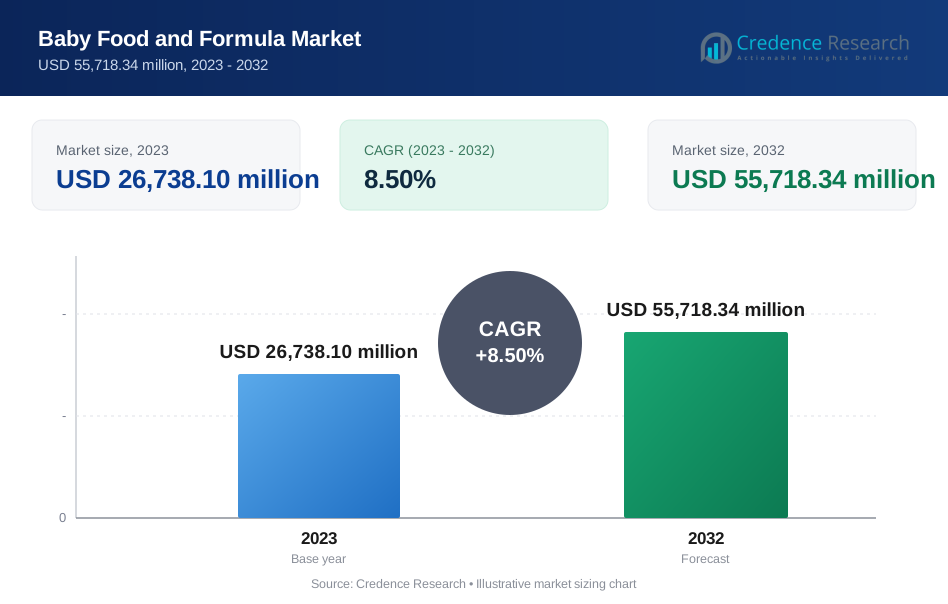
The Baby Food and Formula Market is projected to grow from USD 26,738.10 million in 2023 to an estimated USD 55,718.34 million by 2032, with a compound annual growth rate (CAGR) of 8.50% from 2024 to 2032. This robust growth is driven by the rising awareness of infant nutrition, increased disposable income among consumers, and a growing population base in urban regions.
Key market drivers include a heightened focus on infant health, advancements in baby food formulations, and an increasing preference for organic and minimally processed products. Trends like plant-based formulas and fortified baby foods are also gaining popularity, catering to a segment of health-conscious consumers. Additionally, companies are prioritizing research and development to introduce innovative, nutrient-rich products that cater to specific dietary needs and stages of infant development, which will further bolster market growth.
Regionally, North America and Europe currently dominate the baby food and formula market, driven by high standards of living and substantial spending on premium-quality baby products. However, the Asia-Pacific region is anticipated to experience the fastest growth, supported by rising birth rates, urbanization, and a growing middle-class population. Key players in the market include Nestlé, Abbott Laboratories, Danone S.A., and Mead Johnson Nutrition Company, all of which are intensifying their focus on product innovation and regional expansion to capture a larger market share.
Market Drivers
Increasing Awareness of Infant Nutrition and Health Needs
As awareness about the importance of early nutrition continues to grow, parents are prioritizing high-quality food options that support optimal infant health and development. Studies linking early nutrition to long-term health outcomes have heightened the focus on nutrient-rich and fortified baby food and formula. For instance, a study published in The Lancet in 2016 found that optimal breastfeeding practices could prevent an estimated 823,000 child deaths annually worldwide. Parents are increasingly informed about the essential nutrients needed during infancy and are more willing to invest in products that offer balanced, science-backed nutrition. This trend is particularly evident in urban areas, where busy lifestyles drive demand for ready-to-consume, convenient products that ensure infants receive proper nourishment, even when time or resources are limited. As a result, manufacturers are not only meeting but also anticipating consumer expectations by developing enriched formulations with vitamins, minerals, and probiotics tailored to various stages of development.
Rising Demand for Organic and Clean-Label Products
Growing concerns about food safety and a preference for clean-label, organic ingredients are shaping the baby food and formula market. Parents are increasingly scrutinizing product labels for artificial additives, preservatives, and GMO ingredients, pushing manufacturers to prioritize transparency and quality. Organic baby food, free from synthetic chemicals and pesticides, is perceived as a safer, healthier choice, particularly for infants. This demand has led companies to offer a range of organic options, catering to parents who value natural ingredients and minimal processing. The rise of clean-label and organic products is expected to have a long-lasting impact on the market, as companies continue to meet the demand with products that are both sustainable and certified. Clean labeling has not only become a consumer priority but also a marketing tool for brands, helping them build trust and loyalty among increasingly health-conscious buyers.
Advances in Baby Food Formulation and Product Innovation
The baby food and formula industry has seen significant innovation, with companies investing heavily in research and development to improve product formulations. These advancements include fortified foods and formulas that are enriched with probiotics, DHA, omega-3 fatty acids, and other vital nutrients. Additionally, manufacturers are exploring novel ingredients like plant-based proteins, aiming to provide options that cater to diverse dietary preferences and health considerations. Such innovations are not only attracting a broader consumer base but are also promoting the market's growth by catering to the specific developmental needs of infants and toddlers. Moreover, the rise of specialized products, such as hypoallergenic and lactose-free formulas, has expanded options for parents dealing with food sensitivities and allergies in infants. This innovation-driven environment reflects the industry's commitment to addressing a spectrum of nutritional needs, fueling growth and diversification in the market.
Urbanization, Busy Lifestyles, and Increased Disposable Income Rapid urbanization and a rise in dual-income households have created a market for convenient baby food and formula solutions. As more parents are employed full-time, demand for products that simplify feeding routines without compromising nutrition has surged. Baby food products that are easy to prepare, store, and transport have become essential for many families, especially in urban settings. This shift in consumer behavior, combined with increased disposable income, has boosted the willingness to spend on premium and fortified baby food products. As families have more financial flexibility, they can prioritize products that offer nutritional quality and convenience, even at a higher price point. Consequently, companies are increasingly focusing on premium product lines, packaging innovations, and marketing strategies that resonate with urban consumers who value both convenience and quality.
Market Trends
Rise in Demand for Organic, Plant-Based, and Non-GMO Baby Products
As health-conscious parents prioritize ingredient quality, the demand for organic, plant-based, and non-GMO baby food and formula products has surged. Today's consumers are increasingly aware of potential allergens, chemicals, and preservatives, and they often choose products free from synthetic additives and genetically modified ingredients. The growing popularity of organic baby foods reflects this shift, with brands offering certified organic options that assure parents of minimal exposure to harmful substances. Additionally, plant-based formulas are gaining traction, especially among parents who are vegetarian or vegan or those concerned about the environmental impact of animal-based products. This trend is also driven by the perceived digestibility and gentleness of plant-based ingredients on infants' sensitive digestive systems. As a result, leading brands are expanding their portfolios to include a variety of plant-based and organic choices, emphasizing clean labels and certifications to reassure health-focused consumers. For instance, in April 2022, Gerber launched its latest range of "carbon neutral plant-based toddler" food products across the U.S. market, containing plant-based baked snacks made from Non-GMO ingredients. This emphasis on transparency, sustainability, and natural ingredients is likely to continue influencing purchasing decisions, making it a defining trend in the market.
Emphasis on Functional Ingredients and Tailored Nutrition
Modern baby food and formula products are moving beyond basic nutritional needs to include functional ingredients that promote specific health benefits. Fortified products with added probiotics, prebiotics, DHA, iron, and omega-3 fatty acids address various aspects of infant development, including brain, immune, and digestive health. This trend aligns with an evolving understanding of early nutrition's long-term impact, as parents increasingly look for formulas that support cognitive development, gut health, and overall well-being. Moreover, companies are focusing on customized nutrition, developing formulations tailored to different stages of an infant's life and unique dietary needs. This includes products designed for sensitive digestion, lactose intolerance, or specific developmental phases. The emphasis on functional, science-backed ingredients has made fortified and specialized baby foods more desirable, as parents seek products that align with their preferences for proactive, health-focused nourishment. For instance, a study published in the Journal of Food and Nutrition Sciences found that infant formulas supplemented with a long-chain inulin/galactooligosaccharide mixture at a concentration of 0.8 g/dl were recognized as safe by the European Commission in 2001, highlighting the growing emphasis on functional ingredients in baby nutrition.
Market Restraints and Challenges
Stringent Regulatory Standards and Compliance Costs
The Baby Food and Formula market is subject to rigorous regulatory standards aimed at ensuring the safety, quality, and nutritional value of products intended for infants. Regulatory agencies across regions, such as the U.S. Food and Drug Administration (FDA) and the European Food Safety Authority (EFSA), enforce strict guidelines regarding permissible ingredients, manufacturing processes, and labeling requirements. Compliance with these regulations often requires extensive testing, documentation, and certification, which can significantly raise production costs for manufacturers. Small and medium-sized enterprises (SMEs) particularly face challenges in meeting these high compliance costs, which can limit market entry or force them to operate on tighter margins. Additionally, varying regulations across regions create complexities for multinational brands attempting to standardize their offerings globally. This regulatory landscape, though essential for consumer safety, poses a considerable challenge for companies looking to innovate and expand.
High Costs of Premium Ingredients and Product Pricing Pressures
While consumer demand for premium, organic, and functional baby food and formula products is growing, the cost of sourcing high-quality, organic, and non-GMO ingredients remains high. The price-sensitive nature of the baby food market, combined with the rising costs of raw materials, packaging, and transportation, places pressure on manufacturers to balance quality with affordability. As a result, premium products often come at a higher price point, which can be prohibitive for consumers, particularly in developing regions. This cost constraint can also hinder companies from broadening their customer base, especially in price-sensitive markets where consumers may opt for lower-priced alternatives. As companies aim to meet the demand for quality without pricing out a significant segment of consumers, they face the ongoing challenge of managing production costs while maintaining competitive pricing.
Market Segmentation Analysis
By Type
Infant formula is the largest segment in the market, driven by high demand from working parents seeking convenient and nutritionally balanced feeding options. Within this category, specialized formulas catering to specific health needs, such as hypoallergenic or lactose-free formulas, are increasingly popular. Snacks, purees, and cereals represent substantial growth segments as parents look for nutritious, ready-to-eat options. These categories have seen significant product diversification, including fruit and vegetable purees, whole-grain cereals, and minimally processed snacks, which appeal to health-conscious consumers. Innovation in flavor and texture, particularly in snacks and purees, is further broadening the appeal across diverse age groups.
By Demography
The infant demographic remains the core consumer base due to the essential nature of formula feeding in early life stages. Demand is highest for formulas and purees, which offer nutrient-dense options suitable for early development. The toddler segment shows strong demand for snacks, cereals, and more textured food, as parents introduce variety into their children’s diets. The pre-schooler segment is growing due to the increasing availability of fortified snacks and meals tailored to the energy and nutritional needs of active, older children. Companies are increasingly developing age-specific products to cater to these distinct nutritional requirements.
Segments
Based on type
- Infant Formula
- Snacks
- Purees
- Cereals
- Others
Based on demography
- Infant
- Toddler
- Pre Schooler
Based on nature
- Organic
- Inorganic
Based on distribution channel
- Supermarkets/Hypermarkets
- Grocery Stores
- Pharmacy Stores
- Online Stores
- Others
Based on region
- North America
- U.S.
- Canada
- Mexico
- Europe
- Germany
- France
- U.K.
- Italy
- Spain
- Rest of Europe
- Asia Pacific
- China
- Japan
- India
- South Korea
- South-east Asia
- Rest of Asia Pacific
- Latin America
- Brazil
- Argentina
- Rest of Latin America
- Middle East & Africa
- GCC Countries
- South Africa
- Rest of the Middle East and Africa
Regional Analysis
North America (30%)
North America holds a substantial share of the Baby Food and Formula market, accounting for approximately 30% of the global market. The region's strong position is driven by high disposable incomes, a well-established healthcare infrastructure, and a strong emphasis on infant health and nutrition. The U.S. is the primary contributor, with a highly developed retail landscape and high consumer awareness about premium baby food products. Additionally, North American parents prioritize organic and clean-label products, fueling demand for organic and minimally processed baby food and formula. The growing trend toward plant-based and functional ingredients also aligns well with regional preferences, encouraging innovation from leading brands.
Europe (25%)
Europe holds around 25% of the global market share, with demand driven by stringent food quality standards and a growing preference for organic and fortified baby foods. Countries such as Germany, France, and the United Kingdom are major contributors, thanks to strong regulatory frameworks that ensure product safety and quality. European consumers are also highly health-conscious, driving demand for premium, non-GMO, and organic baby products. Additionally, government policies promoting the welfare of infants and children, coupled with financial support programs, have boosted the market for baby food and formula. Manufacturers in Europe are increasingly focused on sustainable and eco-friendly packaging, catering to environmentally conscious consumers.
Key players
- Nestlé S.A.
- Hero Group
- Danone S.A.
- Abbott
- ASAHI GROUP HOLDINGS, LTD.
- Z. Cussons
- The Kraft Heinz Company
- Kewpie Corporation
- HIPPA GmbH & Co. Vertie KG
- Alter S.L
Competitive Analysis
The Baby Food and Formula market is highly competitive, with prominent players like Nestlé S.A., Danone S.A., Abbott, and Hero Group leading the industry through extensive product portfolios and strong brand recognition. Nestlé and Danone hold significant market shares, leveraging their vast distribution networks and continuous innovation in product formulations to cater to varied consumer needs. Abbott and ASAHI GROUP HOLDINGS focus on quality and nutrition research, appealing to health-conscious parents and strengthening their positions. Companies like Hero Group and P.Z. Cussons, while smaller, emphasize organic and specialized baby foods, aligning with current consumer trends for natural products. New entrants face high barriers due to stringent regulations and the dominance of established brands. This competitive landscape encourages major players to adopt strategic partnerships, expand their geographic reach, and invest in research to develop differentiated, premium products that address evolving consumer preferences.
Recent Developments
- In November 2023, Nestlé launched a new infant formula containing a proprietary blend called Sinergity in Hong Kong, which includes six human milk oligosaccharides (HMOs) and two probiotic strains.
- In October 2024, Hero Group acquired Deliciously Ella, a plantInbased food brand, to expand its presence in the UK snacking market and complement its existing Organix baby food brand.
- In September 2024, Danone announced plans to launch a new infant formula product formulated with Nuturis in Hong Kong, featuring large milk lipid droplets that closely mimic those in breast milk.
- In August 2024, Abbott expanded its Pure Bliss™ line of infant formulas to include EuropeanInmade and organic products, offering the first and only organic liquid formula available at U.S. retail stores.
- In May 2024, PZ Cussons announced plans to sell off its St Tropez selfIntanning brand as part of a reorganization to refocus the group, potentially freeing up resources for its other product lines, including baby care products.
Market Concentration and Characteristics
The Baby Food and Formula market is moderately concentrated, with a few large players like Nestlé, Danone, and Abbott dominating significant market shares globally. These leading companies benefit from well-established brand recognition, extensive distribution networks, and strong R&D investments, allowing them to introduce innovative, high-quality products that meet the growing demand for premium and specialized baby nutrition. The market’s competitive landscape is characterized by a high emphasis on product safety, regulatory compliance, and nutritional quality, with companies increasingly focusing on organic, non-GMO, and functional ingredients to meet evolving consumer preferences. Additionally, while established players control a substantial portion of the market, emerging regional brands and new entrants are gaining traction by offering niche products and leveraging online distribution channels. This dynamic fosters a competitive environment where companies strive to differentiate through product innovation, strategic partnerships, and geographic expansion.
Report Coverage
The research report offers an in-depth analysis based on type, demography, nature, distribution channel and Region. It details leading market players, providing an overview of their business, product offerings, investments, revenue streams, and key applications. Additionally, the report includes insights into the competitive environment, SWOT analysis, current market trends, as well as the primary drivers and constraints. Furthermore, it discusses various factors that have driven market expansion in recent years. The report also explores market dynamics, regulatory scenarios, and technological advancements that are shaping the industry. It assesses the impact of external factors and global economic changes on market growth. Lastly, it provides strategic recommendations for new entrants and established companies to navigate the complexities of the market.
Future Outlook
- The Baby Food and Formula market is expected to witness steady growth, driven by increasing awareness of infant nutrition and rising disposable incomes globally.
- The organic baby food segment will continue to expand as consumers prioritize clean-label products, non-GMO ingredients, and minimal processing for their infants.
- Demand for plant-based, hypoallergenic, and lactose-free formulas is projected to grow, catering to parents seeking specialized nutrition options for infants with dietary sensitivities.
- Brands will likely focus more on adding functional ingredients, such as DHA, probiotics, and prebiotics, to support cognitive development, immunity, and digestive health.
- Online sales will increase as parents increasingly value convenience, product variety, and access to specialty items available through e-commerce platforms.
- The Asia-Pacific region will witness the highest growth rate due to rising birth rates, urbanization, and an expanding middle class, particularly in China and India.
- As environmental awareness grows, companies will adopt sustainable packaging solutions to appeal to eco-conscious consumers, which could become a market differentiator.
- Advances in food technology will allow companies to improve formula composition, enhance nutrient retention, and create new product forms that cater to evolving consumer needs.
- Emerging brands offering niche and locally adapted products will intensify competition, challenging established players to innovate and maintain their market shares.
- As parents are willing to invest in high-quality nutrition, brands will continue to expand premium offerings, featuring organic, fortified, and age-specific baby food products.
Request a Free Sample
Fill in your details and we'll send you a free sample report.
- Sample data tables & charts
- Research methodology
Need a Custom Version of This Report?
Tailor the scope, geography, or segments to your exact requirements.
- Custom geography or segment scope
- Direct access to our analyst team
Frequently Asked Questions
What is the market size of the Baby Food and Formula market in 2023 and 2032, and its CAGR?
What are the main drivers of growth in the Baby Food and Formula market?
What trends are shaping the Baby Food and Formula market?
Which regions hold the largest share in the Baby Food and Formula market?
Who are the key players in the Baby Food and Formula market?
Why is the Asia-Pacific region expected to grow rapidly in this market?
Table of Content
Chapter 1. Report Introduction
- 1.1 Report Description & Purpose
- 1.1.1 Report Title & Market Definition
- 1.1.2 Unique Selling Propositions (USP) & Key Differentiators
- 1.1.3 Value Proposition for Stakeholders
- 1.2 Research Objectives
- 1.2.1 Market Sizing Objectives (Volume & Revenue)
- 1.2.2 Segmentation Objectives
- 1.2.3 Competitive Intelligence Objectives
- 1.2.4 Forecast & Scenario Objectives
- 1.3 Report Scope
- 1.3.1 Baby Food and Formula Scope – Types & Subtypes Covered
- 1.3.2 Geographic Scope – Regions & Countries Covered
- 1.3.3 Historical Period, Base Year & Forecast Period (2023; forecast to 2032)
- 1.3.4 Inclusions & Exclusions
- 1.4 HS Code & Classification Framework
- 1.5 Currency, Units & Pricing Basis
- 1.6 Target Stakeholders
- 1.7 Limitations & Assumptions
Chapter 2. Executive Summary
- 2.1 Global Baby Food and Formula Market Snapshot
- 2.1.1 Market Size – Historical (2023) & Forecast (2023-2032) (2023: USD 26,738.10 million → 2032: USD 55,718.34 million)
- 2.1.2 Volume & Revenue – Global Totals
- 2.1.3 Key Market Highlights – Top Five Facts
- 2.2 Baby Food and Formula Market Segmentation Snapshot
- 2.2.1 Market Split by Region – 2023 vs. 2032
- 2.3 Competitive Snapshot
- 2.3.1 Top 10 Players by Revenue Share – 2023
- 2.3.2 Top 10 Players by Volume Share – 2023
- 2.3.3 Recent Strategic Developments (18-Month Summary)
- 2.4 Key Investment Highlights & Strategic Conclusions
Chapter 3. Baby Food and Formula Market Dynamics & Industry Analysis
- 3.1 Market Overview & Context
- 3.1.1 Baby Food and Formula Market Position in the Broader Automotive Value Chain
- 3.1.2 OEM vs. Replacement Market Dynamics
- 3.1.3 Market Maturity & Development Stage by Region
- 3.2 Baby Food and Formula Market Drivers
- 3.3 Baby Food and Formula Market Restraints & Challenges
- 3.4 Baby Food and Formula Market Opportunities
- 3.5 Porter's Five Forces Analysis
- 3.5.1 Threat of New Entrants
- 3.5.2 Bargaining Power of Suppliers
- 3.5.3 Bargaining Power of Buyers
- 3.5.4 Threat of Substitutes
- 3.5.5 Competitive Rivalry – Intensity Assessment
- 3.6 Baby Food and Formula Value Chain Analysis
- 3.6.1 Upstream – Raw Material/Input Suppliers
- 3.6.1.1 Raw Material/Input 1
- 3.6.1.2 Raw Material/Input 2
- 3.6.1.3 Raw Material/Input 3
- 3.6.2 Midstream – Production/Manufacturing/Service Delivery
- 3.6.2.1 Production/Process Overview
- 3.6.2.2 Key Facility Locations & Capacity by Manufacturer
- 3.6.3 Downstream – Distribution & End Consumer
- 3.6.3.1 Primary Channel – B2B/OEM
- 3.6.3.2 Secondary Channels – Dealer, Retail, Online, Direct
- 3.6.4 Value Chain Profitability Analysis
- 3.6.1 Upstream – Raw Material/Input Suppliers
- 3.7 PESTEL Analysis
- 3.7.1 Political Factors
- 3.7.2 Economic Factors
- 3.7.3 Social Factors
- 3.7.4 Technological Factors
- 3.7.5 Environmental Factors
- 3.7.6 Legal Factors
- 3.8 Baby Food and Formula Supply Chain Analysis
- 3.8.1 Raw Material/Input Supply Risk Assessment
- 3.8.2 Manufacturing Concentration Risk (Geographic Exposure)
- 3.8.3 Trade Disruption Impact Analysis
- 3.9 Regulatory & Policy Landscape
Note: The regulatory and policy landscape section covers regulations based on their applicability to the market, Baby Food and Formula category, geography, and scope of the study. Only regulatory frameworks with a material impact on operations, compliance, trade, sustainability, or market access are analyzed in detail.
Chapter 4. Key Investment Pockets & Opportunity Analysis
- 4.1 Baby Food and Formula Market Attractiveness Analysis
- 4.1.1 By Region – Investment Attractiveness Matrix (Volume × CAGR)
- 4.2 Absolute Revenue Growth Opportunity
- 4.2.1 By Region – Absolute USD Growth Through 2032
- 4.3 Incremental Volume Opportunity
- 4.3.1 By Region – Incremental Volume Through 2032
- 4.3.2 Segment – Incremental Volume
- 4.4 Emerging Submarket Opportunity Deep Dive (Subject to Applicability)
- 4.5 Emerging Market Opportunity Scorecards
- 4.5.1 United States
- 4.5.2 Europe
- 4.5.3 Asia
- 4.5.4 Middle East & Africa
Note: Emerging Market Opportunity Scorecards will be included based on relevance and strategic importance. Regions listed are indicative and may vary depending on data availability and market dynamics.
Chapter 5. Baby Food and Formula Import-Export Analysis & Trade Flows
- 5.1 Global Trade Overview
- 5.1.1 Global Export Value by Country (2023)
- 5.1.2 Global Export Volume by Country (2023)
- 5.1.3 Global Import Value by Country (2023)
- 5.1.4 Global Import Volume by Country (2023)
- 5.1.5 Net Trade Balance by Country (2023)
- 5.2 Export Analysis – Segment
- 5.2.1 Type 1 (HS Code)
- 5.2.2 Type 2 (HS Code)
- 5.2.3 Type 3 (HS Code)
- 5.2.4 Type 4 (HS Code)
- 5.2.5 Type 5 (HS Code)
- 5.3 Import Analysis – Segment
- 5.3.1 Type 1 (HS Code)
- 5.3.2 Type 2 (HS Code)
- 5.3.3 Type 3 (HS Code)
- 5.3.4 Type 4 (HS Code)
- 5.3.5 Type 5 (HS Code)
- 5.4 Average Unit Trade Prices
- 5.4.1 Average Export Price – Segment & Country
- 5.4.2 Average Import Price – Segment & Source Country
- 5.4.3 Price Trends (2023)
- 5.5 Key Trade Route Analysis
- 5.5.1 Trade Route 1
- 5.5.2 Trade Route 2
- 5.5.3 Trade Route 3
- 5.5.4 Trade Route 4
- 5.5.5 Trade Route 5
- 5.6 Trade Policy Impact Assessment
- 5.6.1 US Anti-Dumping & Section 301 Tariffs
- 5.6.2 EU Customs Union Impact
- 5.6.3 Major Free Trade Agreements
- 5.6.4 USMCA Rules of Origin
Note: Trade policy analysis will be included only where relevant to the Baby Food and Formula market.
Chapter 6. Competitive Landscape & Company Benchmarking
- 6.1 Baby Food and Formula Market Concentration & Structure
- 6.1.1 Herfindahl-Hirschman Index (HHI) – vs. 2023
- 6.1.2 Tier 1, Tier 2 & Tier 3 Market Structure
- 6.1.3 Global, Regional & Local Player Dynamics
- 6.2 Baby Food and Formula Market Share Analysis – 2023
- 6.2.1 Global Revenue Share by Company
- 6.2.2 Global Volume Share by Company
- 6.2.3 Regional Revenue Share
- 6.2.4 Market Share Evolution ( vs. 2023)
- 6.2.5 OEM Segment Share by Company
- 6.2.6 Replacement Segment Share by Company
- 6.3 Production/Delivery Capacity & Facility Analysis
- 6.3.1 Global Installed Capacity
- 6.3.2 Capacity Utilization Rates
- 6.3.3 Production/Output Volume
- 6.3.4 Facility Locations & Capacity Map
- 6.3.5 Planned Capacity Additions
- 6.4 Baby Food and Formula Competitive Benchmarking Matrix
- 6.4.1 Revenue, Volume, CAGR & Profitability Comparison
- 6.4.2 Channel Revenue Mix
- 6.4.3 Geographic Revenue Exposure
- 6.4.4 R&D Intensity
- 6.4.5 Sustainability Maturity
- 6.5 Strategic Developments in Baby Food and Formula (Last 24 Months)
- 6.5.1 Mergers, Acquisitions & Divestments
- 6.5.2 New Baby Food and Formula Launches
- 6.5.3 Facility Expansions
- 6.5.4 Strategic Alliances, Joint Ventures & Partnerships
- 6.5.5 Distribution Expansion & Market Entry
- 6.5.6 Sustainability & ESG Initiatives
- 6.6 Competitive Strategy Mapping
- 6.6.1 Leader, Challenger, Follower & Niche Classification
- 6.6.2 Pricing Strategy Comparison
- 6.6.3 Channel Strategy Matrix
Note: Strategic developments are included based on their materiality and the availability of reliable information.
Chapter 7. Global Baby Food and Formula Market – By Distribution Channel
- 7.1 Segment Overview
- 7.1.1 Volume & Revenue Split by Channel (2023 & 2032)
- 7.1.2 Channel Mix Evolution (2023-2032)
Chapter 8. Regional Market Analysis – Global Overview
- 8.1 Global Regional Overview
- 8.1.1 Regional Volume Share
- 8.1.2 Regional Revenue Share
- 8.1.3 Regional Volume by Region
- 8.1.4 Regional Revenue by Region
- 8.1.5 Regional Forecast Through 2032
- 8.2 Cross-Regional Segment Analysis
- 8.2.1 By Distribution Channel
- 8.2.2 By Brand/Price Tier
Chapter 9. North America Baby Food and Formula Market
- 9.1 United States
- 9.2 Canada
- 9.3 Mexico
Chapter 10. Europe Baby Food and Formula Market
- 10.1 Germany
- 10.2 France
- 10.3 Italy
- 10.4 United Kingdom
- 10.5 Spain
- 10.6 Poland
- 10.7 Russia
- 10.8 Netherlands
- 10.9 Belgium
- 10.10 Sweden
- 10.11 Denmark
- 10.12 Norway
- 10.13 Rest of Europe
Chapter 11. Asia Pacific Baby Food and Formula Market
- 11.1 China
- 11.2 India
- 11.3 Japan
- 11.4 South Korea
- 11.5 Thailand
- 11.6 Indonesia
- 11.7 Vietnam
- 11.8 Malaysia
- 11.9 Australia
- 11.10 Rest of Asia Pacific
Chapter 12. Latin America Baby Food and Formula Market
- 12.1 Brazil
- 12.2 Argentina
- 12.3 Colombia
- 12.4 Chile
- 12.5 Rest of Latin America
Chapter 13. Middle East Baby Food and Formula Market
- 13.1 Saudi Arabia
- 13.2 United Arab Emirates
- 13.3 Turkey
- 13.4 Israel
- 13.5 Iran
- 13.6 Rest of the Middle East
Chapter 14. Africa Baby Food and Formula Market
- 14.1 South Africa
- 14.2 Egypt
- 14.3 Nigeria
- 14.4 Morocco
- 14.5 Rest of Africa
Chapter 15. Baby Food and Formula Company Profiles
- 15.1 [Company 01]
- 15.1.1 Company Overview
- 15.1.2 Key Management Personnel
- 15.1.3 Products & Services Portfolio
- 15.1.4 Financial Performance
- 15.1.5 Key Market Focus & Geographic Presence
- 15.1.6 Recent Developments & Strategic Initiatives
Note: The company profile list is preliminary and may change based on research findings, market developments, data availability, and client requirements.
Chapter 16. Appendices
- Appendix A – List of Abbreviations & Acronyms
- Appendix B – Industry Classification Code Reference – Full Series
- Appendix C – Production & Capacity Data Tables
- Appendix D – End-Use & Demand Base Tables
- Appendix E – Consumption & Replacement Rate Assumptions
- Appendix F – ASP Reference Tables
- Appendix G – Manufacturing & Facility Database
- Appendix H – Import-Export Data Tables
- Appendix I – Regulatory Summary Tables
- Appendix J – Primary Research Participant List (Anonymized)
- Appendix K – Primary Research Questionnaire Framework
- Appendix L – Data Sources & Bibliography
- Appendix M – Market Size Divergence & Source Comparison
Chapter 17. Research Methodology
- 17.1 Research Framework & Philosophy
- 17.2 Secondary Research – Sources, Hierarchy & Data Extraction
- 17.3 Data Modeling – Bottom-Up & Top-Down Market Sizing
- 17.4 Primary Research – Stakeholder Framework, LOI & Sample Sizes
- 17.5 Forecast Methodology – Regression, Scenario & Sensitivity Analysis
- 17.6 Quality Control – Four-Layer Validation Framework
- 17.7 Limitations & Standard Assumptions
- 17.8 Disclaimer
