
| REPORT ATTRIBUTE | DETAILS |
|---|---|
| Historical Period | 2019-2022 |
| Base Year | 2023 |
| Forecast Period | 2024-2032 |
| Caramel Ingredients Market Size 2023 | USD 2,873.91 Million |
| Caramel Ingredients Market, CAGR | 7.25% |
| Caramel Ingredients Market Size 2032 | USD 5,395.71 Million |
Market Overview
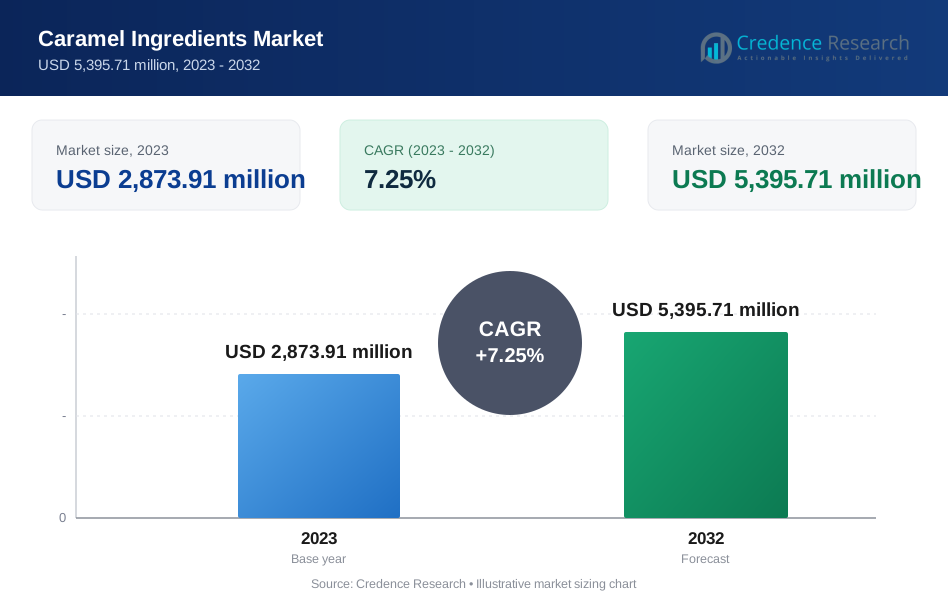
The Caramel Ingredients market is projected to grow from USD 2,873.91 million in 2023 to an estimated USD 5,395.71 million by 2032, with a compound annual growth rate (CAGR) of 7.25% from 2024 to 2032. This growth is driven by the increasing demand for caramel as a flavoring and coloring agent across various food and beverage applications, including bakery, confectionery, and dairy products.
Key drivers in the caramel ingredients market include the growing consumer preference for innovative and exotic flavors, which has spurred the development of new caramel-based products. Additionally, the increasing consumption of convenience foods and ready-to-eat products, especially in emerging economies, is contributing to the demand for caramel ingredients. Trends such as the rising focus on health and wellness are also influencing the market, as manufacturers seek to offer healthier caramel options with reduced sugar content.
Geographically, North America dominates the caramel ingredients market, followed by Europe and the Asia Pacific. The high consumption of bakery and confectionery products in North America, along with the presence of major food manufacturers, drives regional growth. In the Asia Pacific, rapid urbanization and changing dietary habits are boosting demand for caramel ingredients. Key players in the market include Cargill, Incorporated, Kerry Group, Archer Daniels Midland Company, Sensient Technologies Corporation, and Puratos Group.
Market Drivers
Growing Demand for Flavored and Colored Food Products
The global caramel ingredients market is significantly driven by the increasing demand for flavored and colored food products across various industries such as bakery, confectionery, beverages, and dairy. Caramel is widely appreciated for its rich flavor and appealing color, which enhances the sensory attributes of food and beverages. For instance, a recent consumer survey by a leading market research firm found that a majority of respondents cited flavor as the most important factor when purchasing food products. Additionally, data from the International Food Information Council Foundation shows that visual appeal plays a crucial role in food choices, with color being a key determinant. The proliferation of premium and indulgent food products, which often utilize caramel for its distinctive taste and visual appeal, is further propelling market growth. For example, a report by a major food industry association noted a substantial increase in the launch of new caramel-flavored products over the past five years. Manufacturers are capitalizing on this trend by introducing a wide range of caramel-based products, catering to the diverse flavor profiles sought by consumers.
Increasing Popularity of Clean Label and Natural Ingredients
Another critical driver of the caramel ingredients market is the growing consumer preference for clean-label and natural ingredients. In recent years, there has been a noticeable shift toward healthier and more transparent food products, with consumers becoming increasingly conscious of the ingredients used in the products they consume. For instance, a survey conducted by a prominent food ingredients supplier revealed that a significant portion of consumers actively seek out products with natural ingredients and avoid those with artificial additives. Caramel, particularly when derived from natural sources, aligns well with this trend, as it is perceived as a wholesome and authentic ingredient. The clean-label movement has encouraged food and beverage manufacturers to reformulate their products to include natural and minimally processed ingredients. This is evidenced by data from a global market intelligence agency, which reported a substantial increase in product launches featuring clean-label claims. Moreover, government agencies in several countries have implemented stricter regulations on food additives, further reinforcing the trend toward clean-label products.
Rising Consumption of Convenience and Ready-to-Eat Foods
The escalating demand for convenience and ready-to-eat (RTE) foods is another major factor driving the caramel ingredients market. With fast-paced lifestyles and the increasing prevalence of dual-income households, there is a growing need for convenient food options that require minimal preparation time. For instance, a consumer behavior study by a leading food industry association found that time-saving is a top priority for a large segment of shoppers when making food purchasing decisions. Caramel ingredients are extensively used in the preparation of various RTE products, including snacks, desserts, and bakery items, to enhance their flavor and appearance. The versatility of caramel, which can be used in both sweet and savory applications, makes it an ideal ingredient for a wide array of convenience foods. Furthermore, government data on urbanization trends in emerging economies shows a rapid increase in urban populations, which correlates with higher consumption of convenience foods. This is supported by market research data indicating significant growth in the RTE food sector across these regions, driving demand for ingredients like caramel.
Expansion of the Global Food and Beverage Industry
The overall expansion of the global food and beverage industry is a significant driver of the caramel ingredients market. The industry's growth is fueled by several factors, including population growth, increasing disposable incomes, and changing dietary patterns. As the global population continues to rise, particularly in emerging economies, the demand for a wide variety of food and beverage products is increasing, leading to a higher consumption of caramel ingredients. Additionally, the growing middle class in developing regions is driving demand for premium and value-added food products, which often incorporate caramel as a key ingredient. The beverage sector, in particular, has seen a surge in demand for caramel-based products, especially in the production of flavored beverages, syrups, and alcoholic drinks. Moreover, the expanding global foodservice industry, which includes restaurants, cafes, and quick-service outlets, is contributing to the increased usage of caramel ingredients in various culinary applications. The growth of the food and beverage industry, coupled with the continuous innovation in product offerings, is expected to drive the caramel ingredients market significantly over the coming years.
Market Trends
Increasing Focus on Health-Conscious and Low-Sugar Caramel Products
One of the most prominent trends in the caramel ingredients market is the growing emphasis on health-conscious and low-sugar caramel products. For instance, a significant portion of respondents are actively seeking out reduced-sugar confectionery options. This aligns with government health agency reports indicating rising consumer awareness about the health impacts of excessive sugar consumption. In response, major caramel ingredient manufacturers have reported increased investment in research and development of low-calorie and sugar-free alternatives. Several companies have launched new product lines featuring natural sweeteners and sugar substitutes to cater to this demand. Additionally, industry data shows a marked increase in patent filings related to innovative sugar reduction technologies for caramel production. Consumer packaged goods companies have also noted a surge in sales of products labeled as "low sugar" or "no added sugar" in their caramel-based offerings. This trend is particularly strong in developed markets, where health-conscious consumers are driving demand for healthier indulgence options.
Growing Popularity of Plant-Based and Vegan Caramel Ingredients
Another significant trend shaping the caramel ingredients market is the increasing popularity of plant-based and vegan caramel products. For instance, a recent industry report highlighted that a substantial number of new caramel product launches in the past year featured plant-based claims. This trend is supported by consumer surveys indicating a growing preference for vegan and plant-based alternatives across various food categories, including confectionery. Major food manufacturers have reported increased sales in their plant-based caramel product lines, with some companies expanding their production capacity to meet demand. Government data on dietary trends also shows a steady increase in the number of consumers identifying as vegan or flexitarian, further driving this market shift. In response, ingredient suppliers have expanded their portfolios to include a wider range of plant-based caramel options, such as those made from coconut milk or almond butter. Retail sales data from leading supermarket chains indicates strong growth in the vegan confectionery segment, with plant-based caramel products showing particularly robust performance.
Market Restraints and Challenges
Health Concerns Related to Sugar Content and Artificial Additives
One of the primary restraints in the caramel ingredients market is the growing concern over the health impacts of high sugar content and artificial additives. As consumers become more health-conscious, there is increasing scrutiny over sugar levels in food products, including those containing caramel. For instance, a survey by the International Food Information Council found that over 70% of consumers are trying to limit or avoid sugars in their diet. This shift in consumer behavior poses a significant challenge for manufacturers, who must balance demand for caramel's rich flavor with the need to reduce sugar content. The pressure to reformulate products to meet health-conscious demands can increase production costs and complexity. Additionally, the use of artificial additives faces backlash from consumers who prefer natural and clean-label products. Data from Nielsen shows that sales of products with "natural" claims have grown significantly faster than conventional products in recent years. Meeting these clean label demands while maintaining caramel's signature flavor and texture presents technical challenges for ingredient manufacturers.
Fluctuating Raw Material Prices and Supply Chain Disruptions
Another major challenge facing the caramel ingredients market is volatility in raw material prices and supply chain disruptions. The production of caramel ingredients relies heavily on key raw materials such as sugar, dairy products, and natural flavorings, all of which are subject to price fluctuations. For example, USDA data shows that sugar prices can fluctuate by over 50% year-to-year due to factors like changing agricultural conditions and market demand. These price fluctuations can squeeze profit margins for manufacturers. Additionally, supply chain disruptions have highlighted vulnerabilities in global ingredient sourcing. A survey by the Institute for Supply Management found that nearly 75% of companies reported supply chain disruptions due to the COVID-19 pandemic. Delays in raw material procurement, transportation challenges, and labor shortages can all contribute to production delays and increased costs. Some caramel ingredient manufacturers have reported difficulties maintaining consistent product quality and pricing due to these supply chain issues. Addressing these challenges requires companies to diversify suppliers and build more resilient supply networks.
Market Segmentation Analysis
By Form
The caramel ingredients market is segmented by form into solid, granulated, and liquid varieties, each serving distinct purposes across the food and beverage industry. Solid caramel ingredients are widely used in confectionery and bakery applications, contributing to both flavor and texture in products like candies, chocolates, and baked goods. This segment is experiencing growth driven by increasing demand for premium and artisanal confectionery items. Granulated caramel offers precise control over sweetness and flavor, making it popular in dry mixes, baking applications, and as a topping for desserts and beverages. Its compatibility with automated production processes has led to increased adoption in industrial food manufacturing. Liquid caramel ingredients are highly sought after in the beverage industry for their ability to blend seamlessly into formulations. They provide rich flavor and smooth texture in beverages, sauces, and toppings. The liquid segment is showing significant growth potential, fueled by rising demand for flavored beverages, syrups, and ready-to-eat desserts. For instance, major beverage companies have reported increased use of liquid caramel in their product formulations to meet consumer preferences for natural ingredients and rich flavors.
By Application
Caramel ingredients find diverse applications as coloring agents, toppings, flavorings, and in other niche uses across the food and beverage industry. As a natural colorant, caramel is extensively used in soft drinks, sauces, and baked goods to impart a rich brown hue. This segment is growing steadily as manufacturers increasingly prefer natural alternatives to synthetic colorants. In the topping category, caramel enhances the visual appeal and taste of desserts, ice creams, and beverages. This segment is experiencing robust growth due to the rising consumption of indulgent treats, particularly in cafes and restaurants. Caramel's distinctive flavor drives its popularity in flavoring a wide range of products, from baked goods to beverages. Growth in this segment is fueled by consumer demand for innovative and exotic flavors, especially in confectionery and bakery sectors. For instance, leading food manufacturers have reported increased incorporation of caramel flavoring in new product launches to meet consumer preferences for indulgent and familiar tastes. Additionally, caramel finds use in niche applications such as fillings, glazes, and coatings, where it enhances texture, flavor, and appearance, particularly in premium and artisanal food products.
Segments
Based on Form
- Solid
- Granulated
- Liquid
Based on Application
- Colouring
- Topping
- Flavoring
- Others
Based on End User
- Bakery
- Confectionery
- Ice-Cream & Desserts
- Beverages
- Others
Based on Region
- North America
- The U.S
- Canada
- Mexico
- Europe
- Germany
- France
- The U.K.
- Italy
- Spain
- Rest of Europe
- Asia Pacific
- China
- Japan
- India
- South Korea
- South-east Asia
- Rest of Asia Pacific
- Latin America
- Brazil
- Argentina
- Rest of Latin America
- Middle East & Africa
- GCC Countries
- South Africa
- Rest of Middle East and Africa
Regional Analysis
North America (35%):
The North American region dominates the global caramel ingredients market, accounting for approximately 35% of the total market share. This dominance is driven by the high consumption of bakery, confectionery, and ready-to-eat products across the United States and Canada. For instance, a survey by the National Confectioners Association found that over 90% of Americans enjoy chocolate and candy at least twice per week. The region's strong food and beverage industry, coupled with a growing preference for premium and indulgent products, fuels the demand for caramel ingredients. Additionally, the presence of major food manufacturers and a well-established supply chain further supports market growth in North America. The clean-label movement, which emphasizes natural and minimally processed ingredients, also boosts the demand for naturally derived caramel products in this region.
Europe (28%):
Europe holds the second-largest market share, contributing around 28% to the global caramel ingredients market. The region's long-standing tradition in confectionery and bakery products plays a significant role in driving the demand for caramel ingredients. Countries like Germany, France, and the United Kingdom are key contributors, with their high consumption of confectionery and baked goods. For instance, data from the Federation of European Manufacturers and Suppliers of Ingredients to the Bakery, Confectionery and Patisserie Industries (FEDIMA) shows that the European bakery market is worth over €150 billion annually. The European market is also characterized by a strong emphasis on natural and organic ingredients, which aligns with the increasing demand for clean-label caramel products. The region's stringent regulations on food additives further encourage the use of natural caramel coloring and flavoring agents, supporting market growth.
Key players
- Kerry Group
- Cargill, Inc.
- Sensient Technologies Corporation
- Puratos Group
- Sethness Caramel Color
- Metarom
- Nigay
- Bakels Worldwide
- Nestlé S.A.
- Mondelez International Inc.
Competitive Analysis
The caramel ingredients market is characterized by intense competition, with key players such as Kerry Group, Cargill, Inc., and Sensient Technologies Corporation leading the market. These companies have a strong global presence and offer a wide range of caramel products, catering to various applications in the food and beverage industry. The competitive landscape is also shaped by regional players like Sethness Caramel Color and Metarom, which specialize in specific caramel formulations and cater to niche markets. Puratos Group, Nigay, and Bakels Worldwide are well-established in the bakery and confectionery segments, leveraging their expertise to offer innovative caramel solutions. Multinational giants like Nestlé S.A. and Mondelez International Inc. further intensify the competition with their extensive distribution networks and brand influence. The market's competitive environment is driven by continuous product innovation, strategic partnerships, and a focus on natural and clean-label ingredients to meet evolving consumer demands.
Recent Developments
- In July 2024, Kerry Group launched a new line of cleanInlabel caramel flavors called "NatureSense Caramel" for use in beverages and dairy products.
- In March 2024, Cargill, Inc. introduced "CaraSweet", a lowIncalorie caramel syrup made from erythritol and stevia for use in reducedInsugar applications.
- In September 2023, Sensient Technologies Corporation acquired French caramel color manufacturer Mane Caramels to expand its European caramel production capabilities.
- In May 2024, Puratos Group launched "Topfil Salted Caramel", a readyIntoInuse caramel filling for bakery and patisserie applications.
- In January 2024, Sethness Caramel Color introduced a new line of organic caramel colors to meet growing demand for cleanInlabel ingredients.
- In April 2024, Nigay unveiled "Freshness Caramel", a caramel ingredient that provides a cooling sensation for confectionery and beverage applications.
- In August 2023, Nestlé S.A. relaunched its Caramac caramelInflavored chocolate bar in the UK after discontinuing it in 2023, due to consumer demand.
- In June 2024, Mondelez International Inc. expanded its Cadbury Caramel product line with the launch of Cadbury Caramel Buttons in the UK.
Market Concentration and Characteristics
The caramel ingredients market is moderately concentrated, with a mix of global giants and specialized regional players contributing to the competitive landscape. The market is characterized by a high degree of product innovation, driven by the rising demand for natural, cleanInlabel, and lowInsugar caramel products. Key players like Kerry Group, Cargill, Inc., and Sensient Technologies Corporation dominate the market with their extensive portfolios and strong global presence, while niche players such as Sethness Caramel Color and Metarom focus on specific formulations and regional markets. The market is also influenced by factors such as fluctuating raw material prices, regulatory pressures, and evolving consumer preferences, which drive companies to continuously innovate and differentiate their offerings. As the demand for premium and healthInconscious products grows, the market is expected to see increased competition, particularly in the development of natural and organic caramel ingredients.
Report Coverage
The research report offers an inIndepth analysis based on Form, Application, End User and Region. It details leading market players, providing an overview of their business, product offerings, investments, revenue streams, and key applications. Additionally, the report includes insights into the competitive environment, SWOT analysis, current market trends, as well as the primary drivers and constraints. Furthermore, it discusses various factors that have driven market expansion in recent years. The report also explores market dynamics, regulatory scenarios, and technological advancements that are shaping the industry. It assesses the impact of external factors and global economic changes on market growth. Lastly, it provides strategic recommendations for new entrants and established companies to navigate the complexities of the market.
Future Outlook
- The market is expected to see a surge in demand for natural caramel ingredients as consumers increasingly prefer cleanInlabel products free from artificial additives.
- Rapid urbanization and changing dietary habits in emerging markets, particularly in Asia Pacific and Latin America, will drive significant growth in the caramel ingredients market.
- With the rising health consciousness, manufacturers will focus on developing lowInsugar and sugarInfree caramel products, catering to the growing demand for healthier alternatives.
- The trend towards plantInbased diets will propel the development and adoption of vegan caramel ingredients, expanding the market’s reach to healthInconscious and environmentally aware consumers.
- The beverage industry, especially flavored drinks and alcoholic beverages, will continue to be a key driver of demand for caramel ingredients, enhancing flavor and color profiles.
- As sustainability becomes a priority, companies will invest in ecoInfriendly production processes and sourcing practices, appealing to environmentally conscious consumers.
- Innovations in production technology, such as more efficient caramelization processes, will enable manufacturers to improve product quality and reduce costs.
- The demand for premium and gourmet products, particularly in the confectionery and bakery sectors, will boost the market for highInquality caramel ingredients with rich flavor profiles.
- The growth of the dairy and dessert segments, driven by consumer indulgence, will lead to higher usage of caramel as a flavoring and coloring agent in these applications.
- Companies will increasingly engage in strategic collaborations and partnerships to expand their product offerings and geographical presence, strengthening their position in the competitive market.
Request a Free Sample
Fill in your details and we'll send you a free sample report.
- Sample data tables & charts
- Research methodology
Need a Custom Version of This Report?
Tailor the scope, geography, or segments to your exact requirements.
- Custom geography or segment scope
- Direct access to our analyst team
Frequently Asked Questions
What is the projected growth of the Caramel Ingredients market?
What are the key drivers of the Caramel Ingredients market?
Which regions dominate the Caramel Ingredients market?
What trends are shaping the future of the Caramel Ingredients market?
Who are the major players in the Caramel Ingredients market?
Table of Content
Chapter 1. Report Introduction
- 1.1 Report Description & Purpose
- 1.1.1 Report Title & Market Definition
- 1.1.2 Unique Selling Propositions (USP) & Key Differentiators
- 1.1.3 Value Proposition for Stakeholders
- 1.2 Research Objectives
- 1.2.1 Market Sizing Objectives (Volume & Revenue) (Volume Where Applicable)
- 1.2.2 Segmentation Objectives
- 1.2.3 Competitive Intelligence Objectives
- 1.2.4 Forecast & Scenario Objectives
- 1.3 Report Scope
- 1.3.1 Caramel Ingredients Scope – Segments & Subsegments Covered
- 1.3.2 Geographic Scope – Regions & Countries Covered
- 1.3.3 Historical Period, Base Year & Forecast Period (2023; forecast to 2032)
- 1.3.4 Inclusions & Exclusions
- 1.4 Industry Classification & Applicable Codes
- 1.5 Currency, Measurement Units & Valuation Basis
- 1.6 Target Stakeholders
- 1.7 Limitations & Assumptions
Chapter 2. Executive Summary
- 2.1 Global Caramel Ingredients Market Snapshot
- 2.1.1 Market Size – Historical (2023) & Forecast (2023-2032) (2023: USD 2,873.91 million → 2032: USD 5,395.71 million)
- 2.1.2 Volume & Revenue – Global Totals (Volume Where Applicable)
- 2.1.3 Key Market Highlights – Top Five Facts
- 2.2 Caramel Ingredients Market Segmentation Snapshot
- 2.2.1 Market Split by Region – 2023 vs. 2032
- 2.3 Competitive Snapshot
- 2.3.1 Top 10 Players by Revenue Share – 2023
- 2.3.2 Top 10 Players by Volume Share – 2023 (Volume Where Applicable)
- 2.3.3 Recent Strategic Developments (18-Month Summary)
- 2.4 Key Investment Highlights & Strategic Conclusions
Chapter 3. Caramel Ingredients Market Dynamics & Industry Analysis
- 3.1 Market Overview & Context
- 3.1.1 Caramel Ingredients Market Position in the Broader Industry Value Chain
- 3.1.2 Demand Structure & Purchasing Dynamics
- 3.1.3 Market Maturity & Development Stage by Region
- 3.2 Caramel Ingredients Market Drivers
- 3.3 Caramel Ingredients Market Restraints & Challenges
- 3.4 Caramel Ingredients Market Opportunities
- 3.5 Porter's Five Forces Analysis
- 3.5.1 Threat of New Entrants
- 3.5.2 Bargaining Power of Suppliers
- 3.5.3 Bargaining Power of Buyers
- 3.5.4 Threat of Substitutes
- 3.5.5 Competitive Rivalry – Intensity Assessment
- 3.6 Caramel Ingredients Value Chain Analysis
- 3.6.1 Upstream – Key Inputs, Resources & Suppliers
- 3.6.1.1 Key Input/Resource 1
- 3.6.1.2 Key Input/Resource 2
- 3.6.1.3 Key Input/Resource 3
- 3.6.2 Midstream – Core Operations & Value Creation
- 3.6.2.1 Operating Model & Process Overview
- 3.6.2.2 Key Operating Locations & Capabilities by Company
- 3.6.3 Downstream – Market Channels & End Users
- 3.6.3.1 Direct Sales & Customer Engagement Channels
- 3.6.3.2 Indirect Sales, Intermediaries & Partner Channels
- 3.6.4 Value Chain Profitability Analysis
- 3.6.1 Upstream – Key Inputs, Resources & Suppliers
- 3.7 PESTEL Analysis
- 3.7.1 Political Factors
- 3.7.2 Economic Factors
- 3.7.3 Social Factors
- 3.7.4 Technological Factors
- 3.7.5 Environmental Factors
- 3.7.6 Legal Factors
- 3.8 Caramel Ingredients Supply Chain Analysis
- 3.8.1 Critical Input & Resource Availability Risk Assessment
- 3.8.2 Supplier & Operational Concentration Risk (Geographic Exposure)
- 3.8.3 Supply & Service Disruption Impact Analysis
- 3.9 Regulatory & Policy Landscape
Note: The regulatory and policy landscape section covers regulations based on their applicability to the market, Caramel Ingredients category, geography, and scope of the study. Only regulatory frameworks with a material impact on operations, compliance, trade, sustainability, or market access are analyzed in detail.
Chapter 4. Key Investment Pockets & Opportunity Analysis
- 4.1 Caramel Ingredients Market Attractiveness Analysis
- 4.1.1 By Region – Investment Attractiveness Matrix (Market Size × CAGR)
- 4.2 Absolute Revenue Growth Opportunity
- 4.2.1 By Region – Absolute Revenue Growth Through 2032
- 4.3 Incremental Demand Opportunity
- 4.3.1 By Region – Incremental Demand Through 2032
- 4.3.2 Segment – Incremental Demand
- 4.4 Emerging Submarket Opportunity Deep Dive (Subject to Applicability)
- 4.5 Priority Market Opportunity Scorecards
- 4.5.1 United States
- 4.5.2 Europe
- 4.5.3 Asia
- 4.5.4 Middle East & Africa
Note: Priority market opportunity scorecards reflect the geographic scope and strategic relevance of the study. Listed markets are indicative and may be adapted to the industry.
Chapter 5. Caramel Ingredients Cross-Border Trade & Market Access Analysis
- 5.1 International Trade & Cross-Border Activity Overview
- 5.1.1 Global Export Value by Country (2023)
- 5.1.2 Global Export Volume by Country (2023) (Volume Where Applicable)
- 5.1.3 Global Import Value by Country (2023)
- 5.1.4 Global Import Volume by Country (2023) (Volume Where Applicable)
- 5.1.5 Net Trade Balance by Country (2023)
- 5.2 Export Analysis – Segment
- 5.2.1 Category 1 (Applicable Classification Code)
- 5.2.2 Category 2 (Applicable Classification Code)
- 5.2.3 Category 3 (Applicable Classification Code)
- 5.2.4 Category 4 (Applicable Classification Code)
- 5.2.5 Category 5 (Applicable Classification Code)
- 5.3 Import Analysis – Segment
- 5.3.1 Category 1 (Applicable Classification Code)
- 5.3.2 Category 2 (Applicable Classification Code)
- 5.3.3 Category 3 (Applicable Classification Code)
- 5.3.4 Category 4 (Applicable Classification Code)
- 5.3.5 Category 5 (Applicable Classification Code)
- 5.4 Cross-Border Pricing & Transaction Benchmarks
- 5.4.1 Export Pricing – Segment & Country
- 5.4.2 Import Pricing – Segment & Source Country
- 5.4.3 Price Trends (2023)
- 5.5 Key Cross-Border Trade & Delivery Routes
- 5.5.1 Cross-Border Trade/Delivery Route 1
- 5.5.2 Cross-Border Trade/Delivery Route 2
- 5.5.3 Cross-Border Trade/Delivery Route 3
- 5.5.4 Cross-Border Trade/Delivery Route 4
- 5.5.5 Cross-Border Trade/Delivery Route 5
- 5.6 Trade Policy & Market Access Impact Assessment
- 5.6.1 Tariff & Non-Tariff Barriers
- 5.6.2 Regional Trade & Economic Integration Frameworks
- 5.6.3 Bilateral & Multilateral Trade Agreements
- 5.6.4 Cross-Border Operating, Licensing & Localization Requirements
Note: This chapter applies where cross-border trade or delivery is relevant to Caramel Ingredients. Goods, services, and digital offerings are assessed using applicable classifications and transaction measures. Import-export volumes, trade balances, and route analyses are included only where meaningful to the market.
Chapter 6. Competitive Landscape & Company Benchmarking
- 6.1 Caramel Ingredients Market Concentration & Structure
- 6.1.1 Herfindahl-Hirschman Index (HHI) – vs. 2023
- 6.1.2 Leading, Mid-Sized & Emerging Player Structure
- 6.1.3 Global, Regional & Local Player Dynamics
- 6.2 Caramel Ingredients Market Share Analysis – 2023
- 6.2.1 Global Revenue Share by Company
- 6.2.2 Global Volume Share by Company (Volume Where Applicable)
- 6.2.3 Regional Revenue Share
- 6.2.4 Market Share Evolution ( vs. 2023)
- 6.2.5 Company Market Share by Key Segment
- 6.2.6 Company Market Share by Customer Group
- 6.3 Operating Scale, Capacity & Infrastructure Analysis
- 6.3.1 Global Operating Scale & Supply Capacity
- 6.3.2 Resource Utilization & Operating Efficiency
- 6.3.3 Output, Service Delivery & Activity Metrics
- 6.3.4 Operating Footprint & Infrastructure Map
- 6.3.5 Planned Operational & Capacity Expansion
- 6.4 Caramel Ingredients Competitive Benchmarking Matrix
- 6.4.1 Revenue, Growth, Profitability & Operating Metric Comparison
- 6.4.2 Channel Revenue Mix
- 6.4.3 Geographic Revenue Exposure
- 6.4.4 R&D Intensity
- 6.4.5 Sustainability Maturity
- 6.5 Strategic Developments in Caramel Ingredients (Last 24 Months)
- 6.5.1 Mergers, Acquisitions & Divestments
- 6.5.2 New Products, Services & Solutions in Caramel Ingredients
- 6.5.3 Operational & Infrastructure Expansions
- 6.5.4 Strategic Alliances, Joint Ventures & Partnerships
- 6.5.5 Distribution Expansion & Market Entry
- 6.5.6 Sustainability & ESG Initiatives
- 6.6 Competitive Strategy Mapping
- 6.6.1 Leader, Challenger, Follower & Niche Classification
- 6.6.2 Pricing Strategy Comparison
- 6.6.3 Channel Strategy Matrix
Note: Strategic developments are included based on their materiality and the availability of reliable information.
Chapter 7. Global Caramel Ingredients Market – By Sales & Delivery Channel
- 7.1 Segment Overview
- 7.1.1 Volume & Revenue Split by Channel (2023 & 2032) (Volume Where Applicable)
- 7.1.2 Channel Mix Evolution (2023-2032)
Chapter 8. Regional Market Analysis – Global Overview
- 8.1 Global Regional Overview
- 8.1.1 Regional Volume Share (Volume Where Applicable)
- 8.1.2 Regional Revenue Share
- 8.1.3 Regional Volume by Region (Volume Where Applicable)
- 8.1.4 Regional Revenue by Region
- 8.1.5 Regional Forecast Through 2032
- 8.2 Cross-Regional Segment Analysis
- 8.2.1 By Sales & Delivery Channel
- 8.2.2 By Competitive Positioning & Price Tier
Chapter 9. North America Caramel Ingredients Market
- 9.1 United States
- 9.2 Canada
- 9.3 Mexico
Chapter 10. Europe Caramel Ingredients Market
- 10.1 Germany
- 10.2 France
- 10.3 Italy
- 10.4 United Kingdom
- 10.5 Spain
- 10.6 Poland
- 10.7 Russia
- 10.8 Netherlands
- 10.9 Belgium
- 10.10 Sweden
- 10.11 Denmark
- 10.12 Norway
- 10.13 Rest of Europe
Chapter 11. Asia Pacific Caramel Ingredients Market
- 11.1 China
- 11.2 India
- 11.3 Japan
- 11.4 South Korea
- 11.5 Thailand
- 11.6 Indonesia
- 11.7 Vietnam
- 11.8 Malaysia
- 11.9 Australia
- 11.10 Rest of Asia Pacific
Chapter 12. Latin America Caramel Ingredients Market
- 12.1 Brazil
- 12.2 Argentina
- 12.3 Colombia
- 12.4 Chile
- 12.5 Rest of Latin America
Chapter 13. Middle East Caramel Ingredients Market
- 13.1 Saudi Arabia
- 13.2 United Arab Emirates
- 13.3 Turkey
- 13.4 Israel
- 13.5 Iran
- 13.6 Rest of the Middle East
Chapter 14. Africa Caramel Ingredients Market
- 14.1 South Africa
- 14.2 Egypt
- 14.3 Nigeria
- 14.4 Morocco
- 14.5 Rest of Africa
Chapter 15. Caramel Ingredients Company Profiles
- 15.1 [Company 01]
- 15.1.1 Company Overview
- 15.1.2 Key Management Personnel
- 15.1.3 Products & Services Portfolio
- 15.1.4 Financial Performance
- 15.1.5 Key Market Focus & Geographic Presence
- 15.1.6 Recent Developments & Strategic Initiatives
Note: The company profile list is preliminary and may change based on research findings, market developments, data availability, and client requirements.
Chapter 16. Appendices
- Appendix A – List of Abbreviations & Acronyms
- Appendix B – Industry Classification Code Reference – Full Series
- Appendix C – Supply, Output & Operating Capacity Data Tables
- Appendix D – End-Use & Demand Base Tables
- Appendix E – Demand, Adoption & Usage Assumptions
- Appendix F – Pricing & Revenue Metric Reference Tables
- Appendix G – Company Operations & Infrastructure Database
- Appendix H – Cross-Border Trade & Activity Data Tables (Where Applicable)
- Appendix I – Regulatory Summary Tables
- Appendix J – Primary Research Participant List (Anonymized)
- Appendix K – Primary Research Questionnaire Framework
- Appendix L – Data Sources & Bibliography
- Appendix M – Market Size Divergence & Source Comparison
Chapter 17. Research Methodology
- 17.1 Research Framework & Philosophy
- 17.2 Secondary Research – Sources, Hierarchy & Data Extraction
- 17.3 Data Modeling – Bottom-Up & Top-Down Market Sizing
- 17.4 Primary Research – Stakeholder Framework, LOI & Sample Sizes
- 17.5 Forecast Methodology – Regression, Scenario & Sensitivity Analysis
- 17.6 Quality Control – Four-Layer Validation Framework
- 17.7 Limitations & Standard Assumptions
- 17.8 Disclaimer
