
| REPORT ATTRIBUTE | DETAILS |
|---|---|
| Historical Period | 2019-2022 |
| Base Year | 2023 |
| Forecast Period | 2024-2032 |
| Hospital Infection Prevention And Control Market Size 2023 | USD 29541.50 Million |
| Hospital Infection Prevention And Control Market, CAGR | 7.60% |
| Hospital Infection Prevention And Control Market Size 2032 | USD 57114.05 Million |
Market Insights
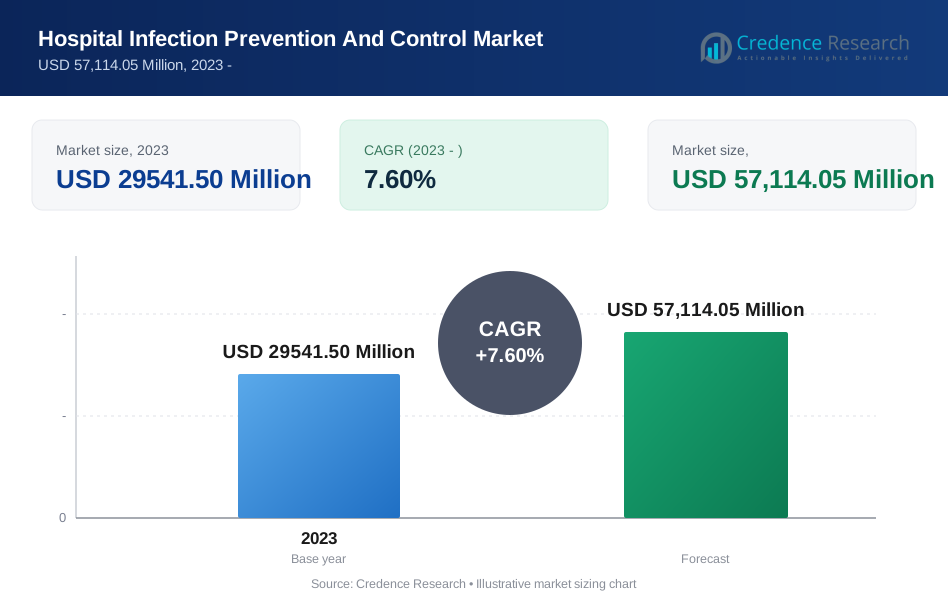
- The global demand for hospital infection prevention and control products was valued at USD 29541.50 Million in 2023 and is expected to reach USD 57114.05 Million in 2032, growing at a CAGR of 7.60% between 2024 and 2032.
- The disinfectants and sterilization Product segment is the market leader by type of product, accounting for a significant portion of total value in 2023, while the monitoring and surveillance systems segment is expected to grow rapidly throughout the forecast period.
- The catheter-associated urinary tract infections (CAUTIs) segment dominates the market by infection type, accounting for a significant share in 2023. The multidrug-resistant organisms (MDROs) segment is predicted to expand at a high CAGR.
- Over the projection period, long-term care facilities are expected to expand at the highest rate, while hospitals and clinics dominate the market by end-user with a substantial share in 2023.
- North America is dominating the hospital infection prevention and control industry with a substantial share in 2023, while Asia Pacific is expected to grow at the highest rate during the forecast period.
- The market's primary possibilities include technological advancements in sterilization and disinfection, growing public awareness about hospital-acquired infections, and stricter regulations by healthcare authorities.
Executive Summary
Market Definition
Hospital Infection Prevention and Control (HIPC) is a comprehensive framework aimed at preventing and managing infections within healthcare facilities to protect patients, healthcare workers, and visitors. This involves continuous surveillance and monitoring of infection rates, promoting rigorous hand hygiene practices, and implementing standard and transmission-based precautions. Key strategies include proper sterilization and disinfection of medical equipment, antimicrobial stewardship to prevent resistant infections, and regular education and training for healthcare staff. Additionally, HIPC engages patients and visitors in infection prevention efforts, ensuring a collaborative approach to minimizing healthcare-associated infections and enhancing patient safety and outcomes.
Market Overview
The global hospital infection prevention and control market has witnessed steady growth in recent years and is expected to grow at a CAGR of 7.60% between 2024 and 2032. The market was valued at USD 29541.50 million in 2023 and is expected to reach USD 57114.05 million in 2032.
The growth of the hospital infection prevention and control market is significantly driven by the increasing prevalence of healthcare-associated infections (HAIs) has heightened awareness and demand for effective infection control measures. HAIs pose significant risks to patient safety, leading to extended hospital stays, higher medical costs, and increased mortality rates, thus compelling healthcare facilities to invest in robust HIPC programs. Additionally, stringent government regulations and accreditation standards mandating infection control protocols have further propelled market expansion as compliance becomes essential for the operational legitimacy of healthcare institutions.
Technological advancements also play a pivotal role in driving the HIPC market. Innovations in sterilization and disinfection technologies, such as ultraviolet (UV) disinfection systems and automated cleaning robots, enhance the efficiency and effectiveness of infection control practices. These cutting-edge solutions offer improved outcomes and operational efficiencies, making them attractive investments for healthcare providers. Moreover, the rise of antimicrobial resistance has increased the need for comprehensive antimicrobial stewardship programs, spurring demand for advanced HIPC products and services to mitigate the spread of resistant pathogens.
Moreover, healthcare expenditures are increasing, particularly in emerging economies such as China and India. As these countries invest more in their healthcare infrastructure to improve the quality of care, there is a parallel increase in the adoption of HIPC measures. The expansion of healthcare facilities, coupled with the rising number of surgeries and invasive procedures, necessitates enhanced infection prevention protocols, further driving market demand. Furthermore, the ongoing COVID-19 pandemic has spotlighted the critical importance of infection control, leading to heightened investments in HIPC products and services globally.
Furthermore, growing patient awareness and expectations regarding healthcare safety and quality are influencing the market. Patients are increasingly informed about the risks of HAIs and demand higher standards of care, prompting healthcare providers to prioritize infection control measures. This shift in patient expectations, along with the competitive landscape of the healthcare sector, where institutions strive to build a reputation for safety and excellence, significantly boosts the HIPC market.
Segmentation by Type of Product
- The disinfectants and sterilization product is the leading segment by type of product and holds a substantial share in 2023. This dominance is attributed to the critical role these products play in maintaining hygiene and preventing the spread of infections in hospital settings. The frequent need for disinfection and sterilization of surfaces, instruments, and medical devices drives the substantial demand for these products. Additionally, the ongoing emphasis on infection control and the rising incidence of healthcare-associated infections (HAIs) further bolster their market share.
- Monitoring and Surveillance Systems is the fastest-growing segment due to the increasing focus on real-time infection tracking and prevention. With advancements in technology, hospitals are adopting sophisticated monitoring and surveillance systems to detect and manage infections more effectively. These systems help in early identification of infection outbreaks, ensuring timely intervention and reducing the spread of infections. The growing emphasis on improving patient outcomes and the need for efficient infection control measures are key factors driving the growth of this segment.
- Other segments , such as personal protective equipment (PPE), devices and equipment, and education and training services, also contribute substantially to the market's growth.
Segmentation by Infection Type
- Catheter-associated urinary Tract Infections (CAUTIs) boast the dominating position in the Hospital Infection Prevention and Control industry, holding a massive share in 2023. CAUTIs are the most common type of healthcare-associated infections (HAIs), accounting for a significant portion of infections in hospitals. This high prevalence is due to the frequent use of urinary catheters in hospital settings, particularly among patients who require prolonged catheterization. The prevention and control of CAUTIs necessitate the use of various infection control products and protocols, driving substantial demand in this segment.
- The Multidrug-resistant organisms (MDROs) are expected to grow with the highest CAGR during the projected period due to the increasing challenge posed by antibiotic-resistant infections. The rise of MDROs, such as MRSA (Methicillin-Resistant Staphylococcus Aureus) and VRE (Vancomycin-Resistant Enterococci), necessitates enhanced infection control measures. Hospitals are increasingly investing in advanced monitoring and surveillance systems, rigorous sterilization techniques, and comprehensive education and training programs for healthcare personnel to address these resistant infections.
- Other infection types, including surgical site infections (SSIs), central line-associated bloodstream infections (CLABSIs), ventilator-associated pneumonia (VAP), and clostridioides difficile infections (CDIs), further contribute significantly to the growth of the market.
Segmentation by End-User
- The Hospitals and Clinics boast the dominating position in the Hospital Infection Prevention and Control industry, holding a massive share in 2023. Hospitals and clinics are the primary settings for patient care and treatment, making infection prevention and control critical. The high volume of patients, frequent surgical procedures, and the need for sterile environments drive significant demand for infection prevention products and services. Additionally, regulatory requirements and accreditation standards necessitate stringent infection control practices in these settings, further contributing to their dominant market share.
- Long-term care Facilities are expected to grow at the highest rate, driven by the aging population and the increasing prevalence of chronic diseases requiring long-term care. Due to the close living quarters and the often compromised health of residents, long-term care facilities, such as nursing homes and assisted living facilities, are particularly vulnerable to infections. This necessitates enhanced infection control measures, including regular disinfection, use of personal protective equipment (PPE), and staff training, leading to rapid growth in this market segment.
- Other end-user segments, such as ambulatory surgical centers, diagnostic laboratories, and pharmaceutical companies, contribute significantly to the growth of the market.
Segmentation by Region
- North America dominates the Hospital Infection Prevention and Control industry with a massive share in 2023 due to the region's advanced healthcare systems and stringent infection control regulations. Additionally, chronic diseases, including cardiovascular diseases and cancer, contribute to increased hospital admissions, leading to market growth.
- The Asia Pacific market is expected to grow at the highest rate during the forecasted period.
- The rest of the world, including Latin America, the Middle East, and Africa, supplies the remaining demand for the Hospital Infection Prevention and Control industry.
North America holds a significant share in the Hospital Infection Prevention and Control industry due to its advanced healthcare systems, stringent infection control regulations, and the development of innovative infection control technologies. The Centers for Disease Control (CDC) estimates that healthcare-associated infections (HAIs) cause 1.7 million infections and 99,000 deaths annually in American hospitals alone, emphasizing the need for effective infection control measures to drive market growth.
Additionally, the increasing prevalence of chronic diseases, including cardiovascular diseases and cancer, contributes to increased hospital admissions, which leads to market growth. According to 2022 data from the American Health Association, there were approximately 33 million hospital admissions in the U.S., highlighting the substantial demand for infection control solutions. The increased number of hospital admissions and longer patient stays elevate the risk of hospital infections, further driving the need for advanced treatment options.
Moreover, innovative technological advancements play a pivotal role in bolstering market expansion. For instance, Penn Medicine's recent establishment of the Interventional Support Center (ISC) in Southwest Philadelphia exemplifies this trend. The ISC, one of Pennsylvania's largest instrument processing facilities, uses cutting-edge sterilization processes to enhance infection control practices, driving market growth by setting new standards for infection prevention in the region.
On the other hand, the Asia-Pacific region offers significant growth opportunities in the hospital infection prevention and control market, driven by demographic shifts and healthcare infrastructure investments. With the Asia-Pacific population aging faster than any other region, the prevalence of hospital-related infections is expected to surge. This demographic shift results in a higher susceptibility to infections among the elderly, necessitating specialized treatment and prevention measures.
In addition, governments across the Asia-Pacific region are making substantial investments in healthcare infrastructure to address evolving healthcare needs. Initiatives such as India's establishment of infectious disease (ID) blocks and the National Action Plan (NAP) to combat antimicrobial resistance (AMR) demonstrate efforts to enhance healthcare facilities and services, driving market growth in the region.
Furthermore, international collaborations play a vital role in addressing hospital infections in the Asia-Pacific region. Partnerships between local healthcare authorities and international organizations bring technical expertise and financial support to strengthen infection Prevention and Control measures. Collaborations between the Indian Council of Medical Research (ICMR), All India Institute of Medical Sciences (AIIMS), and the Centers for Disease Control and Prevention (CDC) of the USA are crucial in intensive care units (ICUs), where the risk of hospital-related infections is high. The involvement of global health entities such as the World Health Organization (WHO) underscores the importance of addressing hospital infections in low- and middle-income countries, highlighting the market growth prospects in the Asia-Pacific region.
Key Highlights of the Report
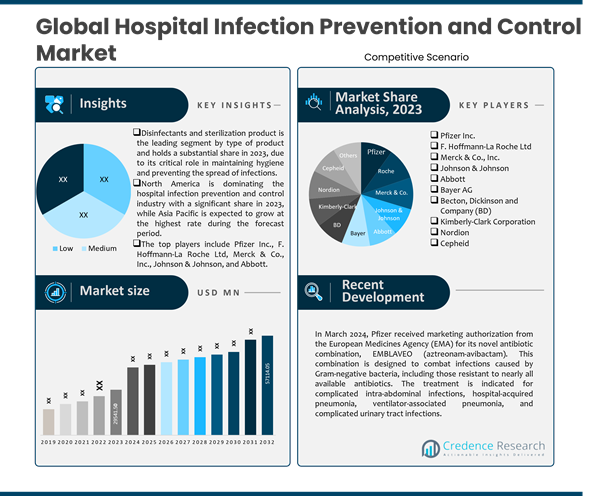
The global Hospital Infection Prevention and Control Market is segmented by type of product, infection type, end-user, and region. Disinfectants and Sterilization Products are the most popular segment, while Catheter-Associated Urinary Tract Infections (CAUTIs) are the primary infection type. In addition, Hospitals and Clinics are the most demanding end-users, with the North American region leading the market share.
The growth of the Hospital Infection Prevention and Control industry is due to the rising prevalence of healthcare-associated infections (HAIs) that lead to extended hospital stays, increased costs, and higher mortality rates. Government regulations and accreditation standards mandating infection control protocols further propel market growth. Moreover, increasing healthcare expenditure, especially in emerging economies, along with the expansion of healthcare facilities and the rise in surgeries, necessitate enhanced infection prevention protocols.
Nonetheless, North America is anticipated to have the largest share of the worldwide Hospital Infection Prevention and Control Market due to the region's advanced healthcare systems and stringent infection control regulations. Additionally, the rising prevalence of chronic diseases, including cardiovascular diseases and cancer, contributes to increased hospital admissions. Furthermore, the market is anticipated to expand at the highest rate in the Asia-Pacific region due to the region’s demographic shifts and increased healthcare infrastructure investments to address evolving healthcare needs.
What Are the Main Drivers of the Global Hospital Infection Prevention and Control Market?
The growth of the Hospital Infection Prevention and Control (HIPC) market is driven by the increasing prevalence of healthcare-associated infections (HAIs), which result in prolonged hospital stays, higher costs, and elevated mortality rates. Additionally, government regulations and accreditation standards mandating infection control protocols significantly boost market expansion. Furthermore, rising healthcare expenditure, particularly in emerging economies, coupled with the expansion of healthcare facilities and an increase in surgeries, necessitates the implementation of enhanced infection prevention protocols.
What Are the Major Challenges Faced by the Global Hospital Infection Prevention and Control Market?
The high cost associated with advanced hospital infection Prevention and Control technologies poses a significant challenge for the market growth. These costs can pose significant barriers, particularly for smaller healthcare facilities and institutions in developing regions with limited financial resources. Consequently, the adoption of comprehensive HIPC measures is often restricted in these settings, impeding the broader implementation of effective infection prevention strategies.
What Are the Growth Opportunities in the Global Hospital Infection Prevention and Control Market?
Technological advancements represent a significant opportunity for innovation and growth in the HIPC market in the future. Technological advancements, including smart disinfection systems, antimicrobial surfaces, and real-time monitoring tools, are revolutionizing infection control in healthcare. These innovations enhance HIPC strategies by offering targeted disinfection, microbial inhibition, and continuous surveillance.
Market Drivers
Growing Incidence of Various Types of Hospital-Acquired Infections (HAIs)
The growth of the Hospital Infection Prevention and Control industry is significantly driven by the rising incidence of various types of hospital-acquired infections (HAIs). According to the Centers for Disease Control and Prevention (CDC), catheter-associated urinary tract infections (CAUTIs) are among the most common types of healthcare-associated infections. Approximately 75% of urinary tract infections (UTIs) developed in hospitals are linked to the use of urinary catheters, with 15-25% of hospitalized patients requiring these devices. CAUTIs contribute to increased morbidity, mortality, healthcare costs, and extended hospital stays, underscoring the need for effective treatment and prevention strategies.
Additionally, a 2022 report from the World Health Organization (WHO) highlights the global burden of HAIs. It reveals that out of every 100 patients in acute-care hospitals, seven patients in high-income countries and 15 patients in low- and middle-income countries acquire at least one healthcare-associated infection during their hospital stay. Alarmingly, on average, one in every ten affected patients will die from their HAI. The impact of HAIs and antimicrobial resistance on patient outcomes is profound, with over 24% of patients affected by healthcare-associated sepsis and 52.3% of those treated in intensive care units succumbing to these infections annually. The mortality rate increases two to threefold when infections are resistant to antimicrobials, emphasizing the urgent need for advanced treatment options and robust infection control measures.
The increasing recognition of these infections' impact on patient health, hospital resources, and healthcare costs is spurring investments in the development and deployment of innovative diagnostic and therapeutic solutions. Enhanced infection control protocols and regulatory frameworks further support this growth as healthcare systems worldwide strive to mitigate the risks and outcomes associated with HAIs.
Market Restraints
High Cost Associated with Hospital Infection Prevention and Control
The growth of the Hospital Infection Prevention and Control (HIPC) market is significantly restrained by the high costs associated with advanced infection control technologies and products. These expenses can be particularly prohibitive for smaller healthcare facilities and those in developing regions, where financial resources are limited. Consequently, the adoption of comprehensive HIPC measures is often hindered in such resource-constrained settings. Moreover, the lack of awareness and education about the importance of infection control practices among healthcare workers and administrators in certain regions further exacerbates this challenge. Without a clear understanding of the critical role played by rigorous infection control measures, there is insufficient investment in training and resources. This, in turn, results in suboptimal implementation of HIPC measures, compromising their effectiveness and overall impact on patient safety and healthcare outcomes.
Opportunities
Advancements in Medical Technologies
Technological advancements are poised to create substantial opportunities for the hospital infection prevention and control market in the future. Innovations such as smart disinfection systems, antimicrobial surfaces, and real-time monitoring tools are transforming the landscape of infection Prevention and Control. These breakthrough technologies offer advanced capabilities that significantly enhance the effectiveness and efficiency of HIPC strategies.
Smart disinfection systems employ automation and intelligent sensors to deliver targeted and comprehensive disinfection of healthcare environments, thereby reducing the risk of pathogen transmission. Also, the antimicrobial surfaces integrate materials engineered to inhibit the growth and spread of microorganisms, providing an additional layer of protection against infectious agents. Meanwhile, real-time monitoring tools enable continuous surveillance of critical parameters such as air quality, surface cleanliness, and hand hygiene compliance, empowering healthcare facilities to identify and address infection risks proactively. These innovative tools not only enhance patient safety by curbing the incidence of healthcare-associated infections (HAIs) but also yield operational efficiencies and cost savings for healthcare facilities. By harnessing these technological advancements, healthcare providers can fortify their infection prevention strategies, enhance patient outcomes, and ensure the safety of both patients and healthcare workers.
Competitive Landscape
Key Players
The global hospital infection prevention and control market is highly competitive, with several key players. Some of the major players in the market are as follows:
- Pfizer Inc.
- Hoffmann-La Roche Ltd (Roche)
- Merck & Co., Inc.
- Johnson & Johnson
- Abbott Laboratories (Abbott)
- Bayer AG
- Becton, Dickinson and Company (BD)
- Kimberly-Clark Corporation
- Nordion
- Cepheid
These organizations prioritize product innovation to stay competitive.
The key players in the global hospital infection prevention and control market continually seek to stay ahead by innovating new products.
In March 2024, Pfizer received marketing authorization from the European Medicines Agency (EMA) for its novel antibiotic combination, EMBLAVEO (aztreonam-avibactam). This combination is designed to combat infections caused by Gram-negative bacteria, including those resistant to nearly all available antibiotics. The treatment is indicated for complicated intra-abdominal infections, hospital-acquired pneumonia, ventilator-associated pneumonia, and complicated urinary tract infections.
How are Companies Performing in the Hospital Infection Prevention and Control Market?
The global hospital infection prevention and control market is highly competitive, with several key players.
Startups are playing a pivotal role in driving innovation and shaping the future of the Hospital Infection Prevention and Control industry. Startups are aiming to combat the increasing incidence of hospital-acquired infections (HAIs) and multidrug-resistant (MDR) pathogens. These infections pose a substantial challenge to healthcare systems worldwide, and startups are leveraging advanced technologies to offer effective solutions.
Adsense, a British startup, addresses the critical need for accurate and early diagnosis of hospital-acquired infections through a portable electronic biosensor. The biosensor rapidly detects infections caused by pathogens such as Escherichia coli, Acinetobacter baumannii, Pseudomonas aeruginosa, Klebsiella pneumonia, Staphylococcus aureus, and Enterococcus spp. By measuring the host response using proteomic and electrochemical sensing technology, Aksense's point-of-care device significantly reduces diagnosis timelines from days to minutes, enabling timely and appropriate treatment to prevent HAIs.
Similarly, the integration of robotic technology in healthcare is revolutionizing the medical sector, particularly in the area of disinfection. Canadian startup Solaris has developed the Lytbot, a mobile robot that uses germicidal UV-C light and pulsed UV technologies to disinfect large surfaces. The 254 nm germicidal UV-C light disrupts pathogen cells, preventing them from functioning and replicating. The Lytbot complements traditional disinfection methods by eliminating a wide range of harmful bacteria and pathogens, thereby enhancing the overall hygiene of healthcare environments.
Summary of Key Findings
- The growth of the Hospital Infection Prevention and Control (HIPC) industry is driven by the increasing prevalence of healthcare-associated infections (HAIs), which result in prolonged hospital stays, higher costs, and elevated mortality rates. Additionally, government regulations and accreditation standards mandating infection control protocols significantly boost market expansion. Furthermore, rising healthcare expenditure, particularly in emerging economies, coupled with the expansion of healthcare facilities and an increase in surgeries, necessitates the implementation of enhanced infection prevention protocols.
- Market segmented by type of product, infection type, end-user, and region.
- Disinfectants and sterilization products are the leading segment by type of product and hold a substantial share as they effectively eliminate a broad spectrum of pathogens, ensuring a safer hospital environment.
- Catheter-associated urinary Tract Infections (CAUTIs) boast the dominating position in the Hospital Infection Prevention and Control industry, holding a massive share in 2023 as they are the most common type of hospital-acquired infection, necessitating extensive prevention and control measures.
- North America is leading market growth; the market is highly competitive with key players including Pfizer Inc., F. Hoffmann-La Roche Ltd (Roche), Merck & Co., Inc., Johnson & Johnson, Abbott, Bayer AG, Becton, Dickinson and Company (BD), Kimberly-Clark Corporation, Nordion, Cepheid, and Others.
Future Outlook
- Positive outlook for the global hospital infection prevention and control market with significant growth potential in the Asia Pacific region.
- One of the main factors promoting the market's expansion is the increasing prevalence of healthcare-associated infections (HAIs), along with government regulations and accreditation standards mandating infection control protocols.
- During the forecast period, high cost associated with advanced hospital infection Prevention and Control technologies is expected to act as significant factors restraining the growth of the Hospital Infection Prevention and Control Market.
- To stay competitive, key firms in the hospital infection prevention and control market should prioritize innovation in sterilization technologies, implementation of stringent hygiene protocols, development of advanced antimicrobial products, and continuous investment in research and development for effective infection control solutions.
How CXOs Can Benefit from the Credence Research Hospital Infection Prevention and Control Market Report
The Credence Research Hospital Infection Prevention and Control Market Report provides CXOs with a comprehensive overview of the market, including:
- Market size and growth forecast: The report provides detailed estimates of the global hospital infection prevention and control market size, segmented by type of product, infection type, end-user, and region. It also includes forecasts for the market through 2032 based on key trends and drivers.
- Market segmentation: The report segments the hospital infection prevention and control market by type of product, infection type, end-user, and region. This segmentation provides CXOs with a granular understanding of the market and the opportunities in each segment.
- Competitive Landscape: The report profiles the key players in the hospital infection prevention and control market and provides insights into their strategies, product offerings, and financial performance. This information can help CXOs to identify and assess their competition.
- Key trends and drivers: The report identifies and analyses the key trends and drivers shaping the hospital infection prevention and control market. This information can help CXOs make informed decisions about their investments and strategies.
CXOs can use the insights from the Credence Research Hospital Infection Prevention and Control Market Report to:
- Identify growth opportunities: The report can help CXOs to identify new growth opportunities in the Hospital Infection Prevention and Control Market. For example, the report identifies the growing prevalence of healthcare-associated infections (HAIs) and rising healthcare expenditure, particularly in emerging economies.
- Make informed investment decisions: The report can help CXOs make informed investment decisions about the hospital infection prevention and control industry. For example, it provides insights into the key factors to consider when evaluating and selecting Hospital Infection Prevention and Control providers.
- Develop competitive strategies: The report can help CXOs develop competitive strategies for their hospital infection prevention and control businesses. For example, it identifies the key strategies that hospital infection prevention and control product providers are using to differentiate themselves from their competitors.
- Track market developments: The report can help CXOs monitor market developments and stay ahead of the curve. For example, it provides insights into the latest trends and innovations in the hospital infection prevention and control market.
Overall, the Credence Research Hospital Infection Prevention and Control Market Report is a valuable resource for CXOs who are looking to gain a deeper understanding of the market and identify opportunities for growth.
Segmentation
-
By Type of Product
- Disinfectants and Sterilization Products
- Personal Protective Equipment (PPE)
- Devices and Equipment
- Monitoring and Surveillance Systems
- Education and Training Services
-
By Infection Type
- Surgical Site Infections (SSIs)
- Central Line-Associated Bloodstream Infections (CLABSIs)
- Ventilator-Associated Pneumonia (VAP)
- Catheter-Associated Urinary Tract Infections (CAUTIs)
- Clostridioides difficile Infections (CDIs)
- Multidrug-Resistant Organisms (MDROs)
-
By End-User
- Hospitals and Clinics
- Long-Term Care Facilities
- Ambulatory Surgical Centers
- Diagnostic Laboratories
- Pharmaceutical Companies
-
By Region
- North Americas
- US
- Canada
- Mexico
- Europe
- Germany
- France
- UK
- Italy
- Spain
- Rest of Europe
- Asia Pacific
- China
- Japan
- India
- South Korea
- South-east Asia
- Rest of Asia Pacific
- Latin America
- Brazil
- Argentina
- Rest of Latin America
- Middle East & Africa
- GCC Countries
- South Africa
- Rest of the Middle East and Africa
- North Americas
Adjacent Markets
In the Hospital Infection Prevention and Control Market, several adjacent markets have high revenue growth opportunities. The key adjacent markets for Hospital Infection Prevention and Control Market -
Adjacent Markets |
||
| Medical Device Sterilization Market | Antimicrobial Coatings Market | Brain Aneurysm Treatment Devices Market |
| Disinfectants and Sanitizers Market | Diagnostic Testing for Infectious Diseases Market Devices Market | Surgical Instruments Market |
| Healthcare Facility Management Services Market | Biotechnology Research and Development Market | Healthcare-associated Infection (HAI) Testing Market |
Request a Free Sample
Fill in your details and we'll send you a free sample report.
- Sample data tables & charts
- Research methodology
Need a Custom Version of This Report?
Tailor the scope, geography, or segments to your exact requirements.
- Custom geography or segment scope
- Direct access to our analyst team
Frequently Asked Questions
What is the current size of the global hospital infection prevention and control market?
What is the expected growth rate of the Hospital Infection Prevention and Control Market between 2024 and 2032?
Which segment is leading the market share in terms of type of product?
Which segment is leading the market share in terms of infection type?
Which segment is expected to post the highest CAGR during the forecast period in terms of End-User?
Which region is dominating the Hospital Infection Prevention and Control Market share?
Who are the major players in the global hospital infection prevention and control market?
What are the major market drivers of the global hospital infection prevention and control market?
What is the major market restraint of the Hospital Infection Prevention and Control Market?
What are the major market opportunities of the global hospital infection prevention and control market?
Table of Content
Chapter 1. Report Introduction
- 1.1 Report Description & Purpose
- 1.1.1 Report Title & Market Definition
- 1.1.2 Unique Selling Propositions (USP) & Key Differentiators
- 1.1.3 Value Proposition for Stakeholders
- 1.2 Research Objectives
- 1.2.1 Market Sizing Objectives (Volume & Revenue)
- 1.2.2 Segmentation Objectives
- 1.2.3 Competitive Intelligence Objectives
- 1.2.4 Forecast & Scenario Objectives
- 1.3 Report Scope
- 1.3.1 Hospital Infection Prevention And Control Scope – Types & Subtypes Covered
- 1.3.2 Geographic Scope – Regions & Countries Covered
- 1.3.3 Historical Period, Base Year & Forecast Period (2023; forecast to the forecast period)
- 1.3.4 Inclusions & Exclusions
- 1.4 HS Code & Classification Framework
- 1.5 Currency, Units & Pricing Basis
- 1.6 Target Stakeholders
- 1.7 Limitations & Assumptions
Chapter 2. Executive Summary
- 2.1 Global Hospital Infection Prevention And Control Market Snapshot
- 2.1.1 Market Size – Historical (2023) & Forecast (the forecast period) (2023: USD 29541.50 Million → forecast year: USD 57,114.05 Million)
- 2.1.2 Volume & Revenue – Global Totals
- 2.1.3 Key Market Highlights – Top Five Facts
- 2.2 Hospital Infection Prevention And Control Market Segmentation Snapshot
- 2.2.1 Market Split by Region – 2023 vs.
- 2.3 Competitive Snapshot
- 2.3.1 Top 10 Players by Revenue Share – 2023
- 2.3.2 Top 10 Players by Volume Share – 2023
- 2.3.3 Recent Strategic Developments (18-Month Summary)
- 2.4 Key Investment Highlights & Strategic Conclusions
Chapter 3. Hospital Infection Prevention And Control Market Dynamics & Industry Analysis
- 3.1 Market Overview & Context
- 3.1.1 Hospital Infection Prevention And Control Market Position in the Broader Automotive Value Chain
- 3.1.2 OEM vs. Replacement Market Dynamics
- 3.1.3 Market Maturity & Development Stage by Region
- 3.2 Hospital Infection Prevention And Control Market Drivers
- 3.3 Hospital Infection Prevention And Control Market Restraints & Challenges
- 3.4 Hospital Infection Prevention And Control Market Opportunities
- 3.5 Porter's Five Forces Analysis
- 3.5.1 Threat of New Entrants
- 3.5.2 Bargaining Power of Suppliers
- 3.5.3 Bargaining Power of Buyers
- 3.5.4 Threat of Substitutes
- 3.5.5 Competitive Rivalry – Intensity Assessment
- 3.6 Hospital Infection Prevention And Control Value Chain Analysis
- 3.6.1 Upstream – Raw Material/Input Suppliers
- 3.6.1.1 Raw Material/Input 1
- 3.6.1.2 Raw Material/Input 2
- 3.6.1.3 Raw Material/Input 3
- 3.6.2 Midstream – Production/Manufacturing/Service Delivery
- 3.6.2.1 Production/Process Overview
- 3.6.2.2 Key Facility Locations & Capacity by Manufacturer
- 3.6.3 Downstream – Distribution & End Consumer
- 3.6.3.1 Primary Channel – B2B/OEM
- 3.6.3.2 Secondary Channels – Dealer, Retail, Online, Direct
- 3.6.4 Value Chain Profitability Analysis
- 3.6.1 Upstream – Raw Material/Input Suppliers
- 3.7 PESTEL Analysis
- 3.7.1 Political Factors
- 3.7.2 Economic Factors
- 3.7.3 Social Factors
- 3.7.4 Technological Factors
- 3.7.5 Environmental Factors
- 3.7.6 Legal Factors
- 3.8 Hospital Infection Prevention And Control Supply Chain Analysis
- 3.8.1 Raw Material/Input Supply Risk Assessment
- 3.8.2 Manufacturing Concentration Risk (Geographic Exposure)
- 3.8.3 Trade Disruption Impact Analysis
- 3.9 Regulatory & Policy Landscape
Note: The regulatory and policy landscape section covers regulations based on their applicability to the market, Hospital Infection Prevention And Control category, geography, and scope of the study. Only regulatory frameworks with a material impact on operations, compliance, trade, sustainability, or market access are analyzed in detail.
Chapter 4. Key Investment Pockets & Opportunity Analysis
- 4.1 Hospital Infection Prevention And Control Market Attractiveness Analysis
- 4.1.1 By Region – Investment Attractiveness Matrix (Volume × CAGR)
- 4.2 Absolute Revenue Growth Opportunity
- 4.2.1 By Region – Absolute USD Growth Through the forecast period
- 4.3 Incremental Volume Opportunity
- 4.3.1 By Region – Incremental Volume Through the forecast period
- 4.3.2 Segment – Incremental Volume
- 4.4 Emerging Submarket Opportunity Deep Dive (Subject to Applicability)
- 4.5 Emerging Market Opportunity Scorecards
- 4.5.1 United States
- 4.5.2 Europe
- 4.5.3 Asia
- 4.5.4 Middle East & Africa
Note: Emerging Market Opportunity Scorecards will be included based on relevance and strategic importance. Regions listed are indicative and may vary depending on data availability and market dynamics.
Chapter 5. Hospital Infection Prevention And Control Import-Export Analysis & Trade Flows
- 5.1 Global Trade Overview
- 5.1.1 Global Export Value by Country (2023)
- 5.1.2 Global Export Volume by Country (2023)
- 5.1.3 Global Import Value by Country (2023)
- 5.1.4 Global Import Volume by Country (2023)
- 5.1.5 Net Trade Balance by Country (2023)
- 5.2 Export Analysis – Segment
- 5.2.1 Type 1 (HS Code)
- 5.2.2 Type 2 (HS Code)
- 5.2.3 Type 3 (HS Code)
- 5.2.4 Type 4 (HS Code)
- 5.2.5 Type 5 (HS Code)
- 5.3 Import Analysis – Segment
- 5.3.1 Type 1 (HS Code)
- 5.3.2 Type 2 (HS Code)
- 5.3.3 Type 3 (HS Code)
- 5.3.4 Type 4 (HS Code)
- 5.3.5 Type 5 (HS Code)
- 5.4 Average Unit Trade Prices
- 5.4.1 Average Export Price – Segment & Country
- 5.4.2 Average Import Price – Segment & Source Country
- 5.4.3 Price Trends (2023)
- 5.5 Key Trade Route Analysis
- 5.5.1 Trade Route 1
- 5.5.2 Trade Route 2
- 5.5.3 Trade Route 3
- 5.5.4 Trade Route 4
- 5.5.5 Trade Route 5
- 5.6 Trade Policy Impact Assessment
- 5.6.1 US Anti-Dumping & Section 301 Tariffs
- 5.6.2 EU Customs Union Impact
- 5.6.3 Major Free Trade Agreements
- 5.6.4 USMCA Rules of Origin
Note: Trade policy analysis will be included only where relevant to the Hospital Infection Prevention And Control market.
Chapter 6. Competitive Landscape & Company Benchmarking
- 6.1 Hospital Infection Prevention And Control Market Concentration & Structure
- 6.1.1 Herfindahl-Hirschman Index (HHI) – vs. 2023
- 6.1.2 Tier 1, Tier 2 & Tier 3 Market Structure
- 6.1.3 Global, Regional & Local Player Dynamics
- 6.2 Hospital Infection Prevention And Control Market Share Analysis – 2023
- 6.2.1 Global Revenue Share by Company
- 6.2.2 Global Volume Share by Company
- 6.2.3 Regional Revenue Share
- 6.2.4 Market Share Evolution ( vs. 2023)
- 6.2.5 OEM Segment Share by Company
- 6.2.6 Replacement Segment Share by Company
- 6.3 Production/Delivery Capacity & Facility Analysis
- 6.3.1 Global Installed Capacity
- 6.3.2 Capacity Utilization Rates
- 6.3.3 Production/Output Volume
- 6.3.4 Facility Locations & Capacity Map
- 6.3.5 Planned Capacity Additions
- 6.4 Hospital Infection Prevention And Control Competitive Benchmarking Matrix
- 6.4.1 Revenue, Volume, CAGR & Profitability Comparison
- 6.4.2 Channel Revenue Mix
- 6.4.3 Geographic Revenue Exposure
- 6.4.4 R&D Intensity
- 6.4.5 Sustainability Maturity
- 6.5 Strategic Developments in Hospital Infection Prevention And Control (Last 24 Months)
- 6.5.1 Mergers, Acquisitions & Divestments
- 6.5.2 New Hospital Infection Prevention And Control Launches
- 6.5.3 Facility Expansions
- 6.5.4 Strategic Alliances, Joint Ventures & Partnerships
- 6.5.5 Distribution Expansion & Market Entry
- 6.5.6 Sustainability & ESG Initiatives
- 6.6 Competitive Strategy Mapping
- 6.6.1 Leader, Challenger, Follower & Niche Classification
- 6.6.2 Pricing Strategy Comparison
- 6.6.3 Channel Strategy Matrix
Note: Strategic developments are included based on their materiality and the availability of reliable information.
Chapter 7. Global Hospital Infection Prevention And Control Market – By Distribution Channel
- 7.1 Segment Overview
- 7.1.1 Volume & Revenue Split by Channel (2023 & )
- 7.1.2 Channel Mix Evolution (the forecast period)
Chapter 8. Regional Market Analysis – Global Overview
- 8.1 Global Regional Overview
- 8.1.1 Regional Volume Share
- 8.1.2 Regional Revenue Share
- 8.1.3 Regional Volume by Region
- 8.1.4 Regional Revenue by Region
- 8.1.5 Regional Forecast Through the forecast period
- 8.2 Cross-Regional Segment Analysis
- 8.2.1 By Distribution Channel
- 8.2.2 By Brand/Price Tier
Chapter 9. North America Hospital Infection Prevention And Control Market
- 9.1 United States
- 9.2 Canada
- 9.3 Mexico
Chapter 10. Europe Hospital Infection Prevention And Control Market
- 10.1 Germany
- 10.2 France
- 10.3 Italy
- 10.4 United Kingdom
- 10.5 Spain
- 10.6 Poland
- 10.7 Russia
- 10.8 Netherlands
- 10.9 Belgium
- 10.10 Sweden
- 10.11 Denmark
- 10.12 Norway
- 10.13 Rest of Europe
Chapter 11. Asia Pacific Hospital Infection Prevention And Control Market
- 11.1 China
- 11.2 India
- 11.3 Japan
- 11.4 South Korea
- 11.5 Thailand
- 11.6 Indonesia
- 11.7 Vietnam
- 11.8 Malaysia
- 11.9 Australia
- 11.10 Rest of Asia Pacific
Chapter 12. Latin America Hospital Infection Prevention And Control Market
- 12.1 Brazil
- 12.2 Argentina
- 12.3 Colombia
- 12.4 Chile
- 12.5 Rest of Latin America
Chapter 13. Middle East Hospital Infection Prevention And Control Market
- 13.1 Saudi Arabia
- 13.2 United Arab Emirates
- 13.3 Turkey
- 13.4 Israel
- 13.5 Iran
- 13.6 Rest of the Middle East
Chapter 14. Africa Hospital Infection Prevention And Control Market
- 14.1 South Africa
- 14.2 Egypt
- 14.3 Nigeria
- 14.4 Morocco
- 14.5 Rest of Africa
Chapter 15. Hospital Infection Prevention And Control Company Profiles
- 15.1 [Company 01]
- 15.1.1 Company Overview
- 15.1.2 Key Management Personnel
- 15.1.3 Products & Services Portfolio
- 15.1.4 Financial Performance
- 15.1.5 Key Market Focus & Geographic Presence
- 15.1.6 Recent Developments & Strategic Initiatives
Note: The company profile list is preliminary and may change based on research findings, market developments, data availability, and client requirements.
Chapter 16. Appendices
- Appendix A – List of Abbreviations & Acronyms
- Appendix B – Industry Classification Code Reference – Full Series
- Appendix C – Production & Capacity Data Tables
- Appendix D – End-Use & Demand Base Tables
- Appendix E – Consumption & Replacement Rate Assumptions
- Appendix F – ASP Reference Tables
- Appendix G – Manufacturing & Facility Database
- Appendix H – Import-Export Data Tables
- Appendix I – Regulatory Summary Tables
- Appendix J – Primary Research Participant List (Anonymized)
- Appendix K – Primary Research Questionnaire Framework
- Appendix L – Data Sources & Bibliography
- Appendix M – Market Size Divergence & Source Comparison
Chapter 17. Research Methodology
- 17.1 Research Framework & Philosophy
- 17.2 Secondary Research – Sources, Hierarchy & Data Extraction
- 17.3 Data Modeling – Bottom-Up & Top-Down Market Sizing
- 17.4 Primary Research – Stakeholder Framework, LOI & Sample Sizes
- 17.5 Forecast Methodology – Regression, Scenario & Sensitivity Analysis
- 17.6 Quality Control – Four-Layer Validation Framework
- 17.7 Limitations & Standard Assumptions
- 17.8 Disclaimer
