
| REPORT ATTRIBUTE | DETAILS |
|---|---|
| Historical Period | 2019-2022 |
| Base Year | 2023 |
| Forecast Period | 2024-2032 |
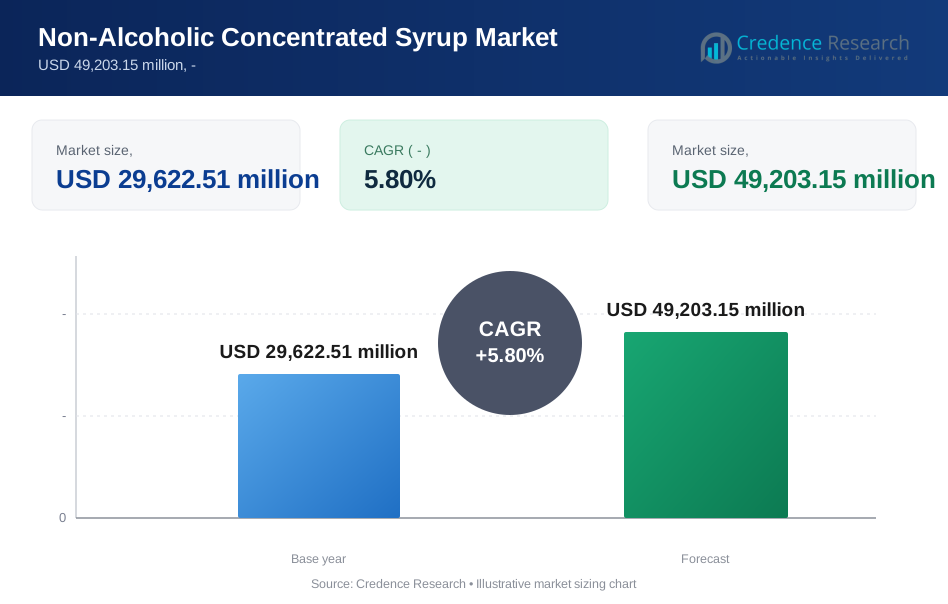
| Non-Alcoholic Concentrated Syrup Market Size 2023 | USD 29,622.51 Million |
| Non-Alcoholic Concentrated Syrup Market, CAGR | 5.80% |
| Non-Alcoholic Concentrated Syrup Market Size 2032 | USD 49,203.15 Million |
Market Overview
The non-alcoholic concentrated syrup market is projected to grow from USD 29,622.51 million in 2023 to an estimated USD 49,203.15 million by 2032, with a compound annual growth rate (CAGR) of 5.80% from 2024 to 2032. This growth is driven by the increasing consumer demand for convenient and customizable beverage options, particularly among younger demographics.
Market drivers for non-alcoholic concentrated syrups include the rising health consciousness among consumers, leading to a preference for non-alcoholic beverages. Additionally, innovations in flavor profiles and the convenience of syrups for both at-home and commercial use are boosting market growth. Trends such as the growing preference for natural and organic ingredients and the increasing use of syrups in food and beverage recipes are also positively impacting the market.
Geographically, North America and Europe dominate the global market due to high consumer awareness and established distribution channels. However, the Asia-Pacific region is expected to witness the highest growth rate, driven by increasing disposable incomes and changing consumer lifestyles in emerging economies. Key players in the global non-alcoholic concentrated syrup market include The Coca-Cola Company, PepsiCo, Monin Inc., Kerry Group, and Torani. These companies are focusing on product innovation and expanding their distribution networks to capture a larger market share.
Market Drivers
Rising Health Consciousness and Demand for Non-Alcoholic Beverages
The increasing health consciousness among consumers is driving the global non-alcoholic concentrated syrup market. As awareness of the adverse effects of excessive alcohol consumption and sugary carbonated drinks grows, more people are turning to healthier alternatives. Non-alcoholic concentrated syrups offer a versatile option for creating customized beverages at home or in commercial settings. For instance, the consumption of sugar-sweetened beverages has declined significantly over the past decade, with adults reducing their intake by an average of 3 ounces per day. This trend is particularly pronounced among younger demographics, as evidenced by data from the Monitoring the Future survey, which showed a steady decrease in alcohol consumption among high school students over the past five years. Additionally, the International Food Information Council's annual Food and Health Survey revealed that nearly 40% of consumers actively seek out beverages with reduced sugar content, indicating a growing preference for healthier drink options.
Innovation and Diversification in Flavor Profiles
Innovation and diversification in flavor profiles are significant drivers of the global non-alcoholic concentrated syrup market. Consumers today are seeking unique and exotic flavors that go beyond traditional offerings. For instance, over 60% of consumers express interest in trying new and unusual flavor combinations in their beverages. This trend is further supported by data from the National Restaurant Association's annual What's Hot Culinary Forecast, which consistently ranks innovative beverage flavors among the top trends in the food and beverage industry. The Specialty Food Association's Trendspotter Panel has also highlighted the growing popularity of botanical and herbal flavors in non-alcoholic beverages, with ingredients like elderflower, lavender, and hibiscus gaining traction. Additionally, nearly 70% of global consumers consider themselves adventurous when it comes to trying new food and drink flavors, underscoring the market potential for diverse and innovative syrup offerings.
Convenience and Versatility in Applications
The convenience and versatility of non-alcoholic concentrated syrups are major drivers of market growth. These syrups offer an easy and quick solution for preparing a wide variety of beverages, from simple sodas to complex mocktails. For instance, the use of flavored syrups in coffee drinks has increased by 15% over the past three years, with consumers appreciating the ability to customize their beverages. In the foodservice industry, over 50% of consumers are more likely to order a non-alcoholic beverage if unique flavors or customization options are available. Furthermore, the versatility of these syrups extends beyond beverages. The growing trend of using flavored syrups in culinary applications, with chefs incorporating them into desserts, sauces, and marinades.
Growing Preference for Natural and Organic Ingredients
The growing preference for natural and organic ingredients is a crucial driver of the global non-alcoholic concentrated syrup market. Consumers are becoming more conscious of the ingredients in their food and beverages, seeking products that align with their health and environmental values. This trend has led to an increased demand for syrups made from natural and organic ingredients, free from artificial flavors, colors, and preservatives. Manufacturers are responding to this demand by reformulating existing products and launching new lines that highlight their natural and organic credentials. This shift towards cleaner labels and transparency in ingredient sourcing is not only meeting consumer expectations but also creating new market opportunities. The emphasis on sustainability and ethical production practices further enhances the appeal of natural and organic syrups, attracting eco-conscious consumers and driving market growth. The intersection of health, quality, and sustainability is a powerful driver that continues to shape the future of the non-alcoholic concentrated syrup market.
Market Trends
Shift Towards Healthier and Functional Ingredients
The global non-alcoholic concentrated syrup market is experiencing a significant shift towards healthier and functional ingredients. According to a survey conducted by the International Food Information Council (IFIC), a growing number of consumers are actively seeking out beverages with added health benefits. For instance, over 60% of respondents expressed interest in purchasing beverages fortified with vitamins and minerals. This trend is reflected in the product offerings of major syrup manufacturers. For example, Monin, a leading syrup producer, has introduced a line of "Zero Sugar" syrups made with natural sweeteners like monk fruit extract. Similarly, Torani has launched a range of "Puremade" syrups that are free from artificial flavors, colors, and preservatives. The demand for functional ingredients is also on the rise, with companies like DaVinci Gourmet introducing syrups infused with adaptogens and botanicals. These products cater to consumers looking for beverages that not only taste good but also offer potential health benefits.
Sustainability and Ethical Sourcing Practices
Sustainability and ethical sourcing practices have become increasingly important in the non-alcoholic concentrated syrup market. The consumers are becoming more conscious of the environmental and social impact of their purchases. For instance, a significant portion of consumers are willing to pay more for products that are sustainably sourced and produced. This trend is evident in the initiatives taken by major players in the syrup industry. Tate & Lyle, a global provider of food and beverage ingredients, has committed to sourcing 100% of its raw materials sustainably by 2025. Similarly, Kerry Group has implemented a comprehensive sustainability program that focuses on responsible sourcing, reducing carbon emissions, and minimizing waste. In response to consumer demand for transparency, companies like 1883 Maison Routin have begun providing detailed information about their sourcing practices and ingredient origins. These efforts extend beyond just ingredient sourcing, with many companies also focusing on sustainable packaging solutions and reducing their overall environmental footprint.
Market Restraints and Challenges
Regulatory and Compliance Issues
Regulatory and compliance issues pose significant challenges for the global non-alcoholic concentrated syrup market. Government health agencies and food safety authorities have implemented stringent regulations on ingredients, labeling, and quality control. For instance, the U.S. Food and Drug Administration has established strict guidelines on sugar content and artificial additives in beverages. Similarly, the European Food Safety Authority enforces rigorous standards for food additives and flavorings. These regulations often require extensive product testing and documentation, creating substantial costs for manufacturers. A small and medium-sized enterprises particularly struggle with compliance costs. Additionally, regulations are constantly evolving, with many countries introducing new policies to combat rising obesity rates. For example, the UK government has implemented a sugar tax on soft drinks, prompting syrup manufacturers to reformulate their products. The World Health Organization has also issued recommendations for reducing sugar intake, influencing regulatory trends worldwide. As a result, companies must continually adapt their formulations and packaging to meet changing requirements, which can hinder innovation and market entry for new players.
Intense Competition and Market Saturation
The global non-alcoholic concentrated syrup market faces challenges due to intense competition and market saturation. Industry reports indicate a crowded marketplace with numerous established brands and new entrants competing for market share. Major beverage companies like Coca-Cola and PepsiCo dominate with extensive product lines and distribution networks. The high brand loyalty among consumers, making it difficult for new brands to gain traction. Additionally, private label products from retailers have gained popularity, further intensifying competition. The saturated market has led to price pressures, with many companies reporting reduced profit margins in their financial statements. To differentiate themselves, manufacturers are investing heavily in product innovation and marketing. For instance, several companies have launched organic and natural syrup lines to appeal to health-conscious consumers. However, a government health survey found that despite these efforts, overall syrup consumption has plateaued in some developed markets. This saturation has prompted companies to explore emerging markets for growth opportunities, as evidenced by increased marketing and distribution efforts in countries with rising disposable incomes.
Market Segmentation Analysis
By Type
Fruit squashes dominate the non-alcoholic concentrated syrup market due to their broad appeal and versatility in making refreshing beverages and cocktails. For instance, over 70% of respondents preferred fruit-flavored syrups for home use. The growing consumer preference for natural and exotic fruit flavors is driving innovation, with companies like Monin introducing flavors like dragon fruit and blood orange. Vegetable squashes, while a smaller segment, are gaining popularity among health-conscious consumers. For example, 25% year-over-year increase in sales of vegetable-based syrups like carrot and beetroot. Herbs and spices squashes are experiencing growth as consumers seek exotic and health-boosting ingredients. A flavor trends report by a global ingredients supplier highlighted ginger, turmeric, and basil as top trending flavors in beverage syrups. The "Others" category, including floral-based and mixed ingredient syrups, caters to niche markets and gourmet applications. For instance, a specialty food distributor noted increasing demand for lavender and elderflower syrups among high-end restaurants and bars.
By Distribution Channel
Supermarkets and hypermarkets play a pivotal role in non-alcoholic concentrated syrup distribution due to their extensive reach and product selection. Over 50% of syrup sales in developed markets. Departmental stores focus on premium and artisanal syrups, with a luxury retailer reporting a 15% growth in gourmet syrup sales over the past year. Convenience stores provide easy access for quick purchases, particularly in urban areas. A convenience store chain's internal data showed that syrup sales peaked during summer months, with a 30% increase compared to winter. The rapidly growing online store segment benefits from e-commerce trends. A major e-commerce platform reported that syrup sales through their grocery category grew by 40% year-over-year. Specialized retail channels cater to specific consumer preferences, adding diversity to the market. For example, a health food store chain saw a 20% increase in sugar-free and organic syrup sales. Government data on retail trends indicates that while traditional brick-and-mortar stores still dominate, online channels are growing at twice the rate for packaged beverage products like syrups.
Segments
Based on Type
- Fruit Squashes
- Vegetable Squashes
- Herbs and Spices Squashes
- Others
Based on Distribution Channel
- Supermarket
- Hypermarket
- Departmental Store
- Convenience Store
- Online Store
- Others
Based on Region
- North America
- US
- Canada
- Mexico
- Europe
- Germany
- France
- UK
- Italy
- Spain
- Rest of Europe
- Asia Pacific
- China
- Japan
- India
- South Korea
- South-east Asia
- Rest of Asia Pacific
- Latin America
- Brazil
- Argentina
- Rest of Latin America
- Middle East & Africa
- GCC Countries
- South Africa
- Rest of Middle East and Africa
Regional Analysis
North America (30%)
North America holds a significant share of the global non-alcoholic concentrated syrup market, accounting for approximately 30% of the total market share. This dominance is driven by high consumer awareness and a strong preference for convenient beverage options. The United States and Canada are major markets within the region, characterized by a well-established distribution network and the presence of leading market players. The trend towards health and wellness significantly influences the market, with a growing demand for natural and low-sugar syrups. For instance, cold brew coffee consumption has increased significantly in recent years, with many consumers preferring to add flavored syrups to their beverages. Additionally, sales of flavored water and enhanced beverages, which often use concentrated syrups, have been steadily rising. The region's mature market and continuous innovation in flavors and product formulations are key factors sustaining its leading position.
Europe (25%)
Europe captures around 25% of the global market share, reflecting its strong tradition of using syrups in beverages and culinary applications. Countries like Germany, France, and the United Kingdom are the major contributors to the market in this region. The European market is characterized by a high demand for natural and organic syrups, driven by health-conscious consumers. For instance, that consumers in the region are increasingly seeking products with clean labels and natural ingredients. The region's regulatory environment, which emphasizes food safety and quality, also plays a significant role in shaping the market. Data from Euromonitor International indicates that sales of premium and artisanal syrups have been growing steadily in European countries. Additionally, the popularity of artisanal and gourmet syrups in Europe contributes to the growth of premium segments within the market, as evidenced by the increasing number of specialty food stores and gourmet markets offering a wide range of syrup flavors and varieties.
Key players
- Unilever Limited
- Coca-Cola Company
- Britvic Plc
- Golden Circle Ltd
- Prigat Pvt Ltd
- Suntory Holding
- Assis Pvt Ltd
- Bickford’s Australia
- COTTEE’s Pvt Ltd
- Humdard Laboratory
- P&N Beverages
- Pioma Industries
Competitive Analysis
The global non-alcoholic concentrated syrup market is highly competitive, with key players such as Unilever Limited, Coca-Cola Company, and Britvic Plc dominating due to their extensive distribution networks and strong brand recognition. These companies leverage their market position to introduce innovative products and expand their consumer base. Regional players like Golden Circle Ltd, Prigat Pvt Ltd, and Bickford’s Australia compete by offering unique, locally preferred flavors and emphasizing natural ingredients. Suntory Holding and Pioma Industries are notable for their strategic partnerships and market expansion efforts. Companies like Assis Pvt Ltd, COTTEE’s Pvt Ltd, Humdard Laboratory, and P&N Beverages focus on niche markets and health-oriented products, catering to specific consumer segments. The competitive landscape is characterized by continuous innovation, strategic collaborations, and a strong emphasis on marketing to capture and retain market share.
Recent Developments
- In July 2024, Hindustan Unilever Limited (HUL), a subsidiary of Unilever, announced the sale of its Pureit water purification business in India to A. O. Smith, a global water technology company. While this is not directly related to tablet counting machines, it represents a significant recent development for the company.
- In July 2024, Carlsberg Group announced a recommended offer to acquire Britvic Plc for approximately £3.3 billion. This acquisition, while not related to tablet counting machines, is a major development for Britvic.
- In May 2024, Suntory Holdings rebranded its spirits arm Beam Suntory to Suntory Global Spirits, marking 10 years since the acquisition of Beam Inc.
- In January 2021, Hamdard Laboratories launched 12 Over The Counter (OTC) medicines to help boost immunity. More recently, Hamdard Laboratories strengthened its medicine portfolio by launching six new Unani medicines for overall wellness. However, the exact date for this latest launch is not provided in the search results.
Market Concentration and Characteristics
The global non-alcoholic concentrated syrup market is characterized by a moderate to high level of market concentration, with major multinational corporations such as Coca-Cola Company, Unilever Limited, and Britvic Plc holding significant market shares. These industry giants leverage their extensive distribution networks, robust marketing strategies, and strong brand recognition to maintain their dominance. The market also features a diverse range of regional and niche players like Golden Circle Ltd and Bickford’s Australia, which cater to local tastes and preferences, adding to the competitive dynamics. Product innovation, a focus on natural and health-oriented ingredients, and strategic partnerships are key characteristics driving market competition and growth. This blend of established leaders and emerging contenders fosters a dynamic environment, encouraging continuous development and consumer engagement.
Report Coverage
The research report offers an in-depth analysis based Type, Distribution Channel and Region. It details leading market players, providing an overview of their business, product offerings, investments, revenue streams, and key applications. Additionally, the report includes insights into the competitive environment, SWOT analysis, current market trends, as well as the primary drivers and constraints. Furthermore, it discusses various factors that have driven market expansion in recent years. The report also explores market dynamics, regulatory scenarios, and technological advancements that are shaping the industry. It assesses the impact of external factors and global economic changes on market growth. Lastly, it provides strategic recommendations for new entrants and established companies to navigate the complexities of the market.
Future Outlook
- The global non-alcoholic concentrated syrup market is projected to sustain robust growth, driven by increasing consumer demand for convenient and customizable beverage options.
- The trend towards health and wellness will drive innovation in syrups, with manufacturers focusing on natural, low-sugar, and functional ingredients to meet consumer preferences.
- Rapid urbanization and rising disposable incomes in emerging markets, particularly in Asia-Pacific and Latin America, will provide significant growth opportunities for market players.
- The growth of e-commerce platforms will enhance accessibility and convenience, allowing consumers to explore and purchase a wider variety of syrups online, boosting overall market sales.
- Ongoing innovation in flavor profiles, including exotic and region-specific tastes, will continue to attract consumers seeking unique and diverse beverage experiences.
- Increasing consumer awareness of environmental issues will drive manufacturers to adopt sustainable sourcing and production practices, including eco-friendly packaging and ethical ingredient sourcing.
- The market will see a rise in premium and artisanal syrup products, catering to consumers willing to pay a premium for high-quality, unique, and health-oriented options.
- Technological advancements in production and preservation methods will improve the quality and shelf life of concentrated syrups, enhancing their appeal and marketability.
- Collaborations and partnerships between syrup manufacturers and beverage companies, foodservice providers, and retailers will be crucial for expanding market reach and enhancing product offerings.
- Adherence to evolving regulatory standards and consumer safety requirements will remain a key focus for manufacturers, ensuring product safety and fostering consumer trust in the market.
Request a Free Sample
Fill in your details and we'll send you a free sample report.
- Sample data tables & charts
- Research methodology
Need a Custom Version of This Report?
Tailor the scope, geography, or segments to your exact requirements.
- Custom geography or segment scope
- Direct access to our analyst team
Frequently Asked Questions
What is the projected growth of the global non-alcoholic concentrated syrup market?
What are the key drivers of market growth?
Which regions are leading in the non-alcoholic concentrated syrup market?
What trends are influencing the market?
Who are the major players in the market?
Table of Content
Chapter 1. Report Introduction
- 1.1 Report Description & Purpose
- 1.1.1 Report Title & Market Definition
- 1.1.2 Unique Selling Propositions (USP) & Key Differentiators
- 1.1.3 Value Proposition for Stakeholders
- 1.2 Research Objectives
- 1.2.1 Market Sizing Objectives (Volume & Revenue)
- 1.2.2 Segmentation Objectives
- 1.2.3 Competitive Intelligence Objectives
- 1.2.4 Forecast & Scenario Objectives
- 1.3 Report Scope
- 1.3.1 Non-Alcoholic Concentrated Syrup Scope – Types & Subtypes Covered
- 1.3.2 Geographic Scope – Regions & Countries Covered
- 1.3.3 Historical Period, Base Year & Forecast Period (the historical period; forecast to the forecast period)
- 1.3.4 Inclusions & Exclusions
- 1.4 HS Code & Classification Framework
- 1.5 Currency, Units & Pricing Basis
- 1.6 Target Stakeholders
- 1.7 Limitations & Assumptions
Chapter 2. Executive Summary
- 2.1 Global Non-Alcoholic Concentrated Syrup Market Snapshot
- 2.1.1 Market Size – Historical (the historical period) & Forecast (the forecast period) (base year: USD 29,622.51 million → forecast year: USD 49,203.15 million)
- 2.1.2 Volume & Revenue – Global Totals
- 2.1.3 Key Market Highlights – Top Five Facts
- 2.2 Non-Alcoholic Concentrated Syrup Market Segmentation Snapshot
- 2.2.1 Market Split by Region – vs.
- 2.3 Competitive Snapshot
- 2.3.1 Top 10 Players by Revenue Share –
- 2.3.2 Top 10 Players by Volume Share –
- 2.3.3 Recent Strategic Developments (18-Month Summary)
- 2.4 Key Investment Highlights & Strategic Conclusions
Chapter 3. Non-Alcoholic Concentrated Syrup Market Dynamics & Industry Analysis
- 3.1 Market Overview & Context
- 3.1.1 Non-Alcoholic Concentrated Syrup Market Position in the Broader Automotive Value Chain
- 3.1.2 OEM vs. Replacement Market Dynamics
- 3.1.3 Market Maturity & Development Stage by Region
- 3.2 Non-Alcoholic Concentrated Syrup Market Drivers
- 3.3 Non-Alcoholic Concentrated Syrup Market Restraints & Challenges
- 3.4 Non-Alcoholic Concentrated Syrup Market Opportunities
- 3.5 Porter's Five Forces Analysis
- 3.5.1 Threat of New Entrants
- 3.5.2 Bargaining Power of Suppliers
- 3.5.3 Bargaining Power of Buyers
- 3.5.4 Threat of Substitutes
- 3.5.5 Competitive Rivalry – Intensity Assessment
- 3.6 Non-Alcoholic Concentrated Syrup Value Chain Analysis
- 3.6.1 Upstream – Raw Material/Input Suppliers
- 3.6.1.1 Raw Material/Input 1
- 3.6.1.2 Raw Material/Input 2
- 3.6.1.3 Raw Material/Input 3
- 3.6.2 Midstream – Production/Manufacturing/Service Delivery
- 3.6.2.1 Production/Process Overview
- 3.6.2.2 Key Facility Locations & Capacity by Manufacturer
- 3.6.3 Downstream – Distribution & End Consumer
- 3.6.3.1 Primary Channel – B2B/OEM
- 3.6.3.2 Secondary Channels – Dealer, Retail, Online, Direct
- 3.6.4 Value Chain Profitability Analysis
- 3.6.1 Upstream – Raw Material/Input Suppliers
- 3.7 PESTEL Analysis
- 3.7.1 Political Factors
- 3.7.2 Economic Factors
- 3.7.3 Social Factors
- 3.7.4 Technological Factors
- 3.7.5 Environmental Factors
- 3.7.6 Legal Factors
- 3.8 Non-Alcoholic Concentrated Syrup Supply Chain Analysis
- 3.8.1 Raw Material/Input Supply Risk Assessment
- 3.8.2 Manufacturing Concentration Risk (Geographic Exposure)
- 3.8.3 Trade Disruption Impact Analysis
- 3.9 Regulatory & Policy Landscape
Note: The regulatory and policy landscape section covers regulations based on their applicability to the market, Non-Alcoholic Concentrated Syrup category, geography, and scope of the study. Only regulatory frameworks with a material impact on operations, compliance, trade, sustainability, or market access are analyzed in detail.
Chapter 4. Key Investment Pockets & Opportunity Analysis
- 4.1 Non-Alcoholic Concentrated Syrup Market Attractiveness Analysis
- 4.1.1 By Region – Investment Attractiveness Matrix (Volume × CAGR)
- 4.2 Absolute Revenue Growth Opportunity
- 4.2.1 By Region – Absolute USD Growth Through the forecast period
- 4.3 Incremental Volume Opportunity
- 4.3.1 By Region – Incremental Volume Through the forecast period
- 4.3.2 Segment – Incremental Volume
- 4.4 Emerging Submarket Opportunity Deep Dive (Subject to Applicability)
- 4.5 Emerging Market Opportunity Scorecards
- 4.5.1 United States
- 4.5.2 Europe
- 4.5.3 Asia
- 4.5.4 Middle East & Africa
Note: Emerging Market Opportunity Scorecards will be included based on relevance and strategic importance. Regions listed are indicative and may vary depending on data availability and market dynamics.
Chapter 5. Non-Alcoholic Concentrated Syrup Import-Export Analysis & Trade Flows
- 5.1 Global Trade Overview
- 5.1.1 Global Export Value by Country (the historical period)
- 5.1.2 Global Export Volume by Country (the historical period)
- 5.1.3 Global Import Value by Country (the historical period)
- 5.1.4 Global Import Volume by Country (the historical period)
- 5.1.5 Net Trade Balance by Country (the historical period)
- 5.2 Export Analysis – Segment
- 5.2.1 Type 1 (HS Code)
- 5.2.2 Type 2 (HS Code)
- 5.2.3 Type 3 (HS Code)
- 5.2.4 Type 4 (HS Code)
- 5.2.5 Type 5 (HS Code)
- 5.3 Import Analysis – Segment
- 5.3.1 Type 1 (HS Code)
- 5.3.2 Type 2 (HS Code)
- 5.3.3 Type 3 (HS Code)
- 5.3.4 Type 4 (HS Code)
- 5.3.5 Type 5 (HS Code)
- 5.4 Average Unit Trade Prices
- 5.4.1 Average Export Price – Segment & Country
- 5.4.2 Average Import Price – Segment & Source Country
- 5.4.3 Price Trends (the historical period)
- 5.5 Key Trade Route Analysis
- 5.5.1 Trade Route 1
- 5.5.2 Trade Route 2
- 5.5.3 Trade Route 3
- 5.5.4 Trade Route 4
- 5.5.5 Trade Route 5
- 5.6 Trade Policy Impact Assessment
- 5.6.1 US Anti-Dumping & Section 301 Tariffs
- 5.6.2 EU Customs Union Impact
- 5.6.3 Major Free Trade Agreements
- 5.6.4 USMCA Rules of Origin
Note: Trade policy analysis will be included only where relevant to the Non-Alcoholic Concentrated Syrup market.
Chapter 6. Competitive Landscape & Company Benchmarking
- 6.1 Non-Alcoholic Concentrated Syrup Market Concentration & Structure
- 6.1.1 Herfindahl-Hirschman Index (HHI) – vs.
- 6.1.2 Tier 1, Tier 2 & Tier 3 Market Structure
- 6.1.3 Global, Regional & Local Player Dynamics
- 6.2 Non-Alcoholic Concentrated Syrup Market Share Analysis –
- 6.2.1 Global Revenue Share by Company
- 6.2.2 Global Volume Share by Company
- 6.2.3 Regional Revenue Share
- 6.2.4 Market Share Evolution ( vs. )
- 6.2.5 OEM Segment Share by Company
- 6.2.6 Replacement Segment Share by Company
- 6.3 Production/Delivery Capacity & Facility Analysis
- 6.3.1 Global Installed Capacity
- 6.3.2 Capacity Utilization Rates
- 6.3.3 Production/Output Volume
- 6.3.4 Facility Locations & Capacity Map
- 6.3.5 Planned Capacity Additions
- 6.4 Non-Alcoholic Concentrated Syrup Competitive Benchmarking Matrix
- 6.4.1 Revenue, Volume, CAGR & Profitability Comparison
- 6.4.2 Channel Revenue Mix
- 6.4.3 Geographic Revenue Exposure
- 6.4.4 R&D Intensity
- 6.4.5 Sustainability Maturity
- 6.5 Strategic Developments in Non-Alcoholic Concentrated Syrup (Last 24 Months)
- 6.5.1 Mergers, Acquisitions & Divestments
- 6.5.2 New Non-Alcoholic Concentrated Syrup Launches
- 6.5.3 Facility Expansions
- 6.5.4 Strategic Alliances, Joint Ventures & Partnerships
- 6.5.5 Distribution Expansion & Market Entry
- 6.5.6 Sustainability & ESG Initiatives
- 6.6 Competitive Strategy Mapping
- 6.6.1 Leader, Challenger, Follower & Niche Classification
- 6.6.2 Pricing Strategy Comparison
- 6.6.3 Channel Strategy Matrix
Note: Strategic developments are included based on their materiality and the availability of reliable information.
Chapter 7. Global Non-Alcoholic Concentrated Syrup Market – By Distribution Channel
- 7.1 Segment Overview
- 7.1.1 Volume & Revenue Split by Channel ( & )
- 7.1.2 Channel Mix Evolution (the forecast period)
Chapter 8. Regional Market Analysis – Global Overview
- 8.1 Global Regional Overview
- 8.1.1 Regional Volume Share
- 8.1.2 Regional Revenue Share
- 8.1.3 Regional Volume by Region
- 8.1.4 Regional Revenue by Region
- 8.1.5 Regional Forecast Through the forecast period
- 8.2 Cross-Regional Segment Analysis
- 8.2.1 By Distribution Channel
- 8.2.2 By Brand/Price Tier
Chapter 9. North America Non-Alcoholic Concentrated Syrup Market
- 9.1 United States
- 9.2 Canada
- 9.3 Mexico
Chapter 10. Europe Non-Alcoholic Concentrated Syrup Market
- 10.1 Germany
- 10.2 France
- 10.3 Italy
- 10.4 United Kingdom
- 10.5 Spain
- 10.6 Poland
- 10.7 Russia
- 10.8 Netherlands
- 10.9 Belgium
- 10.10 Sweden
- 10.11 Denmark
- 10.12 Norway
- 10.13 Rest of Europe
Chapter 11. Asia Pacific Non-Alcoholic Concentrated Syrup Market
- 11.1 China
- 11.2 India
- 11.3 Japan
- 11.4 South Korea
- 11.5 Thailand
- 11.6 Indonesia
- 11.7 Vietnam
- 11.8 Malaysia
- 11.9 Australia
- 11.10 Rest of Asia Pacific
Chapter 12. Latin America Non-Alcoholic Concentrated Syrup Market
- 12.1 Brazil
- 12.2 Argentina
- 12.3 Colombia
- 12.4 Chile
- 12.5 Rest of Latin America
Chapter 13. Middle East Non-Alcoholic Concentrated Syrup Market
- 13.1 Saudi Arabia
- 13.2 United Arab Emirates
- 13.3 Turkey
- 13.4 Israel
- 13.5 Iran
- 13.6 Rest of the Middle East
Chapter 14. Africa Non-Alcoholic Concentrated Syrup Market
- 14.1 South Africa
- 14.2 Egypt
- 14.3 Nigeria
- 14.4 Morocco
- 14.5 Rest of Africa
Chapter 15. Non-Alcoholic Concentrated Syrup Company Profiles
- 15.1 [Company 01]
- 15.1.1 Company Overview
- 15.1.2 Key Management Personnel
- 15.1.3 Products & Services Portfolio
- 15.1.4 Financial Performance
- 15.1.5 Key Market Focus & Geographic Presence
- 15.1.6 Recent Developments & Strategic Initiatives
Note: The company profile list is preliminary and may change based on research findings, market developments, data availability, and client requirements.
Chapter 16. Appendices
- Appendix A – List of Abbreviations & Acronyms
- Appendix B – Industry Classification Code Reference – Full Series
- Appendix C – Production & Capacity Data Tables
- Appendix D – End-Use & Demand Base Tables
- Appendix E – Consumption & Replacement Rate Assumptions
- Appendix F – ASP Reference Tables
- Appendix G – Manufacturing & Facility Database
- Appendix H – Import-Export Data Tables
- Appendix I – Regulatory Summary Tables
- Appendix J – Primary Research Participant List (Anonymized)
- Appendix K – Primary Research Questionnaire Framework
- Appendix L – Data Sources & Bibliography
- Appendix M – Market Size Divergence & Source Comparison
Chapter 17. Research Methodology
- 17.1 Research Framework & Philosophy
- 17.2 Secondary Research – Sources, Hierarchy & Data Extraction
- 17.3 Data Modeling – Bottom-Up & Top-Down Market Sizing
- 17.4 Primary Research – Stakeholder Framework, LOI & Sample Sizes
- 17.5 Forecast Methodology – Regression, Scenario & Sensitivity Analysis
- 17.6 Quality Control – Four-Layer Validation Framework
- 17.7 Limitations & Standard Assumptions
- 17.8 Disclaimer
