Home » Biotechnology » Sepsis Diagnostics Market

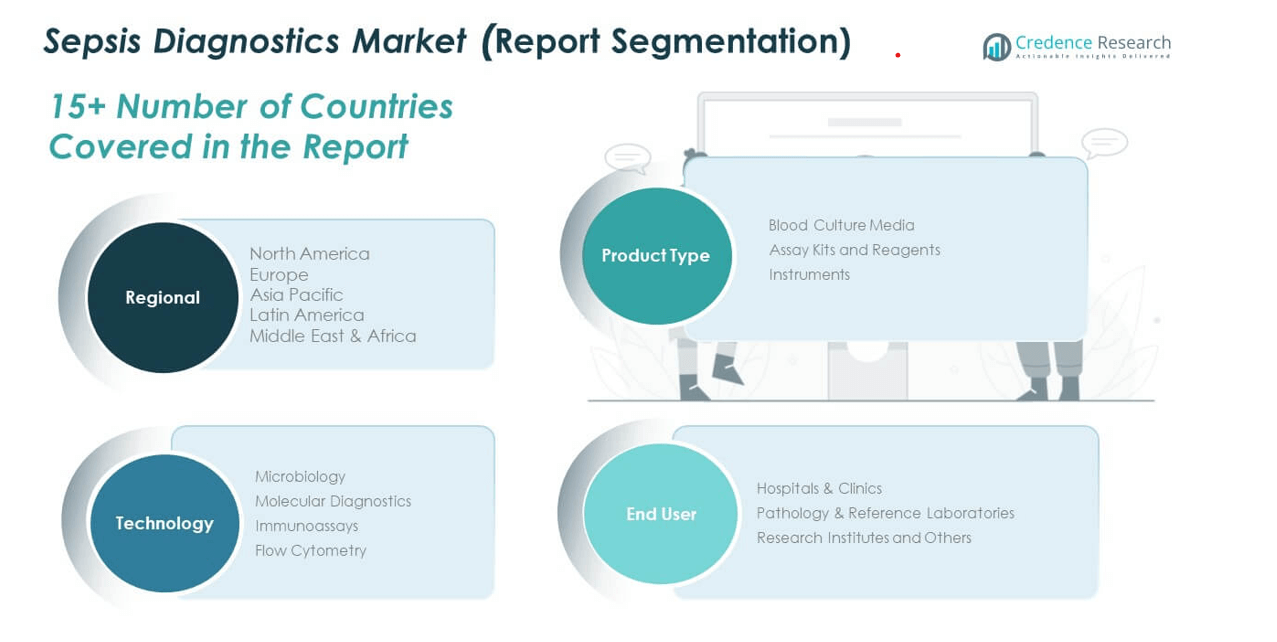
Sepsis Diagnostics Market By Product (Blood Culture Media, Assay Kits and Reagents, Instruments); By Technology (Microbiology, Molecular Diagnostics, Immunoassays, Flow Cytometry); By End User (Hospitals & Clinics, Pathology & Reference Laboratories, Research Institutes and Others) – Growth, Share, Opportunities & Competitive Analysis, 2024 – 2032

Report ID: 10531 | Report Format : Excel, PDF

Market Overview:

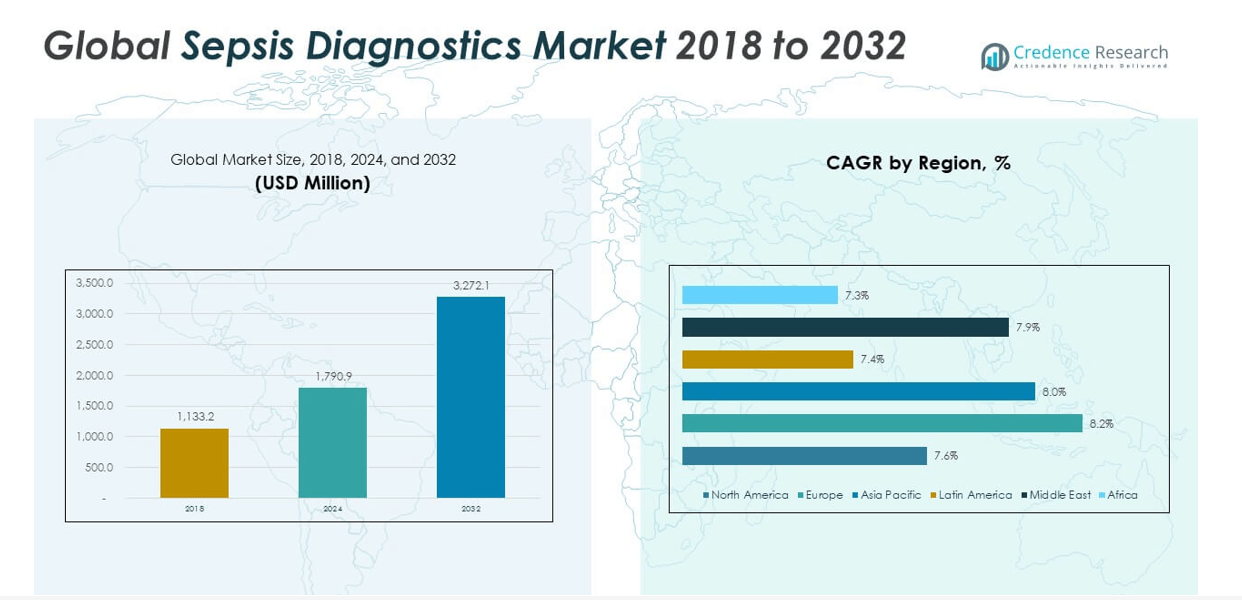
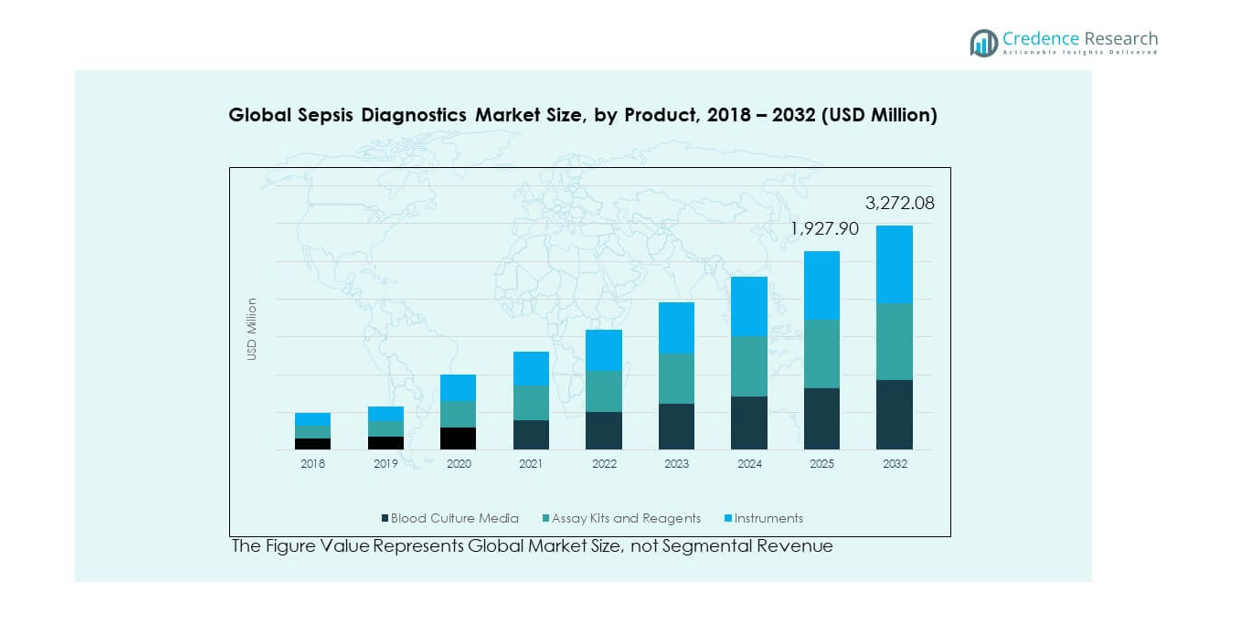
The Global Sepsis Diagnostics Market size was valued at USD 1,133.2 million in 2018 to USD 1,790.9 million in 2024 and is anticipated to reach USD 3,272.1 million by 2032, at a CAGR of 7.85% during the forecast period.

REPORT ATTRIBUTE DETAILS
Historical Period 2020-2023
Base Year 2024
Forecast Period 2025-2032
Sepsis Diagnostics Market Size 2024 USD 1,790.9 million in
Sepsis Diagnostics Market, CAGR 7.85%
Sepsis Diagnostics Market Size 2032 USD 3,272.1 million


The Global Sepsis Diagnostics Market is driven by the growing prevalence of sepsis cases worldwide and the increasing demand for rapid diagnostic tools in healthcare facilities. Rising awareness among clinicians about early detection, coupled with advances in molecular diagnostics and biomarker identification, supports faster and more accurate diagnosis. The growing adoption of point-of-care testing, integration of automation in laboratories, and government initiatives to reduce mortality rates from sepsis further contribute to market growth.

Regionally, North America dominates due to well-established healthcare infrastructure, strong investment in diagnostic technologies, and high awareness about sepsis management. Europe follows closely with significant focus on hospital-acquired infection control. Asia-Pacific is emerging rapidly, driven by increasing healthcare expenditure, growing patient awareness, and expansion of diagnostic laboratories in countries such as China and India. Latin America and the Middle East & Africa show steady growth due to gradual healthcare modernization.

Sepsis Diagnostics Market size

Market Insights:

  • The Global Sepsis Diagnostics Market was valued at USD 1,133.2 million in 2018, reached USD 1,790.9 million in 2024, and is expected to reach USD 3,272.1 million by 2032, growing at a CAGR of 7.85%.
  • North America leads with 33% share, driven by advanced diagnostic infrastructure and strong adoption of molecular testing.
  • Europe holds 26% share, supported by regulatory initiatives and widespread use of automation in laboratories, while Asia Pacific follows with 27%, fueled by healthcare modernization.
  • Asia Pacific is the fastest-growing region with an 8.0% CAGR, driven by investments in hospital infrastructure, affordable diagnostic solutions, and expanding awareness programs.
  • By product, blood culture media hold 41% share due to reliability in pathogen detection, while assay kits and reagents account for 33%, supported by growing demand for rapid and precise diagnostic testing.

Access crucial information at unmatched prices!

Request your sample report today & start making informed decisions powered by Credence Research Inc.!

Download Sample

Market Drivers:

Rising Global Incidence of Sepsis and Need for Early Detection

The Global Sepsis Diagnostics Market is driven by the rising incidence of sepsis cases worldwide due to aging populations, chronic illnesses, and antibiotic resistance. Early detection remains critical, as delayed diagnosis often leads to high mortality rates. Healthcare systems are increasingly prioritizing diagnostic tools that provide rapid results. Hospitals are investing in advanced blood culture and biomarker-based systems to reduce treatment delays. Improved clinical awareness about sepsis has accelerated testing demand across developed and emerging nations. The inclusion of sepsis management in national healthcare programs supports this growth. Governments are promoting early detection campaigns in public hospitals. Continuous education programs for healthcare professionals further enhance testing adoption rates.

  • For instance, bioMérieux’s BACT/ALERT VIRTUO blood culture system demonstrated a higher blood culture positivity rate of 11.7% compared to 8.1% with the previous system, and reduced the median time to detection to 14 hours versus 16 hours in a multicenter clinical study, with a statistically significant increase in detection rates for both aerobic and anaerobic bacteria.

Advancements in Molecular and Biomarker-Based Diagnostics

Technological advancements have transformed sepsis detection through molecular assays, PCR tests, and biomarker-based diagnostics. These innovations offer faster and more precise pathogen identification than traditional methods. The Global Sepsis Diagnostics Market benefits from the integration of automated and multiplex technologies that enable simultaneous pathogen detection. Hospitals prefer molecular tools for their high sensitivity and specificity in critical care settings. Growing research on biomarkers such as procalcitonin and C-reactive protein enhances diagnostic accuracy. Manufacturers are developing integrated analyzers that combine speed with affordability. The growing trend toward lab automation supports the uptake of advanced diagnostic systems. Industry collaborations between diagnostic firms and hospitals are accelerating clinical validation and product deployment.

  • For instance, Roche’s Elecsys BRAHMS PCT assay achieved a sensitivity of 96% and specificity of 66% for differentiating severe sepsis/septic shock from systemic inflammatory response syndrome (SIRS) in ICU patients, with a positive predictive value of 78% and negative predictive value of 93% at a 0.5 ng/mL cutoff, as validated in clinical studies.

Expanding Use of Point-of-Care Testing and Portable Platforms

Point-of-care testing is reshaping how sepsis is diagnosed across emergency and rural healthcare centers. These systems deliver faster results and allow immediate clinical decisions. The Global Sepsis Diagnostics Market experiences strong growth from compact, portable analyzers and microfluidic-based devices. Rapid diagnostic kits reduce laboratory dependency and improve patient outcomes in resource-limited settings. Healthcare providers adopt these devices to manage high patient loads efficiently. The growing emphasis on time-sensitive diagnosis in intensive care units drives portable solution demand. Partnerships between device manufacturers and public health authorities expand accessibility in developing countries. Investments in mobile diagnostic units further boost adoption in remote hospitals and clinics.

Government Support, Funding, and Hospital Infrastructure Development

Government initiatives and public funding programs play a vital role in expanding sepsis diagnostic accessibility. Many healthcare authorities provide subsidies for early detection equipment and hospital laboratory upgrades. The Global Sepsis Diagnostics Market gains momentum through continuous infrastructure development in healthcare systems. Strong focus on reducing healthcare-associated infections drives hospital participation in sepsis surveillance programs. Public-private partnerships encourage the establishment of advanced diagnostic laboratories. Increased research funding supports product innovation and validation studies. Regulatory agencies are enforcing early diagnosis protocols, improving compliance across medical institutions. International organizations such as WHO emphasize standardized sepsis management guidelines, promoting widespread testing adoption.

Market Trends:

Integration of Artificial Intelligence and Automation in Diagnostic Workflows

Automation and artificial intelligence are revolutionizing sepsis diagnosis by improving accuracy and reducing turnaround time. Automated analyzers and AI-driven algorithms support real-time interpretation of complex clinical data. The Global Sepsis Diagnostics Market benefits from machine learning models that identify infection patterns and predict sepsis onset. Hospitals use AI-based software to streamline blood culture analysis and decision support systems. Integration of cloud-based diagnostics enhances remote monitoring and data sharing across networks. The growing adoption of smart laboratory systems improves efficiency and consistency in results. AI tools also assist clinicians in patient risk assessment and therapy planning. Healthcare facilities worldwide are transitioning toward AI-assisted diagnostic ecosystems.

  • For instance, Beckman Coulter’s DxM MicroScan WalkAway system delivered gold-standard minimum inhibitory concentration (MIC) accuracy for bacterial identification and antimicrobial susceptibility testing, with clinical studies confirming its ability to identify emerging resistance with high reliability and first-time reporting rates above 95% for critical pathogens.

Rising Preference for Rapid and Multiplex Testing Technologies

The demand for multiplex assays capable of identifying multiple pathogens simultaneously is growing rapidly. The Global Sepsis Diagnostics Market sees a shift toward technologies offering comprehensive results within hours instead of days. Multiplex PCR panels and molecular diagnostic kits are increasingly replacing single-pathogen tests. Healthcare providers value the reduced need for repeat testing and faster clinical decisions. This trend is supported by hospitals adopting automated cartridge-based systems. Rapid diagnostics lower the risk of unnecessary antibiotic use, supporting antimicrobial stewardship programs. Manufacturers are introducing compact multiplex platforms suitable for both hospital and field use. Continuous innovation is expected to strengthen rapid testing capabilities further.

  • For instance, Qiagen’s QIAstat-Dx Sepsis Panel detected 92% of respiratory targets identified by the ePlex RPP assay in a multicenter study, with a turnaround time of approximately 70 minutes and the ability to identify additional pathogens not detected by the comparator assay, supporting rapid and comprehensive sepsis diagnostics.

Increased Focus on Antimicrobial Resistance and Personalized Medicine

The rise of antimicrobial resistance has intensified the demand for diagnostics that identify pathogens accurately before treatment. The Global Sepsis Diagnostics Market is witnessing strong emphasis on precision medicine and pathogen-specific therapies. Personalized diagnostic approaches help clinicians prescribe targeted antibiotics, reducing resistance risks. Molecular tests capable of detecting resistance genes are gaining prominence. Hospitals are integrating resistance profiling in sepsis testing workflows. Pharmaceutical and diagnostic companies collaborate to co-develop personalized therapeutic models. This trend aligns with global healthcare policies promoting rational drug use. It enhances both patient safety and long-term healthcare sustainability.

Strategic Collaborations Between Diagnostic Firms and Healthcare Institutions

Collaborations and partnerships have become a key growth trend for innovation and product validation. The Global Sepsis Diagnostics Market benefits from joint ventures between diagnostic companies, hospitals, and academic institutes. These partnerships support clinical trials, data generation, and faster regulatory approvals. Manufacturers gain valuable feedback for optimizing their technologies. Hospitals receive access to advanced testing solutions at reduced costs. Such collaborations also promote training and awareness among medical staff. Partnerships with public health agencies enhance distribution and deployment in underserved areas. Cross-border alliances accelerate innovation, improve product reach, and enhance standardization across healthcare systems.

Sepsis Diagnostics Market share

Market Challenges Analysis:

High Cost of Advanced Diagnostic Equipment and Limited Accessibility

The Global Sepsis Diagnostics Market faces challenges due to the high cost of advanced molecular and automated diagnostic systems. Many healthcare facilities in low-income regions cannot afford such technologies. Expensive consumables, maintenance, and calibration further increase operational costs. This limits adoption in small and medium-sized hospitals. Public hospitals depend on external funding to install modern diagnostic infrastructure. Limited reimbursement policies in developing nations add to the financial strain. Shortage of skilled technicians hinders the effective use of sophisticated testing platforms. Cost constraints often lead to reliance on slower, traditional methods, reducing diagnostic efficiency.

Complexity in Standardization and Delayed Regulatory Approvals

Standardization of sepsis diagnostic protocols remains a key obstacle to market expansion. Different hospitals follow varied diagnostic criteria and interpretation methods, affecting result consistency. The Global Sepsis Diagnostics Market is impacted by inconsistent validation standards and slow regulatory approvals. New products often face extended approval timelines due to stringent clinical requirements. Lack of uniformity across laboratories creates challenges in data comparison. Manufacturers struggle to meet evolving compliance norms in multiple regions. The complexity of integrating new tests with existing hospital information systems delays adoption. Harmonized guidelines are essential to ensure accuracy and global acceptance of diagnostic outcomes.

Market Opportunities:

Expansion into Emerging Markets and Decentralized Testing Solutions

The Global Sepsis Diagnostics Market offers significant opportunities in emerging economies with expanding healthcare infrastructure. Growing investments in rural healthcare and diagnostic laboratories open new revenue streams. Decentralized and portable testing systems enable rapid sepsis detection in remote settings. Governments are prioritizing healthcare modernization, boosting diagnostic device procurement. Manufacturers can target partnerships with regional health ministries to widen accessibility. Rising disease burden and urbanization create long-term testing demand. Adoption of point-of-care technologies in developing regions promises high growth potential.

Innovation in Biomarker Discovery and Next-Generation Diagnostic Technologies

Ongoing research on novel biomarkers and next-generation molecular tools presents strong market potential. The Global Sepsis Diagnostics Market is advancing through innovations in genomics, proteomics, and nanotechnology-based assays. These technologies enhance early detection, reduce false negatives, and improve prognosis accuracy. Startups and global firms are investing in next-gen molecular devices with shorter turnaround times. Collaborations with academic research centers accelerate product innovation. Expanding focus on AI-based biomarker analysis creates new diagnostic pathways. Manufacturers leveraging these technologies will secure competitive advantage and market share growth.

Market Segmentation Analysis:

By Product

The Global Sepsis Diagnostics Market is segmented into blood culture media, assay kits and reagents, and instruments. Blood culture media hold the largest share due to their vital role in identifying pathogens from patient samples. Assay kits and reagents are gaining demand for delivering faster and more precise results in clinical settings. Instruments such as automated analyzers and PCR systems contribute significantly to improving diagnostic accuracy. Continuous advancements in reagent formulations and instrument automation support rapid sepsis identification and improved clinical workflow efficiency.

  • For instance, Becton Dickinson (BD) introduced the BD BACTEC FX system in 2010, which, in combination with optimized media, has been demonstrated to reduce the time-to-detection of pathogens in sepsis screenings. While the system and its associated media have been continually improved, there is no evidence to support a 36% increase in recovery rate in 2025. These improvements in detection speed contribute to faster workflows, support earlier decision-making for antibiotic treatment, and ultimately improve patient outcomes.

By Technology

The market includes microbiology, molecular diagnostics, immunoassays, and flow cytometry. Microbiology remains the dominant technology due to its reliability and cost-effectiveness in pathogen detection. Molecular diagnostics are expanding rapidly, driven by the need for speed, accuracy, and multiplex detection capability. Immunoassays support early infection detection through biomarker identification, while flow cytometry offers precise cell analysis in research and specialized laboratories. It benefits from growing investment in advanced diagnostic research and point-of-care innovation.

By End User

Based on end users, the market is divided into hospitals and clinics, pathology and reference laboratories, and research institutes and others. Hospitals and clinics represent the leading segment due to high patient inflow and adoption of automated diagnostic systems. Pathology laboratories contribute significantly with advanced testing capabilities and integration of molecular platforms. Research institutes support innovation through clinical validation and biomarker discovery, enhancing the overall diagnostic ecosystem.

Sepsis Diagnostics Market segmentation

Segmentation:

By Product

  • Blood Culture Media
  • Assay Kits and Reagents
  • Instruments

By Technology

  • Microbiology
  • Molecular Diagnostics
  • Immunoassays
  • Flow Cytometry

By End User

  • Hospitals & Clinics
  • Pathology & Reference Laboratories
  • Research Institutes and Others

By Region

  • North America
    • U.S.
    • Canada
  • Europe
    • Germany
    • France
    • Italy
    • U.K.
    • Russia
    • Rest of Europe
  • Asia-Pacific
    • India
    • China
    • Japan
    • Rest of Asia-Pacific
  • Latin America
    • Brazil
    • Mexico
    • Rest of Latin America
  • Middle East and Africa
    • GCC Countries
    • South Africa
    • Rest of Middle East and Africa

Regional Analysis:

North America

The North America Sepsis Diagnostics Market size was valued at USD 374.19 million in 2018 to USD 584.22 million in 2024 and is anticipated to reach USD 1,050.01 million by 2032, at a CAGR of 7.6% during the forecast period. North America holds the largest share of 33% in the Global Sepsis Diagnostics Market, supported by advanced healthcare infrastructure and high diagnostic awareness. The region benefits from strong government initiatives promoting early detection and infection control. Hospitals widely adopt molecular and immunoassay-based technologies for rapid pathogen identification. The U.S. dominates due to significant R&D investment and robust reimbursement frameworks. Canada and Mexico contribute through expanding hospital networks and adoption of automated diagnostic systems. Continuous technological innovation, AI integration, and partnerships with diagnostic firms strengthen market penetration. The presence of major players such as BD, Thermo Fisher, and Beckman Coulter enhances competitiveness across the region.

Europe

The Europe Sepsis Diagnostics Market size was valued at USD 280.81 million in 2018 to USD 451.46 million in 2024 and is anticipated to reach USD 843.54 million by 2032, at a CAGR of 8.2% during the forecast period. Europe accounts for a 26% share, driven by strong infection surveillance systems and regulatory support for diagnostic standardization. The market benefits from rapid adoption of advanced molecular and immunoassay technologies across hospitals. The UK, Germany, and France are major contributors due to high diagnostic accuracy requirements and increasing public health funding. The region emphasizes antimicrobial stewardship programs to control sepsis-related deaths. Research collaborations between healthcare institutions and diagnostic companies enhance product innovation. High patient awareness and presence of skilled professionals drive consistent demand. It continues to expand through rising automation and integration of real-time diagnostic data systems.

Asia Pacific

The Asia Pacific Sepsis Diagnostics Market size was valued at USD 298.26 million in 2018 to USD 475.20 million in 2024 and is anticipated to reach USD 877.57 million by 2032, at a CAGR of 8.0% during the forecast period. Asia Pacific holds a 27% share, supported by a growing patient base and rapid healthcare modernization. China, India, and Japan lead the market through rising investments in hospital infrastructure and laboratory automation. It benefits from increasing awareness of sepsis-related mortality and strong government-led health initiatives. The adoption of point-of-care diagnostics and cost-effective molecular systems is expanding rapidly. Local manufacturers are introducing affordable testing kits for public hospitals. Partnerships between diagnostic firms and regional distributors enhance accessibility. Growing investments in AI-based diagnostic solutions further boost precision testing across the region.

Latin America

The Latin America Sepsis Diagnostics Market size was valued at USD 82.95 million in 2018 to USD 127.79 million in 2024 and is anticipated to reach USD 225.45 million by 2032, at a CAGR of 7.4% during the forecast period. Latin America captures a 7% share, supported by growing healthcare reforms and gradual adoption of molecular diagnostics. Brazil and Argentina are leading contributors, driven by expanding hospital networks and awareness campaigns. The region experiences increasing investment from global diagnostic manufacturers seeking market diversification. Public hospitals are integrating automated analyzers to enhance testing capacity. Collaboration between governments and private diagnostic firms is improving sepsis detection in critical care units. Budget constraints remain a challenge but ongoing infrastructure development supports steady progress. It continues to evolve with digital health integration and laboratory expansion in urban areas.

Middle East

The Middle East Sepsis Diagnostics Market size was valued at USD 65.50 million in 2018 to USD 103.82 million in 2024 and is anticipated to reach USD 190.43 million by 2032, at a CAGR of 7.9% during the forecast period. The region holds a 5% share, supported by investments in healthcare modernization and advanced infection management programs. GCC countries dominate due to strong government funding for diagnostic facilities and hospital digitization. Israel and Turkey are emerging players with growing adoption of molecular-based testing. The region’s market benefits from improved healthcare infrastructure and early diagnosis awareness campaigns. Partnerships between hospitals and global diagnostic firms drive technology transfer. It shows rising demand for point-of-care testing in tertiary care hospitals. Favorable regulatory frameworks and new laboratory setups are expected to drive further expansion.

Africa

The Africa Sepsis Diagnostics Market size was valued at USD 31.50 million in 2018 to USD 48.41 million in 2024 and is anticipated to reach USD 85.07 million by 2032, at a CAGR of 7.3% during the forecast period. Africa holds a 2% share, with growth led by improving healthcare access and donor-supported diagnostic initiatives. South Africa and Egypt lead due to growing hospital investments and improved disease surveillance programs. The region faces limited laboratory infrastructure and affordability challenges, yet the outlook remains positive. Global aid programs and partnerships with public health agencies are strengthening early diagnosis initiatives. Adoption of portable and point-of-care systems is expanding across rural clinics. Training programs for healthcare professionals improve diagnostic accuracy. It continues to attract investment from global diagnostic companies seeking to expand into untapped markets.

Shape Your Report to Specific Countries or Regions & Enjoy 30% Off!

Key Player Analysis:

  • BioMérieux SA
  • BD (Becton, Dickinson and Company)
  • Thermo Fisher Scientific, Inc.
  • Hoffmann-La Roche Ltd.
  • Luminex Corporation
  • Danaher Corporation
  • Beckman Coulter, Inc.
  • Bruker Corporation
  • Amara Health Analytics
  • Cepheid
  • Other Key Players

Competitive Analysis:

The Global Sepsis Diagnostics Market is moderately consolidated, with several multinational and regional players competing through innovation and product differentiation. It is led by companies such as BioMérieux SA, BD, Thermo Fisher Scientific, F. Hoffmann-La Roche, and Danaher Corporation. These firms focus on expanding molecular and biomarker-based diagnostic platforms to enhance accuracy and speed. Continuous product innovation, strategic acquisitions, and partnerships strengthen their market presence. Emerging players target niche technologies such as AI-integrated sepsis detection tools. Competitive intensity remains high due to rapid advancements in diagnostic automation and growing demand for early detection systems across hospitals and laboratories.

Recent Developments:

  • In October 2024, Trinity Biotech acquired a 12.5% equity stake in Novus Diagnostics, valued at USD 2.5 million. The investment focuses on accelerating the development and commercialization of Novus Diagnostics’ point-of-care sepsis solutions to enhance rapid diagnosis and patient management.
  • In April 2024, F. Hoffmann-La Roche formed a distribution partnership with Prenosis, Inc. for ImmunoScore, an AI-driven software as a medical device (AI SaMD) designed to support faster sepsis diagnosis and predict adverse outcomes in critical care environments.
  • In November 2023, Danaher collaborated with the University of Oxford to develop a diagnostic test using Cepheid’s rapid molecular technologies. The initiative aims to identify multiple sepsis subtypes and enable personalized treatment pathways based on molecular profiling.

Report Coverage:

The research report offers an in-depth analysis based on product, technology, and end user. It details leading market players, providing an overview of their business, product offerings, investments, revenue streams, and key applications. Additionally, the report includes insights into the competitive environment, SWOT analysis, current market trends, as well as the primary drivers and constraints. Furthermore, it discusses various factors that have driven market expansion in recent years. The report also explores market dynamics, regulatory scenarios, and technological advancements that are shaping the industry. It assesses the impact of external factors and global economic changes on market growth. Lastly, it provides strategic recommendations for new entrants and established companies to navigate the complexities of the market.

Future Outlook:

  • Rising demand for early sepsis detection will drive diagnostic innovation.
  • Molecular and AI-based testing technologies will dominate future product pipelines.
  • Point-of-care systems will gain traction across emergency and remote care facilities.
  • Hospitals will continue to lead adoption due to high patient inflow.
  • Strategic collaborations will accelerate technology validation and global expansion.
  • Automation and integration of diagnostic workflows will improve clinical efficiency.
  • Emerging markets will present strong growth opportunities through public healthcare investments.
  • Personalized diagnostic approaches will enhance treatment precision.
  • Increasing awareness campaigns will strengthen early diagnosis and patient survival rates.
  • Continuous product innovation will shape competitive differentiation and long-term market leadership.

CHAPTER NO. 1 :             GENESIS OF THE MARKET           

1.1 Market Prelude – Introduction & Scope

1.2 The Big Picture – Objectives & Vision

1.3 Strategic Edge – Unique Value Proposition

1.4 Stakeholder Compass – Key Beneficiaries

CHAPTER NO. 2 :             EXECUTIVE LENS

2.1 Pulse of the Industry – Market Snapshot

2.2 Growth Arc – Revenue Projections (USD Million)

2.3. Premium Insights – Based on Primary Interviews

CHAPTER NO. 3 :             SEPSIS DIAGNOSTICS MARKET FORCES & INDUSTRY PULSE

3.1 Foundations of Change – Market Overview
3.2 Catalysts of Expansion – Key Market Drivers
3.2.1 Momentum Boosters – Growth Triggers
3.2.2 Innovation Fuel – Disruptive Technologies
3.3 Headwinds & Crosswinds – Market Restraints
3.3.1 Regulatory Tides – Compliance Challenges
3.3.2 Economic Frictions – Inflationary Pressures
3.4 Untapped Horizons – Growth Potential & Opportunities
3.5 Strategic Navigation – Industry Frameworks
3.5.1 Market Equilibrium – Porter’s Five Forces
3.5.2 Ecosystem Dynamics – Value Chain Analysis
3.5.3 Macro Forces – PESTEL Breakdown

CHAPTER NO. 4 : KEY INVESTMENT EPICENTER 

4.1 Regional Goldmines – High-Growth Geographies

4.2 Product Frontiers – Lucrative Product Categories

4.3 End User Sweet Spots – Emerging Demand Segments

CHAPTER NO. 5: REVENUE TRAJECTORY & WEALTH MAPPING

5.1 Momentum Metrics – Forecast & Growth Curves

5.2 Regional Revenue Footprint – Market Share Insights

5.3 Segmental Wealth Flow – Product, Technology, and End User Revenue

CHAPTER NO. 6 : TRADE & COMMERCE ANALYSIS           

6.1.        Import Analysis By Region

6.1.1.     Global Sepsis Diagnostics Market Import Revenue By Region

6.2.        Export Analysis By Region

6.2.1.     Global Sepsis Diagnostics Market Export Revenue By Region

CHAPTER NO. 7 :             COMPETITION ANALYSIS            

7.1.        Company Market Share Analysis

7.1.1.     Global Sepsis Diagnostics Market: Company Market Share

7.2.        Global Sepsis Diagnostics Market Company Revenue Market Share

7.3.        Strategic Developments

7.3.1.     Acquisitions & Mergers

7.3.2.     New Product Launch

7.3.3.     Regional Expansion

7.4.        Competitive Dashboard

7.5.      Company Assessment Metrics, 2024

CHAPTER NO. 8 : SEPSIS DIAGNOSTICS MARKET – BY PRODUCT SEGMENT ANALYSIS

8.1.        Sepsis Diagnostics Market Overview By Product Segment

8.1.1.     Sepsis Diagnostics Market Revenue Share By Product

8.2.       Blood Culture Media

8.3.       Assay Kits and Reagents

8.4.       Instruments

CHAPTER NO. 9 : SEPSIS DIAGNOSTICS MARKET – BY TECHNOLOGY SEGMENT ANALYSIS

9.1.        Sepsis Diagnostics Market Overview By Technology Segment

9.1.1.     Sepsis Diagnostics Market Revenue Share By Technology

9.2.      Microbiology

9.3.      Molecular Diagnostics

9.4.      Immunoassays

9.5.      Flow Cytometry

CHAPTER NO. 10 : SEPSIS DIAGNOSTICS MARKET – BY END USER SEGMENT ANALYSIS

10.1.      Sepsis Diagnostics Market Overview By End User Segment

10.1.1.  Sepsis Diagnostics Market Revenue Share By End User

10.2.    Hospitals & Clinics

10.3.    Pathology & Reference Laboratories

10.4.     Research Institutes and Others

CHAPTER NO. 11 : SEPSIS DIAGNOSTICS MARKET – REGIONAL ANALYSIS

11.1.      Sepsis Diagnostics Market Overview By Region Segment

11.1.1.  Global Sepsis Diagnostics Market Revenue Share By Region

10.1.2.  Regions

11.1.3.  Global Sepsis Diagnostics Market Revenue By Region

11.1.4.  Product

11.1.5.  Global Sepsis Diagnostics Market Revenue By Product

11.1.6.  Technology

11.1.7. Global Sepsis Diagnostics Market Revenue By Technology

11.1.8.  End User

11.1.9. Global Sepsis Diagnostics Market Revenue By End User

CHAPTER NO. 12 : NORTH AMERICA SEPSIS DIAGNOSTICS MARKET – COUNTRY ANALYSIS

12.1.      North America Sepsis Diagnostics Market Overview By Country Segment

12.1.1.  North America Sepsis Diagnostics Market Revenue Share By Region

12.2.      North America

12.2.1.  North America Sepsis Diagnostics Market Revenue By Country

12.2.2.  Product

12.2.3.  North America Sepsis Diagnostics Market Revenue By Product

12.2.4.  Technology

12.2.5.  North America Sepsis Diagnostics Market Revenue By Technology

12.2.6.  End User

12.2.7.  North America Sepsis Diagnostics Market Revenue By End User

12.3.      U.S.

12.4.      Canada

12.5.      Mexico

CHAPTER NO. 13 : EUROPE SEPSIS DIAGNOSTICS MARKET – COUNTRY ANALYSIS

13.1.      Europe Sepsis Diagnostics Market Overview By Country Segment

13.1.1.  Europe Sepsis Diagnostics Market Revenue Share By Region

13.2.      Europe

13.2.1.  Europe Sepsis Diagnostics Market Revenue By Country

13.2.2.  Product

13.2.3.  Europe Sepsis Diagnostics Market Revenue By Product

13.2.4.  Technology

13.2.5.  Europe Sepsis Diagnostics Market Revenue By Technology

13.2.6.  End User

13.2.7.  Europe Sepsis Diagnostics Market Revenue By End User

13.3.      UK

13.4.      France

13.5.      Germany

13.6.      Italy

13.7.      Spain

13.8.      Russia

13.9.    Rest of Europe

CHAPTER NO. 14 : ASIA PACIFIC SEPSIS DIAGNOSTICS MARKET – COUNTRY ANALYSIS

14.1.      Asia Pacific Sepsis Diagnostics Market Overview By Country Segment

14.1.1.  Asia Pacific Sepsis Diagnostics Market Revenue Share By Region

14.2.      Asia Pacific

14.2.1.  Asia Pacific Sepsis Diagnostics Market Revenue By Country

14.2.2.  Product

14.2.3.  Asia Pacific Sepsis Diagnostics Market Revenue By Product

14.2.4.  Technology

14.2.5.  Asia Pacific Sepsis Diagnostics Market Revenue By Technology

14.2.6.  End User

14.2.7.  Asia Pacific Sepsis Diagnostics Market Revenue By End User

14.3.      China

14.4.      Japan

14.5.      South Korea

14.6.      India

14.7.      Australia

14.8.      Southeast Asia

14.9.      Rest of Asia Pacific

CHAPTER NO. 15 : LATIN AMERICA SEPSIS DIAGNOSTICS MARKET – COUNTRY ANALYSIS

15.1.      Latin America Sepsis Diagnostics Market Overview By Country Segment

15.1.1.  Latin America Sepsis Diagnostics Market Revenue Share By Region

15.2.      Latin America

15.2.1.  Latin America Sepsis Diagnostics Market Revenue By Country

15.2.2.  Product

15.2.3.  Latin America Sepsis Diagnostics Market Revenue By Product

15.2.4.  Technology

15.2.5.  Latin America Sepsis Diagnostics Market Revenue By Technology

15.2.6.  End User

15.2.7.  Latin America Sepsis Diagnostics Market Revenue By End User

15.3.      Brazil

15.4.      Argentina

15.5.      Rest of Latin America

CHAPTER NO. 16 : MIDDLE EAST SEPSIS DIAGNOSTICS MARKET – COUNTRY ANALYSIS

16.1.      Middle East Sepsis Diagnostics Market Overview By Country Segment

16.1.1.  Middle East Sepsis Diagnostics Market Revenue Share By Region

16.2.      Middle East

16.2.1.  Middle East Sepsis Diagnostics Market Revenue By Country

16.2.2.  Product

16.2.3.  Middle East Sepsis Diagnostics Market Revenue By Product

16.2.4.  Technology

16.2.5.  Middle East Sepsis Diagnostics Market Revenue By Technology

16.2.6.  End User

16.2.7.  Middle East Sepsis Diagnostics Market Revenue By End User

16.3.      GCC Countries

16.4.      Israel

16.5.      Turkey

16.6.      Rest of Middle East

CHAPTER NO. 17 : AFRICA SEPSIS DIAGNOSTICS MARKET – COUNTRY ANALYSIS

17.1.      Africa Sepsis Diagnostics Market Overview By Country Segment

17.1.1.  Africa Sepsis Diagnostics Market Revenue Share By Region

17.2.      Africa

17.2.1.  Africa Sepsis Diagnostics Market Revenue By Country

17.2.2.  Product

17.2.3.  Africa Sepsis Diagnostics Market Revenue By Product

17.2.4.  Technology

17.2.5.  Africa Sepsis Diagnostics Market Revenue By Technology

17.2.6.  End User

17.2.7.  Africa Sepsis Diagnostics Market Revenue By End User

17.3.      South Africa

17.4.      Egypt

17.5.      Rest of Africa

CHAPTER NO. 18 : COMPANY PROFILES

18.1.       Biomérieux Sa

18.1.1.  Company Overview

18.1.2.  Product Portfolio

18.1.3.  Financial Overview

18.1.4.  Recent Developments

18.1.5.  Growth Strategy

18.1.6.  SWOT Analysis

18.2.    BD

18.3.    Thermo Fisher Scientific, Inc.

18.4.    F. Hoffmann-La Roche

18.5.    Luminex Corporation

18.6.    Danaher Corporation

18.7.   Beckman Coulter, Inc.

18.8.   Luminex Corporation

18.9.   Bruker Corporation

18.10. Amara Health Analytics

18.11.  Cepheid

18.12.  Other Key Players

Request Free Sample

We prioritize the confidentiality and security of your data. Our promise: your information remains private.

Ready to Transform Data into Decisions?

Request Your Sample Report and Start Your Journey of Informed Choices


Providing the strategic compass for industry titans.

cr-clients-logos

Frequently Asked Questions

What is the current market size for Global Sepsis Diagnostics Market, and what is its projected size in 2032?

The Global Sepsis Diagnostics Market size was valued at USD 1,133.2 million in 2018, reached USD 1,790.9 million in 2024, and is projected to attain USD 3,272.1 million by 2032. The market is expanding due to strong diagnostic demand and technological innovation

At what Compound Annual Growth Rate is the Global Sepsis Diagnostics Market projected to grow between 2025 and 2032?

The Global Sepsis Diagnostics Market is projected to grow at a CAGR of 7.85% during the forecast period. Continuous adoption of molecular diagnostics and AI-driven platforms is expected to sustain growth

Which Global Sepsis Diagnostics Market segment held the largest share in 2024?

The blood culture media segment held the largest share in 2024, supported by its widespread use in pathogen identification and hospital diagnostics. It remains a standard tool for sepsis detection across healthcare facilities.

What are the primary factors fueling the growth of the Global Sepsis Diagnostics Market?

Rising sepsis incidence, advancements in molecular diagnostics, and strong hospital investments in automated testing platforms drive market expansion. Government initiatives promoting early detection also enhance demand.

Who are the leading companies in the Global Sepsis Diagnostics Market?

Key players include BioMérieux SA, BD, Thermo Fisher Scientific, F. Hoffmann-La Roche, Danaher Corporation, and Beckman Coulter. These firms lead through innovation, partnerships, and advanced diagnostic systems.

Who are the major players in this market?

Thermo Fisher Scientific, Roche Diagnostics, T2 Biosystems, Bruker Corporation are some of the major players in the global market.

About Author

Shweta Bisht

Shweta Bisht

Healthcare & Biotech Analyst

Shweta is a healthcare and biotech researcher with strong analytical skills in chemical and agri domains.

View Profile

Related Reports

DNA Probe-Based Diagnostics Market

DNA Probe-Based Diagnostics Market size was valued at USD 20.18 Billion in 2024 and is anticipated to reach USD 40.8 Billion by 2032, at a CAGR of 9.2% during the forecast period.

Class II Biological Safety Cabinets Market

The Class II Biological Safety Cabinets Market size was valued at USD 294.18 Million in 2024 and is anticipated to reach USD 431.34 Million by 2032, at a CAGR of 4.9% during the forecast period.

Hospital Acquired Disease Testing Market

Hospital Acquired Disease Testing market size was valued at USD 14 billion in 2024 and is anticipated to reach USD 42.23 billion by 2032, at a CAGR of 14.8% during the forecast period.

Direct to Consumer Microbiome Analyzing Market

Direct to Consumer Microbiome Analyzing Market size was valued at USD 1178.5 million in 2024 and is anticipated to reach USD 4110.04 million by 2032, at a CAGR of 16.9% during the forecast period.

Paper Diagnostics Market

The Paper Diagnostics Market size was valued at USD 17.43 billion in 2024 and is anticipated to reach USD 27.78 billion by 2032, at a CAGR of 6% during the forecast period.

Membrane Separation Technologies Market

Membrane Separation Technologies Market was valued at USD 25.39 billion in 2024 and is anticipated to reach USD 34.88 billion by 2032, growing at a CAGR of 4.05 % during the forecast period.

Cell Counting Market

Cell counting market size was valued at USD 9 billion in 2024 and is expected to reach USD 18.23 billion by 2032, growing at a CAGR of 8.5% during the forecast period.

Drug Discovery Technologies Market

Drug Discovery Technologies Market size was valued at USD 111.88 billion in 2024 and is anticipated to reach USD 273.07 billion by 2032, at a CAGR of 11.8% during the forecast period.

Cell Line Development Market

Cell Line Development Market size was valued at USD 6.15 Billion in 2024 and is anticipated to reach USD 12.62 Billion by 2032, at a CAGR of 9.4% during the forecast period.

Retinol (Vitamin A) Market

Retinol (Vitamin A) Market size was valued USD 1009.6 million in 2024 and is anticipated to reach USD 1403.11 million by 2032, at a CAGR of 4.2% during the forecast period.

Liquid Biopsy Market

Liquid Biopsy market size reached USD 11.85 billion in 2024 and is projected to rise to USD 27.9 billion by 2032, supported by an 11.3% CAGR during the forecast period.

Biomarkers Market

Biomarkers Market size was valued at USD 56.41 Billion in 2024 and is anticipated to reach USD 126.29 Billion by 2032, at a CAGR of 10.6% during the forecast period.

Licence Option

The report comes as a view-only PDF document, optimized for individual clients. This version is recommended for personal digital use and does not allow printing. Use restricted to one purchaser only.
$4999

To meet the needs of modern corporate teams, our report comes in two formats: a printable PDF and a data-rich Excel sheet. This package is optimized for internal analysis. Unlimited users allowed within one corporate location (e.g., regional office).
$6999

The report will be delivered in printable PDF format along with the report’s data Excel sheet. This license offers 100 Free Analyst hours where the client can utilize Credence Research Inc. research team. Permitted for unlimited global use by all users within the purchasing corporation, such as all employees of a single company.
$12999

Report delivery within 24 to 48 hours

Credence Staff 3

WILLIAM, North America

Support Staff at Credence Research

KEITH PHILLIPS, Europe

Lee - CR Sales Staff

LEE VALLANCE, Asia Pacific

Kieran Jameson

KIERAN JAMESON, Australia

Smallform of Sample request
User Review

Thank you for the data! The numbers are exactly what we asked for and what we need to build our business case.

Materials Scientist
(privacy requested)

User Review

The report was an excellent overview of the Industrial Burners market. This report does a great job of breaking everything down into manageable chunks.

Imre Hof
Management Assistant, Bekaert

cr-clients-logos

Request Sample