Market Overview:
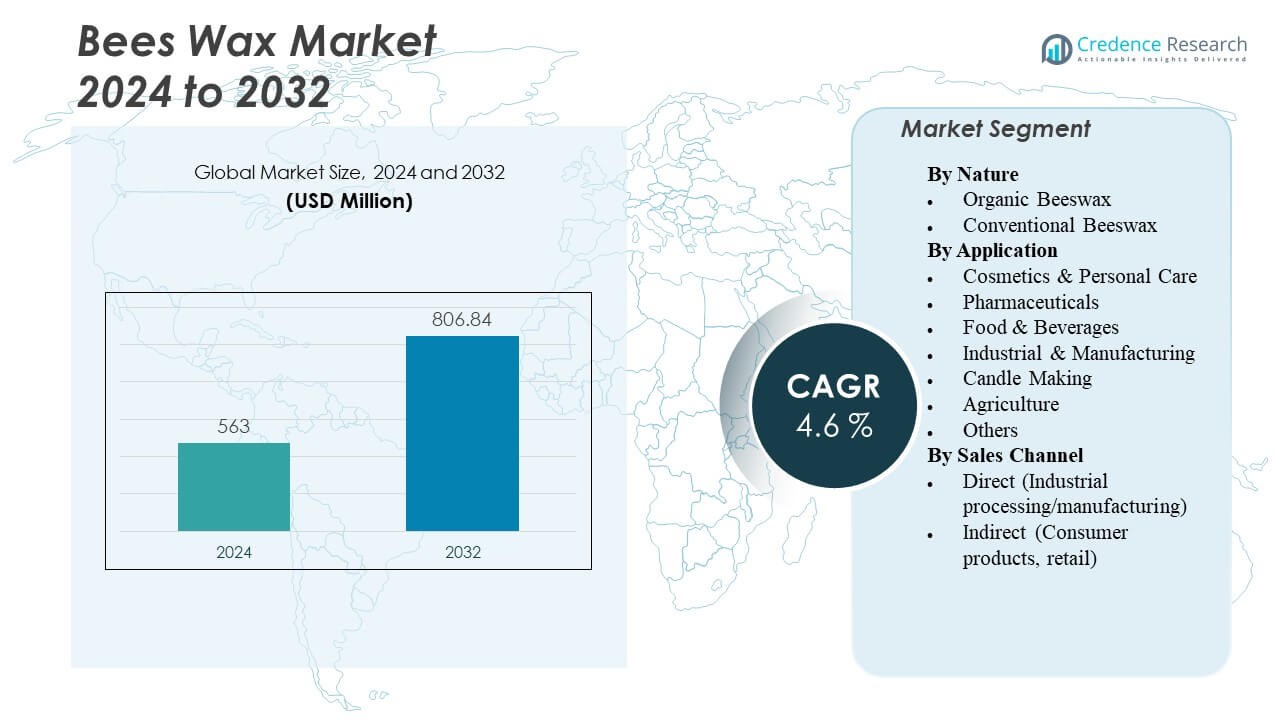
The Bees Wax Market is projected to grow from USD 563 million in 2024 to an estimated USD 806.84 million by 2032, with a compound annual growth rate (CAGR) of 4.6% from 2024 to 2032.
| REPORT ATTRIBUTE |
DETAILS |
| Historical Period |
2020-2023 |
| Base Year |
2024 |
| Forecast Period |
2025-2032 |
| Bees Wax Market Size 2024 |
USD 563 Million |
| Bees Wax Market, CAGR |
4.6% |
| Bees Wax Market Size 2032 |
USD 806.84 Million |
The key drivers influencing market growth include rising consumer preference for organic and eco-friendly ingredients. Manufacturers are integrating beeswax into personal care products, pharmaceuticals, and food coatings due to its non-toxic and emollient properties. The growing rejection of synthetic waxes and rising awareness of environmental impact also accelerate its use. Expanding demand for natural cosmetics and sustainable packaging continues to boost the adoption of beeswax across global industries.
Asia Pacific leads the global market due to abundant raw material availability and strong domestic production in countries such as China and India. Europe and North America follow, supported by high demand for organic cosmetics and natural food products. Emerging markets in Latin America and the Middle East & Africa are witnessing growth through niche applications in agriculture and candle manufacturing, driven by increasing awareness of natural product benefits.
Access crucial information at unmatched prices!
Request your sample report today & start making informed decisions powered by Credence Research Inc.!
Download Sample
Market Insights:
- The Bees Wax Market is valued at USD 563 million in 2024 and projected to reach USD 806.84 million by 2032, growing at a CAGR of 6%.
- Rising demand for natural and biodegradable materials drives market growth across cosmetics, food, and pharmaceuticals.
- Increasing consumer preference for organic and clean-label products boosts the adoption of beeswax in sustainable formulations.
- Regulatory restrictions on synthetic waxes encourage industries to shift toward eco-friendly beeswax alternatives.
- Limited raw material availability and seasonal beekeeping cycles remain key restraints affecting consistent supply.
- Asia Pacific leads the market due to strong production in China and India, supported by growing domestic consumption.
- Europe and North America maintain steady growth, while Latin America and the Middle East & Africa emerge as promising regions.
Market Drivers:
Increasing Consumer Demand for Natural Ingredients
The growing preference for natural and organic ingredients is a key driver for the Bees Wax Market. Consumers are more conscious of the products they use, seeking alternatives to synthetic ingredients that may have harmful effects. Beeswax, being natural and sustainable, fits into this trend as an eco-friendly option for skincare, food preservation, and other applications. The demand for organic beauty products and food-grade coatings is rising, prompting manufacturers to incorporate beeswax as a key ingredient in their formulations.
- For example, in January 2024, Burt’s Bees collaborated with Hidden Valley Ranch to release a limited-edition lip balm 4-pack featuring flavors like Ranch, Buffalo Sauce, Celery, and Carrot. The collaboration highlighted Burt’s Bees’ continued focus on natural ingredient-based formulations and creative brand engagement. The company is well recognized for using a high proportion of naturally derived ingredients in its skincare and lip care products.
Regulatory Pressure on Synthetic Waxes
Regulatory agencies are increasingly enforcing stricter regulations on the use of synthetic chemicals in consumer products. These regulations push companies to opt for natural alternatives like beeswax, which is considered safe and non-toxic. The growing awareness of the environmental impact of synthetic waxes and the push for sustainability encourages manufacturers to shift towards more eco-conscious products. The Bees Wax Market benefits as industries adopt this shift in response to these regulatory pressures.
Expansion in the Personal Care and Cosmetics Industry
The rise of the personal care and cosmetics industry has significantly contributed to the growth of the Bees Wax Market. Beeswax is widely used in skincare products such as lotions, balms, and lipsticks due to its moisturizing and emollient properties. It forms a protective barrier, making it a preferred ingredient in natural cosmetic formulations. The increasing preference for non-toxic, sustainable beauty products is driving the adoption of beeswax in the production of various personal care items.
Versatility Across Multiple Applications
Beeswax’s versatility makes it an attractive ingredient across several industries, including pharmaceuticals, food packaging, and candles. It is widely used as a coating for fruits and vegetables to extend shelf life, in food wraps, and as a binder in certain medications. Its ability to retain moisture and protect against oxidation further boosts its demand in the food and pharmaceutical sectors. This broad application spectrum drives continuous growth in the Bees Wax Market.
- For example, Medtronic manufactures and markets bone wax products composed primarily of refined beeswax, which are used in surgical procedures to control bleeding from bone surfaces. The beeswax provides a physical barrier that seals capillaries and prevents blood flow during operations such as orthopedic, cardiac, and neurosurgery. The company lists beeswax as an active component in its surgical bone wax formulations, intended for hemostatic use in non-absorbable applications.
Market Trends:
Growth in Eco-Friendly Packaging Solutions
Sustainability is a growing concern among both manufacturers and consumers, leading to a surge in demand for eco-friendly packaging solutions. Beeswax is increasingly used in packaging applications, particularly for its ability to provide natural protection without relying on harmful chemicals. Beeswax-coated paper and wraps are gaining popularity as sustainable alternatives to plastic and other non-biodegradable materials. As businesses aim to meet consumer demand for greener products, the Bees Wax Market continues to benefit from this trend.
- For instance, a notable innovation in eco-friendly packaging is ORUBEEX WRAP, which uses beeswax and corn husk waste to replace plastic packaging. ORUBEEX WRAP offers biodegradable, reusable, and antimicrobial packaging, and its adoption demonstrates the measurable impact of beeswax-based solutions in food and consumer goods packaging.
Increased Use of Beeswax in Food Products
The use of beeswax in food products, especially for coating and preservation, is a key trend in the market. With growing consumer interest in clean-label products, beeswax offers a natural alternative to synthetic preservatives. It helps in extending the shelf life of food products without compromising their quality. Food packaging solutions made with beeswax are becoming more widespread due to their biodegradable nature and minimal environmental impact, contributing to the Bees Wax Market’s growth.
Rise of Organic and Green Beauty Products
The shift towards organic and green beauty products is another significant trend impacting the Bees Wax Market. Consumers are increasingly looking for personal care items that align with their values, which includes the use of organic ingredients. Beeswax, known for its skin benefits and natural properties, fits well into this category. The rising popularity of clean beauty and eco-conscious products is fueling the demand for beeswax in skincare, haircare, and cosmetics formulations.
- For example, Burt’s Bees, owned by Clorox, remains one of the largest and most widely recognized brands in organic and beeswax-centered personal care products. The company has consistently expanded its portfolio, maintaining brand equity and driving sales through beeswax-based lip balms and skincare, as acknowledged in sustainability-focused industry reporting.
Technological Advancements in Wax Extraction
Advances in extraction and purification technologies have played a significant role in improving the efficiency and quality of beeswax production. These innovations help manufacturers meet the increasing demand for high-quality, pure beeswax. Improved extraction methods ensure that the wax retains its natural properties, enhancing its application across different industries. The ability to produce high-purity beeswax efficiently has positively impacted the Bees Wax Market, offering better supply chain integration and sustainability.
Market Challenges Analysis:
Fluctuating Supply of Raw Materials
One of the main challenges facing the Bees Wax Market is the fluctuating supply of raw materials. The availability of beeswax is directly linked to the health and population of bee colonies, which can be affected by various factors such as climate change, pesticide use, and habitat destruction. These challenges can lead to supply disruptions and higher prices for beeswax. Additionally, the seasonal nature of beekeeping means that there is a limited supply of beeswax at certain times of the year, impacting manufacturers’ ability to meet market demand.
Competition from Synthetic Waxes
The Bees Wax Market faces stiff competition from synthetic and petroleum-based waxes. These alternatives often come at a lower price point, which can make them more attractive to manufacturers looking to reduce costs. Synthetic waxes are also highly versatile and can be engineered to meet specific application requirements, offering potential advantages in certain industries. Despite the growing demand for natural ingredients, beeswax must compete with these cost-effective alternatives, which poses a challenge to its widespread adoption in certain sectors.
Market Opportunities:
Rising Demand for Sustainable Products
The growing focus on sustainability presents a significant opportunity for the Bees Wax Market. As more consumers and businesses prioritize eco-friendly, natural, and biodegradable products, beeswax fits well into these preferences. With increasing awareness of environmental issues, there is a growing market for beeswax-based products, from cosmetics and food packaging to candles and household items. This trend allows companies to tap into a rapidly expanding market driven by consumer demand for environmentally conscious products.
Expanding Applications in Medical and Pharmaceutical Sectors
The Bees Wax Market also benefits from expanding applications in the medical and pharmaceutical sectors. Beeswax is known for its antibacterial and anti-inflammatory properties, making it a valuable ingredient in ointments, creams, and balms used in wound care and other therapeutic applications. As the demand for natural healthcare solutions increases, beeswax is well-positioned to capture a share of this growing segment. The rising use of beeswax in drug delivery systems and as a base for topical treatments offers further growth opportunities.
Market Segmentation Analysis:
By Nature
The Bees Wax Market is segmented into organic and conventional beeswax. Organic beeswax holds strong appeal among manufacturers focusing on natural and chemical-free products. Its demand is rising due to the growing preference for clean-label and sustainable ingredients across industries such as cosmetics, pharmaceuticals, and food packaging. Conventional beeswax continues to dominate bulk production, supported by established industrial applications and easier availability. It remains favored in candle manufacturing and large-scale food coating operations, where certification is less critical. Both segments cater to diverse customer bases seeking quality and functionality.
- For example, Burt’s Bees reports sourcing beeswax from community-based projects in Tanzania and Vietnam, supporting local beekeepers through responsible sourcing programs. The company’s sustainability reports confirm that these initiatives have positively impacted over 20,000 livelihoods through supply chain investments and third-party audits. Its beeswax is sourced from wild-harvested and ethically collected hives, reinforcing Burt’s Bees’ commitment to transparency and sustainable ingredient sourcing in its natural product lines.
By Application
The Bees Wax Market serves multiple applications, including cosmetics and personal care, pharmaceuticals, food and beverages, industrial manufacturing, candle making, agriculture, and others. Cosmetics and personal care dominate due to the wax’s moisturizing, emulsifying, and stabilizing properties. Pharmaceutical use is expanding with increased adoption in ointments and drug delivery systems. Food applications rely on beeswax for natural coatings and preservation. Candle making continues as a traditional yet steady segment, while agriculture and industrial uses grow due to eco-friendly formulations. Each application benefits from beeswax’s natural versatility and sustainability profile.
- For example, in 2024, Strahl & Pitsch and Koster Keunen were recognized as key global suppliers of natural and refined beeswax for use in cosmetics, pharmaceuticals, and industrial applications. Both companies maintain a strong presence in the global beeswax supply chain through sustainable sourcing and high-quality processing standards.
By Sales Channel
The Bees Wax Market operates through direct and indirect sales channels. Direct sales, primarily to industrial processors and manufacturers, dominate due to bulk requirements and consistent quality standards. These channels ensure stable supply for large-scale production in cosmetics, food, and pharmaceuticals. Indirect sales through retail, specialty stores, and online platforms are gaining momentum with the rise of DIY and small-batch product makers. Online sales have become a key growth driver, supported by e-commerce expansion and consumer awareness of natural ingredients. Both channels contribute to widespread product accessibility and market expansion.
Segmentation:
By Nature
- Organic Beeswax
- Conventional Beeswax
By Application
- Cosmetics & Personal Care
- Pharmaceuticals
- Food & Beverages
- Industrial & Manufacturing
- Candle Making
- Agriculture
- Others
By Sales Channel
- Direct (Industrial processing/manufacturing)
- Indirect (Consumer products, retail)
By Region
- North America
- Europe
- Germany
- France
- U.K.
- Italy
- Spain
- Rest of Europe
- Asia Pacific
- China
- Japan
- India
- South Korea
- South-east Asia
- Rest of Asia Pacific
- Latin America
- Brazil
- Argentina
- Rest of Latin America
- Middle East & Africa
- GCC Countries
- South Africa
- Rest of the Middle East and Africa
Regional Analysis:
North America holds a market share of 28% in the Bees Wax Market, driven by high consumption in cosmetics, pharmaceuticals, and premium candle manufacturing. The United States leads due to strong demand for natural and sustainable ingredients, supported by an established personal care industry. It benefits from advanced product formulations and a growing organic trend among consumers. Canada also contributes significantly, with increased usage in food preservation and natural skincare applications. The region’s emphasis on clean-label and eco-friendly goods continues to reinforce steady market growth.
Asia Pacific dominates with a 37% market share, supported by extensive beekeeping activities and rising industrial consumption. China and India are the leading producers, benefiting from abundant raw material availability and expanding cosmetic and food industries. The region’s growing middle-class population and preference for natural products drive market expansion. Japan and South Korea also exhibit increasing adoption of beeswax in high-end personal care products. It continues to attract major global players due to its large consumer base and favorable manufacturing environment.
Europe accounts for 24% of the Bees Wax Market, driven by strong environmental awareness and regulatory support for natural products. Germany, France, and the United Kingdom are key contributors, focusing on sustainable sourcing and circular economy principles. The European cosmetics and pharmaceutical sectors rely on beeswax for premium, non-toxic formulations. It is also widely used in artisanal candle production and organic packaging solutions. South America holds 7%, while the Middle East & Africa collectively represent 4%, with emerging adoption across niche applications in food and agriculture.
Shape Your Report to Specific Countries or Regions & Enjoy 30% Off!
Key Player Analysis:
- Strahl & Pitsch Inc.
- Koster Keunen Inc.
- British Wax Refining Company Ltd.
- New Zealand Beeswax Ltd.
- Poth Hille & Co. Ltd.
- Paramold Manufacturing LLC
- Roger A. Reed, Inc.
- Bee Natural Uganda Ltd.
- Dabur India Ltd.
- Shandong Bokang Apiculture Co., Ltd.
- Chengdu Feng’s Apiculture Co., Ltd.
- Thomas Apiculture SAS
- Luberon Apiculture
- Burt’s Bees (a Clorox Company)
- Apis Industries
Competitive Analysis:
The Bees Wax Market features a moderately fragmented competitive landscape with several global and regional players. Leading companies include Strahl & Pitsch Inc., Dutch Gold Honey Inc., Koster Keunen, and British Wax Refining Company Ltd. These firms focus on product purity, sustainable sourcing, and advanced refining technologies to maintain competitive advantage. It benefits from partnerships with beekeeping cooperatives and initiatives promoting responsible apiculture practices. Manufacturers are investing in research to improve extraction efficiency and develop specialty grades for cosmetics and pharmaceuticals. Regional players in Asia Pacific and Europe emphasize cost-effective production and export capacity expansion. Strategic mergers, acquisitions, and certification-driven branding continue to define competition, shaping the industry’s long-term growth trajectory.
Recent Developments:
- In February 2025, Northern Roots Bee Co. introduced sustainable beeswax production by harvesting old combs and wax cappings to preserve bee colonies. Their process creates purer, natural wax that outperforms paraffin and soy alternatives.
Report Coverage:
The research report offers an in-depth analysis based on Nature, Application and Sales Channel. It details leading market players, providing an overview of their business, product offerings, investments, revenue streams, and key applications. Additionally, the report includes insights into the competitive environment, SWOT analysis, current market trends, as well as the primary drivers and constraints. Furthermore, it discusses various factors that have driven market expansion in recent years. The report also explores market dynamics, regulatory scenarios, and technological advancements that are shaping the industry. It assesses the impact of external factors and global economic changes on market growth. Lastly, it provides strategic recommendations for new entrants and established companies to navigate the complexities of the market.
Future Outlook:
- Rising demand for natural and sustainable materials will continue to drive steady growth in the Bees Wax Market.
- Expanding applications in cosmetics, pharmaceuticals, and food packaging will strengthen long-term industry prospects.
- Increased consumer preference for organic and chemical-free products will support wider product penetration.
- Growing focus on clean-label formulations will encourage manufacturers to replace synthetic waxes with beeswax alternatives.
- Technological improvements in extraction and refining methods will enhance product purity and supply consistency.
- Emerging economies in Asia Pacific and Latin America will experience higher production and export potential.
- Regulatory initiatives promoting eco-friendly products will favor beeswax over petroleum-based substitutes.
- The expanding global personal care sector will remain a dominant demand driver for beeswax applications.
- Collaborations between producers and cosmetic brands will promote innovation in high-value formulations.
- Rising investments in sustainable beekeeping practices will ensure raw material stability and environmental balance.



