Market Overview
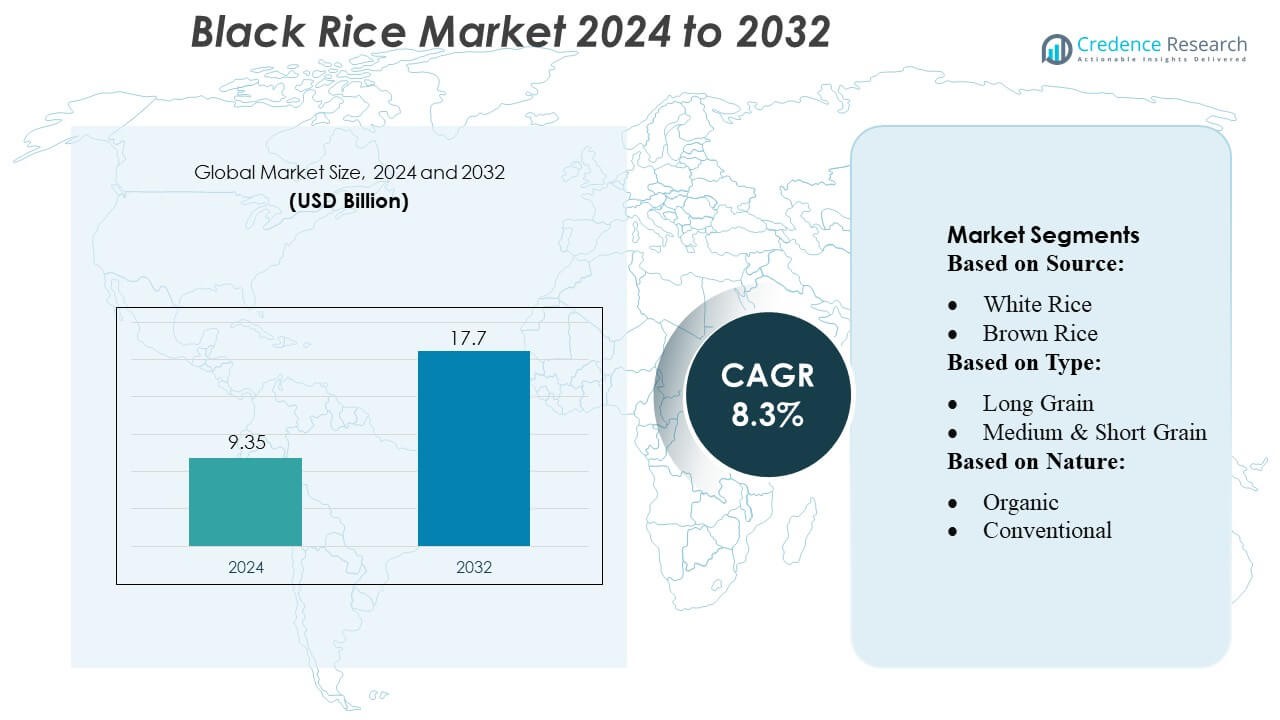
Black Rice Market size was valued USD 9.35 billion in 2024 and is anticipated to reach USD 17.7 billion by 2032, at a CAGR of 8.3% during the forecast period.
| REPORT ATTRIBUTE |
DETAILS |
| Historical Period |
2020-2023 |
| Base Year |
2024 |
| Forecast Period |
2025-2032 |
| Black Rice Market Size 2024 |
USD 9.35 Billion |
| Black Rice Market, CAGR |
8.3% |
| Black Rice Market Size 2032 |
USD 17.7 Billion |
The global black rice market is highly competitive, with leading players including Shriram Food Industry Pvt. Ltd., KRBL Limited, Aeroplane Rice Ltd., Sri Sainath Industry Pvt. Ltd, LT Foods, Gautam General Trading LLC, Kohinoor Foods Ltd., Adani Wilmar Limited, Sridhar Agro Product P Ltd, and Aashirvad International. These companies focus on product innovation, premium and organic offerings, and expanding distribution channels to meet rising demand from health-conscious consumers. The Asia Pacific region emerges as the dominant market, contributing approximately 55% of global revenue. Strong cultural consumption, favorable agricultural conditions, and well-established production and supply networks in countries such as China, India, and Thailand reinforce the region’s leadership. Continuous investment in sustainable farming, value-added products, and marketing initiatives enables key players to strengthen their market positions and capture growth opportunities across both domestic and international markets, ensuring long-term competitiveness in the expanding black rice industry.
Access crucial information at unmatched prices!
Request your sample report today & start making informed decisions powered by Credence Research Inc.!
Download Sample
Market Insights
- The Black Rice Market was valued at USD 9.35 billion in 2024 and is projected to reach USD 17.7 billion by 2032, growing at a CAGR of 8.3% during the forecast period.
- Increasing consumer awareness of health benefits and rising demand for organic and specialty rice varieties are driving market growth globally.
- The market is witnessing trends such as the expansion of modern retail and e-commerce channels, growing interest in plant-based and functional foods, and the introduction of ready-to-cook and value-added black rice products.
- The competitive landscape is dominated by companies like Shriram Food Industry Pvt. Ltd., KRBL Limited, Aeroplane Rice Ltd., LT Foods, and Adani Wilmar Limited, focusing on product innovation, sustainability, and regional expansion to strengthen their market presence.
- Asia Pacific leads with approximately 55% market share, followed by Europe, North America, Latin America, and MEA, supported by strong cultural consumption, favorable agricultural conditions, and well-established production and distribution networks.
Market Segmentation Analysis:
By Source
The Black Rice market, segmented by source into white rice and brown rice, is dominated by the brown rice sub-segment, capturing a significant market share due to its higher nutritional value, including elevated anthocyanin and fiber content. Rising consumer awareness of health benefits, such as antioxidant properties and improved digestion, drives demand for brown black rice. Producers are increasingly focusing on sourcing and processing techniques that retain nutrient density while ensuring longer shelf life, enabling both retail and foodservice adoption across health-conscious markets globally.
- For instance, KRBL operates a paddy‑milling capacity of 195 tonnes per hour and a rice‑processing capacity of 221 tonnes per hour through its integrated milling plants — including the flagship facility in Punjab, which spans roughly 200 acres.
By Type
Within the black rice market by type, long-grain rice holds a dominant position, accounting for the largest market share. Its versatility in culinary applications—from pilafs to salads—and favorable cooking characteristics, such as non-sticky texture, contribute to widespread consumer preference. Technological advancements in milling and packaging enhance quality retention and extend shelf life, supporting commercial adoption. Additionally, increasing incorporation in functional foods and ready-to-eat products further accelerates demand for long-grain black rice, positioning it as the preferred type in both domestic and international markets.
- For instance, Aeroplane Rice Ltd. operates two processing plants and one packaging unit — located in Amritsar (Punjab), Safidon (Haryana), and Delhi — which together warehouse over 140,000 metric tons of paddy at the Amritsar facility alone.
By Nature
The market segmented by nature shows that organic black rice is leading, reflecting growing consumer preference for chemical-free, sustainably cultivated grains. Dominating the market, organic black rice benefits from the rising health-conscious trend, increasing disposable incomes, and stringent food safety regulations. Key drivers include certifications ensuring pesticide-free cultivation, premium positioning in retail channels, and growing inclusion in organic food product portfolios. Conventional black rice, while still significant, is witnessing relatively slower growth due to increasing consumer inclination toward organic, nutrient-rich alternatives with traceable supply chains.
Key Growth Drivers
- Rising Health Awareness and Nutritional Benefits
The growing consumer focus on health and wellness is a primary driver for the black rice market. Rich in antioxidants, fiber, and essential nutrients, black rice appeals to health-conscious consumers seeking functional foods. Increased awareness of its role in reducing oxidative stress, improving digestion, and supporting heart health drives retail and foodservice demand. Companies are leveraging this trend through fortified products, convenient packaging, and health-focused marketing campaigns, expanding adoption in both domestic and international markets.
- For instance, Sri Sainath Industry Pvt. Ltd. the group’s processing operations can handle up to 1,800 metric tons of paddy per day across its advanced production lines.
- Expansion of Organic and Sustainable Farming Practices
The rising adoption of organic and sustainably cultivated black rice supports market growth. Consumers increasingly prefer chemical-free, eco-friendly grains, encouraging producers to invest in certified organic farming practices. Sustainable cultivation not only enhances brand value but also enables premium pricing strategies, attracting health-conscious and environmentally aware buyers. Government initiatives promoting organic agriculture and improved supply chain traceability further strengthen market penetration, particularly in regions with growing organic food consumption.
- For instance, Gautam General Trading LLC operates a processing and distribution infrastructure anchored by a manufacturing facility at Tarn Taran (Punjab, India) that covers 2,000,000 sq. ft. and serves as its core rice‑milling plant.
- Growth in Ready-to-Eat and Value-Added Products
The proliferation of ready-to-eat meals, frozen foods, and functional products incorporating black rice drives market expansion. Manufacturers are introducing convenience-focused options, such as pre-cooked black rice packs, breakfast cereals, and snacks, catering to busy urban consumers. These innovations enhance accessibility and encourage trial, particularly among younger demographics. Investments in advanced processing, packaging, and distribution ensure product quality, extending shelf life while maintaining nutritional value, thereby supporting sustained market adoption.
Key Trends & Opportunities
- Increasing Global Culinary Applications
Black rice is gaining traction in diverse culinary applications, ranging from gourmet restaurants to home cooking. Its unique color, nutty flavor, and high nutritional content make it attractive for specialty dishes, ethnic cuisines, and fusion recipes. Rising popularity among chefs and food bloggers enhances consumer awareness, opening opportunities for premium product positioning. Companies can capitalize on this trend through recipe-based marketing, influencer partnerships, and product innovation targeting culinary enthusiasts.
- For instance, Kohinoor Foods Ltd. operates a state‑of‑the‑art rice processing facility at Murthal, Haryana, with a milling capacity of 50 metric tonnes per hour, and daily production capacity reaching 1,000 metric tonnes, supported by storage of 20,000 tonnes of rice and 50,000 tonnes of paddy.
- Rising Demand in Functional and Health-Focused Foods
The integration of black rice into functional foods, dietary supplements, and wellness-oriented products presents a major growth opportunity. Its high antioxidant levels and potential health benefits, including anti-inflammatory and cardiovascular support, align with the growing demand for nutraceuticals. Manufacturers can develop fortified snacks, cereals, and beverages featuring black rice, catering to a rapidly expanding segment of health-conscious consumers seeking convenient and nutrient-dense options.
- For instance, Adani Wilmar Limited (AWL) company recently commissioned a state‑of‑the‑art integrated food processing plant at Gohana, Haryana, spanning 85 acres and designed by Larsen & Toubro Technology Services, which includes a specialized rice processing unit developed by Satake Corporation.
- Expansion in Emerging Markets
Emerging economies present significant opportunities for black rice market growth due to increasing disposable incomes, urbanization, and rising awareness of healthy diets. Market players can target expanding retail networks, modern trade channels, and online grocery platforms to capture new consumer bases. Localized product innovations, including regional flavors and packaging, further enhance market penetration in these regions, driving both volume growth and brand recognition.
Key Challenges
- High Production Costs and Premium Pricing
Black rice production involves specialized cultivation, longer growing periods, and lower yields compared to conventional rice, leading to higher costs. These factors result in premium pricing, which may limit adoption among price-sensitive consumers. Producers face challenges in balancing affordability with profitability, requiring efficient supply chain management, cost optimization, and strategic marketing to justify the higher price while maintaining quality and market competitiveness.
- Limited Consumer Awareness and Accessibility
Despite growing popularity, black rice remains less known than traditional rice varieties in many regions. Limited consumer knowledge regarding its nutritional benefits and culinary versatility can restrict market growth. Additionally, availability in mainstream retail outlets is often limited, particularly in rural or semi-urban areas. Companies must invest in educational campaigns, distribution expansion, and sampling programs to increase awareness, build trust, and encourage regular consumption among new consumer segments.
Regional Analysis
North America
North America holds a notable share of the black rice market, estimated around 15–20%. Growth is driven by rising health consciousness, increasing demand for organic and plant-based foods, and popularity of international cuisines. Strong retail infrastructure, including supermarkets, specialty stores, and online platforms, enhances product availability. Consumers in the U.S. and Canada are increasingly incorporating black rice into gourmet, health-focused, and meal-prep diets. The region continues to witness steady adoption due to the emphasis on superfoods and nutritional benefits, positioning North America as a significant contributor to global market expansion.
Asia
Asia dominates the global black rice market, contributing roughly 50–60% of total market share. Countries like China, India, Thailand, and Indonesia drive growth due to traditional consumption, cultural preferences, and favorable agricultural conditions. Rising awareness of health benefits, increasing demand for organic and specialty rice varieties, and expanding use in processed foods and modern cuisine support market expansion. Well-established production and supply chains further reinforce Asia’s leadership. Both domestic and export demand continue to strengthen, making the region the primary driver of the global black rice market.
Europe
Europe represents an important growth region, accounting for about 20–25% of the global market. Increasing consumer awareness of health and nutrition, demand for organic and sustainable products, and interest in superfoods fuel black rice adoption. Countries such as Germany, France, Italy, and the UK show growing incorporation of black rice into gourmet, health-focused, and premium food segments. Retail availability through supermarkets, health stores, and online platforms enhances accessibility. Market growth is further supported by dietary diversification trends, positioning Europe as a steadily expanding segment of the global black rice market.
Latin America
Latin America holds a smaller share, estimated at 5–10%, but demonstrates potential for growth. Rising awareness of black rice’s nutritional benefits, expanding middle-class income, and interest in diverse food options drive adoption. Countries like Brazil, Mexico, and Argentina show gradual growth in health-food sectors. While black rice remains niche, increasing urbanization and consumer shift toward healthier diets support market expansion. Retail channels and e-commerce are slowly improving distribution, making black rice more accessible. The region presents long-term growth opportunities as consumer preferences evolve toward superfoods and functional grains.
Middle East & Africa (MEA)
MEA accounts for a modest share of 3–7% globally. Adoption is limited but rising due to increasing health awareness, urbanization, and demand for specialty and exotic grains. Countries such as the UAE, Saudi Arabia, South Africa, and Egypt are gradually incorporating black rice into premium, health-focused, and gourmet diets. Limited historical consumption patterns and underdeveloped supply infrastructure restrict rapid growth. However, improving retail networks and growing interest in nutritious, high-value foods offer potential for expansion. As awareness of superfoods increases, MEA is poised to gradually strengthen its position in the black rice market.
Market Segmentations:
By Source:
By Type:
- Long Grain
- Medium & Short Grain
By Nature:
By Geography
- North America
- Europe
- Germany
- France
- U.K.
- Italy
- Spain
- Rest of Europe
- Asia Pacific
- China
- Japan
- India
- South Korea
- South-east Asia
- Rest of Asia Pacific
- Latin America
- Brazil
- Argentina
- Rest of Latin America
- Middle East & Africa
- GCC Countries
- South Africa
- Rest of the Middle East and Africa
Competitive Landscape
The black rice market include Shriram Food Industry Pvt. Ltd., KRBL Limited, Aeroplane Rice Ltd., Sri Sainath Industry Pvt. Ltd, LT Foods, Gautam General Trading LLC, Kohinoor Foods Ltd., Adani Wilmar Limited, Sridhar Agro Product P Ltd, and Aashirvad International. The black rice market is characterized by intense competition, driven by product differentiation, quality, and distribution strategies. Companies focus on developing premium, organic, and specialty rice varieties to meet the growing demand from health-conscious consumers. Innovation in processing techniques, packaging, and value-added products helps maintain market relevance and attract niche segments. Firms are increasingly leveraging modern retail channels, e-commerce platforms, and export opportunities to expand their reach and improve market penetration. Sustainability, certification standards, and adherence to quality norms play a crucial role in building consumer trust and brand loyalty. Strategic initiatives such as collaborations, regional expansions, and marketing campaigns are widely adopted to strengthen market positioning. Continuous investment in research and development, along with adaptation to changing dietary trends, ensures companies remain competitive while capitalizing on the expanding global demand for black rice.
Shape Your Report to Specific Countries or Regions & Enjoy 30% Off!
Key Player Analysis
- Shriram Food Industry Pvt. Ltd.
- KRBL Limited
- Aeroplane Rice Ltd.
- Sri Sainath Industry Pvt. Ltd
- LT Foods
- Gautam General Trading LLC
- Kohinoor Foods Ltd.
- Adani Wilmar Limited
- Sridhar Agro Product P Ltd
- Aashirvad International
Recent Developments
- In April 2025, the Kenya Agricultural and Livestock Research Organization (KALRO) and the Korea Program on International Agriculture (KOPIA) collaborated to develop the Africa Rice Cultivation Complex in Mwea, Kirinyaga County. The project includes a seed storage facility for 1,000 tonnes of certified seeds and the development of 65 hectares of paddy fields to increase rice production.
- In February 2025, AGCO Corporation signed a supply agreement with SDF to deliver a streamlined portfolio of low- to mid-range horsepower tractors under its renowned Massey Ferguson brand. This strategic partnership enhances Massey Ferguson’s global position in the low- to mid-horsepower tractor market, enabling the brand to offer more farmers reliable, high-quality, and easy-to-use equipment that boosts productivity and maximizes profitability.
- In September 2024, J C Bamford Excavators Ltd expanded its renowned X Series line with the launch of the 370X tracked excavator, a heavy-duty model in the 35-40-ton category designed for industry-leading productivity, durability, and reliability.
Report Coverage
The research report offers an in-depth analysis based on Source, Type, Nature and Geography. It details leading market players, providing an overview of their business, product offerings, investments, revenue streams, and key applications. Additionally, the report includes insights into the competitive environment, SWOT analysis, current market trends, as well as the primary drivers and constraints. Furthermore, it discusses various factors that have driven market expansion in recent years. The report also explores market dynamics, regulatory scenarios, and technological advancements that are shaping the industry. It assesses the impact of external factors and global economic changes on market growth. Lastly, it provides strategic recommendations for new entrants and established companies to navigate the complexities of the market.
Future Outlook
- Growing consumer awareness of health and nutritional benefits will continue to drive demand.
- Increasing adoption of organic and specialty rice varieties will expand market opportunities.
- Rising popularity of plant-based and functional foods will support product innovation.
- Expansion of modern retail and e-commerce channels will improve accessibility.
- Rising demand in emerging regions will contribute to overall market growth.
- Technological advancements in rice processing and packaging will enhance product quality.
- Strategic collaborations, partnerships, and regional expansions will strengthen market presence.
- Sustainability initiatives and certification standards will influence consumer trust and preferences.
- Diversification into ready-to-cook and value-added products will create new revenue streams.
- Continuous R&D and innovation will drive competitiveness and long-term market development.



