Home » Food & Beverage » Alcohol Infused Ice Cream Market

Alcohol-Infused Ice Cream Market By Type (Beer-infused Ice Cream, Wine-infused Ice Cream, Spirits-based Ice Cream, Cocktail-inspired Flavors); By Product Type (Dairy-based, Non-dairy/Vegan); By End User (Millennials and Generation Z (18–40 Age), Adult (Above 40)); By Sales Channel (Supermarkets and Hypermarkets, Specialty Food Stores, Online Retailers, Bars and Restaurants) – Growth, Share, Opportunities & Competitive Analysis, 2024 – 2032

Report ID: 90371 | Report Format : Excel, PDF

Market Overview:

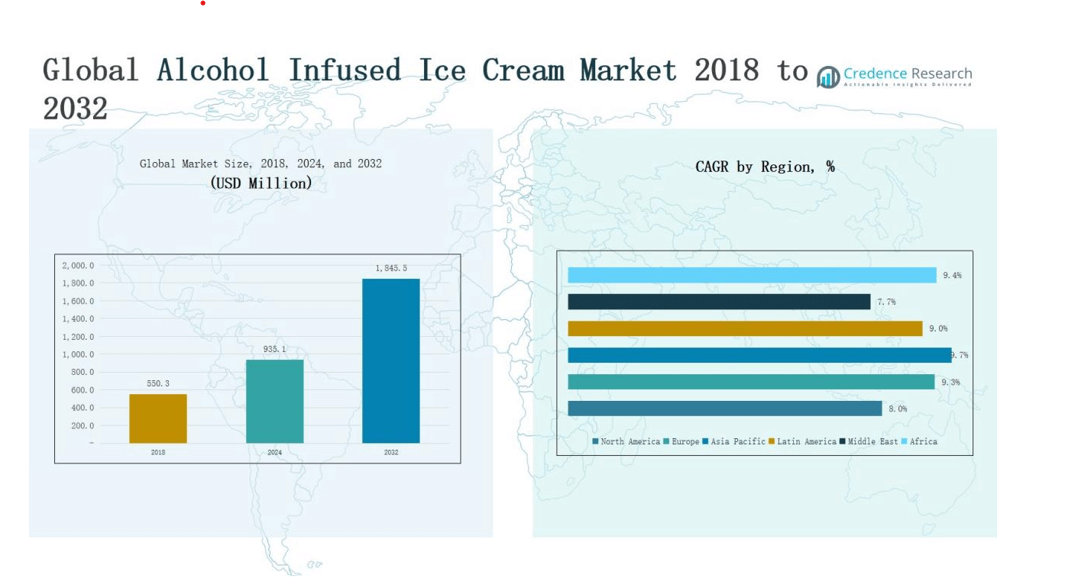
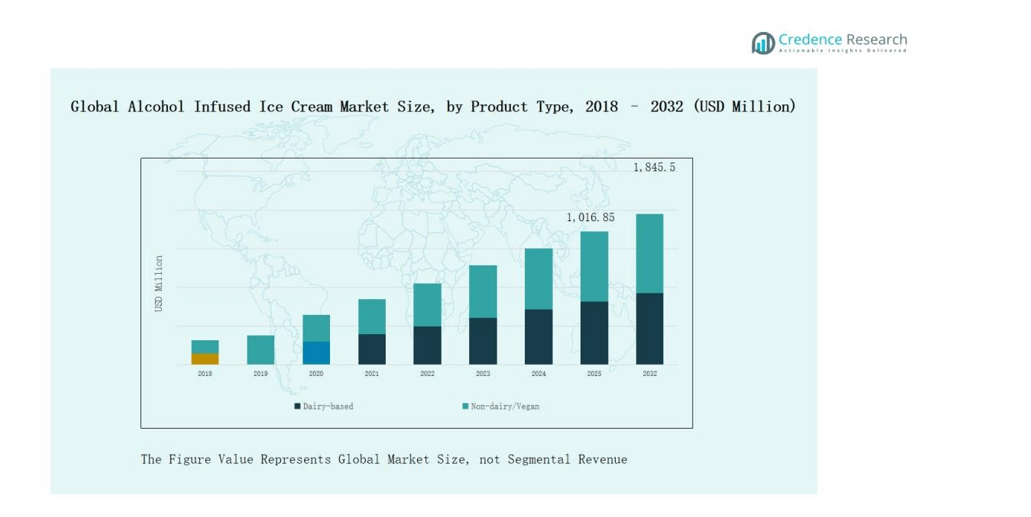
Global Alcohol Infused Ice Cream Market size was valued at USD 550.3 million in 2018 to USD 935.1 million in 2024 and is anticipated to reach USD 1,845.5 million by 2032, at a CAGR of 8.89% during the forecast period.

REPORT ATTRIBUTE DETAILS
Historical Period 2020-2023
Base Year 2024
Forecast Period 2025-2032
Alcohol-Infused Ice Cream Market Size 2024 USD 935.1 million
Alcohol-Infused Ice Cream Market, CAGR 8.89%
Alcohol-Infused Ice Cream Market Size 2032 USD 1,845.5 million


The Global Alcohol Infused Ice Cream Market is shaped by established brands and niche innovators competing through product innovation, distribution strength, and premium positioning. Leading companies include Häagen-Dazs, Ben & Jerry’s Homemade, Inc., Mercer’s Dairy, Tipsy Scoop, PROOF Alcohol Ice Cream, Buzz Bar, Las Paletas, New Orleans Ice Cream Company, and DizziBrands, LLC, along with several emerging regional players. These companies focus on spirits-based and cocktail-inspired flavors, dairy-free innovations, and strategic collaborations with alcohol brands to strengthen market presence. North America emerged as the leading region in 2024, capturing 34% of the global market share, supported by strong consumer demand for indulgent desserts, robust retail infrastructure, and active product innovation.

Alcohol Infused Ice Cream Market size

Market Insights

  • The Global Alcohol Infused Ice Cream Market grew from USD 550.3 million in 2018 to USD 935.1 million in 2024, projected to reach USD 1,845.5 million by 2032.
  • Spirits-based ice cream leads with 42% share in 2024, supported by premium positioning, while cocktail-inspired flavors hold 28%, beer-infused 18%, and wine-infused 12%.
  • Dairy-based variants dominate with 71% share in 2024, while non-dairy and vegan options capture 29%, driven by plant-based demand and lactose intolerance awareness.
  • Millennials and Generation Z account for 65% share in 2024, reflecting strong preference for experimental, indulgent, and social-media-driven desserts; adults above 40 hold 35%.
  • North America leads with 34% share in 2024, followed by Europe at 29% and Asia Pacific at 22%, with Asia Pacific recording the fastest regional growth.

Access crucial information at unmatched prices!

Request your sample report today & start making informed decisions powered by Credence Research Inc.!

Download Sample

Market Segment Insights

By Type

Spirits-based ice cream dominates the type segment with nearly 42% market share in 2024. Its popularity stems from premium positioning, rich flavor infusion, and strong appeal among urban consumers seeking indulgent desserts. Cocktail-inspired flavors hold about 28% share, driven by novelty and demand for mixology-inspired experiences. Beer-infused variants account for 18%, often marketed as seasonal or craft-inspired options. Wine-infused products, with 12% share, target niche segments preferring sophisticated dessert pairings. The growing interest in experiential consumption and premium alcohol brands strengthens the spirits-based segment’s leadership.

  •  For instance, Mercer’s Dairy in New York pioneered wine ice cream with flavors like Cherry Merlot and Red Raspberry Chardonnay, now distributed across several U.S. states.

By Product Type

Dairy-based alcohol ice cream leads with 71% share in 2024, supported by traditional taste preferences and broad availability across supermarkets and restaurants. Its creamy texture blends effectively with alcohol, creating indulgent flavors that attract repeat buyers. Non-dairy or vegan alternatives capture 29% share, fueled by rising plant-based trends, lactose intolerance awareness, and demand from younger, health-conscious consumers. Innovation in oat, almond, and coconut-based formulations continues to expand this niche, although dairy retains dominance due to entrenched consumer habits and established distribution.

By End User

Millennials and Generation Z (18–40 years) dominate consumption with nearly 65% market share in 2024. Their preference for experimental flavors, indulgent desserts, and social-media-driven lifestyle choices drives segment strength. This group responds well to novelty launches, cocktail-inspired blends, and vegan options, making them the most targeted audience for brands. Adults above 40 account for 35% share, with slower adoption due to health concerns and conservative consumption habits. However, premium offerings marketed as occasional indulgences maintain steady demand in this demographic.

  • For instance, Starbucks’ seasonal beverages like the Iced Pumpkin Cream Chai Tea Latte, which quickly trended on Instagram, reinforcing the appeal of indulgent and Instagrammable offerings for younger audiences.

Market Overview

Rising Demand for Premium and Experiential Desserts

The market benefits from growing consumer demand for premium desserts that deliver unique experiences. Alcohol-infused ice cream offers indulgence by blending traditional flavors with popular alcoholic beverages. Millennials and Generation Z actively seek adventurous and social-media-worthy options, driving consumption. This demand is reinforced by premium positioning and associations with luxury and lifestyle. Expanding product availability in urban centers and food service outlets further strengthens the market’s growth.

  • For instance, Tipsy Scoop, a New York-based brand, has gained traction by offering 5% ABV ice creams in cocktail-inspired flavors such as Cake Batter Vodka Martini, aligning with the lifestyle appeal of luxury and personalization.

Expansion of Distribution Channels

Wider accessibility across supermarkets, hypermarkets, specialty stores, and online platforms drives strong sales. Retailers promote alcohol-infused ice cream as a premium offering, while bars and restaurants include it as part of experiential dining menus. E-commerce provides global reach and caters to tech-savvy consumers who value convenience and product variety. Broader distribution enhances product visibility, supports brand differentiation, and creates consistent revenue streams. This multi-channel expansion ensures stronger penetration across both developed and emerging markets.

  • For instance, Häagen-Dazs U.S. launched its “Spirits” ice cream line in supermarkets, directly targeting mainstream retail shoppers

Innovation in Flavor and Product Development

Continuous innovation in flavors and product formats is a key growth driver. Brands experiment with cocktail-inspired, seasonal, and limited-edition offerings that resonate with evolving consumer tastes. Dairy and non-dairy formulations expand the appeal to health-conscious and vegan buyers. Collaborations with alcohol brands add authenticity and exclusivity to new product lines. Flavor innovation not only drives initial trial but also sustains long-term consumer loyalty, boosting repeat purchases. This innovation-focused approach keeps the category competitive and dynamic.

Alcohol Infused Ice Cream Market share

Key Trends & Opportunities

Shift Toward Vegan and Plant-Based Alternatives

The rise of vegan and plant-based diets creates significant opportunities for non-dairy alcohol-infused ice cream. Younger consumers increasingly favor healthier and sustainable alternatives that avoid lactose while maintaining indulgent experiences. Brands respond with formulations using almond, oat, or coconut bases to capture this demand. This trend allows players to tap into overlapping consumer groups—vegan, health-conscious, and experimental buyers—broadening market reach. It positions the non-dairy segment for faster growth compared to traditional dairy-based options.

  • For instance, Eclipse Foods has developed a vegan ice cream line using a proprietary, creamy plant-based base, which has gained attention for both sustainability and indulgence.

Strategic Collaborations and Co-Branding

Collaborations between ice cream producers and established alcohol brands present strong growth opportunities. Partnerships enhance credibility, strengthen brand appeal, and allow exclusive flavor launches linked to popular beverages. Such co-branding strategies attract younger demographics seeking novelty and lifestyle alignment. Retailers and food service operators also use collaborations to create differentiation in competitive dessert categories. These partnerships boost visibility, expand distribution networks, and reinforce the premium positioning of alcohol-infused ice cream globally.

  • For instance, Miller High Life partnered with Tipsy Scoop in 2022 to create Dive Bar ice cream bars. These treats contain 5 % ABV and include design touches like a peanut swirl and dark-chocolate coating that echo a classic dive bar experience

Key Challenges

Regulatory and Compliance Restrictions

Stringent regulations on alcohol-based products create hurdles for manufacturers. Age restrictions, labeling rules, and distribution limitations vary across countries, complicating market entry and expansion. Brands must navigate compliance costs while ensuring responsible marketing practices to avoid penalties. These challenges increase operational complexities, particularly for cross-border distribution. Regulatory barriers can also restrict innovation and slow the introduction of new products in markets with strict alcohol consumption laws.

Health and Wellness Concerns

The indulgent nature of alcohol-infused ice cream raises concerns among health-conscious consumers. Rising awareness about sugar, calorie, and alcohol intake discourages frequent consumption. This challenge is more pronounced in older demographics, where lifestyle-related health issues reduce demand. While occasional indulgence supports steady sales, sustained growth may slow if consumers prioritize healthier alternatives. Brands must address these concerns through portion control, reduced-calorie options, or the introduction of “better-for-you” product lines.

High Production and Storage Costs

Manufacturing alcohol-infused ice cream requires specialized processes and strict temperature control, increasing production costs. Alcohol content complicates freezing and storage requirements, leading to higher operational expenses compared to traditional ice cream. Smaller players face greater barriers due to capital-intensive production and distribution needs. These costs impact pricing strategies, often limiting affordability in price-sensitive regions. High overheads may restrict large-scale expansion, particularly in emerging markets where consumer spending power remains lower.

Regional Analysis

North America

North America leads the global alcohol infused ice cream market with a 34% market share in 2024, valued at USD 327.92 million. The region is projected to reach USD 604.94 million by 2032, growing at a CAGR of 8.0%. Growth is driven by high consumer spending on premium desserts, strong penetration of brands like Häagen-Dazs and Tipsy Scoop, and widespread availability across supermarkets, restaurants, and bars. Millennials and Generation Z fuel demand through their preference for novelty desserts. Strong distribution networks and product innovation ensure North America maintains its leadership.

Europe

Europe holds the second-largest position with a 29% market share in 2024, valued at USD 280.00 million, and is forecasted to reach USD 570.06 million by 2032 at a CAGR of 9.3%. Rising interest in gourmet desserts, strong wine and spirits culture, and expansion of specialty food outlets support market growth. Countries such as the UK, France, and Germany drive innovation with cocktail-inspired flavors and vegan alternatives. European consumers’ willingness to pay for premium indulgence and their cultural acceptance of alcohol-infused products boost adoption. Distribution through hypermarkets and online platforms further strengthens regional demand.

Asia Pacific

Asia Pacific accounts for 22% of the global share in 2024, valued at USD 208.75 million, and is projected to reach USD 438.85 million by 2032, growing at the fastest CAGR of 9.7%. Rapid urbanization, increasing disposable incomes, and rising exposure to Western dessert trends drive demand. Younger demographics in China, Japan, India, and South Korea adopt alcohol-infused ice cream as a lifestyle-oriented indulgence. Expansion of e-commerce platforms and innovative launches with Asian-inspired flavors accelerate growth. The growing plant-based consumer base also supports opportunities for non-dairy alternatives in the region.

Latin America

Latin America captures a 7% market share in 2024, valued at USD 70.11 million, with growth expected to reach USD 139.52 million by 2032 at a CAGR of 9.0%. Brazil and Argentina lead the market, supported by a strong culture of social dining and rising middle-class incomes. Consumers show increasing interest in cocktail-inspired and spirits-based ice cream varieties. Distribution in urban centers and online channels contributes to visibility, while growing nightlife culture supports bar and restaurant adoption. Despite economic fluctuations, demand for premium indulgence continues to create opportunities across the region.

Middle East

The Middle East represents a 3% market share in 2024, valued at USD 28.40 million, and is forecasted to reach USD 51.30 million by 2032, at a CAGR of 7.7%. Growth is concentrated in GCC countries, Israel, and Turkey, where premium dessert demand and tourism expansion drive sales. Limited alcohol consumption laws pose challenges, but alcohol-infused desserts are positioned as niche luxury offerings in urban centers. International hotel chains, high-end restaurants, and specialty outlets play a key role in boosting visibility. Rising expatriate population also supports niche demand in the region.

Africa

Africa holds a 5% market share in 2024, valued at USD 19.97 million, and is anticipated to reach USD 40.78 million by 2032, growing at a CAGR of 9.4%. South Africa leads regional adoption, followed by Egypt, supported by expanding retail infrastructure and a young consumer base. Growing middle-class spending and rising urbanization encourage demand for premium indulgence. Although affordability challenges and limited product awareness restrict wider penetration, online retail and premium restaurants drive exposure. Increasing acceptance of alcohol-based products in urban areas ensures steady long-term growth potential.

Alcohol Infused Ice Cream Market segmentation

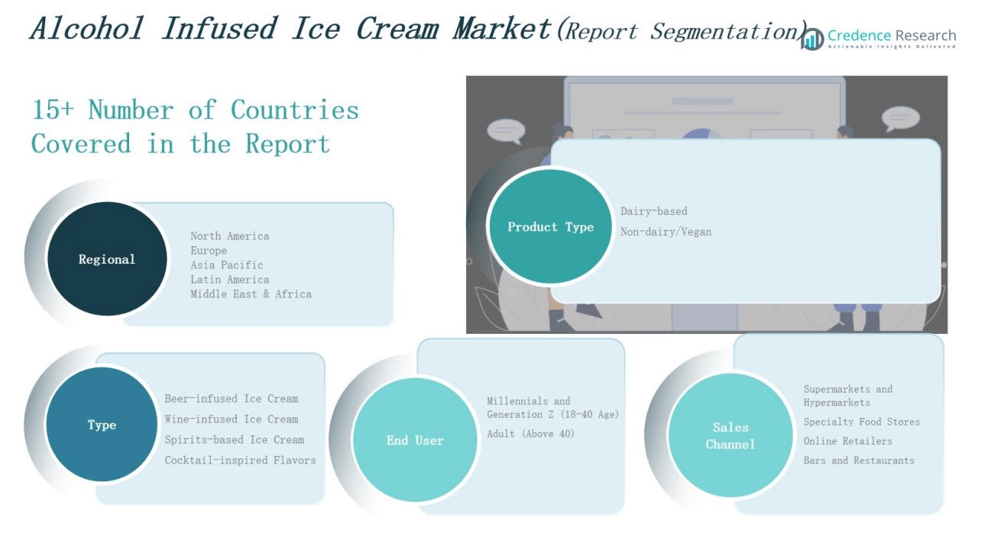
Market Segmentations:

By Type

  • Beer-infused Ice Cream
  • Wine-infused Ice Cream
  • Spirits-based Ice Cream
  • Cocktail-inspired Flavors

By Product Type

  • Dairy-based
  • Non-dairy/Vegan

By End User

  • Millennials and Generation Z (18–40 Age)
  • Adult (Above 40)

By Sales Channel

  • Supermarkets and Hypermarkets
  • Specialty Food Stores
  • Online Retailers
  • Bars and Restaurants

By Region

  • North America
    • U.S.
    • Canada
    • Mexico
  • Europe
    • UK
    • France
    • Germany
    • Italy
    • Spain
    • Russia
    • Belgium
    • Netherlands
    • Austria
    • Sweden
    • Poland
    • Denmark
    • Switzerland
    • Rest of Europe
  • Asia Pacific
    • China
    • Japan
    • South Korea
    • India
    • Australia
    • Thailand
    • Indonesia
    • Vietnam
    • Malaysia
    • Philippines
    • Taiwan
    • Rest of Asia Pacific
  • Latin America
    • Brazil
    • Argentina
    • Peru
    • Chile
    • Colombia
    • Rest of Latin America
  • Middle East
    • UAE
    • KSA
    • Israel
    • Turkey
    • Iran
    • Rest of Middle East
  • Africa
    • Egypt
    • Nigeria
    • Algeria
    • Morocco
    • Rest of Africa

Competitive Landscape

The global alcohol infused ice cream market features a mix of established ice cream brands and niche innovators competing for market share. Leading players such as Häagen-DazsBen & Jerry’s Homemade, Inc., and Mercer’s Dairy leverage strong distribution networks and brand recognition to dominate mainstream retail segments. Specialty companies like Tipsy ScoopPROOF Alcohol Ice Cream, and Buzz Bar differentiate through unique cocktail-inspired flavors, premium positioning, and collaborations with alcohol brands. Regional producers such as Las Paletas and New Orleans Ice Cream Company cater to local tastes while expanding presence in specialty outlets. Innovation in dairy-free and vegan formulations broadens appeal among health-conscious and younger demographics, intensifying competition. Strategic partnerships, limited-edition launches, and co-branding with spirits companies serve as key growth strategies across the industry. The competitive environment remains fragmented, with both global giants and emerging artisanal players driving market dynamism and sustained product innovation.

Shape Your Report to Specific Countries or Regions & Enjoy 30% Off!

Key Players

  • Häagen-Dazs
  • Tipsy Scoop
  • Buzz Bar
  • Las Paletas
  • New Orleans Ice Cream Company
  • DizziBrands, LLC
  • Ben & Jerry’s Homemade, Inc.
  • PROOF Alcohol Ice Cream
  • Mercer’s Dairy
  • Other Key Players

Recent Developments

  • In January 2025, Tipsy Scoop launched a limited‑edition flavor, “Peanut Butter & Jealous.” This is a peanut butter–and‑jelly flavored ice cream with 5 % ABV, infused with Chica~Chida agave spirit. Available Jan 21 to Feb 28 at Tipsy Scoop locations and online.
  • In July 2025, Guinness partnered with Van Leeuwen Ice Cream to launch a Guinness‑flavored pint Called “Lovely Day for a Guinness,” it blends stout notes with chocolate chunks. Available at scoop shops and online.
  • In February 2024, PROOF Hard Ice Cream introduced a Chocolate Espresso Martini flavor in select Costco locations in Southern California and Honolulu

Report Coverage

The research report offers an in-depth analysis based on Type, Product Type, End User, Sales Channel and Region. It details leading market players, providing an overview of their business, product offerings, investments, revenue streams, and key applications. Additionally, the report includes insights into the competitive environment, SWOT analysis, current market trends, as well as the primary drivers and constraints. Furthermore, it discusses various factors that have driven market expansion in recent years. The report also explores market dynamics, regulatory scenarios, and technological advancements that are shaping the industry. It assesses the impact of external factors and global economic changes on market growth. Lastly, it provides strategic recommendations for new entrants and established companies to navigate the complexities of the market.

Future Outlook

  1. Demand will rise as consumers seek premium and indulgent dessert experiences.
  2. Spirits-based and cocktail-inspired flavors will remain leading categories due to wider appeal.
  3. Non-dairy and vegan options will expand as plant-based trends continue gaining traction.
  4. Millennials and Generation Z will drive growth with strong preference for novelty desserts.
  5. Online retail channels will strengthen sales through wider product visibility and convenience.
  6. Co-branding with alcohol companies will enhance product authenticity and brand value.
  7. Emerging markets in Asia Pacific and Latin America will offer untapped growth potential.
  8. Health-conscious innovation will create opportunities for low-calorie and portion-controlled variants.
  9. Tourism, hospitality, and restaurant sectors will boost premium product adoption.
  10. Fragmented competition will continue, encouraging innovation and frequent product launches.

CHAPTER NO. 1 :   GENESIS OF THE MARKET       

1.1 Market Prelude – Introduction & Scope

1.2 The Big Picture – Objectives & Vision

1.3 Strategic Edge – Unique Value Proposition

1.4 Stakeholder Compass – Key Beneficiaries      

CHAPTER NO. 2 :   EXECUTIVE LENS

2.1 Pulse of the Industry – Market Snapshot

2.2 Growth Arc – Revenue Projections (USD Million)      

2.3. Premium Insights – Based on Primary Interviews       

CHAPTER NO. 3 :   ALCOHOL INFUSED ICE CREAM MARKET FORCES & INDUSTRY PULSE        

3.1 Foundations of Change – Market Overview
3.2 Catalysts of Expansion – Key Market Drivers
3.2.1 Momentum Boosters – Growth Triggers
3.2.2 Innovation Fuel – Disruptive Technologies
3.3 Headwinds & Crosswinds – Market Restraints
3.3.1 Regulatory Tides – Compliance Challenges
3.3.2 Economic Frictions – Inflationary Pressures
3.4 Untapped Horizons – Growth Potential & Opportunities
3.5 Strategic Navigation – Industry Frameworks
3.5.1 Market Equilibrium – Porter’s Five Forces
3.5.2 Ecosystem Dynamics – Value Chain Analysis
3.5.3 Macro Forces – PESTEL Breakdown

CHAPTER NO. 4 : KEY INVESTMENT EPICENTER        

4.1 Regional Goldmines – High-Growth Geographies

4.2 Product Frontiers – Lucrative Type Categories

4.3 End User Sweet Spots – Emerging Demand Segments  

CHAPTER NO. 5: REVENUE TRAJECTORY & WEALTH MAPPING

5.1 Momentum Metrics – Forecast & Growth Curves

5.2 Regional Revenue Footprint – Market Share Insights

5.3 Segmental Wealth Flow – Type, Product Type, End User, & Sales Channel Revenue

CHAPTER NO. 6 :   TRADE & COMMERCE ANALYSIS      

6.1.      Import Analysis By Region   

6.1.1.   Global Alcohol Infused Ice Cream Market Import Revenue By Region

6.2.      Export Analysis By Region   

6.2.1.   Global Alcohol Infused Ice Cream Market Export Revenue By Region

CHAPTER NO. 7 :   COMPETITION ANALYSIS         

7.1.      Company Market Share Analysis      

7.1.1.   Global Alcohol Infused Ice Cream Market: Company Market Share

7.2.      Global Alcohol Infused Ice Cream Market Company Revenue Market Share

7.3.      Strategic Developments        

7.3.1.   Acquisitions & Mergers        

7.3.2.   New Product Launch

7.3.3.   Regional Expansion

7.4.      Competitive Dashboard

7.5.      Company Assessment Metrics, 2024

CHAPTER NO. 8 :   ALCOHOL INFUSED ICE CREAM MARKET – BY TYPE SEGMENT ANALYSIS

8.1.      Alcohol Infused Ice Cream Market Overview By Type Segment    

8.1.1.   Alcohol Infused Ice Cream Market Revenue Share By Type

8.2.      Beer-infused Ice Cream

8.3.      Wine-infused Ice Cream

8.4.      Spirits-based Ice Cream

8.5.      Cocktail-inspired Flavors

CHAPTER NO. 9 :   ALCOHOL INFUSED ICE CREAM MARKET – BY PRODUCT TYPE SEGMENT ANALYSIS

9.1.      Alcohol Infused Ice Cream Market Overview By Product Type Segment   

9.1.1.   Alcohol Infused Ice Cream Market Revenue Share By Product Type

9.2.      Dairy-based

9.3.      Non-dairy/Vegan

CHAPTER NO. 10 : ALCOHOL INFUSED ICE CREAM MARKET – BY END USER SEGMENT ANALYSIS

10.1.    Alcohol Infused Ice Cream Market Overview By End User Segment         

10.1.1. Alcohol Infused Ice Cream Market Revenue Share By End User

10.2.    Millennials and Generation Z (18-40 Age)

10.3.     Adult (Above 40)

CHAPTER NO. 11 : ALCOHOL INFUSED ICE CREAM MARKET – BY SALES CHANNEL SEGMENT ANALYSIS        

11.1.    Alcohol Infused Ice Cream Market Overview By Sales Channel Segment 

11.1.1. Alcohol Infused Ice Cream Market Revenue Share By Sales Channel

11.2.    Supermarkets and Hypermarkets

11.3.    Specialty Food Stores

11.4.    Online Retailers

11.5.    Bars and Restaurants

CHAPTER NO. 12 : ALCOHOL INFUSED ICE CREAM MARKET – REGIONAL ANALYSIS

12.1.    Alcohol Infused Ice Cream Market Overview By Region Segment 

12.1.1. Global Alcohol Infused Ice Cream Market Revenue Share By Region

12.1.2. Regions          

12.1.3. Global Alcohol Infused Ice Cream Market Revenue By Region      

12.1.4. Type   

12.1.5. Global Alcohol Infused Ice Cream Market Revenue By Type         

12.1.6. Product Type 

12.1.7. Global Alcohol Infused Ice Cream Market Revenue By Product Type

12.1.8. End User        

12.1.9. Global Alcohol Infused Ice Cream Market Revenue By End User

12.1.10.           Sales Channel

12.1.11.           Global Alcohol Infused Ice Cream Market Revenue By Sales Channel

CHAPTER NO. 13 : NORTH AMERICA ALCOHOL INFUSED ICE CREAM MARKET – COUNTRY ANALYSIS

13.1.    North America Alcohol Infused Ice Cream Market Overview By Country Segment

13.1.1. North America Alcohol Infused Ice Cream Market Revenue Share By Region

13.2.    North America           

13.2.1. North America Alcohol Infused Ice Cream Market Revenue By Country

13.2.2. Type   

13.2.3. North America Alcohol Infused Ice Cream Market Revenue By Type

13.2.4. Product Type 

13.2.5. North America Alcohol Infused Ice Cream Market Revenue By Product Type

13.2.6. End User        

13.2.7. North America Alcohol Infused Ice Cream Market Revenue By End User

13.2.8. Sales Channel

13.2.9. North America Alcohol Infused Ice Cream Market Revenue By Sales Channel            

13.3.    U.S.    

13.4.    Canada           

13.5.    Mexico           

CHAPTER NO. 14 : EUROPE ALCOHOL INFUSED ICE CREAM MARKET – COUNTRY ANALYSIS

14.1.    Europe Alcohol Infused Ice Cream Market Overview By Country Segment

14.1.1. Europe Alcohol Infused Ice Cream Market Revenue Share By Region

14.2.    Europe

14.2.1. Europe Alcohol Infused Ice Cream Market Revenue By Country    

14.2.2. Type   

14.2.3. Europe Alcohol Infused Ice Cream Market Revenue By Type        

14.2.4. Product Type 

14.2.5. Europe Alcohol Infused Ice Cream Market Revenue By Product Type

14.2.6. End User        

14.2.7. Europe Alcohol Infused Ice Cream Market Revenue By End User

14.2.8. Sales Channel

14.2.9. Europe Alcohol Infused Ice Cream Market Revenue By Sales Channel

14.3.    UK     

14.4.    France

14.5.    Germany        

14.6.    Italy    

14.7.    Spain  

14.8.    Russia

14.9.   Rest of Europe

CHAPTER NO. 15 : ASIA PACIFIC ALCOHOL INFUSED ICE CREAM MARKET – COUNTRY ANALYSIS

15.1.    Asia Pacific Alcohol Infused Ice Cream Market Overview By Country Segment

15.1.1. Asia Pacific Alcohol Infused Ice Cream Market Revenue Share By Region

15.2.    Asia Pacific   

15.2.1. Asia Pacific Alcohol Infused Ice Cream Market Revenue By Country

15.2.2. Type   

15.2.3. Asia Pacific Alcohol Infused Ice Cream Market Revenue By Type

15.2.4. Product Type 

15.2.5. Asia Pacific Alcohol Infused Ice Cream Market Revenue By Product Type            

15.2.6. End User        

15.2.7. Asia Pacific Alcohol Infused Ice Cream Market Revenue By End User

15.2.8. Sales Channel

15.2.9. Asia Pacific Alcohol Infused Ice Cream Market Revenue By Sales Channel

15.3.    China 

15.4.    Japan  

15.5.    South Korea   

15.6.    India   

15.7.    Australia        

15.8.    Southeast Asia

15.9.    Rest of Asia Pacific

CHAPTER NO. 16 : LATIN AMERICA ALCOHOL INFUSED ICE CREAM MARKET – COUNTRY ANALYSIS

16.1.    Latin America Alcohol Infused Ice Cream Market Overview By Country Segment         

16.1.1. Latin America Alcohol Infused Ice Cream Market Revenue Share By Region

16.2.    Latin America

16.2.1. Latin America Alcohol Infused Ice Cream Market Revenue By Country

16.2.2. Type   

16.2.3. Latin America Alcohol Infused Ice Cream Market Revenue By Type

16.2.4. Product Type 

16.2.5. Latin America Alcohol Infused Ice Cream Market Revenue By Product Type

16.2.6. End User        

16.2.7. Latin America Alcohol Infused Ice Cream Market Revenue By End User

16.2.8. Sales Channel

16.2.9. Latin America Alcohol Infused Ice Cream Market Revenue By Sales Channel

16.3.    Brazil 

16.4.    Argentina       

16.5.    Rest of Latin America

CHAPTER NO. 17 : MIDDLE EAST ALCOHOL INFUSED ICE CREAM MARKET – COUNTRY ANALYSIS

17.1.    Middle East Alcohol Infused Ice Cream Market Overview By Country Segment

17.1.1. Middle East Alcohol Infused Ice Cream Market Revenue Share By Region

17.2.    Middle East   

17.2.1. Middle East Alcohol Infused Ice Cream Market Revenue By Country

17.2.2. Type   

17.2.3. Middle East Alcohol Infused Ice Cream Market Revenue By Type

17.2.4. Product Type 

17.2.5. Middle East Alcohol Infused Ice Cream Market Revenue By Product Type            

17.2.6. End User

17.2.7. Middle East Alcohol Infused Ice Cream Market Revenue By End User

17.2.8. Sales Channel

17.2.9. Middle East Alcohol Infused Ice Cream Market Revenue By Sales Channel            

17.3.    GCC Countries          

17.4.    Israel

17.5.    Turkey

17.6.    Rest of Middle East   

CHAPTER NO. 18 : AFRICA ALCOHOL INFUSED ICE CREAM MARKET – COUNTRY ANALYSIS

18.1.    Africa Alcohol Infused Ice Cream Market Overview By Country Segment

18.1.1. Africa Alcohol Infused Ice Cream Market Revenue Share By Region        

18.2.    Africa

18.2.1. Africa Alcohol Infused Ice Cream Market Revenue By Country     

18.2.2. Type   

18.2.3. Africa Alcohol Infused Ice Cream Market Revenue By Type          

18.2.4. Product Type 

18.2.5. Africa Alcohol Infused Ice Cream Market Revenue By Product Type

18.2.6. End User        

18.2.7. Africa Alcohol Infused Ice Cream Market Revenue By End User

18.2.8. Sales Channel

18.2.9. Africa Alcohol Infused Ice Cream Market Revenue By Sales Channel

18.3.    South Africa

18.4.    Egypt 

18.5.    Rest of Africa

CHAPTER NO. 19 : COMPANY PROFILES     

19.1.    Häagen-Dazs

 19.1.1.            Company Overview   

 19.1.2.            Product Portfolio       

 19.1.3.            Financial Overview   

 19.1.4.            Recent Developments

 19.1.5.            Growth Strategy        

 19.1.6.            SWOT Analysis        

19.2.    Tipsy Scoop

19.3.    Buzz Bar

19.4.    Las Paletas

19.5.    New Orleans Ice Cream Company

19.6.    DizziBrands, LLC

19.7.   Ben & Jerry’s Homemade, Inc.,

19.8.   PROOF Alcohol Ice Cream

19.9.  Mercer’s Dairy

19.10. Other Key Players       

Request Free Sample

We prioritize the confidentiality and security of your data. Our promise: your information remains private.

Ready to Transform Data into Decisions?

Request Your Sample Report and Start Your Journey of Informed Choices


Providing the strategic compass for industry titans.

cr-clients-logos
What is the current size of the Alcohol Infused Ice Cream Market?

The Global Alcohol Infused Ice Cream Market reached USD 935.1 million in 2024 and is projected to expand to USD 1,845.5 million by 2032.

What factors are driving the growth of the Alcohol Infused Ice Cream Market?

Key factors driving the market include growing consumer demand for novelty products, the rising popularity of craft cocktails, health-conscious formulations, and the expansion of e-commerce platforms for greater accessibility.

What are the key segments within the Alcohol Infused Ice Cream Market?

The market is segmented by product type (e.g., traditional ice cream, sorbets, gelato, frozen yogurt), alcohol type (e.g., beer-based, wine-inspired, spirit-infused), flavor (e.g., classic, fruity, seasonal), and target demographic (e.g., millennials, health-conscious consumers).

Who are the major players in the Alcohol Infused Ice Cream Market?

Key players in the market include Clementine’s Naughty and Nice Creamery, Haagen-Dazs, POPd Ltd., Hardscoop, Inc., PROOF Alcohol Ice Cream, and Buzz Bar, LLC. These companies are expanding their product offerings globally.

About Author

Rajdeep Kumar Deb

Rajdeep Kumar Deb

Lead Analyst – Consumer & Finance

Rajdeep brings a decade of consumer goods and financial services insight to strategic market analysis.

View Profile


Related Reports

Roll Dried Starch Market

Roll dried starch market size was valued at USD 529.94 million in 2024 and is anticipated to reach USD 747.88 million by 2032, growing at a CAGR of 4.4% during the forecast period.

Hemp Milk Market

Hemp Milk Market size was valued USD 372.48 million in 2024 and is anticipated to reach USD 1,062.54 million by 2032, at a CAGR of 14% during the forecast period.

Animal Feed Sweetener Market

Animal Feed Sweetener Market size was valued at USD 9,726.6 million in 2024 and is anticipated to reach USD 18,680.95 million by 2032, growing at a CAGR of 8.5% during the forecast period.

Fish Hydrolysate Market

Fish hydrolysate market size was valued at USD 323.44 million in 2024 and is anticipated to reach USD 425.91 million by 2032, at a CAGR of 3.5% during the forecast period.

Corn Oil Market

The Corn Oil Market size was valued at USD 6,512 million in 2024 and is anticipated to reach USD 10,223.21 million by 2032, growing at a CAGR of 5.8% during the forecast period.

Colostrum Market

The Colostrum Market size was valued at USD 3,840 million in 2024 and is anticipated to reach USD 6,646.46 million by 2032, expanding at a CAGR of 7.1% during the forecast period.

Grape Seed Extracts Market

The Grape Seed Extracts Market shows steady expansion across nutraceutical, cosmetic, and functional food applications. The market is projected to grow from USD 170 million in 2024 to USD 275.07 million by 2032, reflecting a compound annual growth rate of 6.2% during the forecast period.

Elderly Nutrition Market

The Global Elderly Nutrition Market size was valued at USD 12,108.97 million in 2018 to USD 19,048.75 million in 2024 and is anticipated to reach USD 35,247.58 million by 2032, at a CAGR of 7.45% during the forecast period.

Animal Protein Ingredients Market

The Global Animal Protein Ingredients Market size was valued at USD 6,805.39 million in 2018 to USD 9,739.67 million in 2024 and is anticipated to reach USD 15,566.54 million by 2032, at a CAGR of 5.62% during the forecast period.

Citrus Essential Oil Market

The Citrus Essential Oil Market size was valued at USD 1,696 million in 2024 and is anticipated to reach USD 2,603.15 million by 2032, expanding at a CAGR of 5.5% during the forecast period.

Cereal Flakes Market

Cereal Flakes Market size was valued at USD 42,337.5 million in 2024 and is anticipated to reach USD 60,208.18 million by 2032, growing at a CAGR of 4.5% during the forecast period.

Food Processing Machinery Market

The Food Processing Machinery Market was valued at USD 69,690 million in 2024 and is projected to reach USD 93,917.42 million by 2032, expanding at a CAGR of 3.8% during the forecast period.

Licence Option

The report comes as a view-only PDF document, optimized for individual clients. This version is recommended for personal digital use and does not allow printing. Use restricted to one purchaser only.
$4999

To meet the needs of modern corporate teams, our report comes in two formats: a printable PDF and a data-rich Excel sheet. This package is optimized for internal analysis. Unlimited users allowed within one corporate location (e.g., regional office).
$6999

The report will be delivered in printable PDF format along with the report’s data Excel sheet. This license offers 100 Free Analyst hours where the client can utilize Credence Research Inc. research team. Permitted for unlimited global use by all users within the purchasing corporation, such as all employees of a single company.
$12999

Report delivery within 24 to 48 hours

Europe

North America

Email

Smallform of Sample request
User Review

Thank you for the data! The numbers are exactly what we asked for and what we need to build our business case.

Materials Scientist
(privacy requested)

User Review

The report was an excellent overview of the Industrial Burners market. This report does a great job of breaking everything down into manageable chunks.

Imre Hof
Management Assistant, Bekaert

cr-clients-logos

Request Sample