Market Overview:
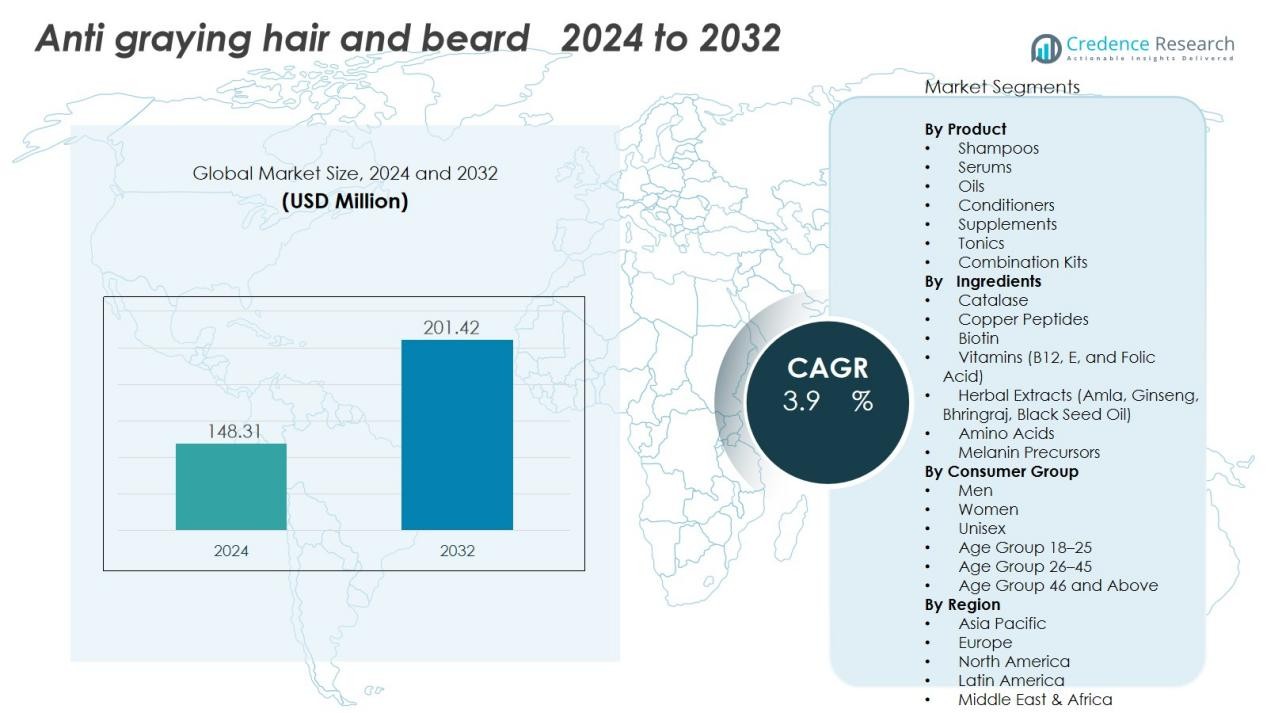
The Anti graying hair and beard size was valued at USD 148.31 million in 2024 and is anticipated to reach USD 201.42 million by 2032, at a CAGR of 3.9 % during the forecast period.
| REPORT ATTRIBUTE |
DETAILS |
| Historical Period |
2020-2023 |
| Base Year |
2024 |
| Forecast Period |
2025-2032 |
| Anti Graying Hair And Beard Market Size 2024 |
USD 148.31 Million |
| Anti Graying Hair And Beard Market, CAGR |
3.9% |
| Anti Graying Hair And Beard Market Size 2032 |
USD 201.42 Million |
Key growth drivers include the increasing prevalence of premature graying due to stress, pollution, and nutritional deficiencies. The surge in male grooming trends and the popularity of beard care products further support market expansion. Innovations in bioactive ingredients, such as catalase-based enzymes, melanin precursors, and herbal extracts, are enhancing product efficacy and consumer trust. Rising demand for clean-label and chemical-free products also fuels product development among global and regional players.
North America dominates the global market, supported by strong spending on personal care and early adoption of novel cosmetic technologies. Europe follows closely with a growing preference for natural and organic solutions. The Asia-Pacific region is expected to record the fastest growth, driven by large young populations, urbanization, and increasing disposable income in countries like China, India, and Japan.
Access crucial information at unmatched prices!
Request your sample report today & start making informed decisions powered by Credence Research Inc.!
Download Sample
Market Insights:
- The Anti-Graying Hair and Beard market was valued at USD 118.46 million in 2018 and reached USD 148.31 million in 2024; it is projected to attain USD 201.42 million by 2032, growing at a CAGR of 3.9% during the forecast period.
- North America leads the market with a 35% share in 2024, driven by high consumer spending, advanced R&D, and early adoption of biotechnology-based hair care innovations.
- Europe holds a 28% share, supported by strong demand for natural and eco-certified formulations and a mature grooming industry emphasizing sustainability and ingredient transparency.
- Asia-Pacific follows with a 25% share and represents the fastest-growing region, supported by rising disposable income, cultural preference for herbal solutions, and expanding e-commerce penetration in China, India, and Japan.
- By product, serums and oils collectively account for 42% of total revenue, while supplements and combination kits hold 25%, reflecting consumer preference for targeted and holistic anti-graying solutions.
 Market Drivers:
Rising Incidence of Premature Graying Due to Lifestyle and Environmental Factors
Changing lifestyles, stress, and poor nutrition are major contributors to premature graying. Urban pollution and exposure to harmful UV radiation accelerate oxidative damage, leading to melanin depletion in hair follicles. Consumers increasingly seek products that delay or reverse these effects, fueling product innovation. The Anti-Graying Hair and Beard market benefits from awareness campaigns emphasizing scalp and follicle care. It reflects a growing global concern toward visible signs of aging.
- For Instance, Unilever brand, Dove, introduced a Scalp + Hair Therapy line with ingredients aimed at hair density, not reversing gray hair, and the “Nutrium 10” technology was for dandruff, not pigment protection.
Growing Male Grooming Awareness and Beard Care Adoption
Male consumers are showing strong interest in personal grooming, including specialized beard care. Grooming brands promote anti-graying formulations that enhance natural color while improving beard texture. Social media influence and celebrity endorsements elevate the demand for holistic beard maintenance products. The Anti-Graying Hair and Beard market gains traction from this cultural shift toward male self-care. It drives consistent innovation in serums, tonics, and natural pigment-restoring oils.
- For instance, The Man Company launched its Anti-Graying Hair & Beard Serum with clinically proven Arcolys technology that shows visible results in minimizing greys within 3 months.
Advancements in Bioactive and Botanical Ingredient Formulations
The development of bioactive compounds such as catalase enzymes, copper peptides, and herbal extracts is transforming product performance. These ingredients restore melanin production and reduce oxidative stress in follicles. Manufacturers focus on clinically validated formulations that appeal to health-conscious consumers. The Anti-Graying Hair and Beard market benefits from R&D investments that combine efficacy with natural appeal. It supports a long-term transition toward clean and sustainable hair solutions.
Expanding Demand for Chemical-Free and Clean-Label Personal Care Products
Consumers increasingly reject harsh chemicals and artificial dyes in hair care products. The market is shifting toward vegan, cruelty-free, and dermatologically tested solutions. Transparent labeling builds consumer trust and strengthens brand loyalty. The Anti-Graying Hair and Beard market aligns with this shift by integrating organic oils and plant-based actives. It positions itself as part of a larger movement promoting wellness-driven personal care.
Market Trends:
Integration of Biotechnology and Nutraceutical Solutions in Hair Pigmentation Products
Manufacturers are increasingly using biotechnology to create advanced formulations that target the biological causes of hair graying. Nutraceutical blends combining vitamins, minerals, and amino acids are being integrated into oral supplements to support melanin regeneration. The Anti-Graying Hair and Beard market reflects this convergence of cosmetic science and nutritional therapy. It leverages ingredients such as catalase, para-aminobenzoic acid (PABA), and L-tyrosine to stimulate pigment production. Biotechnology-based serums and scalp treatments are gaining attention for their ability to activate melanocyte stem cells. Consumers are showing growing trust in scientifically backed solutions, leading to premium positioning for products with proven efficacy. Companies are also investing in DNA-based personalization to tailor anti-graying treatments according to individual genetic profiles.
- For Instance, Clinical study results for PHYTO RE30 indicate a +38% natural repigmentation of grey hair through instrumental measurement in a 3-month trial with 32 subjects.
Rising Popularity of Natural and Sustainable Hair Restoration Formulations
Clean beauty principles are reshaping the global haircare segment, pushing brands toward sustainable and plant-based solutions. The market is witnessing a surge in products that use natural oils, botanical extracts, and eco-certified actives instead of synthetic dyes or harsh chemicals. The Anti-Graying Hair and Beard market aligns with this shift by emphasizing environmentally responsible sourcing and recyclable packaging. It benefits from rising consumer preference for cruelty-free and vegan-certified products. Brands are adopting transparent ingredient disclosures and biodegradable formulations to meet ethical expectations. This trend is encouraging collaborations between cosmetic formulators and sustainability-focused suppliers. The growing awareness of holistic well-being ensures continued demand for natural anti-graying solutions that combine safety, performance, and environmental responsibility.
- For Instance, ‘L’Oréal for the Future’ sustainability program, L’Oréal reported in 2024 that 92% of the biobased ingredients used across all its formulas and packaging materials were traceable and came from sustainable sources, in line with its commitment to transparency and responsible sourcing.
Market Challenges Analysis:
Limited Clinical Validation and Consumer Skepticism Toward Efficacy Claims
A major challenge for manufacturers is proving the scientific credibility of anti-graying formulations. Many products lack large-scale clinical trials, leading to doubts about long-term effectiveness. The Anti-Graying Hair and Beard market faces scrutiny from consumers who demand measurable results and transparent data. It must balance innovation with regulatory compliance to ensure product safety and consistency. Unverified claims can harm brand reputation and limit adoption among health-conscious buyers. Companies are under pressure to invest in R&D and publish verified results to build trust in functional outcomes.
High Production Costs and Complex Regulatory Landscape
Developing bioactive and clean-label ingredients involves significant manufacturing expenses and technical expertise. The market must also navigate strict cosmetic regulations that vary across regions. The Anti-Graying Hair and Beard market experiences pricing pressure due to high formulation costs and limited scalability. It challenges smaller players who struggle to compete with established brands offering advanced delivery systems. Stringent labeling and testing standards increase compliance costs, slowing product launches. Achieving both affordability and premium performance remains a difficult balance for many companies in this evolving sector.
Market Opportunities:
Expanding Demand for Preventive and Personalized Hair Care Solutions
Rising consumer interest in preventive care creates strong growth prospects for targeted formulations. Brands are focusing on early-age consumers seeking to delay graying through long-term follicle nourishment. The Anti-Graying Hair and Beard market can leverage this demand by introducing supplements, serums, and nutraceutical blends designed for specific age groups. It benefits from growing acceptance of DNA-based and AI-driven personalization technologies that assess individual hair conditions. Personalized regimens combining topical and ingestible solutions attract premium buyers. This opportunity strengthens the link between dermatology, wellness, and cosmetic innovation in hair pigmentation care.
Rising Popularity of Herbal and Clean-Label Formulations in Emerging Markets
Emerging economies in Asia-Pacific, Latin America, and the Middle East are witnessing increasing interest in herbal and chemical-free hair solutions. Consumers prefer products made from indigenous ingredients such as amla, bhringraj, ginseng, and rosemary extract. The Anti-Graying Hair and Beard market can capitalize on this trend through localized product development and sustainable sourcing. It gains momentum from e-commerce expansion that improves product accessibility and brand reach. Partnerships with regional distributors and influencers enhance awareness in urban and rural areas. Growing disposable income and cultural emphasis on natural beauty create lasting opportunities for global and regional manufacturers.
Market Segmentation Analysis:
By Product
The Anti-Graying Hair and Beard market is segmented into shampoos, serums, oils, conditioners, supplements, and others. Serums and oils dominate due to their targeted application and high concentration of active ingredients. Shampoos and conditioners maintain steady demand for routine use, supported by growing awareness of preventive hair care. It benefits from rising popularity of supplement-based solutions that nourish follicles internally and restore pigment. Combination kits offering both topical and oral products are also gaining traction for holistic treatment outcomes.
- For instance, Arey’s clinical study demonstrated 88% of participants using their supplement and serum system had no progression of grey hair growth over 6 months.
By Ingredients
Key ingredients include catalase, copper peptides, biotin, vitamins, herbal extracts, and amino acids. Catalase-based formulations are preferred for neutralizing hydrogen peroxide, a primary cause of follicle whitening. Herbal extracts such as amla, ginseng, and black seed oil appeal to consumers seeking natural alternatives. The Anti-Graying Hair and Beard market emphasizes ingredient transparency and clean-label formulations to attract health-conscious buyers. It also integrates vitamins like B12 and folic acid for improved melanin synthesis and scalp health.
- For Instance, Kama Ayurveda’s Bringadi Intensive Hair Treatment Oil is clinically proven to reduce hair fall by 61% in a study among 94% of a test panel of men and women with moderate to severe hair fall, over a period of 4 weeks.
By Consumer Group
The market serves both men and women, with men representing the dominant consumer base due to the inclusion of beard-care products. Women drive growth in multi-benefit haircare solutions that combine anti-graying with nourishment and shine. It caters to consumers aged 25–45 who seek preventive treatments and visible results. Demand from younger demographics continues to grow due to stress-related premature graying.
Segmentations:
By Product
- Shampoos
- Serums
- Oils
- Conditioners
- Supplements
- Tonics
- Combination Kits
By Ingredients
- Catalase
- Copper Peptides
- Biotin
- Vitamins (B12, E, and Folic Acid)
- Herbal Extracts (Amla, Ginseng, Bhringraj, Black Seed Oil)
- Amino Acids
- Melanin Precursors
By Consumer Group
- Men
- Women
- Unisex
- Age Group 18–25
- Age Group 26–45
- Age Group 46 and Above
By Region
- North America
- Europe
- Germany
- France
- U.K.
- Italy
- Spain
- Rest of Europe
- Asia Pacific
- China
- Japan
- India
- South Korea
- South-east Asia
- Rest of Asia Pacific
- Latin America
- Brazil
- Argentina
- Rest of Latin America
- Middle East & Africa
- GCC Countries
- South Africa
- Rest of the Middle East and Africa
Regional Analysis:
North America Leads with Strong Product Innovation and Consumer Awareness
North America holds 35% share of the global Anti-Graying Hair and Beard market in 2024. The region benefits from a mature grooming culture and high spending on premium personal care products. It is driven by consumer focus on appearance and preventive hair care solutions. Advanced R&D capabilities in the United States support the introduction of biotechnology-based serums and supplements. The region’s strong retail and e-commerce network ensures product accessibility and brand visibility. Canada and Mexico contribute through expanding awareness of clean-label and cruelty-free formulations. Growing adoption of personalized and natural products continues to enhance market penetration.
Europe Shows Steady Growth with Preference for Natural and Organic Solutions
Europe accounts for 28% share of the Anti-Graying Hair and Beard market in 2024. Demand is fueled by rising acceptance of herbal and chemical-free formulations across major countries like Germany, France, and the United Kingdom. It benefits from consumer preference for sustainability and transparent ingredient sourcing. Brands invest in eco-certified and dermatologically tested products to meet EU regulations and consumer trust standards. The region’s heritage in cosmetics and grooming strengthens innovation in botanical-based pigment restoration. Growing male grooming adoption further accelerates category diversification. Collaborations between wellness brands and research institutions continue to drive product advancements.
Asia-Pacific Emerges as the Fastest-Growing Regional Market
Asia-Pacific captures 25% share of the Anti-Graying Hair and Beard market in 2024. Rapid urbanization and rising disposable income create strong demand for anti-aging and hair restoration products. It benefits from large consumer bases in China, India, and Japan that value traditional herbal ingredients. Local brands integrate Ayurvedic and natural actives such as amla and bhringraj to attract health-conscious buyers. Expanding online retail and influencer marketing boost brand visibility among younger consumers. Government support for cosmetic manufacturing and export strengthens regional competitiveness. Increasing lifestyle stress and premature graying prevalence sustain high product demand.
Key Player Analysis:
- Avimee Herbal
- Bioayurveda
- Biohealth Plus
- Bombay Shaving Company
- Hey hair.
- Indus Cosmeceuticals
- Ivory Natural
- Lakshmi Krishna Naturals
- Pilgrim India
- Raw Beauty Wellness
- Renee Cosmetics
- Sephora USA
- Silab
- The Man Company
- Thriveco
Competitive Analysis:
The Anti-Graying Hair and Beard market is moderately competitive, driven by innovation and evolving consumer expectations. Key participants include Avimee Herbal, Bioayurveda, Biohealth Plus, Bombay Shaving Company, Hey Hair, Indus Cosmeceuticals, and Ivory Natural. These companies focus on natural, plant-based, and clinically tested formulations to build strong brand identity. It emphasizes research into melanin-boosting actives and botanical blends to improve effectiveness and safety. Many brands invest in digital marketing and influencer collaborations to expand online visibility. Strategic partnerships with dermatologists and laboratories strengthen credibility in a competitive environment. Product diversification, clean-label positioning, and affordable pricing remain central to sustaining long-term growth.
Recent Developments:
- In June 2025, Avimee Herbal initiated the rollout of advanced serums, targeted scalp treatments, and lifestyle support tools focused on internal wellness, with nationwide expansion in retail and online platforms, and announced ongoing discussions for collaborations with clinical institutions and Ayurvedic research bodies.
- In March 2025, Raw Beauty Wellness announced via a social media update that the brand is undergoing a transition or pause, with no new product launches or acquisitions disclosed for this period.
Shape Your Report to Specific Countries or Regions & Enjoy 30% Off!
Report Coverage:
The research report offers an in-depth analysis based on Product, Ingredients, Consumer Group and Region. It details leading Market players, providing an overview of their business, product offerings, investments, revenue streams, and key applications. Additionally, the report includes insights into the competitive environment, SWOT analysis, current Market trends, as well as the primary drivers and constraints. Furthermore, it discusses various factors that have driven Market expansion in recent years. The report also explores Market dynamics, regulatory scenarios, and technological advancements that are shaping the industry. It assesses the impact of external factors and global economic changes on Market growth. Lastly, it provides strategic recommendations for new entrants and established companies to navigate the complexities of the Market.
Future Outlook:
- The Anti-Graying Hair and Beard market will evolve toward advanced biotechnology-based formulations that target melanin regeneration at the follicular level.
- Consumers will increasingly prefer hybrid solutions that combine topical treatments with oral nutraceutical support for long-term results.
- Brands will emphasize ingredient transparency and clean-label certifications to strengthen consumer trust and regulatory compliance.
- Digital personalization powered by AI and DNA analysis will shape customized anti-graying regimens tailored to individual genetic profiles.
- Herbal and Ayurvedic formulations will gain stronger traction across Asia-Pacific and emerging economies due to cultural acceptance and sustainability focus.
- E-commerce will remain the primary sales channel, supported by influencer-driven marketing and subscription-based product delivery models.
- Companies will invest in eco-friendly packaging and biodegradable formulations to align with global sustainability standards.
- R&D partnerships between cosmetic brands and dermatology institutions will accelerate innovation and clinical validation.
- Men’s grooming products will continue to lead demand, supported by growing awareness of beard maintenance and pigmentation restoration.
- The market will witness rising demand for preventive products targeting younger demographics affected by lifestyle-induced premature graying.



