
| REPORT ATTRIBUTE | DETAILS |
|---|---|
| Historical Period | 2019-2022 |
| Base Year | 2023 |
| Forecast Period | 2024-2032 |
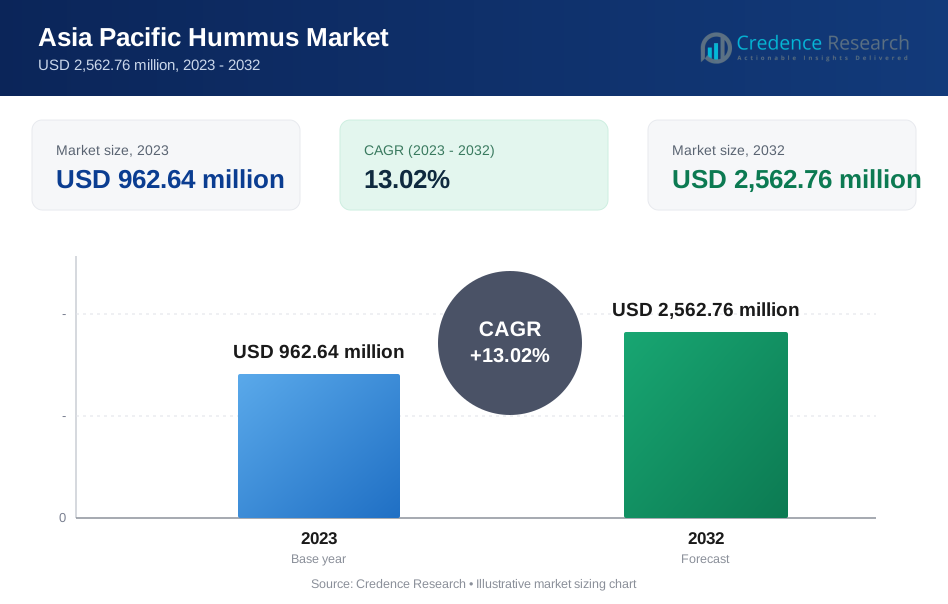
| Asia Pacific Hummus Market Size 2023 | USD 962.64 Million |
| Asia Pacific Hummus Market, CAGR | 13.02% |
| Asia Pacific Hummus Market Size 2032 | USD 2,562.76 Million |
Market Overview
The Asia Pacific Hummus Market is projected to experience robust growth, expanding from USD 962.64 million in 2023 to an estimated USD 2,562.76 million by 2032, at a compound annual growth rate (CAGR) of 13.02% from 2024 to 2032. This significant growth reflects increasing consumer awareness about healthy eating and plant-based diets, which has fueled the demand for hummus as a versatile, nutritious, and convenient food product.
Key market drivers include the growing emphasis on health-conscious lifestyles and the rising adoption of Mediterranean diets. Consumers in the region increasingly prefer protein-rich and low-calorie snacks, positioning hummus as a popular choice. Emerging trends such as clean-label products and innovations in packaging and distribution are further propelling market expansion. Additionally, the increasing popularity of ready-to-eat snacks and the rise of veganism across the region have boosted the appeal of hummus among younger demographics.
Geographically, key markets such as China, India, and Australia are witnessing significant growth due to urbanization, rising disposable incomes, and a growing awareness of global food trends. Major players driving competition in the Asia Pacific hummus market include PepsiCo, Strauss Group, Nestlé S.A., and Bakkavor Group. These companies focus on product diversification and strategic collaborations to strengthen their foothold in the region and meet the rising demand for hummus products.
Market Drivers
Rising Health and Wellness Trends
The increasing awareness of health and wellness among consumers in the Asia Pacific region is a significant driver of the hummus market. With a growing focus on balanced diets and nutritious food choices, consumers are gravitating toward products that are rich in protein, dietary fiber, and essential nutrients. Hummus, made primarily from chickpeas, tahini, olive oil, and garlic, aligns perfectly with these demands as a naturally wholesome and low-calorie food. Furthermore, the increasing prevalence of lifestyle-related diseases such as obesity, diabetes, and cardiovascular issues has further fueled the adoption of healthier snack alternatives, contributing to the surge in hummus consumption. This shift is particularly pronounced in urban areas where awareness of global food trends and access to such products are higher.
Growing Popularity of Plant-Based Diets
The rising adoption of plant-based and vegan diets across the Asia Pacific region is another pivotal driver. Consumers are increasingly exploring alternatives to meat and dairy, not only for health benefits but also due to ethical and environmental concerns. Hummus, as a plant-based product that is versatile and easy to integrate into various meals, has gained traction among this growing demographic. Additionally, the rise of flexitarian diets—where individuals reduce meat consumption while incorporating more plant-based foods—has further broadened the potential market for hummus. This trend is complemented by the increasing availability of vegan-certified and clean-label hummus products, which appeal to health-conscious and environmentally aware consumers.
Expanding Urbanization and Disposable Incomes
Rapid urbanization across key Asia Pacific countries, such as China, India, and Indonesia, has significantly impacted food consumption patterns. As urban populations grow and disposable incomes rise, consumers are more inclined to spend on convenient, high-quality food products. Hummus has become a favored choice for many due to its ready-to-eat nature and adaptability to various cuisines and dietary preferences. The shift toward premium and imported food items, particularly among the middle and upper-middle classes, has further driven market growth. Moreover, exposure to Western culinary habits through globalization, travel, and social media has made hummus a recognizable and appealing option in many urban households.
Innovative Product Development and Distribution Channels
Innovation in product offerings and distribution strategies has been instrumental in the growth of the hummus market. Companies are introducing a wide range of flavored hummus options, including spicy, herb-infused, and regionally inspired varieties, to cater to local tastes and preferences. For instance, flavors incorporating traditional Asian ingredients such as sesame, ginger, and chili have seen considerable success. In addition, advancements in packaging, such as resealable and portion-controlled packs, have made hummus more convenient for on-the-go consumption. Distribution networks have also expanded, with hummus now widely available in supermarkets, hypermarkets, specialty stores, and online retail platforms. The growth of e-commerce has played a critical role in ensuring product accessibility, particularly in remote and semi-urban areas.
Market Trends
Expansion of Flavored and Regionally Adapted Variants
The Asia Pacific hummus market is increasingly characterized by the introduction of innovative flavors and region-specific adaptations. For instance, manufacturers are launching varieties such as roasted red pepper, spicy jalapeño, and herb-infused options, which cater to the adventurous palates of consumers. This trend is supported by the growing popularity of unique flavor combinations, as evidenced by brands like Fresh Cravings, which recently introduced flavors like Jalapeño Cilantro and Mediterranean Hummus. These innovations not only enhance the traditional hummus experience but also attract consumers who may not have previously engaged with this product. Additionally, local culinary preferences are being integrated into hummus formulations, with ingredients like sesame, chili, and curry being utilized to create products that resonate with Asian consumers. This strategic diversification not only helps brands stand out in a competitive market but also positions hummus as a versatile option for a broader audience, appealing particularly to those seeking familiar tastes in an international context.
Increasing Demand for Clean-Label and Organic Products
As health consciousness rises among consumers in the Asia Pacific region, there is a marked shift towards clean-label and organic hummus products. This trend reflects a growing preference for transparency in food sourcing and manufacturing processes. For example, many consumers are now prioritizing products free from artificial preservatives and additives, seeking out options made from sustainably sourced ingredients. Brands like Cedar's Foods have responded to this demand by launching organic variants that emphasize quality and ethical sourcing. The increasing awareness of potential health risks associated with conventional farming practices has further fueled interest in organic products. Moreover, initiatives by governments in countries like India to promote organic farming are enhancing the availability of clean-label options in the market. This alignment with consumer values not only boosts sales but also encourages manufacturers to innovate their product lines, ensuring they meet the evolving preferences of health-focused consumers looking for nutritious and responsibly sourced food options.
Emergence of Hummus as a Versatile Ingredient
Beyond its traditional role as a dip, hummus is increasingly being marketed as a versatile ingredient that can be incorporated into a variety of dishes. In the Asia Pacific region, where culinary innovation is thriving, hummus is being used in wraps, sandwiches, salads, and even desserts. This versatility has broadened the appeal of hummus, making it an integral part of the growing ready-to-eat and convenience food segments. Foodservice providers, restaurants, and catering companies are also incorporating hummus into their offerings, further boosting market visibility and consumer adoption.
Rapid Growth of E-Commerce and Online Retail
The rise of e-commerce platforms and online retail channels is significantly transforming the Asia Pacific hummus market. Consumers increasingly prefer the convenience of purchasing food products online, especially in urban areas where internet penetration and smartphone usage are high. Major players are leveraging digital marketing strategies and collaborations with leading e-commerce platforms to enhance their market presence. Subscription services, personalized promotions, and quick delivery options further contribute to the growing popularity of online purchases. This trend is particularly beneficial for smaller or niche brands, allowing them to reach a broader audience without the constraints of traditional retail distribution networks.
Market Challenges
Cultural Preferences and Lack of Awareness
One of the primary challenges facing the Asia Pacific hummus market is the region's diverse culinary landscape and varying cultural preferences. In many countries, traditional diets are heavily centered around rice, noodles, and other local staples, making hummus relatively unfamiliar. For instance, in numerous Asia Pacific countries, traditional diets predominantly feature rice and local snacks, which can create a significant barrier to the acceptance of hummus. Although hummus has gained popularity in urban centers where international cuisines are more readily embraced, it remains largely unknown in rural areas. This cultural unfamiliarity is compounded by a lack of awareness regarding the health benefits associated with hummus consumption. Effective education campaigns aimed at highlighting these benefits are essential; however, they require considerable resources and strategic planning to be effective. Without such initiatives, the potential for hummus to become a mainstream food option is limited, as consumers may not see it as a viable alternative to their traditional dietary choices.
High Production and Distribution Costs
Another challenge impacting the Asia Pacific hummus market is the relatively high production and distribution costs associated with the product. Key ingredients like chickpeas, tahini, and olive oil can be expensive to source, particularly in countries where these ingredients are not locally produced. For instance, sourcing these key ingredients can be particularly challenging in regions where they are not cultivated locally, leading to elevated production costs for hummus. This reliance on imports makes it less competitive compared to local snack options. Additionally, logistical hurdles—including inadequate supply chain infrastructure—further exacerbate distribution challenges. The necessity for cold-chain logistics to preserve product freshness adds another layer of complexity and expense. Consequently, these factors can restrict the availability of hummus in price-sensitive markets, limiting its growth potential across various demographics within the Asia Pacific region. As a result, companies face significant obstacles in making hummus an accessible and affordable option for consumers.
Market Opportunities
Cultural Preferences and Lack of Awareness
One of the primary challenges facing the Asia Pacific hummus market is the region's diverse culinary landscape and varying cultural preferences. In many countries, traditional diets are heavily centered around rice, noodles, and other local staples, making hummus relatively unfamiliar. For instance, in numerous Asia Pacific countries, traditional diets predominantly feature rice and local snacks, which can create a significant barrier to the acceptance of hummus. Although hummus has gained popularity in urban centers where international cuisines are more readily embraced, it remains largely unknown in rural areas. This cultural unfamiliarity is compounded by a lack of awareness regarding the health benefits associated with hummus consumption. Effective education campaigns aimed at highlighting these benefits are essential; however, they require considerable resources and strategic planning to be effective. Without such initiatives, the potential for hummus to become a mainstream food option is limited, as consumers may not see it as a viable alternative to their traditional dietary choices.
High Production and Distribution Costs
Another challenge impacting the Asia Pacific hummus market is the relatively high production and distribution costs associated with the product. Key ingredients like chickpeas, tahini, and olive oil can be expensive to source, particularly in countries where these ingredients are not locally produced. For instance, sourcing these key ingredients can be particularly challenging in regions where they are not cultivated locally, leading to elevated production costs for hummus. This reliance on imports makes it less competitive compared to local snack options. Additionally, logistical hurdles—including inadequate supply chain infrastructure—further exacerbate distribution challenges. The necessity for cold-chain logistics to preserve product freshness adds another layer of complexity and expense. Consequently, these factors can restrict the availability of hummus in price-sensitive markets, limiting its growth potential across various demographics within the Asia Pacific region. As a result, companies face significant obstacles in making hummus an accessible and affordable option for consumers.
Market Segmentation Analysis
By Product
The Asia Pacific hummus market offers a variety of product options catering to diverse consumer preferences. Classic Latin America Hummus, made from chickpeas and tahini with simple flavors like lemon, garlic, and olive oil, remains the most popular due to its versatility and appeal to health-conscious consumers seeking a nutritious, low-calorie snack. Roasted Garlic Latin America Hummus is gaining popularity among those who enjoy stronger, savory flavors, with its rich, bold taste making it a favorite in retail and health food stores. For consumers looking for alternatives, White Bean Latin America Hummus offers a smoother, creamier texture and taps into the growing trend of plant-based diets with its legume-based protein. Black Olive Latin America Hummus introduces a Mediterranean twist with the briny flavor of olives, appealing to adventurous eaters and becoming a premium product in both retail and foodservice. The Others category features innovative variations such as spicy, roasted pepper, and herb-infused hummus, often marketed as limited-edition or seasonal offerings to differentiate brands in the competitive market.
By Packaging Type
In the Asia Pacific hummus market, packaging types are diverse, catering to varying consumer needs. Tubs and cups are the most common formats, offering convenience for on-the-go consumption and single servings, making them ideal for busy urban consumers. They are also widely used for bulk purchases, allowing extended use. Jars and bottles, often preferred for premium and larger quantities of hummus, offer a sustainable and eco-friendly option, particularly with glass packaging that appeals to environmentally conscious consumers. Additionally, alternative packaging formats such as pouches, sachets, and squeeze packs are gaining traction, especially for single-serve, portable solutions that meet the growing demand for convenience in ready-to-eat foods.
Segments
Based on product
- Classic Latin America Hummus
- Roasted Garlic Latin America Hummus
- White Bean Latin America Hummus
- Black Olive Latin America Hummus
- Others
Based on Packaging type
- Tubs & Cups
- Jars & Bottles
- Others
Based on Ingredient type
- Chickpeas
- Tahini
- Olive Oil
- Garlic
- Others
Based on Distribution channel
- Supermarkets & Hypermarkets
- Convenience Stores
- Grocery Stores
- Online Retailers
- Others
Based on region
- East Asia
- South Asia
- Southeast Asia
- Oceania
Regional Analysis
East Asia (35%)
East Asia, encompassing countries like China, Japan, and South Korea, is one of the most promising markets for hummus in the Asia Pacific region. While hummus is still considered a relatively new product, its popularity is steadily rising, particularly in urban areas. This growth is fueled by a growing awareness of Western food trends and an increasing number of health-conscious consumers. Urban populations in cities like Shanghai, Tokyo, and Seoul are adopting Mediterranean diets and seeking healthier, plant-based alternatives to traditional snacks. In these markets, the demand for hummus is supported by the availability of international food brands and the growing influence of social media, which drives awareness about the nutritional benefits of hummus. While the market is still in the early stages, it is expected to witness rapid expansion in the coming years.
South Asia (30%)
South Asia, including India, Bangladesh, and Pakistan, is another key growth area for the hummus market. In India, the increasing popularity of vegan and vegetarian diets, coupled with a growing middle class and urbanization, is driving the demand for healthy, plant-based snacks like hummus. The product's rising availability in supermarkets and health food stores, along with its perceived health benefits, has made it a popular alternative to traditional Indian dips. India’s large population and expanding health-conscious consumer base present significant market potential, though cultural barriers regarding taste and unfamiliarity with hummus still need to be addressed.
Key players
- The Kraft Heinz Company
- PepsiCo, Inc.
- Conagra Brands, Inc.
- Nestlé S.A.
- Unilever PLC
- Hormel Foods Corporation
- McCormick & Company, Inc.
- Hope Foods, LLC
- Cedar’s Mediterranean Foods, Inc.
- Sabra Dipping Company, LLC
Competitive Analysis
The Asia Pacific hummus market is highly competitive, with a mix of global food giants and regional players vying for market share. Major companies like Kraft Heinz, PepsiCo, and Nestlé have established strong footholds, leveraging their extensive distribution networks and robust brand recognition to introduce a range of hummus products. These companies focus on flavor innovation, health-oriented options, and premium products to cater to the growing demand for nutritious, plant-based snacks. Additionally, smaller niche players such as Hope Foods and Cedar’s Mediterranean Foods emphasize organic, clean-label offerings, providing differentiation through their sustainable and all-natural ingredients. The competition is also driven by strategic partnerships, new product launches, and an increasing focus on e-commerce platforms, as brands strive to expand their reach in emerging markets. Companies that can successfully adapt to regional tastes and preferences while maintaining high-quality standards will be well-positioned to capitalize on the market's growth potential.
Recent Developments
- In December 2024, The Kraft Heinz Company announced plans to expand its hummus product line across Asia Pacific markets. This initiative aims to cater to the growing demand for plant-based foods and healthy snacking options. The company is focusing on introducing new flavors tailored to local tastes, such as spicy variants and regional ingredients, to enhance its market presence. This strategic move is part of their broader goal to increase their footprint in the health-conscious consumer segment.
- In November 2024, PepsiCo, Inc. launched a new line of hummus products under its Sabra brand in Australia, featuring innovative packaging designed for on-the-go consumption. This product line includes single-serving cups and family-sized tubs, appealing to both individual consumers and families looking for convenient snack options. The launch reflects PepsiCo's commitment to expanding its health-focused offerings in the Asia Pacific region, leveraging the rising trend of plant-based diets among consumers.
- In January 2025, Conagra Brands, Inc. announced a significant partnership with local distributors in India to enhance the availability of its hummus products. This collaboration aims to penetrate rural markets where hummus is still gaining acceptance. As part of this initiative, Conagra plans to conduct educational campaigns highlighting the nutritional benefits of hummus and offering promotional pricing strategies to attract price-sensitive consumers.
- In December 2024, Nestlé S.A. unveiled a new range of organic hummus products aimed at the health-conscious demographic in Japan. This product line emphasizes clean ingredients and sustainability, reflecting Nestlé's commitment to environmental responsibility. The launch is expected to resonate well with Japanese consumers who are increasingly seeking healthier food options that align with their dietary preferences.
- In October 2024, Unilever PLC expanded its hummus offerings in Southeast Asia by introducing a new flavor infused with local spices and herbs. This product aims to cater to regional taste preferences while promoting the health benefits of hummus as a nutritious dip. Unilever's strategy focuses on leveraging its extensive distribution network in Southeast Asia to ensure widespread availability of these innovative products.
- In November 2024, Hormel Foods Corporation announced an investment in expanding its production capabilities for hummus in Australia. This expansion is intended to meet the increasing demand for plant-based snacks and will include the introduction of new flavors inspired by Australian cuisine. Hormel's initiative highlights its commitment to tapping into the growing trend of healthy eating among consumers in the region.
- In January 2025, McCormick & Company, Inc. launched a new line of seasoning blends specifically designed for hummus preparation in various Asian cuisines. This product aims to encourage home cooking and experimentation with hummus among consumers who may be unfamiliar with it as a culinary option. McCormick's focus on flavor innovation seeks to enhance consumer engagement with hummus as a versatile ingredient.
- In December 2024, Hope Foods, LLC introduced a new range of organic hummus products in eco-friendly packaging across major supermarkets in New Zealand. This launch aligns with the increasing consumer demand for sustainable packaging solutions and organic food options. Hope Foods' initiative emphasizes their commitment to environmental responsibility while catering to health-conscious consumers.
- In November 2024, Cedar’s Mediterranean Foods, Inc. expanded its distribution network in Malaysia by partnering with local retailers to introduce its range of authentic Mediterranean dips and spreads, including hummus. This move aims to increase brand visibility and accessibility for consumers interested in trying Mediterranean cuisine.
- In October 2024, Sabra Dipping Company announced plans for a marketing campaign targeting younger consumers in urban areas of Australia and New Zealand. The campaign will focus on social media engagement and influencer partnerships to promote the versatility and health benefits of hummus as a snack option for active lifestyles.
Market Concentration and Characteristics
The Asia Pacific hummus market is characterized by a moderate to high level of market concentration, with several key global players, including Kraft Heinz, PepsiCo, Nestlé, and Unilever, holding significant market share. These large companies dominate the market through extensive distribution networks, brand recognition, and a wide range of product offerings. However, the market also includes a growing number of smaller, niche players like Hope Foods and Cedar’s Mediterranean Foods, which focus on clean-label, organic, and premium products. The competitive landscape is driven by innovation in flavor offerings, health-conscious products, and convenience packaging. As the market grows, there is a trend toward localization of flavors and adapting to regional dietary preferences, which adds complexity to the competitive dynamics. While large corporations benefit from economies of scale, smaller brands leverage their flexibility and ability to meet specific consumer demands, making the market increasingly fragmented yet highly competitive.
Report Coverage
The research report offers an in-depth analysis based on product, Packaging type, Ingredient type, Distribution channel and Region. It details leading market players, providing an overview of their business, product offerings, investments, revenue streams, and key applications. Additionally, the report includes insights into the competitive environment, SWOT analysis, current market trends, as well as the primary drivers and constraints. Furthermore, it discusses various factors that have driven market expansion in recent years. The report also explores market dynamics, regulatory scenarios, and technological advancements that are shaping the industry. It assesses the impact of external factors and global economic changes on market growth. Lastly, it provides strategic recommendations for new entrants and established companies to navigate the complexities of the market.
Future Outlook
- The Asia Pacific hummus market is expected to continue its strong growth trajectory, driven by increasing health consciousness and growing demand for plant-based foods. The market is poised to grow at a CAGR of 13.02% from 2024 to 2032.
- The adoption of vegan and plant-based diets is anticipated to increase, further fueling the demand for nutritious, plant-based snacks like hummus. This shift toward plant-based foods presents a significant opportunity for market expansion.
- As consumer preferences evolve, manufacturers will continue to innovate by introducing new flavors and formulations. Customizing hummus to regional tastes will further drive market growth, with unique variants tailored to local palates.
- Consumers will increasingly prioritize healthy, low-calorie, and high-protein snacks. Hummus, being rich in fiber and nutrients, will benefit from this growing trend toward wholesome food choices.
- With the rise of online shopping, the hummus market will see continued growth through e-commerce platforms, enhancing product accessibility. Digital sales channels will play a pivotal role in reaching urban and remote consumers.
- The demand for organic, clean-label, and premium hummus variants is expected to rise, as consumers become more discerning about the ingredients in their food products. Companies will capitalize on this trend by offering organic and sustainably sourced options.
- As the market matures, new regional players will emerge, competing with established global brands. These companies will focus on differentiation through unique product offerings and superior quality.
- Environmental concerns will lead to more sustainable practices within the hummus market, such as eco-friendly packaging and responsible sourcing of ingredients. Brands that prioritize sustainability will gain consumer trust and loyalty.
- Countries in South Asia and Southeast Asia will experience accelerated growth due to urbanization, rising disposable incomes, and a shift toward healthier diets. These emerging markets present vast untapped potential for hummus manufacturers.
- Key players will likely pursue mergers, acquisitions, and partnerships to expand their product portfolios and distribution networks. Such strategic moves will help companies gain a competitive edge in the rapidly evolving market.
Request a Free Sample
Fill in your details and we'll send you a free sample report.
- Sample data tables & charts
- Research methodology
Need a Custom Version of This Report?
Tailor the scope, geography, or segments to your exact requirements.
- Custom geography or segment scope
- Direct access to our analyst team
Frequently Asked Questions
What is the market size of the Asia Pacific hummus market in 2023 and 2032?
What are the key drivers of growth in the Asia Pacific hummus market?
Which regions are leading the growth in the Asia Pacific hummus market?
How is the Asia Pacific hummus market responding to consumer trends?
Who are the key players in the Asia Pacific hummus market?
Table of Content
Chapter 1. Report Introduction
- 1.1 Report Description & Purpose
- 1.1.1 Report Title & Market Definition
- 1.1.2 Unique Selling Propositions (USP) & Key Differentiators
- 1.1.3 Value Proposition for Stakeholders
- 1.2 Research Objectives
- 1.2.1 Market Sizing Objectives (Volume & Revenue)
- 1.2.2 Segmentation Objectives
- 1.2.3 Competitive Intelligence Objectives
- 1.2.4 Forecast & Scenario Objectives
- 1.3 Report Scope
- 1.3.1 Asia Pacific Hummus Scope – Types & Subtypes Covered
- 1.3.2 Geographic Scope – Regions & Countries Covered
- 1.3.3 Historical Period, Base Year & Forecast Period (2023; forecast to 2032)
- 1.3.4 Inclusions & Exclusions
- 1.4 HS Code & Classification Framework
- 1.5 Currency, Units & Pricing Basis
- 1.6 Target Stakeholders
- 1.7 Limitations & Assumptions
Chapter 2. Executive Summary
- 2.1 Global Asia Pacific Hummus Market Snapshot
- 2.1.1 Market Size – Historical (2023) & Forecast (2023-2032) (2023: USD 962.64 million → 2032: USD 2,562.76 million)
- 2.1.2 Volume & Revenue – Global Totals
- 2.1.3 Key Market Highlights – Top Five Facts
- 2.2 Asia Pacific Hummus Market Segmentation Snapshot
- 2.2.1 Market Split by Region – 2023 vs. 2032
- 2.3 Competitive Snapshot
- 2.3.1 Top 10 Players by Revenue Share – 2023
- 2.3.2 Top 10 Players by Volume Share – 2023
- 2.3.3 Recent Strategic Developments (18-Month Summary)
- 2.4 Key Investment Highlights & Strategic Conclusions
Chapter 3. Asia Pacific Hummus Market Dynamics & Industry Analysis
- 3.1 Market Overview & Context
- 3.1.1 Asia Pacific Hummus Market Position in the Broader Automotive Value Chain
- 3.1.2 OEM vs. Replacement Market Dynamics
- 3.1.3 Market Maturity & Development Stage by Region
- 3.2 Asia Pacific Hummus Market Drivers
- 3.3 Asia Pacific Hummus Market Restraints & Challenges
- 3.4 Asia Pacific Hummus Market Opportunities
- 3.5 Porter's Five Forces Analysis
- 3.5.1 Threat of New Entrants
- 3.5.2 Bargaining Power of Suppliers
- 3.5.3 Bargaining Power of Buyers
- 3.5.4 Threat of Substitutes
- 3.5.5 Competitive Rivalry – Intensity Assessment
- 3.6 Asia Pacific Hummus Value Chain Analysis
- 3.6.1 Upstream – Raw Material/Input Suppliers
- 3.6.1.1 Raw Material/Input 1
- 3.6.1.2 Raw Material/Input 2
- 3.6.1.3 Raw Material/Input 3
- 3.6.2 Midstream – Production/Manufacturing/Service Delivery
- 3.6.2.1 Production/Process Overview
- 3.6.2.2 Key Facility Locations & Capacity by Manufacturer
- 3.6.3 Downstream – Distribution & End Consumer
- 3.6.3.1 Primary Channel – B2B/OEM
- 3.6.3.2 Secondary Channels – Dealer, Retail, Online, Direct
- 3.6.4 Value Chain Profitability Analysis
- 3.6.1 Upstream – Raw Material/Input Suppliers
- 3.7 PESTEL Analysis
- 3.7.1 Political Factors
- 3.7.2 Economic Factors
- 3.7.3 Social Factors
- 3.7.4 Technological Factors
- 3.7.5 Environmental Factors
- 3.7.6 Legal Factors
- 3.8 Asia Pacific Hummus Supply Chain Analysis
- 3.8.1 Raw Material/Input Supply Risk Assessment
- 3.8.2 Manufacturing Concentration Risk (Geographic Exposure)
- 3.8.3 Trade Disruption Impact Analysis
- 3.9 Regulatory & Policy Landscape
Note: The regulatory and policy landscape section covers regulations based on their applicability to the market, Asia Pacific Hummus category, geography, and scope of the study. Only regulatory frameworks with a material impact on operations, compliance, trade, sustainability, or market access are analyzed in detail.
Chapter 4. Key Investment Pockets & Opportunity Analysis
- 4.1 Asia Pacific Hummus Market Attractiveness Analysis
- 4.1.1 By Region – Investment Attractiveness Matrix (Volume × CAGR)
- 4.2 Absolute Revenue Growth Opportunity
- 4.2.1 By Region – Absolute USD Growth Through 2032
- 4.3 Incremental Volume Opportunity
- 4.3.1 By Region – Incremental Volume Through 2032
- 4.3.2 Segment – Incremental Volume
- 4.4 Emerging Submarket Opportunity Deep Dive (Subject to Applicability)
- 4.5 Emerging Market Opportunity Scorecards
- 4.5.1 United States
- 4.5.2 Europe
- 4.5.3 Asia
- 4.5.4 Middle East & Africa
Note: Emerging Market Opportunity Scorecards will be included based on relevance and strategic importance. Regions listed are indicative and may vary depending on data availability and market dynamics.
Chapter 5. Asia Pacific Hummus Import-Export Analysis & Trade Flows
- 5.1 Global Trade Overview
- 5.1.1 Global Export Value by Country (2023)
- 5.1.2 Global Export Volume by Country (2023)
- 5.1.3 Global Import Value by Country (2023)
- 5.1.4 Global Import Volume by Country (2023)
- 5.1.5 Net Trade Balance by Country (2023)
- 5.2 Export Analysis – Segment
- 5.2.1 Type 1 (HS Code)
- 5.2.2 Type 2 (HS Code)
- 5.2.3 Type 3 (HS Code)
- 5.2.4 Type 4 (HS Code)
- 5.2.5 Type 5 (HS Code)
- 5.3 Import Analysis – Segment
- 5.3.1 Type 1 (HS Code)
- 5.3.2 Type 2 (HS Code)
- 5.3.3 Type 3 (HS Code)
- 5.3.4 Type 4 (HS Code)
- 5.3.5 Type 5 (HS Code)
- 5.4 Average Unit Trade Prices
- 5.4.1 Average Export Price – Segment & Country
- 5.4.2 Average Import Price – Segment & Source Country
- 5.4.3 Price Trends (2023)
- 5.5 Key Trade Route Analysis
- 5.5.1 Trade Route 1
- 5.5.2 Trade Route 2
- 5.5.3 Trade Route 3
- 5.5.4 Trade Route 4
- 5.5.5 Trade Route 5
- 5.6 Trade Policy Impact Assessment
- 5.6.1 US Anti-Dumping & Section 301 Tariffs
- 5.6.2 EU Customs Union Impact
- 5.6.3 Major Free Trade Agreements
- 5.6.4 USMCA Rules of Origin
Note: Trade policy analysis will be included only where relevant to the Asia Pacific Hummus market.
Chapter 6. Competitive Landscape & Company Benchmarking
- 6.1 Asia Pacific Hummus Market Concentration & Structure
- 6.1.1 Herfindahl-Hirschman Index (HHI) – vs. 2023
- 6.1.2 Tier 1, Tier 2 & Tier 3 Market Structure
- 6.1.3 Global, Regional & Local Player Dynamics
- 6.2 Asia Pacific Hummus Market Share Analysis – 2023
- 6.2.1 Global Revenue Share by Company
- 6.2.2 Global Volume Share by Company
- 6.2.3 Regional Revenue Share
- 6.2.4 Market Share Evolution ( vs. 2023)
- 6.2.5 OEM Segment Share by Company
- 6.2.6 Replacement Segment Share by Company
- 6.3 Production/Delivery Capacity & Facility Analysis
- 6.3.1 Global Installed Capacity
- 6.3.2 Capacity Utilization Rates
- 6.3.3 Production/Output Volume
- 6.3.4 Facility Locations & Capacity Map
- 6.3.5 Planned Capacity Additions
- 6.4 Asia Pacific Hummus Competitive Benchmarking Matrix
- 6.4.1 Revenue, Volume, CAGR & Profitability Comparison
- 6.4.2 Channel Revenue Mix
- 6.4.3 Geographic Revenue Exposure
- 6.4.4 R&D Intensity
- 6.4.5 Sustainability Maturity
- 6.5 Strategic Developments in Asia Pacific Hummus (Last 24 Months)
- 6.5.1 Mergers, Acquisitions & Divestments
- 6.5.2 New Asia Pacific Hummus Launches
- 6.5.3 Facility Expansions
- 6.5.4 Strategic Alliances, Joint Ventures & Partnerships
- 6.5.5 Distribution Expansion & Market Entry
- 6.5.6 Sustainability & ESG Initiatives
- 6.6 Competitive Strategy Mapping
- 6.6.1 Leader, Challenger, Follower & Niche Classification
- 6.6.2 Pricing Strategy Comparison
- 6.6.3 Channel Strategy Matrix
Note: Strategic developments are included based on their materiality and the availability of reliable information.
Chapter 7. Global Asia Pacific Hummus Market – By Distribution Channel
- 7.1 Segment Overview
- 7.1.1 Volume & Revenue Split by Channel (2023 & 2032)
- 7.1.2 Channel Mix Evolution (2023-2032)
Chapter 8. Regional Market Analysis – Global Overview
- 8.1 Global Regional Overview
- 8.1.1 Regional Volume Share
- 8.1.2 Regional Revenue Share
- 8.1.3 Regional Volume by Region
- 8.1.4 Regional Revenue by Region
- 8.1.5 Regional Forecast Through 2032
- 8.2 Cross-Regional Segment Analysis
- 8.2.1 By Distribution Channel
- 8.2.2 By Brand/Price Tier
Chapter 9. North America Asia Pacific Hummus Market
- 9.1 United States
- 9.2 Canada
- 9.3 Mexico
Chapter 10. Europe Asia Pacific Hummus Market
- 10.1 Germany
- 10.2 France
- 10.3 Italy
- 10.4 United Kingdom
- 10.5 Spain
- 10.6 Poland
- 10.7 Russia
- 10.8 Netherlands
- 10.9 Belgium
- 10.10 Sweden
- 10.11 Denmark
- 10.12 Norway
- 10.13 Rest of Europe
Chapter 11. Asia Pacific Asia Pacific Hummus Market
- 11.1 China
- 11.2 India
- 11.3 Japan
- 11.4 South Korea
- 11.5 Thailand
- 11.6 Indonesia
- 11.7 Vietnam
- 11.8 Malaysia
- 11.9 Australia
- 11.10 Rest of Asia Pacific
Chapter 12. Latin America Asia Pacific Hummus Market
- 12.1 Brazil
- 12.2 Argentina
- 12.3 Colombia
- 12.4 Chile
- 12.5 Rest of Latin America
Chapter 13. Middle East Asia Pacific Hummus Market
- 13.1 Saudi Arabia
- 13.2 United Arab Emirates
- 13.3 Turkey
- 13.4 Israel
- 13.5 Iran
- 13.6 Rest of the Middle East
Chapter 14. Africa Asia Pacific Hummus Market
- 14.1 South Africa
- 14.2 Egypt
- 14.3 Nigeria
- 14.4 Morocco
- 14.5 Rest of Africa
Chapter 15. Asia Pacific Hummus Company Profiles
- 15.1 [Company 01]
- 15.1.1 Company Overview
- 15.1.2 Key Management Personnel
- 15.1.3 Products & Services Portfolio
- 15.1.4 Financial Performance
- 15.1.5 Key Market Focus & Geographic Presence
- 15.1.6 Recent Developments & Strategic Initiatives
Note: The company profile list is preliminary and may change based on research findings, market developments, data availability, and client requirements.
Chapter 16. Appendices
- Appendix A – List of Abbreviations & Acronyms
- Appendix B – Industry Classification Code Reference – Full Series
- Appendix C – Production & Capacity Data Tables
- Appendix D – End-Use & Demand Base Tables
- Appendix E – Consumption & Replacement Rate Assumptions
- Appendix F – ASP Reference Tables
- Appendix G – Manufacturing & Facility Database
- Appendix H – Import-Export Data Tables
- Appendix I – Regulatory Summary Tables
- Appendix J – Primary Research Participant List (Anonymized)
- Appendix K – Primary Research Questionnaire Framework
- Appendix L – Data Sources & Bibliography
- Appendix M – Market Size Divergence & Source Comparison
Chapter 17. Research Methodology
- 17.1 Research Framework & Philosophy
- 17.2 Secondary Research – Sources, Hierarchy & Data Extraction
- 17.3 Data Modeling – Bottom-Up & Top-Down Market Sizing
- 17.4 Primary Research – Stakeholder Framework, LOI & Sample Sizes
- 17.5 Forecast Methodology – Regression, Scenario & Sensitivity Analysis
- 17.6 Quality Control – Four-Layer Validation Framework
- 17.7 Limitations & Standard Assumptions
- 17.8 Disclaimer
