
| REPORT ATTRIBUTE | DETAILS |
|---|---|
| Historical Period | 2019-2022 |
| Base Year | 2023 |
| Forecast Period | 2024-2032 |
| Australia Luxury Interior Design Market Size 2023 | USD 823.58 million |
| Australia Luxury Interior Design Market, CAGR | 4.08% |
| Australia Luxury Interior Design Market Size 2032 | USD 1,181.69 million |
Market Overview
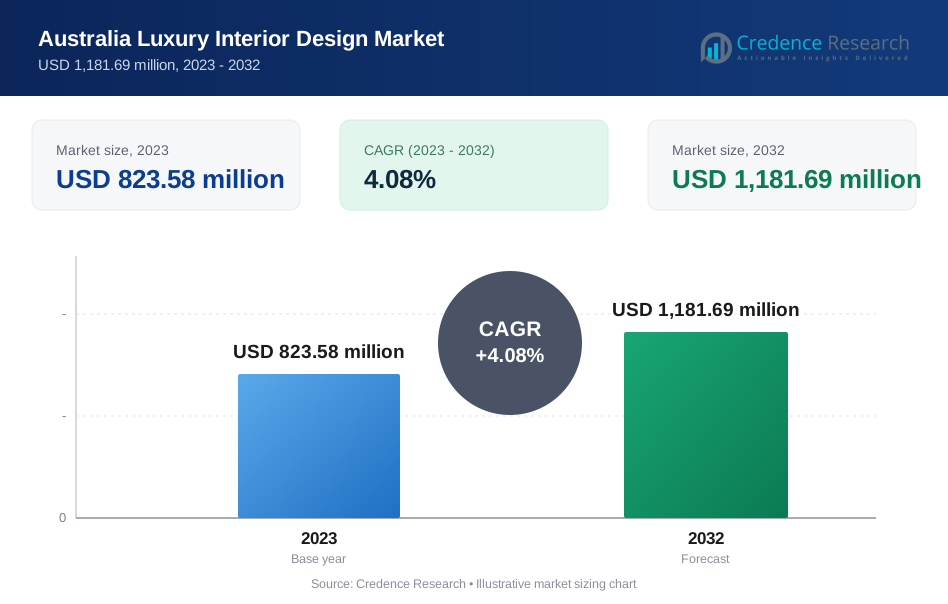
The Australia Luxury Interior Design Market is projected to grow from USD 823.58 million in 2023 to an estimated USD 1,181.69 million by 2032, with a compound annual growth rate (CAGR) of 4.08% from 2024 to 2032. This steady growth reflects the rising demand for premium interior design solutions, driven by an increasing number of affluent consumers and a growing preference for personalized and high-quality living spaces.
Key market drivers include a surge in urbanization and a heightened focus on enhancing aesthetics and functionality in residential and commercial spaces. Trends such as the integration of sustainable materials, smart home technology, and bespoke design solutions are reshaping the landscape. The growing inclination towards eco-friendly and timeless designs, paired with advancements in design software and visualization tools, continues to attract high-end consumers. These factors collectively contribute to a thriving environment for luxury interior design businesses.
Geographically, major metropolitan regions like Sydney, Melbourne, and Brisbane dominate the market due to high-income demographics and a robust luxury property market. Regional areas also show increasing potential as affluent buyers expand beyond urban centers. Prominent players in the industry include Gensler, Woods Bagot, Hassell, and Carr Design Group, alongside boutique firms specializing in niche luxury design services. These companies are focusing on innovation, client-centric solutions, and sustainability to maintain competitive advantage and drive growth.
Market Insights
- The Australia Luxury Interior Design Market is projected to grow from USD 823.58 million in 2023 to USD 1,181.69 million by 2032, with a CAGR of 4.08% from 2024 to 2032.
- The rising number of affluent consumers in Australia is significantly driving demand for high-end, personalized interior design services.
- Eco-friendly design practices, including the use of sustainable materials and energy-efficient solutions, are becoming a major market driver.
- Smart home technologies and advanced design tools, like VR and AR, are reshaping the luxury interior design landscape.
- Major cities such as Sydney, Melbourne, and Brisbane lead the market due to high-income demographics and a thriving luxury real estate market.
- High costs associated with premium materials and bespoke design services limit the market's accessibility to a broader customer base.
- Growing affluence in regional areas beyond urban centers presents an opportunity for expanding the luxury interior design market outside major cities.
Market Drivers
Growing Demand for Personalized and Premium Living Spaces
The increasing preference for personalized and premium living spaces is reshaping the luxury interior design market in Australia. For instance, homeowners are now prioritizing bespoke designs that reflect their individual tastes and lifestyles, particularly among affluent demographics. This trend is evident in the growing popularity of custom furniture, artisanal light fixtures, and unique decor that add character to living spaces. The influence of social media platforms has also played a significant role, showcasing innovative design concepts that inspire consumers to elevate their interiors. Moreover, the integration of advanced technologies, such as smart home systems, allows for a seamless blend of luxury and functionality. These systems enable homeowners to customize their environments easily, enhancing both comfort and aesthetic appeal. As a result, the market is witnessing robust growth in high-quality materials and exclusive design solutions that cater to the discerning tastes of modern consumers.
Rise in High-End Residential and Commercial Property Developments
The surge in luxury residential and commercial property developments across Australia is a key driver of the luxury interior design market. Cities like Sydney and Melbourne are experiencing an influx of premium real estate projects, including upscale apartments and boutique hotels. Developers are increasingly collaborating with luxury interior design firms to create opulent spaces that attract affluent buyers and tenants. For example, many new developments feature open-plan layouts that enhance spaciousness and foster social interaction, catering to the evolving lifestyle preferences of residents. Additionally, the incorporation of sustainable practices-such as energy-efficient designs and eco-friendly materials-further elevates these properties' appeal. As consumers become more environmentally conscious, the demand for luxurious yet sustainable living spaces continues to grow, prompting designers to innovate while maintaining elegance and sophistication in their projects.
Focus on Sustainable and Eco-Friendly Designs
Sustainability has emerged as a critical factor influencing consumer choices in the luxury interior design market. Increasing awareness of environmental issues and the demand for eco-friendly materials have prompted interior designers to adopt sustainable practices. Consumers are prioritizing ethically sourced materials, energy-efficient lighting, and eco-conscious furniture to create environmentally responsible yet luxurious spaces. The integration of green design elements, such as indoor plants and natural materials, not only aligns with sustainability goals but also enhances the aesthetic and functional appeal of interiors. This growing focus on sustainable designs is driving innovation and differentiation in the market.
Technological Advancements and Digital Transformation
The adoption of advanced technologies and digital tools has significantly impacted the Australia Luxury Interior Design Market. Cutting-edge design software and virtual reality (VR) tools enable designers to create detailed visualizations and interactive experiences for clients, improving decision-making and enhancing customer satisfaction. The rise of e-commerce platforms dedicated to luxury home decor and design has also broadened access to premium products, allowing consumers to explore and customize their interiors conveniently. Additionally, smart home integration, which combines luxury with functionality, is driving demand for technology-driven interior solutions. These advancements are not only enhancing the design process but also expanding market opportunities for innovative players.
Market Trends
Integration of Smart Home Technologies
One of the most notable trends in the Australia Luxury Interior Design Market is the incorporation of smart home technologies. Luxury interiors are increasingly featuring advanced systems that allow seamless control of lighting, temperature, security, and entertainment through mobile devices or voice commands. For instance, many luxury properties now boast intelligent systems that enable homeowners to adjust their environment effortlessly, creating an ambiance that aligns with their preferences. This integration not only enhances convenience but also contributes to a modern, futuristic appeal that attracts tech-savvy consumers. Smart technologies can optimize energy consumption by learning user behaviors, allowing for automated adjustments based on occupancy and time of day. Homeowners can program lighting to create the perfect atmosphere for any occasion or ensure security systems are activated remotely. As these features become standard expectations in luxury designs, they drive innovation in the market, reshaping how high-end properties are conceived and experienced.
Emphasis on Biophilic Design Elements
Biophilic design, which integrates natural elements into interiors, is gaining significant traction in Australia’s luxury interior design sector. This trend emphasizes the use of natural materials like wood, stone, and leather, as well as indoor greenery and ample natural light to create serene living spaces. For instance, many luxury homes now incorporate large windows that invite natural light and views of outdoor landscapes, fostering a connection with nature.The use of indoor plants not only enhances aesthetic appeal but also contributes to improved well-being and productivity. Research indicates that environments enriched with natural elements can reduce stress and promote a sense of calm. This aligns with the growing consumer focus on holistic lifestyles, where well-being is prioritized alongside aesthetics. By blending nature with luxury design, interior spaces become more than just visually appealing; they transform into sanctuaries that support mental and emotional health.
Rise of Minimalism with a Luxury Twist
Minimalist interior design has evolved to incorporate luxurious elements, creating spaces that are both understated and opulent. This trend prioritizes clean lines, open spaces, and neutral color palettes while integrating high-quality materials and unique accents. For instance, many contemporary Australian interiors feature bespoke furniture crafted from premium materials that embody both simplicity and sophistication.The "less is more" philosophy resonates with modern consumers seeking clutter-free environments that reflect refinement. Designers are focusing on artisanal craftsmanship, ensuring that each piece serves a purpose while contributing to the overall aesthetic. This minimalist approach does not sacrifice comfort or elegance; instead, it highlights the beauty of simplicity through carefully curated selections. As luxury minimalism becomes a defining characteristic of contemporary design, it appeals to those who appreciate sophistication without excess.
Increased Focus on Customization and Bespoke Solutions
Customization continues to dominate the Australia Luxury Interior Design Market as consumers demand unique and personalized spaces. From tailored furniture to exclusive artwork, bespoke solutions are reshaping the industry. For instance, interior designers now collaborate closely with clients to create one-of-a-kind decor pieces that reflect individual tastes and lifestyles.This trend caters to the desire for individuality and exclusivity in luxury interiors. Homeowners are increasingly seeking tailored solutions that resonate with their personal style-whether it’s custom lighting fixtures or unique color palettes designed specifically for their space. The emphasis on personalization not only enhances aesthetic appeal but also reinforces the premium nature of luxury living. By leveraging technology and craftsmanship, designers can deliver highly customized results that elevate the overall experience of high-end properties, making each space truly one-of-a-kind.
Market Challenges
High Costs and Limited Affordability
One of the primary challenges faced by the Australia Luxury Interior Design Market is the high cost associated with premium design services and materials. For instance, hiring an interior designer can range from approximately $100 to $300 per hour, depending on the designer's experience and project complexity. Additionally, expenses for a complete luxury home redesign can escalate quickly, often reaching between $90,000 to $250,000. This financial burden restricts access primarily to affluent clients, thereby limiting market penetration among mid-income consumers who may seek similar services but cannot afford them. Economic fluctuations further complicate this landscape; during downturns, discretionary spending on luxury upgrades tends to decline as consumers prioritize essential expenditures over non-essential enhancements. As a result, the demand for luxury interior design services can wane, impacting revenue for designers and firms operating in this space. The combination of high costs and economic constraints poses significant challenges for sustained growth in the luxury interior design market in Australia.
Skilled Labor Shortages and Industry Competition
The luxury interior design sector in Australia is grappling with a notable shortage of skilled professionals. Recent reports indicate that nearly 85% of architecture and design businesses are experiencing difficulties in filling skilled positions. This shortage is particularly pronounced for specialized roles such as sustainable design experts and craftsmen capable of delivering bespoke solutions. The imbalance between demand and available skilled labor not only leads to project delays but also increases costs, adversely affecting client satisfaction.Moreover, intense competition among established firms and boutique designers exacerbates these challenges. As businesses strive to differentiate themselves in a crowded market, they are compelled to innovate continuously while maintaining high service standards. This pressure can be resource-intensive, particularly for smaller firms that may lack the financial flexibility to invest heavily in new technologies or marketing strategies. Consequently, the combination of high operational costs and labor shortages presents significant hurdles for sustained growth in the luxury interior design market in Australia.
Market Opportunities
Growing Demand for Sustainable Luxury Designs
As environmental consciousness among consumers continues to rise, there is a significant market opportunity for luxury interior design firms to incorporate sustainable practices. A notable trend is the increasing consumer preference for eco-friendly materials. Many Australian homeowners are opting for reclaimed wood and recycled metals in their interior designs, which enhance aesthetics while aligning with sustainability goals. This shift reflects a broader societal movement towards environmental responsibility, where luxury is redefined to include sustainability as a core value. Moreover, the integration of biophilic design elements is gaining traction, with designers incorporating large windows that frame scenic views and living walls filled with native plants. This design approach not only enhances the visual appeal of homes but also promotes well-being by fostering a connection with nature. As Australian consumers increasingly prioritize environmental responsibility in their purchasing decisions, luxury interior designers can capitalize on this trend by offering bespoke, eco-conscious solutions that meet the growing demand for sustainable luxury.
Expansion of Digital and Virtual Design Services
The adoption of advanced technology, such as virtual reality (VR) and augmented reality (AR), presents a significant opportunity for luxury interior design firms to enhance client experiences. For instance, many firms are now using VR to allow clients to walk through their future spaces before construction begins, significantly improving client satisfaction and reducing costly modifications later on.Additionally, the rise of e-commerce platforms for luxury design services offers firms an opportunity to expand their reach. Designers that provide virtual consultations and online product showcases can attract a wider audience, enabling clients to explore high-end products from the comfort of their homes. This digital transformation not only broadens market reach but also caters to a tech-savvy clientele that values convenience and personalization. As digital tools continue to evolve, firms that embrace these innovations will be well-positioned to stay ahead of the competition and meet the demands of modern consumers in the luxury interior design market.
Market Segmentation Analysis
By Type
The Australia Luxury Interior Design Market is segmented into "Repeatedly Decorated" and "Newly Decorated" categories. The "Repeatedly Decorated" segment involves luxury spaces that are periodically updated to maintain high aesthetic standards and functionality, catering to both affluent homeowners and commercial establishments seeking to stay current with design trends and enhance customer experiences. This segment is expected to grow as demand for contemporary, sophisticated interiors increases. On the other hand, the "Newly Decorated" segment focuses on newly built or remodeled luxury spaces, including high-end residences, luxury apartments, boutique hotels, and premium commercial properties. Driven by the expanding luxury property market and growing real estate investments, this segment features bespoke designs, top-quality materials, and innovative layouts, reflecting the trend for personalized and unique living and working environments.
By Application
The Australia Luxury Interior Design Market is driven by three key segments: residential, commercial, and others. The residential segment is a major contributor, with affluent homeowners seeking high-end, personalized design solutions for luxurious living spaces, particularly in cities like Sydney, Melbourne, and Brisbane. Trends like smart home technologies, sustainable materials, and biophilic design are gaining popularity in this sector. The commercial segment includes luxury designs for offices, hotels, restaurants, and retail stores, driven by businesses aiming to enhance brand identity and customer experiences. High-tech office spaces, boutique hotels, and luxury retail outlets are key areas of growth, offering significant opportunities for design firms. The "others" segment covers niche applications such as luxury healthcare facilities, high-end spas, and cultural institutions, with a focus on creating premium environments that enhance user experiences. Together, these segments contribute to the growing demand for luxury interior design in Australia.
Segments
Based on Type
- Repeatedly Decorated
- Newly Decorated
Based on Application
- Residential
- Commercial
- Others
Based on Region
- Sydney
- Melbourne
- Brisbane
Regional Analysis
New South Wales (38%):
As the most populous state, NSW holds a substantial share of the luxury interior design market. Sydney, the state's capital, is a major hub for high-end residential and commercial developments, driving demand for luxury interior design services. The market share for NSW is approximately 38%.
Victoria (30%):
Victoria, with Melbourne as its capital, also contributes significantly to the luxury interior design market. The state's rich cultural heritage and a growing number of affluent residents and businesses seeking premium design solutions position VIC as a key player in the market. The market share for Victoria is around 30%.
Queensland (15%):
Queensland's luxury interior design market is expanding, particularly in cities like Brisbane and the Gold Coast. The state's appeal to retirees and investors has led to increased demand for upscale residential and commercial properties, thereby boosting the need for luxury interior design services. QLD holds a market share of approximately 15%.
Key players
- Aecom
- Gensler
- Jacobs Engineering Group Inc.
- Perkins and Will
- Stantec Inc.
- Areen Design Services Ltd
- IA Interior Architects
- Cannon Design
- Hirsch Bedner Associates
- NELSON & Associates Interior Design and Space Planning Inc.
- Frost Collective
- Studiomint Design Group
Competitive Analysis
The Australia Luxury Interior Design Market is highly competitive, with a mix of global firms and boutique agencies offering diverse design services. Major players such as Gensler, Aecom, and Jacobs Engineering Group dominate due to their extensive global presence and broad portfolios, including both residential and commercial projects. These firms often leverage advanced technologies like virtual reality and sustainable design to attract high-end clients. Smaller, specialized firms such as Frost Collective and Studiomint Design Group compete by offering highly personalized and unique design solutions that appeal to niche markets. The market also sees strong competition from firms focused on innovation and sustainability, as eco-conscious design becomes increasingly important to affluent consumers. Overall, the competitive landscape is marked by a blend of large-scale firms offering comprehensive solutions and boutique players providing bespoke, high-touch services.
Recent Developments
- In October 2024, AECOM announced its collaboration with local authorities in Sydney to enhance urban spaces through innovative interior design solutions. This initiative focuses on integrating sustainable practices into public spaces, aiming to create environments that reflect the community's identity while promoting ecological responsibility.
- In January 2024, Gensler released its 2024 Design Forecast highlighting emerging trends in luxury interior design. The report emphasizes the importance of sustainability and AI in shaping future projects. Gensler is also expanding its practice areas, which now include new sectors like entertainment and industrial design, indicating a strategic pivot towards more diverse clientele.
- In December 2024, Jacobs Engineering Group completed a significant project for a luxury residential development in Melbourne. The design emphasizes open spaces and biophilic elements, aiming to enhance the residents' connection with nature. This project showcases Jacobs' commitment to integrating wellness principles into high-end living environments.
- In November 2024, Perkins and Will announced a major redesign of a historic building in Brisbane. The renovation aims to blend modern luxury with the building's heritage features, showcasing their expertise in creating bespoke interiors that respect historical context while providing contemporary functionality.
- In September 2024, Stantec launched a new initiative focusing on wellness-oriented design in luxury interiors. Their latest project involves designing a high-end wellness retreat that incorporates natural materials and sustainable practices, reflecting the growing trend towards health-focused living spaces.
- In August 2024, Areen Design Services expanded its operations into Australia aiming to bring its expertise in hospitality design to the local market. Their first project involves redesigning a boutique hotel in Sydney, focusing on creating luxurious yet inviting spaces that enhance guest experiences.
- In October 2024, IA Interior Architects unveiled its latest office design for a tech company in Melbourne. The project emphasizes flexible workspaces and collaborative areas, aligning with current trends towards adaptive and multifunctional environments in luxury commercial interiors.
- In December 2024, Cannon Design completed a high-profile project for a luxury retail space in Brisbane. The design integrates cutting-edge technology with bespoke furnishings, reflecting the brand's identity while enhancing customer engagement through immersive experiences.
- In January 2025, NELSON & Associates launched a new service line dedicated to sustainable interior design solutions for luxury homes. This initiative aims to meet the rising demand for eco-friendly materials and practices among affluent clients looking to reduce their environmental impact.
Market Concentration and Characteristics
The Australia Luxury Interior Design Market is characterized by moderate to high concentration, with a mix of large design firms and boutique agencies catering to a high-end clientele. Major players, including Gensler, Woods Bagot, and Hassell, dominate the market by offering comprehensive design solutions for large-scale residential, commercial, and hospitality projects. These firms focus on innovation, luxury, and sustainable practices to meet the growing demand for personalized, eco-conscious interiors. Alongside these established companies, a thriving number of smaller, specialized interior design firms offer bespoke, niche services targeting affluent individuals seeking exclusive, customized solutions. The market is highly competitive, with a strong emphasis on creativity, quality, and client satisfaction, which drives continuous innovation and adoption of advanced technologies like smart home integration and virtual design tools.
Report Coverage
The research report offers an in-depth analysis based on Type, Application and Region. It details leading market players, providing an overview of their business, product offerings, investments, revenue streams, and key applications. Additionally, the report includes insights into the competitive environment, SWOT analysis, current market trends, as well as the primary drivers and constraints. Furthermore, it discusses various factors that have driven market expansion in recent years. The report also explores market dynamics, regulatory scenarios, and technological advancements that are shaping the industry. It assesses the impact of external factors and global economic changes on market growth. Lastly, it provides strategic recommendations for new entrants and established companies to navigate the complexities of the market.
Future Outlook
- The increasing number of high-net-worth individuals in Australia is expected to drive further demand for luxury interior design services, particularly in major metropolitan areas.
- Sustainable design practices, including eco-friendly materials and energy-efficient solutions, will continue to shape the market, responding to the growing environmental consciousness among consumers.
- Smart home technologies and virtual reality (VR) tools will revolutionize interior design services, enhancing client experiences and offering interactive, customized design solutions.
- Consumers will increasingly seek bespoke, personalized designs that reflect their unique tastes, with an emphasis on high-quality, artisanal craftsmanship and one-of-a-kind decor.
- Luxury interior design demand will extend beyond Sydney and Melbourne, with cities like Brisbane and Perth showing significant growth potential due to rising affluence and real estate investments.
- The continuous development of luxury residential and commercial properties, particularly in affluent urban centers, will fuel the demand for premium interior design solutions.
- Designs that promote physical and mental well-being, such as biophilic elements, natural lighting, and wellness-centered spaces, will become a prominent trend in luxury interiors.
- The digital transformation of the interior design process, through advanced software and online platforms, will make luxury design services more accessible and convenient for clients across Australia.
- Minimalist interior design, incorporating sleek lines and neutral tones with luxury materials, will continue to dominate as affluent consumers seek both simplicity and sophistication in their spaces.
- The demand for luxury interior design in commercial spaces, such as boutique hotels, luxury retail stores, and premium office environments, will increase as businesses focus on creating distinct, high-end customer experiences.
Request a Free Sample
Fill in your details and we'll send you a free sample report.
- Sample data tables & charts
- Research methodology
Need a Custom Version of This Report?
Tailor the scope, geography, or segments to your exact requirements.
- Custom geography or segment scope
- Direct access to our analyst team
Frequently Asked Questions
What is the market size of the Australia Luxury Interior Design Market in 2023 and 2032?
What is the compound annual growth rate (CAGR) of the market?
What are the key factors driving growth in the market?
Which regions dominate the Australia Luxury Interior Design Market?
Who are the key players in the Australia Luxury Interior Design Market?
Table of Content
Chapter 1. Report Introduction
- 1.1 Report Description & Purpose
- 1.1.1 Report Title & Market Definition
- 1.1.2 Unique Selling Propositions (USP) & Key Differentiators
- 1.1.3 Value Proposition for Stakeholders
- 1.2 Research Objectives
- 1.2.1 Market Sizing Objectives (Volume & Revenue) (Volume Where Applicable)
- 1.2.2 Segmentation Objectives
- 1.2.3 Competitive Intelligence Objectives
- 1.2.4 Forecast & Scenario Objectives
- 1.3 Report Scope
- 1.3.1 Australia Luxury Interior Design Scope – Segments & Subsegments Covered
- 1.3.2 Geographic Scope – Selected Country & Subnational Markets Covered
- 1.3.3 Historical Period, Base Year & Forecast Period (2023; forecast to 2032)
- 1.3.4 Inclusions & Exclusions
- 1.4 Industry Classification & Applicable Codes
- 1.5 Currency, Measurement Units & Valuation Basis
- 1.6 Target Stakeholders
- 1.7 Limitations & Assumptions
Chapter 2. Executive Summary
- 2.1 Australia Luxury Interior Design Snapshot
- 2.1.1 Market Size – Historical (2023) & Forecast (2023-2032) (2023: USD 823.58 million → 2032: USD 1,181.69 million)
- 2.1.2 Volume & Revenue – National Totals (Volume Where Applicable)
- 2.1.3 Key Market Highlights – Top Five Facts
- 2.2 Australia Luxury Interior Design Segmentation Snapshot
- 2.2.1 Market Split by Subnational Area – 2023 vs. 2032
- 2.3 Competitive Snapshot
- 2.3.1 Top 10 Players by Revenue Share – 2023
- 2.3.2 Top 10 Players by Volume Share – 2023 (Volume Where Applicable)
- 2.3.3 Recent Strategic Developments (18-Month Summary)
- 2.4 Key Investment Highlights & Strategic Conclusions
Chapter 3. Australia Luxury Interior Design Dynamics & Industry Analysis
- 3.1 Market Overview & Context
- 3.1.1 Australia Luxury Interior Design Position in the Broader Industry Value Chain
- 3.1.2 Demand Structure & Purchasing Dynamics
- 3.1.3 Market Maturity & Development Stage Across Domestic Markets
- 3.2 Australia Luxury Interior Design Drivers
- 3.3 Australia Luxury Interior Design Restraints & Challenges
- 3.4 Australia Luxury Interior Design Opportunities
- 3.5 Porter's Five Forces Analysis
- 3.5.1 Threat of New Entrants
- 3.5.2 Bargaining Power of Suppliers
- 3.5.3 Bargaining Power of Buyers
- 3.5.4 Threat of Substitutes
- 3.5.5 Competitive Rivalry – Intensity Assessment
- 3.6 Australia Luxury Interior Design Value Chain Analysis
- 3.6.1 Upstream – Key Inputs, Resources & Suppliers
- 3.6.1.1 Key Input/Resource 1
- 3.6.1.2 Key Input/Resource 2
- 3.6.1.3 Key Input/Resource 3
- 3.6.2 Midstream – Core Operations & Value Creation
- 3.6.2.1 Operating Model & Process Overview
- 3.6.2.2 Key Operating Locations & Capabilities by Company
- 3.6.3 Downstream – Market Channels & End Users
- 3.6.3.1 Direct Sales & Customer Engagement Channels
- 3.6.3.2 Indirect Sales, Intermediaries & Partner Channels
- 3.6.4 Value Chain Profitability Analysis
- 3.6.1 Upstream – Key Inputs, Resources & Suppliers
- 3.7 PESTEL Analysis
- 3.7.1 Political Factors
- 3.7.2 Economic Factors
- 3.7.3 Social Factors
- 3.7.4 Technological Factors
- 3.7.5 Environmental Factors
- 3.7.6 Legal Factors
- 3.8 Australia Luxury Interior Design Supply Chain Analysis
- 3.8.1 Critical Input & Resource Availability Risk Assessment
- 3.8.2 Supplier & Operational Concentration Risk (Geographic Exposure)
- 3.8.3 Supply & Service Disruption Impact Analysis
- 3.9 National & Subnational Regulatory Landscape
Note: The regulatory and policy landscape section covers regulations based on their applicability to the market, Australia Luxury Interior Design category, geography, and scope of the study. Only regulatory frameworks with a material impact on operations, compliance, trade, sustainability, or market access are analyzed in detail.
Chapter 4. Key Investment Pockets & Opportunity Analysis
- 4.1 Australia Luxury Interior Design Attractiveness Analysis
- 4.1.1 By Subnational Area – Investment Attractiveness Matrix (Market Size × CAGR)
- 4.2 Absolute Revenue Growth Opportunity
- 4.2.1 By Subnational Area – Absolute Revenue Growth Through 2032
- 4.3 Incremental Demand Opportunity
- 4.3.1 By Subnational Area – Incremental Demand Through 2032
- 4.3.2 Segment – Incremental Demand
- 4.4 Emerging Submarket Opportunity Deep Dive (Subject to Applicability)
- 4.5 Priority Domestic Market Opportunity Scorecards
- 4.5.1 Priority Domestic Market 1
- 4.5.2 Priority Domestic Market 2
- 4.5.3 Priority Domestic Market 3
- 4.5.4 Priority Domestic Market 4
Note: Domestic market scorecards cover relevant states, provinces, territories, cities, or economic zones within the selected country. Numbered entries are populated with market names suited to the national administrative structure and research scope. Geographic share tables use one consistent, nonoverlapping set of areas.
Chapter 5. Australia Luxury Interior Design Cross-Border Trade & Market Access Analysis
- 5.1 National Trade & International Partner Overview
- 5.1.1 Export Value by Destination Country (2023)
- 5.1.2 Export Volume by Destination Country (2023) (Where Applicable)
- 5.1.3 Import Value by Source Country (2023)
- 5.1.4 Import Volume by Source Country (2023) (Where Applicable)
- 5.1.5 National & Partner-Country Trade Balances (2023)
- 5.2 Export Analysis – Segment
- 5.2.1 Category 1 (Applicable Classification Code)
- 5.2.2 Category 2 (Applicable Classification Code)
- 5.2.3 Category 3 (Applicable Classification Code)
- 5.2.4 Category 4 (Applicable Classification Code)
- 5.2.5 Category 5 (Applicable Classification Code)
- 5.3 Import Analysis – Segment
- 5.3.1 Category 1 (Applicable Classification Code)
- 5.3.2 Category 2 (Applicable Classification Code)
- 5.3.3 Category 3 (Applicable Classification Code)
- 5.3.4 Category 4 (Applicable Classification Code)
- 5.3.5 Category 5 (Applicable Classification Code)
- 5.4 Cross-Border Pricing & Transaction Benchmarks
- 5.4.1 Export Pricing – Segment & Destination Country
- 5.4.2 Import Pricing – Segment & Source Country
- 5.4.3 Price Trends (2023)
- 5.5 Key Cross-Border Trade & Delivery Routes
- 5.5.1 Cross-Border Trade/Delivery Route 1
- 5.5.2 Cross-Border Trade/Delivery Route 2
- 5.5.3 Cross-Border Trade/Delivery Route 3
- 5.5.4 Cross-Border Trade/Delivery Route 4
- 5.5.5 Cross-Border Trade/Delivery Route 5
- 5.6 Trade Policy & Market Access Impact Assessment
- 5.6.1 Tariff & Non-Tariff Barriers
- 5.6.2 National Participation in Regional Trade & Economic Frameworks
- 5.6.3 Bilateral & Multilateral Trade Agreements
- 5.6.4 Cross-Border Operating, Licensing & Localization Requirements
Note: This chapter covers international trade relevant to Australia Luxury Interior Design in the selected country. Exports are analyzed by destination and imports by source. Domestic interregional flows are excluded from international trade totals. Goods, services, and digital offerings use applicable classifications; volume and route analyses apply only where meaningful.
Chapter 6. Competitive Landscape & Company Benchmarking
- 6.1 Australia Luxury Interior Design Concentration & Structure
- 6.1.1 Herfindahl-Hirschman Index (HHI) – vs. 2023
- 6.1.2 Leading, Mid-Sized & Emerging Player Structure
- 6.1.3 Multinational, National & Local Player Dynamics
- 6.2 Australia Luxury Interior Design Share Analysis – 2023
- 6.2.1 National Revenue Share by Company
- 6.2.2 National Volume Share by Company (Volume Where Applicable)
- 6.2.3 Company Revenue Share by Subnational Area
- 6.2.4 Market Share Evolution ( vs. 2023)
- 6.2.5 Company Market Share by Key Segment
- 6.2.6 Company Market Share by Customer Group
- 6.3 Operating Scale, Capacity & Infrastructure Analysis
- 6.3.1 National Operating Scale & Supply Capacity
- 6.3.2 Resource Utilization & Operating Efficiency
- 6.3.3 Output, Service Delivery & Activity Metrics
- 6.3.4 Operating Footprint & Infrastructure Map
- 6.3.5 Planned Operational & Capacity Expansion
- 6.4 Australia Luxury Interior Design Competitive Benchmarking Matrix
- 6.4.1 Revenue, Growth, Profitability & Operating Metric Comparison
- 6.4.2 Channel Revenue Mix
- 6.4.3 Revenue Exposure Across Domestic Markets
- 6.4.4 R&D Intensity
- 6.4.5 Sustainability Maturity
- 6.5 Strategic Developments in Australia Luxury Interior Design (Last 24 Months)
- 6.5.1 Mergers, Acquisitions & Divestments
- 6.5.2 New Products, Services & Solutions in Australia Luxury Interior Design
- 6.5.3 Operational & Infrastructure Expansions
- 6.5.4 Strategic Alliances, Joint Ventures & Partnerships
- 6.5.5 Distribution Expansion & Market Entry
- 6.5.6 Sustainability & ESG Initiatives
- 6.6 Competitive Strategy Mapping
- 6.6.1 Leader, Challenger, Follower & Niche Classification
- 6.6.2 Pricing Strategy Comparison
- 6.6.3 Channel Strategy Matrix
Note: Strategic developments are included based on their materiality and the availability of reliable information.
Chapter 7. Australia Luxury Interior Design – By Sales & Delivery Channel
- 7.1 Segment Overview
- 7.1.1 Volume & Revenue Split by Channel (2023 & 2032) (Volume Where Applicable)
- 7.1.2 Channel Mix Evolution (2023-2032)
Chapter 8. Subnational Market Analysis – Country Overview
- 8.1 Domestic Geographic Market Overview
- 8.1.1 Subnational Volume Share (Where Applicable)
- 8.1.2 Subnational Revenue Share
- 8.1.3 Market Volume by Subnational Area (Where Applicable)
- 8.1.4 Market Revenue by Subnational Area
- 8.1.5 Subnational Forecasts Through 2032
- 8.2 Cross-Area Segment Analysis Within the Country
- 8.2.1 By Sales & Delivery Channel
- 8.2.2 By Competitive Positioning & Price Tier
Chapter 9. Australia Luxury Interior Design – Priority Domestic Market 1
Chapter 10. Australia Luxury Interior Design – Priority Domestic Market 2
Chapter 11. Australia Luxury Interior Design – Priority Domestic Market 3
Chapter 12. Australia Luxury Interior Design – Priority Domestic Market 4
Chapter 13. Australia Luxury Interior Design Company Profiles
- 13.1 [Company 01]
- 13.1.1 Company Overview
- 13.1.2 Key Management Personnel
- 13.1.3 Products & Services Portfolio
- 13.1.4 Financial Performance
- 13.1.5 Domestic Market Focus & Local Operating Presence
- 13.1.6 Recent Developments & Strategic Initiatives
Note: The company profile list is preliminary and may change based on research findings, market developments, data availability, and client requirements.
Chapter 14. Appendices
- Appendix A – List of Abbreviations & Acronyms
- Appendix B – Industry Classification Code Reference – Full Series
- Appendix C – Supply, Output & Operating Capacity Data Tables
- Appendix D – End-Use & Demand Base Tables
- Appendix E – Demand, Adoption & Usage Assumptions
- Appendix F – Pricing & Revenue Metric Reference Tables
- Appendix G – Company Operations & Infrastructure Database
- Appendix H – Cross-Border Trade & Activity Data Tables (Where Applicable)
- Appendix I – Regulatory Summary Tables
- Appendix J – Primary Research Participant List (Anonymized)
- Appendix K – Primary Research Questionnaire Framework
- Appendix L – Data Sources & Bibliography
- Appendix M – Market Size Divergence & Source Comparison
Chapter 15. Research Methodology
- 15.1 Research Framework & Philosophy
- 15.2 Secondary Research – Sources, Hierarchy & Data Extraction
- 15.3 Data Modeling – National Market Sizing & Subnational Allocation
- 15.4 Primary Research – Stakeholder Framework, LOI & Sample Sizes
- 15.5 Forecast Methodology – Regression, Scenario & Sensitivity Analysis
- 15.6 Quality Control – Four-Layer Validation Framework
- 15.7 Limitations & Standard Assumptions
- 15.8 Disclaimer
