
Market Overview
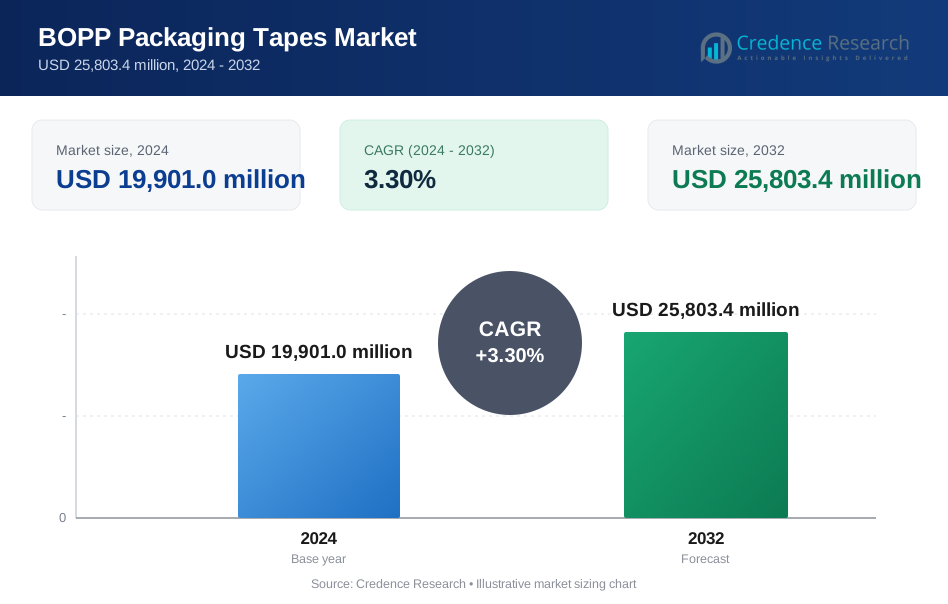
The BOPP packaging tapes market is projected to grow from in 2024 to USD 25,803.4 million by 2032, registering a CAGR of 3.3% during the forecast period.
| REPORT ATTRIBUTE | DETAILS |
|---|---|
| Historical Period | 2020-2023 |
| Base Year | 2024 |
| Forecast Period | 2025-2032 |
| BOPP Packaging Tapes Market Size 2024 | USD 19,901.0 million |
| BOPP Packaging Tapes Market, CAGR | 3.3% |
| BOPP Packaging Tapes Market Size 2032 | USD 25,803.4 million |
The BOPP packaging tapes market is driven by rising demand from the e-commerce, logistics, and manufacturing sectors, where secure and durable packaging is essential. Growth in global trade, along with increased shipments of consumer goods, fuels the need for reliable adhesive solutions. The superior mechanical and barrier properties of BOPP tapes, including moisture resistance and high tensile strength, make them ideal for heavy-duty packaging applications. Cost-effectiveness and compatibility with automated packaging systems further boost adoption across industries. Growing preference for eco-friendly and recyclable packaging materials is prompting manufacturers to invest in sustainable BOPP tape solutions, including solvent-free and biodegradable variants. Trends in the market include the integration of advanced adhesives for high-performance bonding, customization in printing for branding and traceability, and the development of tamper-evident and UV-resistant tapes. Emerging economies in Asia-Pacific and Latin America continue to present growth opportunities due to rapid industrialization, expanding retail infrastructure, and increased investments in logistics and supply chain networks.
The BOPP packaging tapes market spans key regions including Asia-Pacific, North America, Europe, Latin America, and the Middle East & Africa. Asia-Pacific holds the largest share, driven by manufacturing growth and strong demand from logistics and retail sectors. North America shows steady adoption due to e-commerce expansion and automation, while Europe emphasizes sustainable and high-performance solutions. Latin America and the Middle East & Africa present emerging opportunities through industrialization and infrastructure development. Key players shaping the market include 3M Company, Tesa SE, Berry Global Inc., Avery Dennison Corporation, Nitto Denko Corporation, Intertape Polymer Group Inc., Shurtape Technologies LLC, Lintec Corporation, Advance Tapes International Ltd., Adhesive Applications Inc., Lohmann GmbH & Co. KG, and Scapa Group plc. These companies compete on innovation, sustainability, and cost-efficiency across diverse packaging applications and end-use sectors globally.
Market Insights
- The BOPP packaging tapes market is projected to grow from USD 19,901.0 million in 2024 to USD 25,803.4 million by 2032, at a CAGR of 3.3%.
- E-commerce, logistics, and manufacturing sectors drive strong demand for durable, high-performance packaging tapes.
- BOPP tapes offer moisture resistance, high tensile strength, and cost efficiency, making them ideal for automated and heavy-duty packaging.
- Sustainability trends prompt manufacturers to develop solvent-free, recyclable, and biodegradable BOPP tape solutions.
- The market faces challenges from volatile polypropylene prices and supply chain disruptions, impacting cost and production timelines.
- Asia-Pacific leads with 47% market share, followed by North America (21%), Europe (18%), and Latin America & Middle East & Africa (14%).
- Key players include 3M, Tesa SE, Berry Global, Avery Dennison, Nitto Denko, Intertape Polymer Group, Shurtape Technologies, and others focusing on innovation and sustainability.
Market Drivers
Strong Demand from E-commerce and Logistics Sector
The BOPP packaging tapes market is experiencing growth due to the rapid expansion of the e-commerce and logistics sectors. Online retail platforms require consistent, secure, and cost-effective packaging to handle rising parcel volumes. It supports these needs by offering durable sealing solutions that withstand varied handling conditions. High tensile strength, clarity, and water resistance make BOPP tapes suitable for bulk shipments. Their ability to perform in automated packing lines enhances operational efficiency. Growth in global courier and freight services also sustains this demand.
- For instance, 3M introduced its Scotch® BOPP tape with a transparent, customizable film, meeting demand from electronics and consumer goods manufacturers for tamper-evident and branded sealing that also maintains clarity for labeling and scanning.
Expanding Applications Across Manufacturing and Retail
The BOPP packaging tapes market benefits from broad adoption across diverse manufacturing and retail applications. Industries such as electronics, food and beverages, pharmaceuticals, and textiles use BOPP tapes to secure cartons and maintain product integrity. It ensures tight sealing, easy application, and resistance to environmental factors, reducing risk of product damage. Growth in retail packaging and consumer goods further elevates demand. Manufacturers value BOPP tapes for their compatibility with branding and labeling functions.
- For instance, Samsung uses BOPP tapes to seal and protect electronics packaging, ensuring resilience against environmental factors during global shipping, which helps maintain product integrity throughout distribution.
Focus on Cost Efficiency and Material Performance
The BOPP packaging tapes market continues to gain traction due to the cost-efficiency and high performance of BOPP film materials. Compared to alternatives, it offers lower production costs, improved yield, and consistent adhesive bonding. This makes BOPP tapes a preferred choice in high-volume packaging operations. It maintains adhesion on various substrates, including corrugated fiberboard. Their availability in multiple widths and strengths suits a range of packaging needs. The market aligns with packaging strategies that emphasize budget control and operational reliability.
Sustainability and Innovation Driving Product Evolution
Sustainability trends are reshaping the BOPP packaging tapes market, encouraging development of recyclable and solvent-free tapes. It drives manufacturers to invest in eco-conscious adhesive technologies and energy-efficient production processes. Growing regulatory and consumer focus on environmental responsibility supports this transition. BOPP tapes now incorporate water-based adhesives and biodegradable backing films. Innovation also extends to tamper-evident designs and UV-resistant coatings. These advancements enhance both product security and environmental compliance across key end-use sectors.
Market Trends
Rising Adoption of Automated Packaging Solutions
Automation in packaging lines is becoming a standard across industries, significantly impacting the BOPP packaging tapes market. It supports this shift with tapes designed for machine application, ensuring consistent adhesion, faster processing, and reduced labor costs. Manufacturers develop rolls compatible with high-speed dispensers and sealing equipment. The trend improves packaging throughput and minimizes tape waste. BOPP tapes with high tack and low noise also gain popularity in automated settings. This shift strengthens industrial efficiency and throughput across sectors.
- For instance, AIPL ABRO manufactures BOPP tapes engineered for automated and manual application, which ensures reliable performance in high-speed, temperature-variable environments; their customized tapes are designed for consistent adhesion and smooth operation in automated packing systems.
Customization and Branding Integration in Tape Design
The BOPP packaging tapes market is witnessing increasing demand for customization to support brand visibility and anti-counterfeiting efforts. Companies use printed BOPP tapes to display logos, QR codes, or instructions directly on packaging. It helps brands enhance recall while improving consumer trust and product traceability. Security printing also allows tamper-evident features. This trend expands applications beyond sealing and into marketing functions. Customization supports retail differentiation and strengthens customer engagement through packaging aesthetics.
- For instance, Ajit Industries Private Limited (AIPL) in India offers BOPP tapes made from biodegradable and recyclable materials, providing custom-printed designs tailored for retail and e-commerce packaging to boost brand differentiation.
Shift Toward Eco-Friendly and Sustainable Tapes
Sustainability remains a central trend influencing the BOPP packaging tapes market. It drives adoption of recyclable materials, solvent-free adhesives, and reduced-plastic designs. Manufacturers focus on low-VOC production and biodegradable film backings. End users across logistics and retail sectors prioritize packaging solutions aligned with environmental goals. Eco-labeled BOPP tapes support regulatory compliance and corporate ESG initiatives. This shift encourages innovation across the value chain and redefines competitive strategies for tape producers globally.
Enhanced Product Features for Performance and Safety
The BOPP packaging tapes market is evolving with product innovations aimed at improving durability, security, and user convenience. It includes advancements such as UV-resistant coatings, anti-static properties, and high-temperature tolerance. These features meet demands from food, electronics, and pharmaceuticals. Tamper-evident and reinforced tapes provide added safety during transit. Smart packaging integrations, like coded tracking and visibility enhancements, are being explored. These developments improve product reliability and operational resilience across global supply chains.
Market Challenges Analysis
Volatility in Raw Material Prices and Supply Chain Disruptions
The BOPP packaging tapes market faces challenges due to fluctuations in raw material prices, particularly polypropylene and adhesives. It relies heavily on petrochemical derivatives, making it vulnerable to oil price instability and supply constraints. Global supply chain disruptions impact lead times and production planning. This unpredictability creates cost pressures for manufacturers and limits profitability. Smaller producers struggle to manage procurement risks, especially when competing with vertically integrated firms. The market must navigate these disruptions while maintaining consistent product quality.
Environmental Regulations and Recycling Limitations
The BOPP packaging tapes market encounters growing scrutiny from environmental regulators concerning plastic waste and non-biodegradable materials. It faces pressure to align with circular economy practices, yet BOPP tapes remain difficult to recycle due to multi-layer construction and adhesive residues. Compliance with regional packaging waste laws increases operational complexity. Adoption of sustainable alternatives may lead to higher production costs and require process adjustments. These factors challenge both product development and market competitiveness, especially in highly regulated regions.
Market Opportunities
Expansion Across Emerging Economies and Industrial Sectors
The BOPP packaging tapes market presents strong growth opportunities in emerging economies across Asia-Pacific, Latin America, and Africa. Rapid urbanization, infrastructure development, and rising consumer demand drive the need for reliable packaging solutions. It benefits from expanding retail, FMCG, and manufacturing sectors in these regions. Increasing investment in logistics and warehousing infrastructure further accelerates demand. Local production capabilities and favorable trade policies enhance market entry potential. Growth in small and mid-sized enterprises also fuels broader adoption.
Innovation in Sustainable and High-Performance Products
The BOPP packaging tapes market can capitalize on rising demand for sustainable and high-performance adhesive solutions. It has the opportunity to develop recyclable tapes, water-based adhesives, and biodegradable film substrates. Companies investing in low-carbon and energy-efficient production gain a competitive edge. Demand for tamper-evident, UV-resistant, and printable tapes expands usage across regulated and branded sectors. Collaboration with packaging machine manufacturers allows better product integration. Innovation enables differentiation and supports compliance with evolving global standards.
Market Segmentation Analysis:
By Thickness
The BOPP packaging tapes market segments by thickness into 35–50 micron, 51–65 micron, and above 65 micron. The 35–50 micron range holds the largest share due to widespread use in lightweight packaging applications. It supports standard carton sealing needs in retail and logistics. The 51–65 micron segment serves medium-duty packaging with enhanced durability. Tapes above 65 micron cater to heavy-duty industrial uses where high tensile strength is required. It meets demands in export and bulk material handling sectors.
- For instance, SPG Industries supplies 50 micron thick, 65 meter long BOPP tapes ideal for regular carton sealing and offered in various colors for both retail and office uses.
By Adhesive
The BOPP packaging tapes market includes hot melt rubber and hot melt acrylic adhesive types. Hot melt rubber adhesives dominate due to their strong tack, superior bonding on recycled cartons, and performance in cold environments. It is widely used in the logistics and e-commerce sectors. Hot melt acrylic adhesives are gaining traction for their UV resistance, clarity, and long-term stability. These are preferred for branding and storage applications under varied temperature conditions. Both segments support diverse industry-specific packaging needs.
- For instance, Virag Industries manufactures premium hot melt rubber adhesive BOPP tapes that are supplied in bulk to logistics and e-commerce clients, emphasizing on-time delivery and reliable bonding, particularly for carton sealing operations across India, UAE, and Africa.
By Width
The BOPP packaging tapes market classifies by width into 11mm–30mm, 31mm–70mm, and above 70mm. The 31mm–70mm range remains the most preferred for general packaging and carton sealing. It balances ease of application with strong adhesion. Tapes above 70mm are used for industrial bundling, pallet securing, and reinforcement. The 11mm–30mm segment serves niche uses such as light bundling, stationery, and label sealing. It offers flexibility for varied applications across commercial and industrial sectors.
Segments:
Based on Thickness:
- 35 - 50 Micron
- 51- 65 Micron
- Above 65 Micron
Based on Adhesive:
- Hot Melt Rubber
- Hot Melt Acrylic
Based on Width:
- 11mm -30 mm
- 31mm - 70 mm
- Above 70 mm
Based on End-user:
- Manufacturing & Warehousing
-
- Food & Beverages
- Chemicals & Lubricants
- Electronics & Electricals
- Automotive
- Personal care & Cosmetics
- E-Commerce
- Others
Based on the Geography:
- North America
- U.S.
- Canada
- Mexico
- Europe
- Germany
- France
- U.K.
- Italy
- Spain
- Rest of Europe
- Asia Pacific
- China
- Japan
- India
- South Korea
- South-east Asia
- Rest of Asia Pacific
- Latin America
- Brazil
- Argentina
- Rest of Latin America
- Middle East & Africa
- GCC Countries
- South Africa
- Rest of the Middle East and Africa
Regional Analysis
Asia-Pacific
Asia-Pacific dominates the BOPP packaging tapes market with a 47% share, driven by strong manufacturing activity, e-commerce growth, and low-cost production capabilities. Countries like China, India, and Indonesia continue to invest in logistics and industrial infrastructure. It benefits from large-scale demand in consumer goods, automotive, and electronics packaging. Regional manufacturers offer competitive pricing, high-volume output, and supply chain reliability. Urbanization and expanding retail distribution networks further increase usage across sectors. The market remains highly dynamic, with increasing investments in sustainable and automated packaging solutions.
North America
North America accounts for 21% of the BOPP packaging tapes market, supported by robust demand in e-commerce, food packaging, and distribution sectors. The United States drives regional growth with strong adoption of automated packaging systems and demand for custom-printed tapes. It meets requirements in temperature-controlled logistics and industrial packaging. Regulatory focus on sustainable materials encourages development of eco-friendly tapes. Technological innovation and well-established distribution channels contribute to steady consumption across end-use industries. Rising warehousing and third-party logistics operations continue to sustain demand.
Europe
Europe holds 18% of the BOPP packaging tapes market, led by Germany, the UK, and France. It benefits from strong emphasis on environmentally compliant packaging and innovation in recyclable adhesive products. The region supports usage in pharmaceuticals, food exports, and industrial equipment packaging. Manufacturers in Europe focus on high-performance, solvent-free tape variants aligned with circular economy goals. Market players invest in R&D to develop advanced tamper-evident and UV-resistant products. Demand continues to grow across retail and cross-border logistics channels.
Latin America and Middle East & Africa
Latin America and the Middle East & Africa together hold 14% of the BOPP packaging tapes market. Latin America, led by Brazil and Mexico, shows increasing usage in consumer goods and agriculture packaging. The Middle East & Africa region sees demand from construction, food, and energy sectors. It benefits from growing retail and manufacturing activity in key urban centers. Infrastructure development and import-export growth enhance market penetration in both regions.
Key Player Analysis
- Lohmann GmbH & Co. KG
- Intertape Polymer Group Inc.
- Lintec Corporation
- Advance Tapes International Ltd.
- Avery Dennison Corporation
- Adhesive Applications Inc.
- Berry Global Inc.
- Scapa Group plc
- Nitto Denko Corporation
- Shurtape Technologies, LLC
- Tesa SE
- 3M Company
Competitive Analysis
The BOPP packaging tapes market features intense competition with global and regional players focusing on innovation, sustainability, and cost efficiency. Key companies such as 3M, Tesa SE, Berry Global, and Avery Dennison lead through strong R&D, product customization, and advanced adhesive technologies. It sees active participation from firms like Nitto Denko, Intertape Polymer Group, and Shurtape Technologies, which prioritize high-performance tapes for industrial and e-commerce applications. Players invest in recyclable materials, solvent-free adhesives, and tamper-evident designs to align with regulatory and consumer demands. Strategic mergers, capacity expansions, and partnerships enhance market presence and supply chain capabilities. Regional players gain traction by offering price-competitive solutions and targeting local packaging needs. The market favors manufacturers with integrated production systems, global distribution reach, and the ability to meet bulk order requirements. Competitive dynamics revolve around performance differentiation, environmental compliance, and value-added services tailored to logistics, manufacturing, and retail sectors.
Recent Developments
- In March 2025, TOPPAN Speciality Films, a subsidiary of TOPPAN Holdings, acquired an 80% stake in Irplast S.p.A., an Italy-based manufacturer of high-performance BOPP films. This acquisition aims to enhance TOPPAN’s portfolio in sustainable BOPP film solutions.
- In March 2025, Vibac Group opened a new BOPP manufacturing facility in Tennessee, aiming to expand its production capacity and strengthen its market presence in North America.
- In April 2025, PureCycle Technologies announced successful BOPP film trials using its PureFive™ recycled resin, demonstrating performance comparable to virgin polypropylene during testing with Brückner Maschinenbau in Germany.
- In June 2025, Cosmo Films commissioned a new high-capacity BOPP packaging line—one of the world’s largest—capable of producing 81,200 MT annually, signaling major expansion in manufacturing scale.
Market Concentration & Characteristics
The BOPP packaging tapes market shows moderate to high concentration, with a mix of global corporations and regional manufacturers competing on product performance, price, and sustainability. It is characterized by a strong focus on volume-driven sales, driven by demand from logistics, e-commerce, and manufacturing sectors. Key players such as 3M, Tesa SE, and Berry Global maintain competitive advantage through integrated production, wide distribution, and innovation in adhesives and eco-friendly materials. The market favors companies that offer consistent quality, high-speed production compatibility, and customization capabilities for branding. Product standardization, cost efficiency, and regulatory compliance define purchasing decisions across end-use industries. It exhibits a mature profile in developed economies and a growth-oriented character in emerging markets where infrastructure and industrialization expand packaging demand. Strategic investments in automation, sustainability, and regional expansion influence market dynamics. Long-term contracts with distributors and OEMs also shape competitive positioning and pricing power across regions.
Report Coverage
The research report offers an in-depth analysis based on Thickness, Adhesive, Width, End-User and Geography. It details leading market players, providing an overview of their business, product offerings, investments, revenue streams, and key applications. Additionally, the report includes insights into the competitive environment, SWOT analysis, current market trends, as well as the primary drivers and constraints. Furthermore, it discusses various factors that have driven market expansion in recent years. The report also explores market dynamics, regulatory scenarios, and technological advancements that are shaping the industry. It assesses the impact of external factors and global economic changes on market growth. Lastly, it provides strategic recommendations for new entrants and established companies to navigate the complexities of the market.
Future Outlook
- Demand for BOPP packaging tapes will continue to grow with the expansion of global e-commerce and retail logistics.
- Manufacturers will invest in sustainable product lines, including recyclable and biodegradable tape variants.
- Automated packaging systems will drive adoption of machine-compatible BOPP tapes across industries.
- Custom-printed tapes will gain popularity for branding, security, and traceability purposes.
- Emerging economies in Asia-Pacific, Latin America, and Africa will offer strong growth opportunities.
- Companies will focus on solvent-free adhesives and low-VOC formulations to meet environmental regulations.
- Technological advancements will enhance tape strength, UV resistance, and temperature tolerance.
- Regional players will expand their presence through competitive pricing and localized supply chains.
- Volatility in raw material prices will encourage vertical integration and long-term sourcing strategies.
- Strategic collaborations between tape manufacturers and packaging machine companies will shape future innovations.
Request a Free Sample
Fill in your details and we'll send you a free sample report.
- Sample data tables & charts
- Research methodology
Need a Custom Version of This Report?
Tailor the scope, geography, or segments to your exact requirements.
- Custom geography or segment scope
- Direct access to our analyst team
Frequently Asked Questions
What is the current size of the BOPP packaging tapes market?
What are the key segments within the BOPP packaging tapes market?
What are some challenges faced by the BOPP packaging tapes market?
Who are the major players in the BOPP packaging tapes market?
Table of Content
Chapter 1. Report Introduction
- 1.1 Report Description & Purpose
- 1.1.1 Report Title & Market Definition
- 1.1.2 Unique Selling Propositions (USP) & Key Differentiators
- 1.1.3 Value Proposition for Stakeholders
- 1.2 Research Objectives
- 1.2.1 Market Sizing Objectives (Volume & Revenue)
- 1.2.2 Segmentation Objectives
- 1.2.3 Competitive Intelligence Objectives
- 1.2.4 Forecast & Scenario Objectives
- 1.3 Report Scope
- 1.3.1 BOPP Packaging Tapes Scope – Types & Subtypes Covered
- 1.3.2 Geographic Scope – Regions & Countries Covered
- 1.3.3 Historical Period, Base Year & Forecast Period (2024; forecast to 2032)
- 1.3.4 Inclusions & Exclusions
- 1.4 HS Code & Classification Framework
- 1.5 Currency, Units & Pricing Basis
- 1.6 Target Stakeholders
- 1.7 Limitations & Assumptions
Chapter 2. Executive Summary
- 2.1 Global BOPP Packaging Tapes Market Snapshot
- 2.1.1 Market Size – Historical (2024) & Forecast (2024-2032) (2024: USD 19,901.0 million → 2032: USD 25,803.4 million)
- 2.1.2 Volume & Revenue – Global Totals
- 2.1.3 Key Market Highlights – Top Five Facts
- 2.2 BOPP Packaging Tapes Market Segmentation Snapshot
- 2.2.1 Market Split by Region – 2024 vs. 2032
- 2.3 Competitive Snapshot
- 2.3.1 Top 10 Players by Revenue Share – 2024
- 2.3.2 Top 10 Players by Volume Share – 2024
- 2.3.3 Recent Strategic Developments (18-Month Summary)
- 2.4 Key Investment Highlights & Strategic Conclusions
Chapter 3. BOPP Packaging Tapes Market Dynamics & Industry Analysis
- 3.1 Market Overview & Context
- 3.1.1 BOPP Packaging Tapes Market Position in the Broader Automotive Value Chain
- 3.1.2 OEM vs. Replacement Market Dynamics
- 3.1.3 Market Maturity & Development Stage by Region
- 3.2 BOPP Packaging Tapes Market Drivers
- 3.3 BOPP Packaging Tapes Market Restraints & Challenges
- 3.4 BOPP Packaging Tapes Market Opportunities
- 3.5 Porter's Five Forces Analysis
- 3.5.1 Threat of New Entrants
- 3.5.2 Bargaining Power of Suppliers
- 3.5.3 Bargaining Power of Buyers
- 3.5.4 Threat of Substitutes
- 3.5.5 Competitive Rivalry – Intensity Assessment
- 3.6 BOPP Packaging Tapes Value Chain Analysis
- 3.6.1 Upstream – Raw Material/Input Suppliers
- 3.6.1.1 Raw Material/Input 1
- 3.6.1.2 Raw Material/Input 2
- 3.6.1.3 Raw Material/Input 3
- 3.6.2 Midstream – Production/Manufacturing/Service Delivery
- 3.6.2.1 Production/Process Overview
- 3.6.2.2 Key Facility Locations & Capacity by Manufacturer
- 3.6.3 Downstream – Distribution & End Consumer
- 3.6.3.1 Primary Channel – B2B/OEM
- 3.6.3.2 Secondary Channels – Dealer, Retail, Online, Direct
- 3.6.4 Value Chain Profitability Analysis
- 3.6.1 Upstream – Raw Material/Input Suppliers
- 3.7 PESTEL Analysis
- 3.7.1 Political Factors
- 3.7.2 Economic Factors
- 3.7.3 Social Factors
- 3.7.4 Technological Factors
- 3.7.5 Environmental Factors
- 3.7.6 Legal Factors
- 3.8 BOPP Packaging Tapes Supply Chain Analysis
- 3.8.1 Raw Material/Input Supply Risk Assessment
- 3.8.2 Manufacturing Concentration Risk (Geographic Exposure)
- 3.8.3 Trade Disruption Impact Analysis
- 3.9 Regulatory & Policy Landscape
Note: The regulatory and policy landscape section covers regulations based on their applicability to the market, BOPP Packaging Tapes category, geography, and scope of the study. Only regulatory frameworks with a material impact on operations, compliance, trade, sustainability, or market access are analyzed in detail.
Chapter 4. Key Investment Pockets & Opportunity Analysis
- 4.1 BOPP Packaging Tapes Market Attractiveness Analysis
- 4.1.1 By Region – Investment Attractiveness Matrix (Volume × CAGR)
- 4.2 Absolute Revenue Growth Opportunity
- 4.2.1 By Region – Absolute USD Growth Through 2032
- 4.3 Incremental Volume Opportunity
- 4.3.1 By Region – Incremental Volume Through 2032
- 4.3.2 Segment – Incremental Volume
- 4.4 Emerging Submarket Opportunity Deep Dive (Subject to Applicability)
- 4.5 Emerging Market Opportunity Scorecards
- 4.5.1 United States
- 4.5.2 Europe
- 4.5.3 Asia
- 4.5.4 Middle East & Africa
Note: Emerging Market Opportunity Scorecards will be included based on relevance and strategic importance. Regions listed are indicative and may vary depending on data availability and market dynamics.
Chapter 5. BOPP Packaging Tapes Import-Export Analysis & Trade Flows
- 5.1 Global Trade Overview
- 5.1.1 Global Export Value by Country (2024)
- 5.1.2 Global Export Volume by Country (2024)
- 5.1.3 Global Import Value by Country (2024)
- 5.1.4 Global Import Volume by Country (2024)
- 5.1.5 Net Trade Balance by Country (2024)
- 5.2 Export Analysis – Segment
- 5.2.1 Type 1 (HS Code)
- 5.2.2 Type 2 (HS Code)
- 5.2.3 Type 3 (HS Code)
- 5.2.4 Type 4 (HS Code)
- 5.2.5 Type 5 (HS Code)
- 5.3 Import Analysis – Segment
- 5.3.1 Type 1 (HS Code)
- 5.3.2 Type 2 (HS Code)
- 5.3.3 Type 3 (HS Code)
- 5.3.4 Type 4 (HS Code)
- 5.3.5 Type 5 (HS Code)
- 5.4 Average Unit Trade Prices
- 5.4.1 Average Export Price – Segment & Country
- 5.4.2 Average Import Price – Segment & Source Country
- 5.4.3 Price Trends (2024)
- 5.5 Key Trade Route Analysis
- 5.5.1 Trade Route 1
- 5.5.2 Trade Route 2
- 5.5.3 Trade Route 3
- 5.5.4 Trade Route 4
- 5.5.5 Trade Route 5
- 5.6 Trade Policy Impact Assessment
- 5.6.1 US Anti-Dumping & Section 301 Tariffs
- 5.6.2 EU Customs Union Impact
- 5.6.3 Major Free Trade Agreements
- 5.6.4 USMCA Rules of Origin
Note: Trade policy analysis will be included only where relevant to the BOPP Packaging Tapes market.
Chapter 6. Competitive Landscape & Company Benchmarking
- 6.1 BOPP Packaging Tapes Market Concentration & Structure
- 6.1.1 Herfindahl-Hirschman Index (HHI) – vs. 2024
- 6.1.2 Tier 1, Tier 2 & Tier 3 Market Structure
- 6.1.3 Global, Regional & Local Player Dynamics
- 6.2 BOPP Packaging Tapes Market Share Analysis – 2024
- 6.2.1 Global Revenue Share by Company
- 6.2.2 Global Volume Share by Company
- 6.2.3 Regional Revenue Share
- 6.2.4 Market Share Evolution ( vs. 2024)
- 6.2.5 OEM Segment Share by Company
- 6.2.6 Replacement Segment Share by Company
- 6.3 Production/Delivery Capacity & Facility Analysis
- 6.3.1 Global Installed Capacity
- 6.3.2 Capacity Utilization Rates
- 6.3.3 Production/Output Volume
- 6.3.4 Facility Locations & Capacity Map
- 6.3.5 Planned Capacity Additions
- 6.4 BOPP Packaging Tapes Competitive Benchmarking Matrix
- 6.4.1 Revenue, Volume, CAGR & Profitability Comparison
- 6.4.2 Channel Revenue Mix
- 6.4.3 Geographic Revenue Exposure
- 6.4.4 R&D Intensity
- 6.4.5 Sustainability Maturity
- 6.5 Strategic Developments in BOPP Packaging Tapes (Last 24 Months)
- 6.5.1 Mergers, Acquisitions & Divestments
- 6.5.2 New BOPP Packaging Tapes Launches
- 6.5.3 Facility Expansions
- 6.5.4 Strategic Alliances, Joint Ventures & Partnerships
- 6.5.5 Distribution Expansion & Market Entry
- 6.5.6 Sustainability & ESG Initiatives
- 6.6 Competitive Strategy Mapping
- 6.6.1 Leader, Challenger, Follower & Niche Classification
- 6.6.2 Pricing Strategy Comparison
- 6.6.3 Channel Strategy Matrix
Note: Strategic developments are included based on their materiality and the availability of reliable information.
Chapter 7. Global BOPP Packaging Tapes Market – By Distribution Channel
- 7.1 Segment Overview
- 7.1.1 Volume & Revenue Split by Channel (2024 & 2032)
- 7.1.2 Channel Mix Evolution (2024-2032)
Chapter 8. Regional Market Analysis – Global Overview
- 8.1 Global Regional Overview
- 8.1.1 Regional Volume Share
- 8.1.2 Regional Revenue Share
- 8.1.3 Regional Volume by Region
- 8.1.4 Regional Revenue by Region
- 8.1.5 Regional Forecast Through 2032
- 8.2 Cross-Regional Segment Analysis
- 8.2.1 By Distribution Channel
- 8.2.2 By Brand/Price Tier
Chapter 9. North America BOPP Packaging Tapes Market
- 9.1 United States
- 9.2 Canada
- 9.3 Mexico
Chapter 10. Europe BOPP Packaging Tapes Market
- 10.1 Germany
- 10.2 France
- 10.3 Italy
- 10.4 United Kingdom
- 10.5 Spain
- 10.6 Poland
- 10.7 Russia
- 10.8 Netherlands
- 10.9 Belgium
- 10.10 Sweden
- 10.11 Denmark
- 10.12 Norway
- 10.13 Rest of Europe
Chapter 11. Asia Pacific BOPP Packaging Tapes Market
- 11.1 China
- 11.2 India
- 11.3 Japan
- 11.4 South Korea
- 11.5 Thailand
- 11.6 Indonesia
- 11.7 Vietnam
- 11.8 Malaysia
- 11.9 Australia
- 11.10 Rest of Asia Pacific
Chapter 12. Latin America BOPP Packaging Tapes Market
- 12.1 Brazil
- 12.2 Argentina
- 12.3 Colombia
- 12.4 Chile
- 12.5 Rest of Latin America
Chapter 13. Middle East BOPP Packaging Tapes Market
- 13.1 Saudi Arabia
- 13.2 United Arab Emirates
- 13.3 Turkey
- 13.4 Israel
- 13.5 Iran
- 13.6 Rest of the Middle East
Chapter 14. Africa BOPP Packaging Tapes Market
- 14.1 South Africa
- 14.2 Egypt
- 14.3 Nigeria
- 14.4 Morocco
- 14.5 Rest of Africa
Chapter 15. BOPP Packaging Tapes Company Profiles
- 15.1 [Company 01]
- 15.1.1 Company Overview
- 15.1.2 Key Management Personnel
- 15.1.3 Products & Services Portfolio
- 15.1.4 Financial Performance
- 15.1.5 Key Market Focus & Geographic Presence
- 15.1.6 Recent Developments & Strategic Initiatives
Note: The company profile list is preliminary and may change based on research findings, market developments, data availability, and client requirements.
Chapter 16. Appendices
- Appendix A – List of Abbreviations & Acronyms
- Appendix B – Industry Classification Code Reference – Full Series
- Appendix C – Production & Capacity Data Tables
- Appendix D – End-Use & Demand Base Tables
- Appendix E – Consumption & Replacement Rate Assumptions
- Appendix F – ASP Reference Tables
- Appendix G – Manufacturing & Facility Database
- Appendix H – Import-Export Data Tables
- Appendix I – Regulatory Summary Tables
- Appendix J – Primary Research Participant List (Anonymized)
- Appendix K – Primary Research Questionnaire Framework
- Appendix L – Data Sources & Bibliography
- Appendix M – Market Size Divergence & Source Comparison
Chapter 17. Research Methodology
- 17.1 Research Framework & Philosophy
- 17.2 Secondary Research – Sources, Hierarchy & Data Extraction
- 17.3 Data Modeling – Bottom-Up & Top-Down Market Sizing
- 17.4 Primary Research – Stakeholder Framework, LOI & Sample Sizes
- 17.5 Forecast Methodology – Regression, Scenario & Sensitivity Analysis
- 17.6 Quality Control – Four-Layer Validation Framework
- 17.7 Limitations & Standard Assumptions
- 17.8 Disclaimer
