
| REPORT ATTRIBUTE | DETAILS |
|---|---|
| Historical Period | 2019-2022 |
| Base Year | 2023 |
| Forecast Period | 2024-2032 |
| Canada Fresh Processed Meat Product MarketSize 2023 | USD 9,298.48 million |
| Canada Fresh Processed Meat Product Market, CAGR | 3.14% |
| Canada Fresh Processed Meat Product Market Size 2032 | USD 12,282.35 million |
Market Overview
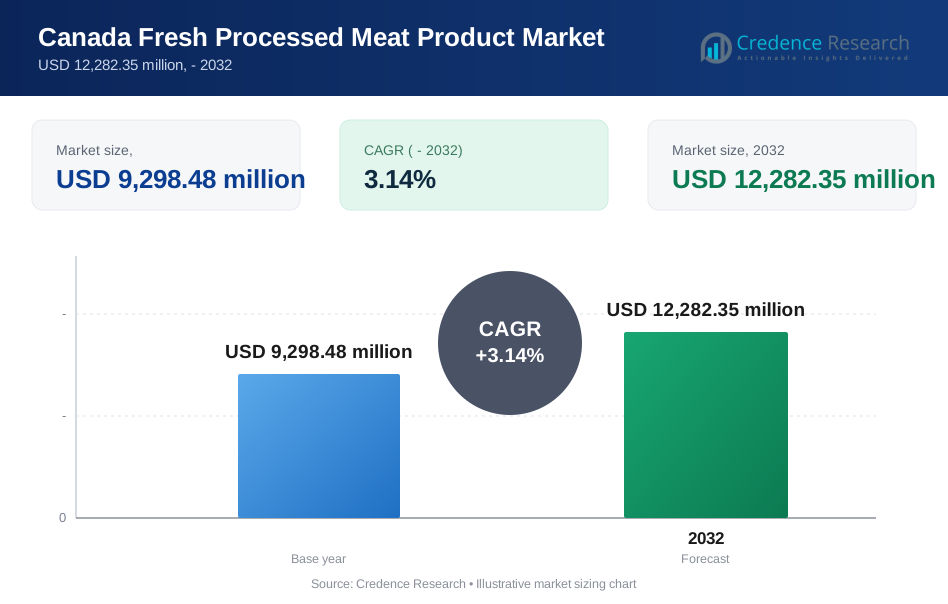
The Canada Fresh Processed Meat Product Market is projected to grow from USD 9,298.48 million in 2023 to an estimated USD 12,282.35 million by 2032, with a compound annual growth rate (CAGR) of 3.14% from 2024 to 2032. The market growth is primarily driven by the increasing consumer preference for convenience, healthier eating options, and rising demand for premium processed meat products.
Key drivers of the market include the rising consumer demand for ready-to-eat, protein-rich foods and growing awareness of health and nutritional benefits associated with processed meat. Trends such as clean label products and innovations in packaging technology further support market growth. Additionally, the shift towards plant-based and healthier alternatives continues to influence product offerings and consumer choices. The overall demand for processed meats continues to rise, despite the challenges posed by concerns over health and sustainability.
Geographically, the Canada Fresh Processed Meat Product Market is dominated by major urban centers where the consumption of processed meat products is higher. Key players in the market include Maple Leaf Foods Inc., Cargill, Incorporated, and Tyson Foods, Inc., among others, who are focusing on product innovation and strategic partnerships to maintain their market position. These companies continue to expand their portfolios to cater to the evolving tastes of Canadian consumers.
Market Insights
- The Canada Fresh Processed Meat Product Market is projected to grow from USD 9,298.48 million in 2023 to USD 12,282.35 million by 2032, at a CAGR of 3.14%.
- Growing consumer demand for convenience, healthier eating options, and premium processed meats are driving market expansion.
- Increased awareness of the health benefits of protein-rich processed meats and a shift towards cleaner, lower-fat options are boosting market growth.
- The industry faces growing pressure to adopt sustainable practices and reduce environmental impact, which can increase production costs.
- Packaging innovations, such as modified atmosphere and vacuum packaging, are enhancing product freshness and shelf life, benefiting the market.
- Ontario and Quebec dominate the market, with significant consumption in urban centers where demand for fresh processed meats is high.
- Major players like Maple Leaf Foods, Cargill, and Tyson Foods are focusing on innovation, strategic partnerships, and sustainability to maintain market leadership.
Market Drivers
Increasing Demand for Convenience and Ready-to-Eat Foods
The Canada Fresh Processed Meat Product Market is significantly driven by the growing consumer demand for convenience and ready-to-eat (RTE) food options. As modern lifestyles become increasingly fast-paced, there is a notable shift towards foods that require minimal preparation. For instance, consumers are gravitating towards products like pre-cooked sausages and deli meats, which provide quick meal solutions without compromising on taste or nutrition. This trend is particularly appealing to busy urban professionals and working families who prioritize time-saving options. The market for RTE processed meats is expected to expand as more consumers seek convenient solutions that fit their hectic schedules. Additionally, innovations in packaging and preservation technologies have extended the shelf life of fresh processed meat products, making them more accessible over time. This convenience factor not only enhances consumer satisfaction but also reinforces the appeal of fresh processed meats as a staple in modern diets.
Health and Nutritional Benefits of Processed Meats
Another significant driver of the Canada Fresh Processed Meat Product Market is the increasing awareness of health and nutritional benefits associated with fresh processed meats. For instance, with the rising popularity of high-protein diets like keto and paleo, many consumers view processed meats as an easy way to meet their daily protein requirements. Products such as turkey, chicken, and lean cuts of beef are recognized for their high-quality protein content, which supports muscle growth and overall well-being. Furthermore, many processed meat items are fortified with additional vitamins and minerals, enhancing their appeal to health-conscious individuals. As consumers continue to prioritize healthier eating habits, the demand for processed meats that offer these nutritional benefits is likely to rise. This trend is further supported by innovations aimed at producing healthier options, such as reduced-fat or nitrate-free varieties, catering to a market increasingly focused on wellness.
Rising Preference for Premium and Innovative Meat Products
In Canada, there is a growing shift towards premium and value-added processed meat products driven by evolving consumer preferences for higher-quality food choices. For instance, consumers are now seeking unique varieties such as gourmet sausages and artisanal deli meats that cater to specific dietary needs. Many are willing to pay a premium for products perceived as healthier and more sustainable, including organic and grass-fed options. This trend has prompted fresh processed meat producers to innovate their offerings continually. Companies are investing in new flavor profiles and product customization to attract discerning customers. Additionally, major players in the industry are focusing on expanding distribution networks through e-commerce platforms to reach a broader audience. As consumers become more selective about their food choices, this shift towards premium offerings has helped drive market growth by appealing to affluent demographics that demand higher standards in their food selections.
Growing Focus on Sustainable and Clean Label Products
Sustainability concerns and a demand for clean labeling are key factors contributing to the growth of the Canada Fresh Processed Meat Product Market. For instance, many consumers today are increasingly aware of the environmental impact of their food choices and actively seek products that align with their values regarding ethical treatment of animals and sustainable farming practices. In response to these concerns, numerous fresh processed meat producers have adopted sustainable production processes, sourcing meat from free-range or pasture-raised animals while minimizing artificial additives. The clean label movement emphasizes transparency in ingredients and production methods; consumers want assurance that their food is free from harmful chemicals and artificial preservatives. As a result, brands that meet these sustainability demands are experiencing increased consumer loyalty and market share. This shift is expected to continue influencing product offerings and marketing strategies within the fresh processed meat sector in Canada as companies strive to align with consumer values around health and environmental responsibility.
Market Trends
Rise of Clean Label and Transparent Ingredient Products
The increasing demand for clean label products is a major trend shaping the Canada Fresh Processed Meat Product Market as consumers become more health-conscious and environmentally aware. These consumers gravitate towards foods containing natural, recognizable ingredients, emphasizing the absence of artificial additives, preservatives, and genetically modified organisms (GMOs). This trend responds to growing concerns about food safety and the potential long-term health effects of consuming heavily processed foods with artificial chemicals. In the context of fresh processed meats, clean labeling also encompasses ethically sourced meats, such as those raised without antibiotics, hormones, or genetically modified feed.For instance, a study by the International Food Information Council Foundation revealed that over half of consumers say front-of-package labels greatly affect their purchasing decisions. This heightened awareness underscores a growing preference for products with clear, understandable ingredient lists, as 94% of respondents were familiar with at least one type of front-of-package label, reflecting a shift towards transparency in food production practices. Consumers demand transparency from food brands regarding the sourcing and processing of meat products. Consequently, companies are investing in clearer, more informative packaging, labeling, and communication strategies to highlight their adherence to clean, ethical practices.
Innovations in Flavor and Product Customization
Canadian consumers seek variety and new experiences in their foods, particularly in the fresh processed meat segment, where innovations in flavor profiles and product customization are becoming more prominent. The demand for premium, gourmet, and artisanal meat products is on the rise, with consumers willing to pay more for unique and specialized offerings beyond traditional options. Gourmet sausages with exotic flavors, smoked meats, and specialty cured products are seeing increased popularity. Product customization is also gaining traction, particularly among consumers with specific dietary preferences, including meat products catering to low-sodium, gluten-free, and high-protein needs.For instance, meat producers respond to the clean label trend by reformulating their offerings to include natural ingredients that align with consumer desires for healthfulness and sustainability. Innovations such as clean label preservatives derived from natural sources, like Florida Food Products' VegStable Fresh, which utilizes green tea and rosemary extract, exemplify the industry's commitment to meeting these evolving consumer expectations. As the popularity of plant-based diets grows, there has been a rise in hybrid products that blend traditional meats with plant-based ingredients to offer a healthier or more sustainable alternative. These innovations allow manufacturers to cater to a broad spectrum of consumer tastes and dietary restrictions, further driving market growth.
Sustainability and Ethical Sourcing
Sustainability and ethical sourcing are dominant factors influencing the Canadian fresh processed meat market. As consumers become more aware of the environmental impact of their food choices, many seek products that align with their values regarding animal welfare and environmental conservation. This leads to sourcing meat from more sustainable practices, such as free-range, grass-fed, and antibiotic-free farming. Many processed meat producers in Canada adopt sustainable practices across their entire supply chains, from sourcing raw materials to packaging and distribution. The growing demand for ethically sourced meat is also tied to increasing concerns over animal welfare.For instance, the clean label trend is prompting significant changes in product development strategies among meat processors. They are increasingly exploring new processing technologies and ingredients that can enhance flavor and maintain product integrity without relying on artificial additives. This shift is evident as manufacturers seek to create products that resonate with consumers' values around health and sustainability, thereby fostering trust and loyalty in a competitive marketplace. Consumers are more likely to choose meat products from farms adhering to strict animal welfare standards. Sustainability initiatives, including reducing carbon footprints, responsible water usage, and waste minimization, are becoming increasingly important to Canadian consumers, leading to increased adoption of environmentally friendly practices by fresh processed meat producers.
Health-Conscious Consumer Preferences and Protein-Rich Diets
Health consciousness is a key trend in the Canada Fresh Processed Meat Product Market, with consumers increasingly seeking high-protein options that support a balanced diet and active lifestyle. Growing awareness of protein's importance in maintaining muscle mass, supporting immune function, and promoting overall health has led to a surge in demand for protein-rich food products. Fresh processed meats, including lean cuts of beef, poultry, and pork, are popular sources of high-quality protein, appealing to consumers following diets such as keto, paleo, or those focused on muscle-building and weight management. The trend toward healthier processed meats is not just limited to high-protein content.For instance, meat products that are lower in fat, sodium, and artificial additives are in demand. There is an increasing preference for meats that offer a better nutritional profile without compromising on taste and quality. This has spurred innovation in product offerings, with many companies developing healthier versions of traditional processed meats. The market has seen the rise of reduced-fat and reduced-sodium sausages, lean deli meats, and even low-fat bacon alternatives. These options cater to health-conscious consumers who want to enjoy the convenience and taste of processed meats while maintaining a healthy lifestyle. The trend toward healthier processed meats is also accompanied by an increase in demand for organic and natural options.
Market Challenges
Health Concerns and Changing Consumer Preferences
One of the significant challenges facing the Canada Fresh Processed Meat Product Market is the growing health concerns associated with the consumption of processed meats. Increasing evidence linking high consumption of processed meats with health issues such as cardiovascular diseases, cancer, and obesity has led to a shift in consumer behavior. Health-conscious consumers are now more cautious about their meat consumption, preferring leaner cuts, lower-fat alternatives, and plant-based products as part of a healthier lifestyle. This has resulted in a demand for healthier processed meat options, which require manufacturers to reformulate products to meet these new dietary preferences without compromising on taste or convenience. However, maintaining the quality and appeal of processed meat while adapting to these health-focused changes is a significant challenge for producers in the Canadian market. In addition, the growing popularity of plant-based alternatives, such as plant-based sausages and burgers, poses further competition to traditional processed meat products, requiring companies to invest in product diversification and innovation to remain relevant.
Sustainability and Environmental Impact
Another key challenge is the increasing pressure on the processed meat industry to adopt sustainable practices and reduce its environmental impact. The meat production sector, including fresh processed meats, is often criticized for its significant carbon footprint, water usage, and waste generation. Consumers, particularly in younger demographics, are placing greater emphasis on environmental sustainability when making purchasing decisions, driving demand for products that are ethically sourced and produced with minimal environmental impact. While many companies are adopting sustainable practices such as sourcing meat from free-range and antibiotic-free farms, the costs associated with transitioning to more sustainable methods and reducing carbon emissions can be prohibitive. Furthermore, the increasing focus on reducing the environmental impact of packaging and improving the sustainability of production processes poses additional challenges for manufacturers who must balance sustainability with the need to maintain profitability and meet consumer demands for high-quality, affordable products.
Market Opportunities
Expansion of Healthier and Premium Product Segments
A significant market opportunity within the Canada Fresh Processed Meat Product Market lies in the growing consumer demand for healthier and premium processed meat products. As health-conscious consumers seek protein-rich, low-fat, and lower-sodium alternatives, there is a clear opportunity for producers to develop and market fresh processed meat options that align with these dietary preferences. The trend toward clean labels, which emphasize the use of natural ingredients and minimal additives, also presents an opportunity for companies to differentiate their products. By offering premium, organic, and ethically sourced meats, such as hormone-free or grass-fed options, companies can appeal to consumers who are willing to pay a premium for higher-quality, sustainable products. This shift in consumer behavior opens doors for innovation, where new formulations and healthier alternatives to traditional processed meats, such as reduced-fat sausages or leaner deli meats, can cater to the growing demand for more nutritious offerings.
Growth in Plant-Based and Hybrid Meat Products
Another emerging opportunity is the rise of plant-based and hybrid meat products in the Canada Fresh Processed Meat Product Market. As more consumers embrace plant-based diets or reduce their meat consumption, there is a growing demand for meat alternatives that offer the taste and texture of traditional meats. Hybrid products, which combine plant-based ingredients with traditional meat, present an innovative solution that meets the desires of both meat lovers and those seeking plant-based options. Companies can capitalize on this trend by developing and marketing processed meat products that integrate plant-based proteins, targeting a wider range of dietary preferences while addressing sustainability concerns. This segment is expected to continue expanding, driven by both health trends and ethical considerations, providing significant growth potential for fresh processed meat brands.
Market Segmentation Analysis
By Product Type:
The market is divided into four main product categories: Fresh Meat, Poultry, Seafood, and Others. Among these, Fresh Meat holds the largest share due to its widespread use in daily meals and the increasing demand for protein-rich diets. Poultry products, including chicken, turkey, and duck, are also highly popular due to their affordability and versatility. Seafood, though a smaller segment, is growing steadily as consumers seek healthier alternatives to red meat. The Others category includes specialty meats such as game meat and processed products made from blends of different animal proteins.
By Application:
The market is further segmented based on application into Home Cooking, Foodservice, Ready-to-Eat Meals, Pet Food, and Others. Home Cooking remains a dominant segment as more consumers are cooking at home, often looking for fresh, high-quality meats. Foodservice, encompassing restaurants and catering services, is another significant sector, driven by the demand for processed meat in various cuisines. The Ready-to-Eat Meals segment is expanding rapidly due to increasing consumer preference for convenience foods. Pet Food is a growing application segment as pet owners look for high-protein, nutritious food options for their pets.
Segments
Based on Product Type
- Fresh Meat
- Poultry
- Seafood
- Other
Based on Application
- Home Cooking
- Foodservice
- Ready-to-Eat Meals
- Pet Food
- Others
Based on Packaging type
- Modified Atmosphere Packaging
- Vacuum Packaging
- Tray Packaging
- Others
Based on Certification
- Organic
- Halal
- Kosher
- BRC
- Others
Based on Distribution channel
- Supermarkets/Hypermarkets
- Convenience Stores
- Online Retailers
- Butcher Shops
- Others
Based on Region
- Ontario
- Quebec
- British Columbia
- Alberta
Regional Analysis
Ontario (38%)
Ontario holds the largest market share of the Canada Fresh Processed Meat Product Market, accounting for approximately 38% of the total market. This can be attributed to the province’s high population density, urbanization, and diverse consumer base, which drives substantial demand for fresh processed meat products. Ontario's large retail network, including supermarkets and hypermarkets, as well as the growing foodservice sector, contributes significantly to the region’s dominance. Additionally, the region's increasing awareness of healthier and premium meat products, such as organic and lean cuts, is pushing growth in the market.
Quebec (26%)
Quebec is the second-largest market for fresh processed meats, contributing roughly 26% to the overall market. The province's unique cultural composition, with a significant French-speaking population, influences meat consumption patterns, with a preference for charcuterie products and artisanal meats. Quebec also shows a growing inclination toward premium products and clean-label options. The region's demand for fresh processed meats is boosted by both home cooking and the flourishing foodservice industry, with Montreal being a hub for meat-centric dining.
Key players
- Maple Leaf Foods
- Olymel S.E.C.
- Smithfield Foods
- Provincial Gourmet
- Superior Poultry
- Richardson International
- Charcuterie des Gallois
- Eden Valley Foods
- Johnsonville Canada
- Duff’s Famous Wings
- ConAgra Brands
- Farmland Foods
- JBS Canada
- Cargill
Competitive Analysis
The Canada Fresh Processed Meat Product Market is highly competitive, with several key players vying for market share through product diversification, strategic partnerships, and innovation. Maple Leaf Foods and Olymel S.E.C. lead the market, offering a wide range of processed meat products and investing heavily in sustainability and health-conscious product lines. Smithfield Foods and JBS Canada maintain strong positions through their extensive global presence and robust supply chains, enabling them to meet the rising demand for high-quality, protein-rich meats. Smaller players like Provincial Gourmet and Charcuterie des Gallois cater to niche markets, focusing on premium, artisanal offerings, while Superior Poultry and Eden Valley Foods are expanding their product portfolios in response to growing demand for poultry and organic meats. Additionally, companies like Johnsonville Canada and ConAgra Brands are capitalizing on innovations in flavor and packaging to differentiate themselves in the market.
Recent Developments
- In January 2025, Maple Leaf Foods announced its commitment to enhancing plant-based profitability, focusing on fresh plant-based meat alternatives. The company aims to expand its product range to meet the increasing consumer demand for healthier and more sustainable options, positioning itself as a leader in both traditional and plant-based markets.
- In December 2024, Olymel S.E.C. completed a significant acquisition that positions the company to develop the Canadian market further while opening new export opportunities. This strategic move is expected to enhance Olymel's product offerings and strengthen its competitive edge in the processed meat sector.
- As of February 2025, Smithfield Foods is focusing on sustainability initiatives within its operations, including reducing greenhouse gas emissions and improving animal welfare standards. These efforts align with the growing consumer preference for ethically sourced and environmentally friendly meat products.
- In January 2025, Provincial Gourmet launched a new line of artisanal processed meats that emphasize local sourcing and gourmet flavors. This initiative caters to the rising consumer demand for premium and unique meat products in Canada.
- In February 2025, Superior Poultry announced an expansion of its processing facility to increase production capacity for its fresh processed chicken products. This expansion aims to meet the growing demand for poultry in the Canadian market.
- In March 2024, Richardson International entered into a commercial agreement with BASF Digital Farming to enhance its agricultural practices. This partnership aims to improve sustainability in meat production, aligning with consumer preferences for clean label products.
- As of January 2025, Charcuterie des Gallois has introduced a new line of organic charcuterie products aimed at health-conscious consumers. This product launch reflects the increasing trend towards premium and organic offerings in the processed meat market.
- In December 2024, Eden Valley Foods expanded its distribution network to include e-commerce platforms, allowing consumers easier access to their range of fresh processed meat products. This move aligns with changing shopping habits among Canadian consumers.
- In February 2025, Johnsonville Canada launched a new line of gourmet sausages featuring unique flavor combinations aimed at appealing to adventurous eaters. This initiative is part of their strategy to capture a larger share of the premium processed meat market.
- In January 2025, Duff’s Famous Wings announced plans to introduce a line of frozen wing products that cater to the convenience-seeking consumer segment. This launch is expected to enhance their presence in the ready-to-eat market.
- As of February 2025, ConAgra Brands is focusing on innovation in its processed meat portfolio by introducing healthier options that are lower in sodium and fat. This initiative responds to consumer demand for more nutritious food choices.
- In January 2025, Farmland Foods unveiled a new marketing campaign emphasizing their commitment to sustainable farming practices and high-quality meat production. This campaign aims to resonate with environmentally conscious consumers.
- In December 2024, JBS Canada announced an investment in advanced processing technologies aimed at improving efficiency and sustainability in their operations. This investment reflects the company's commitment to meeting evolving consumer preferences.
Market Concentration and Characteristics
The Canada Fresh Processed Meat Product Market exhibits a moderate level of market concentration, with a few dominant players such as Maple Leaf Foods, Olymel S.E.C., and Cargill holding significant market share. These large companies benefit from established supply chains, extensive distribution networks, and the ability to invest in product innovation and sustainability initiatives. However, the market also includes a variety of smaller players, such as Provincial Gourmet and Charcuterie des Gallois, that target niche segments with premium, artisanal products. The market is characterized by a growing focus on health-conscious, sustainable, and organic options, with companies increasingly offering clean-label products and investing in eco-friendly packaging. As consumer preferences evolve, competition is intensifying, driving continuous innovation in product offerings and distribution strategies across both large and small market participants.
Report Coverage
The research report offers an in-depth analysis based on Product Type, Application, Packaging type, Certification, Distribution channel and Region. It details leading market players, providing an overview of their business, product offerings, investments, revenue streams, and key applications. Additionally, the report includes insights into the competitive environment, SWOT analysis, current market trends, as well as the primary drivers and constraints. Furthermore, it discusses various factors that have driven market expansion in recent years. The report also explores market dynamics, regulatory scenarios, and technological advancements that are shaping the industry. It assesses the impact of external factors and global economic changes on market growth. Lastly, it provides strategic recommendations for new entrants and established companies to navigate the complexities of the market.
Future Outlook
- As consumers become more health-conscious, there will be a growing demand for processed meats that are lower in fat, sodium, and preservatives, driving innovation in healthier alternatives.
- Sustainability will continue to play a significant role, with manufacturers adopting more eco-friendly practices in sourcing, packaging, and production to meet consumer demand for environmentally responsible products.
- The trend toward premium, organic, and locally sourced processed meats will expand as consumers increasingly value high-quality products that align with ethical and health-conscious choices.
- The popularity of plant-based and hybrid meat products is expected to grow, driven by consumer interest in alternative proteins and reducing the environmental impact of meat consumption.
- Advancements in packaging technologies such as modified atmosphere packaging (MAP) and vacuum-sealing will continue to enhance the freshness and shelf life of processed meats, providing convenience for consumers.
- The online retail channel for fresh processed meats will experience significant growth as e-commerce platforms expand and consumers increasingly value the convenience of home delivery.
- Stricter health regulations and labeling requirements will drive manufacturers to reformulate products and adopt cleaner, more transparent ingredients to comply with evolving consumer and government expectations.
- With the increasing demand for convenience, the ready-to-eat meal segment will expand, particularly among busy urban populations seeking quick and nutritious meal solutions.
- As demand for processed meats grows in emerging regions like British Columbia and Alberta, companies will focus on expanding their presence and product offerings to capture these new market opportunities.
- The competitive landscape will intensify as both large and small players innovate to capture market share, particularly through product differentiation, unique flavor profiles, and sustainable practices.
Request a Free Sample
Fill in your details and we'll send you a free sample report.
- Sample data tables & charts
- Research methodology
Need a Custom Version of This Report?
Tailor the scope, geography, or segments to your exact requirements.
- Custom geography or segment scope
- Direct access to our analyst team
Frequently Asked Questions
What is the market size of the Canada Fresh Processed Meat Product Market in 2023 and 2032?
What are the key drivers of the Canada Fresh Processed Meat Product Market?
How is the demand for healthier processed meats affecting the market?
Which regions are driving the growth of the Canada Fresh Processed Meat Product Market?
Who are the key players in the Canada Fresh Processed Meat Product Market?
Table of Content
Chapter 1. Report Introduction
- 1.1 Report Description & Purpose
- 1.1.1 Report Title & Market Definition
- 1.1.2 Unique Selling Propositions (USP) & Key Differentiators
- 1.1.3 Value Proposition for Stakeholders
- 1.2 Research Objectives
- 1.2.1 Market Sizing Objectives (Volume & Revenue)
- 1.2.2 Segmentation Objectives
- 1.2.3 Competitive Intelligence Objectives
- 1.2.4 Forecast & Scenario Objectives
- 1.3 Report Scope
- 1.3.1 Canada Fresh Processed Meat Product Scope – Types & Subtypes Covered
- 1.3.2 Geographic Scope – Regions & Countries Covered
- 1.3.3 Historical Period, Base Year & Forecast Period (the historical period; forecast to 2032)
- 1.3.4 Inclusions & Exclusions
- 1.4 HS Code & Classification Framework
- 1.5 Currency, Units & Pricing Basis
- 1.6 Target Stakeholders
- 1.7 Limitations & Assumptions
Chapter 2. Executive Summary
- 2.1 Global Canada Fresh Processed Meat Product Market Snapshot
- 2.1.1 Market Size – Historical (the historical period) & Forecast (2032) (base year: USD 9,298.48 million → 2032: USD 12,282.35 million)
- 2.1.2 Volume & Revenue – Global Totals
- 2.1.3 Key Market Highlights – Top Five Facts
- 2.2 Canada Fresh Processed Meat Product Market Segmentation Snapshot
- 2.2.1 Market Split by Region – vs. 2032
- 2.3 Competitive Snapshot
- 2.3.1 Top 10 Players by Revenue Share –
- 2.3.2 Top 10 Players by Volume Share –
- 2.3.3 Recent Strategic Developments (18-Month Summary)
- 2.4 Key Investment Highlights & Strategic Conclusions
Chapter 3. Canada Fresh Processed Meat Product Market Dynamics & Industry Analysis
- 3.1 Market Overview & Context
- 3.1.1 Canada Fresh Processed Meat Product Market Position in the Broader Automotive Value Chain
- 3.1.2 OEM vs. Replacement Market Dynamics
- 3.1.3 Market Maturity & Development Stage by Region
- 3.2 Canada Fresh Processed Meat Product Market Drivers
- 3.3 Canada Fresh Processed Meat Product Market Restraints & Challenges
- 3.4 Canada Fresh Processed Meat Product Market Opportunities
- 3.5 Porter's Five Forces Analysis
- 3.5.1 Threat of New Entrants
- 3.5.2 Bargaining Power of Suppliers
- 3.5.3 Bargaining Power of Buyers
- 3.5.4 Threat of Substitutes
- 3.5.5 Competitive Rivalry – Intensity Assessment
- 3.6 Canada Fresh Processed Meat Product Value Chain Analysis
- 3.6.1 Upstream – Raw Material/Input Suppliers
- 3.6.1.1 Raw Material/Input 1
- 3.6.1.2 Raw Material/Input 2
- 3.6.1.3 Raw Material/Input 3
- 3.6.2 Midstream – Production/Manufacturing/Service Delivery
- 3.6.2.1 Production/Process Overview
- 3.6.2.2 Key Facility Locations & Capacity by Manufacturer
- 3.6.3 Downstream – Distribution & End Consumer
- 3.6.3.1 Primary Channel – B2B/OEM
- 3.6.3.2 Secondary Channels – Dealer, Retail, Online, Direct
- 3.6.4 Value Chain Profitability Analysis
- 3.6.1 Upstream – Raw Material/Input Suppliers
- 3.7 PESTEL Analysis
- 3.7.1 Political Factors
- 3.7.2 Economic Factors
- 3.7.3 Social Factors
- 3.7.4 Technological Factors
- 3.7.5 Environmental Factors
- 3.7.6 Legal Factors
- 3.8 Canada Fresh Processed Meat Product Supply Chain Analysis
- 3.8.1 Raw Material/Input Supply Risk Assessment
- 3.8.2 Manufacturing Concentration Risk (Geographic Exposure)
- 3.8.3 Trade Disruption Impact Analysis
- 3.9 Regulatory & Policy Landscape
Note: The regulatory and policy landscape section covers regulations based on their applicability to the market, Canada Fresh Processed Meat Product category, geography, and scope of the study. Only regulatory frameworks with a material impact on operations, compliance, trade, sustainability, or market access are analyzed in detail.
Chapter 4. Key Investment Pockets & Opportunity Analysis
- 4.1 Canada Fresh Processed Meat Product Market Attractiveness Analysis
- 4.1.1 By Region – Investment Attractiveness Matrix (Volume × CAGR)
- 4.2 Absolute Revenue Growth Opportunity
- 4.2.1 By Region – Absolute USD Growth Through 2032
- 4.3 Incremental Volume Opportunity
- 4.3.1 By Region – Incremental Volume Through 2032
- 4.3.2 Segment – Incremental Volume
- 4.4 Emerging Submarket Opportunity Deep Dive (Subject to Applicability)
- 4.5 Emerging Market Opportunity Scorecards
- 4.5.1 United States
- 4.5.2 Europe
- 4.5.3 Asia
- 4.5.4 Middle East & Africa
Note: Emerging Market Opportunity Scorecards will be included based on relevance and strategic importance. Regions listed are indicative and may vary depending on data availability and market dynamics.
Chapter 5. Canada Fresh Processed Meat Product Import-Export Analysis & Trade Flows
- 5.1 Global Trade Overview
- 5.1.1 Global Export Value by Country (the historical period)
- 5.1.2 Global Export Volume by Country (the historical period)
- 5.1.3 Global Import Value by Country (the historical period)
- 5.1.4 Global Import Volume by Country (the historical period)
- 5.1.5 Net Trade Balance by Country (the historical period)
- 5.2 Export Analysis – Segment
- 5.2.1 Type 1 (HS Code)
- 5.2.2 Type 2 (HS Code)
- 5.2.3 Type 3 (HS Code)
- 5.2.4 Type 4 (HS Code)
- 5.2.5 Type 5 (HS Code)
- 5.3 Import Analysis – Segment
- 5.3.1 Type 1 (HS Code)
- 5.3.2 Type 2 (HS Code)
- 5.3.3 Type 3 (HS Code)
- 5.3.4 Type 4 (HS Code)
- 5.3.5 Type 5 (HS Code)
- 5.4 Average Unit Trade Prices
- 5.4.1 Average Export Price – Segment & Country
- 5.4.2 Average Import Price – Segment & Source Country
- 5.4.3 Price Trends (the historical period)
- 5.5 Key Trade Route Analysis
- 5.5.1 Trade Route 1
- 5.5.2 Trade Route 2
- 5.5.3 Trade Route 3
- 5.5.4 Trade Route 4
- 5.5.5 Trade Route 5
- 5.6 Trade Policy Impact Assessment
- 5.6.1 US Anti-Dumping & Section 301 Tariffs
- 5.6.2 EU Customs Union Impact
- 5.6.3 Major Free Trade Agreements
- 5.6.4 USMCA Rules of Origin
Note: Trade policy analysis will be included only where relevant to the Canada Fresh Processed Meat Product market.
Chapter 6. Competitive Landscape & Company Benchmarking
- 6.1 Canada Fresh Processed Meat Product Market Concentration & Structure
- 6.1.1 Herfindahl-Hirschman Index (HHI) – vs.
- 6.1.2 Tier 1, Tier 2 & Tier 3 Market Structure
- 6.1.3 Global, Regional & Local Player Dynamics
- 6.2 Canada Fresh Processed Meat Product Market Share Analysis –
- 6.2.1 Global Revenue Share by Company
- 6.2.2 Global Volume Share by Company
- 6.2.3 Regional Revenue Share
- 6.2.4 Market Share Evolution ( vs. )
- 6.2.5 OEM Segment Share by Company
- 6.2.6 Replacement Segment Share by Company
- 6.3 Production/Delivery Capacity & Facility Analysis
- 6.3.1 Global Installed Capacity
- 6.3.2 Capacity Utilization Rates
- 6.3.3 Production/Output Volume
- 6.3.4 Facility Locations & Capacity Map
- 6.3.5 Planned Capacity Additions
- 6.4 Canada Fresh Processed Meat Product Competitive Benchmarking Matrix
- 6.4.1 Revenue, Volume, CAGR & Profitability Comparison
- 6.4.2 Channel Revenue Mix
- 6.4.3 Geographic Revenue Exposure
- 6.4.4 R&D Intensity
- 6.4.5 Sustainability Maturity
- 6.5 Strategic Developments in Canada Fresh Processed Meat Product (Last 24 Months)
- 6.5.1 Mergers, Acquisitions & Divestments
- 6.5.2 New Canada Fresh Processed Meat Product Launches
- 6.5.3 Facility Expansions
- 6.5.4 Strategic Alliances, Joint Ventures & Partnerships
- 6.5.5 Distribution Expansion & Market Entry
- 6.5.6 Sustainability & ESG Initiatives
- 6.6 Competitive Strategy Mapping
- 6.6.1 Leader, Challenger, Follower & Niche Classification
- 6.6.2 Pricing Strategy Comparison
- 6.6.3 Channel Strategy Matrix
Note: Strategic developments are included based on their materiality and the availability of reliable information.
Chapter 7. Global Canada Fresh Processed Meat Product Market – By Distribution Channel
- 7.1 Segment Overview
- 7.1.1 Volume & Revenue Split by Channel ( & 2032)
- 7.1.2 Channel Mix Evolution (2032)
Chapter 8. Regional Market Analysis – Global Overview
- 8.1 Global Regional Overview
- 8.1.1 Regional Volume Share
- 8.1.2 Regional Revenue Share
- 8.1.3 Regional Volume by Region
- 8.1.4 Regional Revenue by Region
- 8.1.5 Regional Forecast Through 2032
- 8.2 Cross-Regional Segment Analysis
- 8.2.1 By Distribution Channel
- 8.2.2 By Brand/Price Tier
Chapter 9. North America Canada Fresh Processed Meat Product Market
- 9.1 United States
- 9.2 Canada
- 9.3 Mexico
Chapter 10. Europe Canada Fresh Processed Meat Product Market
- 10.1 Germany
- 10.2 France
- 10.3 Italy
- 10.4 United Kingdom
- 10.5 Spain
- 10.6 Poland
- 10.7 Russia
- 10.8 Netherlands
- 10.9 Belgium
- 10.10 Sweden
- 10.11 Denmark
- 10.12 Norway
- 10.13 Rest of Europe
Chapter 11. Asia Pacific Canada Fresh Processed Meat Product Market
- 11.1 China
- 11.2 India
- 11.3 Japan
- 11.4 South Korea
- 11.5 Thailand
- 11.6 Indonesia
- 11.7 Vietnam
- 11.8 Malaysia
- 11.9 Australia
- 11.10 Rest of Asia Pacific
Chapter 12. Latin America Canada Fresh Processed Meat Product Market
- 12.1 Brazil
- 12.2 Argentina
- 12.3 Colombia
- 12.4 Chile
- 12.5 Rest of Latin America
Chapter 13. Middle East Canada Fresh Processed Meat Product Market
- 13.1 Saudi Arabia
- 13.2 United Arab Emirates
- 13.3 Turkey
- 13.4 Israel
- 13.5 Iran
- 13.6 Rest of the Middle East
Chapter 14. Africa Canada Fresh Processed Meat Product Market
- 14.1 South Africa
- 14.2 Egypt
- 14.3 Nigeria
- 14.4 Morocco
- 14.5 Rest of Africa
Chapter 15. Canada Fresh Processed Meat Product Company Profiles
- 15.1 [Company 01]
- 15.1.1 Company Overview
- 15.1.2 Key Management Personnel
- 15.1.3 Products & Services Portfolio
- 15.1.4 Financial Performance
- 15.1.5 Key Market Focus & Geographic Presence
- 15.1.6 Recent Developments & Strategic Initiatives
Note: The company profile list is preliminary and may change based on research findings, market developments, data availability, and client requirements.
Chapter 16. Appendices
- Appendix A – List of Abbreviations & Acronyms
- Appendix B – Industry Classification Code Reference – Full Series
- Appendix C – Production & Capacity Data Tables
- Appendix D – End-Use & Demand Base Tables
- Appendix E – Consumption & Replacement Rate Assumptions
- Appendix F – ASP Reference Tables
- Appendix G – Manufacturing & Facility Database
- Appendix H – Import-Export Data Tables
- Appendix I – Regulatory Summary Tables
- Appendix J – Primary Research Participant List (Anonymized)
- Appendix K – Primary Research Questionnaire Framework
- Appendix L – Data Sources & Bibliography
- Appendix M – Market Size Divergence & Source Comparison
Chapter 17. Research Methodology
- 17.1 Research Framework & Philosophy
- 17.2 Secondary Research – Sources, Hierarchy & Data Extraction
- 17.3 Data Modeling – Bottom-Up & Top-Down Market Sizing
- 17.4 Primary Research – Stakeholder Framework, LOI & Sample Sizes
- 17.5 Forecast Methodology – Regression, Scenario & Sensitivity Analysis
- 17.6 Quality Control – Four-Layer Validation Framework
- 17.7 Limitations & Standard Assumptions
- 17.8 Disclaimer
