
| REPORT ATTRIBUTE | DETAILS |
|---|---|
| Historical Period | 2020-2023 |
| Base Year | 2024 |
| Forecast Period | 2025-2032 |
| Cashback Apps Market Size 2024 | USD 10,223 Million |
| Cashback Apps Market, CAGR | 9.3% |
| Cashback Apps Market Size 2032 | USD 22,759.34 Million |
Market Overview
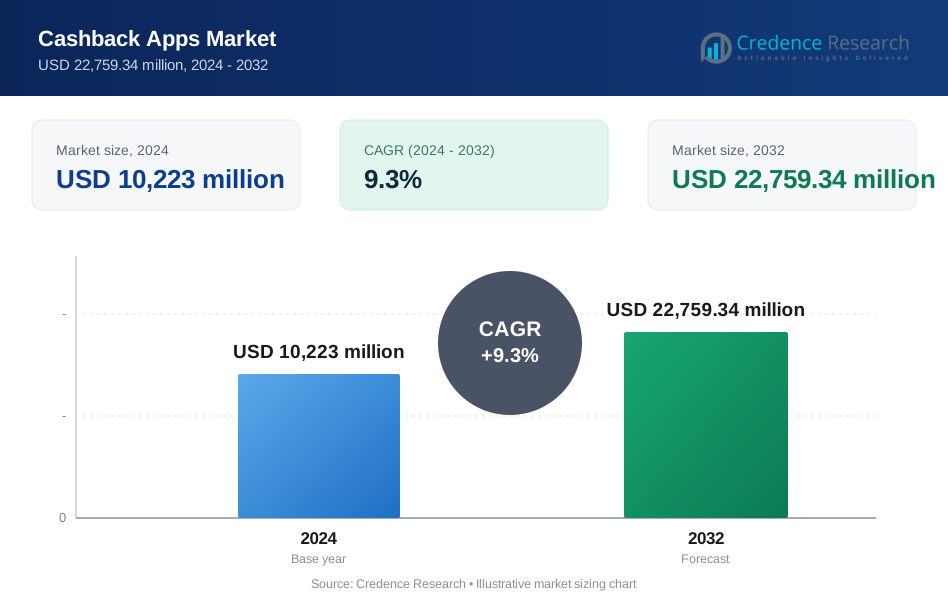
The Global Cashback Apps Market is projected to grow from USD 10,223 million in 2024 to an estimated USD 22,759.34 million by 2032, reflecting a compound annual growth rate (CAGR) of 9.3% from 2025 to 2032.
Market growth is primarily fueled by increasing consumer demand for rewards and savings on everyday purchases. Cashback apps offer a convenient way to earn monetary incentives, thereby enhancing customer loyalty and engagement for retailers and brands. Trends such as integration of AI and machine learning for personalized offers, seamless app interfaces, and partnerships with major e-commerce platforms further propel the market. Additionally, the rise of omnichannel retailing and expanding internet access contribute to broader adoption, while data analytics enable targeted marketing strategies, enhancing user retention and app effectiveness.
Regionally, North America leads the Cashback Apps Market, benefiting from widespread smartphone usage, a mature e-commerce sector, and strong consumer spending power. The Asia-Pacific region is expected to witness the fastest growth due to increasing internet penetration, rising disposable incomes, and rapid digitalization in emerging economies such as India and China. Key players in this market include Rakuten, Ibotta, Honey (owned by PayPal), TopCashback, and Swagbucks. These companies continue to innovate through strategic partnerships, technological enhancements, and expanding their service offerings to maintain competitive advantage.
Market Insights
- The Global Cashback Apps Market is projected to grow from USD 10,223 million in 2024 to USD 22,759.34 million by 2032, at a CAGR of 9.3% during the forecast period.
- Growing consumer interest in earning rewards on daily purchases fuels adoption of cashback apps across retail, travel, and food delivery sectors.
- Integration of AI and machine learning enables personalized offers, improving user engagement and optimizing merchant marketing strategies.
- Rising digitalization, mobile commerce, and the popularity of seamless payment ecosystems further support global market expansion.
- Data privacy concerns and strict regulatory requirements regarding user information limit scalability in certain regions.
- North America dominates the market due to high smartphone penetration, strong e-commerce growth, and consumer willingness to adopt financial incentives.
- Asia-Pacific is expected to witness the fastest growth, driven by internet access, rising disposable incomes, and rapid adoption in India and China.
Market Drivers
Rising Consumer Demand for Cost Savings and Incentives
The Global Cashback Apps Market benefits significantly from increasing consumer demand for cost-saving opportunities during online and offline purchases. Consumers actively seek platforms that offer direct monetary rewards, enhancing their purchasing power. Cashback apps provide an effective mechanism to attract budget-conscious shoppers by rewarding them instantly. This demand creates a positive feedback loop, encouraging more users to adopt cashback apps for daily transactions. Retailers and brands recognize this shift and increasingly integrate cashback offers into their sales strategies. The result drives sustained market expansion by fostering customer loyalty and repeat purchases.
- For instance, the cashback industry refunded an estimated $1.8 billion to consumers last year, reinforcing its role in incentivizing purchases.
Technological Advancements Enhancing User Experience and Personalization
Rapid technological development contributes strongly to the market’s growth by improving app functionality and personalization. Incorporating artificial intelligence and machine learning enables precise targeting of offers based on user behavior and preferences. Enhanced data analytics provide deeper insights that optimize marketing efforts and tailor cashback deals effectively. User-friendly interfaces and seamless app integrations further improve engagement and reduce friction in usage. These innovations help maintain high customer retention rates and boost overall app effectiveness in competitive landscapes.
- For instance, AI-powered cashback apps have improved user engagement by 34%, optimizing personalized rewards and customer retention.
Expanding Digital Payment Ecosystem and Smartphone Penetration
The growth of the Global Cashback Apps Market aligns closely with the widespread adoption of smartphones and the digital payment ecosystem’s evolution. Increasing internet accessibility worldwide supports the rapid diffusion of cashback apps, especially in emerging markets. Mobile wallets, contactless payments, and e-commerce platforms create an integrated environment conducive to cashback adoption. Consumers prefer digital channels for their convenience and speed, increasing the frequency of app usage. Market players leverage this trend by forming partnerships with payment gateways and retailers to broaden their reach.
Strategic Collaborations and Market Penetration in Emerging Regions
Companies in the cashback app sector focus on strategic alliances with retailers, financial institutions, and e-commerce platforms to enhance market penetration. Such partnerships expand cashback offerings across diverse product categories and geographic locations. The Asia-Pacific region presents significant opportunities due to rising disposable incomes and growing smartphone users. Tailored marketing campaigns and localized app versions help companies capture regional preferences effectively. These approaches accelerate user acquisition and strengthen the competitive positioning of market leaders.
Market Trends
Integration of Artificial Intelligence and Machine Learning for Enhanced Personalization
The Global Cashback Apps Market increasingly incorporates artificial intelligence (AI) and machine learning (ML) technologies to deliver highly personalized user experiences. It leverages these technologies to analyze consumer behavior and spending patterns, allowing precise offer recommendations that boost engagement. AI-driven algorithms optimize cashback rewards based on user preferences and seasonal trends, maximizing the relevance of promotions. This focus on personalization improves customer satisfaction and encourages repeated app usage. Companies invest in continuous technology upgrades to maintain a competitive edge and meet evolving consumer expectations.
- For instance, AI-powered cashback apps have improved user retention rates by 31%, demonstrating the effectiveness of personalized reward optimization.
Expansion of Partnerships with E-commerce and Retail Platforms
Market players in the Global Cashback Apps Market actively pursue collaborations with major e-commerce and retail platforms to extend their cashback offerings. It integrates seamlessly with popular online marketplaces and brick-and-mortar stores, broadening user access to a diverse range of products and services. These partnerships enhance the value proposition for users, encouraging higher transaction volumes through the apps. Retailers benefit from increased footfall and online sales driven by targeted cashback promotions. The expansion of such alliances contributes to overall market growth and competitive differentiation.
- For instance, e-commerce businesses collaborating with top cashback platforms have seen a 22% increase in returning customers, highlighting the impact of strategic alliances.
Adoption of Omnichannel Cashback Strategies for Enhanced Consumer Reach
The market increasingly emphasizes omnichannel cashback strategies that bridge online and offline shopping experiences. It supports users across multiple touchpoints, including mobile apps, websites, and in-store purchases. This approach enables consistent reward accumulation regardless of the shopping channel, fostering greater consumer convenience and loyalty. Retailers align cashback programs with omnichannel marketing efforts to create unified customer journeys. The trend drives user engagement by providing flexibility and seamless integration across platforms, strengthening the market’s appeal.
Emergence of Blockchain Technology for Transparency and Security
Blockchain adoption in the Global Cashback Apps Market gains traction as companies seek to enhance transaction transparency and data security. It offers decentralized ledgers that ensure secure and immutable records of cashback transactions, reducing fraud risks. Blockchain-powered cashback platforms enable faster and more reliable reward disbursements, improving user trust. This technology also supports innovative models such as tokenized rewards and peer-to-peer cashback exchanges. Incorporating blockchain strengthens the credibility of cashback apps and attracts tech-savvy consumers.
Market Challenges
Intense Competition and User Retention Difficulties in a Saturated Market
The Global Cashback Apps Market faces intense competition due to the presence of numerous players offering similar services. It becomes increasingly challenging for new entrants and existing companies to differentiate themselves and maintain user loyalty. High customer acquisition costs and frequent app switching among users impact long-term retention. Continuous innovation in features and personalized rewards is necessary to sustain engagement. Market participants must invest heavily in marketing and user experience improvements to stay relevant. Failure to provide unique value propositions may result in declining active user bases and reduced profitability.
- For instance, cashback platforms processed over $200 billion worth of transactions globally in 2023, reflecting the increasing consumer reliance on reward-based shopping experiences
Data Privacy Concerns and Regulatory Compliance Pressures
Privacy issues pose a significant challenge for the Global Cashback Apps Market, as it relies heavily on collecting and analyzing user data for personalized offers. Consumers and regulators demand strict adherence to data protection laws and transparency in data usage. Ensuring compliance with regional regulations such as GDPR and CCPA requires ongoing adjustments to data management practices. Any breach or misuse of user data can damage brand reputation and lead to legal penalties. Market players must prioritize robust security measures and clear privacy policies to maintain user trust and avoid regulatory repercussions.
Market Opportunities
Growth Potential Through Expansion in Emerging Economies and Untapped Markets
The Global Cashback Apps Market presents significant growth opportunities by expanding into emerging economies with rising smartphone adoption and internet penetration. It can capture new user bases in regions where digital payment ecosystems are developing rapidly. Tailoring cashback offers to local preferences and collaborating with regional retailers can enhance market penetration. Emerging markets offer a large population of tech-savvy consumers eager to adopt cost-saving digital solutions. Leveraging localized marketing strategies and multilingual app interfaces can accelerate user acquisition. Expanding presence in these areas will drive substantial revenue growth and diversify market risks.
Opportunity to Innovate Through Integration of Advanced Technologies and New Reward Models
Innovation through the integration of advanced technologies offers considerable prospects in the Global Cashback Apps Market. It can incorporate blockchain for secure and transparent cashback transactions, increasing user trust and engagement. Exploring token-based reward systems and gamification techniques can attract younger demographics. Enhancing AI-driven personalization to offer contextually relevant deals will improve customer satisfaction. Collaborations with fintech firms and loyalty programs can further expand service offerings. These technological advancements enable differentiation and open new revenue streams, supporting long-term market sustainability.
Market Segmentation Analysis
By Cashback Model
The Global Cashback Apps Market segments by cashback model into direct cashback, point-based rewards, and partner programs. Direct cashback dominates due to its transparent and instant benefit structure, enhancing user engagement and retention. Point-based rewards follow, offering gamified experiences that promote long-term app usage and customer loyalty. Partner programs are gaining traction, particularly among platforms collaborating with niche brands and service providers to offer targeted cashback options. Each model addresses distinct consumer preferences, with direct cashback appealing to cost-conscious users and point-based systems attracting users seeking reward variety.
- For instance, cashback platforms processed over $200 billion worth of transactions globally in 2023, with direct cashback accounting for a significant portion due to its immediate redemption benefits.
By Operating System
Based on operating system, the market splits into Android-based and iOS-based platforms. Android-based apps hold a larger share, supported by Android’s global user base and cost-effective device availability. It benefits from broader geographic penetration, especially in emerging markets. iOS-based apps contribute significantly in developed regions, where higher purchasing power and brand loyalty among Apple users drive premium cashback program adoption. Developers focus on optimizing performance across both platforms to ensure uniform user experience and maximize reach.
- For instance, Android-based cashback apps recorded over 7.8 million active users in 2024, benefiting from their widespread adoption in emerging markets.
By End-User
The market by end-user includes retail & e-commerce, travel & hospitality, dining & food delivery, utilities, and others. Retail & e-commerce leads, driven by frequent online shopping and widespread integration of cashback offers at checkout. Travel & hospitality benefit from seasonal bookings and partnership-led cashback schemes. Dining & food delivery apps use cashback to retain customers in a competitive space. The utilities segment sees steady uptake, with apps offering cashback on recurring bill payments. Other segments include entertainment and digital subscriptions, contributing to niche growth.
Segments
Based on Cashback Model
- Direct Cashback
- Point-based Rewards
- Partner Programs
Based on Operating System
- Android-based
- iOS-based
Based on End-User
- Retail & E-commerce
- Travel & Hospitality
- Dining & Food Delivery
- Utilities
- Others
Based on Region
- North America
- U.S.
- Canada
- Mexico
- Europe
- UK
- France
- Germany
- Italy
- Spain
- Russia
- Belgium
- Netherlands
- Austria
- Sweden
- Poland
- Denmark
- Switzerland
- Rest of Europe
- Asia Pacific
- China
- Japan
- South Korea
- India
- Australia
- Thailand
- Indonesia
- Vietnam
- Malaysia
- Philippines
- Taiwan
- Rest of Asia Pacific
- Latin America
- Brazil
- Argentina
- Peru
- Chile
- Colombia
- Rest of Latin America
- Middle East
- UAE
- KSA
- Israel
- Turkey
- Iran
- Rest of Middle East
- Africa
- Egypt
- Nigeria
- Algeria
- Morocco
- Rest of Africa
Regional Analysis
North America Cashback Apps Market
North America holds a prominent position in the Cashback Apps Market with a regional share of approximately 32%. High smartphone penetration, digital payment adoption, and mature e-commerce infrastructure support market growth. Consumers show strong preference for financial incentives linked to everyday purchases. The U.S. leads due to a strong culture of card-linked offers and loyalty platforms. Retailers and fintech startups invest in cashback partnerships to improve retention and lifetime customer value. Growth continues through integrations with banking apps and card issuers.
Europe Cashback Apps Market
Europe accounts for nearly 26% of the global market, driven by evolving retail behavior and a growing focus on savings. Countries such as the UK, Germany, and France exhibit high adoption rates due to increased online shopping and mobile banking. Regulatory frameworks like GDPR shape how apps manage user data and personalize offers. Cashback apps in this region are expanding into travel, insurance, and energy sectors. Partnerships with established brands and banks create competitive advantage. User trust and seamless UX design are essential for growth.
Asia Pacific Cashback Apps Market
Asia Pacific captures around 28% of the Cashback Apps Market, supported by mobile-first consumer behavior and rapid digitalization. China and India represent major markets with rising app usage across e-commerce and food delivery. Cashback features often integrate with digital wallets, enhancing convenience. Local startups collaborate with regional brands to offer targeted campaigns. Market expansion continues through tier-2 and tier-3 cities. Payment tech evolution and rising internet affordability boost further adoption.
Latin America Cashback Apps Market
Latin America contributes about 8% to the global market share, with Brazil and Mexico leading in user engagement. Increasing financial inclusion and smartphone usage drive adoption across urban areas. Cashback apps focus on groceries, telecom bills, and transit payments. Local fintech companies tailor solutions to regional preferences. Economic pressures encourage users to seek cashback on essential services. Growth prospects depend on improving digital infrastructure and financial literacy.
Middle East & Africa Cashback Apps Market
The Middle East & Africa region accounts for approximately 4% of the Cashback Apps Market. Gulf countries such as UAE and Saudi Arabia witness strong interest in cashback tied to luxury retail and dining. Digital banking and rising tourism activities support cashback programs in travel and hospitality. In Africa, mobile money platforms integrate basic cashback features, mostly in Kenya and Nigeria. Limited smartphone access and digital payment infrastructure constrain broader expansion. Targeted campaigns and mobile-first designs enhance user engagement in key cities.
Key players
- Capital One (Capital One Shopping)
- Rakuten Group, Inc. (Rakuten Rewards)
- PayPal (Honey Science LLC)
- Ibotta, Inc.
- Prodege, LLC
- Ziff Davis, LLC
- Upside Services, Inc
- Checkout 51
- Cashrewards
- Dreamplug Technologies Pvt Ltd.
- Dosh Holdings LLC.
- Coin Out, Inc. (CoinOut)
- Fetch
Competitive Analysis
The Cashback Apps Market remains competitive, with key players differentiating based on user engagement, merchant networks, and cashback models. Capital One and Rakuten dominate through browser extensions and strong affiliate networks. PayPal’s acquisition of Honey integrates cashback within payment flows, offering seamless incentives. Ibotta and Fetch focus on grocery and receipt-based cashback, gaining popularity among budget-conscious users. Upside and Checkout 51 target fuel and retail cashback niches. Dosh, Cashrewards, and CoinOut emphasize card-linked offers and mobile integration. Startups like Dreamplug Technologies leverage India’s digital boom. The market favors platforms that combine personalization, data analytics, and seamless redemption to retain users and drive merchant value.
Recent Developments
In June 2025, Capital One was ordered to face a lawsuit alleging its Capital One Shopping browser extension diverted affiliate marketing commissions from content creators by overriding tracking codes at checkout.
- In December 2024, PayPal's Honey browser extension faced allegations of replacing creators' affiliate links with its own, leading to a class-action lawsuit filed by YouTubers and content creators.
- In 2025,Checkout 51 offered users cash back on groceries and gas by allowing them to upload receipts from any store. New offers were added weekly. Users could earn cash back on fuel purchases, with some offers providing up to 25¢/gallon. To claim the cash back, users would simply take a photo of their receipt and upload it to the Checkout 51 app.
Market Concentration and Characteristics
The Cashback Apps Market shows moderate concentration, with a few dominant players such as Rakuten, Ibotta, and Capital One Shopping maintaining strong user bases and extensive merchant networks. It features a mix of established financial technology firms and agile startups competing on user interface, cashback rates, and integration capabilities. The market values personalization, seamless in-app experiences, and quick reward redemptions. High mobile penetration and rising digital payments fuel platform scalability across both developed and emerging regions. It continues to evolve through partnerships with retailers, banks, and e-commerce platforms, allowing participants to expand their reach and increase customer stickiness.
Report Coverage
The research report offers an in-depth analysis based on Cashback Model, Operating System, End-User and Region. It details leading market players, providing an overview of their business, product offerings, investments, revenue streams, and key applications. Additionally, the report includes insights into the competitive environment, SWOT analysis, current market trends, as well as the primary drivers and constraints. Furthermore, it discusses various factors that have driven market expansion in recent years. The report also explores market dynamics, regulatory scenarios, and technological advancements that are shaping the industry. It assesses the impact of external factors and global economic changes on market growth. Lastly, it provides strategic recommendations for new entrants and established companies to navigate the complexities of the market.
Future Outlook
- Cashback apps will integrate more deeply with digital wallets, banking platforms, and credit card services to streamline cashback application and redemption processes.
- Growth in mobile internet access and e-commerce in emerging economies such as India, Brazil, and Southeast Asia will unlock new user bases for cashback platforms.
- Artificial intelligence will play a larger role in delivering personalized cashback offers based on user spending habits, location, and shopping preferences to boost engagement.
- Offline retailers will increasingly collaborate with cashback apps to drive foot traffic and enhance customer loyalty, supported by mobile point-of-sale integrations.
- Premium cashback memberships offering higher rewards, early access to deals, and exclusive merchant partnerships will gain traction among frequent shoppers.
- Users will expect faster reward settlements, prompting platforms to invest in real-time cashback crediting and transaction validation systems.
- Eco-conscious consumers will drive demand for green rewards, encouraging apps to offer cashback incentives for sustainable and ethical purchases.
- International travel and global e-commerce will encourage platforms to offer multi-currency, cross-border cashback options to attract globally mobile users.
- Data privacy and financial transparency regulations will require cashback apps to maintain strong compliance frameworks, especially in regions with strict digital policies.
- The market will experience consolidation, with large fintech and e-commerce players acquiring smaller cashback startups to expand capabilities and increase market share.
Request a Free Sample
Fill in your details and we'll send you a free sample report.
- Sample data tables & charts
- Research methodology
Need a Custom Version of This Report?
Tailor the scope, geography, or segments to your exact requirements.
- Custom geography or segment scope
- Direct access to our analyst team
Frequently Asked Questions
What is the market size of the Cashback Apps Market in 2023 and 2032, and what is its CAGR?
What drives the growth of the Cashback Apps Market?
How do AI and machine learning impact cashback apps?
Which region currently leads the global Cashback Apps Market?
Who are the key players in the Cashback Apps Market?
Table of Content
Chapter 1. Report Introduction
- 1.1 Report Description & Purpose
- 1.1.1 Report Title & Market Definition
- 1.1.2 Unique Selling Propositions (USP) & Key Differentiators
- 1.1.3 Value Proposition for Stakeholders
- 1.2 Research Objectives
- 1.2.1 Market Sizing Objectives (Volume & Revenue) (Volume Where Applicable)
- 1.2.2 Segmentation Objectives
- 1.2.3 Competitive Intelligence Objectives
- 1.2.4 Forecast & Scenario Objectives
- 1.3 Report Scope
- 1.3.1 Cashback Apps Scope – Segments & Subsegments Covered
- 1.3.2 Geographic Scope – Regions & Countries Covered
- 1.3.3 Historical Period, Base Year & Forecast Period (2024; forecast to 2032)
- 1.3.4 Inclusions & Exclusions
- 1.4 Industry Classification & Applicable Codes
- 1.5 Currency, Measurement Units & Valuation Basis
- 1.6 Target Stakeholders
- 1.7 Limitations & Assumptions
Chapter 2. Executive Summary
- 2.1 Global Cashback Apps Market Snapshot
- 2.1.1 Market Size – Historical (2024) & Forecast (2024-2032) (2024: USD 10,223 million → 2032: USD 22,759.34 million)
- 2.1.2 Volume & Revenue – Global Totals (Volume Where Applicable)
- 2.1.3 Key Market Highlights – Top Five Facts
- 2.2 Cashback Apps Market Segmentation Snapshot
- 2.2.1 Market Split by Region – 2024 vs. 2032
- 2.3 Competitive Snapshot
- 2.3.1 Top 10 Players by Revenue Share – 2024
- 2.3.2 Top 10 Players by Volume Share – 2024 (Volume Where Applicable)
- 2.3.3 Recent Strategic Developments (18-Month Summary)
- 2.4 Key Investment Highlights & Strategic Conclusions
Chapter 3. Cashback Apps Market Dynamics & Industry Analysis
- 3.1 Market Overview & Context
- 3.1.1 Cashback Apps Market Position in the Broader Industry Value Chain
- 3.1.2 Demand Structure & Purchasing Dynamics
- 3.1.3 Market Maturity & Development Stage by Region
- 3.2 Cashback Apps Market Drivers
- 3.3 Cashback Apps Market Restraints & Challenges
- 3.4 Cashback Apps Market Opportunities
- 3.5 Porter's Five Forces Analysis
- 3.5.1 Threat of New Entrants
- 3.5.2 Bargaining Power of Suppliers
- 3.5.3 Bargaining Power of Buyers
- 3.5.4 Threat of Substitutes
- 3.5.5 Competitive Rivalry – Intensity Assessment
- 3.6 Cashback Apps Value Chain Analysis
- 3.6.1 Upstream – Key Inputs, Resources & Suppliers
- 3.6.1.1 Key Input/Resource 1
- 3.6.1.2 Key Input/Resource 2
- 3.6.1.3 Key Input/Resource 3
- 3.6.2 Midstream – Core Operations & Value Creation
- 3.6.2.1 Operating Model & Process Overview
- 3.6.2.2 Key Operating Locations & Capabilities by Company
- 3.6.3 Downstream – Market Channels & End Users
- 3.6.3.1 Direct Sales & Customer Engagement Channels
- 3.6.3.2 Indirect Sales, Intermediaries & Partner Channels
- 3.6.4 Value Chain Profitability Analysis
- 3.6.1 Upstream – Key Inputs, Resources & Suppliers
- 3.7 PESTEL Analysis
- 3.7.1 Political Factors
- 3.7.2 Economic Factors
- 3.7.3 Social Factors
- 3.7.4 Technological Factors
- 3.7.5 Environmental Factors
- 3.7.6 Legal Factors
- 3.8 Cashback Apps Supply Chain Analysis
- 3.8.1 Critical Input & Resource Availability Risk Assessment
- 3.8.2 Supplier & Operational Concentration Risk (Geographic Exposure)
- 3.8.3 Supply & Service Disruption Impact Analysis
- 3.9 Regulatory & Policy Landscape
Note: The regulatory and policy landscape section covers regulations based on their applicability to the market, Cashback Apps category, geography, and scope of the study. Only regulatory frameworks with a material impact on operations, compliance, trade, sustainability, or market access are analyzed in detail.
Chapter 4. Key Investment Pockets & Opportunity Analysis
- 4.1 Cashback Apps Market Attractiveness Analysis
- 4.1.1 By Region – Investment Attractiveness Matrix (Market Size × CAGR)
- 4.2 Absolute Revenue Growth Opportunity
- 4.2.1 By Region – Absolute Revenue Growth Through 2032
- 4.3 Incremental Demand Opportunity
- 4.3.1 By Region – Incremental Demand Through 2032
- 4.3.2 Segment – Incremental Demand
- 4.4 Emerging Submarket Opportunity Deep Dive (Subject to Applicability)
- 4.5 Priority Market Opportunity Scorecards
- 4.5.1 United States
- 4.5.2 Europe
- 4.5.3 Asia
- 4.5.4 Middle East & Africa
Note: Priority market opportunity scorecards reflect the geographic scope and strategic relevance of the study. Listed markets are indicative and may be adapted to the industry.
Chapter 5. Cashback Apps Cross-Border Trade & Market Access Analysis
- 5.1 International Trade & Cross-Border Activity Overview
- 5.1.1 Global Export Value by Country (2024)
- 5.1.2 Global Export Volume by Country (2024) (Volume Where Applicable)
- 5.1.3 Global Import Value by Country (2024)
- 5.1.4 Global Import Volume by Country (2024) (Volume Where Applicable)
- 5.1.5 Net Trade Balance by Country (2024)
- 5.2 Export Analysis – Segment
- 5.2.1 Category 1 (Applicable Classification Code)
- 5.2.2 Category 2 (Applicable Classification Code)
- 5.2.3 Category 3 (Applicable Classification Code)
- 5.2.4 Category 4 (Applicable Classification Code)
- 5.2.5 Category 5 (Applicable Classification Code)
- 5.3 Import Analysis – Segment
- 5.3.1 Category 1 (Applicable Classification Code)
- 5.3.2 Category 2 (Applicable Classification Code)
- 5.3.3 Category 3 (Applicable Classification Code)
- 5.3.4 Category 4 (Applicable Classification Code)
- 5.3.5 Category 5 (Applicable Classification Code)
- 5.4 Cross-Border Pricing & Transaction Benchmarks
- 5.4.1 Export Pricing – Segment & Country
- 5.4.2 Import Pricing – Segment & Source Country
- 5.4.3 Price Trends (2024)
- 5.5 Key Cross-Border Trade & Delivery Routes
- 5.5.1 Cross-Border Trade/Delivery Route 1
- 5.5.2 Cross-Border Trade/Delivery Route 2
- 5.5.3 Cross-Border Trade/Delivery Route 3
- 5.5.4 Cross-Border Trade/Delivery Route 4
- 5.5.5 Cross-Border Trade/Delivery Route 5
- 5.6 Trade Policy & Market Access Impact Assessment
- 5.6.1 Tariff & Non-Tariff Barriers
- 5.6.2 Regional Trade & Economic Integration Frameworks
- 5.6.3 Bilateral & Multilateral Trade Agreements
- 5.6.4 Cross-Border Operating, Licensing & Localization Requirements
Note: This chapter applies where cross-border trade or delivery is relevant to Cashback Apps. Goods, services, and digital offerings are assessed using applicable classifications and transaction measures. Import-export volumes, trade balances, and route analyses are included only where meaningful to the market.
Chapter 6. Competitive Landscape & Company Benchmarking
- 6.1 Cashback Apps Market Concentration & Structure
- 6.1.1 Herfindahl-Hirschman Index (HHI) – vs. 2024
- 6.1.2 Leading, Mid-Sized & Emerging Player Structure
- 6.1.3 Global, Regional & Local Player Dynamics
- 6.2 Cashback Apps Market Share Analysis – 2024
- 6.2.1 Global Revenue Share by Company
- 6.2.2 Global Volume Share by Company (Volume Where Applicable)
- 6.2.3 Regional Revenue Share
- 6.2.4 Market Share Evolution ( vs. 2024)
- 6.2.5 Company Market Share by Key Segment
- 6.2.6 Company Market Share by Customer Group
- 6.3 Operating Scale, Capacity & Infrastructure Analysis
- 6.3.1 Global Operating Scale & Supply Capacity
- 6.3.2 Resource Utilization & Operating Efficiency
- 6.3.3 Output, Service Delivery & Activity Metrics
- 6.3.4 Operating Footprint & Infrastructure Map
- 6.3.5 Planned Operational & Capacity Expansion
- 6.4 Cashback Apps Competitive Benchmarking Matrix
- 6.4.1 Revenue, Growth, Profitability & Operating Metric Comparison
- 6.4.2 Channel Revenue Mix
- 6.4.3 Geographic Revenue Exposure
- 6.4.4 R&D Intensity
- 6.4.5 Sustainability Maturity
- 6.5 Strategic Developments in Cashback Apps (Last 24 Months)
- 6.5.1 Mergers, Acquisitions & Divestments
- 6.5.2 New Products, Services & Solutions in Cashback Apps
- 6.5.3 Operational & Infrastructure Expansions
- 6.5.4 Strategic Alliances, Joint Ventures & Partnerships
- 6.5.5 Distribution Expansion & Market Entry
- 6.5.6 Sustainability & ESG Initiatives
- 6.6 Competitive Strategy Mapping
- 6.6.1 Leader, Challenger, Follower & Niche Classification
- 6.6.2 Pricing Strategy Comparison
- 6.6.3 Channel Strategy Matrix
Note: Strategic developments are included based on their materiality and the availability of reliable information.
Chapter 7. Global Cashback Apps Market – By Sales & Delivery Channel
- 7.1 Segment Overview
- 7.1.1 Volume & Revenue Split by Channel (2024 & 2032) (Volume Where Applicable)
- 7.1.2 Channel Mix Evolution (2024-2032)
Chapter 8. Regional Market Analysis – Global Overview
- 8.1 Global Regional Overview
- 8.1.1 Regional Volume Share (Volume Where Applicable)
- 8.1.2 Regional Revenue Share
- 8.1.3 Regional Volume by Region (Volume Where Applicable)
- 8.1.4 Regional Revenue by Region
- 8.1.5 Regional Forecast Through 2032
- 8.2 Cross-Regional Segment Analysis
- 8.2.1 By Sales & Delivery Channel
- 8.2.2 By Competitive Positioning & Price Tier
Chapter 9. North America Cashback Apps Market
- 9.1 United States
- 9.2 Canada
- 9.3 Mexico
Chapter 10. Europe Cashback Apps Market
- 10.1 Germany
- 10.2 France
- 10.3 Italy
- 10.4 United Kingdom
- 10.5 Spain
- 10.6 Poland
- 10.7 Russia
- 10.8 Netherlands
- 10.9 Belgium
- 10.10 Sweden
- 10.11 Denmark
- 10.12 Norway
- 10.13 Rest of Europe
Chapter 11. Asia Pacific Cashback Apps Market
- 11.1 China
- 11.2 India
- 11.3 Japan
- 11.4 South Korea
- 11.5 Thailand
- 11.6 Indonesia
- 11.7 Vietnam
- 11.8 Malaysia
- 11.9 Australia
- 11.10 Rest of Asia Pacific
Chapter 12. Latin America Cashback Apps Market
- 12.1 Brazil
- 12.2 Argentina
- 12.3 Colombia
- 12.4 Chile
- 12.5 Rest of Latin America
Chapter 13. Middle East Cashback Apps Market
- 13.1 Saudi Arabia
- 13.2 United Arab Emirates
- 13.3 Turkey
- 13.4 Israel
- 13.5 Iran
- 13.6 Rest of the Middle East
Chapter 14. Africa Cashback Apps Market
- 14.1 South Africa
- 14.2 Egypt
- 14.3 Nigeria
- 14.4 Morocco
- 14.5 Rest of Africa
Chapter 15. Cashback Apps Company Profiles
- 15.1 [Company 01]
- 15.1.1 Company Overview
- 15.1.2 Key Management Personnel
- 15.1.3 Products & Services Portfolio
- 15.1.4 Financial Performance
- 15.1.5 Key Market Focus & Geographic Presence
- 15.1.6 Recent Developments & Strategic Initiatives
Note: The company profile list is preliminary and may change based on research findings, market developments, data availability, and client requirements.
Chapter 16. Appendices
- Appendix A – List of Abbreviations & Acronyms
- Appendix B – Industry Classification Code Reference – Full Series
- Appendix C – Supply, Output & Operating Capacity Data Tables
- Appendix D – End-Use & Demand Base Tables
- Appendix E – Demand, Adoption & Usage Assumptions
- Appendix F – Pricing & Revenue Metric Reference Tables
- Appendix G – Company Operations & Infrastructure Database
- Appendix H – Cross-Border Trade & Activity Data Tables (Where Applicable)
- Appendix I – Regulatory Summary Tables
- Appendix J – Primary Research Participant List (Anonymized)
- Appendix K – Primary Research Questionnaire Framework
- Appendix L – Data Sources & Bibliography
- Appendix M – Market Size Divergence & Source Comparison
Chapter 17. Research Methodology
- 17.1 Research Framework & Philosophy
- 17.2 Secondary Research – Sources, Hierarchy & Data Extraction
- 17.3 Data Modeling – Bottom-Up & Top-Down Market Sizing
- 17.4 Primary Research – Stakeholder Framework, LOI & Sample Sizes
- 17.5 Forecast Methodology – Regression, Scenario & Sensitivity Analysis
- 17.6 Quality Control – Four-Layer Validation Framework
- 17.7 Limitations & Standard Assumptions
- 17.8 Disclaimer
