
Market Overview
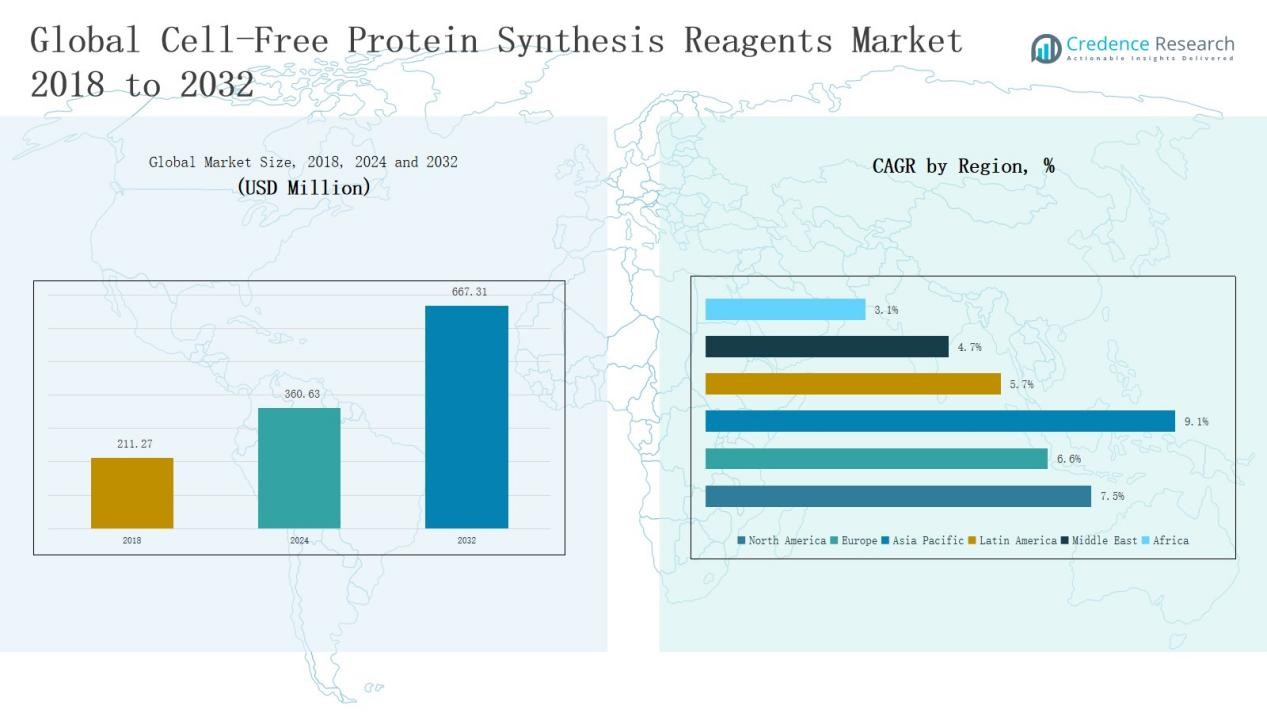
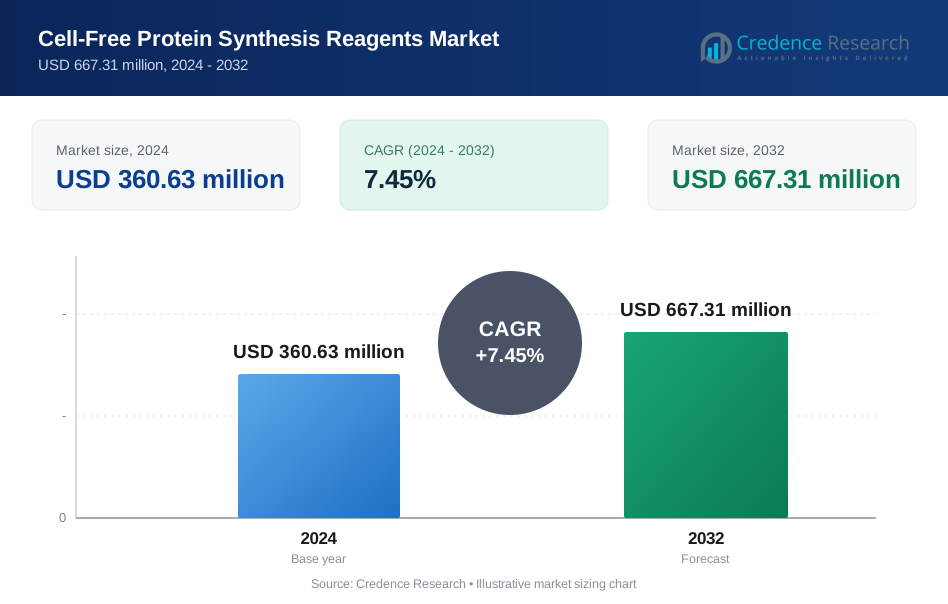
Cell-Free Protein Synthesis Reagents Market size was valued at USD 211.27 million in 2018 to USD 360.63 million in 2024 and is anticipated to reach USD 667.31 million by 2032, at a CAGR of 7.45% during the forecast period.
| REPORT ATTRIBUTE | DETAILS |
|---|---|
| Historical Period | 2020-2023 |
| Base Year | 2024 |
| Forecast Period | 2025-2032 |
| Cell-Free Protein Synthesis Reagents Market Size 2024 | USD 360.63 Million |
| Cell-Free Protein Synthesis Reagents Market, CAGR | 7.45% |
| Cell-Free Protein Synthesis Reagents Market Size 2032 | USD 667.31 Million |
The Cell-Free Protein Synthesis Reagents Market is driven by a mix of global leaders and specialized biotechnology firms. Key players include Thermo Fisher Scientific, Merck KGaA/Sigma-Aldrich, Promega Corporation, Takara Bio, New England Biolabs, CellFree Sciences, Biotechrabbit, Cube Biotech, GeneCopoeia, Bioneer Corporation, Jena Bioscience, Creative Biolabs, and Sutro Biopharma, each competing through advanced reagent portfolios, innovation in lysates, and strategic collaborations with pharmaceutical and research institutes. Among regions, North America leads the market with a 38% share in 2024, supported by strong R&D investment, advanced infrastructure, and the presence of major biotechnology companies driving large-scale adoption.
Market Insights
- The Cell-Free Protein Synthesis Reagents Market grew from USD 211.27 million in 2018 to USD 360.63 million in 2024, projected to reach USD 667.31 million by 2032 at a 45% CAGR.
- Cell extracts and lysates lead with a 38% share in 2024, while extract-based systems dominate methods with 71% share, supported by versatility, scalability, and cost-effectiveness.
- Protein engineering and functional analysis remain the largest application with 30% share, followed by enzyme engineering (18%) and therapeutic protein prototyping (16%), driven by pharma and biotech adoption.
- North America holds the largest regional share at 38% in 2024, supported by strong R&D, advanced infrastructure, and leading reagent manufacturers, reinforcing its global market dominance.
- Key players include Thermo Fisher Scientific, Merck KGaA/Sigma-Aldrich, Promega, Takara Bio, New England Biolabs, CellFree Sciences, Biotechrabbit, Cube Biotech, GeneCopoeia, Bioneer, Jena Bioscience, Creative Biolabs, and Sutro Biopharma.
Market Segment Insights
By Product / Reagent Type
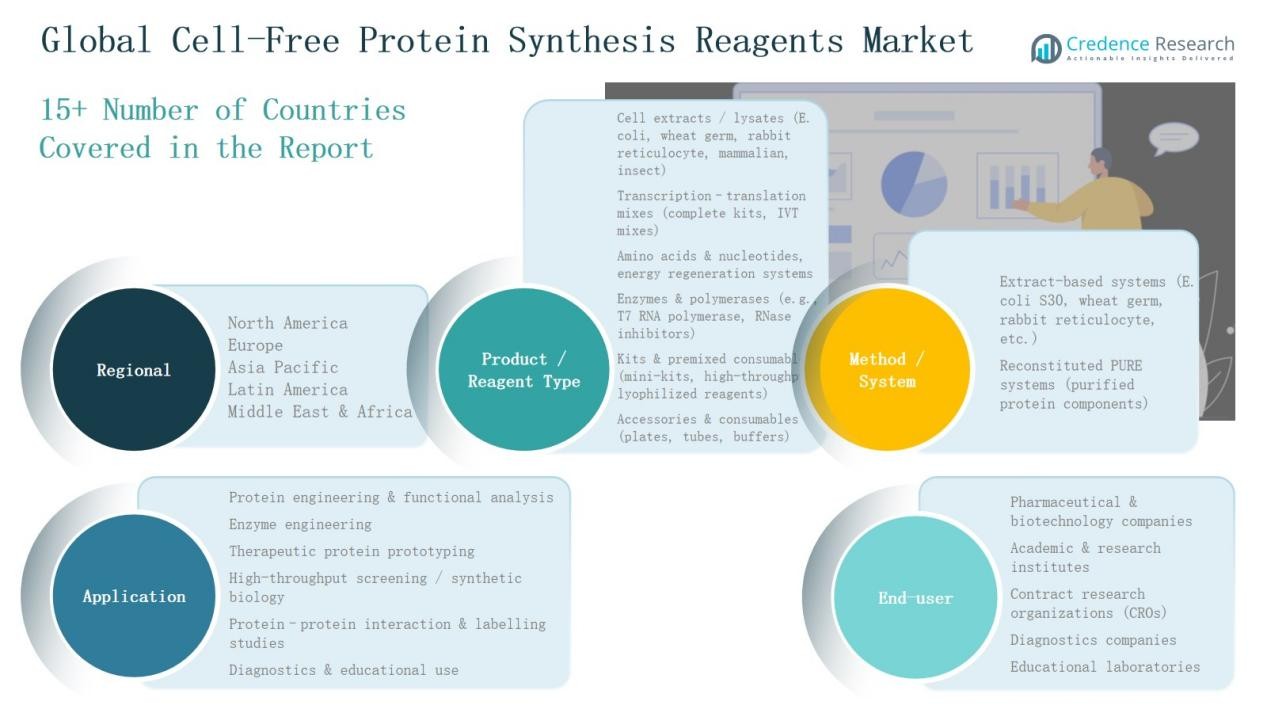
Cell extracts and lysates dominate with 38% share in 2024, driven by cost-effective E. coli and wheat germ systems. Transcription–translation mixes hold 22%, reflecting demand for ready-to-use IVT kits. Amino acids, nucleotides, and energy regeneration systems account for 14%, supporting synthesis yield. Enzymes and polymerases contribute 11%, led by T7 RNA polymerase use. Kits and premixed consumables capture 9%, expanding through high-throughput and lyophilized reagent solutions.
- For instance, Canvax released ultra-high yield IVT enzyme kits featuring T7 RNA polymerase and pyrophosphatase, designed for mRNA synthesis and enhanced nucleotide incorporation, streamlining reagent demand for RNA therapeutic development.
By Method / System
Extract-based systems dominate with 71% market share in 2024, primarily due to their versatility, scalability, and strong performance in protein expression using E. coli S30 and wheat germ extracts. They are widely used in pharmaceutical R&D and industrial applications because of their cost advantage and adaptability to diverse protein types. Reconstituted PURE systems hold the remaining 29% share, growing steadily as demand rises for high-purity protein synthesis, particularly in synthetic biology and structural biology studies. Their precise control over components supports advanced applications despite higher costs.
- For instance, CellFree Sciences launched the WEPRO7240 wheat germ extract system, enabling large-scale cell-free protein synthesis with enhanced yields for antibody and membrane protein production.
By Application
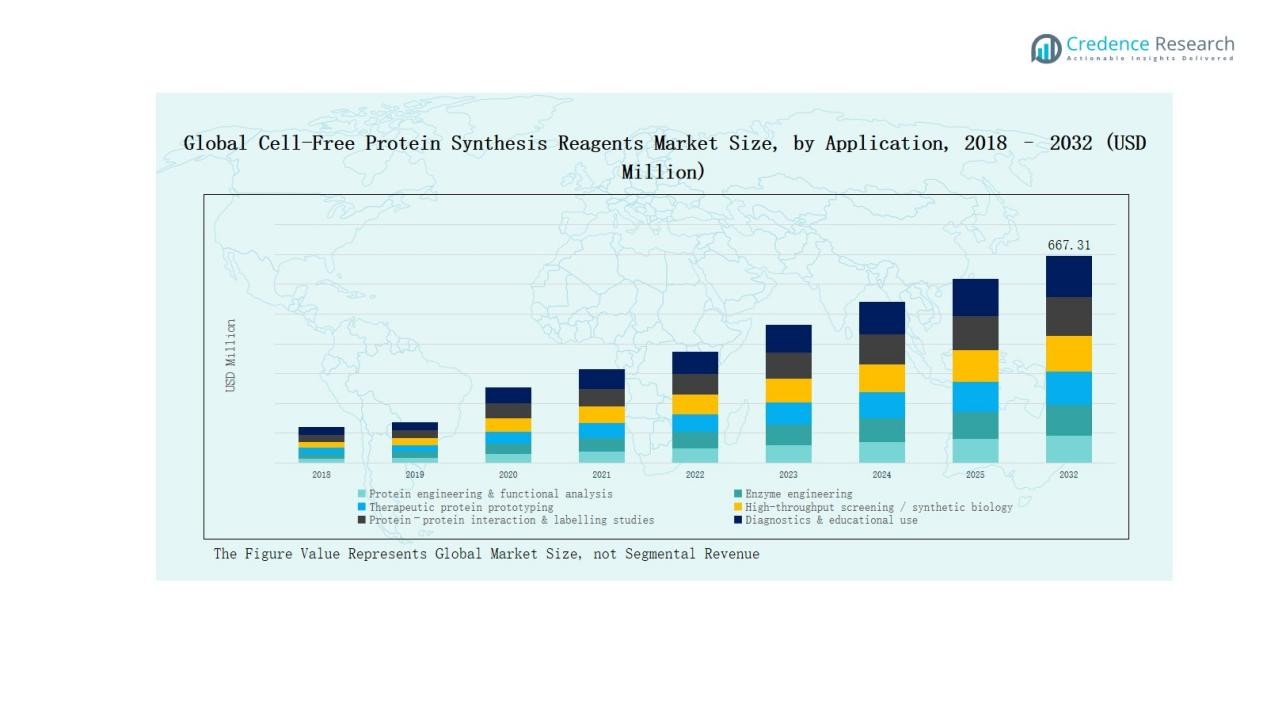
Protein engineering and functional analysis lead applications with 30% share, supported by investments in protein design. Enzyme engineering holds 18%, while therapeutic protein prototyping accounts for 16%, driven by biologics development. High-throughput screening and synthetic biology capture 14%, followed by protein–protein interaction studies at 12%. Diagnostics and educational use represent 10%, reflecting demand for simplified kits. Together, these segments highlight broad adoption across research, biotechnology, pharmaceuticals, and academic applications.
Key Growth Drivers
Rising Demand for Therapeutic Protein Prototyping
The market is strongly driven by increasing demand for rapid therapeutic protein prototyping. Pharmaceutical and biotechnology companies use cell-free systems to accelerate drug discovery, antibody engineering, and biologics development. Unlike conventional cell-based methods, these reagents allow faster expression of complex proteins without cell culture constraints. This speed shortens development timelines, reduces costs, and enables quick testing of multiple protein variants. The growing biologics pipeline and rising prevalence of chronic diseases further amplify demand, positioning therapeutic prototyping as a central driver of market expansion.
- For instance, Researchers at University College London (UCL) used E. coli cell-free protein synthesis (CFPS) systems to quickly screen and stabilize hepatitis B core (HBc) protein variants, enabling artificial disulfide bridge engineering for nanoparticle therapeutics.
Expansion of Synthetic Biology and High-Throughput Screening
Synthetic biology advancements and high-throughput screening adoption are key growth drivers. Researchers leverage cell-free systems to design genetic circuits, study protein–protein interactions, and screen large compound libraries with efficiency. Reagents that support scalable, automated processes are in high demand, particularly in academic and industrial R&D. Their flexibility and compatibility with robotics accelerate innovation in enzyme discovery, drug screening, and metabolic engineering. The increasing role of automation and integration with digital platforms enhances throughput, fueling market growth across biotechnology, pharmaceutical, and academic research sectors.
- For instance, Ginkgo Bioworks announced it screened over 17 million genetic designs through its automated high-throughput cell engineering foundry, highlighting the scale achievable with synthetic biology platforms.
Technological Advancements in Cell-Free Systems
Continuous innovation in lysates, transcription–translation mixes, and energy regeneration systems drives strong adoption. Advanced reagents deliver improved protein yields, longer reaction stability, and broader expression capabilities for complex proteins. Enzyme engineering and recombinant polymerases such as T7 RNA polymerase enhance efficiency in transcription and translation processes. Lyophilized kits and miniaturized formats further simplify workflows, making these systems more user-friendly and accessible. These technological improvements lower barriers for entry in educational and research institutes, while enabling precision-driven applications in drug discovery and structural biology.
Key Trends & Opportunities
Growing Integration of Cell-Free Systems in Diagnostics
An emerging trend is the use of cell-free protein synthesis reagents in point-of-care diagnostics. Researchers are developing biosensors and diagnostic assays that rely on rapid protein expression outside of living cells. This approach offers faster detection, cost efficiency, and portability compared to traditional lab methods. As demand for decentralized and personalized testing rises, cell-free platforms provide opportunities to expand into clinical diagnostics. The trend creates pathways for new product launches targeting infectious diseases, cancer biomarkers, and resource-limited healthcare settings worldwide.
- For instance, Daicel Arbor Biosciences introduced next-generation myTXTL® kits designed to accelerate antibody discovery and protein engineering, facilitating rapid diagnostic reagent production.
Adoption in Academic and Educational Programs
Educational laboratories and academic institutions increasingly adopt simplified reagent kits for training and learning. Lyophilized and miniaturized consumables allow students to replicate protein expression experiments without advanced lab infrastructure. This trend supports skill development in synthetic biology and molecular biology education, building a pipeline of future researchers. Opportunities exist for suppliers to expand product portfolios catering specifically to educational markets. The rising global emphasis on STEM education and funding for life sciences training further enhances adoption, positioning the segment as a growth opportunity.
- For instance, MEDOX Biotech India offers a broad portfolio of molecular biology teaching kits and reagents, widely used in educational laboratories. Their products, including micropipettes and gel electrophoresis kits, are designed to provide hands-on biotech learning experiences aligned with academic curricula across India.
Key Challenges
High Costs of Reagents and Kits
One of the major challenges is the high cost of cell-free protein synthesis reagents, particularly PURE systems and lyophilized kits. Advanced mixes and specialized enzymes require complex production, leading to premium pricing. While pharmaceutical and biotech firms can absorb these costs, smaller academic and educational institutions often face budgetary constraints. This restricts widespread adoption, especially in developing regions. Cost reduction strategies and scalable production methods will be essential to address this barrier and make the technology more accessible to a broader user base.
Limited Protein Yield and Scalability Issues
Despite technological progress, protein yield limitations remain a challenge for large-scale applications. Extract-based systems often struggle with complex proteins requiring post-translational modifications, while PURE systems are expensive at scale. These factors hinder commercial use in therapeutic manufacturing, restricting adoption primarily to research and prototyping stages. Companies must focus on enhancing yield stability, reaction longevity, and scalability to support industrial use. Addressing these gaps is crucial to unlock broader commercialization and compete with established cell-based expression methods in protein production.
Regulatory and Standardization Barriers
The market faces challenges related to regulatory acceptance and standardization of reagents for clinical and diagnostic use. Lack of harmonized protocols and validation frameworks creates uncertainty for pharmaceutical companies considering scale-up. Regulatory agencies require consistent performance, reproducibility, and safety assurance, which current systems may not fully deliver. Without clear standards, adoption in therapeutic and diagnostic pipelines can be delayed. Strengthening quality benchmarks, conducting clinical validations, and building consensus across industry stakeholders will be key to overcoming these regulatory hurdles.
Regional Analysis
North America
North America holds the largest share of the Cell-Free Protein Synthesis Reagents Market, accounting for 38% in 2024 with revenues reaching USD 157.49 million. The region is projected to grow at a 7.5% CAGR, reaching USD 292.22 million by 2032. Growth is supported by strong pharmaceutical R&D investments, high adoption in biotechnology firms, and presence of leading reagent manufacturers. Academic institutes and CROs in the U.S. and Canada further fuel demand through protein engineering and therapeutic prototyping projects. Regulatory support for biologics research and advanced laboratory infrastructure strengthen the region’s dominance.
Europe
Europe contributes 24% share in 2024, valued at USD 99.54 million, and is projected to reach USD 173.51 million by 2032 at a 6.6% CAGR. Countries like Germany, France, and the UK are central to market growth due to their strong biotechnology clusters and synthetic biology programs. The region benefits from EU-funded life sciences projects and collaborations between research institutes and biotech firms. Demand is particularly high for enzyme engineering and high-throughput screening applications. The presence of established reagent suppliers and a growing focus on precision medicine reinforce Europe’s position as the second-largest market.
Asia Pacific
Asia Pacific emerges as the fastest-growing region, holding 18% market share in 2024 with USD 75.19 million and expected to reach USD 157.57 million by 2032 at a 9.1% CAGR. China, Japan, and India drive growth with rapid investments in biotechnology research, academic collaborations, and synthetic biology startups. The region’s expanding pharmaceutical industry leverages cell-free systems for therapeutic protein prototyping and high-throughput screening. Government funding in R&D, particularly in China and South Korea, accelerates adoption. Growing educational initiatives and demand for affordable kits also contribute, positioning Asia Pacific as a critical growth hub in the forecast period.
Latin America
Latin America holds 4% share in 2024, generating USD 16.06 million, and is expected to reach USD 26.14 million by 2032, growing at a 5.7% CAGR. Brazil and Argentina lead the market due to increasing adoption of biotechnology research and diagnostic applications. Universities and research centers are gradually integrating cell-free reagents into protein engineering and educational training. Although adoption is slower than developed regions, rising interest in biosimilars and biopharmaceuticals supports growth. The market is also shaped by collaborations with international suppliers that introduce advanced reagent kits, expanding accessibility in emerging research environments.
Middle East
The Middle East accounts for 2% share in 2024, valued at USD 7.83 million, and is forecasted to reach USD 11.82 million by 2032 at a 4.7% CAGR. Growth is primarily driven by GCC countries and Israel, where investments in healthcare innovation and life sciences research are expanding. Universities and biotechnology startups are gradually adopting cell-free systems for enzyme engineering and diagnostics. Limited infrastructure and high reagent costs slow large-scale adoption, but rising government focus on diversifying healthcare and research ecosystems provides long-term opportunities for suppliers targeting niche applications.
Africa
Africa represents the smallest share, contributing 1% in 2024 with USD 4.53 million, projected to reach USD 6.06 million by 2032 at a 3.1% CAGR. South Africa leads adoption, supported by academic research initiatives and diagnostic development programs. Other countries remain in early stages of adoption due to budgetary constraints and limited laboratory infrastructure. Growth opportunities lie in educational kits and low-cost consumables, particularly as STEM programs expand across universities. International partnerships with reagent suppliers are expected to play a critical role in market expansion, enabling access to advanced technologies in resource-limited settings.
Market Segmentations:
By Product / Reagent Type
- Cell extracts / lysates (E. coli, wheat germ, rabbit reticulocyte, mammalian, insect)
- Transcription–translation mixes (complete kits, IVT mixes)
- Amino acids & nucleotides, energy regeneration systems
- Enzymes & polymerases (e.g., T7 RNA polymerase, RNase inhibitors)
- Kits & premixed consumables (mini-kits, high-throughput, lyophilized reagents)
- Accessories & consumables (plates, tubes, buffers)
By Method / System
- Extract-based systems (E. coli S30, wheat germ, rabbit reticulocyte, etc.)
- Reconstituted PURE systems (purified protein components)
By Application
- Protein engineering & functional analysis
- Enzyme engineering
- Therapeutic protein prototyping
- High-throughput screening / synthetic biology
- Protein–protein interaction & labelling studies
- Diagnostics & educational use
By End-User
- Pharmaceutical & biotechnology companies
- Academic & research institutes
- Contract research organizations (CROs)
- Diagnostics companies
- Educational laboratories
By Region
- North America (U.S., Canada, Mexico)
- Europe (UK, France, Germany, Italy, Spain, Russia, Rest of Europe)
- Asia Pacific (China, Japan, South Korea, India, Australia, Southeast Asia, Rest of APAC)
- Latin America (Brazil, Argentina, Rest of Latin America)
- Middle East (GCC Countries, Israel, Turkey, Rest of Middle East)
- Africa (South Africa, Egypt, Rest of Africa)
Competitive Landscape
The competitive landscape of the Cell-Free Protein Synthesis Reagents Market is characterized by a mix of global life science leaders, specialized biotechnology firms, and emerging regional players. Companies such as Thermo Fisher Scientific, Merck KGaA/Sigma-Aldrich, Promega Corporation, Takara Bio, and New England Biolabs dominate the market with broad reagent portfolios, strong global distribution networks, and sustained investments in R&D. Niche players including CellFree Sciences, Biotechrabbit, Cube Biotech, and GeneCopoeia strengthen competition by offering specialized lysates, transcription–translation kits, and lyophilized solutions tailored for academic and industrial use. Sutro Biopharma and Creative Biolabs leverage proprietary technologies to target therapeutic prototyping and drug discovery, expanding the market scope. Partnerships with pharmaceutical companies, CROs, and academic institutions remain central strategies, alongside innovation in high-throughput and automated reagent systems. Growing demand from synthetic biology, enzyme engineering, and diagnostics drives continuous product innovation, making technological differentiation and scalability the key competitive levers in this evolving market.
Key Players
- Thermo Fisher Scientific
- Merck KGaA / Sigma-Aldrich
- Promega Corporation
- Takara Bio
- New England Biolabs (NEB)
- CellFree Sciences Co., Ltd.
- Biotechrabbit GmbH
- Cube Biotech GmbH
- GeneCopoeia, Inc.
- Bioneer Corporation
- Jena Bioscience GmbH
- Creative Biolabs
- Sutro Biopharma
Recent Developments
- In June 2024, LenioBio and Labscoop formed a strategic partnership to enhance access to LenioBio’s cell-free protein synthesis technology across North America, enabling broad availability of their ALiCE platform products and services via Labscoop’s e-commerce marketplace.
- In January 2025, Sutro Biopharma and Boehringer Ingelheim BioXcellence established a collaboration to develop first-in-class cell-free protein synthesis capabilities at commercial scale, marking a significant development in the market.
- In Junessss 2024, Daicel Arbor Biosciences launched its upgraded myTXTL® Pro and Antibody/DS Kits to enhance protein expression efficiency and streamline workflows.
- In August 2025, AIChE hosted the 3rd Cell-Free Systems Conference at Northwestern University, highlighting advances in diagnostics, synthetic cells, and high-throughput CFPS applications.
Report Coverage
The research report offers an in-depth analysis based on Product / Reagent Type, Method / System, Application, End User and Region. It details leading market players, providing an overview of their business, product offerings, investments, revenue streams, and key applications. Additionally, the report includes insights into the competitive environment, SWOT analysis, current market trends, as well as the primary drivers and constraints. Furthermore, it discusses various factors that have driven market expansion in recent years. The report also explores market dynamics, regulatory scenarios, and technological advancements that are shaping the industry. It assesses the impact of external factors and global economic changes on market growth. Lastly, it provides strategic recommendations for new entrants and established companies to navigate the complexities of the market.
Future Outlook
- Demand for rapid therapeutic protein prototyping will strengthen adoption across pharmaceutical pipelines.
- Expansion of synthetic biology applications will drive wider use of advanced reagent systems.
- Academic and research institutes will increase uptake of simplified kits for education and training.
- High-throughput screening platforms will rely more on cell-free reagents for efficiency.
- Growth in enzyme engineering will boost demand for specialized lysates and polymerases.
- Diagnostic assay development will increasingly integrate cell-free systems for faster results.
- Technological advances will enhance protein yield and stability, broadening application scope.
- Strategic collaborations between biotech firms and reagent suppliers will intensify competition.
- Emerging markets will adopt cost-effective kits and consumables to expand accessibility.
- Regulatory clarity and standardization will improve acceptance in clinical and industrial use.
Request a Free Sample
Fill in your details and we'll send you a free sample report.
- Sample data tables & charts
- Research methodology
Market Dynamics
Therapeutic Protein Prototyping Acceleration
Cell-free protein synthesis reagents enable rapid prototyping of therapeutic proteins, allowing pharmaceutical and biotech companies to quickly test and optimize biologics without the time and complexity of cell-based systems. This accelerates drug discovery and shortens development timelines, fueling market growth.
Expansion of Synthetic Biology and High-Throughput Screening
Advancements in synthetic biology and the adoption of high-throughput screening platforms are driving demand for cell-free reagents that support scalable, automated protein expression and genetic circuit design. These reagents are essential for efficient screening and innovation in enzyme discovery, metabolic engineering, and drug development.
Technological Advancements in Reagent Systems
Continuous innovation in lysates, transcription–translation mixes, and energy regeneration systems has improved protein yield, reaction stability, and the ability to express complex proteins. These technological improvements make cell-free systems more accessible and effective for a broader range of research and industrial applications.
Integration in Diagnostics and Point-of-Care Testing
Cell-free protein synthesis reagents are increasingly used in the development of rapid diagnostic assays and biosensors, enabling faster, portable, and cost-effective detection of diseases. This trend is expanding the market into clinical diagnostics and resource-limited settings.
Growing Adoption in Academic and Educational Settings
Simplified, lyophilized, and miniaturized reagent kits are being adopted by educational laboratories and academic institutions for training and research purposes. This supports skill development in molecular biology and synthetic biology, expanding the user base and driving future market growth.
Need a Custom Version of This Report?
Tailor the scope, geography, or segments to your exact requirements.
- Custom geography or segment scope
- Direct access to our analyst team
Frequently Asked Questions
What is the current market size for Cell-Free Protein Synthesis Reagents Market, and what is its projected size in 2032?
At what Compound Annual Growth Rate is the Cell-Free Protein Synthesis Reagents Market projected to grow between 2025 and 2032?
Which Cell-Free Protein Synthesis Reagents Market segment held the largest share in 2024?
What are the primary factors fueling the growth of the Cell-Free Protein Synthesis Reagents Market?
Who are the leading companies in the Cell-Free Protein Synthesis Reagents Market?
Which region commanded the largest share of the Cell-Free Protein Synthesis Reagents Market in 2024?
Table of Content
Chapter 1 Market Segmentation
- 1.1 Segmentation Framework
- 1.1.1 Product and Service Classification
- 1.1.2 Application and End-Use Classification
- 1.1.3 Technology and Solution Classification
- 1.1.4 Customer and Distribution Channel Classification
- 1.1.5 Geographic Segmentation
- 1.1.6 Market Segment Definitions and Boundaries
- 1.2 By End-User
- 1.2.1 Pharmaceutical & biotechnology companies
- 1.2.2 Academic & research institutes
- 1.2.3 Contract research organizations (CROs)
- 1.2.4 Diagnostics companies
- 1.2.5 Educational laboratories
- 1.3 By Application
- 1.3.1 Protein engineering & functional analysis
- 1.3.2 Enzyme engineering
- 1.3.3 Therapeutic protein prototyping
- 1.3.4 High-throughput screening / synthetic biology
- 1.3.5 Protein–protein interaction & labelling studies
- 1.3.6 Diagnostics & educational use
- 1.4 By Method / System
- 1.4.1 Extract-based systems (E. coli S30, wheat germ, rabbit reticulocyte, etc.)
- 1.4.2 Reconstituted PURE systems (purified protein components)
- 1.5 By Product / Reagent Type
- 1.5.1 Cell extracts / lysates (E. coli, wheat germ, rabbit reticulocyte, mammalian, insect)
- 1.5.2 Transcription–translation mixes (complete kits, IVT mixes)
- 1.5.3 Amino acids & nucleotides, energy regeneration systems
- 1.5.4 Enzymes & polymerases (e.g., T7 RNA polymerase, RNase inhibitors)
- 1.5.5 Kits & premixed consumables (mini-kits, high-throughput, lyophilized reagents)
- 1.5.6 Accessories & consumables (plates, tubes, buffers)
Chapter 2 Introduction
- 2.1 Report Objectives and Scope
- 2.2 Product Definition and Industry Terminology
- 2.3 Market Inclusions and Exclusions
- 2.4 Research Process
- 2.4.1 Primary Research and Expert Interviews
- 2.4.2 Secondary Research and Source Review
- 2.4.3 Top-Down and Bottom-Up Estimation
- 2.4.4 Data Triangulation and Verification
- 2.5 Market Size Measurement Basis
- 2.5.1 2024: USD 360.63 million → 2032: USD 667.31 million
- 2.6 Historical and Forecast Reference Periods
- 2.6.1 Base Year: 2024
- 2.6.2 Forecast Period: 2024-2032
- 2.7 Research Assumptions and Limitations
Chapter 3 Executive Summary
- 3.1 Market Snapshot and Key Findings
- 3.2 Base-Year Market Size, 2024
- 3.3 Forecast Market Size, 2032
- 3.4 Revenue and Volume Growth Outlook
- 3.5 Key Demand and Supply Indicators
- 3.6 Leading Market Segments
- 3.7 Fastest-Growing Market Opportunities
- 3.8 Regional Performance Highlights
- 3.9 Technology and Industry Transformation
- 3.10 Competitive Landscape Summary
- 3.11 Analyst View and Strategic Implications
Chapter 4 Global Cell-Free Protein Synthesis Reagents Market Trends and Developments
- 4.1 Historical Industry Development
- 4.2 Recent Market Trends and Developments
- 4.3 Demand and Customer Behavior Trends
- 4.4 Technology and Product Innovation
- 4.5 Artificial Intelligence, Automation and Digitalization
- 4.6 Local Manufacturing and Supply Chain Realignment
- 4.7 Industry Partnerships, Mergers and Acquisitions
- 4.8 Sustainability and Circular Economy Developments
- 4.9 Government and Private Sector Investment Trends
- 4.10 Emerging Business Models and Commercialization
- 4.11 Industry Developments and Announcements
Chapter 5 Global Cell-Free Protein Synthesis Reagents Market Production, Supply and Demand Analysis
- 5.1 Demand Trend and Consumption Analysis
- 5.2 Demand Forecast, 2024-2032
- 5.3 Production and Output Trend
- 5.4 Production and Output Forecast, 2024-2032
- 5.5 Installed Capacity and Capacity Utilization
- 5.6 Company-Wise Production Plants and Statistics
- 5.6.1 Installed Production Capacity
- 5.6.2 Actual Production
- 5.6.3 Planned Capacity and Expansion Targets
- 5.7 Supply Chain Structure and Procurement Trends
- 5.8 Supply-Demand Gap and Bottlenecks
- 5.9 Import Dependence and Sourcing Structure
- 5.10 Contract Manufacturing and Outsourcing
- 5.11 Regional Supply and Demand Concentration
Chapter 6 Global Cell-Free Protein Synthesis Reagents Market Pricing Analysis
- 6.1 Pricing Structure and Measurement
- 6.2 Historical Pricing Trends
- 6.3 Pricing Outlook, 2024-2032
- 6.4 Average Selling Price and Unit Economics
- 6.5 Pricing by Product and Market Segment
- 6.6 Geographic Pricing Differences
- 6.7 Key Input, Energy, Labor and Logistics Costs
- 6.8 Contract Pricing and Purchasing Models
- 6.9 Pricing Sensitivity and Competitive Positioning
- 6.10 Price, Margin and Profitability Implications
Chapter 7 Global Cell-Free Protein Synthesis Reagents Market Dynamics
- 7.1 Market Growth Drivers
- 7.1.1 Demand-Side Drivers
- 7.1.2 Technology and Innovation Drivers
- 7.1.3 Infrastructure and Investment Drivers
- 7.1.4 Regulatory and Policy Drivers
- 7.2 Market Restraints
- 7.2.1 Cost and Affordability Constraints
- 7.2.2 Technology and Adoption Barriers
- 7.2.3 Supply Chain and Operational Constraints
- 7.3 Market Challenges
- 7.3.1 Competitive Pressure and Margin Erosion
- 7.3.2 Skills, Infrastructure and Implementation Gaps
- 7.4 Emerging Market Opportunities
- 7.5 Market Dynamics Impact and Time-Horizon Assessment
Chapter 8 Global Cell-Free Protein Synthesis Reagents Value Chain Analysis
- 8.1 Industry Value Chain Overview
- 8.2 Upstream Suppliers and Critical Inputs
- 8.3 Technology and Component Providers
- 8.4 Manufacturing or Service Delivery
- 8.5 Distribution, Channel Partners and Integrators
- 8.6 Downstream Applications and End Users
- 8.7 Value Addition and Profit Pools
- 8.8 Vertical Integration and Outsourcing
- 8.9 Supplier Concentration and Risk
- 8.10 Supply Chain Localization and Resilience
Chapter 9 Global Cell-Free Protein Synthesis Reagents Market Regulations and Policies
- 9.1 Relevant Laws, Standards and Compliance Frameworks
- 9.2 Product, Service, Safety and Quality Requirements
- 9.3 Government Policies, Incentives and Subsidies
- 9.4 Imports, Exports and Trade Barriers
- 9.5 Public Procurement and Local Content Requirements
- 9.6 Environmental and Sustainability Compliance
- 9.7 Upcoming Policy Changes and Market Implications
Chapter 10 Global Cell-Free Protein Synthesis Reagents Market Hotspots and Opportunities
- 10.1 Market Opportunity Mapping and Growth Hotspots
- 10.2 High-Growth Applications and Customer Groups
- 10.3 Underserved Markets and White-Space Opportunities
- 10.4 Emerging Technology and Product Opportunities
- 10.5 New Capacity and Investment Hotspots
- 10.6 Market Entry and Expansion Opportunities
- 10.7 Distribution and Partnership Opportunities
- 10.8 Near-Term and Long-Term Commercial Potential
- 10.9 Opportunity Attractiveness and Execution Risks
Chapter 11 Global Cell-Free Protein Synthesis Reagents Market Outlook, 2024-2032
- 11.1 Market Size and Analysis
- 11.1.1 Revenue (Market Measurement: 2024: USD 360.63 million → 2032: USD 667.31 million)
- 11.1.2 Market Volume and Quantity Sold
- 11.1.3 Historical Market Size
- 11.1.4 Base-Year Market Size, 2024
- 11.2 Market Forecast, 2024-2032
- 11.2.1 Revenue Forecast to 2032
- 11.2.2 Volume Forecast to 2032
- 11.2.3 CAGR and Year-on-Year Growth
- 11.2.4 Incremental Revenue Opportunity
- 11.3 Forecast Assumptions and Scenario Analysis
- 11.3.1 Base-Case Forecast
- 11.3.2 Optimistic and Conservative Scenarios
- 11.3.3 Technology, Pricing and Policy Sensitivities
- 11.4 Market Attractiveness and Growth Outlook
Chapter 12 Global Cell-Free Protein Synthesis Reagents Market Segmentation and Outlook
- 12.1 Segmentation Summary and Market Shares, 2024
- 12.2 Largest and Fastest-Growing Segments
- 12.3 By End-User - Market Size and Forecast, 2024-2032
- 12.3.1 Segment Definition and Scope
- 12.3.2 Historical Market Size
- 12.3.3 Revenue Forecast, 2024-2032
- 12.3.4 Volume Forecast, 2024-2032
- 12.3.5 Base-Year Market Share, 2024
- 12.3.6 Segment CAGR and Growth Drivers
- 12.3.7 Subsegment Market Size and Forecast
- 12.3.7.1 Pharmaceutical & biotechnology companies
- 12.3.7.2 Academic & research institutes
- 12.3.7.3 Contract research organizations (CROs)
- 12.3.7.4 Diagnostics companies
- 12.3.7.5 Educational laboratories
- 12.3.8 Subsegment Pricing and Adoption Trends
- 12.3.9 Leading Suppliers and Competition
- 12.3.10 Regional Demand and Opportunities
- 12.4 By Application - Market Size and Forecast, 2024-2032
- 12.4.1 Segment Definition and Scope
- 12.4.2 Historical Market Size
- 12.4.3 Revenue Forecast, 2024-2032
- 12.4.4 Volume Forecast, 2024-2032
- 12.4.5 Base-Year Market Share, 2024
- 12.4.6 Segment CAGR and Growth Drivers
- 12.4.7 Subsegment Market Size and Forecast
- 12.4.7.1 Protein engineering & functional analysis
- 12.4.7.2 Enzyme engineering
- 12.4.7.3 Therapeutic protein prototyping
- 12.4.7.4 High-throughput screening / synthetic biology
- 12.4.7.5 Protein–protein interaction & labelling studies
- 12.4.7.6 Diagnostics & educational use
- 12.4.8 Subsegment Pricing and Adoption Trends
- 12.4.9 Leading Suppliers and Competition
- 12.4.10 Regional Demand and Opportunities
- 12.5 By Method / System - Market Size and Forecast, 2024-2032
- 12.5.1 Segment Definition and Scope
- 12.5.2 Historical Market Size
- 12.5.3 Revenue Forecast, 2024-2032
- 12.5.4 Volume Forecast, 2024-2032
- 12.5.5 Base-Year Market Share, 2024
- 12.5.6 Segment CAGR and Growth Drivers
- 12.5.7 Subsegment Market Size and Forecast
- 12.5.7.1 Extract-based systems (E. coli S30, wheat germ, rabbit reticulocyte, etc.)
- 12.5.7.2 Reconstituted PURE systems (purified protein components)
- 12.5.8 Subsegment Pricing and Adoption Trends
- 12.5.9 Leading Suppliers and Competition
- 12.5.10 Regional Demand and Opportunities
- 12.6 By Product / Reagent Type - Market Size and Forecast, 2024-2032
- 12.6.1 Segment Definition and Scope
- 12.6.2 Historical Market Size
- 12.6.3 Revenue Forecast, 2024-2032
- 12.6.4 Volume Forecast, 2024-2032
- 12.6.5 Base-Year Market Share, 2024
- 12.6.6 Segment CAGR and Growth Drivers
- 12.6.7 Subsegment Market Size and Forecast
- 12.6.7.1 Cell extracts / lysates (E. coli, wheat germ, rabbit reticulocyte, mammalian, insect)
- 12.6.7.2 Transcription–translation mixes (complete kits, IVT mixes)
- 12.6.7.3 Amino acids & nucleotides, energy regeneration systems
- 12.6.7.4 Enzymes & polymerases (e.g., T7 RNA polymerase, RNase inhibitors)
- 12.6.7.5 Kits & premixed consumables (mini-kits, high-throughput, lyophilized reagents)
- 12.6.7.6 Accessories & consumables (plates, tubes, buffers)
- 12.6.8 Subsegment Pricing and Adoption Trends
- 12.6.9 Leading Suppliers and Competition
- 12.6.10 Regional Demand and Opportunities
- 12.7 Segment Growth Comparison
- 12.8 Segment Attractiveness and Priority Matrix
Chapter 13 Global Cell-Free Protein Synthesis Reagents End-Use and Application Market Outlook
- 13.1 End-Use Industry and Customer Demand Structure
- 13.2 Leading Applications and Customer Groups
- 13.3 End-Use Market Size, Share and Forecast
- 13.4 Major End-Use Industry Deep Dives
- 13.4.1 Customer Requirements and Use Cases
- 13.4.2 Demand and Replacement Cycles
- 13.4.3 Technical and Regulatory Considerations
- 13.4.4 Purchasing and Procurement Models
- 13.4.5 Leading Vendors and Distribution Channels
- 13.4.6 Forecast and Commercial Opportunities
- 13.5 Emerging Applications and Cross-Segment Demand
- 13.6 End-Use Industry Investment Priorities
Chapter 14 Global Cell-Free Protein Synthesis Reagents Geographic Market Outlook, 2024-2032
- 14.1 Regional Market Size and Share, 2024
- 14.2 Regional Market Forecast, 2024-2032
- 14.3 Regional Pricing, Production and Demand Differences
- 14.4 North America
- 14.4.1 United States
- 14.4.2 Canada
- 14.4.3 Mexico
- 14.5 Europe
- 14.5.1 Germany
- 14.5.2 France
- 14.5.3 Italy
- 14.5.4 United Kingdom
- 14.5.5 Spain
- 14.5.6 Poland
- 14.5.7 Russia
- 14.5.8 Netherlands
- 14.5.9 Belgium
- 14.5.10 Sweden
- 14.5.11 Denmark
- 14.5.12 Norway
- 14.5.13 Rest of Europe
- 14.6 Asia Pacific
- 14.6.1 China
- 14.6.2 India
- 14.6.3 Japan
- 14.6.4 South Korea
- 14.6.5 Thailand
- 14.6.6 Indonesia
- 14.6.7 Vietnam
- 14.6.8 Malaysia
- 14.6.9 Australia
- 14.6.10 Rest of Asia Pacific
- 14.7 Latin America
- 14.7.1 Brazil
- 14.7.2 Argentina
- 14.7.3 Colombia
- 14.7.4 Chile
- 14.7.5 Rest of Latin America
- 14.8 Middle East
- 14.8.1 Saudi Arabia
- 14.8.2 United Arab Emirates
- 14.8.3 Turkey
- 14.8.4 Israel
- 14.8.5 Iran
- 14.8.6 Rest of the Middle East
- 14.9 Africa
- 14.9.1 South Africa
- 14.9.2 Egypt
- 14.9.3 Nigeria
- 14.9.4 Morocco
- 14.9.5 Rest of Africa
- 14.10 Regional Investment, Policy and Supply Chain Differences
- 14.11 Regional Competitive Landscape
- 14.12 Geographic Growth Hotspots
Chapter 15 Global Cell-Free Protein Synthesis Reagents Technology, Innovation and Sustainability Outlook
- 15.1 Technology Landscape and Maturity
- 15.2 Product, Process and Service Innovation
- 15.3 AI, Automation and Digital Tools in the Industry
- 15.4 Technology Adoption and Performance Benchmarking
- 15.5 Innovation Pipeline and R&D Investment
- 15.6 Patent and Intellectual Property Trends
- 15.7 Energy Efficiency and Resource Management
- 15.8 Sustainability, Recycling and Circularity
- 15.9 Technology Roadmap, 2024-2032
- 15.10 Risks of Obsolescence and Technology Substitution
Chapter 16 Global Cell-Free Protein Synthesis Reagents Market Key Strategic Imperatives
- 16.1 Growth and Market Entry Priorities
- 16.2 High-Return Products and Segments
- 16.3 Pricing, Profitability and Cost Optimization
- 16.4 Technology Investment and Product Differentiation
- 16.5 Supply Chain Localization and Resilience
- 16.6 Distribution and Customer Acquisition
- 16.7 Partnership, Acquisition and Capacity Strategy
- 16.8 Regional Expansion Priorities
- 16.9 Short-, Medium- and Long-Term Actions
Chapter 17 Competition Outlook
- 17.1 Industry Competition Characteristics
- 17.2 Market Structure and Concentration
- 17.3 Market Share and Competitive Positioning, 2024
- 17.4 Company-Wise Revenue and Product Benchmarking
- 17.5 Production and Service Capacity Benchmarking
- 17.6 Technology, Pricing and Differentiation
- 17.7 Regional Footprint and Distribution Strength
- 17.8 Mergers, Acquisitions and Strategic Alliances
- 17.9 New Entrants and Competitive Threats
- 17.10 Porter's Five Forces and Industry Attractiveness
- 17.11 Competitive Outlook, 2024-2032
Chapter 18 Company Profiles
- 18.1 Company Coverage and Selection Criteria
- 18.2 Thermo Fisher Scientific
- 18.2.1 Business Description
- 18.2.2 Company Ownership and Geographic Presence
- 18.2.3 Product and Service Portfolio
- 18.2.4 Manufacturing and Operating Footprint
- 18.2.5 Production Capacity and Expansion Plans
- 18.2.6 Financial Performance and Investment
- 18.2.7 Market Share and Competitive Position
- 18.2.8 Technology and Innovation Capabilities
- 18.2.9 Strategic Alliances or Partnerships
- 18.2.10 Recent Developments
- 18.2.11 Growth Strategy and Outlook
- 18.3 Merck KGaA / Sigma-Aldrich
- 18.4 Promega Corporation
- 18.5 Takara Bio
- 18.6 New England Biolabs
- 18.7 CellFree Sciences
- 18.8 Biotechrabbit
- 18.9 Cube Biotech
- 18.10 GeneCopoeia
- 18.11 Sutro Biopharma
- 18.12 Other Relevant Market Participants
Note: Every listed company is profiled on the structure shown under the first company. The company list is preliminary and may change based on research findings, market developments, data availability and client requirements.
Chapter 19 Disclaimer
- 19.1 Research and Forecast Disclaimer
- 19.2 Data Source and Estimation Limitations
Note: The depth of individual sections depends on data availability for this market. Volume, capacity, trade and other unit-based metrics are included where applicable.
