
| REPORT ATTRIBUTE | DETAILS |
|---|---|
| Historical Period | 2020-2023 |
| Base Year | 2024 |
| Forecast Period | 2025-2032 |
| Door Hardware Market Size 2024 | USD 25,885.29 million |
| Door Hardware Market, CAGR | 5.6% |
| Door Hardware Market Size 2032 | USD 40,028 million |
Market Overview
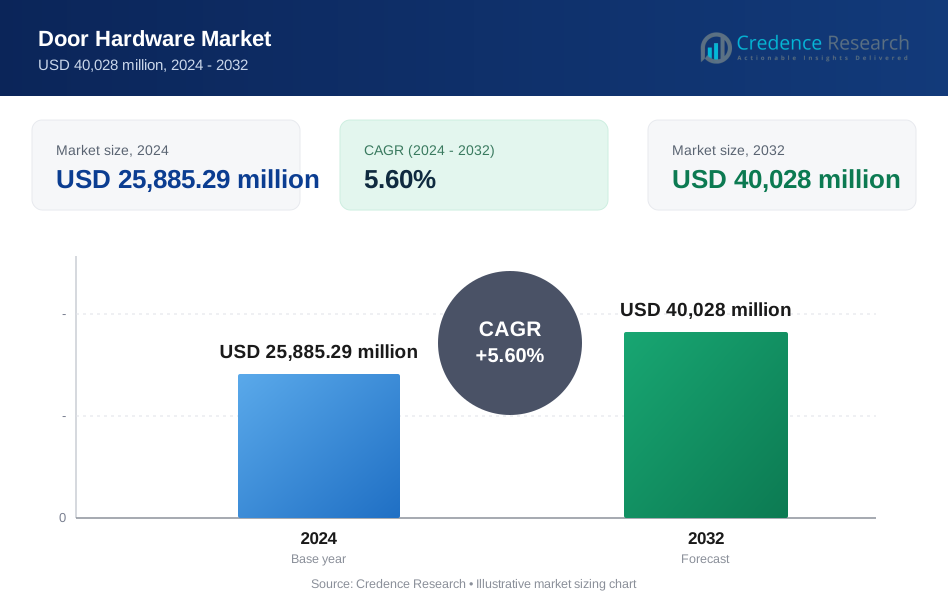
The Door Hardware Market is projected to grow from USD 25,885.29 million in 2024 to USD 40,028 million by 2032, registering a CAGR of 5.6% during the forecast period.
The Door Hardware Market is witnessing steady growth driven by the rising demand for advanced security systems, increased construction activity, and rapid urbanization across residential and commercial sectors. Growing concerns over safety and convenience have accelerated the adoption of smart locks, access control systems, and integrated door solutions. Technological advancements such as biometric authentication, IoT-enabled hardware, and remote access functionalities are transforming conventional door systems into intelligent entry points. The shift towards sustainable and energy-efficient building materials is further fueling demand for eco-friendly and durable hardware solutions. Renovation trends in developed economies and infrastructure development in emerging markets continue to support product uptake. Consumers and businesses increasingly prefer modern aesthetic designs that complement contemporary architecture, pushing manufacturers to innovate both functionally and visually. In parallel, the growth of e-commerce platforms is streamlining product accessibility and expanding market reach. These trends collectively position the Door Hardware Market for sustained expansion over the coming years.
The Door Hardware Market exhibits strong geographical presence across Asia Pacific, North America, and Europe. Asia Pacific leads with 36% market share, driven by rapid urbanization and large-scale infrastructure projects in China, India, and Southeast Asia. North America holds 28%, supported by high demand for smart home solutions and consistent residential renovation activity. Europe accounts for 22%, marked by sustainable construction practices and strong emphasis on design and quality. Key players operating across these regions include Allegion plc, ASSA ABLOY, Häfele America Co, Intersteel UK, Kuriki Manufacture Co., Ltd., Latham’s Steel Security Doors, Sanvi Enterprise, SOBINCO, SUGATSUNE KOGYO CO., LTD, and WEST CORPORATION. These companies compete through innovation, regional expansion, and smart product offerings, aligning with modern architectural trends and evolving consumer preferences.\
Market Insights
- The Door Hardware Market is projected to grow from USD 25,885.29 million in 2024 to USD 40,028 million by 2032, registering a CAGR of 5.6% during the forecast period.
- Rising residential and commercial construction, particularly in emerging economies, continues to drive demand for hinges, locks, and closers, supporting long-term market expansion.
- Increasing adoption of smart and secure access solutions, including biometric locks and IoT-enabled hardware, is reshaping traditional door systems into intelligent access points.
- Growing consumer interest in aesthetic and functional door hardware is pushing manufacturers to offer stylish, durable, and ergonomic designs across residential and hospitality applications.
- The shift toward sustainability is fueling demand for eco-friendly materials and green-certified door hardware aligned with energy-efficient construction practices.
- Asia Pacific holds 36% of the global market, followed by North America with 28% and Europe with 22%, driven by region-specific factors such as urbanization, renovation, and sustainable design.
- Leading companies such as ASSA ABLOY, Allegion plc, Häfele America Co, SOBINCO, and Kuriki Manufacture Co., Ltd. compete through product innovation, smart technology integration, and global distribution networks.
Market Drivers
Surge in Construction and Real Estate Activities
The growth of the construction and real estate sectors is a primary driver of the Door Hardware Market. Rising residential and commercial construction projects, particularly in developing countries, are driving the demand for door handles, locks, and hinges. Urban expansion and infrastructure investments in schools, hospitals, and office spaces are also creating a steady need for advanced hardware solutions. It benefits from large-scale housing projects and remodeling initiatives in urban and suburban areas.
- For instance, Hafele introduced its Loox LED lighting system for drawers and cabinets, but has also expanded its door hardware portfolio with the Hafele Connect system, which offers electronic access control for offices and public buildings, supporting the trend toward modern, secure infrastructure in urban development.
Rising Demand for Smart and Secure Access Solutions
Consumers and businesses are increasingly prioritizing security and automation, which is fueling the adoption of electronic locks, smart handles, and biometric systems. The Door Hardware Market is shifting from traditional mechanical components to digitally integrated solutions offering enhanced access control and convenience. It gains from the growing popularity of home automation and IoT-enabled systems. High-security requirements in commercial and institutional buildings are also accelerating product innovations in electronic hardware systems.
- For instance, Yale Zuri S (Antique Bronze) Smart Lock, which offers five-way unlocking-fingerprint, PIN, RFID, manual key, and built-in Bluetooth for access through a home app, providing users with flexible and secure entry options.
Growing Consumer Preference for Aesthetic and Functional Designs
Modern consumers are seeking door hardware that not only performs efficiently but also complements interior design themes. Manufacturers in the Door Hardware Market are responding with products that blend style with durability, offering a wide range of finishes, materials, and ergonomic designs. It is witnessing increased demand for premium, designer-grade hardware in luxury residences and hospitality projects. The trend toward minimalist and sleek aesthetics is also influencing product development across the market.
Emphasis on Sustainability and Energy-Efficient Materials
Sustainable construction practices and environmental awareness are prompting the adoption of eco-friendly door hardware made from recyclable and low-impact materials. The Door Hardware Market is experiencing growing traction for products certified by green building standards and energy codes. It benefits from government incentives supporting sustainable building initiatives. Consumers are also showing a preference for long-lasting, corrosion-resistant materials that reduce replacement frequency and contribute to overall building efficiency.
Market Trends
Adoption of Smart Door Hardware in Residential and Commercial Spaces
The rapid integration of smart technologies is transforming the Door Hardware Market, particularly in urban housing and commercial spaces. Consumers and building managers are adopting keyless entry systems, fingerprint recognition, and mobile-controlled access devices. It is experiencing heightened interest in products that support connectivity and real-time monitoring. Increased affordability of smart devices is encouraging adoption across mid-range housing. The trend aligns with growing demand for home automation and energy-efficient infrastructure globally.
- For instance, Lockly released the Visage Zeno Series, featuring facial recognition, fingerprint scanning, and support for Apple Home Keys and voice commands, providing a next-generation, hands-free secure entry solution for smart buildings.
Design Innovation and Customization Driving Consumer Engagement
The Door Hardware Market is seeing a shift toward personalized and visually appealing products. Consumers are opting for hardware that matches interior aesthetics, with finishes ranging from matte black to antique bronze. It is benefiting from the demand for custom designs that reflect personal or brand identity in residential and commercial applications. Manufacturers are introducing modular and interchangeable components. Rising expectations around both form and function are encouraging constant innovation in product development.
- For instance, Martin Pierce designs bespoke door handles and hardware, handcrafted in bronze or brass, with unique sculptural elements, enabling clients to commission one-of-a-kind hardware that matches their interior design vision.
Rising Popularity of Sustainable and Eco-Friendly Products
Sustainability has become a critical trend in the Door Hardware Market, with manufacturers focusing on recyclable materials and eco-conscious production methods. Green certifications and compliance with environmental regulations are becoming deciding factors for product selection. It is aligning product offerings with the increasing number of green building projects. Consumers are showing strong interest in hardware with low environmental impact and high durability. Sustainable design is no longer niche-it is becoming a mainstream demand across markets.
Growth of E-Commerce and Digital Distribution Channels
The expansion of digital retail channels is reshaping how consumers and professionals source door hardware. Online platforms offer convenience, competitive pricing, and a wide range of choices, accelerating the purchasing process. The Door Hardware Market is leveraging e-commerce to reach untapped geographies and customer segments. It is seeing increased sales through online configurators and virtual showrooms. The digital shift is prompting brands to invest in online user experience and direct-to-consumer strategies.
Market Challenges Analysis
Intense Price Competition and Presence of Unorganized Players
The Door Hardware Market faces significant pressure from intense price competition and a fragmented supplier landscape. Numerous regional and unorganized manufacturers offer low-cost alternatives, making it difficult for established brands to maintain pricing power. It struggles to balance product quality and affordability in such an environment. The influx of counterfeit or substandard hardware further disrupts brand credibility and customer trust. Price-sensitive markets, particularly in developing regions, challenge premium segment growth.
- For instance, Kitply, a leading plywood manufacturer, implemented Acviss’s anti-counterfeiting solutions to protect its brand and help customers distinguish genuine products from fakes, thereby enhancing trust and reducing counterfeit incidences.
Rising Raw Material Costs and Supply Chain Disruptions
Fluctuating prices of raw materials such as steel, brass, and aluminum continue to impact production costs in the Door Hardware Market. It faces disruptions from supply chain volatility, geopolitical tensions, and inflationary pressures. Manufacturers are under strain to maintain consistent quality and timely delivery amid these challenges. Limited availability of skilled labor for precision manufacturing adds to operational inefficiencies. These issues collectively slow down innovation and hinder the ability to scale efficiently.
Market Opportunities
Expansion of Smart Cities and Infrastructure Projects
The global push toward smart city development presents a significant opportunity for the Door Hardware Market. Urban infrastructure projects demand modern access control systems, integrated hardware, and smart locking solutions. It can capitalize on government investments in residential housing, public facilities, and commercial complexes. Growth in metro rail stations, airports, and smart buildings requires high-performance, durable, and technology-enabled hardware. This shift creates demand for both retrofit and new installations, expanding market reach.
Rising Demand for Premium and Customizable Hardware Solutions
Evolving consumer preferences toward premium interiors and bespoke design are opening new avenues in the Door Hardware Market. High-income consumers and commercial clients seek personalized hardware that reflects aesthetic sophistication and functional precision. It benefits from the growing appeal of customizable materials, finishes, and features in hospitality, retail, and luxury residential spaces. This trend supports higher margins and brand differentiation. Expansion into designer and niche segments offers long-term growth potential for manufacturers.
Market Segmentation Analysis:
By Type
The Door Hardware Market includes various product types such as hinges, door closers, floor springs, and door locks. Door locks hold the largest share due to their essential role in residential and commercial security. Hinges and door closers follow closely, driven by widespread use in institutional and office buildings. Floor springs gain demand in glass door installations and upscale commercial settings. It continues to benefit from rising adoption of advanced, high-durability hardware across all categories.
- For instance, ASSA ABLOY has recently launched smart hinges with integrated sensors for real-time monitoring and enhanced security, specifically targeting smart building environments.
By Material
Material segmentation includes PVC, glass, aluminum, and wood door hardware. Aluminum door hardware leads the segment due to its strength, corrosion resistance, and lightweight nature, making it suitable for both exterior and interior use. Glass door hardware is gaining traction in premium commercial environments such as showrooms and offices. It caters to contemporary design preferences and durability expectations. Wood and PVC hardware continue to serve traditional and cost-sensitive market segments with steady demand.
- For instance, YALIS specializes in aluminum alloy door handles, leveraging 16 years of expertise to offer lightweight, corrosion-resistant handles that are ideal for modern homes and commercial spaces, even in humid or coastal environments.
By Application
Application-wise, the Door Hardware Market serves both commercial and residential sectors. The residential segment holds a dominant share due to ongoing housing developments and renovation trends globally. It sees rising demand for aesthetically designed, secure, and easy-to-install hardware. The commercial segment, however, offers strong growth potential with increasing investments in office spaces, healthcare facilities, and educational institutions. High footfall in commercial buildings drives the need for durable, smart, and energy-efficient door hardware systems.
Segments:
Based on Type:
- Hinge
- Door Closer
- Floor Springs
- Door Locks
Based on Material
- PVC Door Hardware
- Glass Door Hardware
- Aluminum Door Hardware
- Wood Door Hardware
Based on Application
- Commercial
- Residential
Based on the Geography:
- North America
- U.S.
- Canada
- Mexico
- Europe
- Germany
- France
- U.K.
- Italy
- Spain
- Rest of Europe
- Asia Pacific
- China
- Japan
- India
- South Korea
- South-east Asia
- Rest of Asia Pacific
- Latin America
- Brazil
- Argentina
- Rest of Latin America
- Middle East & Africa
- GCC Countries
- South Africa
- Rest of the Middle East and Africa
Regional Analysis
North America
North America holds 28% share of the Door Hardware Market, driven by steady construction activity and strong demand for smart home solutions. The U.S. dominates the regional landscape due to widespread adoption of advanced security systems and high consumer awareness. It benefits from the presence of key manufacturers and a well-established distribution network. Renovation and remodeling trends in residential housing continue to support product demand. Commercial applications in retail, hospitality, and healthcare further strengthen market growth. The region also experiences growing traction for customized and energy-efficient hardware solutions.
Asia Pacific
Asia Pacific accounts for the largest share in the Door Hardware Market at 36%, supported by rapid urbanization, expanding infrastructure, and government-led housing projects. China, India, and Southeast Asian countries are fueling regional growth through large-scale real estate developments and rising disposable incomes. It gains from a growing middle-class population and increasing preference for secure and aesthetically appealing door systems. Strong manufacturing capabilities and cost-effective production also drive market competitiveness. The rise of smart cities and tech-enabled buildings strengthens long-term demand for modern hardware solutions.
Europe
Europe contributes 22% to the Door Hardware Market, driven by a strong focus on design innovation and environmental sustainability. Countries such as Germany, the UK, and France are key markets emphasizing high-quality, eco-friendly door hardware. It benefits from strict building codes and a strong push for energy-efficient infrastructure. Demand is rising for smart locking systems and minimalistic design elements in residential and commercial applications. Renovation of old buildings and heritage properties also boosts adoption of compatible hardware products. The market sees continuous innovation in finishes and materials tailored to evolving consumer preferences.
Key Player Analysis
- Kuriki Manufacture Co., Ltd.
- Sanvi Enterprise
- WEST CORPORATION
- Intersteel UK
- ASSA ABLOY
- SOBINCO
- Häfele America Co
- Allegion plc
- SUGATSUNE KOGYO CO., LTD
- Latham’s Steel Security Doors
Competitive Analysis
The Door Hardware Market features strong competition driven by product innovation, pricing strategies, and global distribution capabilities. Key players such as Allegion plc, ASSA ABLOY, Häfele America Co, and SOBINCO focus on expanding smart and secure hardware portfolios to address evolving consumer needs. It attracts companies investing in advanced access control systems, aesthetic design, and durable materials. Regional manufacturers like Sanvi Enterprise and Kuriki Manufacture Co., Ltd. compete by offering cost-effective, locally tailored solutions. Strategic mergers, acquisitions, and partnerships support market expansion and brand positioning. Players differentiate through product customization, sustainable manufacturing practices, and after-sales support. The market rewards companies that align hardware solutions with modern architectural trends and smart home technologies. Continuous R&D efforts, integration of IoT, and focus on user-friendly features further intensify the competitive landscape. Companies leveraging digital sales platforms and customer-centric services are strengthening their market presence and building long-term brand loyalty in both residential and commercial segments.
Recent Developments
- In May 2025, ASSA ABLOY acquired TeleAlarm Group in Germany, reinforcing its position in electronic access control and security hardware.
- In June 2025, Allegion plc announced the acquisition of Nova Hardware Pty Ltd (Novas), an Australian architectural door hardware business, expanding Allegion’s high-quality door hardware portfolio in the multifamily and commercial markets in Australia.
- On June 3, 2024, Honeywell International Inc. completed its acquisition of Carrier’s Global Access Solutions business for $4.95 billion, adding LenelS2, Onity, and Supra to its portfolio.
- On June 24, 2024, DOOR (formerly Latch, Inc.) announced it has agreed to acquire HelloTech, Inc., a leading on-demand installation and tech support platform, with the deal expected to close in Q3 2024.
- On June 20, 2023, Fortune Brands Innovations, Inc. completed the acquisition of Emtek, Schaub, Yale, and August brands from ASSA ABLOY, expanding its offerings in premium and smart home door hardware.
Market Concentration & Characteristics
The Door Hardware Market exhibits a moderately fragmented structure, with a mix of global corporations and regional manufacturers competing across price, technology, and design. It features strong participation from established players such as ASSA ABLOY, Allegion plc, and Häfele America Co., who dominate through extensive product portfolios, advanced R&D capabilities, and widespread distribution networks. Smaller and regional firms contribute to price competition by offering cost-effective and locally adapted solutions. The market reflects high product differentiation, with growing emphasis on smart access systems, aesthetic finishes, and sustainable materials. Consumer preference for customized and ergonomic designs is encouraging manufacturers to diversify offerings. Technological integration, particularly IoT-based systems, is influencing product development and purchase decisions. It shows dynamic characteristics shaped by construction trends, urban development, and changing security standards. The demand for both functional and visually appealing hardware continues to evolve, making innovation and branding critical factors for market positioning and long-term competitiveness.
Report Coverage
The research report offers an in-depth analysis based on Type, Material, Application and Geography. It details leading market players, providing an overview of their business, product offerings, investments, revenue streams, and key applications. Additionally, the report includes insights into the competitive environment, SWOT analysis, current market trends, as well as the primary drivers and constraints. Furthermore, it discusses various factors that have driven market expansion in recent years. The report also explores market dynamics, regulatory scenarios, and technological advancements that are shaping the industry. It assesses the impact of external factors and global economic changes on market growth. Lastly, it provides strategic recommendations for new entrants and established companies to navigate the complexities of the market.
Future Outlook
- Demand for smart locks and connected access systems will continue to rise across residential and commercial sectors.
- Urban infrastructure development will fuel the need for durable and secure door hardware solutions.
- Manufacturers will focus more on sustainable materials and eco-friendly production processes.
- E-commerce and digital distribution channels will expand the market reach of door hardware brands.
- Customization and premium design features will become key differentiators in consumer purchasing decisions.
- Integration of biometric and IoT technologies will drive innovation in product offerings.
- Renovation and retrofitting of old buildings will sustain demand for modern and compatible hardware.
- Regional players will increase their presence through cost-effective, locally tailored solutions.
- Commercial spaces like hotels, offices, and retail stores will adopt advanced locking and access control systems.
- Collaboration between tech companies and hardware manufacturers will enhance functionality and user experience.
Request a Free Sample
Fill in your details and we'll send you a free sample report.
- Sample data tables & charts
- Research methodology
Need a Custom Version of This Report?
Tailor the scope, geography, or segments to your exact requirements.
- Custom geography or segment scope
- Direct access to our analyst team
Frequently Asked Questions
What is the current size of the Door Hardware Market?
What factors are driving the growth of the Door Hardware Market?
What are some challenges faced by the Door Hardware Market?
Who are the major players in the Door Hardware Market?
Table of Content
Chapter 1. Report Introduction
- 1.1 Report Description & Purpose
- 1.1.1 Report Title & Market Definition
- 1.1.2 Unique Selling Propositions (USP) & Key Differentiators
- 1.1.3 Value Proposition for Stakeholders
- 1.2 Research Objectives
- 1.2.1 Market Sizing Objectives (Volume & Revenue)
- 1.2.2 Segmentation Objectives
- 1.2.3 Competitive Intelligence Objectives
- 1.2.4 Forecast & Scenario Objectives
- 1.3 Report Scope
- 1.3.1 Door Hardware Scope – Types & Subtypes Covered
- 1.3.2 Geographic Scope – Regions & Countries Covered
- 1.3.3 Historical Period, Base Year & Forecast Period (2024; forecast to 2032)
- 1.3.4 Inclusions & Exclusions
- 1.4 HS Code & Classification Framework
- 1.5 Currency, Units & Pricing Basis
- 1.6 Target Stakeholders
- 1.7 Limitations & Assumptions
Chapter 2. Executive Summary
- 2.1 Global Door Hardware Market Snapshot
- 2.1.1 Market Size – Historical (2024) & Forecast (2024-2032) (2024: USD 25,885.29 million → 2032: USD 40,028 million)
- 2.1.2 Volume & Revenue – Global Totals
- 2.1.3 Key Market Highlights – Top Five Facts
- 2.2 Door Hardware Market Segmentation Snapshot
- 2.2.1 Market Split by Region – 2024 vs. 2032
- 2.3 Competitive Snapshot
- 2.3.1 Top 10 Players by Revenue Share – 2024
- 2.3.2 Top 10 Players by Volume Share – 2024
- 2.3.3 Recent Strategic Developments (18-Month Summary)
- 2.4 Key Investment Highlights & Strategic Conclusions
Chapter 3. Door Hardware Market Dynamics & Industry Analysis
- 3.1 Market Overview & Context
- 3.1.1 Door Hardware Market Position in the Broader Automotive Value Chain
- 3.1.2 OEM vs. Replacement Market Dynamics
- 3.1.3 Market Maturity & Development Stage by Region
- 3.2 Door Hardware Market Drivers
- 3.3 Door Hardware Market Restraints & Challenges
- 3.4 Door Hardware Market Opportunities
- 3.5 Porter's Five Forces Analysis
- 3.5.1 Threat of New Entrants
- 3.5.2 Bargaining Power of Suppliers
- 3.5.3 Bargaining Power of Buyers
- 3.5.4 Threat of Substitutes
- 3.5.5 Competitive Rivalry – Intensity Assessment
- 3.6 Door Hardware Value Chain Analysis
- 3.6.1 Upstream – Raw Material/Input Suppliers
- 3.6.1.1 Raw Material/Input 1
- 3.6.1.2 Raw Material/Input 2
- 3.6.1.3 Raw Material/Input 3
- 3.6.2 Midstream – Production/Manufacturing/Service Delivery
- 3.6.2.1 Production/Process Overview
- 3.6.2.2 Key Facility Locations & Capacity by Manufacturer
- 3.6.3 Downstream – Distribution & End Consumer
- 3.6.3.1 Primary Channel – B2B/OEM
- 3.6.3.2 Secondary Channels – Dealer, Retail, Online, Direct
- 3.6.4 Value Chain Profitability Analysis
- 3.6.1 Upstream – Raw Material/Input Suppliers
- 3.7 PESTEL Analysis
- 3.7.1 Political Factors
- 3.7.2 Economic Factors
- 3.7.3 Social Factors
- 3.7.4 Technological Factors
- 3.7.5 Environmental Factors
- 3.7.6 Legal Factors
- 3.8 Door Hardware Supply Chain Analysis
- 3.8.1 Raw Material/Input Supply Risk Assessment
- 3.8.2 Manufacturing Concentration Risk (Geographic Exposure)
- 3.8.3 Trade Disruption Impact Analysis
- 3.9 Regulatory & Policy Landscape
Note: The regulatory and policy landscape section covers regulations based on their applicability to the market, Door Hardware category, geography, and scope of the study. Only regulatory frameworks with a material impact on operations, compliance, trade, sustainability, or market access are analyzed in detail.
Chapter 4. Key Investment Pockets & Opportunity Analysis
- 4.1 Door Hardware Market Attractiveness Analysis
- 4.1.1 By Region – Investment Attractiveness Matrix (Volume × CAGR)
- 4.2 Absolute Revenue Growth Opportunity
- 4.2.1 By Region – Absolute USD Growth Through 2032
- 4.3 Incremental Volume Opportunity
- 4.3.1 By Region – Incremental Volume Through 2032
- 4.3.2 Segment – Incremental Volume
- 4.4 Emerging Submarket Opportunity Deep Dive (Subject to Applicability)
- 4.5 Emerging Market Opportunity Scorecards
- 4.5.1 United States
- 4.5.2 Europe
- 4.5.3 Asia
- 4.5.4 Middle East & Africa
Note: Emerging Market Opportunity Scorecards will be included based on relevance and strategic importance. Regions listed are indicative and may vary depending on data availability and market dynamics.
Chapter 5. Door Hardware Import-Export Analysis & Trade Flows
- 5.1 Global Trade Overview
- 5.1.1 Global Export Value by Country (2024)
- 5.1.2 Global Export Volume by Country (2024)
- 5.1.3 Global Import Value by Country (2024)
- 5.1.4 Global Import Volume by Country (2024)
- 5.1.5 Net Trade Balance by Country (2024)
- 5.2 Export Analysis – Segment
- 5.2.1 Type 1 (HS Code)
- 5.2.2 Type 2 (HS Code)
- 5.2.3 Type 3 (HS Code)
- 5.2.4 Type 4 (HS Code)
- 5.2.5 Type 5 (HS Code)
- 5.3 Import Analysis – Segment
- 5.3.1 Type 1 (HS Code)
- 5.3.2 Type 2 (HS Code)
- 5.3.3 Type 3 (HS Code)
- 5.3.4 Type 4 (HS Code)
- 5.3.5 Type 5 (HS Code)
- 5.4 Average Unit Trade Prices
- 5.4.1 Average Export Price – Segment & Country
- 5.4.2 Average Import Price – Segment & Source Country
- 5.4.3 Price Trends (2024)
- 5.5 Key Trade Route Analysis
- 5.5.1 Trade Route 1
- 5.5.2 Trade Route 2
- 5.5.3 Trade Route 3
- 5.5.4 Trade Route 4
- 5.5.5 Trade Route 5
- 5.6 Trade Policy Impact Assessment
- 5.6.1 US Anti-Dumping & Section 301 Tariffs
- 5.6.2 EU Customs Union Impact
- 5.6.3 Major Free Trade Agreements
- 5.6.4 USMCA Rules of Origin
Note: Trade policy analysis will be included only where relevant to the Door Hardware market.
Chapter 6. Competitive Landscape & Company Benchmarking
- 6.1 Door Hardware Market Concentration & Structure
- 6.1.1 Herfindahl-Hirschman Index (HHI) – vs. 2024
- 6.1.2 Tier 1, Tier 2 & Tier 3 Market Structure
- 6.1.3 Global, Regional & Local Player Dynamics
- 6.2 Door Hardware Market Share Analysis – 2024
- 6.2.1 Global Revenue Share by Company
- 6.2.2 Global Volume Share by Company
- 6.2.3 Regional Revenue Share
- 6.2.4 Market Share Evolution ( vs. 2024)
- 6.2.5 OEM Segment Share by Company
- 6.2.6 Replacement Segment Share by Company
- 6.3 Production/Delivery Capacity & Facility Analysis
- 6.3.1 Global Installed Capacity
- 6.3.2 Capacity Utilization Rates
- 6.3.3 Production/Output Volume
- 6.3.4 Facility Locations & Capacity Map
- 6.3.5 Planned Capacity Additions
- 6.4 Door Hardware Competitive Benchmarking Matrix
- 6.4.1 Revenue, Volume, CAGR & Profitability Comparison
- 6.4.2 Channel Revenue Mix
- 6.4.3 Geographic Revenue Exposure
- 6.4.4 R&D Intensity
- 6.4.5 Sustainability Maturity
- 6.5 Strategic Developments in Door Hardware (Last 24 Months)
- 6.5.1 Mergers, Acquisitions & Divestments
- 6.5.2 New Door Hardware Launches
- 6.5.3 Facility Expansions
- 6.5.4 Strategic Alliances, Joint Ventures & Partnerships
- 6.5.5 Distribution Expansion & Market Entry
- 6.5.6 Sustainability & ESG Initiatives
- 6.6 Competitive Strategy Mapping
- 6.6.1 Leader, Challenger, Follower & Niche Classification
- 6.6.2 Pricing Strategy Comparison
- 6.6.3 Channel Strategy Matrix
Note: Strategic developments are included based on their materiality and the availability of reliable information.
Chapter 7. Global Door Hardware Market – By Distribution Channel
- 7.1 Segment Overview
- 7.1.1 Volume & Revenue Split by Channel (2024 & 2032)
- 7.1.2 Channel Mix Evolution (2024-2032)
Chapter 8. Regional Market Analysis – Global Overview
- 8.1 Global Regional Overview
- 8.1.1 Regional Volume Share
- 8.1.2 Regional Revenue Share
- 8.1.3 Regional Volume by Region
- 8.1.4 Regional Revenue by Region
- 8.1.5 Regional Forecast Through 2032
- 8.2 Cross-Regional Segment Analysis
- 8.2.1 By Distribution Channel
- 8.2.2 By Brand/Price Tier
Chapter 9. North America Door Hardware Market
- 9.1 United States
- 9.2 Canada
- 9.3 Mexico
Chapter 10. Europe Door Hardware Market
- 10.1 Germany
- 10.2 France
- 10.3 Italy
- 10.4 United Kingdom
- 10.5 Spain
- 10.6 Poland
- 10.7 Russia
- 10.8 Netherlands
- 10.9 Belgium
- 10.10 Sweden
- 10.11 Denmark
- 10.12 Norway
- 10.13 Rest of Europe
Chapter 11. Asia Pacific Door Hardware Market
- 11.1 China
- 11.2 India
- 11.3 Japan
- 11.4 South Korea
- 11.5 Thailand
- 11.6 Indonesia
- 11.7 Vietnam
- 11.8 Malaysia
- 11.9 Australia
- 11.10 Rest of Asia Pacific
Chapter 12. Latin America Door Hardware Market
- 12.1 Brazil
- 12.2 Argentina
- 12.3 Colombia
- 12.4 Chile
- 12.5 Rest of Latin America
Chapter 13. Middle East Door Hardware Market
- 13.1 Saudi Arabia
- 13.2 United Arab Emirates
- 13.3 Turkey
- 13.4 Israel
- 13.5 Iran
- 13.6 Rest of the Middle East
Chapter 14. Africa Door Hardware Market
- 14.1 South Africa
- 14.2 Egypt
- 14.3 Nigeria
- 14.4 Morocco
- 14.5 Rest of Africa
Chapter 15. Door Hardware Company Profiles
- 15.1 [Company 01]
- 15.1.1 Company Overview
- 15.1.2 Key Management Personnel
- 15.1.3 Products & Services Portfolio
- 15.1.4 Financial Performance
- 15.1.5 Key Market Focus & Geographic Presence
- 15.1.6 Recent Developments & Strategic Initiatives
Note: The company profile list is preliminary and may change based on research findings, market developments, data availability, and client requirements.
Chapter 16. Appendices
- Appendix A – List of Abbreviations & Acronyms
- Appendix B – Industry Classification Code Reference – Full Series
- Appendix C – Production & Capacity Data Tables
- Appendix D – End-Use & Demand Base Tables
- Appendix E – Consumption & Replacement Rate Assumptions
- Appendix F – ASP Reference Tables
- Appendix G – Manufacturing & Facility Database
- Appendix H – Import-Export Data Tables
- Appendix I – Regulatory Summary Tables
- Appendix J – Primary Research Participant List (Anonymized)
- Appendix K – Primary Research Questionnaire Framework
- Appendix L – Data Sources & Bibliography
- Appendix M – Market Size Divergence & Source Comparison
Chapter 17. Research Methodology
- 17.1 Research Framework & Philosophy
- 17.2 Secondary Research – Sources, Hierarchy & Data Extraction
- 17.3 Data Modeling – Bottom-Up & Top-Down Market Sizing
- 17.4 Primary Research – Stakeholder Framework, LOI & Sample Sizes
- 17.5 Forecast Methodology – Regression, Scenario & Sensitivity Analysis
- 17.6 Quality Control – Four-Layer Validation Framework
- 17.7 Limitations & Standard Assumptions
- 17.8 Disclaimer
