
| REPORT ATTRIBUTE | DETAILS |
|---|---|
| Historical Period | 2019-2022 |
| Base Year | 2023 |
| Forecast Period | 2024-2032 |
| France Military Aircraft Modernization Market Size 2023 | USD 1,873.39 million |
| France Military Aircraft Modernization Market , CAGR | 7.23% |
| France Military Aircraft Modernization Market Size 2032 | USD 3,273.73 million |
Market Overview
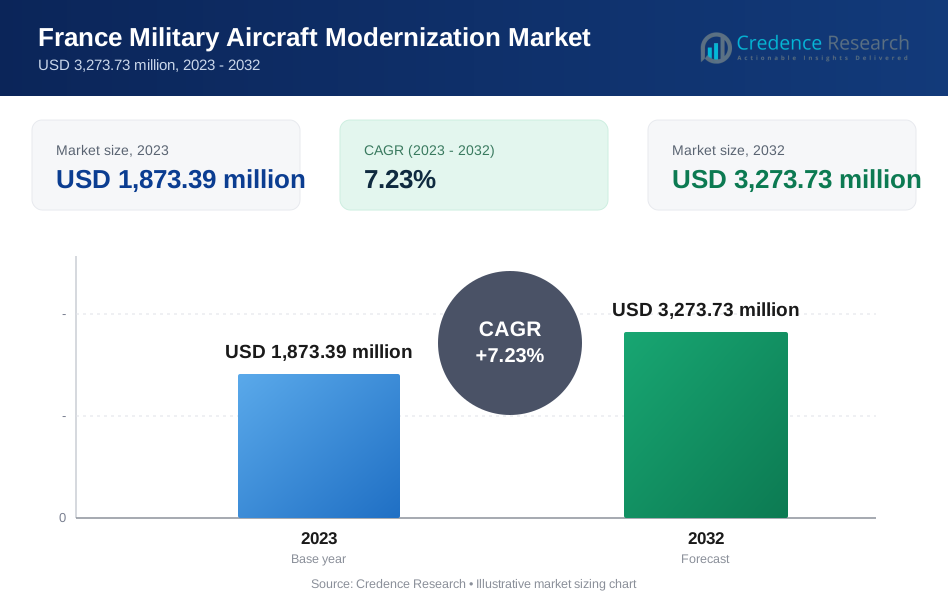
The France Military Aircraft Modernization market is projected to grow from USD 1,873.39 million in 2023 to USD 3,273.73 million by 2032, with a compound annual growth rate (CAGR) of 7.23%.
The France Military Aircraft Modernization market is driven by the increasing need to enhance the operational efficiency and defense capabilities of the French military. Upgrading aging aircraft fleets with advanced technologies, such as improved avionics, weapon systems, and enhanced mobility features, is a key factor propelling market growth. Additionally, rising defense budgets and the strategic focus on maintaining air superiority in the face of evolving threats are major contributors. The market is also influenced by the growing emphasis on sustainability, with efforts to reduce carbon footprints by integrating more energy-efficient systems into military aircraft. Trends show a shift towards the development of next-generation aircraft with advanced stealth and unmanned capabilities, aligning with global defense modernization efforts.
The geographical landscape of France Military Aircraft Modernization is influenced by key regions such as Northern, Southern, Eastern, and Western France, each contributing uniquely to the modernization efforts. Northern France is home to major aerospace and defense manufacturers like Dassault Aviation and Airbus, driving advancements in fighter aircraft and avionics systems. Southern France, with companies such as Airbus Helicopters, focuses on the modernization of helicopters and transport aircraft. Eastern France sees collaboration with European partners for structural modifications and special mission aircraft upgrades, while Western France emphasizes avionics and engine upgrades for a range of military aircraft. Key players in this market include industry giants like BAE Systems, Airbus SE, Saab AB, Dassault Aviation, Leonardo S.p.A., Rheinmetall AG, Thales Group, Rolls-Royce, MBDA Systems, and Cobham Limited. These companies play a central role in providing advanced technologies and solutions critical for France’s military aircraft modernization efforts.
Market Insights
- The France Military Aircraft Modernization market is projected to grow from USD 1,873.39 million in 2023 to USD 3,273.73 million by 2032, with a CAGR of 7.23%.
- Increasing defense budgets and geopolitical tensions are driving the demand for advanced military aircraft technologies.
- Technological advancements, including AI, stealth features, and next-generation avionics, are shaping market trends.
- The shift toward unmanned aerial systems (UAS) and autonomous flight systems is gaining momentum in modernization efforts.
- Key players such as BAE Systems, Airbus, Dassault Aviation, and Thales Group dominate the competitive landscape with strong technological expertise.
- Market restraints include the high cost of modernization and integration challenges of new technologies with legacy systems.
- Regional markets such as Northern and Southern France are crucial hubs for the aerospace and defense sector, driving significant portions of the overall market growth.
Market Drivers
Adaptation to Emerging Threats and Tactical Flexibility
The evolving nature of global threats requires military forces to adapt and respond swiftly. Modern military aircraft equipped with enhanced mobility, advanced sensor systems, and the ability to operate in diverse environments are essential for maintaining tactical flexibility. For instance, the French military's focus on countering new forms of warfare, including cyber threats and asymmetric tactics, underscores its commitment to staying at the forefront of military aviation advancements. As the French military faces new challenges, including cyber threats, asymmetric warfare, and advanced missile systems, the demand for aircraft modernization to counter these threats has increased, further stimulating market growth.
Environmental Sustainability and Efficiency
The growing emphasis on sustainability in military operations has led to the inclusion of energy-efficient systems in military aircraft. France is focusing on reducing the carbon footprint of its defense assets, and the modernization of aircraft plays a significant role in achieving these goals. For instance, France's National Low Carbon Strategy aims to reduce greenhouse gas emissions by at least 40% between 1990 and 2030 and to achieve carbon neutrality by 2050. The integration of fuel-efficient engines, eco-friendly materials, and improved aerodynamics is driving modernization efforts, aligning with global initiatives toward sustainable military practices.
Rising Defense Budgets and Geopolitical Tensions
France’s commitment to maintaining a strong and technologically advanced military is reflected in its increasing defense budgets. With escalating geopolitical tensions and the evolving nature of warfare, the French government recognizes the need to modernize its military assets, particularly its aircraft. The desire to ensure air superiority and protect national security in an increasingly volatile global landscape has resulted in a steady rise in defense spending, thereby driving investments in military aircraft modernization.
Technological Advancements and Integration
The rapid evolution of aerospace technologies plays a pivotal role in the modernization of France’s military aircraft. Integration of advanced avionics, precision weaponry, enhanced radar systems, and stealth technology are key drivers of the market. The French Armed Forces aim to upgrade their fleet with cutting-edge technologies that enhance operational capabilities, making it crucial to invest in the latest equipment. Furthermore, the ability to upgrade existing aircraft with these technologies instead of purchasing new models is an attractive cost-effective option, contributing to the demand for modernization.
Market Trends
Shift Towards Unmanned Aircraft Systems (UAS)
One of the prominent trends in France's military aircraft modernization is the increasing reliance on unmanned aircraft systems (UAS). These systems offer significant advantages, including reduced risk to personnel, greater operational flexibility, and the ability to conduct surveillance and reconnaissance missions with higher efficiency. For instance, the French Air and Space Force has integrated the MQ-9 Reaper drones into its fleet, enhancing its capabilities in intelligence gathering and combat missions. The French military is investing in integrating more UAS capabilities into its fleet, including drone technologies capable of performing intelligence gathering, targeting, and combat missions. This trend is expected to continue as unmanned systems become more sophisticated and vital to modern warfare.
Advancement of Stealth and Combat Aircraft
Stealth technology remains a critical focus in France’s military aircraft modernization efforts. The French Air Force is progressively incorporating advanced stealth aircraft that can operate undetected in hostile environments. These next-generation aircraft are designed to evade radar detection, giving the French military a tactical edge in combat scenarios. The modernization of existing platforms, such as the Rafale fighter jet, with enhanced stealth capabilities, along with the development of entirely new stealth fighters, is a key market trend that underscores the country’s commitment to maintaining air superiority.
Integration of Artificial Intelligence and Automation
Another notable trend in France’s military aircraft modernization is the integration of artificial intelligence (AI) and automation technologies. AI is increasingly being used for mission planning, flight operations, and real-time decision-making processes. Automation in avionics systems, flight control, and mission execution is enhancing the performance of modernized aircraft. By incorporating AI-driven technologies, French military aircraft are becoming more autonomous, improving their operational effectiveness while reducing the dependency on human intervention, thereby driving the market towards next-generation capabilities.
Collaboration with Global Aerospace Leaders
France's military aircraft modernization efforts are also marked by increasing collaborations with global aerospace leaders. The French government and military entities are working with international partners to access advanced technologies and expertise in aerospace innovation. For instance, collaborations with companies like Airbus and Thales have been pivotal in advancing France's military aviation capabilities. These collaborations are enabling the French military to enhance the capabilities of its aircraft fleet, adopting the latest advancements in avionics, materials, and propulsion systems. Partnerships with companies such as Dassault Aviation, Airbus, and Thales have played a significant role in pushing the modernization agenda forward, further fueling the market’s growth.
Market Challenges Analysis
High Costs of Modernization and Procurement
A significant challenge in the France Military Aircraft Modernization market is the high cost associated with upgrading and maintaining advanced military aircraft. The expenses involved in research, development, and integration of cutting-edge technologies such as stealth, advanced avionics, and AI-driven systems are substantial. For instance, the French defense budget for 2025 is set to rise to €50.5 billion, reflecting the significant financial commitment required for modernization efforts. Additionally, the procurement of new aircraft or major upgrades to existing fleets requires substantial capital investment, often stretching over long timelines. This financial burden can strain national defense budgets, especially in times of economic uncertainty or when competing with other national priorities. The high cost of modernization programs poses a challenge to maintaining a robust and technologically advanced fleet within the budget constraints.
Technological Integration and Interoperability Issues
Another key challenge in France’s military aircraft modernization is the integration of new technologies with existing systems. Many of France’s legacy aircraft, while still operational, are built on older platforms that may not be fully compatible with newer, advanced technologies. The need to retrofit these aircraft with modern components without disrupting their operational capabilities requires careful planning and technical expertise. Additionally, interoperability between modernized French aircraft and allied systems remains a concern. Ensuring that updated aircraft can seamlessly operate alongside those from other NATO members or international allies is crucial for joint missions. The challenge of harmonizing technological advancements across different platforms while ensuring that systems remain compatible can slow down the pace of modernization efforts.
Market Opportunities
Advancement in Next-Generation Aircraft Technologies
The France Military Aircraft Modernization market presents significant opportunities driven by advancements in next-generation aircraft technologies. The French military is increasingly focusing on developing and acquiring advanced fighter jets, stealth aircraft, and unmanned aerial vehicles (UAVs), which offer superior performance in combat, surveillance, and reconnaissance. This shift toward incorporating cutting-edge technologies, such as enhanced stealth features, advanced radar systems, and AI-powered avionics, opens new opportunities for manufacturers and service providers specializing in high-tech military solutions. Additionally, the growing demand for integrated platforms that combine manned and unmanned capabilities presents avenues for further development and collaboration in the sector. The modernization of existing fleets, such as the Rafale and Mirage aircraft, also creates a sustained market opportunity for upgrading and retrofitting older systems with the latest technologies.
International Collaborations and Export Potential
France’s military aircraft modernization also presents opportunities for international collaborations, both within Europe and globally. France is a key player in the European defense sector, and partnerships with NATO allies and other nations provide avenues for joint development, technology sharing, and standardization. Collaborative efforts can reduce costs and speed up innovation, benefiting both national defense and global military capabilities. Furthermore, as France continues to modernize its military aircraft, there is significant export potential for its aerospace industry. French-made military aircraft and technologies, such as the Rafale and A400M, are in demand among countries looking to enhance their defense capabilities. This creates new growth opportunities for French manufacturers and suppliers in the global military aircraft market, further driving the modernization agenda.
Market Segmentation Analysis:
By Type: The France Military Aircraft Modernization market is segmented by type into fighter aircraft, transport aircraft, helicopters, and special mission aircraft. Fighter aircraft dominate the market, driven by the French military’s focus on enhancing air superiority and combat readiness. These aircraft, such as the Rafale and Mirage, undergo significant upgrades in avionics, weapon systems, and stealth capabilities to maintain their competitive edge in global defense. Transport aircraft, essential for logistics and troop movement, also see modernization efforts focused on improving operational efficiency and cargo capacity. Helicopters, used for reconnaissance, search and rescue, and tactical missions, are being upgraded with enhanced sensors, avionics, and weapon systems. Special mission aircraft, such as surveillance planes and intelligence-gathering platforms, are increasingly modernized with advanced radar, communication systems, and surveillance technologies to meet evolving mission demands.
By Modernization: Based on modernization focus, the market can be categorized into avionics, engine upgrades, structural modifications, and weapon system upgrades. Avionics modernization is a key area, with advanced navigation systems, communication platforms, and radar technologies integrated to improve aircraft performance. Engine upgrades focus on enhancing fuel efficiency, power output, and reliability to extend the lifespan of existing fleets while reducing operational costs. Structural modifications aim to improve aircraft durability, reducing wear and tear, and enabling them to withstand more demanding missions. Weapon system upgrades enhance the aircraft's combat effectiveness by integrating cutting-edge missile systems, precision strike capabilities, and electronic warfare technologies, ensuring that the French military maintains superior defense capabilities in a rapidly changing security landscape.
Segments:
Based on Type:
- Fighter Aircraft
- Transport Aircraft
- Helicopters
- Special Mission Aircraft
Based on Modernization:
- Avionics
- Engine Upgrades
- Structural Modifications
- Weapon System Upgrades
Based on Component:
- Software
- Hardware
Based on the Geography:
- Northern France
- Southern France
- Eastern France
- Western France
Regional Analysis
Northern France
Northern France holds a significant share of the France Military Aircraft Modernization market, accounting for approximately 30% of the total market. The region is home to key defense and aerospace industry players, including major manufacturing hubs for fighter aircraft and avionics systems. This concentration of expertise and infrastructure supports the ongoing modernization efforts within the French Air Force, especially for advanced fighter jets like the Rafale and Mirage. The presence of Airbus and Dassault Aviation in this region contributes to Northern France's dominance, facilitating robust collaboration on aircraft development and upgrades. Furthermore, the proximity to critical NATO bases and military institutions ensures that Northern France remains central to strategic defense initiatives, making it a key player in the military aircraft modernization process.
Southern France
Southern France, accounting for around 25% of the France Military Aircraft Modernization market, is another critical region driving modernization efforts. This region is strategically important due to the presence of aerospace giants like Airbus Helicopters and various defense contractors specializing in avionics and engine systems. The modernization of helicopters and transport aircraft plays a prominent role in this region, with a focus on improving operational efficiency and flexibility. The southern area also benefits from its proximity to Mediterranean naval bases, which influence modernization needs for special mission and maritime aircraft. The presence of well-established research and development centers further strengthens the market’s growth, providing an ideal environment for the integration of advanced technology in military aircraft.
Eastern France
Eastern France holds a smaller but growing share of approximately 20% of the market. The region’s focus is primarily on structural modifications and weapon system upgrades for various military aircraft types, particularly transport and special mission aircraft. Eastern France’s proximity to Germany and Switzerland facilitates cross-border defense collaborations within the European Union, contributing to technological advancements in military aircraft. The region’s key players in the aerospace sector are working closely with international partners to ensure that the French military remains competitive. Moreover, as defense modernization efforts expand to meet evolving security challenges in Eastern Europe and NATO territories, Eastern France is increasingly becoming a vital area for strategic defense modernization programs.
Western France Western France, with a market share of approximately 25%, plays a vital role in the military aircraft modernization landscape, particularly in avionics and engine upgrades. This region is home to several major defense contractors and research facilities focused on upgrading the avionics systems of both manned and unmanned aircraft. The modernization efforts in Western France are largely centered around improving the overall performance, reliability, and combat readiness of France’s transport and special mission aircraft. Given its proximity to major ports and naval bases along the Atlantic coast, Western France is also strategically positioned to support the modernization of aircraft for maritime operations, further enhancing the region’s importance in the broader scope of France’s military aircraft upgrades.
Key Player Analysis
- BAE Systems PLC
- Airbus SE
- Saab AB
- Dassault Aviation
- Leonardo S.p.A.
- Rheinmetall AG
- Thales Group
- Rolls-Royce Holdings PLC
- MBDA Systems
- Cobham Limited
Competitive Analysis
The competitive landscape of France Military Aircraft Modernization is dominated by several leading players, each contributing significantly to the sector's growth. Major companies such as BAE Systems, Airbus SE, Saab AB, Dassault Aviation, Leonardo S.p.A., Rheinmetall AG, Thales Group, Rolls-Royce Holdings PLC, MBDA Systems, and Cobham Limited play crucial roles in providing cutting-edge technologies and solutions. For instance, Dassault Aviation's Rafale fighter jets are equipped with advanced avionics and electronic warfare systems, enhancing their operational capabilities. These firms specialize in a range of modernization solutions, including advanced avionics, stealth technologies, engine systems, and weapon upgrades. They play a vital role in enhancing the capabilities of the French military fleet, focusing on aircraft such as fighter jets, transport planes, helicopters, and special mission aircraft. The competition is intense, with companies investing heavily in research and development to stay ahead in terms of technological innovation. They are involved in the integration of unmanned aerial systems (UAS), next-generation avionics, and AI-powered systems, all of which are reshaping the capabilities of military aircraft. These players also focus on providing customized solutions to meet the specific needs of the French military, ensuring that each platform meets the demands of modern warfare. Strategic partnerships and collaborations with international defense contractors are also key factors in strengthening competitive positioning. As the French military seeks to modernize its fleet, companies are positioning themselves as leaders by offering comprehensive and cutting-edge solutions that align with the evolving requirements of national and international defense strategies.
Recent Developments
- In January 2025, Lockheed Martin delivered 110 F-35 fighter jets to the U.S. and its allies in 2024, achieving a target set by CEO Jim Taiclet. This delivery is part of the ongoing modernization under the Technology Refresh 3 (TR-3) program, enhancing the jets' displays and processing power.
- In January 2025, Northrop Grumman was awarded a $3.5 billion contract by the U.S. Navy to develop the E-130J aircraft, which will replace the E-6B Mercury for nuclear command, control, and communications missions. This project is crucial for maintaining the U.S. nuclear deterrent capabilities.
- In December 2024, Lockheed Martin demonstrated an uncrewed capability with a surrogate HIMARS launcher, marking significant progress in developing autonomous systems that can operate alongside manned vehicles. This technology aims to enhance artillery capabilities for the U.S. Army.
- In December 2024, Saab received an order valued at SEK 466 million from the Swedish Defence Materiel Administration for enhancements to the Gripen C/D, focusing on integrating advanced missile systems to improve operational capabilities.
- In August 2024, Boeing delivered the first MH-139A Grey Wolf production aircraft to the U.S. Air Force as part of a modernization initiative aimed at supporting national security and enhancing capabilities within the U.S. nuclear triad. The aircraft features improved speed, range, and operational flexibility.
Market Concentration & Characteristics
The France Military Aircraft Modernization market exhibits moderate concentration, with a few key players dominating the sector, but also a strong presence of specialized firms providing niche solutions. The market is characterized by the involvement of both large multinational aerospace giants and smaller, specialized defense companies. Larger companies focus on providing comprehensive modernization solutions, including avionics upgrades, engine enhancements, and advanced weapon systems. These firms also engage in international partnerships, ensuring interoperability and technology transfer across different military platforms. On the other hand, smaller, specialized firms contribute by offering innovative technologies, such as AI-powered systems, unmanned aerial systems (UAS), and advanced radar technologies, to complement the modernization efforts. A notable characteristic of the market is its high level of technological innovation. Companies continuously invest in research and development to enhance the capabilities of military aircraft, ensuring they remain competitive and adaptable to evolving defense needs. The modernization process is often complex, requiring close coordination between manufacturers, the French Ministry of Armed Forces, and NATO partners. Additionally, the market is driven by stringent regulatory standards, which companies must meet in order to secure contracts. The competitive nature of the market, combined with rapid technological advancements, ensures that modernization efforts remain at the forefront of military aviation capabilities.
Report Coverage
The research report offers an in-depth analysis based on Type, Modernization, Component and Geography. It details leading market players, providing an overview of their business, product offerings, investments, revenue streams, and key applications. Additionally, the report includes insights into the competitive environment, SWOT analysis, current market trends, as well as the primary drivers and constraints. Furthermore, it discusses various factors that have driven market expansion in recent years. The report also explores market dynamics, regulatory scenarios, and technological advancements that are shaping the industry. It assesses the impact of external factors and global economic changes on market growth. Lastly, it provides strategic recommendations for new entrants and established companies to navigate the complexities of the market.
Future Outlook
- The France Military Aircraft Modernization market is expected to continue its growth trajectory, driven by advancements in military aviation technologies.
- Increased defense budgets and a focus on strategic air superiority will boost demand for advanced fighter aircraft and related upgrades.
- The integration of unmanned aerial systems (UAS) and AI-powered technologies will play a crucial role in enhancing the capabilities of French military aircraft.
- The French Ministry of Armed Forces will prioritize upgrading existing aircraft fleets, such as the Rafale, to meet modern warfare requirements.
- Collaboration with international defense partners, particularly within NATO, will lead to shared technologies and enhanced interoperability.
- The demand for advanced avionics systems will continue to rise, with a focus on improving navigation, communication, and radar capabilities.
- Engine upgrades will remain a central aspect of modernization efforts, focusing on enhancing fuel efficiency and power output.
- The increasing use of stealth technologies and advanced weapon systems will strengthen France's defense capabilities in global security scenarios.
- The trend of digitalization and cybersecurity will drive the modernization of military aircraft, ensuring resilience against emerging threats.
- By 2032, the market will likely see the widespread deployment of next-generation aircraft with fully integrated systems, offering superior combat and operational performance.
Request a Free Sample
Fill in your details and we'll send you a free sample report.
- Sample data tables & charts
- Research methodology
Need a Custom Version of This Report?
Tailor the scope, geography, or segments to your exact requirements.
- Custom geography or segment scope
- Direct access to our analyst team
Frequently Asked Questions
What is the current size of the France Military Aircraft Modernization market?
What factors are driving the growth of the France Military Aircraft Modernization market?
What are the key segments within the France Military Aircraft Modernization market?
What are some challenges faced by the France Military Aircraft Modernization market?
Who are the major players in the France Military Aircraft Modernization market?
Table of Content
Chapter 1. Report Introduction
- 1.1 Report Description & Purpose
- 1.1.1 Report Title & Market Definition
- 1.1.2 Unique Selling Propositions (USP) & Key Differentiators
- 1.1.3 Value Proposition for Stakeholders
- 1.2 Research Objectives
- 1.2.1 Market Sizing Objectives (Volume & Revenue)
- 1.2.2 Segmentation Objectives
- 1.2.3 Competitive Intelligence Objectives
- 1.2.4 Forecast & Scenario Objectives
- 1.3 Report Scope
- 1.3.1 France Military Aircraft Modernization Scope – Types & Subtypes Covered
- 1.3.2 Geographic Scope – Regions & Countries Covered
- 1.3.3 Historical Period, Base Year & Forecast Period (2023; forecast to 2032)
- 1.3.4 Inclusions & Exclusions
- 1.4 HS Code & Classification Framework
- 1.5 Currency, Units & Pricing Basis
- 1.6 Target Stakeholders
- 1.7 Limitations & Assumptions
Chapter 2. Executive Summary
- 2.1 Global France Military Aircraft Modernization Market Snapshot
- 2.1.1 Market Size – Historical (2023) & Forecast (2023-2032) (2023: USD 1,873.39 million → 2032: USD 3,273.73 million)
- 2.1.2 Volume & Revenue – Global Totals
- 2.1.3 Key Market Highlights – Top Five Facts
- 2.2 France Military Aircraft Modernization Market Segmentation Snapshot
- 2.2.1 Market Split by Region – 2023 vs. 2032
- 2.3 Competitive Snapshot
- 2.3.1 Top 10 Players by Revenue Share – 2023
- 2.3.2 Top 10 Players by Volume Share – 2023
- 2.3.3 Recent Strategic Developments (18-Month Summary)
- 2.4 Key Investment Highlights & Strategic Conclusions
Chapter 3. France Military Aircraft Modernization Market Dynamics & Industry Analysis
- 3.1 Market Overview & Context
- 3.1.1 France Military Aircraft Modernization Market Position in the Broader Automotive Value Chain
- 3.1.2 OEM vs. Replacement Market Dynamics
- 3.1.3 Market Maturity & Development Stage by Region
- 3.2 France Military Aircraft Modernization Market Drivers
- 3.3 France Military Aircraft Modernization Market Restraints & Challenges
- 3.4 France Military Aircraft Modernization Market Opportunities
- 3.5 Porter's Five Forces Analysis
- 3.5.1 Threat of New Entrants
- 3.5.2 Bargaining Power of Suppliers
- 3.5.3 Bargaining Power of Buyers
- 3.5.4 Threat of Substitutes
- 3.5.5 Competitive Rivalry – Intensity Assessment
- 3.6 France Military Aircraft Modernization Value Chain Analysis
- 3.6.1 Upstream – Raw Material/Input Suppliers
- 3.6.1.1 Raw Material/Input 1
- 3.6.1.2 Raw Material/Input 2
- 3.6.1.3 Raw Material/Input 3
- 3.6.2 Midstream – Production/Manufacturing/Service Delivery
- 3.6.2.1 Production/Process Overview
- 3.6.2.2 Key Facility Locations & Capacity by Manufacturer
- 3.6.3 Downstream – Distribution & End Consumer
- 3.6.3.1 Primary Channel – B2B/OEM
- 3.6.3.2 Secondary Channels – Dealer, Retail, Online, Direct
- 3.6.4 Value Chain Profitability Analysis
- 3.6.1 Upstream – Raw Material/Input Suppliers
- 3.7 PESTEL Analysis
- 3.7.1 Political Factors
- 3.7.2 Economic Factors
- 3.7.3 Social Factors
- 3.7.4 Technological Factors
- 3.7.5 Environmental Factors
- 3.7.6 Legal Factors
- 3.8 France Military Aircraft Modernization Supply Chain Analysis
- 3.8.1 Raw Material/Input Supply Risk Assessment
- 3.8.2 Manufacturing Concentration Risk (Geographic Exposure)
- 3.8.3 Trade Disruption Impact Analysis
- 3.9 Regulatory & Policy Landscape
Note: The regulatory and policy landscape section covers regulations based on their applicability to the market, France Military Aircraft Modernization category, geography, and scope of the study. Only regulatory frameworks with a material impact on operations, compliance, trade, sustainability, or market access are analyzed in detail.
Chapter 4. Key Investment Pockets & Opportunity Analysis
- 4.1 France Military Aircraft Modernization Market Attractiveness Analysis
- 4.1.1 By Region – Investment Attractiveness Matrix (Volume × CAGR)
- 4.2 Absolute Revenue Growth Opportunity
- 4.2.1 By Region – Absolute USD Growth Through 2032
- 4.3 Incremental Volume Opportunity
- 4.3.1 By Region – Incremental Volume Through 2032
- 4.3.2 Segment – Incremental Volume
- 4.4 Emerging Submarket Opportunity Deep Dive (Subject to Applicability)
- 4.5 Emerging Market Opportunity Scorecards
- 4.5.1 United States
- 4.5.2 Europe
- 4.5.3 Asia
- 4.5.4 Middle East & Africa
Note: Emerging Market Opportunity Scorecards will be included based on relevance and strategic importance. Regions listed are indicative and may vary depending on data availability and market dynamics.
Chapter 5. France Military Aircraft Modernization Import-Export Analysis & Trade Flows
- 5.1 Global Trade Overview
- 5.1.1 Global Export Value by Country (2023)
- 5.1.2 Global Export Volume by Country (2023)
- 5.1.3 Global Import Value by Country (2023)
- 5.1.4 Global Import Volume by Country (2023)
- 5.1.5 Net Trade Balance by Country (2023)
- 5.2 Export Analysis – Segment
- 5.2.1 Type 1 (HS Code)
- 5.2.2 Type 2 (HS Code)
- 5.2.3 Type 3 (HS Code)
- 5.2.4 Type 4 (HS Code)
- 5.2.5 Type 5 (HS Code)
- 5.3 Import Analysis – Segment
- 5.3.1 Type 1 (HS Code)
- 5.3.2 Type 2 (HS Code)
- 5.3.3 Type 3 (HS Code)
- 5.3.4 Type 4 (HS Code)
- 5.3.5 Type 5 (HS Code)
- 5.4 Average Unit Trade Prices
- 5.4.1 Average Export Price – Segment & Country
- 5.4.2 Average Import Price – Segment & Source Country
- 5.4.3 Price Trends (2023)
- 5.5 Key Trade Route Analysis
- 5.5.1 Trade Route 1
- 5.5.2 Trade Route 2
- 5.5.3 Trade Route 3
- 5.5.4 Trade Route 4
- 5.5.5 Trade Route 5
- 5.6 Trade Policy Impact Assessment
- 5.6.1 US Anti-Dumping & Section 301 Tariffs
- 5.6.2 EU Customs Union Impact
- 5.6.3 Major Free Trade Agreements
- 5.6.4 USMCA Rules of Origin
Note: Trade policy analysis will be included only where relevant to the France Military Aircraft Modernization market.
Chapter 6. Competitive Landscape & Company Benchmarking
- 6.1 France Military Aircraft Modernization Market Concentration & Structure
- 6.1.1 Herfindahl-Hirschman Index (HHI) – vs. 2023
- 6.1.2 Tier 1, Tier 2 & Tier 3 Market Structure
- 6.1.3 Global, Regional & Local Player Dynamics
- 6.2 France Military Aircraft Modernization Market Share Analysis – 2023
- 6.2.1 Global Revenue Share by Company
- 6.2.2 Global Volume Share by Company
- 6.2.3 Regional Revenue Share
- 6.2.4 Market Share Evolution ( vs. 2023)
- 6.2.5 OEM Segment Share by Company
- 6.2.6 Replacement Segment Share by Company
- 6.3 Production/Delivery Capacity & Facility Analysis
- 6.3.1 Global Installed Capacity
- 6.3.2 Capacity Utilization Rates
- 6.3.3 Production/Output Volume
- 6.3.4 Facility Locations & Capacity Map
- 6.3.5 Planned Capacity Additions
- 6.4 France Military Aircraft Modernization Competitive Benchmarking Matrix
- 6.4.1 Revenue, Volume, CAGR & Profitability Comparison
- 6.4.2 Channel Revenue Mix
- 6.4.3 Geographic Revenue Exposure
- 6.4.4 R&D Intensity
- 6.4.5 Sustainability Maturity
- 6.5 Strategic Developments in France Military Aircraft Modernization (Last 24 Months)
- 6.5.1 Mergers, Acquisitions & Divestments
- 6.5.2 New France Military Aircraft Modernization Launches
- 6.5.3 Facility Expansions
- 6.5.4 Strategic Alliances, Joint Ventures & Partnerships
- 6.5.5 Distribution Expansion & Market Entry
- 6.5.6 Sustainability & ESG Initiatives
- 6.6 Competitive Strategy Mapping
- 6.6.1 Leader, Challenger, Follower & Niche Classification
- 6.6.2 Pricing Strategy Comparison
- 6.6.3 Channel Strategy Matrix
Note: Strategic developments are included based on their materiality and the availability of reliable information.
Chapter 7. Global France Military Aircraft Modernization Market – By Distribution Channel
- 7.1 Segment Overview
- 7.1.1 Volume & Revenue Split by Channel (2023 & 2032)
- 7.1.2 Channel Mix Evolution (2023-2032)
Chapter 8. Regional Market Analysis – Global Overview
- 8.1 Global Regional Overview
- 8.1.1 Regional Volume Share
- 8.1.2 Regional Revenue Share
- 8.1.3 Regional Volume by Region
- 8.1.4 Regional Revenue by Region
- 8.1.5 Regional Forecast Through 2032
- 8.2 Cross-Regional Segment Analysis
- 8.2.1 By Distribution Channel
- 8.2.2 By Brand/Price Tier
Chapter 9. North America France Military Aircraft Modernization Market
- 9.1 United States
- 9.2 Canada
- 9.3 Mexico
Chapter 10. Europe France Military Aircraft Modernization Market
- 10.1 Germany
- 10.2 France
- 10.3 Italy
- 10.4 United Kingdom
- 10.5 Spain
- 10.6 Poland
- 10.7 Russia
- 10.8 Netherlands
- 10.9 Belgium
- 10.10 Sweden
- 10.11 Denmark
- 10.12 Norway
- 10.13 Rest of Europe
Chapter 11. Asia Pacific France Military Aircraft Modernization Market
- 11.1 China
- 11.2 India
- 11.3 Japan
- 11.4 South Korea
- 11.5 Thailand
- 11.6 Indonesia
- 11.7 Vietnam
- 11.8 Malaysia
- 11.9 Australia
- 11.10 Rest of Asia Pacific
Chapter 12. Latin America France Military Aircraft Modernization Market
- 12.1 Brazil
- 12.2 Argentina
- 12.3 Colombia
- 12.4 Chile
- 12.5 Rest of Latin America
Chapter 13. Middle East France Military Aircraft Modernization Market
- 13.1 Saudi Arabia
- 13.2 United Arab Emirates
- 13.3 Turkey
- 13.4 Israel
- 13.5 Iran
- 13.6 Rest of the Middle East
Chapter 14. Africa France Military Aircraft Modernization Market
- 14.1 South Africa
- 14.2 Egypt
- 14.3 Nigeria
- 14.4 Morocco
- 14.5 Rest of Africa
Chapter 15. France Military Aircraft Modernization Company Profiles
- 15.1 [Company 01]
- 15.1.1 Company Overview
- 15.1.2 Key Management Personnel
- 15.1.3 Products & Services Portfolio
- 15.1.4 Financial Performance
- 15.1.5 Key Market Focus & Geographic Presence
- 15.1.6 Recent Developments & Strategic Initiatives
Note: The company profile list is preliminary and may change based on research findings, market developments, data availability, and client requirements.
Chapter 16. Appendices
- Appendix A – List of Abbreviations & Acronyms
- Appendix B – Industry Classification Code Reference – Full Series
- Appendix C – Production & Capacity Data Tables
- Appendix D – End-Use & Demand Base Tables
- Appendix E – Consumption & Replacement Rate Assumptions
- Appendix F – ASP Reference Tables
- Appendix G – Manufacturing & Facility Database
- Appendix H – Import-Export Data Tables
- Appendix I – Regulatory Summary Tables
- Appendix J – Primary Research Participant List (Anonymized)
- Appendix K – Primary Research Questionnaire Framework
- Appendix L – Data Sources & Bibliography
- Appendix M – Market Size Divergence & Source Comparison
Chapter 17. Research Methodology
- 17.1 Research Framework & Philosophy
- 17.2 Secondary Research – Sources, Hierarchy & Data Extraction
- 17.3 Data Modeling – Bottom-Up & Top-Down Market Sizing
- 17.4 Primary Research – Stakeholder Framework, LOI & Sample Sizes
- 17.5 Forecast Methodology – Regression, Scenario & Sensitivity Analysis
- 17.6 Quality Control – Four-Layer Validation Framework
- 17.7 Limitations & Standard Assumptions
- 17.8 Disclaimer
