
| REPORT ATTRIBUTE | DETAILS |
|---|---|
| Historical Period | 2019-2022 |
| Base Year | 2023 |
| Forecast Period | 2024-2032 |
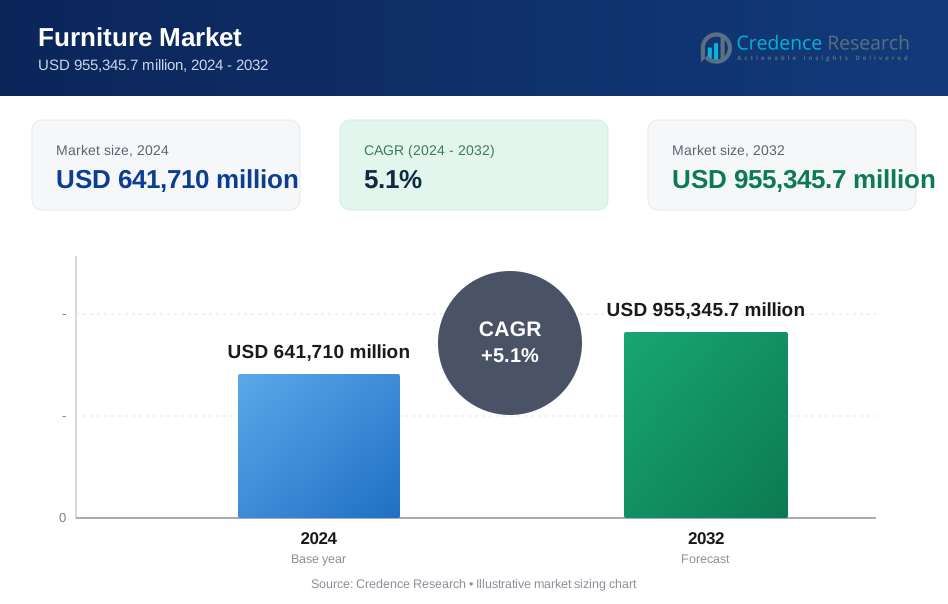
| Furniture Market Size 2024 | USD 641,710 million |
| Furniture Market, CAGR | 5.1% |
| Furniture Market Size 2032 | USD 955,345.7 million |
Market Overview:
The global Furniture Market is set for consistent growth, with an estimated market size of USD 641,710 million in 2024, projected to reach USD 955,345.7 million by 2032, at a compound annual growth rate (CAGR) of 5.1% over the forecast period. This growth trajectory is fueled by rising demand across residential, commercial, and institutional sectors, as consumers increasingly prioritize aesthetic appeal, functionality, and sustainable materials. Expanding urban populations and rising disposable incomes, especially in emerging economies, further bolster market expansion. Advances in manufacturing techniques and the integration of technology into furniture, such as smart and multifunctional pieces, also enhance the sector’s appeal, catering to evolving consumer lifestyles.
Key drivers of the Furniture Market include the surge in home renovation and interior design trends, spurred by changing work-from-home dynamics and consumer interest in enhancing living spaces. Growing environmental awareness and demand for eco-friendly furniture options push manufacturers to focus on sustainable materials and processes, aligning with regulatory requirements and consumer preferences for low-impact products. Furthermore, the adoption of e-commerce in furniture sales has significantly boosted market accessibility, with online platforms offering extensive customization and convenience for buyers, thus reshaping purchasing behaviours and encouraging more frequent home upgrades.
Regionally, Asia-Pacific holds the largest share of the furniture market, driven by rapid urbanization, rising household incomes, and high construction activity in countries like China and India. North America follows, with demand spurred by rising interest in home improvement and premium furniture. The United States leads the region, emphasizing high-quality, customizable, and sustainable furniture solutions. Europe is also a significant market, particularly in countries like Germany, France, and the UK, where eco-conscious consumers drive demand for sustainable and innovative designs. Latin America and the Middle East & Africa show moderate growth, supported by emerging middle classes and increasing demand for both residential and commercial furniture. This regional diversity highlights the global market’s adaptability to changing consumer preferences and economic dynamics.
Market Drivers:
Growing Urbanization and Rising Disposable Income:
Rapid urbanization and higher disposable incomes are key drivers in the furniture market, especially in emerging economies. According to the World Bank, urban populations have been growing by approximately 2.5% annually, increasing demand for housing and, consequently, for residential furniture. In India, for instance, disposable income rose by 12% in 2023, prompting higher spending on home furnishings and decor. This trend is mirrored in other developing regions, where consumers are increasingly willing to invest in quality furniture that enhances lifestyle and convenience.
Shift Towards Sustainable and Eco-Friendly Furniture:
With rising awareness of environmental impacts, demand for sustainable furniture has increased. The World Economic Forum reports that around 80% of consumers in Europe prefer environmentally friendly products, prompting furniture companies to adopt sustainable practices. For instance, IKEA has committed to using only renewable and recycled materials by 2030, aligning with consumer preferences and regulatory guidelines. The shift toward eco-conscious buying also pressures other brands to innovate with materials like bamboo, reclaimed wood, and recycled metal to meet green standards.
Increased Home Renovation and Interior Design Interest:
Home improvement trends, accelerated by the shift to remote work, have driven demand for multifunctional and ergonomic furniture. For instance, according to a 2023 survey by the Home Improvement Research Institute, 60% of U.S. homeowners reported planning renovations in the next year, with a focus on enhancing functionality and aesthetics. Furniture brands have responded by developing adaptable pieces, such as modular sofas and desks with integrated storage, to cater to changing consumer needs for workspace solutions within homes. This trend reflects a broader focus on comfort, versatility, and design in the furniture market.
Market Trends:
Increasing Demand for Sustainable Furniture:
A significant trend in the furniture market is the rising consumer demand for sustainable and eco-friendly furniture options. As awareness of environmental issues grows, many consumers are actively seeking products made from responsibly sourced materials. For instance, a survey by the Furniture Today indicated that 70% of consumers prefer to purchase furniture from brands that prioritize sustainability. This demand is encouraging manufacturers to adopt eco-friendly practices, such as using reclaimed wood, non-toxic finishes, and recyclable materials, reflecting a broader commitment to environmental responsibility.
Growth of E-Commerce and Online Sales:
The growth of e-commerce is transforming the furniture market, as more consumers turn to online shopping for their furniture needs. The COVID-19 pandemic accelerated this trend, leading to a significant increase in online sales. For instance, according to a report by the U.S. Census Bureau, e-commerce sales in the furniture and home furnishings sector rose by 18% in 2022 compared to the previous year. This shift has prompted traditional brick-and-mortar retailers to enhance their online presence and streamline logistics to meet the demands of consumers who prefer the convenience of shopping from home.
Customization and Personalization Trends:
Customization and personalization are becoming increasingly important in the furniture market, as consumers seek unique products that reflect their individual styles and preferences. A study by the American Society of Interior Designers found that 65% of consumers are interested in personalized furniture solutions. This trend is driving manufacturers to offer customizable options, allowing customers to select everything from materials and colors to design features. By catering to these preferences, furniture brands can enhance customer satisfaction and loyalty, ultimately boosting sales.
Focus on Multifunctional and Space-Saving Designs:
The trend towards multifunctional and space-saving furniture designs is gaining momentum, particularly in urban areas where living spaces are often limited. Consumers are increasingly seeking furniture that can serve multiple purposes, such as sofa beds, expandable dining tables, and storage ottomans. According to a survey by the National Association of Home Builders, 78% of homeowners expressed interest in space-saving solutions for their homes. This demand is prompting manufacturers to innovate and create versatile furniture that maximizes utility without compromising on style, appealing to a broader audience in the market.
Market Challenges Analysis:
Rising Raw Material Costs:
One of the primary restraints in the furniture market is the rising cost of raw materials. Fluctuations in the prices of wood, metal, and upholstery fabrics can significantly impact production costs for manufacturers. According to a report from the U.S. Department of Commerce, the price of lumber surged by over 200% during the pandemic, creating challenges for furniture producers in maintaining profitability without raising consumer prices. This volatility can deter investment and complicate long-term planning for manufacturers, ultimately affecting market stability.
Supply Chain Disruptions:
Supply chain disruptions present another significant challenge for the furniture market. Global events, such as the COVID-19 pandemic and geopolitical tensions, have led to delays in the sourcing of materials and components. A survey conducted by the American Furniture Manufacturers Association found that 65% of companies experienced supply chain issues that hampered their ability to meet consumer demand. These disruptions can result in increased lead times and inventory shortages, frustrating customers and potentially leading to lost sales.
Intense Competition:
The furniture market is characterized by intense competition, with numerous players vying for market share. This competitive environment often leads to price wars, which can squeeze profit margins for manufacturers. A report by the International Furniture and Home Furnishings Association indicated that 58% of furniture retailers feel pressure to reduce prices to stay competitive. This challenge can limit the resources available for innovation and brand differentiation, making it difficult for companies to establish a strong market presence.
Compliance with Regulations:
Compliance with regulations related to product safety and environmental standards poses an ongoing challenge for furniture manufacturers. Regulatory authorities, such as the U.S. Consumer Product Safety Commission (CPSC), enforce strict guidelines to ensure that furniture products meet safety standards. Navigating these regulations can be complex and costly, particularly for smaller manufacturers. A study by the Furniture Safety Council found that nearly 70% of furniture producers struggle with compliance-related issues, which can hinder product development and market entry.
Market Segmentation Analysis:
By Type, the market is divided into residential, commercial, and industrial furniture. Residential furniture holds the largest share, driven by rising homeownership and the growing trend of home decor and customization. Commercial furniture, including office and hospitality furnishings, is also expanding as businesses emphasize comfort and design to improve client and employee experiences. Industrial furniture, though smaller in share, is growing steadily due to demand in factories and warehouses for durable, functional equipment.
By Technology, the market includes traditional furniture manufacturing and smart furniture. Traditional furniture manufacturing dominates but is evolving with advancements in materials, designs, and eco-friendly production techniques. Smart furniture, which integrates technology such as charging ports, sensors, and even connectivity features, is gaining traction as consumers seek convenience and functionality. This segment is especially popular in urban settings where space and adaptability are crucial, and demand is expected to grow as tech-savvy consumers seek enhanced home and office experiences.
By End User, the market caters to residential, office, and institutional users. Residential end users form the largest segment, spurred by increasing interest in home design and the rise of remote work, which boosts demand for multifunctional furniture. The office segment is recovering and expanding as companies invest in ergonomic and comfortable furniture for hybrid work environments. Institutional users, such as schools and healthcare facilities, are also key contributors, investing in specialized furniture that meets unique requirements for functionality, durability, and safety across diverse settings.
Segmentations:
By Raw Material
- Wood
- Metal
- Plastic
- Others
By Category
- Indoor
- Outdoor
By End-User
- Residential
- Office
- Hotel
- Others
By Region
- North America
- U.S.
- Canada
- Mexico
- Europe
- Germany
- France
- U.K.
- Italy
- Spain
- Rest of Europe
- Asia Pacific
- China
- Japan
- India
- South Korea
- South-east Asia
- Rest of Asia Pacific
- Latin America
- Brazil
- Argentina
- Rest of Latin America
- Middle East & Africa
- GCC Countries
- South Africa
- Rest of the Middle East and Africa
Regional Analysis:
Asia-Pacific holds the largest share of the furniture market, accounting for approximately 40% of the global market. Rapid urbanization, rising disposable incomes, and a strong manufacturing base drive growth in this region, especially in countries like China, India, and Japan. China, as the world’s largest furniture producer and exporter, plays a critical role, benefiting from large-scale production capabilities and cost-effective manufacturing. Additionally, the demand for modern, multifunctional, and space-saving furniture in urban centers is on the rise as consumers prioritize aesthetics and functionality in home decor.
North America follows, holding around 25% of the global market share, with the United States as the leading contributor. The market here is supported by strong consumer spending on home improvement, furniture, and decor. The North American market is characterized by high demand for premium, customizable, and eco-friendly furniture options. The shift to remote work has spurred demand for home office furniture, while sustainable and smart furniture solutions are increasingly popular, reflecting the region’s interest in technology-integrated, eco-conscious products.
Europe captures approximately 20% of the global furniture market, driven by robust demand for sustainable, high-quality furniture. Countries such as Germany, the UK, France, and Italy are prominent players in this market, with consumers showing strong preferences for eco-friendly and innovative designs. European furniture companies have adapted to these trends by focusing on green manufacturing practices and using sustainable materials. The European Union’s stringent environmental regulations encourage the use of low-impact production methods and recyclable materials, which aligns with the region's environmental goals and consumer values.
Latin America holds roughly 8% of the global furniture market, with growth primarily concentrated in Brazil and Mexico. The region’s expanding middle class, rising disposable income, and increased residential construction fuel demand for affordable and stylish furniture. Brazil leads the market in Latin America, as the country’s diverse natural resources support the production of wood-based furniture. The market in this region is also growing with increased interest in imported, customizable, and functional furniture options as consumers embrace global design trends.
The Middle East & Africa represent about 7% of the market share, with the region’s growth driven by economic development, urbanization, and rising investments in real estate and hospitality. Countries like the UAE and Saudi Arabia are particularly active in luxury and high-end furniture markets, influenced by rapid infrastructural and commercial development. This region shows a growing demand for contemporary, functional furniture that complements modern architectural styles. Increasing tourism and investments in hotels and resorts further boost the demand for quality commercial furniture in the hospitality sector.
Key Player Analysis:
- IKEA
- Ashley Furniture Industries
- Steelcase
- Williams-Sonoma, Inc.
- Herman Miller, Inc.
- Haworth, Inc.
- La-Z-Boy Incorporated
- HNI Corporation
- Okamura Corporation
- Kokuyo Co., Ltd.
Competitive Analysis:
The Furniture Market is highly competitive, dominated by well-established players such as IKEA, Ashley Furniture Industries, Steelcase, and Herman Miller, Inc., which hold substantial market shares due to their extensive product portfolios, global distribution networks, and strong brand recognition. These key players leverage innovation, design, and technology integration to stay ahead, focusing on sustainable materials and smart furniture to align with shifting consumer preferences. Competition is also marked by strategic acquisitions and expansions to enhance market reach and production capabilities. Smaller and regional manufacturers concentrate on niche markets, often specializing in custom or eco-friendly furniture to attract a specific customer base. E-commerce growth has intensified competition as companies invest in digital platforms to reach a broader audience, providing customization options and virtual room planners to improve the shopping experience. The competitive landscape underscores the importance of adaptability, customer engagement, and sustainability in maintaining market relevance.
Recent Developments:
- In October 2024, IKEA reported a 5% drop in annual sales, attributing the decline to a sluggish housing market. The company responded by implementing price reductions to stimulate demand and maintain market share.
- In September 2024, DFS Furniture, the UK's largest sofa retailer, announced a pre-tax loss of £1.7 million for the fiscal year ending June 2024. The loss was primarily due to a 9% decrease in revenue, compounded by shipping delays and increased debt costs.
- In October 2024, Australian furniture retailer Nick Scali issued a profit warning, citing unexpected increases in freight costs that significantly impacted margins and overall profitability. The company projected a decline in net profit for the first half of 2025 compared to the same period in 2024.
- In August 2024, MillerKnoll reported a resurgence in demand for office chairs, couches, and desks, marking the first organic order growth in two years. This uptick was driven by increased purchasing activity from corporate clients and retail shoppers, indicating a recovery in the office furniture segment.
Market Concentration & Characteristics:
The Furniture Market is moderately concentrated, with several key players like IKEA, Ashley Furniture Industries, and Herman Miller commanding substantial shares due to their extensive product offerings, brand recognition, and established global distribution networks. These major players leverage economies of scale, continuous innovation, and sustainable sourcing to maintain competitive advantage, appealing to eco-conscious consumers and adapting to evolving interior design trends. The market is also characterized by high product diversity, spanning residential, commercial, and specialty furniture, with a rising focus on customization and multifunctional designs to meet varied consumer preferences. Smaller and regional manufacturers serve niche markets, often specializing in custom or eco-friendly pieces to capture specific consumer segments. E-commerce has become a defining characteristic of the market, intensifying competition as companies invest in digital sales channels and virtual design tools to enhance the customer experience. This competitive landscape underscores the importance of adaptability, sustainability, and customer-centricity in achieving market success.
Report Coverage:
The research report offers an in-depth analysis based on Raw Material, Category, End-User, and Region. It details leading market players, providing an overview of their business, product offerings, investments, revenue streams, and key applications. Additionally, the report includes insights into the competitive environment, SWOT analysis, current market trends, as well as the primary drivers and constraints. Furthermore, it discusses various factors that have driven market expansion in recent years. The report also explores market dynamics, regulatory scenarios, and technological advancements that are shaping the industry. It assesses the impact of external factors and global economic changes on market growth. Lastly, it provides strategic recommendations for new entrants and established companies to navigate the complexities of the market.
Future Outlook:
- Increasing urbanization and homeownership will drive demand for residential furniture, especially in emerging economies.
- Rising consumer interest in home improvement and interior design will boost sales across various furniture segments.
- Growing adoption of e-commerce in furniture retail will expand market reach, offering more convenience and customization options to consumers.
- Demand for sustainable and eco-friendly furniture will increase as consumers prioritize environmentally responsible products.
- Technological advancements in furniture, including smart and multifunctional designs, will attract tech-savvy buyers looking for enhanced functionality.
- Expanding remote work trends will sustain demand for home office furniture, focusing on ergonomic and space-saving solutions.
- The luxury furniture segment will see growth as higher-income consumers seek premium, customized pieces for unique aesthetics.
- Increasing investments in sustainable materials and production methods will help companies align with regulatory requirements and consumer preferences.
- The hospitality and commercial sectors will drive demand for durable and stylish furniture as businesses invest in comfortable and attractive spaces.
- Partnerships between furniture manufacturers and technology firms will bring innovations in smart home furnishings, offering added convenience and connectivity for modern lifestyles.
Request a Free Sample
Fill in your details and we'll send you a free sample report.
- Sample data tables & charts
- Research methodology
Need a Custom Version of This Report?
Tailor the scope, geography, or segments to your exact requirements.
- Custom geography or segment scope
- Direct access to our analyst team
Frequently Asked Questions
What is the current size of the furniture market?
What factors are driving the growth of the furniture market?
What are some challenges faced by the furniture market?
Who are the major players in the furniture market?
Which segment is leading the market share?
Table of Content
Chapter 1. Report Introduction
- 1.1 Report Description & Purpose
- 1.1.1 Report Title & Market Definition
- 1.1.2 Unique Selling Propositions (USP) & Key Differentiators
- 1.1.3 Value Proposition for Stakeholders
- 1.2 Research Objectives
- 1.2.1 Market Sizing Objectives (Volume & Revenue)
- 1.2.2 Segmentation Objectives
- 1.2.3 Competitive Intelligence Objectives
- 1.2.4 Forecast & Scenario Objectives
- 1.3 Report Scope
- 1.3.1 Furniture Scope – Types & Subtypes Covered
- 1.3.2 Geographic Scope – Regions & Countries Covered
- 1.3.3 Historical Period, Base Year & Forecast Period (2024; forecast to 2032)
- 1.3.4 Inclusions & Exclusions
- 1.4 HS Code & Classification Framework
- 1.5 Currency, Units & Pricing Basis
- 1.6 Target Stakeholders
- 1.7 Limitations & Assumptions
Chapter 2. Executive Summary
- 2.1 Global Furniture Market Snapshot
- 2.1.1 Market Size – Historical (2024) & Forecast (2024-2032) (2024: USD 641,710 million → 2032: USD 955,345.7 million)
- 2.1.2 Volume & Revenue – Global Totals
- 2.1.3 Key Market Highlights – Top Five Facts
- 2.2 Furniture Market Segmentation Snapshot
- 2.2.1 Market Split by Region – 2024 vs. 2032
- 2.3 Competitive Snapshot
- 2.3.1 Top 10 Players by Revenue Share – 2024
- 2.3.2 Top 10 Players by Volume Share – 2024
- 2.3.3 Recent Strategic Developments (18-Month Summary)
- 2.4 Key Investment Highlights & Strategic Conclusions
Chapter 3. Furniture Market Dynamics & Industry Analysis
- 3.1 Market Overview & Context
- 3.1.1 Furniture Market Position in the Broader Automotive Value Chain
- 3.1.2 OEM vs. Replacement Market Dynamics
- 3.1.3 Market Maturity & Development Stage by Region
- 3.2 Furniture Market Drivers
- 3.3 Furniture Market Restraints & Challenges
- 3.4 Furniture Market Opportunities
- 3.5 Porter's Five Forces Analysis
- 3.5.1 Threat of New Entrants
- 3.5.2 Bargaining Power of Suppliers
- 3.5.3 Bargaining Power of Buyers
- 3.5.4 Threat of Substitutes
- 3.5.5 Competitive Rivalry – Intensity Assessment
- 3.6 Furniture Value Chain Analysis
- 3.6.1 Upstream – Raw Material/Input Suppliers
- 3.6.1.1 Raw Material/Input 1
- 3.6.1.2 Raw Material/Input 2
- 3.6.1.3 Raw Material/Input 3
- 3.6.2 Midstream – Production/Manufacturing/Service Delivery
- 3.6.2.1 Production/Process Overview
- 3.6.2.2 Key Facility Locations & Capacity by Manufacturer
- 3.6.3 Downstream – Distribution & End Consumer
- 3.6.3.1 Primary Channel – B2B/OEM
- 3.6.3.2 Secondary Channels – Dealer, Retail, Online, Direct
- 3.6.4 Value Chain Profitability Analysis
- 3.6.1 Upstream – Raw Material/Input Suppliers
- 3.7 PESTEL Analysis
- 3.7.1 Political Factors
- 3.7.2 Economic Factors
- 3.7.3 Social Factors
- 3.7.4 Technological Factors
- 3.7.5 Environmental Factors
- 3.7.6 Legal Factors
- 3.8 Furniture Supply Chain Analysis
- 3.8.1 Raw Material/Input Supply Risk Assessment
- 3.8.2 Manufacturing Concentration Risk (Geographic Exposure)
- 3.8.3 Trade Disruption Impact Analysis
- 3.9 Regulatory & Policy Landscape
Note: The regulatory and policy landscape section covers regulations based on their applicability to the market, Furniture category, geography, and scope of the study. Only regulatory frameworks with a material impact on operations, compliance, trade, sustainability, or market access are analyzed in detail.
Chapter 4. Key Investment Pockets & Opportunity Analysis
- 4.1 Furniture Market Attractiveness Analysis
- 4.1.1 By Region – Investment Attractiveness Matrix (Volume × CAGR)
- 4.2 Absolute Revenue Growth Opportunity
- 4.2.1 By Region – Absolute USD Growth Through 2032
- 4.3 Incremental Volume Opportunity
- 4.3.1 By Region – Incremental Volume Through 2032
- 4.3.2 Segment – Incremental Volume
- 4.4 Emerging Submarket Opportunity Deep Dive (Subject to Applicability)
- 4.5 Emerging Market Opportunity Scorecards
- 4.5.1 United States
- 4.5.2 Europe
- 4.5.3 Asia
- 4.5.4 Middle East & Africa
Note: Emerging Market Opportunity Scorecards will be included based on relevance and strategic importance. Regions listed are indicative and may vary depending on data availability and market dynamics.
Chapter 5. Furniture Import-Export Analysis & Trade Flows
- 5.1 Global Trade Overview
- 5.1.1 Global Export Value by Country (2024)
- 5.1.2 Global Export Volume by Country (2024)
- 5.1.3 Global Import Value by Country (2024)
- 5.1.4 Global Import Volume by Country (2024)
- 5.1.5 Net Trade Balance by Country (2024)
- 5.2 Export Analysis – Segment
- 5.2.1 Type 1 (HS Code)
- 5.2.2 Type 2 (HS Code)
- 5.2.3 Type 3 (HS Code)
- 5.2.4 Type 4 (HS Code)
- 5.2.5 Type 5 (HS Code)
- 5.3 Import Analysis – Segment
- 5.3.1 Type 1 (HS Code)
- 5.3.2 Type 2 (HS Code)
- 5.3.3 Type 3 (HS Code)
- 5.3.4 Type 4 (HS Code)
- 5.3.5 Type 5 (HS Code)
- 5.4 Average Unit Trade Prices
- 5.4.1 Average Export Price – Segment & Country
- 5.4.2 Average Import Price – Segment & Source Country
- 5.4.3 Price Trends (2024)
- 5.5 Key Trade Route Analysis
- 5.5.1 Trade Route 1
- 5.5.2 Trade Route 2
- 5.5.3 Trade Route 3
- 5.5.4 Trade Route 4
- 5.5.5 Trade Route 5
- 5.6 Trade Policy Impact Assessment
- 5.6.1 US Anti-Dumping & Section 301 Tariffs
- 5.6.2 EU Customs Union Impact
- 5.6.3 Major Free Trade Agreements
- 5.6.4 USMCA Rules of Origin
Note: Trade policy analysis will be included only where relevant to the Furniture market.
Chapter 6. Competitive Landscape & Company Benchmarking
- 6.1 Furniture Market Concentration & Structure
- 6.1.1 Herfindahl-Hirschman Index (HHI) – vs. 2024
- 6.1.2 Tier 1, Tier 2 & Tier 3 Market Structure
- 6.1.3 Global, Regional & Local Player Dynamics
- 6.2 Furniture Market Share Analysis – 2024
- 6.2.1 Global Revenue Share by Company
- 6.2.2 Global Volume Share by Company
- 6.2.3 Regional Revenue Share
- 6.2.4 Market Share Evolution ( vs. 2024)
- 6.2.5 OEM Segment Share by Company
- 6.2.6 Replacement Segment Share by Company
- 6.3 Production/Delivery Capacity & Facility Analysis
- 6.3.1 Global Installed Capacity
- 6.3.2 Capacity Utilization Rates
- 6.3.3 Production/Output Volume
- 6.3.4 Facility Locations & Capacity Map
- 6.3.5 Planned Capacity Additions
- 6.4 Furniture Competitive Benchmarking Matrix
- 6.4.1 Revenue, Volume, CAGR & Profitability Comparison
- 6.4.2 Channel Revenue Mix
- 6.4.3 Geographic Revenue Exposure
- 6.4.4 R&D Intensity
- 6.4.5 Sustainability Maturity
- 6.5 Strategic Developments in Furniture (Last 24 Months)
- 6.5.1 Mergers, Acquisitions & Divestments
- 6.5.2 New Furniture Launches
- 6.5.3 Facility Expansions
- 6.5.4 Strategic Alliances, Joint Ventures & Partnerships
- 6.5.5 Distribution Expansion & Market Entry
- 6.5.6 Sustainability & ESG Initiatives
- 6.6 Competitive Strategy Mapping
- 6.6.1 Leader, Challenger, Follower & Niche Classification
- 6.6.2 Pricing Strategy Comparison
- 6.6.3 Channel Strategy Matrix
Note: Strategic developments are included based on their materiality and the availability of reliable information.
Chapter 7. Global Furniture Market – By Distribution Channel
- 7.1 Segment Overview
- 7.1.1 Volume & Revenue Split by Channel (2024 & 2032)
- 7.1.2 Channel Mix Evolution (2024-2032)
Chapter 8. Regional Market Analysis – Global Overview
- 8.1 Global Regional Overview
- 8.1.1 Regional Volume Share
- 8.1.2 Regional Revenue Share
- 8.1.3 Regional Volume by Region
- 8.1.4 Regional Revenue by Region
- 8.1.5 Regional Forecast Through 2032
- 8.2 Cross-Regional Segment Analysis
- 8.2.1 By Distribution Channel
- 8.2.2 By Brand/Price Tier
Chapter 9. North America Furniture Market
- 9.1 United States
- 9.2 Canada
- 9.3 Mexico
Chapter 10. Europe Furniture Market
- 10.1 Germany
- 10.2 France
- 10.3 Italy
- 10.4 United Kingdom
- 10.5 Spain
- 10.6 Poland
- 10.7 Russia
- 10.8 Netherlands
- 10.9 Belgium
- 10.10 Sweden
- 10.11 Denmark
- 10.12 Norway
- 10.13 Rest of Europe
Chapter 11. Asia Pacific Furniture Market
- 11.1 China
- 11.2 India
- 11.3 Japan
- 11.4 South Korea
- 11.5 Thailand
- 11.6 Indonesia
- 11.7 Vietnam
- 11.8 Malaysia
- 11.9 Australia
- 11.10 Rest of Asia Pacific
Chapter 12. Latin America Furniture Market
- 12.1 Brazil
- 12.2 Argentina
- 12.3 Colombia
- 12.4 Chile
- 12.5 Rest of Latin America
Chapter 13. Middle East Furniture Market
- 13.1 Saudi Arabia
- 13.2 United Arab Emirates
- 13.3 Turkey
- 13.4 Israel
- 13.5 Iran
- 13.6 Rest of the Middle East
Chapter 14. Africa Furniture Market
- 14.1 South Africa
- 14.2 Egypt
- 14.3 Nigeria
- 14.4 Morocco
- 14.5 Rest of Africa
Chapter 15. Furniture Company Profiles
- 15.1 [Company 01]
- 15.1.1 Company Overview
- 15.1.2 Key Management Personnel
- 15.1.3 Products & Services Portfolio
- 15.1.4 Financial Performance
- 15.1.5 Key Market Focus & Geographic Presence
- 15.1.6 Recent Developments & Strategic Initiatives
Note: The company profile list is preliminary and may change based on research findings, market developments, data availability, and client requirements.
Chapter 16. Appendices
- Appendix A – List of Abbreviations & Acronyms
- Appendix B – Industry Classification Code Reference – Full Series
- Appendix C – Production & Capacity Data Tables
- Appendix D – End-Use & Demand Base Tables
- Appendix E – Consumption & Replacement Rate Assumptions
- Appendix F – ASP Reference Tables
- Appendix G – Manufacturing & Facility Database
- Appendix H – Import-Export Data Tables
- Appendix I – Regulatory Summary Tables
- Appendix J – Primary Research Participant List (Anonymized)
- Appendix K – Primary Research Questionnaire Framework
- Appendix L – Data Sources & Bibliography
- Appendix M – Market Size Divergence & Source Comparison
Chapter 17. Research Methodology
- 17.1 Research Framework & Philosophy
- 17.2 Secondary Research – Sources, Hierarchy & Data Extraction
- 17.3 Data Modeling – Bottom-Up & Top-Down Market Sizing
- 17.4 Primary Research – Stakeholder Framework, LOI & Sample Sizes
- 17.5 Forecast Methodology – Regression, Scenario & Sensitivity Analysis
- 17.6 Quality Control – Four-Layer Validation Framework
- 17.7 Limitations & Standard Assumptions
- 17.8 Disclaimer
