
| REPORT ATTRIBUTE | DETAILS |
|---|---|
| Historical Period | 2019-2022 |
| Base Year | 2023 |
| Forecast Period | 2024-2032 |
| India Fruit and Vegetable Powders Market Size 2023 | USD 1,479.10 Million |
| India Fruit and Vegetable Powders Market, CAGR | 6.86%% |
| India Fruit and Vegetable Powders Market Size 2032 | USD 2,702.06 Million |
Market Overview
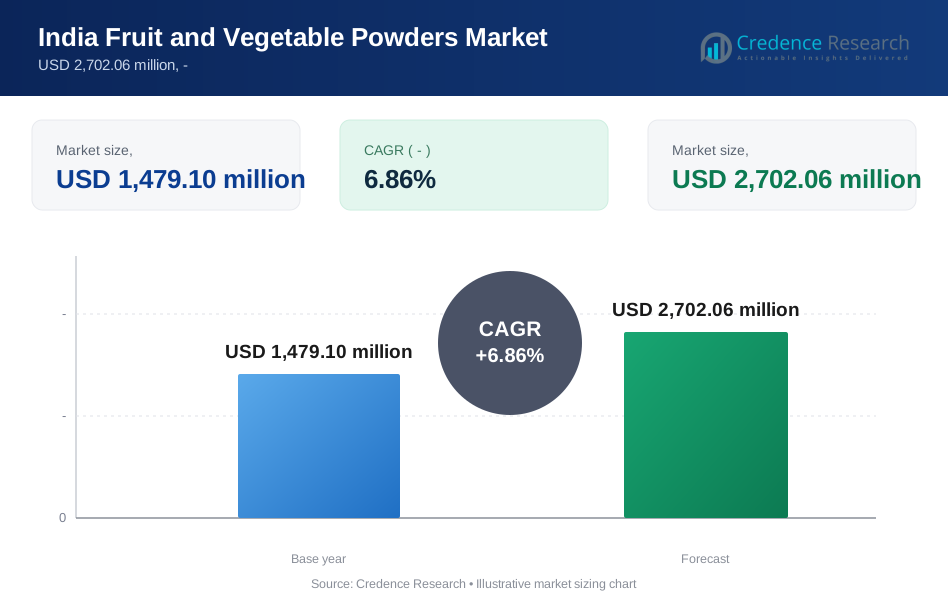
The India Fruit and Vegetable Powders Market is projected to grow from USD 1,479.10 million in 2023 to USD 2,702.06 million by 2032, reflecting a compound annual growth rate (CAGR) of 6.86%.
The India Fruit and Vegetable Powders Market is driven by increasing consumer demand for convenient, nutritious, and long-lasting food products. Rising health consciousness and awareness of the benefits of natural ingredients boost market growth. Urbanization and busy lifestyles further propel the demand for easy-to-use, preservative-free powders. Technological advancements in drying and processing techniques enhance product quality and shelf life, attracting more consumers. Additionally, the market benefits from the expanding applications of these powders in the food and beverage industry, including snacks, beverages, and bakery products, which cater to the evolving dietary preferences and needs of modern consumers.
The India Fruit and Vegetable Powders Market exhibits significant geographical variation, with high demand in urban areas due to greater health awareness and busy lifestyles. Key players in the market include Aarkay Food Products Ltd, La Herbal, Saipro Biotech Private Limited, SVZ International, Symrise AG, Van Drunen Farms, Olam International, and SunOpta Inc. These companies are pivotal in driving market growth through innovation, extensive product portfolios, and strategic expansions. The market is also supported by increasing e-commerce penetration, allowing wider access to diverse and premium fruit and vegetable powder products across different regions.
Market Drivers
Rising Health Consciousness
Indian consumers are becoming increasingly health-conscious and are actively seeking ways to incorporate more fruits and vegetables into their diets. For instance, a survey by EY India revealed that around 94% of Indian consumers are worried about their family’s health, which is higher than the global average of 82%. This concern has led to a significant shift in consumer behavior, with 52% of Indian respondents believing that changes in their approach to mental wellbeing will persist beyond the COVID-19 pandemic. The demand for fruit and vegetable powders is fueled by this growing health consciousness, as they offer a concentrated source of essential nutrients. The dietary supplements market in India has seen an accelerated adoption curve, with the demand for herbal supplements and vitamins and minerals witnessing a growth of over 25%.
Convenience and Long Shelf Life
Fruit and vegetable powders are a convenient and easy method to add fruits and vegetables to various food and beverage products, such as smoothies, yogurts, and baked goods. For instance, a single tablespoon of spinach powder is equivalent to the nutritional value of an entire cup of fresh spinach. Their long shelf life, often up to two years when stored properly, is a significant advantage, reducing food waste by approximately 50% compared to fresh produce. This makes them a practical choice for the 77% of consumers with busy lifestyles who seek quick and nutritious food options. The ability to store these powders for extended periods without losing nutritional value or flavor makes them an appealing option for modern households.
Growing Demand for Natural Ingredients
There is a notable shift towards natural and organic ingredients in food products, driven by consumers' preference for healthier and cleaner food options. Fruit and vegetable powders provide a natural way to enhance flavor, color, and nutritional content in food without relying on artificial ingredients. For example, the use of beetroot powder in pink lattes offers a caffeine-free alternative that has seen a 180% increase in menu appearances over the past year. This trend aligns with the global movement towards clean labeling and the desire for transparency in food sourcing and production, further boosting the market for these powders.
Increasing Urbanization and Rising Disposable Incomes
The increasing urbanization in India is leading to a growing demand for processed and convenient food products. Urban consumers, with their fast-paced lifestyles, seek easy-to-use food solutions that do not compromise on nutrition. Fruit and vegetable powders, being versatile ingredients, can be easily incorporated into various processed food products, catering to this demand. Additionally, as disposable incomes rise, consumers are more willing to spend on premium food products. Fruit and vegetable powders, often seen as premium ingredients, benefit from this trend, commanding higher price points and driving market growth.
Market Trends
Focus on Organic and Minimal Processing
Consumers are increasingly seeking organic and minimally processed fruit and vegetable powders, driven by a desire for maximum nutrient content and minimal additives. For instance, the market for organic food products has been growing steadily, with a projected increase of 12% annually, and organic fruit and vegetable powders represent a significant portion of this market. The demand for organic products reflects a broader trend towards health and wellness, where consumers prioritize the quality and purity of their food. Organic fruit and vegetable powders, free from synthetic pesticides and fertilizers, offer a more natural and wholesome option. Additionally, minimal processing ensures that the nutritional integrity of the fruits and vegetables is preserved, providing consumers with a product that is closer to its natural state. This trend is supported by the growing availability of organic options and the increased consumer awareness of the health benefits associated with organic and minimally processed foods. For example, a survey revealed that 73% of consumers are willing to pay a premium for organic products, which is indicative of the high value placed on food quality and safety.
Demand for Functional Ingredients and Diversification in Applications
The demand for functional ingredients in fruit and vegetable powders is on the rise, with consumers seeking products rich in specific health-promoting components like turmeric, moringa, and amla. These ingredients are valued for their immunity-boosting properties, gut health benefits, and other targeted health advantages. For instance, turmeric powder sales have surged by 200% in the last five years due to its anti-inflammatory and antioxidant properties. As a result, powders incorporating these functional ingredients are gaining traction among health-conscious consumers looking for easy ways to enhance their diets. Furthermore, the application of fruit and vegetable powders is diversifying beyond traditional uses in beverages and yogurts. They are now increasingly utilized in bakery items, nutraceuticals, and even cosmetics. In bakery products, these powders add natural color, flavor, and nutritional value, making them an attractive alternative to artificial additives. In the nutraceutical sector, they are used for their concentrated health benefits, while in cosmetics, they provide natural coloring and skin benefits, aligning with the clean beauty trend. For example, the inclusion of fruit and vegetable powders in cosmetic products has grown by 150% over the last three years, reflecting their rising popularity in the beauty industry.
Market Challenges Analysis
High Production Costs and Seasonality Challenges
The India Fruit and Vegetable Powders Market faces significant challenges due to high production costs and the seasonality and availability of raw materials. The processes involved in drying and grinding fruits and vegetables are energy-intensive, leading to substantial production costs. These costs are often passed on to consumers, resulting in higher prices for the final product. This can limit market growth, especially in price-sensitive segments. Additionally, the quality and availability of fruits and vegetables are subject to seasonal variations and weather conditions, which can disrupt production schedules and lead to fluctuations in product quality and pricing. Seasonal dependencies can make it challenging for manufacturers to maintain consistent supply and meet market demand, potentially affecting consumer trust and satisfaction.
Stringent Food Safety Regulations and Competition from Fresh Produce
Stringent food safety regulations in India add complexity and cost to the production process of fruit and vegetable powders. Manufacturers must comply with rigorous standards to ensure product safety and quality, which involves thorough testing, certification, and adherence to regulatory requirements. This compliance can be resource-intensive, further increasing production costs and operational challenges. Moreover, the market also contends with concerns of adulteration, where cheaper fillers or artificial ingredients are mixed into products. Such practices can erode consumer trust and hinder market growth, as consumers become wary of the authenticity and purity of the powders they purchase. Compounding these challenges is the competition from fresh produce, which remains a readily available and affordable option for many consumers. Fresh fruits and vegetables are often perceived as more nutritious and cost-effective, posing a significant competition to fruit and vegetable powders. To compete effectively, powder manufacturers need to clearly communicate the convenience, long shelf life, and nutritional benefits of their products, ensuring that consumers understand the added value these powders provide over fresh produce.
Market Segmentation Analysis:
By Fruit Powder:
The India Fruit and Vegetable Powders Market is segmented by fruit powder types, including Apple, Orange, Pineapple, Mango, and others. Among these, Apple and Mango powders are particularly popular due to their widespread use in beverages, snacks, and health supplements. The demand for Orange and Pineapple powders is also rising, driven by their application in flavored drinks and confectionery products. These fruit powders are favored for their high vitamin content, natural sweetness, and flavor enhancement properties. The segment for other fruit powders, which includes berries and exotic fruits, is growing as consumers seek diverse and unique flavors. This diversity in fruit powder options caters to varying consumer preferences and dietary needs, supporting market growth. Additionally, advancements in drying and processing technologies are improving the quality and shelf life of these powders, further boosting their market appeal. The growing awareness of the health benefits associated with different fruits is also driving the demand for fruit powders in the Indian market.
By Vegetable Powder:
The vegetable powder segment of the India Fruit and Vegetable Powders Market includes Carrot, Tomatoes, Beetroot, Pumpkin, and other vegetables. Carrot and Tomato powders lead this segment due to their extensive use in soups, sauces, and ready-to-eat (RTE) products. Beetroot powder is gaining popularity for its health benefits, including its high antioxidant content and its use in health drinks and smoothies. Pumpkin powder, known for its nutritional value and flavor, is increasingly used in bakery and confectionery products. The segment for other vegetable powders, which includes spinach, kale, and other leafy greens, is expanding as consumers look for convenient ways to add vegetables to their diet. These powders are appreciated for their concentrated nutrients, ease of use, and long shelf life. The growing trend towards plant-based diets and the increasing demand for natural and organic ingredients are significant drivers for this segment. Innovations in processing and packaging are also enhancing the quality and consumer appeal of vegetable powders in the Indian market.
Segments:
Based on Fruit Powder:
- Apple
- Orange
- Pineapple
- Mango
- Others
Based on Vegetable Powder:
- Carrot
- Tomatoes
- Beetroot
- Pumpkin
- Other Vegetables
Based on Application:
- Beverages
- Confectionery Products
- Bakery Products
- Soups and Sauces
- RTE Products
Based on Distribution Channel:
- Direct
- Indirect
- Hypermarkets
- Supermarkets
- Online retail
Based on the Geography:
- North India
- Western Region
- Southern Region
- Eastern India
- Northern Regions
Regional Analysis
North India
North India, comprising states like Punjab, Haryana, and Uttar Pradesh, holds a substantial market share of approximately 28%. This region benefits from favorable climatic conditions and a robust agricultural sector, contributing to a steady supply of raw materials. The growing demand for convenience foods and the adoption of healthier eating habits among urban consumers have fueled the market for fruit and vegetable powders in this region.
Western region
In the western region, which includes Maharashtra, Gujarat, and Rajasthan, the market share stands at around 24%. The presence of large-scale food processing industries and a thriving export market have propelled the demand for fruit and vegetable powders. Additionally, the increasing popularity of traditional Indian cuisines, which heavily incorporate these powders, has been a driving force in this region.
Key Player Analysis
- Aarkay Food Products Ltd (India)
- La Herbal (India)
- Saipro Biotech Private Limited (India)
- SVZ International
- Symrise AG
- Van Drunen Farms
- Olam International
- SunOpta Inc.
Competitive Analysis
The competitive landscape of the India Fruit and Vegetable Powders Market is characterized by the presence of several prominent players, including Aarkay Food Products Ltd, La Herbal, Saipro Biotech Private Limited, SVZ International, Symrise AG, Van Drunen Farms, Olam International, and SunOpta Inc. These companies compete on various fronts such as product quality, innovation, price, and distribution network. Aarkay Food Products Ltd and La Herbal are well-regarded for their extensive product portfolios and strong local market presence. Saipro Biotech focuses on leveraging advanced biotechnology to enhance product quality and efficiency. International players like SVZ International and Symrise AG bring significant expertise and advanced processing technologies, enhancing their competitive edge. Van Drunen Farms and Olam International emphasize sustainable sourcing and eco-friendly practices, aligning with the growing consumer demand for sustainable products. SunOpta Inc. leverages its global distribution network to maintain a strong market presence. Continuous innovation, strategic partnerships, and sustainability initiatives are key strategies driving competition in this market.
Recent Developments
In June 2022, Symrise introduced Diana Food, an extensive line of active components and blueberry ingredients. The company claims that its newly launched product qualities and performance benefits include different organoleptic properties, application-specific high-quality standards for baby food, distinctive certifications like organic, and the option to assert health benefits.
Market Concentration & Characteristics
The India Fruit and Vegetable Powders Market is moderately concentrated, with a mix of well-established players and emerging companies. Leading firms like Aarkay Food Products Ltd, La Herbal, and Saipro Biotech Private Limited dominate the market, leveraging their extensive distribution networks, robust product portfolios, and advanced processing technologies. These players are characterized by their focus on innovation, quality assurance, and sustainability. The market also features several smaller, niche players who cater to specific segments or regional demands, adding to the competitive dynamics. The industry's characteristics include a strong emphasis on organic and minimally processed products, driven by increasing health consciousness among consumers. Additionally, there is a notable trend towards the use of functional ingredients and diverse applications, extending beyond traditional food and beverage uses to nutraceuticals and cosmetics. Overall, the market is marked by continuous product innovation, strategic expansions, and a growing focus on eco-friendly practices and sustainable sourcing.
Report Coverage
The research report offers an in-depth analysis based on Fruit Powder, Vegetable Powder, Application, Distribution Channel and Geography. It details leading market players, providing an overview of their business, product offerings, investments, revenue streams, and key applications. Additionally, the report includes insights into the competitive environment, SWOT analysis, current market trends, as well as the primary drivers and constraints. Furthermore, it discusses various factors that have driven market expansion in recent years. The report also explores market dynamics, regulatory scenarios, and technological advancements that are shaping the industry. It assesses the impact of external factors and global economic changes on market growth. Lastly, it provides strategic recommendations for new entrants and established companies to navigate the complexities of the market.
Future Outlook
- The India Fruit and Vegetable Powders Market is expected to witness robust growth driven by increasing health consciousness among consumers.
- Demand for organic and minimally processed powders is anticipated to rise significantly.
- Technological advancements in drying and processing will enhance product quality and shelf life.
- E-commerce platforms will continue to expand the market reach, making niche and regional products more accessible.
- The market will see a growing application of powders in nutraceuticals and cosmetics.
- Sustainability practices in sourcing and packaging will become more prevalent.
- Functional ingredients like turmeric and moringa will gain more popularity.
- Rising disposable incomes will drive demand for premium products.
- Stringent food safety regulations will ensure higher product standards.
- The market will witness increased competition from both domestic and international players.
Request a Free Sample
Fill in your details and we'll send you a free sample report.
- Sample data tables & charts
- Research methodology
Need a Custom Version of This Report?
Tailor the scope, geography, or segments to your exact requirements.
- Custom geography or segment scope
- Direct access to our analyst team
Frequently Asked Questions
What factors are driving the growth of the India Fruit and Vegetable Powders Market?
What are the key segments within the India Fruit and Vegetable Powders Market?
What are some challenges faced by the India Fruit and Vegetable Powders Market?
Who are the major players in the India Fruit and Vegetable Powders Market?
Which segment is leading the market share?
Table of Content
Chapter 1. Report Introduction
- 1.1 Report Description & Purpose
- 1.1.1 Report Title & Market Definition
- 1.1.2 Unique Selling Propositions (USP) & Key Differentiators
- 1.1.3 Value Proposition for Stakeholders
- 1.2 Research Objectives
- 1.2.1 Market Sizing Objectives (Volume & Revenue)
- 1.2.2 Segmentation Objectives
- 1.2.3 Competitive Intelligence Objectives
- 1.2.4 Forecast & Scenario Objectives
- 1.3 Report Scope
- 1.3.1 India Fruit and Vegetable Powders Scope – Types & Subtypes Covered
- 1.3.2 Geographic Scope – Regions & Countries Covered
- 1.3.3 Historical Period, Base Year & Forecast Period (the historical period; forecast to the forecast period)
- 1.3.4 Inclusions & Exclusions
- 1.4 HS Code & Classification Framework
- 1.5 Currency, Units & Pricing Basis
- 1.6 Target Stakeholders
- 1.7 Limitations & Assumptions
Chapter 2. Executive Summary
- 2.1 Global India Fruit and Vegetable Powders Market Snapshot
- 2.1.1 Market Size – Historical (the historical period) & Forecast (the forecast period) (base year: USD 1,479.10 million → forecast year: USD 2,702.06 million)
- 2.1.2 Volume & Revenue – Global Totals
- 2.1.3 Key Market Highlights – Top Five Facts
- 2.2 India Fruit and Vegetable Powders Market Segmentation Snapshot
- 2.2.1 Market Split by Region – vs.
- 2.3 Competitive Snapshot
- 2.3.1 Top 10 Players by Revenue Share –
- 2.3.2 Top 10 Players by Volume Share –
- 2.3.3 Recent Strategic Developments (18-Month Summary)
- 2.4 Key Investment Highlights & Strategic Conclusions
Chapter 3. India Fruit and Vegetable Powders Market Dynamics & Industry Analysis
- 3.1 Market Overview & Context
- 3.1.1 India Fruit and Vegetable Powders Market Position in the Broader Automotive Value Chain
- 3.1.2 OEM vs. Replacement Market Dynamics
- 3.1.3 Market Maturity & Development Stage by Region
- 3.2 India Fruit and Vegetable Powders Market Drivers
- 3.3 India Fruit and Vegetable Powders Market Restraints & Challenges
- 3.4 India Fruit and Vegetable Powders Market Opportunities
- 3.5 Porter's Five Forces Analysis
- 3.5.1 Threat of New Entrants
- 3.5.2 Bargaining Power of Suppliers
- 3.5.3 Bargaining Power of Buyers
- 3.5.4 Threat of Substitutes
- 3.5.5 Competitive Rivalry – Intensity Assessment
- 3.6 India Fruit and Vegetable Powders Value Chain Analysis
- 3.6.1 Upstream – Raw Material/Input Suppliers
- 3.6.1.1 Raw Material/Input 1
- 3.6.1.2 Raw Material/Input 2
- 3.6.1.3 Raw Material/Input 3
- 3.6.2 Midstream – Production/Manufacturing/Service Delivery
- 3.6.2.1 Production/Process Overview
- 3.6.2.2 Key Facility Locations & Capacity by Manufacturer
- 3.6.3 Downstream – Distribution & End Consumer
- 3.6.3.1 Primary Channel – B2B/OEM
- 3.6.3.2 Secondary Channels – Dealer, Retail, Online, Direct
- 3.6.4 Value Chain Profitability Analysis
- 3.6.1 Upstream – Raw Material/Input Suppliers
- 3.7 PESTEL Analysis
- 3.7.1 Political Factors
- 3.7.2 Economic Factors
- 3.7.3 Social Factors
- 3.7.4 Technological Factors
- 3.7.5 Environmental Factors
- 3.7.6 Legal Factors
- 3.8 India Fruit and Vegetable Powders Supply Chain Analysis
- 3.8.1 Raw Material/Input Supply Risk Assessment
- 3.8.2 Manufacturing Concentration Risk (Geographic Exposure)
- 3.8.3 Trade Disruption Impact Analysis
- 3.9 Regulatory & Policy Landscape
Note: The regulatory and policy landscape section covers regulations based on their applicability to the market, India Fruit and Vegetable Powders category, geography, and scope of the study. Only regulatory frameworks with a material impact on operations, compliance, trade, sustainability, or market access are analyzed in detail.
Chapter 4. Key Investment Pockets & Opportunity Analysis
- 4.1 India Fruit and Vegetable Powders Market Attractiveness Analysis
- 4.1.1 By Region – Investment Attractiveness Matrix (Volume × CAGR)
- 4.2 Absolute Revenue Growth Opportunity
- 4.2.1 By Region – Absolute USD Growth Through the forecast period
- 4.3 Incremental Volume Opportunity
- 4.3.1 By Region – Incremental Volume Through the forecast period
- 4.3.2 Segment – Incremental Volume
- 4.4 Emerging Submarket Opportunity Deep Dive (Subject to Applicability)
- 4.5 Emerging Market Opportunity Scorecards
- 4.5.1 United States
- 4.5.2 Europe
- 4.5.3 Asia
- 4.5.4 Middle East & Africa
Note: Emerging Market Opportunity Scorecards will be included based on relevance and strategic importance. Regions listed are indicative and may vary depending on data availability and market dynamics.
Chapter 5. India Fruit and Vegetable Powders Import-Export Analysis & Trade Flows
- 5.1 Global Trade Overview
- 5.1.1 Global Export Value by Country (the historical period)
- 5.1.2 Global Export Volume by Country (the historical period)
- 5.1.3 Global Import Value by Country (the historical period)
- 5.1.4 Global Import Volume by Country (the historical period)
- 5.1.5 Net Trade Balance by Country (the historical period)
- 5.2 Export Analysis – Segment
- 5.2.1 Type 1 (HS Code)
- 5.2.2 Type 2 (HS Code)
- 5.2.3 Type 3 (HS Code)
- 5.2.4 Type 4 (HS Code)
- 5.2.5 Type 5 (HS Code)
- 5.3 Import Analysis – Segment
- 5.3.1 Type 1 (HS Code)
- 5.3.2 Type 2 (HS Code)
- 5.3.3 Type 3 (HS Code)
- 5.3.4 Type 4 (HS Code)
- 5.3.5 Type 5 (HS Code)
- 5.4 Average Unit Trade Prices
- 5.4.1 Average Export Price – Segment & Country
- 5.4.2 Average Import Price – Segment & Source Country
- 5.4.3 Price Trends (the historical period)
- 5.5 Key Trade Route Analysis
- 5.5.1 Trade Route 1
- 5.5.2 Trade Route 2
- 5.5.3 Trade Route 3
- 5.5.4 Trade Route 4
- 5.5.5 Trade Route 5
- 5.6 Trade Policy Impact Assessment
- 5.6.1 US Anti-Dumping & Section 301 Tariffs
- 5.6.2 EU Customs Union Impact
- 5.6.3 Major Free Trade Agreements
- 5.6.4 USMCA Rules of Origin
Note: Trade policy analysis will be included only where relevant to the India Fruit and Vegetable Powders market.
Chapter 6. Competitive Landscape & Company Benchmarking
- 6.1 India Fruit and Vegetable Powders Market Concentration & Structure
- 6.1.1 Herfindahl-Hirschman Index (HHI) – vs.
- 6.1.2 Tier 1, Tier 2 & Tier 3 Market Structure
- 6.1.3 Global, Regional & Local Player Dynamics
- 6.2 India Fruit and Vegetable Powders Market Share Analysis –
- 6.2.1 Global Revenue Share by Company
- 6.2.2 Global Volume Share by Company
- 6.2.3 Regional Revenue Share
- 6.2.4 Market Share Evolution ( vs. )
- 6.2.5 OEM Segment Share by Company
- 6.2.6 Replacement Segment Share by Company
- 6.3 Production/Delivery Capacity & Facility Analysis
- 6.3.1 Global Installed Capacity
- 6.3.2 Capacity Utilization Rates
- 6.3.3 Production/Output Volume
- 6.3.4 Facility Locations & Capacity Map
- 6.3.5 Planned Capacity Additions
- 6.4 India Fruit and Vegetable Powders Competitive Benchmarking Matrix
- 6.4.1 Revenue, Volume, CAGR & Profitability Comparison
- 6.4.2 Channel Revenue Mix
- 6.4.3 Geographic Revenue Exposure
- 6.4.4 R&D Intensity
- 6.4.5 Sustainability Maturity
- 6.5 Strategic Developments in India Fruit and Vegetable Powders (Last 24 Months)
- 6.5.1 Mergers, Acquisitions & Divestments
- 6.5.2 New India Fruit and Vegetable Powders Launches
- 6.5.3 Facility Expansions
- 6.5.4 Strategic Alliances, Joint Ventures & Partnerships
- 6.5.5 Distribution Expansion & Market Entry
- 6.5.6 Sustainability & ESG Initiatives
- 6.6 Competitive Strategy Mapping
- 6.6.1 Leader, Challenger, Follower & Niche Classification
- 6.6.2 Pricing Strategy Comparison
- 6.6.3 Channel Strategy Matrix
Note: Strategic developments are included based on their materiality and the availability of reliable information.
Chapter 7. Global India Fruit and Vegetable Powders Market – By Distribution Channel
- 7.1 Segment Overview
- 7.1.1 Volume & Revenue Split by Channel ( & )
- 7.1.2 Channel Mix Evolution (the forecast period)
Chapter 8. Regional Market Analysis – Global Overview
- 8.1 Global Regional Overview
- 8.1.1 Regional Volume Share
- 8.1.2 Regional Revenue Share
- 8.1.3 Regional Volume by Region
- 8.1.4 Regional Revenue by Region
- 8.1.5 Regional Forecast Through the forecast period
- 8.2 Cross-Regional Segment Analysis
- 8.2.1 By Distribution Channel
- 8.2.2 By Brand/Price Tier
Chapter 9. North America India Fruit and Vegetable Powders Market
- 9.1 United States
- 9.2 Canada
- 9.3 Mexico
Chapter 10. Europe India Fruit and Vegetable Powders Market
- 10.1 Germany
- 10.2 France
- 10.3 Italy
- 10.4 United Kingdom
- 10.5 Spain
- 10.6 Poland
- 10.7 Russia
- 10.8 Netherlands
- 10.9 Belgium
- 10.10 Sweden
- 10.11 Denmark
- 10.12 Norway
- 10.13 Rest of Europe
Chapter 11. Asia Pacific India Fruit and Vegetable Powders Market
- 11.1 China
- 11.2 India
- 11.3 Japan
- 11.4 South Korea
- 11.5 Thailand
- 11.6 Indonesia
- 11.7 Vietnam
- 11.8 Malaysia
- 11.9 Australia
- 11.10 Rest of Asia Pacific
Chapter 12. Latin America India Fruit and Vegetable Powders Market
- 12.1 Brazil
- 12.2 Argentina
- 12.3 Colombia
- 12.4 Chile
- 12.5 Rest of Latin America
Chapter 13. Middle East India Fruit and Vegetable Powders Market
- 13.1 Saudi Arabia
- 13.2 United Arab Emirates
- 13.3 Turkey
- 13.4 Israel
- 13.5 Iran
- 13.6 Rest of the Middle East
Chapter 14. Africa India Fruit and Vegetable Powders Market
- 14.1 South Africa
- 14.2 Egypt
- 14.3 Nigeria
- 14.4 Morocco
- 14.5 Rest of Africa
Chapter 15. India Fruit and Vegetable Powders Company Profiles
- 15.1 [Company 01]
- 15.1.1 Company Overview
- 15.1.2 Key Management Personnel
- 15.1.3 Products & Services Portfolio
- 15.1.4 Financial Performance
- 15.1.5 Key Market Focus & Geographic Presence
- 15.1.6 Recent Developments & Strategic Initiatives
Note: The company profile list is preliminary and may change based on research findings, market developments, data availability, and client requirements.
Chapter 16. Appendices
- Appendix A – List of Abbreviations & Acronyms
- Appendix B – Industry Classification Code Reference – Full Series
- Appendix C – Production & Capacity Data Tables
- Appendix D – End-Use & Demand Base Tables
- Appendix E – Consumption & Replacement Rate Assumptions
- Appendix F – ASP Reference Tables
- Appendix G – Manufacturing & Facility Database
- Appendix H – Import-Export Data Tables
- Appendix I – Regulatory Summary Tables
- Appendix J – Primary Research Participant List (Anonymized)
- Appendix K – Primary Research Questionnaire Framework
- Appendix L – Data Sources & Bibliography
- Appendix M – Market Size Divergence & Source Comparison
Chapter 17. Research Methodology
- 17.1 Research Framework & Philosophy
- 17.2 Secondary Research – Sources, Hierarchy & Data Extraction
- 17.3 Data Modeling – Bottom-Up & Top-Down Market Sizing
- 17.4 Primary Research – Stakeholder Framework, LOI & Sample Sizes
- 17.5 Forecast Methodology – Regression, Scenario & Sensitivity Analysis
- 17.6 Quality Control – Four-Layer Validation Framework
- 17.7 Limitations & Standard Assumptions
- 17.8 Disclaimer
