
| REPORT ATTRIBUTE | DETAILS |
|---|---|
| Historical Period | 2019-2022 |
| Base Year | 2023 |
| Forecast Period | 2024-2032 |
| Invoice Processing Software Market Size 2024 | USD 25,312 Million |
| Invoice Processing Software Market, CAGR | 18.5% |
| Invoice Processing Software Market Size 2032 | USD 98,417.71 Million |
Market Overview
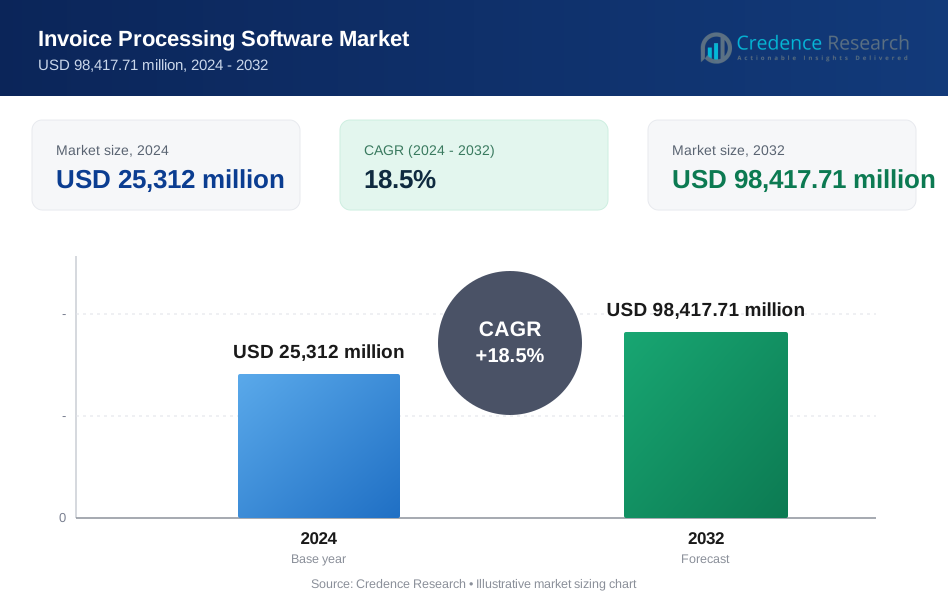
The Invoice Processing Software Market is projected to grow from USD 25,312 million in 2024 to an estimated USD 98,417.71 million by 2032, with a compound annual growth rate (CAGR) of 18.5% from 2024 to 2032.
Key drivers of the invoice processing software market include the growing demand for automation and efficiency in business operations. Companies are increasingly adopting invoice processing software to streamline their accounts payable processes, reduce human error, and improve operational efficiency. The shift towards digital transformation and the need for real-time invoice tracking and management are also contributing to market growth. Additionally, the increasing integration of artificial intelligence (AI) and machine learning (ML) technologies into invoice processing solutions is enhancing automation capabilities, improving data accuracy, and enabling faster decision-making.
Regionally, North America and Europe are leading the invoice processing software market due to advanced technology adoption, strong digital infrastructure, and the presence of key software providers in these regions. The United States, in particular, is seeing widespread use of invoice automation across various industries, including retail, manufacturing, and finance. In the Asia Pacific region, countries such as China, India, and Japan are witnessing rapid market growth driven by the rise of digitalization and the increasing number of small and medium-sized enterprises (SMEs) adopting invoice processing solutions. The demand for efficient financial management tools is further driving market adoption in emerging economies. Latin America and the Middle East & Africa are also experiencing growth, with businesses looking to enhance operational efficiency and reduce costs through automated invoicing systems.
Market Insights
- The global invoice processing software market is expected to grow from USD 25,312 million in 2024 to USD 98,417.71 million by 2032, with a CAGR of 18.5%.
- Key market drivers include the demand for automation, improved efficiency, and the reduction of human error in accounts payable processes.
- Digital transformation and the need for real-time invoice tracking are contributing significantly to the market’s growth.
- Integration of artificial intelligence (AI) and machine learning (ML) is enhancing automation, data accuracy, and decision-making in invoice processing solutions.
- North America and Europe are leading the market due to advanced technology adoption and the presence of major software providers.
- The Asia Pacific region is experiencing rapid growth, with China, India, and Japan driving adoption, especially among small and medium-sized enterprises.
- Latin America and the Middle East & Africa are seeing increasing demand for invoice processing software to enhance operational efficiency and cut costs.
Market Drivers
Growing Demand for Automation in Business Operations
Automation has become essential for businesses looking to streamline their operations and reduce costs. For instance, the International Monetary Fund (IMF) has reported that governments and businesses across developed countries are investing heavily in automation technologies to increase productivity and improve efficiency. In the United States, automation in the manufacturing industry is expected to help save approximately $500 billion annually by 2025, according to a report by the U.S. Bureau of Economic Analysis. the U.S. Department of Defense has allocated $1.3 billion in 2024 for the implementation of AI and automation tools in various operational processes, including invoice processing, as part of its modernization strategy.
Shift Towards Digital Transformation
Governments globally are investing in digital transformation to improve efficiency and reduce bureaucratic overhead. For instance, the European Commission allocated €2.5 billion to its Digital Europe Programme in 2024, aimed at accelerating digital transformation across member states, including the automation of invoice and payment systems. In the United Kingdom, the government has committed £150 million to digital transformation initiatives, including the automation of back-office functions like invoicing. This push towards digitization is being mirrored by private sector companies, which are increasingly adopting automated invoicing systems to keep pace with government-led digital efforts.
Integration of AI and Machine Learning in Invoice Processing
The integration of AI and machine learning in financial processes like invoice processing is growing rapidly. For instance, the U.S. government allocated $100 million for AI research in the 2023 fiscal year, focusing partly on automation within public sector finance systems. The Australian government has also earmarked A$5.4 million to integrate AI into invoice processing systems within government procurement processes. These investments are helping public institutions streamline invoice workflows and reduce the risk of errors, directly supporting the growth of AI-driven automation in invoice processing.
Need for Real-time Tracking and Management
Real-time tracking and management of invoices are now a priority in both public and private sectors to improve transparency and efficiency. For instance, the United Nations allocated $20 million in 2023 to implement real-time financial tracking systems, including automated invoice processing, to improve the accuracy of budget management. In Canada, the government launched the "Digital Invoice Tracking" initiative in 2024 with a budget of C$10 million to allow real-time invoice monitoring for vendors and contractors. This initiative highlights the growing need for real-time financial data, further pushing the adoption of automated invoice processing solutions.
Market Trends
Cloud-Based Invoice Processing Solutions
Cloud computing is increasingly becoming a dominant trend in the invoice processing software market due to its flexibility, scalability, and cost-effectiveness. The U.S. Government's General Services Administration (GSA) has allocated $10 million in 2024 to transition several public sector invoicing systems to the cloud as part of its digital modernization efforts. In the private sector, companies are also moving to cloud-based solutions to reduce infrastructure costs and enhance collaboration. For instance, the U.S. Department of Veterans Affairs has transitioned more than 70% of its financial operations, including invoicing, to cloud platforms to improve accessibility and security.
Focus on Security and Compliance
As organizations process sensitive financial data through automated systems, ensuring security and compliance with regulatory standards has become a critical trend. The European Union’s General Data Protection Regulation (GDPR) has set a strong framework for data protection, requiring companies to enhance their security protocols. For Instance, In response, government agencies like the U.S. Department of Homeland Security (DHS) have invested over $100 million in cybersecurity measures for federal financial systems, including those handling invoices. This trend is pushing businesses to prioritize secure invoice processing solutions to avoid penalties and safeguard data integrity.
Integration with Enterprise Resource Planning (ERP) Systems
Integration of invoice processing software with Enterprise Resource Planning (ERP) systems is becoming a key trend for organizations seeking to automate and streamline their entire financial workflow. For Instance, The U.S. Department of Health and Human Services (HHS) allocated $40 million for ERP system upgrades in 2023, which includes improving invoice automation and integration. This growing trend is reflected across private enterprises as well, with large companies like Lockheed Martin leveraging ERP solutions to automate their invoicing and procurement processes.
Adoption of AI-Driven Analytics in Invoice Processing
Artificial Intelligence (AI) is making its way into invoice processing systems to enhance data analytics and decision-making. For Instance, The U.K. Government’s National Cyber Security Centre (NCSC) has allocated £30 million to develop AI-driven tools to detect fraud and improve financial management within government projects, including invoice management. This trend toward AI-driven analytics is gaining traction, with businesses incorporating AI to detect anomalies, reduce fraud, and optimize cash flow.
Market Challenges Analysis
Data Security and Privacy Concerns
One of the key challenges in the invoice processing software market is ensuring data security and protecting sensitive financial information. As businesses increasingly adopt automated systems to handle invoices, they are also storing vast amounts of data in digital formats. This makes them vulnerable to cyberattacks and data breaches. For instance, the U.S. Department of Homeland Security (DHS) has reported over 7,000 cybersecurity incidents related to government agencies and contractors in 2023, highlighting the increasing risk to sensitive financial data. This concern is compounded by the stringent data protection regulations such as the General Data Protection Regulation (GDPR) in the European Union, which imposes significant penalties for data breaches. To mitigate this challenge, organizations must implement robust encryption methods, secure access controls, and continuous monitoring to safeguard financial data. However, the complexity and cost of ensuring compliance with these regulations pose a significant hurdle for businesses, particularly small and medium-sized enterprises (SMEs).
Integration with Legacy Systems
Another significant challenge faced by organizations adopting invoice processing software is the integration of new solutions with existing legacy systems. Many companies, particularly large corporations and government agencies, operate on older financial management platforms that were not designed to accommodate modern invoice automation tools. For Instance, The U.S. Government Accountability Office (GAO) highlighted in a 2022 report that over 60% of federal agencies still rely on outdated IT systems, creating challenges in integrating new software with these legacy infrastructures. This can result in compatibility issues, increased implementation times, and additional costs for system upgrades or replacements. The need for seamless integration between invoicing software and other enterprise systems, such as Enterprise Resource Planning (ERP) tools, further complicates the adoption process. Overcoming these barriers requires substantial investment in IT infrastructure, skilled personnel, and dedicated project management, which can be a major hurdle for organizations looking to modernize their invoicing processes.
Market Opportunities
The growing demand for automation across various industries presents significant opportunities for the invoice processing software market. As businesses increasingly seek ways to optimize their accounts payable processes, there is a strong shift towards adopting automated solutions to reduce manual effort, improve efficiency, and minimize human errors. Companies in sectors such as retail, manufacturing, and finance are looking for advanced technologies like AI, machine learning, and optical character recognition (OCR) to automate invoice data extraction and validation. This trend presents an opportunity for software providers to expand their product offerings, incorporating these technologies to meet the growing demand for faster and more accurate invoice processing. Additionally, with an increasing emphasis on compliance and real-time data tracking, businesses are seeking solutions that not only automate but also ensure secure and transparent financial transactions.
Emerging markets in Asia Pacific, Latin America, and the Middle East offer considerable growth potential for invoice processing software. As businesses in these regions undergo digital transformation, they are looking to modernize their financial operations, presenting an opportunity for software providers to enter these markets with tailored solutions. Governments in these regions are also introducing initiatives that encourage digitization and efficient financial management, further driving the adoption of automated invoicing systems. For instance, the implementation of digital tax systems in countries like India and Brazil is creating demand for secure and efficient invoicing solutions. This provides an opportunity for companies to expand their reach, offering scalable and customizable solutions to address the unique needs of businesses in these fast-growing economies.
Market Segmentation Analysis
By Type
The invoice processing software market can be segmented based on the type of solution, which typically includes on-premise and cloud-based systems. Cloud-based solutions are gaining traction due to their scalability, lower upfront costs, and ease of access, making them the preferred choice for small and medium-sized businesses (SMBs) and large enterprises. On the other hand, on-premise solutions are favored by organizations with strict security and compliance requirements, as they allow full control over data storage and processing.
By Technology
Technological advancements play a crucial role in the development of invoice processing software. Artificial Intelligence (AI) and Machine Learning (ML) integration are key drivers of innovation in the market. These technologies enable automation, enhance data accuracy, and provide predictive analytics for better decision-making. Optical Character Recognition (OCR) technology is also widely used to extract data from invoices, reducing manual entry errors and processing time. Additionally, Blockchain is emerging as a technology for improving transparency and security in invoice transactions.
By End-User
The end-user segment of the invoice processing software market includes industries such as retail, manufacturing, healthcare, finance, and government. Retail and manufacturing sectors are major adopters due to high transaction volumes and the need for efficient payment and procurement processes. Healthcare institutions are increasingly adopting these systems to manage complex billing and insurance processes. In the government sector, automation of invoice processing is essential for improving operational efficiency and compliance with regulatory standards.
Segmentations
Based on Product Type:
- Invoice Management Software
- Automated Data Capture Solutions
- Invoice Scanning and Optical Character Recognition (OCR) Solutions
- Payment Automation Software
- Vendor Management and Compliance Solutions
Based on Design:
- Cloud-Based Solutions
- On-Premise Solutions
- Mobile-Based Solutions
- Hybrid Solutions
Based on Technology:
- Artificial Intelligence (AI) Integration
- Machine Learning (ML) Integration
- Optical Character Recognition (OCR)
- Blockchain Technology
- Robotic Process Automation (RPA)
Based on End-User:
- Retail
- Manufacturing
- Healthcare
- Finance
- Government
- Education
- IT and Telecommunications
Based on Region:
- North America
- U.S.
- Canada
- Mexico
- Europe
- Germany
- France
- U.K.
- Italy
- Spain
- Rest of Europe
- Asia Pacific
- China
- Japan
- India
- South Korea
- South-east Asia
- Rest of Asia Pacific
- Latin America
- Brazil
- Argentina
- Rest of Latin America
- Middle East & Africa
- GCC Countries
- South Africa
- Rest of the Middle East and Africa
Regional Analysis
North America
North America is the leading region in the invoice processing software market, with a significant market share, estimated at around 35%. The region benefits from advanced technology adoption, a well-established digital infrastructure, and the presence of key software providers. The United States is the primary driver of market growth in this region, where enterprises across sectors such as retail, manufacturing, and finance are increasingly automating their invoice processing workflows to reduce operational costs and improve accuracy. For instance, the U.S. government has made substantial investments in digitizing public sector financial management, further fueling the demand for automated invoicing solutions. Additionally, companies like IBM and Oracle are offering cutting-edge solutions, propelling adoption across the region. The robust presence of cloud-based invoice processing solutions and strong AI and machine learning integration also supports the rapid growth in this market segment.
Europe
Europe holds the second-largest market share in the invoice processing software market, accounting for approximately 30%. The region's regulatory environment, particularly the European Union’s General Data Protection Regulation (GDPR), has pushed companies to adopt secure, compliant invoice automation solutions. Countries like the United Kingdom, Germany, and France are witnessing substantial growth as companies seek to improve financial transparency and enhance operational efficiency. For instance, the U.K. government’s investment in digital transformation projects has driven further adoption of invoice automation tools in both the public and private sectors. In Germany, industries such as automotive manufacturing and retail are leveraging these systems to manage high transaction volumes efficiently. Moreover, the growing focus on real-time invoice tracking and the integration of advanced technologies like artificial intelligence (AI) and optical character recognition (OCR) is further accelerating the market's expansion in Europe.
Asia Pacific
The Asia Pacific region is experiencing rapid growth in the invoice processing software market, with a projected market share of about 25%. The rise of digitalization in emerging economies such as China, India, and Japan is a significant driver behind this growth. Small and medium-sized enterprises (SMEs) are increasingly adopting automated invoicing solutions to streamline their accounts payable processes and reduce manual errors. For instance, the Indian government has introduced initiatives like the Goods and Services Tax (GST) to promote digitization, which has boosted the demand for automated invoicing systems. Additionally, China’s focus on improving its financial sector’s efficiency and transparency through technology adoption is driving the market in the region. As companies in Asia Pacific continue to digitalize their operations, the demand for scalable and cost-effective invoice processing solutions is expected to rise steadily.
Key Player Analysis
- SAP SE
- Oracle Corporation
- IBM Corporation
- Coupa Software
- Basware Corporation
- Kofax Inc.
- Tradeshift
- Ariba, Inc. (A SAP Company)
- Bill.com
- Xero Limited
Competitive Analysis
The invoice processing software market is highly competitive, with several key players offering innovative solutions to streamline financial operations. Leading companies such as SAP SE, Oracle Corporation, and IBM Corporation dominate the market, providing advanced automation, AI, and machine learning technologies to enhance invoice accuracy and efficiency. For instance, SAP’s integration of AI into its Invoice Management software has made it a preferred choice for large enterprises seeking to reduce manual data entry. Meanwhile, emerging players like Bill.com and Xero are tapping into the small and medium-sized enterprise (SME) market with user-friendly, cloud-based solutions. Companies like Coupa Software and Kofax Inc. are focusing on end-to-end automation and real-time invoice tracking, further intensifying competition. The continuous innovation and emphasis on reducing costs, increasing efficiency, and improving compliance are key differentiators in this market. As businesses increasingly move to cloud-based solutions, these players must innovate rapidly to maintain their competitive edge.
Recent Developments
- In October 2024, SAP Ariba introduced enhancements to its e-invoicing and procurement solutions, focusing on improving supplier collaboration, optimizing procurement processes, and enhancing end-to-end supply chain visibility.
- In 2024, Oracle was listed as one of the major companies operating in the invoice processing software market, although no specific recent developments were found in the provided search results.
- In 2024, IBM was listed as one of the major companies in the invoice processing software market, but no specific recent developments were found in the provided search results.
- In 2024, Coupa held a 28.6% market share in the AP Automation market, offering a comprehensive suite of tools that include invoice processing, payment processing, and supplier management.
- In 2024, Basware was listed as one of the major companies in the invoice processing software market, but no specific recent developments were found in the provided search results.
- In October 2024, Ariba, part of SAP, introduced enhancements to its e-invoicing and procurement solutions, focusing on improving supplier collaboration, optimizing procurement processes, and enhancing end-to-end supply chain visibility.
- In 2024, Xero was listed as one of the major companies in the invoice processing software market, but no specific recent developments were found in the provided search results.
Market Concentration & Characteristics
The invoice processing software market is moderately concentrated, with a mix of established players and emerging companies driving innovation and competition. Major players such as SAP, Oracle, and IBM dominate the market due to their comprehensive, enterprise-level solutions, extensive customer bases, and technological advancements, particularly in AI and cloud-based systems. These companies offer integrated solutions that cater to large enterprises and government organizations, ensuring scalability and security. On the other hand, smaller companies like Bill.com and Xero are targeting small and medium-sized enterprises (SMEs) with cost-effective, easy-to-use cloud solutions. The market is characterized by a shift toward automation, real-time tracking, and AI-driven data analysis, with growing emphasis on cloud-based deployments. This dynamic environment is pushing companies to innovate continuously and improve service delivery, driving the overall growth of the market. The rise of digital transformation, especially in emerging markets, is expected to further shape market characteristics.
Report Coverage
The research report offers an in-depth analysis Based on Product Type, Based on Technology, Based on End-User, Based on Region. It details leading market players, providing an overview of their business, product offerings, investments, revenue streams, and key applications. Additionally, the report includes insights into the competitive environment, SWOT analysis, current market trends, as well as the primary drivers and constraints. Furthermore, it discusses various factors that have driven market expansion in recent years. The report also explores market dynamics, regulatory scenarios, and technological advancements that are shaping the industry. It assesses the impact of external factors and global economic changes on market growth. Lastly, it provides strategic recommendations for new entrants and established companies to navigate the complexities of the market.
Future Outlook
- The invoice processing software market will continue to see increasing adoption as businesses strive for greater automation and efficiency in their financial operations.
- Cloud-based solutions will become the standard, with more companies moving away from on-premise systems to reduce costs and enhance scalability.
- The integration of AI and machine learning will revolutionize invoice processing by improving accuracy, reducing manual data entry, and enabling predictive analytics.
- Real-time invoice tracking and management will be prioritized, allowing businesses to enhance cash flow management and reduce delays in payment cycles.
- As cybersecurity concerns grow, companies will invest heavily in secure, compliant solutions to protect sensitive financial data and adhere to increasingly strict regulatory requirements.
- Small and medium-sized enterprises (SMEs) will become a larger market segment as cloud-based, cost-effective invoice processing solutions make automation more accessible.
- Emerging markets, particularly in Asia Pacific and Latin America, will see rapid growth as businesses in these regions embrace digital transformation.
- The integration of invoice processing software with other enterprise systems, such as Enterprise Resource Planning (ERP), will improve workflow efficiency and data consistency.
- The focus on sustainability and environmental responsibility will push businesses to reduce paper-based invoicing, accelerating the shift to digital solutions.
- Companies will continue to demand solutions that offer scalability, flexibility, and customization to meet the unique needs of different industries, fostering further innovation in the market.
Request a Free Sample
Fill in your details and we'll send you a free sample report.
- Sample data tables & charts
- Research methodology
Need a Custom Version of This Report?
Tailor the scope, geography, or segments to your exact requirements.
- Custom geography or segment scope
- Direct access to our analyst team
Frequently Asked Questions
What is the projected growth of the invoice processing software market?
What is driving the growth of the invoice processing software market?
How does AI and ML impact invoice processing software?
Which regions are leading in the adoption of invoice processing software?
How is the market growing in emerging regions like Asia Pacific and Latin America?
Table of Content
Chapter 1. Report Introduction
- 1.1 Report Description & Purpose
- 1.1.1 Report Title & Market Definition
- 1.1.2 Unique Selling Propositions (USP) & Key Differentiators
- 1.1.3 Value Proposition for Stakeholders
- 1.2 Research Objectives
- 1.2.1 Market Sizing Objectives (Volume & Revenue)
- 1.2.2 Segmentation Objectives
- 1.2.3 Competitive Intelligence Objectives
- 1.2.4 Forecast & Scenario Objectives
- 1.3 Report Scope
- 1.3.1 Invoice Processing Software Scope – Types & Subtypes Covered
- 1.3.2 Geographic Scope – Regions & Countries Covered
- 1.3.3 Historical Period, Base Year & Forecast Period (2024; forecast to 2032)
- 1.3.4 Inclusions & Exclusions
- 1.4 HS Code & Classification Framework
- 1.5 Currency, Units & Pricing Basis
- 1.6 Target Stakeholders
- 1.7 Limitations & Assumptions
Chapter 2. Executive Summary
- 2.1 Global Invoice Processing Software Market Snapshot
- 2.1.1 Market Size – Historical (2024) & Forecast (2024-2032) (2024: USD 25,312 million → 2032: USD 98,417.71 million)
- 2.1.2 Volume & Revenue – Global Totals
- 2.1.3 Key Market Highlights – Top Five Facts
- 2.2 Invoice Processing Software Market Segmentation Snapshot
- 2.2.1 Market Split by Region – 2024 vs. 2032
- 2.3 Competitive Snapshot
- 2.3.1 Top 10 Players by Revenue Share – 2024
- 2.3.2 Top 10 Players by Volume Share – 2024
- 2.3.3 Recent Strategic Developments (18-Month Summary)
- 2.4 Key Investment Highlights & Strategic Conclusions
Chapter 3. Invoice Processing Software Market Dynamics & Industry Analysis
- 3.1 Market Overview & Context
- 3.1.1 Invoice Processing Software Market Position in the Broader Automotive Value Chain
- 3.1.2 OEM vs. Replacement Market Dynamics
- 3.1.3 Market Maturity & Development Stage by Region
- 3.2 Invoice Processing Software Market Drivers
- 3.3 Invoice Processing Software Market Restraints & Challenges
- 3.4 Invoice Processing Software Market Opportunities
- 3.5 Porter's Five Forces Analysis
- 3.5.1 Threat of New Entrants
- 3.5.2 Bargaining Power of Suppliers
- 3.5.3 Bargaining Power of Buyers
- 3.5.4 Threat of Substitutes
- 3.5.5 Competitive Rivalry – Intensity Assessment
- 3.6 Invoice Processing Software Value Chain Analysis
- 3.6.1 Upstream – Raw Material/Input Suppliers
- 3.6.1.1 Raw Material/Input 1
- 3.6.1.2 Raw Material/Input 2
- 3.6.1.3 Raw Material/Input 3
- 3.6.2 Midstream – Production/Manufacturing/Service Delivery
- 3.6.2.1 Production/Process Overview
- 3.6.2.2 Key Facility Locations & Capacity by Manufacturer
- 3.6.3 Downstream – Distribution & End Consumer
- 3.6.3.1 Primary Channel – B2B/OEM
- 3.6.3.2 Secondary Channels – Dealer, Retail, Online, Direct
- 3.6.4 Value Chain Profitability Analysis
- 3.6.1 Upstream – Raw Material/Input Suppliers
- 3.7 PESTEL Analysis
- 3.7.1 Political Factors
- 3.7.2 Economic Factors
- 3.7.3 Social Factors
- 3.7.4 Technological Factors
- 3.7.5 Environmental Factors
- 3.7.6 Legal Factors
- 3.8 Invoice Processing Software Supply Chain Analysis
- 3.8.1 Raw Material/Input Supply Risk Assessment
- 3.8.2 Manufacturing Concentration Risk (Geographic Exposure)
- 3.8.3 Trade Disruption Impact Analysis
- 3.9 Regulatory & Policy Landscape
Note: The regulatory and policy landscape section covers regulations based on their applicability to the market, Invoice Processing Software category, geography, and scope of the study. Only regulatory frameworks with a material impact on operations, compliance, trade, sustainability, or market access are analyzed in detail.
Chapter 4. Key Investment Pockets & Opportunity Analysis
- 4.1 Invoice Processing Software Market Attractiveness Analysis
- 4.1.1 By Region – Investment Attractiveness Matrix (Volume × CAGR)
- 4.2 Absolute Revenue Growth Opportunity
- 4.2.1 By Region – Absolute USD Growth Through 2032
- 4.3 Incremental Volume Opportunity
- 4.3.1 By Region – Incremental Volume Through 2032
- 4.3.2 Segment – Incremental Volume
- 4.4 Emerging Submarket Opportunity Deep Dive (Subject to Applicability)
- 4.5 Emerging Market Opportunity Scorecards
- 4.5.1 United States
- 4.5.2 Europe
- 4.5.3 Asia
- 4.5.4 Middle East & Africa
Note: Emerging Market Opportunity Scorecards will be included based on relevance and strategic importance. Regions listed are indicative and may vary depending on data availability and market dynamics.
Chapter 5. Invoice Processing Software Import-Export Analysis & Trade Flows
- 5.1 Global Trade Overview
- 5.1.1 Global Export Value by Country (2024)
- 5.1.2 Global Export Volume by Country (2024)
- 5.1.3 Global Import Value by Country (2024)
- 5.1.4 Global Import Volume by Country (2024)
- 5.1.5 Net Trade Balance by Country (2024)
- 5.2 Export Analysis – Segment
- 5.2.1 Type 1 (HS Code)
- 5.2.2 Type 2 (HS Code)
- 5.2.3 Type 3 (HS Code)
- 5.2.4 Type 4 (HS Code)
- 5.2.5 Type 5 (HS Code)
- 5.3 Import Analysis – Segment
- 5.3.1 Type 1 (HS Code)
- 5.3.2 Type 2 (HS Code)
- 5.3.3 Type 3 (HS Code)
- 5.3.4 Type 4 (HS Code)
- 5.3.5 Type 5 (HS Code)
- 5.4 Average Unit Trade Prices
- 5.4.1 Average Export Price – Segment & Country
- 5.4.2 Average Import Price – Segment & Source Country
- 5.4.3 Price Trends (2024)
- 5.5 Key Trade Route Analysis
- 5.5.1 Trade Route 1
- 5.5.2 Trade Route 2
- 5.5.3 Trade Route 3
- 5.5.4 Trade Route 4
- 5.5.5 Trade Route 5
- 5.6 Trade Policy Impact Assessment
- 5.6.1 US Anti-Dumping & Section 301 Tariffs
- 5.6.2 EU Customs Union Impact
- 5.6.3 Major Free Trade Agreements
- 5.6.4 USMCA Rules of Origin
Note: Trade policy analysis will be included only where relevant to the Invoice Processing Software market.
Chapter 6. Competitive Landscape & Company Benchmarking
- 6.1 Invoice Processing Software Market Concentration & Structure
- 6.1.1 Herfindahl-Hirschman Index (HHI) – vs. 2024
- 6.1.2 Tier 1, Tier 2 & Tier 3 Market Structure
- 6.1.3 Global, Regional & Local Player Dynamics
- 6.2 Invoice Processing Software Market Share Analysis – 2024
- 6.2.1 Global Revenue Share by Company
- 6.2.2 Global Volume Share by Company
- 6.2.3 Regional Revenue Share
- 6.2.4 Market Share Evolution ( vs. 2024)
- 6.2.5 OEM Segment Share by Company
- 6.2.6 Replacement Segment Share by Company
- 6.3 Production/Delivery Capacity & Facility Analysis
- 6.3.1 Global Installed Capacity
- 6.3.2 Capacity Utilization Rates
- 6.3.3 Production/Output Volume
- 6.3.4 Facility Locations & Capacity Map
- 6.3.5 Planned Capacity Additions
- 6.4 Invoice Processing Software Competitive Benchmarking Matrix
- 6.4.1 Revenue, Volume, CAGR & Profitability Comparison
- 6.4.2 Channel Revenue Mix
- 6.4.3 Geographic Revenue Exposure
- 6.4.4 R&D Intensity
- 6.4.5 Sustainability Maturity
- 6.5 Strategic Developments in Invoice Processing Software (Last 24 Months)
- 6.5.1 Mergers, Acquisitions & Divestments
- 6.5.2 New Invoice Processing Software Launches
- 6.5.3 Facility Expansions
- 6.5.4 Strategic Alliances, Joint Ventures & Partnerships
- 6.5.5 Distribution Expansion & Market Entry
- 6.5.6 Sustainability & ESG Initiatives
- 6.6 Competitive Strategy Mapping
- 6.6.1 Leader, Challenger, Follower & Niche Classification
- 6.6.2 Pricing Strategy Comparison
- 6.6.3 Channel Strategy Matrix
Note: Strategic developments are included based on their materiality and the availability of reliable information.
Chapter 7. Global Invoice Processing Software Market – By Distribution Channel
- 7.1 Segment Overview
- 7.1.1 Volume & Revenue Split by Channel (2024 & 2032)
- 7.1.2 Channel Mix Evolution (2024-2032)
Chapter 8. Regional Market Analysis – Global Overview
- 8.1 Global Regional Overview
- 8.1.1 Regional Volume Share
- 8.1.2 Regional Revenue Share
- 8.1.3 Regional Volume by Region
- 8.1.4 Regional Revenue by Region
- 8.1.5 Regional Forecast Through 2032
- 8.2 Cross-Regional Segment Analysis
- 8.2.1 By Distribution Channel
- 8.2.2 By Brand/Price Tier
Chapter 9. North America Invoice Processing Software Market
- 9.1 United States
- 9.2 Canada
- 9.3 Mexico
Chapter 10. Europe Invoice Processing Software Market
- 10.1 Germany
- 10.2 France
- 10.3 Italy
- 10.4 United Kingdom
- 10.5 Spain
- 10.6 Poland
- 10.7 Russia
- 10.8 Netherlands
- 10.9 Belgium
- 10.10 Sweden
- 10.11 Denmark
- 10.12 Norway
- 10.13 Rest of Europe
Chapter 11. Asia Pacific Invoice Processing Software Market
- 11.1 China
- 11.2 India
- 11.3 Japan
- 11.4 South Korea
- 11.5 Thailand
- 11.6 Indonesia
- 11.7 Vietnam
- 11.8 Malaysia
- 11.9 Australia
- 11.10 Rest of Asia Pacific
Chapter 12. Latin America Invoice Processing Software Market
- 12.1 Brazil
- 12.2 Argentina
- 12.3 Colombia
- 12.4 Chile
- 12.5 Rest of Latin America
Chapter 13. Middle East Invoice Processing Software Market
- 13.1 Saudi Arabia
- 13.2 United Arab Emirates
- 13.3 Turkey
- 13.4 Israel
- 13.5 Iran
- 13.6 Rest of the Middle East
Chapter 14. Africa Invoice Processing Software Market
- 14.1 South Africa
- 14.2 Egypt
- 14.3 Nigeria
- 14.4 Morocco
- 14.5 Rest of Africa
Chapter 15. Invoice Processing Software Company Profiles
- 15.1 [Company 01]
- 15.1.1 Company Overview
- 15.1.2 Key Management Personnel
- 15.1.3 Products & Services Portfolio
- 15.1.4 Financial Performance
- 15.1.5 Key Market Focus & Geographic Presence
- 15.1.6 Recent Developments & Strategic Initiatives
Note: The company profile list is preliminary and may change based on research findings, market developments, data availability, and client requirements.
Chapter 16. Appendices
- Appendix A – List of Abbreviations & Acronyms
- Appendix B – Industry Classification Code Reference – Full Series
- Appendix C – Production & Capacity Data Tables
- Appendix D – End-Use & Demand Base Tables
- Appendix E – Consumption & Replacement Rate Assumptions
- Appendix F – ASP Reference Tables
- Appendix G – Manufacturing & Facility Database
- Appendix H – Import-Export Data Tables
- Appendix I – Regulatory Summary Tables
- Appendix J – Primary Research Participant List (Anonymized)
- Appendix K – Primary Research Questionnaire Framework
- Appendix L – Data Sources & Bibliography
- Appendix M – Market Size Divergence & Source Comparison
Chapter 17. Research Methodology
- 17.1 Research Framework & Philosophy
- 17.2 Secondary Research – Sources, Hierarchy & Data Extraction
- 17.3 Data Modeling – Bottom-Up & Top-Down Market Sizing
- 17.4 Primary Research – Stakeholder Framework, LOI & Sample Sizes
- 17.5 Forecast Methodology – Regression, Scenario & Sensitivity Analysis
- 17.6 Quality Control – Four-Layer Validation Framework
- 17.7 Limitations & Standard Assumptions
- 17.8 Disclaimer
