
| REPORT ATTRIBUTE | DETAILS |
|---|---|
| Historical Period | 2020-2023 |
| Base Year | 2024 |
| Forecast Period | 2025-2032 |
| Italy Dark Fiber Network Market Size 2023 | USD 167.09 million |
| Italy Dark Fiber Network Market, CAGR | 11.5% |
| Italy Dark Fiber Network Market Size 2032 | USD 448.81 million |
Market Overview:
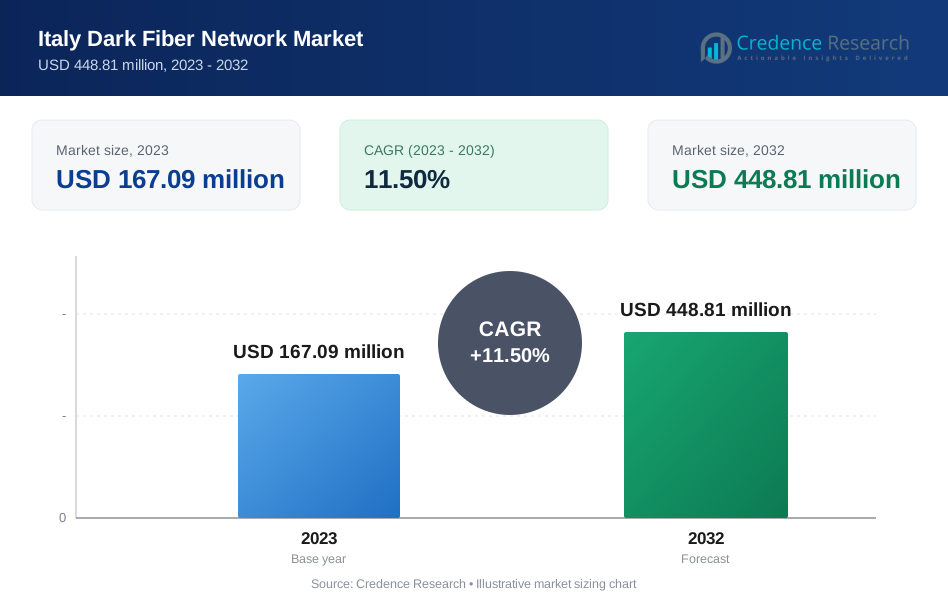
The Italy Dark Fiber Network Market is projected to grow from USD 167.09 million in 2023 to an estimated USD 448.81 million by 2032, with a compound annual growth rate (CAGR) of 11.5% from 2023 to 2032.
The Italy dark fiber network market is expanding rapidly due to several critical factors. The continuous growth of data centers across the country fuels the demand for scalable, high-capacity connectivity solutions. Dark fiber networks provide the bandwidth and low latency necessary to support the ever-increasing volume of data traffic. Additionally, the nationwide deployment of 5G networks is intensifying the need for dense fiber infrastructure, as dark fiber acts as the vital backbone for connecting 5G small cells and ensuring ultra-fast data transmission. The rising adoption of cloud computing and Internet of Things (IoT) technologies further increases bandwidth requirements, making dark fiber an essential enabler of these data-intensive applications. Government initiatives also play a significant role in driving market growth, with policies aimed at developing and modernizing digital infrastructure to bridge the digital divide and stimulate economic development across Italy.
Regionally, the dark fiber network market exhibits varying levels of maturity. Northern Italy, particularly regions such as Lombardy, Emilia-Romagna, and Veneto, leads in infrastructure development due to their status as industrial and technological hubs. These areas benefit from advanced telecommunications infrastructure and host a high concentration of data centers, driving strong demand for dark fiber connectivity. In contrast, Southern Italy is witnessing focused efforts to improve digital inclusion, with government-backed projects aiming to extend dark fiber networks to underserved and rural regions. These initiatives seek to ensure equitable access to high-speed internet services, promoting socio-economic growth throughout the country. Overall, regional investments and government support are crucial to expanding Italy’s digital backbone and enabling widespread adoption of next-generation technologies.
Market Insights:
- The Italy Dark Fiber Network Market is projected to grow from USD 167.09 million in 2023 to USD 448.81 million by 2032, with a CAGR of 11.5%.
- Rapid expansion of data centers drives demand for scalable, high-capacity dark fiber connectivity supporting growing data traffic.
- Nationwide 5G deployment increases need for dense fiber infrastructure as dark fiber forms the backbone connecting 5G small cells.
- Adoption of cloud computing and IoT significantly raises bandwidth requirements, positioning dark fiber as essential infrastructure.
- Government initiatives and public-private partnerships accelerate fiber network expansion to bridge the digital divide and promote economic growth.
- Market growth faces challenges from high capital expenditure, complex regulations, and the shortage of skilled fiber optic professionals.
- Northern Italy leads infrastructure development with 48% market share, while Southern Italy focuses on improving connectivity in underserved areas.
Report Scope
The report segments the Italy Dark Fiber Network Market as follow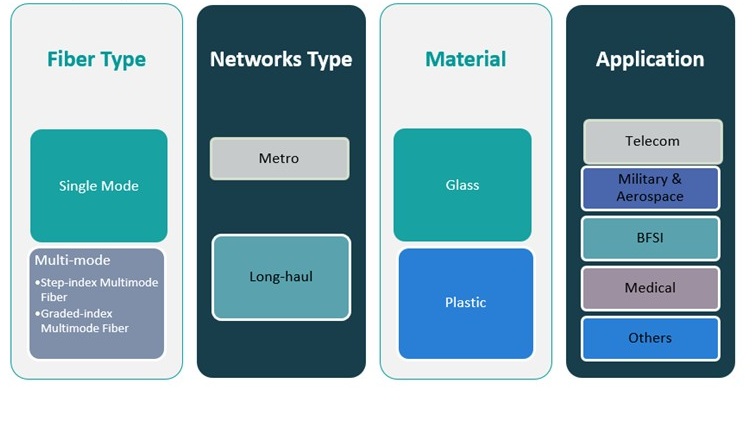
Market Drivers:
Expansion of Data Centers Increasing Demand for High-Capacity Connectivity
The rapid expansion of data centers across Italy significantly drives the growth of the Italy Dark Fiber Network Market. Data centers require robust, scalable, and high-capacity connectivity solutions to support the ever-increasing volume of data traffic. Dark fiber networks provide dedicated bandwidth with minimal latency, which is essential for maintaining operational efficiency and ensuring seamless data transfer. It enables data center operators to manage large-scale storage and cloud computing services effectively. The surge in digital transformation initiatives across various sectors fuels further investments in data center infrastructure. Consequently, demand for dark fiber networks grows in parallel with data center development, supporting high-speed, secure, and reliable connectivity solutions.
Deployment of 5G Networks Necessitates Dense Fiber Infrastructure
The nationwide deployment of 5G technology propels demand for dark fiber networks in Italy. 5G requires a dense and high-speed fiber optic backbone to connect small cells and base stations effectively. Dark fiber offers the flexibility and capacity needed to handle the massive data throughput and low latency demands of 5G applications. Telecom operators actively invest in dark fiber to facilitate the rapid rollout and expansion of 5G services across urban and suburban areas. It also supports emerging use cases such as autonomous vehicles, smart cities, and augmented reality that rely on ultra-fast, reliable networks. The integration of dark fiber with 5G infrastructure strengthens the overall telecommunications ecosystem and enhances service delivery.
Growing Adoption of Cloud Computing and Internet of Things Drives Bandwidth Requirements
Cloud computing and the Internet of Things (IoT) have become integral to Italy’s digital economy, substantially increasing bandwidth consumption. The Italy Dark Fiber Network Market benefits from this trend because dark fiber delivers the capacity and reliability required to support cloud-based platforms and IoT ecosystems. Enterprises and service providers depend on high-performance networks to enable real-time data processing, remote access, and efficient device communication. Dark fiber’s ability to scale bandwidth according to demand allows organizations to optimize operational costs while maintaining high network performance. It fosters innovation and supports diverse applications, from industrial automation to smart home technologies. The rise in connected devices and cloud adoption continuously expands the need for resilient and expansive fiber networks.
- For instance, in January 2024, Guralp Systems announced a ‘SMART’ cable project integrating IoT sensors on the coast of Catania, Sicily, to collect environmental and seismic data.
Government Initiatives Accelerating Development of Digital Infrastructure
Government policies aimed at enhancing Italy’s digital infrastructure stimulate growth in the dark fiber market. Public investments and regulatory frameworks encourage the expansion of broadband networks to reduce the digital divide between urban and rural regions. It promotes private-public partnerships to accelerate fiber deployment in underserved areas. The Italian government supports projects aligned with European Union digital strategies, emphasizing high-speed connectivity as a foundation for economic competitiveness and social inclusion. Regulatory incentives and funding mechanisms create a favorable environment for network operators to invest in dark fiber infrastructure. This commitment to digital transformation ensures sustained market momentum and fosters technological advancements.
- For instance, the Italian Strategy for Ultra Broadband, approved in July 2023, aims to provide gigabit connectivity to all by 2026, with the Plan Italy 1 Giga allocating €3.8 billion to deliver 1 Gbps download and 200 Mbps upload speeds in underserved areas, targeting 8.5 million households.
Market Trends:
Increased Investment in Fiber Infrastructure to Support Digital Transformation
The Italy Dark Fiber Network Market is witnessing significant investment in expanding fiber optic infrastructure to support the country’s ongoing digital transformation. Telecom operators and private investors focus on deploying extensive dark fiber networks to meet rising data demands and enable future-proof connectivity solutions. It enables enterprises, service providers, and public institutions to access scalable, high-speed networks essential for digital services. Investment in fiber infrastructure aligns with national and EU-level goals to enhance broadband penetration and network resilience. Companies prioritize upgrading existing networks to handle increased bandwidth requirements and improve service quality. The growing deployment of fiber to the home (FTTH) and fiber to the premises (FTTP) technologies complements the expansion of dark fiber networks. This trend indicates a long-term commitment to strengthening Italy’s digital backbone.
- For example, Open Fiber announced in March 2025 a planned investment of €10 billion through 2034 to bring broadband to around 20 million homes across Italy, reflecting a massive commitment to future-proof connectivity and supporting national digitalization goals.
Integration of Advanced Technologies Enhances Network Efficiency and Security
The adoption of advanced technologies is reshaping the Italy Dark Fiber Network Market by enhancing network performance and security. Innovations such as software-defined networking (SDN) and network function virtualization (NFV) optimize the management and utilization of dark fiber assets. It allows operators to dynamically allocate bandwidth and adapt to fluctuating traffic demands efficiently. Enhanced encryption methods and cybersecurity protocols safeguard data transmitted over dark fiber networks, addressing growing concerns over privacy and data breaches. The integration of these technologies supports seamless connectivity for critical applications in finance, healthcare, and government sectors. It also facilitates the deployment of smart city initiatives and Industry 4.0 solutions that rely on robust and secure networks. This trend reflects the market’s shift toward intelligent, adaptable, and secure fiber optic infrastructure.
- For instance, Retelit offers dark fiber infrastructure optimized for Dense Wavelength Division Multiplexing (DWDM), which allows the transmission of multiple optical signals over long distances on a single fiber, supporting high-capacity and secure data transport.
Growing Demand for Customized Dark Fiber Solutions Among Enterprises
Enterprises in Italy increasingly seek customized dark fiber solutions tailored to specific business needs, driving market evolution. The Italy Dark Fiber Network Market responds by offering flexible lease agreements, dedicated bandwidth options, and scalable network configurations. It enables organizations to control their network architecture, ensuring optimal performance and cost-efficiency. Demand grows in sectors such as finance, manufacturing, and media, where data security and low latency are critical. Customized solutions also support multi-site connectivity, disaster recovery, and hybrid cloud deployments. Service providers emphasize consultative approaches to design and implement dark fiber networks that align with enterprise strategies. This trend highlights a move from generic connectivity toward bespoke network services enhancing competitive advantage.
Expansion of Public-Private Partnerships Accelerates Market Growth
Public-private partnerships (PPPs) play a crucial role in accelerating the growth of the Italy Dark Fiber Network Market by combining resources and expertise. It facilitates the deployment of fiber networks in underserved or rural areas where commercial viability remains challenging. Governments leverage PPPs to fulfill digital inclusion objectives and stimulate regional economic development. Telecom companies and infrastructure providers benefit from shared investment risks and streamlined project execution. This collaboration supports the rollout of nationwide broadband initiatives and aligns with European Union funding programs. PPPs contribute to faster network deployment, improved coverage, and enhanced service quality across Italy. This trend reinforces the strategic importance of cooperation between public authorities and private stakeholders in advancing digital infrastructure.
Market Challenges Analysis:
High Capital Expenditure and Complex Regulatory Environment Impede Network Expansion
The Italy Dark Fiber Network Market faces challenges due to the high capital expenditure required for fiber infrastructure deployment. It demands significant upfront investment in fiber optic cables, network equipment, and civil works, which can deter smaller operators and delay project timelines. Obtaining necessary permits and navigating complex regulatory frameworks further complicate network rollout, increasing costs and administrative burdens. Diverse regulations across regional jurisdictions create inconsistencies that affect planning and execution efficiency. The lengthy approval processes and bureaucratic hurdles slow down infrastructure expansion, particularly in densely populated urban areas and protected zones. Market players must carefully manage financial risks while ensuring compliance with local laws. These factors collectively restrain the pace of dark fiber network growth.
- For instance, the average capital expenditure per kilometer of fiber deployment in Italy ranges from €30,000 to €50,000, with major cost factors including fiber optic cables, network equipment, and civil works.
Limited Availability of Skilled Workforce and Competition from Alternative Technologies
The shortage of skilled professionals specializing in fiber optic installation and maintenance poses a significant challenge to the Italy Dark Fiber Network Market. It restricts the ability of operators to efficiently deploy and manage advanced fiber networks. Recruiting and training technical talent remain critical priorities for sustaining network quality and reliability. The market also encounters competition from alternative connectivity technologies such as fixed wireless access and satellite broadband, which can offer quicker or lower-cost solutions in certain scenarios. These alternatives may reduce immediate demand for dark fiber services in rural or less densely populated regions. Market participants must balance investments between traditional fiber infrastructure and emerging technologies to optimize coverage and cost-effectiveness. Addressing workforce limitations and competitive pressures is essential to maintain market momentum.
Market Opportunities:
Expansion into Underserved Regions Presents Significant Growth Potential
The Italy Dark Fiber Network Market has substantial opportunities in expanding infrastructure to underserved and rural areas. Government initiatives focused on digital inclusion and broadband accessibility create favorable conditions for investment in these regions. It enables providers to tap into new customer bases and reduce the digital divide between urban and rural populations. The deployment of dark fiber in less competitive markets allows operators to establish long-term contracts and strengthen regional connectivity. Partnerships with local authorities and leveraging EU funding programs can accelerate network rollout and reduce financial risks. Targeting these underserved areas offers a strategic advantage and supports Italy’s broader economic development goals.
Growing Demand from Enterprises and Emerging Technologies Fuels Market Expansion
Enterprises across various sectors in Italy drive demand for customized and high-capacity dark fiber solutions. The Italy Dark Fiber Network Market benefits from increasing adoption of cloud computing, big data analytics, and Internet of Things (IoT) applications. It supports enterprises’ need for secure, scalable, and low-latency connectivity to enhance operational efficiency and innovation. The emergence of smart cities and Industry 4.0 initiatives further expands opportunities for network providers. By offering flexible lease models and value-added services, market participants can capture a larger share of enterprise demand. This trend positions dark fiber as a critical enabler of Italy’s digital transformation and technological advancement.
Market Segmentation Analysis:
The Italy Dark Fiber Network Market is segmented by fiber type, network type, material, and application, each reflecting distinct market dynamics and growth opportunities.
By fiber type, single mode fiber dominates due to its ability to support long-distance, high-bandwidth data transmission, making it ideal for backbone networks. Multi-mode fiber, including step-index and graded-index types, serves shorter distance applications, primarily in metro and enterprise networks where cost-efficiency and flexibility are crucial.
By network type, the market divides into metro and long-haul segments. Metro networks focus on urban areas with dense connectivity demands, supporting data centers, enterprises, and telecom operators. Long-haul networks cover extensive geographic regions connecting major cities and industrial hubs, requiring robust and scalable fiber infrastructure. The expansion of 5G and cloud services propels demand in both segments.
By Material-wise, glass fiber holds the largest market share due to its superior signal transmission properties and durability, preferred for critical infrastructure. Plastic fiber, while less prevalent, finds use in niche applications where cost and ease of installation are prioritized.
By Application segmentation includes telecom, military & aerospace, BFSI, medical, and others. Telecom remains the largest end-user segment, driven by continuous infrastructure upgrades and rising data traffic. BFSI and medical sectors increase demand for secure, low-latency connections supporting digital services and telemedicine. Military & aerospace leverage dark fiber for secure communications. The diverse applications reflect the market’s integral role in Italy’s digital transformation.
Segmentation:
By Fiber Type:
- Single Mode
- Multi-Mode
- Step-index Multimode Fiber
- Multi-Mode
By Network Type:
- Metro
- Long-haul
By Material:
- Glass
- Plastic
By Application:
- Telecom
- Military & Aerospace
- BFSI (Banking, Financial Services, and Insurance)
- Medical
- Others
Regional Analysis:
Northern Italy Leads Market with Highest Share in Fiber Network Deployment
Northern Italy dominates the Italy Dark Fiber Network Market, accounting for approximately 48% of the total market share. Regions such as Lombardy, Veneto, and Emilia-Romagna serve as industrial and technological hubs, driving substantial demand for high-capacity and low-latency connectivity. The concentration of large data centers, corporate headquarters, and advanced manufacturing facilities fuels extensive investment in dark fiber infrastructure. It benefits from well-established telecommunications frameworks and strong private sector participation. Northern Italy’s economic strength and urban density make it the most lucrative market for network operators. Continued modernization efforts and smart city projects in this region further sustain fiber network growth. The presence of major telecom providers also contributes to rapid fiber deployment and innovation.
Central Italy Exhibits Steady Growth with Focus on Urban Connectivity
Central Italy holds around 30% of the Italy Dark Fiber Network Market share, reflecting steady infrastructure development primarily centered in cities such as Rome and Florence. The demand stems from government offices, financial institutions, and educational establishments requiring reliable and scalable connectivity solutions. It supports the growing digital economy and expanding cloud service adoption in the region. Network expansion efforts emphasize upgrading existing fiber assets and extending coverage to commercial districts and business parks. The region experiences increased collaboration between public authorities and private operators to enhance broadband accessibility. Urban-centric fiber projects aim to accommodate rising data traffic from emerging technologies and 5G deployment. Central Italy’s market growth remains consistent, driven by both public and private investments.
Southern Italy Focuses on Bridging Digital Divide with Emerging Opportunities
Southern Italy accounts for approximately 22% of the Italy Dark Fiber Network Market share, reflecting ongoing efforts to improve broadband infrastructure in underserved and rural areas. It faces challenges such as geographic fragmentation and lower population density, which slow network expansion. The Italian government and European Union actively support projects targeting digital inclusion and economic development in this region. It attracts investments through public-private partnerships and funding incentives to accelerate fiber deployment. Growth prospects hinge on increasing fiber penetration and demand from local businesses and public institutions. Southern Italy’s market shows potential for significant expansion as infrastructure projects progress and connectivity gaps narrow. This regional focus complements national strategies to establish a cohesive and inclusive digital ecosystem.
Key Player Analysis:
- TIM S.p.A.
- euNetworks
- Colt Technology Services Group Limited
- Retelit S.p.A.
- Lumen Technologies, Inc.
Competitive Analysis:
The Italy Dark Fiber Network Market features a competitive landscape dominated by established telecommunications providers and emerging infrastructure specialists. Key players such as Telecom Italia (TIM), Open Fiber, FiberCop, and Fastweb lead the market through extensive fiber network deployments and strategic partnerships. These companies leverage their strong capital resources and existing infrastructure to expand dark fiber availability across urban and rural areas. It maintains competitive advantages by offering scalable, high-capacity connectivity solutions tailored to enterprise and service provider needs. New entrants focus on niche markets and regional projects, driving innovation and specialized service offerings. The market also sees collaborations between public entities and private firms to accelerate fiber network expansion in underserved regions. Competitive dynamics emphasize network quality, pricing flexibility, and customer service excellence. Companies invest in technology upgrades and network security enhancements to differentiate their offerings. The evolving market environment encourages continuous innovation and strategic alliances among key stakeholders.
Recent Developments:
- In May 2025, TIM S.p.A. marked a pivotal moment as Poste Italiane became a significant shareholder, with its stake expected to rise to 24.81% of TIM’s ordinary shares. Concurrently, TIM finalized the conditions for the disposal of its TI Sparkle Group, classifying it as a discontinued operation in its Q1 2025 financial results. This move is part of a broader transformation, including the ongoing partnership with KKR and Fastweb to establish FiberCop, a new entity consolidating TIM’s secondary network and the fiber developed by FlashFiber.
- In January 2025, euNetworks completed a major technological milestone by deploying its longest-ever hollowcore fiber (HCF) segment on its ultra-low latency route to Euronext’s data center in Bergamo, Italy. This deployment, which is part of its euTrade network platform, delivers market-leading latency performance for financial services and trading clients. Hollowcore fiber offers about one-third lower latency than traditional fiber, and this is the first time euNetworks has used it in a long-haul intercity section, underlining the company’s leadership in advanced optical technology for critical bandwidth infrastructure.
- In March 2023, euNetworks Group Limited, a UK-based telecom provider, acquired a 1,660 km dark fiber network in Belgium from The Business Branch. While this acquisition directly impacts the Belgian market, it underscores the broader trend of network providers strengthening their presence across Europe.
Market Concentration & Characteristics:
The Italy Dark Fiber Network Market exhibits a moderately concentrated structure dominated by a few large telecom operators such as Telecom Italia (TIM), Open Fiber, and FiberCop, which control the majority of fiber infrastructure assets. It features a competitive environment where these key players leverage extensive network coverage, substantial capital investments, and strong client relationships to maintain market leadership. Smaller regional providers and new entrants focus on specialized services or underserved areas, fostering innovation and regional expansion. The market characteristics emphasize long-term contracts, high infrastructure costs, and the critical importance of network reliability and scalability. Market participants prioritize technology upgrades and tailored solutions to meet growing enterprise demand. The presence of public-private partnerships influences market dynamics by facilitating infrastructure development in less commercially viable regions. This blend of established operators and niche players shapes a dynamic yet stable market landscape.
Report Coverage:
The research report offers an in-depth analysis based on fiber type, network type, material, and application. It details leading market players, providing an overview of their business, product offerings, investments, revenue streams, and key applications. Additionally, the report includes insights into the competitive environment, SWOT analysis, current market trends, as well as the primary drivers and constraints. Furthermore, it discusses various factors that have driven market expansion in recent years. The report also explores market dynamics, regulatory scenarios, and technological advancements that are shaping the industry. It assesses the impact of external factors and global economic changes on market growth. Lastly, it provides strategic recommendations for new entrants and established companies to navigate the complexities of the market.
Future Outlook:
- The Italy Dark Fiber Network Market will experience sustained growth driven by rising demand for high-speed connectivity.
- Expansion of 5G networks will increase the need for dense fiber backhaul infrastructure.
- Investment in rural and underserved regions will reduce the digital divide across Italy.
- Increasing enterprise adoption of cloud computing and IoT will boost demand for scalable dark fiber solutions.
- Public-private partnerships will accelerate fiber network deployment and improve coverage.
- Technological advancements such as software-defined networking will enhance network flexibility and management.
- Regulatory support and EU funding will continue to incentivize infrastructure investments.
- Customized dark fiber offerings will attract diverse industry sectors requiring secure and low-latency connections.
- Integration with smart city and Industry 4.0 initiatives will create new use cases for fiber networks.
- Market consolidation may occur as leading operators strengthen positions through acquisitions and strategic alliances.
Request a Free Sample
Fill in your details and we'll send you a free sample report.
- Sample data tables & charts
- Research methodology
Need a Custom Version of This Report?
Tailor the scope, geography, or segments to your exact requirements.
- Custom geography or segment scope
- Direct access to our analyst team
Frequently Asked Questions
What is the projected growth of the Italy Dark Fiber Network Market?
What are the primary drivers of growth in this market?
Which regions in Italy have the highest demand for dark fiber networks?
Who are the leading players in the Italy Dark Fiber Network Market?
How is the market being influenced by government initiatives?
Table of Content
Chapter 1 Market Segmentation
- 1.1 Segmentation Framework
- 1.1.1 Product and Service Classification
- 1.1.2 Application and End-Use Classification
- 1.1.3 Technology and Solution Classification
- 1.1.4 Customer and Distribution Channel Classification
- 1.1.5 Geographic Segmentation
- 1.1.6 Market Segment Definitions and Boundaries
Chapter 2 Introduction
- 2.1 Report Objectives and Scope
- 2.2 Product Definition and Industry Terminology
- 2.3 Market Inclusions and Exclusions
- 2.4 Research Process
- 2.4.1 Primary Research and Expert Interviews
- 2.4.2 Secondary Research and Source Review
- 2.4.3 Top-Down and Bottom-Up Estimation
- 2.4.4 Data Triangulation and Verification
- 2.5 Market Size Measurement Basis
- 2.5.1 2023: USD 167.09 million → 2032: USD 448.81 million
- 2.6 Historical and Forecast Reference Periods
- 2.6.1 Base Year: 2023
- 2.6.2 Forecast Period: 2023-2032
- 2.7 Research Assumptions and Limitations
Chapter 3 Executive Summary
- 3.1 Market Snapshot and Key Findings
- 3.2 Base-Year Market Size, 2023
- 3.3 Forecast Market Size, 2032
- 3.4 Revenue and Volume Growth Outlook
- 3.5 Key Demand and Supply Indicators
- 3.6 Leading Market Segments
- 3.7 Fastest-Growing Market Opportunities
- 3.8 Regional Performance Highlights
- 3.9 Technology and Industry Transformation
- 3.10 Competitive Landscape Summary
- 3.11 Analyst View and Strategic Implications
Chapter 4 Italy Dark Fiber Network Market Trends and Developments
- 4.1 Historical Industry Development
- 4.2 Recent Market Trends and Developments
- 4.3 Demand and Customer Behavior Trends
- 4.4 Technology and Product Innovation
- 4.5 Artificial Intelligence, Automation and Digitalization
- 4.6 Local Manufacturing and Supply Chain Realignment
- 4.7 Industry Partnerships, Mergers and Acquisitions
- 4.8 Sustainability and Circular Economy Developments
- 4.9 Government and Private Sector Investment Trends
- 4.10 Emerging Business Models and Commercialization
- 4.11 Industry Developments and Announcements
Chapter 5 Italy Dark Fiber Network Market Production, Supply and Demand Analysis
- 5.1 Demand Trend and Consumption Analysis
- 5.2 Demand Forecast, 2023-2032
- 5.3 Production and Output Trend
- 5.4 Production and Output Forecast, 2023-2032
- 5.5 Installed Capacity and Capacity Utilization
- 5.6 Company-Wise Production Plants and Statistics
- 5.6.1 Installed Production Capacity
- 5.6.2 Actual Production
- 5.6.3 Planned Capacity and Expansion Targets
- 5.7 Supply Chain Structure and Procurement Trends
- 5.8 Supply-Demand Gap and Bottlenecks
- 5.9 Import Dependence and Sourcing Structure
- 5.10 Contract Manufacturing and Outsourcing
- 5.11 Regional Supply and Demand Concentration
Chapter 6 Italy Dark Fiber Network Market Pricing Analysis
- 6.1 Pricing Structure and Measurement
- 6.2 Historical Pricing Trends
- 6.3 Pricing Outlook, 2023-2032
- 6.4 Average Selling Price and Unit Economics
- 6.5 Pricing by Product and Market Segment
- 6.6 Geographic Pricing Differences
- 6.7 Key Input, Energy, Labor and Logistics Costs
- 6.8 Contract Pricing and Purchasing Models
- 6.9 Pricing Sensitivity and Competitive Positioning
- 6.10 Price, Margin and Profitability Implications
Chapter 7 Italy Dark Fiber Network Market Dynamics
- 7.1 Market Growth Drivers
- 7.1.1 Demand-Side Drivers
- 7.1.2 Technology and Innovation Drivers
- 7.1.3 Infrastructure and Investment Drivers
- 7.1.4 Regulatory and Policy Drivers
- 7.2 Market Restraints
- 7.2.1 Cost and Affordability Constraints
- 7.2.2 Technology and Adoption Barriers
- 7.2.3 Supply Chain and Operational Constraints
- 7.3 Market Challenges
- 7.3.1 Competitive Pressure and Margin Erosion
- 7.3.2 Skills, Infrastructure and Implementation Gaps
- 7.4 Emerging Market Opportunities
- 7.5 Market Dynamics Impact and Time-Horizon Assessment
Chapter 8 Italy Dark Fiber Network Value Chain Analysis
- 8.1 Industry Value Chain Overview
- 8.2 Upstream Suppliers and Critical Inputs
- 8.3 Technology and Component Providers
- 8.4 Manufacturing or Service Delivery
- 8.5 Distribution, Channel Partners and Integrators
- 8.6 Downstream Applications and End Users
- 8.7 Value Addition and Profit Pools
- 8.8 Vertical Integration and Outsourcing
- 8.9 Supplier Concentration and Risk
- 8.10 Supply Chain Localization and Resilience
Chapter 9 Italy Dark Fiber Network Market Regulations and Policies
- 9.1 Relevant Laws, Standards and Compliance Frameworks
- 9.2 Product, Service, Safety and Quality Requirements
- 9.3 Government Policies, Incentives and Subsidies
- 9.4 Imports, Exports and Trade Barriers
- 9.5 Public Procurement and Local Content Requirements
- 9.6 Environmental and Sustainability Compliance
- 9.7 Data Protection, AI and Cybersecurity Compliance
- 9.8 Upcoming Policy Changes and Market Implications
Chapter 10 Italy Dark Fiber Network Market Hotspots and Opportunities
- 10.1 Market Opportunity Mapping and Growth Hotspots
- 10.2 High-Growth Applications and Customer Groups
- 10.3 Underserved Markets and White-Space Opportunities
- 10.4 Emerging Technology and Product Opportunities
- 10.5 New Capacity and Investment Hotspots
- 10.6 Market Entry and Expansion Opportunities
- 10.7 Distribution and Partnership Opportunities
- 10.8 Near-Term and Long-Term Commercial Potential
- 10.9 Opportunity Attractiveness and Execution Risks
Chapter 11 Italy Dark Fiber Network Market Outlook, 2023-2032
- 11.1 Market Size and Analysis
- 11.1.1 Revenue (Market Measurement: 2023: USD 167.09 million → 2032: USD 448.81 million)
- 11.1.2 Market Volume and Quantity Sold
- 11.1.3 Historical Market Size
- 11.1.4 Base-Year Market Size, 2023
- 11.2 Market Forecast, 2023-2032
- 11.2.1 Revenue Forecast to 2032
- 11.2.2 Volume Forecast to 2032
- 11.2.3 CAGR and Year-on-Year Growth
- 11.2.4 Incremental Revenue Opportunity
- 11.3 Forecast Assumptions and Scenario Analysis
- 11.3.1 Base-Case Forecast
- 11.3.2 Optimistic and Conservative Scenarios
- 11.3.3 Technology, Pricing and Policy Sensitivities
- 11.4 Market Attractiveness and Growth Outlook
Chapter 12 Italy Dark Fiber Network Market Segmentation and Outlook
- 12.1 Segmentation Summary and Market Shares, 2023
- 12.2 Largest and Fastest-Growing Segments
- 12.3 Segment Growth Comparison
- 12.4 Segment Attractiveness and Priority Matrix
Chapter 13 Italy Dark Fiber Network Geographic Market Outlook, 2023-2032
- 13.1 Domestic Market Distribution and Demand Clusters
- 13.2 State- or Province-Wise Market Size and Forecast, 2023-2032
- 13.3 City and Metropolitan Market Outlook
- 13.4 Industrial, Manufacturing and Commercial Clusters
- 13.5 Geographic Concentration of Key End Users
- 13.6 Local Pricing and Purchasing Differences
- 13.7 Domestic Production Facilities and Capacity Map
- 13.8 Local Infrastructure and Project Pipeline
- 13.9 State-Level Policy and Incentive Differences
- 13.10 Subnational Investment Hotspots and Opportunities
- 13.11 Distribution and Logistics Networks
- 13.12 Domestic Competitive Footprint
Chapter 14 Italy Dark Fiber Network Technology, Innovation and Sustainability Outlook
- 14.1 Technology Landscape and Maturity
- 14.2 Product, Process and Service Innovation
- 14.3 AI, Automation and Digital Tools in the Industry
- 14.4 Technology Adoption and Performance Benchmarking
- 14.5 Innovation Pipeline and R&D Investment
- 14.6 Patent and Intellectual Property Trends
- 14.7 Energy Efficiency and Resource Management
- 14.8 Sustainability, Recycling and Circularity
- 14.9 Technology Roadmap, 2023-2032
- 14.10 Risks of Obsolescence and Technology Substitution
Chapter 15 Italy Dark Fiber Network Market Key Strategic Imperatives
- 15.1 Growth and Market Entry Priorities
- 15.2 High-Return Products and Segments
- 15.3 Pricing, Profitability and Cost Optimization
- 15.4 Technology Investment and Product Differentiation
- 15.5 Supply Chain Localization and Resilience
- 15.6 Distribution and Customer Acquisition
- 15.7 Partnership, Acquisition and Capacity Strategy
- 15.8 Regional Expansion Priorities
- 15.9 Short-, Medium- and Long-Term Actions
Chapter 16 Competition Outlook
- 16.1 Industry Competition Characteristics
- 16.2 Market Structure and Concentration
- 16.3 Market Share and Competitive Positioning, 2023
- 16.4 Company-Wise Revenue and Product Benchmarking
- 16.5 Production and Service Capacity Benchmarking
- 16.6 Technology, Pricing and Differentiation
- 16.7 Regional Footprint and Distribution Strength
- 16.8 Mergers, Acquisitions and Strategic Alliances
- 16.9 New Entrants and Competitive Threats
- 16.10 Porter's Five Forces and Industry Attractiveness
- 16.11 Competitive Outlook, 2023-2032
Chapter 17 Company Profiles
- 17.1 Company Coverage and Selection Criteria
- 17.2 Leading Market Participants – Standard Profile Structure
- 17.2.1 Business Description
- 17.2.2 Company Ownership and Geographic Presence
- 17.2.3 Product and Service Portfolio
- 17.2.4 Manufacturing and Operating Footprint
- 17.2.5 Production Capacity and Expansion Plans
- 17.2.6 Financial Performance and Investment
- 17.2.7 Market Share and Competitive Position
- 17.2.8 Technology and Innovation Capabilities
- 17.2.9 Strategic Alliances or Partnerships
- 17.2.10 Recent Developments
- 17.2.11 Growth Strategy and Outlook
- 17.3 Other Relevant Market Participants
Note: Every listed company is profiled on the structure shown under the first company. The company list is preliminary and may change based on research findings, market developments, data availability and client requirements.
Chapter 18 Disclaimer
- 18.1 Research and Forecast Disclaimer
- 18.2 Data Source and Estimation Limitations
Note: The depth of individual sections depends on data availability for this market. Volume, capacity, trade and other unit-based metrics are included where applicable.
