
| REPORT ATTRIBUTE | DETAILS |
|---|---|
| Historical Period | 2019-2022 |
| Base Year | 2023 |
| Forecast Period | 2024-2032 |
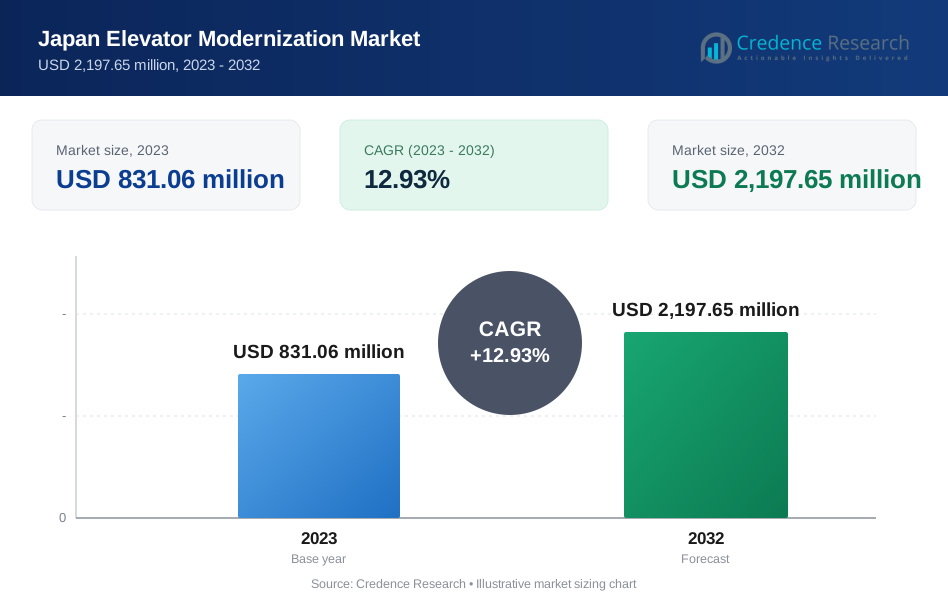
| Japan Elevator Modernization Market Size 2023 | USD 831.06 million |
| Japan Elevator Modernization Market, CAGR | 12.93% |
| Japan Elevator Modernization Market Size 2032 | USD 2,197.65 million |
Market Overview
The Japan Elevator Modernization Market is projected to grow from USD 831.06 million in 2023 to USD 2,197.65 million by 2032, reflecting a robust compound annual growth rate (CAGR) of 12.93%.
The Japan Elevator Modernization market is driven by an aging infrastructure and increasing focus on energy efficiency and safety standards. With a significant portion of elevators in Japan nearing the end of their operational life, demand for modernization is surging to ensure compliance with evolving safety regulations and improve performance. Advancements in smart technologies, including IoT-enabled monitoring and AI-driven maintenance systems, further fuel market growth as property owners prioritize operational efficiency and user convenience. Urbanization and the rising number of high-rise buildings also contribute to the demand for upgraded elevator systems capable of handling higher capacities and faster speeds. Additionally, government incentives and policies promoting energy-efficient systems encourage the adoption of modernized solutions. These drivers are shaping the market’s growth trajectory, ensuring a steady transition toward safer, smarter, and more sustainable vertical transportation systems across the country.
The Japan elevator modernization market is driven by regional variations in urban development, infrastructure age, and regulatory compliance. Major regions such as Kanto, Kansai, Chubu, and Kyushu lead in modernization activities due to their dense urban centers and a significant number of aging buildings requiring upgrades. Increasing adoption of smart technologies and energy-efficient solutions further supports modernization projects across residential, commercial, and industrial applications. Key players in the market include Mitsubishi Electric Corporation, Fujitec Co., Ltd., Hitachi Elevator Engineering Company, and Toshiba Elevator and Building Systems Corporation, along with global giants like KONE Corporation, Otis Elevator Company, and Schindler Group. These companies focus on innovation, offering advanced safety features, predictive maintenance solutions, and IoT-enabled systems to meet evolving customer demands. Collaborations, sustainable technology integration, and adherence to stringent safety regulations position these key players to capitalize on growth opportunities in Japan's dynamic elevator modernization landscape.
Market Insights
- The Japan Elevator Modernization market is projected to grow from USD 831.06 million in 2023 to USD 2,197.65 million by 2032, reflecting a robust compound annual growth rate (CAGR) of 12.93%.
- Increasing urbanization and the need for safety upgrades in aging infrastructure drive the demand for elevator modernization across residential and commercial sectors.
- Energy-efficient technologies and smart elevators with IoT-based predictive maintenance solutions are key trends influencing market growth.
- Leading players, including Mitsubishi Electric Corporation, Fujitec Co., Ltd., and Hitachi Elevator Engineering Company, focus on innovation and sustainability to strengthen their competitive position.
- High initial investment costs and compatibility issues with legacy systems remain significant market restraints.
- Kanto and Kansai regions dominate the market due to high urban density and extensive modernization projects, while other regions also show growth potential.
- Regulatory pressures for safety, accessibility, and energy efficiency upgrades create opportunities for modernization service providers to expand their offerings.
Market Drivers
Aging Infrastructure and Safety Compliance
The Japan Elevator Modernization market is primarily driven by the aging infrastructure of elevators across the country. For instance, a survey by the Ministry of Land, Infrastructure, Transport and Tourism (MLIT) revealed that a significant portion of elevators were installed over three decades ago. With a significant portion of elevators installed over three decades ago, many systems are nearing the end of their operational lifecycle. These aging systems pose safety risks, reduced efficiency, and higher maintenance costs, prompting property owners to invest in modernization solutions. Additionally, stringent government safety regulations and standards are pushing building owners to upgrade their elevator systems to meet compliance requirements, ensuring user safety and system reliability.
Urbanization and Demand for High-Performance Systems
Japan's ongoing urbanization and the increasing number of high-rise buildings are fueling the need for advanced elevator systems. For instance, a report by the Japan Elevator Association highlighted the surge in demand for elevators with higher speeds, larger capacities, and smoother operations as cities expand vertically. As cities expand vertically, the demand for elevators with higher speeds, larger capacities, and smoother operations has surged. Modernization projects enable property owners to enhance the performance of existing systems, ensuring they can meet the growing demands of urban environments. These upgrades also align with Japan’s focus on efficient space utilization and improved building functionality, especially in densely populated urban areas.
Advancements in Smart Technologies
The integration of smart technologies is a significant driver of elevator modernization in Japan. IoT-enabled monitoring systems, predictive maintenance powered by AI, and energy-efficient components are transforming elevator operations. These advancements offer real-time performance tracking, reduced downtime, and extended system lifespans, making modernization a cost-effective and technologically advanced solution. As property owners prioritize operational efficiency and user convenience, the adoption of smart and connected elevator systems is accelerating, further driving market growth.
Government Incentives and Energy Efficiency Goals
Government initiatives promoting energy efficiency and sustainability are playing a pivotal role in the elevator modernization market. Incentives for upgrading to energy-efficient systems, combined with rising awareness about reducing carbon footprints, encourage building owners to invest in modernized solutions. Energy-saving components, such as regenerative drives and LED lighting, not only enhance sustainability but also reduce operational costs, making modernization an attractive choice for long-term benefits. These drivers collectively support the market's robust growth trajectory.
Market Trends
Adoption of Smart and Connected Technologies
A key trend in the Japan Elevator Modernization market is the growing adoption of smart and connected technologies. For instance, a survey by the Japan Smart Community Alliance highlighted that modernized elevator systems increasingly integrate IoT-enabled components and AI-driven predictive maintenance tools. These technologies provide real-time monitoring, enabling building managers to proactively address maintenance issues and reduce downtime. The demand for enhanced user experiences, such as touchless controls and personalized features, is also driving the implementation of advanced software and hardware solutions. This trend underscores the shift toward smarter, more efficient, and user-centric vertical transportation systems.
Focus on Energy Efficiency and Sustainability
Energy efficiency has become a central focus in elevator modernization projects in Japan. For instance, the Ministry of Economy, Trade and Industry (METI) has reported heightened awareness of sustainability and government policies promoting energy conservation. With heightened awareness of sustainability and government policies promoting energy conservation, property owners are adopting upgrades that reduce power consumption and operational costs. Modernization solutions now include energy-saving features such as regenerative drives, energy-efficient motors, and LED lighting systems. These upgrades not only align with global sustainability goals but also contribute to the financial viability of modernization investments, making them increasingly appealing to building owners and operators.
Rising Demand for Customization and Aesthetics
An emerging trend in the Japan Elevator Modernization market is the rising demand for customized solutions and aesthetic upgrades. As older buildings undergo renovations, property owners seek modernization options that align with the overall architectural style and interior design. Customized cab interiors, advanced lighting designs, and user-friendly control panels are gaining popularity. This trend reflects a shift toward prioritizing both functionality and design in modernization projects, enhancing the appeal and value of buildings in competitive real estate markets.
Emphasis on Safety and Accessibility
Safety and accessibility remain significant trends shaping the elevator modernization market. Japan’s aging population has heightened the need for elevators equipped with features like barrier-free access, voice guidance systems, and improved safety mechanisms. Building owners are increasingly upgrading systems to ensure compliance with evolving safety standards and to cater to the needs of all users, including the elderly and individuals with disabilities. This trend not only enhances user satisfaction but also aligns with Japan’s commitment to creating inclusive and secure urban spaces.
Market Challenges Analysis
High Initial Investment and Regulatory Compliance Costs
One of the primary challenges in the Japan elevator modernization market is the significant capital investment required for upgrading aging elevator systems. For instance, a survey by the Ministry of Land, Infrastructure, Transport and Tourism (MLIT) highlighted that modernizing an elevator involves complex technical enhancements, including control system replacements, drive modernization, and safety feature upgrades. These components often involve advanced technologies that drive up costs, making it financially burdensome for property owners and building management companies, especially in older residential and small commercial buildings. Moreover, the specialized labor and high-quality materials necessary to meet industry standards further contribute to elevated expenses. This high upfront cost creates a barrier for many stakeholders, delaying modernization projects despite the growing need for improved safety and energy efficiency. In addition, frequent changes in government regulations regarding safety and accessibility further amplify costs, requiring continuous updates to remain compliant. These expenses pose a significant challenge to the market, particularly for small-scale projects.
Limited Skilled Workforce and Retrofit Compatibility Issues
The availability of a skilled workforce capable of executing elevator modernization projects is another major challenge in Japan. The modernization process demands highly specialized knowledge in electrical systems, mechanical engineering, and software integration to ensure seamless upgrades without compromising safety. However, there is a growing talent gap due to the aging labor force and a lack of younger professionals entering the elevator and escalator service industry. This shortage of qualified technicians leads to project delays and higher labor costs, affecting market growth. Additionally, compatibility issues between modern components and legacy systems create technical hurdles during retrofitting. Many older buildings in Japan were constructed with unique design specifications, making it difficult to standardize modernization solutions. These customization requirements increase the complexity, time, and cost associated with upgrades, further hindering market adoption. The combination of limited expertise and technical challenges impacts the overall efficiency and profitability of elevator modernization initiatives in the country.
Market Opportunities
Growing Demand for Energy-Efficient Solutions
The rising focus on energy efficiency and sustainability presents significant opportunities for the Japan elevator modernization market. With increasing government initiatives and stringent energy regulations aimed at reducing carbon footprints, building owners are prioritizing upgrades that improve the energy performance of elevators. Modernization solutions, including regenerative drives, LED lighting, and smart control systems, significantly reduce energy consumption while enhancing operational efficiency. Additionally, energy-efficient upgrades align with Japan’s commitment to achieving its carbon neutrality targets, providing modernization companies with an expanding market. As awareness of the long-term cost savings associated with energy-efficient elevators grows, more property managers and building owners are likely to invest in advanced modernization technologies, driving market growth.
Technological Advancements and Aging Infrastructure
Japan's aging building infrastructure creates a substantial opportunity for modernization companies as a significant portion of elevators in the country have surpassed their recommended operational lifespan. This presents a pressing need for modernization to enhance safety, performance, and user experience. The rapid advancement of technologies, such as IoT-enabled systems, predictive maintenance tools, and touchless control mechanisms, offers solutions that appeal to modern consumers and property developers focused on improving safety and convenience. Additionally, the integration of smart technologies enhances the potential for predictive analytics and remote monitoring, which reduces downtime and maintenance costs. Companies that leverage these technological advancements to offer comprehensive modernization packages will be well-positioned to capitalize on the growing demand for innovative and efficient elevator systems in Japan.
Market Segmentation Analysis:
By Type:
The Japan elevator modernization market is segmented into traction systems, hydraulic systems, and machine room-less (MRL) elevators. Traction systems dominate the market due to their superior efficiency, durability, and ability to support taller buildings, making them the preferred choice for modernization projects. With advancements in regenerative drives and energy-efficient motors, traction elevators continue to gain traction among commercial and residential property owners seeking sustainable solutions. MRL elevators, known for eliminating the need for a machine room, are experiencing rapid growth in modernization efforts due to space-saving benefits and enhanced design flexibility. Meanwhile, the hydraulic system segment shows limited growth potential due to higher maintenance costs and lower energy efficiency compared to traction and MRL systems, though it remains relevant for low-rise building applications.
By Application: Based on application, the market is categorized into residential, commercial, industrial, and institutional buildings. The residential segment accounts for a significant share, driven by Japan’s large aging population and the growing need for safe and efficient vertical transportation in older residential complexes. Commercial buildings represent another key growth area, as modernization enhances energy efficiency, safety, and user experience in office spaces and retail establishments. Industrial and institutional buildings, including hospitals and educational facilities, are also key contributors to market growth. Increased demand for safety upgrades and compliance with evolving building codes across these sectors is fueling modernization projects, creating broad opportunities for market players.
Segments:
Based on Type:
- Traction System
- Hydraulic System
- Machine Room-Less (MRL) Elevators
Based on Application:
- Residential Buildings
- Commercial Buildings
- Industrial Buildings
- Institutional Buildings
Based on Component:
- Control System
- Door System
- Cab Enclosure
- Power Units
- Others
Based on the Geography:
- Kanto Region
- Kansai Region
- Chubu Region
- Kyushu Region
- Other Regions
Regional Analysis
Kanto region
The Kanto region commands the largest share of the Japan elevator modernization market, accounting for approximately 35% of the total market. As a hub of economic activity with densely populated cities like Tokyo and Yokohama, Kanto has a high concentration of aging residential and commercial buildings requiring modernization. Government regulations emphasizing energy efficiency and safety upgrades, combined with technological advancements in smart elevator systems, drive the region’s demand. Additionally, urban redevelopment projects further fuel modernization efforts, making Kanto the most significant contributor to the market.
Kansai region
The Kansai region holds around 25% of the market share, driven by urban centers such as Osaka, Kyoto, and Kobe. The region’s strong industrial presence and focus on commercial infrastructure modernization contribute to its growth. Modernization projects in Kansai are propelled by rising safety standards and the need for energy-efficient solutions. The adoption of smart technologies, including IoT-enabled systems and predictive maintenance tools, enhances the appeal of modernization. Furthermore, increased investment in sustainable urban infrastructure supports continued market growth in this region.
Chubu region
The Chubu region, comprising approximately 20% of the market, plays a vital role due to its industrial prominence centered around Nagoya. Industrial facilities and manufacturing plants increasingly demand elevator upgrades to improve operational efficiency and safety. The residential and commercial sectors also contribute to growth as building owners invest in modernization to meet evolving safety regulations and improve energy performance. Chubu’s focus on integrating sustainable technologies aligns with Japan’s national energy-saving initiatives, driving further adoption of modernization solutions.
Kyushu region
The Kyushu region including Hokkaido and Shikoku, collectively account for the remaining 20% market share. Kyushu benefits from modernization efforts in urban centers like Fukuoka and Kumamoto, where older residential and institutional buildings require upgrades. Government incentives to enhance accessibility and compliance with building safety standards fuel modernization in less urbanized areas. Meanwhile, other regions offer growth potential due to ongoing urban development and rising awareness of modernization benefits. Companies targeting these regions with customized, cost-effective solutions can capitalize on emerging opportunities.
Key Player Analysis
- Mitsubishi Electric Corporation
- Fujitec Co., Ltd.
- Hitachi Elevator Engineering Company
- Toshiba Elevator and Building Systems Corporation
- KONE Corporation
- Otis Elevator Company
- Schindler Group
- Thyssenkrupp AG
- SJEC Corporation
- Canny Elevator Co., Ltd.
Competitive Analysis
The Japan elevator modernization market is highly competitive, with leading players focusing on innovation, sustainability, and safety upgrades to gain a competitive edge. Major companies driving the market include Mitsubishi Electric Corporation, Fujitec Co., Ltd., Hitachi Elevator Engineering Company, Toshiba Elevator and Building Systems Corporation, KONE Corporation, Otis Elevator Company, Schindler Group, and Thyssenkrupp AG. These industry leaders invest significantly in research and development to introduce advanced technologies, such as IoT-based predictive maintenance, energy-efficient regenerative drives, and touchless control systems, enhancing user safety and operational efficiency. Strategic initiatives, including partnerships, mergers, and acquisitions, are common strategies to expand market presence and technological capabilities. For instance, collaborations with smart building technology providers enable key players to integrate intelligent elevator solutions aligned with Japan’s evolving safety regulations and sustainability goals. Moreover, companies prioritize customer-centric service models, offering tailored modernization packages to meet the diverse needs of residential, commercial, and industrial clients. Despite fierce competition, the market’s fragmented nature provides opportunities for regional and specialized service providers to capture niche segments. By addressing compatibility challenges and providing cost-effective modernization solutions, these companies can strengthen their foothold. Overall, continuous innovation, regulatory adherence, and customer engagement will remain critical for sustaining market leadership.
Recent Developments
- In December 2024, Fujitec Indonesia successfully delivered 19 modernized elevators to the iconic Wisma 46office building in Jakarta. This modernization includes the introduction of the EZSHUTTLE destination dispatch system, which automates elevator assignments based on passenger destinations, improving operational efficiency.
- In October 2024, Otis Elevator announced its involvement in the modernization of elevators at the Eiffel Towerin Paris, enhancing the duolift™ elevators that serve millions of visitors annually. Additionally, they are set to begin modernization work at the Burj Khalifa in Dubai, which will include a 10-year maintenance and upgrading contract for 34 elevators.
- In September 2024, KONE Corporation unveiled its ambitious strategy called "Rise" for 2025-2030, which emphasizes driving modernization to unlock growth opportunities and enhance customer experiences. This strategy includes a focus on digital transformation and sustainability initiatives.
- In September 2024, Thyssenkrupp AG (TK Elevator) was awarded a contract to modernize escalators for the Cologne subway system in Germany. The project includes installing 23 victoria-type escalators equipped with MAX Smart Maintenance technology, which aims to reduce maintenance efforts and enhance operational efficiency.
Market Concentration & Characteristics
The Japan elevator modernization market exhibits moderate concentration, with several key players dominating the sector. Large, well-established companies like Mitsubishi Electric Corporation, Fujitec Co., Ltd., Hitachi Elevator Engineering Company, and Toshiba Elevator and Building Systems Corporation account for a significant portion of the market. These companies leverage their extensive experience, strong brand recognition, and large-scale operations to secure contracts for major modernization projects across residential, commercial, and industrial sectors. However, the market also includes smaller, regional players and specialized service providers that focus on niche segments, offering more tailored solutions at competitive prices. The characteristics of the market are shaped by technological advancements, regulatory compliance, and a growing demand for energy-efficient and safe elevator systems. As building owners seek to upgrade aging infrastructure, the market is increasingly focused on integrating smart technologies, such as IoT-enabled systems, predictive maintenance tools, and energy-saving features. Safety, accessibility, and sustainability are key drivers, as Japan’s regulatory environment places high importance on these aspects. Additionally, the aging population in Japan creates a demand for modernization solutions that enhance user experience and accessibility. The market’s competitive nature fosters continuous innovation, with companies striving to provide more efficient, cost-effective, and future-ready solutions to meet evolving customer needs.
Report Coverage
The research report offers an in-depth analysis based on Type, Application, Component and Geography. It details leading market players, providing an overview of their business, product offerings, investments, revenue streams, and key applications. Additionally, the report includes insights into the competitive environment, SWOT analysis, current market trends, as well as the primary drivers and constraints. Furthermore, it discusses various factors that have driven market expansion in recent years. The report also explores market dynamics, regulatory scenarios, and technological advancements that are shaping the industry. It assesses the impact of external factors and global economic changes on market growth. Lastly, it provides strategic recommendations for new entrants and established companies to navigate the complexities of the market.
Future Outlook
- The Japan elevator modernization market is expected to continue growing at a strong pace, driven by the increasing demand for energy-efficient solutions.
- Technological advancements, including IoT integration, predictive maintenance, and smart systems, will be key drivers of modernization efforts.
- The aging infrastructure of Japan’s buildings will further fuel the demand for elevator upgrades across residential, commercial, and industrial sectors.
- Increased government regulations focusing on safety, accessibility, and energy efficiency will push for more frequent modernization projects.
- The focus on sustainability will encourage the adoption of energy-saving elevators and eco-friendly modernization solutions.
- The rise in smart building concepts will create new opportunities for the integration of advanced elevator technologies.
- Companies will prioritize customer-centric approaches, offering customized modernization packages to cater to specific needs.
- The market will witness increased competition, with both large players and specialized regional service providers vying for market share.
- New entrants may focus on cost-effective and innovative solutions to target smaller-scale projects and underserved regions.
- As urbanization continues in Japan, modernization in emerging regions outside major cities will present growth opportunities.
Request a Free Sample
Fill in your details and we'll send you a free sample report.
- Sample data tables & charts
- Research methodology
Need a Custom Version of This Report?
Tailor the scope, geography, or segments to your exact requirements.
- Custom geography or segment scope
- Direct access to our analyst team
Frequently Asked Questions
What is the current size of the Japan Elevator Modernization Market?
What factors are driving the growth of the Japan Elevator Modernization Market?
What are the key segments within the Japan Elevator Modernization Market?
What are some challenges faced by the Japan Elevator Modernization Market?
Who are the major players in the Japan Elevator Modernization Market?
Table of Content
Chapter 1 Market Segmentation
- 1.1 Segmentation Framework
- 1.1.1 Product and Service Classification
- 1.1.2 Application and End-Use Classification
- 1.1.3 Technology and Solution Classification
- 1.1.4 Customer and Distribution Channel Classification
- 1.1.5 Geographic Segmentation
- 1.1.6 Market Segment Definitions and Boundaries
Chapter 2 Introduction
- 2.1 Report Objectives and Scope
- 2.2 Product Definition and Industry Terminology
- 2.3 Market Inclusions and Exclusions
- 2.4 Research Process
- 2.4.1 Primary Research and Expert Interviews
- 2.4.2 Secondary Research and Source Review
- 2.4.3 Top-Down and Bottom-Up Estimation
- 2.4.4 Data Triangulation and Verification
- 2.5 Market Size Measurement Basis
- 2.5.1 2023: USD 831.06 million → 2032: USD 2,197.65 million
- 2.6 Historical and Forecast Reference Periods
- 2.6.1 Base Year: 2023
- 2.6.2 Forecast Period: 2023-2032
- 2.7 Research Assumptions and Limitations
Chapter 3 Executive Summary
- 3.1 Market Snapshot and Key Findings
- 3.2 Base-Year Market Size, 2023
- 3.3 Forecast Market Size, 2032
- 3.4 Revenue and Volume Growth Outlook
- 3.5 Key Demand and Supply Indicators
- 3.6 Leading Market Segments
- 3.7 Fastest-Growing Market Opportunities
- 3.8 Regional Performance Highlights
- 3.9 Technology and Industry Transformation
- 3.10 Competitive Landscape Summary
- 3.11 Analyst View and Strategic Implications
Chapter 4 Japan Elevator Modernization Market Trends and Developments
- 4.1 Historical Industry Development
- 4.2 Recent Market Trends and Developments
- 4.3 Demand and Customer Behavior Trends
- 4.4 Technology and Product Innovation
- 4.5 Artificial Intelligence, Automation and Digitalization
- 4.6 Local Manufacturing and Supply Chain Realignment
- 4.7 Industry Partnerships, Mergers and Acquisitions
- 4.8 Sustainability and Circular Economy Developments
- 4.9 Government and Private Sector Investment Trends
- 4.10 Emerging Business Models and Commercialization
- 4.11 Industry Developments and Announcements
Chapter 5 Japan Elevator Modernization Market Production, Supply and Demand Analysis
- 5.1 Demand Trend and Consumption Analysis
- 5.2 Demand Forecast, 2023-2032
- 5.3 Production and Output Trend
- 5.4 Production and Output Forecast, 2023-2032
- 5.5 Installed Capacity and Capacity Utilization
- 5.6 Company-Wise Production Plants and Statistics
- 5.6.1 Installed Production Capacity
- 5.6.2 Actual Production
- 5.6.3 Planned Capacity and Expansion Targets
- 5.7 Supply Chain Structure and Procurement Trends
- 5.8 Supply-Demand Gap and Bottlenecks
- 5.9 Import Dependence and Sourcing Structure
- 5.10 Contract Manufacturing and Outsourcing
- 5.11 Regional Supply and Demand Concentration
Chapter 6 Japan Elevator Modernization Market Pricing Analysis
- 6.1 Pricing Structure and Measurement
- 6.2 Historical Pricing Trends
- 6.3 Pricing Outlook, 2023-2032
- 6.4 Average Selling Price and Unit Economics
- 6.5 Pricing by Product and Market Segment
- 6.6 Geographic Pricing Differences
- 6.7 Key Input, Energy, Labor and Logistics Costs
- 6.8 Contract Pricing and Purchasing Models
- 6.9 Pricing Sensitivity and Competitive Positioning
- 6.10 Price, Margin and Profitability Implications
Chapter 7 Japan Elevator Modernization Market Dynamics
- 7.1 Market Growth Drivers
- 7.1.1 Demand-Side Drivers
- 7.1.2 Technology and Innovation Drivers
- 7.1.3 Infrastructure and Investment Drivers
- 7.1.4 Regulatory and Policy Drivers
- 7.2 Market Restraints
- 7.2.1 Cost and Affordability Constraints
- 7.2.2 Technology and Adoption Barriers
- 7.2.3 Supply Chain and Operational Constraints
- 7.3 Market Challenges
- 7.3.1 Competitive Pressure and Margin Erosion
- 7.3.2 Skills, Infrastructure and Implementation Gaps
- 7.4 Emerging Market Opportunities
- 7.5 Market Dynamics Impact and Time-Horizon Assessment
Chapter 8 Japan Elevator Modernization Value Chain Analysis
- 8.1 Industry Value Chain Overview
- 8.2 Upstream Suppliers and Critical Inputs
- 8.3 Technology and Component Providers
- 8.4 Manufacturing or Service Delivery
- 8.5 Distribution, Channel Partners and Integrators
- 8.6 Downstream Applications and End Users
- 8.7 Value Addition and Profit Pools
- 8.8 Vertical Integration and Outsourcing
- 8.9 Supplier Concentration and Risk
- 8.10 Supply Chain Localization and Resilience
Chapter 9 Japan Elevator Modernization Market Regulations and Policies
- 9.1 Relevant Laws, Standards and Compliance Frameworks
- 9.2 Product, Service, Safety and Quality Requirements
- 9.3 Government Policies, Incentives and Subsidies
- 9.4 Imports, Exports and Trade Barriers
- 9.5 Public Procurement and Local Content Requirements
- 9.6 Environmental and Sustainability Compliance
- 9.7 Upcoming Policy Changes and Market Implications
Chapter 10 Japan Elevator Modernization Market Hotspots and Opportunities
- 10.1 Market Opportunity Mapping and Growth Hotspots
- 10.2 High-Growth Applications and Customer Groups
- 10.3 Underserved Markets and White-Space Opportunities
- 10.4 Emerging Technology and Product Opportunities
- 10.5 New Capacity and Investment Hotspots
- 10.6 Market Entry and Expansion Opportunities
- 10.7 Distribution and Partnership Opportunities
- 10.8 Near-Term and Long-Term Commercial Potential
- 10.9 Opportunity Attractiveness and Execution Risks
Chapter 11 Japan Elevator Modernization Market Outlook, 2023-2032
- 11.1 Market Size and Analysis
- 11.1.1 Revenue (Market Measurement: 2023: USD 831.06 million → 2032: USD 2,197.65 million)
- 11.1.2 Market Volume and Quantity Sold
- 11.1.3 Historical Market Size
- 11.1.4 Base-Year Market Size, 2023
- 11.2 Market Forecast, 2023-2032
- 11.2.1 Revenue Forecast to 2032
- 11.2.2 Volume Forecast to 2032
- 11.2.3 CAGR and Year-on-Year Growth
- 11.2.4 Incremental Revenue Opportunity
- 11.3 Forecast Assumptions and Scenario Analysis
- 11.3.1 Base-Case Forecast
- 11.3.2 Optimistic and Conservative Scenarios
- 11.3.3 Technology, Pricing and Policy Sensitivities
- 11.4 Market Attractiveness and Growth Outlook
Chapter 12 Japan Elevator Modernization Market Segmentation and Outlook
- 12.1 Segmentation Summary and Market Shares, 2023
- 12.2 Largest and Fastest-Growing Segments
- 12.3 Segment Growth Comparison
- 12.4 Segment Attractiveness and Priority Matrix
Chapter 13 Japan Elevator Modernization Geographic Market Outlook, 2023-2032
- 13.1 Domestic Market Distribution and Demand Clusters
- 13.2 State- or Province-Wise Market Size and Forecast, 2023-2032
- 13.3 City and Metropolitan Market Outlook
- 13.4 Industrial, Manufacturing and Commercial Clusters
- 13.5 Geographic Concentration of Key End Users
- 13.6 Local Pricing and Purchasing Differences
- 13.7 Domestic Production Facilities and Capacity Map
- 13.8 Local Infrastructure and Project Pipeline
- 13.9 State-Level Policy and Incentive Differences
- 13.10 Subnational Investment Hotspots and Opportunities
- 13.11 Distribution and Logistics Networks
- 13.12 Domestic Competitive Footprint
Chapter 14 Japan Elevator Modernization Technology, Innovation and Sustainability Outlook
- 14.1 Technology Landscape and Maturity
- 14.2 Product, Process and Service Innovation
- 14.3 AI, Automation and Digital Tools in the Industry
- 14.4 Technology Adoption and Performance Benchmarking
- 14.5 Innovation Pipeline and R&D Investment
- 14.6 Patent and Intellectual Property Trends
- 14.7 Energy Efficiency and Resource Management
- 14.8 Sustainability, Recycling and Circularity
- 14.9 Technology Roadmap, 2023-2032
- 14.10 Risks of Obsolescence and Technology Substitution
Chapter 15 Japan Elevator Modernization Market Key Strategic Imperatives
- 15.1 Growth and Market Entry Priorities
- 15.2 High-Return Products and Segments
- 15.3 Pricing, Profitability and Cost Optimization
- 15.4 Technology Investment and Product Differentiation
- 15.5 Supply Chain Localization and Resilience
- 15.6 Distribution and Customer Acquisition
- 15.7 Partnership, Acquisition and Capacity Strategy
- 15.8 Regional Expansion Priorities
- 15.9 Short-, Medium- and Long-Term Actions
Chapter 16 Competition Outlook
- 16.1 Industry Competition Characteristics
- 16.2 Market Structure and Concentration
- 16.3 Market Share and Competitive Positioning, 2023
- 16.4 Company-Wise Revenue and Product Benchmarking
- 16.5 Production and Service Capacity Benchmarking
- 16.6 Technology, Pricing and Differentiation
- 16.7 Regional Footprint and Distribution Strength
- 16.8 Mergers, Acquisitions and Strategic Alliances
- 16.9 New Entrants and Competitive Threats
- 16.10 Porter's Five Forces and Industry Attractiveness
- 16.11 Competitive Outlook, 2023-2032
Chapter 17 Company Profiles
- 17.1 Company Coverage and Selection Criteria
- 17.2 Leading Market Participants – Standard Profile Structure
- 17.2.1 Business Description
- 17.2.2 Company Ownership and Geographic Presence
- 17.2.3 Product and Service Portfolio
- 17.2.4 Manufacturing and Operating Footprint
- 17.2.5 Production Capacity and Expansion Plans
- 17.2.6 Financial Performance and Investment
- 17.2.7 Market Share and Competitive Position
- 17.2.8 Technology and Innovation Capabilities
- 17.2.9 Strategic Alliances or Partnerships
- 17.2.10 Recent Developments
- 17.2.11 Growth Strategy and Outlook
- 17.3 Other Relevant Market Participants
Note: Every listed company is profiled on the structure shown under the first company. The company list is preliminary and may change based on research findings, market developments, data availability and client requirements.
Chapter 18 Disclaimer
- 18.1 Research and Forecast Disclaimer
- 18.2 Data Source and Estimation Limitations
Note: The depth of individual sections depends on data availability for this market. Volume, capacity, trade and other unit-based metrics are included where applicable.
