
| REPORT ATTRIBUTE | DETAILS |
|---|---|
| Historical Period | 2019-2022 |
| Base Year | 2023 |
| Forecast Period | 2024-2032 |
| Japan Soft Decoration Design Services Market Size 2024 | USD 496.74 million |
| Japan Soft Decoration Design Services Market, CAGR | 7.07% |
| Japan Soft Decoration Design Services Market Size 2032 | USD 919.55 million |
Market Overview
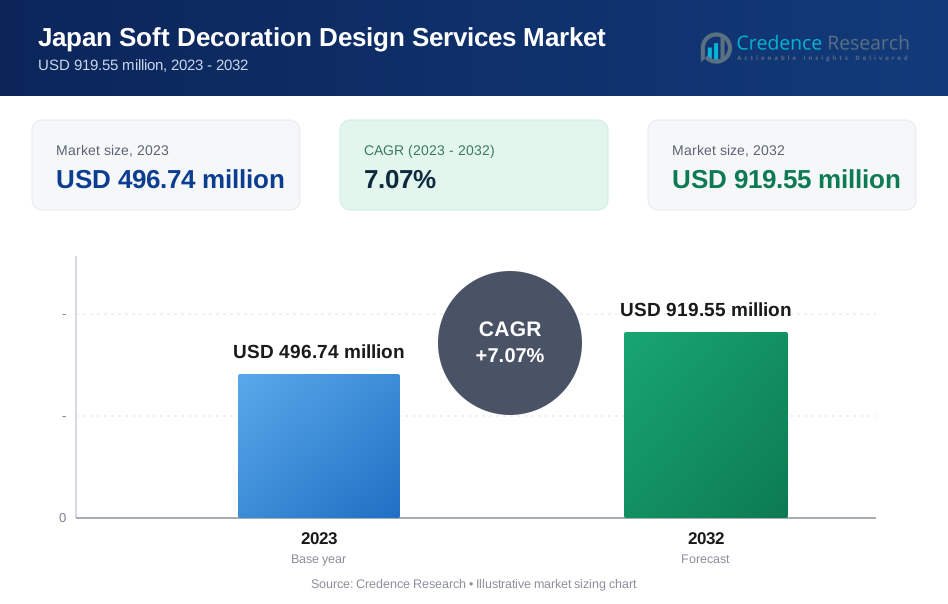
The Japan Soft Decoration Design Services Market is projected to grow from USD 496.74 million in 2023 to an estimated USD 919.55 million by 2032, with a compound annual growth rate (CAGR) of 7.07% from 2024 to 2032. This growth is driven by the increasing demand for aesthetic and functional interior designs in residential and commercial spaces.
The market is primarily driven by evolving consumer preferences for stylish and customized home and office décor. Rising disposable incomes and a growing appreciation for aesthetics and design in everyday environments have contributed to increased expenditure on soft decoration services. Additionally, the growing trend of sustainable and eco-friendly interior designs is encouraging service providers to innovate and cater to environmentally conscious consumers. The increasing reliance on e-commerce platforms for design consultations is also playing a key role in expanding the reach of soft decoration design services.
Geographically, Japan remains a leading market for soft decoration design services in the Asia-Pacific region, driven by its highly urbanized population and advanced infrastructure. Key players in the market include prominent interior design firms, architectural service providers, and e-commerce platforms specializing in home décor solutions, such as Nitori Holdings, Muji, and key local design studios. These players continue to innovate and expand their portfolios to cater to both residential and commercial clients seeking personalized decoration services.
Market Insights
- The Japan Soft Decoration Design Services Market is projected to grow from USD 496.74 million in 2023 to USD 919.55 million by 2032, with a CAGR of 7.07% from 2024 to 2032.
- Consumers are increasingly seeking personalized, tailored soft decoration services for both residential and commercial spaces, driving market growth.
- The demand for eco-friendly, sustainable design solutions is growing as environmentally conscious consumers look for green alternatives in interior design.
- The adoption of digital tools, such as virtual consultations and augmented reality (AR), is expanding the market’s reach and making design services more accessible.
- High competition and price sensitivity among consumers can lead to margin pressures, limiting growth for smaller players in the market.
- Urban areas like Tokyo, Osaka, and Yokohama are the primary drivers of market growth, while suburban and rural regions are showing increasing interest in soft decoration services.
- Minimalism and functional aesthetics are gaining popularity, with a focus on space efficiency and modern design, especially in urban environments.
Market Drivers
Growing Demand for Personalized and Custom Interior Designs
One of the primary drivers of the Japan Soft Decoration Design Services Market is the increasing consumer preference for personalized and custom-designed interiors. Consumers today value unique, tailored spaces that reflect their personal taste and lifestyle. This trend is particularly prominent in the residential sector, where homeowners aim to create distinctive, comfortable, and aesthetically pleasing living environments. Additionally, the demand for functional yet visually appealing spaces has led to a rise in custom furnishings, drapery, textiles, and decorative accessories that cater to specific preferences. Soft decoration services such as personalized furniture, wall treatments, custom lighting, and other decor elements play a key role in fulfilling these needs. For instance, the Japandi design trend, which blends Japanese minimalism with Scandinavian functionality, has gained traction among Japanese homeowners. Many are commissioning bespoke furniture pieces like custom-built dining tables made from reclaimed wood to align with their spatial needs and eco-conscious values. This approach not only reflects individual tastes but also supports local artisans and small-scale manufacturers who prioritize sustainable practices. As a result, the demand for interior designers and soft decoration services that can deliver bespoke solutions is expected to continue growing, contributing to the market's expansion.
Rising Preference for Sustainable and Eco-Friendly Interior Solutions
Sustainability has emerged as a key trend influencing the Japan Soft Decoration Design Services Market. Japanese consumers are increasingly conscious of environmental issues and are seeking eco-friendly, sustainable design solutions. This shift is driven by greater awareness of climate change and the environmental impact of consumer goods. As a result, there is growing demand for green soft decoration services that use eco-friendly materials, energy-efficient products, and non-toxic finishes. For instance, recycled textiles, organic cotton fabrics, bamboo furniture, and energy-efficient lighting fixtures are gaining popularity among consumers looking to reduce their carbon footprint while maintaining stylish and functional living spaces. The Japandi design trend exemplifies this shift by combining minimalist aesthetics with sustainable practices. Homeowners are opting for furniture made from reclaimed wood or locally sourced materials to align with their values while supporting small-scale manufacturers who prioritize sustainability. Additionally, many Japanese consumers now favor local artisans who integrate eco-conscious practices into their designs. Interior design firms offering green soft decoration services are well-positioned to tap into this growing demand for environmentally friendly solutions. As sustainability continues to influence consumer behavior globally, the demand for eco-conscious soft decoration services in Japan is expected to further increase.
Influence of Global Design Trends and Increased Access to International Styles
Globalization has played a crucial role in driving the growth of the soft decoration design services market in Japan. The exposure to global design trends through digital platforms, social media, and international collaborations has had a significant influence on Japanese consumers' design preferences. Trends such as minimalist designs, Scandinavian aesthetics, eco-friendly décor, and contemporary urban living have found resonance among Japanese homeowners, encouraging them to seek design services that incorporate these international styles. Social media platforms like Instagram and Pinterest have fueled the demand for visually appealing and modern interior designs, prompting many consumers to hire design professionals to bring these trends to life within their own spaces. Furthermore, the access to an increasing range of international décor products and design ideas has expanded the scope of soft decoration services, offering new and innovative solutions for both residential and commercial applications. This broader variety of options encourages consumers to embrace more eclectic and diverse interior design solutions, pushing the market forward.
Increased Spending on Home Improvement and Renovation
The surge in home renovation and improvement activities has significantly boosted the demand for soft decoration design services. With Japan's aging population and a rising trend of multi-generational living, homeowners are increasingly seeking to upgrade their living spaces to ensure comfort, functionality, and modern aesthetics. Renovating existing homes to make them more livable and suitable for contemporary lifestyles has become a priority for many Japanese homeowners. As part of these renovations, soft decoration elements such as furniture, window treatments, rugs, and accessories are being integrated to refresh spaces without major structural changes. Furthermore, with an improving economic environment and a rising disposable income, many consumers are more willing to allocate funds toward home décor services. This trend not only applies to the residential sector but also to the growing demand for soft decoration services in the hospitality, retail, and corporate sectors, where enhancing the aesthetics of spaces is crucial for attracting customers and clients.
Market Trends
Incorporation of Technology and Smart Home Integration in Interior Design
The integration of technology into interior design is revolutionizing the Japan Soft Decoration Design Services Market. For instance, Japanese homes are increasingly adopting smart lighting systems that adjust brightness and tones throughout the day, enhancing both convenience and ambiance. This trend aligns with the minimalist aesthetic of Japanese interiors, ensuring that technological advancements do not disrupt the serene environment. Moreover, augmented reality (AR) tools are enabling consumers to visualize furniture and décor elements in their spaces before purchase, making the design process more interactive and customer-centric. Urban areas, where space is often limited, are seeing a surge in demand for multifunctional smart features like automated curtains and voice-activated appliances. These innovations cater to the dual goals of practicality and sophistication, offering solutions that blend seamlessly into modern lifestyles. Additionally, smart home technologies such as energy-efficient appliances and climate control systems are being integrated discreetly to maintain the minimalist aesthetic while promoting sustainability. This fusion of technology with design not only enhances comfort but also reflects a broader shift toward creating personalized, functional, and eco-conscious living spaces in Japan.
Sustainable and Eco-Friendly Soft Decoration Solutions
Sustainability is becoming a cornerstone of the Japan Soft Decoration Design Services Market as consumers prioritize eco-friendly choices. For instance, Japandi interiors often incorporate materials like bamboo and reclaimed wood, which are both renewable and durable, adding warmth and authenticity to living spaces. Designers are also turning to low-impact materials such as organic cotton and low-VOC paints to meet the growing demand for environmentally conscious décor. Beyond material selection, the focus on sustainability extends to furniture design, with many opting for timeless pieces crafted from sustainably sourced wood or recycled textiles. This approach not only reduces waste but also aligns with the Japanese philosophy of mindful consumption. Furthermore, traditional Japanese design elements like tatami mats—made from rice straw—are gaining renewed attention for their natural composition and minimal environmental impact. By collaborating with local artisans and manufacturers specializing in eco-friendly products, designers are fostering a market that values both aesthetics and environmental responsibility. This shift reflects a broader cultural movement in Japan toward reducing ecological footprints while maintaining high standards of design quality.
Emphasis on Minimalism and Functional Aesthetics
Minimalism remains a defining trend in Japan’s soft decoration market, blending simplicity with functionality. For instance, Japanese homes frequently utilize modular furniture like sofa beds or extendable dining tables to maximize utility without compromising on style. This approach aligns with the traditional Japanese concept of "less is more," emphasizing clean lines and neutral tones to create serene environments. The popularity of this aesthetic is particularly pronounced in urban areas where space constraints necessitate innovative design solutions. Minimalist interiors often feature multipurpose furniture that integrates storage options, ensuring clutter-free spaces that promote relaxation and productivity. In commercial settings such as offices or hotels, this trend is equally impactful; businesses are recognizing the value of minimalist designs in fostering calmness and efficiency. Additionally, this focus on simplicity extends to color palettes dominated by soft hues like beige or gray, which enhance natural light and create an open atmosphere. By prioritizing quality over quantity, minimalism in Japan reflects a lifestyle choice that balances functionality with aesthetic appeal.
Rise of E-commerce and Online Interior Design Platforms
The rise of e-commerce is reshaping Japan’s interior design landscape by making soft decoration services more accessible than ever before. For instance, online platforms now offer virtual showrooms where customers can explore how furniture or décor items will look in their homes before purchasing them. This innovation has democratized access to high-quality design services, particularly among younger, tech-savvy consumers who value convenience. Many interior design firms are leveraging digital tools to provide personalized consultations and curated shopping lists tailored to individual preferences. Additionally, subscription-based models for home décor items are gaining traction as they allow consumers to refresh their interiors periodically without significant upfront investment. The integration of social commerce through platforms like Instagram Shopping further enhances customer engagement by combining inspiration with easy purchasing options. By embracing these digital trends, companies are not only expanding their reach but also creating more interactive and customer-focused experiences that cater to Japan’s evolving consumer base.
Market Challenges
High Competition and Fragmentation in the Market
One of the significant challenges facing the Japan Soft Decoration Design Services Market is the high level of competition and market fragmentation. The market is characterized by the presence of numerous small to medium-sized interior design firms, as well as larger, more established players. This fragmentation makes it difficult for individual businesses to differentiate themselves and maintain a competitive edge. Additionally, the rise of online platforms and e-commerce has lowered entry barriers for new designers and service providers, further intensifying competition. Many design firms are forced to compete on price, which can erode profit margins, while others struggle to stand out in a crowded marketplace. The increased reliance on digital channels for marketing and client acquisition has also led to oversaturation, making it more challenging for firms to attract and retain customers. For instance, many smaller design firms struggle to secure visibility amidst larger competitors on digital platforms, as consumers increasingly expect personalized services at competitive prices. To remain relevant, companies must continuously innovate, adapt to changing consumer preferences, and invest in effective marketing strategies that emphasize their unique value propositions.
Fluctuating Material Costs and Supply Chain Disruptions
Another key challenge faced by the Japan Soft Decoration Design Services Market is the volatility in material costs and ongoing supply chain disruptions. The demand for high-quality, eco-friendly materials in interior design has increased due to growing consumer awareness about sustainability. However, global supply chain issues, transportation delays, and limited availability of sustainable resources have made these materials less predictable in availability and cost. For instance, organic fabrics or eco-friendly paints often experience price fluctuations due to supply shortages or logistical challenges, leading to increased project costs and delays. These disruptions can negatively impact customer satisfaction and harm business reputations if timelines are not met. To address these challenges, design firms are exploring alternative suppliers closer to home or diversifying their sourcing strategies to reduce dependency on global supply chains. Additionally, some companies are maintaining higher safety stocks or adjusting project timelines to manage client expectations effectively. Balancing the demand for premium materials with competitive pricing remains critical for firms aiming to sustain profitability while meeting consumer demands for sustainable design solutions.
Market Opportunities
Growing Demand for Sustainable and Eco-Friendly Solutions
The increasing consumer awareness of environmental issues in Japan has significantly influenced the soft decoration design services market. For instance, the Japandi design trend, which merges Japanese minimalism with Scandinavian functionality, emphasizes sustainability by incorporating natural materials such as bamboo, reclaimed wood, and organic textiles. This approach not only creates serene and eco-friendly interiors but also aligns with the rising demand for environmentally conscious living spaces. Additionally, Japanese interior design techniques prioritize energy efficiency and waste reduction through innovative practices like using reclaimed materials and multi-functional furniture. For example, homes designed with sliding doors or modular layouts enhance adaptability while reducing the need for frequent renovations. By integrating such sustainable solutions, designers cater to a growing customer base that values eco-friendly products and services. Furthermore, the adoption of Zero Net Energy Housing (ZEH) policies in Japan underscores the importance of energy-efficient solutions in residential and commercial spaces. These trends reflect a broader shift towards mindful consumption and environmental responsibility, offering significant opportunities for interior design firms to innovate with sustainable materials and practices.
Expansion of E-commerce and Digital Design Platforms
The rapid growth of e-commerce and digital platforms has opened new avenues for the soft decoration design services market in Japan. For instance, augmented reality (AR) tools are increasingly used on online platforms to allow consumers to visualize interior designs virtually before making purchasing decisions. This innovation caters to tech-savvy customers seeking convenience and personalization in their home décor choices. Additionally, Japandi interiors, which emphasize simplicity and sustainability, are gaining traction on digital platforms where consumers can explore curated collections of handmade furniture, recycled materials, and eco-friendly textiles. The integration of digital tools like virtual consultations and AR apps streamlines the design process, enabling firms to reach a broader audience while enhancing customer satisfaction. Moreover, Japan's expanding e-commerce sector supports the accessibility of sustainable décor options such as upcycled furniture or locally crafted items that resonate with modern consumer values. By leveraging these digital innovations, interior design firms can not only meet the growing demand for personalized solutions but also foster a deeper connection between consumers and sustainable design practices.
Market Segmentation Analysis
By Type
The market is segmented into four primary types of services: Interior Design, Styling, Furnishing, and Accessories. Interior design services involve the holistic planning and execution of design concepts, while styling focuses on arranging decorative elements to enhance the aesthetic appeal. Furnishing services deal with selecting and placing functional items such as furniture, while accessories include decorative elements like artwork, rugs, and lighting. The growing demand for personalized home and office spaces has led to an increased demand across all segments, with interior design and styling services gaining the most traction due to consumer preferences for custom solutions.
By Style
Japanese consumers are increasingly seeking various design styles to match their preferences and lifestyles. The major design styles in the market include Contemporary, Traditional, Modern, Bohemian, and Mid-Century Modern. Contemporary and Modern designs are particularly popular due to their clean lines, functionality, and minimalistic appeal. Traditional designs cater to consumers who prefer classic, timeless aesthetics, often incorporating elements of Japanese culture. Bohemian and Mid-Century Modern styles are growing in popularity among younger consumers, especially in urban areas, for their eclectic, laid-back, and retro appeal.
Segments
Based on type
- Interior Design
- Styling
- Furnishing
- Accessories
Based on Style
- Contemporary
- Traditional
- Modern
- Bohemain
- Mid-Century Modern
Based on end user
- Residential
- Commercial
- Hospitality
Based on price range
- Low
- Mid-Range
- Luxury
Based on project scope
- Single Room
- Entire Home
- Commercial Space
- Hospitality Project
Based on region
- Tokyo
- Osaka
- Yokohama
Regional Analysis
Tokyo (45%)
Tokyo, as Japan’s capital and largest metropolitan area, holds the dominant share of the Soft Decoration Design Services Market. It is home to a large proportion of the country’s affluent and design-conscious population, with both residential and commercial sectors showing strong demand for interior design, styling, and furnishing services. Tokyo is known for its trend-setting consumers, who seek unique and high-quality design solutions. As of the latest data, Tokyo accounts for approximately 45% of the total market share, driven by its high population density, robust economy, and a large number of commercial establishments such as offices, hotels, and retail stores. The demand for luxury, personalized, and high-end design solutions is especially prominent here, with both local and international design firms vying for market share.
Osaka (25%)
Osaka, the second-largest city in Japan, is another key contributor to the market. Known for its vibrant culture and business activities, Osaka has a growing demand for soft decoration services, particularly in the commercial and hospitality sectors. The residential market in Osaka is also expanding, with consumers increasingly seeking modern and functional design services. Osaka holds approximately 25% of the market share, benefiting from a strong local economy, a rising middle class, and an increasing number of businesses looking to invest in aesthetically pleasing and functional workspaces. The growing focus on design in both residential and commercial projects has positioned Osaka as a key regional player in the soft decoration services market.
Key players
- Aecom
- Gensler
- Jacobs Engineering Group Inc
- Perkins and Will
- Stantec Inc
- Areen Design Services Ltd
- IA Interior Architects
- Cannon Design
- Hirsch Bedner Associates
- NELSON & Associates Interior Design
- Contrast & Co
- ArtVersion
Competitive Analysis
The Japan Soft Decoration Design Services Market is highly competitive, with key players offering a wide range of services in interior design, styling, furnishing, and accessories. Global firms like Aecom, Gensler, and Jacobs Engineering Group hold significant market shares due to their extensive portfolios, international experience, and strong reputation in the design industry. Local players such as IA Interior Architects and Contrast & Co leverage deep insights into Japanese culture and consumer preferences, allowing them to cater more effectively to local demands. Companies like Hirsch Bedner Associates and Stantec Inc focus on the hospitality sector, capitalizing on the growing demand for luxury, bespoke design services. The competition is marked by firms emphasizing innovation, sustainability, and personalized design solutions, while also addressing the rising consumer demand for digital tools, virtual consultations, and e-commerce integration in design services. As the market grows, differentiation through quality, customization, and technological advancements will be key to maintaining a competitive edge.
Recent Developments
- In March 2024, Gensler redesigned its Los Angeles office, implementing a hospitality-forward aesthetic that emphasizes flexibility and collaboration. This approach integrates communal workspaces, focus pods, and material layout islands, reflecting a shift toward creating environments that blend comfort with functionality. The redesign has reportedly increased employee attendance by 35%, showcasing the effectiveness of human-centered design strategies. Additionally, Gensler's 2024 Design Forecast introduced new practice areas such as Build to Suit & Headquarters and Entertainment, which could influence their approach to soft decoration services globally, including Japan.
- As of February 2024, Perkins and Will expanded its focus on sustainable interior design solutions by integrating energy-efficient materials and biophilic elements into its projects. The firm has been actively promoting designs that prioritize wellness and environmental responsibility. This aligns with the growing demand for eco-conscious interiors in Japan's soft decoration market. The company’s recent projects also emphasize the use of advanced digital tools for design visualization, enhancing client collaboration and satisfaction.
- In mid-2024, Stantec launched initiatives to incorporate augmented reality (AR) and virtual reality (VR) technologies into its design processes. These tools allow clients to visualize soft decoration solutions in real-time, providing an immersive experience. Stantec has also been focusing on integrating local cultural elements into its designs for the Asia-Pacific market, including Japan. This strategy aims to create personalized and culturally relevant interiors that resonate with regional consumer preferences.
- As of late 2023, Areen Design Services Ltd expanded its portfolio in the hospitality sector by introducing bespoke soft decoration solutions tailored to luxury hotels in Asia-Pacific. These designs emphasize the use of locally sourced materials and handcrafted elements to create unique spaces that reflect regional aesthetics. The company’s expertise in procurement has also enabled it to streamline project execution while maintaining high-quality standards.
- In early 2024, IA Interior Architects introduced a new service model that integrates hybrid workspaces with residential-style interiors. This approach caters to the evolving needs of modern offices in Japan by blending functionality with comfort. The firm has also been exploring partnerships with technology providers to enhance its digital design capabilities, enabling more efficient project delivery.
Market Concentration and Characteristics
The Japan Soft Decoration Design Services Market is characterized by moderate to high concentration, with both global design firms and local players competing for market share. Major international players such as Aecom, Gensler, and Jacobs Engineering Group dominate the high-end residential, commercial, and hospitality sectors due to their extensive portfolios and established brand recognition. However, local firms, including IA Interior Architects and Contrast & Co, are able to leverage their deep understanding of Japanese culture and consumer preferences, providing tailored solutions that cater to local tastes. The market is increasingly fragmented, with a growing number of smaller, specialized design studios offering niche services, especially in sustainable and eco-friendly designs. The competitive landscape is marked by firms focusing on personalization, innovative design, and technology integration, such as virtual consultations and digital tools, to meet the evolving demands of a tech-savvy and design-conscious consumer base.
Report Coverage
The research report offers an in-depth analysis based on Type, Style, End user, Price Range, Project Scope and Region. It details leading market players, providing an overview of their business, product offerings, investments, revenue streams, and key applications. Additionally, the report includes insights into the competitive environment, SWOT analysis, current market trends, as well as the primary drivers and constraints. Furthermore, it discusses various factors that have driven market expansion in recent years. The report also explores market dynamics, regulatory scenarios, and technological advancements that are shaping the industry. It assesses the impact of external factors and global economic changes on market growth. Lastly, it provides strategic recommendations for new entrants and established companies to navigate the complexities of the market.
Future Outlook
- As consumers seek unique living and workspaces, demand for personalized and bespoke soft decoration services is expected to rise. Customization will be a key factor driving market growth, especially in the residential and commercial sectors.
- Environmental awareness will continue to drive the demand for sustainable, eco-friendly materials and designs. Designers will focus on incorporating green solutions in both residential and commercial spaces.
- The luxury segment will witness significant growth, with high-income consumers demanding premium, high-quality soft decoration services. Personalized luxury design solutions will become more popular in upscale residential and hospitality projects.
- The adoption of digital tools, such as virtual consultations, augmented reality (AR), and 3D design visualization, will become more widespread. These technologies will enable consumers to experience design solutions before implementation.
- Online platforms will continue to grow, enabling consumers to explore and purchase home décor items with ease. E-commerce and digital design tools will facilitate the growth of the market, especially among tech-savvy customers.
- As urbanization intensifies, smaller living spaces will become more common. Soft decoration services that focus on maximizing functionality and space efficiency will see increased demand.
- The trend toward wellness-focused interior design will gain momentum, as consumers prioritize designs that promote mental and physical well-being. Soft decoration services will integrate elements that support a healthy, stress-free environment.
- While Tokyo and Osaka will remain dominant, there will be steady growth in suburban and rural areas. As awareness of professional design services grows, these markets will become more receptive to soft decoration solutions.
- The commercial sector, particularly in retail and offices, will continue to seek unique, functional, and brand-oriented design solutions. Soft decoration services will play a crucial role in enhancing customer experiences and employee productivity.
- Collaboration with local artisans and craftsmen will gain importance as consumers seek authentic, culturally relevant, and high-quality décor solutions. This trend will foster a unique blend of modern design with traditional craftsmanship, appealing to a broader market.
Request a Free Sample
Fill in your details and we'll send you a free sample report.
- Sample data tables & charts
- Research methodology
Need a Custom Version of This Report?
Tailor the scope, geography, or segments to your exact requirements.
- Custom geography or segment scope
- Direct access to our analyst team
Frequently Asked Questions
What is the market size of the Japan Soft Decoration Design Services Market in 2023 and 2032?
What factors are driving the growth of the Japan Soft Decoration Design Services Market?
Which sectors are contributing the most to the growth of the market?
Who are the key players in the Japan Soft Decoration Design Services Market?
Table of Content
Chapter 1. Report Introduction
- 1.1 Report Description & Purpose
- 1.1.1 Report Title & Market Definition
- 1.1.2 Unique Selling Propositions (USP) & Key Differentiators
- 1.1.3 Value Proposition for Stakeholders
- 1.2 Research Objectives
- 1.2.1 Market Sizing Objectives (Volume & Revenue)
- 1.2.2 Segmentation Objectives
- 1.2.3 Competitive Intelligence Objectives
- 1.2.4 Forecast & Scenario Objectives
- 1.3 Report Scope
- 1.3.1 Japan Soft Decoration Design Services Scope – Types & Subtypes Covered
- 1.3.2 Geographic Scope – Regions & Countries Covered
- 1.3.3 Historical Period, Base Year & Forecast Period (2023; forecast to 2032)
- 1.3.4 Inclusions & Exclusions
- 1.4 HS Code & Classification Framework
- 1.5 Currency, Units & Pricing Basis
- 1.6 Target Stakeholders
- 1.7 Limitations & Assumptions
Chapter 2. Executive Summary
- 2.1 Global Japan Soft Decoration Design Services Market Snapshot
- 2.1.1 Market Size – Historical (2023) & Forecast (2023-2032) (2023: USD 496.74 million → 2032: USD 919.55 million)
- 2.1.2 Volume & Revenue – Global Totals
- 2.1.3 Key Market Highlights – Top Five Facts
- 2.2 Japan Soft Decoration Design Services Market Segmentation Snapshot
- 2.2.1 Market Split by Region – 2023 vs. 2032
- 2.3 Competitive Snapshot
- 2.3.1 Top 10 Players by Revenue Share – 2023
- 2.3.2 Top 10 Players by Volume Share – 2023
- 2.3.3 Recent Strategic Developments (18-Month Summary)
- 2.4 Key Investment Highlights & Strategic Conclusions
Chapter 3. Japan Soft Decoration Design Services Market Dynamics & Industry Analysis
- 3.1 Market Overview & Context
- 3.1.1 Japan Soft Decoration Design Services Market Position in the Broader Automotive Value Chain
- 3.1.2 OEM vs. Replacement Market Dynamics
- 3.1.3 Market Maturity & Development Stage by Region
- 3.2 Japan Soft Decoration Design Services Market Drivers
- 3.3 Japan Soft Decoration Design Services Market Restraints & Challenges
- 3.4 Japan Soft Decoration Design Services Market Opportunities
- 3.5 Porter's Five Forces Analysis
- 3.5.1 Threat of New Entrants
- 3.5.2 Bargaining Power of Suppliers
- 3.5.3 Bargaining Power of Buyers
- 3.5.4 Threat of Substitutes
- 3.5.5 Competitive Rivalry – Intensity Assessment
- 3.6 Japan Soft Decoration Design Services Value Chain Analysis
- 3.6.1 Upstream – Raw Material/Input Suppliers
- 3.6.1.1 Raw Material/Input 1
- 3.6.1.2 Raw Material/Input 2
- 3.6.1.3 Raw Material/Input 3
- 3.6.2 Midstream – Production/Manufacturing/Service Delivery
- 3.6.2.1 Production/Process Overview
- 3.6.2.2 Key Facility Locations & Capacity by Manufacturer
- 3.6.3 Downstream – Distribution & End Consumer
- 3.6.3.1 Primary Channel – B2B/OEM
- 3.6.3.2 Secondary Channels – Dealer, Retail, Online, Direct
- 3.6.4 Value Chain Profitability Analysis
- 3.6.1 Upstream – Raw Material/Input Suppliers
- 3.7 PESTEL Analysis
- 3.7.1 Political Factors
- 3.7.2 Economic Factors
- 3.7.3 Social Factors
- 3.7.4 Technological Factors
- 3.7.5 Environmental Factors
- 3.7.6 Legal Factors
- 3.8 Japan Soft Decoration Design Services Supply Chain Analysis
- 3.8.1 Raw Material/Input Supply Risk Assessment
- 3.8.2 Manufacturing Concentration Risk (Geographic Exposure)
- 3.8.3 Trade Disruption Impact Analysis
- 3.9 Regulatory & Policy Landscape
Note: The regulatory and policy landscape section covers regulations based on their applicability to the market, Japan Soft Decoration Design Services category, geography, and scope of the study. Only regulatory frameworks with a material impact on operations, compliance, trade, sustainability, or market access are analyzed in detail.
Chapter 4. Key Investment Pockets & Opportunity Analysis
- 4.1 Japan Soft Decoration Design Services Market Attractiveness Analysis
- 4.1.1 By Region – Investment Attractiveness Matrix (Volume × CAGR)
- 4.2 Absolute Revenue Growth Opportunity
- 4.2.1 By Region – Absolute USD Growth Through 2032
- 4.3 Incremental Volume Opportunity
- 4.3.1 By Region – Incremental Volume Through 2032
- 4.3.2 Segment – Incremental Volume
- 4.4 Emerging Submarket Opportunity Deep Dive (Subject to Applicability)
- 4.5 Emerging Market Opportunity Scorecards
- 4.5.1 United States
- 4.5.2 Europe
- 4.5.3 Asia
- 4.5.4 Middle East & Africa
Note: Emerging Market Opportunity Scorecards will be included based on relevance and strategic importance. Regions listed are indicative and may vary depending on data availability and market dynamics.
Chapter 5. Japan Soft Decoration Design Services Import-Export Analysis & Trade Flows
- 5.1 Global Trade Overview
- 5.1.1 Global Export Value by Country (2023)
- 5.1.2 Global Export Volume by Country (2023)
- 5.1.3 Global Import Value by Country (2023)
- 5.1.4 Global Import Volume by Country (2023)
- 5.1.5 Net Trade Balance by Country (2023)
- 5.2 Export Analysis – Segment
- 5.2.1 Type 1 (HS Code)
- 5.2.2 Type 2 (HS Code)
- 5.2.3 Type 3 (HS Code)
- 5.2.4 Type 4 (HS Code)
- 5.2.5 Type 5 (HS Code)
- 5.3 Import Analysis – Segment
- 5.3.1 Type 1 (HS Code)
- 5.3.2 Type 2 (HS Code)
- 5.3.3 Type 3 (HS Code)
- 5.3.4 Type 4 (HS Code)
- 5.3.5 Type 5 (HS Code)
- 5.4 Average Unit Trade Prices
- 5.4.1 Average Export Price – Segment & Country
- 5.4.2 Average Import Price – Segment & Source Country
- 5.4.3 Price Trends (2023)
- 5.5 Key Trade Route Analysis
- 5.5.1 Trade Route 1
- 5.5.2 Trade Route 2
- 5.5.3 Trade Route 3
- 5.5.4 Trade Route 4
- 5.5.5 Trade Route 5
- 5.6 Trade Policy Impact Assessment
- 5.6.1 US Anti-Dumping & Section 301 Tariffs
- 5.6.2 EU Customs Union Impact
- 5.6.3 Major Free Trade Agreements
- 5.6.4 USMCA Rules of Origin
Note: Trade policy analysis will be included only where relevant to the Japan Soft Decoration Design Services market.
Chapter 6. Competitive Landscape & Company Benchmarking
- 6.1 Japan Soft Decoration Design Services Market Concentration & Structure
- 6.1.1 Herfindahl-Hirschman Index (HHI) – vs. 2023
- 6.1.2 Tier 1, Tier 2 & Tier 3 Market Structure
- 6.1.3 Global, Regional & Local Player Dynamics
- 6.2 Japan Soft Decoration Design Services Market Share Analysis – 2023
- 6.2.1 Global Revenue Share by Company
- 6.2.2 Global Volume Share by Company
- 6.2.3 Regional Revenue Share
- 6.2.4 Market Share Evolution ( vs. 2023)
- 6.2.5 OEM Segment Share by Company
- 6.2.6 Replacement Segment Share by Company
- 6.3 Production/Delivery Capacity & Facility Analysis
- 6.3.1 Global Installed Capacity
- 6.3.2 Capacity Utilization Rates
- 6.3.3 Production/Output Volume
- 6.3.4 Facility Locations & Capacity Map
- 6.3.5 Planned Capacity Additions
- 6.4 Japan Soft Decoration Design Services Competitive Benchmarking Matrix
- 6.4.1 Revenue, Volume, CAGR & Profitability Comparison
- 6.4.2 Channel Revenue Mix
- 6.4.3 Geographic Revenue Exposure
- 6.4.4 R&D Intensity
- 6.4.5 Sustainability Maturity
- 6.5 Strategic Developments in Japan Soft Decoration Design Services (Last 24 Months)
- 6.5.1 Mergers, Acquisitions & Divestments
- 6.5.2 New Japan Soft Decoration Design Services Launches
- 6.5.3 Facility Expansions
- 6.5.4 Strategic Alliances, Joint Ventures & Partnerships
- 6.5.5 Distribution Expansion & Market Entry
- 6.5.6 Sustainability & ESG Initiatives
- 6.6 Competitive Strategy Mapping
- 6.6.1 Leader, Challenger, Follower & Niche Classification
- 6.6.2 Pricing Strategy Comparison
- 6.6.3 Channel Strategy Matrix
Note: Strategic developments are included based on their materiality and the availability of reliable information.
Chapter 7. Global Japan Soft Decoration Design Services Market – By Distribution Channel
- 7.1 Segment Overview
- 7.1.1 Volume & Revenue Split by Channel (2023 & 2032)
- 7.1.2 Channel Mix Evolution (2023-2032)
Chapter 8. Regional Market Analysis – Global Overview
- 8.1 Global Regional Overview
- 8.1.1 Regional Volume Share
- 8.1.2 Regional Revenue Share
- 8.1.3 Regional Volume by Region
- 8.1.4 Regional Revenue by Region
- 8.1.5 Regional Forecast Through 2032
- 8.2 Cross-Regional Segment Analysis
- 8.2.1 By Distribution Channel
- 8.2.2 By Brand/Price Tier
Chapter 9. North America Japan Soft Decoration Design Services Market
- 9.1 United States
- 9.2 Canada
- 9.3 Mexico
Chapter 10. Europe Japan Soft Decoration Design Services Market
- 10.1 Germany
- 10.2 France
- 10.3 Italy
- 10.4 United Kingdom
- 10.5 Spain
- 10.6 Poland
- 10.7 Russia
- 10.8 Netherlands
- 10.9 Belgium
- 10.10 Sweden
- 10.11 Denmark
- 10.12 Norway
- 10.13 Rest of Europe
Chapter 11. Asia Pacific Japan Soft Decoration Design Services Market
- 11.1 China
- 11.2 India
- 11.3 Japan
- 11.4 South Korea
- 11.5 Thailand
- 11.6 Indonesia
- 11.7 Vietnam
- 11.8 Malaysia
- 11.9 Australia
- 11.10 Rest of Asia Pacific
Chapter 12. Latin America Japan Soft Decoration Design Services Market
- 12.1 Brazil
- 12.2 Argentina
- 12.3 Colombia
- 12.4 Chile
- 12.5 Rest of Latin America
Chapter 13. Middle East Japan Soft Decoration Design Services Market
- 13.1 Saudi Arabia
- 13.2 United Arab Emirates
- 13.3 Turkey
- 13.4 Israel
- 13.5 Iran
- 13.6 Rest of the Middle East
Chapter 14. Africa Japan Soft Decoration Design Services Market
- 14.1 South Africa
- 14.2 Egypt
- 14.3 Nigeria
- 14.4 Morocco
- 14.5 Rest of Africa
Chapter 15. Japan Soft Decoration Design Services Company Profiles
- 15.1 [Company 01]
- 15.1.1 Company Overview
- 15.1.2 Key Management Personnel
- 15.1.3 Products & Services Portfolio
- 15.1.4 Financial Performance
- 15.1.5 Key Market Focus & Geographic Presence
- 15.1.6 Recent Developments & Strategic Initiatives
Note: The company profile list is preliminary and may change based on research findings, market developments, data availability, and client requirements.
Chapter 16. Appendices
- Appendix A – List of Abbreviations & Acronyms
- Appendix B – Industry Classification Code Reference – Full Series
- Appendix C – Production & Capacity Data Tables
- Appendix D – End-Use & Demand Base Tables
- Appendix E – Consumption & Replacement Rate Assumptions
- Appendix F – ASP Reference Tables
- Appendix G – Manufacturing & Facility Database
- Appendix H – Import-Export Data Tables
- Appendix I – Regulatory Summary Tables
- Appendix J – Primary Research Participant List (Anonymized)
- Appendix K – Primary Research Questionnaire Framework
- Appendix L – Data Sources & Bibliography
- Appendix M – Market Size Divergence & Source Comparison
Chapter 17. Research Methodology
- 17.1 Research Framework & Philosophy
- 17.2 Secondary Research – Sources, Hierarchy & Data Extraction
- 17.3 Data Modeling – Bottom-Up & Top-Down Market Sizing
- 17.4 Primary Research – Stakeholder Framework, LOI & Sample Sizes
- 17.5 Forecast Methodology – Regression, Scenario & Sensitivity Analysis
- 17.6 Quality Control – Four-Layer Validation Framework
- 17.7 Limitations & Standard Assumptions
- 17.8 Disclaimer
