
| REPORT ATTRIBUTE | DETAILS |
|---|---|
| Historical Period | 2020-2023 |
| Base Year | 2024 |
| Forecast Period | 2025-2032 |
| Latin America Feminine Hygiene Products Market Size 2024 | USD 1,197.99 million |
| Latin America Feminine Hygiene Products Market, CGR | 6.1% |
| Latin America Feminine Hygiene Products Market Size 2032 | USD 2,042.16 million |
Market Overview
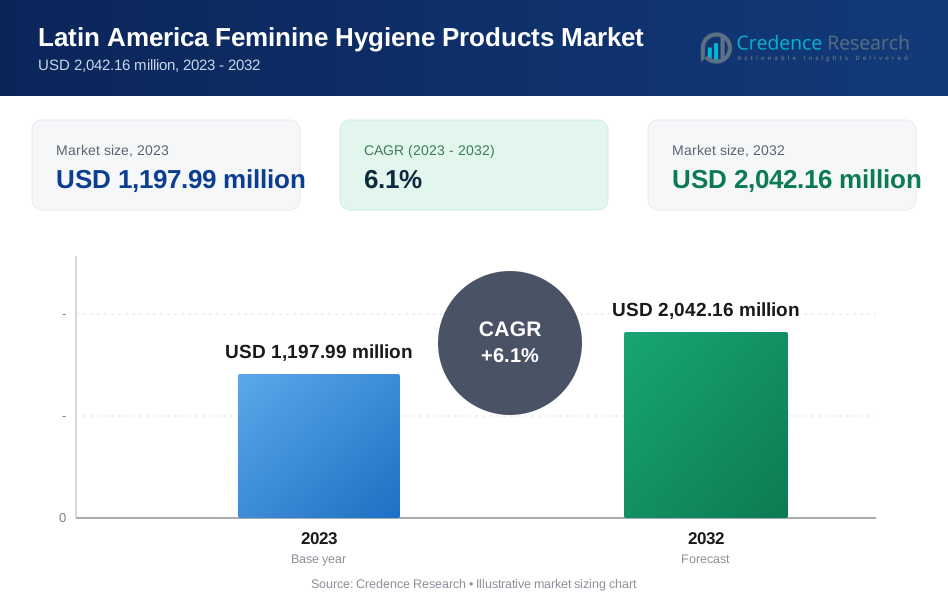
Latin America Feminine Hygiene Products size was valued at USD 1,197.99 million in 2023 and is anticipated to reach USD 2,042.16 million by 2032, at a CAGR of 6.1% during the forecast period (2023-2032).
Several factors are propelling the growth of the feminine hygiene products market in Latin America. A significant driver is the rising awareness about menstrual hygiene and health, leading to increased adoption of hygiene products among women. Additionally, the growing number of working women and urbanization contribute to the demand for convenient and discreet menstrual care options. The introduction of eco-friendly and organic products is also influencing consumer choices, as there is a shift towards sustainable and health-conscious alternatives. Moreover, government initiatives aimed at improving menstrual health literacy and addressing period poverty are further supporting market expansion. Social media campaigns and influencer partnerships are playing a vital role in breaking menstrual taboos, increasing product visibility, and accelerating market growth. Furthermore, the rising demand for innovative products like menstrual cups and reusable pads is attracting a growing segment of environmentally conscious consumers.
Brazil stands as the dominant market in Latin America, owing to its large population and heightened awareness of menstrual hygiene. Argentina follows closely, exhibiting robust growth in feminine hygiene product consumption. Emerging markets such as Chile and Peru are also witnessing increased demand, driven by changing lifestyles and improved access to hygiene products. The distribution of these products is primarily through hypermarkets, supermarkets, and pharmacies, which play a crucial role in product accessibility across the region. In addition, the rise in e-commerce platforms is offering women in more remote areas access to a broader range of menstrual hygiene products, further expanding the market reach. Growing awareness and the increasing adoption of sanitary products are making a substantial impact in rural areas where access was previously limited.
Market Insights:
- The Latin America feminine hygiene products market is expected to grow from USD 1,197.99 million in 2023 to USD 2,042.16 million by 2032, driven by rising awareness of menstrual health and hygiene.
- The global feminine hygiene products market, valued at USD 23,490.00 million in 2023, is projected to reach USD 43,917.35 million by 2032, growing at a CAGR of 7.2% from 2023 to 2032.
- Increasing urbanization and the rise in working women contribute to greater demand for convenient and discreet menstrual care products.
- Government initiatives aimed at improving menstrual health education and reducing period poverty are supporting market expansion.
- Eco-friendly and organic products are gaining popularity as consumers increasingly seek sustainable alternatives.
- Brazil leads the market, with a significant share due to its large population and higher levels of awareness regarding menstrual hygiene.
- The rise of e-commerce platforms is enhancing access to feminine hygiene products, especially in rural and remote areas.
- Cultural taboos and social stigmas around menstruation in some regions still hinder the widespread adoption of feminine hygiene products, especially in conservative areas.
Report Scope
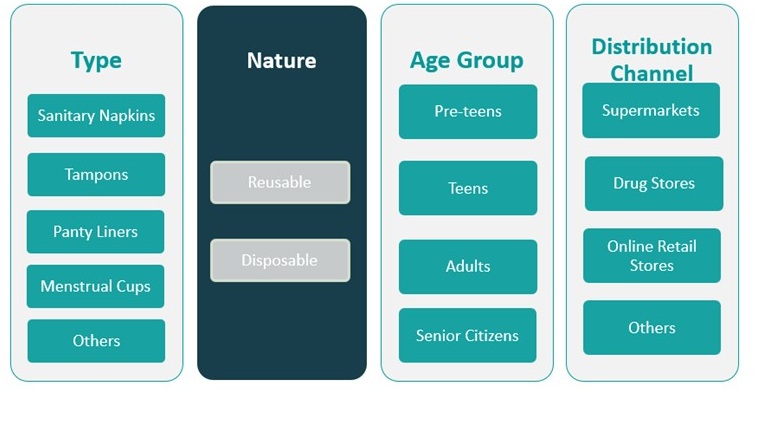
This report segments the Latin America Feminine Hygiene Products Market as follow
Market Drivers:
Rising Awareness of Menstrual Hygiene
One of the primary drivers for the growth of the feminine hygiene products market in Latin America is the increasing awareness surrounding menstrual hygiene. Over the past decade, significant efforts by governments, NGOs, and health organizations have helped address the stigmas associated with menstruation, leading to a broader public understanding of menstrual health. As awareness campaigns continue to educate women about menstrual hygiene and the importance of using sanitary products, there has been a notable shift in attitudes, with more women choosing hygienic and safe alternatives. This has resulted in higher adoption rates of products like sanitary napkins, tampons, and menstrual cups across the region.
Urbanization and Changing Lifestyles
Urbanization and shifting lifestyle patterns are contributing to a significant increase in demand for feminine hygiene products in Latin America. As more women join the workforce and experience greater economic independence, their need for convenient and effective menstrual care solutions has grown. The fast-paced lifestyle in urban areas demands hygiene products that are easy to use, discreet, and portable. In response, the market has seen a rise in innovative product designs, including ultra-thin pads, tampons, and even reusable options that cater to the demands of urban consumers. For instance, Essity, the market leader in Latin America, launched the Saba Cuidado-V Intimate Care range, expanding their portfolio to include products specifically designed for daily intimate care, such as intimate wipes and soaps, alongside pads, panty liners, and tampons. This demographic shift, combined with rising disposable incomes, is contributing to the growing consumption of feminine hygiene products across the region.
Government Initiatives and Social Campaigns
Government initiatives aimed at improving menstrual health and addressing period poverty are another key driver of market growth in Latin America. Many Latin American governments, recognizing the importance of menstrual hygiene for women’s health and well-being, have introduced policies to ensure that products are accessible and affordable. For instance, in Brazil, the government announced the free distribution of menstrual pads in pharmacies for low-income women, benefiting millions. Additionally, public health campaigns are increasingly targeting menstrual health education, particularly among young girls and rural populations. These initiatives not only help break down social taboos but also encourage the adoption of hygienic practices. The combined effect of these efforts is fostering a more open and supportive environment for menstrual health, which is directly benefiting the feminine hygiene products market.
Eco-friendly and Sustainable Products
The growing awareness around environmental sustainability is influencing the feminine hygiene products market in Latin America. Consumers are increasingly seeking eco-friendly, organic, and biodegradable products, driven by both health concerns and a desire to reduce environmental impact. Reusable options such as menstrual cups and washable cloth pads are gaining popularity, especially among environmentally conscious consumers. This trend is further amplified by the global movement towards sustainability, which has found strong resonance in Latin America. As a result, manufacturers are responding to consumer demand by introducing more sustainable product lines, which not only address environmental concerns but also offer alternative solutions for women who prefer non-disposable menstrual care options. This shift towards sustainability is expected to continue driving growth in the region’s feminine hygiene products market.
Market Trends:
Innovation in Product Offerings
The Latin American feminine hygiene products market is experiencing a significant transformation driven by innovation. Manufacturers are introducing a diverse range of products to cater to the evolving needs and preferences of consumers. For instance, there is a growing demand for organic and biodegradable sanitary napkins, menstrual cups, and reusable pads, reflecting a shift towards sustainable and eco-friendly options. This trend is not only aligned with global sustainability movements but also addresses the increasing consumer awareness about environmental impacts. Companies are investing in research and development to create products that offer enhanced comfort, better absorbency, and longer usage durations, thereby improving the overall user experience.
Growth of Online Retail Channels
The expansion of online retail channels is reshaping the distribution landscape of feminine hygiene products in Latin America. E-commerce platforms are becoming increasingly popular among consumers due to their convenience, wide product selection, and competitive pricing. This shift is particularly evident in urban areas where consumers have greater access to digital platforms. Online retailers are leveraging targeted marketing strategies, subscription models, and home delivery services to attract and retain customers. The rise of online shopping is also facilitating the entry of new brands into the market, providing consumers with more choices and fostering healthy competition among existing players.
Focus on Regional Expansion
Companies operating in the Latin American feminine hygiene products market are placing a strong emphasis on regional expansion to tap into underserved areas. While urban centers continue to be the primary markets, there is a concerted effort to reach rural and remote regions where access to such products has traditionally been limited. This expansion is being achieved through strategic partnerships with local distributors, setting up regional manufacturing units, and adapting products to meet the specific needs of diverse populations. By focusing on regional growth, companies aim to increase their market share and contribute to improving menstrual health awareness and product accessibility across the region.
Integration of Technology and Smart Products
The integration of technology into feminine hygiene products is an emerging trend in Latin America. Innovations such as smart menstrual cups and period-tracking apps are gaining traction among tech-savvy consumers. For example, UNICEF’s Oky app, designed to provide menstrual health information and individualized cycle tracking, was launched in Mexico and is expanding further in the region. These products offer features like real-time tracking of menstrual cycles, personalized health insights, and reminders for product replacement. The incorporation of technology not only enhances user convenience but also empowers women to monitor and manage their menstrual health more effectively. As digital literacy increases and healthcare awareness grows, the demand for such technologically advanced products is expected to rise, influencing the future direction of the market.
Market Challenges Analysis:
Cultural Taboos and Social Stigmas
One of the significant challenges facing the feminine hygiene products market in Latin America is the persistence of cultural taboos and social stigmas surrounding menstruation. For instance, a study by PSI Latin America found that only one in four women and girls surveyed in Guatemala, El Salvador, Nicaragua, Honduras, and the Dominican Republic could correctly identify the uterus as the origin of menstruation, highlighting a widespread lack of education about the menstrual cycle. In many parts of the region, menstruation is still considered a sensitive or shameful subject, and women often face societal pressure to keep their menstrual health private. This stigma can hinder open discussions about menstrual hygiene, preventing women, especially in rural or conservative areas, from adopting hygienic menstrual care products. The reluctance to talk about menstruation often leads to poor product awareness, resulting in lower adoption rates of feminine hygiene products, particularly in less developed regions.
Affordability and Access in Rural Areas
Another major restraint in the market is the affordability and limited access to feminine hygiene products in rural and low-income areas. Despite growing awareness, many women still struggle to afford high-quality sanitary products, particularly organic or premium brands. In some cases, traditional menstrual products are perceived as unaffordable, especially in lower-income households, which may rely on homemade or less effective alternatives. This economic barrier can prevent widespread market penetration, particularly in rural areas where disposable incomes are lower. Furthermore, limited distribution networks in these areas further exacerbate accessibility issues, making it difficult for women to obtain proper menstrual hygiene products.
Environmental Concerns and Product Disposal
The environmental impact of disposable feminine hygiene products presents another challenge. While there is a growing demand for eco-friendly products, many traditional sanitary items such as pads and tampons contribute significantly to environmental waste. The lack of proper disposal infrastructure in some regions means that many women resort to improper disposal methods, contributing to pollution. The challenge lies in balancing the demand for environmentally friendly products with the need for affordable, effective solutions. Manufacturers must invest in sustainable production and waste management systems, which can add to the overall cost of the products.
Market Opportunities:
The Latin American feminine hygiene products market presents significant opportunities for growth, particularly through the expansion of sustainable and organic product offerings. With the increasing consumer preference for eco-friendly and biodegradable products, manufacturers can capitalize on the rising demand for organic cotton sanitary pads, menstrual cups, and reusable products. The opportunity to introduce innovative solutions that cater to both sustainability and functionality is poised to attract a growing segment of environmentally conscious consumers. By investing in sustainable production methods and enhancing product accessibility, brands can strengthen their position in the market, particularly in urban areas where consumer awareness is higher.
Another key opportunity lies in penetrating rural and underserved areas, where access to feminine hygiene products remains limited. Expanding distribution networks and offering affordable yet high-quality products can help address the needs of women in these regions. Furthermore, the growing adoption of digital retail platforms presents a unique opportunity for reaching a broader audience, especially in rural or remote locations. E-commerce platforms can serve as a vital channel for increasing product availability and providing convenience to consumers. Additionally, leveraging digital marketing and subscription services can enhance brand visibility and customer loyalty, offering a competitive edge in the evolving Latin American market.
Market Segmentation Analysis:
By Type
The Latin American feminine hygiene products market is segmented into sanitary napkins, tampons, panty liners, menstrual cups, and other products. Sanitary napkins dominate the market due to their widespread use and availability. Tampons are gaining popularity, particularly among active women seeking convenience. Panty liners are increasingly preferred for daily hygiene, while menstrual cups are witnessing a surge in demand as environmentally conscious consumers seek sustainable alternatives. The "Others" category includes products such as period panties, which cater to specific consumer needs.
By Nature
The market is divided into reusable and disposable products. Disposable products, primarily sanitary napkins and tampons, continue to lead due to their convenience and ease of use. However, the growing shift towards environmental sustainability has spurred the demand for reusable products like menstrual cups and cloth pads. These products appeal to environmentally conscious consumers, especially in urban areas where there is greater awareness about reducing waste.
By Age-Group
The age-group segmentation includes pre-teens, teens, adults, and senior citizens. Teenagers and adults form the largest consumer base, with a high demand for sanitary napkins and tampons. Pre-teens are increasingly becoming aware of menstrual hygiene, driving early adoption of products tailored for them. Senior citizens, while a smaller segment, are demanding products designed for comfort and ease of use.
By Distribution Channel
Supermarkets and drug stores remain the primary distribution channels for feminine hygiene products. However, the rapid growth of online retail stores is providing greater convenience and access, particularly in remote areas. The online channel is becoming increasingly important, offering consumers a broader range of products and home delivery options.
Segmentation:
By Type
- Sanitary Napkins
- Tampons
- Panty Liners
- Menstrual Cups
- Others
By Nature
- Reusable
- Disposable
By Age-Group
- Pre-teens
- Teens
- Adults
- Senior Citizens
By Distribution Channel
- Supermarkets
- Drug Stores
- Online Retail Stores
- Others
Regional Analysis:
Latin America
The Latin American feminine hygiene products market is characterized by diverse regional dynamics, with each area showing varying levels of demand based on socio-economic factors, cultural perceptions, and access to hygiene products. The market is primarily driven by Brazil, Mexico, and Argentina, but other countries in the region, such as Chile and Colombia, are also contributing to the growth of this sector.
Brazil
Brazil holds the largest market share in the Latin American feminine hygiene products industry, accounting for approximately 35-40% of the total market. The demand in Brazil is primarily driven by the country’s large urban population and increasing awareness of menstrual hygiene. The growth of the middle class and improving access to sanitary products are contributing to the rising adoption of feminine hygiene products, particularly in urban areas. Brazil's major metropolitan regions, including São Paulo and Rio de Janeiro, are seeing higher consumption rates due to greater product availability and awareness.
Mexico
Mexico is the second-largest market for feminine hygiene products in Latin America, with a market share of around 25-30%. Similar to Brazil, Mexico's urbanization and expanding middle class are driving the demand for sanitary napkins, tampons, and menstrual cups. Mexico City, Guadalajara, and Monterrey are the key cities contributing to growth, with increasing consumer awareness and improved distribution channels facilitating market expansion. Additionally, the rising trend towards eco-friendly and sustainable products is gaining traction in Mexico, which is gradually reshaping consumer preferences.
Argentina
Argentina holds a significant share of around 10-15% of the Latin American feminine hygiene products market. The market in Argentina is growing steadily due to improving consumer awareness about menstrual hygiene, the adoption of reusable products like menstrual cups, and rising disposable incomes. Buenos Aires and other major cities are the primary drivers of this growth. However, Argentina faces challenges in terms of price sensitivity, as a significant portion of the population remains highly cost-conscious.
Chile and Colombia
Chile and Colombia are emerging markets, accounting for approximately 5-10% each of the regional market share. The growing trend towards sustainability and organic products is particularly evident in these countries, where eco-conscious consumers are increasingly demanding natural and reusable options. In Chile, the market is seeing strong growth in urban areas, while in Colombia, an improving economic outlook and better access to hygiene products in rural regions are expanding market reach.
Other Latin American Countries
Other countries, including Peru, Venezuela, and Ecuador, contribute to the remaining market share, with growth driven by the rising awareness of menstrual health and improved access to hygiene products. While the market in these countries is smaller, it is steadily growing as more women in rural areas gain access to modern menstrual hygiene products. The increasing availability of low-cost options in drugstores and supermarkets, along with government initiatives focused on public health and education, is expected to further drive market expansion in these regions.
Key Player Analysis:
- Johnson & Johnson
- Procter & Gamble
- Kimberly-Clark
- Essity Aktiebolag
- Kao Corporation
- Daio Paper Corporation
- Unicharm Corporation
- Premier FMCG
- Ontex
- Hengan International Group Company Ltd
- Drylock Technologies
- Natracare LLC
- First Quality Enterprises, Inc
- Bingbing Paper Co., Ltd
Competitive Analysis:
The Latin American feminine hygiene products market is highly competitive, with several multinational and regional players vying for market share. Leading global brands such as Procter & Gamble (with its Always brand), Kimberly-Clark (Huggies and Kotex), and Johnson & Johnson (Stayfree) dominate the market with a wide range of sanitary napkins, tampons, and panty liners. These companies benefit from strong distribution networks and established brand recognition across major Latin American countries like Brazil, Mexico, and Argentina. Local manufacturers also play a significant role, particularly in providing affordable and regionally adapted products. Brands such as Family Care (in Mexico) and Soffy (in Brazil) offer products at competitive price points to cater to cost-sensitive consumers, especially in rural areas. The market is witnessing increased competition from eco-friendly and sustainable brands, with companies like Organicup and Ecofemme gaining traction, especially in urban centers where consumer awareness about environmental impact is higher.
Recent Developments:
- In April 2025, Ontex completed the sale of its Brazilian business activities to Softys, a subsidiary of Empresas CMPC S.A., as part of a broader strategy to reshape its portfolio and focus on core markets. This transaction followed a similar divestment of Ontex’s Mexican business to Softys in early 2023, marking a significant shift in Ontex’s Latin American operations.
- In September 2023, Natracare announced a partnership with the non-profit Just a Drop to improve sustainable access to hygiene and menstrual health globally. While this partnership supports menstrual equity, it is not specific to Latin America but may have indirect impact through global initiatives.
Market Concentration & Characteristics:
The Latin American feminine hygiene products market is moderately concentrated, with a few key players holding significant market share. Major global companies such as Procter & Gamble, Kimberly-Clark, and Johnson & Johnson dominate the market, leveraging their established brand recognition, extensive distribution networks, and large-scale manufacturing capabilities. These multinational corporations have a strong presence across major urban centers in countries like Brazil, Mexico, and Argentina, where consumer demand is highest. Despite the dominance of large players, there is increasing competition from regional and local manufacturers, which offer cost-effective alternatives to cater to price-sensitive consumers, particularly in rural or less developed areas. Additionally, the market is experiencing a growing trend towards eco-friendly and sustainable products, leading to the emergence of smaller, specialized brands. This shift is gradually diversifying the market and fostering innovation, particularly in urban areas where consumer awareness of environmental issues is growing.
Report Coverage:
The research report offers an in-depth analysis based on Type, Nature, Age-Group and Distribution Channel. It details leading market players, providing an overview of their business, product offerings, investments, revenue streams, and key applications. Additionally, the report includes insights into the competitive environment, SWOT analysis, current market trends, as well as the primary drivers and constraints. Furthermore, it discusses various factors that have driven market expansion in recent years. The report also explores market dynamics, regulatory scenarios, and technological advancements that are shaping the industry. It assesses the impact of external factors and global economic changes on market growth. Lastly, it provides strategic recommendations for new entrants and established companies to navigate the complexities of the market.
Future Outlook:
- The market is expected to continue growing steadily, driven by increasing awareness of menstrual hygiene.
- Urbanization and rising disposable incomes will fuel demand for premium and convenient products.
- E-commerce platforms will play a more significant role in reaching underserved rural markets.
- Eco-friendly products, such as organic cotton pads and menstrual cups, will see rising demand.
- Government initiatives aimed at improving menstrual health education will support market expansion.
- Product innovation, including ultra-thin pads and tampons, will cater to consumer preferences for comfort and convenience.
- The shift towards reusable menstrual products will gain momentum, particularly in environmentally conscious urban areas.
- The market will experience increased competition as local and regional brands innovate to offer affordable options.
- Consumer education on menstrual health and hygiene will continue to break down cultural taboos.
- Rising interest in subscription-based services will contribute to the market’s digital transformation.
Request a Free Sample
Fill in your details and we'll send you a free sample report.
- Sample data tables & charts
- Research methodology
Need a Custom Version of This Report?
Tailor the scope, geography, or segments to your exact requirements.
- Custom geography or segment scope
- Direct access to our analyst team
Frequently Asked Questions
What is the current size of the Latin America Feminine Hygiene Products Market?
What factors are driving the growth of the Latin America Feminine Hygiene Products market?
What are the key segments within the Latin America Feminine Hygiene Products market?
Who are the major players in the Latin America Feminine Hygiene Products Market?
Table of Content
Chapter 1. Report Introduction
- 1.1 Report Description & Purpose
- 1.1.1 Report Title & Market Definition
- 1.1.2 Unique Selling Propositions (USP) & Key Differentiators
- 1.1.3 Value Proposition for Stakeholders
- 1.2 Research Objectives
- 1.2.1 Market Sizing Objectives (Volume & Revenue)
- 1.2.2 Segmentation Objectives
- 1.2.3 Competitive Intelligence Objectives
- 1.2.4 Forecast & Scenario Objectives
- 1.3 Report Scope
- 1.3.1 Latin America Feminine Hygiene Products Scope – Types & Subtypes Covered
- 1.3.2 Geographic Scope – Regions & Countries Covered
- 1.3.3 Historical Period, Base Year & Forecast Period (2023; forecast to 2032)
- 1.3.4 Inclusions & Exclusions
- 1.4 HS Code & Classification Framework
- 1.5 Currency, Units & Pricing Basis
- 1.6 Target Stakeholders
- 1.7 Limitations & Assumptions
Chapter 2. Executive Summary
- 2.1 Global Latin America Feminine Hygiene Products Market Snapshot
- 2.1.1 Market Size – Historical (2023) & Forecast (2023-2032) (2023: USD 1,197.99 million → 2032: USD 2,042.16 million)
- 2.1.2 Volume & Revenue – Global Totals
- 2.1.3 Key Market Highlights – Top Five Facts
- 2.2 Latin America Feminine Hygiene Products Market Segmentation Snapshot
- 2.2.1 Market Split by Region – 2023 vs. 2032
- 2.3 Competitive Snapshot
- 2.3.1 Top 10 Players by Revenue Share – 2023
- 2.3.2 Top 10 Players by Volume Share – 2023
- 2.3.3 Recent Strategic Developments (18-Month Summary)
- 2.4 Key Investment Highlights & Strategic Conclusions
Chapter 3. Latin America Feminine Hygiene Products Market Dynamics & Industry Analysis
- 3.1 Market Overview & Context
- 3.1.1 Latin America Feminine Hygiene Products Market Position in the Broader Automotive Value Chain
- 3.1.2 OEM vs. Replacement Market Dynamics
- 3.1.3 Market Maturity & Development Stage by Region
- 3.2 Latin America Feminine Hygiene Products Market Drivers
- 3.3 Latin America Feminine Hygiene Products Market Restraints & Challenges
- 3.4 Latin America Feminine Hygiene Products Market Opportunities
- 3.5 Porter's Five Forces Analysis
- 3.5.1 Threat of New Entrants
- 3.5.2 Bargaining Power of Suppliers
- 3.5.3 Bargaining Power of Buyers
- 3.5.4 Threat of Substitutes
- 3.5.5 Competitive Rivalry – Intensity Assessment
- 3.6 Latin America Feminine Hygiene Products Value Chain Analysis
- 3.6.1 Upstream – Raw Material/Input Suppliers
- 3.6.1.1 Raw Material/Input 1
- 3.6.1.2 Raw Material/Input 2
- 3.6.1.3 Raw Material/Input 3
- 3.6.2 Midstream – Production/Manufacturing/Service Delivery
- 3.6.2.1 Production/Process Overview
- 3.6.2.2 Key Facility Locations & Capacity by Manufacturer
- 3.6.3 Downstream – Distribution & End Consumer
- 3.6.3.1 Primary Channel – B2B/OEM
- 3.6.3.2 Secondary Channels – Dealer, Retail, Online, Direct
- 3.6.4 Value Chain Profitability Analysis
- 3.6.1 Upstream – Raw Material/Input Suppliers
- 3.7 PESTEL Analysis
- 3.7.1 Political Factors
- 3.7.2 Economic Factors
- 3.7.3 Social Factors
- 3.7.4 Technological Factors
- 3.7.5 Environmental Factors
- 3.7.6 Legal Factors
- 3.8 Latin America Feminine Hygiene Products Supply Chain Analysis
- 3.8.1 Raw Material/Input Supply Risk Assessment
- 3.8.2 Manufacturing Concentration Risk (Geographic Exposure)
- 3.8.3 Trade Disruption Impact Analysis
- 3.9 Regulatory & Policy Landscape
Note: The regulatory and policy landscape section covers regulations based on their applicability to the market, Latin America Feminine Hygiene Products category, geography, and scope of the study. Only regulatory frameworks with a material impact on operations, compliance, trade, sustainability, or market access are analyzed in detail.
Chapter 4. Key Investment Pockets & Opportunity Analysis
- 4.1 Latin America Feminine Hygiene Products Market Attractiveness Analysis
- 4.1.1 By Region – Investment Attractiveness Matrix (Volume × CAGR)
- 4.2 Absolute Revenue Growth Opportunity
- 4.2.1 By Region – Absolute USD Growth Through 2032
- 4.3 Incremental Volume Opportunity
- 4.3.1 By Region – Incremental Volume Through 2032
- 4.3.2 Segment – Incremental Volume
- 4.4 Emerging Submarket Opportunity Deep Dive (Subject to Applicability)
- 4.5 Emerging Market Opportunity Scorecards
- 4.5.1 United States
- 4.5.2 Europe
- 4.5.3 Asia
- 4.5.4 Middle East & Africa
Note: Emerging Market Opportunity Scorecards will be included based on relevance and strategic importance. Regions listed are indicative and may vary depending on data availability and market dynamics.
Chapter 5. Latin America Feminine Hygiene Products Import-Export Analysis & Trade Flows
- 5.1 Global Trade Overview
- 5.1.1 Global Export Value by Country (2023)
- 5.1.2 Global Export Volume by Country (2023)
- 5.1.3 Global Import Value by Country (2023)
- 5.1.4 Global Import Volume by Country (2023)
- 5.1.5 Net Trade Balance by Country (2023)
- 5.2 Export Analysis – Segment
- 5.2.1 Type 1 (HS Code)
- 5.2.2 Type 2 (HS Code)
- 5.2.3 Type 3 (HS Code)
- 5.2.4 Type 4 (HS Code)
- 5.2.5 Type 5 (HS Code)
- 5.3 Import Analysis – Segment
- 5.3.1 Type 1 (HS Code)
- 5.3.2 Type 2 (HS Code)
- 5.3.3 Type 3 (HS Code)
- 5.3.4 Type 4 (HS Code)
- 5.3.5 Type 5 (HS Code)
- 5.4 Average Unit Trade Prices
- 5.4.1 Average Export Price – Segment & Country
- 5.4.2 Average Import Price – Segment & Source Country
- 5.4.3 Price Trends (2023)
- 5.5 Key Trade Route Analysis
- 5.5.1 Trade Route 1
- 5.5.2 Trade Route 2
- 5.5.3 Trade Route 3
- 5.5.4 Trade Route 4
- 5.5.5 Trade Route 5
- 5.6 Trade Policy Impact Assessment
- 5.6.1 US Anti-Dumping & Section 301 Tariffs
- 5.6.2 EU Customs Union Impact
- 5.6.3 Major Free Trade Agreements
- 5.6.4 USMCA Rules of Origin
Note: Trade policy analysis will be included only where relevant to the Latin America Feminine Hygiene Products market.
Chapter 6. Competitive Landscape & Company Benchmarking
- 6.1 Latin America Feminine Hygiene Products Market Concentration & Structure
- 6.1.1 Herfindahl-Hirschman Index (HHI) – vs. 2023
- 6.1.2 Tier 1, Tier 2 & Tier 3 Market Structure
- 6.1.3 Global, Regional & Local Player Dynamics
- 6.2 Latin America Feminine Hygiene Products Market Share Analysis – 2023
- 6.2.1 Global Revenue Share by Company
- 6.2.2 Global Volume Share by Company
- 6.2.3 Regional Revenue Share
- 6.2.4 Market Share Evolution ( vs. 2023)
- 6.2.5 OEM Segment Share by Company
- 6.2.6 Replacement Segment Share by Company
- 6.3 Production/Delivery Capacity & Facility Analysis
- 6.3.1 Global Installed Capacity
- 6.3.2 Capacity Utilization Rates
- 6.3.3 Production/Output Volume
- 6.3.4 Facility Locations & Capacity Map
- 6.3.5 Planned Capacity Additions
- 6.4 Latin America Feminine Hygiene Products Competitive Benchmarking Matrix
- 6.4.1 Revenue, Volume, CAGR & Profitability Comparison
- 6.4.2 Channel Revenue Mix
- 6.4.3 Geographic Revenue Exposure
- 6.4.4 R&D Intensity
- 6.4.5 Sustainability Maturity
- 6.5 Strategic Developments in Latin America Feminine Hygiene Products (Last 24 Months)
- 6.5.1 Mergers, Acquisitions & Divestments
- 6.5.2 New Latin America Feminine Hygiene Products Launches
- 6.5.3 Facility Expansions
- 6.5.4 Strategic Alliances, Joint Ventures & Partnerships
- 6.5.5 Distribution Expansion & Market Entry
- 6.5.6 Sustainability & ESG Initiatives
- 6.6 Competitive Strategy Mapping
- 6.6.1 Leader, Challenger, Follower & Niche Classification
- 6.6.2 Pricing Strategy Comparison
- 6.6.3 Channel Strategy Matrix
Note: Strategic developments are included based on their materiality and the availability of reliable information.
Chapter 7. Global Latin America Feminine Hygiene Products Market – By Distribution Channel
- 7.1 Segment Overview
- 7.1.1 Volume & Revenue Split by Channel (2023 & 2032)
- 7.1.2 Channel Mix Evolution (2023-2032)
Chapter 8. Regional Market Analysis – Global Overview
- 8.1 Global Regional Overview
- 8.1.1 Regional Volume Share
- 8.1.2 Regional Revenue Share
- 8.1.3 Regional Volume by Region
- 8.1.4 Regional Revenue by Region
- 8.1.5 Regional Forecast Through 2032
- 8.2 Cross-Regional Segment Analysis
- 8.2.1 By Distribution Channel
- 8.2.2 By Brand/Price Tier
Chapter 9. North America Latin America Feminine Hygiene Products Market
- 9.1 United States
- 9.2 Canada
- 9.3 Mexico
Chapter 10. Europe Latin America Feminine Hygiene Products Market
- 10.1 Germany
- 10.2 France
- 10.3 Italy
- 10.4 United Kingdom
- 10.5 Spain
- 10.6 Poland
- 10.7 Russia
- 10.8 Netherlands
- 10.9 Belgium
- 10.10 Sweden
- 10.11 Denmark
- 10.12 Norway
- 10.13 Rest of Europe
Chapter 11. Asia Pacific Latin America Feminine Hygiene Products Market
- 11.1 China
- 11.2 India
- 11.3 Japan
- 11.4 South Korea
- 11.5 Thailand
- 11.6 Indonesia
- 11.7 Vietnam
- 11.8 Malaysia
- 11.9 Australia
- 11.10 Rest of Asia Pacific
Chapter 12. Latin America Latin America Feminine Hygiene Products Market
- 12.1 Brazil
- 12.2 Argentina
- 12.3 Colombia
- 12.4 Chile
- 12.5 Rest of Latin America
Chapter 13. Middle East Latin America Feminine Hygiene Products Market
- 13.1 Saudi Arabia
- 13.2 United Arab Emirates
- 13.3 Turkey
- 13.4 Israel
- 13.5 Iran
- 13.6 Rest of the Middle East
Chapter 14. Africa Latin America Feminine Hygiene Products Market
- 14.1 South Africa
- 14.2 Egypt
- 14.3 Nigeria
- 14.4 Morocco
- 14.5 Rest of Africa
Chapter 15. Latin America Feminine Hygiene Products Company Profiles
- 15.1 [Company 01]
- 15.1.1 Company Overview
- 15.1.2 Key Management Personnel
- 15.1.3 Products & Services Portfolio
- 15.1.4 Financial Performance
- 15.1.5 Key Market Focus & Geographic Presence
- 15.1.6 Recent Developments & Strategic Initiatives
Note: The company profile list is preliminary and may change based on research findings, market developments, data availability, and client requirements.
Chapter 16. Appendices
- Appendix A – List of Abbreviations & Acronyms
- Appendix B – Industry Classification Code Reference – Full Series
- Appendix C – Production & Capacity Data Tables
- Appendix D – End-Use & Demand Base Tables
- Appendix E – Consumption & Replacement Rate Assumptions
- Appendix F – ASP Reference Tables
- Appendix G – Manufacturing & Facility Database
- Appendix H – Import-Export Data Tables
- Appendix I – Regulatory Summary Tables
- Appendix J – Primary Research Participant List (Anonymized)
- Appendix K – Primary Research Questionnaire Framework
- Appendix L – Data Sources & Bibliography
- Appendix M – Market Size Divergence & Source Comparison
Chapter 17. Research Methodology
- 17.1 Research Framework & Philosophy
- 17.2 Secondary Research – Sources, Hierarchy & Data Extraction
- 17.3 Data Modeling – Bottom-Up & Top-Down Market Sizing
- 17.4 Primary Research – Stakeholder Framework, LOI & Sample Sizes
- 17.5 Forecast Methodology – Regression, Scenario & Sensitivity Analysis
- 17.6 Quality Control – Four-Layer Validation Framework
- 17.7 Limitations & Standard Assumptions
- 17.8 Disclaimer
