
| REPORT ATTRIBUTE | DETAILS |
|---|---|
| Historical Period | 2020-2023 |
| Base Year | 2024 |
| Forecast Period | 2025-2032 |
| Malaysia Industrial Fasteners Market Size 2024 | USD 214.16 million |
| Malaysia Industrial Fasteners Market, CGR | 6.13% |
| Malaysia Industrial Fasteners Market Size 2032 | USD 344.68 million |
Market Overview:
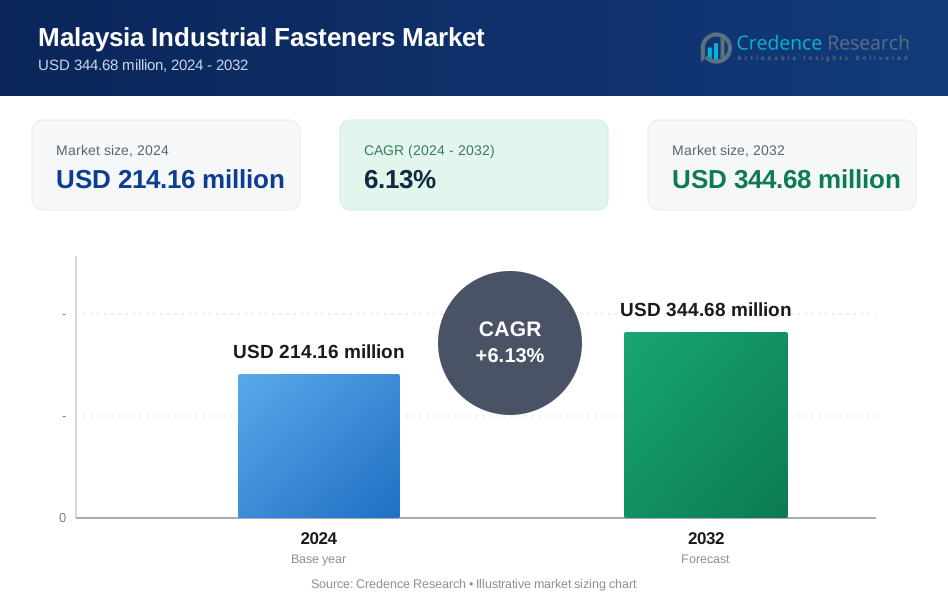
The Malaysia Industrial Fasteners Market is projected to grow from USD 214.16 million in 2024 to an estimated USD 344.68 million by 2032, with a compound annual growth rate (CAGR) of 6.13% from 2024 to 2032.
Key drivers propelling the growth of Malaysia's industrial fasteners market include robust industrialization, increased infrastructure investments, and advancements in manufacturing technologies. The automotive and construction sectors, in particular, are significant consumers of fasteners, necessitating high-quality, durable, and cost-effective solutions. Furthermore, Malaysia's expanding manufacturing base is creating a steady demand for fasteners across diverse applications. Additionally, the growing emphasis on automation and precision in manufacturing processes is driving demand for specialized fasteners that meet stringent performance standards. The growing trend toward sustainability and green building initiatives also supports the demand for eco-friendly fasteners, providing additional growth potential in the market. Furthermore, the rising demand for advanced electronic products and smart technologies also contributes to the need for high-performance fasteners tailored for these specific applications.
The Malaysia Industrial Fasteners Market demonstrates varied regional demand influenced by local industrial activities. The central region, which includes Kuala Lumpur, holds the largest market share due to its concentration of manufacturing, construction, and infrastructure projects. This region is the industrial heart of the country, with numerous facilities requiring a steady supply of fasteners. The northern region, particularly Penang and Perak, is driven by the electronics and semiconductor industries, where precision fasteners are crucial for assembly processes. In the southern region, Johor’s strategic location near Singapore has made it a significant hub for trade and manufacturing, particularly in the automotive and logistics sectors, further increasing the need for industrial fasteners. Although the eastern region contributes a smaller share, its involvement in the oil and gas industry demands durable fasteners for equipment installation and maintenance, which represents a niche but important market segment. Each of these regions plays a unique role in shaping the overall market landscape, contributing to the steady growth of the Malaysia Industrial Fasteners Market.
Market Insights:
- The Malaysia Industrial Fasteners Market is projected to grow from USD 214.16 million in 2024 to USD 344.68 million by 2032, driven by robust industrialization and infrastructure development.
- The Global Industrial Fasteners Market is projected to grow from USD 98,826 million in 2024 to USD 158,987.23 million by 2032, registering a robust CAGR of 6.12%.
- Key growth drivers include Malaysia’s increasing industrial activities, government infrastructure investments, and a rise in construction, automotive, and manufacturing sectors, requiring high-quality fasteners.
- The automotive and manufacturing sectors are vital consumers of fasteners, with Malaysia's growing automotive industry needing high-performance solutions to meet strict quality standards.
- Technological advancements and automation in manufacturing processes are pushing the demand for specialized, durable fasteners that can withstand greater stresses and provide enhanced performance.
- The trend towards sustainability and green building initiatives is increasing demand for eco-friendly fasteners made from recyclable or environmentally friendly materials, supporting market growth.
- Rising raw material costs, particularly for metals like steel and aluminum, are impacting fastener manufacturing costs, creating financial challenges for companies and potential price hikes for consumers.
- Intense competition from low-cost importers, especially from countries like China and India, is exerting pressure on local manufacturers to reduce prices or innovate to stay competitive in the market.
Report Scope
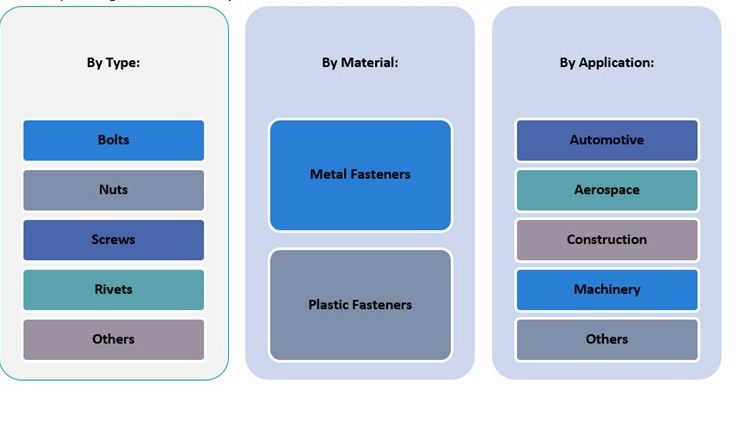
This report segments the Malaysia Industrial Fasteners Market as follow
Market Drivers:
Industrial Growth and Infrastructure Development
The rapid industrialization in Malaysia is a fundamental driver for the growth of the industrial fasteners market. The country has experienced significant development across various industries, including automotive, construction, and manufacturing, which are major consumers of industrial fasteners. For example, Chin Well Holdings Berhad and KSSC Fasteners Malaysia supply a comprehensive range of bolts, nuts, and screws that are integral to automotive, construction, and manufacturing projects across the country. This growth is further fueled by the government's ongoing investments in infrastructure, particularly in transportation, housing, and urban development. With the expansion of industrial hubs and construction projects, the demand for high-quality fasteners that ensure structural integrity and reliability has risen. As infrastructure projects scale, the need for durable and cost-efficient fastening solutions remains a crucial factor in the market's expansion.
Automotive and Manufacturing Sector Expansion
The automotive and manufacturing sectors are integral to Malaysia’s economy and act as key drivers for the industrial fasteners market. The growing automotive industry in Malaysia, which includes both local manufacturing and assembly of vehicles by international companies, requires high-performance fasteners to ensure the structural and functional integrity of various vehicle parts. For instance, Techfast, an ISO 9001:2015 certified manufacturer, produces high-precision fasteners for the electronics, automotive, and telecommunication industries, enhancing the supply chain for high-performance fasteners required in these sectors. As automotive production continues to rise, so does the need for specialized fasteners that cater to the automotive industry's rigorous quality standards. Additionally, the expansion of Malaysia’s manufacturing sector across electronics, machinery, and equipment manufacturing necessitates a continual supply of industrial fasteners to meet growing production demands.
Technological Advancements and Automation
Technological advancements in manufacturing processes are also a significant driver of the industrial fasteners market in Malaysia. The increasing adoption of automation, robotics, and precision manufacturing techniques is pushing the demand for high-quality and specialized fasteners. Modern manufacturing processes require fasteners that can withstand greater stresses and provide enhanced performance, leading to the increased adoption of advanced materials like stainless steel, high-carbon steel, and composites. Moreover, automation systems in industries such as automotive and electronics manufacturing are driving the need for fasteners that offer precise fitting and optimal strength, reinforcing the demand for sophisticated fastening solutions.
Sustainability and Green Building Initiatives
Sustainability is becoming a key consideration in Malaysia's industrial and construction sectors, which directly impacts the demand for eco-friendly and energy-efficient fasteners. The growing trend of green building initiatives and environmentally responsible construction practices is pushing for the use of sustainable materials in construction and manufacturing. As a result, there is an increasing need for fasteners that meet environmental standards, such as those that are corrosion-resistant and made from recyclable or environmentally friendly materials. This shift toward sustainability in construction and industrial processes supports the demand for innovative fastener solutions that comply with green building regulations, driving market growth in Malaysia.
Market Trends:
Shift Toward High-Performance Fasteners
A notable trend in the Malaysian industrial fasteners market is the increasing preference for high-performance fasteners designed to withstand extreme conditions. For instance, Ananka Group, a leading manufacturer in Malaysia, is recognized for producing fasteners that are used in heat exchangers, instrumentation, and other applications requiring exceptional durability, including offshore, petrochemical, and nuclear sectors. Industries such as aerospace, automotive, and heavy machinery are demanding fasteners that offer superior strength, durability, and corrosion resistance. This shift is driven by the need for fasteners that can function in challenging environments, such as high temperatures, pressure, and exposure to harsh chemicals. As a result, there is growing demand for fasteners made from advanced materials such as titanium, nickel alloys, and high-strength steels, which are designed to meet the evolving needs of these demanding industries. Manufacturers are responding by investing in the production of specialized fasteners to cater to these requirements, pushing the market toward innovation and more sophisticated solutions.
Rise of Automation and Smart Manufacturing
Another significant trend in Malaysia's industrial fasteners market is the increasing integration of automation and smart manufacturing technologies. The shift towards Industry 4.0, characterized by the use of robotics, AI, and IoT in production lines, has led to a growing need for fasteners that are not only functional but also compatible with automated systems. As industries adopt robotic assembly lines and automated fastening systems, the demand for precision-engineered fasteners that can be applied in automated settings is rising. These fasteners are designed for ease of installation and consistency, ensuring that automated systems can perform their tasks efficiently and with minimal human intervention. The adoption of these technologies across various industries, from automotive to electronics, continues to shape the market, pushing for more specialized and advanced fastener solutions.
Focus on Sustainable Fasteners
Sustainability remains a significant trend influencing the industrial fasteners market in Malaysia. As environmental concerns grow, industries are increasingly adopting sustainable practices, including the use of eco-friendly fasteners. This shift is particularly prominent in the construction and automotive sectors, where green building standards and eco-friendly manufacturing practices are becoming more prevalent. For example, S.H. Chooi Fasteners highlights the use of steel for its recyclability, durability, and low energy production, aligning with industry efforts to limit environmental pollution. Fasteners made from recyclable materials, such as aluminum and stainless steel, are gaining traction due to their ability to reduce waste and lower carbon footprints. Moreover, manufacturers are exploring innovative ways to produce fasteners with minimal environmental impact, such as using renewable energy sources in production or utilizing advanced materials that are both strong and environmentally sustainable.
Customization and Specialization
The demand for customized and specialized fasteners is another key trend shaping the Malaysian industrial fasteners market. As industries become more diverse and applications more complex, there is a growing need for fasteners tailored to specific requirements. Companies are increasingly offering customized solutions to meet the unique demands of clients in various sectors, including automotive, construction, and electronics. These specialized fasteners are designed to meet precise specifications regarding size, material, strength, and functionality, ensuring optimal performance in specialized applications. This trend towards customization is driven by the need for enhanced product performance, efficiency, and reliability in various industrial applications, positioning manufacturers to offer more tailored solutions for their clients.
Market Challenges Analysis:
High Raw Material Costs
One of the significant restraints affecting the growth of the Malaysia industrial fasteners market is the rising cost of raw materials. The prices of essential materials such as steel, stainless steel, and aluminum have been fluctuating, which directly impacts the cost of manufacturing fasteners. These cost fluctuations create financial uncertainty for manufacturers and can lead to higher prices for end consumers. As a result, companies may face difficulties in maintaining profit margins while also keeping the cost of fasteners competitive. The dependence on global supply chains for raw materials further exacerbates this issue, as any disruptions in the international trade network can lead to price hikes, thereby affecting market stability.
Competition from Low-Cost Importers
Another challenge facing the Malaysia industrial fasteners market is the intense competition from low-cost importers, particularly from countries with lower manufacturing costs such as China and India. For example, Malaysian fastener producer Tong Heer Fasteners Co. Bhd. highlighted in its 2023 financial disclosures that increased imports of low-cost fasteners from Vietnam and Thailand have intensified competition in the domestic market. These international suppliers often offer fasteners at significantly lower prices, making it difficult for local manufacturers to compete. While lower costs can benefit end consumers, they also put pressure on local manufacturers to either reduce their prices or improve the quality of their offerings. This competitive pressure may lead to reduced profit margins and even market share losses for domestic players in the long term, particularly for companies that cannot invest in advanced manufacturing technologies to differentiate their products.
Technological Integration Challenges
As industries move towards automation and advanced manufacturing processes, there is a growing demand for high-tech, precision-engineered fasteners. However, integrating the latest technologies into fastener production presents challenges. Many smaller manufacturers in Malaysia may struggle with the high capital expenditure required to invest in automation, robotics, and advanced manufacturing technologies. Additionally, maintaining skilled labor capable of operating such advanced machinery and ensuring consistent quality control can be difficult. These barriers to technological adoption can hinder growth, particularly for businesses that rely on traditional manufacturing methods.
Market Opportunities:
The Malaysia industrial fasteners market presents significant growth opportunities driven by the country’s expanding manufacturing and construction sectors. As Malaysia continues to be a hub for automotive production and a key player in the electronics manufacturing industry, the demand for high-quality fasteners is expected to rise. The automotive sector, in particular, offers immense potential due to its need for specialized fasteners that meet stringent safety and performance standards. Additionally, the rapid growth in construction, fueled by both residential and commercial developments, increases the demand for durable and reliable fasteners. This ongoing industrial expansion provides ample opportunities for manufacturers to capture market share by offering high-performance, cost-effective fastening solutions tailored to these sectors.
Another promising opportunity lies in the rising trend of sustainable and eco-friendly construction practices. As Malaysia aligns with global sustainability initiatives, there is growing demand for environmentally friendly fasteners made from recyclable or sustainable materials. Manufacturers can capitalize on this trend by investing in the development of green fasteners that meet the increasing regulatory requirements and consumer preferences for environmentally responsible products. The integration of automation and advanced manufacturing technologies also presents an opportunity for fastener producers to improve efficiency, enhance product quality, and meet the specialized needs of industries like aerospace and electronics. By embracing these technological advancements, companies can differentiate themselves in the competitive market and meet the evolving demands of diverse industrial applications.
Market Segmentation Analysis:
The Malaysia Industrial Fasteners Market is segmented based on type, application, and material, each contributing to the market's growth across various industries.
By Type Segment:
The market is primarily driven by bolts, nuts, and screws, which are widely used in automotive, construction, and machinery applications. Bolts hold the largest share due to their critical role in providing secure and strong fastening solutions. Nuts and screws also see significant demand, particularly in automotive and aerospace sectors. Rivets are commonly used in applications requiring permanent fastening, while "others" in this segment include specialty fasteners used in niche industries.
By Application Segment:
The automotive sector is the largest consumer of fasteners, driven by the need for high-strength, durable fasteners in vehicle assembly and maintenance. The aerospace sector also demands precision fasteners that meet stringent safety standards, contributing significantly to market growth. Construction follows closely, with fasteners playing a vital role in infrastructure projects. The machinery sector, driven by industrial automation, is witnessing a rise in demand for specialized fasteners. The "others" category includes fasteners used in diverse industries such as electronics and consumer goods.
By Material Segment:
Metal fasteners dominate the market due to their superior strength, durability, and corrosion resistance, making them ideal for demanding applications in automotive, aerospace, and construction. Plastic fasteners, while smaller in market share, are gaining traction due to their lightweight properties and resistance to corrosion, making them suitable for applications in electronics and consumer products.
Segmentation:
By Type Segment:
- Bolts
- Nuts
- Screws
- Rivets
- Others
By Application Segment:
- Automotive
- Aerospace
- Construction
- Machinery
- Others
By Material Segment:
- Metal Fasteners
- Plastic Fasteners
Regional Analysis:
The Malaysia Industrial Fasteners Market is experiencing growth due to the increasing demand across various industries, including automotive, construction, manufacturing, and aerospace. The regional analysis highlights the diverse demand from different sectors and provides insights into how these industries contribute to the market's expansion.
Central Region: The central region, which includes Kuala Lumpur and its surrounding areas, holds the largest market share in Malaysia's industrial fasteners market. As the country’s economic and industrial hub, this region is home to a significant portion of Malaysia’s manufacturing and construction activities. The automotive and electronics industries in the central region are major consumers of industrial fasteners, driving the demand for high-quality, durable fasteners for assembly and maintenance purposes. The presence of numerous manufacturing plants and automotive companies further strengthens this region's dominant position.
Northern Region: The northern region of Malaysia, encompassing states like Penang and Perak, has seen a steady rise in demand for industrial fasteners, primarily driven by the manufacturing and electronics sectors. Penang, often referred to as the “Silicon Valley of the East,” is home to a large number of electronics and semiconductor companies, which require precision fasteners for assembly processes. This region holds a significant share of the market, with manufacturers seeking fasteners that meet specific standards for high-tech industries.
Southern Region: The southern region, particularly Johor, is another key area contributing to the market's growth. Johor is strategically located near Singapore, facilitating cross-border trade and manufacturing. The automotive and logistics sectors in this region are major drivers of industrial fastener demand. Additionally, the development of industrial parks and the expansion of port facilities in Johor further enhance its position as a key market for fasteners in the region.
Eastern Region: While the eastern region of Malaysia, including states like Terengganu and Kelantan, contributes a smaller share to the industrial fasteners market, there is growing demand driven by the oil and gas sector. The offshore oil and gas projects in the region require robust and durable fasteners for equipment installation and maintenance, offering a niche but essential market segment.
Key Player Analysis:
- Nifco Inc.
- Shanghai Prime Machinery Co. Ltd.
- Meidoh Co. Ltd.
- Sundram Fasteners Limited
- Agrati Group
- HIL Ltd.
- Bhansali Fasteners
- Zhejiang Huantai Fastener Co., Ltd.
- Kyocera Corporation
Competitive Analysis:
The Malaysia Industrial Fasteners Market is competitive, with key players offering a diverse range of products to meet the needs of various industries, including automotive, construction, and electronics. Leading manufacturers such as Inco Group, Seng Huat Industrial, and Malaysia Fasteners dominate the market, focusing on both standard and customized fastener solutions. These companies leverage advanced technologies, including precision manufacturing and automated production lines, to enhance product quality and efficiency. Additionally, international brands, such as Stanley Black & Decker and Bosch, have a significant presence in the market, providing high-performance fasteners for specialized applications. Competitive strategies revolve around product innovation, quality assurance, and cost optimization. Companies are also increasingly focusing on expanding their distribution networks and offering value-added services, such as technical support and fastener design consultation. As the demand for durable and high-quality fasteners rises, the market continues to see increased investments in research and development to stay ahead in this dynamic industry.
Recent Developments:
- On February 25, 2025, Miller Electric Mfg. LLC, a wholly-owned subsidiary of Illinois Tool Works (ITW), announced a strategic partnership with Novarc Technologies. This collaboration focuses on developing AI-powered welding solutions under the Miller® Copilot™ line, aiming to enhance productivity, address labor shortages, and improve precision in industries such as shipbuilding and heavy equipment manufacturing.
- In January 2023, Hilti North America announced the addition of more than 30 new cordless tools to its Nuron battery-powered platform, expanding its portfolio to over 100 tools. This expansion, showcased at the World of Concrete event, includes advanced tools such as a diamond core rig, rotating lasers, and cut-off saws, reinforcing Hilti’s leadership in cordless jobsite solutions
- In April 2024, TR Fastenings, a prominent global provider of industrial fasteners, introduced the Plas-Tech 30-20 screws. These newly launched screws are specifically engineered for high-temperature environments and are made from modified polyphthalamide. The innovation targets sectors such as automotive, electronics, and industrial applications, offering enhanced strength, reduced weight, and exceptional resistance to chemicals and moisture. This product launch demonstrates TR Fastenings’ commitment to expanding its portfolio of advanced fastening solutions for demanding environments
Market Concentration & Characteristics:
The Malaysia Industrial Fasteners Market is moderately concentrated, with a mix of established domestic players and international manufacturers. The market is characterized by a competitive landscape, driven by companies that offer a wide range of fasteners catering to diverse industries such as automotive, construction, aerospace, and electronics. While large multinational corporations dominate the high-end fastener segments, numerous small to medium-sized enterprises (SMEs) cater to the local demand for standard and custom fasteners. These companies often differentiate themselves through product innovation, quality, and customer service. The market is also marked by a growing emphasis on advanced materials and coatings that improve the durability and performance of fasteners in challenging environments. Additionally, the rising trend of automation and smart manufacturing is influencing fastener production processes, leading to more precision and cost-efficiency. As demand across various sectors increases, companies are increasingly focusing on sustainability and product customization to stay competitive.
Report Coverage:
The research report offers an in-depth analysis based on Type, Application and Material. It details leading market players, providing an overview of their business, product offerings, investments, revenue streams, and key applications. Additionally, the report includes insights into the competitive environment, SWOT analysis, current market trends, as well as the primary drivers and constraints. Furthermore, it discusses various factors that have driven market expansion in recent years. The report also explores market dynamics, regulatory scenarios, and technological advancements that are shaping the industry. It assesses the impact of external factors and global economic changes on market growth. Lastly, it provides strategic recommendations for new entrants and established companies to navigate the complexities of the market.
Future Outlook:
- The Malaysia Industrial Fasteners Market is expected to grow at a steady pace, driven by increasing industrialization and infrastructure development.
- Demand from the automotive sector will continue to rise, with the need for precision-engineered fasteners for vehicle assembly and safety.
- The construction industry will remain a key driver, with fasteners being crucial for infrastructure and building projects.
- Technological advancements in fastener design and materials will foster innovation, increasing the durability and functionality of fasteners.
- The growing focus on lightweight materials in manufacturing will spur the need for specialized fasteners that provide strength without adding weight.
- Expansion in the aerospace sector will contribute to the demand for high-performance fasteners designed for demanding environments.
- Small and medium-sized enterprises (SMEs) will play an increasing role in supplying custom fasteners, catering to local market needs.
- Automation and smart manufacturing will improve fastener production efficiency and precision.
- Environmental concerns will drive demand for sustainable, eco-friendly fastener solutions.
- The competitive landscape will intensify, with companies focusing on quality, innovation, and customer service to maintain market leadership.
Request a Free Sample
Fill in your details and we'll send you a free sample report.
- Sample data tables & charts
- Research methodology
Need a Custom Version of This Report?
Tailor the scope, geography, or segments to your exact requirements.
- Custom geography or segment scope
- Direct access to our analyst team
Frequently Asked Questions
What is the current size of the Malaysia Industrial Fasteners Market?
What factors are driving the growth of the Malaysia Industrial Fasteners Market?
What are some challenges faced by the Malaysia Industrial Fasteners Market?
Who are the major players in the Malaysia Industrial Fasteners Market?
Table of Content
Chapter 1. Report Introduction
- 1.1 Report Description & Purpose
- 1.1.1 Report Title & Market Definition
- 1.1.2 Unique Selling Propositions (USP) & Key Differentiators
- 1.1.3 Value Proposition for Stakeholders
- 1.2 Research Objectives
- 1.2.1 Market Sizing Objectives (Volume & Revenue)
- 1.2.2 Segmentation Objectives
- 1.2.3 Competitive Intelligence Objectives
- 1.2.4 Forecast & Scenario Objectives
- 1.3 Report Scope
- 1.3.1 Malaysia Industrial Fasteners Scope – Types & Subtypes Covered
- 1.3.2 Geographic Scope – Regions & Countries Covered
- 1.3.3 Historical Period, Base Year & Forecast Period (2024; forecast to 2032)
- 1.3.4 Inclusions & Exclusions
- 1.4 HS Code & Classification Framework
- 1.5 Currency, Units & Pricing Basis
- 1.6 Target Stakeholders
- 1.7 Limitations & Assumptions
Chapter 2. Executive Summary
- 2.1 Global Malaysia Industrial Fasteners Market Snapshot
- 2.1.1 Market Size – Historical (2024) & Forecast (2024-2032) (2024: USD 214.16 million → 2032: USD 344.68 million)
- 2.1.2 Volume & Revenue – Global Totals
- 2.1.3 Key Market Highlights – Top Five Facts
- 2.2 Malaysia Industrial Fasteners Market Segmentation Snapshot
- 2.2.1 Market Split by Region – 2024 vs. 2032
- 2.3 Competitive Snapshot
- 2.3.1 Top 10 Players by Revenue Share – 2024
- 2.3.2 Top 10 Players by Volume Share – 2024
- 2.3.3 Recent Strategic Developments (18-Month Summary)
- 2.4 Key Investment Highlights & Strategic Conclusions
Chapter 3. Malaysia Industrial Fasteners Market Dynamics & Industry Analysis
- 3.1 Market Overview & Context
- 3.1.1 Malaysia Industrial Fasteners Market Position in the Broader Automotive Value Chain
- 3.1.2 OEM vs. Replacement Market Dynamics
- 3.1.3 Market Maturity & Development Stage by Region
- 3.2 Malaysia Industrial Fasteners Market Drivers
- 3.3 Malaysia Industrial Fasteners Market Restraints & Challenges
- 3.4 Malaysia Industrial Fasteners Market Opportunities
- 3.5 Porter's Five Forces Analysis
- 3.5.1 Threat of New Entrants
- 3.5.2 Bargaining Power of Suppliers
- 3.5.3 Bargaining Power of Buyers
- 3.5.4 Threat of Substitutes
- 3.5.5 Competitive Rivalry – Intensity Assessment
- 3.6 Malaysia Industrial Fasteners Value Chain Analysis
- 3.6.1 Upstream – Raw Material/Input Suppliers
- 3.6.1.1 Raw Material/Input 1
- 3.6.1.2 Raw Material/Input 2
- 3.6.1.3 Raw Material/Input 3
- 3.6.2 Midstream – Production/Manufacturing/Service Delivery
- 3.6.2.1 Production/Process Overview
- 3.6.2.2 Key Facility Locations & Capacity by Manufacturer
- 3.6.3 Downstream – Distribution & End Consumer
- 3.6.3.1 Primary Channel – B2B/OEM
- 3.6.3.2 Secondary Channels – Dealer, Retail, Online, Direct
- 3.6.4 Value Chain Profitability Analysis
- 3.6.1 Upstream – Raw Material/Input Suppliers
- 3.7 PESTEL Analysis
- 3.7.1 Political Factors
- 3.7.2 Economic Factors
- 3.7.3 Social Factors
- 3.7.4 Technological Factors
- 3.7.5 Environmental Factors
- 3.7.6 Legal Factors
- 3.8 Malaysia Industrial Fasteners Supply Chain Analysis
- 3.8.1 Raw Material/Input Supply Risk Assessment
- 3.8.2 Manufacturing Concentration Risk (Geographic Exposure)
- 3.8.3 Trade Disruption Impact Analysis
- 3.9 Regulatory & Policy Landscape
Note: The regulatory and policy landscape section covers regulations based on their applicability to the market, Malaysia Industrial Fasteners category, geography, and scope of the study. Only regulatory frameworks with a material impact on operations, compliance, trade, sustainability, or market access are analyzed in detail.
Chapter 4. Key Investment Pockets & Opportunity Analysis
- 4.1 Malaysia Industrial Fasteners Market Attractiveness Analysis
- 4.1.1 By Region – Investment Attractiveness Matrix (Volume × CAGR)
- 4.2 Absolute Revenue Growth Opportunity
- 4.2.1 By Region – Absolute USD Growth Through 2032
- 4.3 Incremental Volume Opportunity
- 4.3.1 By Region – Incremental Volume Through 2032
- 4.3.2 Segment – Incremental Volume
- 4.4 Emerging Submarket Opportunity Deep Dive (Subject to Applicability)
- 4.5 Emerging Market Opportunity Scorecards
- 4.5.1 United States
- 4.5.2 Europe
- 4.5.3 Asia
- 4.5.4 Middle East & Africa
Note: Emerging Market Opportunity Scorecards will be included based on relevance and strategic importance. Regions listed are indicative and may vary depending on data availability and market dynamics.
Chapter 5. Malaysia Industrial Fasteners Import-Export Analysis & Trade Flows
- 5.1 Global Trade Overview
- 5.1.1 Global Export Value by Country (2024)
- 5.1.2 Global Export Volume by Country (2024)
- 5.1.3 Global Import Value by Country (2024)
- 5.1.4 Global Import Volume by Country (2024)
- 5.1.5 Net Trade Balance by Country (2024)
- 5.2 Export Analysis – Segment
- 5.2.1 Type 1 (HS Code)
- 5.2.2 Type 2 (HS Code)
- 5.2.3 Type 3 (HS Code)
- 5.2.4 Type 4 (HS Code)
- 5.2.5 Type 5 (HS Code)
- 5.3 Import Analysis – Segment
- 5.3.1 Type 1 (HS Code)
- 5.3.2 Type 2 (HS Code)
- 5.3.3 Type 3 (HS Code)
- 5.3.4 Type 4 (HS Code)
- 5.3.5 Type 5 (HS Code)
- 5.4 Average Unit Trade Prices
- 5.4.1 Average Export Price – Segment & Country
- 5.4.2 Average Import Price – Segment & Source Country
- 5.4.3 Price Trends (2024)
- 5.5 Key Trade Route Analysis
- 5.5.1 Trade Route 1
- 5.5.2 Trade Route 2
- 5.5.3 Trade Route 3
- 5.5.4 Trade Route 4
- 5.5.5 Trade Route 5
- 5.6 Trade Policy Impact Assessment
- 5.6.1 US Anti-Dumping & Section 301 Tariffs
- 5.6.2 EU Customs Union Impact
- 5.6.3 Major Free Trade Agreements
- 5.6.4 USMCA Rules of Origin
Note: Trade policy analysis will be included only where relevant to the Malaysia Industrial Fasteners market.
Chapter 6. Competitive Landscape & Company Benchmarking
- 6.1 Malaysia Industrial Fasteners Market Concentration & Structure
- 6.1.1 Herfindahl-Hirschman Index (HHI) – vs. 2024
- 6.1.2 Tier 1, Tier 2 & Tier 3 Market Structure
- 6.1.3 Global, Regional & Local Player Dynamics
- 6.2 Malaysia Industrial Fasteners Market Share Analysis – 2024
- 6.2.1 Global Revenue Share by Company
- 6.2.2 Global Volume Share by Company
- 6.2.3 Regional Revenue Share
- 6.2.4 Market Share Evolution ( vs. 2024)
- 6.2.5 OEM Segment Share by Company
- 6.2.6 Replacement Segment Share by Company
- 6.3 Production/Delivery Capacity & Facility Analysis
- 6.3.1 Global Installed Capacity
- 6.3.2 Capacity Utilization Rates
- 6.3.3 Production/Output Volume
- 6.3.4 Facility Locations & Capacity Map
- 6.3.5 Planned Capacity Additions
- 6.4 Malaysia Industrial Fasteners Competitive Benchmarking Matrix
- 6.4.1 Revenue, Volume, CAGR & Profitability Comparison
- 6.4.2 Channel Revenue Mix
- 6.4.3 Geographic Revenue Exposure
- 6.4.4 R&D Intensity
- 6.4.5 Sustainability Maturity
- 6.5 Strategic Developments in Malaysia Industrial Fasteners (Last 24 Months)
- 6.5.1 Mergers, Acquisitions & Divestments
- 6.5.2 New Malaysia Industrial Fasteners Launches
- 6.5.3 Facility Expansions
- 6.5.4 Strategic Alliances, Joint Ventures & Partnerships
- 6.5.5 Distribution Expansion & Market Entry
- 6.5.6 Sustainability & ESG Initiatives
- 6.6 Competitive Strategy Mapping
- 6.6.1 Leader, Challenger, Follower & Niche Classification
- 6.6.2 Pricing Strategy Comparison
- 6.6.3 Channel Strategy Matrix
Note: Strategic developments are included based on their materiality and the availability of reliable information.
Chapter 7. Global Malaysia Industrial Fasteners Market – By Distribution Channel
- 7.1 Segment Overview
- 7.1.1 Volume & Revenue Split by Channel (2024 & 2032)
- 7.1.2 Channel Mix Evolution (2024-2032)
Chapter 8. Regional Market Analysis – Global Overview
- 8.1 Global Regional Overview
- 8.1.1 Regional Volume Share
- 8.1.2 Regional Revenue Share
- 8.1.3 Regional Volume by Region
- 8.1.4 Regional Revenue by Region
- 8.1.5 Regional Forecast Through 2032
- 8.2 Cross-Regional Segment Analysis
- 8.2.1 By Distribution Channel
- 8.2.2 By Brand/Price Tier
Chapter 9. North America Malaysia Industrial Fasteners Market
- 9.1 United States
- 9.2 Canada
- 9.3 Mexico
Chapter 10. Europe Malaysia Industrial Fasteners Market
- 10.1 Germany
- 10.2 France
- 10.3 Italy
- 10.4 United Kingdom
- 10.5 Spain
- 10.6 Poland
- 10.7 Russia
- 10.8 Netherlands
- 10.9 Belgium
- 10.10 Sweden
- 10.11 Denmark
- 10.12 Norway
- 10.13 Rest of Europe
Chapter 11. Asia Pacific Malaysia Industrial Fasteners Market
- 11.1 China
- 11.2 India
- 11.3 Japan
- 11.4 South Korea
- 11.5 Thailand
- 11.6 Indonesia
- 11.7 Vietnam
- 11.8 Malaysia
- 11.9 Australia
- 11.10 Rest of Asia Pacific
Chapter 12. Latin America Malaysia Industrial Fasteners Market
- 12.1 Brazil
- 12.2 Argentina
- 12.3 Colombia
- 12.4 Chile
- 12.5 Rest of Latin America
Chapter 13. Middle East Malaysia Industrial Fasteners Market
- 13.1 Saudi Arabia
- 13.2 United Arab Emirates
- 13.3 Turkey
- 13.4 Israel
- 13.5 Iran
- 13.6 Rest of the Middle East
Chapter 14. Africa Malaysia Industrial Fasteners Market
- 14.1 South Africa
- 14.2 Egypt
- 14.3 Nigeria
- 14.4 Morocco
- 14.5 Rest of Africa
Chapter 15. Malaysia Industrial Fasteners Company Profiles
- 15.1 [Company 01]
- 15.1.1 Company Overview
- 15.1.2 Key Management Personnel
- 15.1.3 Products & Services Portfolio
- 15.1.4 Financial Performance
- 15.1.5 Key Market Focus & Geographic Presence
- 15.1.6 Recent Developments & Strategic Initiatives
Note: The company profile list is preliminary and may change based on research findings, market developments, data availability, and client requirements.
Chapter 16. Appendices
- Appendix A – List of Abbreviations & Acronyms
- Appendix B – Industry Classification Code Reference – Full Series
- Appendix C – Production & Capacity Data Tables
- Appendix D – End-Use & Demand Base Tables
- Appendix E – Consumption & Replacement Rate Assumptions
- Appendix F – ASP Reference Tables
- Appendix G – Manufacturing & Facility Database
- Appendix H – Import-Export Data Tables
- Appendix I – Regulatory Summary Tables
- Appendix J – Primary Research Participant List (Anonymized)
- Appendix K – Primary Research Questionnaire Framework
- Appendix L – Data Sources & Bibliography
- Appendix M – Market Size Divergence & Source Comparison
Chapter 17. Research Methodology
- 17.1 Research Framework & Philosophy
- 17.2 Secondary Research – Sources, Hierarchy & Data Extraction
- 17.3 Data Modeling – Bottom-Up & Top-Down Market Sizing
- 17.4 Primary Research – Stakeholder Framework, LOI & Sample Sizes
- 17.5 Forecast Methodology – Regression, Scenario & Sensitivity Analysis
- 17.6 Quality Control – Four-Layer Validation Framework
- 17.7 Limitations & Standard Assumptions
- 17.8 Disclaimer
