
| REPORT ATTRIBUTE | DETAILS |
|---|---|
| Historical Period | 2019-2022 |
| Base Year | 2023 |
| Forecast Period | 2024-2032 |
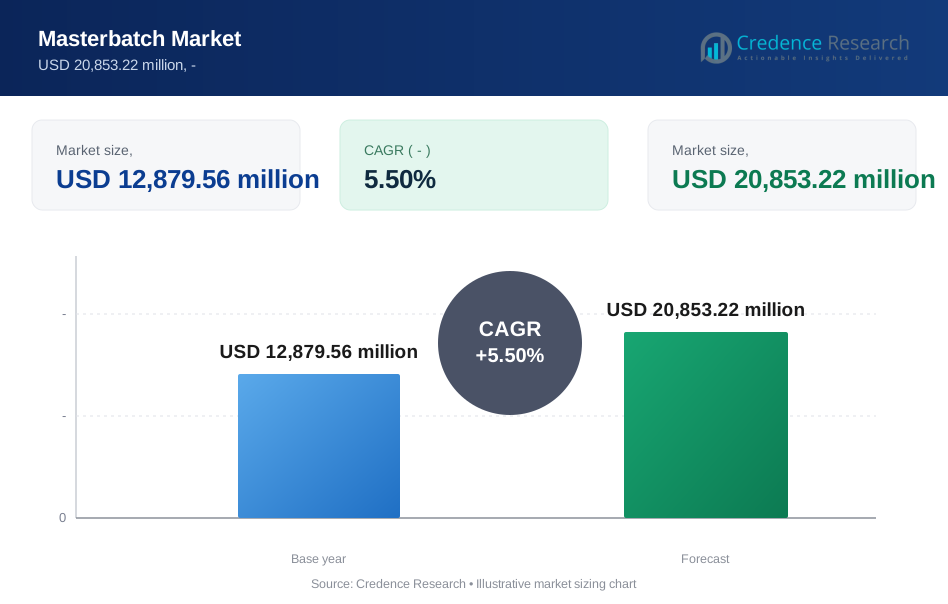
| Masterbatch Market Size 2023 | USD 12,879.56 Million |
| Masterbatch Market, CAGR | 5.50% |
| Masterbatch Market Size 2032 | USD 20,853.22 Million |
Market Overview
The Global Masterbatch Market is projected to witness substantial growth, soaring from USD 12,879.56 million in 2023 to a staggering USD 20,853.22 million by 2032, with a robust compound annual growth rate of 5.50%.
The Global Masterbatch Market is driven by several factors and trends shaping its trajectory. Key drivers include the increasing demand for plastics across various industries such as packaging, automotive, and consumer goods, coupled with the growing emphasis on enhancing product performance and aesthetics. Additionally, the rising focus on sustainable solutions and the development of bio-based and recycled Masterbatch are fueling market expansion. Moreover, technological advancements in masterbatch manufacturing processes and the surging adoption of additive Masterbatch for functional enhancements are further propelling market growth. These drivers and trends collectively contribute to the dynamic evolution and promising outlook of the Global Masterbatch Market.
Geographically, the Global Masterbatch Market exhibits a diversified landscape, with key regions including North America, Europe, Asia Pacific, Latin America, and the Middle East and Africa. North America and Europe are prominent markets, driven by robust manufacturing sectors and stringent regulatory standards. Meanwhile, the Asia Pacific region is witnessing rapid growth attributed to expanding industrialization and urbanization, particularly in countries like China and India. Key players in the global Masterbatch market include Clariant AG, BASF SE, PolyOne Corporation, Ampacet Corporation, and A. Schulman, Inc., among others, who dominate the market through strategic initiatives such as mergers, acquisitions, and product innovations.
Market Drivers
Surging Demand for Plastic Products Across Industries:
The widespread use of plastics in various industries like packaging, automotive, construction, consumer goods, and healthcare fuels the demand for Masterbatch. The widespread use of plastics in various industries like packaging, automotive, construction, consumer goods, and healthcare indeed fuels the demand for Masterbatch. These industries utilize Masterbatch to color, enhance performance properties, and customize the aesthetics of plastic products. The rising demand for packaged goods due to factors like e-commerce, increasing urbanization, and consumer preference for convenience is a major driver. For example, with the rise of e-commerce and increasing consumer awareness about product packaging, the demand for sustainable and eco-friendly plastic packaging solutions has soared, leading to a greater need for Masterbatch. E-retail has emerged as a major sales channel for consumer, retail, and healthcare goods. With the increasing e-commerce market size, the need for packaging is increasing steadily, which will drive the demand for Masterbatch. Masterbatch play a vital role in creating visually appealing and functional packaging solutions that meet the evolving needs of consumers and industries alike.
Stringent Regulations and Sustainability Concerns:
Growing environmental concerns and stricter regulations on plastic waste management are pushing the development of sustainable Masterbatch. Moreover, the use of plastic in the automotive industry for the creation of lightweight vehicles also acts as a significant factor favoring the expansion of the sustainable masterbatch market throughout the forecast period. In response to environmental concerns and stricter regulations on plastic waste management, manufacturers are investing in research and development to create sustainable Masterbatch that align with sustainability goals while maintaining product quality and performance. For example, biodegradable and compostable Masterbatch are gaining prominence, aligning with global initiatives to reduce plastic waste. Additionally, the integration of recycled materials into masterbatch formulations supports the circular economy, reducing the environmental impact of plastic production. As governments and consumers demand more eco-friendly alternatives, the adoption of sustainable Masterbatch is becoming increasingly important. The Plastic Waste Management (Amendment) Rules, 2024, introduced by the Ministry of Environment, Forest and Climate Change of India, signify a significant effort to address plastic pollution in India, particularly by targeting microplastics and setting stricter criteria for biodegradable plastics.
Cost-Effectiveness and Enhanced Product Functionality:
Masterbatch offer a cost-efficient way to add color and modify plastic properties during the manufacturing process. For instance, they can enhance UV resistance, flame retardancy, anti-static properties, and other functionalities, improving the overall quality and performance of plastic products. By incorporating Masterbatch into their production processes, manufacturers can achieve desired product characteristics while minimizing material waste and production costs. This makes Masterbatch a preferred choice across industries. In terms of market share, the Asia-Pacific region dominated the global masterbatch market in 2021, with some 36 percent of its share. Europe came in second, accounting for approximately 29 percent of the masterbatch market that year. In 2021, white Masterbatch accounted for roughly 34 percent of the market demand for Masterbatch globally. Additive Masterbatch, on the other hand, accounted for the lowest share of masterbatch demand worldwide, but still with a representative share of 20 percent.
Technological Advancements and Innovation:
Constant advancements in masterbatch technology are leading to the development of new and improved formulations. This includes innovations in color consistency, dispersion techniques, and the creation of Masterbatch with specific functionalities for various applications. With ongoing research and innovation, manufacturers can address evolving market demands and stay competitive by offering masterbatch solutions that meet the ever-changing needs of industries and consumers worldwide.
Market Trends
Focus on Sustainability:
Environmental consciousness is a major force driving the demand for sustainable Masterbatch. There's a growing emphasis on reducing the environmental footprint of plastics, leading to increased interest in bio-based Masterbatch made from renewable resources. Consequently, there’s increased interest in bio-based Masterbatch made from renewable resources, such as polylactic acid (PLA) and bio-polyethylene (bio-PE), which are projected to account for 45% of the bio-based plastics market by 2022. Additionally, there’s notable development in Masterbatch designed to enhance plastic recyclability. For example, the introduction of compatibilizer Masterbatch has led to a 30% increase in the recyclability of multi-layer packaging. These advancements contribute to the progression of a more circular plastics economy, where the recycling rate for plastics in Europe alone has risen to 41.5%. Manufacturers are investing in research and development to create innovative solutions that meet sustainability goals while maintaining the performance and quality standards expected by industries and consumers.
Rise of High-Performance Masterbatch:
There's a noticeable surge in demand for high-performance Masterbatch tailored to deliver superior properties. This includes functionalities such as flame retardancy, UV protection, anti-microbial properties, and conductivity, catering to specific applications across various industries. In the healthcare industry, for instance, the use of specialized functional Masterbatch, such as those offering biocompatibility and chemical resistance, ensures that medical products comply with stringent regulatory standards and meet the specific performance requirements of medical applications. As industries seek to enhance the durability, safety, and functionality of their products, the demand for specialized Masterbatch continues to grow. Manufacturers are responding by developing advanced formulations that meet stringent performance requirements, offering tailored solutions to meet diverse industry needs effectively.
Market Challenges Analysis
Raw Material Price Volatility and Impact on Production Costs:
Masterbatch rely on various raw materials such as polymers, pigments, and additives. Fluctuations in the prices of these raw materials can significantly impact production costs and profitability for masterbatch manufacturers. Rapid changes in raw material prices require manufacturers to adapt pricing strategies and supply chain management practices to mitigate financial risks and maintain competitiveness in the market.
Challenges Stemming from Stringent Plastic Usage Regulations:
Growing environmental concerns and increasingly stringent regulations on plastic usage, particularly single-use plastics, pose significant challenges for the Masterbatch market. These regulations can lead to decreased demand for Masterbatch in certain applications, as industries seek alternatives to traditional plastic materials. Masterbatch manufacturers must navigate evolving regulatory landscapes by developing sustainable solutions and collaborating with stakeholders to address environmental concerns while maintaining business viability and meeting customer demands.
Market Segmentation Analysis:
By Application:
The Global Masterbatch Market is segmented by application into several key sectors, each with distinct demands and requirements. Packaging emerges as the dominant application segment, driven by the burgeoning demand for packaged goods across various industries. Building & Construction follows closely, with Masterbatch utilized in applications such as pipes, fittings, and profiles. The Consumer Goods segment witnesses significant demand for Masterbatch in products ranging from household items to electronics, driven by the need for aesthetic appeal and product differentiation. The Automotive sector utilizes Masterbatch for interior and exterior components to enhance both functionality and appearance. Textiles, Agriculture, and other sectors also contribute to market growth, leveraging Masterbatch for coloration and performance enhancement across diverse applications.
By Polymer:
The market segmentation by polymer type offers insights into the diverse materials used in masterbatch formulations. Polypropylene (PP) emerges as a prominent segment, driven by its widespread use in packaging, automotive, and consumer goods. LDPE & LLDPE find extensive applications in flexible packaging and agricultural films, contributing to significant market share. High-density polyethylene (HDPE) is utilized in various industries for its durability and chemical resistance. Polyvinyl chloride (PVC) is prevalent in construction applications due to its versatility and cost-effectiveness. Polyurethane (PUR), PET, and PS also play vital roles in specific applications, reflecting the diverse needs of end-users. Other polymer segments cater to niche applications, showcasing the versatility of Masterbatch in meeting varied industry requirements.
Segments:
Based on Application
- Packaging
- Building & Construction
- Consumer Goods
- Automotive
- Textiles
- Agriculture
- Others
Based on Polymer
- PP
- LDPE & LLDPE
- HDPE
- PVC
- PUR
- PET
- PS
- Others
Based on the Geography:
- North America
- The U.S.
- Canada
- Mexico
- Europe
- Germany
- France
- The U.K.
- Italy
- Spain
- Rest of Europe
- Asia Pacific
- China
- Japan
- India
- South Korea
- South-east Asia
- Rest of Asia Pacific
- Latin America
- Brazil
- Argentina
- Rest of Latin America
- Middle East & Africa
- GCC Countries
- South Africa
- Rest of the Middle East and Africa
Regional Analysis
Asia-Pacific
Asia-Pacific currently holds the largest market share, accounting for approximately 40% of the global revenue. This dominance can be attributed to the region's thriving plastic manufacturing sector, particularly in countries like China, India, and Southeast Asian nations. The increasing demand for plastic products across various industries, including packaging, construction, and automotive, has fueled the adoption of Masterbatch in this region.
Europe
Europe follows closely, capturing a market share of around 25%. The region's stringent regulations regarding the use of additives and colorants in plastics, coupled with the emphasis on sustainability and eco-friendly practices, have driven the demand for high-quality Masterbatch. Major economies such as Germany, Italy, and France significantly contribute to the market's growth, owing to their well-established plastic processing industries.
Key Player Analysis
- Avient Corporation (US)
- Ampacet Corporation (US)
- LyondellBasell Industries Holdings B.V. (US)
- Cabot Corporation (US)
- Plastika Kritis S.A. (Greece)
- Plastiblends (India)
- Hubron International (UK)
- Tosaf Group Ltd (Israel)
- Penn Color, Inc. (US)
- Americhem (US)
Competitive Analysis
In the competitive landscape of the Global Masterbatch Market, several leading players exhibit strong market presence and competitive strategies. Avient Corporation, formerly PolyOne Corporation, stands out as a key player, leveraging its diverse product portfolio and global reach to maintain a competitive edge. Ampacet Corporation remains prominent, known for its innovative solutions and emphasis on sustainability. LyondellBasell Industries Holdings B.V. maintains a significant market share through its comprehensive range of masterbatch products and strategic acquisitions. Cabot Corporation, with its focus on specialty chemicals and materials, competes robustly in the market. Plastika Kritis S.A. and Plastiblends hold strong positions in their respective regions, offering tailored solutions to meet regional demands. Hubron International, Tosaf Group Ltd, Penn Color, Inc., and Americhem also contribute to the competitive dynamics with their specialized offerings and commitment to technological advancements. These leading players engage in strategies such as mergers, acquisitions, and product innovations to strengthen their market position and meet evolving customer needs.
Recent Developments
In December 2023, Ampacet introduced ColorMark, a masterbatch additive technology that enables processors to create permanent lettering and designs in intricate detail on dark plastic surfaces.
In November 2023, Cabot Corporation announced the launch of its new REPLASBLAK product family of circular black Masterbatch with certified material. With this launch, Cabot introduced three products which will be sold as the company’s first-ever International Sustainability & Carbon Certification (ISCC PLUS) certified black masterbatch products powered by EVOLVE Sustainable Solutions.
In November 2023, Americhem announced a new partnership with Nexeo Plastics for engineered compounds’ distribution across North America. Effective November 1, 2023, Nexeo Plastics will serve as the preferred distributor of Americhem’s full range of engineered compounds in North America, encompassing Canada, Mexico, Puerto Rico, and the US.
In November 2023, Sukano AG partnered with PlastiColors to meet the growing market demand for PET packaging in South Africa.
In November 2023, LyondellBasell announced the establishment of a new distribution hub in the UK for its polyolefin grades. This strategic move is part of the company’s ongoing commitment to enhancing the customer experience by placing inventories closer to its customers’ facilities, thus reducing lead times on orders.
Market Concentration & Characteristics
The Global Masterbatch Market exhibits a notable level of market concentration alongside distinct characteristics. A handful of major players dominate the market, leveraging their extensive product portfolios, technological expertise, and global presence to dictate market trends and dynamics. This concentration is attributed to factors such as significant investments in research and development, strategic acquisitions, and strong brand recognition. These leading companies often possess diverse customer bases across various industries and regions, further solidifying their market position. Additionally, the market is characterized by intense competition, with players constantly innovating to differentiate their offerings and meet evolving customer demands. Despite the dominance of key players, the market remains dynamic, with opportunities for smaller and niche players to carve out their own segments through specialization and innovative solutions. Overall, the Global Masterbatch Market reflects a balance between established industry leaders and emerging players striving to capture market share in a competitive landscape.
Report Coverage
The research report offers an in-depth analysis based on Application, Polymer and Geography. It details leading market players, providing an overview of their business, product offerings, investments, revenue streams, and key applications. Additionally, the report includes insights into the competitive environment, SWOT analysis, current market trends, as well as the primary drivers and constraints. Furthermore, it discusses various factors that have driven market expansion in recent years. The report also explores market dynamics, regulatory scenarios, and technological advancements that are shaping the industry. It assesses the impact of external factors and global economic changes on market growth. Lastly, it provides strategic recommendations for new entrants and established companies to navigate the complexities of the market.
Future Outlook
- Continued Growth: The Global Masterbatch Market is projected to witness sustained growth driven by increasing demand across various industries.
- Technological Advancements: Ongoing innovations in masterbatch formulations and manufacturing processes will enhance product performance and functionality.
- Sustainability Focus: There will be a growing emphasis on sustainable masterbatch solutions, including bio-based and recyclable formulations, to address environmental concerns.
- Regulatory Impact: Stringent regulations on plastic usage and waste management will influence market dynamics and drive the adoption of eco-friendly masterbatch alternatives.
- Market Consolidation: The market is likely to witness further consolidation as leading players expand their market presence through mergers and acquisitions.
- Regional Dynamics: Emerging economies will play a significant role in market growth, driven by rapid industrialization and urbanization.
- Application Expansion: Masterbatch will find new applications across industries such as electronics, healthcare, and aerospace, diversifying market opportunities.
- Demand for High-Performance Masterbatch: Increasing requirements for specialized functionalities like UV resistance and antimicrobial properties will drive demand for high-performance Masterbatch.
- Customization Trends: Manufacturers will focus on offering customized masterbatch solutions tailored to specific customer requirements and regional preferences.
- Market Penetration Strategies: Companies will employ strategic marketing and distribution strategies to penetrate new markets and strengthen their global foothold in the industry.
Request a Free Sample
Fill in your details and we'll send you a free sample report.
- Sample data tables & charts
- Research methodology
Need a Custom Version of This Report?
Tailor the scope, geography, or segments to your exact requirements.
- Custom geography or segment scope
- Direct access to our analyst team
Frequently Asked Questions
What is the current size of the Global Masterbatch Market?
What factors are driving the growth of the Global Masterbatch Market?
What are the key segments within the Global Masterbatch Market?
What are some challenges faced by the Global Masterbatch Market?
Who are the major players in the Global Masterbatch Market?
Table of Content
Chapter 1. Report Introduction
- 1.1 Report Description & Purpose
- 1.1.1 Report Title & Market Definition
- 1.1.2 Unique Selling Propositions (USP) & Key Differentiators
- 1.1.3 Value Proposition for Stakeholders
- 1.2 Research Objectives
- 1.2.1 Market Sizing Objectives (Volume & Revenue)
- 1.2.2 Segmentation Objectives
- 1.2.3 Competitive Intelligence Objectives
- 1.2.4 Forecast & Scenario Objectives
- 1.3 Report Scope
- 1.3.1 Masterbatch Scope – Types & Subtypes Covered
- 1.3.2 Geographic Scope – Regions & Countries Covered
- 1.3.3 Historical Period, Base Year & Forecast Period (the historical period; forecast to the forecast period)
- 1.3.4 Inclusions & Exclusions
- 1.4 HS Code & Classification Framework
- 1.5 Currency, Units & Pricing Basis
- 1.6 Target Stakeholders
- 1.7 Limitations & Assumptions
Chapter 2. Executive Summary
- 2.1 Global Masterbatch Market Snapshot
- 2.1.1 Market Size – Historical (the historical period) & Forecast (the forecast period) (base year: USD 12,879.56 million → forecast year: USD 20,853.22 million)
- 2.1.2 Volume & Revenue – Global Totals
- 2.1.3 Key Market Highlights – Top Five Facts
- 2.2 Masterbatch Market Segmentation Snapshot
- 2.2.1 Market Split by Region – vs.
- 2.3 Competitive Snapshot
- 2.3.1 Top 10 Players by Revenue Share –
- 2.3.2 Top 10 Players by Volume Share –
- 2.3.3 Recent Strategic Developments (18-Month Summary)
- 2.4 Key Investment Highlights & Strategic Conclusions
Chapter 3. Masterbatch Market Dynamics & Industry Analysis
- 3.1 Market Overview & Context
- 3.1.1 Masterbatch Market Position in the Broader Automotive Value Chain
- 3.1.2 OEM vs. Replacement Market Dynamics
- 3.1.3 Market Maturity & Development Stage by Region
- 3.2 Masterbatch Market Drivers
- 3.3 Masterbatch Market Restraints & Challenges
- 3.4 Masterbatch Market Opportunities
- 3.5 Porter's Five Forces Analysis
- 3.5.1 Threat of New Entrants
- 3.5.2 Bargaining Power of Suppliers
- 3.5.3 Bargaining Power of Buyers
- 3.5.4 Threat of Substitutes
- 3.5.5 Competitive Rivalry – Intensity Assessment
- 3.6 Masterbatch Value Chain Analysis
- 3.6.1 Upstream – Raw Material/Input Suppliers
- 3.6.1.1 Raw Material/Input 1
- 3.6.1.2 Raw Material/Input 2
- 3.6.1.3 Raw Material/Input 3
- 3.6.2 Midstream – Production/Manufacturing/Service Delivery
- 3.6.2.1 Production/Process Overview
- 3.6.2.2 Key Facility Locations & Capacity by Manufacturer
- 3.6.3 Downstream – Distribution & End Consumer
- 3.6.3.1 Primary Channel – B2B/OEM
- 3.6.3.2 Secondary Channels – Dealer, Retail, Online, Direct
- 3.6.4 Value Chain Profitability Analysis
- 3.6.1 Upstream – Raw Material/Input Suppliers
- 3.7 PESTEL Analysis
- 3.7.1 Political Factors
- 3.7.2 Economic Factors
- 3.7.3 Social Factors
- 3.7.4 Technological Factors
- 3.7.5 Environmental Factors
- 3.7.6 Legal Factors
- 3.8 Masterbatch Supply Chain Analysis
- 3.8.1 Raw Material/Input Supply Risk Assessment
- 3.8.2 Manufacturing Concentration Risk (Geographic Exposure)
- 3.8.3 Trade Disruption Impact Analysis
- 3.9 Regulatory & Policy Landscape
Note: The regulatory and policy landscape section covers regulations based on their applicability to the market, Masterbatch category, geography, and scope of the study. Only regulatory frameworks with a material impact on operations, compliance, trade, sustainability, or market access are analyzed in detail.
Chapter 4. Key Investment Pockets & Opportunity Analysis
- 4.1 Masterbatch Market Attractiveness Analysis
- 4.1.1 By Region – Investment Attractiveness Matrix (Volume × CAGR)
- 4.2 Absolute Revenue Growth Opportunity
- 4.2.1 By Region – Absolute USD Growth Through the forecast period
- 4.3 Incremental Volume Opportunity
- 4.3.1 By Region – Incremental Volume Through the forecast period
- 4.3.2 Segment – Incremental Volume
- 4.4 Emerging Submarket Opportunity Deep Dive (Subject to Applicability)
- 4.5 Emerging Market Opportunity Scorecards
- 4.5.1 United States
- 4.5.2 Europe
- 4.5.3 Asia
- 4.5.4 Middle East & Africa
Note: Emerging Market Opportunity Scorecards will be included based on relevance and strategic importance. Regions listed are indicative and may vary depending on data availability and market dynamics.
Chapter 5. Masterbatch Import-Export Analysis & Trade Flows
- 5.1 Global Trade Overview
- 5.1.1 Global Export Value by Country (the historical period)
- 5.1.2 Global Export Volume by Country (the historical period)
- 5.1.3 Global Import Value by Country (the historical period)
- 5.1.4 Global Import Volume by Country (the historical period)
- 5.1.5 Net Trade Balance by Country (the historical period)
- 5.2 Export Analysis – Segment
- 5.2.1 Type 1 (HS Code)
- 5.2.2 Type 2 (HS Code)
- 5.2.3 Type 3 (HS Code)
- 5.2.4 Type 4 (HS Code)
- 5.2.5 Type 5 (HS Code)
- 5.3 Import Analysis – Segment
- 5.3.1 Type 1 (HS Code)
- 5.3.2 Type 2 (HS Code)
- 5.3.3 Type 3 (HS Code)
- 5.3.4 Type 4 (HS Code)
- 5.3.5 Type 5 (HS Code)
- 5.4 Average Unit Trade Prices
- 5.4.1 Average Export Price – Segment & Country
- 5.4.2 Average Import Price – Segment & Source Country
- 5.4.3 Price Trends (the historical period)
- 5.5 Key Trade Route Analysis
- 5.5.1 Trade Route 1
- 5.5.2 Trade Route 2
- 5.5.3 Trade Route 3
- 5.5.4 Trade Route 4
- 5.5.5 Trade Route 5
- 5.6 Trade Policy Impact Assessment
- 5.6.1 US Anti-Dumping & Section 301 Tariffs
- 5.6.2 EU Customs Union Impact
- 5.6.3 Major Free Trade Agreements
- 5.6.4 USMCA Rules of Origin
Note: Trade policy analysis will be included only where relevant to the Masterbatch market.
Chapter 6. Competitive Landscape & Company Benchmarking
- 6.1 Masterbatch Market Concentration & Structure
- 6.1.1 Herfindahl-Hirschman Index (HHI) – vs.
- 6.1.2 Tier 1, Tier 2 & Tier 3 Market Structure
- 6.1.3 Global, Regional & Local Player Dynamics
- 6.2 Masterbatch Market Share Analysis –
- 6.2.1 Global Revenue Share by Company
- 6.2.2 Global Volume Share by Company
- 6.2.3 Regional Revenue Share
- 6.2.4 Market Share Evolution ( vs. )
- 6.2.5 OEM Segment Share by Company
- 6.2.6 Replacement Segment Share by Company
- 6.3 Production/Delivery Capacity & Facility Analysis
- 6.3.1 Global Installed Capacity
- 6.3.2 Capacity Utilization Rates
- 6.3.3 Production/Output Volume
- 6.3.4 Facility Locations & Capacity Map
- 6.3.5 Planned Capacity Additions
- 6.4 Masterbatch Competitive Benchmarking Matrix
- 6.4.1 Revenue, Volume, CAGR & Profitability Comparison
- 6.4.2 Channel Revenue Mix
- 6.4.3 Geographic Revenue Exposure
- 6.4.4 R&D Intensity
- 6.4.5 Sustainability Maturity
- 6.5 Strategic Developments in Masterbatch (Last 24 Months)
- 6.5.1 Mergers, Acquisitions & Divestments
- 6.5.2 New Masterbatch Launches
- 6.5.3 Facility Expansions
- 6.5.4 Strategic Alliances, Joint Ventures & Partnerships
- 6.5.5 Distribution Expansion & Market Entry
- 6.5.6 Sustainability & ESG Initiatives
- 6.6 Competitive Strategy Mapping
- 6.6.1 Leader, Challenger, Follower & Niche Classification
- 6.6.2 Pricing Strategy Comparison
- 6.6.3 Channel Strategy Matrix
Note: Strategic developments are included based on their materiality and the availability of reliable information.
Chapter 7. Global Masterbatch Market – By Distribution Channel
- 7.1 Segment Overview
- 7.1.1 Volume & Revenue Split by Channel ( & )
- 7.1.2 Channel Mix Evolution (the forecast period)
Chapter 8. Regional Market Analysis – Global Overview
- 8.1 Global Regional Overview
- 8.1.1 Regional Volume Share
- 8.1.2 Regional Revenue Share
- 8.1.3 Regional Volume by Region
- 8.1.4 Regional Revenue by Region
- 8.1.5 Regional Forecast Through the forecast period
- 8.2 Cross-Regional Segment Analysis
- 8.2.1 By Distribution Channel
- 8.2.2 By Brand/Price Tier
Chapter 9. North America Masterbatch Market
- 9.1 United States
- 9.2 Canada
- 9.3 Mexico
Chapter 10. Europe Masterbatch Market
- 10.1 Germany
- 10.2 France
- 10.3 Italy
- 10.4 United Kingdom
- 10.5 Spain
- 10.6 Poland
- 10.7 Russia
- 10.8 Netherlands
- 10.9 Belgium
- 10.10 Sweden
- 10.11 Denmark
- 10.12 Norway
- 10.13 Rest of Europe
Chapter 11. Asia Pacific Masterbatch Market
- 11.1 China
- 11.2 India
- 11.3 Japan
- 11.4 South Korea
- 11.5 Thailand
- 11.6 Indonesia
- 11.7 Vietnam
- 11.8 Malaysia
- 11.9 Australia
- 11.10 Rest of Asia Pacific
Chapter 12. Latin America Masterbatch Market
- 12.1 Brazil
- 12.2 Argentina
- 12.3 Colombia
- 12.4 Chile
- 12.5 Rest of Latin America
Chapter 13. Middle East Masterbatch Market
- 13.1 Saudi Arabia
- 13.2 United Arab Emirates
- 13.3 Turkey
- 13.4 Israel
- 13.5 Iran
- 13.6 Rest of the Middle East
Chapter 14. Africa Masterbatch Market
- 14.1 South Africa
- 14.2 Egypt
- 14.3 Nigeria
- 14.4 Morocco
- 14.5 Rest of Africa
Chapter 15. Masterbatch Company Profiles
- 15.1 [Company 01]
- 15.1.1 Company Overview
- 15.1.2 Key Management Personnel
- 15.1.3 Products & Services Portfolio
- 15.1.4 Financial Performance
- 15.1.5 Key Market Focus & Geographic Presence
- 15.1.6 Recent Developments & Strategic Initiatives
Note: The company profile list is preliminary and may change based on research findings, market developments, data availability, and client requirements.
Chapter 16. Appendices
- Appendix A – List of Abbreviations & Acronyms
- Appendix B – Industry Classification Code Reference – Full Series
- Appendix C – Production & Capacity Data Tables
- Appendix D – End-Use & Demand Base Tables
- Appendix E – Consumption & Replacement Rate Assumptions
- Appendix F – ASP Reference Tables
- Appendix G – Manufacturing & Facility Database
- Appendix H – Import-Export Data Tables
- Appendix I – Regulatory Summary Tables
- Appendix J – Primary Research Participant List (Anonymized)
- Appendix K – Primary Research Questionnaire Framework
- Appendix L – Data Sources & Bibliography
- Appendix M – Market Size Divergence & Source Comparison
Chapter 17. Research Methodology
- 17.1 Research Framework & Philosophy
- 17.2 Secondary Research – Sources, Hierarchy & Data Extraction
- 17.3 Data Modeling – Bottom-Up & Top-Down Market Sizing
- 17.4 Primary Research – Stakeholder Framework, LOI & Sample Sizes
- 17.5 Forecast Methodology – Regression, Scenario & Sensitivity Analysis
- 17.6 Quality Control – Four-Layer Validation Framework
- 17.7 Limitations & Standard Assumptions
- 17.8 Disclaimer
