
| REPORT ATTRIBUTE | DETAILS |
|---|---|
| Historical Period | 2019-2022 |
| Base Year | 2023 |
| Forecast Period | 2024-2032 |
| Mexico Elevator Modernization Market Size 2023 | USD 340.25 million |
| Mexico Elevator Modernization Market, CAGR | 11.03% |
| Mexico Elevator Modernization Market Size 2032 | USD 785.88 million |
Market Overview
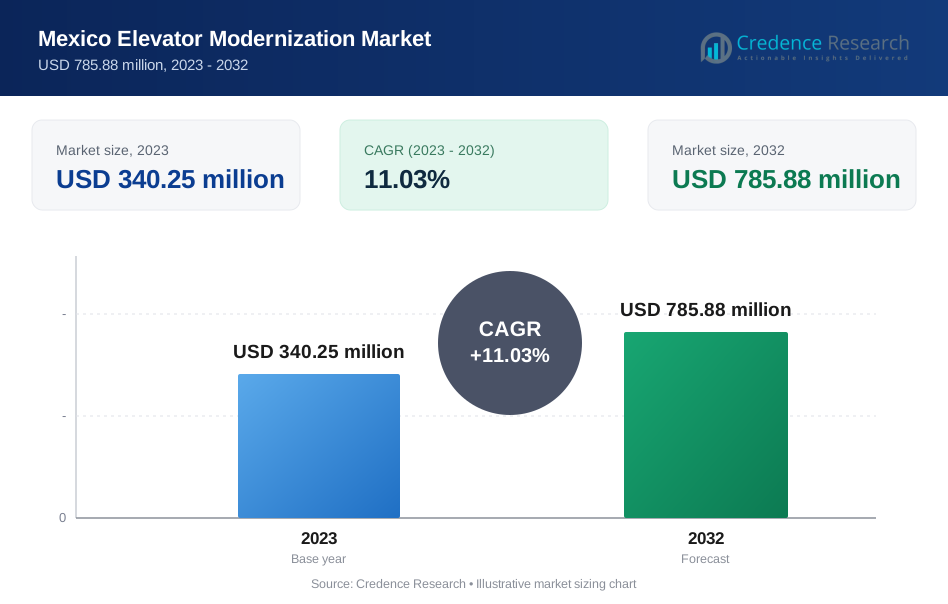
The Mexico elevator modernization market is projected to grow from USD 340.25 million in 2023 to USD 785.88 million by 2032, with a compound annual growth rate (CAGR) of 11.03%.
The Mexico elevator modernization market is driven by the growing demand for enhanced safety, energy efficiency, and operational reliability in aging elevator systems. As urbanization accelerates and infrastructure ages, building owners are increasingly opting for modernization to meet evolving standards and improve performance. Government regulations aimed at improving accessibility and safety also play a significant role in driving market growth. Additionally, the rising emphasis on sustainability and energy-efficient technologies is pushing the adoption of modernized elevators that reduce energy consumption and maintenance costs. Technological advancements, such as the integration of smart elevator systems and IoT capabilities, further fuel the market's expansion, offering features like predictive maintenance and enhanced user experiences. The shift toward eco-friendly solutions, combined with the increasing focus on reducing carbon footprints, is expected to be a key trend, supporting the market’s growth over the coming years.
The Mexico Elevator Modernization market is experiencing steady growth driven by rapid urbanization and infrastructure development in major cities such as Mexico City, Guadalajara, and Monterrey. The increasing number of high-rise buildings and aging elevator systems necessitate upgrades to enhance safety, energy efficiency, and operational performance. Key players, including global companies like Otis Elevator Company, KONE Corporation, Schindler Group, and Thyssenkrupp AG, along with regional firms, are actively addressing the modernization needs of residential, commercial, and industrial buildings. These companies focus on integrating advanced technologies such as IoT-enabled systems, predictive maintenance, and energy-efficient components to meet evolving customer expectations and regulatory requirements. As demand for sustainable and smart elevator solutions rises, these key players are well-positioned to deliver innovative modernization services, catering to the diverse needs of Mexico’s growing urban landscape.
Market Insights
- The Mexico elevator modernization market was valued at USD 340.25 million in 2023 and is projected to reach USD 785.88 million by 2032, growing at a CAGR of 11.03%.
- Increasing demand for safety, energy efficiency, and regulatory compliance drives the modernization of elevator systems.
- Technological advancements such as IoT, AI, and regenerative drives are reshaping the market, enhancing efficiency and user experience.
- Energy-efficient and sustainable elevator solutions are becoming a key trend as building owners focus on reducing operational costs and environmental impact.
- The high initial investment and limited skilled labor remain significant challenges, hindering broader adoption of modernization projects.
- Mexico City holds the largest market share at 45%, with Monterrey and Guadalajara contributing 25% and 15%, respectively.
- The emerging markets in regions like Yucatán and Baja California are expected to grow as urbanization increases and infrastructure projects expand.
Market Drivers
Growing Demand for Safety and Compliance
One of the primary drivers of the Mexico elevator modernization market is the increasing demand for improved safety and compliance with evolving regulations. For instance, the Mexican Association of Elevator Companies (AMEE) reported that many older elevator systems no longer meet current safety standards. Modernization ensures compliance with local and international regulations, reducing the risk of accidents and enhancing the safety of passengers. This is especially important in high-rise buildings and commercial establishments where elevators are heavily used.
Technological Advancements
Technological advancements in elevator systems are propelling the modernization market in Mexico. For instance, Otis Elevator Company's Otis ONE™ IoT platform offers real-time tracking of elevator performance and maintenance needs. The integration of smart technologies, such as IoT sensors, predictive maintenance, and AI-based monitoring, allows for real-time tracking of elevator performance and maintenance needs. These innovations reduce downtime, improve operational efficiency, and enhance the user experience. As technology continues to evolve, modernization offers building owners the opportunity to integrate cutting-edge solutions that improve elevator performance and provide added value to tenants.
Energy Efficiency and Cost Reduction
Energy efficiency is another significant driver for elevator modernization in Mexico. As buildings seek to reduce their operational costs, upgrading elevators with energy-efficient systems helps lower electricity consumption and maintenance expenses. Modernized elevators are equipped with advanced technologies, such as regenerative drives, which not only reduce energy use but also extend the lifespan of the equipment. This trend is gaining momentum as building owners look for sustainable solutions that align with global efforts to reduce energy consumption and minimize environmental impact.
Urbanization and Infrastructure Growth
Mexico's rapid urbanization and expanding infrastructure are key factors driving the elevator modernization market. As more high-rise buildings and commercial complexes are developed in major cities, the need for reliable, efficient, and safe elevator systems increases. Many of these buildings have older elevators that require upgrades to meet the demands of modern urban living. As the construction industry continues to thrive, elevator modernization becomes a crucial component in ensuring that existing infrastructure can meet the needs of growing populations in urban areas.
Market Trends
Increased Focus on Sustainability
A prominent trend in the Mexico elevator modernization market is the growing focus on sustainability. For instance, KONE Corporation's EcoDisc® motor technology reduces energy consumption by up to 70% compared to conventional traction machines. As buildings aim to achieve energy efficiency and reduce their carbon footprints, elevator modernization offers a pathway to meet these environmental goals. Modernized elevators with energy-efficient systems, such as regenerative drives and LED lighting, help reduce energy consumption, contributing to a building's overall sustainability. Additionally, as regulations and global trends push for greener building solutions, the demand for environmentally friendly elevator systems continues to rise, shaping the future of modernization projects in Mexico.
Integration of Smart Technologies
The integration of smart technologies is becoming increasingly prevalent in the Mexico elevator modernization market. Elevators are now being equipped with IoT (Internet of Things) sensors and AI-based systems that allow for predictive maintenance and real-time performance tracking. This trend enhances the reliability and efficiency of elevator systems, as building owners can monitor their status remotely and address potential issues before they lead to costly breakdowns. The rise of digital solutions, including touchless controls and smart interfaces, is also transforming user experiences, offering greater convenience and safety to passengers.
Focus on Enhanced User Experience
Another key trend driving the modernization of elevators in Mexico is the growing emphasis on improving the user experience. Modernization projects increasingly include aesthetic upgrades, such as sleek designs, personalized interior options, and enhanced comfort features. Additionally, the incorporation of intuitive controls and faster, smoother operations are becoming standard expectations for passengers. Building owners are recognizing that offering a more pleasant elevator experience adds value to their properties and increases tenant satisfaction, especially in high-end residential and commercial buildings.
Regulatory Push for Accessibility
The push for enhanced accessibility is another key trend influencing the elevator modernization market in Mexico. With a greater focus on inclusive design, elevators are being upgraded to comply with stricter regulations related to accessibility for people with disabilities. Modernized elevators often feature improved cabin space, wider doors, and advanced signaling systems to accommodate individuals with mobility challenges. As local governments continue to strengthen regulations regarding accessibility, building owners are motivated to modernize their elevators to meet these new standards and avoid penalties.
Market Challenges Analysis
High Initial Investment Costs
One of the significant challenges in the Mexico elevator modernization market is the high initial investment required for upgrading older systems. Modernizing an elevator involves not only the cost of advanced technologies and components but also labor and installation expenses. For many building owners, particularly those managing older properties or low-budget buildings, the upfront costs can be prohibitive. While the long-term benefits, such as reduced energy consumption and maintenance costs, can offset these expenses, the high initial outlay remains a major barrier to widespread adoption. This challenge is particularly evident in smaller buildings or those operating on tight budgets, where modernization projects may be delayed or postponed due to financial constraints.
Limited Availability of Skilled Labor
Another challenge hindering the growth of the Mexico elevator modernization market is the limited availability of skilled labor required for the installation and maintenance of modernized elevator systems. For instance, a survey by the National Institute of Statistics and Geography (INEGI) indicated that as technology evolves, specialized knowledge is necessary to implement the latest smart and energy-efficient elevator solutions effectively. There is a shortage of trained professionals who can handle complex tasks such as integrating IoT systems, performing predictive maintenance, or ensuring compliance with the latest safety regulations. This skill gap can lead to delays in project completion, increased costs, and potential difficulties in maintaining modernized elevator systems. As demand for modernization increases, addressing this labor shortage becomes crucial to ensuring smooth implementation and ongoing success in the market.
Market Opportunities
Expansion of Smart and Sustainable Solutions
The Mexico elevator modernization market presents significant opportunities driven by the growing demand for smart and energy-efficient solutions. As technology continues to evolve, there is a rising interest in integrating IoT and AI-based systems into elevator infrastructure. These advancements not only enhance operational efficiency through predictive maintenance and real-time monitoring but also offer improved user experiences with touchless controls and seamless connectivity. Additionally, sustainability is becoming a priority for many building owners, presenting an opportunity for modernization projects that focus on energy-efficient elevators. Solutions such as regenerative drives, LED lighting, and advanced motors contribute to reducing energy consumption and carbon footprints. These technologies align with global sustainability trends and Mexico’s commitment to reducing environmental impact, offering a promising avenue for modernization providers to cater to the growing need for green building solutions.
Government Regulations and Urban Development
Another promising opportunity lies in the increasing government regulations aimed at improving safety, accessibility, and building standards. As Mexico continues to urbanize, older buildings must undergo modernization to comply with new safety and accessibility regulations, creating a large market for upgrades. This is particularly relevant for high-rise buildings, which require elevators that meet the latest standards in both safety and efficiency. Moreover, as urban development and construction projects expand, the demand for modernized elevators will grow, particularly in commercial and residential complexes. Building owners and developers seeking to upgrade infrastructure in line with evolving regulations will be key customers in the modernization market. By addressing these regulatory requirements, companies in the elevator modernization sector can position themselves as leaders in compliance and innovation, capturing a significant portion of the growing market.
Market Segmentation Analysis:
By Type:
The Mexico elevator modernization market is primarily segmented by the type of elevator system, which includes traction systems, hydraulic systems, and machine room-less (MRL) elevators. Traction systems dominate the market due to their efficiency, smooth operation, and ability to handle higher-rise buildings. These systems are increasingly being modernized to incorporate energy-efficient technologies such as regenerative drives, which are reducing energy consumption while enhancing overall performance. Hydraulic elevators, although less common in high-rise buildings, are still prevalent in low to mid-rise structures. Modernization of hydraulic systems often focuses on improving reliability and energy efficiency, as well as upgrading safety features. Machine room-less (MRL) elevators are gaining popularity in modern buildings due to their space-saving design and lower operational costs. With the increasing demand for space optimization, MRL elevators present significant opportunities for modernization in new and existing structures.
By Application:
The application segment of the Mexico elevator modernization market is categorized into residential, commercial, industrial, and institutional buildings. Residential buildings, particularly high-rise apartments and luxury developments, are witnessing a surge in modernization projects aimed at improving safety, comfort, and energy efficiency. In commercial buildings, the demand for modernized elevators is driven by the need for efficient and reliable transportation systems that cater to higher foot traffic and meet regulatory standards. Industrial buildings require robust elevator systems that can handle heavy loads and frequent use, necessitating upgrades to ensure operational reliability. Institutional buildings, such as hospitals and schools, require elevators that comply with strict accessibility and safety regulations, creating a significant demand for modernization in this sector. As urbanization continues, all segments will see increased demand for elevator modernization, with each sector requiring tailored solutions to meet specific operational needs.
Segments:
Based on Type:
- Traction System
- Hydraulic System
- Machine Room-Less (MRL) Elevators
Based on Application:
- Residential Buildings
- Commercial Buildings
- Industrial Buildings
- Institutional Buildings
Based on Component:
- Control System
- Door System
- Cab Enclosure
- Power Units
- Others
Based on the Geography:
- Mexico City
- Monterrey
- Guadalajara
Regional Analysis
Mexico City
Mexico City holds the largest market share due to its status as the country’s capital and economic hub. As a dense urban area with numerous commercial and residential high-rise buildings, the demand for elevator modernization in Mexico City is driven by the aging infrastructure and the need to comply with updated safety and energy efficiency standards. The market share in Mexico City accounts for approximately 45% of the total market, with the ongoing urban development and focus on sustainable solutions further fueling growth in this region.
Monterrey
Monterrey, the industrial and business capital of Northern Mexico, holds a significant share in the elevator modernization market, contributing around 25% of the total market. This region’s rapid industrialization and growing commercial real estate sector have created an increased need for efficient and modern elevator systems. Monterrey's construction boom, particularly in the industrial and office building sectors, further drives the demand for elevator upgrades. Additionally, many buildings in Monterrey are being modernized to meet stricter energy efficiency and safety regulations. The region’s proximity to the U.S. market and its industrial base also influence the adoption of advanced elevator technologies that focus on sustainability and energy savings, contributing to Monterrey’s prominent share in the market.
Guadalajara
Guadalajara, located in the western part of the country, represents approximately 15% of Mexico’s elevator modernization market share. As the capital of Jalisco, Guadalajara is witnessing a significant rise in residential and commercial building projects, especially in the hospitality and retail sectors. With an increase in high-rise developments, the demand for modernized elevator systems is growing rapidly. Many buildings in Guadalajara are undergoing modernization to improve their efficiency and meet the modern-day expectations of tenants, focusing on sustainability and operational costs. Guadalajara’s diverse economic landscape and the increasing number of residential developments are creating promising opportunities for modernization, particularly in residential buildings and commercial spaces.
Other Regions
Other regions, such as the Yucatán Peninsula, Baja California, and Puebla, represent smaller portions of the market but offer considerable potential for growth. These regions are experiencing urbanization and an influx of commercial and residential projects, driving the need for elevator modernization solutions. Although their current market share is relatively small, around 15%, these areas are expected to witness growth in the coming years. As the demand for high-rise buildings increases and the focus on energy efficiency and safety intensifies, regions outside the major metropolitan areas will play a crucial role in the market’s expansion. Emerging projects in these areas, particularly in tourism and commercial infrastructure, present ample opportunities for companies in the elevator modernization sector.
Key Player Analysis
- Otis Elevator Company
- Thyssenkrupp AG
- Schindler Group
- KONE Corporation
- Mitsubishi Electric Corporation
- Fujitec Co., Ltd.
- Savaria Corporation
- Garaventa Lift
- TKE Corporation
- National Elevator Cab & Door
Competitive Analysis
The Mexico elevator modernization market is highly competitive, with several key players focusing on offering innovative solutions to meet the growing demand for safety, energy efficiency, and technological advancements. Leading players in the market include Otis Elevator Company, Schindler, Kone Corporation, Thyssenkrupp, Mitsubishi Electric, and Fujitec. Companies in the market differentiate themselves by focusing on integrating smart technologies such as IoT sensors, AI-based monitoring, and regenerative drives, which enhance operational performance, reduce energy consumption, and improve the overall user experience. For instance, Thyssenkrupp focuses on sustainability with its Carbon Direct Avoidance (CDA) technology, aiming for CO2-free steel production by 2045. As competition intensifies, firms are also focusing on providing tailored solutions for different market segments, including residential, commercial, industrial, and institutional buildings. Energy-efficient and sustainable modernization solutions are a key differentiator, with a growing emphasis on reducing operational costs and aligning with green building standards. The emphasis on technological innovation and meeting regulatory compliance requirements has led to significant advancements in elevator systems, with modern solutions offering predictive maintenance, improved safety features, and reduced downtime. Companies are increasingly offering integrated packages that combine various modernization services, ensuring a holistic approach to building infrastructure upgrades. With the market growing and evolving, competition is expected to remain strong, pushing companies to continue innovating and providing cost-effective and efficient solutions.
Recent Developments
- In December 2024, Fujitec Indonesia successfully delivered 19 modernized elevators to the iconic Wisma 46office building in Jakarta. This modernization includes the introduction of the EZSHUTTLE destination dispatch system, which automates elevator assignments based on passenger destinations, improving operational efficiency.
- In October 2024, Otis Elevator announced its involvement in the modernization of elevators at the Eiffel Towerin Paris, enhancing the duolift™ elevators that serve millions of visitors annually. Additionally, they are set to begin modernization work at the Burj Khalifa in Dubai, which will include a 10-year maintenance and upgrading contract for 34 elevators.
- In September 2024, KONE Corporation unveiled its ambitious strategy called "Rise" for 2025-2030, which emphasizes driving modernization to unlock growth opportunities and enhance customer experiences. This strategy includes a focus on digital transformation and sustainability initiatives.
- In September 2024, Thyssenkrupp AG (TK Elevator) was awarded a contract to modernize escalators for the Cologne subway system in Germany. The project includes installing 23 victoria-type escalators equipped with MAX Smart Maintenance technology, which aims to reduce maintenance efforts and enhance operational efficiency.
Market Concentration & Characteristics
The Mexico elevator modernization market exhibits moderate market concentration, with a mix of global players and local firms offering modernization services. While global leaders dominate the higher-end segments, local companies contribute significantly to the market, focusing on cost-effective solutions for smaller buildings and regional projects. The presence of both large multinational companies and smaller regional players creates a competitive landscape that encourages innovation and differentiation in service offerings. This mix allows for a broad range of solutions to cater to the varying needs of residential, commercial, and industrial buildings across Mexico. Market characteristics include a growing demand for energy-efficient and technologically advanced elevator systems. Modernization services are increasingly tailored to meet specific customer needs, such as the integration of IoT, AI-based monitoring, and regenerative drives, which enhance performance and sustainability. Additionally, building owners are prioritizing safety upgrades and compliance with evolving regulations, particularly in urban areas where older infrastructure requires extensive retrofitting. As urbanization continues and the construction sector thrives, the market is expected to expand, with a shift towards smart, sustainable, and cost-effective modernization solutions. Furthermore, the need for skilled labor and the associated investment in training and development remain a key characteristic of the market, as advanced technologies require specialized knowledge for proper implementation and maintenance.
Report Coverage
The research report offers an in-depth analysis based on Type, Application, Component and Geography. It details leading market players, providing an overview of their business, product offerings, investments, revenue streams, and key applications. Additionally, the report includes insights into the competitive environment, SWOT analysis, current market trends, as well as the primary drivers and constraints. Furthermore, it discusses various factors that have driven market expansion in recent years. The report also explores market dynamics, regulatory scenarios, and technological advancements that are shaping the industry. It assesses the impact of external factors and global economic changes on market growth. Lastly, it provides strategic recommendations for new entrants and established companies to navigate the complexities of the market.
Future Outlook
- The Mexico elevator modernization market is expected to grow steadily, driven by rising demand for energy-efficient and sustainable solutions.
- Technological advancements such as AI, IoT, and regenerative drives will continue to play a key role in enhancing elevator system performance.
- Increased focus on smart buildings will drive the adoption of modernized elevator systems with touchless controls and real-time monitoring capabilities.
- The demand for modernization will rise as building owners seek to comply with stricter safety, accessibility, and environmental regulations.
- Urbanization and the growing construction sector will fuel the need for elevator upgrades in both residential and commercial buildings.
- Energy-efficient elevators will become a standard offering as building owners prioritize cost reduction and sustainability.
- Older buildings in major urban centers like Mexico City will see a surge in modernization projects to meet contemporary standards.
- The rising preference for machine room-less (MRL) elevators will contribute to the market’s growth due to their space-saving design and energy efficiency.
- Increased investment in skilled labor and training will be necessary to support the growing demand for advanced elevator systems.
- The market will become more competitive, with companies focusing on offering customized, cost-effective solutions for different building types and customer needs.
Request a Free Sample
Fill in your details and we'll send you a free sample report.
- Sample data tables & charts
- Research methodology
Need a Custom Version of This Report?
Tailor the scope, geography, or segments to your exact requirements.
- Custom geography or segment scope
- Direct access to our analyst team
Frequently Asked Questions
What is the current size of the Mexico Elevator Modernization Market?
What factors are driving the growth of the Mexico Elevator Modernization Market?
What are the key segments within the Mexico Elevator Modernization Market?
What are some challenges faced by the Mexico Elevator Modernization Market?
Who are the major players in the Mexico Elevator Modernization Market?
Table of Content
Chapter 1 Market Segmentation
- 1.1 Segmentation Framework
- 1.1.1 Product and Service Classification
- 1.1.2 Application and End-Use Classification
- 1.1.3 Technology and Solution Classification
- 1.1.4 Customer and Distribution Channel Classification
- 1.1.5 Geographic Segmentation
- 1.1.6 Market Segment Definitions and Boundaries
Chapter 2 Introduction
- 2.1 Report Objectives and Scope
- 2.2 Product Definition and Industry Terminology
- 2.3 Market Inclusions and Exclusions
- 2.4 Research Process
- 2.4.1 Primary Research and Expert Interviews
- 2.4.2 Secondary Research and Source Review
- 2.4.3 Top-Down and Bottom-Up Estimation
- 2.4.4 Data Triangulation and Verification
- 2.5 Market Size Measurement Basis
- 2.5.1 2023: USD 340.25 million → 2032: USD 785.88 million
- 2.6 Historical and Forecast Reference Periods
- 2.6.1 Base Year: 2023
- 2.6.2 Forecast Period: 2023-2032
- 2.7 Research Assumptions and Limitations
Chapter 3 Executive Summary
- 3.1 Market Snapshot and Key Findings
- 3.2 Base-Year Market Size, 2023
- 3.3 Forecast Market Size, 2032
- 3.4 Revenue and Volume Growth Outlook
- 3.5 Key Demand and Supply Indicators
- 3.6 Leading Market Segments
- 3.7 Fastest-Growing Market Opportunities
- 3.8 Regional Performance Highlights
- 3.9 Technology and Industry Transformation
- 3.10 Competitive Landscape Summary
- 3.11 Analyst View and Strategic Implications
Chapter 4 Mexico Elevator Modernization Market Trends and Developments
- 4.1 Historical Industry Development
- 4.2 Recent Market Trends and Developments
- 4.3 Demand and Customer Behavior Trends
- 4.4 Technology and Product Innovation
- 4.5 Artificial Intelligence, Automation and Digitalization
- 4.6 Local Manufacturing and Supply Chain Realignment
- 4.7 Industry Partnerships, Mergers and Acquisitions
- 4.8 Sustainability and Circular Economy Developments
- 4.9 Government and Private Sector Investment Trends
- 4.10 Emerging Business Models and Commercialization
- 4.11 Industry Developments and Announcements
Chapter 5 Mexico Elevator Modernization Market Production, Supply and Demand Analysis
- 5.1 Demand Trend and Consumption Analysis
- 5.2 Demand Forecast, 2023-2032
- 5.3 Production and Output Trend
- 5.4 Production and Output Forecast, 2023-2032
- 5.5 Installed Capacity and Capacity Utilization
- 5.6 Company-Wise Production Plants and Statistics
- 5.6.1 Installed Production Capacity
- 5.6.2 Actual Production
- 5.6.3 Planned Capacity and Expansion Targets
- 5.7 Supply Chain Structure and Procurement Trends
- 5.8 Supply-Demand Gap and Bottlenecks
- 5.9 Import Dependence and Sourcing Structure
- 5.10 Contract Manufacturing and Outsourcing
- 5.11 Regional Supply and Demand Concentration
Chapter 6 Mexico Elevator Modernization Market Pricing Analysis
- 6.1 Pricing Structure and Measurement
- 6.2 Historical Pricing Trends
- 6.3 Pricing Outlook, 2023-2032
- 6.4 Average Selling Price and Unit Economics
- 6.5 Pricing by Product and Market Segment
- 6.6 Geographic Pricing Differences
- 6.7 Key Input, Energy, Labor and Logistics Costs
- 6.8 Contract Pricing and Purchasing Models
- 6.9 Pricing Sensitivity and Competitive Positioning
- 6.10 Price, Margin and Profitability Implications
Chapter 7 Mexico Elevator Modernization Market Dynamics
- 7.1 Market Growth Drivers
- 7.1.1 Demand-Side Drivers
- 7.1.2 Technology and Innovation Drivers
- 7.1.3 Infrastructure and Investment Drivers
- 7.1.4 Regulatory and Policy Drivers
- 7.2 Market Restraints
- 7.2.1 Cost and Affordability Constraints
- 7.2.2 Technology and Adoption Barriers
- 7.2.3 Supply Chain and Operational Constraints
- 7.3 Market Challenges
- 7.3.1 Competitive Pressure and Margin Erosion
- 7.3.2 Skills, Infrastructure and Implementation Gaps
- 7.4 Emerging Market Opportunities
- 7.5 Market Dynamics Impact and Time-Horizon Assessment
Chapter 8 Mexico Elevator Modernization Value Chain Analysis
- 8.1 Industry Value Chain Overview
- 8.2 Upstream Suppliers and Critical Inputs
- 8.3 Technology and Component Providers
- 8.4 Manufacturing or Service Delivery
- 8.5 Distribution, Channel Partners and Integrators
- 8.6 Downstream Applications and End Users
- 8.7 Value Addition and Profit Pools
- 8.8 Vertical Integration and Outsourcing
- 8.9 Supplier Concentration and Risk
- 8.10 Supply Chain Localization and Resilience
Chapter 9 Mexico Elevator Modernization Market Regulations and Policies
- 9.1 Relevant Laws, Standards and Compliance Frameworks
- 9.2 Product, Service, Safety and Quality Requirements
- 9.3 Government Policies, Incentives and Subsidies
- 9.4 Imports, Exports and Trade Barriers
- 9.5 Public Procurement and Local Content Requirements
- 9.6 Environmental and Sustainability Compliance
- 9.7 Upcoming Policy Changes and Market Implications
Chapter 10 Mexico Elevator Modernization Market Hotspots and Opportunities
- 10.1 Market Opportunity Mapping and Growth Hotspots
- 10.2 High-Growth Applications and Customer Groups
- 10.3 Underserved Markets and White-Space Opportunities
- 10.4 Emerging Technology and Product Opportunities
- 10.5 New Capacity and Investment Hotspots
- 10.6 Market Entry and Expansion Opportunities
- 10.7 Distribution and Partnership Opportunities
- 10.8 Near-Term and Long-Term Commercial Potential
- 10.9 Opportunity Attractiveness and Execution Risks
Chapter 11 Mexico Elevator Modernization Market Outlook, 2023-2032
- 11.1 Market Size and Analysis
- 11.1.1 Revenue (Market Measurement: 2023: USD 340.25 million → 2032: USD 785.88 million)
- 11.1.2 Market Volume and Quantity Sold
- 11.1.3 Historical Market Size
- 11.1.4 Base-Year Market Size, 2023
- 11.2 Market Forecast, 2023-2032
- 11.2.1 Revenue Forecast to 2032
- 11.2.2 Volume Forecast to 2032
- 11.2.3 CAGR and Year-on-Year Growth
- 11.2.4 Incremental Revenue Opportunity
- 11.3 Forecast Assumptions and Scenario Analysis
- 11.3.1 Base-Case Forecast
- 11.3.2 Optimistic and Conservative Scenarios
- 11.3.3 Technology, Pricing and Policy Sensitivities
- 11.4 Market Attractiveness and Growth Outlook
Chapter 12 Mexico Elevator Modernization Market Segmentation and Outlook
- 12.1 Segmentation Summary and Market Shares, 2023
- 12.2 Largest and Fastest-Growing Segments
- 12.3 Segment Growth Comparison
- 12.4 Segment Attractiveness and Priority Matrix
Chapter 13 Mexico Elevator Modernization Geographic Market Outlook, 2023-2032
- 13.1 Domestic Market Distribution and Demand Clusters
- 13.2 State- or Province-Wise Market Size and Forecast, 2023-2032
- 13.3 City and Metropolitan Market Outlook
- 13.4 Industrial, Manufacturing and Commercial Clusters
- 13.5 Geographic Concentration of Key End Users
- 13.6 Local Pricing and Purchasing Differences
- 13.7 Domestic Production Facilities and Capacity Map
- 13.8 Local Infrastructure and Project Pipeline
- 13.9 State-Level Policy and Incentive Differences
- 13.10 Subnational Investment Hotspots and Opportunities
- 13.11 Distribution and Logistics Networks
- 13.12 Domestic Competitive Footprint
Chapter 14 Mexico Elevator Modernization Technology, Innovation and Sustainability Outlook
- 14.1 Technology Landscape and Maturity
- 14.2 Product, Process and Service Innovation
- 14.3 AI, Automation and Digital Tools in the Industry
- 14.4 Technology Adoption and Performance Benchmarking
- 14.5 Innovation Pipeline and R&D Investment
- 14.6 Patent and Intellectual Property Trends
- 14.7 Energy Efficiency and Resource Management
- 14.8 Sustainability, Recycling and Circularity
- 14.9 Technology Roadmap, 2023-2032
- 14.10 Risks of Obsolescence and Technology Substitution
Chapter 15 Mexico Elevator Modernization Market Key Strategic Imperatives
- 15.1 Growth and Market Entry Priorities
- 15.2 High-Return Products and Segments
- 15.3 Pricing, Profitability and Cost Optimization
- 15.4 Technology Investment and Product Differentiation
- 15.5 Supply Chain Localization and Resilience
- 15.6 Distribution and Customer Acquisition
- 15.7 Partnership, Acquisition and Capacity Strategy
- 15.8 Regional Expansion Priorities
- 15.9 Short-, Medium- and Long-Term Actions
Chapter 16 Competition Outlook
- 16.1 Industry Competition Characteristics
- 16.2 Market Structure and Concentration
- 16.3 Market Share and Competitive Positioning, 2023
- 16.4 Company-Wise Revenue and Product Benchmarking
- 16.5 Production and Service Capacity Benchmarking
- 16.6 Technology, Pricing and Differentiation
- 16.7 Regional Footprint and Distribution Strength
- 16.8 Mergers, Acquisitions and Strategic Alliances
- 16.9 New Entrants and Competitive Threats
- 16.10 Porter's Five Forces and Industry Attractiveness
- 16.11 Competitive Outlook, 2023-2032
Chapter 17 Company Profiles
- 17.1 Company Coverage and Selection Criteria
- 17.2 Leading Market Participants – Standard Profile Structure
- 17.2.1 Business Description
- 17.2.2 Company Ownership and Geographic Presence
- 17.2.3 Product and Service Portfolio
- 17.2.4 Manufacturing and Operating Footprint
- 17.2.5 Production Capacity and Expansion Plans
- 17.2.6 Financial Performance and Investment
- 17.2.7 Market Share and Competitive Position
- 17.2.8 Technology and Innovation Capabilities
- 17.2.9 Strategic Alliances or Partnerships
- 17.2.10 Recent Developments
- 17.2.11 Growth Strategy and Outlook
- 17.3 Other Relevant Market Participants
Note: Every listed company is profiled on the structure shown under the first company. The company list is preliminary and may change based on research findings, market developments, data availability and client requirements.
Chapter 18 Disclaimer
- 18.1 Research and Forecast Disclaimer
- 18.2 Data Source and Estimation Limitations
Note: The depth of individual sections depends on data availability for this market. Volume, capacity, trade and other unit-based metrics are included where applicable.
