
| REPORT ATTRIBUTE | DETAILS |
|---|---|
| Historical Period | 2019-2022 |
| Base Year | 2023 |
| Forecast Period | 2024-2032 |
| Netherland Space Planning Services Market Size 2023 | USD 283.13 Million |
| Netherland Space Planning Services Market, CAGR | 5.61% |
| Netherland Space Planning Services Market Size 2032 | USD 462.88 Million |
Market Overview
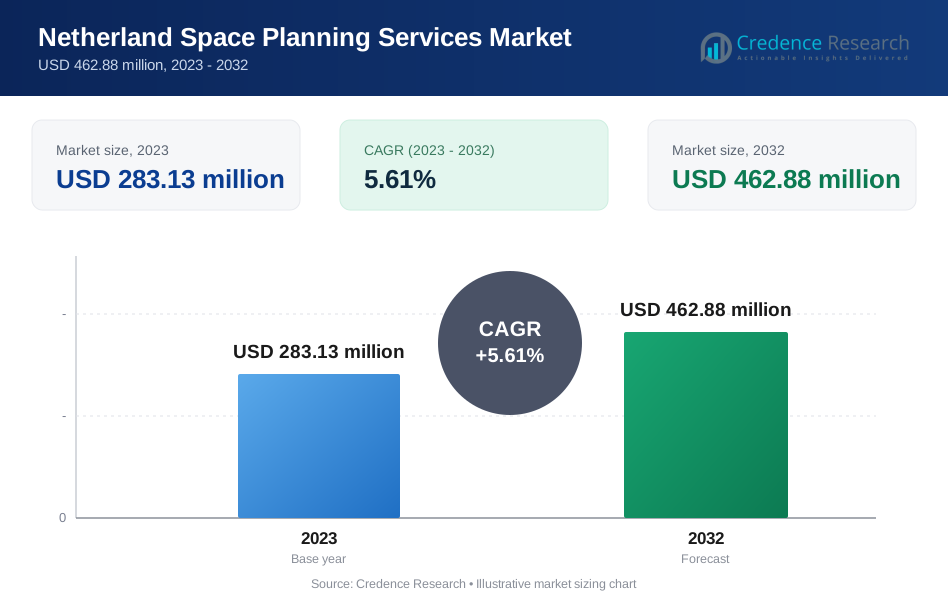
The Netherland Space Planning Services Market is projected to grow from USD 283.13 million in 2023 to an estimated USD 462.88 million by 2032, registering a compound annual growth rate (CAGR) of 5.61% from 2024 to 2032. The steady expansion of this market is driven by increasing investments in modernizing office spaces, urban infrastructure, and residential interiors.
Market growth is propelled by rising urbanization, evolving workplace dynamics, and the growing need for sustainable and efficient space utilization. Trends such as the adoption of smart technologies, modular furniture, and flexible layouts are shaping the space planning services landscape. Additionally, the increasing focus on wellness-centric design and environmentally friendly solutions has amplified the role of professional planners in delivering customized and functional layouts.
Geographically, the market benefits from the Netherlands’ highly urbanized environment and its commitment to sustainable development. Major cities like Amsterdam, Rotterdam, and Utrecht are driving demand for innovative space planning solutions in commercial and residential sectors. Key players contributing to the market include CBRE Group, Spacewell, and M Moser Associates, which leverage technology and industry expertise to cater to a wide range of client needs. These companies’ efforts to integrate smart solutions and sustainability principles are expected to further boost market growth.
Market Insights
- The market is projected to grow from USD 283.13 million in 2023 to USD 462.88 million by 2032, registering a CAGR of 5.61%.
- Rising urban density in cities like Amsterdam and Rotterdam is driving demand for efficient space utilization and innovative planning solutions.
- Increasing emphasis on green building designs and eco-friendly materials is shaping market trends, aligning with the Netherlands' sustainability goals.
- Integration of BIM, VR, and AR technologies is revolutionizing space planning by enabling precise visualizations and real-time decision-making.
- High real estate costs and limited availability of urban land pose challenges to cost-effective space planning and project execution.
- Major cities such as Amsterdam (40% market share) and Rotterdam (25% market share) lead the market, with significant contributions from Utrecht and The Hague.
- Key sectors like commercial offices, retail, and healthcare continue to drive demand, supported by evolving workplace dynamics and wellness-centric designs.
Market Drivers
Rising Urbanization and Space Constraints
The Netherlands has one of the highest urbanization rates in Europe, with approximately 93.18% of its population residing in densely packed urban areas like Amsterdam and Rotterdam. This trend has resulted in growing space constraints, necessitating optimized utilization of available real estate. For instance, Amsterdam has implemented various space-planning strategies focused on maximizing land use, ensuring that new developments meet the needs of a growing population while enhancing functionality and aesthetic appeal. As cities expand their infrastructure, developers increasingly seek professional space planners to design layouts that accommodate these challenges. The limited supply of buildable land further drives this demand, pushing stakeholders to make the most of existing spaces.
Growing Adoption of Sustainable and Eco-friendly Design
Sustainability is a key priority in the Netherlands, aligning with the country’s commitment to reducing carbon emissions and promoting green initiatives. Recent projects increasingly incorporate energy-efficient materials and technologies, with many new constructions mandated to include green building certifications. A notable example is the Venlo Town Hall, which exemplifies cradle-to-cradle design principles by achieving energy neutrality through solar energy while improving air quality. Space planning service providers are leveraging this trend by offering solutions that integrate renewable energy systems and sustainable materials, driving demand as businesses prioritize eco-conscious design to meet regulatory compliance and consumer preferences.
Shifting Workplace Dynamics and the Hybrid Work Model
The workplace landscape in the Netherlands has undergone significant transformation due to the rise of hybrid work models. Companies are rethinking traditional office layouts to accommodate flexible working environments that support both remote and in-office work. For instance, co-working spaces have gained traction as organizations seek to foster collaboration and creativity in a post-pandemic world. This shift reflects a broader movement where businesses invest in multifunctional spaces designed by professional planners to enhance employee well-being and productivity while adapting to evolving work preferences. The demand for dynamic office spaces that incorporate flexible layouts, ergonomic furniture, and technology integration continues to rise as companies strive to align with employees’ expectations.
Advancements in Technology and Smart Space Solutions
Technology is revolutionizing the space planning services market by enabling smarter and more efficient design processes. The use of tools like Building Information Modeling (BIM), augmented reality (AR), and virtual reality (VR) allows space planners to create detailed simulations and virtual walkthroughs of proposed layouts. These technologies improve client engagement and decision-making while minimizing errors during execution. Additionally, the integration of Internet of Things (IoT) devices has become increasingly popular, with smart lighting, automated climate control, and occupancy sensors being incorporated into designs. This adoption aligns with the Netherlands’ position as a leader in innovation, showcasing how technology enhances functionality and sustainability in space planning services, ultimately driving market growth.
Market Trends
Emphasis on Sustainability and Circular Design
The Netherlands is increasingly recognized for its commitment to sustainability and innovative design, particularly in the realm of space planning. For instance, The Green House in Utrecht exemplifies circular design principles by utilizing recycled materials throughout its construction. This building serves as a catering platform while integrating urban farming and meeting spaces. Its design emphasizes energy neutrality through solar panels and rainwater collection systems, showcasing how temporary structures can be both functional and environmentally friendly. This project reflects the growing trend among architects and designers in the Netherlands to prioritize sustainability in their work, aligning with national climate goals. As more clients seek green certifications and carbon-neutral solutions, sustainable space planning is becoming a critical differentiator in the market, driving demand for eco-friendly practices that enhance both aesthetics and functionality.
Integration of Smart Technologies in Space Planning
The integration of smart technologies is transforming space planning practices across the Netherlands. A notable example is the use of Building Information Modeling (BIM) combined with augmented reality (AR) and virtual reality (VR) tools. These technologies enable architects to create detailed visualizations of spaces before they are built, enhancing collaboration and decision-making among stakeholders. Additionally, the incorporation of Internet of Things (IoT) devices optimizes building management by allowing real-time monitoring of energy usage and occupancy, improving overall efficiency and occupant comfort. This trend aligns with the Netherlands’ strong focus on innovation, as space planners leverage advanced technologies to create environments that not only meet modern needs but also contribute to sustainability efforts. As these tools become more prevalent, they are reshaping the landscape of space planning services, making them more responsive to client demands.
Rise of Flexible and Hybrid Spaces
The shift towards flexible and hybrid spaces is a defining trend in the Netherlands' space planning market. Many companies are redesigning their office layouts to accommodate both remote and in-person work, leading to a demand for multifunctional environments that promote collaboration while providing individual workspaces. For example, office designs now often include modular furniture that can be easily reconfigured to meet changing needs. This trend extends beyond commercial spaces into residential design, where clients seek adaptable layouts that can accommodate home offices alongside leisure areas within constrained floor plans. Co-working spaces have also gained prominence as organizations look for cost-effective solutions that foster creativity and community engagement. This evolution reflects a broader cultural shift towards valuing flexibility in how we work and live, prompting space planners to embrace innovative designs that cater to diverse user requirements.
Urbanization and Compact Living Solutions
As urbanization accelerates in the Netherlands, space planning services are increasingly focused on compact living solutions. Major cities like Amsterdam, Rotterdam, and Utrecht face growing population density, resulting in high real estate costs and limited land availability. To address these challenges, space planners are creating innovative solutions that maximize utility without compromising aesthetics or functionality. Micro-apartments, typically ranging from 29 to 32 square meters, have gained popularity due to their efficient use of space while offering modern amenities. Developers are also incorporating vertical gardens and smart storage systems into residential designs to enhance livability within compact footprints. In the commercial sector, retail spaces are designed with space-saving layouts that optimize functionality while maintaining an inviting atmosphere. This trend reflects a broader necessity for compact design as urban growth persists, ensuring that living spaces remain practical and appealing amidst increasing density challenges.
Market Challenges
Rising Urban Density and Limited Space Availability
One of the most significant challenges facing the Netherlands Space Planning Services Market is the increasing urban density and limited availability of space in key cities such as Amsterdam, Rotterdam, and Utrecht. The growing population and high demand for residential, commercial, and industrial spaces have driven up real estate prices, making it difficult to execute cost-effective and innovative space planning projects. Urban planners and service providers face constraints in optimizing layouts within existing infrastructures while adhering to zoning regulations and sustainability goals. For instance, urban densification in the Netherlands has reached a critical point, particularly in major cities like Amsterdam, Rotterdam, and Utrecht. Recent studies indicate that the net production of new dwellings within these urban areas has significantly declined, with some cities experiencing a loss of available housing units. This trend is exacerbated by complex ownership structures and legal frameworks that hinder effective urban regeneration. As a result, urban planners are increasingly pressured to optimize existing infrastructures while complying with stringent zoning laws and sustainability objectives. The challenges of creating multifunctional spaces within limited square footage often lead to heightened project complexity and increased costs, necessitating innovative solutions and advanced technologies to navigate these constraints.
Balancing Sustainability Goals with Economic Constraints
While sustainability is a key trend in the Netherlands, integrating eco-friendly practices into space planning projects poses financial and logistical challenges. Many clients are hesitant to invest in sustainable solutions due to their perceived higher upfront costs, despite long-term benefits such as energy savings and reduced environmental impact. Space planning professionals must navigate the delicate balance between meeting ambitious environmental targets and managing client budgets.For instance, the integration of sustainable practices into space planning projects often encounters resistance due to perceived high upfront costs. A recent report highlighted that public green spaces in the Netherlands' largest municipalities have decreased significantly, with many neighborhoods now classified as "paved" due to insufficient greenery. This decline emphasizes the need for space planning professionals to balance ambitious sustainability targets with economic realities. The sourcing of sustainable materials and incorporation of green technologies can complicate project execution and inflate budgets. Moreover, evolving environmental regulations demand continuous adaptation from market players, further complicating efforts to achieve a harmonious balance between economic viability and sustainability in urban development. These examples illustrate the pressing challenges faced by the Netherlands Space Planning Services Market, underscoring the necessity for strategic innovation and collaborative approaches to foster sustainable growth amidst rising urban density and economic constraints.
Market Opportunities
Expansion of Sustainable Urban Development InitiativesThe Netherlands’ commitment to sustainability presents a significant opportunity for the space planning services market. As the country continues to prioritize green urban development and carbon neutrality, there is a growing demand for innovative and sustainable space planning solutions. Urban redevelopment projects, such as the transformation of older buildings into energy-efficient spaces, offer opportunities for service providers to integrate eco-friendly materials, renewable energy systems, and smart technologies. For instance, the Dutch Environmental Assessment Agency's research indicates that urban construction, when combined with green infrastructure development, can enhance green spaces by up to 5%. This innovative approach not only preserves existing greenery but also improves ecosystem services such as stormwater retention and recreational areas, making urban environments more livable and resilient to climate change. The integration of sustainable practices into urban planning is further evidenced by Amsterdam's ambitious Green Agenda, which allocated €20 million for various green initiatives between 2015 and 2018. Such initiatives present substantial opportunities for space planning services to design eco-friendly urban developments that align with governmental sustainability goals.
Rising Demand for Hybrid and Flexible Spaces
The evolving workplace dynamics and the shift toward hybrid work models present another key opportunity for the Netherlands space planning market. Businesses are increasingly seeking flexible office layouts that support collaboration, creativity, and employee well-being. This shift creates a demand for modular and multifunctional designs, offering space planning providers the chance to cater to changing corporate needs.For example, a recent report highlighted that hybrid working arrangements have prompted a shift towards flexible office layouts in the Netherlands, with businesses increasingly seeking modular designs that support collaboration and employee well-being. Research shows that the ratio of shared working spaces is expected to rise significantly, moving from a traditional 70-30 split between individual and shared spaces to a more balanced 40-60 ratio in favor of collaborative environments. This trend extends beyond commercial spaces; residential designs are also evolving to accommodate home offices and multifunctional living areas, thereby creating diverse opportunities for space planning professionals to cater to a broad range of client needs.
Market Segmentation Analysis
By Type
The Netherlands Space Planning Services Market is segmented by type, encompassing Conceptual Space Planning, which focuses on the initial phase of design to determine layouts and flow, crucial for efficient use of compact urban spaces. Detailed Space Planning refines these concepts into technical layouts, detailing furniture placement and traffic flow for precise execution in residential and commercial projects. Furniture and Equipment Planning ensures spaces are functional, ergonomic, and aesthetically pleasing, with strong demand in office and retail sectors. Finally, Space Management and Optimization involves continuous analysis and reorganization to maximize efficiency, addressing the needs of flexible and hybrid work models prevalent in modern organizations. Together, these segments cater to the growing demand for innovative, sustainable, and functional space utilization solutions.
By Vertical
Space planning services play a crucial role across various verticals by addressing specific needs and optimizing functionality. In the retail and hospitality sectors, these services enhance customer experiences by creating efficient and welcoming layouts for stores, hotel rooms, and dining spaces. The commercial office segment is driven by the shift to hybrid work models, with companies demanding flexible, collaborative, and employee-friendly designs. In healthcare, meticulous planning ensures that hospitals, patient rooms, and specialized facilities are safe, efficient, and compliant with regulatory standards. Educational institutions prioritize innovative designs for classrooms, libraries, and multi-functional spaces to foster collaborative learning. Meanwhile, government and non-profit organizations rely on space planning to develop efficient and cost-effective designs for administrative offices, public spaces, and community centers.
Segments
Based on Type
- Conceptual Space Planning
- Detailed Space Planning
- Furniture and Equipment Planning
- Space Management and Optimization
Based on Vertical
- Retail and Hospitality
- Commercial Office
- Healthcare
- Education
- Government and Non-Profit
Based on Deployment Method
- On-Premise
- Cloud-Based
- Hybrid
Based on Collaboration & Communication Technology
- Virtual Reality (VR)
- Augmented Reality (AR)
- 3D Modelling
Based on Region
- Amsterdam
- Rotterdam
- Utrecht
Regional Analysis
Amsterdam (40%)
Amsterdam, as the capital city of the Netherlands and one of the most economically significant cities in Europe, holds the largest share of the space planning services market, accounting for approximately 40%. The city is a hub for multinational corporations, tech startups, and a thriving tourism sector, which drives demand for both commercial and residential space planning. The city’s continuous urban expansion and focus on sustainable development contribute to a strong need for efficient and eco-friendly space planning solutions. Moreover, Amsterdam’s high real estate costs, coupled with increasing urban density, further emphasize the necessity for innovative space utilization strategies.
Rotterdam (25%)
Rotterdam, known for its modern architecture and innovative design principles, holds a substantial 25% of the Netherlands’ space planning services market. As a key port city and a major center for logistics, trade, and industry, Rotterdam’s real estate market has seen significant growth, particularly in commercial and mixed-use spaces. The city is also a leading example of sustainable urban planning, with many projects incorporating green building certifications and eco-friendly design elements. This focus on sustainability has propelled demand for space planning services that optimize functionality while adhering to environmental goals, thus boosting the market share in the region.
Key players
- BVN
- Studios Architecture
- Perkins and Will
- CallisonRTKL
- RTKL
- OP
- NBBJ
- IA Interior Architects
- Mainrock
- Blue Line Design
- Space4Good
- KMSENSE Aerospace Solutions B.V.
- Space
Competitive Analysis
The Netherlands Space Planning Services Market is highly competitive, with a mix of global design firms and regional players catering to diverse industries. Key players such as BVN, Perkins and Will, and NBBJ leverage their international expertise and broad service portfolios to offer innovative solutions. These firms are renowned for their sustainable design practices and advanced use of technology, including virtual reality (VR) and augmented reality (AR), enabling clients to visualize projects with precision. Regional players like Blue Line Design and Space4Good specialize in localized solutions, focusing on cost-effective and community-driven approaches. Meanwhile, KMSENSE Aerospace Solutions B.V. provides niche services tailored to aerospace and advanced technological sectors. The competition is driven by the growing demand for flexible, hybrid workspaces, sustainability initiatives, and the integration of smart technologies in space planning. Companies that adapt to these trends by offering customized and technologically advanced solutions are well-positioned to maintain a competitive edge.
Recent Developments
- In January 2025, BVN announced its involvement in the design of a new educational facility in Amsterdam that emphasizes sustainability and community engagement. This project aims to integrate green spaces and promote collaborative learning environments, aligning with the Netherlands' broader urban development goals.
- In December 2024, Studios Architecture completed a significant renovation project for a cultural center in Rotterdam, focusing on enhancing public accessibility and environmental sustainability. The design incorporates eco-friendly materials and aims to create a vibrant community hub, reflecting the studio's commitment to socially responsible architecture.
- On January 9, 2025, Perkins and Will unveiled plans for a new mixed-use development in The Hague that prioritizes sustainable design principles. This project aims to create a vibrant urban space that integrates residential, commercial, and public areas while utilizing renewable energy sources and green building practices.
- In late 2024, CallisonRTKL announced its collaboration with local developers on a major urban revitalization project in Amsterdam's Zuidas district. The design focuses on creating flexible workspaces and community areas that foster collaboration and innovation while adhering to sustainable building standards.
- In December 2024, RTKL revealed its plans for the redevelopment of an iconic waterfront area in Rotterdam. The project aims to enhance public spaces while integrating smart technologies for improved urban living. This initiative highlights RTKL's commitment to innovative urban planning solutions.
- In January 2025, OP launched an initiative aimed at promoting circular construction practices within the Netherlands. This initiative seeks to educate stakeholders about sustainable building methods and encourage the adoption of innovative materials that reduce environmental impact.
- In November 2024, NBBJ was selected to lead the design for a new technology campus in Amsterdam. The project will focus on creating adaptable workspaces that cater to evolving business needs while incorporating green infrastructure to enhance environmental sustainability.
- In December 2024, IA Interior Architects completed the redesign of an office space in Utrecht that emphasizes employee well-being through biophilic design principles. The project integrates natural elements into the workspace, aiming to improve productivity and mental health among employees.
- In January 2025, Mainrock announced its participation in a collaborative project focused on developing innovative office spaces in Amsterdam. This initiative aims to create flexible work environments that adapt to changing workforce needs while promoting sustainability.
- In late 2024, Blue Line Design completed a major renovation of a historic building in The Hague, transforming it into a modern office space that retains its architectural heritage. This project highlights the firm's expertise in blending contemporary design with historical preservation.
- On November 25, 2024, Space4Good launched a new monitoring platform aimed at enhancing environmental conservation efforts through satellite data analytics. This initiative supports various NGOs and aligns with the company's mission to leverage space technology for social good.
- In early January 2025, KMSENSE announced advancements in their aerospace solutions aimed at improving satellite data processing capabilities. This development is expected to enhance the efficiency of space planning services across various sectors in the Netherlands.
- In December 2024, Space announced its partnership with local government bodies to develop smart city solutions that utilize data-driven insights for urban planning. This initiative aims to improve infrastructure management and enhance quality of life for residents in Dutch cities.
Market Concentration and Characteristics
The Netherlands Space Planning Services Market is moderately concentrated, with a mix of global design firms and regional players contributing to its competitive landscape. Market characteristics are defined by a strong focus on sustainability, innovation, and the integration of advanced technologies such as Building Information Modeling (BIM), augmented reality (AR), and virtual reality (VR). Leading players like BVN, Perkins and Will, and NBBJ dominate through their extensive portfolios and expertise in delivering large-scale projects, while local firms such as Blue Line Design and Space4Good cater to niche markets with cost-effective and community-driven solutions. The market’s fragmentation across diverse verticals, including commercial offices, retail, healthcare, and education, reflects its adaptability and demand for specialized services. The emphasis on hybrid workspaces, eco-friendly designs, and compact living solutions further shapes the market, creating opportunities for firms that can offer innovative and customized planning services.
Report Coverage
The research report offers an in-depth analysis based on Type, Vertical, Deployment Method, Collaboration & Communication Technology and Region. It details leading market players, providing an overview of their business, product offerings, investments, revenue streams, and key applications. Additionally, the report includes insights into the competitive environment, SWOT analysis, current market trends, as well as the primary drivers and constraints. Furthermore, it discusses various factors that have driven market expansion in recent years. The report also explores market dynamics, regulatory scenarios, and technological advancements that are shaping the industry. It assesses the impact of external factors and global economic changes on market growth. Lastly, it provides strategic recommendations for new entrants and established companies to navigate the complexities of the market.
Future Outlook
- The market is expected to witness sustained growth driven by urbanization and the increasing need for space optimization in densely populated cities such as Amsterdam and Rotterdam.
- Adoption of sustainable and circular design practices will gain momentum, aligning with the Netherlands' ambitious environmental goals and regulatory standards.
- Smart technologies, including Building Information Modeling (BIM), virtual reality (VR), and augmented reality (AR), will become integral to the space planning process, enhancing accuracy and client collaboration.
- The rise of hybrid work models will drive demand for flexible office layouts, fostering innovation in multifunctional and ergonomic workspace designs.
- Growth in co-working spaces and shared facilities will provide new opportunities for space planners to design adaptable and cost-efficient environments.
- Urban redevelopment projects, including the retrofitting of older buildings, will present opportunities to incorporate modern, sustainable, and energy-efficient solutions.
- The healthcare and education sectors will see increasing demand for specialized space planning services to accommodate evolving needs for safety, functionality, and capacity.
- Regional expansion into emerging urban hubs like Eindhoven and Groningen will drive market growth, supported by technological innovation and economic development.
- Government support for green infrastructure and urban planning initiatives will boost demand for professional space planning services that align with public-sector sustainability goals.
- Competitive differentiation will hinge on firms offering customized, technology-driven solutions that cater to evolving client preferences and align with global best practices.
Request a Free Sample
Fill in your details and we'll send you a free sample report.
- Sample data tables & charts
- Research methodology
Need a Custom Version of This Report?
Tailor the scope, geography, or segments to your exact requirements.
- Custom geography or segment scope
- Direct access to our analyst team
Frequently Asked Questions
What is the market size of the Netherlands Space Planning Services Market in 2023, and how is it projected to grow by 2032?
What are the key drivers of growth in the Netherlands Space Planning Services Market?
How are smart technologies influencing the space planning services market in the Netherlands?
Which sectors contribute the most to the demand for space planning services in the Netherlands?
Which regions in the Netherlands dominate the space planning services market?
Table of Content
Chapter 1. Report Introduction
- 1.1 Report Description & Purpose
- 1.1.1 Report Title & Market Definition
- 1.1.2 Unique Selling Propositions (USP) & Key Differentiators
- 1.1.3 Value Proposition for Stakeholders
- 1.2 Research Objectives
- 1.2.1 Market Sizing Objectives (Volume & Revenue)
- 1.2.2 Segmentation Objectives
- 1.2.3 Competitive Intelligence Objectives
- 1.2.4 Forecast & Scenario Objectives
- 1.3 Report Scope
- 1.3.1 Netherland Space Planning Services Scope – Types & Subtypes Covered
- 1.3.2 Geographic Scope – Regions & Countries Covered
- 1.3.3 Historical Period, Base Year & Forecast Period (2023; forecast to 2032)
- 1.3.4 Inclusions & Exclusions
- 1.4 HS Code & Classification Framework
- 1.5 Currency, Units & Pricing Basis
- 1.6 Target Stakeholders
- 1.7 Limitations & Assumptions
Chapter 2. Executive Summary
- 2.1 Global Netherland Space Planning Services Market Snapshot
- 2.1.1 Market Size – Historical (2023) & Forecast (2023-2032) (2023: USD 283.13 million → 2032: USD 462.88 million)
- 2.1.2 Volume & Revenue – Global Totals
- 2.1.3 Key Market Highlights – Top Five Facts
- 2.2 Netherland Space Planning Services Market Segmentation Snapshot
- 2.2.1 Market Split by Region – 2023 vs. 2032
- 2.3 Competitive Snapshot
- 2.3.1 Top 10 Players by Revenue Share – 2023
- 2.3.2 Top 10 Players by Volume Share – 2023
- 2.3.3 Recent Strategic Developments (18-Month Summary)
- 2.4 Key Investment Highlights & Strategic Conclusions
Chapter 3. Netherland Space Planning Services Market Dynamics & Industry Analysis
- 3.1 Market Overview & Context
- 3.1.1 Netherland Space Planning Services Market Position in the Broader Automotive Value Chain
- 3.1.2 OEM vs. Replacement Market Dynamics
- 3.1.3 Market Maturity & Development Stage by Region
- 3.2 Netherland Space Planning Services Market Drivers
- 3.3 Netherland Space Planning Services Market Restraints & Challenges
- 3.4 Netherland Space Planning Services Market Opportunities
- 3.5 Porter's Five Forces Analysis
- 3.5.1 Threat of New Entrants
- 3.5.2 Bargaining Power of Suppliers
- 3.5.3 Bargaining Power of Buyers
- 3.5.4 Threat of Substitutes
- 3.5.5 Competitive Rivalry – Intensity Assessment
- 3.6 Netherland Space Planning Services Value Chain Analysis
- 3.6.1 Upstream – Raw Material/Input Suppliers
- 3.6.1.1 Raw Material/Input 1
- 3.6.1.2 Raw Material/Input 2
- 3.6.1.3 Raw Material/Input 3
- 3.6.2 Midstream – Production/Manufacturing/Service Delivery
- 3.6.2.1 Production/Process Overview
- 3.6.2.2 Key Facility Locations & Capacity by Manufacturer
- 3.6.3 Downstream – Distribution & End Consumer
- 3.6.3.1 Primary Channel – B2B/OEM
- 3.6.3.2 Secondary Channels – Dealer, Retail, Online, Direct
- 3.6.4 Value Chain Profitability Analysis
- 3.6.1 Upstream – Raw Material/Input Suppliers
- 3.7 PESTEL Analysis
- 3.7.1 Political Factors
- 3.7.2 Economic Factors
- 3.7.3 Social Factors
- 3.7.4 Technological Factors
- 3.7.5 Environmental Factors
- 3.7.6 Legal Factors
- 3.8 Netherland Space Planning Services Supply Chain Analysis
- 3.8.1 Raw Material/Input Supply Risk Assessment
- 3.8.2 Manufacturing Concentration Risk (Geographic Exposure)
- 3.8.3 Trade Disruption Impact Analysis
- 3.9 Regulatory & Policy Landscape
Note: The regulatory and policy landscape section covers regulations based on their applicability to the market, Netherland Space Planning Services category, geography, and scope of the study. Only regulatory frameworks with a material impact on operations, compliance, trade, sustainability, or market access are analyzed in detail.
Chapter 4. Key Investment Pockets & Opportunity Analysis
- 4.1 Netherland Space Planning Services Market Attractiveness Analysis
- 4.1.1 By Region – Investment Attractiveness Matrix (Volume × CAGR)
- 4.2 Absolute Revenue Growth Opportunity
- 4.2.1 By Region – Absolute USD Growth Through 2032
- 4.3 Incremental Volume Opportunity
- 4.3.1 By Region – Incremental Volume Through 2032
- 4.3.2 Segment – Incremental Volume
- 4.4 Emerging Submarket Opportunity Deep Dive (Subject to Applicability)
- 4.5 Emerging Market Opportunity Scorecards
- 4.5.1 United States
- 4.5.2 Europe
- 4.5.3 Asia
- 4.5.4 Middle East & Africa
Note: Emerging Market Opportunity Scorecards will be included based on relevance and strategic importance. Regions listed are indicative and may vary depending on data availability and market dynamics.
Chapter 5. Netherland Space Planning Services Import-Export Analysis & Trade Flows
- 5.1 Global Trade Overview
- 5.1.1 Global Export Value by Country (2023)
- 5.1.2 Global Export Volume by Country (2023)
- 5.1.3 Global Import Value by Country (2023)
- 5.1.4 Global Import Volume by Country (2023)
- 5.1.5 Net Trade Balance by Country (2023)
- 5.2 Export Analysis – Segment
- 5.2.1 Type 1 (HS Code)
- 5.2.2 Type 2 (HS Code)
- 5.2.3 Type 3 (HS Code)
- 5.2.4 Type 4 (HS Code)
- 5.2.5 Type 5 (HS Code)
- 5.3 Import Analysis – Segment
- 5.3.1 Type 1 (HS Code)
- 5.3.2 Type 2 (HS Code)
- 5.3.3 Type 3 (HS Code)
- 5.3.4 Type 4 (HS Code)
- 5.3.5 Type 5 (HS Code)
- 5.4 Average Unit Trade Prices
- 5.4.1 Average Export Price – Segment & Country
- 5.4.2 Average Import Price – Segment & Source Country
- 5.4.3 Price Trends (2023)
- 5.5 Key Trade Route Analysis
- 5.5.1 Trade Route 1
- 5.5.2 Trade Route 2
- 5.5.3 Trade Route 3
- 5.5.4 Trade Route 4
- 5.5.5 Trade Route 5
- 5.6 Trade Policy Impact Assessment
- 5.6.1 US Anti-Dumping & Section 301 Tariffs
- 5.6.2 EU Customs Union Impact
- 5.6.3 Major Free Trade Agreements
- 5.6.4 USMCA Rules of Origin
Note: Trade policy analysis will be included only where relevant to the Netherland Space Planning Services market.
Chapter 6. Competitive Landscape & Company Benchmarking
- 6.1 Netherland Space Planning Services Market Concentration & Structure
- 6.1.1 Herfindahl-Hirschman Index (HHI) – vs. 2023
- 6.1.2 Tier 1, Tier 2 & Tier 3 Market Structure
- 6.1.3 Global, Regional & Local Player Dynamics
- 6.2 Netherland Space Planning Services Market Share Analysis – 2023
- 6.2.1 Global Revenue Share by Company
- 6.2.2 Global Volume Share by Company
- 6.2.3 Regional Revenue Share
- 6.2.4 Market Share Evolution ( vs. 2023)
- 6.2.5 OEM Segment Share by Company
- 6.2.6 Replacement Segment Share by Company
- 6.3 Production/Delivery Capacity & Facility Analysis
- 6.3.1 Global Installed Capacity
- 6.3.2 Capacity Utilization Rates
- 6.3.3 Production/Output Volume
- 6.3.4 Facility Locations & Capacity Map
- 6.3.5 Planned Capacity Additions
- 6.4 Netherland Space Planning Services Competitive Benchmarking Matrix
- 6.4.1 Revenue, Volume, CAGR & Profitability Comparison
- 6.4.2 Channel Revenue Mix
- 6.4.3 Geographic Revenue Exposure
- 6.4.4 R&D Intensity
- 6.4.5 Sustainability Maturity
- 6.5 Strategic Developments in Netherland Space Planning Services (Last 24 Months)
- 6.5.1 Mergers, Acquisitions & Divestments
- 6.5.2 New Netherland Space Planning Services Launches
- 6.5.3 Facility Expansions
- 6.5.4 Strategic Alliances, Joint Ventures & Partnerships
- 6.5.5 Distribution Expansion & Market Entry
- 6.5.6 Sustainability & ESG Initiatives
- 6.6 Competitive Strategy Mapping
- 6.6.1 Leader, Challenger, Follower & Niche Classification
- 6.6.2 Pricing Strategy Comparison
- 6.6.3 Channel Strategy Matrix
Note: Strategic developments are included based on their materiality and the availability of reliable information.
Chapter 7. Global Netherland Space Planning Services Market – By Distribution Channel
- 7.1 Segment Overview
- 7.1.1 Volume & Revenue Split by Channel (2023 & 2032)
- 7.1.2 Channel Mix Evolution (2023-2032)
Chapter 8. Regional Market Analysis – Global Overview
- 8.1 Global Regional Overview
- 8.1.1 Regional Volume Share
- 8.1.2 Regional Revenue Share
- 8.1.3 Regional Volume by Region
- 8.1.4 Regional Revenue by Region
- 8.1.5 Regional Forecast Through 2032
- 8.2 Cross-Regional Segment Analysis
- 8.2.1 By Distribution Channel
- 8.2.2 By Brand/Price Tier
Chapter 9. North America Netherland Space Planning Services Market
- 9.1 United States
- 9.2 Canada
- 9.3 Mexico
Chapter 10. Europe Netherland Space Planning Services Market
- 10.1 Germany
- 10.2 France
- 10.3 Italy
- 10.4 United Kingdom
- 10.5 Spain
- 10.6 Poland
- 10.7 Russia
- 10.8 Netherlands
- 10.9 Belgium
- 10.10 Sweden
- 10.11 Denmark
- 10.12 Norway
- 10.13 Rest of Europe
Chapter 11. Asia Pacific Netherland Space Planning Services Market
- 11.1 China
- 11.2 India
- 11.3 Japan
- 11.4 South Korea
- 11.5 Thailand
- 11.6 Indonesia
- 11.7 Vietnam
- 11.8 Malaysia
- 11.9 Australia
- 11.10 Rest of Asia Pacific
Chapter 12. Latin America Netherland Space Planning Services Market
- 12.1 Brazil
- 12.2 Argentina
- 12.3 Colombia
- 12.4 Chile
- 12.5 Rest of Latin America
Chapter 13. Middle East Netherland Space Planning Services Market
- 13.1 Saudi Arabia
- 13.2 United Arab Emirates
- 13.3 Turkey
- 13.4 Israel
- 13.5 Iran
- 13.6 Rest of the Middle East
Chapter 14. Africa Netherland Space Planning Services Market
- 14.1 South Africa
- 14.2 Egypt
- 14.3 Nigeria
- 14.4 Morocco
- 14.5 Rest of Africa
Chapter 15. Netherland Space Planning Services Company Profiles
- 15.1 [Company 01]
- 15.1.1 Company Overview
- 15.1.2 Key Management Personnel
- 15.1.3 Products & Services Portfolio
- 15.1.4 Financial Performance
- 15.1.5 Key Market Focus & Geographic Presence
- 15.1.6 Recent Developments & Strategic Initiatives
Note: The company profile list is preliminary and may change based on research findings, market developments, data availability, and client requirements.
Chapter 16. Appendices
- Appendix A – List of Abbreviations & Acronyms
- Appendix B – Industry Classification Code Reference – Full Series
- Appendix C – Production & Capacity Data Tables
- Appendix D – End-Use & Demand Base Tables
- Appendix E – Consumption & Replacement Rate Assumptions
- Appendix F – ASP Reference Tables
- Appendix G – Manufacturing & Facility Database
- Appendix H – Import-Export Data Tables
- Appendix I – Regulatory Summary Tables
- Appendix J – Primary Research Participant List (Anonymized)
- Appendix K – Primary Research Questionnaire Framework
- Appendix L – Data Sources & Bibliography
- Appendix M – Market Size Divergence & Source Comparison
Chapter 17. Research Methodology
- 17.1 Research Framework & Philosophy
- 17.2 Secondary Research – Sources, Hierarchy & Data Extraction
- 17.3 Data Modeling – Bottom-Up & Top-Down Market Sizing
- 17.4 Primary Research – Stakeholder Framework, LOI & Sample Sizes
- 17.5 Forecast Methodology – Regression, Scenario & Sensitivity Analysis
- 17.6 Quality Control – Four-Layer Validation Framework
- 17.7 Limitations & Standard Assumptions
- 17.8 Disclaimer
