
Market Overview:
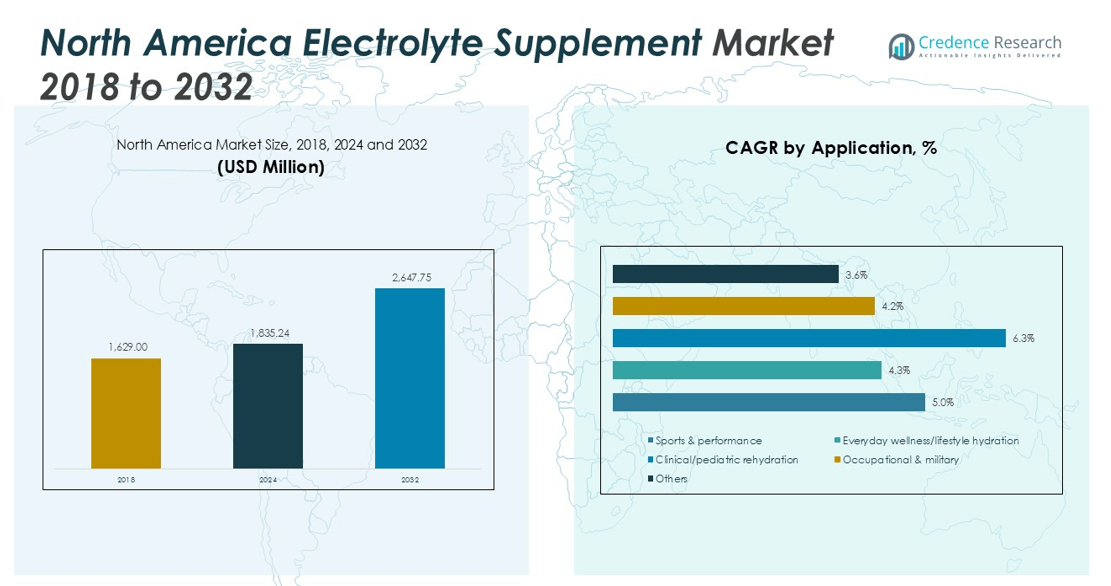
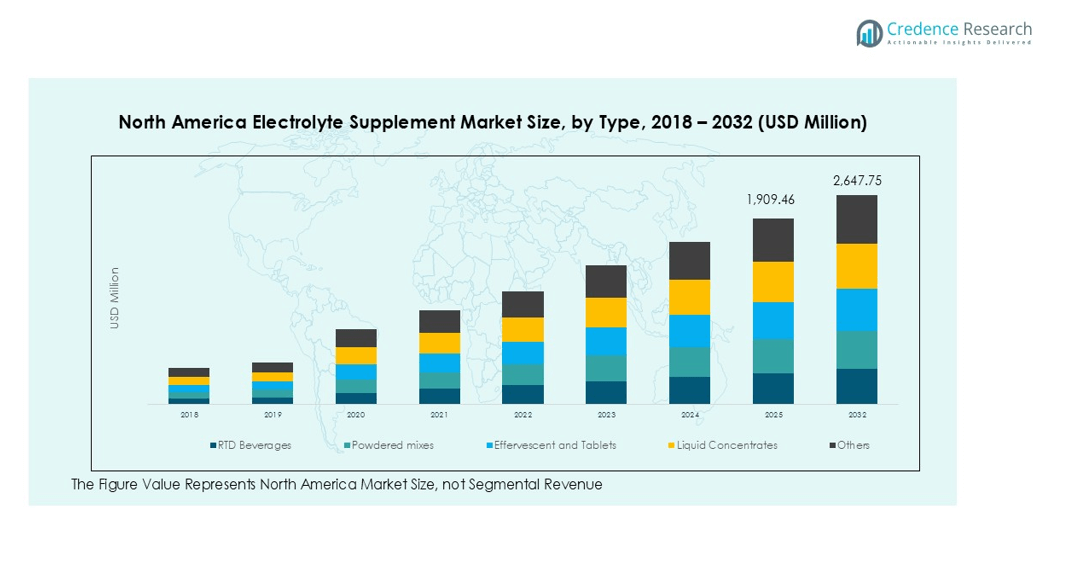
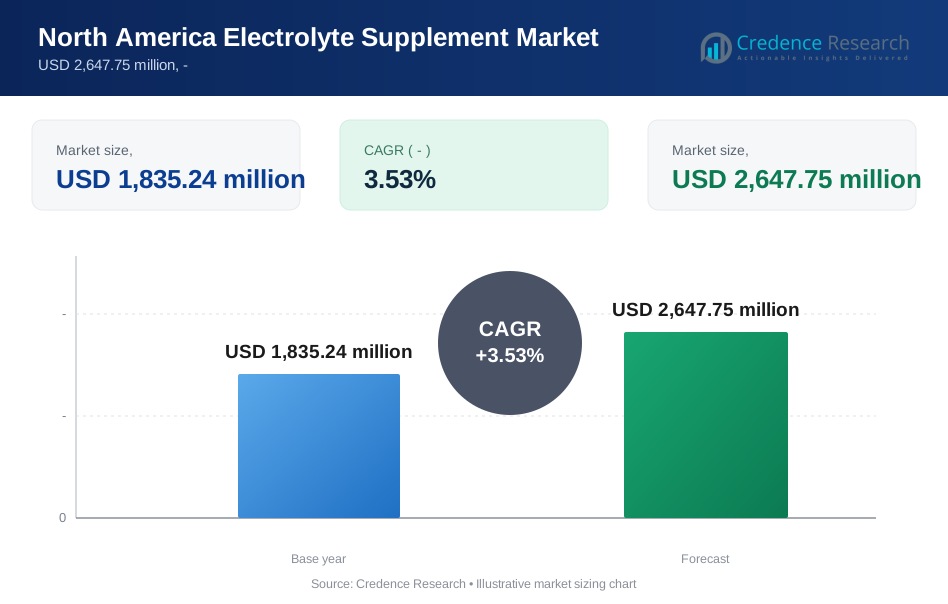
The North America Electrolyte Supplement Market size was valued at USD 1,629.00 million in 2018 to USD 1,835.24 million in 2024 and is anticipated to reach USD 2,647.75 million by 2032, at a CAGR of 3.53% during the forecast period.
| REPORT ATTRIBUTE | DETAILS |
|---|---|
| Historical Period | 2020-2023 |
| Base Year | 2024 |
| Forecast Period | 2025-2032 |
| North America Electrolyte Supplement Market Size 2024 | USD 1,835.24 million |
| North America Electrolyte Supplement Market, CAGR | 3.53% |
| North America Electrolyte Supplement Market Size 2032 | USD 2,647.75 million |
Market drivers include the rising demand for electrolyte supplements among athletes, fitness enthusiasts, and individuals leading active lifestyles. Health-conscious consumers are increasingly turning to electrolyte supplements to maintain hydration levels, enhance performance, and support recovery. Additionally, the shift toward preventive healthcare and the growing prevalence of dehydration-related conditions contribute to the market’s expansion. The availability of a variety of electrolyte supplement products, including powders, drinks, and capsules, also boosts consumer adoption.
In North America, the U.S. holds the largest market share due to a high concentration of fitness-focused consumers and the availability of advanced health products. The presence of major retailers, both online and offline, enhances accessibility and affordability of electrolyte supplements. Canada is experiencing steady market growth as well, supported by rising health awareness and a preference for natural and organic electrolyte products.
Market Insights:
- The North America Electrolyte Supplement Market was valued at USD 1,629.00 million in 2018 and is anticipated to reach USD 2,647.75 million by 2032, growing at a CAGR of 3.53%.
- Rising health consciousness among consumers is significantly driving the demand for hydration solutions, boosting the market growth.
- The increasing popularity of sports and fitness activities is a major factor behind the growing demand for electrolyte supplements.
- Dehydration-related health issues, particularly among athletes and older adults, are propelling the need for effective electrolyte replenishment products.
- The expansion of retail and e-commerce channels has improved accessibility and availability of electrolyte supplements across North America.
- High competition and price sensitivity are compelling companies to innovate and offer differentiated, high-quality products at competitive prices.
- The U.S. holds a dominant market share of 70%, driven by a large, health-focused population and well-established retail networks.
Market Drivers:
Increasing Health Consciousness Driving Market Growth
The growing health consciousness among North American consumers is one of the primary drivers of the electrolyte supplement market. A significant portion of the population is becoming more aware of the importance of hydration and proper nutrition in maintaining optimal health. This trend has led to an increased demand for products that support physical performance, recovery, and overall wellness. The North America Electrolyte Supplement Market benefits from this shift, with more individuals seeking effective hydration solutions to support their active lifestyles.
- For instance, Nuun's popular "Sport" electrolyte tablets cater to health-conscious consumers by containing only 1 gram of sugar per serving.
Rising Popularity of Sports and Fitness Activities
The surge in sports and fitness participation is a crucial factor influencing the market. North America has seen an increase in the number of people engaging in fitness activities such as running, cycling, and gym workouts. Electrolyte supplements play a critical role in replenishing the vital minerals lost through sweat during intense physical activities. The growing demand for sports nutrition products, including electrolyte-enhanced drinks and powders, continues to drive the North America Electrolyte Supplement Market.
Prevalence of Dehydration and Related Health Issues
The rising incidence of dehydration, especially among athletes and older adults, is another driver propelling the market. Dehydration can lead to several health complications, including fatigue, muscle cramps, and decreased physical performance. Electrolyte supplements offer a convenient solution for replenishing electrolytes lost through sweating or inadequate fluid intake, promoting better hydration. This growing awareness of the risks of dehydration is stimulating demand for these products across North America.
- For instance, the brand LMNT offers an electrolyte drink mix that contains 1,000 mg of sodium per packet to help effectively replenish mineral loss from intense physical activity.
Increased Availability Through Retail and E-commerce Channels
The expansion of retail and e-commerce channels has significantly contributed to the growth of the North America Electrolyte Supplement Market. Consumers now have greater access to a wide range of electrolyte supplements, available both in-store and online. E-commerce platforms, in particular, offer the convenience of direct-to-door delivery, increasing consumer convenience and product availability. This increased accessibility has played a pivotal role in expanding market reach and boosting product adoption among a wider audience.
Market Trends:
Shift Toward Natural and Organic Electrolyte Supplements
A key trend in the North America Electrolyte Supplement Market is the growing demand for natural and organic products. Consumers are increasingly seeking clean-label supplements that are free from artificial additives, preservatives, and sweeteners. This trend aligns with the rising preference for organic and plant-based ingredients in health products. Companies are responding by introducing electrolyte supplements formulated with natural flavors, organic sweeteners like stevia, and minerals sourced from natural ingredients such as coconut water and sea salt. This shift reflects broader consumer preferences toward healthier, more sustainable options in the health and wellness sector.
- For instance, Nuun offers its Nuun Sport hydration tablets formulated with 5 essential electrolytes and only 1 gram of sugar per serving.
Increased Focus on Convenience and Ready-to-Consume Products
Another notable trend is the growing popularity of ready-to-consume electrolyte supplements. Consumers prioritize convenience in their busy lifestyles, driving the demand for products that are easy to carry, store, and consume on the go. Pre-mixed electrolyte drinks and single-serve powders are gaining traction in the North America Electrolyte Supplement Market due to their portability and quick consumption. Fitness enthusiasts and busy professionals favor these products for their efficiency in replenishing electrolytes without requiring preparation. The availability of these convenient formats is expanding the market’s reach, catering to consumers who value both function and ease of use in their health supplements.
- For instance, Liquid I.V. offers its Hydration Multiplier in convenient, single-serving packets that provide 3 times the electrolytes of the leading sports drink.
Market Challenges Analysis:
High Competition and Price Sensitivity in the Market
The North America Electrolyte Supplement Market faces significant competition from both established brands and new entrants. A saturated market, coupled with the presence of numerous products claiming similar benefits, makes it difficult for companies to stand out. Consumers are increasingly price-sensitive, seeking high-quality products at competitive prices. This dynamic puts pressure on brands to balance product quality, innovation, and cost-effectiveness. Companies need to invest in brand differentiation, effective marketing strategies, and value-driven pricing to maintain customer loyalty and market share.
Regulatory Challenges and Compliance Risks
The North America Electrolyte Supplement Market is also challenged by strict regulatory requirements. As supplements fall under dietary regulations, companies must adhere to rigorous standards set by authorities like the FDA. Ensuring compliance with labeling, safety, and quality control standards can be costly and time-consuming. Any deviations in product quality or non-compliance can lead to legal issues and damage to brand reputation. Navigating these regulatory challenges remains a significant hurdle for companies looking to expand their market presence in North America.
Market Opportunities:
Expansion of Product Offerings for Specific Consumer Segments
The North America Electrolyte Supplement Market presents significant opportunities for product diversification to cater to specific consumer segments. The increasing demand for personalized nutrition opens avenues for products targeting athletes, older adults, and health-conscious consumers with unique needs. Tailored products, such as electrolyte supplements designed for endurance sports, post-workout recovery, or senior hydration, can drive growth. Brands can also explore adding value through formulations that combine electrolytes with other beneficial ingredients like vitamins, minerals, and antioxidants to meet the growing interest in multifunctional supplements.
Growth in E-commerce and Direct-to-Consumer Channels
The rapid growth of e-commerce presents an important opportunity for the North America Electrolyte Supplement Market. Consumers are increasingly shopping online for health and wellness products, seeking convenience and the ability to compare options easily. This trend allows brands to reach a broader audience, particularly through direct-to-consumer (DTC) models. E-commerce platforms enable brands to leverage targeted marketing, build customer loyalty, and provide a seamless shopping experience. Companies that capitalize on the growing online sales channels and expand their digital presence can unlock significant growth opportunities in the market.
Market Segmentation Analysis:
By Type:
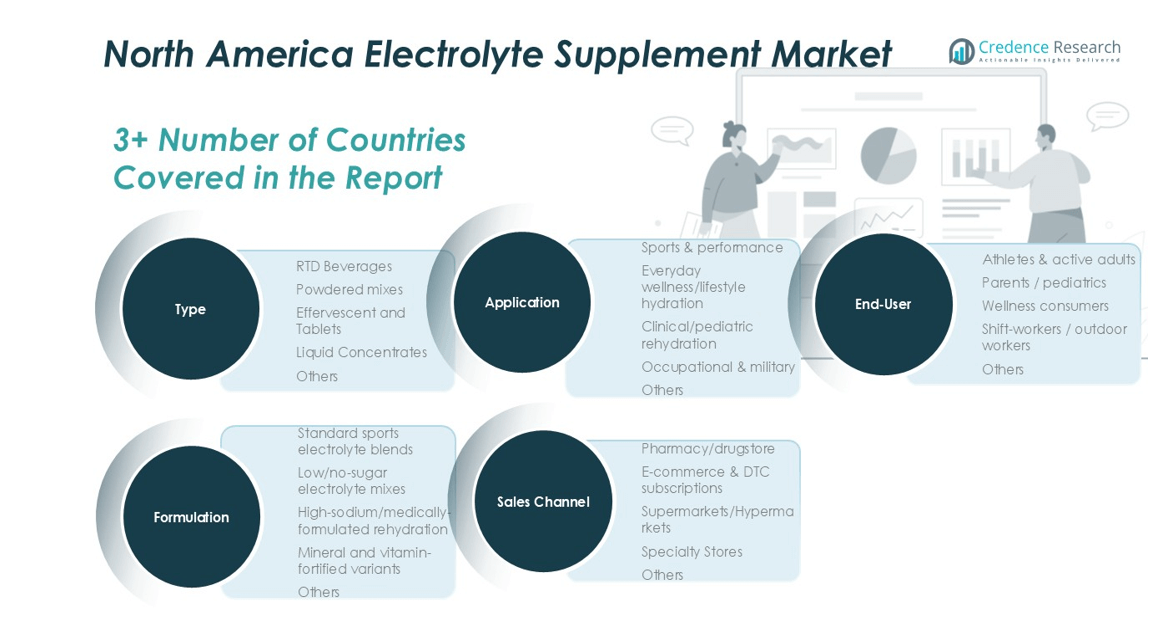
The North America Electrolyte Supplement Market is segmented into RTD beverages, powdered mixes, effervescent tablets, liquid concentrates, and others. RTD beverages hold the largest share due to their convenience and ease of consumption, particularly among active individuals and athletes. Powdered mixes are also popular, offering flexibility for consumers to adjust dosage. Effervescent tablets and liquid concentrates cater to specific needs, such as rapid absorption or targeted hydration, contributing to their steady demand.
- For instance, Skratch Labs' Hydration Sport Drink Mix is formulated to match the electrolyte profile of sweat, providing 400 mg of sodium per serving to effectively replenish what athletes lose during physical activity.
By Application:
Electrolyte supplements are primarily used in sports & performance, everyday wellness, clinical/pediatric rehydration, and occupational & military applications. The sports & performance segment dominates, driven by the increasing number of athletes and fitness enthusiasts who require hydration solutions to enhance performance and recovery. Everyday wellness and lifestyle hydration are also gaining traction as more consumers focus on maintaining optimal health. Clinical and pediatric rehydration supplements are essential for treating dehydration caused by illness, especially in younger populations, while the occupational & military segment sees steady demand from workers exposed to extreme environments.
By End-User:
The end-user segment of the North America Electrolyte Supplement Market includes athletes & active adults, parents/pediatrics, wellness consumers, and shift-workers/outdoor workers. Athletes and active adults are the primary consumers, driven by the need for hydration during and after intense physical activity. Wellness consumers represent a growing market as people focus on maintaining overall health. Shift-workers and outdoor workers require electrolyte supplements to combat dehydration caused by long hours and exposure to harsh working conditions, adding to the diversity of the end-user segment.
- For instance, Redmond Life offers Re-Lyte Kids, a hydration mix formulated for children that provides a balanced dose of essential electrolytes, including 340 mg of sodium, to support their energy and focus.
Segmentations:
By Type:
- RTD Beverages
- Powdered Mixes
- Effervescent and Tablets
- Liquid Concentrates
- Others
By Application:
- Sports & Performance
- Everyday Wellness/Lifestyle Hydration
- Clinical/Pediatric Rehydration
- Occupational & Military
- Others
By End-User:
- Athletes & Active Adults
- Parents / Pediatrics
- Wellness Consumers
- Shift-workers / Outdoor Workers
- Others
By Formulation:
- Standard Sports Electrolyte Blends
- Low/No-Sugar Electrolyte Mixes
- High-Sodium/Medically-Formulated Rehydration
- Mineral and Vitamin-Fortified Variants
- Others
By Sales Channel:
- Pharmacy/Drugstore
- E-commerce & DTC Subscriptions
- Supermarkets/Hypermarkets
- Specialty Stores
- Others
By Country:
- North America
- U.S.
- Canada
- Mexico
Regional Analysis:
United States Leads the North America Electrolyte Supplement Market
The United States holds a 70% share of the North America Electrolyte Supplement Market, driven by a strong health and wellness culture. With a large, health-conscious population, demand for hydration solutions, particularly among athletes and fitness enthusiasts, is high. The growing trend of sports nutrition, combined with increasing awareness of the importance of electrolytes in maintaining hydration, contributes significantly to market growth. The U.S. is also home to key market players and a well-established retail network, both online and offline, which ensures widespread availability and consumer access.
Canada’s Rising Demand for Electrolyte Supplements
Canada accounts for 20% of the North America Electrolyte Supplement Market, driven by a growing focus on preventive healthcare and fitness. Canadians are becoming more aware of the benefits of electrolyte supplementation, especially for active lifestyles, leading to increased demand for these products. The presence of a well-established retail and e-commerce infrastructure, along with a strong emphasis on natural and organic products, makes Canada a favorable market. The rising participation in outdoor activities, including hiking, cycling, and running, further drives demand for effective hydration solutions in the region.
Regional Differences in Consumer Preferences
Regional variations in consumer preferences significantly influence the North America Electrolyte Supplement Market. Urban areas account for 60% of the market share, where consumers prefer ready-to-consume products such as electrolyte drinks and powders. In contrast, rural regions focus more on natural, organic formulations. Demographics like millennials and older adults show distinct preferences for flavors, ingredients, and product formats. Premium, multifunctional products that integrate electrolytes with other health-boosting ingredients are becoming more popular in regions with higher disposable incomes.
Key Player Analysis:
- Abbott Laboratories
- Nestlé S.A.
- Unilever PLC
- GlaxoSmithKline plc
- Otsuka Pharmaceutical Co., Ltd.
- GU Energy Labs
- Skratch Labs
- Ultima Health Products, Inc.
- Hammer Nutrition
- SOS Hydration Inc.
- Liquid I.V.
- LyteLine LLC
- Hydralyte LLC
- Atlantic Essential Products, Inc.
- Denver Bodega LLC
Competitive Analysis:
The North America Electrolyte Supplement Market is highly competitive, with major players like PepsiCo's Gatorade and Coca-Cola's Powerade leading the RTD beverage segment through strong brand recognition and extensive distribution networks. Emerging brands such as Liquid I.V. and Nuun Hydration are gaining traction by focusing on clean-label, plant-based, and low-sugar formulations to meet health-conscious consumer demand. Specialized companies like GU Energy Labs and Skratch Labs target niche markets with performance-specific products for athletes. This intense competition is further fueled by alternatives such as water and fruit-infused beverages, forcing electrolyte supplement brands to emphasize their unique benefits. To stay competitive, companies must continually innovate, implement effective marketing strategies, and differentiate their products.
Recent Developments:
- In August 2025, Abbott’s Navitor Transcatheter Aortic Valve Implantation (TAVI) system received a CE Mark for an expanded indication, allowing for the treatment of more individuals with aortic stenosis.
- In September 2023, Nestlé announced its agreement to acquire a majority stake in Grupo CRM, a premium chocolate manufacturer in Brazil, with the transaction expected to be finalized in 2024.
- In August 2024, Otsuka announced it had entered into an agreement to acquire Jnana Therapeutics Inc., a deal that includes JNT-517, a potential first-in-class oral therapy for Phenylketonuria (PKU).
Report Coverage:
The research report offers an in-depth analysis based on Type, Application, End-User, Formulation, Sales Channel and Country. It details leading market players, providing an overview of their business, product offerings, investments, revenue streams, and key applications. Additionally, the report includes insights into the competitive environment, SWOT analysis, current market trends, as well as the primary drivers and constraints. Furthermore, it discusses various factors that have driven market expansion in recent years. The report also explores market dynamics, regulatory scenarios, and technological advancements that are shaping the industry. It assesses the impact of external factors and global economic changes on market growth. Lastly, it provides strategic recommendations for new entrants and established companies to navigate the complexities of the market.
Future Outlook:
- The demand for electrolyte supplements will continue to grow, driven by increasing health awareness and active lifestyles across North America.
- A shift toward natural and organic ingredients will push brands to focus on clean-label formulations free from artificial additives.
- Consumer preference for convenient, ready-to-consume products like RTD beverages and single-serve packets will increase.
- The rise of e-commerce and direct-to-consumer channels will enable brands to reach a broader customer base and strengthen their market presence.
- Athletes, fitness enthusiasts, and wellness consumers will remain the primary drivers of market growth, with more focus on hydration and performance-enhancing products.
- The popularity of low-sugar, low-calorie electrolyte products will continue to rise, as consumers seek healthier alternatives to traditional sports drinks.
- Clinical and pediatric rehydration solutions will see a rise in demand, particularly in healthcare settings where rapid recovery and rehydration are critical.
- The market will witness an increase in product innovation, including formulations combining electrolytes with vitamins, minerals, and other health-boosting ingredients.
- Sustainability and eco-friendly packaging will become important factors, with consumers favoring brands that prioritize environmental impact.
- Companies will intensify their focus on regional and personalized marketing strategies to cater to specific demographics and consumer preferences.
Request a Free Sample
Fill in your details and we'll send you a free sample report.
- Sample data tables & charts
- Research methodology
Need a Custom Version of This Report?
Tailor the scope, geography, or segments to your exact requirements.
- Custom geography or segment scope
- Direct access to our analyst team
Frequently Asked Questions
What is the current market size for U.S. Crop Input Controllers, and what is its projected size in 2032?
At what Compound Annual Growth Rate is the North America Electrolyte Supplement Market projected to grow between 2024 and 2032?
Which North America Electrolyte Supplement Market segment held the largest share in 2024?
What are the primary factors fueling the growth of the North America Electrolyte Supplement Market?
Who are the leading companies in the North America Electrolyte Supplement Market?
Table of Content
Chapter 1. Report Introduction
- 1.1 Report Description & Purpose
- 1.1.1 Report Title & Market Definition
- 1.1.2 Unique Selling Propositions (USP) & Key Differentiators
- 1.1.3 Value Proposition for Stakeholders
- 1.2 Research Objectives
- 1.2.1 Market Sizing Objectives (Volume & Revenue)
- 1.2.2 Segmentation Objectives
- 1.2.3 Competitive Intelligence Objectives
- 1.2.4 Forecast & Scenario Objectives
- 1.3 Report Scope
- 1.3.1 North America Electrolyte Supplement Scope – Types & Subtypes Covered
- 1.3.2 Geographic Scope – Regions & Countries Covered
- 1.3.3 Historical Period, Base Year & Forecast Period (the historical period; forecast to the forecast period)
- 1.3.4 Inclusions & Exclusions
- 1.4 HS Code & Classification Framework
- 1.5 Currency, Units & Pricing Basis
- 1.6 Target Stakeholders
- 1.7 Limitations & Assumptions
Chapter 2. Executive Summary
- 2.1 Global North America Electrolyte Supplement Market Snapshot
- 2.1.1 Market Size – Historical (the historical period) & Forecast (the forecast period) (base year: USD 1,835.24 million → forecast year: USD 2,647.75 million)
- 2.1.2 Volume & Revenue – Global Totals
- 2.1.3 Key Market Highlights – Top Five Facts
- 2.2 North America Electrolyte Supplement Market Segmentation Snapshot
- 2.2.1 Market Split by Region – vs.
- 2.3 Competitive Snapshot
- 2.3.1 Top 10 Players by Revenue Share –
- 2.3.2 Top 10 Players by Volume Share –
- 2.3.3 Recent Strategic Developments (18-Month Summary)
- 2.4 Key Investment Highlights & Strategic Conclusions
Chapter 3. North America Electrolyte Supplement Market Dynamics & Industry Analysis
- 3.1 Market Overview & Context
- 3.1.1 North America Electrolyte Supplement Market Position in the Broader Automotive Value Chain
- 3.1.2 OEM vs. Replacement Market Dynamics
- 3.1.3 Market Maturity & Development Stage by Region
- 3.2 North America Electrolyte Supplement Market Drivers
- 3.3 North America Electrolyte Supplement Market Restraints & Challenges
- 3.4 North America Electrolyte Supplement Market Opportunities
- 3.5 Porter's Five Forces Analysis
- 3.5.1 Threat of New Entrants
- 3.5.2 Bargaining Power of Suppliers
- 3.5.3 Bargaining Power of Buyers
- 3.5.4 Threat of Substitutes
- 3.5.5 Competitive Rivalry – Intensity Assessment
- 3.6 North America Electrolyte Supplement Value Chain Analysis
- 3.6.1 Upstream – Raw Material/Input Suppliers
- 3.6.1.1 Raw Material/Input 1
- 3.6.1.2 Raw Material/Input 2
- 3.6.1.3 Raw Material/Input 3
- 3.6.2 Midstream – Production/Manufacturing/Service Delivery
- 3.6.2.1 Production/Process Overview
- 3.6.2.2 Key Facility Locations & Capacity by Manufacturer
- 3.6.3 Downstream – Distribution & End Consumer
- 3.6.3.1 Primary Channel – B2B/OEM
- 3.6.3.2 Secondary Channels – Dealer, Retail, Online, Direct
- 3.6.4 Value Chain Profitability Analysis
- 3.6.1 Upstream – Raw Material/Input Suppliers
- 3.7 PESTEL Analysis
- 3.7.1 Political Factors
- 3.7.2 Economic Factors
- 3.7.3 Social Factors
- 3.7.4 Technological Factors
- 3.7.5 Environmental Factors
- 3.7.6 Legal Factors
- 3.8 North America Electrolyte Supplement Supply Chain Analysis
- 3.8.1 Raw Material/Input Supply Risk Assessment
- 3.8.2 Manufacturing Concentration Risk (Geographic Exposure)
- 3.8.3 Trade Disruption Impact Analysis
- 3.9 Regulatory & Policy Landscape
Note: The regulatory and policy landscape section covers regulations based on their applicability to the market, North America Electrolyte Supplement category, geography, and scope of the study. Only regulatory frameworks with a material impact on operations, compliance, trade, sustainability, or market access are analyzed in detail.
Chapter 4. Key Investment Pockets & Opportunity Analysis
- 4.1 North America Electrolyte Supplement Market Attractiveness Analysis
- 4.1.1 By Region – Investment Attractiveness Matrix (Volume × CAGR)
- 4.2 Absolute Revenue Growth Opportunity
- 4.2.1 By Region – Absolute USD Growth Through the forecast period
- 4.3 Incremental Volume Opportunity
- 4.3.1 By Region – Incremental Volume Through the forecast period
- 4.3.2 Segment – Incremental Volume
- 4.4 Emerging Submarket Opportunity Deep Dive (Subject to Applicability)
- 4.5 Emerging Market Opportunity Scorecards
- 4.5.1 United States
- 4.5.2 Europe
- 4.5.3 Asia
- 4.5.4 Middle East & Africa
Note: Emerging Market Opportunity Scorecards will be included based on relevance and strategic importance. Regions listed are indicative and may vary depending on data availability and market dynamics.
Chapter 5. North America Electrolyte Supplement Import-Export Analysis & Trade Flows
- 5.1 Global Trade Overview
- 5.1.1 Global Export Value by Country (the historical period)
- 5.1.2 Global Export Volume by Country (the historical period)
- 5.1.3 Global Import Value by Country (the historical period)
- 5.1.4 Global Import Volume by Country (the historical period)
- 5.1.5 Net Trade Balance by Country (the historical period)
- 5.2 Export Analysis – Segment
- 5.2.1 Type 1 (HS Code)
- 5.2.2 Type 2 (HS Code)
- 5.2.3 Type 3 (HS Code)
- 5.2.4 Type 4 (HS Code)
- 5.2.5 Type 5 (HS Code)
- 5.3 Import Analysis – Segment
- 5.3.1 Type 1 (HS Code)
- 5.3.2 Type 2 (HS Code)
- 5.3.3 Type 3 (HS Code)
- 5.3.4 Type 4 (HS Code)
- 5.3.5 Type 5 (HS Code)
- 5.4 Average Unit Trade Prices
- 5.4.1 Average Export Price – Segment & Country
- 5.4.2 Average Import Price – Segment & Source Country
- 5.4.3 Price Trends (the historical period)
- 5.5 Key Trade Route Analysis
- 5.5.1 Trade Route 1
- 5.5.2 Trade Route 2
- 5.5.3 Trade Route 3
- 5.5.4 Trade Route 4
- 5.5.5 Trade Route 5
- 5.6 Trade Policy Impact Assessment
- 5.6.1 US Anti-Dumping & Section 301 Tariffs
- 5.6.2 EU Customs Union Impact
- 5.6.3 Major Free Trade Agreements
- 5.6.4 USMCA Rules of Origin
Note: Trade policy analysis will be included only where relevant to the North America Electrolyte Supplement market.
Chapter 6. Competitive Landscape & Company Benchmarking
- 6.1 North America Electrolyte Supplement Market Concentration & Structure
- 6.1.1 Herfindahl-Hirschman Index (HHI) – vs.
- 6.1.2 Tier 1, Tier 2 & Tier 3 Market Structure
- 6.1.3 Global, Regional & Local Player Dynamics
- 6.2 North America Electrolyte Supplement Market Share Analysis –
- 6.2.1 Global Revenue Share by Company
- 6.2.2 Global Volume Share by Company
- 6.2.3 Regional Revenue Share
- 6.2.4 Market Share Evolution ( vs. )
- 6.2.5 OEM Segment Share by Company
- 6.2.6 Replacement Segment Share by Company
- 6.3 Production/Delivery Capacity & Facility Analysis
- 6.3.1 Global Installed Capacity
- 6.3.2 Capacity Utilization Rates
- 6.3.3 Production/Output Volume
- 6.3.4 Facility Locations & Capacity Map
- 6.3.5 Planned Capacity Additions
- 6.4 North America Electrolyte Supplement Competitive Benchmarking Matrix
- 6.4.1 Revenue, Volume, CAGR & Profitability Comparison
- 6.4.2 Channel Revenue Mix
- 6.4.3 Geographic Revenue Exposure
- 6.4.4 R&D Intensity
- 6.4.5 Sustainability Maturity
- 6.5 Strategic Developments in North America Electrolyte Supplement (Last 24 Months)
- 6.5.1 Mergers, Acquisitions & Divestments
- 6.5.2 New North America Electrolyte Supplement Launches
- 6.5.3 Facility Expansions
- 6.5.4 Strategic Alliances, Joint Ventures & Partnerships
- 6.5.5 Distribution Expansion & Market Entry
- 6.5.6 Sustainability & ESG Initiatives
- 6.6 Competitive Strategy Mapping
- 6.6.1 Leader, Challenger, Follower & Niche Classification
- 6.6.2 Pricing Strategy Comparison
- 6.6.3 Channel Strategy Matrix
Note: Strategic developments are included based on their materiality and the availability of reliable information.
Chapter 7. Global North America Electrolyte Supplement Market – By Distribution Channel
- 7.1 Segment Overview
- 7.1.1 Volume & Revenue Split by Channel ( & )
- 7.1.2 Channel Mix Evolution (the forecast period)
Chapter 8. Regional Market Analysis – Global Overview
- 8.1 Global Regional Overview
- 8.1.1 Regional Volume Share
- 8.1.2 Regional Revenue Share
- 8.1.3 Regional Volume by Region
- 8.1.4 Regional Revenue by Region
- 8.1.5 Regional Forecast Through the forecast period
- 8.2 Cross-Regional Segment Analysis
- 8.2.1 By Distribution Channel
- 8.2.2 By Brand/Price Tier
Chapter 9. North America North America Electrolyte Supplement Market
- 9.1 United States
- 9.2 Canada
- 9.3 Mexico
Chapter 10. Europe North America Electrolyte Supplement Market
- 10.1 Germany
- 10.2 France
- 10.3 Italy
- 10.4 United Kingdom
- 10.5 Spain
- 10.6 Poland
- 10.7 Russia
- 10.8 Netherlands
- 10.9 Belgium
- 10.10 Sweden
- 10.11 Denmark
- 10.12 Norway
- 10.13 Rest of Europe
Chapter 11. Asia Pacific North America Electrolyte Supplement Market
- 11.1 China
- 11.2 India
- 11.3 Japan
- 11.4 South Korea
- 11.5 Thailand
- 11.6 Indonesia
- 11.7 Vietnam
- 11.8 Malaysia
- 11.9 Australia
- 11.10 Rest of Asia Pacific
Chapter 12. Latin America North America Electrolyte Supplement Market
- 12.1 Brazil
- 12.2 Argentina
- 12.3 Colombia
- 12.4 Chile
- 12.5 Rest of Latin America
Chapter 13. Middle East North America Electrolyte Supplement Market
- 13.1 Saudi Arabia
- 13.2 United Arab Emirates
- 13.3 Turkey
- 13.4 Israel
- 13.5 Iran
- 13.6 Rest of the Middle East
Chapter 14. Africa North America Electrolyte Supplement Market
- 14.1 South Africa
- 14.2 Egypt
- 14.3 Nigeria
- 14.4 Morocco
- 14.5 Rest of Africa
Chapter 15. North America Electrolyte Supplement Company Profiles
- 15.1 [Company 01]
- 15.1.1 Company Overview
- 15.1.2 Key Management Personnel
- 15.1.3 Products & Services Portfolio
- 15.1.4 Financial Performance
- 15.1.5 Key Market Focus & Geographic Presence
- 15.1.6 Recent Developments & Strategic Initiatives
Note: The company profile list is preliminary and may change based on research findings, market developments, data availability, and client requirements.
Chapter 16. Appendices
- Appendix A – List of Abbreviations & Acronyms
- Appendix B – Industry Classification Code Reference – Full Series
- Appendix C – Production & Capacity Data Tables
- Appendix D – End-Use & Demand Base Tables
- Appendix E – Consumption & Replacement Rate Assumptions
- Appendix F – ASP Reference Tables
- Appendix G – Manufacturing & Facility Database
- Appendix H – Import-Export Data Tables
- Appendix I – Regulatory Summary Tables
- Appendix J – Primary Research Participant List (Anonymized)
- Appendix K – Primary Research Questionnaire Framework
- Appendix L – Data Sources & Bibliography
- Appendix M – Market Size Divergence & Source Comparison
Chapter 17. Research Methodology
- 17.1 Research Framework & Philosophy
- 17.2 Secondary Research – Sources, Hierarchy & Data Extraction
- 17.3 Data Modeling – Bottom-Up & Top-Down Market Sizing
- 17.4 Primary Research – Stakeholder Framework, LOI & Sample Sizes
- 17.5 Forecast Methodology – Regression, Scenario & Sensitivity Analysis
- 17.6 Quality Control – Four-Layer Validation Framework
- 17.7 Limitations & Standard Assumptions
- 17.8 Disclaimer
