
| REPORT ATTRIBUTE | DETAILS |
|---|---|
| Historical Period | 2020-2023 |
| Base Year | 2024 |
| Forecast Period | 2025-2032 |
| North America Yeast Extract Market Size 2024 | USD 766.038 Million |
| North America Yeast Extract Market, CAGR | 6.92% |
| North America Yeast Extract Market Size 2032 | USD 1256.90 Million |
Market Overview
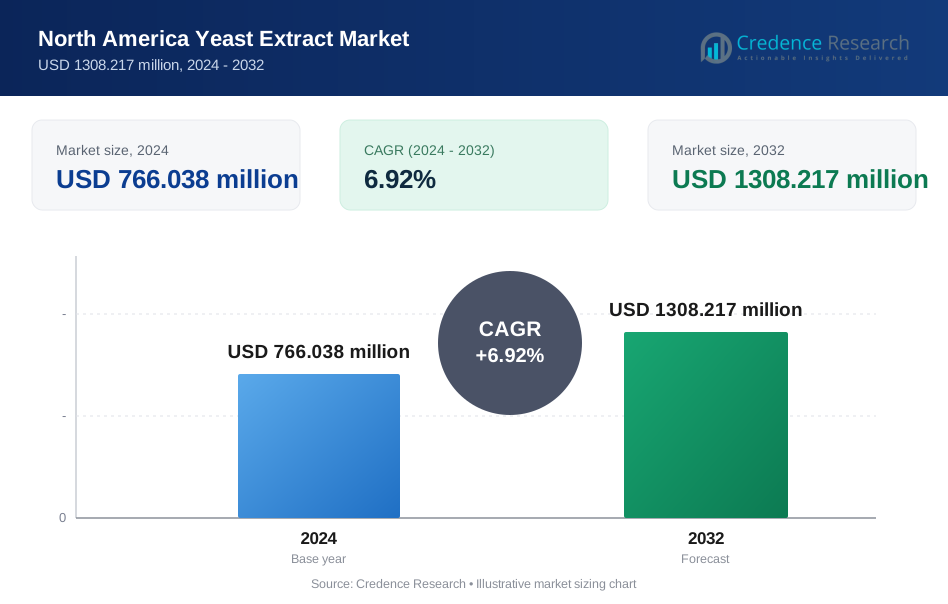
The North America Yeast Extract Market is projected to grow from USD 766.038 million in 2024 to an estimated USD 1308.217 million by 2032, with a compound annual growth rate (CAGR) of 6.92% from 2025 to 2032. The market is driven by increasing demand for natural ingredients in food and beverage products, as well as the growing need for yeast extract as a flavor enhancer in various applications such as savory foods, soups, sauces, and snacks.
Market drivers include the rising preference for clean-label ingredients, advancements in fermentation technologies, and the growing popularity of functional foods. The trend of clean-label products, free from artificial additives, is pushing manufacturers to adopt yeast extract as a natural alternative. Additionally, the increasing demand for yeast extract in the nutraceutical industry, owing to its rich nutritional profile and functional benefits, further strengthens the market growth.
Geographically, North America holds a significant share of the global yeast extract market, primarily driven by the U.S. and Canada. The region benefits from a well-established food and beverage industry, technological advancements, and high consumer awareness regarding healthy eating. Key players in the North American Yeast Extract Market include Lesaffre, Associated British Foods, DSM, Angel Yeast Co., and Lallemand, who are focused on expanding their product offerings and distribution networks to cater to the growing demand.
Market Insights
- The North America Yeast Extract Market is projected to grow from USD 766.038 million in 2024 to USD 1308.217 million by 2032, with a CAGR of 6.92% from 2025 to 2032.
- The increasing preference for natural, clean-label ingredients in food products is driving the demand for yeast extract as a flavor enhancer and nutritional ingredient.
- Rising awareness of health and wellness is pushing consumers toward functional foods and natural ingredients, fueling growth in the yeast extract market.
- Innovations in fermentation technologies are improving production efficiency and sustainability, making yeast extract more accessible and cost-effective for manufacturers.
- Fluctuations in raw material prices and competition from alternative flavor enhancers may limit market growth, particularly in price-sensitive applications.
- The U.S. holds the largest share of the market, benefiting from a strong food and beverage industry and growing demand for clean-label and plant-based products.
- Yeast extract is gaining traction in the nutraceutical sector due to its rich nutritional profile, including amino acids, vitamins, and immune-boosting properties.
Market Drivers
Technological Advancements in Fermentation Processes
Technological innovations in fermentation processes have significantly contributed to the growth of the yeast extract market. Over the past few years, advances in fermentation technology have enabled more efficient, cost-effective, and sustainable production of yeast extract. These innovations have improved the yield and quality of yeast extract, making it more accessible to manufacturers and ultimately driving its adoption in a wide range of applications. Fermentation is a natural biological process, and recent developments in this field have enhanced the scalability and consistency of yeast extract production, while also minimizing environmental impact. For instance, companies are now using precision fermentation techniques, which allow for more precise control over the fermentation process, resulting in a more uniform and high-quality product. This has enabled the food and beverage industry to meet the rising demand for yeast extract, especially as it becomes increasingly integrated into processed and packaged food products. Moreover, the adoption of sustainable practices in the production of yeast extract, such as the use of renewable resources and waste reduction technologies, is attracting more environmentally conscious consumers and manufacturers, further propelling market growth.
Expanding Applications in the Food and Beverage Industry
The expanding applications of yeast extract in the food and beverage industry have been a major driver of the North American market. Yeast extract’s versatility as a flavor enhancer, seasoning, and umami-rich ingredient has led to its wide use in a range of products, including soups, sauces, snacks, ready-to-eat meals, and meat products. Its ability to enhance savory and meaty flavors without adding significant calories or sodium has made it particularly attractive to manufacturers aiming to create healthier food options that still deliver rich flavors. Additionally, yeast extract is used in the production of vegan and plant-based products, where it serves as a natural alternative to meat-based flavor enhancers. As the plant-based food market continues to expand in North America, the demand for yeast extract in these products is expected to grow as well. Moreover, yeast extract’s functionality extends beyond flavor enhancement, as it is also used for its preservative qualities, providing natural preservation without the need for artificial additives. The growing focus on healthier, more sustainable food options, combined with yeast extract’s ability to cater to a wide variety of dietary preferences, has further solidified its position as a key ingredient in the North American food and beverage industry.
Rising Demand for Clean-Label Products
A significant driver of the North American yeast extract market is the increasing consumer demand for clean-label products. Clean-label refers to food and beverage products that have transparent ingredient lists, free from artificial additives, preservatives, and synthetic chemicals. As consumers become more health-conscious and demand natural, minimally processed ingredients, manufacturers are turning to yeast extract as a natural alternative to artificial flavor enhancers and preservatives. Yeast extract, derived from the fermentation of yeast cells, is considered a clean-label ingredient due to its natural origin and functional properties. Its ability to enhance flavors in a variety of food products without the use of synthetic chemicals has contributed significantly to its growing adoption across various sectors, particularly in food and beverages like soups, sauces, snacks, and processed foods.For instance, yeast extract is used in products like soups and sauces to enhance flavor naturally, aligning with consumer preferences for clean-label products. Its natural origin and lack of artificial additives make it an ideal choice for manufacturers seeking to meet the demand for transparent ingredient lists. This shift toward clean-label products aligns with evolving consumer preferences and is a crucial factor driving the growth of the yeast extract market in North America.The trend towards clean-label products is not only driven by consumer awareness but also by regulatory pressures and industry standards. As consumers increasingly scrutinize product labels, companies are under pressure to provide ingredients that are both natural and effective. Yeast extract fits this bill perfectly, offering a natural way to enhance flavors without compromising on taste or quality.
Increasing Demand for Natural and Functional Ingredients
Another important factor fueling the demand for yeast extract is the growing consumer interest in natural and functional ingredients that offer both nutritional and health benefits. Yeast extract is rich in essential nutrients such as proteins, vitamins, and minerals, making it a valuable ingredient in nutraceuticals and functional foods. It is also known for its high glutamate content, which enhances the savory umami flavor in food products, and its ability to improve digestibility and nutrient absorption. As consumers prioritize health and wellness, they are increasingly seeking out products that offer functional benefits such as improved immune health, gut health, and overall well-being.For example, yeast extract is rich in nutrients such as proteins, vitamins, and minerals, making it a valuable ingredient in nutraceuticals and functional foods. Its high glutamate content enhances the savory umami flavor, contributing to its use in products that promote digestive health and overall well-being. The rise in popularity of functional foods, including those that promote digestive health, immunity, and heart health, has led to greater use of yeast extract in both dietary supplements and fortified foods. This trend is expected to continue, with yeast extract serving as a key component in the formulation of products designed to meet consumers’ health-oriented demands.The integration of yeast extract into functional foods aligns with broader health trends, where consumers are looking for products that not only taste good but also provide health benefits. As the demand for natural and functional ingredients continues to grow, yeast extract is poised to play an increasingly important role in the food and nutraceutical industries.
Market Trends
Technological Innovations in Yeast Extract Production
Technological advancements in yeast extract production are significantly shaping the current trends in the market. Recent innovations in fermentation technology have led to more efficient, sustainable, and cost-effective methods of producing yeast extract. As consumer demands for high-quality, natural ingredients grow, manufacturers are investing in advanced fermentation technologies that enable greater control over the production process. Precision fermentation, for example, allows for the optimized growth of yeast cells, resulting in higher yields and improved consistency in the final product. These advancements have not only improved the quality of yeast extract but also made it more affordable and accessible to a broader range of industries. Additionally, there has been an increasing focus on the environmental impact of yeast extract production, with companies adopting more sustainable practices, such as utilizing renewable resources and reducing waste. These technological developments not only ensure a reliable supply of yeast extract but also align with the growing consumer preference for environmentally friendly and sustainable products. As fermentation technologies continue to evolve, it is expected that the production of yeast extract will become even more efficient, further supporting its widespread use in the food and beverage industry.
Expansion of Yeast Extract Applications in Nutraceuticals and Functional Foods
Another key trend in the North American yeast extract market is the expanding use of yeast extract in nutraceuticals and functional foods. Functional foods, which provide additional health benefits beyond basic nutrition, have gained significant traction in recent years due to the increasing consumer focus on health, wellness, and disease prevention. Yeast extract is increasingly being incorporated into functional food products because of its rich nutritional profile, including high levels of amino acids, vitamins, and minerals. It is particularly valued for its high glutamate content, which enhances flavor while providing health benefits. Furthermore, yeast extract has been shown to possess immune-boosting properties, making it a popular ingredient in dietary supplements and functional foods designed to promote immunity and overall well-being. As consumers seek out products that support digestive health, boost immunity, and improve energy levels, yeast extract is being used in a wide range of functional food products, such as energy bars, fortified beverages, and supplements. This trend reflects the growing consumer interest in preventive health and the desire for products that not only taste good but also contribute to a healthier lifestyle. The market for functional foods is expected to continue expanding, and yeast extract will likely play an increasingly important role in this sector.
Rising Popularity of Plant-Based and Vegan Products
One of the most prominent trends in the North American yeast extract market is the growing demand for plant-based and vegan food products. As consumers shift toward plant-based diets for reasons such as health, environmental sustainability, and ethical considerations, there is a marked increase in the demand for ingredients that can mimic the savory, umami flavor typically derived from meat-based sources. Yeast extract is an ideal ingredient for these applications due to its natural ability to impart a rich, savory taste without relying on animal-based ingredients.The vegan and plant-based food industry, particularly in North America, has witnessed exponential growth in recent years, with more consumers incorporating plant-based alternatives into their diets. In response, manufacturers are increasingly incorporating yeast extract into a wide range of vegan products, including plant-based meat substitutes, dairy-free cheeses, vegan snacks, and plant-based ready-to-eat meals. This trend is expected to continue as both large and small food companies focus on developing innovative, delicious, and nutritious plant-based products that cater to the evolving consumer preferences.For instance, the plant-based food industry has seen significant growth as consumers increasingly adopt vegan and vegetarian diets due to health, environmental, and ethical considerations. This shift has led to a surge in demand for ingredients like yeast extract, which naturally provides a savory, umami flavor without relying on animal-based sources. Manufacturers are incorporating yeast extract into various vegan products, such as plant-based meat substitutes and dairy-free cheeses, to enhance flavor and nutritional content.Additionally, yeast extract offers functional benefits, such as being a natural source of protein, vitamins, and minerals, which further enhances its appeal in plant-based formulations. As consumers become more aware of the nutritional value of their food choices, the demand for yeast extract in plant-based products is likely to increase.
Increased Focus on Clean Label and Natural Ingredients
The demand for clean-label products, which emphasize transparency in ingredients and the absence of artificial additives or preservatives, is another significant trend influencing the North American yeast extract market. Consumers are becoming more discerning about the foods they consume, prioritizing products that are perceived as natural, wholesome, and free from synthetic chemicals. As a result, there has been an increasing preference for yeast extract as a natural ingredient that can replace artificial flavor enhancers, preservatives, and other synthetic additives in food products.Yeast extract is derived through a natural fermentation process, making it a suitable clean-label ingredient that meets consumers’ desires for purity and transparency. This trend is particularly evident in the food and beverage sector, where clean-label products are becoming the norm, driven by the increasing awareness of health and wellness among consumers. Manufacturers are responding to this demand by offering products with simpler, more recognizable ingredient lists, and yeast extract is playing a crucial role in replacing artificial flavorings and preservatives in a wide variety of processed foods.For instance, the clean-label movement emphasizes transparency and the use of natural ingredients, driving consumer preference for products free from artificial additives. Yeast extract, derived through a natural fermentation process, is increasingly used as a clean-label ingredient to replace synthetic flavor enhancers and preservatives in food products. This trend is evident in the food and beverage sector, where manufacturers are opting for simpler ingredient lists, and yeast extract plays a key role in enhancing flavor naturally.
Market Challenges
Competition from Alternative Flavoring Agents
The yeast extract market faces intense competition from other natural flavor enhancers and flavoring agents, such as hydrolyzed vegetable proteins, amino acids, and MSG (monosodium glutamate). While yeast extract is widely recognized for its umami-rich, savory flavor, it is not the only ingredient that serves this purpose in the food and beverage industry. Alternative flavor enhancers, which are often less expensive to produce, may offer similar sensory profiles and nutritional benefits. As the demand for cost-effective ingredients increases, manufacturers may opt for these alternatives, posing a challenge to the growth of yeast extract in certain market segments. Additionally, some consumers are becoming more aware of the potential health concerns associated with certain flavor enhancers, including MSG, which has led to a demand for even cleaner and more natural ingredients. Although yeast extract fits this niche, manufacturers must work to differentiate it by emphasizing its natural origins, nutritional value, and versatility in a competitive market where alternatives are abundant.
Fluctuating Raw Material Costs in the North American Yeast Extract Market
One of the major challenges facing the North American yeast extract market is the volatility in the prices of raw materials, particularly the cost of yeast and other fermentation ingredients. The production of yeast extract is highly dependent on the availability and cost of raw materials such as yeast cells, sugar, and other nutrients used in the fermentation process. Any disruptions in the supply chain, such as changes in agricultural yields, supply shortages, or increased demand for other yeast-based products, can significantly impact the cost of production. As yeast extract is a fermentation product, fluctuations in the price of raw materials can also lead to inconsistency in production costs, which may, in turn, affect the pricing of finished products.For instance, fluctuations in the cost of molasses, a key raw material in yeast extract production, can significantly impact production costs. Molasses is a by-product of sugar refinement, and its price can vary due to factors such as harvest yields and global demand for sugar. This volatility can lead to inconsistent production costs for yeast extract, affecting the pricing of finished products in industries like food and beverages. To address these challenges, manufacturers must adopt strategies such as securing long-term contracts with suppliers, diversifying their supply sources, and investing in more efficient production technologies to minimize waste and improve yield. These proactive measures are essential to mitigate risks associated with raw material costs and ensure stable operations in this competitive market.
Market Opportunities
Expanding Demand in the Plant-Based Food Sector
The North American yeast extract market stands to benefit significantly from the growing popularity of plant-based and vegan foods. As more consumers transition to plant-based diets, driven by health, ethical, and environmental factors, there is an increasing need for natural ingredients that can enhance the flavors of plant-based products. Yeast extract, known for its ability to provide umami and savory flavors, is gaining traction as a key ingredient in vegan and plant-based meat substitutes, dairy-free products, and snacks. This trend presents a substantial opportunity for manufacturers to expand their product portfolios and cater to the rising demand for plant-based, flavor-rich products. By positioning yeast extract as a natural, clean-label solution, companies can tap into the expanding market for plant-based food innovations, ensuring long-term growth and market relevance.
Rising Popularity of Functional Foods and Nutraceuticals
Another lucrative opportunity for the North American yeast extract market lies in the increasing consumer interest in functional foods and nutraceuticals. With a growing focus on health and wellness, consumers are actively seeking food and beverage products that offer additional health benefits beyond basic nutrition. Yeast extract, rich in essential amino acids, vitamins, and minerals, has found a niche in the formulation of functional foods, dietary supplements, and energy-boosting products. Its immune-boosting properties, combined with its ability to enhance flavors naturally, position yeast extract as an attractive ingredient in the nutraceutical sector. As demand for fortified and health-oriented food products continues to rise, yeast extract manufacturers have a significant opportunity to expand their market presence by developing new, health-driven formulations that cater to this growing consumer base.
Market Segmentation Analysis
By Type
The yeast extract market in North America is primarily divided into two types: powder and paste. The powder segment holds the largest market share due to its convenience and ease of use in various applications. Powdered yeast extract is widely used as a flavor enhancer in packaged foods, soups, sauces, and ready-to-eat meals. Its long shelf life, ease of handling, and ability to dissolve quickly in both hot and cold mediums make it a preferred choice for manufacturers. The paste segment, while smaller in comparison, is also gaining traction due to its rich, concentrated flavor and higher viscosity. Yeast extract paste is commonly used in applications where a more intense flavor profile is required, such as in the production of savory spreads and dips.
By Application
Yeast extract finds applications across several industries, with food and beverages leading the market due to its flavor-enhancing properties. In this sector, yeast extract is used in a variety of products, including soups, sauces, seasonings, snacks, and ready-to-eat meals. It helps in imparting umami, a savory taste, and is increasingly used in clean-label products as a natural alternative to artificial flavorings. The pharmaceuticals application is gaining momentum due to the growing trend of functional foods and nutraceuticals, where yeast extract is valued for its nutritional benefits, including high amino acid, vitamin, and mineral content. Additionally, the animal feed segment is another prominent application, where yeast extract is used to improve the palatability of feed and provide essential nutrients to livestock. Other applications include personal care products, where yeast extract is used for its antioxidant and moisturizing properties.
Segments
Based on Type
- Powder
- Paste
Based on Application
- Food & Beverages
- Pharmaceuticals
- Animal Feed
- Others
Based on Source
- Baker’s Yeast
- Brewer’s Yeast
Based on Region
- United States
- Canada
Regional Analysis
United States (70%)
The United States holds the largest share of the North American yeast extract market, accounting for approximately 70% of the total market share. The U.S. is a major hub for the food and beverage industry, with a large number of processed food manufacturers and a strong demand for natural ingredients. The growing preference for clean-label products, coupled with the rise in demand for plant-based and functional foods, has significantly boosted the demand for yeast extract in the country. In particular, the U.S. market benefits from the expanding plant-based food sector, where yeast extract is increasingly used as a natural flavor enhancer in vegan and plant-based meat alternatives. The use of yeast extract in the nutraceutical sector is also increasing, driven by consumer demand for healthier food products. The country’s well-established food processing infrastructure and the rising trend toward natural and sustainable ingredients contribute to the dominance of the U.S. in the regional market.
Canada (30%)
Canada represents the second-largest market in North America, with a market share of approximately 30%. While smaller than the U.S. market, Canada is experiencing steady growth in the yeast extract market, driven by similar trends in the food and beverage industry, such as the demand for natural flavor enhancers and clean-label products. Additionally, the rising popularity of plant-based diets in Canada has spurred growth in the use of yeast extract in plant-based food products. The Canadian market is also supported by the country's robust nutraceutical industry, where yeast extract is utilized for its nutritional benefits, including high protein content, vitamins, and minerals. Furthermore, Canada's commitment to sustainability and natural ingredients aligns well with yeast extract's clean-label appeal, making it a preferred choice for both food and beverage manufacturers and consumers seeking healthier, more transparent food options.
Key players
- Kerry Group
- AB Mauri
- Lallemand Inc.
- Synergy Flavors
- Lesaffre Group (regional operations)
- Archer Daniels Midland Company
- Biospringer
- Cargill, Incorporated
- Corbion N.V.
Competitive Analysis
The North America yeast extract market is highly competitive, with numerous well-established players vying for market share. Key companies like Kerry Group, Lallemand Inc., and Lesaffre Group lead the market due to their vast product portfolios and strong distribution networks. These players leverage their expertise in fermentation technology and innovation to enhance product quality and meet growing consumer demand for clean-label, natural ingredients. Additionally, companies like Synergy Flavors and Biospringer have focused on offering specialized yeast extracts tailored to flavor enhancement, which is highly valued in the food and beverage industry. Cargill and Archer Daniels Midland benefit from their large-scale production capabilities and extensive supply chains, giving them a competitive edge in cost-effective production. As the demand for plant-based, functional foods continues to rise, these key players are investing in sustainable practices and developing new applications for yeast extract to maintain market leadership.
Recent Developments
- In September 2023, Kerry Group announced plans to invest in new yeast extract production facilities, although the specific location was not mentioned as North America, it indicates a global expansion strategy that could impact North American operations indirectly.
- In August 2024, AB Mauri North America acquired Omega Yeast Labs LLC, enhancing its specialty yeast business for craft beer in the U.S.5. This acquisition focuses on brewing yeast rather than yeast extract, but it demonstrates AB Mauri's strategic expansion in the yeast sector.
Market Concentration and Characteristics
The North America Yeast Extract Market exhibits moderate market concentration, with a few key players dominating the industry, including Kerry Group, Lesaffre Group, Lallemand Inc., and Cargill, Incorporated. These companies hold substantial market share due to their extensive product portfolios, technological advancements in fermentation processes, and strong distribution networks. However, the market also hosts a range of smaller players and regional producers, which creates a level of fragmentation. The market is characterized by continuous innovation in product offerings, such as clean-label, plant-based, and functional yeast extracts, to meet evolving consumer preferences. The demand for natural, sustainable ingredients and the increasing popularity of plant-based and health-focused products are key drivers of competition. Companies are increasingly focusing on differentiation through quality, sustainability, and functionality to maintain a competitive edge in this growing market.
Report Coverage
The research report offers an in-depth analysis based on Type, Application, Source and Region. It details leading market players, providing an overview of their business, product offerings, investments, revenue streams, and key applications. Additionally, the report includes insights into the competitive environment, SWOT analysis, current market trends, as well as the primary drivers and constraints. Furthermore, it discusses various factors that have driven market expansion in recent years. The report also explores market dynamics, regulatory scenarios, and technological advancements that are shaping the industry. It assesses the impact of external factors and global economic changes on market growth. Lastly, it provides strategic recommendations for new entrants and established companies to navigate the complexities of the market.
Future Outlook
- As the plant-based food sector expands, yeast extract will increasingly be used in vegan and plant-based meat alternatives for its natural flavor enhancement properties.
- The growing consumer preference for clean-label ingredients will drive higher adoption of yeast extract in processed foods, as it is considered a natural and transparent ingredient.
- Innovations in fermentation technologies will improve the efficiency, yield, and sustainability of yeast extract production, enabling companies to meet increasing market demand.
- The growing focus on health and wellness will drive the use of yeast extract in functional foods and nutraceuticals, where it can offer nutritional benefits such as vitamins and amino acids.
- The rising demand for high-quality, nutrient-dense animal feed will lead to more widespread use of yeast extract in livestock and pet food applications.
- Sustainability will become a key competitive differentiator, with manufacturers focusing on eco-friendly production processes and renewable resources in yeast extract production.
- The shift away from artificial flavorings will further fuel the demand for yeast extract, which is valued for its natural umami flavor in savory food products.
- Key players in the North American yeast extract market will look to expand into emerging markets with growing food industries, leveraging established product quality and production capabilities.
- As consumers continue to prioritize healthier, functional foods, yeast extract will see increased use in beverages, snacks, and fortified foods targeting improved digestion and immunity.
- Continued investment in research and development will lead to the creation of more specialized yeast extract products, tailored to specific dietary needs, such as gluten-free, organic, and allergen-free options.
Request a Free Sample
Fill in your details and we'll send you a free sample report.
- Sample data tables & charts
- Research methodology
Need a Custom Version of This Report?
Tailor the scope, geography, or segments to your exact requirements.
- Custom geography or segment scope
- Direct access to our analyst team
Frequently Asked Questions
What is the market size of the North America Yeast Extract Market in 2023 and 2032?
What factors are driving the growth of the North America Yeast Extract Market?
What are the major applications of yeast extract in North America?
Which regions are contributing the most to the North America Yeast Extract Market?
Who are the key players in the North America Yeast Extract Market?
Table of Content
Chapter 1. Report Introduction
- 1.1 Report Description & Purpose
- 1.1.1 Report Title & Market Definition
- 1.1.2 Unique Selling Propositions (USP) & Key Differentiators
- 1.1.3 Value Proposition for Stakeholders
- 1.2 Research Objectives
- 1.2.1 Market Sizing Objectives (Volume & Revenue) (Volume Where Applicable)
- 1.2.2 Segmentation Objectives
- 1.2.3 Competitive Intelligence Objectives
- 1.2.4 Forecast & Scenario Objectives
- 1.3 Report Scope
- 1.3.1 North America Yeast Extract Scope – Segments & Subsegments Covered
- 1.3.2 Geographic Scope – Selected Region & Countries Covered
- 1.3.3 Historical Period, Base Year & Forecast Period (2024; forecast to 2032)
- 1.3.4 Inclusions & Exclusions
- 1.4 Industry Classification & Applicable Codes
- 1.5 Currency, Measurement Units & Valuation Basis
- 1.6 Target Stakeholders
- 1.7 Limitations & Assumptions
Chapter 2. Executive Summary
- 2.1 North America Yeast Extract Snapshot
- 2.1.1 Market Size – Historical (2024) & Forecast (2024-2032) (2024: USD 766.038 million → 2032: USD 1308.217 million)
- 2.1.2 Volume & Revenue – Regional Totals (Volume Where Applicable)
- 2.1.3 Key Market Highlights – Top Five Facts
- 2.2 North America Yeast Extract Segmentation Snapshot
- 2.2.1 Market Split by Country – 2024 vs. 2032
- 2.3 Competitive Snapshot
- 2.3.1 Top 10 Players by Revenue Share – 2024
- 2.3.2 Top 10 Players by Volume Share – 2024 (Volume Where Applicable)
- 2.3.3 Recent Strategic Developments (18-Month Summary)
- 2.4 Key Investment Highlights & Strategic Conclusions
Chapter 3. North America Yeast Extract Dynamics & Industry Analysis
- 3.1 Market Overview & Context
- 3.1.1 North America Yeast Extract Position in the Broader Industry Value Chain
- 3.1.2 Demand Structure & Purchasing Dynamics
- 3.1.3 Market Maturity & Development Stage by Country
- 3.2 North America Yeast Extract Drivers
- 3.3 North America Yeast Extract Restraints & Challenges
- 3.4 North America Yeast Extract Opportunities
- 3.5 Porter's Five Forces Analysis
- 3.5.1 Threat of New Entrants
- 3.5.2 Bargaining Power of Suppliers
- 3.5.3 Bargaining Power of Buyers
- 3.5.4 Threat of Substitutes
- 3.5.5 Competitive Rivalry – Intensity Assessment
- 3.6 North America Yeast Extract Value Chain Analysis
- 3.6.1 Upstream – Key Inputs, Resources & Suppliers
- 3.6.1.1 Key Input/Resource 1
- 3.6.1.2 Key Input/Resource 2
- 3.6.1.3 Key Input/Resource 3
- 3.6.2 Midstream – Core Operations & Value Creation
- 3.6.2.1 Operating Model & Process Overview
- 3.6.2.2 Key Operating Locations & Capabilities by Company
- 3.6.3 Downstream – Market Channels & End Users
- 3.6.3.1 Direct Sales & Customer Engagement Channels
- 3.6.3.2 Indirect Sales, Intermediaries & Partner Channels
- 3.6.4 Value Chain Profitability Analysis
- 3.6.1 Upstream – Key Inputs, Resources & Suppliers
- 3.7 PESTEL Analysis
- 3.7.1 Political Factors
- 3.7.2 Economic Factors
- 3.7.3 Social Factors
- 3.7.4 Technological Factors
- 3.7.5 Environmental Factors
- 3.7.6 Legal Factors
- 3.8 North America Yeast Extract Supply Chain Analysis
- 3.8.1 Critical Input & Resource Availability Risk Assessment
- 3.8.2 Supplier & Operational Concentration Risk (Geographic Exposure)
- 3.8.3 Supply & Service Disruption Impact Analysis
- 3.9 Regional & Country Regulatory Landscape
Note: The regulatory and policy landscape section covers regulations based on their applicability to the market, North America Yeast Extract category, geography, and scope of the study. Only regulatory frameworks with a material impact on operations, compliance, trade, sustainability, or market access are analyzed in detail.
Chapter 4. Key Investment Pockets & Opportunity Analysis
- 4.1 North America Yeast Extract Attractiveness Analysis
- 4.1.1 By Country – Investment Attractiveness Matrix (Market Size × CAGR)
- 4.2 Absolute Revenue Growth Opportunity
- 4.2.1 By Country – Absolute Revenue Growth Through 2032
- 4.3 Incremental Demand Opportunity
- 4.3.1 By Country – Incremental Demand Through 2032
- 4.3.2 Segment – Incremental Demand
- 4.4 Emerging Submarket Opportunity Deep Dive (Subject to Applicability)
- 4.5 Priority Country Opportunity Scorecards
- 4.5.1 Priority Country 1
- 4.5.2 Priority Country 2
- 4.5.3 Priority Country 3
- 4.5.4 Priority Country 4
Note: Priority countries are selected from within the region covered by the study. Numbered entries are indicative and are populated with relevant country names based on market size, growth potential, and strategic relevance.
Chapter 5. North America Yeast Extract Cross-Border Trade & Market Access Analysis
- 5.1 Intra-Regional & Extra-Regional Trade Overview
- 5.1.1 Regional Export Value by Country (2024)
- 5.1.2 Regional Export Volume by Country (2024) (Volume Where Applicable)
- 5.1.3 Regional Import Value by Country (2024)
- 5.1.4 Regional Import Volume by Country (2024) (Volume Where Applicable)
- 5.1.5 Net Trade Balance by Country (2024)
- 5.2 Export Analysis – Segment
- 5.2.1 Category 1 (Applicable Classification Code)
- 5.2.2 Category 2 (Applicable Classification Code)
- 5.2.3 Category 3 (Applicable Classification Code)
- 5.2.4 Category 4 (Applicable Classification Code)
- 5.2.5 Category 5 (Applicable Classification Code)
- 5.3 Import Analysis – Segment
- 5.3.1 Category 1 (Applicable Classification Code)
- 5.3.2 Category 2 (Applicable Classification Code)
- 5.3.3 Category 3 (Applicable Classification Code)
- 5.3.4 Category 4 (Applicable Classification Code)
- 5.3.5 Category 5 (Applicable Classification Code)
- 5.4 Cross-Border Pricing & Transaction Benchmarks
- 5.4.1 Export Pricing – Segment & Country
- 5.4.2 Import Pricing – Segment & Source Country
- 5.4.3 Price Trends (2024)
- 5.5 Key Cross-Border Trade & Delivery Routes
- 5.5.1 Cross-Border Trade/Delivery Route 1
- 5.5.2 Cross-Border Trade/Delivery Route 2
- 5.5.3 Cross-Border Trade/Delivery Route 3
- 5.5.4 Cross-Border Trade/Delivery Route 4
- 5.5.5 Cross-Border Trade/Delivery Route 5
- 5.6 Trade Policy & Market Access Impact Assessment
- 5.6.1 Tariff & Non-Tariff Barriers
- 5.6.2 Regional Trade & Economic Integration Frameworks
- 5.6.3 Bilateral & Multilateral Trade Agreements
- 5.6.4 Cross-Border Operating, Licensing & Localization Requirements
Note: Cross-border analysis applies where relevant to North America Yeast Extract. Country trade flows distinguish intra-regional activity from trade with markets outside the region. Regional external trade totals exclude intra-regional flows to avoid double counting. Classifications and transaction measures follow the market scope; volume and route analyses apply only where meaningful.
Chapter 6. Competitive Landscape & Company Benchmarking
- 6.1 North America Yeast Extract Concentration & Structure
- 6.1.1 Herfindahl-Hirschman Index (HHI) – vs. 2024
- 6.1.2 Leading, Mid-Sized & Emerging Player Structure
- 6.1.3 Global, Regional & Local Player Dynamics
- 6.2 North America Yeast Extract Share Analysis – 2024
- 6.2.1 Regional Revenue Share by Company
- 6.2.2 Regional Volume Share by Company (Volume Where Applicable)
- 6.2.3 Company Revenue Share by Country
- 6.2.4 Market Share Evolution ( vs. 2024)
- 6.2.5 Company Market Share by Key Segment
- 6.2.6 Company Market Share by Customer Group
- 6.3 Operating Scale, Capacity & Infrastructure Analysis
- 6.3.1 Regional Operating Scale & Supply Capacity
- 6.3.2 Resource Utilization & Operating Efficiency
- 6.3.3 Output, Service Delivery & Activity Metrics
- 6.3.4 Operating Footprint & Infrastructure Map
- 6.3.5 Planned Operational & Capacity Expansion
- 6.4 North America Yeast Extract Competitive Benchmarking Matrix
- 6.4.1 Revenue, Growth, Profitability & Operating Metric Comparison
- 6.4.2 Channel Revenue Mix
- 6.4.3 Revenue Exposure by Country Within the Region
- 6.4.4 R&D Intensity
- 6.4.5 Sustainability Maturity
- 6.5 Strategic Developments in North America Yeast Extract (Last 24 Months)
- 6.5.1 Mergers, Acquisitions & Divestments
- 6.5.2 New Products, Services & Solutions in North America Yeast Extract
- 6.5.3 Operational & Infrastructure Expansions
- 6.5.4 Strategic Alliances, Joint Ventures & Partnerships
- 6.5.5 Distribution Expansion & Market Entry
- 6.5.6 Sustainability & ESG Initiatives
- 6.6 Competitive Strategy Mapping
- 6.6.1 Leader, Challenger, Follower & Niche Classification
- 6.6.2 Pricing Strategy Comparison
- 6.6.3 Channel Strategy Matrix
Note: Strategic developments are included based on their materiality and the availability of reliable information.
Chapter 7. North America Yeast Extract – By Sales & Delivery Channel
- 7.1 Segment Overview
- 7.1.1 Volume & Revenue Split by Channel (2024 & 2032) (Volume Where Applicable)
- 7.1.2 Channel Mix Evolution (2024-2032)
Chapter 8. Country Market Analysis – Regional Overview
- 8.1 Country Market Overview Within the Region
- 8.1.1 Country Volume Share Within the Region (Where Applicable)
- 8.1.2 Country Revenue Share Within the Region
- 8.1.3 Market Volume by Country (Where Applicable)
- 8.1.4 Market Revenue by Country
- 8.1.5 Country Forecasts Through 2032
- 8.2 Cross-Country Segment Analysis
- 8.2.1 By Sales & Delivery Channel
- 8.2.2 By Competitive Positioning & Price Tier
Chapter 9. North America Yeast Extract – Priority Country 1
Chapter 10. North America Yeast Extract – Priority Country 2
Chapter 11. North America Yeast Extract – Priority Country 3
Chapter 12. North America Yeast Extract – Priority Country 4
Chapter 13. North America Yeast Extract Company Profiles
- 13.1 [Company 01]
- 13.1.1 Company Overview
- 13.1.2 Key Management Personnel
- 13.1.3 Products & Services Portfolio
- 13.1.4 Financial Performance
- 13.1.5 Regional Market Focus & Country Presence
- 13.1.6 Recent Developments & Strategic Initiatives
Note: The company profile list is preliminary and may change based on research findings, market developments, data availability, and client requirements.
Chapter 14. Appendices
- Appendix A – List of Abbreviations & Acronyms
- Appendix B – Industry Classification Code Reference – Full Series
- Appendix C – Supply, Output & Operating Capacity Data Tables
- Appendix D – End-Use & Demand Base Tables
- Appendix E – Demand, Adoption & Usage Assumptions
- Appendix F – Pricing & Revenue Metric Reference Tables
- Appendix G – Company Operations & Infrastructure Database
- Appendix H – Cross-Border Trade & Activity Data Tables (Where Applicable)
- Appendix I – Regulatory Summary Tables
- Appendix J – Primary Research Participant List (Anonymized)
- Appendix K – Primary Research Questionnaire Framework
- Appendix L – Data Sources & Bibliography
- Appendix M – Market Size Divergence & Source Comparison
Chapter 15. Research Methodology
- 15.1 Research Framework & Philosophy
- 15.2 Secondary Research – Sources, Hierarchy & Data Extraction
- 15.3 Data Modeling – Country-Level Estimates & Regional Aggregation
- 15.4 Primary Research – Stakeholder Framework, LOI & Sample Sizes
- 15.5 Forecast Methodology – Regression, Scenario & Sensitivity Analysis
- 15.6 Quality Control – Four-Layer Validation Framework
- 15.7 Limitations & Standard Assumptions
- 15.8 Disclaimer
