
Oral Solid Dosage Manufacturing Market Overview:
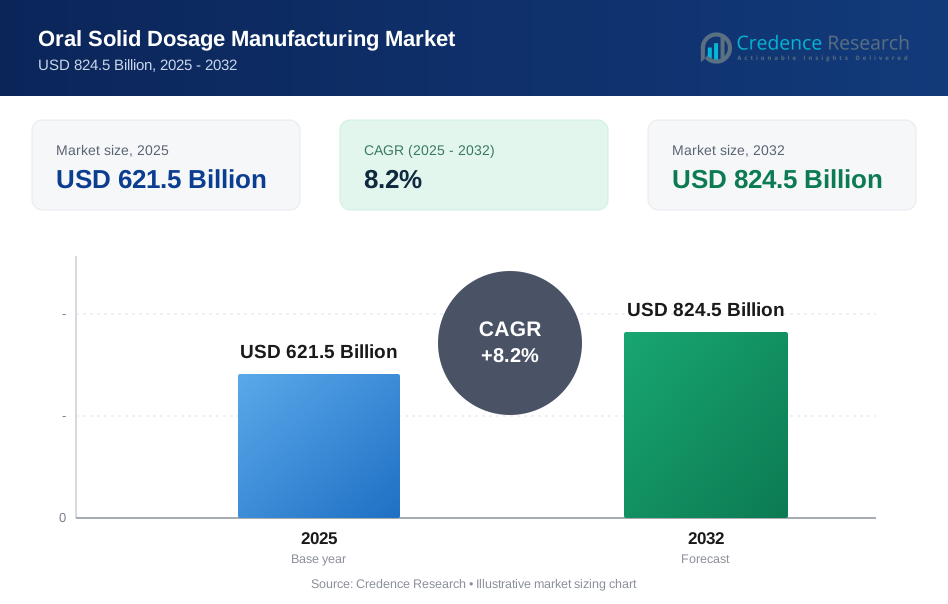
Oral Solid Dosage Manufacturing Market size was valued USD 621.5 Billion in 2025 and is anticipated to reach USD 824.5 Billion by 2032, at a CAGR of 4.2% during the forecast period.
| REPORT ATTRIBUTE | DETAILS |
|---|---|
| Historical Period | 2021-2024 |
| Base Year | 2025 |
| Forecast Period | 2025-2032 |
| Oral Solid Dosage Manufacturing Market Size 2025 | USD 621.5 Billion in 2025 |
| Oral Solid Dosage Manufacturing Market, CAGR | 4.2% |
| Oral Solid Dosage Manufacturing Market Size 2032 | USD 824.5 Billion |
Oral Solid Dosage Manufacturing Market Insights
- Market growth is primarily supported by rising outsourcing of formulation development and commercial manufacturing, increasing volumes of generic drugs, and strong demand for high-potency and modified-release oral formulations.
- Key trends include higher adoption of automation, continuous manufacturing, and advanced quality analytics, while competitive intensity is shaped by global CDMOs expanding capacity and strengthening end-to-end service portfolios.
- Market restraints include stringent regulatory compliance requirements, long validation timelines, and high capital investments for specialized containment and quality systems.
- Regionally, North America leads with an exact 42% market share, supported by strong R&D and outsourcing ecosystems, while tablets and capsules together account for the dominant segment, representing the majority share of total oral solid dosage demand.
Oral Solid Dosage Manufacturing Market Segmentation Analysis:
By Therapeutic Area
In the Oral Solid Dosage Manufacturing Market, cardiovascular diseases represent the dominant therapeutic area, accounting for approximately 32% market share, driven by the long-term, high-volume demand for tablets and capsules used in chronic hypertension, dyslipidemia, and heart failure management. High patient adherence requirements favor stable oral solid formulations with extended-release profiles. Oncology follows as a fast-growing segment due to rising use of oral chemotherapeutics and targeted small-molecule drugs. Metabolic and neurological disorders also contribute steadily, supported by increasing prevalence of diabetes, obesity, epilepsy, and neurodegenerative conditions that rely on daily oral dosing.
- For instance, Piramal Pharma Solutions has developed modified-release and immediate-release solid oral formulations across multiple cardiovascular and oncology molecules, supported by commercial-scale manufacturing lines capable of producing more than 10 billion oral solid units per year, high-potency handling suites designed for compounds with occupational exposure limits below 1 µg/m³, and validated processes that routinely achieve batch sizes exceeding 500 kg for chronic-therapy products, demonstrating robust technical depth across these therapeutic areas.
By Service
Fill-finish product manufacturing is the leading service segment, holding nearly 38% market share, as pharmaceutical companies increasingly outsource compression, encapsulation, coating, and final dosage preparation to specialized manufacturers. This dominance is driven by the need for scalable, GMP-compliant facilities capable of handling high batch volumes with consistent quality. Drug product development follows closely, supported by growing demand for formulation optimization and bioavailability enhancement. API manufacturing remains essential but more capital-intensive, while packaging and labelling services gain traction due to regulatory requirements for serialization, tamper evidence, and multi-language compliance in global oral solid drug distribution.
- For instance, Aenova Group operates more than 120 high-speed tablet presses and encapsulation machines across its global network, supports commercial production exceeding 15 billion oral solid units annually, runs coating lines capable of processing batches above 600 kg, and deploys serialization systems validated to process over 300 packs per minute, demonstrating strong technological depth across fill-finish, development, and packaging services.
By End-User
Large-size pharmaceutical companies dominate the end-user segment with an estimated 64% market share, supported by extensive commercial portfolios and continuous demand for high-volume oral solid dosage production. Their focus on cost efficiency, supply security, and global regulatory compliance drives long-term manufacturing contracts. Medium and small-size companies, while smaller in share, are increasingly important growth contributors, particularly for niche therapies and generics. These firms rely heavily on contract manufacturing to access advanced equipment, quality systems, and regulatory expertise without significant capital investment, reinforcing outsourcing trends across the oral solid dosage value chain.
Market Overview
Key Growth Drivers
Expanding Demand for Chronic Disease Therapies
The rising global prevalence of chronic conditions such as cardiovascular diseases, diabetes, oncology disorders, and neurological illnesses continues to drive sustained demand for oral solid dosage (OSD) formulations. Tablets and capsules remain the preferred dosage forms due to dosing accuracy, patient convenience, long shelf life, and cost efficiency in large-scale distribution. Pharmaceutical companies increasingly prioritize OSD formats for chronic therapies requiring long-term administration, repeat dosing, and high patient adherence. This consistent demand supports capacity expansion, process optimization, and contract manufacturing growth across both branded and generic drug portfolios.
- For instance, Recipharm AB operates more than 20 dedicated oral solid dosage facilities worldwide, supports commercial-scale tablet and capsule production exceeding 8 billion units annually, runs high-containment OSD suites designed for potent compounds with exposure limits below 10 µg/m³, and utilizes continuous blending and high-speed compression lines capable of sustained runs above 400,000 tablets per hour, demonstrating its technological readiness to meet long-term chronic therapy demand.
Growth of Generic and Branded Generic Pharmaceuticals
Patent expirations of blockbuster drugs and strong cost-containment pressures across healthcare systems are accelerating the shift toward generic and branded generic medicines, most of which are produced in oral solid dosage forms. OSD manufacturing offers scalability, regulatory familiarity, and well-established quality frameworks, making it the preferred platform for rapid generic launches. Emerging markets further amplify this driver as governments promote affordable medicines through domestic production incentives. As a result, manufacturers continue to invest in high-throughput compression, coating, and packaging technologies to meet growing volume requirements.
- For instance, Catalent Inc. has invested in large-scale oral solid dosage infrastructure capable of producing more than 20 billion tablets and capsules per year, operates high-speed tablet presses running above 1,000,000 tablets per hour, and deploys automated coating systems handling batch sizes exceeding 700 kg, enabling fast technology transfer and accelerated commercialization of generic and branded generic products across global markets.
Advancements in Manufacturing Technologies and Automation
Continuous manufacturing, advanced granulation techniques, and automated quality control systems are transforming oral solid dosage production efficiency and consistency. Process analytical technologies (PAT), real-time monitoring, and data-driven manufacturing enable tighter control over critical quality attributes while reducing batch failures and production downtime. These advancements support faster scale-up, lower operational costs, and improved regulatory compliance. Pharmaceutical manufacturers increasingly adopt digitally integrated production lines to enhance productivity, meet stringent regulatory expectations, and support complex formulations such as modified-release and high-potency oral solids.
Key Trends & Opportunities
Shift Toward High-Potency and Modified-Release Formulations
A key trend shaping the oral solid dosage manufacturing market is the growing focus on high-potency APIs and advanced release profiles, including sustained-release, delayed-release, and targeted delivery systems. These formulations improve therapeutic outcomes, reduce dosing frequency, and enhance patient adherence. Manufacturers are expanding specialized containment facilities and investing in precision coating and granulation technologies to safely handle potent compounds. This trend creates opportunities for contract development and manufacturing organizations (CDMOs) with advanced capabilities to support complex formulation development.
- For instance, CordenPharma International operates dedicated high-potency oral solid dosage (OSD) facilities notably at its Plankstadt, Germany Center of Excellence equipped with isolator-based containment systems designed for compounds with occupational exposure limits (OEL) as low as <0.05 µg/m³.
Increasing Outsourcing to Contract Manufacturing Organizations
Pharmaceutical companies are increasingly outsourcing oral solid dosage manufacturing to CDMOs to reduce capital expenditure, improve flexibility, and accelerate time-to-market. CDMOs offer integrated services ranging from formulation development to commercial-scale production and packaging. This trend is particularly strong among small and mid-sized pharmaceutical companies lacking in-house manufacturing infrastructure. As regulatory expectations rise, outsourcing partners with strong compliance records, global manufacturing footprints, and scalable capacity are well positioned to capture long-term growth opportunities.
- For instance, Siegfried Holding AG operates oral solid dosage manufacturing across multiple GMP-certified sites, supports annual production volumes exceeding 5 billion tablets and capsules, utilizes high-speed compression lines capable of running above 600,000 units per hour, and maintains validated continuous manufacturing and granulation processes handling batch sizes greater than 400 kg, underscoring its technical strength in supporting outsourced, end-to-end OSD manufacturing programs.
Key Challenges
Stringent Regulatory and Quality Compliance Requirements
Oral solid dosage manufacturing faces significant challenges related to evolving regulatory standards, including stricter requirements for data integrity, validation, and quality risk management. Compliance with global regulatory agencies demands continuous investment in documentation systems, audits, and workforce training. Any deviation can result in warning letters, production halts, or product recalls, impacting operational continuity. Maintaining consistent quality across high-volume production while meeting diverse regional regulatory expectations remains a persistent challenge for manufacturers.
Supply Chain Volatility and Raw Material Constraints
The oral solid dosage manufacturing market is increasingly exposed to supply chain disruptions affecting active pharmaceutical ingredients, excipients, and packaging materials. Dependence on limited geographic sources for APIs and key raw materials increases vulnerability to geopolitical tensions, logistics delays, and price volatility. These disruptions can lead to production delays, higher input costs, and inventory imbalances. Manufacturers must strengthen supplier diversification, inventory management, and risk mitigation strategies to ensure uninterrupted production and stable supply.
Regional Analysis
North America
North America leads the Oral Solid Dosage Manufacturing Market with an estimated 38% market share, driven by a mature pharmaceutical ecosystem, strong regulatory oversight, and high outsourcing penetration among branded and generic drug manufacturers. The United States anchors regional dominance through advanced GMP-compliant facilities, large-scale production capacities, and rapid adoption of continuous manufacturing and PAT-enabled processes. High prescription volumes for chronic diseases, robust demand for complex solid dosages such as modified-release tablets, and strong investments in capacity expansion by CDMOs continue to support market leadership across the region.
Europe
Europe accounts for approximately 29% of the global market share, supported by a strong base of generic drug manufacturers, well-established contract manufacturing networks, and stringent quality standards under EMA regulations. Countries such as Germany, Switzerland, and the UK play a central role due to advanced formulation expertise and high-volume tablet and capsule production. Growth is reinforced by rising demand for bioequivalent generics, increased focus on patient-centric dosage forms, and steady pharmaceutical exports. Sustainability initiatives and automation-driven efficiency improvements further strengthen Europe’s competitive position.
Asia Pacific
Asia Pacific holds an estimated 24% market share and represents the fastest-growing regional market, driven by expanding pharmaceutical production hubs in China, India, South Korea, and Southeast Asia. Cost-efficient manufacturing, a large skilled workforce, and strong API integration significantly enhance regional competitiveness. India’s leadership in generic medicines and export-oriented solid dosage manufacturing plays a pivotal role. Increasing regulatory compliance with US FDA and EU GMP standards, rising domestic healthcare demand, and growing investments by multinational CDMOs continue to accelerate regional market expansion.
Latin America
Latin America captures around 6% of the Oral Solid Dosage Manufacturing Market, supported by improving pharmaceutical infrastructure and rising demand for affordable generic medicines. Brazil and Mexico dominate regional activity due to expanding local manufacturing capabilities and favorable government initiatives aimed at reducing drug imports. Growth is driven by increasing chronic disease prevalence, expanding healthcare coverage, and gradual adoption of modern manufacturing technologies. However, limited high-end formulation capabilities and regulatory variability across countries moderately constrain faster market scaling in the region.
Middle East & Africa
The Middle East & Africa region accounts for approximately 3% market share, reflecting its emerging status in oral solid dosage manufacturing. Growth is primarily driven by healthcare infrastructure development, increasing pharmaceutical self-sufficiency initiatives, and rising demand for essential medicines. Countries in the Gulf Cooperation Council are investing in local manufacturing to reduce import dependence, while parts of Africa focus on basic tablet and capsule production. Despite challenges related to skilled workforce availability and regulatory harmonization, long-term opportunities remain supported by expanding populations and healthcare access.
Oral Solid Dosage Manufacturing Market Segmentations:
By Therapeutic Area:
- Oncology
- Cardiovascular diseases
By Service:
- Drug product development
- Fill finish product manufacturing
By End User:
- Large size companies
- Medium & small size companies
By Geography
- North America
- U.S.
- Canada
- Mexico
- Europe
- Germany
- France
- U.K.
- Italy
- Spain
- Rest of Europe
- Asia Pacific
- China
- Japan
- India
- South Korea
- South-east Asia
- Rest of Asia Pacific
- Latin America
- Brazil
- Argentina
- Rest of Latin America
- Middle East & Africa
- GCC Countries
- South Africa
- Rest of the Middle East and Africa
Competitive Landscape
The competitive landscape of the oral solid dosage manufacturing market players such as Piramal Pharma Solutions, Aenova Group, Recipharm AB, Catalent Inc., Corden Pharma International, Jubilant Pharmova Limited, Siegfried Holding AG, Patheon Pharma Services, Boehringer Ingelheim International GmbH, Lonza. the Oral Solid Dosage Manufacturing Market is defined by a high degree of consolidation, strong regulatory oversight, and increasing emphasis on integrated service capabilities. Manufacturers compete primarily on formulation expertise, compliance with global regulatory standards, manufacturing scale, and the ability to support complex oral solid dosage forms such as modified-release, high-potency, and low-dose products.
Market participants are strengthening their positions through capacity expansions, process automation, and adoption of advanced quality management systems to meet growing demand from both innovator and generic drug developers. Strategic partnerships and long-term supply agreements are widely used to secure stable demand and enhance customer retention. In addition, investments in continuous manufacturing, digital process control, and analytical technologies are improving operational efficiency and reducing time-to-market. Overall, competition is intensifying as sponsors increasingly favor manufacturers that can deliver reliability, flexibility, and end-to-end support across development and commercial production stages.
Key Player Analysis
- Piramal Pharma Solutions
- Aenova Group
- Recipharm AB
- Catalent Inc.
- Corden Pharma International
- Jubilant Pharmova Limited
- Siegfried Holding AG
- Patheon Pharma Services
- Boehringer Ingelheim International GmbH
- Lonza
Recent Developments
- In December 2024, Novo Holdings completed its acquisition of Catalent. As part of the transaction, Novo Nordisk acquired three of Catalent's manufacturing sites in Italy, Belgium, and the U.S. This strategic move aimed to bolster Novo Nordisk's production capacity for its GLP-1 injectable, Wegovy, addressing supply constraints due to high demand.
- In February 2024, Mikart LLC announced the addition of advanced Fette double-sided tablet presses to broaden its oral solid dosage production capacity. This integration enables Mikart to enhance its operation capabilities in a significant market.
- In February 2024, Catalent, Inc. announced in February 2024 that they upgraded their Boston facility for Dry Powders for Inhalation (DPI), adding potent drug handling with isolators, advanced spray-drying capacity, and specialized capsule filling for safer, more effective delivery of high-potency medications, making them a leading CDMO in this area.
Report Coverage
The research report offers an in-depth analysis based on Therapeutic Area, Service, End-User and Geography. It details leading market players, providing an overview of their business, product offerings, investments, revenue streams, and key applications. Additionally, the report includes insights into the competitive environment, SWOT analysis, current market trends, as well as the primary drivers and constraints. Furthermore, it discusses various factors that have driven market expansion in recent years. The report also explores market dynamics, regulatory scenarios, and technological advancements that are shaping the industry. It assesses the impact of external factors and global economic changes on market growth. Lastly, it provides strategic recommendations for new entrants and established companies to navigate the complexities of the market.
Future Outlook
- Demand for oral solid dosage manufacturing will increase steadily due to the continued dominance of tablets and capsules in global drug development pipelines.
- Manufacturers will invest more in high-potency and low-dose capabilities to support oncology and specialty therapies.
- Adoption of continuous manufacturing technologies will accelerate to improve efficiency, consistency, and scalability.
- Digitalization and data-driven quality control will gain importance to enhance regulatory compliance and process reliability.
- Outsourcing to contract manufacturers will grow as pharmaceutical companies focus on core R&D activities.
- Formulation innovation for modified-release and patient-centric dosage forms will become a key competitive differentiator.
- Regulatory expectations for quality, traceability, and validation will remain stringent, driving ongoing compliance investments.
- Capacity expansion in emerging markets will support cost optimization and regional supply resilience.
- Sustainability initiatives will influence facility design, energy usage, and waste management practices.
- Strategic partnerships and long-term manufacturing agreements will strengthen supply security and market stability.
Request a Free Sample
Fill in your details and we'll send you a free sample report.
- Sample data tables & charts
- Research methodology
Need a Custom Version of This Report?
Tailor the scope, geography, or segments to your exact requirements.
- Custom geography or segment scope
- Direct access to our analyst team
Frequently Asked Questions
What is the current market size for the Oral Solid Dosage Manufacturing Market, and what is its projected size in 2032?
At what Compound Annual Growth Rate is the Oral Solid Dosage Manufacturing Market projected to grow between 2025 and 2032?
Which Oral Solid Dosage Manufacturing Market segment held the largest share in 2024?
What are the primary factors fueling the growth of the Oral Solid Dosage Manufacturing Market?
Who are the leading companies in the Oral Solid Dosage Manufacturing Market?
Which region commanded the largest share of the Oral Solid Dosage Manufacturing Market in 2024?
Table of Content
Chapter 1. Report Introduction
- 1.1 Report Description & Purpose
- 1.1.1 Report Title & Market Definition
- 1.1.2 Unique Selling Propositions (USP) & Key Differentiators
- 1.1.3 Value Proposition for Stakeholders
- 1.2 Research Objectives
- 1.2.1 Market Sizing Objectives (Volume & Revenue) (Volume Where Applicable)
- 1.2.2 Segmentation Objectives
- 1.2.3 Competitive Intelligence Objectives
- 1.2.4 Forecast & Scenario Objectives
- 1.3 Report Scope
- 1.3.1 Oral Solid Dosage Manufacturing Scope – Segments & Subsegments Covered
- 1.3.2 Geographic Scope – Regions & Countries Covered
- 1.3.3 Historical Period, Base Year & Forecast Period (2025; forecast to 2032)
- 1.3.4 Inclusions & Exclusions
- 1.4 Industry Classification & Applicable Codes
- 1.5 Currency, Measurement Units & Valuation Basis
- 1.6 Target Stakeholders
- 1.7 Limitations & Assumptions
Chapter 2. Executive Summary
- 2.1 Global Oral Solid Dosage Manufacturing Market Snapshot
- 2.1.1 Market Size – Historical (2025) & Forecast (2025-2032) (2025: USD 621.5 Billion → 2032: USD 824.5 Billion)
- 2.1.2 Volume & Revenue – Global Totals (Volume Where Applicable)
- 2.1.3 Key Market Highlights – Top Five Facts
- 2.2 Oral Solid Dosage Manufacturing Market Segmentation Snapshot
- 2.2.1 Market Split by Region – 2025 vs. 2032
- 2.3 Competitive Snapshot
- 2.3.1 Top 10 Players by Revenue Share – 2025
- 2.3.2 Top 10 Players by Volume Share – 2025 (Volume Where Applicable)
- 2.3.3 Recent Strategic Developments (18-Month Summary)
- 2.4 Key Investment Highlights & Strategic Conclusions
Chapter 3. Oral Solid Dosage Manufacturing Market Dynamics & Industry Analysis
- 3.1 Market Overview & Context
- 3.1.1 Oral Solid Dosage Manufacturing Market Position in the Broader Industry Value Chain
- 3.1.2 Demand Structure & Purchasing Dynamics
- 3.1.3 Market Maturity & Development Stage by Region
- 3.2 Oral Solid Dosage Manufacturing Market Drivers
- 3.3 Oral Solid Dosage Manufacturing Market Restraints & Challenges
- 3.4 Oral Solid Dosage Manufacturing Market Opportunities
- 3.5 Porter's Five Forces Analysis
- 3.5.1 Threat of New Entrants
- 3.5.2 Bargaining Power of Suppliers
- 3.5.3 Bargaining Power of Buyers
- 3.5.4 Threat of Substitutes
- 3.5.5 Competitive Rivalry – Intensity Assessment
- 3.6 Oral Solid Dosage Manufacturing Value Chain Analysis
- 3.6.1 Upstream – Key Inputs, Resources & Suppliers
- 3.6.1.1 Key Input/Resource 1
- 3.6.1.2 Key Input/Resource 2
- 3.6.1.3 Key Input/Resource 3
- 3.6.2 Midstream – Core Operations & Value Creation
- 3.6.2.1 Operating Model & Process Overview
- 3.6.2.2 Key Operating Locations & Capabilities by Company
- 3.6.3 Downstream – Market Channels & End Users
- 3.6.3.1 Direct Sales & Customer Engagement Channels
- 3.6.3.2 Indirect Sales, Intermediaries & Partner Channels
- 3.6.4 Value Chain Profitability Analysis
- 3.6.1 Upstream – Key Inputs, Resources & Suppliers
- 3.7 PESTEL Analysis
- 3.7.1 Political Factors
- 3.7.2 Economic Factors
- 3.7.3 Social Factors
- 3.7.4 Technological Factors
- 3.7.5 Environmental Factors
- 3.7.6 Legal Factors
- 3.8 Oral Solid Dosage Manufacturing Supply Chain Analysis
- 3.8.1 Critical Input & Resource Availability Risk Assessment
- 3.8.2 Supplier & Operational Concentration Risk (Geographic Exposure)
- 3.8.3 Supply & Service Disruption Impact Analysis
- 3.9 Regulatory & Policy Landscape
Note: The regulatory and policy landscape section covers regulations based on their applicability to the market, Oral Solid Dosage Manufacturing category, geography, and scope of the study. Only regulatory frameworks with a material impact on operations, compliance, trade, sustainability, or market access are analyzed in detail.
Chapter 4. Key Investment Pockets & Opportunity Analysis
- 4.1 Oral Solid Dosage Manufacturing Market Attractiveness Analysis
- 4.1.1 By Region – Investment Attractiveness Matrix (Market Size × CAGR)
- 4.2 Absolute Revenue Growth Opportunity
- 4.2.1 By Region – Absolute Revenue Growth Through 2032
- 4.3 Incremental Demand Opportunity
- 4.3.1 By Region – Incremental Demand Through 2032
- 4.3.2 Segment – Incremental Demand
- 4.4 Emerging Submarket Opportunity Deep Dive (Subject to Applicability)
- 4.5 Priority Market Opportunity Scorecards
- 4.5.1 United States
- 4.5.2 Europe
- 4.5.3 Asia
- 4.5.4 Middle East & Africa
Note: Priority market opportunity scorecards reflect the geographic scope and strategic relevance of the study. Listed markets are indicative and may be adapted to the industry.
Chapter 5. Oral Solid Dosage Manufacturing Cross-Border Trade & Market Access Analysis
- 5.1 International Trade & Cross-Border Activity Overview
- 5.1.1 Global Export Value by Country (2025)
- 5.1.2 Global Export Volume by Country (2025) (Volume Where Applicable)
- 5.1.3 Global Import Value by Country (2025)
- 5.1.4 Global Import Volume by Country (2025) (Volume Where Applicable)
- 5.1.5 Net Trade Balance by Country (2025)
- 5.2 Export Analysis – Segment
- 5.2.1 Category 1 (Applicable Classification Code)
- 5.2.2 Category 2 (Applicable Classification Code)
- 5.2.3 Category 3 (Applicable Classification Code)
- 5.2.4 Category 4 (Applicable Classification Code)
- 5.2.5 Category 5 (Applicable Classification Code)
- 5.3 Import Analysis – Segment
- 5.3.1 Category 1 (Applicable Classification Code)
- 5.3.2 Category 2 (Applicable Classification Code)
- 5.3.3 Category 3 (Applicable Classification Code)
- 5.3.4 Category 4 (Applicable Classification Code)
- 5.3.5 Category 5 (Applicable Classification Code)
- 5.4 Cross-Border Pricing & Transaction Benchmarks
- 5.4.1 Export Pricing – Segment & Country
- 5.4.2 Import Pricing – Segment & Source Country
- 5.4.3 Price Trends (2025)
- 5.5 Key Cross-Border Trade & Delivery Routes
- 5.5.1 Cross-Border Trade/Delivery Route 1
- 5.5.2 Cross-Border Trade/Delivery Route 2
- 5.5.3 Cross-Border Trade/Delivery Route 3
- 5.5.4 Cross-Border Trade/Delivery Route 4
- 5.5.5 Cross-Border Trade/Delivery Route 5
- 5.6 Trade Policy & Market Access Impact Assessment
- 5.6.1 Tariff & Non-Tariff Barriers
- 5.6.2 Regional Trade & Economic Integration Frameworks
- 5.6.3 Bilateral & Multilateral Trade Agreements
- 5.6.4 Cross-Border Operating, Licensing & Localization Requirements
Note: This chapter applies where cross-border trade or delivery is relevant to Oral Solid Dosage Manufacturing. Goods, services, and digital offerings are assessed using applicable classifications and transaction measures. Import-export volumes, trade balances, and route analyses are included only where meaningful to the market.
Chapter 6. Competitive Landscape & Company Benchmarking
- 6.1 Oral Solid Dosage Manufacturing Market Concentration & Structure
- 6.1.1 Herfindahl-Hirschman Index (HHI) – vs. 2025
- 6.1.2 Leading, Mid-Sized & Emerging Player Structure
- 6.1.3 Global, Regional & Local Player Dynamics
- 6.2 Oral Solid Dosage Manufacturing Market Share Analysis – 2025
- 6.2.1 Global Revenue Share by Company
- 6.2.2 Global Volume Share by Company (Volume Where Applicable)
- 6.2.3 Regional Revenue Share
- 6.2.4 Market Share Evolution ( vs. 2025)
- 6.2.5 Company Market Share by Key Segment
- 6.2.6 Company Market Share by Customer Group
- 6.3 Operating Scale, Capacity & Infrastructure Analysis
- 6.3.1 Global Operating Scale & Supply Capacity
- 6.3.2 Resource Utilization & Operating Efficiency
- 6.3.3 Output, Service Delivery & Activity Metrics
- 6.3.4 Operating Footprint & Infrastructure Map
- 6.3.5 Planned Operational & Capacity Expansion
- 6.4 Oral Solid Dosage Manufacturing Competitive Benchmarking Matrix
- 6.4.1 Revenue, Growth, Profitability & Operating Metric Comparison
- 6.4.2 Channel Revenue Mix
- 6.4.3 Geographic Revenue Exposure
- 6.4.4 R&D Intensity
- 6.4.5 Sustainability Maturity
- 6.5 Strategic Developments in Oral Solid Dosage Manufacturing (Last 24 Months)
- 6.5.1 Mergers, Acquisitions & Divestments
- 6.5.2 New Products, Services & Solutions in Oral Solid Dosage Manufacturing
- 6.5.3 Operational & Infrastructure Expansions
- 6.5.4 Strategic Alliances, Joint Ventures & Partnerships
- 6.5.5 Distribution Expansion & Market Entry
- 6.5.6 Sustainability & ESG Initiatives
- 6.6 Competitive Strategy Mapping
- 6.6.1 Leader, Challenger, Follower & Niche Classification
- 6.6.2 Pricing Strategy Comparison
- 6.6.3 Channel Strategy Matrix
Note: Strategic developments are included based on their materiality and the availability of reliable information.
Chapter 7. Global Oral Solid Dosage Manufacturing Market – By Sales & Delivery Channel
- 7.1 Segment Overview
- 7.1.1 Volume & Revenue Split by Channel (2025 & 2032) (Volume Where Applicable)
- 7.1.2 Channel Mix Evolution (2025-2032)
Chapter 8. Regional Market Analysis – Global Overview
- 8.1 Global Regional Overview
- 8.1.1 Regional Volume Share (Volume Where Applicable)
- 8.1.2 Regional Revenue Share
- 8.1.3 Regional Volume by Region (Volume Where Applicable)
- 8.1.4 Regional Revenue by Region
- 8.1.5 Regional Forecast Through 2032
- 8.2 Cross-Regional Segment Analysis
- 8.2.1 By Sales & Delivery Channel
- 8.2.2 By Competitive Positioning & Price Tier
Chapter 9. North America Oral Solid Dosage Manufacturing Market
- 9.1 United States
- 9.2 Canada
- 9.3 Mexico
Chapter 10. Europe Oral Solid Dosage Manufacturing Market
- 10.1 Germany
- 10.2 France
- 10.3 Italy
- 10.4 United Kingdom
- 10.5 Spain
- 10.6 Poland
- 10.7 Russia
- 10.8 Netherlands
- 10.9 Belgium
- 10.10 Sweden
- 10.11 Denmark
- 10.12 Norway
- 10.13 Rest of Europe
Chapter 11. Asia Pacific Oral Solid Dosage Manufacturing Market
- 11.1 China
- 11.2 India
- 11.3 Japan
- 11.4 South Korea
- 11.5 Thailand
- 11.6 Indonesia
- 11.7 Vietnam
- 11.8 Malaysia
- 11.9 Australia
- 11.10 Rest of Asia Pacific
Chapter 12. Latin America Oral Solid Dosage Manufacturing Market
- 12.1 Brazil
- 12.2 Argentina
- 12.3 Colombia
- 12.4 Chile
- 12.5 Rest of Latin America
Chapter 13. Middle East Oral Solid Dosage Manufacturing Market
- 13.1 Saudi Arabia
- 13.2 United Arab Emirates
- 13.3 Turkey
- 13.4 Israel
- 13.5 Iran
- 13.6 Rest of the Middle East
Chapter 14. Africa Oral Solid Dosage Manufacturing Market
- 14.1 South Africa
- 14.2 Egypt
- 14.3 Nigeria
- 14.4 Morocco
- 14.5 Rest of Africa
Chapter 15. Oral Solid Dosage Manufacturing Company Profiles
- 15.1 [Company 01]
- 15.1.1 Company Overview
- 15.1.2 Key Management Personnel
- 15.1.3 Products & Services Portfolio
- 15.1.4 Financial Performance
- 15.1.5 Key Market Focus & Geographic Presence
- 15.1.6 Recent Developments & Strategic Initiatives
Note: The company profile list is preliminary and may change based on research findings, market developments, data availability, and client requirements.
Chapter 16. Appendices
- Appendix A – List of Abbreviations & Acronyms
- Appendix B – Industry Classification Code Reference – Full Series
- Appendix C – Supply, Output & Operating Capacity Data Tables
- Appendix D – End-Use & Demand Base Tables
- Appendix E – Demand, Adoption & Usage Assumptions
- Appendix F – Pricing & Revenue Metric Reference Tables
- Appendix G – Company Operations & Infrastructure Database
- Appendix H – Cross-Border Trade & Activity Data Tables (Where Applicable)
- Appendix I – Regulatory Summary Tables
- Appendix J – Primary Research Participant List (Anonymized)
- Appendix K – Primary Research Questionnaire Framework
- Appendix L – Data Sources & Bibliography
- Appendix M – Market Size Divergence & Source Comparison
Chapter 17. Research Methodology
- 17.1 Research Framework & Philosophy
- 17.2 Secondary Research – Sources, Hierarchy & Data Extraction
- 17.3 Data Modeling – Bottom-Up & Top-Down Market Sizing
- 17.4 Primary Research – Stakeholder Framework, LOI & Sample Sizes
- 17.5 Forecast Methodology – Regression, Scenario & Sensitivity Analysis
- 17.6 Quality Control – Four-Layer Validation Framework
- 17.7 Limitations & Standard Assumptions
- 17.8 Disclaimer
