Market Overview
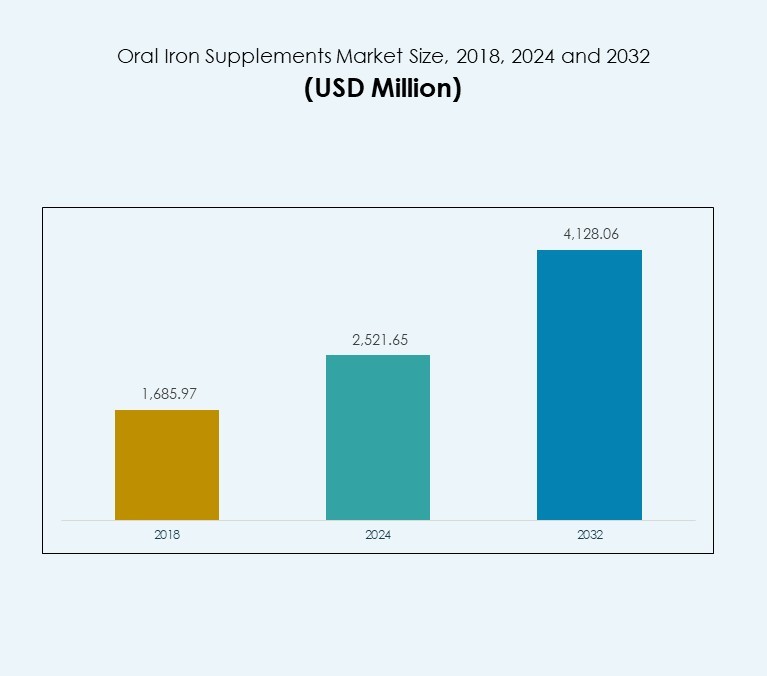
The Oral Iron Supplements Market is expected to reach USD 4,128.06 Million by 2032 growing at a CAGR of 6.33% between 2025 and 2032.| REPORT ATTRIBUTE | DETAILS |
|---|---|
| Historical Period | 2020-2023 |
| Base Year | 2024 |
| Forecast Period | 2025-2032 |
| Oral Iron Supplements Market Size 2024 | USD 2,521.65 Million |
| Oral Iron Supplements Market, CAGR | 6.33% |
| Oral Iron Supplements Market Size 2032 | USD 4,128.06 Million |
| USP & Key Offerings | Target Audience | Key Benefits for Stakeholders |
| Market Size in terms of Revenue (USD Million) from 2018 to 2032, Historical Data 2018 to 2024, Forecasts & Predictive Analysis from 2025 to 2032 | Industry Investors | The report covers forecast and analysis for the Oral Iron Supplements Market on a global and regional level. |
| Market Drivers, Restraints, Opportunities, & Regional Market Trends, Market Attractiveness Analysis, Segment Analysis by Region and Country | Consultants | The study includes drivers and restraints of the Market along with the impact they have on the demand over the forecast period. |
| Competitive Landscape and Company Market Share Analysis | Product Manufacturers | The report includes the study of potential growth opportunities available in the Oral Iron Supplements Market on a global level. |
| Porter’s Five Forces Analysis, Value Chain Analysis and PEST Analysis | Manufacturers | Porter’s five forces analysis illustrates the degree of competition along with the potency of buyers and suppliers operating in the industry. |
| Regulatory Landscape and Delivery Mode Landscape | End Users | The report covers forecast and analysis for the Oral Iron Supplements Market on a global and regional level. |
| Market Size in terms of Revenue (USD Million) from 2018 to 2032, Historical Data 2018 to 2024, Forecasts & Predictive Analysis from 2025 to 2032 | Researchers and Academics | The report offers detailed insights into key market players, including their market share, strategic developments, product offerings, and regional presence-enabling stakeholders to benchmark performance, identify strategic partnerships, and craft effective go-to-market strategies. |
Executive Summary
 Regional Summary
The global demand for the Oral Iron Supplements Market was valued at USD 2,521.65 Million in 2024 is expected to reach USD 4,128.06 Million in 2032 growing at a CAGR of 6.33% between 2025 and 2032. The growth is largely driven by the rising prevalence of iron-deficiency anaemia, one of the most widespread nutritional disorders globally. Increasing awareness of the health risks linked to iron deficiency, along with the growing preference for cost-effective and easily accessible treatment options, is further accelerating the adoption of oral iron supplements.
North America holds the largest share of the oral iron supplements market in 2024, accounting for 36.54% of the global market. The growth is strongly influenced by the rising incidence of iron-deficiency anaemia (IDA), with consumers increasingly recognizing dietary supplements as an effective solution. The demand for personalized nutrition is also accelerating, as highlighted by the National Institutes of Health (NIH) in 2024, reflecting a broader trend toward tailored health solutions. This has led to growing interest in iron supplements that cater to specific dietary preferences, such as vegan and gluten-free formulations.
Asia Pacific is expected to witness the fastest growth in the oral iron supplements market, registering a CAGR of 7.74% during the forecast period. This growth is driven by the high prevalence of iron-deficiency anemia (IDA), a large target population, increasing health awareness, and strategic initiatives by local and international supplement manufacturers. Expanding access to affordable healthcare, along with government programs aimed at improving nutritional outcomes, is further supporting the adoption of oral iron therapies across the region.
In India, for instance, government-led initiatives are actively promoting iron supplementation to meet public health targets. Programs such as the ‘Anemia Mukt Bharat’ initiative, launched in 2018, aim to reduce anemia prevalence across all age groups through widespread testing, treatment, and supplementation. Complementary schemes such as the Ayushman Bharat School Health and Wellness Program focus on preventive nutrition, targeting school-aged children and adolescents. These initiatives, combined with rising consumer awareness and growing distribution networks including pharmacies, healthcare centers, and e-commerce platforms are driving strong demand for oral iron supplements throughout the Asia Pacific region.
The global oral iron supplements market is projected to generate an absolute growth opportunity of USD 1,606.41 million between 2025 and 2032, driven by the increasing prevalence of iron-deficiency anaemia (IDA) and the rising demand for preventive healthcare solutions. The market expansion reflects the growing emphasis on accessible, cost-effective, and patient-friendly supplementation options. Increasing consumer health awareness, government initiatives to combat anaemia, and the availability of personalized formulations including vegan and gluten-free options are shaping the adoption of oral iron therapies globally.
Amid this global momentum, Asia Pacific is expected to contribute USD 568.99 million to the overall growth. The region’s substantial population base, particularly in India and China, continues to face a high prevalence of iron-deficiency anaemia, which significantly drives demand for oral iron therapies. Rising disposable incomes, rapid urbanization, and improvements in healthcare infrastructure are enhancing access and affordability of these supplements. Furthermore, increasing public and private initiatives aimed at raising awareness of nutritional health and maternal care, coupled with expanding pharmaceutical distribution networks and the surge of e-commerce channels, are making oral iron supplements more widely available to a broader segment of the population.
Regional Summary
The global demand for the Oral Iron Supplements Market was valued at USD 2,521.65 Million in 2024 is expected to reach USD 4,128.06 Million in 2032 growing at a CAGR of 6.33% between 2025 and 2032. The growth is largely driven by the rising prevalence of iron-deficiency anaemia, one of the most widespread nutritional disorders globally. Increasing awareness of the health risks linked to iron deficiency, along with the growing preference for cost-effective and easily accessible treatment options, is further accelerating the adoption of oral iron supplements.
North America holds the largest share of the oral iron supplements market in 2024, accounting for 36.54% of the global market. The growth is strongly influenced by the rising incidence of iron-deficiency anaemia (IDA), with consumers increasingly recognizing dietary supplements as an effective solution. The demand for personalized nutrition is also accelerating, as highlighted by the National Institutes of Health (NIH) in 2024, reflecting a broader trend toward tailored health solutions. This has led to growing interest in iron supplements that cater to specific dietary preferences, such as vegan and gluten-free formulations.
Asia Pacific is expected to witness the fastest growth in the oral iron supplements market, registering a CAGR of 7.74% during the forecast period. This growth is driven by the high prevalence of iron-deficiency anemia (IDA), a large target population, increasing health awareness, and strategic initiatives by local and international supplement manufacturers. Expanding access to affordable healthcare, along with government programs aimed at improving nutritional outcomes, is further supporting the adoption of oral iron therapies across the region.
In India, for instance, government-led initiatives are actively promoting iron supplementation to meet public health targets. Programs such as the ‘Anemia Mukt Bharat’ initiative, launched in 2018, aim to reduce anemia prevalence across all age groups through widespread testing, treatment, and supplementation. Complementary schemes such as the Ayushman Bharat School Health and Wellness Program focus on preventive nutrition, targeting school-aged children and adolescents. These initiatives, combined with rising consumer awareness and growing distribution networks including pharmacies, healthcare centers, and e-commerce platforms are driving strong demand for oral iron supplements throughout the Asia Pacific region.
The global oral iron supplements market is projected to generate an absolute growth opportunity of USD 1,606.41 million between 2025 and 2032, driven by the increasing prevalence of iron-deficiency anaemia (IDA) and the rising demand for preventive healthcare solutions. The market expansion reflects the growing emphasis on accessible, cost-effective, and patient-friendly supplementation options. Increasing consumer health awareness, government initiatives to combat anaemia, and the availability of personalized formulations including vegan and gluten-free options are shaping the adoption of oral iron therapies globally.
Amid this global momentum, Asia Pacific is expected to contribute USD 568.99 million to the overall growth. The region’s substantial population base, particularly in India and China, continues to face a high prevalence of iron-deficiency anaemia, which significantly drives demand for oral iron therapies. Rising disposable incomes, rapid urbanization, and improvements in healthcare infrastructure are enhancing access and affordability of these supplements. Furthermore, increasing public and private initiatives aimed at raising awareness of nutritional health and maternal care, coupled with expanding pharmaceutical distribution networks and the surge of e-commerce channels, are making oral iron supplements more widely available to a broader segment of the population.
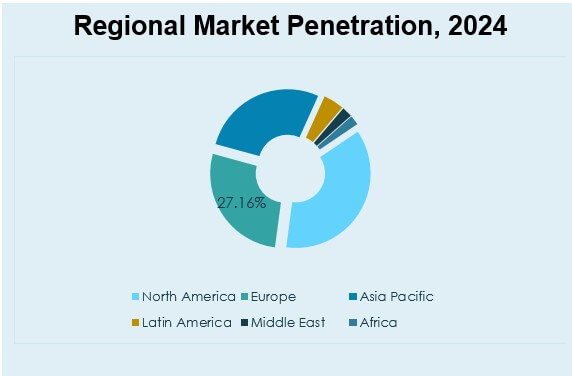 In 2024, Europe accounted for a significant 27.16% share of the global oral iron supplements market. Growth in the region is primarily driven by the high prevalence of iron deficiency and anaemia, particularly among women of reproductive age, adolescents, and individuals adhering to restrictive diets such as vegetarian or vegan lifestyles. Rising awareness of preventive healthcare, along with government-led initiatives promoting food fortification and iron supplementation during pregnancy, continues to support strong demand for oral iron therapies.
According to the World Health Organization (WHO), anaemia affects between 20.0% and 39.9% of pregnant women aged 15–49 years in Europe, with a mean prevalence of 24.5%, predominantly caused by iron deficiency (ID). The high physiological requirement for iron places significant strain on dietary intake and absorption, which are influenced not only by the quantity but also by the quality of iron consumed. In Europe, nearly 40% of women of reproductive age have small or absent iron reserves (serum ferritin <30 μg/L), largely due to inadequate intake compared with recommended levels. For instance, studies on Danish women of reproductive age show that only 20–30% have sufficient reserves (serum ferritin >60–70 μg/L) to complete a pregnancy without supplementation and without developing iron deficiency or iron-deficiency anaemia (IDA).
In 2024, Europe accounted for a significant 27.16% share of the global oral iron supplements market. Growth in the region is primarily driven by the high prevalence of iron deficiency and anaemia, particularly among women of reproductive age, adolescents, and individuals adhering to restrictive diets such as vegetarian or vegan lifestyles. Rising awareness of preventive healthcare, along with government-led initiatives promoting food fortification and iron supplementation during pregnancy, continues to support strong demand for oral iron therapies.
According to the World Health Organization (WHO), anaemia affects between 20.0% and 39.9% of pregnant women aged 15–49 years in Europe, with a mean prevalence of 24.5%, predominantly caused by iron deficiency (ID). The high physiological requirement for iron places significant strain on dietary intake and absorption, which are influenced not only by the quantity but also by the quality of iron consumed. In Europe, nearly 40% of women of reproductive age have small or absent iron reserves (serum ferritin <30 μg/L), largely due to inadequate intake compared with recommended levels. For instance, studies on Danish women of reproductive age show that only 20–30% have sufficient reserves (serum ferritin >60–70 μg/L) to complete a pregnancy without supplementation and without developing iron deficiency or iron-deficiency anaemia (IDA).
ORAL IRON SUPPLEMENTS MARKET FORCES & INDUSTRY PULSE
Untapped Horizons – Growth Potential & Opportunities and Strategic Navigation – Industry Frameworks
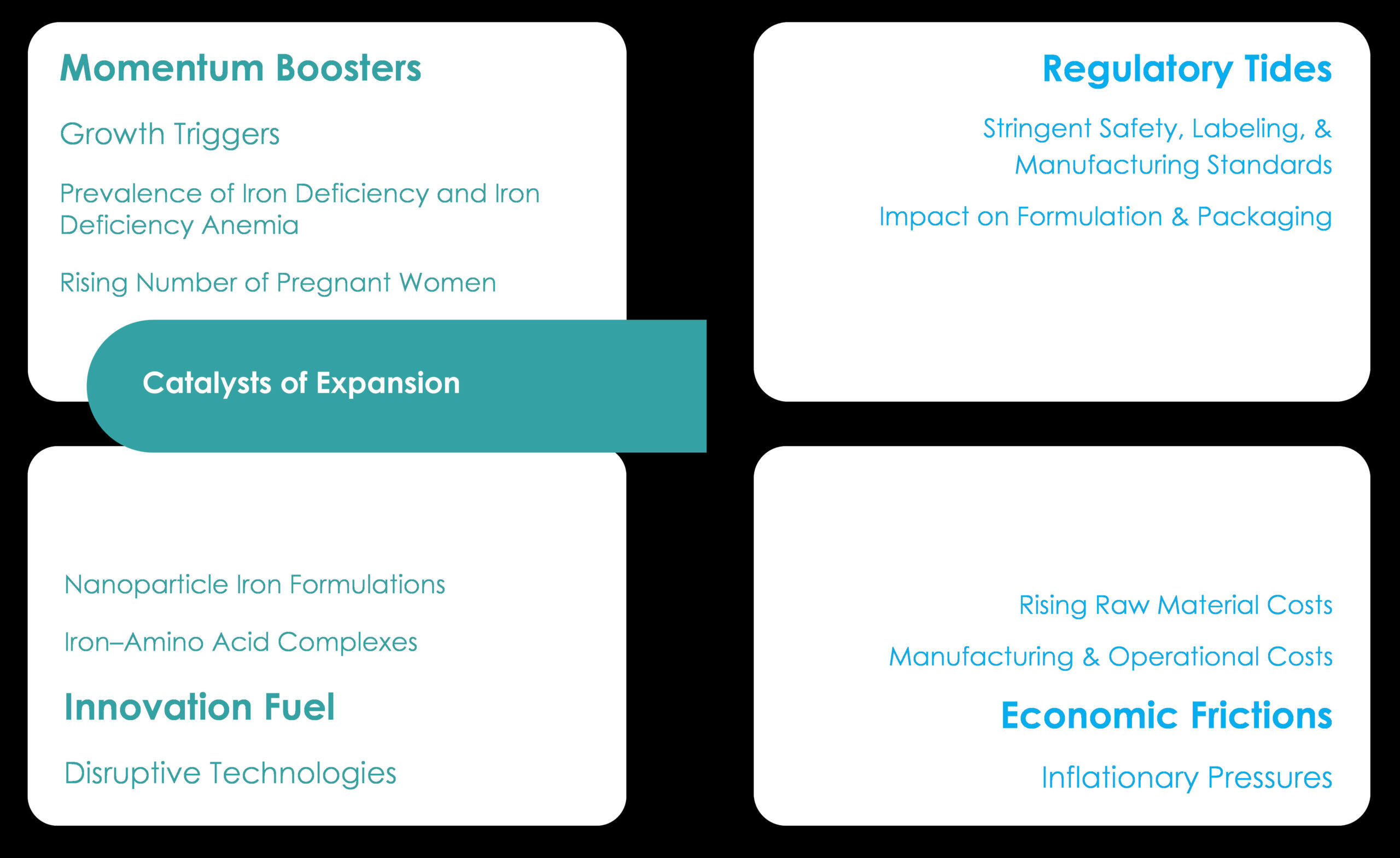
The global oral iron supplements market is poised for significant growth, driven primarily by the rising prevalence of iron deficiency anemia (IDA). Over 1.6 billion people worldwide are affected, particularly women of reproductive age, pregnant women, and children in developing regions. This sustained need for supplementation creates a robust demand base that continues to expand as awareness of the health risks associated with iron deficiency rises. Increasing health consciousness and preventive care trends further fuel market growth. Consumers are more proactive in addressing fatigue, cognitive issues, and other anemia-related symptoms, which has led to a higher uptake of oral iron supplements. Additionally, the growth of wellness-focused nutrition and preventive healthcare initiatives by governments and private organizations is encouraging consumers to integrate iron supplementation into their daily routines. Technological innovations in supplement formulations present another avenue for growth. Disruptive technologies such as liposomal iron, Sucrosomial iron, nanoparticle iron, and iron-amino acid complexes enhance bioavailability, reduce gastrointestinal side effects, and improve patient compliance. These advanced formulations also open opportunities for functional fortification in food and beverages, such as iron-fortified cereals or drinks, thereby expanding the reach of iron supplementation beyond traditional tablets and capsules.Ecosystem Dynamics – Value Chain Analysis
| Raw Material Procurement | Manufacturing & Formulation | Packaging & Quality Control | Distribution & Supply Chain |
| The foundation of the value chain lies in the sourcing of active pharmaceutical ingredients (APIs) such as ferrous sulfate, ferrous gluconate, ferric citrate, and innovative complexes like heme iron polypeptides and polysaccharide-iron complexes. Suppliers of pharmaceutical-grade excipients (binders, coatings, stabilizers) also play a vital role. Global raw material supply is moderately concentrated, with India and China acting as key producers of iron salts due to cost efficiency and large-scale chemical manufacturing. Ensuring sustainable and high-purity sourcing is becoming increasingly important, given rising regulatory scrutiny in Europe and North America. | The manufacturing stage focuses on converting raw ingredients into stable, effective, and consumer-friendly formulations. This includes tablets, capsules, syrups, gummies, powders, and novel slow-release or liposomal formulations that improve bioavailability and compliance. Advanced processing technologies, including microencapsulation and controlled-release systems, are driving differentiation. Global manufacturers are also investing in clean-label and allergen-free formulations to cater to consumer demand for safer, natural, and vegan-friendly products. | Packaging serves both functional and regulatory roles. Child-resistant, tamper-proof, and compliance-friendly blister packs, sachets, and bottles are standard in regulated markets. Traceability, serialization, and adherence to Good Manufacturing Practices (GMP) are essential to ensure quality and safety. Packaging innovation is also influenced by sustainability trends, with leading firms adopting recyclable and biodegradable materials. | The distribution layer has diversified, with pharmacies, hospitals, retail chains, and supermarkets traditionally dominating sales. However, e-commerce and direct-to-consumer (D2C) platforms have emerged as the fastest-growing channels, particularly in North America, Europe, and Asia Pacific. Online channels offer product personalization, subscription models, and educational outreach, which are improving adherence rates. Partnerships with government and NGO-led healthcare programs, especially in APAC and Africa, provide large-scale distribution opportunities targeting vulnerable populations. |
Competitive Landscape
Company Market Share Analysis
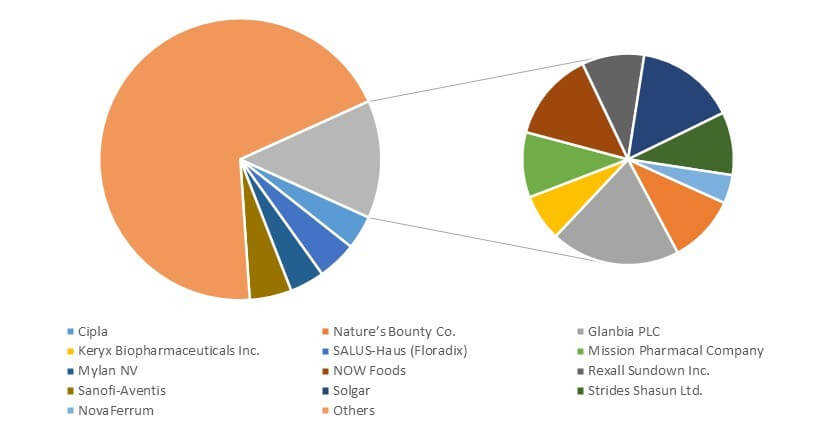 The global oral iron supplements market exhibits a highly fragmented competitive landscape, where multinational pharmaceutical leaders operate alongside specialized nutraceutical brands. Unlike consolidated pharmaceutical sectors dominated by a few large companies, this segment is marked by broad diversity in product portfolios, target demographics, and distribution strategies. Notably, smaller regional and emerging players together account for 69.33% of the global market, highlighting the intensity of competition and the importance of localized approaches in driving growth. Leading players such as Sanofi-Aventis, SALUS-Haus (Floradix), Mylan NV, Cipla, and Glanbia PLC together capture less than 20% of the market share, reflecting the sector’s dispersed nature.
Among them, Sanofi-Aventis holds the largest individual share at 4.81%, supported by its robust pharmaceutical expertise and expansive global distribution channels. The company emphasizes clinically validated formulations and prescription-based supplements, strengthening its appeal among both healthcare providers and patients. Likewise, SALUS-Haus (Floradix) secures 4.50% of the market, backed by its strong positioning in natural and herbal formulations. Its flagship Floradix liquid iron supplements are especially popular for their superior bioavailability and consumer-friendly format.
Company Assessment Metrics, 2024
The global oral iron supplements market exhibits a highly fragmented competitive landscape, where multinational pharmaceutical leaders operate alongside specialized nutraceutical brands. Unlike consolidated pharmaceutical sectors dominated by a few large companies, this segment is marked by broad diversity in product portfolios, target demographics, and distribution strategies. Notably, smaller regional and emerging players together account for 69.33% of the global market, highlighting the intensity of competition and the importance of localized approaches in driving growth. Leading players such as Sanofi-Aventis, SALUS-Haus (Floradix), Mylan NV, Cipla, and Glanbia PLC together capture less than 20% of the market share, reflecting the sector’s dispersed nature.
Among them, Sanofi-Aventis holds the largest individual share at 4.81%, supported by its robust pharmaceutical expertise and expansive global distribution channels. The company emphasizes clinically validated formulations and prescription-based supplements, strengthening its appeal among both healthcare providers and patients. Likewise, SALUS-Haus (Floradix) secures 4.50% of the market, backed by its strong positioning in natural and herbal formulations. Its flagship Floradix liquid iron supplements are especially popular for their superior bioavailability and consumer-friendly format.
Company Assessment Metrics, 2024
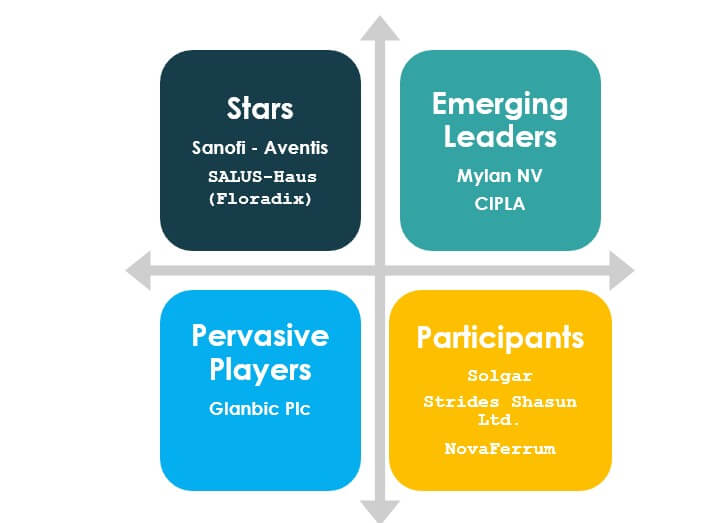 The competitive landscape of the oral iron supplements market is segmented into four strategic quadrants based on market presence and growth momentum. The Stars segment includes Sanofi-Aventis and SALUS-Haus (Floradix), which represent the most influential companies in the oral iron supplements market. Both players have successfully combined strong product innovation with global or regional distribution dominance. Sanofi-Aventis benefits from its pharmaceutical credibility and extensive medical network, while SALUS-Haus has achieved widespread recognition through its natural, bioavailable formulations such as liquid supplements under the Floradix brand. These companies set industry benchmarks in terms of clinical validation, brand trust, and product quality.
The Emerging Leaders, namely Mylan NV and Cipla, are gradually strengthening their position by leveraging affordability, regional dominance, and accessibility. Mylan has tapped into volume-driven strategies in developing markets, while Cipla has capitalized on government healthcare programs and cost-effective formulations. Both companies are poised to climb into stronger market positions as they expand beyond their traditional strongholds.
The competitive landscape of the oral iron supplements market is segmented into four strategic quadrants based on market presence and growth momentum. The Stars segment includes Sanofi-Aventis and SALUS-Haus (Floradix), which represent the most influential companies in the oral iron supplements market. Both players have successfully combined strong product innovation with global or regional distribution dominance. Sanofi-Aventis benefits from its pharmaceutical credibility and extensive medical network, while SALUS-Haus has achieved widespread recognition through its natural, bioavailable formulations such as liquid supplements under the Floradix brand. These companies set industry benchmarks in terms of clinical validation, brand trust, and product quality.
The Emerging Leaders, namely Mylan NV and Cipla, are gradually strengthening their position by leveraging affordability, regional dominance, and accessibility. Mylan has tapped into volume-driven strategies in developing markets, while Cipla has capitalized on government healthcare programs and cost-effective formulations. Both companies are poised to climb into stronger market positions as they expand beyond their traditional strongholds.
Strategic Developments
In March-25, Kye Pharmaceuticals, Inc. launched ACCRUFeR across Canada as a prescription treatment for iron deficiency anemia (IDA) in adults who are unresponsive or intolerant to traditional oral iron supplements. As the only prescription-only oral therapy for IDA in the Canadian market, ACCRUFeR addresses a key treatment gap. Julian Oliver, Commercial Lead at Kye Pharmaceuticals, highlighted that the product offers a balanced alternative between over-the-counter supplements and intravenous iron. Clinical trials, including placebo-controlled and active comparator studies, have confirmed its long-term safety and efficacy. In April-25, In April 2025, Strides acquired the identified ANDAs from Nostrum Laboratories, Inc., USA. In February 2024, Viatris and Idorsia Entered into Significant Global Research and Development Collaboration, Combines Viatris' Financial Strength and Worldwide Operational Infrastructure with Idorsia's Proven, Highly Productive Drug Development Team and Innovation EngineSegment Analysis
Ferrous Sulfate Leads the Way: Captures 37.07% of the Global Oral Iron Supplements Market in 2024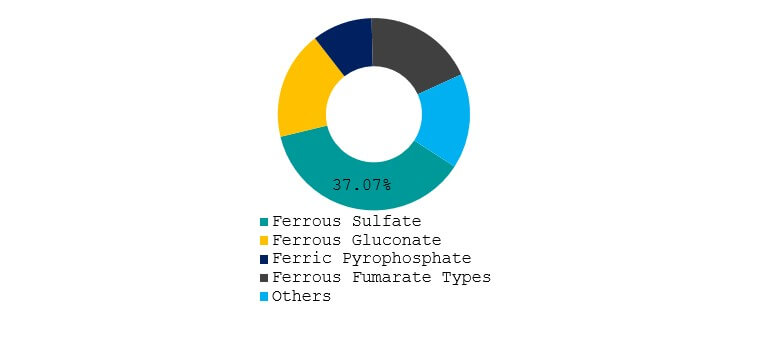 Ferrous sulfate dominated the global oral iron supplements market, accounting for 37.07% of the total share in 2024. It the most widely consumed formulation among all iron supplement variants. Its dominance was primarily attributed to its low cost, ease of manufacturing, and broad availability, which positioned it as the first-line therapeutic choice in both developed and developing markets. Healthcare professionals across regions frequently prescribed ferrous sulfate due to its proven bioavailability, ensuring effective absorption of iron in the gastrointestinal tract.
Despite the rise of newer formulations such as iron polymaltose complexes, ferric citrate, ferrous fumarate, and heme-based iron supplements, ferrous sulfate maintained its leadership. One of the key reasons behind this sustained preference was its strong track record in clinical practice. For decades, it had been the standard treatment for iron deficiency anemia (IDA), which remains one of the most prevalent nutritional deficiencies globally, particularly affecting women of reproductive age, pregnant women, and children.
Based on Application Segment, Anaemia Treatment Led the Market with USD 904.07 Million in 2024
Ferrous sulfate dominated the global oral iron supplements market, accounting for 37.07% of the total share in 2024. It the most widely consumed formulation among all iron supplement variants. Its dominance was primarily attributed to its low cost, ease of manufacturing, and broad availability, which positioned it as the first-line therapeutic choice in both developed and developing markets. Healthcare professionals across regions frequently prescribed ferrous sulfate due to its proven bioavailability, ensuring effective absorption of iron in the gastrointestinal tract.
Despite the rise of newer formulations such as iron polymaltose complexes, ferric citrate, ferrous fumarate, and heme-based iron supplements, ferrous sulfate maintained its leadership. One of the key reasons behind this sustained preference was its strong track record in clinical practice. For decades, it had been the standard treatment for iron deficiency anemia (IDA), which remains one of the most prevalent nutritional deficiencies globally, particularly affecting women of reproductive age, pregnant women, and children.
Based on Application Segment, Anaemia Treatment Led the Market with USD 904.07 Million in 2024
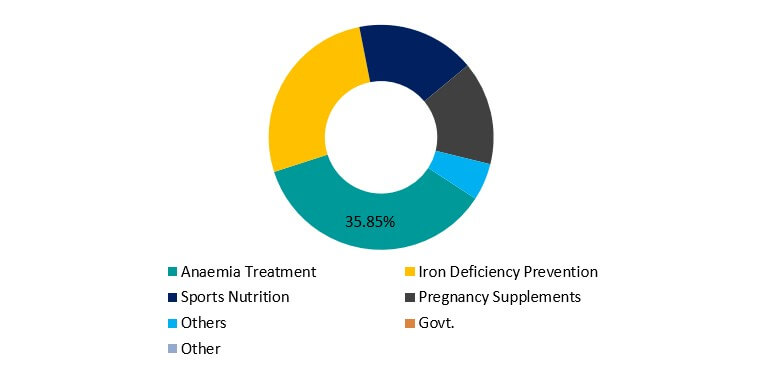 The anaemia treatment segment emerged as the largest contributor to the global oral iron supplements market in 2024, reaching a value of USD 904.07 million. This growth was fuelled by the high global prevalence of anaemia, particularly among women of reproductive age, pregnant women, and children.
Anaemia, most commonly caused by iron deficiency, continues to be a major public health challenge worldwide, affecting productivity, maternal and child health, and overall quality of life. According to the World Health Organization (WHO), approximately 40% of children aged 6–59 months, 37% of pregnant women, and 30% of women aged 15–49 years are affected by anaemia globally. In 2019, anaemia was responsible for nearly 50 million years of healthy life lost due to disability, largely attributed to dietary iron deficiency, thalassaemia, sickle cell trait, and malaria. These alarming statistics highlight the scale of the problem and reaffirm the indispensable role of oral iron supplementation in reducing the burden of anaemia worldwide.
The growth of this segment has been primarily supported by several factors. The persistently high prevalence of anaemia among women and children ensures a steady demand for oral iron supplementation. Governments and international organizations such as UNICEF and WHO have actively promoted iron supplementation programs, particularly in low-income settings, thereby increasing accessibility. In addition, the affordability and high bioavailability of ferrous sulfate, despite its association with gastrointestinal side effects like constipation and nausea, make it one of the most frequently prescribed formulations worldwide.
The anaemia treatment segment emerged as the largest contributor to the global oral iron supplements market in 2024, reaching a value of USD 904.07 million. This growth was fuelled by the high global prevalence of anaemia, particularly among women of reproductive age, pregnant women, and children.
Anaemia, most commonly caused by iron deficiency, continues to be a major public health challenge worldwide, affecting productivity, maternal and child health, and overall quality of life. According to the World Health Organization (WHO), approximately 40% of children aged 6–59 months, 37% of pregnant women, and 30% of women aged 15–49 years are affected by anaemia globally. In 2019, anaemia was responsible for nearly 50 million years of healthy life lost due to disability, largely attributed to dietary iron deficiency, thalassaemia, sickle cell trait, and malaria. These alarming statistics highlight the scale of the problem and reaffirm the indispensable role of oral iron supplementation in reducing the burden of anaemia worldwide.
The growth of this segment has been primarily supported by several factors. The persistently high prevalence of anaemia among women and children ensures a steady demand for oral iron supplementation. Governments and international organizations such as UNICEF and WHO have actively promoted iron supplementation programs, particularly in low-income settings, thereby increasing accessibility. In addition, the affordability and high bioavailability of ferrous sulfate, despite its association with gastrointestinal side effects like constipation and nausea, make it one of the most frequently prescribed formulations worldwide.
Regional & Country Insights
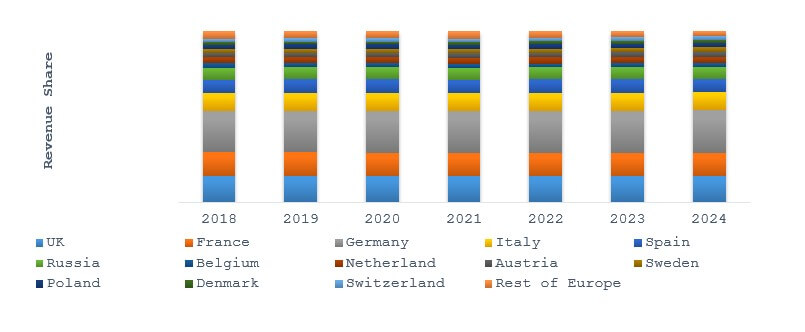 Germany accounted for the largest market among all the European countries supported by high awareness levels among patients and healthcare providers, a well-structured reimbursement framework, and a sizeable ageing population. The country’s advanced healthcare infrastructure and proactive screening policies facilitate early detection and management of iron deficiency, thereby strengthening demand for both prescription-based and over-the-counter (OTC) formulations.
The market’s growth trajectory is further reinforced by Germany’s focus on maternal health and preventive nutrition. National dietary guidelines, widespread insurance coverage for iron therapies, and increasing acceptance of OTC supplements continue to expand the consumer base. Moreover, the availability of diverse formulations ranging from traditional ferrous salts like sulfate and fumarate to newer ferric complexes with improved gastrointestinal tolerability has widened adoption across different patient groups.
Demographic trends also play a critical role in market expansion. With more than 22% of the German population aged over 65, iron deficiency linked to dietary insufficiencies and chronic comorbidities is becoming increasingly prevalent. This, coupled with growing consumer preference for preventive healthcare and fortified nutritional products, is fueling consistent growth in the OTC segment.
Germany accounted for the largest market among all the European countries supported by high awareness levels among patients and healthcare providers, a well-structured reimbursement framework, and a sizeable ageing population. The country’s advanced healthcare infrastructure and proactive screening policies facilitate early detection and management of iron deficiency, thereby strengthening demand for both prescription-based and over-the-counter (OTC) formulations.
The market’s growth trajectory is further reinforced by Germany’s focus on maternal health and preventive nutrition. National dietary guidelines, widespread insurance coverage for iron therapies, and increasing acceptance of OTC supplements continue to expand the consumer base. Moreover, the availability of diverse formulations ranging from traditional ferrous salts like sulfate and fumarate to newer ferric complexes with improved gastrointestinal tolerability has widened adoption across different patient groups.
Demographic trends also play a critical role in market expansion. With more than 22% of the German population aged over 65, iron deficiency linked to dietary insufficiencies and chronic comorbidities is becoming increasingly prevalent. This, coupled with growing consumer preference for preventive healthcare and fortified nutritional products, is fueling consistent growth in the OTC segment.
Company Profile
CIPLA Cipla Limited is a leading global pharmaceutical company headquartered in India, with a legacy of over 80 years in delivering affordable and accessible healthcare solutions. It has established itself as one of the most respected pharmaceutical names in India and across more than 100 countries worldwide. The company’s diverse portfolio spans prescription medicines, generics, and over-the-counter products, addressing a wide spectrum of therapeutic areas including cardio-respiratory diseases, diabetes, oncology, psychiatry, HIV/AIDS, and infectious diseases. Glanbia plc Glanbia plc is a leading Irish global nutrition group with a strong presence in the dairy, consumer foods, and nutritional products sectors. Headquartered in Ireland, the company operates in 32 countries and has established leading market positions in sports nutrition, cheese, dairy ingredients, specialty non-dairy ingredients, and vitamin and mineral premixes. Glanbia’s extensive portfolio of products is sold or distributed in over 130 countries, making it a key player in the global food and nutrition industry. It also offers iron supplements, incorporated within its vitamin and mineral premixes and specialized nutrition products. These formulations are designed to address widespread iron deficiency, support energy metabolism, and promote overall health. SALUS-Haus SALUS-Haus is a leading German manufacturer of natural health products, specializing in herbal medicines, dietary supplements, and mineral formulations. Founded in 1916 and headquartered in Bruckmühl, Bavaria, the company has built a global reputation for its commitment to natural healthcare, sustainability, and quality assurance. SALUS-Haus is best known for its Floradix range of liquid tonics, particularly Floradix Iron + Herbs, one of the world’s most recognized natural iron supplements. These products are designed to support individuals suffering from iron deficiency, fatigue, and low energy, making the brand a trusted choice among healthcare providers and consumers. Sanofi S.A. Sanofi is a leading global biopharmaceutical company headquartered in Paris, France, with operations in more than 100 countries. The company has a diversified portfolio covering diabetes, cardiovascular diseases, oncology, immunology, rare diseases, and vaccines, along with a strong consumer healthcare division that provides widely used over-the-counter (OTC) medicines and nutritional supplements. In the iron supplements segment, Sanofi offers a range of oral iron formulations designed to treat iron deficiency and anemia, with a particular focus on pregnant women, children, and patients with chronic health conditions. The company emphasizes improved bioavailability, patient compliance, and reduced gastrointestinal side effects, ensuring better treatment outcomes compared to conventional iron salts. Solgar Inc. Solgar Inc. is a global leader in premium nutritional supplements, recognized for its focus on quality, purity, and innovation. The company manufactures in the U.S. and Belgium under strict Good Manufacturing Practices (GMP) and distributes to over 55 countries. Its diverse portfolio includes multivitamins, minerals, botanicals, and specialty supplements, catering to vegan, vegetarian, gluten-free, non-GMO, halal, and kosher dietary needs. Mylan N.V. Viatris Inc. was established in November 2020 through the merger of Mylan N.V. and Pfizer’s Upjohn division, forming a global healthcare company headquartered in Canonsburg, Pennsylvania. This strategic merger combined Mylan’s expertise in generic and specialty pharmaceuticals with Upjohn’s portfolio of off-patent branded medicines. Together, Viatris seeks to empower people worldwide to live healthier lives by providing access to high-quality medicines across a wide range of therapeutic areas. Operating in over 165 countries and employing approximately 45,000 people, Viatris offers a diverse portfolio of more than 1,400 approved molecules. Strides Shasun Ltd. Strides Pharma Science Limited, incorporated in 1990, is a global pharmaceutical company headquartered in Bangalore, India. The company operates through two main business verticals: Regulated Markets and Emerging Markets. Among its diverse product portfolio, Strides produces iron supplements, catering to populations with nutritional deficiencies and supporting overall health and wellness. These supplements form a critical part of the company’s commitment to improving access to essential healthcare solutions worldwide. Rexall Sundown Inc. Rexall Sundown, Inc. is a manufacturer of nutritional vitamins, supplements, and consumer health products based in New York. The company offers a wide range of products, including amino acids, B-complex vitamins, calcium formulas, herbal and mineral supplements, beauty aids, and various multivitamin and health supplements. Rexall Sundown focuses on providing high-quality nutritional solutions to support overall wellness and healthy living. NOW Foods Now Foods founded in 1968 by chemist Elwood Richard, is a family-owned natural products company headquartered in Bloomingdale, Illinois. Operating GMP-certified manufacturing facilities in Illinois and Nevada, the company offers over 1,400 products, including dietary supplements, essential oils, personal care items, sports nutrition, natural foods, and pet health products. Mission Pharmacal Company Mission Pharmacal company is a privately held pharmaceutical company specializing in the development, manufacturing, and marketing of prescription and over-the-counter healthcare products. The company focuses on dermatology, women’s health, urology, and gastrointestinal care, offering topical treatments, oral supplements, and specialty pharmaceuticals. It emphasizes strong R&D capabilities and strict quality standards to ensure product safety and efficacy. The company is recognized for providing reliable, trusted therapeutic options, supporting wellness, and collaborating with healthcare providers to address unmet medical needs and expand access to essential medications.
Request a Free Sample
Fill in your details and we'll send you a free sample report.
- Sample data tables & charts
- Research methodology
Market Dynamics
Rising Prevalence of Iron-Deficiency Anaemia
Iron-deficiency anaemia remains one of the most widespread nutritional disorders globally, particularly affecting women of reproductive age, pregnant women, and children. This persistent public health challenge ensures a robust and growing demand for oral iron supplements.
Government and NGO-Led Supplementation Initiatives
National and international programs, such as India's Anemia Mukt Bharat and WHO/UNICEF supplementation campaigns, are actively promoting iron supplementation, especially in developing regions. These initiatives increase accessibility and drive large-scale adoption of oral iron therapies.
Technological Innovation in Formulations
Advancements such as liposomal iron, Sucrosomial iron, and iron-amino acid complexes are improving bioavailability and reducing gastrointestinal side effects, making supplements more effective and better tolerated. This encourages both healthcare providers and consumers to prefer newer oral iron products.
Expansion of E-commerce and Direct-to-Consumer Channels
The rapid growth of online sales platforms has made oral iron supplements more accessible, offering consumers convenience, product personalization, and educational resources. This shift is particularly notable in North America, Europe, and Asia Pacific, accelerating market penetration.
Increasing Health Awareness and Preventive Care Trends
Growing consumer awareness of the risks associated with iron deficiency and the benefits of preventive supplementation is fueling demand. The trend toward personalized nutrition, including vegan and gluten-free formulations, is expanding the market to new demographic segments.
Need a Custom Version of This Report?
Tailor the scope, geography, or segments to your exact requirements.
- Custom geography or segment scope
- Direct access to our analyst team
Frequently Asked Questions
What is the current global market size of the oral iron supplements industry
Which region is expected to witness the fastest growth in the oral iron supplements market through 2032?
How is North America positioned in the oral iron supplements market?
Which company holds the largest individual market share in 2024?
What is the revenue generated by Ferrous Sulfate in 2024?
Which application segment dominates the oral iron supplements market?
What is the projected absolute growth opportunity between 2025 and 2032?
Which form holds the highest market share in 2024?
What is the market share of Young Adults: 19 to 30 years by age group in 2024?
How does the market structure compare among the top-tier and emerging players?
Table of Content
Chapter 1 Market Segmentation
- 1.1 Segmentation Framework
- 1.1.1 Product and Service Classification
- 1.1.2 Application and End-Use Classification
- 1.1.3 Technology and Solution Classification
- 1.1.4 Customer and Distribution Channel Classification
- 1.1.5 Geographic Segmentation
- 1.1.6 Market Segment Definitions and Boundaries
- 1.2 By End User
- 1.2.1 Adults
- 1.2.2 Children
- 1.2.3 Pregnant Women
- 1.2.4 Elderly
- 1.3 By Application
- 1.3.1 Anaemia Treatment
- 1.3.2 Pregnancy & Maternal Health
- 1.3.3 Pediatric Supplementation
- 1.3.4 Chronic Disease Management
- 1.3.5 Sports & Wellness
- 1.4 By Formulation
- 1.4.1 Ferrous Sulfate
- 1.4.2 Ferrous Gluconate
- 1.4.3 Ferrous Fumarate
- 1.4.4 Iron Polymaltose Complex
- 1.4.5 Ferric Citrate
- 1.4.6 Heme Iron Polypeptides
Chapter 2 Introduction
- 2.1 Report Objectives and Scope
- 2.2 Product Definition and Industry Terminology
- 2.3 Market Inclusions and Exclusions
- 2.4 Research Process
- 2.4.1 Primary Research and Expert Interviews
- 2.4.2 Secondary Research and Source Review
- 2.4.3 Top-Down and Bottom-Up Estimation
- 2.4.4 Data Triangulation and Verification
- 2.5 Market Size Measurement Basis
- 2.5.1 2032: USD 4,128.06 Million → Forecast year: -
- 2.6 Historical and Forecast Reference Periods
- 2.6.1 Base Year: 2032
- 2.7 Research Assumptions and Limitations
Chapter 3 Executive Summary
- 3.1 Market Snapshot and Key Findings
- 3.2 Base-Year Market Size, 2032
- 3.3 Forecast Market Size
- 3.4 Revenue and Volume Growth Outlook
- 3.5 Key Demand and Supply Indicators
- 3.6 Leading Market Segments
- 3.7 Fastest-Growing Market Opportunities
- 3.8 Regional Performance Highlights
- 3.9 Technology and Industry Transformation
- 3.10 Competitive Landscape Summary
- 3.11 Analyst View and Strategic Implications
Chapter 4 Global Oral Iron Supplements Market Trends and Developments
- 4.1 Historical Industry Development
- 4.2 Recent Market Trends and Developments
- 4.3 Demand and Customer Behavior Trends
- 4.4 Technology and Product Innovation
- 4.5 Artificial Intelligence, Automation and Digitalization
- 4.6 Local Manufacturing and Supply Chain Realignment
- 4.7 Industry Partnerships, Mergers and Acquisitions
- 4.8 Sustainability and Circular Economy Developments
- 4.9 Government and Private Sector Investment Trends
- 4.10 Emerging Business Models and Commercialization
- 4.11 Industry Developments and Announcements
Chapter 5 Global Oral Iron Supplements Market Production, Supply and Demand Analysis
- 5.1 Demand Trend and Consumption Analysis
- 5.2 Demand Forecast
- 5.3 Production and Output Trend
- 5.4 Production and Output Forecast
- 5.5 Installed Capacity and Capacity Utilization
- 5.6 Company-Wise Production Plants and Statistics
- 5.6.1 Installed Production Capacity
- 5.6.2 Actual Production
- 5.6.3 Planned Capacity and Expansion Targets
- 5.7 Supply Chain Structure and Procurement Trends
- 5.8 Supply-Demand Gap and Bottlenecks
- 5.9 Import Dependence and Sourcing Structure
- 5.10 Contract Manufacturing and Outsourcing
- 5.11 Regional Supply and Demand Concentration
Chapter 6 Global Oral Iron Supplements Market Pricing Analysis
- 6.1 Pricing Structure and Measurement
- 6.2 Historical Pricing Trends
- 6.3 Pricing Outlook
- 6.4 Average Selling Price and Unit Economics
- 6.5 Pricing by Product and Market Segment
- 6.6 Geographic Pricing Differences
- 6.7 Key Input, Energy, Labor and Logistics Costs
- 6.8 Contract Pricing and Purchasing Models
- 6.9 Pricing Sensitivity and Competitive Positioning
- 6.10 Price, Margin and Profitability Implications
Chapter 7 Global Oral Iron Supplements Market Dynamics
- 7.1 Market Growth Drivers
- 7.1.1 Demand-Side Drivers
- 7.1.2 Technology and Innovation Drivers
- 7.1.3 Infrastructure and Investment Drivers
- 7.1.4 Regulatory and Policy Drivers
- 7.2 Market Restraints
- 7.2.1 Cost and Affordability Constraints
- 7.2.2 Technology and Adoption Barriers
- 7.2.3 Supply Chain and Operational Constraints
- 7.3 Market Challenges
- 7.3.1 Competitive Pressure and Margin Erosion
- 7.3.2 Skills, Infrastructure and Implementation Gaps
- 7.4 Emerging Market Opportunities
- 7.5 Market Dynamics Impact and Time-Horizon Assessment
Chapter 8 Global Oral Iron Supplements Value Chain Analysis
- 8.1 Industry Value Chain Overview
- 8.2 Upstream Suppliers and Critical Inputs
- 8.3 Technology and Component Providers
- 8.4 Manufacturing or Service Delivery
- 8.5 Distribution, Channel Partners and Integrators
- 8.6 Downstream Applications and End Users
- 8.7 Value Addition and Profit Pools
- 8.8 Vertical Integration and Outsourcing
- 8.9 Supplier Concentration and Risk
- 8.10 Supply Chain Localization and Resilience
Chapter 9 Global Oral Iron Supplements Market Regulations and Policies
- 9.1 Relevant Laws, Standards and Compliance Frameworks
- 9.2 Product, Service, Safety and Quality Requirements
- 9.3 Government Policies, Incentives and Subsidies
- 9.4 Imports, Exports and Trade Barriers
- 9.5 Public Procurement and Local Content Requirements
- 9.6 Environmental and Sustainability Compliance
- 9.7 Upcoming Policy Changes and Market Implications
Chapter 10 Global Oral Iron Supplements Market Hotspots and Opportunities
- 10.1 Market Opportunity Mapping and Growth Hotspots
- 10.2 High-Growth Applications and Customer Groups
- 10.3 Underserved Markets and White-Space Opportunities
- 10.4 Emerging Technology and Product Opportunities
- 10.5 New Capacity and Investment Hotspots
- 10.6 Market Entry and Expansion Opportunities
- 10.7 Distribution and Partnership Opportunities
- 10.8 Near-Term and Long-Term Commercial Potential
- 10.9 Opportunity Attractiveness and Execution Risks
Chapter 11 Global Oral Iron Supplements Market Outlook
- 11.1 Market Size and Analysis
- 11.1.1 Revenue (Market Measurement: 2032: USD 4,128.06 Million → Forecast year: - )
- 11.1.2 Market Volume and Quantity Sold
- 11.1.3 Historical Market Size
- 11.1.4 Base-Year Market Size, 2032
- 11.2 Market Forecast
- 11.2.1 Revenue Forecast
- 11.2.2 Volume Forecast
- 11.2.3 CAGR and Year-on-Year Growth
- 11.2.4 Incremental Revenue Opportunity
- 11.3 Forecast Assumptions and Scenario Analysis
- 11.3.1 Base-Case Forecast
- 11.3.2 Optimistic and Conservative Scenarios
- 11.3.3 Technology, Pricing and Policy Sensitivities
- 11.4 Market Attractiveness and Growth Outlook
Chapter 12 Global Oral Iron Supplements Market Segmentation and Outlook
- 12.1 Segmentation Summary and Market Shares, 2032
- 12.2 Largest and Fastest-Growing Segments
- 12.3 By End User - Market Size and Forecast
- 12.3.1 Segment Definition and Scope
- 12.3.2 Historical Market Size
- 12.3.3 Revenue Forecast
- 12.3.4 Volume Forecast
- 12.3.5 Base-Year Market Share, 2032
- 12.3.6 Segment CAGR and Growth Drivers
- 12.3.7 Subsegment Market Size and Forecast
- 12.3.7.1 Adults
- 12.3.7.2 Children
- 12.3.7.3 Pregnant Women
- 12.3.7.4 Elderly
- 12.3.8 Subsegment Pricing and Adoption Trends
- 12.3.9 Leading Suppliers and Competition
- 12.3.10 Regional Demand and Opportunities
- 12.4 By Application - Market Size and Forecast
- 12.4.1 Segment Definition and Scope
- 12.4.2 Historical Market Size
- 12.4.3 Revenue Forecast
- 12.4.4 Volume Forecast
- 12.4.5 Base-Year Market Share, 2032
- 12.4.6 Segment CAGR and Growth Drivers
- 12.4.7 Subsegment Market Size and Forecast
- 12.4.7.1 Anaemia Treatment
- 12.4.7.2 Pregnancy & Maternal Health
- 12.4.7.3 Pediatric Supplementation
- 12.4.7.4 Chronic Disease Management
- 12.4.7.5 Sports & Wellness
- 12.4.8 Subsegment Pricing and Adoption Trends
- 12.4.9 Leading Suppliers and Competition
- 12.4.10 Regional Demand and Opportunities
- 12.5 By Formulation - Market Size and Forecast
- 12.5.1 Segment Definition and Scope
- 12.5.2 Historical Market Size
- 12.5.3 Revenue Forecast
- 12.5.4 Volume Forecast
- 12.5.5 Base-Year Market Share, 2032
- 12.5.6 Segment CAGR and Growth Drivers
- 12.5.7 Subsegment Market Size and Forecast
- 12.5.7.1 Ferrous Sulfate
- 12.5.7.2 Ferrous Gluconate
- 12.5.7.3 Ferrous Fumarate
- 12.5.7.4 Iron Polymaltose Complex
- 12.5.7.5 Ferric Citrate
- 12.5.7.6 Heme Iron Polypeptides
- 12.5.8 Subsegment Pricing and Adoption Trends
- 12.5.9 Leading Suppliers and Competition
- 12.5.10 Regional Demand and Opportunities
- 12.6 Segment Growth Comparison
- 12.7 Segment Attractiveness and Priority Matrix
Chapter 13 Global Oral Iron Supplements End-Use and Application Market Outlook
- 13.1 End-Use Industry and Customer Demand Structure
- 13.2 Leading Applications and Customer Groups
- 13.3 End-Use Market Size, Share and Forecast
- 13.4 Major End-Use Industry Deep Dives
- 13.4.1 Customer Requirements and Use Cases
- 13.4.2 Demand and Replacement Cycles
- 13.4.3 Technical and Regulatory Considerations
- 13.4.4 Purchasing and Procurement Models
- 13.4.5 Leading Vendors and Distribution Channels
- 13.4.6 Forecast and Commercial Opportunities
- 13.5 Emerging Applications and Cross-Segment Demand
- 13.6 End-Use Industry Investment Priorities
Chapter 14 Global Oral Iron Supplements Geographic Market Outlook
- 14.1 Regional Market Size and Share, 2032
- 14.2 Regional Market Forecast
- 14.3 Regional Pricing, Production and Demand Differences
- 14.4 North America
- 14.4.1 United States
- 14.4.2 Canada
- 14.4.3 Mexico
- 14.5 Europe
- 14.5.1 Germany
- 14.5.2 France
- 14.5.3 Italy
- 14.5.4 United Kingdom
- 14.5.5 Spain
- 14.5.6 Poland
- 14.5.7 Russia
- 14.5.8 Netherlands
- 14.5.9 Belgium
- 14.5.10 Sweden
- 14.5.11 Denmark
- 14.5.12 Norway
- 14.5.13 Rest of Europe
- 14.6 Asia Pacific
- 14.6.1 China
- 14.6.2 India
- 14.6.3 Japan
- 14.6.4 South Korea
- 14.6.5 Thailand
- 14.6.6 Indonesia
- 14.6.7 Vietnam
- 14.6.8 Malaysia
- 14.6.9 Australia
- 14.6.10 Rest of Asia Pacific
- 14.7 Latin America
- 14.7.1 Brazil
- 14.7.2 Argentina
- 14.7.3 Colombia
- 14.7.4 Chile
- 14.7.5 Rest of Latin America
- 14.8 Middle East
- 14.8.1 Saudi Arabia
- 14.8.2 United Arab Emirates
- 14.8.3 Turkey
- 14.8.4 Israel
- 14.8.5 Iran
- 14.8.6 Rest of the Middle East
- 14.9 Africa
- 14.9.1 South Africa
- 14.9.2 Egypt
- 14.9.3 Nigeria
- 14.9.4 Morocco
- 14.9.5 Rest of Africa
- 14.10 Regional Investment, Policy and Supply Chain Differences
- 14.11 Regional Competitive Landscape
- 14.12 Geographic Growth Hotspots
Chapter 15 Global Oral Iron Supplements Technology, Innovation and Sustainability Outlook
- 15.1 Technology Landscape and Maturity
- 15.2 Product, Process and Service Innovation
- 15.3 AI, Automation and Digital Tools in the Industry
- 15.4 Technology Adoption and Performance Benchmarking
- 15.5 Innovation Pipeline and R&D Investment
- 15.6 Patent and Intellectual Property Trends
- 15.7 Energy Efficiency and Resource Management
- 15.8 Sustainability, Recycling and Circularity
- 15.9 Technology Roadmap
- 15.10 Risks of Obsolescence and Technology Substitution
Chapter 16 Global Oral Iron Supplements Market Key Strategic Imperatives
- 16.1 Growth and Market Entry Priorities
- 16.2 High-Return Products and Segments
- 16.3 Pricing, Profitability and Cost Optimization
- 16.4 Technology Investment and Product Differentiation
- 16.5 Supply Chain Localization and Resilience
- 16.6 Distribution and Customer Acquisition
- 16.7 Partnership, Acquisition and Capacity Strategy
- 16.8 Regional Expansion Priorities
- 16.9 Short-, Medium- and Long-Term Actions
Chapter 17 Competition Outlook
- 17.1 Industry Competition Characteristics
- 17.2 Market Structure and Concentration
- 17.3 Market Share and Competitive Positioning, 2032
- 17.4 Company-Wise Revenue and Product Benchmarking
- 17.5 Production and Service Capacity Benchmarking
- 17.6 Technology, Pricing and Differentiation
- 17.7 Regional Footprint and Distribution Strength
- 17.8 Mergers, Acquisitions and Strategic Alliances
- 17.9 New Entrants and Competitive Threats
- 17.10 Porter's Five Forces and Industry Attractiveness
- 17.11 Competitive Outlook
Chapter 18 Company Profiles
- 18.1 Company Coverage and Selection Criteria
- 18.2 Sanofi S.A.
- 18.2.1 Business Description
- 18.2.2 Company Ownership and Geographic Presence
- 18.2.3 Product and Service Portfolio
- 18.2.4 Manufacturing and Operating Footprint
- 18.2.5 Production Capacity and Expansion Plans
- 18.2.6 Financial Performance and Investment
- 18.2.7 Market Share and Competitive Position
- 18.2.8 Technology and Innovation Capabilities
- 18.2.9 Strategic Alliances or Partnerships
- 18.2.10 Recent Developments
- 18.2.11 Growth Strategy and Outlook
- 18.3 SALUS-Haus (Floradix)
- 18.4 Cipla Limited
- 18.5 Glanbia plc
- 18.6 Mylan N.V. (Viatris Inc.)
- 18.7 Strides Pharma Science Limited
- 18.8 Solgar Inc.
- 18.9 NOW Foods
- 18.10 Rexall Sundown Inc.
- 18.11 Mission Pharmacal Company
- 18.12 Other Relevant Market Participants
Note: Every listed company is profiled on the structure shown under the first company. The company list is preliminary and may change based on research findings, market developments, data availability and client requirements.
Chapter 19 Disclaimer
- 19.1 Research and Forecast Disclaimer
- 19.2 Data Source and Estimation Limitations
Note: The depth of individual sections depends on data availability for this market. Volume, capacity, trade and other unit-based metrics are included where applicable.