
| REPORT ATTRIBUTE | DETAILS |
|---|---|
| Historical Period | 2019-2022 |
| Base Year | 2023 |
| Forecast Period | 2024-2032 |
| Peptide Therapeutics Market Size 2023 | USD 49781.9 Million |
| Peptide Therapeutics Market, CAGR | 7.80% |
| Peptide Therapeutics Market Size 2032 | USD 97867.91 Million |
Market Insights
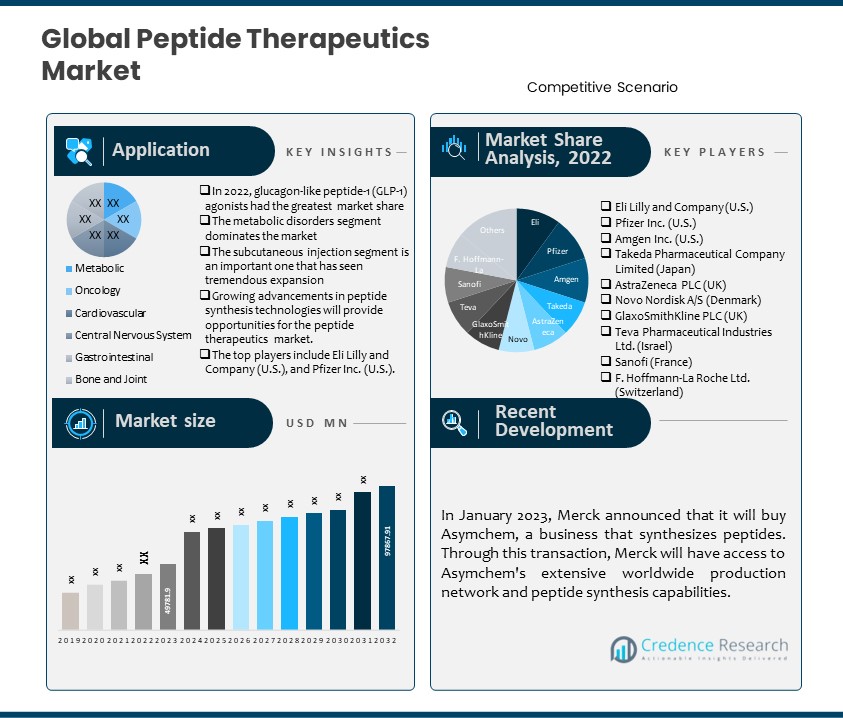
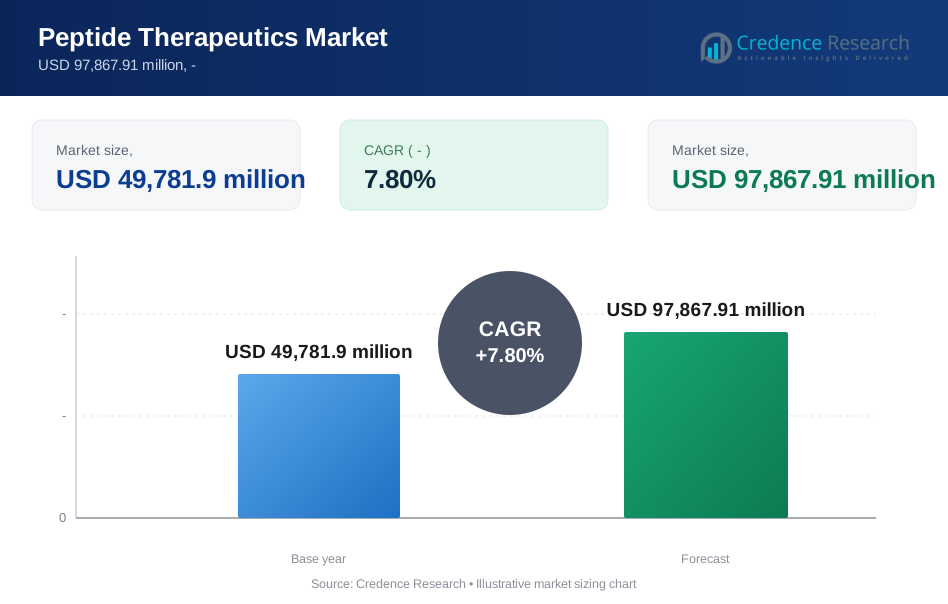
- Between 2024 and 2032, the market for peptide therapeutics is projected to rise at a compound annual growth rate (CAGR) of 7.80%, from an estimated USD 49781.9 million in 2023 to USD 97867.91 million in 2032.
- The largest category is glucagon-like peptide-1 (GLP-1) agonists. Insulin, on the other hand, is expected to grow at a strong CAGR.
- The metabolic disorders category will expand at a rapid rate of growth.
- The CAGR for subcutaneous injection is expected to be the highest during the projection period.
- North America governed the market for peptide therapeutics.
- Regarding the market share of peptide therapeutics, Europe is expected to come second.
- In the peptide therapeutics market, Asia Pacific is anticipated to grow fastest.
- The main drivers of the global market's expansion are increased investments in R&D, the growth of the biotech sector, and the exploration of peptide therapies for a variety of indications that go beyond conventional fields like cancer, such as infectious illnesses, autoimmune disorders, and metabolic disorders.
- Growing point-of-care diagnostics, integration of artificial intelligence, and the creation of peptide drug conjugates, peptides combined with small molecules or cytotoxic agents, are creating new opportunities for targeted treatment in cancer and other disorders, leading to the development of the peptide therapeutics industry.
Executive Summary
Market Definition
The pharmaceutical industry's focus on creating and promoting therapeutic peptides, short sequences of amino acids, is known as the Peptide Therapeutics Market. These peptides can target particular biological processes, which may lead to the development of therapies for a range of disorders. The market includes peptide-based therapy research, development, production, and distribution.
Market Overview
The peptide therapeutics sector is predicted to continue its upward trend between 2024 and 2032, growing at a compound annual growth rate (CAGR) of 7.80%. From its projected USD 49781.9 million in 2023 to USD 97867.91 million in 2032, the market will continue to grow.
Peptide therapies are predicted to become more widely used in the coming years due to the rising incidence of cancer and metabolic diseases, including diabetes, obesity, and osteoporosis. The growing number of children with these illnesses and the fact that they are typically found in low-income areas make it necessary to develop reasonably priced and potent medications.
The market is expected to rise as a result of rising rates of various malignancies and the rising need for suitable treatment alternatives. For example, the International Agency for Research on Cancer (IARC) estimates that in 2023 there will be about 20.7 million new cases of cancer. Early cancer treatment with peptide therapies can enhance disease control and lower mortality. Throughout the projected period, rising demand for effective and quick-acting medications is anticipated to drive market expansion. Cancer is one of the top causes of mortality worldwide, expected to account for 10 million deaths in 2020, or one in every six people. It is estimated that alcohol misuse, smoking, obesity, high body mass index, and high cholesterol account for one-third of cancer-related fatalities.
As companies concentrate on creating innovative medications, the market is expected to rise at a profitable CAGR throughout the forecast period. In order to provide therapies for the illnesses they are targeting and grow their market share, players are heavily investing in research and development (R&D). In peptide therapies, cancer and infectious illnesses come in second and third, respectively, after metabolic disorders. Peptide therapy laws are changing, moving toward more strict standards for approval in the areas of safety, effectiveness, and quality. The FDA and EMA are among the regulatory agencies currently reviewing new guidelines aimed at streamlining the approval process for peptide medicines.
Segmentation by Type of Peptide
- The glucagon-like peptide-1 (GLP-1) agonists category is the market leader in terms of the type of peptide. GLP-1 agonists function similarly to endogenous GLP-1, a hormone the intestines manufacture in reaction to food consumption. They reduce blood glucose levels by stimulating glucose-dependent insulin production from pancreatic beta cells. Patients with T2DM benefit from improved glycemic control due to this mechanism.
- The insulin category will exhibit a sizable CAGR during the projected period. Insulin therapy is widely used to assist pregnant women with gestational diabetes mellitus (GDM) in achieving their glycemic goals when dietary and lifestyle modifications are insufficient. Strict glycemic control is crucial during pregnancy to mitigate the possibility of negative outcomes for both the mother and the fetus, and insulin therapy is often initiated to achieve this goal.
- Other types of peptides, including growth hormone (GH) and growth hormone-releasing hormone (GHRH) analogs, glucagon and glucagon analogs, and enkephalins and endorphins, also support the need for peptide therapeutics.
Segmentation by Application
- Metabolic disorders are considered the best application category. A 2023 National Centre for Biotechnology Information (NCBI) article estimates that 20–30% of adult people worldwide are thought to have metabolic syndrome (MetS), which has serious negative effects on health, society, and the economy. Additionally, peptides may replicate or modify naturally occurring substances related to respiration, including leptin insulin and GLP-1 receptor agonists. By regulating these biological processes, peptide treatments can aid in the restoration of normal metabolic function and advance the segment.
- The oncology category will likely register a significant CAGR during forecasting. Peptides are thought to be a promising cytotoxic agent with the potential to treat cancer successfully. The oncology industry's increased need for practical yet potent treatments has propelled the cancer segment's expansion in recent times. Another reason propelling the development of a sector in the global peptide therapeutics market is the growing number of discoveries about parenteral peptide medicines for cancer therapy.
- Other applications, such as cardiovascular disorders, central nervous system (CNS) disorders, gastrointestinal disorders, and bone and joint disorders, also contribute to the demand for peptide therapeutics.
Segmentation by Route of Administration
- The category of subcutaneous injection is anticipated to expand at a quicker rate during the forecast period. Because the needle is inserted into the fatty tissue layer immediately beneath the skin (subcutaneous tissue) rather than deep into the muscle, subcutaneous injections are usually less painful than intramuscular injections. This lessens the pain and discomfort that come with injections, which improves patient acceptability and treatment compliance.
- Other routes of administration, including intravenous infusion, oral administration, nasal administration, transdermal delivery, calcitonin, and oxytocin and vasopressin analogs, influence the need for peptide therapeutics.
Segmentation by Region
- North America leads the peptide therapeutics industry. This is due to the increasing regional demand for peptide medicinal products used to treat cancer.
- Europe is estimated to rank second in peptide therapeutics market size.
- The peptide therapeutics industry is predicted to flourish rapidly in Asia Pacific.
- Regions such as Latin America, Africa, and the Middle East cover the remaining need for peptide therapeutics.
Moreover, the market for peptide therapies is growing, mostly due to the increased number of senior individuals. Furthermore, throughout the forecast period, technological developments in the pharmaceutical sector are anticipated to propel market expansion. Numerous peptide conjugates have anti-inflammatory, weight-loss, and inflammatory-reducing properties. The need for peptide medications has increased due to a boom in the nutrition and health sectors.
Based on projections, North America is anticipated to control the peptide therapeutics market due to the introduction of effective products and the construction of state-of-the-art industrial facilities throughout the area. Furthermore, market expansion is anticipated due to the rising incidence of illnesses, including cancer, heart disease, respiratory conditions, infectious diseases, metabolic disorders, and others. For example, the Cancer Atlas states that cancer accounts for around 1.9 million new cases in the area each year and is the main cause of death in Canada and the second largest cause of death in the United States after heart disease. One of the leading causes of mortality in the United States is cardiovascular disease, which includes heart disease, stroke, heart failure, and hypertension.
The market for peptide therapeutics in Asia Pacific is predicted to grow considerably throughout the projection period due to a number of factors, including unexplored markets, cheap raw material prices, an increasing number of outsourcing service providers, the biotech industry's growth, and increased R&D expenditures. Furthermore, because new medicine patents are expiring and raw material costs are falling, the generic industry is anticipated to expand at a rapid pace of compound annual growth. The combination of all these factors would offer the area plenty of growth prospects.
Key Highlights of the Report
The global peptide therapeutics market is segmented by type of peptide, application, route of administration, and region. The glucagon-like peptide-1 (GLP-1) agonists category is the market spearhead in terms of the type of peptide, and metabolic disorders are the top-application category. The subcutaneous injection category is anticipated to increase at the highest CAGR throughout the projection period. The peptide therapeutics market is expanding mostly in North America.
Improvements in peptide synthesis techniques are anticipated to support industry expansion. The goal of suppliers and manufacturers is to create novel peptide synthesis techniques. Reduction in waste production, automation, and enhancement of the purification process continue to propel the market expansion further. To expedite the development of peptide therapies, Creative Peptides, for example, launched cutting-edge peptide drug discovery services in March 2022. In addition, scientists at universities and research centers are developing cutting-edge methods to create peptide medicines. Hokkaido University researchers created a novel strategy in February 2023 for designing and producing peptide antibiotics on a big scale to manage antibiotic resistance.
North America is expected to account for the largest peptide therapeutics market globally. In North America, the nation has a high prevalence of diabetes, cardiovascular disorders, and cancer, which increases demand for novel biopharmaceuticals. For instance, according to the Canadian Cancer Statistics 2021, which was published in November 2021, there were an anticipated 229,200 cancer diagnoses in Canada. As a result, the nation's high cancer case rate is propelling the researched market and creating opportunities for novel peptide therapies. It is also anticipated that the market will develop at the fastest rate in the Asia Pacific region. The region's market demand is anticipated to be driven by the rise in diabetes and cancer incidence in nations like China, India, and Japan as a result of aging populations, changes in lifestyle, and environmental factors.
Which Key Factors Are Driving The Global Peptide Therapeutics Market?
The rise in chronic illnesses, a growing elderly population, and the high efficacy and selectivity of peptide drugs are contributing to the growth of the peptide therapeutics market.
What Are The Main Challenges Confronting The Global Peptide Therapeutics Market?
Limited oral bioavailability and peptide synthesis involve labor-intensive and sophisticated manufacturing procedures, which raise production costs and may hamper the product's affordability and marketability. These factors impede the expansion of the market.
What Market Opportunities Exist For Peptide Therapeutics Globally?
Increasing personalized medicine approaches, growing therapeutic applications, and improvements in drug delivery technologies are some of the factors creating opportunities for the peptide therapeutics market.
Market Drivers
Multiple factors propel the peptide therapeutics industry across the globe. The primary factors propelling the global peptide therapeutics market are as follows:
Rising Prevalence of Chronic Illnesses
The market value of peptide therapies is increasing because the number of persistent illnesses is increasing, which is also driving demand for innovative treatments. Six out of ten persons in the US have at least one chronic illness, and four out of ten have two or more, as per the information provided by the Centers for Disease Control and Protection. In the United States, the incidence of diabetes has climbed from 8.0% in 2010 to 10.2% in 2020. The second leading cause of death is cancer globally, accounting for 9.9 million deaths in 2020.
Comparing peptide medicines to conventional small molecule and biological medications reveals a host of benefits. A 2021 study discovered that the peptide therapy semaglutide was useful in lowering blood sugar levels and enhancing cardiovascular outcomes in individuals with type 2 diabetes. Additionally, the use of peptides in cancer treatment offers encouraging prospects for the market for peptide therapies to expand in the future.
Market Restraints
There are several obstacles that the global peptide therapeutics market must overcome to continue growing. Among them are the following:
End of Exclusive Market Position and Biosimilars' Availability
The costly and time-consuming process of finding and creating novel medicines delays their eventual commercialization. As a result, during the projection, a sizable portion of the medications are in danger of losing their market exclusivity. The accessibility of general or recombinant peptide therapeutic pharmaceuticals, together with the anticipated release of more drugs over the projection period, may provide a challenge to the global market's growth and valuation. Initiatives by regulating organizations and regulatory agencies to expand the availability of generic and biosimilar medications due to their reduced pricing may influence the global market for peptide treatments.
Opportunities
The global peptide therapeutics sector has a plethora of promising opportunities. Among these are the following:
Advancements in Peptide Synthesis Technologies
Peptide production has become more scalable and efficient because of ongoing developments in peptide synthesis techniques, including liquid-phase peptide synthesis (LPPS) and solid-phase peptide synthesis (SPPS). This makes it possible to produce peptide medications on a greater scale and satisfy the market's increasing demand. As a result of advancements in peptide synthesis technology, manufacturing procedures are now less expensive. As a result, peptide therapies become more widely available and cheap, increasing their market share and uptake. With the use of sophisticated purification processes and strict quality control measures made possible by modern peptide synthesis techniques, high-purity peptides with few contaminants are produced. Ensuring the safety and efficacy of peptide medications is imperative in order to enhance customer confidence and maintain regulatory compliance.
Competitive Landscape
Key Players
In the highly competitive global peptide therapeutics market, there are a number of significant rivals. A few of the top market players are shown below, together with their respective market shares:
- Eli Lilly and Company (U.S.)
- Pfizer Inc. (U.S.)
- Amgen Inc. (U.S.)
- Takeda Pharmaceutical Company Limited (Japan)
- AstraZeneca PLC (UK)
- Novo Nordisk A/S (Denmark)
- GlaxoSmithKline PLC (UK)
- Teva Pharmaceutical Industries Ltd. (Israel)
- Sanofi (France)
- F. Hoffmann-La Roche Ltd. (Switzerland)
- Novartis AG (Switzerland)
- Ironwood Pharmaceuticals Inc. (U.S.)
- Others
To stay competitive, these businesses give priority to product innovation, expanding their distribution networks, and completing mergers and acquisitions.
The biggest vendors in the global peptide therapeutics market consistently strive to keep one step ahead of the competition by creating cutting-edge ideas and goods.
In October 2023, Biosynth acquired Pepceuticals Limited, a British synthetic peptide producer, to bolster its peptide business.
In March 2023, Macrocyclic Constrained Peptide Therapeutics development and drug discovery are being conducted in collaboration with Ono Pharmaceuticals and PeptiDream.
In November 2022, Enterome created one of the first-in-class immunomodulatory drugs utilizing its bacterial-mimicking drug creation technology. Enterome released the safety, immunogenicity, and efficacy results for treating individuals with glioblastoma who are either in the beginning stages of the illness or have recurred of its Phase 1/2 clinical study of EO2401 in conjunction with an immune checkpoint inhibitor (ROSALIE trial).
How are Companies Performing in the Peptide Therapeutics Market?
Several remarkable factors have contributed to the notable performance of companies in the peptide therapeutics market. To remain competitive in the market, numerous companies are making investments in the creation of new pharmaceuticals. These companies are working constantly on research and development in order to deliver novel medications that are helpful for patients suffering from a range of illnesses. More clinical trials for these medications have been conducted in recent years, which is anticipated to accelerate market expansion. For instance, a new agreement to continue their partnership in the field of peptide therapies was signed in June 2023 by Merck & Co. Inc. and the Italian contract research organization (IRBM). Access to Merck's vast resources and knowledge of the planning and conduct of clinical trials is provided under this arrangement.
The major companies are participating in research projects in addition to strategic alliances like acquisitions and collaborations to broaden their product ranges internationally. Prominent peptide therapeutics companies are focusing on growing their market share through joint ventures, distribution agreements, and white space research. Furthermore, well-known companies are working with local companies to strengthen their local presence and increase their manufacturing capacity. For example, In February 2022, Plexium, Inc. and Amgen declared a multiyear license agreement and research collaboration aimed at developing novel targeted protein degradation treatments for previously untreatable pharmacological targets. Using Amgen's expertise in producing multispecific compounds, the multiyear collaboration may facilitate the development of novel molecular glue therapies.
Summary of Key Findings
- The global market is expanding because of favorable regulatory regulations and an increase in the number of regulatory approvals for peptide pharmaceuticals.
- The market is segmented by type of peptide, application, route of administration, and region.
- The glucagon-like peptide-1 (GLP-1) agonists category is estimated to develop at a significant CAGR over the forecast period.
- Metabolic disorders are the foremost application category.
- The subcutaneous injection category is expected to grow fastest in terms of CAGR during the forecast period.
- North America is leading market development; the market is highly competitive with key players including Eli Lilly and Company (U.S.), Pfizer Inc. (U.S.), Amgen Inc. (U.S.), Takeda Pharmaceutical Company Limited (Japan), AstraZeneca PLC (UK), Novo Nordisk A/S (Denmark), GlaxoSmithKline PLC (UK), Teva Pharmaceutical Industries Ltd. (Israel), Sanofi (France), F. Hoffmann-La Roche Ltd. (Switzerland), Novartis AG (Switzerland), Ironwood Pharmaceuticals Inc. (U.S.), and Others.
Future Outlook
- The peptide therapeutics industry is expected to increase significantly in North America, and its outlook is positive worldwide.
- The rising demand for biological drugs is driving the expansion of the global market for peptide therapeutics.
- Peptide synthesis involves labor-intensive and complicated manufacturing procedures that can increase manufacturing costs, cause scaling issues, and create production constraints.
- To remain competitive, major corporations must develop new products, expand their customer base, and keep their prices low.
How the Credence Research Peptide Therapeutics Market Report Can Help CXOs
The Credence Research Peptide Therapeutics Market Report provides CXOs with an extensive market overview and comprises the following:
- Market size and growth forecast: The study offers comprehensive market estimations for peptide therapeutics globally, broken down by type of peptide, application, route of administration, and region. In addition, projections for the market through 2032 based on significant drivers and trends are included.
- Market segmentation: The peptide therapeutics market is divided into segments by type of peptide, application, route of administration, and region in the research report. CXOs are given a detailed grasp of the market and the potential inside each sector due to this segmentation.
- Competitive landscape: The study report provides a thorough analysis of the leading businesses in the peptide therapeutics sector, together with details on their revenue streams, product lines, and business strategies. This information can help CXOs assess and identify their competitors.
- Key trends and drivers: The study report analyzes and highlights the key developments and elements driving the market for peptide therapeutics. CXOs can utilize this information to make well-informed choices regarding their plans and investments.
The Credence Research Peptide Therapeutics Market Report provides CXOs with insights that they may utilize to:
- Identify growth opportunities: This analysis is likely to help CXOs find fresh growth prospects in the peptide therapeutics sector. For example, the research recognizes the increasing requirement for peptide therapeutics from the healthcare sector as a crucial opportunity.
- Make informed investment decisions: The study aids CXOs in making informed decisions about peptide therapeutics. For example, it delivers information on the key variables to consider while picking solutions and evaluating suppliers.
- Develop competitive strategies: CXOs can utilize the research report to establish competitive strategies for their peptide therapeutics firms. The study paper explores the primary tactics employed by peptide therapeutics providers to set themselves apart from their rivals.
- Track market developments: By tracking market advancements, this research report could assist CXOs in remaining ahead of the curve. For example, it provides information about the latest advancements and patterns in the peptide therapeutics industry.
The Credence Research Peptide Therapeutics Market Report is helpful for CXOs who want to learn more about the market and identify potential opportunities.
Segmentation
- By Type of Peptide
- Glucagon-Like Peptide-1 (GLP-1) Agonists
- Insulin
- Growth Hormone (GH) and Growth Hormone-Releasing Hormone (GHRH) Analogues
- Glucagon and Glucagon Analogs
- Enkephalins and Endorphins
- By Application
- Metabolic Disorders
- Oncology
- Cardiovascular Disorders
- Central Nervous System (CNS) Disorders
- Gastrointestinal Disorders
- Bone and Joint Disorders
- By Route of Administration
- Subcutaneous Injection
- Intravenous Infusion
- Oral Administration
- Nasal Administration
- Transdermal Delivery
- Calcitonin
- Oxytocin and Vasopressin Analogs
- By Region
- North America
- The U.S.
- Canada
- Mexico
- Europe
- Germany
- France
- The U.K.
- Italy
- Spain
- Rest of Europe
- Asia Pacific
- China
- Japan
- India
- South Korea
- South-east Asia
- Rest of Asia Pacific
- Latin America
- Brazil
- Argentina
- Rest of Latin America
- Middle East & Africa
- GCC Countries
- South Africa
- The Rest of the Middle East and Africa
- North America
Adjacent Markets
Several adjacent markets in the peptide therapeutics market have high revenue growth opportunities. The key adjacent markets for the peptide therapeutics market
Adjacent Markets |
||
| Biologics Market | Cancer Therapeutics Market | Infectious Diseases Market |
| Drug Delivery Technologies | Metabolic Disorders Market | Biomaterials Market |
| Personalized Medicine Market | Immunotherapy Market | Genetic Engineering Market |
Request a Free Sample
Fill in your details and we'll send you a free sample report.
- Sample data tables & charts
- Research methodology
Need a Custom Version of This Report?
Tailor the scope, geography, or segments to your exact requirements.
- Custom geography or segment scope
- Direct access to our analyst team
Frequently Asked Questions
How much does the global market currently hold for peptide therapeutics?
What is the peptide therapeutics market's projected growth rate between 2024 and 2032?
What is the most significant market segment in terms of type of peptide?
Regarding the application, which market category is in the lead?
Which route of administration is anticipated to grow at the fastest rate throughout the projected period?
In which region is the market for peptide therapeutics expanding?
Who are the main players in the peptide therapeutics industry globally?
Which market factors are the primary drivers of the peptide therapeutics industry?
What main market challenges prevent the growth of the peptide therapeutics sector?
What are the main market opportunities for the peptide therapeutics sector?
Table of Content
Chapter 1. Report Introduction
- 1.1 Report Description & Purpose
- 1.1.1 Report Title & Market Definition
- 1.1.2 Unique Selling Propositions (USP) & Key Differentiators
- 1.1.3 Value Proposition for Stakeholders
- 1.2 Research Objectives
- 1.2.1 Market Sizing Objectives (Volume & Revenue)
- 1.2.2 Segmentation Objectives
- 1.2.3 Competitive Intelligence Objectives
- 1.2.4 Forecast & Scenario Objectives
- 1.3 Report Scope
- 1.3.1 Peptide Therapeutics Scope – Types & Subtypes Covered
- 1.3.2 Geographic Scope – Regions & Countries Covered
- 1.3.3 Historical Period, Base Year & Forecast Period (the historical period; forecast to the forecast period)
- 1.3.4 Inclusions & Exclusions
- 1.4 HS Code & Classification Framework
- 1.5 Currency, Units & Pricing Basis
- 1.6 Target Stakeholders
- 1.7 Limitations & Assumptions
Chapter 2. Executive Summary
- 2.1 Global Peptide Therapeutics Market Snapshot
- 2.1.1 Market Size – Historical (the historical period) & Forecast (the forecast period) (base year: USD 49,781.9 million → forecast year: USD 97,867.91 million)
- 2.1.2 Volume & Revenue – Global Totals
- 2.1.3 Key Market Highlights – Top Five Facts
- 2.2 Peptide Therapeutics Market Segmentation Snapshot
- 2.2.1 Market Split by Region – vs.
- 2.3 Competitive Snapshot
- 2.3.1 Top 10 Players by Revenue Share –
- 2.3.2 Top 10 Players by Volume Share –
- 2.3.3 Recent Strategic Developments (18-Month Summary)
- 2.4 Key Investment Highlights & Strategic Conclusions
Chapter 3. Peptide Therapeutics Market Dynamics & Industry Analysis
- 3.1 Market Overview & Context
- 3.1.1 Peptide Therapeutics Market Position in the Broader Automotive Value Chain
- 3.1.2 OEM vs. Replacement Market Dynamics
- 3.1.3 Market Maturity & Development Stage by Region
- 3.2 Peptide Therapeutics Market Drivers
- 3.3 Peptide Therapeutics Market Restraints & Challenges
- 3.4 Peptide Therapeutics Market Opportunities
- 3.5 Porter's Five Forces Analysis
- 3.5.1 Threat of New Entrants
- 3.5.2 Bargaining Power of Suppliers
- 3.5.3 Bargaining Power of Buyers
- 3.5.4 Threat of Substitutes
- 3.5.5 Competitive Rivalry – Intensity Assessment
- 3.6 Peptide Therapeutics Value Chain Analysis
- 3.6.1 Upstream – Raw Material/Input Suppliers
- 3.6.1.1 Raw Material/Input 1
- 3.6.1.2 Raw Material/Input 2
- 3.6.1.3 Raw Material/Input 3
- 3.6.2 Midstream – Production/Manufacturing/Service Delivery
- 3.6.2.1 Production/Process Overview
- 3.6.2.2 Key Facility Locations & Capacity by Manufacturer
- 3.6.3 Downstream – Distribution & End Consumer
- 3.6.3.1 Primary Channel – B2B/OEM
- 3.6.3.2 Secondary Channels – Dealer, Retail, Online, Direct
- 3.6.4 Value Chain Profitability Analysis
- 3.6.1 Upstream – Raw Material/Input Suppliers
- 3.7 PESTEL Analysis
- 3.7.1 Political Factors
- 3.7.2 Economic Factors
- 3.7.3 Social Factors
- 3.7.4 Technological Factors
- 3.7.5 Environmental Factors
- 3.7.6 Legal Factors
- 3.8 Peptide Therapeutics Supply Chain Analysis
- 3.8.1 Raw Material/Input Supply Risk Assessment
- 3.8.2 Manufacturing Concentration Risk (Geographic Exposure)
- 3.8.3 Trade Disruption Impact Analysis
- 3.9 Regulatory & Policy Landscape
Note: The regulatory and policy landscape section covers regulations based on their applicability to the market, Peptide Therapeutics category, geography, and scope of the study. Only regulatory frameworks with a material impact on operations, compliance, trade, sustainability, or market access are analyzed in detail.
Chapter 4. Key Investment Pockets & Opportunity Analysis
- 4.1 Peptide Therapeutics Market Attractiveness Analysis
- 4.1.1 By Region – Investment Attractiveness Matrix (Volume × CAGR)
- 4.2 Absolute Revenue Growth Opportunity
- 4.2.1 By Region – Absolute USD Growth Through the forecast period
- 4.3 Incremental Volume Opportunity
- 4.3.1 By Region – Incremental Volume Through the forecast period
- 4.3.2 Segment – Incremental Volume
- 4.4 Emerging Submarket Opportunity Deep Dive (Subject to Applicability)
- 4.5 Emerging Market Opportunity Scorecards
- 4.5.1 United States
- 4.5.2 Europe
- 4.5.3 Asia
- 4.5.4 Middle East & Africa
Note: Emerging Market Opportunity Scorecards will be included based on relevance and strategic importance. Regions listed are indicative and may vary depending on data availability and market dynamics.
Chapter 5. Peptide Therapeutics Import-Export Analysis & Trade Flows
- 5.1 Global Trade Overview
- 5.1.1 Global Export Value by Country (the historical period)
- 5.1.2 Global Export Volume by Country (the historical period)
- 5.1.3 Global Import Value by Country (the historical period)
- 5.1.4 Global Import Volume by Country (the historical period)
- 5.1.5 Net Trade Balance by Country (the historical period)
- 5.2 Export Analysis – Segment
- 5.2.1 Type 1 (HS Code)
- 5.2.2 Type 2 (HS Code)
- 5.2.3 Type 3 (HS Code)
- 5.2.4 Type 4 (HS Code)
- 5.2.5 Type 5 (HS Code)
- 5.3 Import Analysis – Segment
- 5.3.1 Type 1 (HS Code)
- 5.3.2 Type 2 (HS Code)
- 5.3.3 Type 3 (HS Code)
- 5.3.4 Type 4 (HS Code)
- 5.3.5 Type 5 (HS Code)
- 5.4 Average Unit Trade Prices
- 5.4.1 Average Export Price – Segment & Country
- 5.4.2 Average Import Price – Segment & Source Country
- 5.4.3 Price Trends (the historical period)
- 5.5 Key Trade Route Analysis
- 5.5.1 Trade Route 1
- 5.5.2 Trade Route 2
- 5.5.3 Trade Route 3
- 5.5.4 Trade Route 4
- 5.5.5 Trade Route 5
- 5.6 Trade Policy Impact Assessment
- 5.6.1 US Anti-Dumping & Section 301 Tariffs
- 5.6.2 EU Customs Union Impact
- 5.6.3 Major Free Trade Agreements
- 5.6.4 USMCA Rules of Origin
Note: Trade policy analysis will be included only where relevant to the Peptide Therapeutics market.
Chapter 6. Competitive Landscape & Company Benchmarking
- 6.1 Peptide Therapeutics Market Concentration & Structure
- 6.1.1 Herfindahl-Hirschman Index (HHI) – vs.
- 6.1.2 Tier 1, Tier 2 & Tier 3 Market Structure
- 6.1.3 Global, Regional & Local Player Dynamics
- 6.2 Peptide Therapeutics Market Share Analysis –
- 6.2.1 Global Revenue Share by Company
- 6.2.2 Global Volume Share by Company
- 6.2.3 Regional Revenue Share
- 6.2.4 Market Share Evolution ( vs. )
- 6.2.5 OEM Segment Share by Company
- 6.2.6 Replacement Segment Share by Company
- 6.3 Production/Delivery Capacity & Facility Analysis
- 6.3.1 Global Installed Capacity
- 6.3.2 Capacity Utilization Rates
- 6.3.3 Production/Output Volume
- 6.3.4 Facility Locations & Capacity Map
- 6.3.5 Planned Capacity Additions
- 6.4 Peptide Therapeutics Competitive Benchmarking Matrix
- 6.4.1 Revenue, Volume, CAGR & Profitability Comparison
- 6.4.2 Channel Revenue Mix
- 6.4.3 Geographic Revenue Exposure
- 6.4.4 R&D Intensity
- 6.4.5 Sustainability Maturity
- 6.5 Strategic Developments in Peptide Therapeutics (Last 24 Months)
- 6.5.1 Mergers, Acquisitions & Divestments
- 6.5.2 New Peptide Therapeutics Launches
- 6.5.3 Facility Expansions
- 6.5.4 Strategic Alliances, Joint Ventures & Partnerships
- 6.5.5 Distribution Expansion & Market Entry
- 6.5.6 Sustainability & ESG Initiatives
- 6.6 Competitive Strategy Mapping
- 6.6.1 Leader, Challenger, Follower & Niche Classification
- 6.6.2 Pricing Strategy Comparison
- 6.6.3 Channel Strategy Matrix
Note: Strategic developments are included based on their materiality and the availability of reliable information.
Chapter 7. Global Peptide Therapeutics Market – By Distribution Channel
- 7.1 Segment Overview
- 7.1.1 Volume & Revenue Split by Channel ( & )
- 7.1.2 Channel Mix Evolution (the forecast period)
Chapter 8. Regional Market Analysis – Global Overview
- 8.1 Global Regional Overview
- 8.1.1 Regional Volume Share
- 8.1.2 Regional Revenue Share
- 8.1.3 Regional Volume by Region
- 8.1.4 Regional Revenue by Region
- 8.1.5 Regional Forecast Through the forecast period
- 8.2 Cross-Regional Segment Analysis
- 8.2.1 By Distribution Channel
- 8.2.2 By Brand/Price Tier
Chapter 9. North America Peptide Therapeutics Market
- 9.1 United States
- 9.2 Canada
- 9.3 Mexico
Chapter 10. Europe Peptide Therapeutics Market
- 10.1 Germany
- 10.2 France
- 10.3 Italy
- 10.4 United Kingdom
- 10.5 Spain
- 10.6 Poland
- 10.7 Russia
- 10.8 Netherlands
- 10.9 Belgium
- 10.10 Sweden
- 10.11 Denmark
- 10.12 Norway
- 10.13 Rest of Europe
Chapter 11. Asia Pacific Peptide Therapeutics Market
- 11.1 China
- 11.2 India
- 11.3 Japan
- 11.4 South Korea
- 11.5 Thailand
- 11.6 Indonesia
- 11.7 Vietnam
- 11.8 Malaysia
- 11.9 Australia
- 11.10 Rest of Asia Pacific
Chapter 12. Latin America Peptide Therapeutics Market
- 12.1 Brazil
- 12.2 Argentina
- 12.3 Colombia
- 12.4 Chile
- 12.5 Rest of Latin America
Chapter 13. Middle East Peptide Therapeutics Market
- 13.1 Saudi Arabia
- 13.2 United Arab Emirates
- 13.3 Turkey
- 13.4 Israel
- 13.5 Iran
- 13.6 Rest of the Middle East
Chapter 14. Africa Peptide Therapeutics Market
- 14.1 South Africa
- 14.2 Egypt
- 14.3 Nigeria
- 14.4 Morocco
- 14.5 Rest of Africa
Chapter 15. Peptide Therapeutics Company Profiles
- 15.1 [Company 01]
- 15.1.1 Company Overview
- 15.1.2 Key Management Personnel
- 15.1.3 Products & Services Portfolio
- 15.1.4 Financial Performance
- 15.1.5 Key Market Focus & Geographic Presence
- 15.1.6 Recent Developments & Strategic Initiatives
Note: The company profile list is preliminary and may change based on research findings, market developments, data availability, and client requirements.
Chapter 16. Appendices
- Appendix A – List of Abbreviations & Acronyms
- Appendix B – Industry Classification Code Reference – Full Series
- Appendix C – Production & Capacity Data Tables
- Appendix D – End-Use & Demand Base Tables
- Appendix E – Consumption & Replacement Rate Assumptions
- Appendix F – ASP Reference Tables
- Appendix G – Manufacturing & Facility Database
- Appendix H – Import-Export Data Tables
- Appendix I – Regulatory Summary Tables
- Appendix J – Primary Research Participant List (Anonymized)
- Appendix K – Primary Research Questionnaire Framework
- Appendix L – Data Sources & Bibliography
- Appendix M – Market Size Divergence & Source Comparison
Chapter 17. Research Methodology
- 17.1 Research Framework & Philosophy
- 17.2 Secondary Research – Sources, Hierarchy & Data Extraction
- 17.3 Data Modeling – Bottom-Up & Top-Down Market Sizing
- 17.4 Primary Research – Stakeholder Framework, LOI & Sample Sizes
- 17.5 Forecast Methodology – Regression, Scenario & Sensitivity Analysis
- 17.6 Quality Control – Four-Layer Validation Framework
- 17.7 Limitations & Standard Assumptions
- 17.8 Disclaimer
