
| REPORT ATTRIBUTE | DETAILS |
|---|---|
| Historical Period | 2019-2022 |
| Base Year | 2023 |
| Forecast Period | 2024-2032 |
| Phytopathological Disease Diagnostics Market Size 2024 | USD 99.88 Million |
| Phytopathological Disease Diagnostics Market, CAGR | 4.32% |
| Phytopathological Disease Diagnostics Market Size 2032 | USD 140.09 Million |
Market Overview
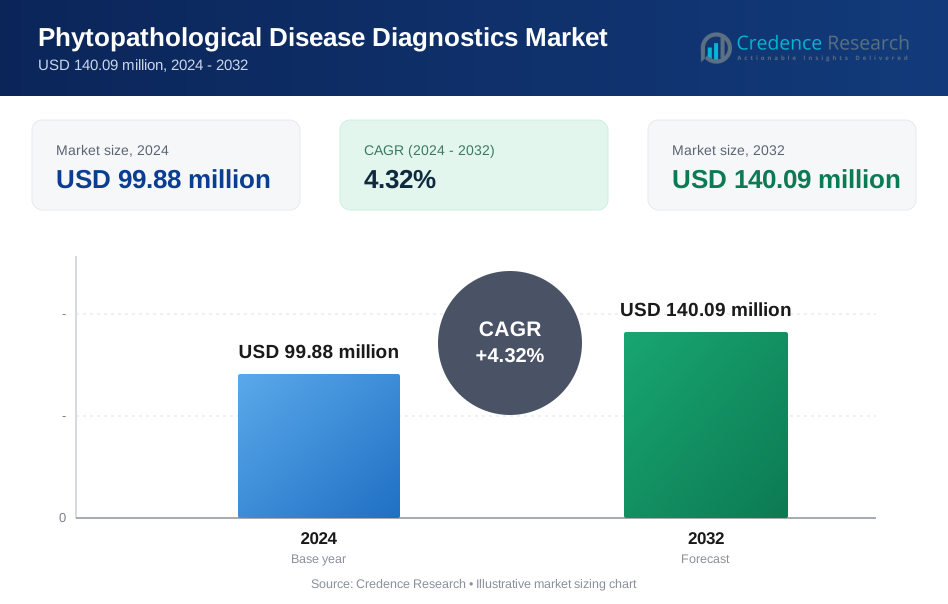
The Phytopathological Disease Diagnostics Market is projected to grow from USD 99.88 million in 2024 to USD 140.09 million by 2032, reflecting a compound annual growth rate (CAGR) of 4.32%.
The Phytopathological Disease Diagnostics Market is driven by increasing agricultural activities and the rising need for accurate disease detection to ensure crop health and yield. Advances in molecular diagnostics and the growing adoption of precision farming techniques are boosting market growth. Additionally, heightened awareness among farmers and the implementation of stringent regulations regarding plant health are contributing to the demand for advanced diagnostic tools. The market is also experiencing trends towards the integration of digital technologies and remote sensing, enhancing the efficiency and accuracy of disease diagnostics, further driving market expansion.
The Phytopathological Disease Diagnostics Market is geographically diverse, with significant activity in regions like North America, Europe, and Asia Pacific. North America and Europe lead due to advanced agricultural practices and robust R&D infrastructure, while the Asia Pacific is witnessing rapid growth driven by increasing agricultural production and the adoption of modern diagnostic techniques. Key players in this market include ThermoFisher Scientific, TwistDx Limited, Merck KGaA, and Agdia, Inc., who are driving innovation through advanced diagnostic solutions and expanding their presence across emerging markets to meet growing demand.
Market Drivers
Rising Prevalence of Plant Diseases and Food Security Concerns The increasing incidence of plant diseases, caused by a range of pathogens including fungi, bacteria, viruses, and nematodes, is significantly driving the demand for accurate and timely phytopathological diagnostics. For instance, the USDA ARS has reported that plant diseases have significant impacts on yields and quality, resulting in billions of dollars in economic losses and management inputs each year to crops, landscapes, and forests in the United States. Furthermore, about 30% of yield losses in major crops are due to plant diseases. As these diseases spread, they pose a serious threat to agricultural productivity, necessitating effective diagnostic tools to mitigate potential losses. Additionally, food security concerns have become a global priority, emphasizing the need for efficient plant disease management strategies. Early detection and diagnosis of plant diseases are crucial to preventing widespread crop damage, which directly impacts food supply chains. The ability to identify and address plant diseases at an early stage ensures that food production remains stable and secure, further underscoring the importance of robust diagnostic solutions in the agricultural sector.
Economic Impact of Plant Diseases Plant diseases not only threaten food security but also have significant economic implications for farmers and the broader agricultural industry. According to the USDA ARS, crop losses due to plant pathogens that did not originate in the United States are estimated to cost $21 billion per year. Accurate and timely diagnostics play a critical role in minimizing these economic losses. The economic losses caused by plant diseases can be substantial, affecting the livelihoods of farmers and disrupting market dynamics. Accurate and timely diagnostics play a critical role in minimizing these economic losses by enabling early intervention and effective disease management. With precise diagnostics, farmers can implement targeted treatments, reduce the spread of diseases, and preserve crop yields. This proactive approach not only safeguards the financial stability of agricultural operations but also contributes to the overall resilience of the industry in the face of plant health challenges.
Government Regulations and Initiatives Government regulations and initiatives are increasingly promoting plant health and food safety, driving the adoption of advanced phytopathological disease diagnostics. As governments recognize the importance of maintaining healthy crops and ensuring food quality, they are implementing stricter regulations and offering support for the development and deployment of diagnostic technologies. These regulatory frameworks often mandate regular monitoring and testing of crops for diseases, creating a favorable environment for the growth of the phytopathological diagnostics market. Additionally, government initiatives aimed at supporting sustainable agriculture practices further contribute to the adoption of these diagnostic tools, as they play a vital role in disease prevention and management.
Advancements in Diagnostic Technologies and Sustainable Agriculture The development of advanced diagnostic techniques, such as PCR, ELISA, and molecular diagnostics, is revolutionizing the phytopathological disease diagnostics market. These technologies enable faster, more accurate disease detection, allowing for timely interventions that can prevent the spread of diseases and protect crop yields. The growing awareness of sustainable agriculture practices is also driving demand for these diagnostic tools. As the agricultural industry shifts towards more sustainable methods, there is an increased emphasis on plant health and disease management. Diagnostic tools that support these goals are becoming essential, as they help farmers maintain healthy crops while minimizing the environmental impact of agricultural practices. This alignment with sustainability trends further propels the market's growth, as more stakeholders recognize the value of advanced diagnostics in achieving long-term agricultural success.
Market Trends
Rising Demand for Rapid Diagnostics and Molecular Techniques The Phytopathological Disease Diagnostics Market is witnessing a significant increase in the adoption of rapid diagnostic kits and advanced molecular techniques. For instance, recent advancements in molecular biology have revolutionized plant disease diagnosis and management. Disease diagnosis through serological techniques, isothermal amplification methods, and CRISPR-based approaches, along with management strategies using RNA-based methods, are gaining traction. Rapid, on-site diagnostic kits are becoming increasingly popular due to their ease of use, time-saving benefits, and ability to provide immediate results. These kits are particularly valuable for farmers and agricultural professionals who need to make quick decisions in the field to prevent the spread of plant diseases. Their growing demand is driven by the need for timely interventions, which are essential for minimizing crop losses and ensuring optimal agricultural productivity. Alongside these kits, molecular diagnostics, including techniques such as PCR and real-time PCR, are gaining widespread acceptance due to their high sensitivity and specificity. These molecular methods allow for the accurate detection of pathogens at the genetic level, offering unparalleled precision in identifying the presence of diseases. The integration of these advanced diagnostic tools into routine agricultural practices is enhancing the ability to detect and manage plant diseases effectively, thereby contributing to the overall growth of the market.
Integration of Digital Technologies and Emergence of Plant Health Management Services Another prominent trend in the Phytopathological Disease Diagnostics Market is the increasing integration of digital technologies, such as the Internet of Things (IoT) and data analytics, which are revolutionizing disease surveillance and monitoring. These technologies enable real-time data collection and analysis, allowing for more efficient disease tracking and management. By utilizing IoT devices and advanced data analytics, farmers can monitor plant health continuously, detect early signs of disease, and implement preventive measures promptly. This shift towards early detection and prevention strategies is becoming a key focus within the industry, as it helps to minimize crop losses and improve overall agricultural outcomes. Additionally, the rise of plant health management services, which combine diagnostics with advisory services, is gaining traction. These services offer a comprehensive approach to plant disease management, providing farmers with not only diagnostic tools but also expert guidance on how to manage and treat identified diseases. The growing importance of data management and analysis within these services underscores the need for informed decision-making in agriculture. By effectively collecting, analyzing, and interpreting plant disease data, stakeholders can make data-driven decisions that enhance crop health and productivity. This holistic approach to plant health management is transforming the industry, making it more resilient to the challenges posed by plant diseases and contributing to the market's sustained growth.
Market Challenges Analysis
Complex Etiology and Dynamic Pathogens
Phytopathological diseases present a significant diagnostic challenge due to their complex etiology. Various pathogens, including fungi, bacteria, viruses, and nematodes, can cause overlapping symptoms in plants, complicating the process of accurate and timely diagnosis. For instance, a survey by the USDA's National Institute of Food and Agriculture found that 72% of plant pathologists reported encountering new or evolved pathogen strains in the past 5 years that were difficult to diagnose using existing methods. This complexity is exacerbated by the rapid evolution of pathogens, which adapt and mutate, often rendering existing diagnostic methods less effective. The challenge is further intensified by the global nature of agriculture, where pathogens can spread across borders quickly, necessitating a dynamic approach to diagnostic test development to keep pace with evolving strains.
Operational and Educational Barriers
The effective diagnosis of plant diseases is hindered by several operational challenges. Firstly, the high costs associated with advanced diagnostic technologies pose a significant barrier, particularly for small-scale farmers and in developing regions, where such expenses are often not feasible. Additionally, the lack of standardized diagnostic protocols across different regions and laboratories complicates the data comparison and results interpretation, making consistent disease management difficult. Access to diagnostic services is also limited in many areas due to insufficient infrastructure and a shortage of trained personnel. On the regulatory front, gaining approvals for new diagnostic tools is both time-consuming and costly, further slowing the deployment of innovative solutions. Moreover, there is a noticeable gap in educating end-users, such as farmers and agricultural extension workers, about the critical role of diagnostics in disease management and prevention, underscoring the need for comprehensive educational programs to enhance understanding and use of phytopathological diagnostics.
Market Segmentation Analysis:
By Product Type:
The phytopathological disease diagnostics market features a diverse array of product types catering to various diagnostic needs. Key segments include ELISA kits, DNA-based diagnostics kits, and protein-based diagnostics kits, which are fundamental for accurate pathogen identification and quantification. Lateral flow devices and DNA/RNA probes facilitate rapid, on-site testing, crucial for immediate disease management decisions. Additionally, the market offers a range of accessories and consumables that support the operational efficiency of diagnostic procedures. Software and cloud databases are increasingly integral, providing robust data management and analytics capabilities that enhance diagnostic accuracy and track disease outbreaks in real-time. This segment's growth is driven by the continuous evolution of pathogens and the corresponding need for advanced diagnostic solutions that can deliver quick and reliable results.
By Test Type:
The test type segment of the phytopathological disease diagnostics market is critical for understanding and combating plant diseases effectively. This segment encompasses PCR-based assays, PCR & RT-PCR, and multiplex PCR, which are essential for detecting and quantifying genetic material of pathogens with high specificity and sensitivity. Isothermal amplification assays, microarray assays, NASBA, and LAMP assays provide options for rapid and less resource-intensive testing, suitable for various operational settings. The segment also includes serological tests like ELISA, TBIA, and QCMI, which are used to detect antigens or antibodies, providing insights into pathogen presence and activity. Tests utilizing electronic technology further push the boundaries of what's possible in diagnostics, offering enhanced capabilities for precise disease detection and management in agricultural settings.
Segments:
Based on Product Type:
- ELISA Kits
- DNA-based Diagnostics Kits
- Protein-based Diagnostics Kits
- Lateral Flow Devices
- DNA/RNA Probes
- Accessories and Consumables
- Software and Cloud Databases
Based on Test Type:
- PCR-based Assays
- PCR & RT-PCR
- Multiplex PCR
- Isothermal Amplification Assays
- Microarray Assays
- NASBA
- LAMP Assays
- ELISA
- TBIA
- QCMI
- Electronic Technology Tests
Based on Sample Type:
- Seeds
- Grains
- Plants
- Trees
- Fruits
Based on End User:
- Agricultural Laboratories
- Academic and Research Institutes
- Food Processing Laboratories
- Contract Research Organizations
Based on the Geography:
- North America
- US
- Canada
- Mexico
- Europe
- Germany
- France
- UK
- Italy
- Spain
- Rest of Europe
- Asia Pacific
- China
- Japan
- India
- South Korea
- South-east Asia
- Rest of Asia Pacific
- Latin America
- Brazil
- Argentina
- Rest of Latin America
- Middle East & Africa
- GCC Countries
- South Africa
- Rest of Middle East and Africa
Regional Analysis
North America
North America maintains its position as the market leader, commanding a substantial 35% share of the global market. This dominance stems from the region's highly advanced agricultural sector, characterized by extensive use of precision farming techniques and a strong emphasis on sustainable agricultural practices. The United States, in particular, stands out with its robust research infrastructure and substantial investments in agricultural technology. According to government data, the U.S. public agricultural R&D spending reached $3.9 billion in 2019. Canada follows suit, with increasing focus on developing innovative diagnostic tools to combat emerging plant diseases in its diverse agricultural landscapes. The region's market is further bolstered by stringent regulatory standards that necessitate regular and accurate disease diagnostics, as well as a growing awareness among farmers about the economic benefits of early disease detection and prevention.
Europe
Europe closely trails North America with a 30% market share, driven by its comprehensive regulatory framework concerning plant health and biosecurity. The European Union's common agricultural policy plays a pivotal role in shaping the market, promoting the adoption of advanced diagnostic technologies across member states. Countries like Germany, France, and the Netherlands lead in research and development of novel diagnostic methods, including molecular and serological techniques. The region's strong commitment to organic farming and sustainable agriculture further propels the demand for sophisticated, environmentally friendly diagnostic solutions.
Key Player Analysis
- ThermoFischer Scientific
- Abingdon Health
- TwistDx Limited
- Clear Detections B.V.
- Creative Diagnostics
- Qualiplante SAS
- Merck KGaA
- Agdia, Inc.
- Norgen Biotek Corp.
Competitive Analysis
The Phytopathological Disease Diagnostics Market is highly competitive, with leading players such as ThermoFisher Scientific, Merck KGaA, and Agdia, Inc. dominating the landscape. ThermoFisher Scientific leverages its extensive portfolio of molecular diagnostic tools and global distribution network to maintain a strong market presence. Merck KGaA is known for its innovative approaches in molecular and serological testing, focusing on research-driven solutions and strategic collaborations to expand its product offerings. Agdia, Inc. specializes in user-friendly, field-based diagnostic kits, catering to the needs of agricultural practitioners with a focus on accuracy and ease of use. TwistDx Limited and Abingdon Health are also key competitors, with strengths in rapid diagnostic technologies and point-of-care testing solutions. These companies compete on the basis of product innovation, technological advancements, and global reach, constantly enhancing their offerings to meet the evolving needs of the agricultural sector.
Recent Developments
- In June 2024, Thermo Fisher Scientific unveiled new solutions supporting research workflows at the annual American Society for Mass Spectrometry (ASMS) Conference. They introduced the Thermo Scientific™ Stellar™ mass spectrometer, which combines speed and sensitivity to advance precision medicine.
- In 2023, Agdia Inc., headquartered in Wilmington, Delaware (United States), launched the Thrips Spot Viruses ImmunoComb, revolutionizing plant virus detection with a compact and efficient tool for growers worldwide.
- In August 2022, Agdia, Inc. commercialized an RNA-based assay, on their AmplifyRP XRT platform, for the detection of Lettuce chlorosis virus. The assay is based on recombinase polymerase amplification (RPA), an isothermal technology, that promotes the rapid amplification and detection of nucleic acid targets, DNA or RNA, at a single operating temperature of 42-degree celsius.
Market Concentration & Characteristics
The Phytopathological Disease Diagnostics Market exhibits a moderate to high level of market concentration, with several key players holding significant shares due to their advanced technological capabilities and extensive product portfolios. Leading companies like ThermoFisher Scientific, Merck KGaA, and Agdia, Inc. dominate the market, leveraging their robust R&D investments and global distribution networks. The market is characterized by continuous innovation, driven by the need to address the complex and evolving nature of plant pathogens. Additionally, the demand for precise, rapid, and cost-effective diagnostic solutions has led to increased competition among players to develop next-generation products. The market is also marked by strategic partnerships and acquisitions, as companies seek to expand their technological capabilities and geographic reach. While larger firms dominate, there is space for niche players specializing in specific diagnostic technologies or regions, contributing to a dynamic and competitive market environment.
Report Coverage
The research report offers an in-depth analysis based on Product Type, Test Type, Sample Type, End User and Geography. It details leading market players, providing an overview of their business, product offerings, investments, revenue streams, and key applications. Additionally, the report includes insights into the competitive environment, SWOT analysis, current market trends, as well as the primary drivers and constraints. Furthermore, it discusses various factors that have driven market expansion in recent years. The report also explores market dynamics, regulatory scenarios, and technological advancements that are shaping the industry. It assesses the impact of external factors and global economic changes on market growth. Lastly, it provides strategic recommendations for new entrants and established companies to navigate the complexities of the market.
Future Outlook
- The market is expected to witness robust growth driven by increasing agricultural investments and the adoption of advanced diagnostic technologies.
- Integration of AI and machine learning in diagnostics is anticipated to enhance accuracy and speed in pathogen detection.
- The demand for cost-effective diagnostic solutions will rise, particularly in emerging markets and among small-scale farmers.
- Expansion of cloud-based data management systems will improve disease tracking and management across regions.
- Ongoing advancements in molecular diagnostic techniques, such as PCR and isothermal amplification, will continue to shape the market.
- Growing awareness of plant health among farmers will drive the adoption of diagnostic tools in rural and underserved areas.
- Strategic partnerships and collaborations between key players will facilitate technological innovation and market expansion.
- Government initiatives and funding for agricultural research are expected to support market growth and development.
- The market will see increased focus on developing portable and field-ready diagnostic devices for real-time disease monitoring.
- Regulatory approvals for new diagnostic products are likely to streamline, accelerating the introduction of innovative solutions to the market.
Request a Free Sample
Fill in your details and we'll send you a free sample report.
- Sample data tables & charts
- Research methodology
Need a Custom Version of This Report?
Tailor the scope, geography, or segments to your exact requirements.
- Custom geography or segment scope
- Direct access to our analyst team
Frequently Asked Questions
What is the current size of the Phytopathological Disease Diagnostics Market?
What factors are driving the growth of the Phytopathological Disease Diagnostics Market?
What are the key segments within the Phytopathological Disease Diagnostics Market?
What are some challenges faced by the Phytopathological Disease Diagnostics Market?
Who are the major players in the Phytopathological Disease Diagnostics Market?
Table of Content
Chapter 1. Report Introduction
- 1.1 Report Description & Purpose
- 1.1.1 Report Title & Market Definition
- 1.1.2 Unique Selling Propositions (USP) & Key Differentiators
- 1.1.3 Value Proposition for Stakeholders
- 1.2 Research Objectives
- 1.2.1 Market Sizing Objectives (Volume & Revenue)
- 1.2.2 Segmentation Objectives
- 1.2.3 Competitive Intelligence Objectives
- 1.2.4 Forecast & Scenario Objectives
- 1.3 Report Scope
- 1.3.1 Phytopathological Disease Diagnostics Scope – Types & Subtypes Covered
- 1.3.2 Geographic Scope – Regions & Countries Covered
- 1.3.3 Historical Period, Base Year & Forecast Period (2024; forecast to 2032)
- 1.3.4 Inclusions & Exclusions
- 1.4 HS Code & Classification Framework
- 1.5 Currency, Units & Pricing Basis
- 1.6 Target Stakeholders
- 1.7 Limitations & Assumptions
Chapter 2. Executive Summary
- 2.1 Global Phytopathological Disease Diagnostics Market Snapshot
- 2.1.1 Market Size – Historical (2024) & Forecast (2024-2032) (2024: USD 99.88 million → 2032: USD 140.09 million)
- 2.1.2 Volume & Revenue – Global Totals
- 2.1.3 Key Market Highlights – Top Five Facts
- 2.2 Phytopathological Disease Diagnostics Market Segmentation Snapshot
- 2.2.1 Market Split by Region – 2024 vs. 2032
- 2.3 Competitive Snapshot
- 2.3.1 Top 10 Players by Revenue Share – 2024
- 2.3.2 Top 10 Players by Volume Share – 2024
- 2.3.3 Recent Strategic Developments (18-Month Summary)
- 2.4 Key Investment Highlights & Strategic Conclusions
Chapter 3. Phytopathological Disease Diagnostics Market Dynamics & Industry Analysis
- 3.1 Market Overview & Context
- 3.1.1 Phytopathological Disease Diagnostics Market Position in the Broader Automotive Value Chain
- 3.1.2 OEM vs. Replacement Market Dynamics
- 3.1.3 Market Maturity & Development Stage by Region
- 3.2 Phytopathological Disease Diagnostics Market Drivers
- 3.3 Phytopathological Disease Diagnostics Market Restraints & Challenges
- 3.4 Phytopathological Disease Diagnostics Market Opportunities
- 3.5 Porter's Five Forces Analysis
- 3.5.1 Threat of New Entrants
- 3.5.2 Bargaining Power of Suppliers
- 3.5.3 Bargaining Power of Buyers
- 3.5.4 Threat of Substitutes
- 3.5.5 Competitive Rivalry – Intensity Assessment
- 3.6 Phytopathological Disease Diagnostics Value Chain Analysis
- 3.6.1 Upstream – Raw Material/Input Suppliers
- 3.6.1.1 Raw Material/Input 1
- 3.6.1.2 Raw Material/Input 2
- 3.6.1.3 Raw Material/Input 3
- 3.6.2 Midstream – Production/Manufacturing/Service Delivery
- 3.6.2.1 Production/Process Overview
- 3.6.2.2 Key Facility Locations & Capacity by Manufacturer
- 3.6.3 Downstream – Distribution & End Consumer
- 3.6.3.1 Primary Channel – B2B/OEM
- 3.6.3.2 Secondary Channels – Dealer, Retail, Online, Direct
- 3.6.4 Value Chain Profitability Analysis
- 3.6.1 Upstream – Raw Material/Input Suppliers
- 3.7 PESTEL Analysis
- 3.7.1 Political Factors
- 3.7.2 Economic Factors
- 3.7.3 Social Factors
- 3.7.4 Technological Factors
- 3.7.5 Environmental Factors
- 3.7.6 Legal Factors
- 3.8 Phytopathological Disease Diagnostics Supply Chain Analysis
- 3.8.1 Raw Material/Input Supply Risk Assessment
- 3.8.2 Manufacturing Concentration Risk (Geographic Exposure)
- 3.8.3 Trade Disruption Impact Analysis
- 3.9 Regulatory & Policy Landscape
Note: The regulatory and policy landscape section covers regulations based on their applicability to the market, Phytopathological Disease Diagnostics category, geography, and scope of the study. Only regulatory frameworks with a material impact on operations, compliance, trade, sustainability, or market access are analyzed in detail.
Chapter 4. Key Investment Pockets & Opportunity Analysis
- 4.1 Phytopathological Disease Diagnostics Market Attractiveness Analysis
- 4.1.1 By Region – Investment Attractiveness Matrix (Volume × CAGR)
- 4.2 Absolute Revenue Growth Opportunity
- 4.2.1 By Region – Absolute USD Growth Through 2032
- 4.3 Incremental Volume Opportunity
- 4.3.1 By Region – Incremental Volume Through 2032
- 4.3.2 Segment – Incremental Volume
- 4.4 Emerging Submarket Opportunity Deep Dive (Subject to Applicability)
- 4.5 Emerging Market Opportunity Scorecards
- 4.5.1 United States
- 4.5.2 Europe
- 4.5.3 Asia
- 4.5.4 Middle East & Africa
Note: Emerging Market Opportunity Scorecards will be included based on relevance and strategic importance. Regions listed are indicative and may vary depending on data availability and market dynamics.
Chapter 5. Phytopathological Disease Diagnostics Import-Export Analysis & Trade Flows
- 5.1 Global Trade Overview
- 5.1.1 Global Export Value by Country (2024)
- 5.1.2 Global Export Volume by Country (2024)
- 5.1.3 Global Import Value by Country (2024)
- 5.1.4 Global Import Volume by Country (2024)
- 5.1.5 Net Trade Balance by Country (2024)
- 5.2 Export Analysis – Segment
- 5.2.1 Type 1 (HS Code)
- 5.2.2 Type 2 (HS Code)
- 5.2.3 Type 3 (HS Code)
- 5.2.4 Type 4 (HS Code)
- 5.2.5 Type 5 (HS Code)
- 5.3 Import Analysis – Segment
- 5.3.1 Type 1 (HS Code)
- 5.3.2 Type 2 (HS Code)
- 5.3.3 Type 3 (HS Code)
- 5.3.4 Type 4 (HS Code)
- 5.3.5 Type 5 (HS Code)
- 5.4 Average Unit Trade Prices
- 5.4.1 Average Export Price – Segment & Country
- 5.4.2 Average Import Price – Segment & Source Country
- 5.4.3 Price Trends (2024)
- 5.5 Key Trade Route Analysis
- 5.5.1 Trade Route 1
- 5.5.2 Trade Route 2
- 5.5.3 Trade Route 3
- 5.5.4 Trade Route 4
- 5.5.5 Trade Route 5
- 5.6 Trade Policy Impact Assessment
- 5.6.1 US Anti-Dumping & Section 301 Tariffs
- 5.6.2 EU Customs Union Impact
- 5.6.3 Major Free Trade Agreements
- 5.6.4 USMCA Rules of Origin
Note: Trade policy analysis will be included only where relevant to the Phytopathological Disease Diagnostics market.
Chapter 6. Competitive Landscape & Company Benchmarking
- 6.1 Phytopathological Disease Diagnostics Market Concentration & Structure
- 6.1.1 Herfindahl-Hirschman Index (HHI) – vs. 2024
- 6.1.2 Tier 1, Tier 2 & Tier 3 Market Structure
- 6.1.3 Global, Regional & Local Player Dynamics
- 6.2 Phytopathological Disease Diagnostics Market Share Analysis – 2024
- 6.2.1 Global Revenue Share by Company
- 6.2.2 Global Volume Share by Company
- 6.2.3 Regional Revenue Share
- 6.2.4 Market Share Evolution ( vs. 2024)
- 6.2.5 OEM Segment Share by Company
- 6.2.6 Replacement Segment Share by Company
- 6.3 Production/Delivery Capacity & Facility Analysis
- 6.3.1 Global Installed Capacity
- 6.3.2 Capacity Utilization Rates
- 6.3.3 Production/Output Volume
- 6.3.4 Facility Locations & Capacity Map
- 6.3.5 Planned Capacity Additions
- 6.4 Phytopathological Disease Diagnostics Competitive Benchmarking Matrix
- 6.4.1 Revenue, Volume, CAGR & Profitability Comparison
- 6.4.2 Channel Revenue Mix
- 6.4.3 Geographic Revenue Exposure
- 6.4.4 R&D Intensity
- 6.4.5 Sustainability Maturity
- 6.5 Strategic Developments in Phytopathological Disease Diagnostics (Last 24 Months)
- 6.5.1 Mergers, Acquisitions & Divestments
- 6.5.2 New Phytopathological Disease Diagnostics Launches
- 6.5.3 Facility Expansions
- 6.5.4 Strategic Alliances, Joint Ventures & Partnerships
- 6.5.5 Distribution Expansion & Market Entry
- 6.5.6 Sustainability & ESG Initiatives
- 6.6 Competitive Strategy Mapping
- 6.6.1 Leader, Challenger, Follower & Niche Classification
- 6.6.2 Pricing Strategy Comparison
- 6.6.3 Channel Strategy Matrix
Note: Strategic developments are included based on their materiality and the availability of reliable information.
Chapter 7. Global Phytopathological Disease Diagnostics Market – By Distribution Channel
- 7.1 Segment Overview
- 7.1.1 Volume & Revenue Split by Channel (2024 & 2032)
- 7.1.2 Channel Mix Evolution (2024-2032)
Chapter 8. Regional Market Analysis – Global Overview
- 8.1 Global Regional Overview
- 8.1.1 Regional Volume Share
- 8.1.2 Regional Revenue Share
- 8.1.3 Regional Volume by Region
- 8.1.4 Regional Revenue by Region
- 8.1.5 Regional Forecast Through 2032
- 8.2 Cross-Regional Segment Analysis
- 8.2.1 By Distribution Channel
- 8.2.2 By Brand/Price Tier
Chapter 9. North America Phytopathological Disease Diagnostics Market
- 9.1 United States
- 9.2 Canada
- 9.3 Mexico
Chapter 10. Europe Phytopathological Disease Diagnostics Market
- 10.1 Germany
- 10.2 France
- 10.3 Italy
- 10.4 United Kingdom
- 10.5 Spain
- 10.6 Poland
- 10.7 Russia
- 10.8 Netherlands
- 10.9 Belgium
- 10.10 Sweden
- 10.11 Denmark
- 10.12 Norway
- 10.13 Rest of Europe
Chapter 11. Asia Pacific Phytopathological Disease Diagnostics Market
- 11.1 China
- 11.2 India
- 11.3 Japan
- 11.4 South Korea
- 11.5 Thailand
- 11.6 Indonesia
- 11.7 Vietnam
- 11.8 Malaysia
- 11.9 Australia
- 11.10 Rest of Asia Pacific
Chapter 12. Latin America Phytopathological Disease Diagnostics Market
- 12.1 Brazil
- 12.2 Argentina
- 12.3 Colombia
- 12.4 Chile
- 12.5 Rest of Latin America
Chapter 13. Middle East Phytopathological Disease Diagnostics Market
- 13.1 Saudi Arabia
- 13.2 United Arab Emirates
- 13.3 Turkey
- 13.4 Israel
- 13.5 Iran
- 13.6 Rest of the Middle East
Chapter 14. Africa Phytopathological Disease Diagnostics Market
- 14.1 South Africa
- 14.2 Egypt
- 14.3 Nigeria
- 14.4 Morocco
- 14.5 Rest of Africa
Chapter 15. Phytopathological Disease Diagnostics Company Profiles
- 15.1 [Company 01]
- 15.1.1 Company Overview
- 15.1.2 Key Management Personnel
- 15.1.3 Products & Services Portfolio
- 15.1.4 Financial Performance
- 15.1.5 Key Market Focus & Geographic Presence
- 15.1.6 Recent Developments & Strategic Initiatives
Note: The company profile list is preliminary and may change based on research findings, market developments, data availability, and client requirements.
Chapter 16. Appendices
- Appendix A – List of Abbreviations & Acronyms
- Appendix B – Industry Classification Code Reference – Full Series
- Appendix C – Production & Capacity Data Tables
- Appendix D – End-Use & Demand Base Tables
- Appendix E – Consumption & Replacement Rate Assumptions
- Appendix F – ASP Reference Tables
- Appendix G – Manufacturing & Facility Database
- Appendix H – Import-Export Data Tables
- Appendix I – Regulatory Summary Tables
- Appendix J – Primary Research Participant List (Anonymized)
- Appendix K – Primary Research Questionnaire Framework
- Appendix L – Data Sources & Bibliography
- Appendix M – Market Size Divergence & Source Comparison
Chapter 17. Research Methodology
- 17.1 Research Framework & Philosophy
- 17.2 Secondary Research – Sources, Hierarchy & Data Extraction
- 17.3 Data Modeling – Bottom-Up & Top-Down Market Sizing
- 17.4 Primary Research – Stakeholder Framework, LOI & Sample Sizes
- 17.5 Forecast Methodology – Regression, Scenario & Sensitivity Analysis
- 17.6 Quality Control – Four-Layer Validation Framework
- 17.7 Limitations & Standard Assumptions
- 17.8 Disclaimer
