
| REPORT ATTRIBUTE | DETAILS |
|---|---|
| Historical Period | 2019-2022 |
| Base Year | 2023 |
| Forecast Period | 2024-2032 |
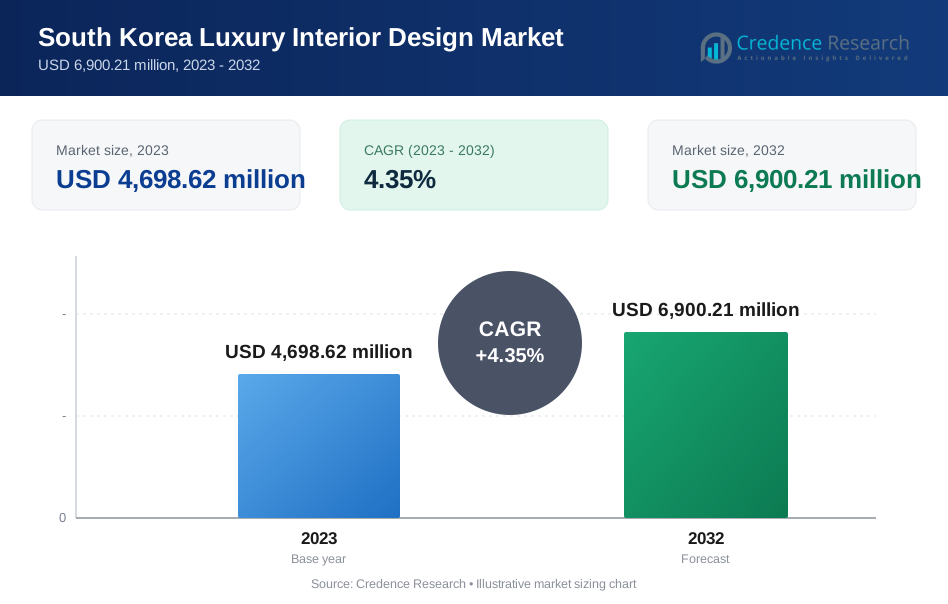
| South Korea Luxury Interior Design Market Size 2023 | USD 4,698.62 million |
| South Korea Luxury Interior Design Market, CAGR | 4.35% |
| South Korea Luxury Interior Design Market Size 2032 | USD 6,900.21 million |
Market Overview
The South Korea Luxury Interior Design Market is projected to grow from USD 4,698.62 million in 2023 to an estimated USD 6,900.21 million by 2032, representing a compound annual growth rate (CAGR) of 4.35% from 2024 to 2032. This growth reflects the increasing demand for sophisticated, high-quality interiors across residential, commercial, and hospitality sectors.
Market growth is primarily fueled by evolving consumer preferences toward premium and sustainable design elements. Trends such as smart homes, eco-friendly materials, and integration of technology into interiors are reshaping the industry landscape. Furthermore, collaborations between international and domestic designers are setting new benchmarks for luxury aesthetics. Increased investments in high-end property developments and renovations are creating opportunities for market players to introduce innovative solutions tailored to diverse consumer needs.
Geographically, the market's growth is concentrated in urban hubs like Seoul and Busan, where affluent populations and high property values drive demand for luxury interiors. The market is characterized by the presence of key players such as Hanssem Co., Ltd., LG Hausys, and Hyundai Livart Corporation, alongside a growing number of boutique design firms offering customized services. These players are actively investing in product innovation and strategic collaborations to maintain competitive advantage and cater to South Korea's discerning clientele.
Market Insights
- The South Korea luxury interior design market is expected to grow from USD 4,698.62 million in 2023 to USD 6,900.21 million by 2032, with a CAGR of 4.35%.
- Increasing disposable incomes and a demand for personalized, exclusive design solutions are key drivers behind market expansion.
- Consumers are increasingly prioritizing eco-friendly and sustainable design elements, driving innovation in the luxury interior sector.
- Smart homes and the incorporation of advanced technologies into interiors are reshaping the industry and enhancing consumer experiences.
- The growth of luxury interior design is concentrated in urban hubs like Seoul and Busan, where affluent populations and high property values are prevalent.
- Major players such as Hanssem Co., Ltd., LG Hausys, and Hyundai Livart Corporation, alongside boutique design firms, are focusing on product innovation and strategic collaborations.
- Increased investments in high-end property developments and renovations are fueling demand for innovative luxury interior solutions.
Market Drivers
Rising Disposable Income and Changing Lifestyle Preferences
South Korea's growing middle and upper classes are pivotal in driving the luxury interior design market. For instance, in 2022, the country's total disposable personal income reached approximately 2,191 trillion KRW, marking a significant increase from previous years. This rise in disposable income empowers consumers to invest in premium living spaces, leading to a shift towards personalized and aesthetically appealing interiors that reflect social status and lifestyle aspirations. Urban professionals and affluent households are increasingly demanding luxury furnishings and bespoke designs, indicating a strong preference for individualized living spaces. As consumers prioritize high-quality materials and exclusive designs, the market experiences a substantial uptick in demand for high-end home improvement solutions, further solidifying the connection between rising disposable income and evolving lifestyle preferences.
Technological Integration and Smart Home Adoption
The integration of advanced technologies into interior design is revolutionizing the market. The smart home market in South Korea is projected to exceed 6 billion USD by 2025, highlighting the growing consumer interest in automated solutions that enhance convenience and security. Homeowners are increasingly seeking features such as automated lighting, temperature control, and security systems that seamlessly blend luxury with functionality. Interior designers are responding to this trend by focusing on harmonizing technology with aesthetics, creating environments that offer clients innovative experiences. South Korea's position as a global leader in technology adoption further bolsters this trend, making the market ripe for growth as consumers seek modern solutions that enhance their living spaces.
Focus on Sustainability and Eco-Friendly Designs
A growing awareness of environmental issues has led to a surge in demand for sustainable and eco-friendly interior solutions. Recent initiatives indicate that over 70% of corporate occupiers prioritize sustainable fit-outs based on circular principles. Consumers and businesses alike are increasingly prioritizing the use of environmentally responsible materials such as recycled wood, energy-efficient fixtures, and low-emission paints. Designers are incorporating biophilic design principles, integrating natural elements like greenery into interiors to promote wellness while adhering to sustainability goals. Government initiatives and policies promoting green building practices further accelerate this trend, encouraging both residential and commercial sectors to adopt eco-friendly practices. This focus on sustainability not only meets consumer demand but also positions interior design firms as leaders in responsible design.
Boom in High-End Real Estate Developments
The increasing number of luxury residential and commercial real estate projects in urban centers like Seoul and Busan is a significant driver of market growth. High-net-worth individuals (HNWIs) are investing heavily in premium spaces that demand cutting-edge designs and superior craftsmanship. For example, recent developments include plans for luxury towers that will create thousands of residential units designed to meet the expectations of discerning clients. The hospitality sector also plays a crucial role, as high-end hotels and resorts strive to offer unique environments appealing to both domestic and international clients. This boom in real estate development creates substantial opportunities for interior design firms to showcase their expertise, catering to an affluent clientele eager for opulent living spaces that reflect their status and lifestyle aspirations.
Market Trends
Adoption of Minimalist and Modern Aesthetics
A growing preference for minimalist and modern designs is shaping the luxury interior market in South Korea. Consumers favor clean lines, neutral color palettes, and uncluttered spaces that create a sense of tranquility and sophistication. For instance, the integration of minimalist design principles is evident in many contemporary Korean homes, where open floor plans and neutral color schemes dominate. This aesthetic enhances spaciousness and aligns with cultural values emphasizing simplicity and harmony. Designers increasingly utilize high-quality materials like wood and stone to create serene environments that resonate with traditional Korean values while appealing to modern sensibilities. The popularity of this style can be seen in urban areas where compact living spaces are transformed into tranquil retreats through thoughtful design choices prioritizing cleanliness and order.
Increased Demand for Customized and Bespoke Designs
Customization has emerged as a critical trend in the luxury interior market. High-net-worth individuals are seeking personalized solutions that reflect their unique tastes and lifestyles. For instance, affluent consumers in South Korea are increasingly pursuing tailored interior solutions. This trend is exemplified by collaborations between designers and local artisans, resulting in unique furniture pieces and decor items that cater specifically to client preferences. The rise of bespoke design services is evident in luxury showrooms across major cities, where tailored consultations lead to customized interiors that blend functionality with personal expression. This shift towards personalization highlights a broader societal trend where individuality is celebrated, encouraging homeowners to invest in spaces that truly represent their identities.
Integration of Wellness-Centric Design Elements
The emphasis on health and wellness is influencing luxury interior design choices. Consumers prioritize spaces that promote physical and mental well-being. For instance, many high-end residences now incorporate features aimed at enhancing well-being, such as biophilic design elements that connect indoor spaces with nature. Homes are increasingly designed with large windows to maximize natural light, while indoor gardens and air-purifying plants are becoming common fixtures. This focus on wellness is reflected in the growing popularity of spa-like bathrooms equipped with ergonomic fixtures and soothing color palettes. Furthermore, wellness-centric designs often prioritize comfort through the use of natural materials, creating environments that not only look good but also promote relaxation and rejuvenation.
Rise of Sustainable and Smart Living Solutions
Sustainability and technology integration are at the forefront of current design trends. Eco-conscious consumers demand energy-efficient appliances, solar-powered systems, and sustainable materials. For instance, eco-conscious consumers are driving demand for sustainable materials and energy-efficient designs in luxury interiors. High-end properties now frequently feature smart home technologies that enhance convenience while reducing environmental impact. Automated lighting systems adjust based on natural light levels, significantly lowering energy consumption. Additionally, many new developments incorporate green roofs and rainwater harvesting systems as part of their design ethos, showcasing a commitment to sustainability that resonates with modern buyers who prioritize eco-friendly living solutions. This trend reflects a broader societal shift towards responsible consumption and environmental stewardship within the luxury market.
Market Challenges
High Costs and Limited Affordability
One of the primary challenges in the luxury interior design market is the high cost associated with premium materials, bespoke designs, and advanced technologies. For instance, the initial consultation fees for luxury interior designers can range from $150 to $500, which already sets a high entry point for potential clients. Additionally, the choice of materials significantly impacts costs; high-end options such as imported fabrics and custom furniture can lead to substantial project budgets. This exclusivity restricts the potential customer base, making it difficult for small and mid-sized firms to compete with established players who have the resources to absorb these expenses. Moreover, rising costs of raw materials and labor further exacerbate affordability issues. In urban areas where demand for luxury designs is concentrated, these costs can escalate quickly, creating significant hurdles for market expansion. As a result, while affluent consumers may afford these luxury solutions, the broader market remains limited to a niche segment, highlighting a critical barrier in the industry.
Intense Competition and Market Saturation in Urban Areas
Urban centers like Seoul and Busan are key markets for luxury interior design but are also characterized by intense competition and saturation. For instance, numerous domestic and international firms are vying for the same clientele in these bustling urban landscapes. This saturation leads to pricing pressures that can erode profit margins for smaller firms struggling to differentiate themselves in a crowded market. Established companies must continually innovate to maintain their competitive edge, which complicates the landscape for new entrants looking to establish a foothold. The fierce competition not only challenges smaller firms with differentiation but also affects their financial viability in sustaining operations amidst these pressures. Consequently, this environment makes it increasingly difficult for newcomers to thrive in the industry, as they face obstacles from both established players and the inherent challenges of a saturated market.
Market Opportunities
Expansion into Emerging Urban and Suburban Markets
Emerging urban and suburban markets are becoming increasingly vital for luxury interior design firms due to notable trends in consumer behavior and economic growth. For instance, as disposable incomes rise, particularly in suburban areas, there is a marked increase in demand for high-end interior solutions tailored to the unique preferences of these communities. A significant example can be seen in the suburbs of major cities like Seoul and Mumbai, where property investments have surged, leading to a growing appetite for luxury home renovations. Moreover, real estate developers are increasingly incorporating modern design sensibilities into their projects, reflecting a blend of local motifs and global trends. This shift not only enhances the appeal of new developments but also creates opportunities for designers to offer bespoke services that resonate with affluent buyers. As urban migration continues, regions previously overlooked are now becoming hotspots for luxury living. Companies that establish a presence in these areas can diversify their clientele and reduce reliance on saturated urban centers, positioning themselves advantageously in an evolving market landscape.
Leveraging Digital Platforms for Customer Engagement
The digital transformation within the interior design industry is reshaping how firms engage with clients and showcase their offerings. Luxury interior design firms are increasingly utilizing platforms like Instagram and Pinterest to build brand awareness and reach a wider audience. For instance, companies that maintain a strong online presence report higher engagement rates and lead generation through visually compelling portfolios that highlight their design expertise.Additionally, the use of virtual showrooms and augmented reality tools allows clients to visualize design concepts remotely, enhancing the overall customer experience. This approach not only streamlines decision-making but also fosters a sense of personalization that is crucial in the luxury market. As evidenced by successful firms leveraging social media, consistent interaction with followers helps build loyalty and trust, which are essential for converting inquiries into contracts. By embracing digital marketing strategies, interior designers can create meaningful connections with clients while showcasing their unique design philosophies in an increasingly competitive landscape.
Market Segmentation Analysis
By Type
The South Korean luxury interior design market is segmented into "Repeatedly Decorated" and "Newly Decorated" categories. The "Repeatedly Decorated" segment targets high-net-worth individuals (HNWIs) and affluent households who frequently renovate their interiors to keep up with emerging trends or personal preferences. This segment is driven by the demand for bespoke furnishings, luxury materials, and modern, sophisticated design solutions. On the other hand, the "Newly Decorated" segment focuses on first-time interior designs for new luxury residential and commercial spaces, fueled by the growing real estate sector in both urban and suburban areas. Developers and property owners seek unique, high-quality designs to enhance property value, offering significant opportunities for interior design firms.
By Application
The South Korean luxury interior design market is driven by three main segments: residential, commercial, and others. The residential segment leads, fueled by affluent homeowners' desire for personalized spaces featuring smart technologies, wellness-focused designs, and sustainable materials. This segment benefits from rising home renovations and high-end property developments. The commercial segment includes luxury hotels, high-end retail spaces, and corporate offices, where businesses aim to create distinctive environments that enhance brand identity and attract customers. The hospitality sector, in particular, plays a key role in boosting demand for luxurious interiors. Lastly, the "others" segment, which covers public spaces, cultural centers, and recreational facilities, offers opportunities for designers to display their creativity in unique, smaller-scale projects.
Segments
Based on Type
- Repeatedly Decorated
- Newly Decorated
Based on Application
- Residential
- Commercial
- Others
Based on Region
- Seoul
- Busan
- Others
Regional Analysis
Seoul (45%):
As the capital and largest city of South Korea, Seoul holds the largest share of the luxury interior design market, accounting for approximately 45%. The city's high population density, concentration of affluent households, and booming real estate market contribute significantly to its dominance. The demand for luxury interiors in Seoul is driven by high-net-worth individuals and property developers who seek bespoke solutions for residential and commercial projects. Additionally, the city’s status as a global cultural hub attracts international design firms, further enhancing the market's competitiveness.
Busan (25%):
Busan, South Korea’s second-largest city, holds a substantial share of around 25%. Known for its thriving tourism and hospitality sectors, the demand for luxury interior designs in Busan is largely driven by high-end hotels, resorts, and waterfront residential properties. The city’s strategic coastal location and growing real estate development projects offer significant opportunities for interior designers to cater to both domestic and international clients.
Key players
- Aecom
- Gensler
- Jacobs Engineering Group Inc.
- Perkins and Will
- Stantec Inc.
- Areen Design Services Ltd.
- IA Interior Architects
- Cannon Design
- Hirsch Bedner Associates
- NELSON & Associates Interior Design and Space Planning Inc.
- ARCHIWORKSHOP
- DANAHAM
Competitive Analysis
The South Korea Luxury Interior Design Market is characterized by intense competition among established players and emerging firms. Companies like Aecom, Gensler, and Jacobs Engineering Group Inc. lead the market with extensive portfolios, innovative designs, and global expertise. Domestic firms such as ARCHIWORKSHOP and DANAHAM offer localized solutions, emphasizing traditional Korean aesthetics blended with modern luxury. The market's competitive landscape is further shaped by boutique firms providing bespoke and personalized services. To maintain an edge, companies are focusing on technology integration, sustainable practices, and collaborations with artisans and architects. This competitive environment fosters innovation and enhances overall industry standards.
Recent Developments
- In December 2024, AECOM announced a strategic partnership with local developers in South Korea to enhance its service offerings in the luxury interior design sector. This collaboration aims to leverage AECOM's global expertise in sustainable design to meet the growing demand for eco-friendly luxury interiors in high-end residential and commercial projects.
- In January 2025, Gensler unveiled its latest project in Seoul, focusing on the design of a luxury mixed-use development that integrates retail, residential, and office spaces. The project emphasizes innovative design solutions that cater to affluent clients while promoting sustainability through the use of green materials and energy-efficient technologies.
- In November 2024, Jacobs Engineering Group completed a significant renovation project for a luxury hotel in Busan, South Korea. The redesign focused on creating bespoke interiors that reflect local culture while providing modern amenities. This project highlights Jacobs' commitment to enhancing guest experiences through tailored design solutions.
- In October 2024, Perkins and Will launched a new initiative aimed at promoting wellness-focused interior design in South Korea's luxury market. This initiative includes workshops and collaborations with local artisans to create spaces that prioritize health and well-being, aligning with global trends towards sustainable and mindful living.
- In September 2024, Stantec announced its involvement in a high-profile residential project in Seoul that features luxury interiors designed with an emphasis on sustainability. The firm is integrating smart home technologies into the design, catering to the tech-savvy affluent demographic in South Korea.
- In August 2024, Areen Design Services completed a luxury residential project in Incheon, South Korea. The design incorporates traditional Korean elements with modern aesthetics, showcasing Areen's ability to blend cultural heritage with contemporary luxury.
- In July 2024, IA Interior Architects launched a new office in Seoul to better serve the luxury market. Their focus will be on creating innovative workspace designs that cater to high-end clients looking for bespoke solutions that enhance productivity and aesthetic appeal.
- In June 2024, Cannon Design announced its participation in a luxury retail project in Gangnam, Seoul. The design aims to create an immersive shopping experience through unique interior elements that reflect the brand's identity while appealing to discerning customers.
- In May 2024, Hirsch Bedner Associates revealed plans for a new luxury resort project on Jeju Island. The design will feature locally sourced materials and traditional architectural styles blended with modern luxury, aimed at attracting both domestic and international tourists.
- In April 2024, NELSON & Associates completed a high-end office redesign for a major corporation in Seoul. The project emphasized open spaces and collaborative areas while incorporating luxurious finishes and artwork from local artists.
- In March 2024, ARCHIWORKSHOP announced its latest residential project in Busan, focusing on creating sustainable living spaces that reflect the lifestyle of affluent clients. The design incorporates natural light and green spaces to enhance the overall living experience.
- In February 2024, DANAHAM launched a new collection of luxury interior products tailored for the South Korean market. This collection emphasizes craftsmanship and quality materials, appealing to high-end consumers looking for unique design elements for their homes.
Market Concentration and Characteristics
The South Korean luxury interior design market is characterized by a high degree of concentration, with major department store chains such as Lotte, Shinsegae, and Hyundai accounting for approximately 75% of luxury sales. This market is predominantly urban, with large cities like Seoul housing 80% of the population, leading to luxury demand being concentrated in these areas. The market has experienced significant growth, with the interior and remodeling market value reaching approximately 30 trillion South Korean won in 2020, and projected to grow to 37 trillion won by 2025 and 44 trillion won by 2030. This growth is driven by rising disposable incomes, a strong economy, and a cultural inclination towards luxury consumption. Additionally, there is a notable shift towards niche luxury brands, with consumers seeking unique and exclusive products that reflect their individuality. The market is also influenced by a societal trend towards the display of wealth and status, with luxury goods serving as symbols of success and social standing.
Report Coverage
The research report offers an in-depth analysis based on Type, Application and Region. It details leading market players, providing an overview of their business, product offerings, investments, revenue streams, and key applications. Additionally, the report includes insights into the competitive environment, SWOT analysis, current market trends, as well as the primary drivers and constraints. Furthermore, it discusses various factors that have driven market expansion in recent years. The report also explores market dynamics, regulatory scenarios, and technological advancements that are shaping the industry. It assesses the impact of external factors and global economic changes on market growth. Lastly, it provides strategic recommendations for new entrants and established companies to navigate the complexities of the market.
Future Outlook
- The South Korean luxury interior design market is expected to continue expanding, driven by increasing disposable incomes and rising demand for premium products. This growth is anticipated to reach 44 trillion South Korean won by 2030, signaling a robust upward trajectory.
- With 80% of South Korea's population residing in urban areas, luxury interior design will see sustained demand for high-end urban residences and upscale commercial spaces. Metropolitan areas like Seoul will remain the primary drivers of market growth.
- Sustainability in interior design is gaining importance, as consumers are becoming more conscious of eco-friendly materials and practices. Future growth in the sector will likely incorporate more environmentally responsible design choices.
- The integration of smart home technologies in luxury interiors is expected to increase. Automation, AI, and IoT in home design will become key selling points for high-end properties, enhancing convenience and appeal.
- South Korean luxury consumers increasingly seek personalized and unique designs. This trend towards customization will create opportunities for interior designers and brands that can offer tailored, exclusive solutions.
- As disposable income continues to rise, particularly among South Korea's affluent middle class, the demand for high-end home décor and luxury designs will experience steady growth, broadening the market scope.
- Digital channels and e-commerce platforms will play a more prominent role in the luxury interior design sector. Online shopping for luxury furniture and décor will offer greater convenience and accessibility to consumers.
- South Korea’s global cultural influence, particularly through the Hallyu wave, will likely inspire a more internationalized aesthetic in luxury interior design. Western and Asian design elements will merge, creating new trends and opportunities.
- Consumers will increasingly value brands with established reputations for quality and design excellence. As competition intensifies, luxury brands will focus on enhancing their brand identity and customer loyalty.
- The luxury hospitality market will continue to grow, with high-end hotels and resorts seeking cutting-edge designs that offer unique, memorable experiences. This will drive demand for specialized interior designers with expertise in luxury hospitality projects.
Request a Free Sample
Fill in your details and we'll send you a free sample report.
- Sample data tables & charts
- Research methodology
Need a Custom Version of This Report?
Tailor the scope, geography, or segments to your exact requirements.
- Custom geography or segment scope
- Direct access to our analyst team
Frequently Asked Questions
What is the market size of South Korea's luxury interior design market in 2023 and 2032?
What is the expected compound annual growth rate (CAGR) of the market?
What are the key drivers of growth in the South Korean luxury interior design market?
Which geographical areas are driving the market in South Korea?
Table of Content
Chapter 1. Report Introduction
- 1.1 Report Description & Purpose
- 1.1.1 Report Title & Market Definition
- 1.1.2 Unique Selling Propositions (USP) & Key Differentiators
- 1.1.3 Value Proposition for Stakeholders
- 1.2 Research Objectives
- 1.2.1 Market Sizing Objectives (Volume & Revenue)
- 1.2.2 Segmentation Objectives
- 1.2.3 Competitive Intelligence Objectives
- 1.2.4 Forecast & Scenario Objectives
- 1.3 Report Scope
- 1.3.1 South Korea Luxury Interior Design Scope – Types & Subtypes Covered
- 1.3.2 Geographic Scope – Regions & Countries Covered
- 1.3.3 Historical Period, Base Year & Forecast Period (2023; forecast to 2032)
- 1.3.4 Inclusions & Exclusions
- 1.4 HS Code & Classification Framework
- 1.5 Currency, Units & Pricing Basis
- 1.6 Target Stakeholders
- 1.7 Limitations & Assumptions
Chapter 2. Executive Summary
- 2.1 Global South Korea Luxury Interior Design Market Snapshot
- 2.1.1 Market Size – Historical (2023) & Forecast (2023-2032) (2023: USD 4,698.62 million → 2032: USD 6,900.21 million)
- 2.1.2 Volume & Revenue – Global Totals
- 2.1.3 Key Market Highlights – Top Five Facts
- 2.2 South Korea Luxury Interior Design Market Segmentation Snapshot
- 2.2.1 Market Split by Region – 2023 vs. 2032
- 2.3 Competitive Snapshot
- 2.3.1 Top 10 Players by Revenue Share – 2023
- 2.3.2 Top 10 Players by Volume Share – 2023
- 2.3.3 Recent Strategic Developments (18-Month Summary)
- 2.4 Key Investment Highlights & Strategic Conclusions
Chapter 3. South Korea Luxury Interior Design Market Dynamics & Industry Analysis
- 3.1 Market Overview & Context
- 3.1.1 South Korea Luxury Interior Design Market Position in the Broader Automotive Value Chain
- 3.1.2 OEM vs. Replacement Market Dynamics
- 3.1.3 Market Maturity & Development Stage by Region
- 3.2 South Korea Luxury Interior Design Market Drivers
- 3.3 South Korea Luxury Interior Design Market Restraints & Challenges
- 3.4 South Korea Luxury Interior Design Market Opportunities
- 3.5 Porter's Five Forces Analysis
- 3.5.1 Threat of New Entrants
- 3.5.2 Bargaining Power of Suppliers
- 3.5.3 Bargaining Power of Buyers
- 3.5.4 Threat of Substitutes
- 3.5.5 Competitive Rivalry – Intensity Assessment
- 3.6 South Korea Luxury Interior Design Value Chain Analysis
- 3.6.1 Upstream – Raw Material/Input Suppliers
- 3.6.1.1 Raw Material/Input 1
- 3.6.1.2 Raw Material/Input 2
- 3.6.1.3 Raw Material/Input 3
- 3.6.2 Midstream – Production/Manufacturing/Service Delivery
- 3.6.2.1 Production/Process Overview
- 3.6.2.2 Key Facility Locations & Capacity by Manufacturer
- 3.6.3 Downstream – Distribution & End Consumer
- 3.6.3.1 Primary Channel – B2B/OEM
- 3.6.3.2 Secondary Channels – Dealer, Retail, Online, Direct
- 3.6.4 Value Chain Profitability Analysis
- 3.6.1 Upstream – Raw Material/Input Suppliers
- 3.7 PESTEL Analysis
- 3.7.1 Political Factors
- 3.7.2 Economic Factors
- 3.7.3 Social Factors
- 3.7.4 Technological Factors
- 3.7.5 Environmental Factors
- 3.7.6 Legal Factors
- 3.8 South Korea Luxury Interior Design Supply Chain Analysis
- 3.8.1 Raw Material/Input Supply Risk Assessment
- 3.8.2 Manufacturing Concentration Risk (Geographic Exposure)
- 3.8.3 Trade Disruption Impact Analysis
- 3.9 Regulatory & Policy Landscape
Note: The regulatory and policy landscape section covers regulations based on their applicability to the market, South Korea Luxury Interior Design category, geography, and scope of the study. Only regulatory frameworks with a material impact on operations, compliance, trade, sustainability, or market access are analyzed in detail.
Chapter 4. Key Investment Pockets & Opportunity Analysis
- 4.1 South Korea Luxury Interior Design Market Attractiveness Analysis
- 4.1.1 By Region – Investment Attractiveness Matrix (Volume × CAGR)
- 4.2 Absolute Revenue Growth Opportunity
- 4.2.1 By Region – Absolute USD Growth Through 2032
- 4.3 Incremental Volume Opportunity
- 4.3.1 By Region – Incremental Volume Through 2032
- 4.3.2 Segment – Incremental Volume
- 4.4 Emerging Submarket Opportunity Deep Dive (Subject to Applicability)
- 4.5 Emerging Market Opportunity Scorecards
- 4.5.1 United States
- 4.5.2 Europe
- 4.5.3 Asia
- 4.5.4 Middle East & Africa
Note: Emerging Market Opportunity Scorecards will be included based on relevance and strategic importance. Regions listed are indicative and may vary depending on data availability and market dynamics.
Chapter 5. South Korea Luxury Interior Design Import-Export Analysis & Trade Flows
- 5.1 Global Trade Overview
- 5.1.1 Global Export Value by Country (2023)
- 5.1.2 Global Export Volume by Country (2023)
- 5.1.3 Global Import Value by Country (2023)
- 5.1.4 Global Import Volume by Country (2023)
- 5.1.5 Net Trade Balance by Country (2023)
- 5.2 Export Analysis – Segment
- 5.2.1 Type 1 (HS Code)
- 5.2.2 Type 2 (HS Code)
- 5.2.3 Type 3 (HS Code)
- 5.2.4 Type 4 (HS Code)
- 5.2.5 Type 5 (HS Code)
- 5.3 Import Analysis – Segment
- 5.3.1 Type 1 (HS Code)
- 5.3.2 Type 2 (HS Code)
- 5.3.3 Type 3 (HS Code)
- 5.3.4 Type 4 (HS Code)
- 5.3.5 Type 5 (HS Code)
- 5.4 Average Unit Trade Prices
- 5.4.1 Average Export Price – Segment & Country
- 5.4.2 Average Import Price – Segment & Source Country
- 5.4.3 Price Trends (2023)
- 5.5 Key Trade Route Analysis
- 5.5.1 Trade Route 1
- 5.5.2 Trade Route 2
- 5.5.3 Trade Route 3
- 5.5.4 Trade Route 4
- 5.5.5 Trade Route 5
- 5.6 Trade Policy Impact Assessment
- 5.6.1 US Anti-Dumping & Section 301 Tariffs
- 5.6.2 EU Customs Union Impact
- 5.6.3 Major Free Trade Agreements
- 5.6.4 USMCA Rules of Origin
Note: Trade policy analysis will be included only where relevant to the South Korea Luxury Interior Design market.
Chapter 6. Competitive Landscape & Company Benchmarking
- 6.1 South Korea Luxury Interior Design Market Concentration & Structure
- 6.1.1 Herfindahl-Hirschman Index (HHI) – vs. 2023
- 6.1.2 Tier 1, Tier 2 & Tier 3 Market Structure
- 6.1.3 Global, Regional & Local Player Dynamics
- 6.2 South Korea Luxury Interior Design Market Share Analysis – 2023
- 6.2.1 Global Revenue Share by Company
- 6.2.2 Global Volume Share by Company
- 6.2.3 Regional Revenue Share
- 6.2.4 Market Share Evolution ( vs. 2023)
- 6.2.5 OEM Segment Share by Company
- 6.2.6 Replacement Segment Share by Company
- 6.3 Production/Delivery Capacity & Facility Analysis
- 6.3.1 Global Installed Capacity
- 6.3.2 Capacity Utilization Rates
- 6.3.3 Production/Output Volume
- 6.3.4 Facility Locations & Capacity Map
- 6.3.5 Planned Capacity Additions
- 6.4 South Korea Luxury Interior Design Competitive Benchmarking Matrix
- 6.4.1 Revenue, Volume, CAGR & Profitability Comparison
- 6.4.2 Channel Revenue Mix
- 6.4.3 Geographic Revenue Exposure
- 6.4.4 R&D Intensity
- 6.4.5 Sustainability Maturity
- 6.5 Strategic Developments in South Korea Luxury Interior Design (Last 24 Months)
- 6.5.1 Mergers, Acquisitions & Divestments
- 6.5.2 New South Korea Luxury Interior Design Launches
- 6.5.3 Facility Expansions
- 6.5.4 Strategic Alliances, Joint Ventures & Partnerships
- 6.5.5 Distribution Expansion & Market Entry
- 6.5.6 Sustainability & ESG Initiatives
- 6.6 Competitive Strategy Mapping
- 6.6.1 Leader, Challenger, Follower & Niche Classification
- 6.6.2 Pricing Strategy Comparison
- 6.6.3 Channel Strategy Matrix
Note: Strategic developments are included based on their materiality and the availability of reliable information.
Chapter 7. Global South Korea Luxury Interior Design Market – By Distribution Channel
- 7.1 Segment Overview
- 7.1.1 Volume & Revenue Split by Channel (2023 & 2032)
- 7.1.2 Channel Mix Evolution (2023-2032)
Chapter 8. Regional Market Analysis – Global Overview
- 8.1 Global Regional Overview
- 8.1.1 Regional Volume Share
- 8.1.2 Regional Revenue Share
- 8.1.3 Regional Volume by Region
- 8.1.4 Regional Revenue by Region
- 8.1.5 Regional Forecast Through 2032
- 8.2 Cross-Regional Segment Analysis
- 8.2.1 By Distribution Channel
- 8.2.2 By Brand/Price Tier
Chapter 9. North America South Korea Luxury Interior Design Market
- 9.1 United States
- 9.2 Canada
- 9.3 Mexico
Chapter 10. Europe South Korea Luxury Interior Design Market
- 10.1 Germany
- 10.2 France
- 10.3 Italy
- 10.4 United Kingdom
- 10.5 Spain
- 10.6 Poland
- 10.7 Russia
- 10.8 Netherlands
- 10.9 Belgium
- 10.10 Sweden
- 10.11 Denmark
- 10.12 Norway
- 10.13 Rest of Europe
Chapter 11. Asia Pacific South Korea Luxury Interior Design Market
- 11.1 China
- 11.2 India
- 11.3 Japan
- 11.4 South Korea
- 11.5 Thailand
- 11.6 Indonesia
- 11.7 Vietnam
- 11.8 Malaysia
- 11.9 Australia
- 11.10 Rest of Asia Pacific
Chapter 12. Latin America South Korea Luxury Interior Design Market
- 12.1 Brazil
- 12.2 Argentina
- 12.3 Colombia
- 12.4 Chile
- 12.5 Rest of Latin America
Chapter 13. Middle East South Korea Luxury Interior Design Market
- 13.1 Saudi Arabia
- 13.2 United Arab Emirates
- 13.3 Turkey
- 13.4 Israel
- 13.5 Iran
- 13.6 Rest of the Middle East
Chapter 14. Africa South Korea Luxury Interior Design Market
- 14.1 South Africa
- 14.2 Egypt
- 14.3 Nigeria
- 14.4 Morocco
- 14.5 Rest of Africa
Chapter 15. South Korea Luxury Interior Design Company Profiles
- 15.1 [Company 01]
- 15.1.1 Company Overview
- 15.1.2 Key Management Personnel
- 15.1.3 Products & Services Portfolio
- 15.1.4 Financial Performance
- 15.1.5 Key Market Focus & Geographic Presence
- 15.1.6 Recent Developments & Strategic Initiatives
Note: The company profile list is preliminary and may change based on research findings, market developments, data availability, and client requirements.
Chapter 16. Appendices
- Appendix A – List of Abbreviations & Acronyms
- Appendix B – Industry Classification Code Reference – Full Series
- Appendix C – Production & Capacity Data Tables
- Appendix D – End-Use & Demand Base Tables
- Appendix E – Consumption & Replacement Rate Assumptions
- Appendix F – ASP Reference Tables
- Appendix G – Manufacturing & Facility Database
- Appendix H – Import-Export Data Tables
- Appendix I – Regulatory Summary Tables
- Appendix J – Primary Research Participant List (Anonymized)
- Appendix K – Primary Research Questionnaire Framework
- Appendix L – Data Sources & Bibliography
- Appendix M – Market Size Divergence & Source Comparison
Chapter 17. Research Methodology
- 17.1 Research Framework & Philosophy
- 17.2 Secondary Research – Sources, Hierarchy & Data Extraction
- 17.3 Data Modeling – Bottom-Up & Top-Down Market Sizing
- 17.4 Primary Research – Stakeholder Framework, LOI & Sample Sizes
- 17.5 Forecast Methodology – Regression, Scenario & Sensitivity Analysis
- 17.6 Quality Control – Four-Layer Validation Framework
- 17.7 Limitations & Standard Assumptions
- 17.8 Disclaimer
