
| REPORT ATTRIBUTE | DETAILS |
|---|---|
| Historical Period | 2020-2023 |
| Base Year | 2024 |
| Forecast Period | 2025-2032 |
| UAE Medical Tourism Market Size 2024 | USD 334.94 million |
| UAE Medical Tourism Market, CAGR | 14.29% |
| UAE Medical Tourism Market Size 2032 | USD 975.02 million |
Market Overview
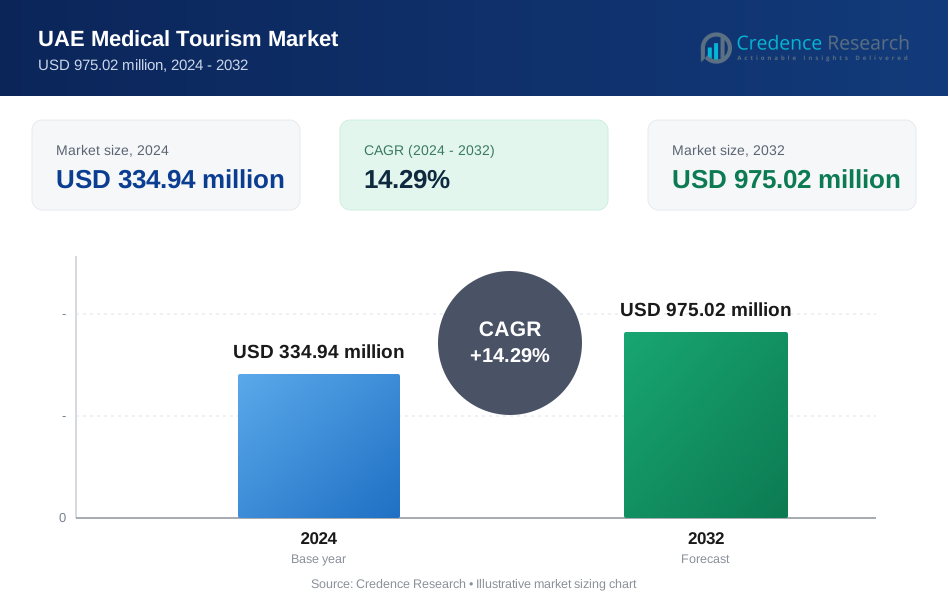
UAE Medical Tourism market size was valued at USD 334.94 million in 2024 and is anticipated to reach USD 975.02 million by 2032, at a CAGR of 14.29% during the forecast period (2024-2032).
The UAE medical tourism market is driven by advanced healthcare infrastructure, government initiatives, and increasing international patient inflow. The country offers world-class medical facilities, accredited hospitals, and highly skilled healthcare professionals, attracting patients seeking specialized treatments, including cosmetic surgery, orthopedics, and fertility treatments. Government initiatives, such as visa facilitation and strategic partnerships, further boost the sector’s growth. Competitive pricing compared to Western countries and minimal waiting times enhance its appeal. Additionally, the integration of cutting-edge technologies like AI-driven diagnostics and robotic surgeries strengthens the market. Trends indicate a rising preference for wellness tourism, with luxury medical retreats and holistic healthcare services gaining traction. The growing adoption of telemedicine and digital health solutions improves patient engagement and post-treatment care. Dubai and Abu Dhabi continue to lead as premier medical tourism destinations, supported by strong branding and marketing campaigns, further positioning the UAE as a global hub for high-quality medical services.
The UAE medical tourism market is driven by key cities such as Dubai, Abu Dhabi, and Sharjah, which offer world-class healthcare facilities, internationally accredited hospitals, and advanced medical technologies. Dubai leads the sector with its cutting-edge infrastructure and government-backed initiatives, while Abu Dhabi is gaining prominence with specialized treatments in cardiology, oncology, and neurology. Sharjah, on the other hand, provides cost-effective yet high-quality medical services, attracting budget-conscious patients. Key players in the UAE medical tourism market include Health Capital (Wellness Zone WLL), Thumbay Medical Tourism, Fakhri Travel & Tourism Centre, American Hospital Dubai, and VAID Health Care Services (VHS). These organizations contribute significantly to the sector by offering a wide range of medical and wellness services, ensuring patient satisfaction through quality care. Continuous investments in healthcare innovation, digital health solutions, and international collaborations further position the UAE as a leading global destination for medical tourism.
Market Insights
- The UAE medical tourism market was valued at USD 334.94 million in 2024 and is projected to reach USD 975.02 million by 2032, growing at a CAGR of 14.29% from 2024 to 2032.
- The market is driven by world-class healthcare infrastructure, internationally accredited hospitals, and government initiatives promoting medical tourism.
- Increasing demand for cosmetic surgery, dental treatments, and specialized procedures like cardiology and orthopedics is shaping industry growth.
- The market is witnessing trends such as the integration of wellness tourism, AI-driven diagnostics, and telemedicine services for enhanced patient experience.
- Key players, including Health Capital (Wellness Zone WLL), Thumbay Medical Tourism, and American Hospital Dubai, are expanding their services to attract international patients.
- Challenges such as high treatment costs for specialized procedures and regulatory barriers can impact market growth.
- Dubai, Abu Dhabi, and Sharjah dominate the UAE medical tourism sector, offering advanced treatments and high-quality healthcare services.
Report scope
This reports segments are UAE Medical Tourism Market as Follows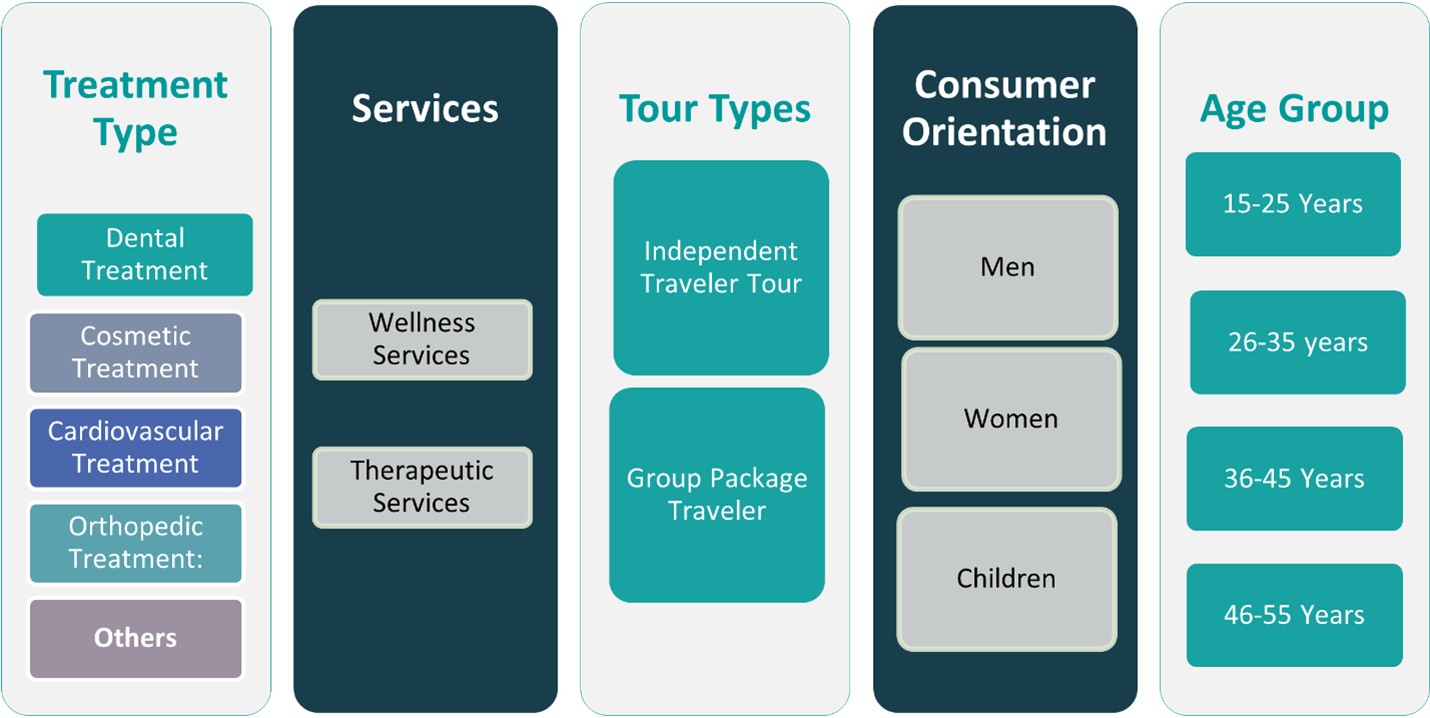
Market Drivers
Advanced Healthcare Infrastructure and World-Class Facilities
The UAE's robust healthcare infrastructure is a key driver of its medical tourism market. The country has heavily invested in modern hospitals, state-of-the-art medical equipment, and internationally accredited healthcare institutions. For instance, Cleveland Clinic Abu Dhabi is renowned for its specialization in cardiovascular care and advanced medical treatments. The presence of highly skilled healthcare professionals, many of whom are trained in Western countries, further enhances the quality of care. Additionally, the integration of cutting-edge medical technologies, including AI-powered diagnostics, robotic surgeries, and minimally invasive procedures, positions the UAE as a preferred destination for medical tourists. The government’s focus on continuous improvement in healthcare services ensures that the country remains competitive in the global medical tourism market.
Government Initiatives and Strategic Policies
The UAE government actively promotes medical tourism through various initiatives and strategic policies. For instance, the Dubai Health Experience (DXH) platform offers a one-stop portal for medical tourists, providing information on healthcare packages, visas, travel arrangements, and accommodations. Government-backed programs, such as the Dubai Health Experience (DXH), provide comprehensive healthcare packages, including treatment, accommodation, and wellness services. Additionally, the UAE’s Vision 2030 emphasizes strengthening the healthcare sector through increased private sector participation and investment in research and development. These initiatives not only attract foreign patients but also encourage global partnerships with leading medical institutions. The UAE’s strong regulatory framework ensures high standards of medical ethics and patient safety, further boosting its credibility as a leading medical tourism destination.
Cost-Effective Treatments and Minimal Waiting Times
Compared to Western countries, the UAE offers cost-effective medical treatments without compromising on quality. Procedures such as cosmetic surgery, dental care, orthopedic treatments, and fertility treatments are available at competitive prices, making the country an attractive option for international patients. Additionally, the absence of long waiting times, which is a significant concern in many developed nations, allows patients to receive immediate medical attention. This factor is particularly crucial for patients seeking urgent procedures such as cardiac surgeries and cancer treatments. Many hospitals in the UAE also provide all-inclusive medical tourism packages, covering consultation, treatment, accommodation, and post-procedure care, making healthcare services more accessible and convenient. The affordability and efficiency of the UAE’s healthcare system continue to drive the growth of medical tourism.
Rising Demand for Wellness and Holistic Healthcare Services
The increasing demand for wellness tourism and holistic healthcare services further fuels the UAE’s medical tourism sector. The country is witnessing a surge in visitors seeking alternative treatments, rehabilitation programs, and preventive healthcare solutions. Luxury medical retreats and wellness resorts in cities like Dubai and Abu Dhabi offer a combination of medical treatments, spa therapies, and wellness programs, catering to high-end medical tourists. Additionally, advancements in telemedicine and digital health services improve patient engagement and post-treatment care, enhancing the overall medical tourism experience. The UAE’s focus on integrating wellness and medical tourism strengthens its position as a global hub for high-quality healthcare services, attracting patients from diverse regions.
Market Trends
Growing Demand for Specialized Medical Treatments
The UAE is witnessing a surge in demand for specialized medical treatments, particularly in fields such as cosmetic surgery, orthopedics, fertility treatments, and oncology. For instance, Cleveland Clinic Abu Dhabi is renowned for its expertise in oncology and cardiovascular care, attracting patients from across the globe. Cosmetic and aesthetic procedures, including rhinoplasty, liposuction, and dental implants, are among the most sought-after treatments. Additionally, fertility clinics in the UAE have gained global recognition for high success rates in in-vitro fertilization (IVF) and other reproductive treatments. The increasing preference for specialized and elective procedures continues to drive medical tourism, positioning the UAE as a global healthcare destination.
Integration of Digital Health and Telemedicine
The adoption of digital health technologies and telemedicine services is transforming the UAE medical tourism landscape. For instance, hospitals like Mediclinic Middle East utilize telemedicine platforms to allow international patients to consult with specialists before traveling, enabling them to plan treatments more efficiently. Telemedicine platforms allow international patients to consult with specialists before traveling, enabling them to plan treatments more efficiently. Additionally, post-treatment care has improved through remote patient monitoring and virtual follow-ups, reducing the need for extended stays. The integration of smart healthcare solutions not only enhances operational efficiency but also strengthens the UAE’s reputation as a tech-driven medical tourism hub.
Expansion of Luxury Medical and Wellness Tourism
The UAE is capitalizing on the growing trend of luxury medical and wellness tourism by offering high-end healthcare packages that combine medical treatments with premium hospitality services. Medical tourists increasingly seek holistic healing experiences that integrate conventional treatments with wellness therapies, including spa treatments, physiotherapy, and alternative medicine. Luxury medical resorts and wellness retreats in Dubai and Abu Dhabi provide personalized healthcare services in a five-star environment, attracting affluent international patients. This trend aligns with the UAE’s broader strategy to position itself as a premier destination for both curative and preventive healthcare.
Strengthening of International Partnerships and Accreditation
The UAE continues to enhance its global appeal by forming strategic partnerships with internationally recognized healthcare institutions. Leading hospitals collaborate with global medical organizations to maintain high standards of care and access the latest medical advancements. Additionally, accreditation from international bodies such as the Joint Commission International (JCI) ensures compliance with global healthcare standards, increasing patient confidence. The UAE government actively promotes these affiliations to strengthen its competitive advantage in the medical tourism sector. As more healthcare providers secure international certifications and partnerships, the UAE is solidifying its position as a trusted destination for high-quality medical care.
Market Challenges Analysis
High Treatment Costs for Certain Procedures
While the UAE offers competitive pricing for many medical treatments, certain specialized procedures remain expensive compared to other medical tourism hubs like India, Thailand, and Turkey. High operational costs, advanced medical technologies, and premium healthcare facilities contribute to elevated prices for treatments such as organ transplants, complex surgeries, and long-term rehabilitation programs. This cost factor can deter price-sensitive medical tourists who seek more affordable alternatives in other countries. Additionally, insurance coverage limitations for international patients can add to the financial burden, making the UAE less attractive for some segments of medical travelers. To maintain its competitive edge, the UAE must develop cost-effective treatment packages while maintaining its reputation for high-quality healthcare services.
Regulatory and Visa-Related Barriers
Despite government initiatives to streamline medical tourism, regulatory complexities and visa-related challenges remain hurdles for international patients. For instance, variations in licensing requirements for foreign medical practitioners can delay the approval process for international doctors seeking to practice in the UAE. Additionally, while the UAE offers medical visas, the application process can be cumbersome for patients traveling from certain regions, potentially affecting the ease of access. Differences in healthcare regulations across emirates also create inconsistencies in medical tourism policies, impacting patient convenience. Addressing these regulatory barriers through standardized policies and more efficient visa processing can enhance the UAE’s attractiveness as a seamless medical tourism destination.
Market Opportunities
The UAE medical tourism market presents significant growth opportunities driven by increasing demand for specialized healthcare services and advancements in medical technology. The country’s strategic location between Europe, Asia, and Africa positions it as an accessible hub for international patients seeking high-quality medical care. Expanding into emerging fields such as regenerative medicine, genetic therapies, and robotic-assisted surgeries can further enhance the UAE’s global appeal. Additionally, increasing investments in medical research and innovation, coupled with partnerships with world-renowned healthcare institutions, can strengthen the country’s reputation as a leader in cutting-edge treatments. By diversifying its medical offerings and adopting the latest technological advancements, the UAE can attract a wider range of patients seeking innovative healthcare solutions.
Another key opportunity lies in the integration of wellness tourism with traditional medical treatments. The growing preference for holistic healthcare, including preventive medicine, rehabilitation programs, and alternative therapies, aligns with the UAE’s well-established luxury hospitality sector. Establishing world-class wellness retreats that combine specialized treatments with relaxation therapies can attract high-net-worth medical tourists seeking premium healthcare experiences. Additionally, expanding digital health solutions such as AI-driven diagnostics, remote patient monitoring, and telemedicine services can enhance patient convenience and post-treatment care. By leveraging its strong infrastructure and global connectivity, the UAE can continue to position itself as a premier medical tourism destination, offering comprehensive healthcare services tailored to diverse patient needs.
Market Segmentation Analysis:
By Treatment:
The UAE medical tourism market is segmented by treatment type, including dental, cosmetic, cardiovascular, orthopedic, and other specialized treatments. Dental treatments, such as implants, veneers, and orthodontic procedures, are highly sought after due to their affordability and the presence of internationally accredited dental clinics. Cosmetic treatments, including rhinoplasty, liposuction, and Botox procedures, attract a significant number of international patients, given the UAE’s reputation for high-quality aesthetic services. Cardiovascular treatments, including angioplasty and bypass surgery, are in high demand as the country continues to enhance its expertise in complex medical procedures. Orthopedic treatments, such as joint replacements and spine surgeries, also play a crucial role in the market, with patients seeking advanced surgical techniques and shorter recovery times. Other medical specialties, including fertility treatments, oncology, and neurology, contribute to the UAE’s growing medical tourism sector, catering to a wide range of patient needs. The diversity of available treatments strengthens the UAE’s position as a comprehensive healthcare destination.
By Services:
Medical tourism in the UAE is also categorized based on services, including wellness and therapeutic services. Wellness services encompass preventive healthcare, holistic medicine, and alternative therapies such as physiotherapy, acupuncture, and spa treatments. The country’s luxury wellness resorts and retreats offer integrated programs that combine relaxation with medical care, attracting high-net-worth individuals seeking premium health experiences. Therapeutic services, on the other hand, focus on curative treatments for acute and chronic conditions, including surgical interventions, rehabilitation programs, and specialized therapies. The integration of digital health solutions, such as AI-driven diagnostics and telemedicine, enhances the efficiency of therapeutic services, enabling seamless patient care. The increasing demand for personalized healthcare solutions further drives the expansion of both wellness and therapeutic services, positioning the UAE as a leading destination for comprehensive medical and wellness tourism.
Segments:
Based on Treatment:
- Dental Treatment
- Cosmetic Treatment
- Cardiovascular Treatment
- Orthopedic Treatment
- Others
Based on Services:
- Wellness Services
- Therapeutic Services
Based on Tour Type:
- Independent Traveler Tour
- Group Package Traveler
Based on Consumer Orientation:
- Men
- Women
- Children
Based on the Geography:
- Abu Dhabi
- Dubai
- Sharjah
- Ajman
- Fujairah
- Ras Al Khaimah
- Umm Al Quwain
Regional Analysis
Dubai
Dubai dominates the UAE medical tourism market, holding approximately 45% of the total market share. The city’s world-class healthcare infrastructure, internationally accredited hospitals, and government-backed initiatives make it the top choice for international patients. Dubai Healthcare City (DHCC), one of the world’s largest medical free zones, houses a wide range of specialized healthcare providers, offering treatments in cardiology, cosmetic surgery, orthopedics, and fertility care. The Dubai Health Experience (DXH) program further strengthens the city’s appeal by providing seamless medical tourism services, including visa facilitation, travel assistance, and wellness packages. The integration of cutting-edge medical technology, telemedicine, and AI-driven healthcare solutions enhances Dubai’s reputation as a global medical tourism hub. Additionally, its strategic location, luxurious hospitality sector, and multilingual medical staff attract patients from Europe, Africa, and the Middle East, solidifying its position as the leading medical tourism destination in the UAE.
Abu Dhabi
Abu Dhabi holds a 30% market share in the UAE medical tourism sector, emerging as a preferred destination for specialized medical treatments. The emirate has invested heavily in healthcare infrastructure, with state-of-the-art hospitals such as Cleveland Clinic Abu Dhabi, Sheikh Shakhbout Medical City, and Burjeel Hospital offering advanced treatments in cardiology, oncology, and neurology. Abu Dhabi’s regulatory body, the Department of Health (DoH), ensures that healthcare facilities meet international standards, enhancing patient confidence. The city also benefits from its focus on medical research and innovation, particularly in regenerative medicine and robotic-assisted surgeries. Government initiatives such as the Abu Dhabi Medical Tourism e-portal streamline patient access to medical services by offering treatment packages and digital consultations. The presence of top-tier medical professionals and an increasing number of partnerships with global healthcare institutions further strengthen Abu Dhabi’s position in the UAE’s medical tourism industry.
Sharjah
Sharjah accounts for 12% of the UAE medical tourism market, gaining popularity due to its cost-effective yet high-quality medical services. The emirate is home to several leading hospitals and medical centers specializing in dental care, orthopedic treatments, and cosmetic procedures. Institutions such as the University Hospital Sharjah and Al Zahra Hospital provide advanced medical care at competitive prices, attracting international patients seeking affordable treatment options. Unlike Dubai and Abu Dhabi, which focus on luxury healthcare services, Sharjah appeals to medical tourists looking for more budget-friendly solutions without compromising on quality. The Sharjah Investment and Development Authority (Shurooq) is actively promoting medical tourism through collaborations with international healthcare providers. Additionally, the city’s accessibility and relatively lower cost of living make it an attractive destination for medical tourists from neighboring countries, particularly those from the Middle East and North Africa.
Ras Al Khaimah
With a market share of 8%, Ras Al Khaimah is steadily expanding its role in the UAE’s medical tourism landscape, particularly in wellness and rehabilitation services. The emirate is home to several specialized healthcare facilities, including RAK Hospital, which is known for its expertise in orthopedic and cardiac care. Ras Al Khaimah’s natural landscapes and serene environment make it an ideal location for medical tourists seeking post-treatment recovery and wellness therapies. The emirate has positioned itself as a hub for holistic healthcare, with a focus on physiotherapy, spa treatments, and integrative medicine. The government is actively investing in healthcare infrastructure and forming partnerships with international wellness centers to attract more medical tourists. As demand for preventive healthcare and long-term rehabilitation services grows, Ras Al Khaimah continues to strengthen its presence in the UAE’s medical tourism sector.
Key Player Analysis
- Health Capital (Wellness Zone WLL)
- Thumbay Medical Tourism
- Fakhri Travel & Tourism Centre
- American Hospital Dubai
- VAID Health Care Services (VHS)
Competitive Analysis
The UAE medical tourism market is highly competitive, with leading players such as Health Capital (Wellness Zone WLL), Thumbay Medical Tourism, Fakhri Travel & Tourism Centre, American Hospital Dubai, and VAID Health Care Services (VHS) driving industry growth. These organizations leverage state-of-the-art medical facilities, internationally trained professionals, and cutting-edge technology to attract international patients. Dubai and Abu Dhabi serve as primary hubs, with hospitals offering specialized treatments in cardiology, orthopedics, fertility, and cosmetic surgery. Companies differentiate themselves by providing comprehensive medical tourism packages, including travel assistance, accommodation, and post-treatment care. Strategic partnerships with global healthcare providers and insurance companies further strengthen their market presence. Additionally, digital transformation initiatives, such as AI-powered diagnostics and telemedicine, enhance patient engagement and service efficiency. Despite intense competition, high treatment costs and regulatory challenges remain barriers. However, continuous investment in healthcare infrastructure and wellness services enables key players to maintain their competitive edge in the growing UAE medical tourism sector.
Recent Developments
- In March 2025, Raffles Medical Group signed a strategic collaboration agreement with Shanghai Renji Hospital to establish a "dual circulation" service system. This partnership aims to promote cross-border healthcare services and position Shanghai as a hub for international medical tourism.
- In March 2025, MOHW Hengchun Tourism Hospital was highlighted as a key player in the global medical tourism market in a report projecting significant growth for the industry. The hospital continues to play a pivotal role in expanding medical tourism opportunities, particularly in Asia.
- In February 2025, Apollo Hospitals emphasized the need for a liberal visa policy to enhance India's medical tourism sector. The hospital is collaborating with the Indian government on the "Heal in India" initiative to attract international patients and streamline medical visa processes.
- In January 2025, Mount Elizabeth Hospitals unveiled new facilities under "Project Renaissance," which included expanded wards, upgraded critical care units, and additional single-bedded and negative pressure rooms. This expansion added 62 beds to its capacity and enhanced patient care infrastructure.
Market Concentration & Characteristics
The UAE medical tourism market exhibits a moderately high concentration, with a few leading players dominating the sector due to their advanced healthcare infrastructure, internationally accredited hospitals, and government support. Major cities such as Dubai and Abu Dhabi serve as key hubs, attracting international patients with specialized treatments, luxury medical tourism packages, and seamless healthcare services. The market is characterized by a strong emphasis on quality, innovation, and patient-centric care, with hospitals integrating AI-driven diagnostics, robotic surgeries, and telemedicine to enhance treatment outcomes. Additionally, wellness tourism is gaining traction, combining medical treatments with holistic healthcare solutions. While competition is growing, high entry barriers, including regulatory requirements and significant capital investment, limit the number of new entrants. The UAE’s commitment to healthcare innovation, digital transformation, and global partnerships ensures sustained market growth, positioning it as a leading destination for medical tourism in the Middle East and beyond.
Report Coverage
The research report offers an in-depth analysis based on Treatment, Services, Tour Type, Consumer Orientation and Geography. It details leading market players, providing an overview of their business, product offerings, investments, revenue streams, and key applications. Additionally, the report includes insights into the competitive environment, SWOT analysis, current market trends, as well as the primary drivers and constraints. Furthermore, it discusses various factors that have driven market expansion in recent years. The report also explores market dynamics, regulatory scenarios, and technological advancements that are shaping the industry. It assesses the impact of external factors and global economic changes on market growth. Lastly, it provides strategic recommendations for new entrants and established companies to navigate the complexities of the market.
Future Outlook
- The UAE medical tourism market is expected to witness sustained growth, driven by increasing investments in healthcare infrastructure and advanced medical technologies.
- Dubai and Abu Dhabi will continue to dominate the market, offering specialized treatments and internationally accredited healthcare facilities.
- The integration of artificial intelligence, robotic-assisted surgeries, and telemedicine will enhance patient experience and medical service efficiency.
- Government initiatives and regulatory reforms will further streamline medical tourism processes, making the UAE a more accessible destination for international patients.
- The demand for cosmetic, dental, and orthopedic procedures will rise, attracting a diverse patient base from Europe, Africa, and the Middle East.
- Wellness tourism will expand, combining traditional medical treatments with holistic healthcare solutions such as physiotherapy and rehabilitation.
- Strategic collaborations between healthcare providers and international insurance companies will facilitate seamless treatment access for medical tourists.
- Digital health solutions, including AI-driven diagnostics and electronic health records, will improve patient management and treatment outcomes.
- The expansion of luxury medical tourism services will cater to high-net-worth individuals seeking premium healthcare experiences.
- Despite high competition, continuous innovation and government support will solidify the UAE’s position as a global leader in medical tourism.
Request a Free Sample
Fill in your details and we'll send you a free sample report.
- Sample data tables & charts
- Research methodology
Need a Custom Version of This Report?
Tailor the scope, geography, or segments to your exact requirements.
- Custom geography or segment scope
- Direct access to our analyst team
Frequently Asked Questions
What is the current size of the UAE Medical Tourism?
What factors are driving the growth of the UAE Medical Tourism?
What are the key segments within the UAE Medical Tourism?
Who are the major players in the UAE Medical Tourism?
Table of Content
Chapter 1 Market Segmentation
- 1.1 Segmentation Framework
- 1.1.1 Product and Service Classification
- 1.1.2 Application and End-Use Classification
- 1.1.3 Technology and Solution Classification
- 1.1.4 Customer and Distribution Channel Classification
- 1.1.5 Geographic Segmentation
- 1.1.6 Market Segment Definitions and Boundaries
Chapter 2 Introduction
- 2.1 Report Objectives and Scope
- 2.2 Product Definition and Industry Terminology
- 2.3 Market Inclusions and Exclusions
- 2.4 Research Process
- 2.4.1 Primary Research and Expert Interviews
- 2.4.2 Secondary Research and Source Review
- 2.4.3 Top-Down and Bottom-Up Estimation
- 2.4.4 Data Triangulation and Verification
- 2.5 Market Size Measurement Basis
- 2.5.1 2024: USD 334.94 million → 2032: USD 975.02 million
- 2.6 Historical and Forecast Reference Periods
- 2.6.1 Base Year: 2024
- 2.6.2 Forecast Period: 2024-2032
- 2.7 Research Assumptions and Limitations
Chapter 3 Executive Summary
- 3.1 Market Snapshot and Key Findings
- 3.2 Base-Year Market Size, 2024
- 3.3 Forecast Market Size, 2032
- 3.4 Revenue and Volume Growth Outlook
- 3.5 Key Demand and Supply Indicators
- 3.6 Leading Market Segments
- 3.7 Fastest-Growing Market Opportunities
- 3.8 Regional Performance Highlights
- 3.9 Technology and Industry Transformation
- 3.10 Competitive Landscape Summary
- 3.11 Analyst View and Strategic Implications
Chapter 4 UAE Medical Tourism Market Trends and Developments
- 4.1 Historical Industry Development
- 4.2 Recent Market Trends and Developments
- 4.3 Demand and Customer Behavior Trends
- 4.4 Technology and Product Innovation
- 4.5 Artificial Intelligence, Automation and Digitalization
- 4.6 Local Manufacturing and Supply Chain Realignment
- 4.7 Industry Partnerships, Mergers and Acquisitions
- 4.8 Sustainability and Circular Economy Developments
- 4.9 Government and Private Sector Investment Trends
- 4.10 Emerging Business Models and Commercialization
- 4.11 Industry Developments and Announcements
Chapter 5 UAE Medical Tourism Market Supply and Demand Analysis
- 5.1 Demand Trend and Consumption Analysis
- 5.2 Demand Forecast, 2024-2032
- 5.3 Supply Chain Structure and Procurement Trends
- 5.4 Supply-Demand Gap and Bottlenecks
- 5.5 Import Dependence and Sourcing Structure
- 5.6 Regional Supply and Demand Concentration
Chapter 6 UAE Medical Tourism Market Pricing Analysis
- 6.1 Pricing Structure and Measurement
- 6.2 Historical Pricing Trends
- 6.3 Pricing Outlook, 2024-2032
- 6.4 Pricing by Product and Market Segment
- 6.5 Geographic Pricing Differences
- 6.6 Key Input, Energy, Labor and Logistics Costs
- 6.7 Contract Pricing and Purchasing Models
- 6.8 Pricing Sensitivity and Competitive Positioning
- 6.9 Price, Margin and Profitability Implications
Chapter 7 UAE Medical Tourism Market Dynamics
- 7.1 Market Growth Drivers
- 7.1.1 Demand-Side Drivers
- 7.1.2 Technology and Innovation Drivers
- 7.1.3 Infrastructure and Investment Drivers
- 7.1.4 Regulatory and Policy Drivers
- 7.2 Market Restraints
- 7.2.1 Cost and Affordability Constraints
- 7.2.2 Technology and Adoption Barriers
- 7.2.3 Supply Chain and Operational Constraints
- 7.3 Market Challenges
- 7.3.1 Competitive Pressure and Margin Erosion
- 7.3.2 Skills, Infrastructure and Implementation Gaps
- 7.4 Emerging Market Opportunities
- 7.5 Market Dynamics Impact and Time-Horizon Assessment
Chapter 8 UAE Medical Tourism Value Chain Analysis
- 8.1 Industry Value Chain Overview
- 8.2 Upstream Suppliers and Critical Inputs
- 8.3 Technology and Component Providers
- 8.4 Manufacturing or Service Delivery
- 8.5 Distribution, Channel Partners and Integrators
- 8.6 Downstream Applications and End Users
- 8.7 Value Addition and Profit Pools
- 8.8 Vertical Integration and Outsourcing
- 8.9 Supplier Concentration and Risk
- 8.10 Supply Chain Localization and Resilience
Chapter 9 UAE Medical Tourism Market Regulations and Policies
- 9.1 Relevant Laws, Standards and Compliance Frameworks
- 9.2 Product, Service, Safety and Quality Requirements
- 9.3 Government Policies, Incentives and Subsidies
- 9.4 Imports, Exports and Trade Barriers
- 9.5 Public Procurement and Local Content Requirements
- 9.6 Data Protection, AI and Cybersecurity Compliance
- 9.7 Upcoming Policy Changes and Market Implications
Chapter 10 UAE Medical Tourism Market Hotspots and Opportunities
- 10.1 Market Opportunity Mapping and Growth Hotspots
- 10.2 High-Growth Applications and Customer Groups
- 10.3 Underserved Markets and White-Space Opportunities
- 10.4 Emerging Technology and Product Opportunities
- 10.5 New Capacity and Investment Hotspots
- 10.6 Market Entry and Expansion Opportunities
- 10.7 Distribution and Partnership Opportunities
- 10.8 Near-Term and Long-Term Commercial Potential
- 10.9 Opportunity Attractiveness and Execution Risks
Chapter 11 UAE Medical Tourism Market Outlook, 2024-2032
- 11.1 Market Size and Analysis
- 11.1.1 Revenue (Market Measurement: 2024: USD 334.94 million → 2032: USD 975.02 million)
- 11.1.2 Historical Market Size
- 11.1.3 Base-Year Market Size, 2024
- 11.2 Market Forecast, 2024-2032
- 11.2.1 Revenue Forecast to 2032
- 11.2.2 CAGR and Year-on-Year Growth
- 11.2.3 Incremental Revenue Opportunity
- 11.3 Forecast Assumptions and Scenario Analysis
- 11.3.1 Base-Case Forecast
- 11.3.2 Optimistic and Conservative Scenarios
- 11.3.3 Technology, Pricing and Policy Sensitivities
- 11.4 Market Attractiveness and Growth Outlook
Chapter 12 UAE Medical Tourism Market Segmentation and Outlook
- 12.1 Segmentation Summary and Market Shares, 2024
- 12.2 Largest and Fastest-Growing Segments
- 12.3 Segment Growth Comparison
- 12.4 Segment Attractiveness and Priority Matrix
Chapter 13 UAE Medical Tourism Geographic Market Outlook, 2024-2032
- 13.1 Domestic Market Distribution and Demand Clusters
- 13.2 State- or Province-Wise Market Size and Forecast, 2024-2032
- 13.3 City and Metropolitan Market Outlook
- 13.4 Industrial, Manufacturing and Commercial Clusters
- 13.5 Geographic Concentration of Key End Users
- 13.6 Local Pricing and Purchasing Differences
- 13.7 Domestic Production Facilities and Capacity Map
- 13.8 Local Infrastructure and Project Pipeline
- 13.9 State-Level Policy and Incentive Differences
- 13.10 Subnational Investment Hotspots and Opportunities
- 13.11 Distribution and Logistics Networks
- 13.12 Domestic Competitive Footprint
Chapter 14 UAE Medical Tourism Technology, Innovation and Sustainability Outlook
- 14.1 Technology Landscape and Maturity
- 14.2 Product, Process and Service Innovation
- 14.3 AI, Automation and Digital Tools in the Industry
- 14.4 Technology Adoption and Performance Benchmarking
- 14.5 Innovation Pipeline and R&D Investment
- 14.6 Energy Efficiency and Resource Management
- 14.7 Sustainability, Recycling and Circularity
- 14.8 Technology Roadmap, 2024-2032
- 14.9 Risks of Obsolescence and Technology Substitution
Chapter 15 UAE Medical Tourism Market Key Strategic Imperatives
- 15.1 Growth and Market Entry Priorities
- 15.2 High-Return Products and Segments
- 15.3 Pricing, Profitability and Cost Optimization
- 15.4 Technology Investment and Product Differentiation
- 15.5 Supply Chain Localization and Resilience
- 15.6 Distribution and Customer Acquisition
- 15.7 Partnership, Acquisition and Capacity Strategy
- 15.8 Regional Expansion Priorities
- 15.9 Short-, Medium- and Long-Term Actions
Chapter 16 Competition Outlook
- 16.1 Industry Competition Characteristics
- 16.2 Market Structure and Concentration
- 16.3 Market Share and Competitive Positioning, 2024
- 16.4 Company-Wise Revenue and Product Benchmarking
- 16.5 Production and Service Capacity Benchmarking
- 16.6 Technology, Pricing and Differentiation
- 16.7 Regional Footprint and Distribution Strength
- 16.8 Mergers, Acquisitions and Strategic Alliances
- 16.9 New Entrants and Competitive Threats
- 16.10 Porter's Five Forces and Industry Attractiveness
- 16.11 Competitive Outlook, 2024-2032
Chapter 17 Company Profiles
- 17.1 Company Coverage and Selection Criteria
- 17.2 Leading Market Participants – Standard Profile Structure
- 17.2.1 Business Description
- 17.2.2 Company Ownership and Geographic Presence
- 17.2.3 Product and Service Portfolio
- 17.2.4 Manufacturing and Operating Footprint
- 17.2.5 Financial Performance and Investment
- 17.2.6 Market Share and Competitive Position
- 17.2.7 Technology and Innovation Capabilities
- 17.2.8 Strategic Alliances or Partnerships
- 17.2.9 Recent Developments
- 17.2.10 Growth Strategy and Outlook
- 17.3 Other Relevant Market Participants
Note: Every listed company is profiled on the structure shown under the first company. The company list is preliminary and may change based on research findings, market developments, data availability and client requirements.
Chapter 18 Disclaimer
- 18.1 Research and Forecast Disclaimer
- 18.2 Data Source and Estimation Limitations
Note: The depth of individual sections depends on data availability for this market. Volume, capacity, trade and other unit-based metrics are included where applicable.
