
| REPORT ATTRIBUTE | DETAILS |
|---|---|
| Historical Period | 2019-2022 |
| Base Year | 2023 |
| Forecast Period | 2024-2032 |
| UK Custom Apparel Market Size 2024 | USD 112.10 million |
| UK Custom Apparel Market, CAGR | 7.86% |
| UK Custom Apparel Market Size 2032 | USD 205.27 million |
Market Overview:
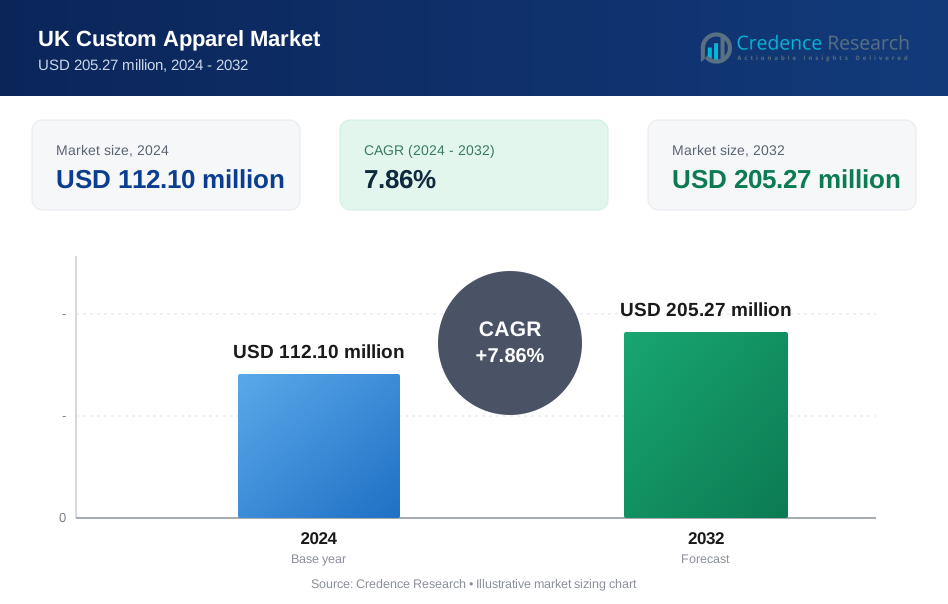
The UK Custom Apparel Market is projected to grow from USD 112.10 million in 2024 to an estimated USD 205.27 million by 2032, with a compound annual growth rate (CAGR) of 7.86% from 2024 to 2032.
The expansion of the UK custom apparel market is driven by a combination of key factors shaping consumer behavior and technological advancements. A growing preference for unique, personalized clothing among consumers is a major driver, with Millennials and Gen Z leading the charge. These demographics value apparel that showcases individuality and aligns with their personal style, spurring a strong demand for customized options. Technological innovations, particularly in digital printing and embroidery, have revolutionized the customization process, making it faster, more efficient, and capable of delivering high-quality results. Moreover, the proliferation of e-commerce platforms has democratized access to customization tools, allowing consumers to design bespoke apparel effortlessly from the comfort of their homes. Sustainability has emerged as a critical growth driver, as environmentally conscious shoppers increasingly opt for ethically produced and sustainable custom clothing, adding a green dimension to the market's expansion.
Geographically, the UK custom apparel market exhibits diverse growth patterns across its regions, with major urban centers leading the charge. London, as a global fashion capital, dominates the market with a robust ecosystem of luxury brands, bespoke tailors, and independent designers offering personalized services. Manchester, Birmingham, and Glasgow are also emerging as significant contributors, fueled by rising consumer awareness and the growing appetite for unique apparel. Beyond metropolitan areas, the increasing penetration of online platforms has extended the market's reach into suburban and rural regions, bridging the gap between demand and accessibility. Prominent players such as ASOS, Printful, and Vistaprint are spearheading innovation by broadening their product portfolios and adopting cutting-edge technologies to meet the dynamic preferences of modern consumers. These strategic efforts are shaping a competitive landscape and fortifying the UK's position as a frontrunner in the global custom apparel industry.
Market Insights:
- The UK custom apparel market is expected to grow from USD 112.10 million in 2024 to USD 205.27 million by 2032, with a CAGR of 7.86%, driven by consumer demand for personalized clothing and innovative technologies.
- Millennials and Gen Z are primary consumers, seeking individuality and unique designs, reshaping the market landscape with their preference for customized apparel over mass-produced options.
- Advances in digital printing, embroidery, and 3D visualization tools have streamlined customization, reducing turnaround times and enhancing the affordability of personalized apparel.
- The proliferation of e-commerce platforms has eliminated geographical barriers, enabling seamless customization experiences and extending market reach into suburban and rural areas.
- Sustainability and ethical consumerism are major growth drivers, with eco-conscious consumers favoring custom clothing made from sustainable materials and brands emphasizing transparency and resource efficiency.
- London leads the market, accounting for 35% of market share, followed by cities like Manchester, Birmingham, and Glasgow, which are emerging as significant contributors.
- Despite opportunities, challenges such as high production costs, prolonged delivery times, and technological integration barriers persist, requiring innovative solutions to maintain market growth and competitiveness.
Market Drivers:
The growing desire for self-expression through fashion is a pivotal driver of the UK custom apparel market. Consumers, particularly Millennials and Gen Z, are seeking clothing that resonates with their individuality and personal style. This cultural shift toward personalization has reshaped fashion consumption, with buyers prioritizing unique designs over mass-produced items. Brands and retailers are responding to this demand by offering customizable options, enabling customers to tailor their garments according to preferences in fit, color, fabric, and design. For instance, brands like Ralph Lauren have embraced this trend with their Polo Custom Shop, allowing customers to create their own custom embroidery patterns on polo shirts, caps, and blazers. This trend has not only enhanced customer engagement but also created opportunities for niche players to thrive in the competitive landscape.
Technological Advancements in Customization Processes
Technological innovation is transforming the customization process in the UK apparel market. Digital printing, embroidery technologies, and 3D visualization tools have streamlined production workflows, allowing manufacturers to deliver high-quality customized clothing at scale and reduced turnaround times. These advancements have made customization more accessible and affordable for a broader audience, driving widespread adoption. For instance, Spreadshirt has adopted advanced digital printing techniques, which have streamlined production workflows and enabled faster customization. Additionally, the integration of artificial intelligence and augmented reality into online platforms has enhanced the user experience by providing real-time previews of designs, fostering confidence among consumers and boosting market growth.
Influence of E-commerce Platforms and Digital Retail
The proliferation of e-commerce platforms has been instrumental in the growth of the UK custom apparel market. Online retailers offer seamless customization tools that allow customers to design bespoke clothing from their devices, eliminating geographical barriers and enhancing convenience. The digital retail ecosystem has also enabled brands to reach untapped demographics, such as rural consumers, and offer services previously limited to physical stores. For instance, Zazzle Inc. launched a new platform feature in the UK, empowering users to create and sell their custom apparel designs. The role of social media in promoting personalized fashion further amplifies the market's expansion, as influencers and digital campaigns drive awareness and inspire purchases.
Sustainability and Ethical Consumerism
The growing emphasis on sustainability and ethical consumerism is significantly influencing the UK custom apparel market. Environmentally conscious consumers are opting for personalized clothing crafted from sustainable materials, reflecting their values while reducing environmental impact. Customization allows for better resource utilization by producing garments on demand, minimizing overproduction and waste. Ethical sourcing practices, coupled with transparency in production, have become key differentiators for brands catering to this eco-conscious audience. For instance, Zazzle has adopted sustainable production methods, reducing their carbon footprint and aligning with the increasing demand for ethical sourcing and production practice. As the demand for sustainable apparel continues to rise, brands focusing on green initiatives are well-positioned to capture a substantial share of the market.
Market Trends:
Shift Toward On-Demand Manufacturing
The UK custom apparel market is witnessing a significant shift toward on-demand manufacturing. This trend is reshaping the traditional production model, allowing manufacturers to create garments based on individual orders rather than bulk production. On-demand manufacturing reduces inventory costs and aligns with sustainability goals by minimizing waste. This approach has gained traction due to advancements in digital printing and automated machinery, enabling seamless production of custom designs at scale. For instance, A.M. Custom Clothing has been recognized for its industry-leading quality in digital printing, catering to both small and large volume orders with no minimum order requirement. As brands embrace this agile manufacturing model, they can respond swiftly to changing consumer preferences, enhancing customer satisfaction and market competitiveness.
Integration of AI and Virtual Customization Tools
The integration of artificial intelligence (AI) and virtual customization tools is revolutionizing the shopping experience in the UK custom apparel market. AI-driven platforms analyze customer data to offer personalized design recommendations, ensuring a tailored shopping experience. Virtual try-on tools powered by augmented reality (AR) allow customers to visualize their customized garments before purchase, reducing the likelihood of returns and improving overall satisfaction. For example, 3DLOOK provides photorealistic virtual fitting room technologies, allowing customers to see how clothes would fit on their unique body shapes. These technological innovations are transforming customer engagement, enabling brands to build stronger relationships with tech-savvy consumers and gain a competitive edge in the digital retail landscape.
Growing Popularity of Hybrid Retail Models
Hybrid retail models, blending online and offline experiences, are becoming increasingly popular in the UK custom apparel market. Consumers now expect seamless integration between e-commerce platforms and physical stores, where they can design garments online and finalize purchases in person. Pop-up shops and experience centers have emerged as key strategies for brands to showcase their customization capabilities and engage directly with customers. For instance, Premier Events specializes in creating temporary retail stores for product launches and seasonal promotions, offering an immersive shopping experience. This approach not only bridges the gap between digital and physical retail but also fosters a sense of trust and loyalty among consumers, driving repeat purchases and enhancing brand value.
Focus on Niche and Inclusive Offerings
The UK custom apparel market is evolving with a focus on niche and inclusive offerings, catering to diverse consumer segments. Customization is no longer limited to luxury fashion but extends to activewear, maternity wear, and adaptive clothing for individuals with specific needs. This inclusivity reflects a broader societal shift toward embracing diversity and individuality. For instance, Brands like Adaptive Clothing UK champion fashion inclusivity by creating stylish sensory and accessible clothing for children, including a sensory school uniform range. Brands that prioritize inclusivity through size ranges, adaptive features, and culturally inspired designs are resonating with a wider audience. This trend underscores the market's ability to adapt to evolving consumer expectations, ensuring sustained growth and relevance in an increasingly competitive landscape.
Market Challenges Analysis:
High Production Costs and Limited Scalability
One of the primary challenges facing the UK custom apparel market is the high cost associated with customized production. Unlike mass production, which benefits from economies of scale, custom apparel manufacturing often involves intricate processes, personalized designs, and smaller order volumes, all of which contribute to higher production costs. These expenses are further amplified by the use of advanced technologies such as digital printing and 3D customization tools. For small and medium-sized enterprises (SMEs), scaling up operations while maintaining cost efficiency remains a significant hurdle, limiting their ability to compete with established players in the market.
Prolonged Turnaround Times
While technology has streamlined certain aspects of the customization process, the UK custom apparel market still grapples with longer turnaround times compared to mass production. Personalized orders require additional time for designing, approval, and production, which can delay delivery. For customers accustomed to the rapid fulfillment offered by fast fashion, this delay may deter them from opting for custom apparel. Meeting customer expectations for both personalization and prompt delivery remains a balancing act for businesses striving to establish a competitive edge.
Technological Integration Barriers
Although advancements in digital tools and automation have revolutionized the custom apparel industry, the integration of these technologies poses challenges for smaller businesses. The initial investment in technology infrastructure, training, and software can be prohibitively expensive. Additionally, adapting to rapidly evolving technology and ensuring seamless implementation require technical expertise, which may not be readily available for all market players. These barriers limit the adoption of innovative solutions and constrain market growth.
Consumer Perception of Value
Despite the growing popularity of customization, some consumers perceive custom apparel as a premium offering with a higher price point that may not justify its value. Convincing price-sensitive customers of the benefits of personalized clothing, such as enhanced quality and unique designs, remains a challenge. Overcoming this perception requires effective marketing strategies and customer education to emphasize the value proposition of custom apparel.
Market Opportunities:
The UK custom apparel market presents significant opportunities driven by evolving consumer preferences and technological advancements. The growing demand for personalized clothing is reshaping the fashion landscape, providing brands with the chance to cater to niche audiences seeking unique and tailored designs. With Millennials and Gen Z leading this trend, companies that offer seamless customization experiences through innovative tools such as AI-driven design recommendations and virtual try-ons are well-positioned to capture market share. Additionally, the increasing adoption of on-demand manufacturing and sustainable practices aligns with consumer values, creating further growth prospects for businesses that prioritize eco-conscious production and ethically sourced materials.
Expanding the market's reach through digital platforms is another key opportunity. The proliferation of e-commerce and hybrid retail models enables brands to connect with a wider audience, including consumers in suburban and rural areas who previously lacked access to customization services. Moreover, the inclusivity trend in the industry opens doors for specialized offerings such as adaptive clothing, plus-size options, and culturally inspired designs. These segments remain relatively untapped, providing room for innovation and differentiation. By leveraging these opportunities and focusing on technological integration, sustainability, and inclusivity, companies can strengthen their market position and drive long-term growth in the dynamic UK custom apparel market.
Market Segmentation Analysis:
The UK custom apparel market is segmented by type, end-user, and distribution channel, with each segment offering distinct growth opportunities.
By type, shirts and suits dominate the market due to their high demand among professionals and fashion-conscious individuals. Coats and pants also hold a significant share, driven by seasonal demand and evolving style trends. Meanwhile, skirts cater primarily to women, with rising interest in personalized designs adding momentum to this segment. The increasing availability of advanced customization tools ensures continued growth across all apparel types.
By end-user, women account for the largest market share, reflecting their preference for bespoke and fashionable clothing options. Customization trends are also gaining traction among men, particularly for professional attire like suits and shirts, as they seek individuality in their wardrobe choices. The children's segment is emerging as a niche area, fueled by rising demand for personalized outfits for special occasions and events, with parents increasingly favoring unique designs for their children.
By distribution channels, the online segment dominates the market, accounting for the majority share. E-commerce platforms enable seamless customization experiences with virtual design tools and real-time previews, attracting tech-savvy consumers. The offline segment, comprising bespoke tailoring shops and fashion boutiques, continues to thrive, especially for high-end apparel and personalized fittings. The coexistence of these channels underscores the market's adaptability to diverse consumer preferences and highlights its potential for sustained growth.
Segmentation:
By Type
- Coat
- Skirt
- Pants
- Shirt
- Suit
By End-user
- Women
- Men
- Children
By Distribution Channel
- Offline
- Online
Regional Analysis:
The UK custom apparel market exhibits varying growth dynamics across its regions, with distinct contributions from major urban centers and emerging areas. London dominates the market, accounting for approximately 35% of the total market share in 2023. As a global fashion hub, London benefits from a robust ecosystem of luxury brands, bespoke tailors, and independent designers. The city is a hotspot for high-end custom apparel, with consumers willing to invest in premium and personalized clothing. Additionally, the prevalence of fashion events and a thriving retail sector further reinforce London’s leadership in the custom apparel market.
Outside of London, the Midlands and Northern England regions collectively hold a 25% market share. Cities such as Manchester and Birmingham are emerging as key contributors due to their growing urban populations and vibrant cultural scenes. These areas are witnessing increased demand for custom apparel, particularly among younger demographics, driven by the rise of independent fashion brands and local designers. The affordability of living compared to London also encourages consumer spending on personalized clothing, boosting the regional market's growth.
In Scotland, the custom apparel market accounts for approximately 15% of the total market share. Glasgow and Edinburgh are the primary drivers in this region, characterized by a mix of traditional tailoring heritage and modern customization trends. The rising popularity of online customization tools has enabled Scottish consumers to access bespoke apparel from across the UK, expanding the region’s contribution to the overall market.
The Southwest and Wales regions represent around 10% of the market share. While these areas have historically lagged behind larger cities, increasing digital connectivity and growing awareness of customization options are fueling demand. Consumers in these regions are drawn to the sustainable and ethical aspects of custom apparel, aligning with local preferences for eco-conscious products.
Finally, suburban and rural areas across the UK collectively account for the remaining 15% of the market share. The penetration of e-commerce platforms has significantly broadened access to custom apparel in these regions, allowing consumers to explore and purchase personalized clothing without geographical limitations. This expansion underscores the transformative impact of digital retail on market inclusivity.
Key Player Analysis:
- Adidas AG
- Allied Shirts
- Amazon.com Inc.
- CafePress Inc.
- Carhartt Inc.
- Jakprints
- Lynka Sp. z.o.o.
- Nike Inc.
- Spreadshirt Inc.
- Vantage Custom Classics Inc.
- Zazzle Inc.
Competitive Analysis:
The UK custom apparel market is highly competitive, driven by a mix of established players, independent brands, and emerging startups. Key players such as ASOS, Printful, and Vistaprint leverage advanced technologies, including AI-driven customization and digital printing, to offer seamless and scalable personalization solutions. These companies cater to a broad audience through their extensive online platforms, ensuring widespread accessibility and convenience. Independent designers and boutique tailors also hold a significant share, focusing on premium and bespoke services tailored to niche audiences. For instance, ASOS: Known for its innovative digital marketing and global reach, ASOS has established itself as a leader in online fashion retail. Their emphasis on craftsmanship and exclusivity differentiates them in the market, particularly among luxury consumers. The competitive landscape is further shaped by innovations in sustainable practices, as brands increasingly prioritize eco-conscious production to meet rising consumer demand for ethical fashion. With a strong focus on technology, inclusivity, and sustainability, market players continue to innovate and differentiate themselves in the dynamic and evolving UK custom apparel industry.
Market Concentration & Characteristics:
The UK custom apparel market is moderately fragmented, characterized by a mix of established brands, independent designers, and emerging startups. Prominent players such as ASOS, Printful, and Vistaprint dominate the online segment, leveraging advanced technologies and extensive digital platforms to capture a substantial market share. However, a significant portion of the market is occupied by smaller, localized businesses and boutique tailors, catering to niche audiences with premium and bespoke services. The market is defined by its customer-centric approach, emphasizing individuality, personalization, and sustainability. Rapid technological advancements, particularly in digital printing, AI-driven design tools, and virtual customization platforms, have streamlined operations and enhanced user experiences. Additionally, the market reflects a strong focus on eco-conscious practices, as consumers increasingly prioritize sustainable and ethically sourced apparel. This blend of innovation, personalization, and sustainability shapes the dynamic nature of the UK custom apparel market, ensuring continued growth and competitiveness.
Report Coverage:
The research report offers an in-depth analysis based on By Type, By End-user and By Distribution Channel.It details leading market players, providing an overview of their business, product offerings, investments, revenue streams, and key applications. Additionally, the report includes insights into the competitive environment, SWOT analysis, current market trends, as well as the primary drivers and constraints. Furthermore, it discusses various factors that have driven market expansion in recent years. The report also explores market dynamics, regulatory scenarios, and technological advancements that are shaping the industry. It assesses the impact of external factors and global economic changes on market growth. Lastly, it provides strategic recommendations for new entrants and established companies to navigate the complexities of the market.
Future Outlook:
- The UK custom apparel market is expected to witness robust growth, driven by advancements in digital customization technologies.
- Increasing consumer preference for sustainable and ethically sourced apparel will shape future product offerings.
- On-demand manufacturing models will gain traction, reducing waste and enhancing cost-efficiency.
- AI-powered design tools and virtual try-on features will redefine the online customization experience.
- Expanding e-commerce platforms will continue to bridge the gap between urban and rural consumers.
- Luxury and bespoke services will thrive, particularly in fashion-forward cities like London.
- The growing demand for inclusive apparel, including adaptive and plus-size clothing, will open new market segments.
- Independent designers and boutique brands will play a crucial role in catering to niche and premium audiences.
- Collaboration between technology providers and fashion brands will accelerate innovation and scalability.
- Sustainability-focused initiatives and circular fashion practices will be pivotal to long-term market success.
Request a Free Sample
Fill in your details and we'll send you a free sample report.
- Sample data tables & charts
- Research methodology
Need a Custom Version of This Report?
Tailor the scope, geography, or segments to your exact requirements.
- Custom geography or segment scope
- Direct access to our analyst team
Frequently Asked Questions
What is the projected growth of the UK custom apparel market?
What drives the growth of the UK custom apparel market?
What are the major challenges facing the UK custom apparel market?
Which regions in the UK dominate the custom apparel market?
Table of Content
Chapter 1 Market Segmentation
- 1.1 Segmentation Framework
- 1.1.1 Product and Service Classification
- 1.1.2 Application and End-Use Classification
- 1.1.3 Technology and Solution Classification
- 1.1.4 Customer and Distribution Channel Classification
- 1.1.5 Geographic Segmentation
- 1.1.6 Market Segment Definitions and Boundaries
Chapter 2 Introduction
- 2.1 Report Objectives and Scope
- 2.2 Product Definition and Industry Terminology
- 2.3 Market Inclusions and Exclusions
- 2.4 Research Process
- 2.4.1 Primary Research and Expert Interviews
- 2.4.2 Secondary Research and Source Review
- 2.4.3 Top-Down and Bottom-Up Estimation
- 2.4.4 Data Triangulation and Verification
- 2.5 Market Size Measurement Basis
- 2.5.1 2024: USD 112.10 million → 2032: USD 205.27 million
- 2.6 Historical and Forecast Reference Periods
- 2.6.1 Base Year: 2024
- 2.6.2 Forecast Period: 2024-2032
- 2.7 Research Assumptions and Limitations
Chapter 3 Executive Summary
- 3.1 Market Snapshot and Key Findings
- 3.2 Base-Year Market Size, 2024
- 3.3 Forecast Market Size, 2032
- 3.4 Revenue and Volume Growth Outlook
- 3.5 Key Demand and Supply Indicators
- 3.6 Leading Market Segments
- 3.7 Fastest-Growing Market Opportunities
- 3.8 Regional Performance Highlights
- 3.9 Technology and Industry Transformation
- 3.10 Competitive Landscape Summary
- 3.11 Analyst View and Strategic Implications
Chapter 4 UK Custom Apparel Market Trends and Developments
- 4.1 Historical Industry Development
- 4.2 Recent Market Trends and Developments
- 4.3 Demand and Customer Behavior Trends
- 4.4 Technology and Product Innovation
- 4.5 Artificial Intelligence, Automation and Digitalization
- 4.6 Local Manufacturing and Supply Chain Realignment
- 4.7 Industry Partnerships, Mergers and Acquisitions
- 4.8 Sustainability and Circular Economy Developments
- 4.9 Government and Private Sector Investment Trends
- 4.10 Emerging Business Models and Commercialization
- 4.11 Industry Developments and Announcements
Chapter 5 UK Custom Apparel Market Production, Supply and Demand Analysis
- 5.1 Demand Trend and Consumption Analysis
- 5.2 Demand Forecast, 2024-2032
- 5.3 Production and Output Trend
- 5.4 Production and Output Forecast, 2024-2032
- 5.5 Installed Capacity and Capacity Utilization
- 5.6 Company-Wise Production Plants and Statistics
- 5.6.1 Installed Production Capacity
- 5.6.2 Actual Production
- 5.6.3 Planned Capacity and Expansion Targets
- 5.7 Supply Chain Structure and Procurement Trends
- 5.8 Supply-Demand Gap and Bottlenecks
- 5.9 Import Dependence and Sourcing Structure
- 5.10 Contract Manufacturing and Outsourcing
- 5.11 Regional Supply and Demand Concentration
Chapter 6 UK Custom Apparel Market Pricing Analysis
- 6.1 Pricing Structure and Measurement
- 6.2 Historical Pricing Trends
- 6.3 Pricing Outlook, 2024-2032
- 6.4 Average Selling Price and Unit Economics
- 6.5 Pricing by Product and Market Segment
- 6.6 Geographic Pricing Differences
- 6.7 Key Input, Energy, Labor and Logistics Costs
- 6.8 Contract Pricing and Purchasing Models
- 6.9 Pricing Sensitivity and Competitive Positioning
- 6.10 Price, Margin and Profitability Implications
Chapter 7 UK Custom Apparel Market Dynamics
- 7.1 Market Growth Drivers
- 7.1.1 Demand-Side Drivers
- 7.1.2 Technology and Innovation Drivers
- 7.1.3 Infrastructure and Investment Drivers
- 7.1.4 Regulatory and Policy Drivers
- 7.2 Market Restraints
- 7.2.1 Cost and Affordability Constraints
- 7.2.2 Technology and Adoption Barriers
- 7.2.3 Supply Chain and Operational Constraints
- 7.3 Market Challenges
- 7.3.1 Competitive Pressure and Margin Erosion
- 7.3.2 Skills, Infrastructure and Implementation Gaps
- 7.4 Emerging Market Opportunities
- 7.5 Market Dynamics Impact and Time-Horizon Assessment
Chapter 8 UK Custom Apparel Value Chain Analysis
- 8.1 Industry Value Chain Overview
- 8.2 Upstream Suppliers and Critical Inputs
- 8.3 Technology and Component Providers
- 8.4 Manufacturing or Service Delivery
- 8.5 Distribution, Channel Partners and Integrators
- 8.6 Downstream Applications and End Users
- 8.7 Value Addition and Profit Pools
- 8.8 Vertical Integration and Outsourcing
- 8.9 Supplier Concentration and Risk
- 8.10 Supply Chain Localization and Resilience
Chapter 9 UK Custom Apparel Market Regulations and Policies
- 9.1 Relevant Laws, Standards and Compliance Frameworks
- 9.2 Product, Service, Safety and Quality Requirements
- 9.3 Government Policies, Incentives and Subsidies
- 9.4 Imports, Exports and Trade Barriers
- 9.5 Public Procurement and Local Content Requirements
- 9.6 Environmental and Sustainability Compliance
- 9.7 Upcoming Policy Changes and Market Implications
Chapter 10 UK Custom Apparel Market Hotspots and Opportunities
- 10.1 Market Opportunity Mapping and Growth Hotspots
- 10.2 High-Growth Applications and Customer Groups
- 10.3 Underserved Markets and White-Space Opportunities
- 10.4 Emerging Technology and Product Opportunities
- 10.5 New Capacity and Investment Hotspots
- 10.6 Market Entry and Expansion Opportunities
- 10.7 Distribution and Partnership Opportunities
- 10.8 Near-Term and Long-Term Commercial Potential
- 10.9 Opportunity Attractiveness and Execution Risks
Chapter 11 UK Custom Apparel Market Outlook, 2024-2032
- 11.1 Market Size and Analysis
- 11.1.1 Revenue (Market Measurement: 2024: USD 112.10 million → 2032: USD 205.27 million)
- 11.1.2 Market Volume and Quantity Sold
- 11.1.3 Historical Market Size
- 11.1.4 Base-Year Market Size, 2024
- 11.2 Market Forecast, 2024-2032
- 11.2.1 Revenue Forecast to 2032
- 11.2.2 Volume Forecast to 2032
- 11.2.3 CAGR and Year-on-Year Growth
- 11.2.4 Incremental Revenue Opportunity
- 11.3 Forecast Assumptions and Scenario Analysis
- 11.3.1 Base-Case Forecast
- 11.3.2 Optimistic and Conservative Scenarios
- 11.3.3 Technology, Pricing and Policy Sensitivities
- 11.4 Market Attractiveness and Growth Outlook
Chapter 12 UK Custom Apparel Market Segmentation and Outlook
- 12.1 Segmentation Summary and Market Shares, 2024
- 12.2 Largest and Fastest-Growing Segments
- 12.3 Segment Growth Comparison
- 12.4 Segment Attractiveness and Priority Matrix
Chapter 13 UK Custom Apparel Geographic Market Outlook, 2024-2032
- 13.1 Domestic Market Distribution and Demand Clusters
- 13.2 State- or Province-Wise Market Size and Forecast, 2024-2032
- 13.3 City and Metropolitan Market Outlook
- 13.4 Industrial, Manufacturing and Commercial Clusters
- 13.5 Geographic Concentration of Key End Users
- 13.6 Local Pricing and Purchasing Differences
- 13.7 Domestic Production Facilities and Capacity Map
- 13.8 Local Infrastructure and Project Pipeline
- 13.9 State-Level Policy and Incentive Differences
- 13.10 Subnational Investment Hotspots and Opportunities
- 13.11 Distribution and Logistics Networks
- 13.12 Domestic Competitive Footprint
Chapter 14 UK Custom Apparel Technology, Innovation and Sustainability Outlook
- 14.1 Technology Landscape and Maturity
- 14.2 Product, Process and Service Innovation
- 14.3 AI, Automation and Digital Tools in the Industry
- 14.4 Technology Adoption and Performance Benchmarking
- 14.5 Innovation Pipeline and R&D Investment
- 14.6 Patent and Intellectual Property Trends
- 14.7 Energy Efficiency and Resource Management
- 14.8 Sustainability, Recycling and Circularity
- 14.9 Technology Roadmap, 2024-2032
- 14.10 Risks of Obsolescence and Technology Substitution
Chapter 15 UK Custom Apparel Market Key Strategic Imperatives
- 15.1 Growth and Market Entry Priorities
- 15.2 High-Return Products and Segments
- 15.3 Pricing, Profitability and Cost Optimization
- 15.4 Technology Investment and Product Differentiation
- 15.5 Supply Chain Localization and Resilience
- 15.6 Distribution and Customer Acquisition
- 15.7 Partnership, Acquisition and Capacity Strategy
- 15.8 Regional Expansion Priorities
- 15.9 Short-, Medium- and Long-Term Actions
Chapter 16 Competition Outlook
- 16.1 Industry Competition Characteristics
- 16.2 Market Structure and Concentration
- 16.3 Market Share and Competitive Positioning, 2024
- 16.4 Company-Wise Revenue and Product Benchmarking
- 16.5 Production and Service Capacity Benchmarking
- 16.6 Technology, Pricing and Differentiation
- 16.7 Regional Footprint and Distribution Strength
- 16.8 Mergers, Acquisitions and Strategic Alliances
- 16.9 New Entrants and Competitive Threats
- 16.10 Porter's Five Forces and Industry Attractiveness
- 16.11 Competitive Outlook, 2024-2032
Chapter 17 Company Profiles
- 17.1 Company Coverage and Selection Criteria
- 17.2 Leading Market Participants – Standard Profile Structure
- 17.2.1 Business Description
- 17.2.2 Company Ownership and Geographic Presence
- 17.2.3 Product and Service Portfolio
- 17.2.4 Manufacturing and Operating Footprint
- 17.2.5 Production Capacity and Expansion Plans
- 17.2.6 Financial Performance and Investment
- 17.2.7 Market Share and Competitive Position
- 17.2.8 Technology and Innovation Capabilities
- 17.2.9 Strategic Alliances or Partnerships
- 17.2.10 Recent Developments
- 17.2.11 Growth Strategy and Outlook
- 17.3 Other Relevant Market Participants
Note: Every listed company is profiled on the structure shown under the first company. The company list is preliminary and may change based on research findings, market developments, data availability and client requirements.
Chapter 18 Disclaimer
- 18.1 Research and Forecast Disclaimer
- 18.2 Data Source and Estimation Limitations
Note: The depth of individual sections depends on data availability for this market. Volume, capacity, trade and other unit-based metrics are included where applicable.
