
| REPORT ATTRIBUTE | DETAILS |
|---|---|
| Historical Period | 2020-2023 |
| Base Year | 2024 |
| Forecast Period | 2025-2032 |
| United States Board Games Cafe Market Size 2023 | USD 1254.00 million |
| United States Board Games Cafe Market , CAGR | 10.20% |
| United States Board Games Cafe Market Size 2032 | USD 3,005.60 million |
Market Overview
United States Board Games Cafe Market size was valued at USD 1254.00 million in 2023 and is anticipated to reach USD 3,005.60 million by 2032, at a CAGR of 10.20% during the forecast period.
The United States Board Games Cafe market is experiencing robust growth, driven by rising consumer interest in experiential entertainment and social interaction. As individuals seek alternatives to digital entertainment, board games cafes offer unique venues for in-person engagement, fostering community and leisure activities. Urbanization and the increasing prevalence of millennials and Gen Z consumers, who value authentic experiences and social gatherings, further support market expansion. The market also benefits from the growing popularity of board games, frequent game launches, and themed cafe environments that attract a diverse clientele. Additionally, collaborations with game publishers and hosting of gaming events create recurring foot traffic and enhance brand visibility. Trends such as the integration of food and beverage services, themed nights, and digital reservation platforms are elevating customer experiences and operational efficiency. These drivers and trends collectively position board games cafes as vibrant social hubs in the United States’ evolving leisure landscape.
The United States Board Games Cafe Market features a vibrant landscape shaped by strong demand in urban centers such as New York, Chicago, and Los Angeles, along with notable growth in emerging suburban areas. Cafes in metropolitan regions benefit from high population density and a youthful, socially engaged demographic that values in-person entertainment and unique experiences. Suburban markets are rapidly gaining traction as operators expand to tap into family-oriented and community-driven audiences. Leading players in this market include Board Game Republic, known for its extensive game library and community events; The Uncommons, which has built a reputation for its welcoming atmosphere in New York; and Mox Boarding House (Café Mox), recognized for its innovative blend of retail, dining, and gaming experiences. These key players consistently adapt to local preferences and trends, reinforcing their positions as pioneers in the evolving board games cafe industry.
Market Insights
- The United States Board Games Cafe Market was valued at USD 1,254.00 million in 2023 and is projected to reach USD 3,005.60 million by 2032, registering a CAGR of 10.20%.
- Rising consumer demand for experiential entertainment and in-person social activities is driving growth in the board games cafe industry across the United States.
- Urban millennials and Gen Z audiences seek unique leisure venues, supporting expansion in major metropolitan areas and fueling interest in innovative board games and themed cafes.
- Integration of food and beverage services, adoption of digital reservation systems, and hosting of community events represent leading trends, enhancing customer engagement and business differentiation.
- The market features a competitive landscape with prominent players such as Board Game Republic, The Uncommons, and Mox Boarding House, each leveraging creative concepts and diverse game offerings to build customer loyalty.
- High operational costs, space constraints, and competition from digital entertainment options present significant restraints, pushing operators to innovate and optimize business models.
- Regional analysis shows robust demand in urban centers and growing opportunities in suburban areas, with operators tailoring services and marketing strategies to suit local demographics and preferences.
Report Scope
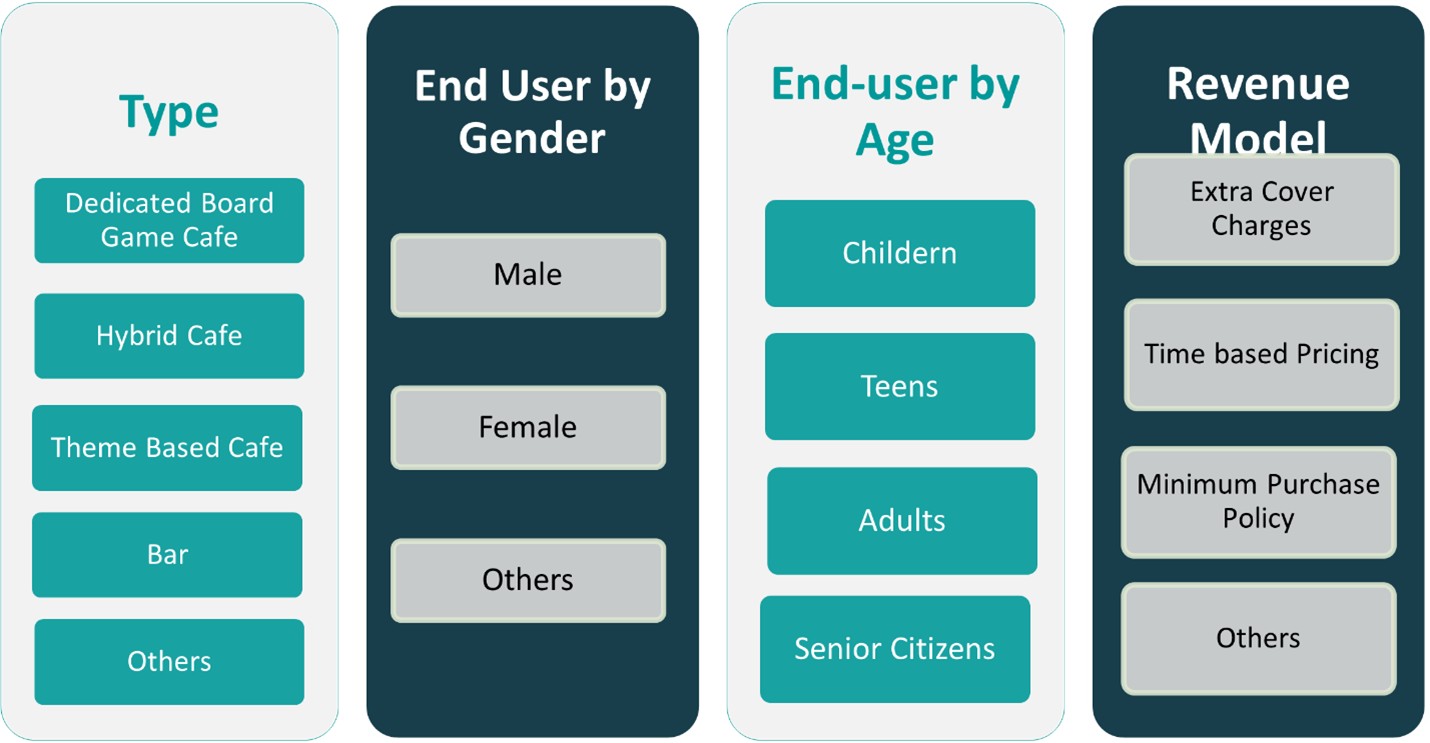
This report segments the United States Board Games Cafe Market as follows:
Market Drivers
Surge in Demand for Experiential Social Venues Fuels Market Expansion
Rising consumer preference for experiential social activities plays a central role in propelling the United States Board Games Cafe Market. Modern consumers prioritize interactive experiences over traditional entertainment options, which drives foot traffic to cafes that offer communal gaming. Board games cafes create unique environments for individuals and groups to connect, unwind, and form new social networks. This demand aligns with shifting lifestyle choices, especially among millennials and Gen Z, who value face-to-face interaction and memorable outings. Social media platforms amplify the appeal of these experiences, attracting wider audiences and encouraging repeat visits. The market leverages this trend by curating distinctive atmospheres and hosting regular events that foster community engagement.
- For instance, according to Exposure Analytics, 56% of attendees at experiential events prefer hands-on interaction or participatory activities, reflecting a strong consumer shift toward interactive social experiences.
Expansion of Board Game Offerings and Frequent New Releases Attracts Enthusiasts
The diverse and evolving landscape of board game design has significantly broadened the appeal of board games cafes. It benefits from an influx of innovative titles, spanning cooperative, strategic, and family-friendly genres. Frequent releases by established and independent game publishers sustain consumer interest and ensure that cafes remain dynamic destinations. The United States Board Games Cafe Market capitalizes on this trend by continually updating their game libraries and hosting launch events. Enthusiasts and newcomers alike find value in the opportunity to sample the latest games before purchasing. This approach not only strengthens customer loyalty but also positions cafes as trendsetters within the broader gaming ecosystem.
- For instance, the Waterloo and Hackney branches of Draughts Café in London offer approximately 500 and 850 board games, respectively, demonstrating how a broad and frequently updated game library can draw enthusiasts and newcomers alike.
Integration of Food and Beverage Services Increases Dwell Time and Revenue
Pairing board gaming with quality food and beverage options enhances the customer experience while boosting average spending per visit. Many board games cafes have upgraded their culinary offerings, transforming the traditional cafe model into a comprehensive social destination. The United States Board Games Cafe Market recognizes that providing varied menus appeals to diverse preferences, supporting longer stays and increased group sizes. Cafes that offer specialty drinks, snacks, and themed menus foster a more immersive environment, encouraging patrons to extend their visits. This integration creates a sustainable revenue stream, supporting business growth and stability in a competitive leisure market.
Strategic Partnerships and Events Drive Brand Awareness and Repeat Visits
Strategic collaborations with game publishers, local creators, and community organizations elevate brand visibility and enrich the cafe experience. It often hosts tournaments, themed nights, and educational sessions, which not only attract loyal gaming communities but also engage new audiences. The United States Board Games Cafe Market leverages these partnerships to secure exclusive titles and promotional support, differentiating itself from conventional cafes. Hosting high-profile events enhances word-of-mouth marketing and media coverage, amplifying reach. These initiatives play a vital role in developing a strong, recurring customer base and reinforcing the position of board games cafes as leading hubs for social entertainment.
Market Trends
Growth of Themed Experiences and Immersive Environments Enhances Customer Engagement
Themed experiences have become a defining trend within the United States Board Games Cafe Market, with operators curating distinctive environments to captivate diverse audiences. Owners frequently invest in décor inspired by popular games, fantasy worlds, or retro aesthetics, transforming each visit into a memorable event. Themed nights, cosplay events, and seasonal celebrations create fresh reasons for customers to return and share their experiences online. It emphasizes community-building through unique atmospheres, which helps to differentiate cafes from traditional entertainment venues. These efforts contribute to higher engagement, encourage group bookings, and support brand loyalty. Customers increasingly seek venues that offer more than just gameplay, valuing immersive experiences that foster lasting connections.
- For instance, board game cafes are noted for investing in themed décor and hosting special events that create memorable experiences for visitors.
Integration of Technology Streamlines Operations and Customer Experience
The integration of technology represents a significant trend within the United States Board Games Cafe Market. Digital reservation platforms, mobile apps, and contactless payment systems have improved the efficiency of cafe operations. It now enables customers to book tables, browse available games, and even order food and beverages through dedicated apps. These advancements enhance convenience, reduce wait times, and support a seamless customer journey. Data analytics tools help cafes track customer preferences and optimize inventory, while social media integration drives real-time engagement. The use of technology not only modernizes the experience but also allows operators to scale services and adapt to evolving customer needs.
- For instance, many board game cafes have adopted digital reservation platforms and contactless payment systems to enhance operational efficiency and customer convenience.
Expansion of Food and Beverage Offerings Elevates the Social Appeal
A growing trend among board games cafes is the expansion of gourmet food and beverage offerings. The United States Board Games Cafe Market responds to shifting consumer expectations by providing extensive menus, craft beverages, and themed snacks. It recognizes that a quality dining experience complements the social aspect of gaming, encouraging customers to extend their visits. Cafes introduce rotating menus, specialty cocktails, and locally sourced products to cater to a wide range of tastes. This focus on culinary excellence enhances the overall atmosphere, positioning board games cafes as premium social destinations. Operators find that these enhancements lead to positive reviews and increased customer retention.
Collaboration with Game Publishers and Local Communities Drives Innovation
Collaboration has emerged as a key trend within the United States Board Games Cafe Market, with cafes forging partnerships with publishers, designers, and local organizations. It often secures early access to new game releases and exclusive titles, attracting dedicated enthusiasts. Community-driven initiatives such as workshops, tournaments, and charity events foster a sense of belonging and expand the market’s reach. These collaborations generate fresh promotional opportunities, build local loyalty, and keep the gaming offering current. Operators find that community partnerships support business growth and create a vibrant, sustainable ecosystem around board games cafes. This trend continues to redefine the role of cafes as cultural and entertainment hubs.
Market Challenges Analysis
High Operational Costs and Space Constraints Limit Profitability
High operational costs present a significant challenge for the United States Board Games Cafe Market. It often faces elevated expenses related to rent, utilities, and labor, especially in urban areas where demand is highest. The need to maintain large inventories of diverse board games and premium food and beverage supplies further increases costs. Space constraints restrict the ability to accommodate large groups, host events, or expand gaming libraries, directly impacting revenue potential. Many cafes must balance providing a unique, inviting atmosphere with strict budget management to remain competitive. Unpredictable foot traffic and seasonal fluctuations make financial stability difficult, pressuring operators to innovate while controlling overhead.
- For instance, many board game cafes have adopted digital reservation platforms and contactless payment systems to enhance operational efficiency and customer convenience.
Competition from Digital Entertainment and Evolving Consumer Preferences
Competition from digital entertainment options poses an ongoing challenge for the United States Board Games Cafe Market. It competes with online gaming, streaming platforms, and at-home social experiences, which appeal to many consumers seeking convenience and variety. Changing consumer preferences require cafes to consistently refresh their offerings, update game selections, and introduce new events to retain interest. Building customer loyalty can prove difficult in a market where novelty and engagement drive repeat visits. The rapid pace of technology adoption and shifting leisure habits compel operators to adapt quickly or risk losing market share. Navigating these dynamics demands agility, strategic marketing, and a deep understanding of evolving customer expectations.
Market Opportunities
Expansion into Suburban and Emerging Urban Areas Presents Growth Potential
Expansion into suburban and emerging urban areas offers significant growth potential for the United States Board Games Cafe Market. It can capitalize on lower rental costs, untapped customer bases, and rising demand for local entertainment options outside traditional city centers. Establishing cafes in these locations creates new revenue streams and broadens brand visibility. Suburban families, young professionals, and community groups seek accessible venues for socializing, which board games cafes can uniquely provide. Tailoring marketing strategies and menu offerings to local preferences enhances customer engagement. This geographic diversification supports market resilience and long-term growth, while reducing dependency on high-cost metropolitan markets.
Leveraging Partnerships and Diversified Experiences Drives Customer Loyalty
Leveraging partnerships with game publishers, event organizers, and local businesses creates new opportunities for the United States Board Games Cafe Market. It can introduce exclusive game launches, host themed events, and collaborate on community initiatives that attract varied audiences. Offering workshops, tournaments, and educational programs appeals to both enthusiasts and newcomers. Expanding private event services for birthdays, team-building, and corporate gatherings positions cafes as versatile destinations. Integrating digital solutions, such as online reservations or loyalty apps, enhances customer experience and retention. These strategies foster deeper community connections and support sustained business growth in a competitive leisure landscape.
Market Segmentation Analysis:
By Type:
The United States Board Games Cafe Market features a diverse range of business models under the type segment. Dedicated board game cafes lead the market by offering extensive collections of games and focused environments that appeal to enthusiasts and social groups. Hybrid cafes combine board gaming with other activities such as coffee shops or co-working spaces, attracting customers seeking flexibility and multi-purpose venues. Theme-based cafes stand out by curating unique atmospheres, often inspired by popular board games or genres, which enhance the customer experience and drive repeat visits. Bars that integrate board gaming appeal to an adult demographic, providing entertainment alongside specialty beverages. The ‘Others’ category covers niche concepts that experiment with new formats or blend elements from multiple segments.
By End Users by Gender:
The end users by gender segment highlights shifting demographics within the United States Board Games Cafe Market. It records strong engagement from both male and female patrons, reflecting the widespread appeal of board gaming as a social activity. The ‘Others’ category and sub-segments like End Users By Gender 4 and End Users By Gender 5 address the market’s commitment to inclusivity, ensuring that diverse identities feel welcome. Cafes that recognize and cater to a broader spectrum of gender identities strengthen their community ties and foster a loyal customer base. Gender-focused marketing initiatives, events, and game selections help drive growth in this segment.
By End Users by Age:
Age segmentation reveals how board games cafes serve customers across multiple life stages. Children and teens represent key growth segments, with many cafes tailoring events, educational programs, and family-friendly game selections to attract younger audiences. Adults continue to dominate the market, drawn by the opportunity for socialization, team-building, and leisure in a relaxed environment. Senior citizens, while representing a smaller share, contribute to steady foot traffic, especially in cafes that offer accessible games and comfortable settings. The United States Board Games Cafe Market adapts its offerings to suit each age group, creating inclusive spaces that encourage engagement from a wide demographic range. This approach ensures sustained relevance and resilience across shifting consumer preferences.
Segments:
Based on Type:
- Dedicated Board Game Cafe
- Hybrid Cafe
- Theme Based Cafe
- Bar
- Others
Based on End Users by Gender:
- Male
- Female
- Others
Based on End Users by Age:
- Children
- Teens
- Adults
- Senior Citizens
Based on Revenue Model:
- Extra Cover Charges
- Time Based Pricing
- Minimum Purchase Policy
- Others
Based on the Geography:
- Northeast Region
- Midwest Region
- South Region
- West Region
Regional Analysis
Northeast Region
The Northeast region commands a significant 29% share of the United States Board Games Cafe Market, making it the largest regional market. Major metropolitan areas such as New York City, Boston, and Philadelphia anchor this dominance due to their dense populations, established social scenes, and high consumer spending power. Urban professionals and college students form a substantial portion of the customer base, seeking experiential entertainment in board games cafes. The prevalence of tourism in cities like Boston and New York further boosts market performance, with travelers often drawn to themed and unique social venues. The region’s concentration of universities encourages regular patronage, as students and young professionals value communal spaces for socializing and networking. Operators in the Northeast frequently leverage collaborations with local breweries, coffee roasters, and game publishers to diversify offerings and attract a broader audience. The innovative and competitive landscape pushes cafes to regularly introduce new events, game nights, and food pairings to maintain high foot traffic.
Midwest Region
The Midwest holds a 19% share of the United States Board Games Cafe Market, with cities such as Chicago, Minneapolis, and Detroit acting as central hubs. The Midwest benefits from a strong tradition of community-centered entertainment, with board games cafes fitting seamlessly into local preferences for group activities. Affordable commercial real estate and lower overhead costs allow cafes in the Midwest to experiment with larger venues and expanded game libraries. Family-oriented communities drive demand for all-age events and educational programming, while the presence of several major universities supports a steady flow of students and young professionals. Seasonal fluctuations, particularly in colder months, result in increased indoor socializing, making board games cafes popular destinations. Midwest operators often focus on creating welcoming, accessible environments and emphasize partnerships with local businesses and artisans to strengthen regional ties.
South Region
The South region accounts for 23% of the United States Board Games Cafe Market, experiencing strong growth in both urban and suburban areas. Cities like Atlanta, Dallas, and Houston contribute to this region’s expanding market presence. Population growth, urbanization, and a youthful demographic create favorable conditions for new cafe openings and franchise expansions. The South stands out for its emphasis on hospitality, with operators prioritizing customer service, southern-themed experiences, and regionally inspired menus. Board games cafes in the South frequently cater to family gatherings, corporate team-building, and large group events, tapping into the region’s community-oriented culture. Competitive pricing, event hosting, and collaborations with local game designers help maintain engagement across diverse audiences. The region’s multicultural population allows cafes to introduce a wide variety of games and global-themed nights, attracting customers with different backgrounds and interests.
West Region
The West region maintains a 21% share of the United States Board Games Cafe Market, with major contributions from California, Washington, and Colorado. Urban centers such as Los Angeles, San Francisco, Seattle, and Denver host a thriving board games cafe scene, driven by high levels of disposable income and a tech-savvy population. The West’s emphasis on lifestyle, creativity, and innovative business concepts fosters the growth of cafes that incorporate unique themes, technology integration, and sustainable practices. Partnerships with local breweries, coffee shops, and food vendors allow cafes to differentiate themselves and deliver premium experiences. The active nightlife and entertainment districts in these cities generate high foot traffic, while the presence of large technology and creative industries supports a clientele interested in intellectual and social pursuits. Cafes in the West frequently host launch events for new games, attract gaming influencers, and experiment with hybrid business models to remain at the forefront of industry trends.
Key Player Analysis
- Board Game Republic
- The Uncommons
- Tavern of Tales
- Good Game Grill
- Board Room DC
- Jokers are Wild Game Café
- Well Played Board Game Café
- The Rook and Pawn
- Mox Boarding House (Café Mox)
- Game Knight Lounge
- Victory Point Café
- Pieces
Competitive Analysis
The United States Board Games Cafe Market features a dynamic and competitive environment, led by key players such as Board Game Republic, The Uncommons, Mox Boarding House (Café Mox), and Good Game Grill. Each of these operators sets industry benchmarks through unique business models, diversified offerings, and strong community engagement. Leading operators differentiate themselves through unique business models, extensive game libraries, and immersive cafe environments that attract both casual visitors and dedicated gaming enthusiasts. Market leaders invest in hosting community events, tournaments, and themed nights, which foster loyalty and encourage repeat visits. The integration of food and beverage services, combined with effective use of digital reservation and marketing platforms, enables cafes to maximize operational efficiency and enhance the customer journey. Operators continually refresh their game selections and menu offerings to stay aligned with evolving consumer preferences and industry trends. Strategic partnerships with local businesses, game publishers, and community organizations help strengthen market presence and widen appeal. The competitive pressure in this market drives continuous improvement in service quality, product diversity, and overall guest satisfaction.
Recent Developments
- In December 2023, University Games, a California, U.S.-based toy and game company, acquired The Learning Journey International, an Arizona, U.S.-based children's educational products company.
- Inn November 2023, KESS, a Los Angeles, U.S.-based tabletop game company, launched its new dice board game, Sonic Roll. According to the company, the new game is based on the popular videogame Sonic the Hedgehog.
- In May 2023, Bambini Africa Edutainment Limited, a company focusing on promoting children’s development and promotion across Africa, announced the launch of five new tabletop games under the Bambini Games brand.
- In January 2023, CMON, a Singapore-based board game company, announced its partnership with Alderac Entertainment Group (AEG), a U.S.-based publisher of tabletop games. CMON declared that it was named AEG’s Master Distributor for Asia. The company will be responsible for the distribution and sales of local board games in Asian countries.
- In January 2023, CMON collaborated with Spin Master, a Canada-based children's entertainment business, to launch the first retail-only release of the Marvel United tabletop game series ‘Marvel United: Spider- Geddon'. The game features spider family heroes and villains across the multiverse.
- In January 2023, Goliath Games, a Netherlands-based toys & games company, along with All3Media International, a U.K.-based television, digital production, and film company, announced the board game version of The Traitors, a BBC reality show to be launched in the U.K.
Market Concentration & Characteristics
The United States Board Games Cafe Market exhibits moderate market concentration, with a mix of established brands and numerous independent operators shaping a dynamic and diverse landscape. It features a range of business models, from dedicated board games cafes to hybrid formats that combine dining, retail, and gaming. Most cafes operate in urban centers, targeting millennials, Gen Z, and families seeking social and experiential entertainment. The market relies on innovative concepts, curated game selections, and themed events to attract and retain customers. Strong community engagement and partnerships with local businesses further define its unique characteristics. While leading operators set industry standards, new entrants continuously introduce fresh ideas and personalized service, contributing to ongoing market evolution. This combination of established and emerging players supports a vibrant, customer-focused environment that adapts quickly to changing consumer preferences and leisure trends.
Report Coverage
The research report offers an in-depth analysis based on Type, End Users by Gender, End Users by Age, Revenue Model and Geography. It details leading market players, providing an overview of their business, product offerings, investments, revenue streams, and key applications. Additionally, the report includes insights into the competitive environment, SWOT analysis, current market trends, as well as the primary drivers and constraints. Furthermore, it discusses various factors that have driven market expansion in recent years. The report also explores market dynamics, regulatory scenarios, and technological advancements that are shaping the industry. It assesses the impact of external factors and global economic changes on market growth. Lastly, it provides strategic recommendations for new entrants and established companies to navigate the complexities of the market.
Future Outlook
- The market is projected to experience steady growth, driven by increasing demand for social and experiential entertainment venues.
- Urban centers will continue to be primary hubs, but suburban areas are expected to see significant expansion as operators tap into new demographics.
- Integration of technology, such as digital reservation systems and interactive gaming platforms, will enhance customer engagement and operational efficiency.
- Collaborations with local businesses and community events will strengthen brand presence and foster customer loyalty.
- Diversification of offerings, including themed nights and educational programs, will attract a broader customer base.
- Sustainability initiatives, like eco-friendly materials and waste reduction practices, will become more prevalent in response to consumer preferences.
- The market will face challenges from digital entertainment alternatives, necessitating innovative strategies to maintain relevance.
- Regulatory changes and economic factors may impact operational costs, requiring adaptive business models.
- Franchise models are expected to gain popularity, enabling rapid expansion and brand recognition across regions.
- Continuous innovation in game offerings and customer experiences will be crucial for sustained success in the competitive landscape.

Request a Free Sample
Fill in your details and we'll send you a free sample report.
- Sample data tables & charts
- Research methodology
Market Dynamics
Surge in Demand for Experiential Social Venues
Consumers, especially millennials and Gen Z, are increasingly seeking out venues that offer interactive, in-person experiences, making board games cafes attractive destinations for socializing and entertainment.
Expansion of Board Game Offerings and Frequent New Releases
A steady influx of innovative board games and frequent new releases keeps the market dynamic, drawing enthusiasts and newcomers to cafes to try the latest titles and participate in launch events.
Integration of Food and Beverage Services
Combining quality food and beverage options with gaming enhances the overall customer experience, increases dwell time, and boosts average spending per visit, making cafes more profitable and appealing.
Strategic Partnerships and Community Events
Collaborations with game publishers, local creators, and community organizations enable cafes to host exclusive events, tournaments, and themed nights, driving repeat visits and strengthening brand loyalty.
Expansion into Suburban and Emerging Urban Areas
Operators are increasingly targeting suburban and emerging urban markets, where lower overhead costs and untapped customer bases present significant opportunities for growth beyond traditional metropolitan centers.
Need a Custom Version of This Report?
Tailor the scope, geography, or segments to your exact requirements.
- Custom geography or segment scope
- Direct access to our analyst team
Frequently Asked Questions
What is the current size of the United States Board Games Cafe Market?
What factors are driving the growth of the United States Board Games Cafe Market?
What are the key segments within the United States Board Games Cafe Market?
Who are the major players in the United States Board Games Cafe Market?
Table of Content
Chapter 1 Market Segmentation
- 1.1 Segmentation Framework
- 1.1.1 Product and Service Classification
- 1.1.2 Application and End-Use Classification
- 1.1.3 Technology and Solution Classification
- 1.1.4 Customer and Distribution Channel Classification
- 1.1.5 Geographic Segmentation
- 1.1.6 Market Segment Definitions and Boundaries
- 1.2 By Type
- 1.2.1 Dedicated Board Game Cafe
- 1.2.2 Hybrid Cafe
- 1.2.3 Theme Based Cafe
- 1.2.4 Bar
- 1.2.5 Others
- 1.3 By Revenue Model
- 1.3.1 Extra Cover Charges
- 1.3.2 Time Based Pricing
- 1.3.3 Minimum Purchase Policy
- 1.3.4 Others
- 1.4 By End Users by Age
- 1.4.1 Children
- 1.4.2 Teens
- 1.4.3 Adults
- 1.4.4 Senior Citizens
- 1.5 By End Users by Gender
- 1.5.1 Male
- 1.5.2 Female
- 1.5.3 Others
Chapter 2 Introduction
- 2.1 Report Objectives and Scope
- 2.2 Product Definition and Industry Terminology
- 2.3 Market Inclusions and Exclusions
- 2.4 Research Process
- 2.4.1 Primary Research and Expert Interviews
- 2.4.2 Secondary Research and Source Review
- 2.4.3 Top-Down and Bottom-Up Estimation
- 2.4.4 Data Triangulation and Verification
- 2.5 Market Size Measurement Basis
- 2.5.1 2023: USD 1,254.00 million → 2032: USD 3,005.60 million
- 2.6 Historical and Forecast Reference Periods
- 2.6.1 Base Year: 2023
- 2.6.2 Forecast Period: 2023-2032
- 2.7 Research Assumptions and Limitations
Chapter 3 Executive Summary
- 3.1 Market Snapshot and Key Findings
- 3.2 Base-Year Market Size, 2023
- 3.3 Forecast Market Size, 2032
- 3.4 Revenue and Volume Growth Outlook
- 3.5 Key Demand and Supply Indicators
- 3.6 Leading Market Segments
- 3.7 Fastest-Growing Market Opportunities
- 3.8 Regional Performance Highlights
- 3.9 Technology and Industry Transformation
- 3.10 Competitive Landscape Summary
- 3.11 Analyst View and Strategic Implications
Chapter 4 United States Board Games Cafe Market Trends and Developments
- 4.1 Historical Industry Development
- 4.2 Recent Market Trends and Developments
- 4.3 Demand and Customer Behavior Trends
- 4.4 Technology and Product Innovation
- 4.5 Artificial Intelligence, Automation and Digitalization
- 4.6 Local Manufacturing and Supply Chain Realignment
- 4.7 Industry Partnerships, Mergers and Acquisitions
- 4.8 Sustainability and Circular Economy Developments
- 4.9 Government and Private Sector Investment Trends
- 4.10 Emerging Business Models and Commercialization
- 4.11 Industry Developments and Announcements
Chapter 5 United States Board Games Cafe Market Production, Supply and Demand Analysis
- 5.1 Demand Trend and Consumption Analysis
- 5.2 Demand Forecast, 2023-2032
- 5.3 Production and Output Trend
- 5.4 Production and Output Forecast, 2023-2032
- 5.5 Installed Capacity and Capacity Utilization
- 5.6 Company-Wise Production Plants and Statistics
- 5.6.1 Installed Production Capacity
- 5.6.2 Actual Production
- 5.6.3 Planned Capacity and Expansion Targets
- 5.7 Supply Chain Structure and Procurement Trends
- 5.8 Supply-Demand Gap and Bottlenecks
- 5.9 Import Dependence and Sourcing Structure
- 5.10 Contract Manufacturing and Outsourcing
- 5.11 Regional Supply and Demand Concentration
Chapter 6 United States Board Games Cafe Market Pricing Analysis
- 6.1 Pricing Structure and Measurement
- 6.2 Historical Pricing Trends
- 6.3 Pricing Outlook, 2023-2032
- 6.4 Average Selling Price and Unit Economics
- 6.5 Pricing by Product and Market Segment
- 6.6 Geographic Pricing Differences
- 6.7 Key Input, Energy, Labor and Logistics Costs
- 6.8 Contract Pricing and Purchasing Models
- 6.9 Pricing Sensitivity and Competitive Positioning
- 6.10 Price, Margin and Profitability Implications
Chapter 7 United States Board Games Cafe Market Dynamics
- 7.1 Market Growth Drivers
- 7.1.1 Demand-Side Drivers
- 7.1.2 Technology and Innovation Drivers
- 7.1.3 Infrastructure and Investment Drivers
- 7.1.4 Regulatory and Policy Drivers
- 7.2 Market Restraints
- 7.2.1 Cost and Affordability Constraints
- 7.2.2 Technology and Adoption Barriers
- 7.2.3 Supply Chain and Operational Constraints
- 7.3 Market Challenges
- 7.3.1 Competitive Pressure and Margin Erosion
- 7.3.2 Skills, Infrastructure and Implementation Gaps
- 7.4 Emerging Market Opportunities
- 7.5 Market Dynamics Impact and Time-Horizon Assessment
Chapter 8 United States Board Games Cafe Value Chain Analysis
- 8.1 Industry Value Chain Overview
- 8.2 Upstream Suppliers and Critical Inputs
- 8.3 Technology and Component Providers
- 8.4 Manufacturing or Service Delivery
- 8.5 Distribution, Channel Partners and Integrators
- 8.6 Downstream Applications and End Users
- 8.7 Value Addition and Profit Pools
- 8.8 Vertical Integration and Outsourcing
- 8.9 Supplier Concentration and Risk
- 8.10 Supply Chain Localization and Resilience
Chapter 9 United States Board Games Cafe Market Regulations and Policies
- 9.1 Relevant Laws, Standards and Compliance Frameworks
- 9.2 Product, Service, Safety and Quality Requirements
- 9.3 Government Policies, Incentives and Subsidies
- 9.4 Imports, Exports and Trade Barriers
- 9.5 Public Procurement and Local Content Requirements
- 9.6 Environmental and Sustainability Compliance
- 9.7 Upcoming Policy Changes and Market Implications
Chapter 10 United States Board Games Cafe Market Hotspots and Opportunities
- 10.1 Market Opportunity Mapping and Growth Hotspots
- 10.2 High-Growth Applications and Customer Groups
- 10.3 Underserved Markets and White-Space Opportunities
- 10.4 Emerging Technology and Product Opportunities
- 10.5 New Capacity and Investment Hotspots
- 10.6 Market Entry and Expansion Opportunities
- 10.7 Distribution and Partnership Opportunities
- 10.8 Near-Term and Long-Term Commercial Potential
- 10.9 Opportunity Attractiveness and Execution Risks
Chapter 11 United States Board Games Cafe Market Outlook, 2023-2032
- 11.1 Market Size and Analysis
- 11.1.1 Revenue (Market Measurement: 2023: USD 1,254.00 million → 2032: USD 3,005.60 million)
- 11.1.2 Market Volume and Quantity Sold
- 11.1.3 Historical Market Size
- 11.1.4 Base-Year Market Size, 2023
- 11.2 Market Forecast, 2023-2032
- 11.2.1 Revenue Forecast to 2032
- 11.2.2 Volume Forecast to 2032
- 11.2.3 CAGR and Year-on-Year Growth
- 11.2.4 Incremental Revenue Opportunity
- 11.3 Forecast Assumptions and Scenario Analysis
- 11.3.1 Base-Case Forecast
- 11.3.2 Optimistic and Conservative Scenarios
- 11.3.3 Technology, Pricing and Policy Sensitivities
- 11.4 Market Attractiveness and Growth Outlook
Chapter 12 United States Board Games Cafe Market Segmentation and Outlook
- 12.1 Segmentation Summary and Market Shares, 2023
- 12.2 Largest and Fastest-Growing Segments
- 12.3 By Type - Market Size and Forecast, 2023-2032
- 12.3.1 Segment Definition and Scope
- 12.3.2 Historical Market Size
- 12.3.3 Revenue Forecast, 2023-2032
- 12.3.4 Volume Forecast, 2023-2032
- 12.3.5 Base-Year Market Share, 2023
- 12.3.6 Segment CAGR and Growth Drivers
- 12.3.7 Subsegment Market Size and Forecast
- 12.3.7.1 Dedicated Board Game Cafe
- 12.3.7.2 Hybrid Cafe
- 12.3.7.3 Theme Based Cafe
- 12.3.7.4 Bar
- 12.3.7.5 Others
- 12.3.8 Subsegment Pricing and Adoption Trends
- 12.3.9 Leading Suppliers and Competition
- 12.3.10 Regional Demand and Opportunities
- 12.4 By Revenue Model - Market Size and Forecast, 2023-2032
- 12.4.1 Segment Definition and Scope
- 12.4.2 Historical Market Size
- 12.4.3 Revenue Forecast, 2023-2032
- 12.4.4 Volume Forecast, 2023-2032
- 12.4.5 Base-Year Market Share, 2023
- 12.4.6 Segment CAGR and Growth Drivers
- 12.4.7 Subsegment Market Size and Forecast
- 12.4.7.1 Extra Cover Charges
- 12.4.7.2 Time Based Pricing
- 12.4.7.3 Minimum Purchase Policy
- 12.4.7.4 Others
- 12.4.8 Subsegment Pricing and Adoption Trends
- 12.4.9 Leading Suppliers and Competition
- 12.4.10 Regional Demand and Opportunities
- 12.5 By End Users by Age - Market Size and Forecast, 2023-2032
- 12.5.1 Segment Definition and Scope
- 12.5.2 Historical Market Size
- 12.5.3 Revenue Forecast, 2023-2032
- 12.5.4 Volume Forecast, 2023-2032
- 12.5.5 Base-Year Market Share, 2023
- 12.5.6 Segment CAGR and Growth Drivers
- 12.5.7 Subsegment Market Size and Forecast
- 12.5.7.1 Children
- 12.5.7.2 Teens
- 12.5.7.3 Adults
- 12.5.7.4 Senior Citizens
- 12.5.8 Subsegment Pricing and Adoption Trends
- 12.5.9 Leading Suppliers and Competition
- 12.5.10 Regional Demand and Opportunities
- 12.6 By End Users by Gender - Market Size and Forecast, 2023-2032
- 12.6.1 Segment Definition and Scope
- 12.6.2 Historical Market Size
- 12.6.3 Revenue Forecast, 2023-2032
- 12.6.4 Volume Forecast, 2023-2032
- 12.6.5 Base-Year Market Share, 2023
- 12.6.6 Segment CAGR and Growth Drivers
- 12.6.7 Subsegment Market Size and Forecast
- 12.6.7.1 Male
- 12.6.7.2 Female
- 12.6.7.3 Others
- 12.6.8 Subsegment Pricing and Adoption Trends
- 12.6.9 Leading Suppliers and Competition
- 12.6.10 Regional Demand and Opportunities
- 12.7 Segment Growth Comparison
- 12.8 Segment Attractiveness and Priority Matrix
Chapter 13 United States Board Games Cafe End-Use and Application Market Outlook
- 13.1 End-Use Industry and Customer Demand Structure
- 13.2 Leading Applications and Customer Groups
- 13.3 End-Use Market Size, Share and Forecast
- 13.4 Major End-Use Industry Deep Dives
- 13.4.1 Customer Requirements and Use Cases
- 13.4.2 Demand and Replacement Cycles
- 13.4.3 Technical and Regulatory Considerations
- 13.4.4 Purchasing and Procurement Models
- 13.4.5 Leading Vendors and Distribution Channels
- 13.4.6 Forecast and Commercial Opportunities
- 13.5 Emerging Applications and Cross-Segment Demand
- 13.6 End-Use Industry Investment Priorities
Chapter 14 United States Board Games Cafe Geographic Market Outlook, 2023-2032
- 14.1 Domestic Market Distribution and Demand Clusters
- 14.2 State- or Province-Wise Market Size and Forecast, 2023-2032
- 14.3 City and Metropolitan Market Outlook
- 14.4 Industrial, Manufacturing and Commercial Clusters
- 14.5 Geographic Concentration of Key End Users
- 14.6 Local Pricing and Purchasing Differences
- 14.7 Domestic Production Facilities and Capacity Map
- 14.8 Local Infrastructure and Project Pipeline
- 14.9 State-Level Policy and Incentive Differences
- 14.10 Subnational Investment Hotspots and Opportunities
- 14.11 Distribution and Logistics Networks
- 14.12 Domestic Competitive Footprint
Chapter 15 United States Board Games Cafe Technology, Innovation and Sustainability Outlook
- 15.1 Technology Landscape and Maturity
- 15.2 Product, Process and Service Innovation
- 15.3 AI, Automation and Digital Tools in the Industry
- 15.4 Technology Adoption and Performance Benchmarking
- 15.5 Innovation Pipeline and R&D Investment
- 15.6 Patent and Intellectual Property Trends
- 15.7 Energy Efficiency and Resource Management
- 15.8 Sustainability, Recycling and Circularity
- 15.9 Technology Roadmap, 2023-2032
- 15.10 Risks of Obsolescence and Technology Substitution
Chapter 16 United States Board Games Cafe Market Key Strategic Imperatives
- 16.1 Growth and Market Entry Priorities
- 16.2 High-Return Products and Segments
- 16.3 Pricing, Profitability and Cost Optimization
- 16.4 Technology Investment and Product Differentiation
- 16.5 Supply Chain Localization and Resilience
- 16.6 Distribution and Customer Acquisition
- 16.7 Partnership, Acquisition and Capacity Strategy
- 16.8 Regional Expansion Priorities
- 16.9 Short-, Medium- and Long-Term Actions
Chapter 17 Competition Outlook
- 17.1 Industry Competition Characteristics
- 17.2 Market Structure and Concentration
- 17.3 Market Share and Competitive Positioning, 2023
- 17.4 Company-Wise Revenue and Product Benchmarking
- 17.5 Production and Service Capacity Benchmarking
- 17.6 Technology, Pricing and Differentiation
- 17.7 Regional Footprint and Distribution Strength
- 17.8 Mergers, Acquisitions and Strategic Alliances
- 17.9 New Entrants and Competitive Threats
- 17.10 Porter's Five Forces and Industry Attractiveness
- 17.11 Competitive Outlook, 2023-2032
Chapter 18 Company Profiles
- 18.1 Company Coverage and Selection Criteria
- 18.2 Board Game Republic
- 18.2.1 Business Description
- 18.2.2 Company Ownership and Geographic Presence
- 18.2.3 Product and Service Portfolio
- 18.2.4 Manufacturing and Operating Footprint
- 18.2.5 Production Capacity and Expansion Plans
- 18.2.6 Financial Performance and Investment
- 18.2.7 Market Share and Competitive Position
- 18.2.8 Technology and Innovation Capabilities
- 18.2.9 Strategic Alliances or Partnerships
- 18.2.10 Recent Developments
- 18.2.11 Growth Strategy and Outlook
- 18.3 The Uncommons
- 18.4 Mox Boarding House (Café Mox)
- 18.5 Good Game Grill
- 18.6 Board Room DC
- 18.7 Jokers are Wild Game Café
- 18.8 Well Played Board Game Café
- 18.9 The Rook and Pawn
- 18.10 Game Knight Lounge
- 18.11 Victory Point Café
- 18.12 Other Relevant Market Participants
Note: Every listed company is profiled on the structure shown under the first company. The company list is preliminary and may change based on research findings, market developments, data availability and client requirements.
Chapter 19 Disclaimer
- 19.1 Research and Forecast Disclaimer
- 19.2 Data Source and Estimation Limitations
Note: The depth of individual sections depends on data availability for this market. Volume, capacity, trade and other unit-based metrics are included where applicable.

