
| REPORT ATTRIBUTE | DETAILS |
|---|---|
| Historical Period | 2020-2023 |
| Base Year | 2024 |
| Forecast Period | 2025-2032 |
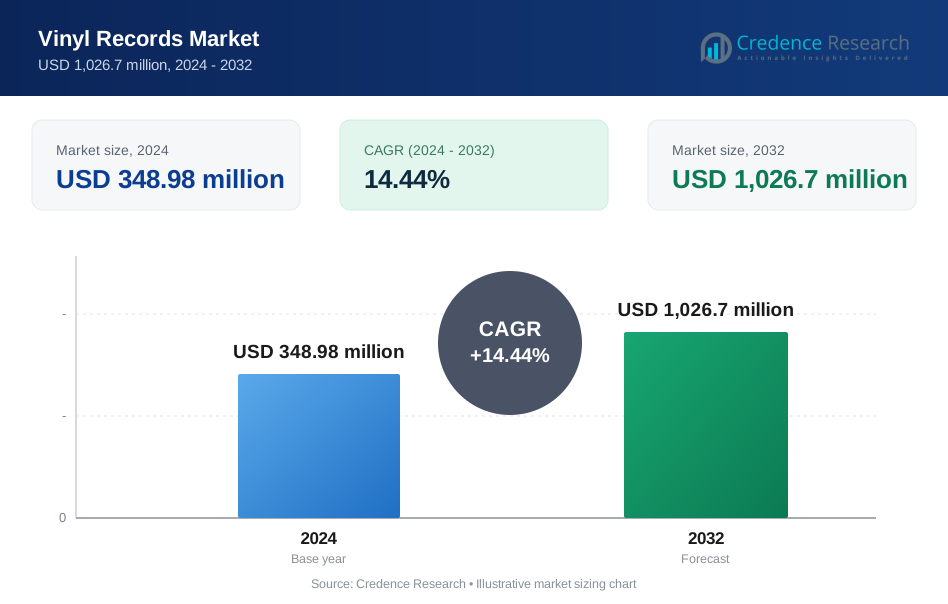
| Vinyl Records Market Size 2024 | USD 348.98 million |
| Vinyl Records Market, CAGR | 14.4% |
| Vinyl Records Market Size 2032 | USD 1,026.7 million |
Market Overview
The Vinyl Records Market is projected to grow from USD 348.98 million in 2024 to USD 1,026.7 million by 2032, registering a CAGR of 14.44% during the forecast period.
The Vinyl Records Market is experiencing robust growth driven by a resurgence in consumer interest in physical music formats, particularly among millennials and Gen Z audiences seeking nostalgic and tangible listening experiences. The increasing popularity of limited-edition releases and reissues by major and independent artists has significantly contributed to market demand. Retailers are expanding vinyl sections, supported by growing collaborations between artists and lifestyle brands that elevate the collectible appeal of vinyl records. Additionally, the improved sound quality and aesthetic packaging are attracting audiophiles and collectors alike. Record Store Day events and exclusive drops have further fueled consumer engagement and repeat purchases. While streaming dominates music consumption, vinyl records serve a complementary role, offering emotional and sensory value that digital formats lack. The trend of gifting vinyl and the establishment of vinyl-focused subscription services are also encouraging sustained interest. As a result, the market continues to gain momentum in both developed and emerging regions.
The Vinyl Records Market shows strong geographical diversity with North America leading at 38% market share, followed by Europe at 29% and Asia Pacific at 21%. North America’s dominance is driven by an established retail network and a strong collector culture, while Europe benefits from mature vinyl communities and innovative packaging trends. Asia Pacific is emerging rapidly due to rising youth interest and expanding e-commerce penetration. Key players shaping the market include Sony Music Entertainment, Universal Music Group, Warner Music Group, and specialized manufacturers such as GZ Media, Memphis Record Pressing, Precision Record Pressing, MPO International, Pallas Group, and Optimal Media. Record Industry and United Record Pressing cater to niche segments and regional demands. These companies focus on capacity expansion, premium editions, and sustainable practices to strengthen their global footprint and address evolving consumer preferences across major regions.
Market Insights
- The Vinyl Records Market is projected to grow from USD 348.98 million in 2024 to USD 1,026.7 million by 2032, registering a CAGR of 14.44% during the forecast period.
- Growing consumer demand for tangible, nostalgic music formats-especially among millennials and Gen Z-is fueling strong interest in vinyl as a lifestyle and collectible product.
- Strong support from major and independent labels through exclusive releases, colored vinyl, and special editions is enhancing supply and driving collector engagement.
- Retail expansion across physical, specialty, and online channels, along with immersive shopping experiences and events like Record Store Day, is increasing market accessibility and visibility.
- Advances in pressing technology and premium packaging designs, such as lyric inserts and embossed covers, are improving product appeal and supporting higher pricing.
- High production costs, long lead times, and environmental concerns tied to non-biodegradable materials pose challenges to scalability and sustainability in the vinyl segment.
- North America leads the market with 38% share, followed by Europe at 29% and Asia Pacific at 21%, reflecting a diverse regional landscape supported by strong retail presence and rising youth interest.
Market Drivers
Rising Consumer Demand for Tangible and Nostalgic Music Experiences
The Vinyl Records Market benefits from a growing consumer preference for physical music formats that offer a sense of nostalgia and emotional connection. Younger demographics, particularly millennials and Gen Z, are increasingly drawn to vinyl for its vintage appeal and collectibility. It provides a tactile experience that digital formats cannot replicate. Many buyers see vinyl as a lifestyle product, reinforcing its cultural relevance. The resurgence of analog sound appreciation further supports this demand. It allows listeners to engage with music more intentionally. Music enthusiasts are seeking richer experiences, driving continuous interest in vinyl records.
- For instance, in the UK, Taylor Swift’s "The Tortured Poets Department" was the top-selling album of 2024, with 783,820 copies sold, including a significant share of vinyl editions, demonstrating strong consumer demand for exclusive physical releases from major artists.
Strong Artist and Label Support Enhancing Market Supply
The Vinyl Records Market is gaining traction due to increased backing from both major and independent music labels. Artists are leveraging vinyl to release exclusive editions, colored discs, and boxed sets that appeal to fans and collectors. It has become a preferred medium for album reissues and anniversary releases. Labels recognize the high perceived value and profitability of vinyl compared to digital formats. This strategic emphasis supports higher production volumes. Retail availability and dedicated promotions contribute to expanding consumer reach and market penetration.
Retail Expansion and Specialty Store Influence
The Vinyl Records Market continues to grow through expanded shelf space in large retail chains and increased visibility in niche music stores. Record Store Day events, exclusive launches, and vinyl fairs drive strong foot traffic and sales. It benefits from retailers’ efforts to create immersive shopping experiences that highlight vinyl culture. Many stores invest in curated collections and in-store listening stations to attract buyers. The presence of vinyl in lifestyle and fashion stores also contributes to wider exposure. This multi-channel availability fuels consistent demand across demographics.
Technological Advances in Pressing and Packaging
The Vinyl Records Market benefits from improvements in pressing techniques and packaging aesthetics that elevate the overall product quality. Manufacturers are investing in modernized equipment to ensure better sound fidelity and durability. It supports innovation in packaging designs, including gatefold covers, lyric inserts, and artwork enhancements. Consumers value these artistic features, which distinguish vinyl from other music formats. High-quality presentation encourages premium pricing and repeat purchases. These advancements reinforce vinyl’s appeal as both a listening medium and collectible item. Pressing facilities are scaling operations to meet rising demand.
- For instance, Viryl Technologies’ WarmTone™ press is a fully automated, computerized machine that cuts record stamping time in half compared to traditional presses, enabling a record to be stamped every 25 seconds and allowing for seamless quality inspection without halting production.
Market Trends
Growing Popularity Among Younger Demographics and New Collectors
The Vinyl Records Market is witnessing a notable shift as younger consumers increasingly embrace vinyl culture. Millennials and Gen Z are engaging with vinyl not only for audio quality but also for its aesthetic and nostalgic value. Many are purchasing records as collectibles or gifts, often influenced by social media trends and influencer endorsements. It appeals to a desire for physical ownership in an increasingly digital world. Vinyl records also align with lifestyle branding and personal expression. Limited-edition releases and exclusives continue to fuel this enthusiasm.
- For instance, Sam Fender’s album “People Watching” became the fastest-selling vinyl album by a British act this century upon its February 2025 release, setting a new benchmark for vinyl success among younger listeners.
Increased Integration of Vinyl in Modern Retail and E-Commerce Platforms
The Vinyl Records Market is expanding rapidly through both traditional retail outlets and online platforms. E-commerce has made vinyl accessible to broader audiences, allowing customers to discover and purchase records beyond local availability. Many independent artists and labels now use direct-to-consumer models to market vinyl products. It has led to a rise in subscription-based services offering curated vinyl selections. Major retailers have also increased shelf space for vinyl. This shift in retail strategy is driving higher sales volumes and visibility across markets.
- For instance, Reliance Industries’ Tira platform now features vinyl records in select stores and integrates them into curated online lifestyle collections, expanding accessibility for shoppers across India.
Rising Influence of Record Store Day and Vinyl-Specific Events
The Vinyl Records Market experiences seasonal spikes and long-term loyalty driven by initiatives such as Record Store Day. This event draws large crowds and highlights exclusive vinyl releases, limited pressings, and artist appearances. It serves as a key promotional tool for both small and large labels. Community-driven events support local record stores and stimulate new customer acquisition. It creates anticipation and urgency among buyers. These gatherings reinforce vinyl's cultural status and help strengthen market engagement throughout the year.
Innovative Packaging and Artistic Presentation of Albums
The Vinyl Records Market continues to evolve with a strong focus on album design, cover art, and packaging features. Consumers increasingly view vinyl as a visual and tactile experience, not just an audio medium. Enhanced packaging techniques, including holographic finishes, embossed artwork, and interactive inserts, add value. It appeals to both collectors and casual buyers seeking something distinctive. Many artists now prioritize visual storytelling in their releases. These artistic elements help distinguish vinyl from streaming or digital downloads. The packaging itself often becomes part of the product's appeal.
Market Challenges Analysis
High Production Costs and Supply Chain Limitations
The Vinyl Records Market faces significant pressure from high production costs and supply chain constraints. Manufacturing vinyl records requires specialized equipment and skilled labor, both of which are limited and expensive. It often leads to longer lead times and limited production capacity, especially during peak demand periods. The cost of raw materials, including PVC and premium packaging components, further drives up pricing. Independent artists and small labels struggle to secure pressing slots, delaying releases and affecting profitability. These barriers hinder scalability and limit the market’s ability to meet rising consumer demand.
Environmental Concerns and Sustainability Pressures
The Vinyl Records Market must address growing environmental scrutiny surrounding plastic use and energy-intensive production processes. Vinyl records are made from non-biodegradable materials, prompting criticism from eco-conscious consumers. It places pressure on manufacturers to explore alternative materials or implement more sustainable production practices. Limited progress in this area may challenge the long-term appeal of vinyl among younger, environmentally aware buyers. Industry players must balance quality and nostalgia with eco-responsibility. Regulatory trends toward reducing plastic waste could impose further constraints on production and distribution practices.
- For example, Evolution Music’s Evovinyl is a plant-based record made from sugarcane bioplastics, offering a non-toxic and industrially compostable alternative to traditional PVC, and can save up to 30% in production energy while cutting pressing time in half, according to company testing.
Market Opportunities
Expansion into Emerging Markets and Untapped Consumer Segments
The Vinyl Records Market holds strong potential in emerging economies where rising disposable incomes and growing music culture are creating new demand. Urban youth in regions such as Southeast Asia, Latin America, and Eastern Europe are beginning to explore vinyl for its cultural and aesthetic value. It offers labels and retailers an opportunity to localize offerings and expand distribution networks. Vinyl-themed events, pop-up stores, and music festivals can help increase visibility and engagement. Introducing region-specific content or collaborating with local artists may attract first-time buyers. These strategies can help broaden the consumer base and drive long-term growth.
Innovation in Sustainable Materials and Production Processes
The Vinyl Records Market can capitalize on increasing demand for sustainable products by investing in eco-friendly alternatives to traditional PVC. Companies exploring biodegradable compounds or recycled materials for record pressing may gain a competitive edge. It enables brands to align with environmental values without compromising audio quality. Advancements in green packaging and low-energy manufacturing can also enhance appeal among conscious consumers. Strategic innovation in this space can open new revenue streams and strengthen brand loyalty. Early adopters of sustainable vinyl formats can lead market differentiation and attract partnerships with ethically driven music labels.
Market Segmentation Analysis:
By Product Type
The Vinyl Records Market is segmented into Long Play (LP), Extended Play (EP), and Singles, with LPs holding the dominant share. LPs are widely favored due to their ability to offer complete albums and longer playtime, making them popular among collectors and audiophiles. EPs and Singles also attract niche buyers and independent artists aiming to release limited content. It reflects diverse listening preferences and production strategies. Collectors often seek EPs and Singles for exclusive tracks and rare editions, adding depth to the segment’s appeal. Each format serves a specific role in music distribution and fan engagement.
By Application
The Vinyl Records Market divides into Private and Commercial applications. Private use accounts for the larger share, driven by individual collectors and home listeners seeking a nostalgic and immersive experience. Commercial demand is rising in cafes, bars, music lounges, and event spaces where vinyl adds aesthetic and acoustic value. It supports brand ambiance and appeals to retro-themed marketing. Businesses also leverage vinyl for décor and customer engagement. The application scope is expanding beyond personal entertainment into lifestyle and experiential branding.
- For instance, BierWax in Brooklyn and Queens features copious shelves of albums instead of a traditional backbar, offering customers a casual beer bar experience where vinyl is central to the atmosphere and social vibe.
By Distribution Channel
The Vinyl Records Market includes Online Retail, Physical Retail, Specialty Stores, and Direct Sales. Online retail leads in accessibility, offering broad catalogues and global reach. Specialty stores contribute significantly by curating exclusive releases and fostering collector communities. Physical retail supports impulse purchases and brand exposure. It helps create in-person experiences that drive consumer interest. Direct sales through artist websites and independent labels are also growing, reflecting shifts in distribution preferences. Each channel plays a role in shaping consumer access and buying behavior.
- For instance, Shops like The Revolver Club in India curate unique releases and host in-store events, fostering a strong collector community and partnering with artists for exclusive in-store signings-such events are widely covered in local media and industry reports.
Segments:
Based on Product Type
- Long Play (LP)
- Extended Play (EP)
- Singles
Based on Application
- Private
- Commercial
Based on Distribution Channel
- Online Retail
- Physical Retail
- Specialty Stores
- Direct Sales
Based on End User
- Consumers
- Collectors
- DJs
- Music Producers
- Educational Institutions
Based on the Geography:
- North America
- U.S.
- Canada
- Mexico
- Europe
- Germany
- France
- U.K.
- Italy
- Spain
- Rest of Europe
- Asia Pacific
- China
- Japan
- India
- South Korea
- South-east Asia
- Rest of Asia Pacific
- Latin America
- Brazil
- Argentina
- Rest of Latin America
- Middle East & Africa
- GCC Countries
- South Africa
- Rest of the Middle East and Africa
Regional Analysis
North America
North America holds the largest share in the Vinyl Records Market, accounting for 38% of global revenue. The region benefits from a strong collector base, a well-established music retail infrastructure, and active participation in Record Store Day events. It also leads in vinyl production, supported by multiple pressing plants and independent labels. Consumer preference for tangible music formats remains high across the United States and Canada. It reflects a cultural trend toward vintage and experiential audio formats. The presence of major artists and labels frequently releasing special vinyl editions further strengthens regional growth.
Europe
Europe represents 29% of the Vinyl Records Market, driven by a deeply rooted music culture and widespread adoption of physical media. Countries such as the United Kingdom, Germany, and France maintain active vinyl communities and robust retail distribution. Many consumers view vinyl as a premium format that complements digital listening. It enjoys strong demand across independent record shops, specialty outlets, and online platforms. The region also benefits from established vinyl manufacturing hubs and a growing secondhand vinyl trade. Regulatory trends supporting sustainable packaging contribute to innovation in product presentation.
Asia Pacific
Asia Pacific accounts for 21% of the Vinyl Records Market and is witnessing rapid growth due to rising urbanization, increasing disposable incomes, and expanding youth interest in music collectibles. Japan remains a key contributor, supported by a mature market and cultural affinity for physical media. Emerging markets such as South Korea and India are seeing increased adoption driven by K-pop and localized content. It reflects growing music consumption habits and rising brand engagement among younger demographics. The expansion of e-commerce platforms and local vinyl events is helping accelerate regional penetration. Retailers and artists are investing in targeted campaigns to capture this momentum.
Key Player Analysis
- Precision Record Pressing
- GZ Media
- Memphis Record Pressing
- MPO International
- Pallas Group
- Universal Music Group
- Optimal Media
- United Record Pressing
- Warner Music Group
- Record Industry
- Sony Music Entertainment
Competitive Analysis
The Vinyl Records Market features a competitive landscape shaped by a mix of major music corporations and specialized pressing plants. Key players such as Sony Music Entertainment, Universal Music Group, and Warner Music Group dominate content ownership and global distribution. It benefits from their frequent release of exclusive vinyl editions and reissues. Pressing companies like GZ Media, Memphis Record Pressing, and Precision Record Pressing play a critical role in meeting growing production demands. Firms such as MPO International, Pallas Group, and Optimal Media focus on high-quality manufacturing and packaging to differentiate their offerings. Independent players like Record Industry and United Record Pressing contribute to niche and collector segments. Companies are expanding capacity and adopting sustainable production methods to maintain relevance. Strategic partnerships with artists and retailers help enhance visibility and consumer reach across markets. The competitive dynamics rely on innovation, speed to market, and the ability to cater to evolving listener preferences.
Recent Developments
- In March 2024, Universal Music Group launched an eco-friendly vinyl alternative made from recycled materials and bio-based polymers, addressing sustainability concerns in traditional vinyl production.
- On June 4, 2025, VNYL Inc acquired Vinyl Me, Please through a bankruptcy bid, forming a new leadership team and integrating the brand into its VinylBox offerings to improve order fulfillment and curation.
- In February2025, John Lewis began offering a curated vinyl selection-featuring artists like Nirvana and Taylor Swift-in partnership with Rough Trade, marking a return to physical music retail.
- In May 2025, Hellbender Vinyl in Pittsburgh produced a 7-inch record with ashes of The Ataris’ lead singer’s father, showcasing innovative and personalized vinyl offerings.
Market Concentration & Characteristics
The Vinyl Records Market exhibits moderate concentration, with a mix of major global music corporations and specialized manufacturing firms dominating the landscape. Key players such as Sony Music Entertainment, Universal Music Group, and Warner Music Group control a significant share through their vast music catalogs and global distribution networks. It also includes influential pressing companies like GZ Media, MPO International, and Memphis Record Pressing that handle large-scale production for both major and independent labels. The market is characterized by high entry barriers due to the capital-intensive nature of vinyl pressing and the need for skilled labor. Consumer loyalty, driven by the appeal of nostalgia, physical ownership, and audio quality, reinforces product value. Seasonal demand peaks, exclusivity strategies, and collectible editions influence buying patterns. The Vinyl Records Market combines heritage-driven appeal with modern retail strategies, where innovation in packaging and sustainability is becoming critical to long-term competitiveness and differentiation in an evolving music industry.
Report Coverage
The research report offers an in-depth analysis based on Product Type, Application, Distribution Channel, End-User and Geography. It details leading market players, providing an overview of their business, product offerings, investments, revenue streams, and key applications. Additionally, the report includes insights into the competitive environment, SWOT analysis, current market trends, as well as the primary drivers and constraints. Furthermore, it discusses various factors that have driven market expansion in recent years. The report also explores market dynamics, regulatory scenarios, and technological advancements that are shaping the industry. It assesses the impact of external factors and global economic changes on market growth. Lastly, it provides strategic recommendations for new entrants and established companies to navigate the complexities of the market.
Future Outlook
- Demand for vinyl records will continue to rise as younger generations embrace physical music formats for their nostalgic and collectible appeal.
- Major and independent artists will increasingly release exclusive editions and reissues to engage fans and drive vinyl sales.
- Retailers will expand vinyl sections across both physical stores and e-commerce platforms to reach a wider audience.
- Vinyl subscription services will gain popularity, offering curated collections to collectors and new listeners.
- Pressing plants will invest in capacity expansion and advanced production technologies to meet growing demand.
- Sustainability will become a priority, with manufacturers exploring eco-friendly materials and energy-efficient production methods.
- Innovations in packaging and design will play a crucial role in attracting collectors and enhancing product value.
- The secondhand vinyl market will grow, driven by collector interest and increasing availability through online marketplaces.
- Vinyl-themed events and Record Store Day promotions will strengthen consumer engagement and brand loyalty.
- Regional growth will accelerate in emerging markets due to rising disposable income and youth interest in music culture.
Request a Free Sample
Fill in your details and we'll send you a free sample report.
- Sample data tables & charts
- Research methodology
Need a Custom Version of This Report?
Tailor the scope, geography, or segments to your exact requirements.
- Custom geography or segment scope
- Direct access to our analyst team
Frequently Asked Questions
What is the current size of the Vinyl Records Market?
What factors are driving the growth of the Vinyl Records Market?
What are some challenges faced by the Vinyl Records Market?
Who are the major players in the Vinyl Records Market?
Table of Content
Chapter 1. Report Introduction
- 1.1 Report Description & Purpose
- 1.1.1 Report Title & Market Definition
- 1.1.2 Unique Selling Propositions (USP) & Key Differentiators
- 1.1.3 Value Proposition for Stakeholders
- 1.2 Research Objectives
- 1.2.1 Market Sizing Objectives (Volume & Revenue)
- 1.2.2 Segmentation Objectives
- 1.2.3 Competitive Intelligence Objectives
- 1.2.4 Forecast & Scenario Objectives
- 1.3 Report Scope
- 1.3.1 Vinyl Records Scope – Types & Subtypes Covered
- 1.3.2 Geographic Scope – Regions & Countries Covered
- 1.3.3 Historical Period, Base Year & Forecast Period (2024; forecast to 2032)
- 1.3.4 Inclusions & Exclusions
- 1.4 HS Code & Classification Framework
- 1.5 Currency, Units & Pricing Basis
- 1.6 Target Stakeholders
- 1.7 Limitations & Assumptions
Chapter 2. Executive Summary
- 2.1 Global Vinyl Records Market Snapshot
- 2.1.1 Market Size – Historical (2024) & Forecast (2024-2032) (2024: USD 348.98 million → 2032: USD 1,026.7 million)
- 2.1.2 Volume & Revenue – Global Totals
- 2.1.3 Key Market Highlights – Top Five Facts
- 2.2 Vinyl Records Market Segmentation Snapshot
- 2.2.1 Market Split by Region – 2024 vs. 2032
- 2.3 Competitive Snapshot
- 2.3.1 Top 10 Players by Revenue Share – 2024
- 2.3.2 Top 10 Players by Volume Share – 2024
- 2.3.3 Recent Strategic Developments (18-Month Summary)
- 2.4 Key Investment Highlights & Strategic Conclusions
Chapter 3. Vinyl Records Market Dynamics & Industry Analysis
- 3.1 Market Overview & Context
- 3.1.1 Vinyl Records Market Position in the Broader Automotive Value Chain
- 3.1.2 OEM vs. Replacement Market Dynamics
- 3.1.3 Market Maturity & Development Stage by Region
- 3.2 Vinyl Records Market Drivers
- 3.3 Vinyl Records Market Restraints & Challenges
- 3.4 Vinyl Records Market Opportunities
- 3.5 Porter's Five Forces Analysis
- 3.5.1 Threat of New Entrants
- 3.5.2 Bargaining Power of Suppliers
- 3.5.3 Bargaining Power of Buyers
- 3.5.4 Threat of Substitutes
- 3.5.5 Competitive Rivalry – Intensity Assessment
- 3.6 Vinyl Records Value Chain Analysis
- 3.6.1 Upstream – Raw Material/Input Suppliers
- 3.6.1.1 Raw Material/Input 1
- 3.6.1.2 Raw Material/Input 2
- 3.6.1.3 Raw Material/Input 3
- 3.6.2 Midstream – Production/Manufacturing/Service Delivery
- 3.6.2.1 Production/Process Overview
- 3.6.2.2 Key Facility Locations & Capacity by Manufacturer
- 3.6.3 Downstream – Distribution & End Consumer
- 3.6.3.1 Primary Channel – B2B/OEM
- 3.6.3.2 Secondary Channels – Dealer, Retail, Online, Direct
- 3.6.4 Value Chain Profitability Analysis
- 3.6.1 Upstream – Raw Material/Input Suppliers
- 3.7 PESTEL Analysis
- 3.7.1 Political Factors
- 3.7.2 Economic Factors
- 3.7.3 Social Factors
- 3.7.4 Technological Factors
- 3.7.5 Environmental Factors
- 3.7.6 Legal Factors
- 3.8 Vinyl Records Supply Chain Analysis
- 3.8.1 Raw Material/Input Supply Risk Assessment
- 3.8.2 Manufacturing Concentration Risk (Geographic Exposure)
- 3.8.3 Trade Disruption Impact Analysis
- 3.9 Regulatory & Policy Landscape
Note: The regulatory and policy landscape section covers regulations based on their applicability to the market, Vinyl Records category, geography, and scope of the study. Only regulatory frameworks with a material impact on operations, compliance, trade, sustainability, or market access are analyzed in detail.
Chapter 4. Key Investment Pockets & Opportunity Analysis
- 4.1 Vinyl Records Market Attractiveness Analysis
- 4.1.1 By Region – Investment Attractiveness Matrix (Volume × CAGR)
- 4.2 Absolute Revenue Growth Opportunity
- 4.2.1 By Region – Absolute USD Growth Through 2032
- 4.3 Incremental Volume Opportunity
- 4.3.1 By Region – Incremental Volume Through 2032
- 4.3.2 Segment – Incremental Volume
- 4.4 Emerging Submarket Opportunity Deep Dive (Subject to Applicability)
- 4.5 Emerging Market Opportunity Scorecards
- 4.5.1 United States
- 4.5.2 Europe
- 4.5.3 Asia
- 4.5.4 Middle East & Africa
Note: Emerging Market Opportunity Scorecards will be included based on relevance and strategic importance. Regions listed are indicative and may vary depending on data availability and market dynamics.
Chapter 5. Vinyl Records Import-Export Analysis & Trade Flows
- 5.1 Global Trade Overview
- 5.1.1 Global Export Value by Country (2024)
- 5.1.2 Global Export Volume by Country (2024)
- 5.1.3 Global Import Value by Country (2024)
- 5.1.4 Global Import Volume by Country (2024)
- 5.1.5 Net Trade Balance by Country (2024)
- 5.2 Export Analysis – Segment
- 5.2.1 Type 1 (HS Code)
- 5.2.2 Type 2 (HS Code)
- 5.2.3 Type 3 (HS Code)
- 5.2.4 Type 4 (HS Code)
- 5.2.5 Type 5 (HS Code)
- 5.3 Import Analysis – Segment
- 5.3.1 Type 1 (HS Code)
- 5.3.2 Type 2 (HS Code)
- 5.3.3 Type 3 (HS Code)
- 5.3.4 Type 4 (HS Code)
- 5.3.5 Type 5 (HS Code)
- 5.4 Average Unit Trade Prices
- 5.4.1 Average Export Price – Segment & Country
- 5.4.2 Average Import Price – Segment & Source Country
- 5.4.3 Price Trends (2024)
- 5.5 Key Trade Route Analysis
- 5.5.1 Trade Route 1
- 5.5.2 Trade Route 2
- 5.5.3 Trade Route 3
- 5.5.4 Trade Route 4
- 5.5.5 Trade Route 5
- 5.6 Trade Policy Impact Assessment
- 5.6.1 US Anti-Dumping & Section 301 Tariffs
- 5.6.2 EU Customs Union Impact
- 5.6.3 Major Free Trade Agreements
- 5.6.4 USMCA Rules of Origin
Note: Trade policy analysis will be included only where relevant to the Vinyl Records market.
Chapter 6. Competitive Landscape & Company Benchmarking
- 6.1 Vinyl Records Market Concentration & Structure
- 6.1.1 Herfindahl-Hirschman Index (HHI) – vs. 2024
- 6.1.2 Tier 1, Tier 2 & Tier 3 Market Structure
- 6.1.3 Global, Regional & Local Player Dynamics
- 6.2 Vinyl Records Market Share Analysis – 2024
- 6.2.1 Global Revenue Share by Company
- 6.2.2 Global Volume Share by Company
- 6.2.3 Regional Revenue Share
- 6.2.4 Market Share Evolution ( vs. 2024)
- 6.2.5 OEM Segment Share by Company
- 6.2.6 Replacement Segment Share by Company
- 6.3 Production/Delivery Capacity & Facility Analysis
- 6.3.1 Global Installed Capacity
- 6.3.2 Capacity Utilization Rates
- 6.3.3 Production/Output Volume
- 6.3.4 Facility Locations & Capacity Map
- 6.3.5 Planned Capacity Additions
- 6.4 Vinyl Records Competitive Benchmarking Matrix
- 6.4.1 Revenue, Volume, CAGR & Profitability Comparison
- 6.4.2 Channel Revenue Mix
- 6.4.3 Geographic Revenue Exposure
- 6.4.4 R&D Intensity
- 6.4.5 Sustainability Maturity
- 6.5 Strategic Developments in Vinyl Records (Last 24 Months)
- 6.5.1 Mergers, Acquisitions & Divestments
- 6.5.2 New Vinyl Records Launches
- 6.5.3 Facility Expansions
- 6.5.4 Strategic Alliances, Joint Ventures & Partnerships
- 6.5.5 Distribution Expansion & Market Entry
- 6.5.6 Sustainability & ESG Initiatives
- 6.6 Competitive Strategy Mapping
- 6.6.1 Leader, Challenger, Follower & Niche Classification
- 6.6.2 Pricing Strategy Comparison
- 6.6.3 Channel Strategy Matrix
Note: Strategic developments are included based on their materiality and the availability of reliable information.
Chapter 7. Global Vinyl Records Market – By Distribution Channel
- 7.1 Segment Overview
- 7.1.1 Volume & Revenue Split by Channel (2024 & 2032)
- 7.1.2 Channel Mix Evolution (2024-2032)
Chapter 8. Regional Market Analysis – Global Overview
- 8.1 Global Regional Overview
- 8.1.1 Regional Volume Share
- 8.1.2 Regional Revenue Share
- 8.1.3 Regional Volume by Region
- 8.1.4 Regional Revenue by Region
- 8.1.5 Regional Forecast Through 2032
- 8.2 Cross-Regional Segment Analysis
- 8.2.1 By Distribution Channel
- 8.2.2 By Brand/Price Tier
Chapter 9. North America Vinyl Records Market
- 9.1 United States
- 9.2 Canada
- 9.3 Mexico
Chapter 10. Europe Vinyl Records Market
- 10.1 Germany
- 10.2 France
- 10.3 Italy
- 10.4 United Kingdom
- 10.5 Spain
- 10.6 Poland
- 10.7 Russia
- 10.8 Netherlands
- 10.9 Belgium
- 10.10 Sweden
- 10.11 Denmark
- 10.12 Norway
- 10.13 Rest of Europe
Chapter 11. Asia Pacific Vinyl Records Market
- 11.1 China
- 11.2 India
- 11.3 Japan
- 11.4 South Korea
- 11.5 Thailand
- 11.6 Indonesia
- 11.7 Vietnam
- 11.8 Malaysia
- 11.9 Australia
- 11.10 Rest of Asia Pacific
Chapter 12. Latin America Vinyl Records Market
- 12.1 Brazil
- 12.2 Argentina
- 12.3 Colombia
- 12.4 Chile
- 12.5 Rest of Latin America
Chapter 13. Middle East Vinyl Records Market
- 13.1 Saudi Arabia
- 13.2 United Arab Emirates
- 13.3 Turkey
- 13.4 Israel
- 13.5 Iran
- 13.6 Rest of the Middle East
Chapter 14. Africa Vinyl Records Market
- 14.1 South Africa
- 14.2 Egypt
- 14.3 Nigeria
- 14.4 Morocco
- 14.5 Rest of Africa
Chapter 15. Vinyl Records Company Profiles
- 15.1 [Company 01]
- 15.1.1 Company Overview
- 15.1.2 Key Management Personnel
- 15.1.3 Products & Services Portfolio
- 15.1.4 Financial Performance
- 15.1.5 Key Market Focus & Geographic Presence
- 15.1.6 Recent Developments & Strategic Initiatives
Note: The company profile list is preliminary and may change based on research findings, market developments, data availability, and client requirements.
Chapter 16. Appendices
- Appendix A – List of Abbreviations & Acronyms
- Appendix B – Industry Classification Code Reference – Full Series
- Appendix C – Production & Capacity Data Tables
- Appendix D – End-Use & Demand Base Tables
- Appendix E – Consumption & Replacement Rate Assumptions
- Appendix F – ASP Reference Tables
- Appendix G – Manufacturing & Facility Database
- Appendix H – Import-Export Data Tables
- Appendix I – Regulatory Summary Tables
- Appendix J – Primary Research Participant List (Anonymized)
- Appendix K – Primary Research Questionnaire Framework
- Appendix L – Data Sources & Bibliography
- Appendix M – Market Size Divergence & Source Comparison
Chapter 17. Research Methodology
- 17.1 Research Framework & Philosophy
- 17.2 Secondary Research – Sources, Hierarchy & Data Extraction
- 17.3 Data Modeling – Bottom-Up & Top-Down Market Sizing
- 17.4 Primary Research – Stakeholder Framework, LOI & Sample Sizes
- 17.5 Forecast Methodology – Regression, Scenario & Sensitivity Analysis
- 17.6 Quality Control – Four-Layer Validation Framework
- 17.7 Limitations & Standard Assumptions
- 17.8 Disclaimer
