Home » Medical Devices » Hyperbaric Oxygen Therapy Devices Market

Hyperbaric Oxygen Therapy (HBOT) Devices Market By Product (Monoplace HBOT Devices, Multiplace HBOT Devices, Topical HBOT Devices); By Application (Wound Healing, Decompression Sickness, Infection Treatment, Gas Embolism, Others); By Geography – Growth, Share, Opportunities & Competitive Analysis, 2024 – 2032

Report ID: 5719 | Report Format : Excel, PDF

Hyperbaric Oxygen Therapy (HBOT) Devices Market Overview:

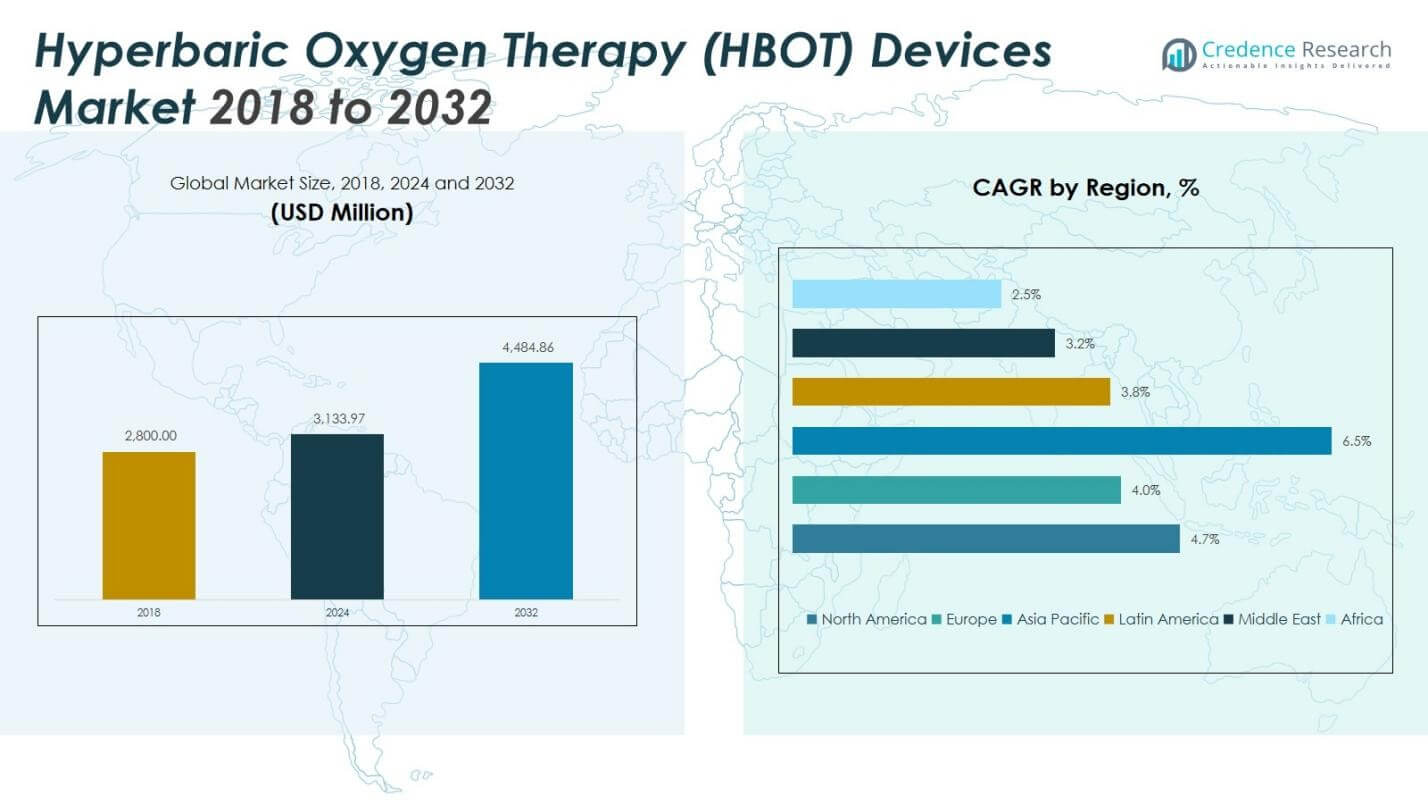
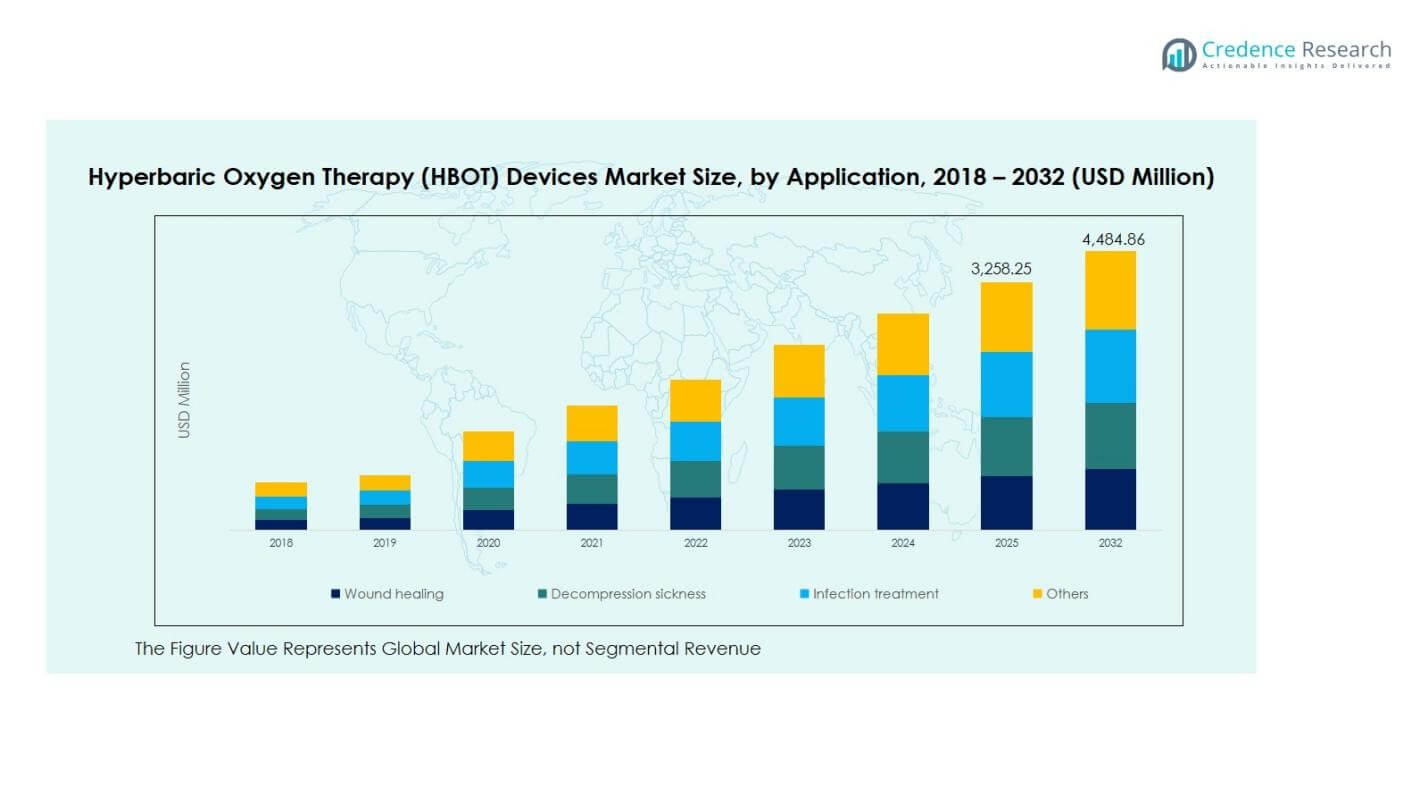
Hyperbaric Oxygen Therapy (HBOT) Devices Market size was valued at USD 2,800.00 Million in 2018 and increased to USD 3,133.97 Million in 2024, and it is anticipated to reach USD 4,484.86 Million by 2032, registering a CAGR of 4.67% during the forecast period.

REPORT ATTRIBUTE DETAILS
Historical Period 2020-2023
Base Year 2024
Forecast Period 2025-2032
Hyperbaric Oxygen Therapy (HBOT) Devices Market Size 2024 USD 3,133.97 million
Hyperbaric Oxygen Therapy (HBOT) Devices Market, CAGR 4.67%
Hyperbaric Oxygen Therapy (HBOT) Devices Market Size 2032 USD 4,484.86 million


Hyperbaric Oxygen Therapy (HBOT) Devices Market  Insights

  • Market overview highlights rising adoption of HBOT systems across wound-care centers and hospitals, driven by growth in chronic wounds, diabetic ulcers, radiation injuries, and ischemic tissue complications requiring advanced therapeutic support.
  • Market drivers include increasing investment in specialized treatment infrastructure, expanding clinical approvals, and growing demand for monoplace HBOT devices, which held a 58.6% segment share in 2024 due to lower operating cost and ease of use.
  • Market analysis indicates strong presence of key manufacturers focusing on technology enhancement, automation, safety features, and service capability strengthening to support treatment efficiency and system reliability.
  • Regional analysis shows North America leading with a 43.06% share in 2024, followed by Europe with 26.10% and Asia Pacific with 17.44%, while Latin America, Middle East, and Africa collectively expand through gradual healthcare modernization and specialty-care adoption.

Hyperbaric Oxygen Therapy (HBOT) Devices Market Size

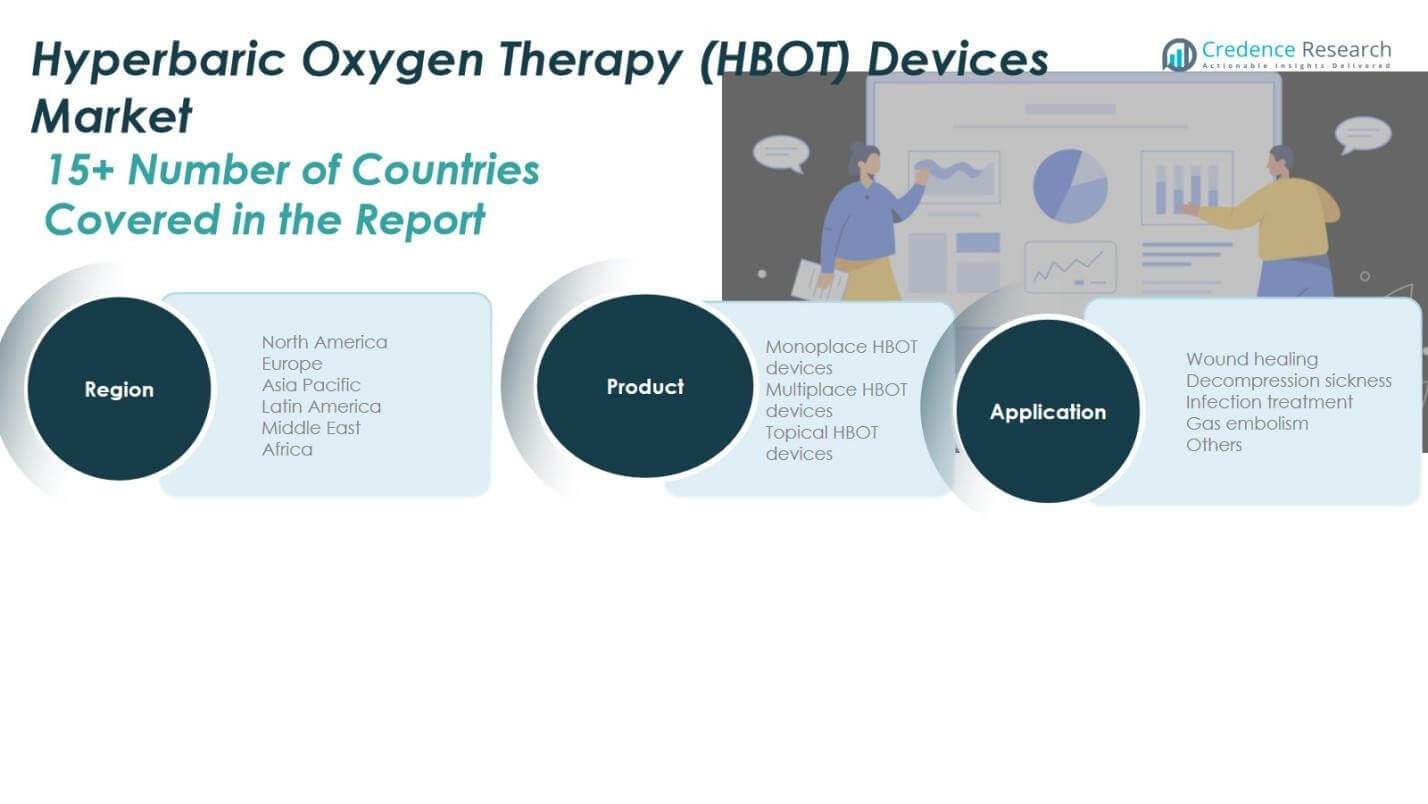
Hyperbaric Oxygen Therapy (HBOT) Devices Market Segmentation Analysis:

By Product

The Hyperbaric Oxygen Therapy (HBOT) Devices Market by product segment is dominated by Monoplace HBOT devices, which accounted for 58.6% market share in 2024, driven by their lower installation cost, simplified operation, and growing adoption across outpatient wound-care centers. Multiplace HBOT devices held 31.4% share, supported by rising demand in hospital-based facilities for treating multiple patients simultaneously, especially in critical-care environments. Topical HBOT devices represented 10.0% share, gaining traction in localized wound applications. Increasing prevalence of diabetic foot ulcers, burns, radiation injuries, and chronic non-healing wounds continues to strengthen demand across all product categories.

  • For instance, ETC Biomedical Systems’ BARA-MED monoplace chamber features SMOOTH RIDE compression that reduces middle ear barotrauma by two-thirds, enabling safe treatments up to 3 ATA in wound care centers.

By Application

The HBOT Devices Market by application segment is led by Wound Healing, which accounted for 42.3% market share in 2024, primarily driven by the rising burden of diabetes-associated ulcers, pressure sores, and traumatic wounds requiring advanced therapeutic support. Decompression sickness represented 18.6% share, driven by expanding diving and aviation safety applications. Infection treatment captured 15.9% share, supported by increasing clinical use in necrotizing infections and ischemic tissues. Gas embolism accounted for 12.5% share, while the Others segment held 10.7% share, reflecting broader therapeutic expansion in neurology, sports injuries, and post-surgical recovery.

  • For instance, in a U.S. National Inpatient Sample analysis of 60,481 necrotizing soft tissue infection patients, the 600 receiving adjunct HBOT post-surgery had reduced mortality (AOR 0.22) and amputation risk (AOR 0.73), despite longer stays

Access crucial information at unmatched prices!

Request your sample report today & start making informed decisions powered by Credence Research Inc.!

Download Sample

Key Growth Drivers

Rising Incidence of Chronic and Non-Healing Wounds

The Hyperbaric Oxygen Therapy (HBOT) Devices Market is experiencing strong growth due to the increasing prevalence of chronic and non-healing wounds, including diabetic foot ulcers, radiation tissue injuries, pressure ulcers, and traumatic wounds. The global rise in diabetes and aging-related complications has accelerated the clinical adoption of HBOT as an adjunctive therapy that enhances tissue oxygenation, stimulates angiogenesis, and improves healing outcomes in complex wound cases. Hospitals, wound-care clinics, and specialty centers are investing in HBOT infrastructure to support advanced treatment protocols, while favorable reimbursement for approved indications continues to expand patient access and strengthen market demand across developed and emerging healthcare systems.

  • For instance, Hyperbaric Medical Solutions treated 2,538 patients with radiation-induced injuries using monoplace HBOT chambers, reporting symptoms improved or resolved in 76.7% to 92.6% of cases across head, neck, anus, and rectum tissues.

Expanding Clinical Applications and Therapeutic Approvals

Growth in the HBOT Devices Market is further driven by expanding therapeutic applications beyond traditional diving-related conditions to include infection management, ischemic tissue repair, graft support, carbon monoxide poisoning, and post-surgical recovery cases. Growing clinical evidence supporting HBOT’s role in improving oxygen delivery and cellular regeneration has encouraged adoption across multidisciplinary care settings. Increasing physician awareness, inclusion in treatment guidelines for select indications, and broader recognition of HBOT as part of comprehensive wound-management pathways are stimulating higher utilization rates. In addition, technological advancements in chamber design and safety features are encouraging healthcare providers to integrate modern HBOT systems into specialized treatment facilities.

  • For instance, HBOT at 3 atmospheres absolute pressure reduces the half-life of carboxyhemoglobin in blood to 23 minutes, accelerating elimination and preventing delayed neurological sequelae in up to 77% of cases versus normobaric oxygen.

Increasing Investments in Advanced Healthcare Infrastructure

The market is also benefiting from rising investments in healthcare infrastructure, especially in emerging economies developing dedicated wound-care and hyperbaric therapy centers. Governments, private hospitals, and specialty care networks are incorporating HBOT units as part of integrated chronic-care programs to improve patient outcomes and reduce long-term treatment costs. Growing preference for outpatient treatment models, coupled with improving availability of trained clinicians and technicians, is strengthening operational deployment of HBOT devices. The expansion of accredited hyperbaric facilities, along with supportive regulatory frameworks and strategic procurement initiatives, is contributing to sustained demand and capacity enhancement across regional healthcare ecosystems.

Key Trends & Opportunities

Technological Advancements and Adoption of Modern HBOT Chamber Designs

A major trend shaping the Hyperbaric Oxygen Therapy (HBOT) Devices Market is the rapid advancement in chamber technology, including enhanced safety features, automated pressure-control systems, digital monitoring interfaces, and improved patient comfort designs. Manufacturers are developing compact monoplace and scalable multiplace systems to support diversified clinical environments, including ambulatory wound-care centers and integrated hospital units. The trend toward modular and energy-efficient HBOT devices offers opportunities for cost-effective installation and operational optimization. In addition, increasing interest in tele-enabled patient monitoring and data-driven therapy protocols is supporting innovation, enabling healthcare providers to deliver more precise, standardized, and outcome-focused hyperbaric treatment programs.

  • For instance, Biobarica’s Revitalair 430 monoplace chamber incorporates multiple sequential safety systems, including dual relief and exhaust valves regulated at 1.45 ATA and 10 transparent windows for 360-degree visibility to monitor patient comfort.

Growing Market Penetration in Emerging Economies and Untapped Therapeutic Areas

Another key opportunity lies in the expanding adoption of HBOT devices across emerging markets, where rising healthcare investments and improving clinical awareness are creating new demand for advanced wound-care solutions. Countries in Asia Pacific, Latin America, the Middle East, and Africa are witnessing growth in specialty treatment facilities and private healthcare networks that are increasingly incorporating HBOT capabilities. At the same time, ongoing research into neurological recovery, sports-injury rehabilitation, and adjunctive oncology support is opening pathways for future therapeutic expansion. These developments present strong opportunities for manufacturers to collaborate with healthcare providers, training institutions, and regulatory bodies to accelerate market penetration and clinical integration.

  • For instance, Tanzania launched its first HBOT machine at Muhimbili National Hospital, the inaugural facility in East Africa and second in Sub-Saharan Africa, supplied via a Sechrist Industries and Dartmouth partnership.

Hyperbaric Oxygen Therapy (HBOT) Devices Market Share

Key Challenges

High Capital Costs and Limited Reimbursement Coverage in Certain Regions

Despite its clinical value, the Hyperbaric Oxygen Therapy (HBOT) Devices Market faces challenges related to high capital investment, installation costs, and maintenance requirements, particularly for multiplace chamber systems. Smaller hospitals and clinics in cost-sensitive regions often delay adoption due to budget constraints and infrastructure limitations. Reimbursement coverage remains inconsistent across different healthcare systems, with many regions offering benefits only for a restricted set of indications. These financial and policy barriers restrict accessibility for both providers and patients, slowing deployment of HBOT centers and limiting broader market expansion in developing and underfunded healthcare environments.

Operational Complexity and Shortage of Skilled Clinical Personnel

The operation of HBOT devices requires strict safety protocols, specialized facility design, and trained medical professionals to manage pressure regulation, patient monitoring, and emergency response procedures. Many healthcare facilities face shortages of certified hyperbaric technicians, physicians, and wound-care specialists, which creates operational gaps and limits therapy availability. Additionally, concerns related to equipment handling, infection control, and patient safety during treatment add to administrative and compliance pressures. The need for continuous staff training, accreditation compliance, and clinical governance frameworks remains a major challenge, influencing adoption rates and operational scalability across healthcare settings.

Regional Analysis

North America

North America dominates the Hyperbaric Oxygen Therapy (HBOT) Devices Market, accounting for 43.06% market share in 2024, supported by advanced wound-care infrastructure, strong reimbursement frameworks, and high clinical adoption in hospitals and specialized therapy centers. The market increased from USD 1,218.00 Million in 2018 to USD 1,349.47 Million in 2024 and is projected to reach USD 1,928.95 Million by 2032, expanding at a CAGR of 4.7%. Growth is driven by rising diabetes-related chronic wounds, expanding outpatient HBOT clinics, and ongoing investments in modern multiplace and monoplace chamber installations across the U.S. and Canada.

Europe

Europe held 26.10% market share in 2024 in the Hyperbaric Oxygen Therapy (HBOT) Devices Market, driven by increasing clinical integration of HBOT in wound-care protocols, trauma centers, and post-radiation treatment programs. The regional market grew from USD 759.36 Million in 2018 to USD 817.88 Million in 2024 and is expected to reach USD 1,107.55 Million by 2032, registering a CAGR of 4.0%. Growth is supported by supportive regulatory standards, expansion of specialized therapeutic facilities across Germany, the UK, France, and Italy, and increasing utilization of HBOT for infection treatment, ischemic tissue repair, and complex surgical recovery cases.

Asia Pacific

Asia Pacific represents one of the fastest-growing regions, accounting for 17.44% market share in 2024, supported by rapid healthcare infrastructure expansion and rising awareness of advanced wound-care therapies. The market increased from USD 458.08 Million in 2018 to USD 546.71 Million in 2024 and is projected to reach USD 901.01 Million by 2032, growing at a CAGR of 6.5%. Increasing prevalence of diabetes-related ulcers, government investments in specialty care facilities, and expanding availability of HBOT in China, Japan, India, and South Korea are strengthening device adoption across hospital and outpatient treatment environments.

Latin America

Latin America accounted for 7.14% market share in 2024 in the Hyperbaric Oxygen Therapy (HBOT) Devices Market, driven by gradual expansion of private healthcare networks and increasing clinical adoption in wound-care and diving medicine facilities. The market grew from USD 201.60 Million in 2018 to USD 223.73 Million in 2024 and is expected to reach USD 299.90 Million by 2032, registering a CAGR of 3.8%. Growth is supported by improving access to specialty care in Brazil and Mexico, rising awareness of HBOT benefits, and investments in modern monoplace chamber installations across urban healthcare centers.

Middle East

The Middle East captured 3.16% market share in 2024, driven by increasing demand for advanced wound-care therapy and growing investments in tertiary hospital facilities and specialized treatment centers. The regional market increased from USD 95.20 Million in 2018 to USD 99.01 Million in 2024 and is projected to reach USD 126.05 Million by 2032, expanding at a CAGR of 3.2%. Strong healthcare modernization programs in GCC countries, expanding hyperbaric treatment capacity in trauma and burn-care units, and increasing availability of trained clinicians are contributing to steady HBOT device adoption across the region.

Africa

Africa accounted for 3.10% market share in 2024, reflecting gradually increasing penetration of HBOT devices across select urban hospitals and specialty wound-care facilities. The market expanded from USD 67.76 Million in 2018 to USD 97.17 Million in 2024 and is expected to reach USD 121.40 Million by 2032, registering a CAGR of 2.5%. Growth is supported by rising diabetes-related wound cases, development of private healthcare infrastructure, and pilot-level adoption of HBOT systems in South Africa and North African countries, although device accessibility remains limited in rural regions due to funding and resource constraints.

Hyperbaric Oxygen Therapy (HBOT) Devices Market Trends

Hyperbaric Oxygen Therapy (HBOT) Devices Market Segmentations:

By Product

  • Monoplace HBOT Devices
  • Multiplace HBOT Devices
  • Topical HBOT Devices

By Application

  • Wound Healing
  • Decompression Sickness
  • Infection Treatment
  • Gas Embolism
  • Others

 By Geography

  • North America
    • U.S.
    • Canada
    • Mexico
  • Europe
    • Germany
    • France
    • U.K.
    • Italy
    • Spain
    • Rest of Europe
  • Asia Pacific
    • China
    • Japan
    • India
    • South Korea
    • South-east Asia
    • Rest of Asia Pacific
  • Latin America
    • Brazil
    • Argentina
    • Rest of Latin America
  • Middle East & Africa
    • GCC Countries
    • South Africa
    • Rest of the Middle East and Africa

Competitive Landscape

Competitive landscape analysis of the Hyperbaric Oxygen Therapy (HBOT) Devices Market includes Fink Engineering, ETC Hyperbaric Chambers (Environmental Tectonics Corporation), HAUX-LIFE-SUPPORT, Gulf Coast Hyperbarics, Inc., HEARMEC, IHC Hytech B.V. (Royal IHC), Hyperbaric SAC, Sechrist Industries, Inc., OxyHeal International, and SOS Group Global Ltd. The market features a mix of globally established chamber manufacturers and specialized engineering firms that focus on advanced monoplace and multiplace system design, patient safety, and clinical performance reliability. Companies are strengthening their positions through innovation in automated pressure-control systems, ergonomic chamber architecture, and integrated monitoring interfaces to support complex wound-care and critical-care environments. Strategic priorities include expanding installation footprints in hospitals and outpatient wound-care centers, forming partnerships with healthcare providers, and enhancing after-sales service networks for maintenance and operator training. Increasing emphasis on regulatory compliance, quality assurance, and customized facility integration solutions is further shaping competition, as vendors prioritize scalability, operational efficiency, and long-term clinical value delivery for healthcare institutions.

Shape Your Report to Specific Countries or Regions & Enjoy 30% Off!


Key Player Analysis

  • Fink Engineering
  • ETC Hyperbaric Chambers (Environmental Tectonics Corporation)
  • HAUX-LIFE-SUPPORT
  • Gulf Coast Hyperbarics, Inc.
  • HEARMEC
  • IHC Hytech B.V. (Royal IHC)
  • Hyperbaric SAC
  • Sechrist Industries, Inc.
  • OxyHeal International
  • SOS Group Global Ltd

Recent Developments

  • In December 2025, NexGen Hyperbaric expanded its national presence and partnered with the Philadelphia Phillies as the first MLB team to integrate hyperbaric oxygen therapy into player recovery protocols for the 2025 season.
  • In January 2025, HCG Manavata Cancer Centre launched its Hyperbaric Oxygen Therapy (HBOT) department, featuring advanced infrastructure to treat up to four patients simultaneously for chronic wounds and brain injuries.
  • In October 2025, RestorixHealth acquired multi-place hyperbaric specialist CūtisCare, enhancing its wound center management services and expanding its partner network across U.S. hospitals and academic medical centers.

Report Coverage

The research report offers an in-depth analysis based on Product, Application and Geography. It details leading market players, providing an overview of their business, product offerings, investments, revenue streams, and key applications. Additionally, the report includes insights into the competitive environment, SWOT analysis, current market trends, as well as the primary drivers and constraints. Furthermore, it discusses various factors that have driven market expansion in recent years. The report also explores market dynamics, regulatory scenarios, and technological advancements that are shaping the industry. It assesses the impact of external factors and global economic changes on market growth. Lastly, it provides strategic recommendations for new entrants and established companies to navigate the complexities of the market.

Future Outlook

  1. The market will expand as the prevalence of chronic wounds, diabetes complications, and radiation tissue injuries continues to rise globally.
  2. Healthcare providers will increasingly integrate HBOT into multidisciplinary wound-care protocols and advanced therapeutic programs.
  3. Adoption of compact monoplace and scalable multiplace chambers will grow across outpatient clinics and specialized care centers.
  4. Manufacturers will focus on improving chamber safety, automation, digital monitoring, and patient-comfort features to enhance clinical efficiency.
  5. Emerging economies will witness stronger market penetration as investments in specialty healthcare infrastructure increase.
  6. Clinical research will broaden therapeutic applications, supporting wider acceptance of HBOT in infection control and ischemic tissue recovery.
  7. Strategic partnerships between device manufacturers and healthcare organizations will strengthen service, training, and maintenance ecosystems.
  8. Regulatory alignment and accreditation expansion will support standardized operating practices and treatment quality improvement.
  9. Technological innovation will enable data-driven therapy management, remote monitoring support, and outcome-focused treatment models.
  10. Market growth will increasingly shift toward value-based care adoption, emphasizing cost-effective treatment delivery and long-term patient recovery benefits.

CHAPTER NO. 1 :   GENESIS OF THE MARKET       

1.1 Market Prelude – Introduction & Scope

1.2 The Big Picture – Objectives & Vision

1.3 Strategic Edge – Unique Value Proposition

1.4 Stakeholder Compass – Key Beneficiaries

CHAPTER NO. 2 :   EXECUTIVE LENS

2.1 Pulse of the Industry – Market Snapshot

2.2 Growth Arc – Revenue Projections (USD Million)

2.3. Premium Insights – Based on Primary Interviews      

CHAPTER NO. 3 :   HYPERBARIC OXYGEN THERAPY (HBOT) DEVICES MARKET FORCES & INDUSTRY PULSE         

3.1 Foundations of Change – Market Overview
3.2 Catalysts of Expansion – Key Market Drivers
3.2.1 Momentum Boosters – Growth Triggers
3.2.2 Innovation Fuel – Disruptive Technologies
3.3 Headwinds & Crosswinds – Market Restraints
3.3.1 Regulatory Tides – Compliance Challenges
3.3.2 Economic Frictions – Inflationary Pressures
3.4 Untapped Horizons – Growth Potential & Opportunities
3.5 Strategic Navigation – Industry Frameworks
3.5.1 Market Equilibrium – Porter’s Five Forces
3.5.2 Ecosystem Dynamics – Value Chain Analysis
3.5.3 Macro Forces – PESTEL Breakdown

3.6 Price Trend Analysis

3.6.1 Regional Price Trend
3.6.2 Price Trend by product

CHAPTER NO. 4 :   KEY INVESTMENT EPICENTER

4.1 Regional Goldmines – High-Growth Geographies

4.2 Product Frontiers – Lucrative Product Categories

4.3 Application Sweet Spots – Emerging Demand Segments

CHAPTER NO. 5: REVENUE TRAJECTORY & WEALTH MAPPING

5.1 Momentum Metrics – Forecast & Growth Curves

5.2 Regional Revenue Footprint – Market Share Insights

5.3 Segmental Wealth Flow – Product & Application Revenue

CHAPTER NO. 6 :   TRADE & COMMERCE ANALYSIS       

6.1.      Import Analysis by Region

6.1.1.   Global Hyperbaric Oxygen Therapy (HBOT) Devices Market Import Revenue By Region

6.2.      Export Analysis by Region

6.2.1.   Global Hyperbaric Oxygen Therapy (HBOT) Devices Market Export Revenue By Region

CHAPTER NO. 7 :   COMPETITION ANALYSIS         

7.1.      Company Market Share Analysis

7.1.1.   Global Hyperbaric Oxygen Therapy (HBOT) Devices Market: Company Market Share

7.2.      Global Hyperbaric Oxygen Therapy (HBOT) Devices Market Company Revenue Market Share

7.3.      Strategic Developments

7.3.1.   Acquisitions & Mergers

7.3.2.   New Product Launch

7.3.3.   Regional Expansion

7.4.      Competitive Dashboard

7.5.    Company Assessment Metrics, 2024

CHAPTER NO. 8 :   HYPERBARIC OXYGEN THERAPY (HBOT) DEVICES MARKET – BY PRODUCT SEGMENT ANALYSIS      

8.1.      Hyperbaric Oxygen Therapy (HBOT) Devices Market Overview by Product Segment

8.1.1.   Hyperbaric Oxygen Therapy (HBOT) Devices Market Revenue Share By Product

8.1.2.   Hyperbaric Oxygen Therapy (HBOT) Devices Market Revenue Share By Product

8.2.      Monoplace HBOT devices

8.3.      Multiplace HBOT devices

8.4.      Topical HBOT devices

CHAPTER NO. 9 :   HYPERBARIC OXYGEN THERAPY (HBOT) DEVICES MARKET – BY APPLICATION SEGMENT ANALYSIS          

9.1.      Hyperbaric Oxygen Therapy (HBOT) Devices Market Overview by Application Segment

9.1.1.   Hyperbaric Oxygen Therapy (HBOT) Devices Market Revenue Share By Application

9.1.2.   Hyperbaric Oxygen Therapy (HBOT) Devices Market Revenue Share By Application

9.2.      Wound healing

9.3.      Decompression sickness

9.4.      Infection treatment

9.5.      Gas embolism

9.6.      Others

CHAPTER NO. 10 : HYPERBARIC OXYGEN THERAPY (HBOT) DEVICES MARKET – REGIONAL ANALYSIS

10.1.    Hyperbaric Oxygen Therapy (HBOT) Devices Market Overview by Region Segment

10.1.1. Global Hyperbaric Oxygen Therapy (HBOT) Devices Market Revenue Share By Region

10.1.2. Regions

10.1.3. Global Hyperbaric Oxygen Therapy (HBOT) Devices Market Revenue By Region

10.1.4. Global Hyperbaric Oxygen Therapy (HBOT) Devices Market Revenue By Region

10.1.5. Product

10.1.6. Global Hyperbaric Oxygen Therapy (HBOT) Devices Market Revenue By Product

10.1.7. Global Hyperbaric Oxygen Therapy (HBOT) Devices Market Revenue By Product

10.1.8. Application

10.1.9. Global Hyperbaric Oxygen Therapy (HBOT) Devices Market Revenue By Application

10.1.10.           Global Hyperbaric Oxygen Therapy (HBOT) Devices Market Revenue By Application

CHAPTER NO. 11 : NORTH AMERICA HYPERBARIC OXYGEN THERAPY (HBOT) DEVICES MARKET – COUNTRY ANALYSIS           

11.1.    North America Hyperbaric Oxygen Therapy (HBOT) Devices Market Overview by Country Segment

11.1.1. North America Hyperbaric Oxygen Therapy (HBOT) Devices Market Revenue Share By Region

11.2.    North America

11.2.1. North America Hyperbaric Oxygen Therapy (HBOT) Devices Market Revenue By Country

11.2.2. Product

11.2.3. North America Hyperbaric Oxygen Therapy (HBOT) Devices Market Revenue By Product

11.2.4. Application

11.2.5. North America Hyperbaric Oxygen Therapy (HBOT) Devices Market Revenue By Application

11.3.    U.S.

11.4.    Canada

11.5.    Mexico

CHAPTER NO. 12 : EUROPE HYPERBARIC OXYGEN THERAPY (HBOT) DEVICES MARKET – COUNTRY ANALYSIS  

12.1.    Europe Hyperbaric Oxygen Therapy (HBOT) Devices Market Overview by Country Segment

12.1.1. Europe Hyperbaric Oxygen Therapy (HBOT) Devices Market Revenue Share By Region

12.2.    Europe

12.2.1. Europe Hyperbaric Oxygen Therapy (HBOT) Devices Market Revenue By Country

12.2.2. Product

12.2.3. Europe Hyperbaric Oxygen Therapy (HBOT) Devices Market Revenue By Product

12.2.4. Application

12.2.5. Europe Hyperbaric Oxygen Therapy (HBOT) Devices Market Revenue By Application

12.3.    UK

12.4.    France

12.5.    Germany

12.6.    Italy

12.7.    Spain

12.8.    Russia

12.9.   Rest of Europe

CHAPTER NO. 13 : ASIA PACIFIC HYPERBARIC OXYGEN THERAPY (HBOT) DEVICES MARKET – COUNTRY ANALYSIS           

13.1.    Asia Pacific Hyperbaric Oxygen Therapy (HBOT) Devices Market Overview by Country Segment

13.1.1. Asia Pacific Hyperbaric Oxygen Therapy (HBOT) Devices Market Revenue Share By Region

13.2.    Asia Pacific

13.2.1. Asia Pacific Hyperbaric Oxygen Therapy (HBOT) Devices Market Revenue By Country

13.2.2. Product

13.2.3. Asia Pacific Hyperbaric Oxygen Therapy (HBOT) Devices Market Revenue By Product

13.2.4. Application

13.2.5. Asia Pacific Hyperbaric Oxygen Therapy (HBOT) Devices Market Revenue By Application

13.3.    China

13.4.    Japan

13.5.    South Korea

13.6.    India

13.7.    Australia

13.8.    Southeast Asia

13.9.    Rest of Asia Pacific

CHAPTER NO. 14 : LATIN AMERICA HYPERBARIC OXYGEN THERAPY (HBOT) DEVICES MARKET – COUNTRY ANALYSIS

14.1.    Latin America Hyperbaric Oxygen Therapy (HBOT) Devices Market Overview by Country Segment

14.1.1. Latin America Hyperbaric Oxygen Therapy (HBOT) Devices Market Revenue Share By Region

14.2.    Latin America

14.2.1. Latin America Hyperbaric Oxygen Therapy (HBOT) Devices Market Revenue By Country

14.2.2. Product

14.2.3. Latin America Hyperbaric Oxygen Therapy (HBOT) Devices Market Revenue By Product

14.2.4. Application

14.2.5. Latin America Hyperbaric Oxygen Therapy (HBOT) Devices Market Revenue By Application

14.3.    Brazil

14.4.    Argentina

14.5.    Rest of Latin America

CHAPTER NO. 15 : MIDDLE EAST HYPERBARIC OXYGEN THERAPY (HBOT) DEVICES MARKET – COUNTRY ANALYSIS

15.1.    Middle East Hyperbaric Oxygen Therapy (HBOT) Devices Market Overview by Country Segment

15.1.1. Middle East Hyperbaric Oxygen Therapy (HBOT) Devices Market Revenue Share By Region

15.2.    Middle East

15.2.1. Middle East Hyperbaric Oxygen Therapy (HBOT) Devices Market Revenue By Country

15.2.2. Product

15.2.3. Middle East Hyperbaric Oxygen Therapy (HBOT) Devices Market Revenue By Product

15.2.4. Application

15.2.5. Middle East Hyperbaric Oxygen Therapy (HBOT) Devices Market Revenue By Application

15.3.    GCC Countries

15.4.    Israel

15.5.    Turkey

15.6.    Rest of Middle East

CHAPTER NO. 16 : AFRICA HYPERBARIC OXYGEN THERAPY (HBOT) DEVICES MARKET – COUNTRY ANALYSIS  

16.1.    Africa Hyperbaric Oxygen Therapy (HBOT) Devices Market Overview by Country Segment

16.1.1. Africa Hyperbaric Oxygen Therapy (HBOT) Devices Market Revenue Share By Region

16.2.    Africa

16.2.1. Africa Hyperbaric Oxygen Therapy (HBOT) Devices Market Revenue By Country

16.2.2. Product

16.2.3. Africa Hyperbaric Oxygen Therapy (HBOT) Devices Market Revenue By Product

16.2.4. Application

16.2.5. Africa Hyperbaric Oxygen Therapy (HBOT) Devices Market Revenue By Application

16.3.    South Africa

16.4.    Egypt

16.5.    Rest of Africa

CHAPTER NO. 17 : COMPANY PROFILES      

17.1.    Fink Engineering

17.1.1. Company Overview

17.1.2. Product Portfolio

17.1.3. Financial Overview

17.1.4. Recent Developments

17.1.5. Growth Strategy

17.1.6. SWOT Analysis

17.2.    ETC Hyperbaric Chambers (Environmental Tectonics Corporation)

17.3.    HAUX-LIFE-SUPPORT

17.4.    Gulf Coast Hyperbarics, Inc.

17.5.    HEARMEC

17.6.    IHC Hytech B.V. (Royal IHC)

17.7.    Hyperbaric SAC

17.8.    Sechrist Industries, Inc.

17.9.    OxyHeal International

17.10.  SOS Group Global Ltd

Request Free Sample

We prioritize the confidentiality and security of your data. Our promise: your information remains private.

Ready to Transform Data into Decisions?

Request Your Sample Report and Start Your Journey of Informed Choices


Providing the strategic compass for industry titans.

cr-clients-logos

Frequently Asked Question

What is the current market size for the Hyperbaric Oxygen Therapy (HBOT) Devices Market, and what is its projected size in 2032?

The Hyperbaric Oxygen Therapy (HBOT) Devices Market was valued at USD 3,133.97 Million in 2024 and is projected to reach USD 4,484.86 Million by 2032.

At what Compound Annual Growth Rate is the Hyperbaric Oxygen Therapy (HBOT) Devices Market projected to grow between 2024 and 2032?

The Hyperbaric Oxygen Therapy (HBOT) Devices Market is projected to grow at a CAGR of 4.67% during the forecast period.

Which Hyperbaric Oxygen Therapy (HBOT) Devices Market segment held the largest share in 2024?

The Monoplace HBOT Devices segment held the largest share of the Hyperbaric Oxygen Therapy (HBOT) Devices Market in 2024.

What are the primary factors fueling the growth of the Hyperbaric Oxygen Therapy (HBOT) Devices Market?

Growth in the Hyperbaric Oxygen Therapy (HBOT) Devices Market is driven by rising chronic wound cases, expanding clinical applications, and strengthening healthcare infrastructure.

Who are the leading companies in the Hyperbaric Oxygen Therapy (HBOT) Devices Market?

Major players in the Hyperbaric Oxygen Therapy (HBOT) Devices Market include Fink Engineering, Sechrist Industries, OxyHeal International, HAUX-LIFE-SUPPORT, and Environmental Tectonics Corporation.

Which region commanded the largest share of the Hyperbaric Oxygen Therapy (HBOT) Devices Market in 2024?

North America accounted for the largest regional share of the Hyperbaric Oxygen Therapy (HBOT) Devices Market in 2024.

About Author

Shweta Bisht

Shweta Bisht

Healthcare & Biotech Analyst

Shweta is a healthcare and biotech researcher with strong analytical skills in chemical and agri domains.

View Profile

Related Reports

Airway Management Tubes Market

The Airway Management Tubes Market is projected to grow from USD 2,461.35 million in 2025 to an estimated USD 4,110.17 million by 2032, with a compound annual growth rate (CAGR) of 7.60% from 2025 to 2032.

Adult Spinal Deformity Market

The Adult Spinal Deformity Market is projected to grow from USD 2,567.5 million in 2025 to an estimated USD 3,835.15 million by 2032, with a compound annual growth rate (CAGR) of 5.9% from 2025 to 2032.

Bronchoscope Market

The global Bronchoscope Market size was estimated at USD 945.39 million in 2025 and is expected to reach USD 1,478.81 million by 2032, growing at a CAGR of 6.6% from 2025 to 2032.

Blood Transfusion Device Market

The global Blood Transfusion Device Market size was estimated at USD 5,283.74 million in 2025 and is expected to reach USD 7,757.84 million by 2032, growing at a CAGR of 5.64% from 2025 to 2032.

Brain Monitoring Market

The global Brain Monitoring Market size was estimated at USD 7,112.2 million in 2025 and is expected to reach USD 10,694.12 million by 2032, growing at a CAGR of 6% from 2025 to 2032.

Bioimpedance Analyzers Market

The global Bioimpedance Analyzers Market size was estimated at USD 880.14 million in 2025 and is expected to reach USD 2,282 million by 2032, growing at a CAGR of 14.58% from 2025 to 2032.

Bioactive Wound Dressing Market

The global Bioactive Wound Dressing Market size was estimated at USD 5162.78 million in 2025 and is expected to reach USD 10254.45 million by 2032, growing at a CAGR of 10.3% from 2025 to 2032.

Autotransfusion Systems Market

The global Autotransfusion Systems Market size was estimated at USD 528.39 million in 2025 and is expected to reach USD 796.6 million by 2032, growing at a CAGR of 6.04% from 2025 to 2032.

Acoustic Neuroma Market

The Acoustic Neuroma Market is projected to grow from USD 4,634.09 million in 2025 to an estimated USD 7,638.26 million by 2032, with a compound annual growth rate (CAGR) of 7.4% from 2025 to 2032.

Abdominal Aortic Aneurysm Repair Devices Market

The Abdominal Aortic Aneurysm Repair Devices Market is projected to grow from USD 2803.7 million in 2025 to an estimated USD 4187.97 million by 2032, with a compound annual growth rate (CAGR) of 5.9% from 2025 to 2032.

Bone Densitometers Market

The global Bone Densitometer Systems Market size was estimated at USD 362.51 million in 2025 and is expected to reach USD 477.04 million by 2032, growing at a CAGR of 4% from 2025 to 2032.

Brain PET-MRI Systems Market

The global Brain PET-MRI Systems Market size was estimated at USD 410.35 million in 2025 and is expected to reach USD 604.89 million by 2032, growing at a CAGR of 5.7% from 2025 to 2032.

Licence Option

The report comes as a view-only PDF document, optimized for individual clients. This version is recommended for personal digital use and does not allow printing. Use restricted to one purchaser only.
$4999

To meet the needs of modern corporate teams, our report comes in two formats: a printable PDF and a data-rich Excel sheet. This package is optimized for internal analysis. Unlimited users allowed within one corporate location (e.g., regional office).
$5999

The report will be delivered in printable PDF format along with the report’s data Excel sheet. This license offers 100 Free Analyst hours where the client can utilize Credence Research Inc. research team. Permitted for unlimited global use by all users within the purchasing corporation, such as all employees of a single company.
$7999

Report delivery within 24 to 48 hours

Europe

North America

Email

Smallform of Sample request
User Review

Thank you for the data! The numbers are exactly what we asked for and what we need to build our business case.

Materials Scientist
(privacy requested)

User Review

The report was an excellent overview of the Industrial Burners market. This report does a great job of breaking everything down into manageable chunks.

Imre Hof
Management Assistant, Bekaert

cr-clients-logos

Request Sample