
| REPORT ATTRIBUTE | DETAILS |
|---|---|
| Historical Period | 2019-2022 |
| Base Year | 2023 |
| Forecast Period | 2024-2032 |
| Pepper Market Size 2024 | USD 7514.2 Million |
| Pepper Market, CAGR | 3.38% |
| Pepper Market Size 2032 | USD 9804.3 Million |
Market Overview:
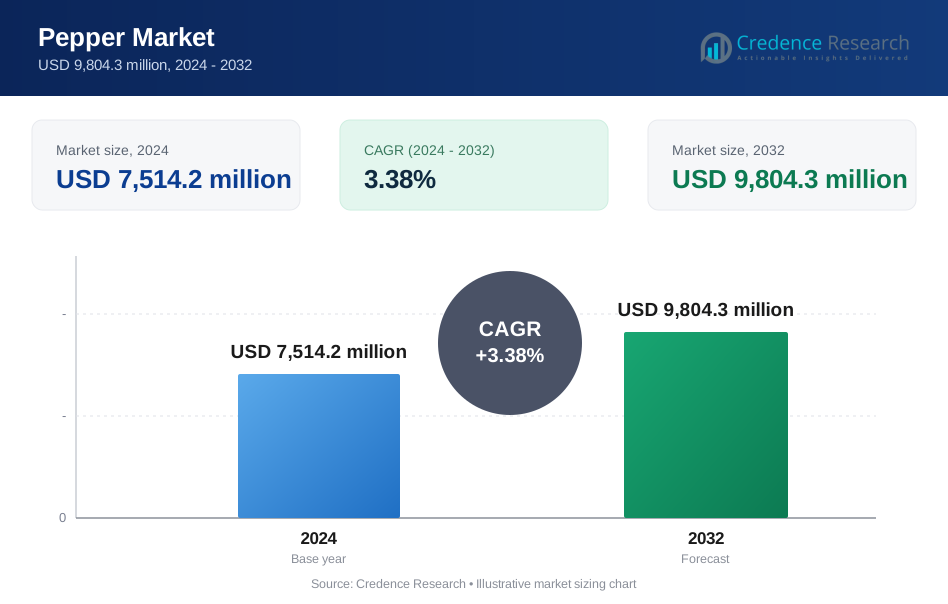
The Pepper Market is projected to grow from USD 7514.2 million in 2024 to an estimated USD 9804.3 million by 2032, with a compound annual growth rate (CAGR) of 3.38% from 2024 to 2032.
The market is driven by several factors, including increasing awareness of the health benefits of pepper, such as its anti-inflammatory and antioxidant properties. The growing popularity of organic and sustainably sourced spices has further fueled demand, with consumers preferring high-quality, pesticide-free options. Additionally, expanding trade networks and improvements in processing technologies have enhanced the efficiency of production and distribution, contributing to market expansion. However, challenges such as fluctuating raw material prices, climate change affecting cultivation, and supply chain disruptions pose potential constraints. Stringent regulations on spice exports in certain regions and concerns over pesticide residues have also influenced market dynamics. Despite these challenges, investments in research and development for higher-yielding and disease-resistant pepper varieties are expected to support long-term growth.
Regionally, Asia-Pacific dominates the pepper market, with India, Vietnam, and Indonesia being major producers and exporters. Vietnam, in particular, leads global exports, benefiting from advanced cultivation techniques and government support. Europe and North America represent significant consumer markets due to the increasing demand for exotic spices in processed foods and gourmet cuisines. Additionally, the Middle East and Africa are witnessing growing demand, driven by expanding foodservice sectors and a rich culinary heritage that incorporates spices extensively. The market in Latin America is also growing steadily, supported by the increasing adoption of international cuisines and rising spice exports. Technological advancements in farming, such as precision agriculture and climate-smart practices, are further improving pepper yields in key producing regions. Furthermore, increasing collaborations between exporters and international buyers are streamlining supply chains and expanding market reach.
Market Insights:
- The Pepper Market is projected to grow from USD 7,514.2 million in 2024 to USD 9,804.3 million by 2032, at a CAGR of 3.38%, driven by increasing demand for natural spices.
- Rising consumer awareness of pepper’s health benefits, including its anti-inflammatory and antioxidant properties, is boosting demand across food, pharmaceutical, and nutraceutical industries.
- The organic pepper segment is expanding as consumers prioritize pesticide-free and sustainably sourced spices, particularly in North America and Europe.
- Asia-Pacific dominates global production and exports, with Vietnam, India, and Indonesia being the key suppliers, while North America and Europe drive demand for high-quality pepper.
- Climate change, pests, and diseases continue to impact cultivation, leading to fluctuating raw material prices and production inconsistencies.
- Technological advancements, including precision farming, improved processing, and smart packaging, are enhancing yield, quality, and shelf life in the market.
- Global trade expansion, government incentives, and e-commerce platforms are streamlining supply chains and providing market opportunities for both large exporters and small-scale producers.
Market Drivers:
Growing Consumer Demand for Natural and Organic Spices
The increasing preference for natural and organic food products has significantly driven the demand for pepper in the global market. Consumers are becoming more health-conscious, leading to a shift away from synthetic additives and artificial flavoring agents. Pepper, known for its rich flavor and health benefits, has emerged as a staple ingredient in both household and commercial kitchens. The rising awareness of its antioxidant, anti-inflammatory, and digestive properties has further contributed to its widespread adoption. For instance, according to the Organic Trade Association (OTA), sales of organic food in the US reached $60 billion for the first time in 2022. Additionally, the surge in demand for organic and pesticide-free spices has encouraged farmers to adopt sustainable cultivation practices, boosting the supply of high-quality pepper varieties.
Expanding Food Processing and HoReCa Sector
The rapid growth of the food processing industry and the expanding hotel, restaurant, and café (HoReCa) sector have fueled the consumption of pepper worldwide. Processed food manufacturers increasingly incorporate spices to enhance taste, aroma, and shelf life, driving the need for high-quality pepper. For instance, in 2024, Vietnam exported 250,600 tons of pepper valued at over $1.3 billion, with black pepper alone accounting for $1.1 billion of this total. The globalization of cuisines and the rising popularity of international flavors have further accelerated demand, particularly in regions where spices were traditionally used in limited quantities. Additionally, the growth of quick-service restaurants (QSRs) and increasing consumer preference for ready-to-eat and convenience foods have contributed to the consistent rise in pepper consumption across various food segments.
Technological Advancements in Cultivation and Processing
Advancements in agricultural practices and processing technologies have played a crucial role in enhancing the efficiency and yield of pepper production. Farmers are increasingly adopting modern techniques such as precision farming, controlled irrigation, and integrated pest management to improve crop quality and mitigate the impact of climate change on cultivation. For example, the introduction of the IISR-Chandra variety in Meghalaya is expected to enhance pepper cultivation by providing farmers with superior planting material that could increase both yield and income. Additionally, innovations in processing and packaging technologies have extended the shelf life of pepper, ensuring better quality preservation during transportation and storage. The implementation of advanced sorting and grading techniques has also facilitated the supply of premium-grade pepper to meet the rising demand in international markets.
Expanding Global Trade and Favorable Government Initiatives
The pepper market has witnessed significant growth in global trade, supported by expanding export activities and favorable government policies in key producing regions. Countries such as Vietnam, India, and Indonesia continue to dominate the export market due to their large-scale production and competitive pricing strategies. Trade agreements and reduced tariff barriers have further facilitated the seamless flow of spices across international markets. Additionally, government initiatives promoting spice cultivation through subsidies, training programs, and research on disease-resistant varieties have strengthened the market. For instance, India's Spices Board has implemented the SPICED scheme, designed to expand the area and improve productivity of cardamom, generate exportable surplus of quality spices, and increase the share of value-added spices in the export basket up to 2025-26. The rise of e-commerce platforms has also enabled direct-to-consumer sales, allowing small-scale farmers and spice producers to access a broader customer base, further driving market expansion.
Market Trends:
Rising Popularity of Premium and Specialty Pepper Varieties
The market is witnessing a growing preference for premium and specialty pepper varieties, such as white, green, and red pepper, alongside the traditional black pepper. For instance, Kampot pepper from Cambodia has gained international fame thanks to its Geographical Indication (GI) registration, with the price of red Kampot pepper rising from USD 10 per kilogram in 2010 to USD 25 per kilogram in 2020, a remarkable increase of 150%. Consumers, particularly in developed markets, are increasingly seeking unique flavors and high-quality spices that enhance culinary experiences. Specialty varieties such as Tellicherry, Kampot, and Malabar pepper have gained traction due to their distinct taste profiles and superior quality. This trend is further supported by the expanding gourmet food industry, where chefs and food manufacturers prioritize premium ingredients to meet evolving consumer preferences. The increasing willingness of consumers to pay a premium for these varieties has encouraged producers to focus on quality differentiation and branding strategies.
Growth of Sustainable and Ethical Sourcing Practices
Sustainability and ethical sourcing have become key focus areas in the pepper market, with consumers and businesses demanding greater transparency in supply chains. The adoption of sustainable farming techniques, such as agroforestry and organic cultivation, is gaining momentum to address environmental concerns and ensure long-term viability. Certifications such as Fair Trade, Rainforest Alliance, and Organic are increasingly influencing purchasing decisions, particularly in North America and Europe. For instance, The Rainforest Alliance Sustainable Agriculture Standard requires farms to meet certain criteria to protect workers and communities, conserve biodiversity, and reduce deforestation. The standard also includes requirements for supply chains. Major spice companies are investing in direct sourcing models to ensure fair pricing for farmers while meeting stringent quality and sustainability standards. This shift toward ethical sourcing is expected to strengthen brand loyalty and create new growth opportunities for certified organic and sustainably produced pepper.
Expanding Application in Functional Foods and Pharmaceuticals
The use of pepper is expanding beyond culinary applications into the functional food and pharmaceutical sectors, driven by its recognized health benefits. The increasing demand for functional foods that promote wellness has led to the incorporation of pepper in nutraceuticals, herbal supplements, and fortified food products. For instance, Piperine, the active compound in pepper, is widely studied for its role in enhancing nutrient absorption and its potential anti-inflammatory properties. Pharmaceutical companies are also exploring its use in formulations targeting digestion, metabolism, and pain management. This growing recognition of pepper’s medicinal properties is broadening its market scope, creating new avenues for product innovation and commercialization.
Technological Innovations in Spice Processing and Packaging
Technological advancements in processing and packaging are transforming the pepper market, ensuring better quality preservation and enhanced product safety. Innovations for example cryogenic grinding, which prevents the loss of volatile oils and enhances flavor retention, are becoming more widespread in spice processing. Vacuum-sealed and nitrogen-flushed packaging methods are being adopted to extend shelf life and maintain the freshness of pepper during storage and transportation. Smart packaging solutions, such as QR codes for traceability and authenticity verification, are also gaining popularity as consumers demand greater transparency. These technological advancements are improving efficiency across the supply chain, reducing post-harvest losses, and meeting the evolving quality standards of global markets.
Market Challenges Analysis:
Fluctuations in Raw Material Prices and Supply Chain Disruptions
The pepper market is highly vulnerable to fluctuations in raw material prices due to climatic variations, changing production levels, and unpredictable global trade dynamics. Adverse weather conditions, such as droughts and excessive rainfall, significantly impact pepper yields, leading to supply shortages and price volatility. Additionally, disruptions in the global supply chain, including transportation constraints, trade restrictions, and labor shortages, have further complicated market stability. Rising fuel costs and logistical challenges continue to affect the timely delivery of pepper, increasing operational expenses for producers and exporters.
Impact of Pests, Diseases, and Climate Change
Pepper cultivation is highly sensitive to pests and diseases, which pose a major threat to production levels and quality. Diseases such as Phytophthora foot rot and anthracnose have led to substantial crop losses, forcing farmers to invest heavily in disease management. Climate change has also exacerbated these challenges, with shifting weather patterns affecting soil conditions and reducing the overall productivity of pepper plantations. The increasing unpredictability of seasonal cycles has made it difficult for farmers to maintain consistent output, leading to price instability and supply shortages in key producing regions.
Stringent Regulations and Quality Standards
Regulatory frameworks governing the import and export of spices have become increasingly stringent, affecting the ease of market entry for producers and exporters. Many regions, particularly in North America and Europe, have imposed strict quality and safety standards regarding pesticide residues, contaminants, and microbial levels. Compliance with these regulations requires significant investments in testing, certification, and processing facilities, increasing the cost burden on manufacturers. Non-compliance often results in shipment rejections and financial losses, limiting the competitiveness of smaller market players.
Intensifying Market Competition and Price Pressures
The global pepper market is highly competitive, with multiple producers and exporters vying for market share. Leading spice-producing nations, such as Vietnam, India, and Indonesia, continuously strive to expand their exports, resulting in aggressive pricing strategies that create margin pressures for suppliers. The availability of alternative spices and synthetic flavoring agents has further intensified competition, compelling pepper producers to focus on quality differentiation and branding. Additionally, fluctuating consumer demand and evolving food preferences in key regions have added further uncertainty to market dynamics, challenging long-term growth prospects.
Market Opportunities:
The growing consumer demand for natural and organic spices presents a significant opportunity for the pepper market. As consumers become more health-conscious, the preference for chemical-free and sustainably sourced spices continues to rise. This shift has opened new avenues for organic pepper production, with increasing adoption of certified farming practices to meet stringent international standards. Markets in North America and Europe, where consumers prioritize transparency and quality, are particularly favorable for premium organic pepper. Additionally, the rising trend of plant-based diets and functional foods has created further demand for pepper as a natural ingredient with recognized health benefits, driving its inclusion in herbal supplements and nutraceuticals.
Expanding global trade and digitalization in spice distribution also present promising growth opportunities. E-commerce platforms have enabled direct-to-consumer sales, allowing pepper producers and exporters to reach a broader customer base without traditional supply chain constraints. Emerging economies, particularly in Africa and Latin America, are seeing increased investments in spice cultivation, supported by government initiatives and technological advancements. The expansion of value-added products, such as flavored pepper blends and gourmet seasoning mixes, further enhances market potential, catering to evolving consumer preferences. As international cuisines gain popularity and processed food consumption increases, the demand for high-quality pepper is expected to strengthen, providing sustained opportunities for both established producers and new market entrants.
Market Segmentation Analysis:
The pepper market is segmented based on nature, product type, application, and form, each playing a vital role in shaping industry dynamics.
By nature, the market is divided into organic and conventional pepper. The demand for organic pepper is rising due to consumer preference for pesticide-free, sustainably sourced spices, especially in North America and Europe. Conventional pepper continues to dominate, benefiting from large-scale production and lower costs.
By product type, the market includes white, black, green, and red pepper. Black pepper holds the largest share due to its widespread use in food and seasoning, while white pepper is preferred for milder flavors. Green and red pepper varieties are gaining traction, particularly in gourmet cuisines and processed food applications.
By application, food & beverage remains the dominant segment, with pepper widely used in snacks, convenience foods, meat products, beverages, sauces, bakery, confectionery, and frozen foods. Beyond food, personal care products utilize pepper extracts for skincare and wellness benefits. The others category includes pharmaceuticals and nutraceuticals, where piperine is valued for its medicinal properties.
By form, the market is segmented into whole pepper and powdered pepper. Whole pepper is preferred in culinary applications and spice exports, whereas powdered pepper dominates processed food manufacturing and seasoning blends.
Segmentation:
By Nature- Organic
- Conventional
- White Pepper
- Black Pepper
- Green Pepper
- Red Pepper
- Food & Beverage (Snacks, Convenience Food, Meat & Poultry Products, Beverages, Sauces & Dressing, Bakery, Confectionery Products, Frozen Products)
- Personal Care Products
- Others
- Whole Pepper
- Powdered Pepper
Regional Analysis:
Asia-Pacific: Dominating Production and Export Markets
Asia-Pacific holds the largest share of the global pepper market, accounting for approximately 60% of total production and exports. Vietnam, India, and Indonesia are the leading producers, benefiting from favorable climatic conditions, well-established agricultural practices, and government support. Vietnam dominates global exports, contributing nearly 40% of the total pepper trade, driven by high-yielding varieties and advanced processing techniques. India, known for its premium-quality black pepper, maintains a strong domestic market while expanding its export footprint. Indonesia continues to play a key role in supplying the global market, particularly in segments like white pepper. Increasing investments in organic farming and sustainable cultivation practices are expected to further strengthen the region’s market position.
Europe: Strong Demand for Premium and Organic Pepper
Europe accounts for approximately 20% of the global pepper market, primarily driven by high consumption in processed foods, gourmet cuisines, and organic spice products. Countries such as Germany, France, and the United Kingdom are among the leading importers, sourcing high-quality pepper from Asia-Pacific and Latin America. Stringent food safety regulations, particularly concerning pesticide residues and contamination levels, have led to increased demand for organic and sustainably sourced pepper. The rising popularity of ethnic cuisines and the growing foodservice industry further contribute to market expansion. Additionally, European consumers increasingly prefer fair-trade certified spices, prompting exporters to adopt ethical sourcing strategies to enhance market penetration.
North America: Expanding Applications in Food and Pharmaceuticals
North America holds a market share of approximately 15%, with the United States leading in both consumption and imports. The region’s demand for pepper is driven by its widespread use in food processing, seasoning blends, and functional foods. The increasing adoption of pepper in dietary supplements and pharmaceuticals, owing to its anti-inflammatory and digestive health benefits, has created new growth opportunities. Consumers in North America are also shifting toward organic and non-GMO spices, prompting suppliers to focus on quality certifications. Additionally, the expansion of online retail channels and direct sourcing models has streamlined distribution, enabling greater market access for premium pepper varieties.
Middle East & Africa and Latin America: Emerging Growth Markets
The Middle East & Africa region accounts for approximately 10% of the global pepper market, with demand driven by its extensive use in traditional cuisines and expanding foodservice industries. Countries such as the UAE and Saudi Arabia are key importers, benefiting from robust trade relationships with Asian suppliers. Increasing urbanization and rising disposable incomes are further supporting market growth. Latin America, with a 5% market share, is witnessing steady growth, particularly in Brazil, which is emerging as a significant producer and exporter. The region is also seeing increasing domestic consumption, fueled by the growing adoption of international culinary trends. Investments in spice farming and processing infrastructure are expected to enhance Latin America’s market presence in the coming years.
Key Player Analysis:
- Everest Spices
- McCormick & Company
- Olam International
- Unilever
- Dohler
- Kerry Group
- Synthite Industries Ltd.
- Pacific Spice Company, Inc.
- Akay Flavours & Aromatics Pvt. Ltd.
- Bart Ingredients
- British Pepper and Spice
- Baria Pepper
- C.F. Sauer Company
- Janssen & Fritsen BV
- MDH Spices
- Nestle
- SHS Group
- Ariake Japan Co., Ltd.
- Silk Route Spice Company
- The Spice Hunter
Competitive Analysis:
The global pepper market is highly competitive, with a mix of large-scale producers, exporters, and specialty spice suppliers. Vietnam, India, and Indonesia lead global production, with Vietnam holding the largest export market share due to its high-yielding varieties and cost-effective processing techniques. India specializes in premium-quality black pepper, catering to both domestic and international markets, while Indonesia remains a key supplier of white pepper. Major companies in the market focus on quality differentiation, sustainable sourcing, and strategic partnerships to enhance their global reach. Leading spice manufacturers and exporters, such as McCormick & Company, Olam International, and Nedspice Group, are investing in advanced processing technologies and direct sourcing from farmers to ensure quality control. For example, McCormick & Company has implemented the Grown for Good sustainability standard, which includes metrics that drive community resilience, economic stability for farmers, gender equality, and women's empowerment, as well as biodiversity conservation and regenerative farming practices. Additionally, the growing demand for organic and fair-trade-certified pepper has intensified competition, pushing companies to adopt transparent supply chains and premium product offerings to capture niche markets.
Recent Developments:
- In March 2025, Pepper Advantage, a leading credit management firm operating in Europe and Asia, announced the closure of its acquisition by J.C. Flowers & Co., a private investment firm specializing in the financial services industry. The acquisition, completed on March 3, 2025, marks the beginning of a new growth phase for Pepper Advantage. The company will continue to operate independently under its existing management team, with the added benefit of J.C. Flowers' expertise and resources to drive expansion and enhance client offerings.
- In February 2025, Keurig Dr Pepper (KDP) unveiled its 2025 flavor lineup for the U.S. market, introducing several new products across its beverage portfolio. The company launched Dr Pepper Blackberry in both regular and zero sugar varieties, building on the success of its previous innovations. Other new releases include 7UP Tropical with mango and peach flavors, Snapple Peach Tea & Lemonade, new Bai varieties featuring strawberry, and A&W Ice Cream Sundae in regular and zero sugar options. KDP also announced the national launch of RC Cola Zero Sugar, along with various retailer-exclusive and regional offerings throughout the year.
- In December 2024, Döhler partnered with The Perfect Pureé to launch a lineup of freeze-dried fruit products under the Tastecraft brand in North America. This marks Döhler's entrance into the North American foodservice channel and represents an expansion of its capabilities into new segments.
- In April 2023, MDH Spices collaborated with actress Tabitha Brown to introduce five new salt-free, vegan seasoning products. This partnership expanded MDH's product line with two seasoning blends released in spring and three recipe mixes scheduled for summer availability.
Market Concentration & Characteristics:
The global pepper market is moderately concentrated, with a few dominant producers and exporters controlling a significant share of global trade. Vietnam, India, and Indonesia collectively account for the majority of global production and exports, with Vietnam leading due to its large-scale cultivation and efficient processing facilities. The market is fragmented at the farming level, with numerous small and medium-sized growers contributing to the supply chain, while large agribusinesses and spice manufacturers dominate processing, distribution, and exports. The market is characterized by high demand variability, influenced by climatic conditions, fluctuating prices, and evolving consumer preferences. Increasing emphasis on organic certification, sustainable sourcing, and quality assurance is shaping market dynamics, particularly in North America and Europe. Additionally, the rise of direct-to-consumer sales and digital trade platforms is transforming distribution channels, enabling smaller producers to access global markets while intensifying competition among established players.
Report Coverage:
The research report offers an in-depth analysis based on nature, product type, application, and form. It details leading market players, providing an overview of their business, product offerings, investments, revenue streams, and key applications. Additionally, the report includes insights into the competitive environment, SWOT analysis, current market trends, as well as the primary drivers and constraints. Furthermore, it discusses various factors that have driven market expansion in recent years. The report also explores market dynamics, regulatory scenarios, and technological advancements that are shaping the industry. It assesses the impact of external factors and global economic changes on market growth. Lastly, it provides strategic recommendations for new entrants and established companies to navigate the complexities of the market.
Future Outlook:
- The global pepper market is expected to witness steady growth, driven by increasing demand for natural spices in culinary and processed food applications.
- Rising consumer preference for organic and pesticide-free pepper will create new opportunities for certified producers and exporters.
- Technological advancements in farming, such as precision agriculture and climate-smart practices, will improve yields and mitigate climate-related risks.
- Expanding applications in pharmaceuticals and nutraceuticals will drive demand for piperine-based health supplements.
- The surge in international trade agreements and reduced tariff barriers will facilitate market expansion across emerging economies.
- Growing investments in sustainable sourcing and ethical trade practices will strengthen brand positioning for major exporters.
- Digitalization of spice trade and the rise of direct-to-consumer sales through e-commerce will reshape global distribution networks.
- Increased adoption of smart packaging solutions with QR codes for traceability and authenticity verification will enhance consumer trust.
- Market consolidation through mergers and acquisitions among leading spice manufacturers will intensify competition and innovation.
- Expansion of value-added products, such as flavored pepper blends and gourmet seasonings, will diversify revenue streams for producers.
Request a Free Sample
Fill in your details and we'll send you a free sample report.
- Sample data tables & charts
- Research methodology
Need a Custom Version of This Report?
Tailor the scope, geography, or segments to your exact requirements.
- Custom geography or segment scope
- Direct access to our analyst team
Frequently Asked Questions
What is the current size of the Pepper Market?
What factors are driving the growth of the Pepper Market?
What are some challenges faced by the Pepper Market?
Who are the major players in the Pepper Market?
Which region dominates the Pepper Market?
Table of Content
Chapter 1. Report Introduction
- 1.1 Report Description & Purpose
- 1.1.1 Report Title & Market Definition
- 1.1.2 Unique Selling Propositions (USP) & Key Differentiators
- 1.1.3 Value Proposition for Stakeholders
- 1.2 Research Objectives
- 1.2.1 Market Sizing Objectives (Volume & Revenue)
- 1.2.2 Segmentation Objectives
- 1.2.3 Competitive Intelligence Objectives
- 1.2.4 Forecast & Scenario Objectives
- 1.3 Report Scope
- 1.3.1 Pepper Scope – Types & Subtypes Covered
- 1.3.2 Geographic Scope – Regions & Countries Covered
- 1.3.3 Historical Period, Base Year & Forecast Period (2024; forecast to 2032)
- 1.3.4 Inclusions & Exclusions
- 1.4 HS Code & Classification Framework
- 1.5 Currency, Units & Pricing Basis
- 1.6 Target Stakeholders
- 1.7 Limitations & Assumptions
Chapter 2. Executive Summary
- 2.1 Global Pepper Market Snapshot
- 2.1.1 Market Size – Historical (2024) & Forecast (2024-2032) (2024: USD 7,514.2 million → 2032: USD 9,804.3 million)
- 2.1.2 Volume & Revenue – Global Totals
- 2.1.3 Key Market Highlights – Top Five Facts
- 2.2 Pepper Market Segmentation Snapshot
- 2.2.1 Market Split by Region – 2024 vs. 2032
- 2.3 Competitive Snapshot
- 2.3.1 Top 10 Players by Revenue Share – 2024
- 2.3.2 Top 10 Players by Volume Share – 2024
- 2.3.3 Recent Strategic Developments (18-Month Summary)
- 2.4 Key Investment Highlights & Strategic Conclusions
Chapter 3. Pepper Market Dynamics & Industry Analysis
- 3.1 Market Overview & Context
- 3.1.1 Pepper Market Position in the Broader Automotive Value Chain
- 3.1.2 OEM vs. Replacement Market Dynamics
- 3.1.3 Market Maturity & Development Stage by Region
- 3.2 Pepper Market Drivers
- 3.3 Pepper Market Restraints & Challenges
- 3.4 Pepper Market Opportunities
- 3.5 Porter's Five Forces Analysis
- 3.5.1 Threat of New Entrants
- 3.5.2 Bargaining Power of Suppliers
- 3.5.3 Bargaining Power of Buyers
- 3.5.4 Threat of Substitutes
- 3.5.5 Competitive Rivalry – Intensity Assessment
- 3.6 Pepper Value Chain Analysis
- 3.6.1 Upstream – Raw Material/Input Suppliers
- 3.6.1.1 Raw Material/Input 1
- 3.6.1.2 Raw Material/Input 2
- 3.6.1.3 Raw Material/Input 3
- 3.6.2 Midstream – Production/Manufacturing/Service Delivery
- 3.6.2.1 Production/Process Overview
- 3.6.2.2 Key Facility Locations & Capacity by Manufacturer
- 3.6.3 Downstream – Distribution & End Consumer
- 3.6.3.1 Primary Channel – B2B/OEM
- 3.6.3.2 Secondary Channels – Dealer, Retail, Online, Direct
- 3.6.4 Value Chain Profitability Analysis
- 3.6.1 Upstream – Raw Material/Input Suppliers
- 3.7 PESTEL Analysis
- 3.7.1 Political Factors
- 3.7.2 Economic Factors
- 3.7.3 Social Factors
- 3.7.4 Technological Factors
- 3.7.5 Environmental Factors
- 3.7.6 Legal Factors
- 3.8 Pepper Supply Chain Analysis
- 3.8.1 Raw Material/Input Supply Risk Assessment
- 3.8.2 Manufacturing Concentration Risk (Geographic Exposure)
- 3.8.3 Trade Disruption Impact Analysis
- 3.9 Regulatory & Policy Landscape
Note: The regulatory and policy landscape section covers regulations based on their applicability to the market, Pepper category, geography, and scope of the study. Only regulatory frameworks with a material impact on operations, compliance, trade, sustainability, or market access are analyzed in detail.
Chapter 4. Key Investment Pockets & Opportunity Analysis
- 4.1 Pepper Market Attractiveness Analysis
- 4.1.1 By Region – Investment Attractiveness Matrix (Volume × CAGR)
- 4.2 Absolute Revenue Growth Opportunity
- 4.2.1 By Region – Absolute USD Growth Through 2032
- 4.3 Incremental Volume Opportunity
- 4.3.1 By Region – Incremental Volume Through 2032
- 4.3.2 Segment – Incremental Volume
- 4.4 Emerging Submarket Opportunity Deep Dive (Subject to Applicability)
- 4.5 Emerging Market Opportunity Scorecards
- 4.5.1 United States
- 4.5.2 Europe
- 4.5.3 Asia
- 4.5.4 Middle East & Africa
Note: Emerging Market Opportunity Scorecards will be included based on relevance and strategic importance. Regions listed are indicative and may vary depending on data availability and market dynamics.
Chapter 5. Pepper Import-Export Analysis & Trade Flows
- 5.1 Global Trade Overview
- 5.1.1 Global Export Value by Country (2024)
- 5.1.2 Global Export Volume by Country (2024)
- 5.1.3 Global Import Value by Country (2024)
- 5.1.4 Global Import Volume by Country (2024)
- 5.1.5 Net Trade Balance by Country (2024)
- 5.2 Export Analysis – Segment
- 5.2.1 Type 1 (HS Code)
- 5.2.2 Type 2 (HS Code)
- 5.2.3 Type 3 (HS Code)
- 5.2.4 Type 4 (HS Code)
- 5.2.5 Type 5 (HS Code)
- 5.3 Import Analysis – Segment
- 5.3.1 Type 1 (HS Code)
- 5.3.2 Type 2 (HS Code)
- 5.3.3 Type 3 (HS Code)
- 5.3.4 Type 4 (HS Code)
- 5.3.5 Type 5 (HS Code)
- 5.4 Average Unit Trade Prices
- 5.4.1 Average Export Price – Segment & Country
- 5.4.2 Average Import Price – Segment & Source Country
- 5.4.3 Price Trends (2024)
- 5.5 Key Trade Route Analysis
- 5.5.1 Trade Route 1
- 5.5.2 Trade Route 2
- 5.5.3 Trade Route 3
- 5.5.4 Trade Route 4
- 5.5.5 Trade Route 5
- 5.6 Trade Policy Impact Assessment
- 5.6.1 US Anti-Dumping & Section 301 Tariffs
- 5.6.2 EU Customs Union Impact
- 5.6.3 Major Free Trade Agreements
- 5.6.4 USMCA Rules of Origin
Note: Trade policy analysis will be included only where relevant to the Pepper market.
Chapter 6. Competitive Landscape & Company Benchmarking
- 6.1 Pepper Market Concentration & Structure
- 6.1.1 Herfindahl-Hirschman Index (HHI) – vs. 2024
- 6.1.2 Tier 1, Tier 2 & Tier 3 Market Structure
- 6.1.3 Global, Regional & Local Player Dynamics
- 6.2 Pepper Market Share Analysis – 2024
- 6.2.1 Global Revenue Share by Company
- 6.2.2 Global Volume Share by Company
- 6.2.3 Regional Revenue Share
- 6.2.4 Market Share Evolution ( vs. 2024)
- 6.2.5 OEM Segment Share by Company
- 6.2.6 Replacement Segment Share by Company
- 6.3 Production/Delivery Capacity & Facility Analysis
- 6.3.1 Global Installed Capacity
- 6.3.2 Capacity Utilization Rates
- 6.3.3 Production/Output Volume
- 6.3.4 Facility Locations & Capacity Map
- 6.3.5 Planned Capacity Additions
- 6.4 Pepper Competitive Benchmarking Matrix
- 6.4.1 Revenue, Volume, CAGR & Profitability Comparison
- 6.4.2 Channel Revenue Mix
- 6.4.3 Geographic Revenue Exposure
- 6.4.4 R&D Intensity
- 6.4.5 Sustainability Maturity
- 6.5 Strategic Developments in Pepper (Last 24 Months)
- 6.5.1 Mergers, Acquisitions & Divestments
- 6.5.2 New Pepper Launches
- 6.5.3 Facility Expansions
- 6.5.4 Strategic Alliances, Joint Ventures & Partnerships
- 6.5.5 Distribution Expansion & Market Entry
- 6.5.6 Sustainability & ESG Initiatives
- 6.6 Competitive Strategy Mapping
- 6.6.1 Leader, Challenger, Follower & Niche Classification
- 6.6.2 Pricing Strategy Comparison
- 6.6.3 Channel Strategy Matrix
Note: Strategic developments are included based on their materiality and the availability of reliable information.
Chapter 7. Global Pepper Market – By Distribution Channel
- 7.1 Segment Overview
- 7.1.1 Volume & Revenue Split by Channel (2024 & 2032)
- 7.1.2 Channel Mix Evolution (2024-2032)
Chapter 8. Regional Market Analysis – Global Overview
- 8.1 Global Regional Overview
- 8.1.1 Regional Volume Share
- 8.1.2 Regional Revenue Share
- 8.1.3 Regional Volume by Region
- 8.1.4 Regional Revenue by Region
- 8.1.5 Regional Forecast Through 2032
- 8.2 Cross-Regional Segment Analysis
- 8.2.1 By Distribution Channel
- 8.2.2 By Brand/Price Tier
Chapter 9. North America Pepper Market
- 9.1 United States
- 9.2 Canada
- 9.3 Mexico
Chapter 10. Europe Pepper Market
- 10.1 Germany
- 10.2 France
- 10.3 Italy
- 10.4 United Kingdom
- 10.5 Spain
- 10.6 Poland
- 10.7 Russia
- 10.8 Netherlands
- 10.9 Belgium
- 10.10 Sweden
- 10.11 Denmark
- 10.12 Norway
- 10.13 Rest of Europe
Chapter 11. Asia Pacific Pepper Market
- 11.1 China
- 11.2 India
- 11.3 Japan
- 11.4 South Korea
- 11.5 Thailand
- 11.6 Indonesia
- 11.7 Vietnam
- 11.8 Malaysia
- 11.9 Australia
- 11.10 Rest of Asia Pacific
Chapter 12. Latin America Pepper Market
- 12.1 Brazil
- 12.2 Argentina
- 12.3 Colombia
- 12.4 Chile
- 12.5 Rest of Latin America
Chapter 13. Middle East Pepper Market
- 13.1 Saudi Arabia
- 13.2 United Arab Emirates
- 13.3 Turkey
- 13.4 Israel
- 13.5 Iran
- 13.6 Rest of the Middle East
Chapter 14. Africa Pepper Market
- 14.1 South Africa
- 14.2 Egypt
- 14.3 Nigeria
- 14.4 Morocco
- 14.5 Rest of Africa
Chapter 15. Pepper Company Profiles
- 15.1 [Company 01]
- 15.1.1 Company Overview
- 15.1.2 Key Management Personnel
- 15.1.3 Products & Services Portfolio
- 15.1.4 Financial Performance
- 15.1.5 Key Market Focus & Geographic Presence
- 15.1.6 Recent Developments & Strategic Initiatives
Note: The company profile list is preliminary and may change based on research findings, market developments, data availability, and client requirements.
Chapter 16. Appendices
- Appendix A – List of Abbreviations & Acronyms
- Appendix B – Industry Classification Code Reference – Full Series
- Appendix C – Production & Capacity Data Tables
- Appendix D – End-Use & Demand Base Tables
- Appendix E – Consumption & Replacement Rate Assumptions
- Appendix F – ASP Reference Tables
- Appendix G – Manufacturing & Facility Database
- Appendix H – Import-Export Data Tables
- Appendix I – Regulatory Summary Tables
- Appendix J – Primary Research Participant List (Anonymized)
- Appendix K – Primary Research Questionnaire Framework
- Appendix L – Data Sources & Bibliography
- Appendix M – Market Size Divergence & Source Comparison
Chapter 17. Research Methodology
- 17.1 Research Framework & Philosophy
- 17.2 Secondary Research – Sources, Hierarchy & Data Extraction
- 17.3 Data Modeling – Bottom-Up & Top-Down Market Sizing
- 17.4 Primary Research – Stakeholder Framework, LOI & Sample Sizes
- 17.5 Forecast Methodology – Regression, Scenario & Sensitivity Analysis
- 17.6 Quality Control – Four-Layer Validation Framework
- 17.7 Limitations & Standard Assumptions
- 17.8 Disclaimer
