
| REPORT ATTRIBUTE | DETAILS |
|---|---|
| Historical Period | 2019-2022 |
| Base Year | 2023 |
| Forecast Period | 2024-2032 |
| Treatment Resistant Depression Treatment Market Size 2024 | USD 1670 Million |
| Treatment Resistant Depression Treatment Market, CAGR | 9% |
| Treatment Resistant Depression Treatment Market Size 2032 | USD 3327.57 Million |
Market Overview:
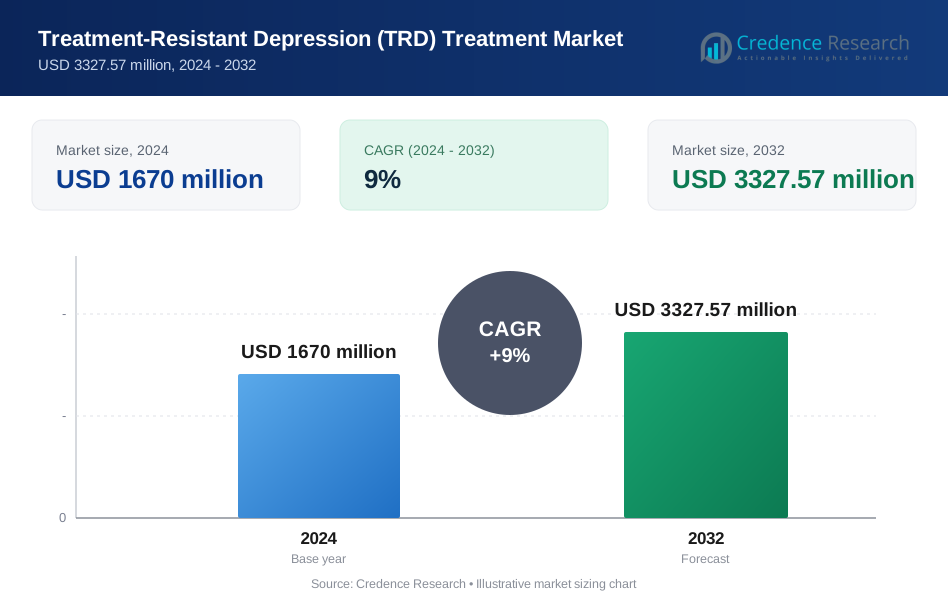
The Treatment Resistant Depression Treatment Market is projected to grow from USD 1670 million in 2024 to an estimated USD 3327.57 million by 2032, with a compound annual growth rate (CAGR) of 9% from 2024 to 2032.
The primary drivers of the TRD treatment market include the high unmet medical need for effective treatment options for patients with treatment-resistant depression, the growing recognition of TRD by healthcare professionals, and the increasing awareness of mental health issues globally. The limitations of traditional antidepressants and the side effects of current therapies have created a pressing demand for more innovative and personalized treatment approaches, such as ketamine-based therapies, esketamine, vagus nerve stimulation, and psychotherapy options. Furthermore, advancements in neuroscience and the discovery of new drug classes designed to target novel brain pathways are contributing to the rise of more effective treatments. The increase in healthcare investments and the expansion of mental health services are also fueling the growth of the market.
Geographically, North America holds the largest market share, primarily driven by high treatment adoption rates, increasing investments in mental health services, and advanced healthcare infrastructure. The United States is the leading market due to a higher prevalence of mental health disorders, widespread awareness campaigns, and a large number of healthcare providers offering specialized TRD treatments. Europe follows closely, with countries like the UK, Germany, and France focusing on improving access to mental health services and introducing new therapies for TRD. The Asia-Pacific region is expected to see the fastest growth due to expanding healthcare access, rising awareness of mental health, and increasing government support for mental health initiatives. Latin America and Middle East & Africa are gradually adopting TRD treatments, supported by better healthcare infrastructure and improved awareness of mental health conditions.
Market Insights:
- The Treatment-Resistant Depression (TRD) treatment market is projected to grow from USD 1670 million in 2024 to USD 3327.57 million by 2032, with a CAGR of 9%.
- The rise in cybersecurity threats is a major factor driving the demand for TRD treatments.
- Digital health solutions and increasing adoption of ketamine-based therapies are expected to fuel market growth.
- North America holds the largest share of the global TRD treatment market, benefiting from high adoption rates and strong healthcare infrastructure.
- Asia-Pacific is the fastest-growing region, driven by rising awareness of mental health and investments in healthcare infrastructure.
- Esketamine and ketamine-based treatments are gaining traction due to their effectiveness in managing TRD symptoms.
- Despite growth potential, high treatment costs and limited awareness of TRD among healthcare providers remain barriers in emerging markets.
Market Drivers:
Increasing Prevalence of Treatment-Resistant Depression
The growing number of individuals suffering from treatment-resistant depression (TRD) is one of the primary drivers of the TRD treatment market. A significant portion of patients with depression fail to respond to conventional antidepressants, including selective serotonin reuptake inhibitors (SSRIs) and serotonin-norepinephrine reuptake inhibitors (SNRIs). According to Johns Hopkins Medicine, about 30% of people diagnosed with major depressive disorder are affected by TRD. As depression becomes increasingly prevalent, especially in regions with high stress levels and economic pressures, the incidence of treatment resistance is also on the rise. This growing burden has underscored the need for more effective and personalized treatment solutions, stimulating the demand for novel and advanced therapies. Furthermore, the rising number of people diagnosed with depression globally continues to drive the need for enhanced treatments targeting those who do not respond to traditional approaches.
Advancements in Drug Development and New Treatment Modalities
Recent advancements in drug development and the growing exploration of alternative treatment modalities are expanding the scope of available options for treatment-resistant depression. Therapies such as esketamine, a nasal spray, and ketamine-based treatments have emerged as innovative alternatives, offering hope for patients who do not benefit from standard antidepressant medications. The development of these treatments has opened new pathways to treat TRD and is expected to drive significant growth in the market. Additionally, novel therapies that target the brain's neurotransmitter systems, such as neurostimulation, vagus nerve stimulation, and deep brain stimulation, are gaining traction as effective options for managing TRD, further fueling the market's expansion.
Growing Awareness and Advocacy for Mental Health
A growing global focus on mental health awareness is another key factor driving the market. As public perceptions surrounding mental health evolve, there is an increasing recognition of the need for comprehensive treatment options for patients with complex conditions like treatment-resistant depression. Global initiatives and advocacy groups have successfully raised awareness of the long-term impact of untreated mental health disorders, emphasizing the importance of finding effective therapies. For example, the World Health Organization (WHO) reports that depression is a leading cause of disability worldwide, affecting over 280 million people. This shift in awareness is encouraging healthcare providers to seek innovative solutions, resulting in a growing interest in TRD treatment options. The increased emphasis on mental health care has led to a better understanding of the condition, as well as more significant investments in research and development in the mental health sector.
Regulatory Support and Government Initiatives
Government initiatives and regulatory support play a critical role in driving the growth of the TRD treatment market. Regulatory bodies like the U.S. Food and Drug Administration (FDA) and European Medicines Agency (EMA) have been instrumental in approving new therapies, such as esketamine, for the treatment of TRD. These approvals, along with special designations like Breakthrough Therapy and Fast Track status, accelerate the availability of promising treatments to the market. Additionally, governments across various countries are increasingly prioritizing mental health, expanding access to innovative treatments, and enhancing funding for research into mental health disorders. These initiatives, coupled with growing healthcare infrastructure, have created an enabling environment for TRD treatment advancements, thus supporting market growth.
Market Trends:
Expansion of Non-Pharmacological Treatments
A key trend in the Treatment-Resistant Depression (TRD) treatment market is the growing adoption of non-pharmacological approaches. While medication remains a primary treatment modality, therapies such as cognitive behavioral therapy (CBT), electroconvulsive therapy (ECT), and transcranial magnetic stimulation (TMS) are gaining momentum as complementary or alternative treatments. For instance, the FDA-approved NeuroStar TMS Therapy system has been shown to achieve a 58% response rate and a 37% remission rate in TRD patients. These non-pharmacological options offer patients more holistic approaches to managing their condition, with some showing promise for patients who do not respond to antidepressants. The increase in demand for these therapies is supported by their lower risk of side effects compared to traditional medications, as well as the growing body of clinical evidence supporting their effectiveness in improving symptoms of depression. This shift in preference towards less invasive treatments is expected to continue as more patients and healthcare providers seek comprehensive, multi-modal approaches to addressing TRD.
Focus on Personalized and Precision Medicine
There is a notable trend towards personalized and precision medicine in the treatment of TRD. As the understanding of depression’s underlying mechanisms improves, clinicians are adopting more individualized treatment strategies based on genetic, environmental, and lifestyle factors. This approach includes tailoring treatments to specific biomarkers and patient characteristics, allowing for more effective and efficient treatment plans. For instance, genetic testing to determine how patients will respond to certain medications or therapies is becoming more common, helping to minimize trial-and-error in medication prescriptions. This personalized approach not only improves treatment outcomes but also reduces the likelihood of side effects, making it a promising trend in the evolving treatment landscape of TRD.
Increase in Collaborative Research and Drug Development
There is a noticeable increase in collaborative research among pharmaceutical companies, academic institutions, and healthcare providers in the field of TRD treatment. These partnerships are accelerating the development of new drugs and treatment protocols aimed at overcoming treatment resistance. For example, Janssen Pharmaceuticals collaborated with academic researchers to develop esketamine (Spravato), which has shown rapid antidepressant effects in TRD patients. Clinical trials are increasingly focused on discovering new medications, particularly those targeting novel neurotransmitter systems or brain regions. The expansion of research into novel compounds, such as those targeting glutamate receptors or the GABA system, is reshaping the treatment paradigm for TRD. Moreover, collaborations are fostering the development of combination therapies that blend medications with non-pharmacological treatments, aiming to offer more comprehensive and effective solutions to patients with TRD. This collaborative approach is expected to lead to breakthroughs in the development of more targeted and advanced treatment options in the coming years.
Growing Focus on Long-Term Monitoring and Relapse Prevention
An emerging trend is the growing emphasis on long-term monitoring and relapse prevention in the treatment of TRD. Since patients with treatment-resistant depression often experience relapses, there is an increasing focus on strategies that provide continuous care and prevent recurrence of symptoms. Healthcare providers are exploring remote monitoring tools and digital health solutions, such as smartphone applications and wearable devices, to track patient progress, treatment efficacy, and early signs of relapse. These technologies not only enable more effective management of TRD but also empower patients to take an active role in their treatment plans. This trend aligns with the broader healthcare industry’s focus on preventive care and chronic disease management, ultimately leading to better outcomes for TRD patients and improved quality of life.
Market Challenges Analysis:
High Cost of Advanced Treatments
One of the primary challenges facing the Treatment-Resistant Depression (TRD) treatment market is the high cost of advanced therapies. Treatments such as ketamine, esketamine, and other novel therapies often come with significant financial burdens, both for healthcare systems and patients. For example, esketamine nasal spray, although FDA-approved for TRD, requires ongoing administration in a clinical setting, increasing the cost for patients. According to a study published in the Journal of Clinical Psychiatry, the average cost of esketamine treatment can range from $4,720 to $6,785 per year. Many of these treatments are not always covered by insurance or are only partially reimbursed, making them financially inaccessible for a large portion of the population. This high cost poses a barrier to widespread adoption, especially in regions with limited healthcare budgets or where access to specialized care is constrained.
Limited Awareness and Diagnosis
Another key challenge is the limited awareness of treatment-resistant depression among both the general population and healthcare providers. Many patients and doctors continue to underestimate the prevalence of TRD, and its identification can often be delayed. Standard treatments are sometimes prescribed for extended periods without adequately addressing the possibility of treatment resistance. This diagnostic delay can lead to prolonged suffering for patients and missed opportunities to explore alternative therapies sooner. Additionally, some patients may not seek help due to stigma or a lack of understanding about the effectiveness of available TRD treatments, further hindering proper diagnosis and intervention.
Side Effects and Safety Concerns
The potential side effects and safety concerns associated with some TRD treatments can also limit their adoption. Medications like esketamine and ketamine have been associated with issues such as dependency, cognitive impairment, and increased risk of misuse. These safety concerns may deter patients and healthcare providers from opting for these therapies, especially when traditional antidepressants are seen as a less risky option. Despite their effectiveness, the potential for adverse effects remains a significant barrier to the growth of the market, especially as long-term safety data for newer therapies is still being evaluated.
Market Opportunities:
The growing global burden of treatment-resistant depression (TRD) presents a significant opportunity for the market to expand. As the prevalence of depression continues to rise and the number of patients failing to respond to conventional antidepressants increases, there is an urgent need for innovative and effective treatment options. This demand is opening the door for new drug classes, therapies, and treatment approaches. The ongoing advancements in psychiatry, neurostimulation therapies, and personalized medicine are expected to improve treatment outcomes for patients with TRD, creating substantial growth opportunities for companies offering these solutions. As awareness of TRD grows among healthcare providers, the need for comprehensive, cutting-edge therapies will continue to drive demand across both developed and emerging markets.
Additionally, the growing emphasis on mental health awareness and the increased focus on improving healthcare access worldwide present opportunities to expand the TRD treatment market. Governments, healthcare organizations, and advocacy groups are increasingly acknowledging the importance of mental health, which is driving investment in new treatments and the infrastructure to support them. Furthermore, the rise of digital health solutions and remote patient monitoring can play a key role in the management of TRD, providing patients with continuous support and enabling early detection of treatment resistance. These trends, combined with the ongoing development of novel therapies, create a promising environment for the continued growth and innovation within the TRD treatment market, ultimately improving patient outcomes and reducing the societal burden of depression.
Market Segmentation Analysis:
The Treatment-Resistant Depression (TRD) treatment market is segmented based on drug type, distribution channels, and regional dynamics, each contributing to the growth and adoption of TRD therapies.
By Drug Type: The drug type segment is dominated by NMDA (N-methyl-D-aspartate) antagonists, such as esketamine, which has emerged as a breakthrough treatment for TRD. Other key segments include antidepressants, including serotonin-norepinephrine reuptake inhibitors (SNRIs) and selective serotonin reuptake inhibitors (SSRIs), though their role is limited for TRD patients. Antipsychotics, particularly atypical antipsychotics like aripiprazole, are also being increasingly prescribed in combination with other therapies for patients with TRD. Other treatments, including vagus nerve stimulation (VNS) and transcranial magnetic stimulation (TMS), are gaining traction for their effectiveness in patients with TRD.
By Distribution Channel: TRD treatments are primarily distributed through hospital pharmacies, which play a major role in administering specialized therapies like esketamine that require medical supervision. Drug stores and retail pharmacies also contribute significantly to the market, offering oral medications that are prescribed for TRD. Increasingly, online pharmacies are gaining market share, offering a more convenient option for patients to access medications, especially with the rise of telehealth services.
Segmentation:
By Drug Type:
- NMDA
- Antidepressants
- Antipsychotics
- Others
By Distribution Channel:
- Hospital Pharmacies
- Drug Stores & Retail Pharmacies
- Online Pharmacies
By Region:
- North America
- U.S.
- Canada
- Mexico
- Europe
- Germany
- France
- U.K.
- Italy
- Spain
- Rest of Europe
- Asia Pacific
- China
- Japan
- India
- South Korea
- South-east Asia
- Rest of Asia Pacific
- Latin America
- Brazil
- Argentina
- Rest of Latin America
- Middle East & Africa
- GCC Countries
- South Africa
- Rest of the Middle East and Africa
Regional Analysis:
The Treatment-Resistant Depression (TRD) Treatment market exhibits varying dynamics across different regions, influenced by factors such as healthcare infrastructure, mental health awareness, regulatory frameworks, and economic conditions. As a result, the market share is distributed unevenly, with North America leading the global market, followed by Europe and the Asia-Pacific region.
North America holds the largest market share of approximately 40% in 2024, driven by the region's well-established healthcare infrastructure, strong mental health awareness, and high healthcare spending. The United States is a key contributor to the market, with extensive adoption of novel therapies, including esketamine, ketamine-based treatments, and neurostimulation therapies. The country’s healthcare system, which places a significant emphasis on treating mental health disorders, has accelerated the adoption of advanced treatment options for TRD. Additionally, strict regulatory frameworks, such as the FDA’s approval of esketamine for TRD, have facilitated the rapid introduction and reimbursement of novel treatments. Growing public awareness of mental health issues and government initiatives focused on mental health care are expected to continue driving the TRD market’s growth in this region.
Europe holds the second-largest market share at 30% in 2024, supported by increasing government investments in mental health services and the adoption of progressive treatment modalities. Countries like Germany, France, and the UK have implemented strong regulatory policies to promote the accessibility of mental health treatments. The growing focus on personalized medicine and a shift towards non-pharmacological treatments like transcranial magnetic stimulation (TMS) have spurred the market in Europe. Furthermore, the implementation of the General Data Protection Regulation (GDPR) and other regulations around the use of personal health data in Europe is positively impacting the adoption of digital health solutions, facilitating the integration of TRD treatments with digital platforms.
The Asia-Pacific region is the fastest-growing market for TRD treatments, projected to account for 25% of the global market by 2032. Rapid urbanization, increasing disposable incomes, and heightened awareness of mental health are driving growth in key countries like China, India, and Japan. As these nations continue to invest in healthcare infrastructure and mental health initiatives, the demand for advanced TRD therapies will rise. Additionally, government-backed efforts to improve mental health services in emerging markets are contributing to the adoption of treatment-resistant depression treatments in the region.
Latin America and Middle East & Africa are gradually adopting TRD treatments, collectively holding approximately 5-10% of the global market share. In Latin America, countries such as Brazil and Mexico are expanding mental health infrastructure, with increasing investments in healthcare systems. In the Middle East & Africa, countries like Saudi Arabia and the UAE are prioritizing mental health due to rising awareness and evolving healthcare policies. However, financial constraints and limited healthcare access remain challenges in these regions.
Key Player Analysis:
- AbbVie Inc.
- AstraZeneca
- Eli Lilly and Company
- GlaxoSmithKline
- Lundbeck A/S
- Janssen Pharmaceuticals
- Otsuka Holdings Co., Ltd.
- Par Pharmaceutical Companies Inc.
- Pfizer Inc.
- Sandoz International GmbH
Competitive Analysis:
The Treatment-Resistant Depression (TRD) Treatment market is highly competitive, with several key players leading the way in the development of innovative therapies. Leading pharmaceutical companies, such as Johnson & Johnson, Novartis, and Takeda, have made significant investments in novel treatments, including esketamine and ketamine-based therapies, which have shown promise in managing TRD. Additionally, companies focusing on neurostimulation therapies, such as Magstim and NeuroStar, are gaining market share with non-pharmacological solutions like transcranial magnetic stimulation (TMS). These treatments cater to the growing demand for alternatives to traditional antidepressants. The competitive landscape is also shaped by increasing collaboration between pharmaceutical firms, research institutions, and healthcare providers, aimed at developing personalized treatment options. Smaller players, such as Compellis, are focusing on niche therapies and digital health solutions to cater to the expanding market. The market remains dynamic, with ongoing research and regulatory approvals contributing to a rapidly evolving competitive environment.
Recent Developments:
- In August 2022, Merck Sharp & Dohme LLC initiated a Phase II A clinical trial to assess the safety and efficacy of MK-1942 in patients with treatment-resistant depression.
- In July 2022, Novartis Pharmaceuticals announced the initiation of a Phase 2 clinical trial for MIJ821 (ketamine), aimed at treating treatment-resistant depressive disorders.
- In May 2022, COMPASS Pathways presented positive results from the Phase IIb study of COMP360 psilocybin therapy for treatment-resistant depression at the American Psychiatric Association annual meeting in New Orleans.
- In February 2022, Denova Biopharma received FDA approval to launch a Phase 2b clinical trial to evaluate the efficacy and safety of DB104 (liafensine) for patients with treatment-resistant mood disorders.
Market Concentration & Characteristics:
The Treatment-Resistant Depression (TRD) Treatment market is characterized by moderate concentration, with a few major players dominating the space while also witnessing an increasing number of smaller companies entering the market. The leading pharmaceutical companies, including Johnson & Johnson, Novartis, and AbbVie, hold substantial market share, primarily through their innovative therapies like esketamine and ketamine-based treatments. These large players benefit from their established R&D capabilities, financial resources, and broad distribution networks. However, the market is also witnessing growing competition from niche companies focused on non-pharmacological therapies, such as neurostimulation devices and digital health solutions. Companies like NeuroStar and Magstim are capitalizing on the demand for alternatives to traditional pharmacological treatments. This trend is fostering innovation in personalized medicine and combination therapies. With the increasing prevalence of TRD and an expanding patient base, the market is expected to evolve further, providing ample opportunities for both established and new players.
Report Coverage:
The research report offers an in-depth analysis based on By Drug Type and By Distribution Channel. It details leading market players, providing an overview of their business, product offerings, investments, revenue streams, and key applications. Additionally, the report includes insights into the competitive environment, SWOT analysis, current market trends, as well as the primary drivers and constraints. Furthermore, it discusses various factors that have driven market expansion in recent years. The report also explores market dynamics, regulatory scenarios, and technological advancements that are shaping the industry. It assesses the impact of external factors and global economic changes on market growth. Lastly, it provides strategic recommendations for new entrants and established companies to navigate the complexities of the market.
Future Outlook:
- The global market for Treatment-Resistant Depression (TRD) treatments will continue to expand due to the increasing prevalence of TRD patients.
- Novel therapies, including esketamine and ketamine-based treatments, will play a crucial role in shaping the market’s future.
- Ongoing advancements in neurostimulation therapies like transcranial magnetic stimulation (TMS) will provide more treatment options for patients.
- The growing focus on personalized medicine will drive the development of treatments tailored to individual genetic and clinical profiles.
- Increasing awareness and acceptance of mental health treatment will lead to higher demand for effective TRD solutions.
- Regulatory approvals for new drugs will accelerate market growth, with more therapies likely to receive FDA and EMA approval.
- Digital health solutions such as mobile apps and remote monitoring tools will enhance the management and treatment of TRD.
- Collaboration between pharmaceutical companies, healthcare providers, and research institutions will spur innovation in treatment options.
- The market will benefit from expanded healthcare infrastructure and government support for mental health initiatives, particularly in emerging markets.
- As the treatment landscape evolves, combination therapies integrating pharmacological and non-pharmacological approaches will become more prevalent.
Request a Free Sample
Fill in your details and we'll send you a free sample report.
- Sample data tables & charts
- Research methodology
Need a Custom Version of This Report?
Tailor the scope, geography, or segments to your exact requirements.
- Custom geography or segment scope
- Direct access to our analyst team
Frequently Asked Questions
What is the projected growth of the Treatment Resistant Depression (TRD) treatment market?
What are the key drivers of the TRD treatment market?
Which regions dominate the TRD treatment market?
What are the challenges in adopting TRD treatments in emerging markets?
Table of Content
Chapter 1. Report Introduction
- 1.1 Report Description & Purpose
- 1.1.1 Report Title & Market Definition
- 1.1.2 Unique Selling Propositions (USP) & Key Differentiators
- 1.1.3 Value Proposition for Stakeholders
- 1.2 Research Objectives
- 1.2.1 Market Sizing Objectives (Volume & Revenue)
- 1.2.2 Segmentation Objectives
- 1.2.3 Competitive Intelligence Objectives
- 1.2.4 Forecast & Scenario Objectives
- 1.3 Report Scope
- 1.3.1 Treatment-Resistant Depression (TRD) Treatment Scope – Types & Subtypes Covered
- 1.3.2 Geographic Scope – Regions & Countries Covered
- 1.3.3 Historical Period, Base Year & Forecast Period (2024; forecast to 2032)
- 1.3.4 Inclusions & Exclusions
- 1.4 HS Code & Classification Framework
- 1.5 Currency, Units & Pricing Basis
- 1.6 Target Stakeholders
- 1.7 Limitations & Assumptions
Chapter 2. Executive Summary
- 2.1 Global Treatment-Resistant Depression (TRD) Treatment Market Snapshot
- 2.1.1 Market Size – Historical (2024) & Forecast (2024-2032) (2024: USD 1670 million → 2032: USD 3327.57 million)
- 2.1.2 Volume & Revenue – Global Totals
- 2.1.3 Key Market Highlights – Top Five Facts
- 2.2 Treatment-Resistant Depression (TRD) Treatment Market Segmentation Snapshot
- 2.2.1 Market Split by Region – 2024 vs. 2032
- 2.3 Competitive Snapshot
- 2.3.1 Top 10 Players by Revenue Share – 2024
- 2.3.2 Top 10 Players by Volume Share – 2024
- 2.3.3 Recent Strategic Developments (18-Month Summary)
- 2.4 Key Investment Highlights & Strategic Conclusions
Chapter 3. Treatment-Resistant Depression (TRD) Treatment Market Dynamics & Industry Analysis
- 3.1 Market Overview & Context
- 3.1.1 Treatment-Resistant Depression (TRD) Treatment Market Position in the Broader Automotive Value Chain
- 3.1.2 OEM vs. Replacement Market Dynamics
- 3.1.3 Market Maturity & Development Stage by Region
- 3.2 Treatment-Resistant Depression (TRD) Treatment Market Drivers
- 3.3 Treatment-Resistant Depression (TRD) Treatment Market Restraints & Challenges
- 3.4 Treatment-Resistant Depression (TRD) Treatment Market Opportunities
- 3.5 Porter's Five Forces Analysis
- 3.5.1 Threat of New Entrants
- 3.5.2 Bargaining Power of Suppliers
- 3.5.3 Bargaining Power of Buyers
- 3.5.4 Threat of Substitutes
- 3.5.5 Competitive Rivalry – Intensity Assessment
- 3.6 Treatment-Resistant Depression (TRD) Treatment Value Chain Analysis
- 3.6.1 Upstream – Raw Material/Input Suppliers
- 3.6.1.1 Raw Material/Input 1
- 3.6.1.2 Raw Material/Input 2
- 3.6.1.3 Raw Material/Input 3
- 3.6.2 Midstream – Production/Manufacturing/Service Delivery
- 3.6.2.1 Production/Process Overview
- 3.6.2.2 Key Facility Locations & Capacity by Manufacturer
- 3.6.3 Downstream – Distribution & End Consumer
- 3.6.3.1 Primary Channel – B2B/OEM
- 3.6.3.2 Secondary Channels – Dealer, Retail, Online, Direct
- 3.6.4 Value Chain Profitability Analysis
- 3.6.1 Upstream – Raw Material/Input Suppliers
- 3.7 PESTEL Analysis
- 3.7.1 Political Factors
- 3.7.2 Economic Factors
- 3.7.3 Social Factors
- 3.7.4 Technological Factors
- 3.7.5 Environmental Factors
- 3.7.6 Legal Factors
- 3.8 Treatment-Resistant Depression (TRD) Treatment Supply Chain Analysis
- 3.8.1 Raw Material/Input Supply Risk Assessment
- 3.8.2 Manufacturing Concentration Risk (Geographic Exposure)
- 3.8.3 Trade Disruption Impact Analysis
- 3.9 Regulatory & Policy Landscape
Note: The regulatory and policy landscape section covers regulations based on their applicability to the market, Treatment-Resistant Depression (TRD) Treatment category, geography, and scope of the study. Only regulatory frameworks with a material impact on operations, compliance, trade, sustainability, or market access are analyzed in detail.
Chapter 4. Key Investment Pockets & Opportunity Analysis
- 4.1 Treatment-Resistant Depression (TRD) Treatment Market Attractiveness Analysis
- 4.1.1 By Region – Investment Attractiveness Matrix (Volume × CAGR)
- 4.2 Absolute Revenue Growth Opportunity
- 4.2.1 By Region – Absolute USD Growth Through 2032
- 4.3 Incremental Volume Opportunity
- 4.3.1 By Region – Incremental Volume Through 2032
- 4.3.2 Segment – Incremental Volume
- 4.4 Emerging Submarket Opportunity Deep Dive (Subject to Applicability)
- 4.5 Emerging Market Opportunity Scorecards
- 4.5.1 United States
- 4.5.2 Europe
- 4.5.3 Asia
- 4.5.4 Middle East & Africa
Note: Emerging Market Opportunity Scorecards will be included based on relevance and strategic importance. Regions listed are indicative and may vary depending on data availability and market dynamics.
Chapter 5. Treatment-Resistant Depression (TRD) Treatment Import-Export Analysis & Trade Flows
- 5.1 Global Trade Overview
- 5.1.1 Global Export Value by Country (2024)
- 5.1.2 Global Export Volume by Country (2024)
- 5.1.3 Global Import Value by Country (2024)
- 5.1.4 Global Import Volume by Country (2024)
- 5.1.5 Net Trade Balance by Country (2024)
- 5.2 Export Analysis – Segment
- 5.2.1 Type 1 (HS Code)
- 5.2.2 Type 2 (HS Code)
- 5.2.3 Type 3 (HS Code)
- 5.2.4 Type 4 (HS Code)
- 5.2.5 Type 5 (HS Code)
- 5.3 Import Analysis – Segment
- 5.3.1 Type 1 (HS Code)
- 5.3.2 Type 2 (HS Code)
- 5.3.3 Type 3 (HS Code)
- 5.3.4 Type 4 (HS Code)
- 5.3.5 Type 5 (HS Code)
- 5.4 Average Unit Trade Prices
- 5.4.1 Average Export Price – Segment & Country
- 5.4.2 Average Import Price – Segment & Source Country
- 5.4.3 Price Trends (2024)
- 5.5 Key Trade Route Analysis
- 5.5.1 Trade Route 1
- 5.5.2 Trade Route 2
- 5.5.3 Trade Route 3
- 5.5.4 Trade Route 4
- 5.5.5 Trade Route 5
- 5.6 Trade Policy Impact Assessment
- 5.6.1 US Anti-Dumping & Section 301 Tariffs
- 5.6.2 EU Customs Union Impact
- 5.6.3 Major Free Trade Agreements
- 5.6.4 USMCA Rules of Origin
Note: Trade policy analysis will be included only where relevant to the Treatment-Resistant Depression (TRD) Treatment market.
Chapter 6. Competitive Landscape & Company Benchmarking
- 6.1 Treatment-Resistant Depression (TRD) Treatment Market Concentration & Structure
- 6.1.1 Herfindahl-Hirschman Index (HHI) – vs. 2024
- 6.1.2 Tier 1, Tier 2 & Tier 3 Market Structure
- 6.1.3 Global, Regional & Local Player Dynamics
- 6.2 Treatment-Resistant Depression (TRD) Treatment Market Share Analysis – 2024
- 6.2.1 Global Revenue Share by Company
- 6.2.2 Global Volume Share by Company
- 6.2.3 Regional Revenue Share
- 6.2.4 Market Share Evolution ( vs. 2024)
- 6.2.5 OEM Segment Share by Company
- 6.2.6 Replacement Segment Share by Company
- 6.3 Production/Delivery Capacity & Facility Analysis
- 6.3.1 Global Installed Capacity
- 6.3.2 Capacity Utilization Rates
- 6.3.3 Production/Output Volume
- 6.3.4 Facility Locations & Capacity Map
- 6.3.5 Planned Capacity Additions
- 6.4 Treatment-Resistant Depression (TRD) Treatment Competitive Benchmarking Matrix
- 6.4.1 Revenue, Volume, CAGR & Profitability Comparison
- 6.4.2 Channel Revenue Mix
- 6.4.3 Geographic Revenue Exposure
- 6.4.4 R&D Intensity
- 6.4.5 Sustainability Maturity
- 6.5 Strategic Developments in Treatment-Resistant Depression (TRD) Treatment (Last 24 Months)
- 6.5.1 Mergers, Acquisitions & Divestments
- 6.5.2 New Treatment-Resistant Depression (TRD) Treatment Launches
- 6.5.3 Facility Expansions
- 6.5.4 Strategic Alliances, Joint Ventures & Partnerships
- 6.5.5 Distribution Expansion & Market Entry
- 6.5.6 Sustainability & ESG Initiatives
- 6.6 Competitive Strategy Mapping
- 6.6.1 Leader, Challenger, Follower & Niche Classification
- 6.6.2 Pricing Strategy Comparison
- 6.6.3 Channel Strategy Matrix
Note: Strategic developments are included based on their materiality and the availability of reliable information.
Chapter 7. Global Treatment-Resistant Depression (TRD) Treatment Market – By Distribution Channel
- 7.1 Segment Overview
- 7.1.1 Volume & Revenue Split by Channel (2024 & 2032)
- 7.1.2 Channel Mix Evolution (2024-2032)
Chapter 8. Regional Market Analysis – Global Overview
- 8.1 Global Regional Overview
- 8.1.1 Regional Volume Share
- 8.1.2 Regional Revenue Share
- 8.1.3 Regional Volume by Region
- 8.1.4 Regional Revenue by Region
- 8.1.5 Regional Forecast Through 2032
- 8.2 Cross-Regional Segment Analysis
- 8.2.1 By Distribution Channel
- 8.2.2 By Brand/Price Tier
Chapter 9. North America Treatment-Resistant Depression (TRD) Treatment Market
- 9.1 United States
- 9.2 Canada
- 9.3 Mexico
Chapter 10. Europe Treatment-Resistant Depression (TRD) Treatment Market
- 10.1 Germany
- 10.2 France
- 10.3 Italy
- 10.4 United Kingdom
- 10.5 Spain
- 10.6 Poland
- 10.7 Russia
- 10.8 Netherlands
- 10.9 Belgium
- 10.10 Sweden
- 10.11 Denmark
- 10.12 Norway
- 10.13 Rest of Europe
Chapter 11. Asia Pacific Treatment-Resistant Depression (TRD) Treatment Market
- 11.1 China
- 11.2 India
- 11.3 Japan
- 11.4 South Korea
- 11.5 Thailand
- 11.6 Indonesia
- 11.7 Vietnam
- 11.8 Malaysia
- 11.9 Australia
- 11.10 Rest of Asia Pacific
Chapter 12. Latin America Treatment-Resistant Depression (TRD) Treatment Market
- 12.1 Brazil
- 12.2 Argentina
- 12.3 Colombia
- 12.4 Chile
- 12.5 Rest of Latin America
Chapter 13. Middle East Treatment-Resistant Depression (TRD) Treatment Market
- 13.1 Saudi Arabia
- 13.2 United Arab Emirates
- 13.3 Turkey
- 13.4 Israel
- 13.5 Iran
- 13.6 Rest of the Middle East
Chapter 14. Africa Treatment-Resistant Depression (TRD) Treatment Market
- 14.1 South Africa
- 14.2 Egypt
- 14.3 Nigeria
- 14.4 Morocco
- 14.5 Rest of Africa
Chapter 15. Treatment-Resistant Depression (TRD) Treatment Company Profiles
- 15.1 [Company 01]
- 15.1.1 Company Overview
- 15.1.2 Key Management Personnel
- 15.1.3 Products & Services Portfolio
- 15.1.4 Financial Performance
- 15.1.5 Key Market Focus & Geographic Presence
- 15.1.6 Recent Developments & Strategic Initiatives
Note: The company profile list is preliminary and may change based on research findings, market developments, data availability, and client requirements.
Chapter 16. Appendices
- Appendix A – List of Abbreviations & Acronyms
- Appendix B – Industry Classification Code Reference – Full Series
- Appendix C – Production & Capacity Data Tables
- Appendix D – End-Use & Demand Base Tables
- Appendix E – Consumption & Replacement Rate Assumptions
- Appendix F – ASP Reference Tables
- Appendix G – Manufacturing & Facility Database
- Appendix H – Import-Export Data Tables
- Appendix I – Regulatory Summary Tables
- Appendix J – Primary Research Participant List (Anonymized)
- Appendix K – Primary Research Questionnaire Framework
- Appendix L – Data Sources & Bibliography
- Appendix M – Market Size Divergence & Source Comparison
Chapter 17. Research Methodology
- 17.1 Research Framework & Philosophy
- 17.2 Secondary Research – Sources, Hierarchy & Data Extraction
- 17.3 Data Modeling – Bottom-Up & Top-Down Market Sizing
- 17.4 Primary Research – Stakeholder Framework, LOI & Sample Sizes
- 17.5 Forecast Methodology – Regression, Scenario & Sensitivity Analysis
- 17.6 Quality Control – Four-Layer Validation Framework
- 17.7 Limitations & Standard Assumptions
- 17.8 Disclaimer
