Market Overview
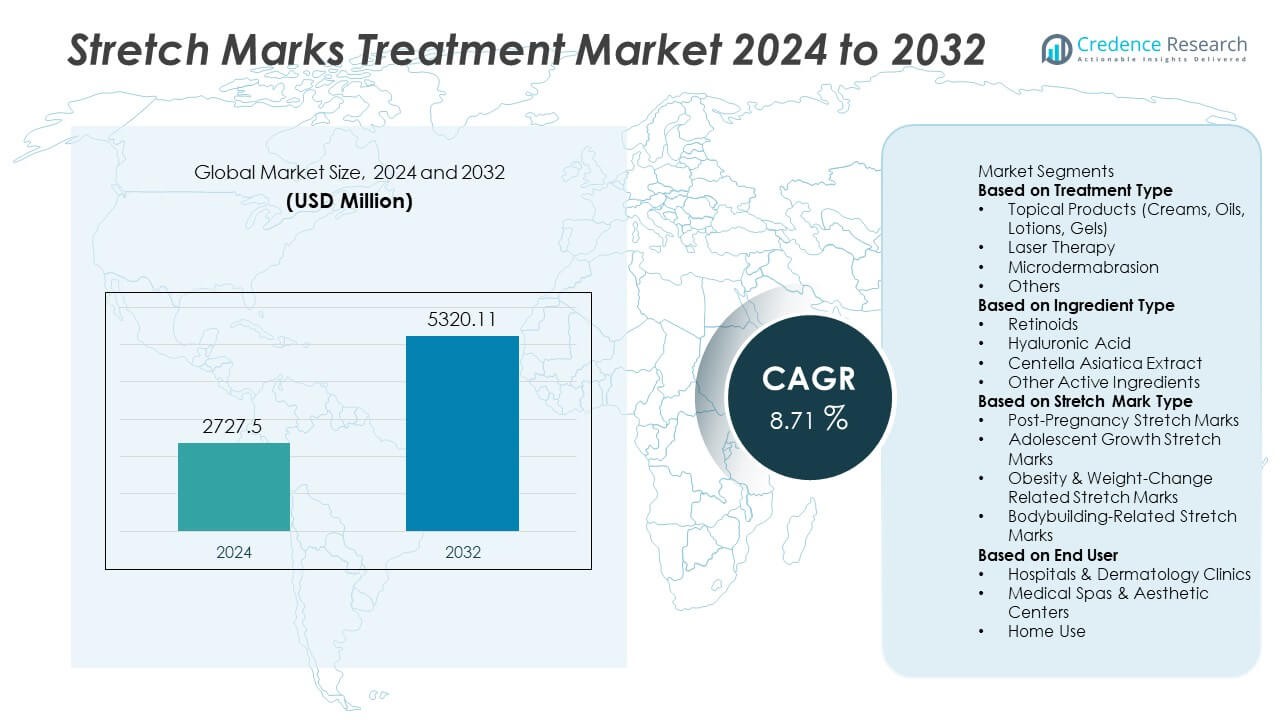
The Stretch Marks Treatment Market reached USD 2,727.5 million in 2024 and is expected to grow to USD 5,320.11 million by 2032, registering a strong 8.71% CAGR over the forecast period.
| REPORT ATTRIBUTE |
DETAILS |
| Historical Period |
2020-2023 |
| Base Year |
2024 |
| Forecast Period |
2025-2032 |
| Stretch Marks Treatment Market Size 2024 |
USD 2,727.5 Million |
| Stretch Marks Treatment Market, CAGR |
8.71% |
| Stretch Marks Treatment Market Size 2032 |
USD 5,320.11 Million |
The Stretch Marks Treatment market includes prominent companies such as Laboratoires Expanscience, Alliance Pharma PLC, Union Swiss Private Limited, Helix BioMedix, Inc., E.T. Browne Drug Co., Inc. (Palmers), Dermaclara, basq NYC, Candela Corporation, Perrigo Company plc (HRA Pharma), and Clarins. These players focus on topical formulations, laser-based procedures, and advanced dermal repair technologies to improve skin elasticity, reduce discoloration, and support post-pregnancy recovery. Product innovation centers on retinoids, hyaluronic acid, Centella Asiatica, and peptide-infused treatments designed for both clinical and home-use applications. North America leads the market with a 37% share, supported by strong adoption of aesthetic dermatology services, high maternity skincare spending, and wide availability of OTC stretch mark creams across retail and digital platforms.
Access crucial information at unmatched prices!
Request your sample report today & start making informed decisions powered by Credence Research Inc.!
Download Sample
Market Insights
- The Stretch Marks Treatment market reached USD 2,727.5 million in 2024 and is projected to reach USD 5,320.11 million by 2032 at an 8.71% CAGR, driven by premium skincare adoption and demand for postpartum and weight-related stretch mark solutions.
- Topical products lead the market with a 52% share, supported by strong usage of creams, oils, and retinoid-based formulations for home treatment and preventive skincare, especially among postpartum consumers.
- Trends include growing demand for pregnancy-safe botanical formulations, peptide-based collagen boosters, and expansion of minimally invasive treatments such as laser therapy, microneedling, and radiofrequency-based skin remodeling.
- Competition intensifies as leading brands emphasize clinical evidence, digital skincare guidance, omnichannel retail, and strategic collaborations with dermatology clinics, while cost-sensitive buyers and variable treatment results remain key restraints.
- North America holds 37%, Europe 29%, Asia Pacific 23%, Latin America 8%, and Middle East & Africa 3% of market share, supported by strong dermatology infrastructure and expanding e-commerce-driven skincare consumption across all regions.
 Market Segmentation Analysis:
By Treatment Type:
Topical products dominate the Stretch Marks Treatment market with a 52% share, driven by strong adoption of creams, oils, lotions, and gel-based formulations for home application. Consumers prefer topical solutions due to affordability, non-invasive use, and wide retail availability through pharmacies and online platforms. Laser therapy follows as a premium option offered by dermatology clinics and medical spas for deeper collagen remodeling and aesthetic improvement. Microdermabrasion and other treatments, including radiofrequency and microneedling, support patients seeking faster results and combination therapy approaches. Growth in topical products remains supported by rising brand marketing, pregnancy-safe formulas, and expanding OTC cosmeceutical launches.
- For instance, Laboratoires Expanscience validated its Mustela Stretch Marks Oil in a clinical study involving 42 women, demonstrating measurable dermal elasticity improvement within 8 weeks using a plant-oil blend containing 99 ml of natural-origin ingredients per 100 ml formulation.
By Ingredient Type:
Retinoids lead the ingredient segment with a 38% share, supported by proven collagen-stimulating benefits for reducing skin texture irregularities. Dermatologists widely recommend retinoid-based treatments for early stretch mark management and post-pregnancy care under medical supervision. Hyaluronic acid shows strong use in hydrating and elasticity-restoring formulations, appealing to sensitive skin users. Centella Asiatica extract gains traction for natural, anti-inflammatory properties, especially in botanical or pregnancy-safe products. Other active ingredients, including peptides, vitamin E, and essential oils, expand product portfolios targeting multi-mechanism skin recovery and scar reduction. Demand for clinically supported, dermal-repair ingredients drives continued market growth.
- For instance, Study involving 80 participants with non-hypertrophic scars and striae, Bio-Oil’s PurCellin Oil-based formula demonstrated a statistically significant improvement in the appearance of stretch marks, with 51% of volunteers reporting that their striae looked less pronounced after consistent application over an 8-week period compared to an untreated area.
By Stretch Mark Type:
Post-pregnancy stretch marks account for a 46% market share, driven by high treatment demand among women seeking skin recovery following childbirth. Topical creams and laser therapies are frequently recommended to support collagen production and improve skin firmness across the abdominal and thigh areas. Adolescent growth stretch marks form another key segment, supported by rising product use among teens and young adults experiencing rapid growth phases. Obesity and weight-change related stretch marks expand treatment adoption by individuals undergoing major weight fluctuations or bariatric interventions. Bodybuilding-related marks create targeted demand for collagen-restoring products and clinic-based therapies among fitness-driven consumers.
Key Growth Drivers
Rising Focus on Aesthetic and Dermatological Wellness
A growing focus on skin aesthetics drives demand for stretch marks treatment across diverse age groups. Individuals seek smoother skin texture and effective post-weight change or post-pregnancy skin repair solutions. Dermatology clinics and medical spas report higher uptake of laser, microneedling, and combination therapies aimed at collagen restoration. OTC creams and oils with retinoids, peptides, and botanical extracts offer non-invasive options for home use. Expanding social media influence and rising consumer willingness to invest in advanced skincare accelerate market adoption.
- For instance, Candela Corporation offers the Frax Pro fractional laser, which delivers highly targeted 1550 nm and 1940 nm wavelengths for dual-depth skin resurfacing. Clinical studies demonstrate high rates of patient satisfaction and textural improvement, with some studies noting that virtually all patients show at least modest improvement in certain parameters.
Increasing Post-Pregnancy and Weight-Fluctuation Cases
High incidence of stretch marks due to pregnancy, rapid weight fluctuations, obesity, and fitness training supports market growth. Post-pregnancy treatment demand remains strong as women seek both preventive and corrective skincare for abdominal, hip, and thigh areas. The rise of structured weight-loss programs and bariatric surgeries increases treatment needs for skin repair and elasticity recovery. Manufacturers and clinics introduce personalized treatment plans, including topical regimens and laser-based procedures. Growing awareness of early intervention benefits strengthens market uptake.
- For instance, Dermaclara mentions using Silicone Fusion Technology patches that work by creating a micro-occlusion environment on the skin. This process draws moisture to the skin’s surface, which helps to plump it up and regulate collagen production.
Innovation in Dermatology and Cosmeceutical Formulations
Advances in skin science support new topical and device-based solutions for stretch mark reduction. Clinical formulations using retinoids, hyaluronic acid, Centella Asiatica, and peptide complexes gain acceptance for improving collagen regeneration. Laser therapy, radiofrequency, and microdermabrasion technologies continue evolving with reduced downtime and improved results. Combination treatments integrate home-use products with clinic-based procedures for enhanced efficacy. Continuous investment in skin barrier repair research drives product differentiation and premium pricing strategies.
Key Trends & Opportunities
Growth of Natural, Pregnancy-Safe, and Botanical Formulations
Demand rises for gentle, botanical-based treatments suitable for expectant and postpartum women. Centella Asiatica, vitamin E, rosehip oil, and shea butter-based creams gain traction for skin nourishing and elasticity improvement. Brands market clean-label and hypoallergenic options to capture sensitive-skin consumers. Growing interest in sustainable and ethical skincare sourcing supports innovation in plant-based active ingredients. Opportunity expands for premium organic cosmeceuticals across pharmacy and online channels.
- For instance, Clarins validated its stretch-mark cream in a controlled trial of 38 women over 56 days, showing a significant improvement in the appearance of existing stretch marks. The formula, called “Body Partner,” contains a “PhytoStretchComplex” blend of Centella asiatica and organic green banana extracts to promote visible skin elasticity and firmness.
Expansion of Home-Use Dermal Repair and Digital Skin Assessment Tools
Home-use dermal rollers, microcurrent devices, and peptide-enriched serums bring clinic-like benefits to personal skincare routines. AI-enabled skin assessment apps guide product selection and track improvement, increasing treatment adherence. Subscription-based skincare plans and tele-dermatology platforms expand global reach for professional recommendations. Digital retail growth offers strong visibility for emerging brands and niche treatment formulations.
- For instance, E.T. Browne Drug Co. (Palmer’s) conducts dermatological clinical trials to evaluate product efficacy and substantiate claims, using objective measurement tools and sometimes involving third-party analysis.
Key Challenges
High Cost and Limited Accessibility of Advanced Procedures
Laser therapy, microneedling, and radiofrequency treatments deliver strong outcomes but remain expensive for many consumers. Limited access to skilled practitioners outside major cities restricts adoption, particularly in developing markets. Cost sensitivity increases the need for affordable and reliable OTC formulations. Clinics must justify treatment value through proven results and patient education. Pricing challenges may slow growth in cost-conscious segments.
Variability in Treatment Outcomes and Patient Expectations
Stretch mark severity, skin type, and treatment timing influence results, making outcomes inconsistent. Unrealistic expectations driven by social media intensify patient dissatisfaction and impact brand reputation. Topical products often require prolonged use before visible improvement, reducing adherence. Dermatology experts emphasize combined therapy plans and early intervention to enhance results. Clear communication of realistic benefits is essential for sustained market credibility.
Regional Analysis
North America
North America holds a 37% market share, driven by strong adoption of topical cosmeceuticals, laser therapy, and microneedling procedures across dermatology clinics and medical spas. The United States leads consumption, supported by higher aesthetic spending and wider retail distribution of OTC creams, oils, and retinoid-based formulations. Post-pregnancy treatment demand remains significant, supported by patient education and early-intervention awareness. A well-established cosmetic dermatology industry and rapid acceptance of combination therapies further strengthen market growth. Online skincare platforms and subscription-based treatment programs help broaden consumer reach, enhancing long-term sales opportunities across the region.
Europe
Europe accounts for a 29% market share, supported by rising interest in aesthetic dermatology and postpartum body-care treatments across Germany, France, Italy, Spain, and the United Kingdom. Demand remains strong for prescription retinoids, hyaluronic-acid formulations, and medical-grade laser procedures. European consumers show a preference for natural and botanical ingredient-based stretch mark products, encouraging innovation in Centella Asiatica and essential oil-based formulations. Government regulations support ingredient safety, boosting credibility of clinically tested skincare brands. Growing penetration of aesthetic centers and expanding maternity skincare lines continue to reinforce market growth across the region.
Asia Pacific
Asia Pacific holds a 23% market share, driven by growing consumer focus on beauty, postpartum recovery, and body aesthetics in China, Japan, India, and South Korea. Increasing awareness of early stretch mark management and rising maternity care spending support demand for OTC topical formulations. South Korea and Japan lead product innovation in peptides, collagen boosters, and scar-repair ingredients, influencing global product development. Dermatology clinics in China and India report rising adoption of laser and microneedling treatments. Expanding e-commerce platforms and influencer-driven skincare trends accelerate market penetration across urban and semi-urban populations.
Latin America
Latin America represents an 8% market share, supported by expanding aesthetic medicine services in Brazil, Mexico, Argentina, and Colombia. High demand for postpartum stretch mark treatment drives the use of oils, body creams, and clinic-based resurfacing procedures. Brazil’s strong cosmetic industry presence and cultural emphasis on body aesthetics contribute to market expansion. Adoption of cost-effective topical products remains prominent due to income sensitivity, while premium laser and microneedling options gain momentum in metropolitan areas. Growth in maternity wellness programs and increasing dermatology clinic networks further support market development.
Middle East & Africa
The Middle East & Africa region holds a 3% market share, driven by rising aesthetic awareness and increasing investment in dermatology and cosmetic care facilities. The United Arab Emirates and Saudi Arabia lead treatment adoption, supported by high medical tourism and growing demand for luxury skincare solutions. Topical creams with hydrating and collagen-boosting actives remain the most widely used options, while laser and radiofrequency treatments gain gradual traction. Limited access to specialized dermatology services in some African markets restrains adoption, though expanding urban retail channels and digital beauty platforms support future growth.
Market Segmentations:
By Treatment Type
- Topical Products (Creams, Oils, Lotions, Gels)
- Laser Therapy
- Microdermabrasion
- Others
By Ingredient Type
- Retinoids
- Hyaluronic Acid
- Centella Asiatica Extract
- Other Active Ingredients
By Stretch Mark Type
- Post-Pregnancy Stretch Marks
- Adolescent Growth Stretch Marks
- Obesity & Weight-Change Related Stretch Marks
- Bodybuilding-Related Stretch Marks
By End User
- Hospitals & Dermatology Clinics
- Medical Spas & Aesthetic Centers
- Home Use
By Geography
- North America
- Europe
- Germany
- France
- U.K.
- Italy
- Spain
- Rest of Europe
- Asia Pacific
- China
- Japan
- India
- South Korea
- South-east Asia
- Rest of Asia Pacific
- Latin America
- Brazil
- Argentina
- Rest of Latin America
- Middle East & Africa
- GCC Countries
- South Africa
- Rest of the Middle East and Africa
Competitive Landscape
The competitive landscape of the Stretch Marks Treatment market features key players such as Laboratoires Expanscience, Alliance Pharma PLC, Union Swiss Private Limited, Helix BioMedix, Inc., E.T. Browne Drug Co., Inc. (Palmers), Dermaclara, basq NYC, Candela Corporation, Perrigo Company plc (HRA Pharma), and Clarins. These companies focus on expanding topical formulations with retinoids, hyaluronic acid, Centella Asiatica, peptides, and botanical actives to improve skin elasticity and texture. Strong product presence in maternity skincare, OTC cosmeceuticals, and premium dermal repair categories supports brand competitiveness. Manufacturers invest in clinical testing, safe pregnancy-use formulas, and digitally driven skincare routines. Device-based treatment providers, including laser and radiofrequency technology companies, strengthen partnerships with dermatology clinics and aesthetic centers. Omnichannel retail strategies, subscription-based product programs, and influencer-led marketing enhance consumer engagement. Continuous R&D in scar and collagen regeneration technologies remains a core focus, while geographic expansion accelerates penetration in Asia Pacific and North America.
Key Player Analysis
- Laboratoires Expanscience
- Alliance Pharma PLC
- Union Swiss Private Limited
- Helix BioMedix, Inc.
- T. Browne Drug Co., Inc. (Palmers)
- Dermaclara
- basq NYC
- Candela Corporation
- Perrigo Company plc (HRA Pharma)
- Clarins
Recent Developments
- In April 2025, Candela launched its Vbeam Pro® laser platform, specifically citing “stretch marks” among the dermatologic conditions addressed.
- In June 2023, Candela Corporation’s Vbeam Family of pulsed dye lasers received expanded FDA clearance for treating port wine stains and hemangiomas in pediatric patients (up to 21 years old).
- In November 2023, BEAUTYLAB introduced its new Microneedling Pen System, a professional-grade treatment designed to boost cellular renewal by leveraging the skin’s natural healing process. The system uses fine needles to create temporary microscopic traumas on the skin’s surface, triggering a natural wound-healing response.
Shape Your Report to Specific Countries or Regions & Enjoy 30% Off!
Report Coverage
The research report offers an in-depth analysis based on Treatment Type, Ingredient Type, Stretch Mark Type, End User and Geography. It details leading market players, providing an overview of their business, product offerings, investments, revenue streams, and key applications. Additionally, the report includes insights into the competitive environment, SWOT analysis, current market trends, as well as the primary drivers and constraints. Furthermore, it discusses various factors that have driven market expansion in recent years. The report also explores market dynamics, regulatory scenarios, and technological advancements that are shaping the industry. It assesses the impact of external factors and global economic changes on market growth. Lastly, it provides strategic recommendations for new entrants and established companies to navigate the complexities of the market.
Future Outlook
- Demand for postpartum and weight-change stretch mark solutions will continue to grow.
- Natural, pregnancy-safe, and botanical formulations will gain wider market acceptance.
- Combination therapies integrating topical products and clinic procedures will increase treatment effectiveness.
- Laser, radiofrequency, and microneedling innovations will reduce downtime and improve results.
- AI-driven skin assessment tools will support personalized stretch mark treatment plans.
- E-commerce and subscription-based skincare delivery models will strengthen product accessibility.
- Male consumer participation in stretch mark treatment will rise with broader body-care awareness.
- Brands will increase clinical validation and dermatology partnerships to enhance credibility.
- Emerging markets will expand adoption as healthcare and aesthetic spending increases.
- Ingredient research in collagen remodeling and scar reduction will drive next-generation formulations.



