| REPORT ATTRIBUTE |
DETAILS |
| Historical Period |
2020-2023 |
| Base Year |
2024 |
| Forecast Period |
2025-2032 |
| Japan Enhanced Oil Recovery (EOR) Market Size 2024 |
USD 3,159.40 Million |
| Japan Enhanced Oil Recovery (EOR) Market, CAGR |
7.62% |
| Japan Enhanced Oil Recovery (EOR) Market Size 2032 |
USD 5,684.04 Million |
Market Overview
The Japan Enhanced Oil Recovery (EOR) Market is projected to grow from USD 3,159.40 million in 2024 to an estimated USD 5,684.04 million by 2032, with a compound annual growth rate (CAGR) of 7.62% from 2025 to 2032. This growth reflects the increasing demand for more efficient methods of oil extraction as Japan aims to enhance its domestic oil production and meet energy needs.
Key drivers of this market include the rising need for improved oil recovery techniques due to the maturing of Japan’s conventional oil fields. The push for energy security and the adoption of advanced EOR methods, such as chemical, thermal, and gas injection techniques, are contributing to market expansion. Additionally, technological advancements and the growing focus on carbon capture and storage (CCS) are expected to further drive market growth.
Geographically, Japan dominates the East Asian EOR market, with significant investments in oilfield technologies and infrastructure to boost domestic production. The country’s efforts in leveraging EOR technologies are supported by key players such as Japan Petroleum Exploration Co., Ltd. (JAPEX), Inpex Corporation, and other energy companies that continue to innovate and invest in advanced recovery techniques to optimize production from existing fields.
Access crucial information at unmatched prices!
Request your sample report today & start making informed decisions powered by Credence Research Inc.!
Download Sample
Market Insights
- The Japan EOR market is projected to grow from USD 3,159.40 million in 2024 to USD 5,684.04 million by 2032, with a CAGR of 7.62% from 2025 to 2032, driven by the need for efficient oil extraction methods.
- The aging of Japan’s conventional oil fields and the increasing demand for advanced oil recovery techniques, such as CO2 injection and gas flooding, are key factors fueling market growth.
- Energy security and Japan’s push for sustainable energy practices, including carbon capture and storage (CCS), are major contributors to the growing adoption of EOR technologies.
- High initial costs and complex infrastructure requirements for implementing advanced EOR technologies, such as thermal recovery and chemical flooding, are barriers to widespread adoption.
- Geological challenges, such as reservoir complexity and varying permeability, can reduce the efficiency of EOR methods in some fields, limiting their effectiveness.
- Japan’s EOR market is dominated by Central and Eastern regions, where mature onshore oil fields benefit from established infrastructure, with growing activity in offshore fields.
- Offshore oil fields in Southern Japan are seeing increasing use of CO2 and gas injection methods to optimize recovery, contributing to the overall market expansion in coastal areas.
Report Scope
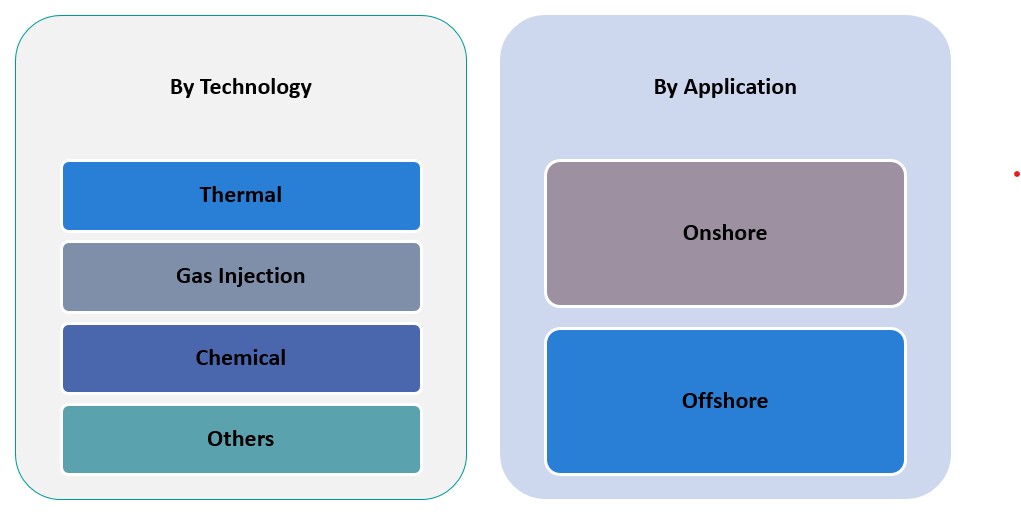
This report segments the Japan Enhanced Oil Recovery (EOR) Market as follows:
Market Drivers
Mature Oil Fields and Declining Production
Japan’s domestic oil fields have been in production for decades, leading to a natural decline in the recovery of oil from existing reservoirs. The Niigata oil field, one of Japan’s oldest, has seen a significant reduction in production over the years. Enhanced Oil Recovery (EOR) techniques offer solutions to revitalize these fields and extend their productive lifespans. EOR technologies, such as thermal recovery, chemical injection, and gas injection, allow for the extraction of additional oil that would otherwise remain trapped in the reservoir. For instance, gas injection methods have been shown to improve recovery rates by up to 15% in certain mature fields. With Japan’s oil production facing a natural decline due to the aging of its fields, the adoption of EOR methods has become a critical strategy to boost recovery rates, sustain domestic production, and reduce dependency on imported crude oil. As a result, the demand for EOR techniques is expected to rise significantly in response to the need to optimize oil extraction from mature fields.
Energy Security and Economic Benefits
Energy security is a crucial concern for Japan, which is highly dependent on crude oil imports for its energy needs. For instance, Japan imports approximately 90% of its crude oil, primarily from the Middle East. By leveraging EOR technologies, Japan can maximize the potential of its domestic oil resources, decreasing its reliance on imported crude oil and improving the resilience of its energy infrastructure. EOR not only ensures more efficient oil recovery but also offers economic benefits, as the cost of extracting additional oil from domestic fields is often lower than importing crude oil. The application of CO2 injection in domestic fields has reduced operational costs by up to 10% in pilot projects. The drive towards energy independence, combined with the economic advantages of optimizing local oil resources, acts as a strong motivator for the adoption of EOR technologies. As global oil prices fluctuate, Japan’s ability to rely more heavily on its own reserves through enhanced recovery techniques presents both a strategic and cost-effective solution to its energy challenges.
Technological Advancements in EOR Methods
The Japan Enhanced Oil Recovery (EOR) market is witnessing significant growth due to continuous advancements in EOR technologies. Japan has been at the forefront of adopting new and improved methods to enhance oil recovery, which is increasingly important as reservoirs become more complex. New techniques such as carbon dioxide (CO2) injection, chemical flooding, and microbial enhanced oil recovery (MEOR) are gaining traction. These advanced methods enable Japan to recover oil from challenging reservoirs that were previously inaccessible or uneconomical. CO2 injection, for example, helps increase oil recovery by injecting carbon dioxide into reservoirs, reducing the viscosity of crude oil, and pushing it to the surface. Additionally, Japan’s emphasis on integrating digital technologies such as artificial intelligence (AI) and machine learning (ML) in reservoir management enhances the accuracy and efficiency of EOR operations. These technological developments are expected to significantly improve the profitability of EOR and attract more investments into the sector. As Japan continues to innovate and improve its oil recovery techniques, these advancements will be critical in driving the growth of the EOR market.
Environmental Considerations and Carbon Capture Initiatives
As Japan strives to meet its environmental goals and reduce carbon emissions, the implementation of environmentally friendly EOR methods is gaining momentum. One key driver of the Japan EOR market is the growing emphasis on carbon capture, utilization, and storage (CCUS) technologies. EOR processes, particularly CO2 injection, can play a crucial role in Japan’s climate strategy by capturing carbon dioxide from industrial sources and injecting it into oil reservoirs. This process not only enhances oil recovery but also helps reduce greenhouse gas emissions by storing CO2 underground, making it a viable solution for Japan’s carbon neutrality objectives. Japan’s commitment to achieving net-zero emissions by 2050 has led to increased research and investment in sustainable EOR methods. The integration of CCUS with EOR aligns with the country’s broader environmental goals and provides a way to address both energy needs and climate concerns simultaneously. This dual benefit of oil recovery and carbon reduction is expected to attract more industry players and drive the continued growth of the EOR market in Japan.
Market Trends
Adoption of Carbon Dioxide (CO2) Injection for EOR
A prominent trend in the Japan Enhanced Oil Recovery (EOR) market is the growing adoption of CO2 injection techniques. CO2 injection involves injecting carbon dioxide into oil reservoirs to reduce the viscosity of crude oil and enhance its flow. This method has proven effective in increasing recovery rates from mature and hard-to-reach reservoirs. For instance, the International Energy Agency (IEA) reported that CO2-EOR techniques have the potential to store between 60 and 240 gigatonnes of CO2 globally, while also enhancing oil recovery. Japan, with its focus on sustainability, is increasingly utilizing CO2 injection as it aligns with its environmental goals. By injecting CO2 captured from industrial sources, Japan is effectively reducing its carbon footprint while boosting oil recovery. This method is particularly attractive as it not only enhances oil recovery but also contributes to carbon storage, helping Japan meet its ambitious carbon neutrality targets by 2050. As technology evolves, CO2 injection is becoming a more widespread and cost-effective solution in Japan’s EOR sector, with investments in CO2-enhanced recovery technologies expected to grow in the coming years.
Integration of Digital Technologies for Reservoir Management
Japan is embracing digitalization in its EOR operations, integrating artificial intelligence (AI), machine learning (ML), and big data analytics to optimize reservoir management. These technologies allow for real-time monitoring and predictive analysis, which enhances the efficiency and accuracy of EOR techniques. For instance, over 90% of organizations worldwide have adopted cloud technologies, showcasing the global trend towards digital transformation. AI and ML can analyze vast amounts of data to identify optimal EOR strategies, predict reservoir behavior, and optimize injection rates. This trend is helping Japanese oil companies improve the efficiency of their EOR processes, reduce operational costs, and enhance production rates. The ability to monitor oil reservoirs remotely and make data-driven decisions is transforming EOR operations and providing Japan with a competitive advantage in the global oil market. As the adoption of digital technologies accelerates, Japan’s EOR market will benefit from greater precision, faster decision-making, and optimized resource allocation.
Focus on Sustainability and Green EOR Techniques
Sustainability is increasingly influencing the Japan Enhanced Oil Recovery (EOR) market, with a growing focus on green and environmentally friendly EOR methods. Japan is actively exploring EOR techniques that align with its environmental policies, particularly in reducing greenhouse gas emissions. Techniques such as microbial enhanced oil recovery (MEOR) and the use of renewable energy in EOR operations are gaining traction. MEOR involves introducing microorganisms that enhance oil flow by breaking down heavy hydrocarbons and improving oil mobility. This process is sustainable and reduces the environmental impact of oil extraction. Furthermore, Japan’s push towards achieving net-zero emissions by 2050 is driving the development of eco-friendly EOR solutions. Oil companies are also focusing on reducing water usage and minimizing the ecological footprint of EOR operations. These sustainable EOR practices are expected to become increasingly popular as the industry adapts to the global shift towards cleaner, greener energy production.
Collaboration and Partnerships for Technological Advancements
Collaboration between oil companies, research institutions, and technology providers is a key trend shaping the Japan EOR market. In recent years, Japanese oil companies have increasingly partnered with technology providers to develop and implement advanced EOR methods. These collaborations allow for the sharing of expertise and resources, facilitating the rapid commercialization of innovative EOR technologies. Research institutions are also playing a pivotal role by conducting studies to improve EOR efficiency and environmental impact. For example, Japan has seen partnerships focused on enhancing CO2 injection techniques, improving chemical flooding methods, and advancing reservoir simulation models. This collaborative approach is driving technological advancements and providing Japan with the tools to enhance its domestic oil recovery capabilities. As the market grows, further partnerships between industry players and research organizations will be crucial in ensuring the continued evolution of EOR techniques and maintaining Japan’s position as a leader in oil production optimization.
Market Challenges
High Operational and Initial Investment Costs
One of the major challenges facing the Japan Enhanced Oil Recovery (EOR) market is the high operational and initial investment costs associated with implementing EOR technologies. The adoption of advanced techniques such as CO2 injection, chemical flooding, and thermal recovery requires significant upfront capital for equipment, infrastructure, and technology implementation. For instance, the cost of CO2 injection technology can range from $20 to $30 per barrel of oil recovered, depending on the field’s characteristics. Additionally, the operational expenses for maintaining these technologies, including the cost of injecting CO2 or chemicals, energy requirements, and monitoring systems, can be substantial. For oil companies, especially those operating in Japan’s maturing fields, these costs can be a major hurdle in achieving profitability. Although EOR can ultimately extend the life of oil fields and enhance recovery rates, the financial burden in the initial stages may deter investment, especially in a market where oil prices can be volatile. Smaller players with limited financial resources may find it difficult to justify the cost of deploying EOR solutions, limiting their ability to compete with larger, well-capitalized firms. This financial challenge is compounded by the need for long-term investment and patience, as EOR technologies often take years to show a significant return on investment. As such, oil companies in Japan must carefully evaluate the cost-benefit balance of adopting EOR methods, considering both short-term financial strain and long-term production gains.
Geological and Reservoir Complexity
Another significant challenge in the Japan EOR market is the geological and reservoir complexity of the country’s oil fields. Japan’s oil reservoirs often exhibit heterogeneous characteristics, meaning that different sections of a field may have varying permeability, pressure, and fluid properties. This variability makes it difficult to implement uniform EOR techniques across an entire reservoir. For instance, while CO2 injection may be effective in certain parts of a field, it may not work as efficiently in areas with lower permeability or in reservoirs that have already been heavily depleted. Similarly, chemical flooding may be less effective if the reservoir rock has unfavorable porosity characteristics. The diverse nature of these oil fields increases the complexity of designing and implementing EOR solutions that can maximize recovery across all areas of the field. As a result, oil companies in Japan must invest in detailed reservoir modeling and conduct extensive testing to tailor EOR strategies to the specific conditions of each reservoir. This requires sophisticated technologies and expertise, further driving up the costs and time needed to implement EOR techniques effectively. The geological complexity also poses risks in terms of operational efficiency and the ultimate success of EOR projects, as there is no one-size-fits-all solution. Addressing these challenges requires significant innovation and ongoing research to adapt EOR technologies to Japan’s unique reservoir conditions.
Market Opportunities
Expansion of CO2 Enhanced Oil Recovery (EOR) to Support Carbon Neutrality Goals
A significant market opportunity for the Japan Enhanced Oil Recovery (EOR) market lies in the integration of CO2 injection techniques to support Japan’s ambitious carbon neutrality goals. As the country strives to achieve net-zero emissions by 2050, CO2-enhanced EOR offers a dual advantage: boosting domestic oil production while simultaneously sequestering carbon dioxide underground. The injection of CO2 into mature oil reservoirs enhances oil recovery by increasing pressure and reducing oil viscosity, thereby improving extraction rates from existing fields. This process also captures CO2, preventing its release into the atmosphere, aligning with Japan’s sustainability and climate commitments. By combining the need for more efficient oil recovery with environmental goals, CO2-enhanced EOR presents an attractive solution for oil companies seeking to minimize their carbon footprint. As Japan invests more in carbon capture and storage (CCS) technologies, the demand for CO2-EOR is expected to grow, creating long-term opportunities for both oil producers and technology providers in the market.
Technological Innovations and Digital Integration for EOR Optimization
Another promising opportunity in the Japan EOR market lies in the continued development and application of advanced technologies to optimize oil recovery processes. The integration of digital tools, such as artificial intelligence (AI), machine learning (ML), and big data analytics, can significantly enhance the efficiency of EOR operations. These technologies can enable real-time monitoring, predictive modeling, and optimization of reservoir management, reducing operational costs and improving recovery rates. As oil companies in Japan look for ways to maximize production from aging fields while minimizing environmental impact, adopting innovative technologies will be key to improving both the economics and sustainability of EOR projects. This technological evolution presents opportunities for partnerships and investment in research and development, providing a competitive edge in the growing EOR market.
Market Segmentation Analysis
By Application
The Japan Enhanced Oil Recovery (EOR) market is divided into onshore and offshore segments based on the location of oil fields. The onshore segment holds a significant share of the market of the total EOR activity in the country. Onshore oil fields, being more accessible and having established infrastructure, are prime candidates for EOR techniques, especially in Japan, where many domestic oil reservoirs are maturing. These fields are increasingly reliant on advanced recovery methods such as gas injection and thermal recovery to maintain production levels. Offshore oil fields, although accounting for a smaller share, present a unique set of challenges due to their complex operational environments and higher costs. However, as offshore fields in Japan mature, EOR techniques such as CO2 injection and chemical flooding are being explored to enhance recovery rates. Both segments are expected to see growth, with onshore fields leading in adoption due to their cost-effectiveness and existing infrastructure.
By Technology
The Japan EOR market is further segmented by technology, with the primary methods being thermal, gas injection, chemical, and others. Thermal EOR, which includes steam injection and other heat-based methods, is one of the most widely adopted technologies in Japan’s oil fields, especially for heavy oil reservoirs. This technology accounts for a substantial portion of the market, as it effectively reduces the viscosity of heavy crude oil, making it easier to extract. Gas injection techniques, including CO2 and nitrogen injection, are gaining popularity due to their ability to enhance oil recovery while simultaneously supporting Japan’s sustainability goals through carbon capture. CO2 injection, in particular, aligns with Japan’s carbon neutrality initiatives, creating a dual benefit of increasing oil recovery while reducing environmental impact. The chemical EOR segment is also growing, with methods such as polymer flooding and surfactant injection being employed to improve recovery rates from reservoirs with low permeability. Other technologies, including microbial enhanced oil recovery (MEOR), are still in the experimental phase but hold potential for future growth as research into innovative recovery methods advances.
Segments
Based on Application
Based on Technology
- Thermal
- Gas Injection
- Chemical
- Others
Based on Region
- Central and Eastern Japan
- Southern Japan
- Offshore and Coastal Regions
Regional Analysis
Central and Eastern Japan (45%)
Central and Eastern Japan, particularly regions such as Chiba and the Kanto area, dominate the EOR market with a combined market share of approximately 45%. These regions are home to Japan’s major onshore oil fields, which have been in production for decades. As these fields age, the demand for advanced EOR techniques such as gas injection and thermal recovery continues to rise. The presence of robust infrastructure and the government’s commitment to reducing dependency on crude oil imports drive the adoption of EOR technologies in these areas. The continued implementation of CO2 injection technologies is also significant in these regions, aligning with Japan’s broader carbon neutrality targets. The centralized industrial capacity and established logistical networks further facilitate the growth of EOR in these regions, making them a focal point for market activity.
Southern Japan (30%)
Southern Japan, including regions like Kyushu, accounts for approximately 30% of the market share. This region, while home to fewer large oil fields, is seeing increasing interest in EOR technologies as offshore oil exploration and production activity expands. Offshore fields in this region require more advanced recovery methods, such as gas injection and chemical flooding, due to the complex geological conditions. The growth of EOR in this region is supported by the strategic location of oil fields near important industrial hubs, which facilitates the transport of equipment and CO2 injection resources. The southern region is also expected to benefit from Japan’s efforts to promote sustainable energy practices, with CO2 sequestration and low-emission EOR techniques being prioritized in future investments.
Key players
- PetroChina Company Limited
- China Petroleum & Chemical Corporation (Sinopec)
- Oil and Natural Gas Corporation (ONGC)
- Bharat Petroleum Corporation Limited (BPCL)
- CNOOC Limited
- PT Pertamina (Persero)
- Woodside Petroleum
- Santos Limited
- Petronas
- Cairn India Limited
Competitive Analysis
The Japan Enhanced Oil Recovery (EOR) market features several dominant players, many of which are global oil giants with substantial market presence. Companies like PetroChina, Sinopec, and ONGC are highly active in the EOR sector due to their extensive experience in oil and gas exploration, particularly in mature fields. Their strong financial backing and technical expertise allow them to lead advancements in EOR technologies such as CO2 injection and chemical flooding. BPCL, CNOOC, and Pertamina also play a crucial role, contributing to the region’s energy security and adopting innovative EOR methods to optimize domestic oil recovery. Smaller players like Woodside and Santos are leveraging their technical know-how in offshore fields to implement cutting-edge EOR solutions. These companies are increasingly focusing on environmentally sustainable EOR methods, enhancing their competitiveness through CO2 sequestration technologies and digital reservoir management solutions. As the market grows, these companies will face competition from each other and new entrants focused on energy transition and environmental sustainability.
Recent Developments
- In April 2025, Shell and SLB (formerly Schlumberger) announced a partnership to deploy Petrel subsurface software across Shell’s assets worldwide. This collaboration aims to enhance digital capabilities and drive operating cost efficiencies, potentially impacting EOR projects.
- In April 2025, Eni confirmed a significant oil discovery at the Capricornus 1-X well in Namibia’s Orange Basin. The well found 38 meters of net pay with good petrophysical properties, indicating potential for future EOR applications.
- In 2024, TotalEnergies reported a 23% increase in net electricity production and invested $4 billion in Integrated Power. This growth contributed to lowering the lifecycle carbon intensity of the company’s energy products sold by 16.5% in 2024 compared to 2015, aligning with its sustainability and climate objectives.
- In March 2025, Equinor announced plans to drill 600 improved oil recovery wells and about 250 exploration wells to maintain production on the Norwegian Continental Shelf towards 2035.
- In January 2025, OMV continued its Enhanced Oil Recovery program with carbon dioxide injection on Ivanić and Žutica fields.
- In April 2025, MOL Group continued its EOR program with CO₂ injection on Ivanić and Žutica fields, and installed a new steam turbine at the Molve plant to decrease electrical energy purchase and reduce CO₂ emissions.
Market Concentration and Characteristics
The Japan Enhanced Oil Recovery (EOR) market is moderately concentrated, with a few large players dominating the landscape, including national oil companies such as PetroChina, Sinopec, and ONGC, alongside regional entities like CNOOC and Petronas. These companies are typically involved in large-scale EOR operations, leveraging advanced technologies such as CO2 injection, thermal recovery, and chemical flooding to optimize oil recovery from mature fields. The market is characterized by high capital requirements, technological sophistication, and a strong focus on sustainability, with companies increasingly adopting low-emission EOR techniques to meet Japan’s carbon neutrality targets. The market’s competitive dynamics are shaped by technological innovation, financial strength, and the growing emphasis on environmentally friendly recovery methods. As such, the EOR market in Japan is expected to continue evolving with a balance of established players and emerging companies focused on optimizing oil extraction while reducing environmental impact.
Shape Your Report to Specific Countries or Regions & Enjoy 30% Off!
Report Coverage
The research report offers an in-depth analysis based on Application, Technology and Region. It details leading market players, providing an overview of their business, product offerings, investments, revenue streams, and key applications. Additionally, the report includes insights into the competitive environment, SWOT analysis, current market trends, as well as the primary drivers and constraints. Furthermore, it discusses various factors that have driven market expansion in recent years. The report also explores market dynamics, regulatory scenarios, and technological advancements that are shaping the industry. It assesses the impact of external factors and global economic changes on market growth. Lastly, it provides strategic recommendations for new entrants and established companies to navigate the complexities of the market.
Future Outlook
- The Japan EOR market will see continued innovation in CO2 injection and chemical flooding technologies, improving efficiency and reducing costs. New techniques like microbial enhanced oil recovery (MEOR) will be explored to enhance oil extraction.
- Japan’s commitment to carbon neutrality by 2050 will drive greater adoption of environmentally friendly EOR methods, particularly CO2 sequestration. EOR technologies will align with government policies aimed at reducing carbon emissions.
- As offshore oil fields mature, there will be a surge in offshore EOR projects. Gas injection and CO2-based EOR methods will become more prevalent to optimize recovery in these challenging environments.
- The use of AI, big data, and machine learning in reservoir management will grow, improving decision-making, predictive analytics, and the overall efficiency of EOR operations in Japan.
- In response to volatile oil prices, companies will focus on reducing operational costs. Enhanced recovery methods will become more economically viable, with improved operational efficiency through digital tools.
- There will be increased investment in R&D for developing more advanced and cost-effective EOR techniques. Japan’s focus on technological innovation will lead to breakthroughs that improve recovery from difficult-to-reach reservoirs.
- The integration of CCS with EOR will become a critical strategy for oil companies, supporting both enhanced recovery and Japan’s climate goals. This will attract investment in CO2 injection systems.
- The Japanese government is expected to provide further support and incentives for the adoption of EOR technologies, particularly those that contribute to sustainability and energy security.
- As Japan’s domestic oil fields mature, the need for EOR will grow. Companies will invest in revitalizing aging fields with advanced recovery methods to extend their productive life.
- New players focusing on green EOR technologies will enter the market, increasing competition and further driving innovation. This will help shape a more diverse and sustainable EOR landscape in Japan.



